Frances Alford's Quilted Tapestry
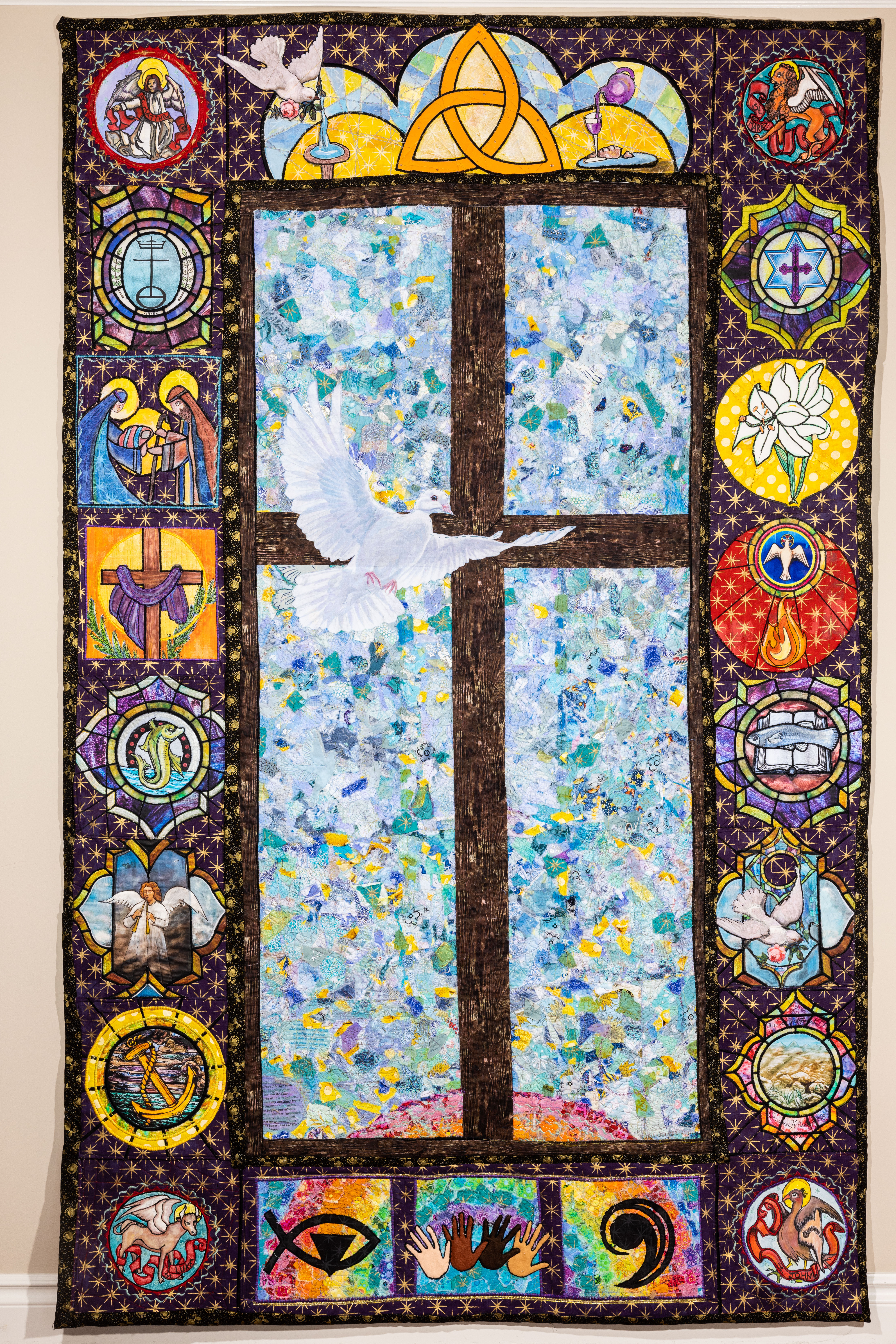
Quilted Tapestry
Created by Frances Holliday Alford
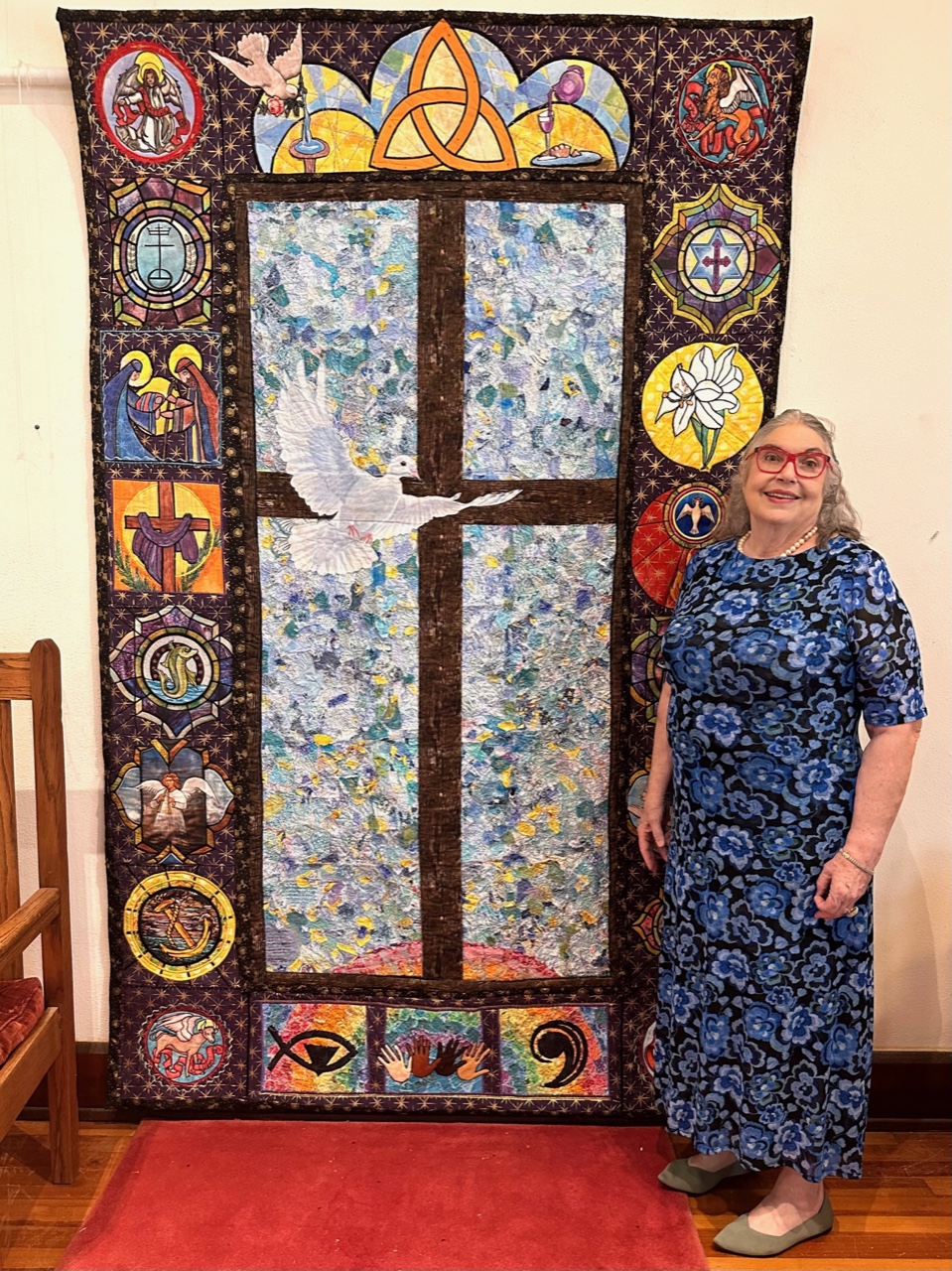 During Covid, the Congregational Church of Austin suspended in-person services. Some items in the sanctuary were stowed away, including the quilted tapestry commissioned by the church and created by O. Hinkel Johnson. During the shutdown, the church was broken into and the tapestry was taken. The church mourned the loss and hoped at some point to find a suitable replacement. The church fortunately had a celebrated quilt artist among its longtime members, Frances Holliday Alford. Frances' quilts have been shown both nationally and internationally. She divides her time between Gafton, Vermont, and Austin. Frances, in an act of exceptional generosity, volunteered to create a quilted tapestry to replace the stolen tapestry. This was quite a project requiring much thought in conceiving of a suitable design and many days in its construction. Frances was very sensitive to the church's history and wished the tapestry to reflect the sanctuary, especially the stained glass windows. Frances gave a presentation to the church outlining her thoughts and seeking feedback from the members. She commenced construction. During a much anticipated church service on June 18, 2023, she presented the tapestry to a very enthusiastic congregation. In her presentation, she detailed her thoughts on each of the panels in the tapestry. Below you will find some of those comments and the panels that make up the quilted tapestry.
Introductory comments from Presentation
"Symbols of Faith'
"First of all, Happy Father's Day! We honor all the fathers. Some of them raised us and some stepped in to continue as needed. Any person who has helped raise a child should be honored today.'
"My experience, growing up, was that we were unable to figure out appropriate gifts for our father. He got the usual socks, shirts, ties and bathrobes. And he loved Chocolate Covered Cherries, so he usually got those. But one year, my mother lusted after some antique Staffordshire Dogs to grace our mantle piece. In a desperate attempt to justify buying them, they were gifted to my father. The rest of his life, he joked about how much he wanted them. I still have the dog figures on my mantle piece. Maybe we should have made a liturgical quilt instead.'
"To all you fathers who are here today Along with every other person here today, here is your gift. I give you this with great love and honor. It has been a huge honor that you trusted me to do this. A labor of love that took time, resources, study, and a lot of reflection. It came to my attention when I slid into an aisle in front of Reuel Nash one Sunday. After settling, I turned back and 1 asked: ``Where is our quilt?" Reuel shook his head and said, "We don't know." The beautiful wall hanging, commissioned in 1978, had disappeared during Lent in our times of Covid. It was rolled up for storage and there had been a break-in. The general hope was that someone was staying warm under a warm covering. This congregation grieved over this loss. Most photos taken in the sanctuary, including my wedding pictures, had this jewel toned art work in the background. A huge loss. And now, a blank space where it had hung, right here at the very front of the church, with little hope of return.'
"The blank space made me sad. Pastor Amelia had put screen images up and that gave us something to focus on, but we needed a new quilt. Your name has come up several times," Warinda said, as I violently shook my head. "I hope you find somebody to do it," was my comment.'
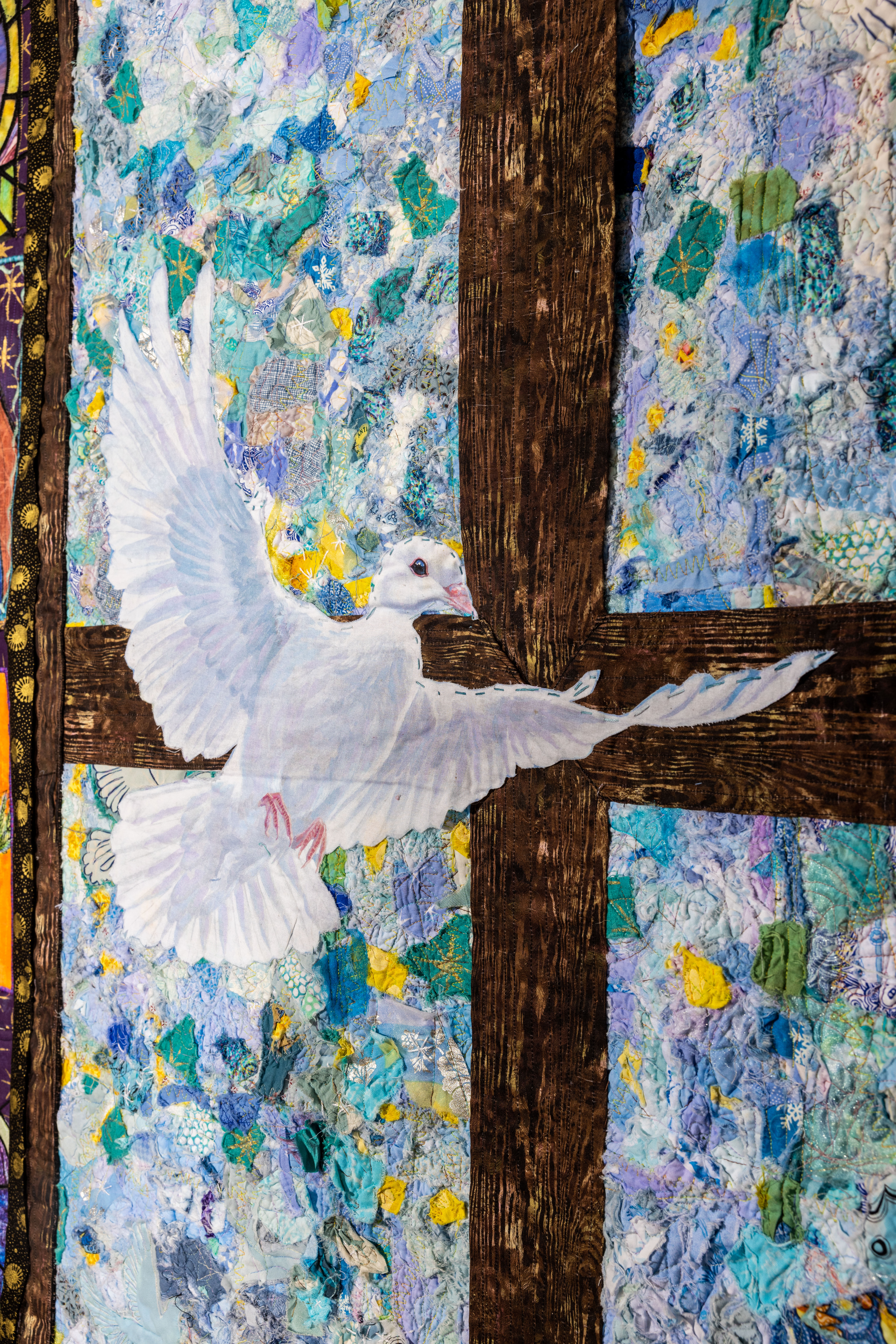
"Back in our more permanent residence in Vermont, I brooded about this. And brooded. Eventually, I wrote to Pastor Amelia and offered to make a new one. I offered it without compensation and waited for the deacons to decide if they could accept this offer. I was in deep by this time. But I had a clear vision of a window with framework that resembled a cross. Symbols surrounding it resembling the tiles we often see around doorways could complete the look. Symbols of faith would be the focus. Thinking and planning occupied a good amount of time after this challenge was taken. What were the symbols? How would I construct it. A design committee was formed and they were helpful in their feedback.'
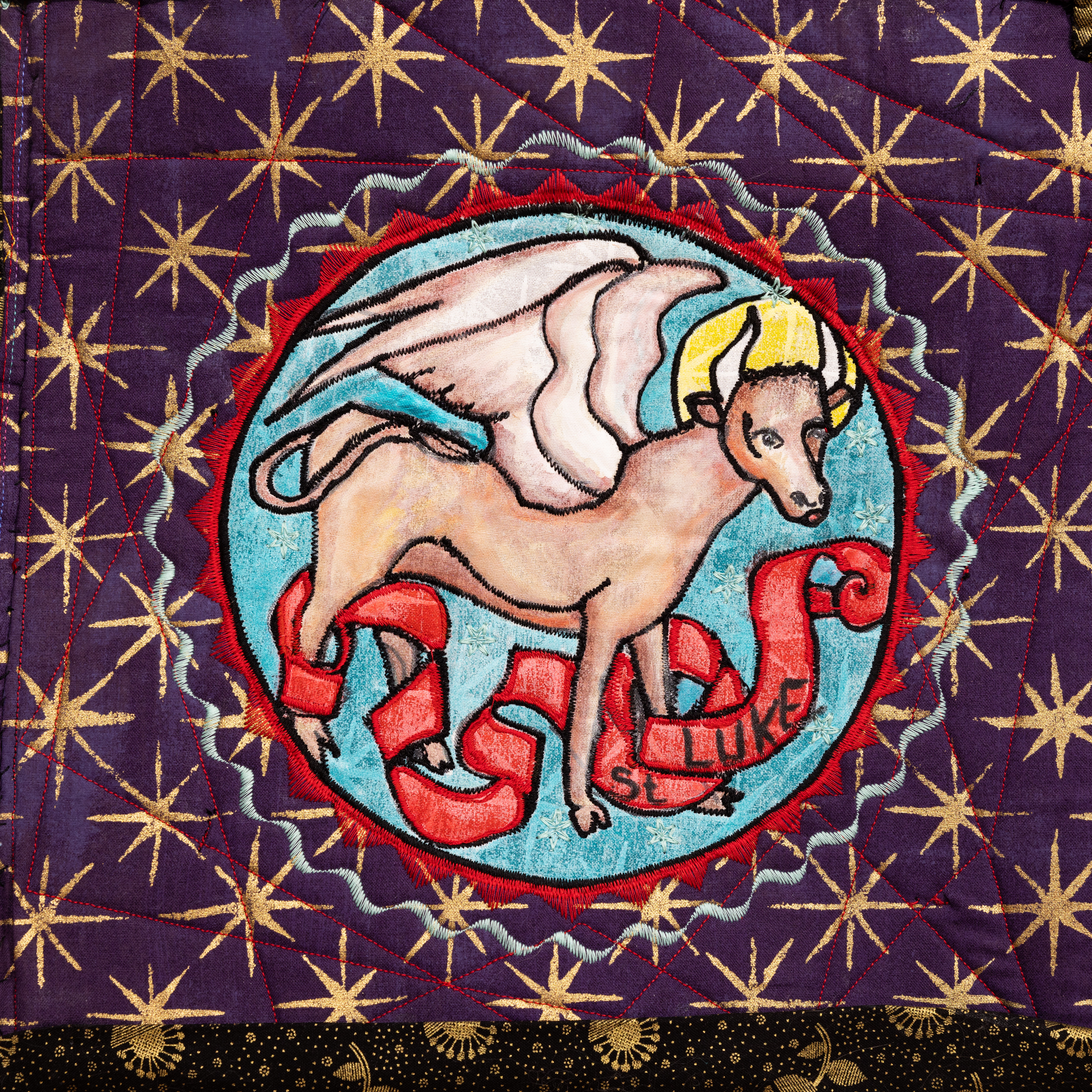
"Gingerly, I started assembling materials. Mark and I went to church and measured the front area so that we could determine the right size? 5' x 8"? Um, OK. Donna helped hold up fabric samples to check light and esthetics. The work commenced. I would like to tell you how the symbols are arranged and how they were chosen. An intern from the Yale Divinity School, now Pastor Joshua Sharp M. Div.,was preaching at our Vermont UCC church. I asked him to come help with the symbols and later that afternoon we sat with cups of coffee and pencil and paper. I did not use all of his suggestions, but the framework we arrived at worked and the Austin committee approved it. On each corner, you will find Tetramorphs, or "four forms" of the Evangelists: Matthew, Mark, Luke and John. They come from Ezekiel 1. (At the end of the second century the four living creatures from Ezekiel 1 were connected with the evangelists, becoming their symbols (the man represents Matthew; the lion, Mark; the calf, Luke; the eagle, John).They are among the oldest Christian symbols. They often appear flanking Christ in Majesty, an apocalyptic subject."
"A few strategies that I used involed the choice of colors. Strong bright colors hold our attention from a distance. With the exception of the digital stained glass window prints, I used fabrics from a set that all utilized the starry motif. The purple and gold finds its way into all 22 of the 12" square panels. I did all the paintings on a white-on-white starry fabric so that there would be a subtle star-mottled look to each image. The black and gold floral motif backing and edging fabric is intended to hold the whole thing together with permanence with a little bling.'
"There was a lot of fabric left over. I have cut this into strips to add to the prayer rug. With the paper doves above in the sanctuary, flying from the ceiling, the digital image reflecting the quilt image, plus the dark wood reflecting the floors and pews, we have a cohesive whole.'
"As with our church body, my notion is that we come together and harmonize. We are very different in many ways. We include amongst ourselves, differences in race, gender, belief, personal tastes... and all between. We have surrounded ourselves with the variety of these symbols of spirit. As we go about our daily lives, we have many paths. It is wonderful that we come back together and celebrate as a magnificent group. We will always miss our older quilt. I hope this one sustains us as we go forward on a new quest of faith, changing with the times, but never forgetting our rooted faith."
Frances remaining comments are included with each panel below.
Guide to Alford's Quilted Tapestry |
|---|
In the image below, you can find information about each of the panels by simply clicking on them. You will be taken to a detailed image of the panel and France's comments.
| Sanctuary Quilted Tapestry |
|---|
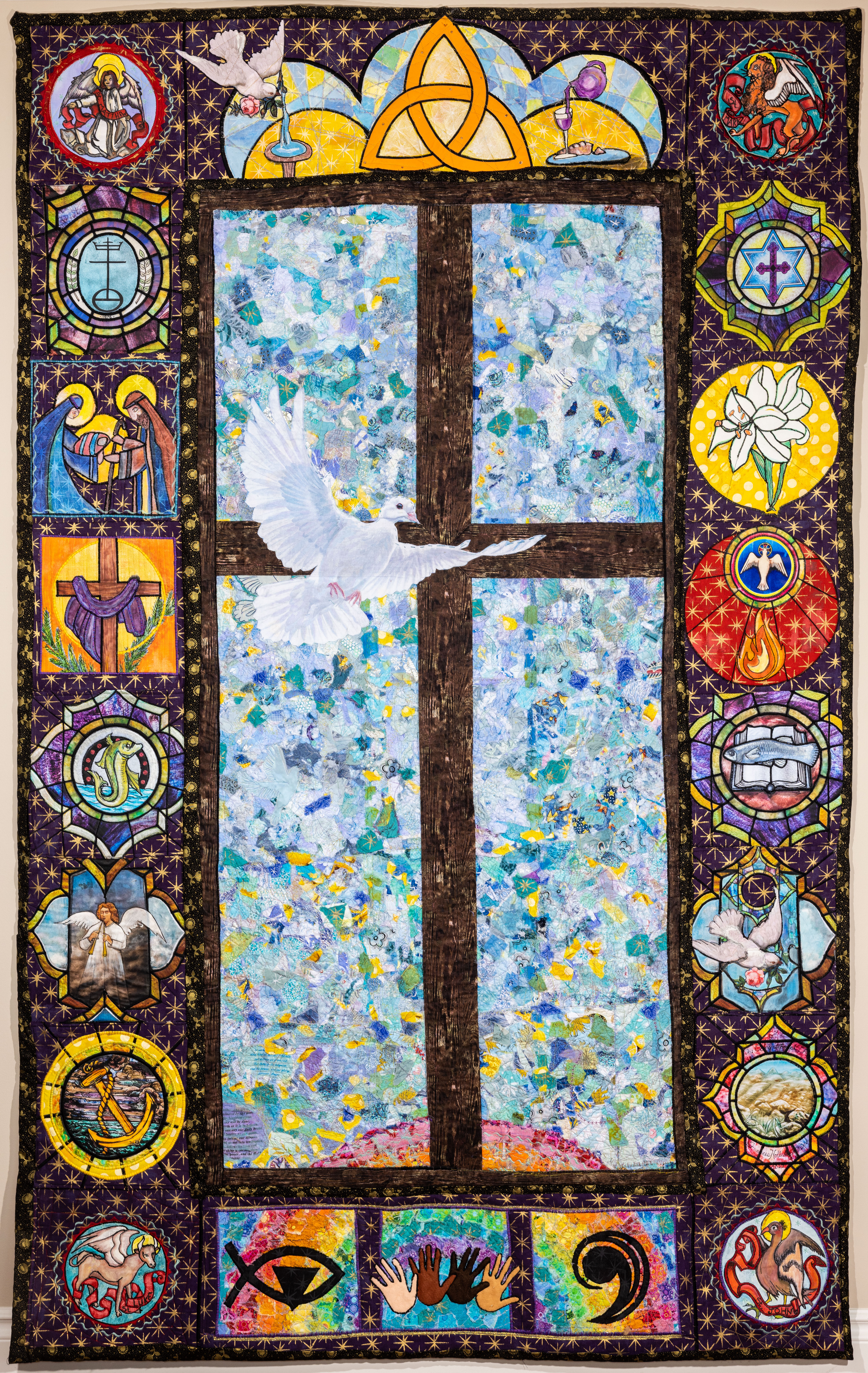
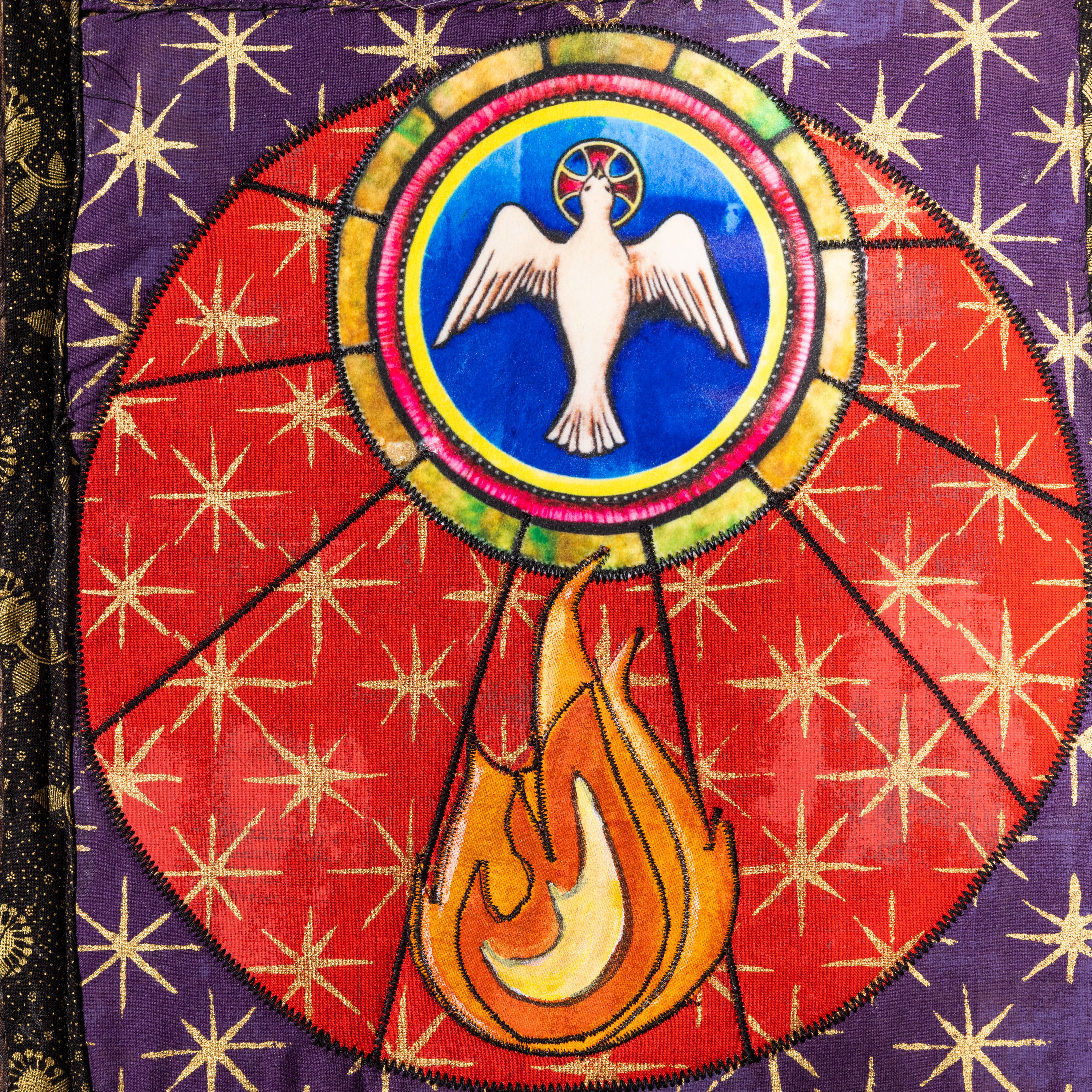
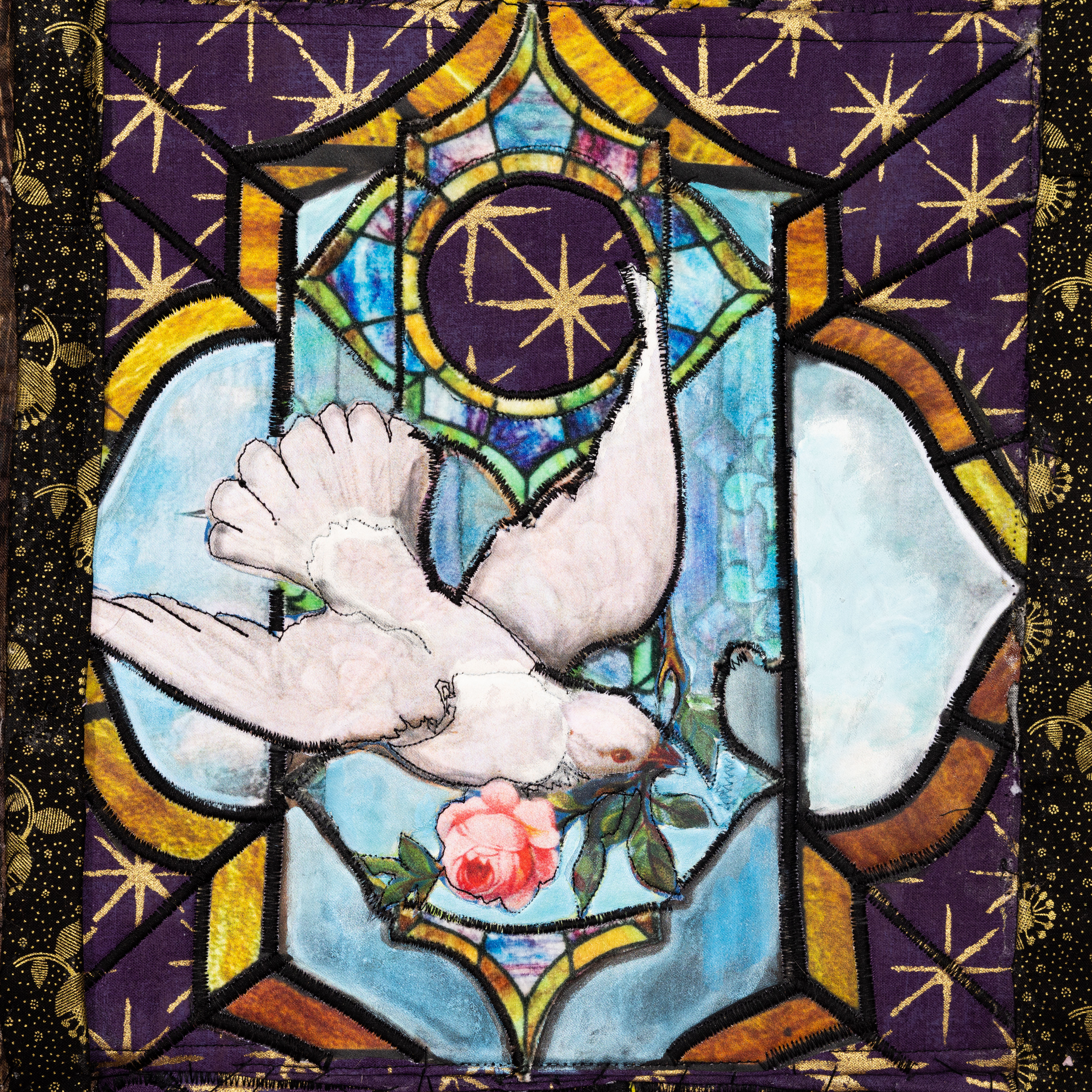
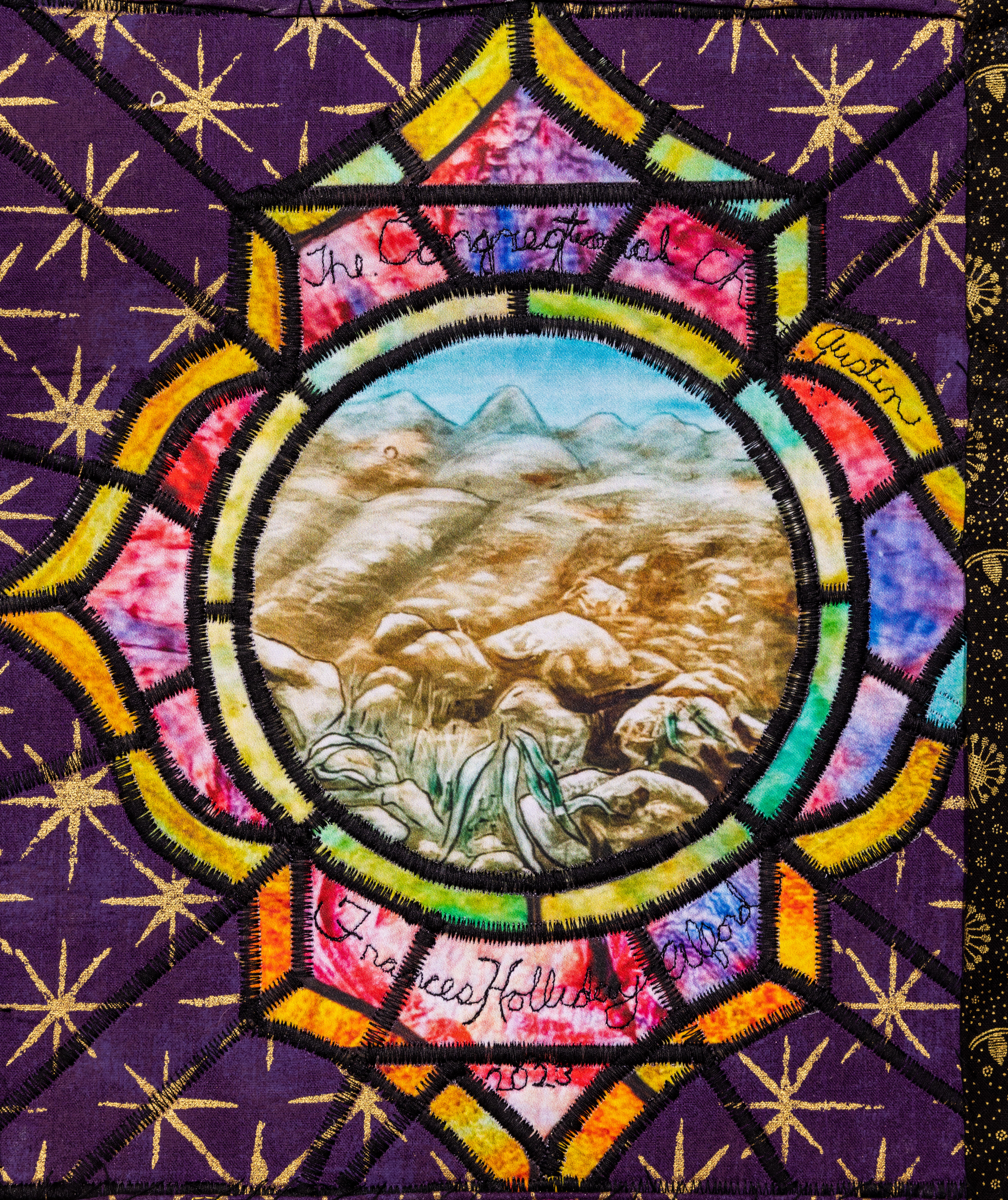
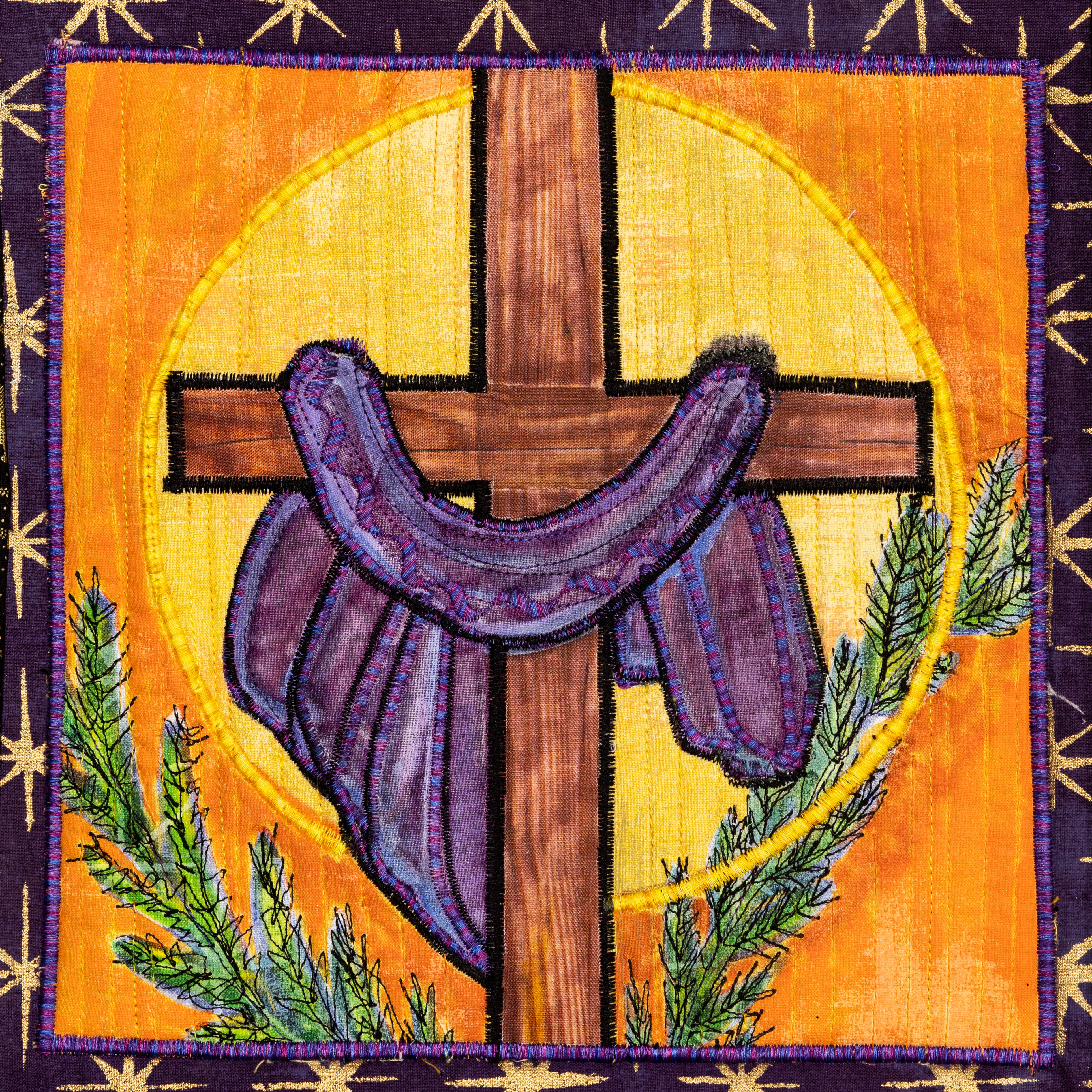
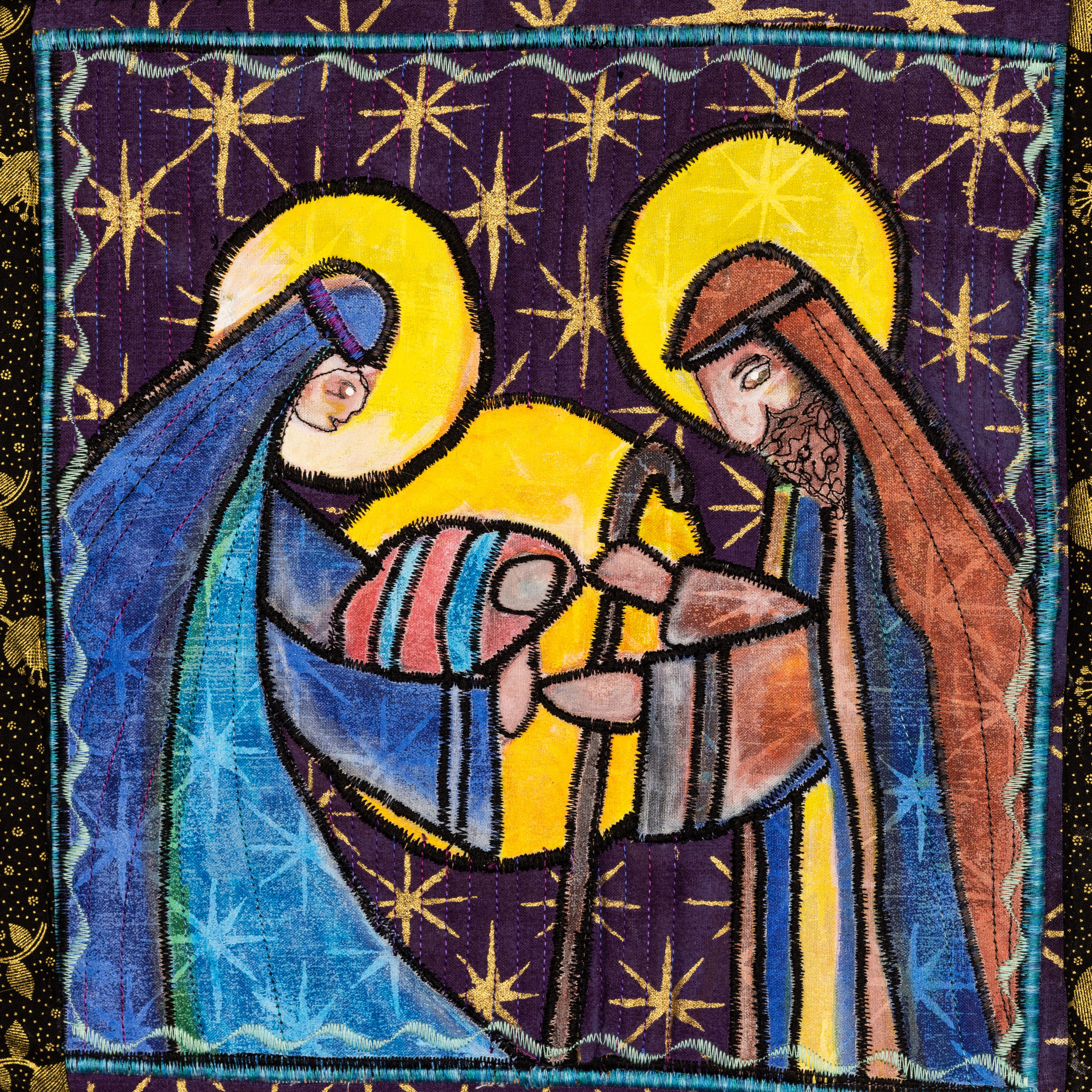
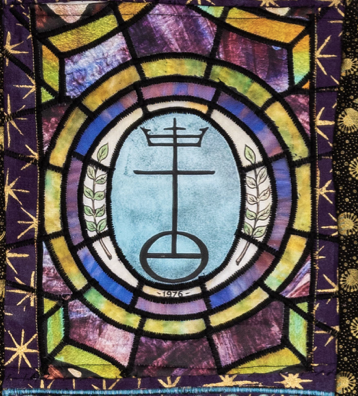
Alford Quilted Tapestry The corner panel honor the four saints, Matthew, Mark, Luke and John. There are two categories on the side panels. The four main religious holidays are represented by paintings of Christmas, Lent, Easter and Pentecost. The other images are from the church's stained glass windows. |
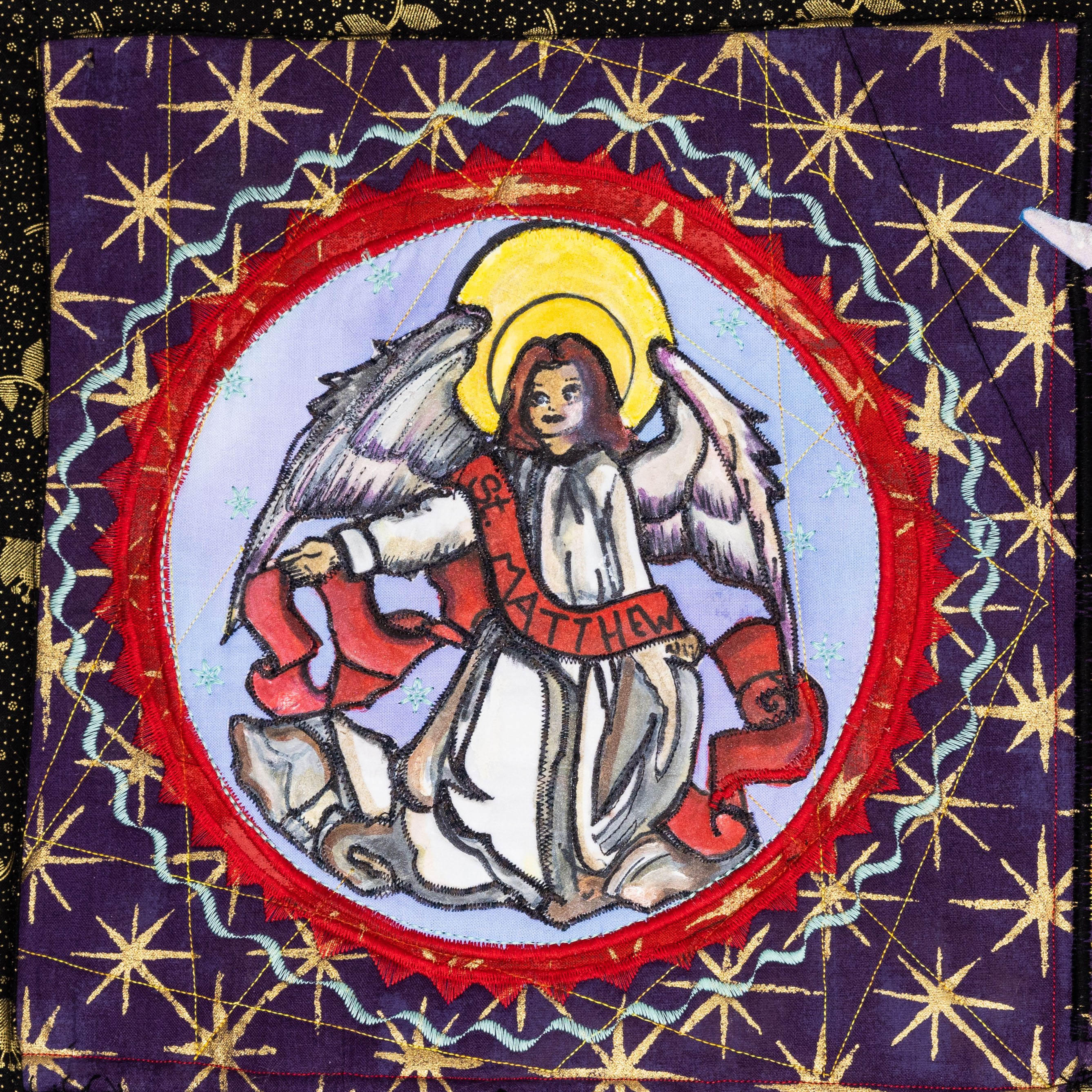
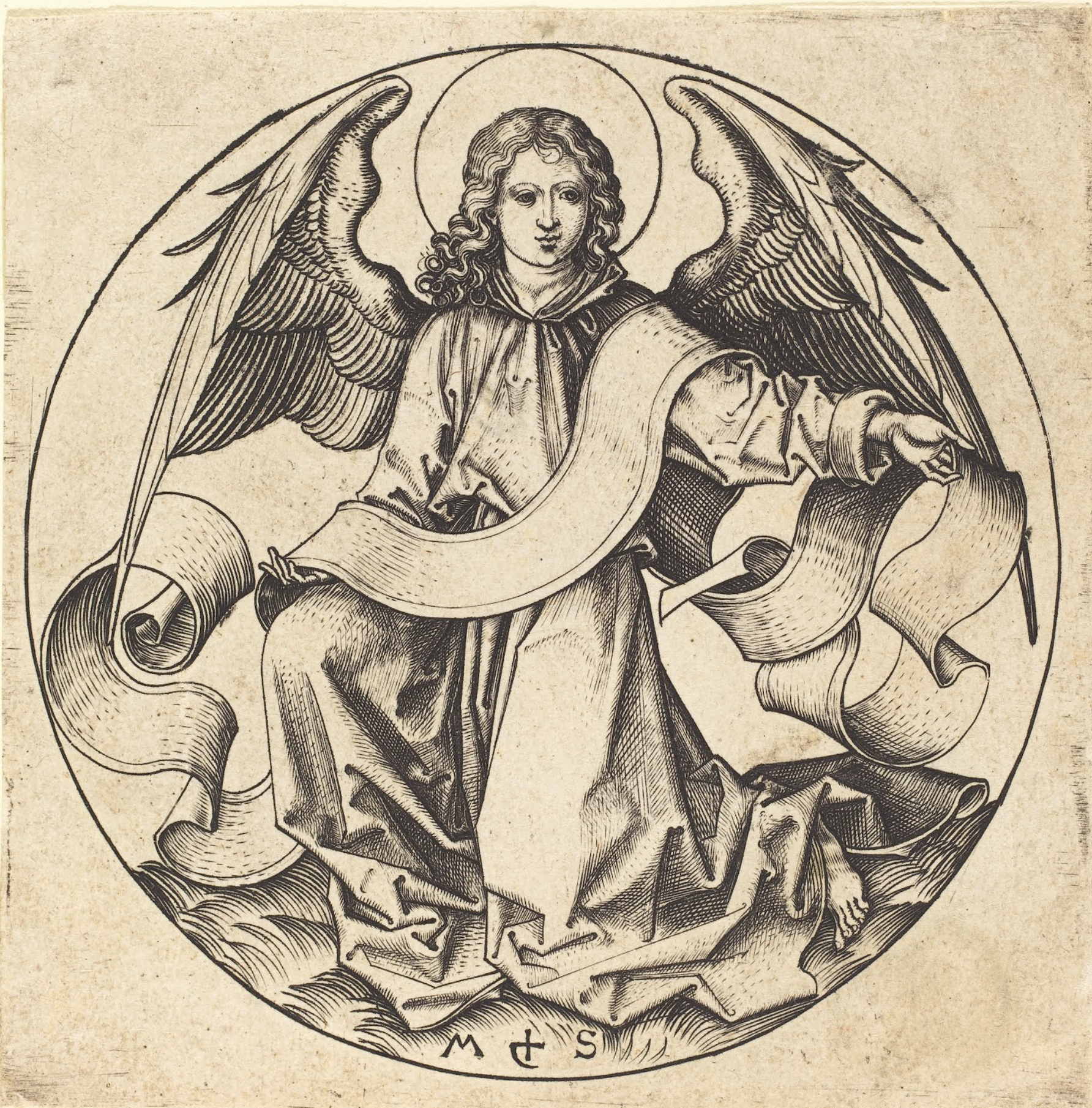 The St. Matthew symbol shows this saint as both a man and an angel. It is a representation of Matthew as Jesus’ incarnation and Christ’s human nature. This also signifies that Christians use their own reasoning for salvation, as humans with ability to make decisions. This is the first of Martin Shongauer's images. Back to Quilted Tapestry Image The St. Matthew symbol shows this saint as both a man and an angel. It is a representation of Matthew as Jesus’ incarnation and Christ’s human nature. This also signifies that Christians use their own reasoning for salvation, as humans with ability to make decisions. This is the first of Martin Shongauer's images. Back to Quilted Tapestry ImageThe symbolic images used for the corner panels were originally designed around 1490 by the Alsatian artist, Martin Schongauer, as black and white engravings. Frances painted her reditions in color, rather than the original line work. Clearly no violation of the 100 year copyright rule. |
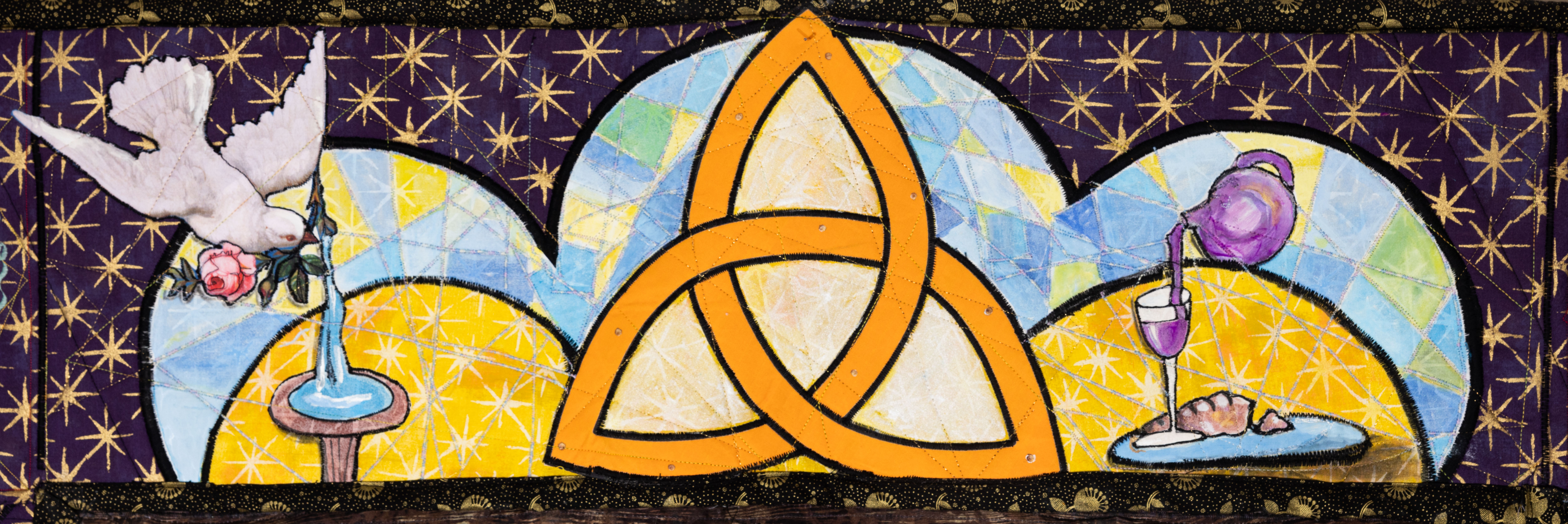
Left: Baptisim Baptism is symbolized by the water in the baptismal font. The UCC explanation is: "The sacrament of baptism is an outward and visible sign of the grace of God. Through baptism a person is joined with the universal church, the body of Christ. In baptism, God works in us the power of forgiveness, the renewal of the spirit, and the knowledge of the call to be God’s people always." Center: Trinity Trinity symbol. This is the belief that God is three persons—the Creator, Christ and Holy Spirit —coexisting in one being is how the trinity doctrine is often defined. Right: Communion Communion: On the right, the chalice is in mid-air pouring wine into a goblet, next to a loaf of bread. UCC definition:"The communion meal recalls the table fellowship Jesus shared with his disciples, and in particular the Last Supper on the night before his death, as well as his appearances to the disciples during meals following his resurrection."Back to Quilted Tapestry Image
|
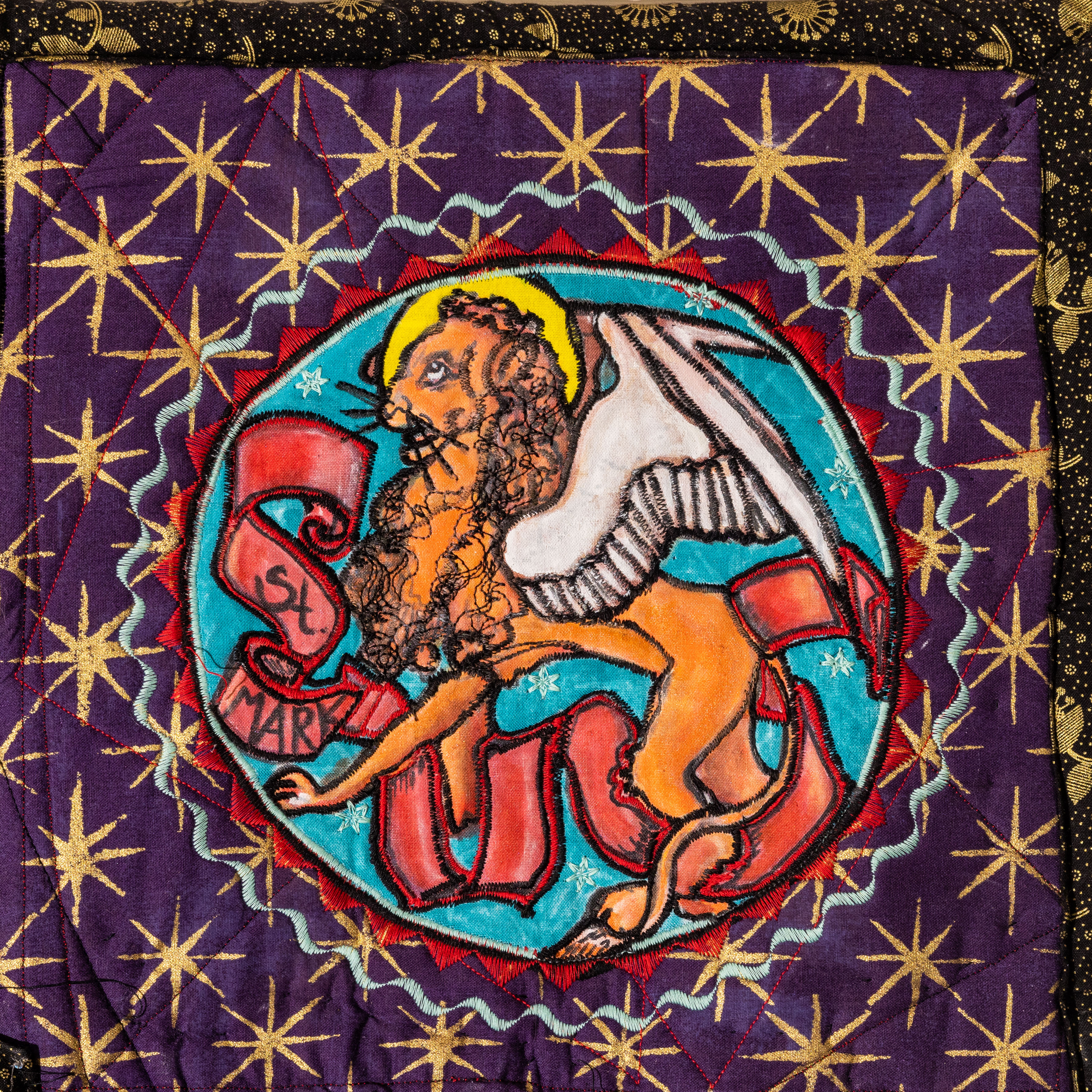
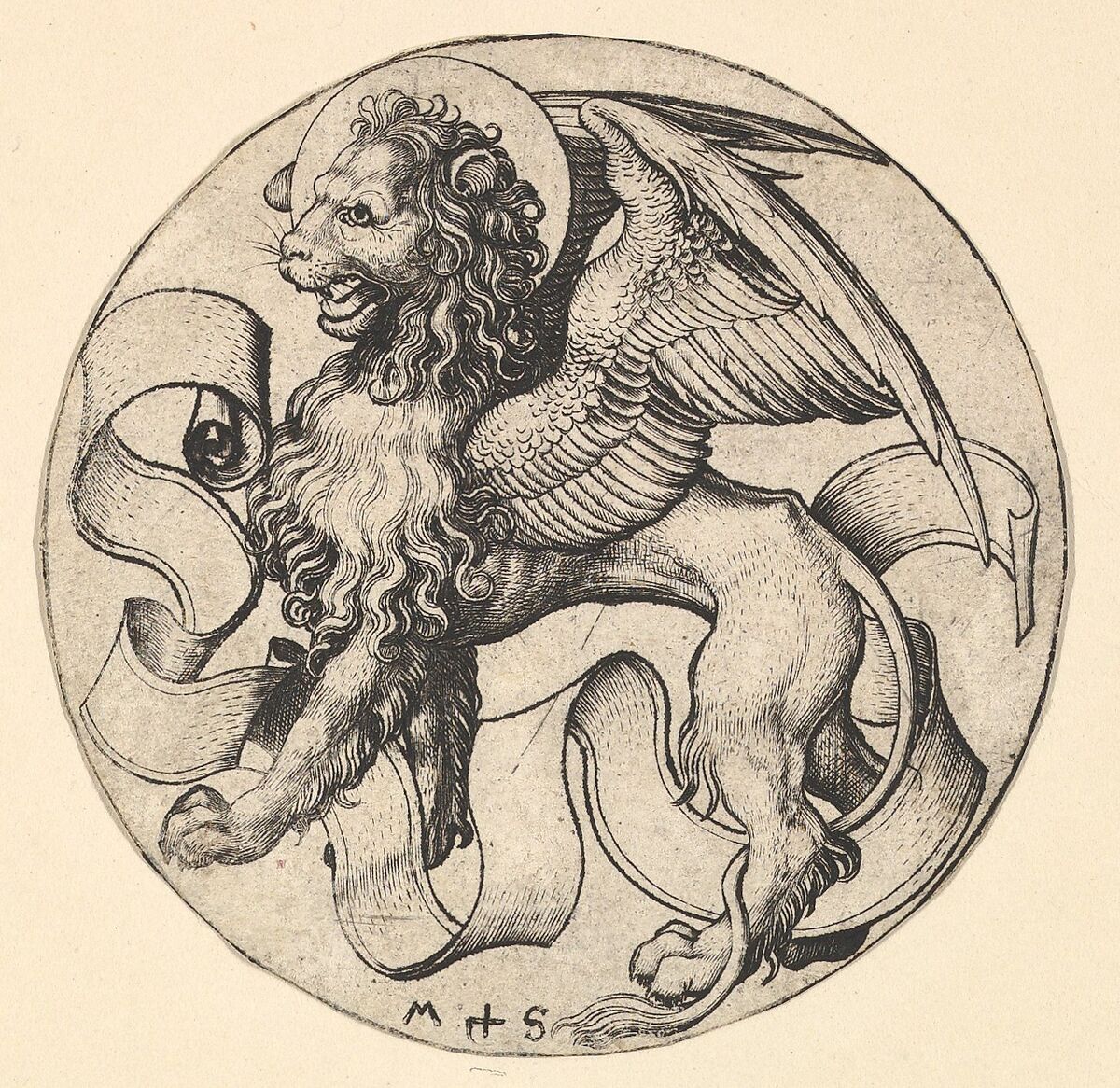 Saint Mark. At the end of the row, is Saint Mark, depicted as the winged lion, a figure of courage and monarchy. It also represents Jesus’ resurrection (Lions sleep with their eyes open) and Christ as a King. This signifies that Christians should be courageous on the path of salvation. This is the second of Martin Schoengauer’s designs. Back to Quilted Tapestry Image Saint Mark. At the end of the row, is Saint Mark, depicted as the winged lion, a figure of courage and monarchy. It also represents Jesus’ resurrection (Lions sleep with their eyes open) and Christ as a King. This signifies that Christians should be courageous on the path of salvation. This is the second of Martin Schoengauer’s designs. Back to Quilted Tapestry Image |
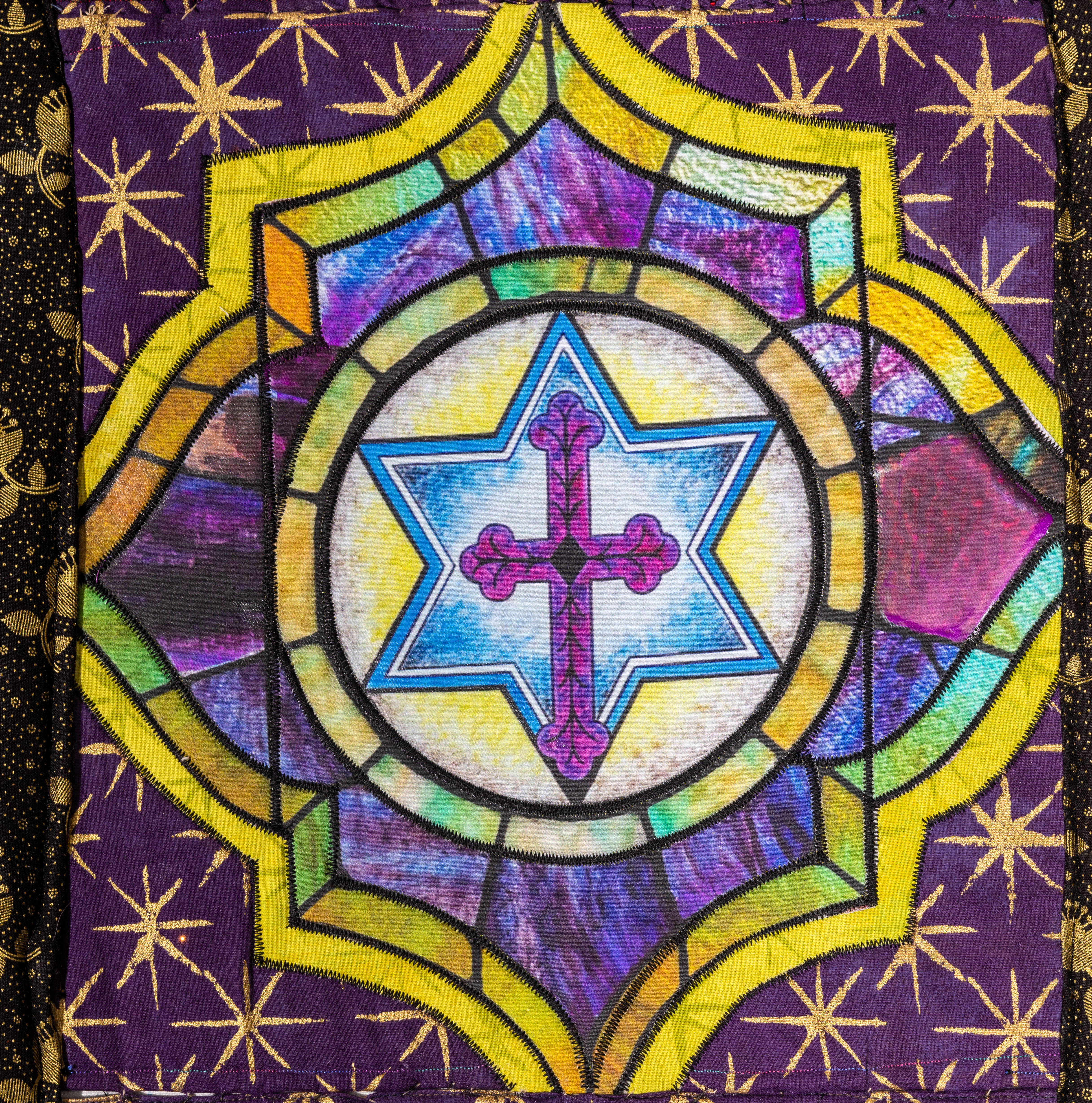
Cross with Star of David. The Christian cross is surrounded within a Star of David. We do not know exactly what the makers of this church window intended, but Britt Hicks asked her seminary professor, Dr. Jennifer Lord, who suggests that: "Since Jesus was a Palestinian Jew and as Christians we believe in God's covenant with the people of Israel. As Gentiles, we have been grafted on to that faith tree through Christ. We cannot fully know and understand Jesus and God's mission of love for the world without the Old Testament." (Or the Sacred Text as our Jewish friends refer to it.) Back to Quilted Tapestry Image |
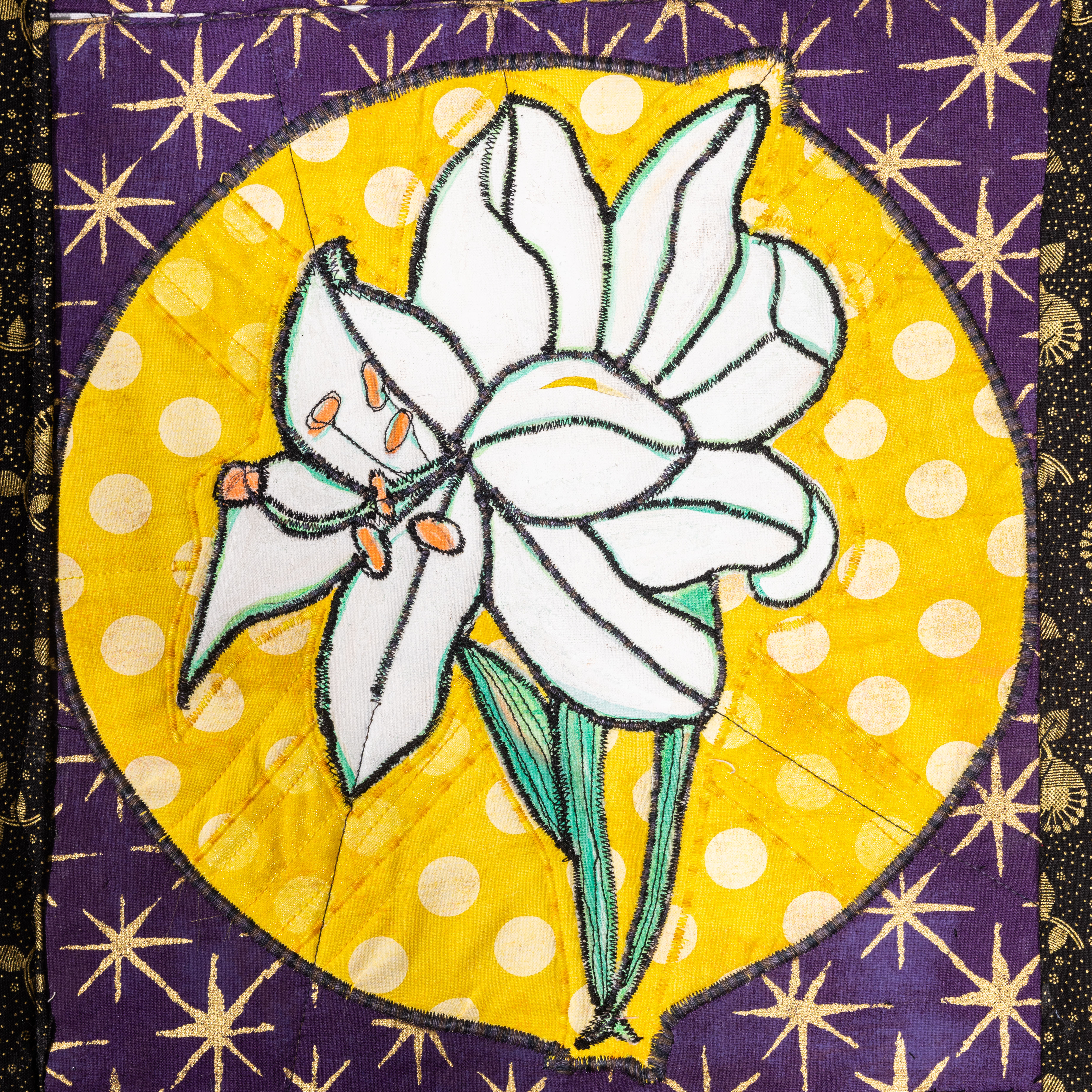
Easter. The third down is Easter. An Easter Lily surrounded by bright yellow light suggests the pure joy of this day as people recognize the risen Christ. The lily is a symbol of purity associated with the Virgin Mary. There are stories of lilies growing where Mary's tears had fallen. There is Jesus’ Sermon on the Mount and also the quote "Consider the Lilies of the field." Our own tradition of bringing Easter lilies into the church continues this tradition of symbol. Back to Quilted Tapestry Image |
|
|
|
|
|
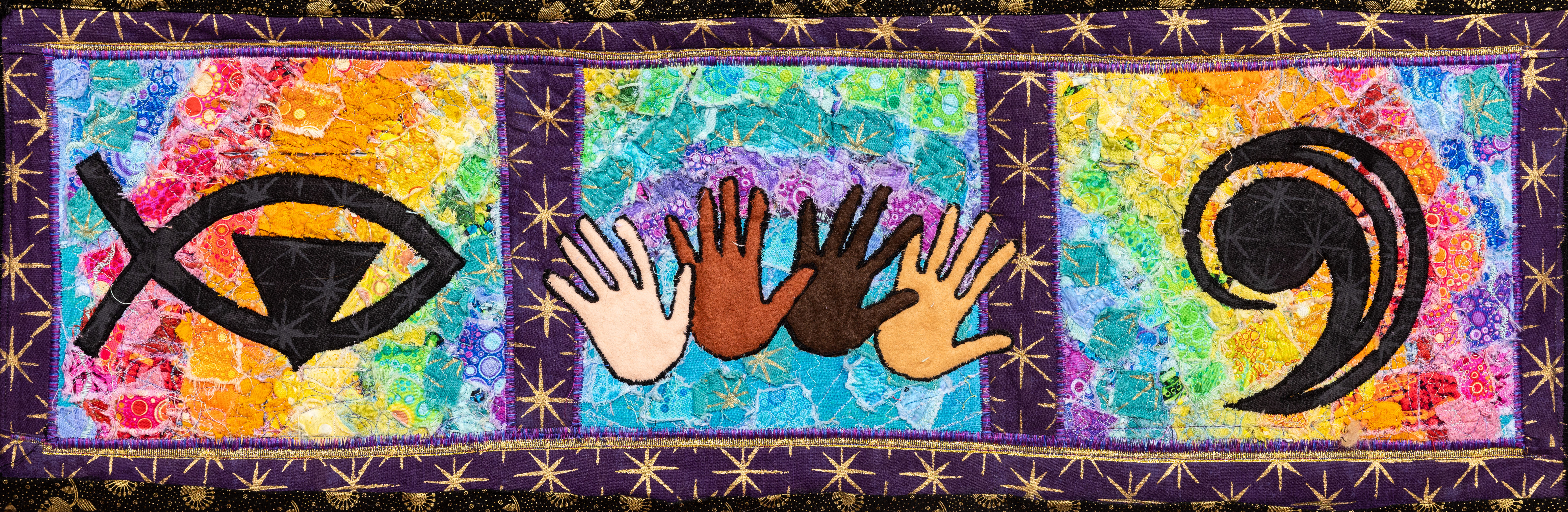
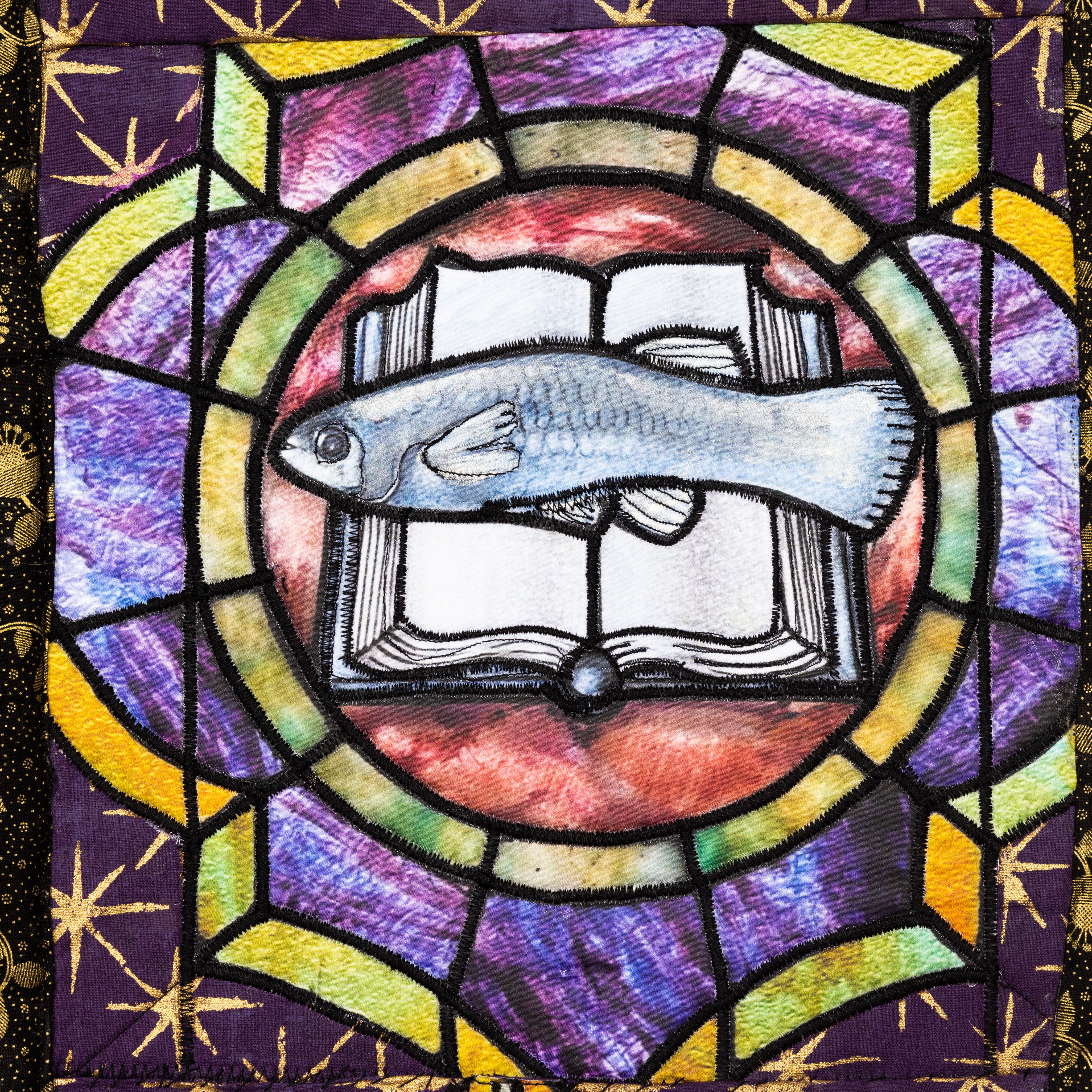
Left: Gender Equality. First is the Ichthus with the triangle. We proclaim in this church that, "No matter who you are, no matter where you are on life's journey, you are welcome here." During Nazi occupation, people were forced to wear a pink upside down triangle to identify themselves as homosexuals or what we now call our LBGTQ population. Originally, this symbol would have had the same reaction as the swastika, but the LGBTQ community decided to embrace it. To surround it with the Ichthys strengthens the symbol as a Christian pronouncement. In early days, people made the fish sign in the dust to communicate their belief in the teachings of Christ. Center: Racial Justice. In the center, are four hands held high in unison, each a different color. This is intended for racial equality, inclusion and unity of all people. Right: Comma. The is the newer UCC symbol reminding us that God is not finished talking to us. A quote from comedian Gracie Allen "Never place a period where God has placed a comma." I will digress to say that not all UCC members have been happy about replacing this symbol for our other. I have included both, because both are important. Holding our traditions and looking forward. Back to Quilted Tapestry Image |
|
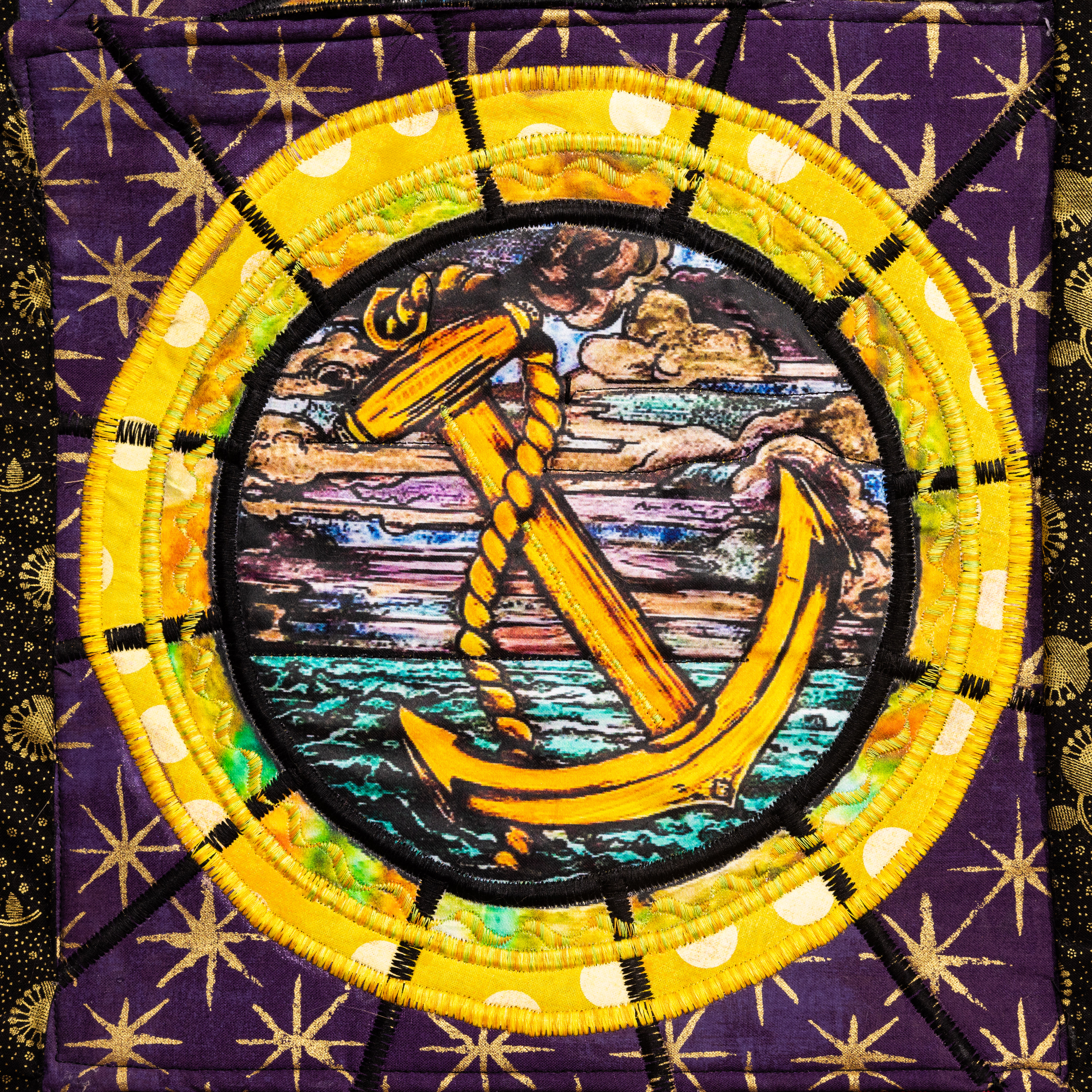
Anchor. The anchor is an early symbol of safety in navigation. It is faith, strengthened by hope. It holds us safely in place. The shape of an anchor is similar to a cross. It later became an emblem on buildings to mark a building as a safe place for Christian refuge. Back to Quilted Tapestry Image |
|
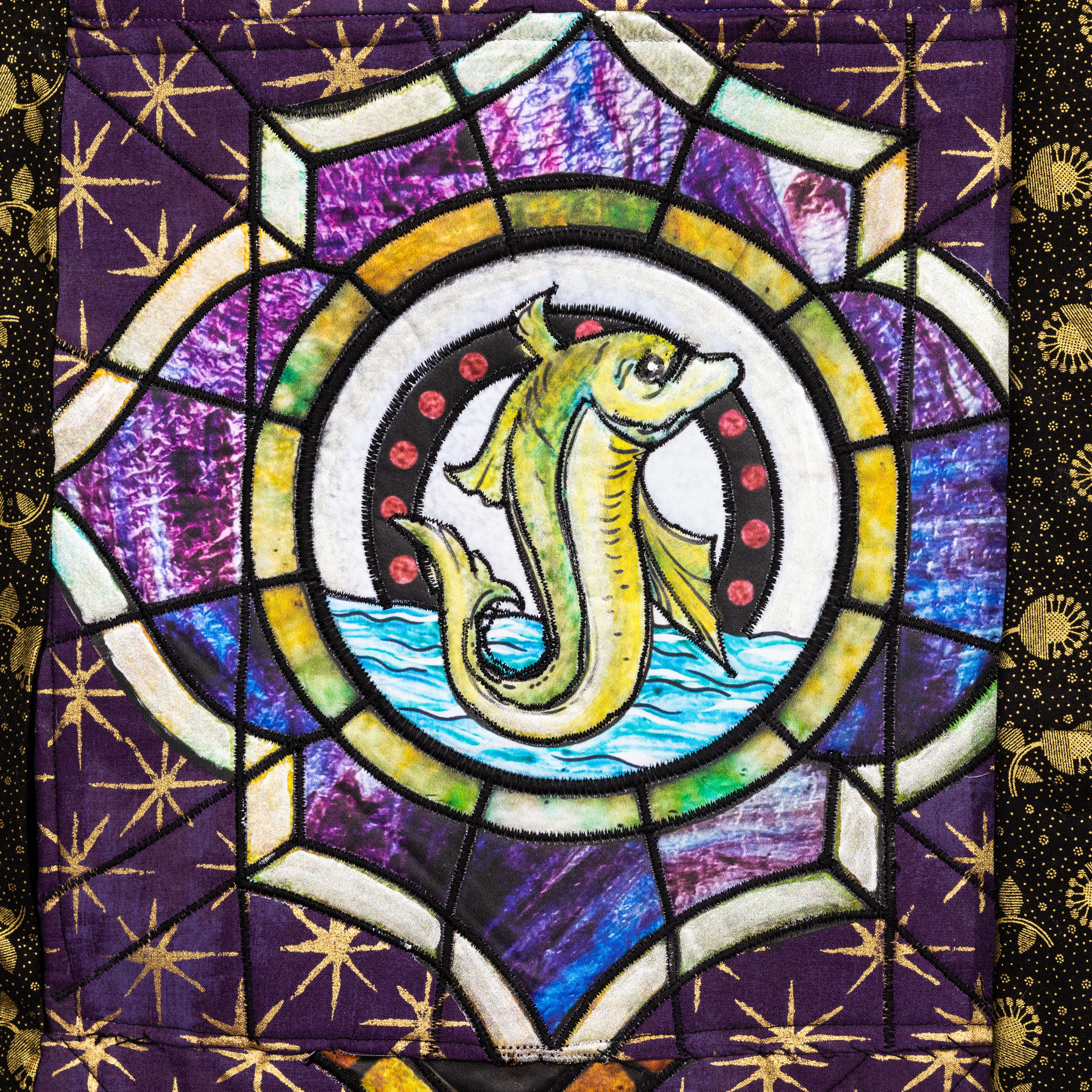
Dolphin. The dolphin was originally a pagan symbol. He is a friendly animal and as a symbol of Christ, he is a friend and deliver to the “safer shores” of Heaven. Back to Quilted Tapestry Image |
|
|
|
|
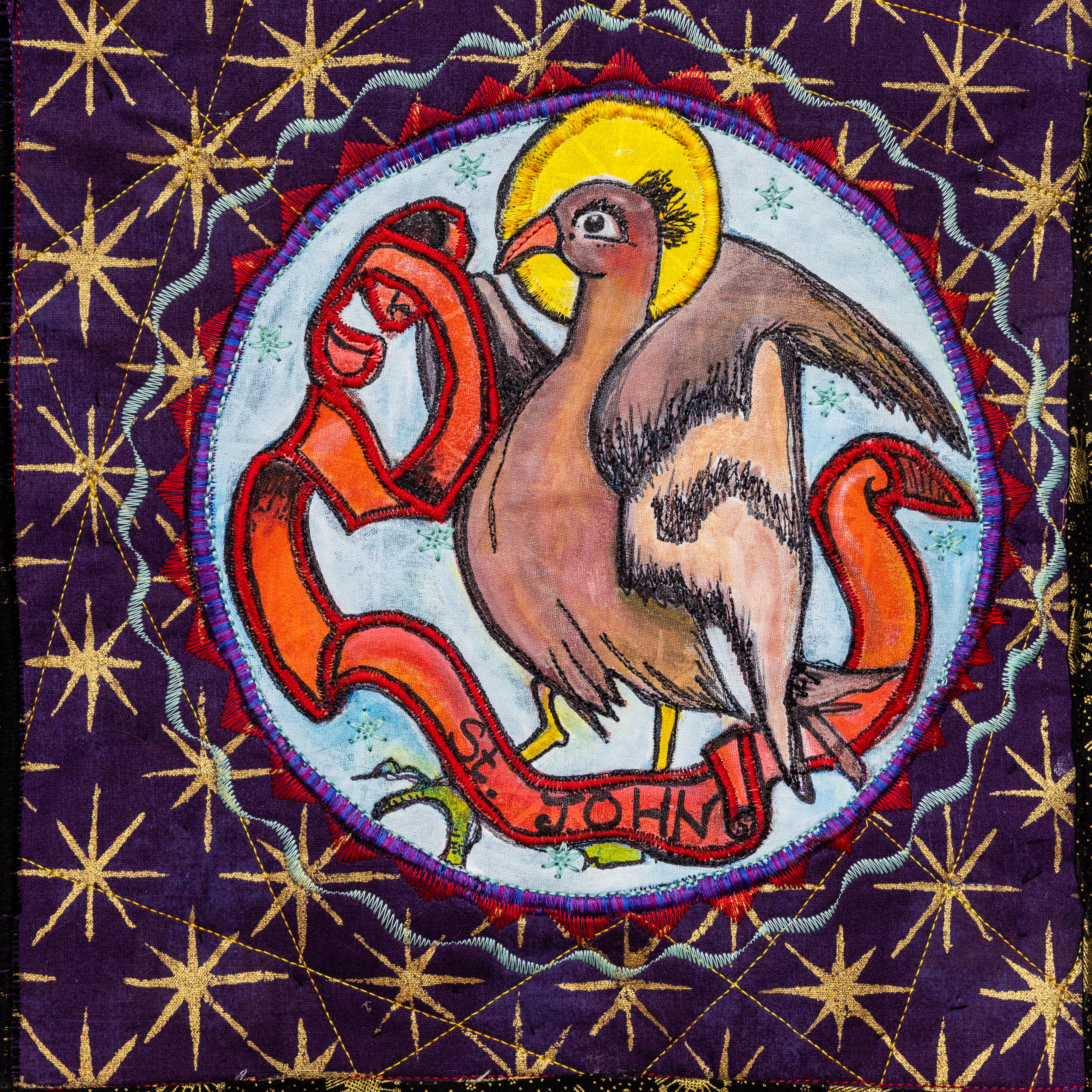
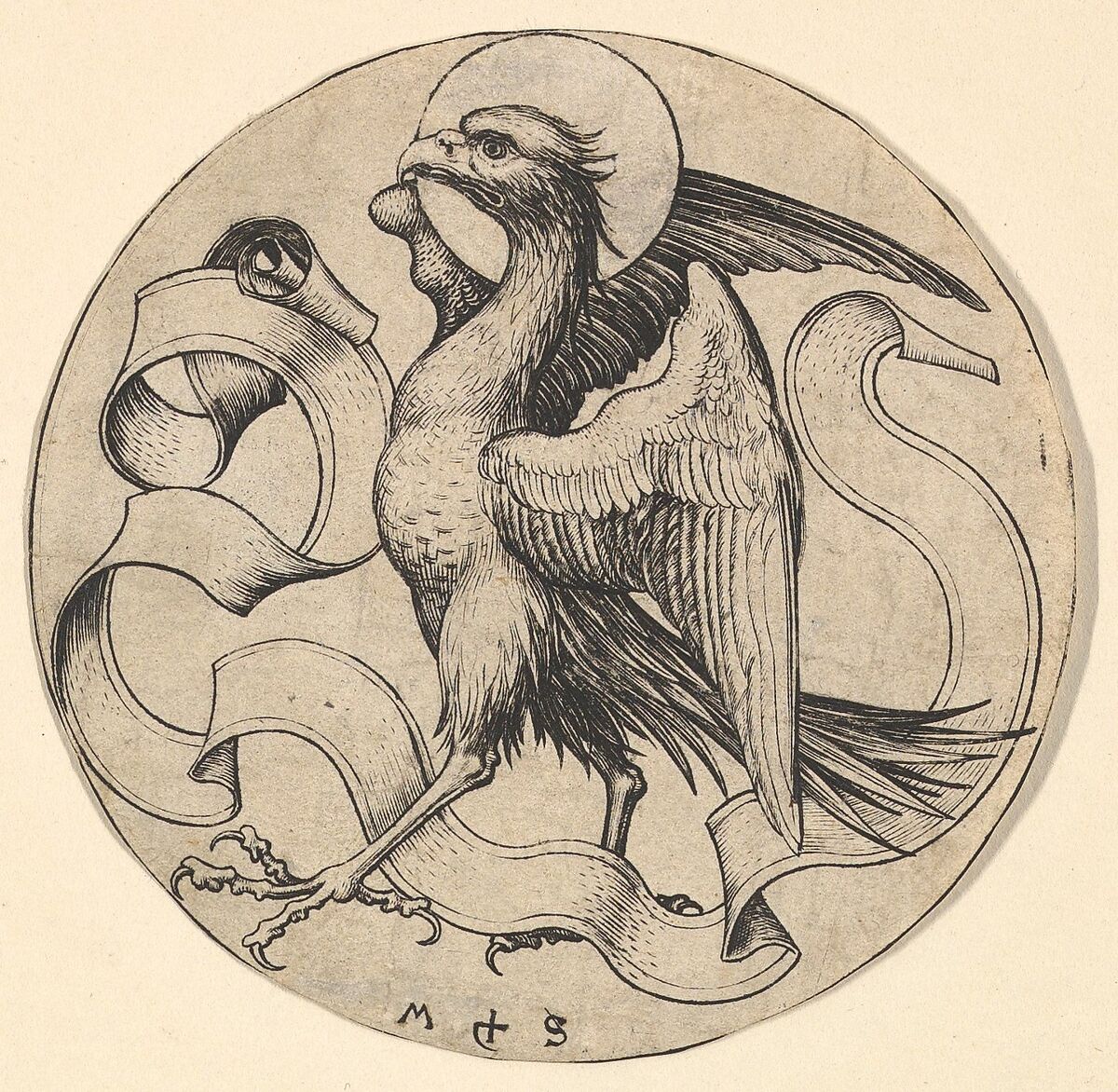 St. John. Saint John, the Evangelist was the author of the fourth gospel, and is depicted as an eagle, often, as with the other three, with a halo around his head. Early Christians believed that the eagle could look straight into the sun. An eagle, shows us far-sightedness and vision and of what is immediately present. This is the fourth of
 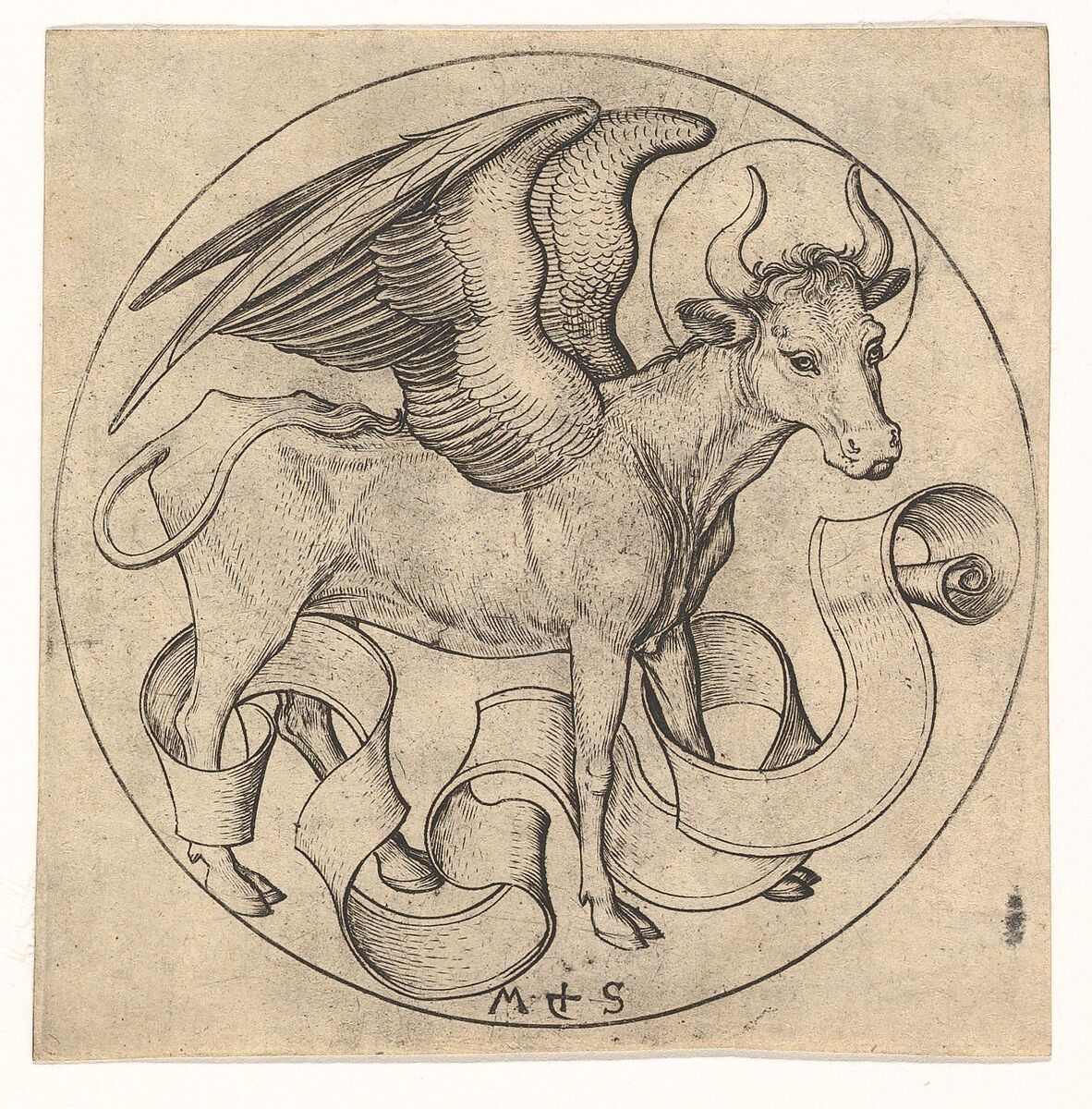 St. Luke. Below the anchor is Saint Luke. He is represented as a winged ox (or bull). It is a symbol of sacrifice harking back to temple sacrifices of live animals. This is the third of