Clark Hubbs, who spent 59 years at the University of Texas and was widely regarded as one of the state's foremost researchers in the field of ichthyology, the study of fish, died Sunday after a long battle with colorectal cancer. He was 86.
Hubbs developed a love for studying fish early in his life from his parents, Carl and Laura Hubbs, who were noted naturalists. Clark Hubbs published more than 300 scholarly articles throughout his career and continued doing fieldwork up until last month, according to those who knew him.
Hubbs came to UT in 1949 as an instructor of zoology and later served as a professor and department chairman before accepting emeritus status in 1991. During his time there, he taught courses in comparative anatomy and ichthyology and contributed about 6,000 lots of specimens to the Texas Natural History Collection, a division of the Texas Memorial Museum at UT.
"When it comes to fishes of Texas, there's no doubt that he's sort of the father of ichthyology," said Dean Hendrickson, the collection's curator of ichthyology. "He probably knew more about the fishes of Texas than anybody else."
Despite his at times gruff personality, Hubbs was a highly sought-after professor due to his expertise, said Phil Pister, who worked with Hubbs for about 40 years at the Desert Fishes Council.
"Students who would go to one of his classes would have to work their tail ends off, but they'd enjoy doing it," he said.
Hubbs also was known for his collection of fish clothing and for having a blue crab pinch a hole through his right calf muscle.
UT Pan-American professor Bob Edwards, who studied under Hubbs for about seven years, said Hubbs continued working with many of his about 100 graduate students after they found jobs as ichthyologists.
Hubbs is survived by his wife, Catherine; his brother, Earl Hubbs; daughters Laura Hubbs-Tait and Ann Hubbs; and son John Hubbs.
Memorial services will be held at 2:30 p.m. Friday at Congregational Church of Austin, 408 W. 23rd St.
Another Clark Hubbs Obituary (with additions by Mel Oakes):
Austin American Statesman, February 4,, 2008
Clark Hubbs left this world on February 3, 2008, following a lengthy battle with colorectal cancer. He was born March 15, 1921, and was the second child of noted naturalists, Carl and Laura Hubbs. He had a brother and two sisters. His brother, Earl, became a biology teacher and his sister, Frances, married the ichthyologist Robert Rush Miller. His other sister, Margaret, died in childhood.
Clark developed a love for the science of studying fish at an carly age. His parents paid Clark and his sister and brother five dollars for collecting a new genus one dollar for collecting a new species. They also paid them five cents for each species collected. Not surprisingly, Clark became an ichthyologist, a scientist who studied fish and truly loved his chosen profession.
Hubbs gained a post as a field technician with the Michigan Institute for Fisheries Research in 1939 before attending the University of Michigan where he obtained a degree in Zoology in 1942. He remained in Ann Arbor during this time. In the summer after he graduated, he worked in Massachusetts surveying streams before he was conscripted into the United States Army.
During World War II, he served in the US Army in the 96th Infantry Division Headquarters, including the invasions of Leyte and Okinawa. After the war, he enrolled at the University of California Los Angeles, the Hopkins Marine Station, Scripps Institution of Oceanography, and Leland Stanford Jr. University. He obtained his Ph.D. from Stanford in 1951 under the GI Bill. He met his wife of 58 years, Catherine Symons, while on a field trip with the Stanford Natural History Club.
In 1951, Clark Hubbs became an assistant professor of zoology at the University of Texas and subsequently became an associate and then full professor: From 1974 to 1976, he was chair of the Biology Department and from 1978 to 1986, he was chair of the Zoology Department. He was professor emeritus at the time of his death. During his long career, he published more than 300 articles, He also trained over forty masters and doctorate students in his time at the University of Texas, including Victor G. Springer and Kirk Winemiller. Hubbs deposited the material he collected throughout his life at the Ichthyology Division of the Texas Natural History Collections of the Texas Memorial Museum at The University of Texas at Austin. He was still collecting field data for his studies in January 2008. He was editor of Copeia, the journal of the American Society of Ichthyologists and Herpitologists for more than a decade and a former president of the American Society of Ichthyologists and Herpitologists, the American Institute of Fisheries Research Biologists, the Southwestern Association of Naturalists, Texas Emeritus Science Committee Hubbs-Sea-World Research Institute, He was a tireless supporter of the Edwards Aquifor and Defense of Endangered Species. Four different species were named after him.
Hubbs started to publish a checklist, The Fishes of Texas, during the 1960s and in the 1980s colleagues and students associated with Hubbs began to add additional information about each fish species. Hubbs wanted to turn this into a book and he labored on this project, collaborating with others until his death. However, they realized that an electronic format would reach more people and so The Fishes of Texas Online project began.
Clark Hubbs was preceded in death by his mother, father, and two sisters, Marjorie Anne Hubbs and Frances Miller.
Catherine Vickery Hubbs Obituary
Catherine Hubbs was born October 7, 1922 in San Francisco, CA to Spencer and Averia Symons. She passed from this life on April 8, 2022. Cathy attended Miss Harker's School in Palo Alto. She graduated Phi Beta Kappa from Stanford University during World War II. She then completed an early childhood fellowship program at Mills College. At Mills she saw an advertisement requesting volunteers at a Japanese-American relocation center. After she was trained at the Los Angeles YWCA, she was sent to Topaz Relocation Center in Delta, Utah. She served in the summer of 1945, caring for and teaching the Japanese-American children. After the war, she taught preschool in Oakland from 1945-1947 and then attended the University of California – Berkeley to study library science. She received her Bachelors in Library Science in 1947. During her post-war time in northern California, she attended the Church for the Fellowship of All Peoples, pastored by the Rev. Howard Thurman, later a mentor of the Rev. Martin Luther King, Jr. Upon completing her library science degree, she was hired as a reference librarian at Stanford University. There she met Clark Hubbs, a young ichthyologist who had served in the Pacific theatre during World War II. They married in September 1949 in San Diego and spent their honeymoon driving to the University of Texas at Austin, where he had been hired as a new faculty member.
When her children were young, she served as the brownie scout troop leader for both daughters and accompanied her husband and the young family on many trips throughout the southwestern U. S. When all her children were out of elementary school, she enrolled at UT-Austin to complete her teacher certification. For many years, she was the librarian at Pearce Junior High School. She was a member of the Congregational Church of Austin from 1949 until her death. She taught Sunday School, sang in the choir, and, for many years, wrote the church newsletter. Following her retirement from Pearce, she taught English literacy to Spanish- speaking residents of Austin and served those in need as a volunteer at the Capital Area Food Bank (now, Central Texas Food Bank).
She is survived by her three children, Laura, John (Doris), and Ann (David Weissman).
She is also survived by her four grandchildren, Aaron, Aidan (Felipe), Eric (Erika), and Adam, and her four great-grandsons. She was preceded in death by her husband of 58 years and her son-in-law, David Tait. She loved everyone and her death has saddened all who know her.
UT Memorial Statement
Noted ichthyologist Clark Hubbs, 86, died on 3 February 2008 at his home in Austin, Texas. The son of Carl and Laura Hubbs, he carried on a family tradition by becoming an ichthyologist and professor. Hubbs received his AB degree in 1942 from the University of Michigan.
From 1942 to 1946 he served in the U.S. Army’s 96th Infantry in the South Pacific campaign, and then entered Stanford University. It was at Stanford where he met and married Cathy Symons; they were married for over 58 years.
While still working on his Ph.D., in 1949 Hubbs took a job as instructor at the University of Texas (UT) Austin. Receiving his Ph.D. from Stanford in 1951, he then became assistant professor (1952), served as chairman of the Division of Biological Sciences (1974–1976), chairman of the Department of Zoology (1978–1986), regents professor (1988–1991), and finally regents professor emeritus (1991 until his death).
He published more than 300 articles and was still collecting field data as recently as January 2008.Hubbs was an active member of the American Fisheries Society. For many years he was especially active in the Texas Chapter and was awarded an honorary AFS membership in 1997. For more than a decade he served as editor of Copeia (journal of the American Society of Ichthyologists and Herpetologists), and was president of the American Society of Ichthyologists and Herpetologists (1987), American Institute of Fisheries Research Biologists (1995–1997), Southwestern Association of Naturalists (1966–1967), Texas Organization for EndangeredSpecies (1978–1979), and the Texas Academy of Sciences (1972–1973). He was chair emeritus of the Research Committee at Hubbs-Sea World Research Institute (1989 until his death). He was a tireless supporter of Texas natural resources and defender of endangered species and habitats.
Hubbs was a talented and energetic teacher who encouraged his students to think about the subject rather than simply memorize. When he found a student who appeared gifted, he encouraged them to consider the rewards of biology, ichthyology, and fisheries biology. He didn’t always convince them but he kept trying. His influence greatly benefited the 46 masters students, Ph.D. candidates, and postdoctoral fellows that he supervised. One measure of the admiration and respect his students had for him was the tribute of the Clark Hubbs Symposium held in 1993 at the annual meeting of the American Society of Ichthyologists and Herpetologists in Austin. A t-shirt designed especially for the symposium held a special placefor Hubbs, who had it signed by not only his former students, but also by a wide variety of more than 1,000 scientists, resource specialists, university presidents, and even some politicians! Hubbs did not do things by half- measures; he brought enthusiasm, energy, and tenacity to everything he did. This included his defense of endangered species and endangered habitats, his membership and work with 21 professional societies, his parenting of three children, and his teaching. Colleagues were constantly amazed at the vitality that he injected into his pursuits and how he somehow always had a little more energy in reserve, especially if there was a small child to play with or a student asking questions.
During 60+ years, Hubbs sampled more streams and springs in Texas, and deposited more fish specimens from the state in fish collections (primarily the Texas Natural History Collection that he founded), than has, or likely ever will, anybody else. In tribute to him and that legacy ,his colleagues and former students formed the Hubbs Ichthyological Society to carry on monitoring of Texas fish habitats so that what he started can be maintained and enhanced. The H.I.S. website http://www.utexas.edu/tmm/tnhc/fish/hubbs/HIS/index.htmlincludes links to more information on ClarkHubbs, his life, and his legacy.
Article by Nicole Elmer and the Ichthyology Collection in the Biodiversity Center
Dr. Clark Hubbs (March 15, 1921 - February 3, 2008) had a long and illustrious career in Ichthyology, more than 50 years of it at the University of Texas at Austin. He was not only a deeply-influential educator and researcher here, but he founded the university’s fish collection, now the Ichthyology Collection in the Biodiversity Center.
Hubbs was born in Ann Arbor, Michigan, the second child to noted naturalists Carl L. Hubbs and Laura C. Hubbs. His parents encouraged their children’s early interest in science, especially that of fishes, by paying them for collecting specimens. One dollar was paid for a new taxon, and five dollars for a new genus. In the 1930s, this was quite a bit of money, with one dollar in today’s standards being around $20, and $5 just shy of $100. Although Clark was surely naturally interested in this work, one can only imagine the enthusiasm he and his sister and brother had!
Hubbs received his B.A. in Zoology in 1942 from the University of Michigan. Shortly after, he was drafted into the army to serve in World War II, in the G-2 (intelligence section) of the 96th Infantry Division Headquarters. His division partook in the invasions of Leyte, an island in the Philippines, and Okinawa, a small island to the east of mainland Japan. The Battle of Leyte would launch the liberation of the Philippines from Japanese Occupation. The Battle of Okinawa was the largest amphibious assault during the Asia-Pacific War, with Hubbs’ division suffering 20,000 casualties.
In 1946, Hubbs was honorably discharged. With the GI Bill that provided education to service members, he could further his studies and received his Ph.D. from Stanford in 1952. It was on a trip with the Stanford Natural History Club that he met his wife, Catherine. They would have three children and be married for 58 years until his death.
At UT Austin in 1949, he took a job as instructor of Zoology. He became Assistant Professor in 1952, Associate Professor in 1957, full Professor in 1963, and Professor Emeritus in 1991. He supervised a total of 46 Masters students, Ph.D. candidates, and postdoctoral fellows. From 1974 to 1976, he served as Chair of the Division of Biological Sciences, what Integrative Biology used to be called. It was a time he recalls as being frustrating, according to his personal webpage, due to struggles many in academia can empathize with: implementing efficiency on bureaucracy. He would go on to serve as Chair of the Department of Zoology from 1978 to 1986.
Hubbs had an enormous impact in the world of Ichthyology, through research, teaching, publishing, mentorship, conservation, and specimen collection. He served on the board or as President of numerous organizations, was editor of several academic publications, and obtained many awards and honors.He also published more than 300 articles, primarily on fishes.
Hubbs’ research included taxonomic revisions, hybridizations, geographic distributions, and gynogenetic reproduction. He founded the Biodiversity Center’s fish collection and provided the core of its growth between 1950-1980. According to the Fishes of Texas project, he made nearly twice as many fish specimen collections in Texas than has anyone else.
Clark was heavily involved with conservation efforts for the preservation of aquatic ecosystems and prevention of species extinctions. He worked with landowners to raise awareness of responsible habitat management. Hubbs also served as an expert witness in the litigation of the Edwards Aquifer to protect spring flows for endangered species. He reserved a special love for West Texas, as desert fish endure challenging environmental realities such as extreme temperatures, salinity, droughts and floods.
Clark was largely responsible for the first, and several subsequent lists of fishes in the Texas Threatened and Endangered Species list. The Texas Parks and Wildlife Department recognized that his knowledge of the fishes and their status was far superior to that of any others at the time. The standard statement, when anyone asked why a certain species was listed, was “because Clark said so”.
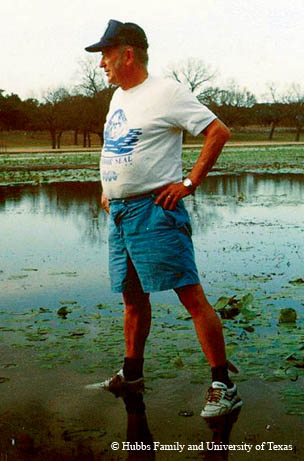
Colleagues and students noted Hubbs’ relentless energy, starting his mornings at 4 a.m., and his grittiness, wading in waters without boots, or sleeping on the ground in the open. His students felt he had an unwavering commitment to quality scientific work. He also was the thesis advisor for the first African American Ph.D. in UT Zoology, Exalton Delco. Hubbs also had an affinity for collecting all items of clothing with images of fish. It was not uncommon to see him wearing a shirt, tie or socks depicting diverse fishes.
One example of the admiration and respect his students had for him was the tribute of the Clark Hubbs Symposium held at the 1993 annual meeting of the American Society of Ichthyologists and Herpetologists on the UT campus (that sort of symposium was a first for the society). A t-shirt designed especially for the symposium held a special place for Clark who had it signed by not only his former students, but also by over 1,000 of his colleagues and professional friends.
Hubbs’ love of his work could be no more evident than in the fact that he was still collecting field data in January 2008, just a month before his death. To honor his work, the Hubbs Ichthyological Society was established to promote his legacy.
Biologist Clark Hubbs devoted his life to cataloging and protecting the state’s fish species.
By Wendee Holtcamp
On a January morning 24 years ago, 65-year-old Clark Hubbs, a University of Texas biology professor, was up to his usual business. Streamside to a Frio River tributary in the Hill Country, he was ready to sample several species of small fish such as mosquitofish, darters and minnows, with his doctoral student, Kirk Winemiller.
“Clark was in the habit of starting his day at 4 a.m., so each morning we arrived at the first field site just before sunup,” Wine-miller recalls. “We discovered a thin rim of ice along the shoreline, and I asked Clark for the whereabouts of the hip wader boots in the truck. He replied, ‘This is Texas — we don’t need hip waders!’”
Hubbs seemed to be immune to the cold.
Perhaps Hubbs’ grit was forged during his Army service in World War II, including the invasion of Okinawa. Or maybe in his youth in Michigan, when father Carl Hubbs, himself a famed naturalist and ichthyologist, brought Clark and his siblings along to collect fish, offering $1 for discovering a new species or $5 for a new genus (a lot of money to a young boy in the 1930s). Whatever the origin, the junior Hubbs remained energetic, tough, fiery and determined.
“As grad students we typically had to trot behind him just to keep up in the field,” says Gary Garrett, a Texas Parks and Wildlife Department fish biologist who earned his Ph.D. under Hubbs. “Even during winter sampling, he would just sleep on the ground, while the rest of us used tents.”
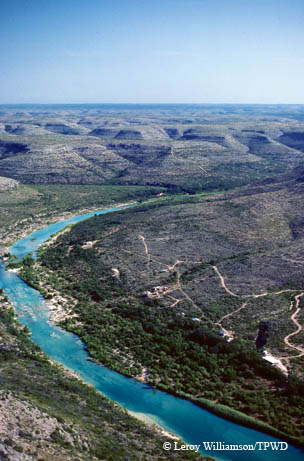
Hubbs collected fish and data in the field until a few weeks before he died, despite a lengthy battle with cancer. “As he got quite a bit older, it became hard for him to get around, but he still insisted on it,” says Garrett, who would take him on field trips to the Devils River and other favorite spots. “Clark Hubbs has placed fish in museum collections from more locations than anyone else in Texas’ ichthyological history.”
Although the beloved and renowned ichthyologist, a professor emeritus at UT, died in February 2008 at age 87, through his lifelong dedication, he left a true legacy not only to Texas’ conservation and fish biology, but also to the students he deeply inspired, many of whom are hard at work protecting the resources of Texas today. Even I am Hubbs’ “scientific granddaughter,” since Winemiller served on my master’s degree committee in the mid-1990s at Texas A&M University.
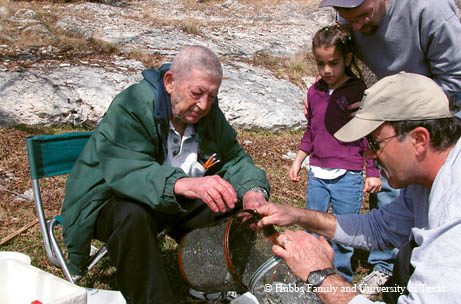
I met Hubbs in 2004 at the Nature Conservancy’s Independence Creek Preserve in West Texas. He sat on a folding chair adjacent to the clear spring headwater, while students gathered fish from traps. As they handed Hubbs the fish, squirming in a net, he looked at the catch briefly before announcing a number for the data sheets: “705.” I understood why his students called them his “Rainman” counts.
Garrett tells me that when he was a graduate student in the 1970s, he was equally astonished by Hubbs’ rapid-fire counts. Were they mere estimates or spot-on? “He’d dump the fish into a pan, and say something like, ‘78 of this species, 108 of these. Two hybrids.’” He and grad students Bob Edwards and Edie Marsh decided to put Hubbs’ counts to the test. “If we ever found a mistake, it was rare or minor.”
After his military service, Hubbs began studying for a doctorate at Stanford, where he soon met the love of his life. He and Catherine married in 1949 and had three children.
“We were married for just shy of 60 years,” says Catherine, “and they really were full of adventure.” He began teaching at UT soon after their marriage, and was hired as an assistant professor in 1951.
His daughter Ann, now a scientist with the Centers for Disease Control and Prevention, recounts her memories.
“Dad taught me to love an early start in the morning. The schools would sometimes excuse an absence so I could go collecting fish with Dad,” she says. In addition to Grandpa Hubbs, their extended family included several scientists who would gather and camp at national parks going to and from conferences. “The [American Society of Ichthyologists and Herpetologists] meeting each summer was a chance for our whole family to pile into the car and set out in search of the meeting site. We sure had some good times.”
Hubbs studied small stream and spring fish throughout the state, but reserved a special love for West Texas. Desert fish are particularly interesting because the streams endure extremes of heat and cold, salinity, drought and heavy rain. The fish living there have had to adapt to survive in such harsh conditions. Desert fishes rely on spring-fed streams, and Hubbs was troubled that many had run dry. He fought publicly to protect fish and their habitats through politics, scientific research and direct action. He also worked with private landowners, collecting samples and educating the landowners about their native species.
“It’s hard for a rancher, who is trying to scrape a living out of the land, to understand a minnow,” says Garrett. Hubbs told landowners that when the fish that have been there for thousands of years start dwindling, something is wrong with the larger system.
“They came to understand, and even become quite concerned,” he says. “As he often told me, if we can do good conservation in West Texas in those harsh environments and figure out ways to work with landowners, we can do it anywhere in the state.”
When Hubbs encountered problems with an endangered or rare fish, he would often take direct action. When sampling at Balmorhea State Park, he realized that the federally endangered Comanche Springs pupfish and Pecos gambusia were clinging to survival in a wide, fast-flowing canal created after the pool was dredged. That habitat was completely unlike the desert wetland where they had evolved. Working with TPWD staff, he diverted water to create a refuge canal for the fish in 1976.
In the 1990s, Garrett and others built a more natural cienega (desert wetland) with Hubbs’ guidance. Last year, park staff restored additional habitat near the park entrance.
Hubbs served as an expert witness in the landmark Edwards Aquifer lawsuit that resulted in establishing the Edwards Aquifer Authority to ensure adequate spring flows to protect the endangered San Marcos gambusia and fountain darter.
He was especially passionate about what he called the “damn right of capture law.” Adopted through a 1904 Texas court case, it says a landowner can pump unlimited groundwater, no matter the effect on any other landowner. Only a few exceptions exist, such as the Edwards Aquifer situation, where excess groundwater depletion endangered a species. It’s a hot potato few want to touch.
From his many years of field research, Hubbs founded the UT fish collection, now part of the Texas Natural History Collection. “The specimens provide invaluable and irrefutable data on the condition of the Texas freshwater fish fauna from 1950 through the 1980s when he was collecting,” says Dean Hendrickson, ichthyology curator.
Although Hubbs continued his field research, he began releasing most fish back into the wild in later years.
“Clark was my mentor, friend and inspiration,” Hendrickson recalls. “I remember his persistence and dogged pursuit of data nonstop.”
One of his last big contributions began many years ago, with its full effects still being realized. Hubbs started publishing The Fishes of Texas checklist in the 1960s. In the 1980s, Garrett and Bob Edwards added more information about each fish. Hubbs dreamed of turning this project into a book and worked on it with others up until his death. Before long, the group realized that the information could better reach the public electronically. The Fishes of Texas Online project was born.
“Every fish that has ever been collected from Texas, starting in 1854, they’re all georeferenced, and they have a spot on the map in Google Earth,” says Garrett.
But the project goes beyond that. “We’re now developing ecological niche models, where you will be able to put in all the parameters — temperature, rainfall, urbanization, climate change predictions, etc. — and it will not only tell you where these fish are, but also where they probably are that no one has ever collected,” says Garrett.
Not only that, the model can also make predictions about what will happen to these different species when we change the environment by doing things like pumping down an aquifer or building new roads. The information will be publicly available online.
Along with the many colleagues Hubbs inspired and taught, The Fishes of Texas Online is a lasting legacy truly worthy of his memory.
Cathy Hubbs
Cathy Hubb’s Birthday Song
(to the tune of The Ash Grove)
Sent here by God’s favor
We joyously savor
Our dear Cath'rine, born in nineteen twenty-two.
A girl bright and cheerful . '
Bent on a career full
Of work dedicated to helping others get through.
She became quite the school librarian,
Followed her heart to marry, and
Clark was the lucky fish that she plucked from the sea.
They spent years of travel
Attempting to unravel
The secrets of life and love’s deep mystery.
The art of good living,
To Cathy, is giving
One’s talents and gifts to serve people in need.
She teaches and feeds them,
Encourages and heeds them,
Thus off’ ring support both in word and in deed.
She loves music and singing;
For years she's been bringing
Her offering of joy to the ones gathered here.
So let’s praise in chorus
The woman before us
And celebrate greatly her ninetieth year! Amen!
Written by Nodie Murphy
In Gratitude and Thanks
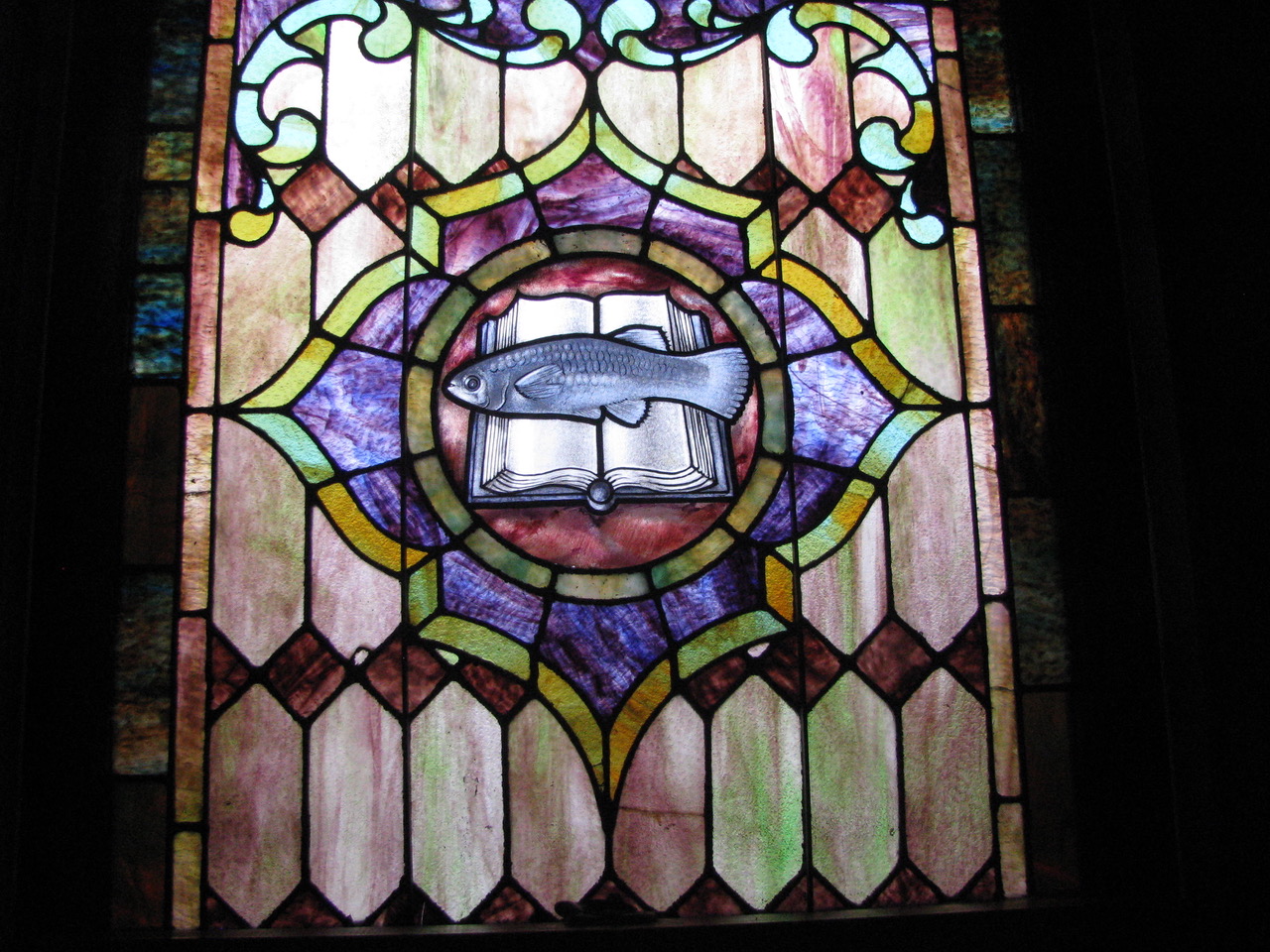
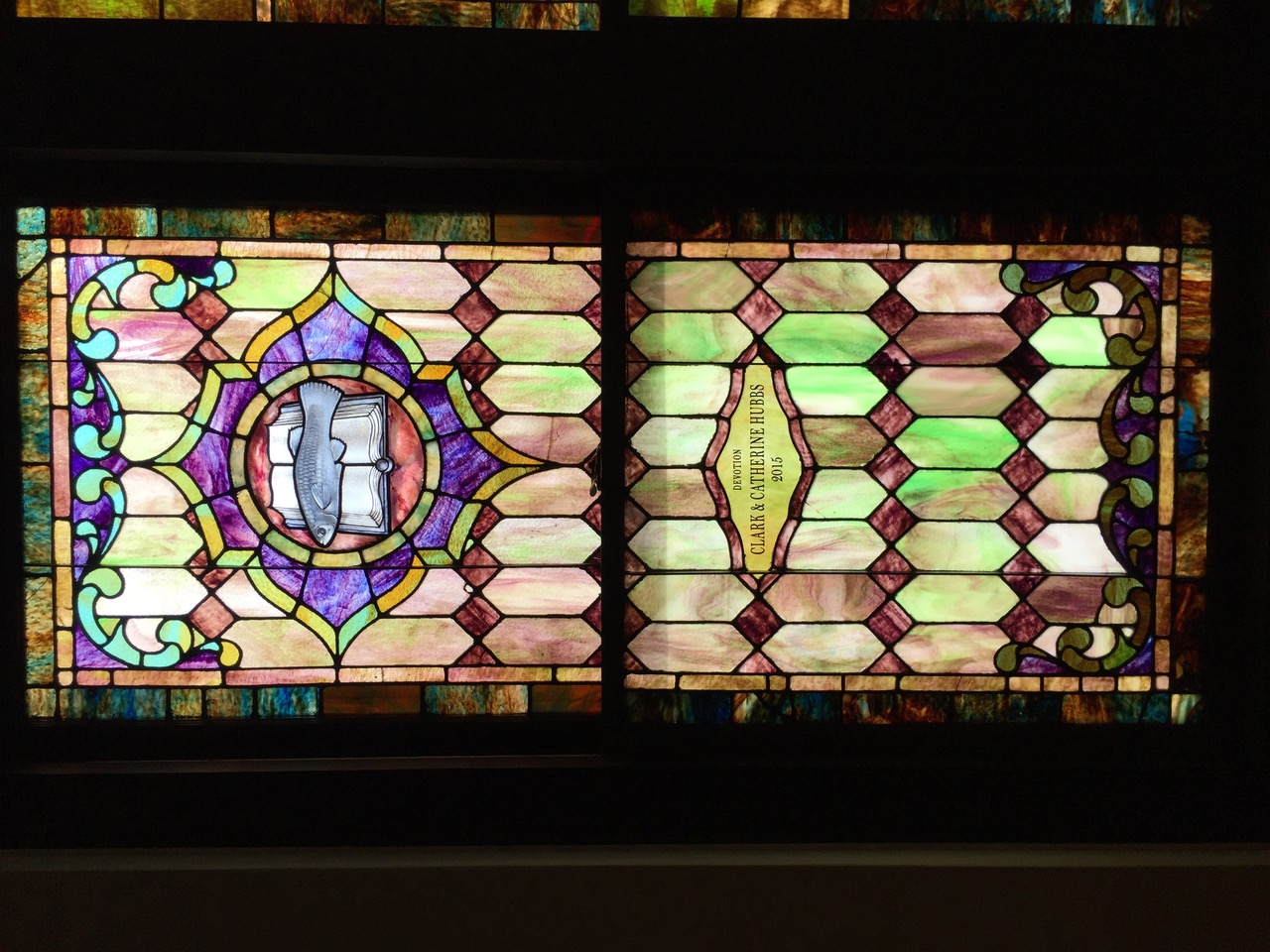
In Honor of Clark and Cathy, a window at the church was dedicated in their names. There was video, however it was underexposed and the audio was poor. However a video of a song written by Nodie survives it is available here. Click on the Hubbs window below.
Clark and Cathy Hubbs Family Photos
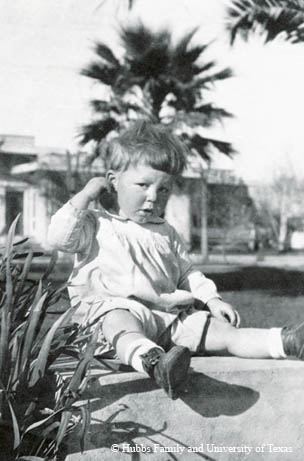
Clark Hubbs
Cathy Symons (Hubbs), age 2
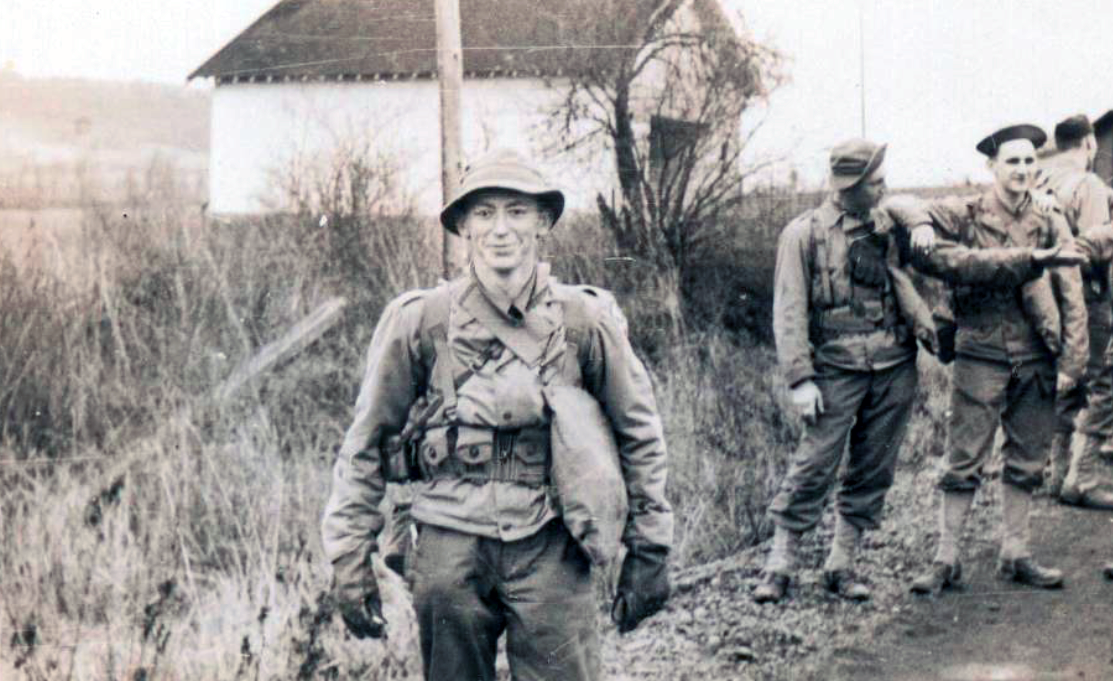
Private First Class Hubbs during World War II
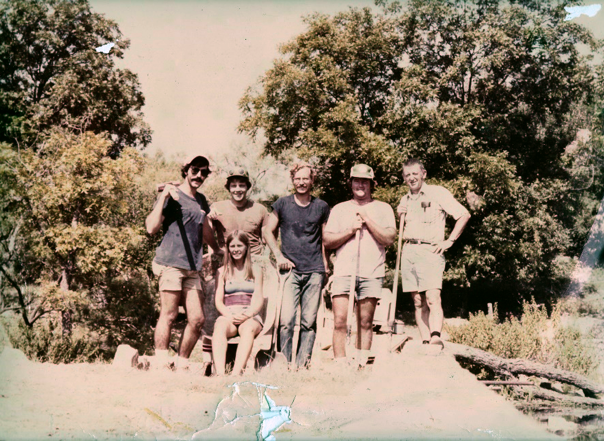
Clark and graduate students in 1979 working to repair habitat for the federally endangered Clear Creek Gambusia Gambusia heterochir.
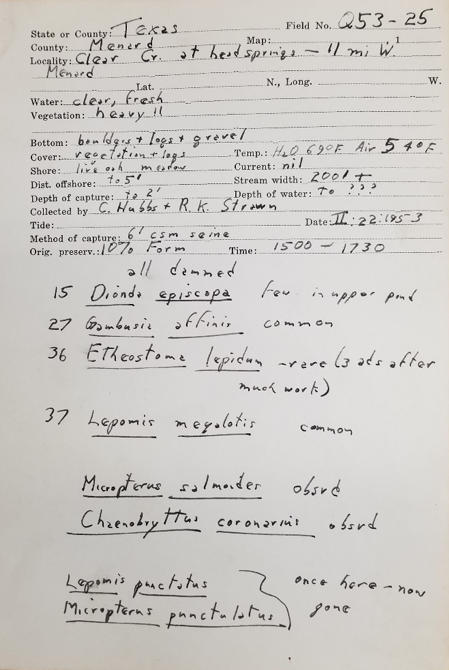
Field notes from Clark’s first collection of Clear Creek Gambusia. Originally thought to be Gambusia affinis, in 1957 he described it as a new species – Gambusia heterochir
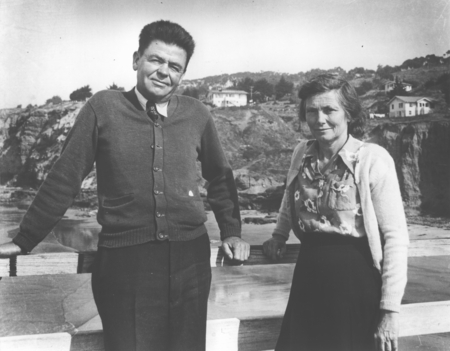
Clark Hubbs parents: Carl Leavitt (1894-1979) and Laura Clark (1893-1988) Hubbs
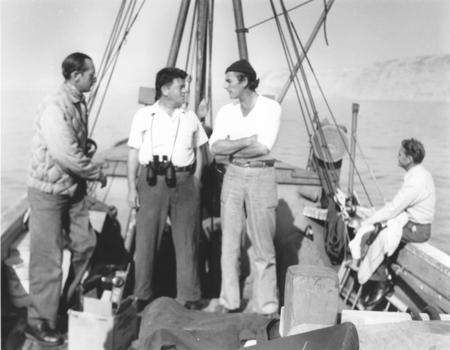
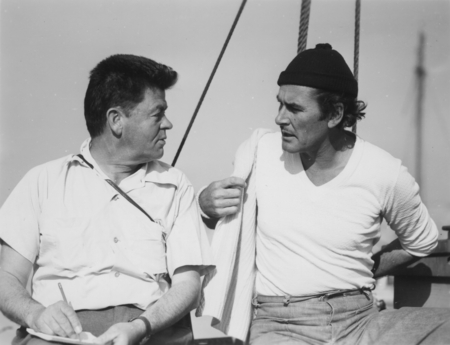
Carl Leavitt Hubbs (Clark's father) and Errol Flynn on Scammons Lagoon Trip, 1948, Movie was "Cruise of the Zaca"
Oceanographer Carl L. (Carl Leavitt) Hubbs (left) and actor Errol Flynn (right) photographed together aboard the Zaca (yacht). Errol Flynn's hair was considered very long for this time period, due to the fact that he was still in character for a movie role playing Don Juan. January 1948.
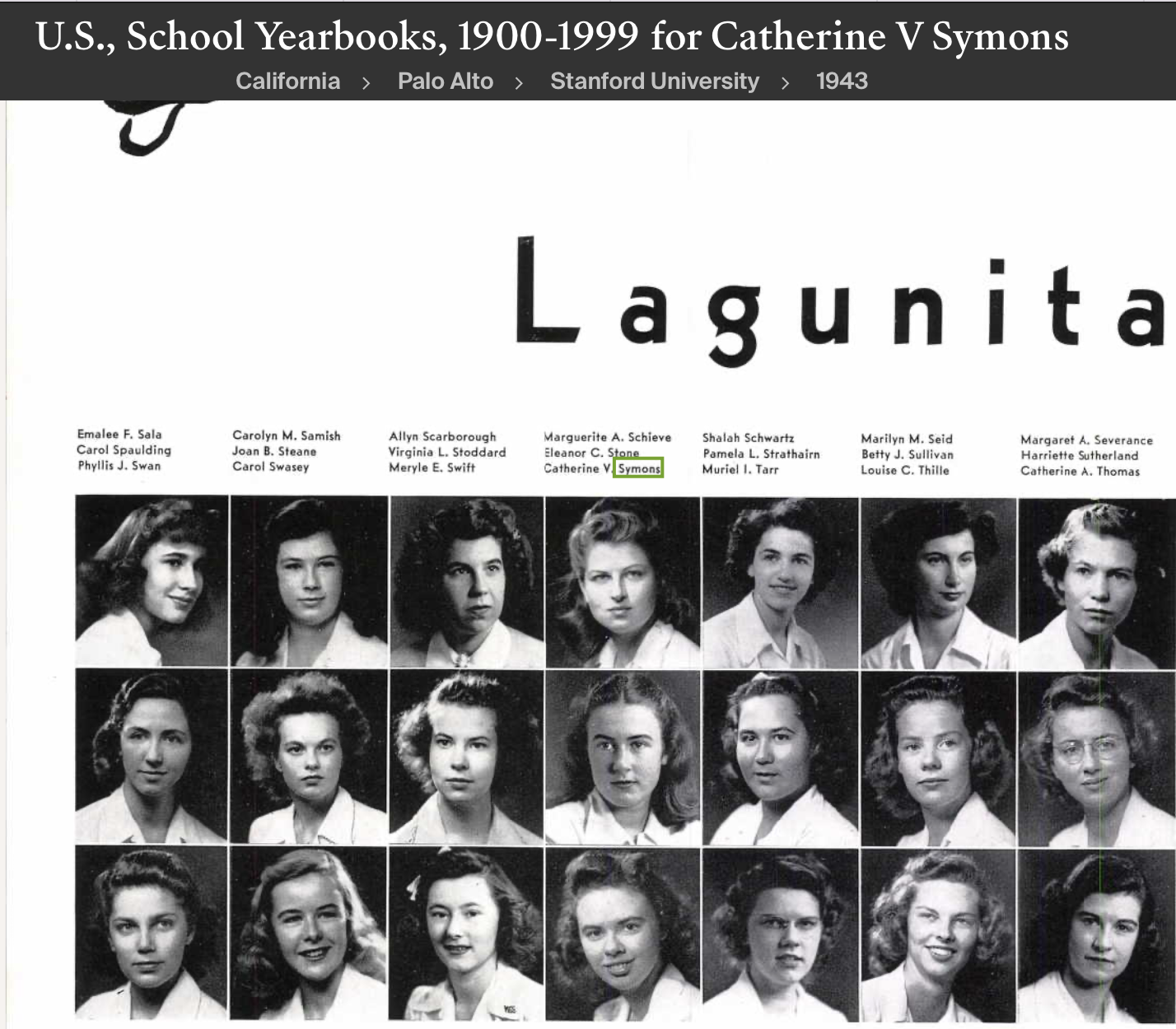
Cathy Symons, Stanford U., 1943
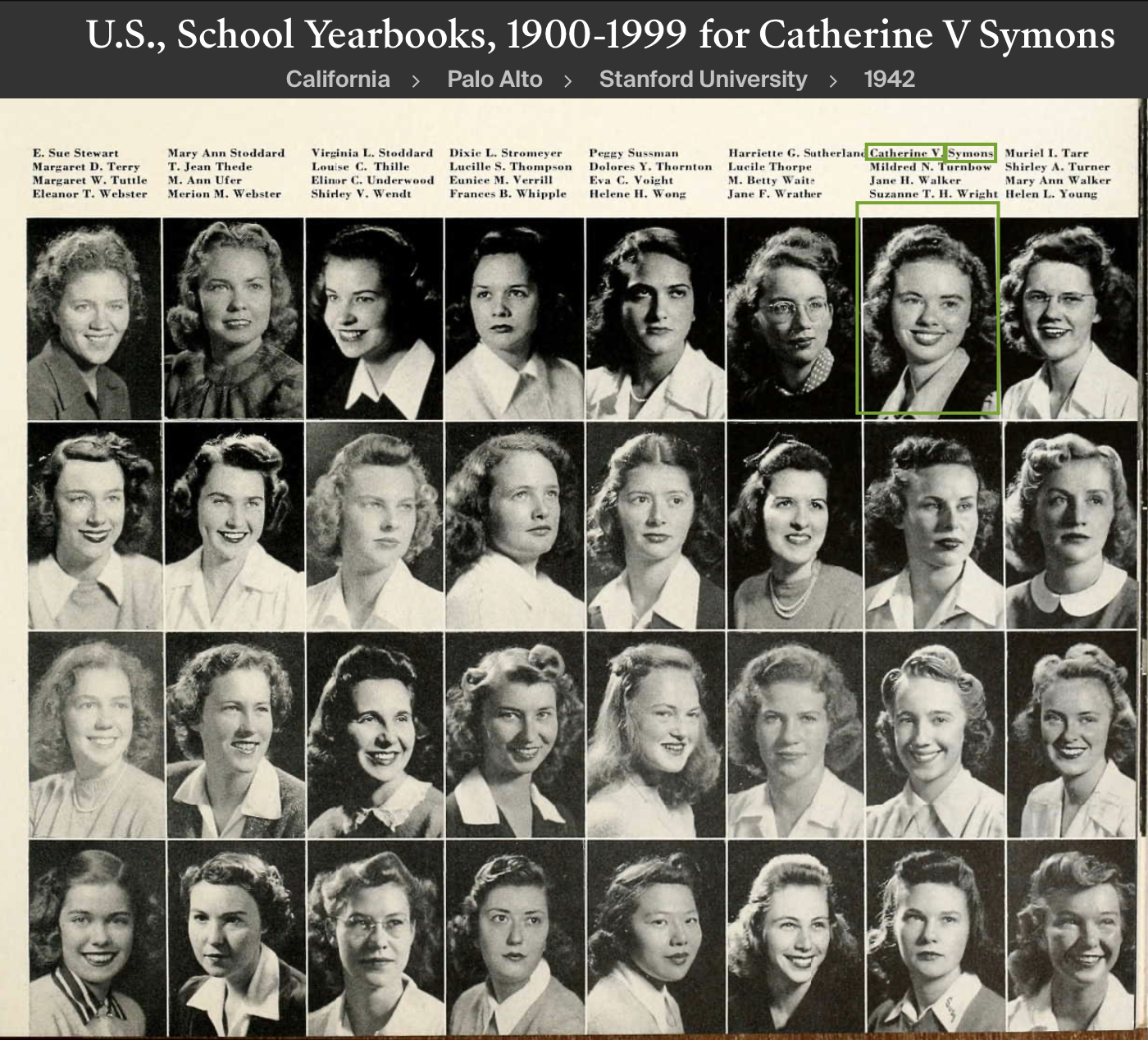
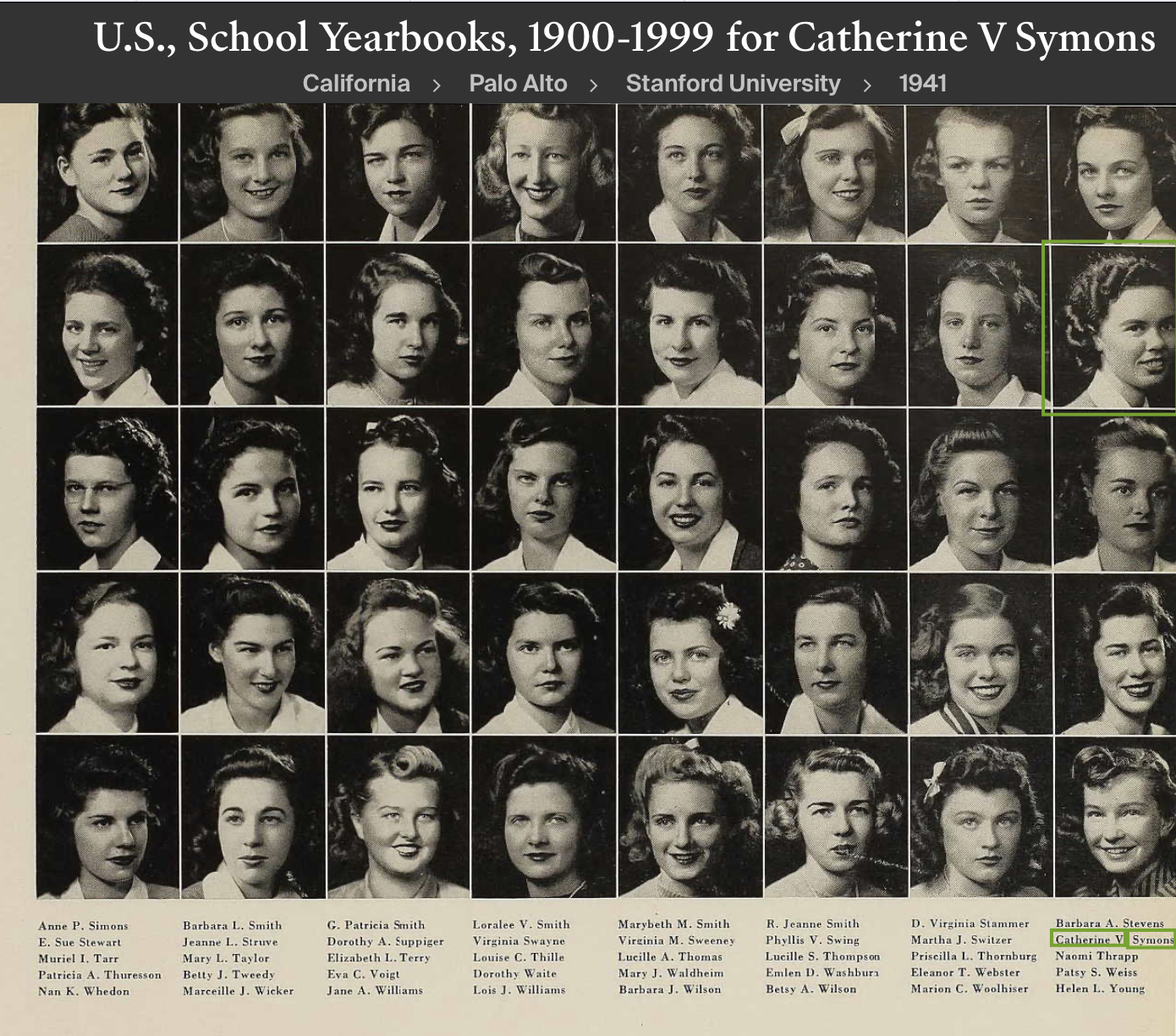
Cathy Symons, Stanford U., 1941
Cathy Symons, Stanford U., 1941
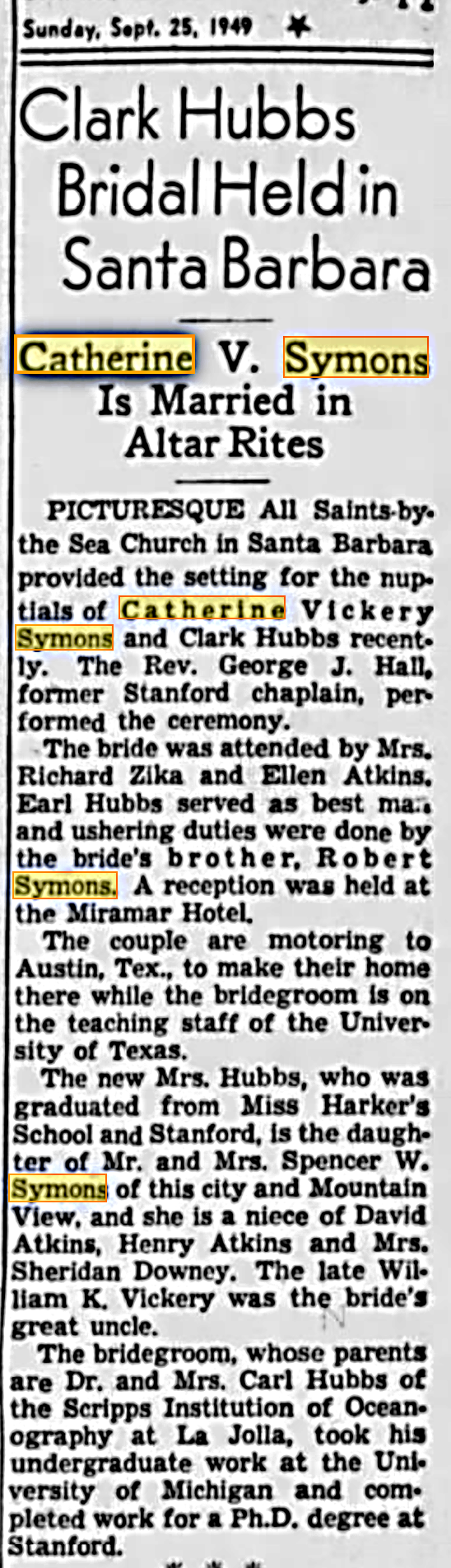
Hubbs Wedding Announcement, Sept. 29, 1949, San Francisco Examiner
About 1965 Choir--Cathy Hubbs, Dick Swallow, Matt Blackstock, Weldon Scheel, Alfred Wupperman
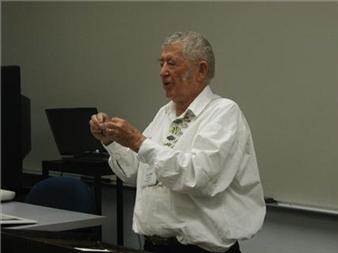
Clark Hubbs lecturing.
Clark Hubbs, Kerrville, Texas
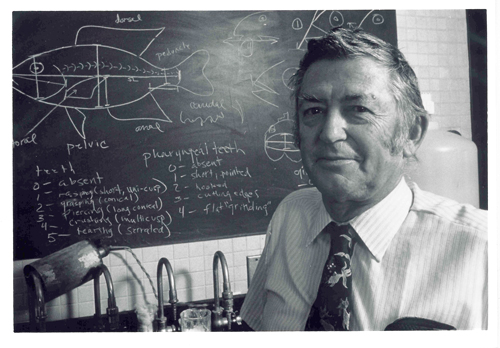
Clark Hubbs at work.
Cathy Hubbs teaching Sunday School. 1957
Ruth Amanda Schuckman Johanningsmeier (June 8, 1924 - June 13, 2013), teaching Sunday School. Laura Hubbs behind John Hubbs. 1957
Ruth Amanda Johanningsmeier, 89, of Suffolk, VA passed away on June 13, 2013. A native of Freelandville, IN, she was the daughter of the late Walter Schuckman and Rosa Hamke Schuckman. She was also predeceased by her husband Alfred Johanningsmeier. Ruth was a member of Oakland Christian United Church of Christ.
She is survived by her daughter, Carol Johanningsmeier of Suffolk, VA; her son and daughter-in-law Ronald and Esther Johanningsmeier of San Antonio, TX; grandsons: CAPT. US Marine Corps Benjamin Johanningsmeier and his wife Michelle and Mark Johanningsmeier; great grandchildren Gillian and Colin; brothers and sisters-in-law, Paul and Helen Schuckman of IN and Edward and Rosalie Schuckman of FL.
A Celebration of Life will be held on Saturday, June 22, 2013, at 3:00 p.m. at Lake Prince Woods chapel with Rev. Woodie Rea officiating. Friends may join the family on Friday, June 21, 2013 from 5:30 – 6:30 p.m. at the funeral home for visitation. Inurnment will be in Indiana. In lieu of flowers, memorial donations may be made to the Back Bay Mission, 1012 Division Street, Biloxi, MS 39530. Condolences may be registered online at www.parrfuneralhome.com
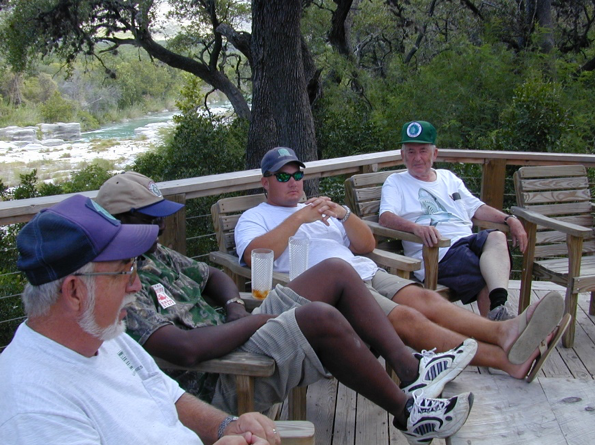
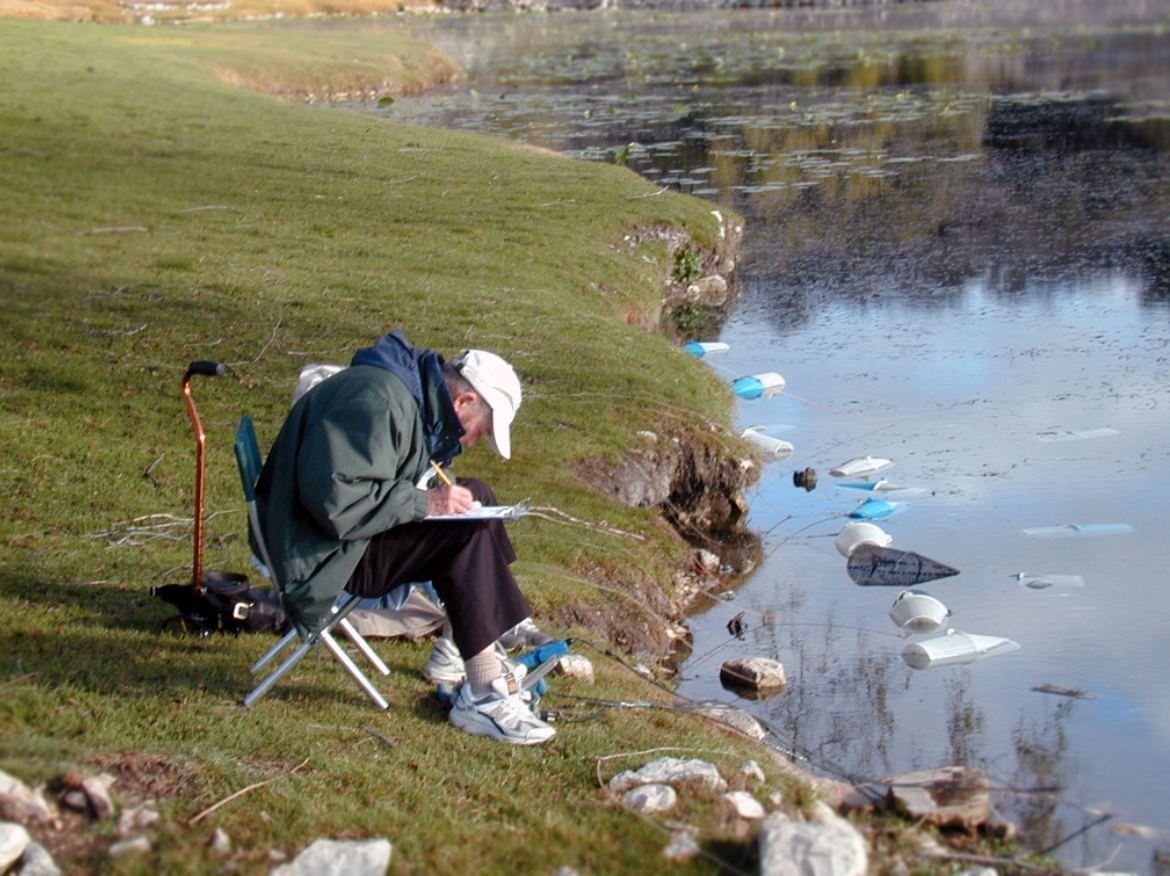
Clark in 2003 relaxing after a day of fish collecting with Texas Parks & Wildlife biologists at Dolan Falls on the Devils River
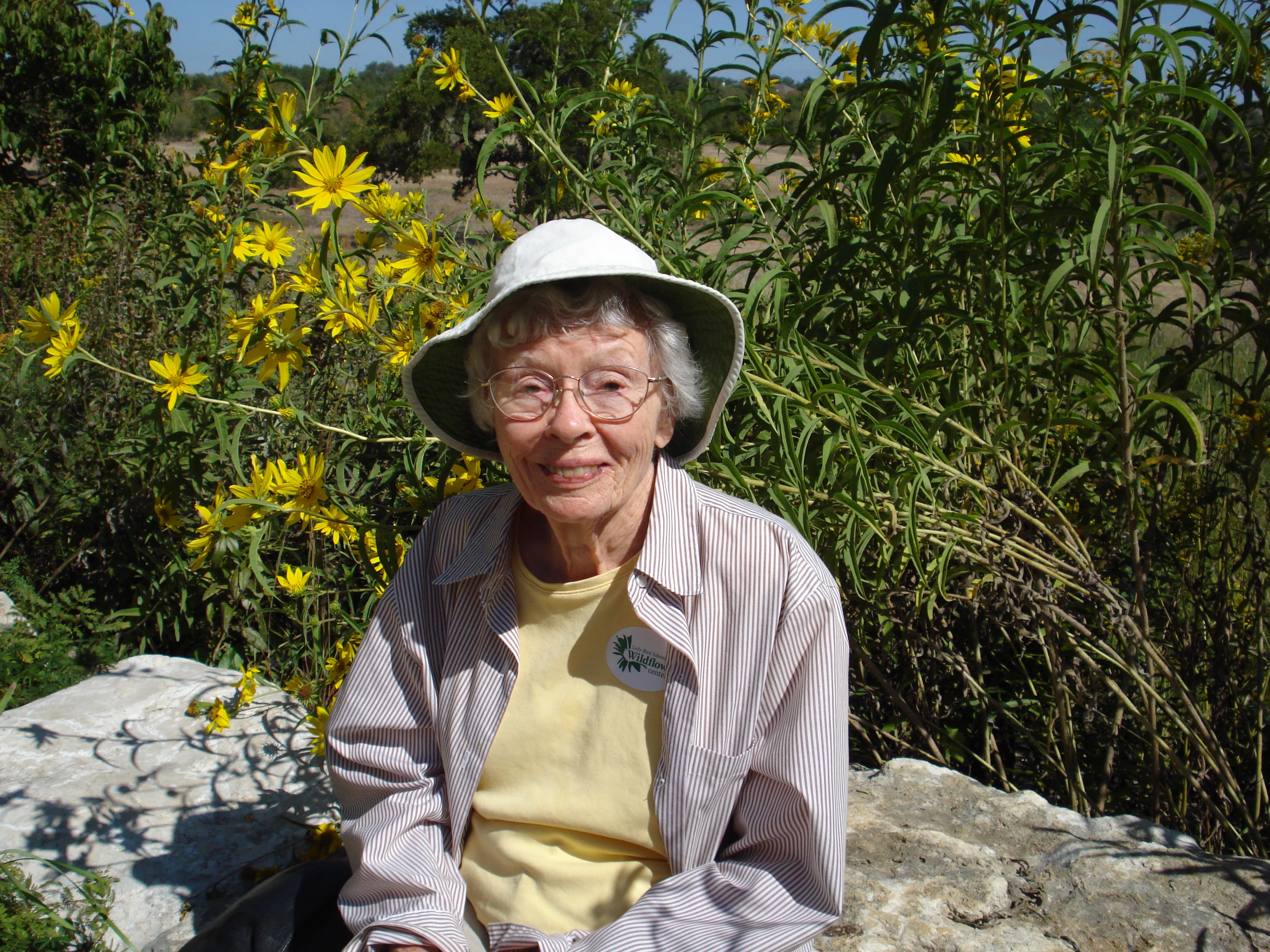
Cathy Hubbs, Lady Bird Johnson Wildflower Center. October 2008
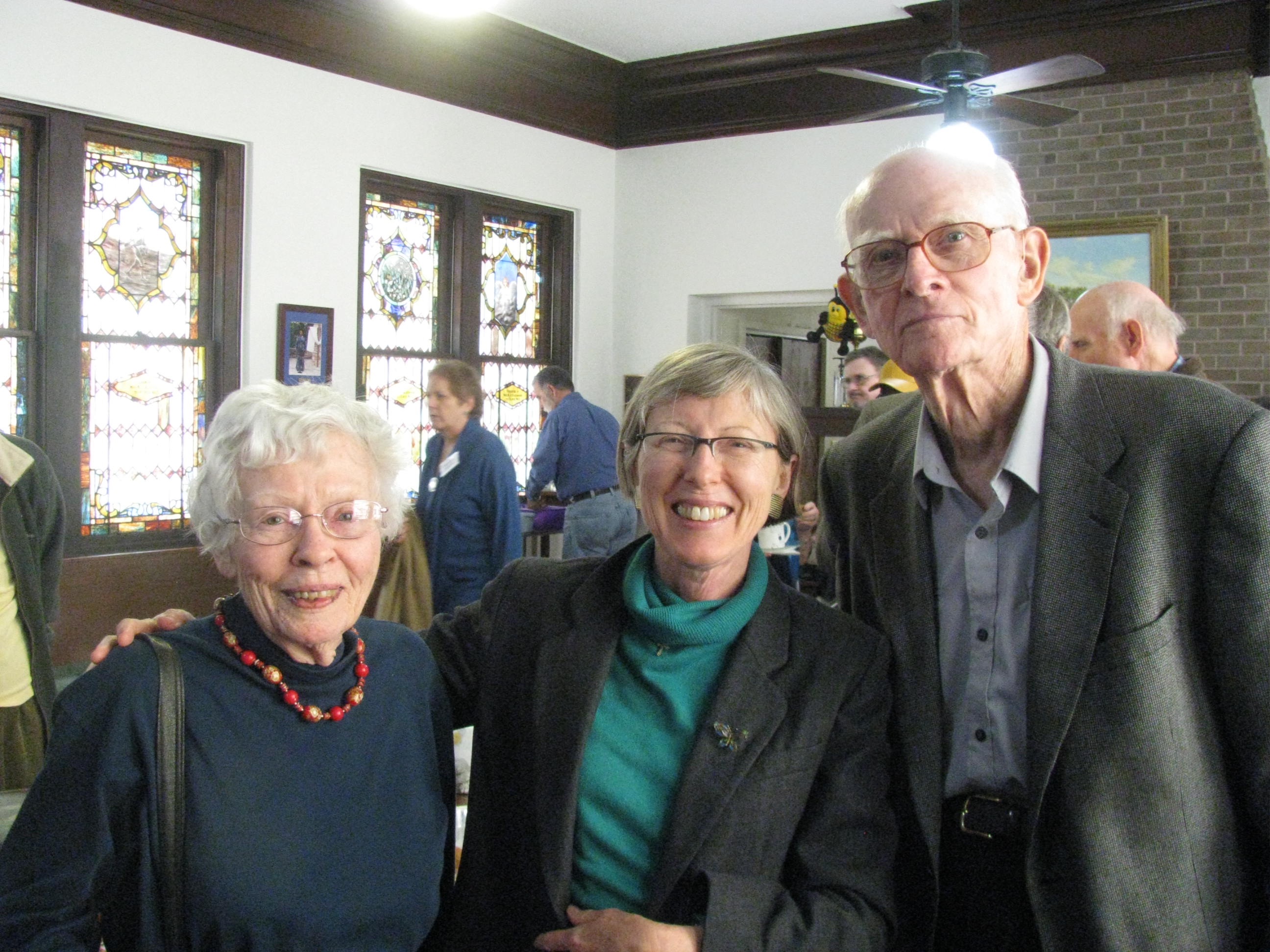
Cathy Hubbs, daughter Laura Hubbs Tait and Ben White
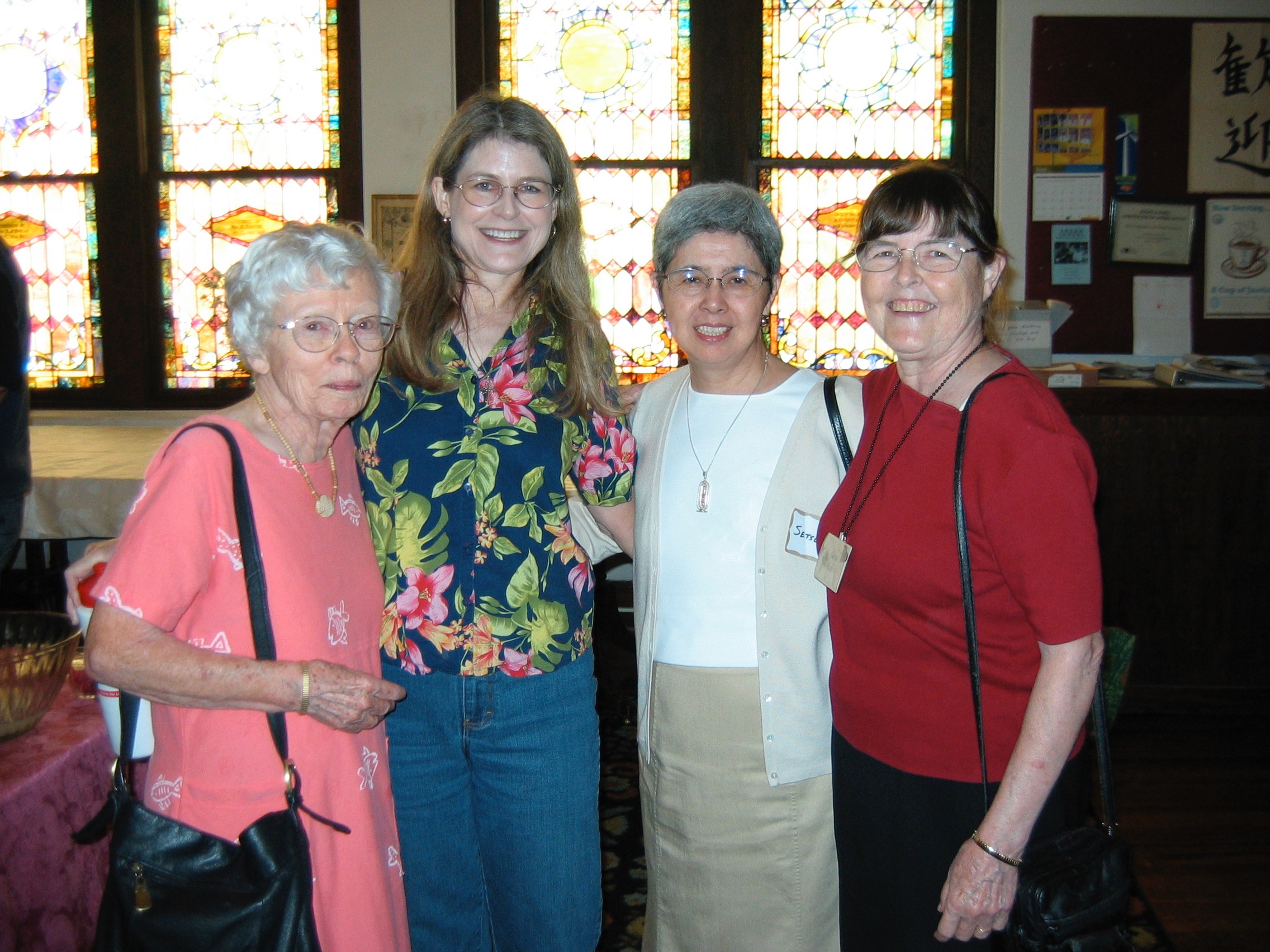
Cathy Hubbs, Norma Hawes, Setsuko Kaneda, Sara Ross
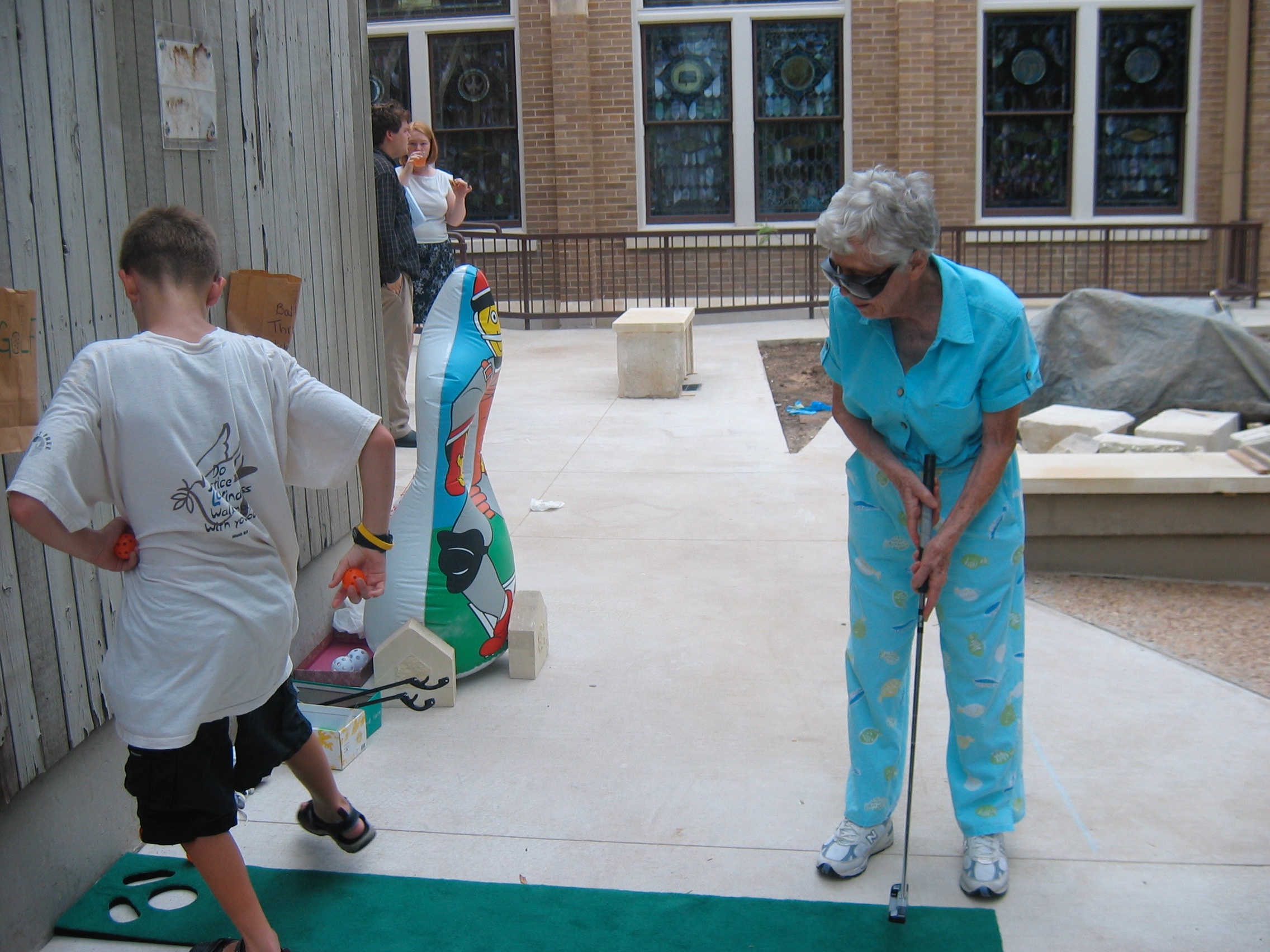
Cathy Hubbs, putting and Cameron Goff
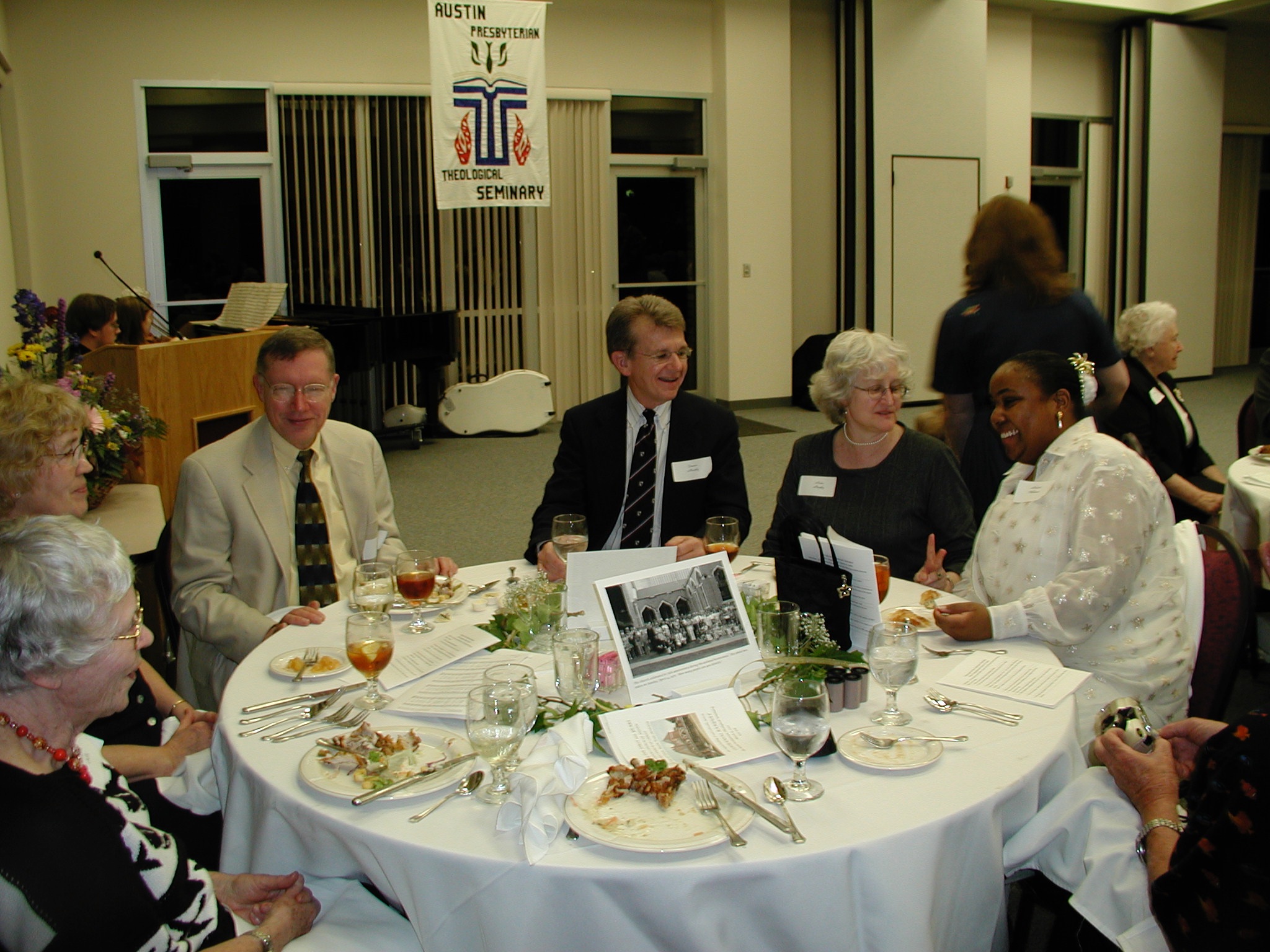
Cathy Hubbs, Jane and Rich Thompson, Dennis and Nodie Murphy, Melanie Wilkerson, Cenntenial Dinner,
Congregational Church of Austin, 2001
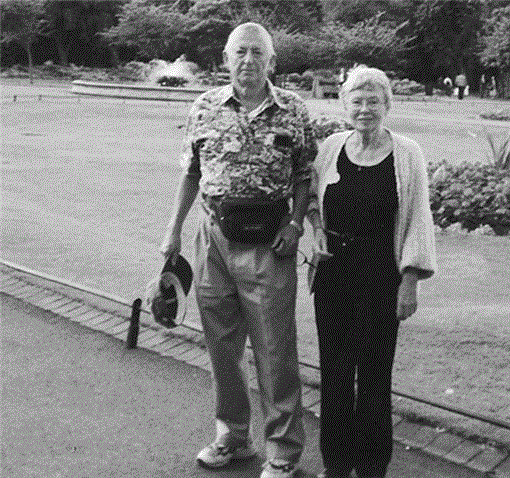
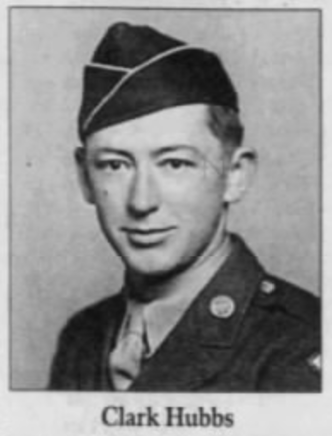 Clark Hubbs left this world on February 3, 2008, following a lengthy battle with colorectal cancer. He was born March 15, 1921, and was the second child of noted naturalists, Carl and Laura Hubbs. He had a brother and two sisters. His brother, Earl, became a biology teacher and his sister, Frances, married the ichthyologist Robert Rush Miller. His other sister, Margaret, died in childhood.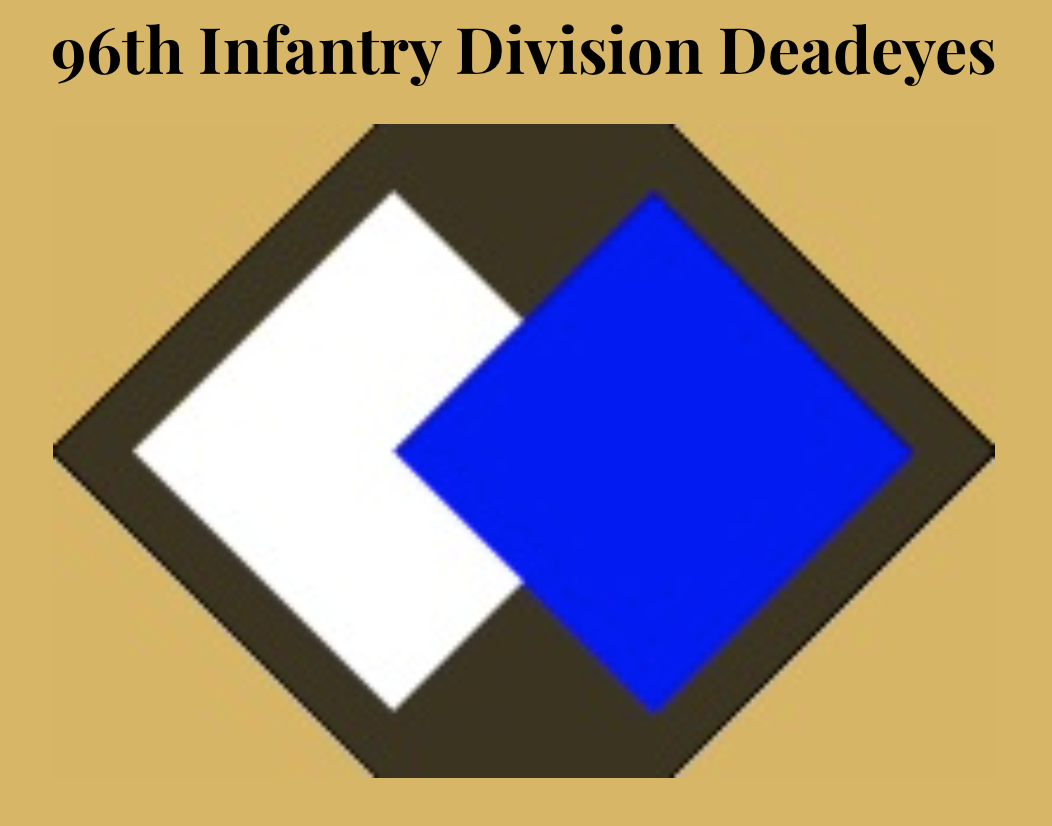

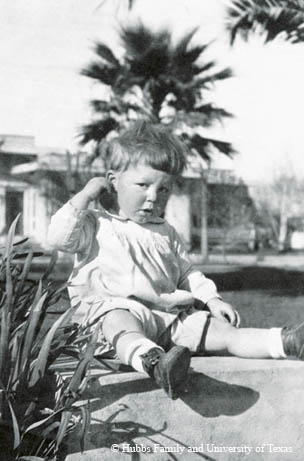


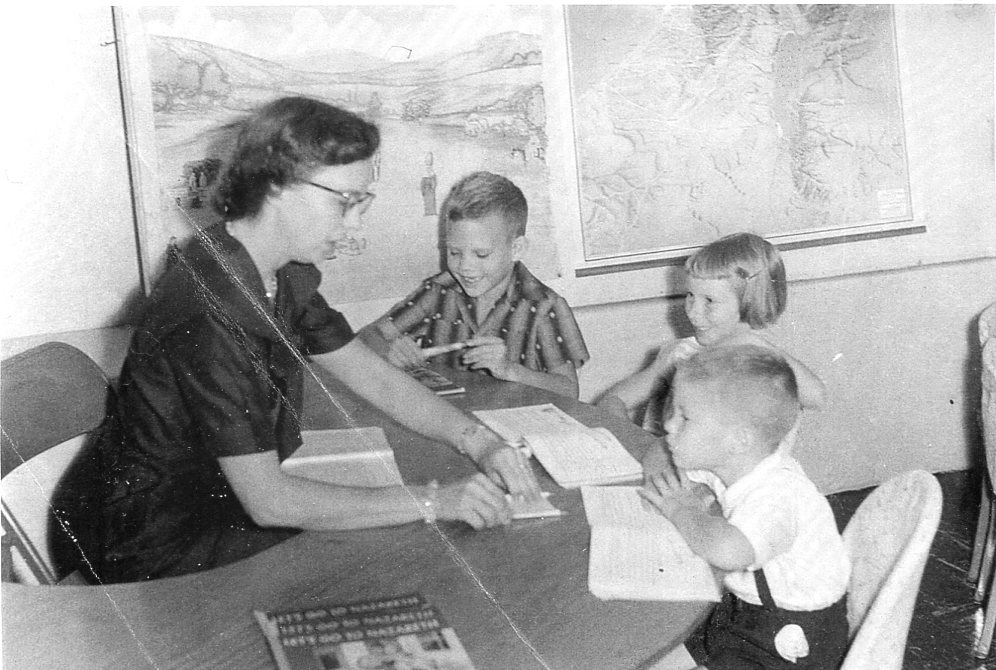
 Ruth Amanda Johanningsmeier, 89, of Suffolk, VA passed away on June 13, 2013. A native of Freelandville, IN, she was the daughter of the late Walter Schuckman and Rosa Hamke Schuckman. She was also predeceased by her husband Alfred Johanningsmeier. Ruth was a member of Oakland Christian United Church of Christ.