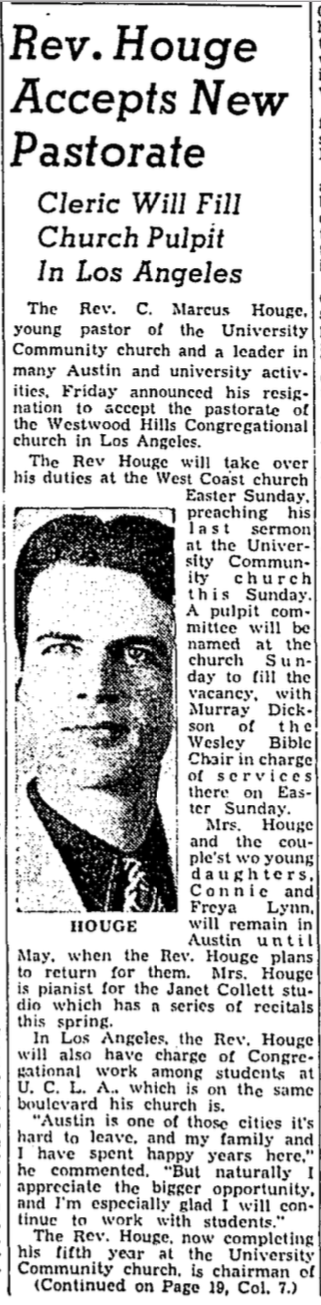
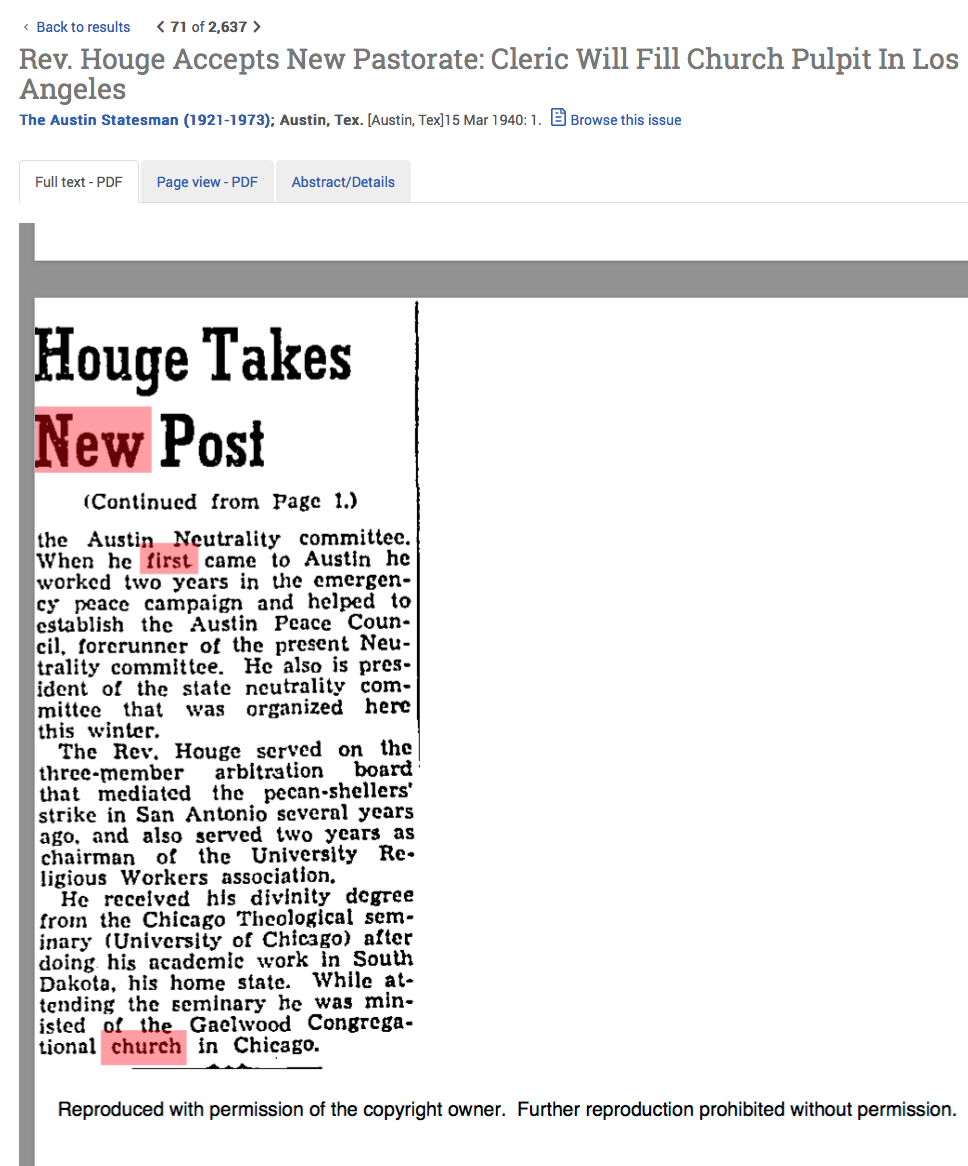
S. Marcus Houge
(1905-1984)
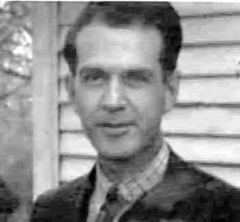
S. Marcus Houge
September 1, 1935-March 1, 1940
S. Mark Houge (1905-84). In the fall of 1935, S. Marcus Houge was called to the church following graduation from Chicago Theological Seminary. He continued the student work already in “full-swing” with an average attendance of 45 in the Fellowship Club, and added to the program: Campus Critics, a group which met to discuss books on social, economic and political issues.
He was very interested in ACTION, not just talk. During Lent, he was asked by radio station KNOW to read a meditation each day except Sunday, and then, by popular demand, he was asked to continue with the meditation the rest of the year.
He refurnished the Chancel—had it ready by Easter—and presented the JUNIOR Choir at that time wearing their new vestments. (The robes were made by the women of the church.)
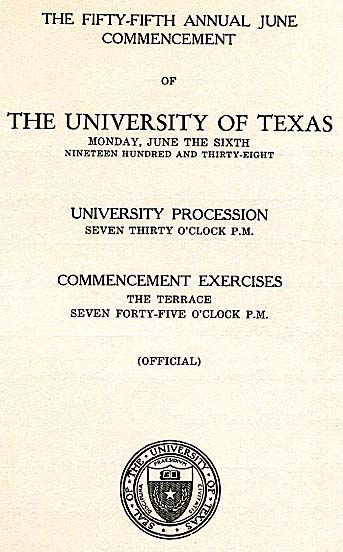
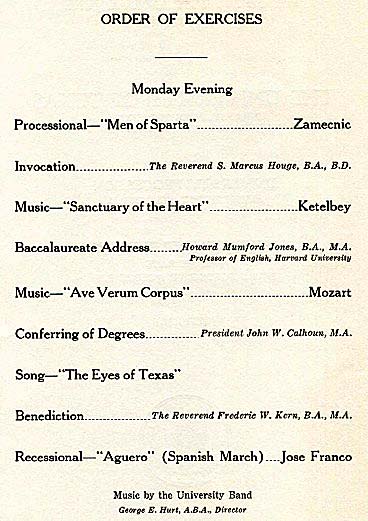
He served on the arbitration board in San Antonio dealing with a pecan strike. He started the unified church service joint picnic with the San Antonio church, and held services with the University Presbyterian Church. Held meeting on civil liberties, natural resources, taxation, amendments to Texas Constitution and “How the U. S. can stay out of next war.” He supported the Emergency Peace campaign. He campaigned against the establishing of an ROTC unit on the UT Campus. The young people in the church attended a camp at Caterville, OK. Many programs were started during his ministry, including a Student Religious Council, an inter-church youth council of the University churches plus youths from the YMCA and YWCA. He was chosen to provide the invocation at the 1938 UT Commencement.
On January 8, 1939, Rev. Houge invited Maury Maverick to deliver a sermon and lead a discussion on civil liberties. It was announced that Maverick was the only Southern member of Congress who had voted for the Dyer Antilynching Bill. From 1882 to 1968, nearly 200 antilynching bills were introduced in Congress, and three passed the House. Seven presidents, between 1890 and 1952, petitioned Congress to pass a federal law. Not one bill was approved by the Senate because of the powerful opposition of the Southern Democratic voting block. The sermon proved to be highly popular. Two hundred and sixty people crowded into the church, including the mayor of Austin.
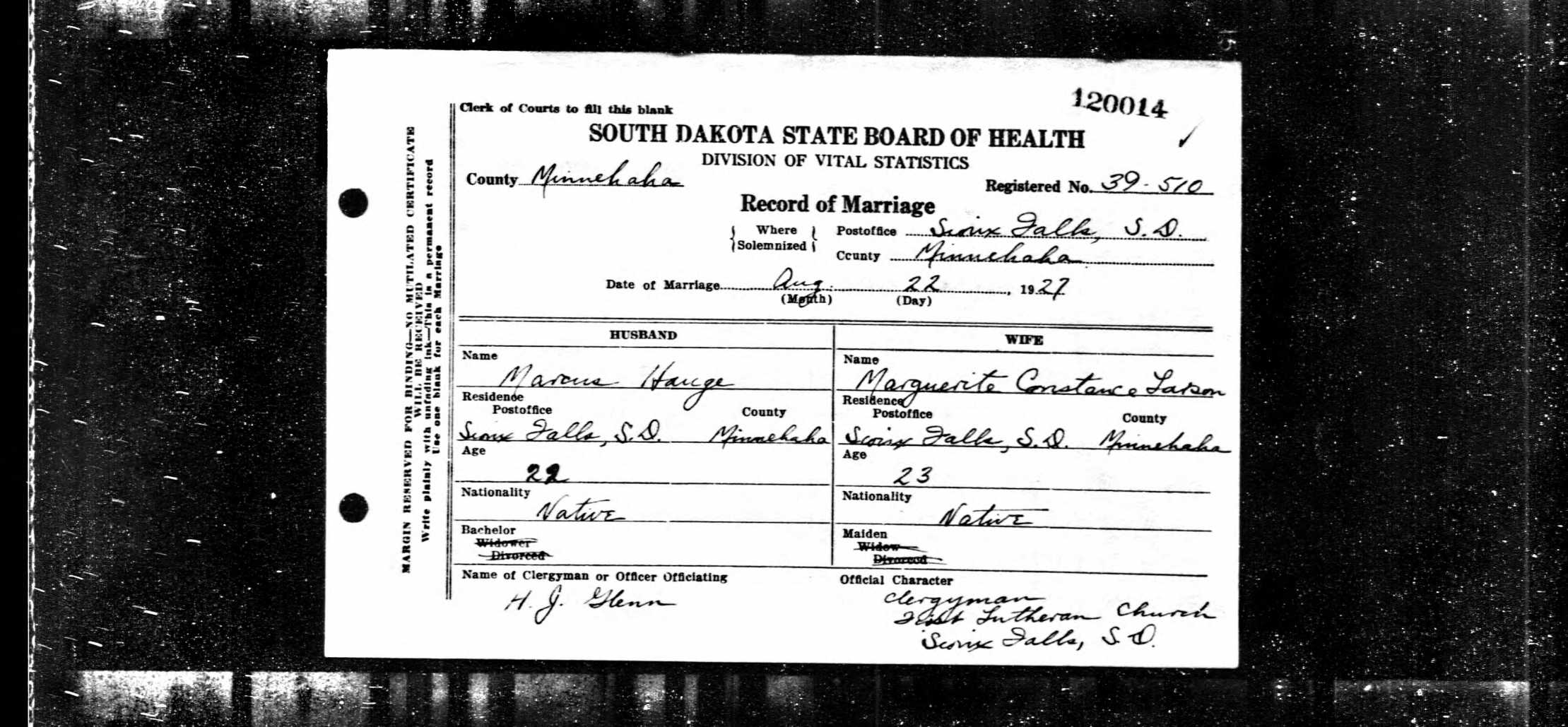
Rev. Houge was born in Wacousta, Humboldt, Iowa, on January 4, 1905. He was baptized in the Trinty Luthern Church on January 24, 1905. Seaver G. and Sarah G. Johnson Houge, his parents, were farmers. He was the youngest of eight children. His grandparents were both born in Norway. Seaver was born at sea. Marcus attended Augustina College in Sioux Falls, SD, where he was a debator (orator), winning the state contest. Rev Hogue was married on August 22, 1927, to Marguerite Constance Larson (1904-96) in the First Lutheran Church of Sioux Falls, SD. This was Marguerite’s home church. They had three children, Constance (Danielson) (1929-2010)= and Freya Lynn (1939-?) and Kristin Grace (Murk) (1953-). Marguerite and Constance are born in North Dakota. Freya likely was born in Austin. He attended the Chicago Theological Seminary, graduating with a BD in 1935. His thesis was entitled, Preaching and Freedom. While in Chicago, Rev Houge was the student pastorate of Galewood Congregational Church.
Marguerite was a musician in a dance studio while in Austin. Income as minister in 1939 was $1200/yr. In March of 1940, Marcus resigned to go to Westwood Hills Congregational Church in Hollywood, CA. Marcus and Marguerite were divorced sometime before 1951. She was an office worker in Long Beach, CA, later moving to Seattle, WA, where she died in 1996. She is buried in Hills of Rest Memorial Park, Sioux Falls, SD. Following his divorce from Marguerite, he married a Tyler and they had a daughter, Kristin Grace (Murk) (1953-).
In 1955, Marcus was a minister in Belaire, CA and his wife’s name was Shirley. His obituary listed a Kristin Murk as a daughter, likely from this second marriage. He was minister of Westwood Hills Congregational Church. He ran as a democrat for Congress in the Sixteenth Congressional District in Los Angeles in 1952. He won the primary. He decided to run against Rep Donald L. Jackson because Jackson charged on the floor of the House that Bishop G. Bromley Oxnam “serves God on Sunday and the Communist front for the balance of the week.” This slanderous statement was too much for Rev. Hogue, who made it a personal matter. Hogue lost to Jackson.
Hogue’s involvement with peace efforts is suggested in this paragraph from “Meredith Willson, America's Music Man: The Whole Broadway-Symphonic-Radio-Motion Picture Story” by Bill Oates (2005). He writes, “ In contrast to the lighter fare, Meredith Willson also composed his Anthem of the Atomic Age with Los Angeles' Westwood Congregational Church pastor, S. Mark Hogue. Published in l950, the song restates the theme that God made all men in His image, and that because God created each atom, man must use the power contained therein with the wisdom that the Creator gave to those who were set above all other beings.
With the Korean "police action" of 1950 evolving into the Korean War only five years after the Second World War, Willson and Houge sought to direct their peaceful musical sermon as a plea that cool heads prevail and not use atomic weaponry as had been done to end the Second World War. To send their message, the two envisioned singers from around the world expressing their desires for freedom in thirty-four languages. Willson told one reporter, "If we would appreciate what our fellow man is all about, and show him we care, we would not be in all this trouble."
From 1973 Van Nuys News newspaper, “Dean Martin and Model Tell Vows; Sinatra Best Man.” Model Catherine (Kathy) Hawn and entertainer Dean Martin were married last night before a small group of relatives and friends at Martin's Bel-Air mansion. A spokesman for the couple said the marriage ceremony, performed by the Rev. S. Mark Houge of Westwood Hills Congregational Church, took only 12 minutes. Best man was Martin's longtime friend, Frank Sinatra.” He also christened Esther Williams’ daughter in 1954.
| |
|---|
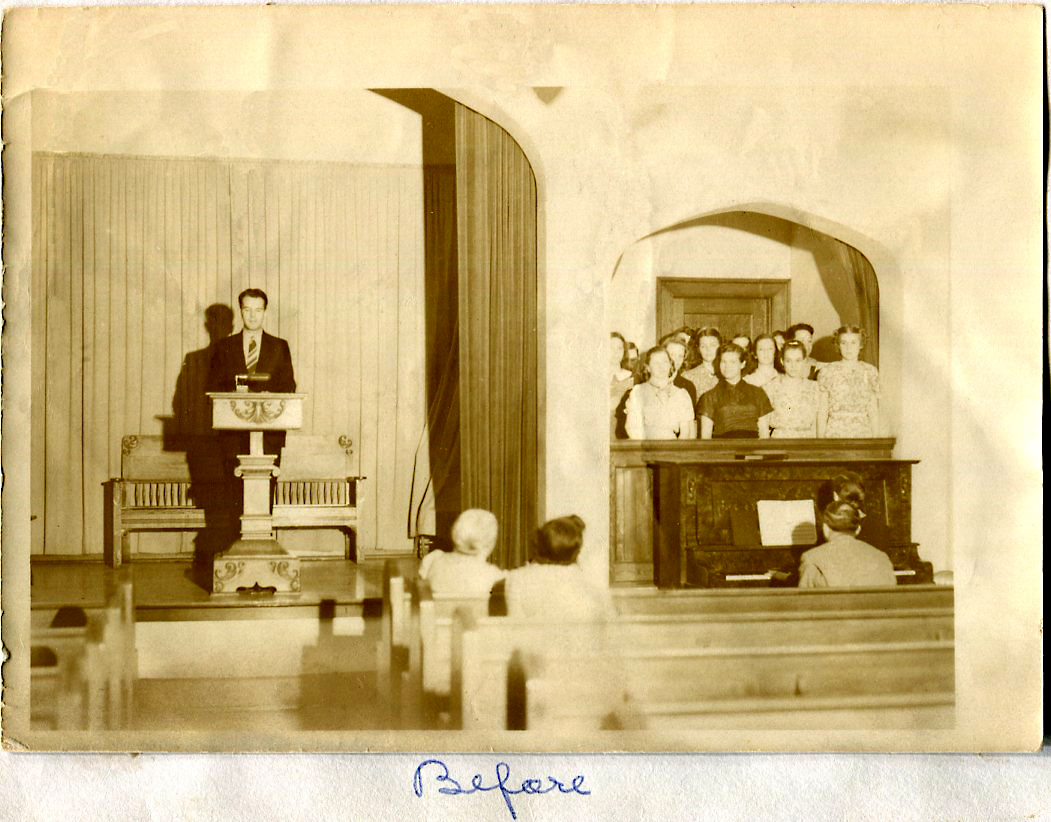
Rev Mark Houge, Junior Choir, Marguerite Hogue, pianist. Front pew: Mark Kuehne. Second Pew: Mrs. Milk
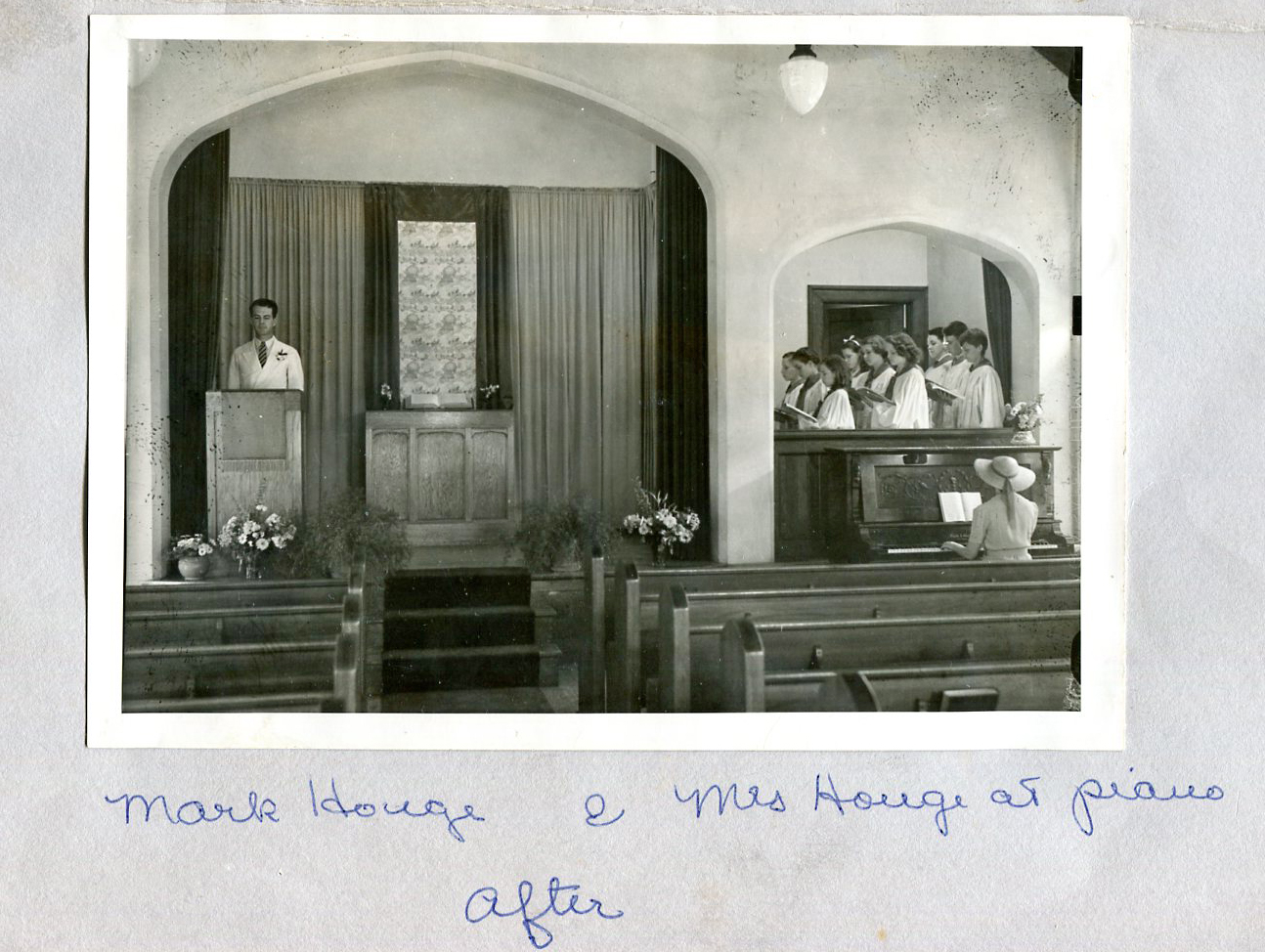
This photo was taken Easter Sunday, April 15, 1938. This was the first service after the refurnishing and beautifying of the chancel. The junior choir performed in vestments furnished by the Women's Association who devoted many hours to their creation. Marguerite Houge is playing the piano.
No. 3 is Helen Winkler, No. 6 is Lois Lay, No. 7 is Sheila Brooks, No. 8 is David Clark, ,No. 10 is Marcus Hogue, No. 11 is Marguerite Houge
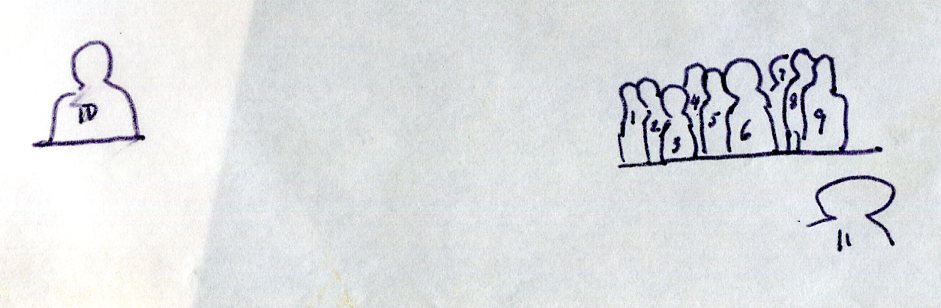
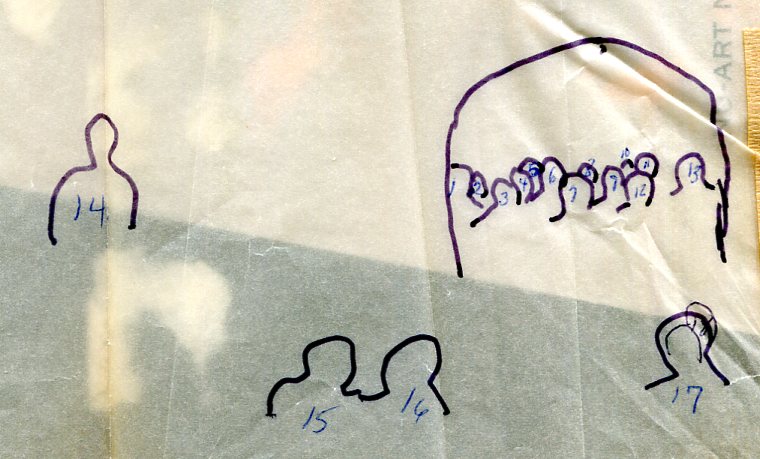
Sadly the names with this id are missing.
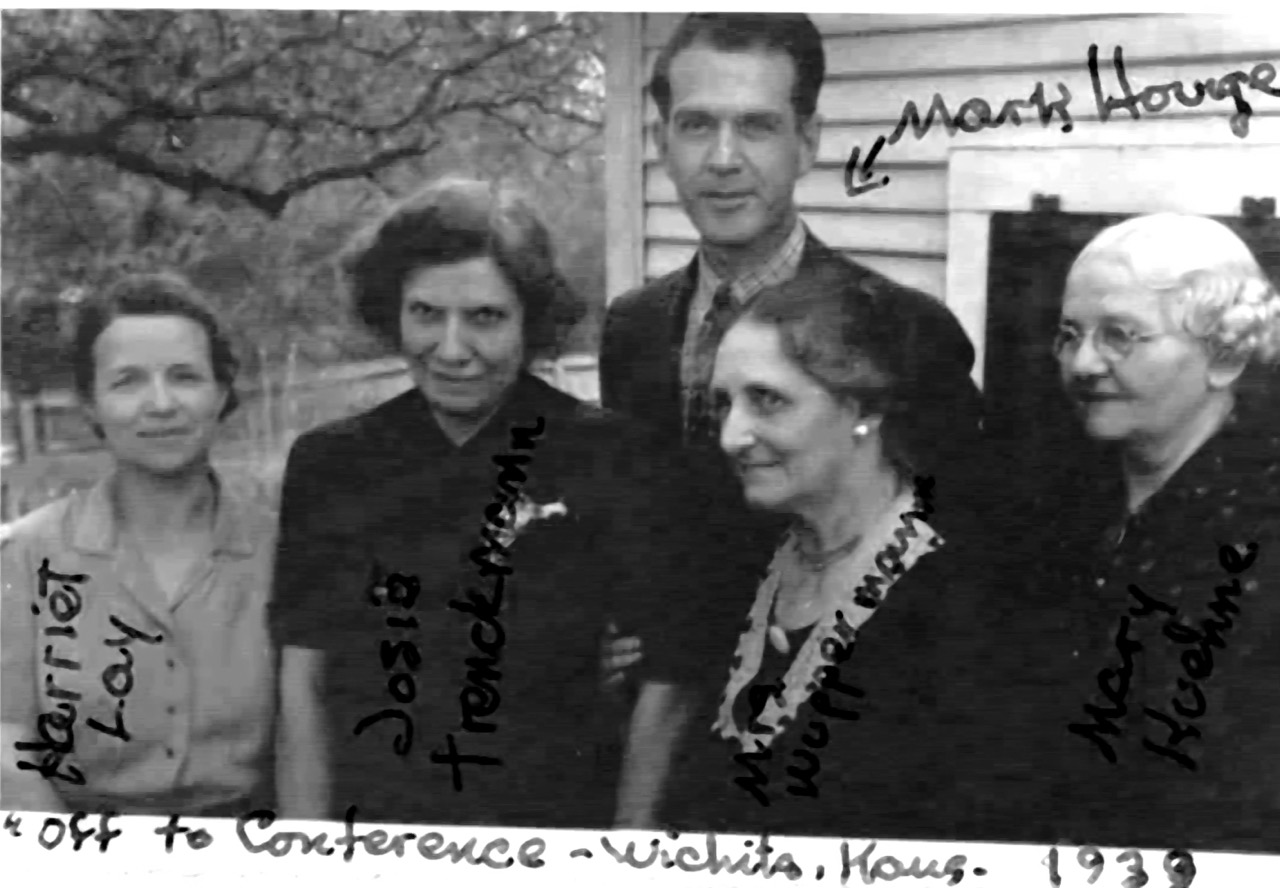
Left to Right: Harriet Lay, Josie Trenchmann, Rev. Marcus Houge, Else Wupperman and Mary Kuehne. The whole group stayed with Hildegard Kuehne Everett in her one bedroojm apartment. Cosy. Rizer Everett was out of town. Rizer worked for Carter Oil Co. as geologist. They lived at1915 Kellogg Ave. Apt. 3.
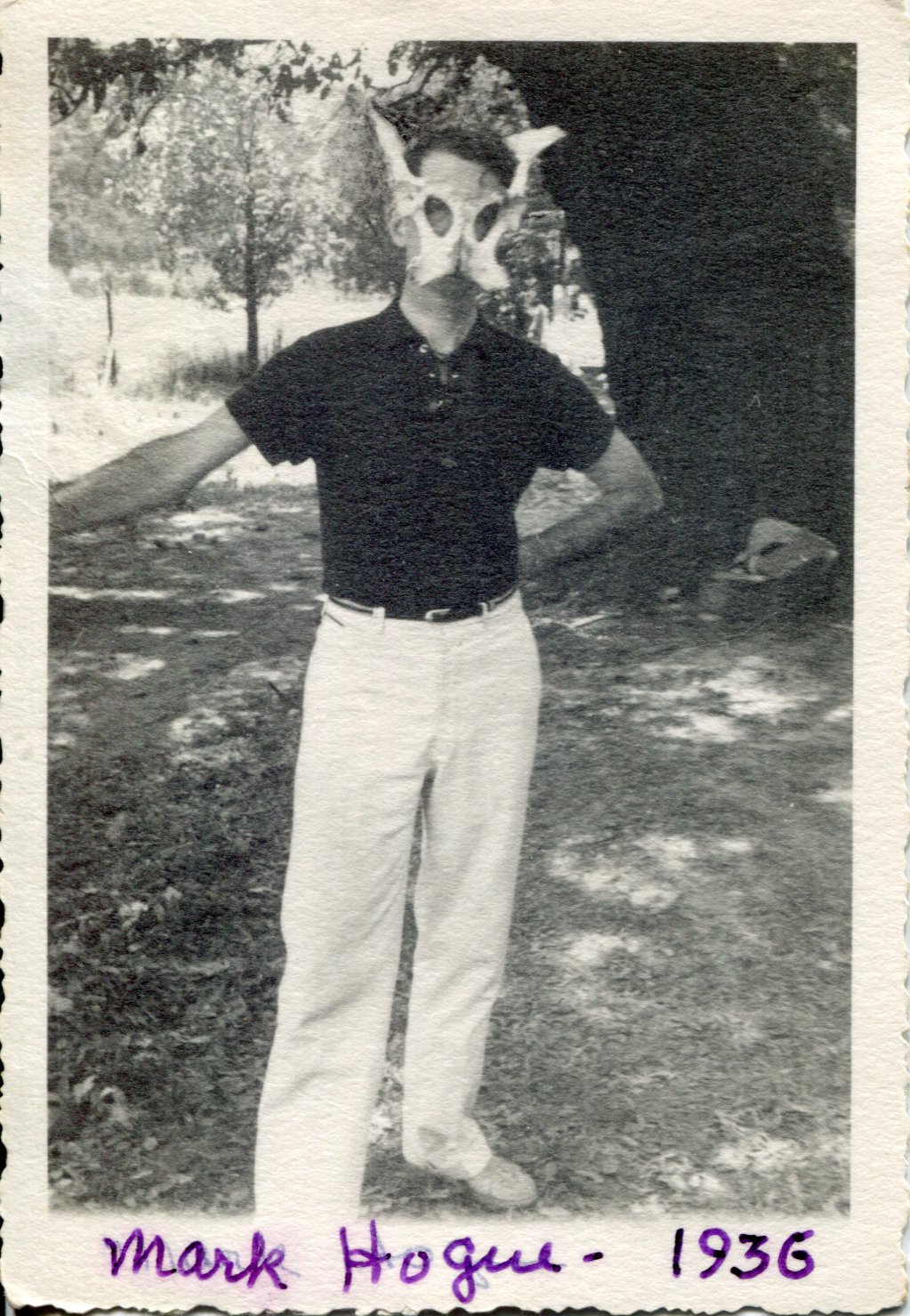
Rev. Marcus Hogue, 1936