Yoshi Kaneda
(1936-)
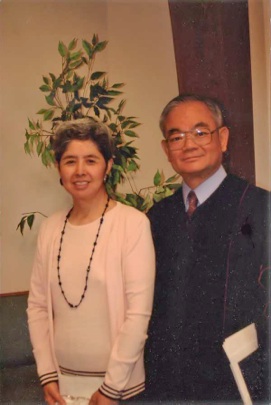
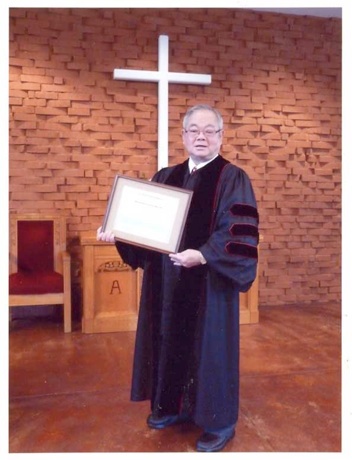
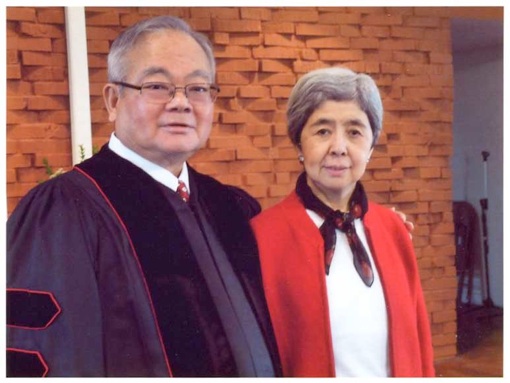
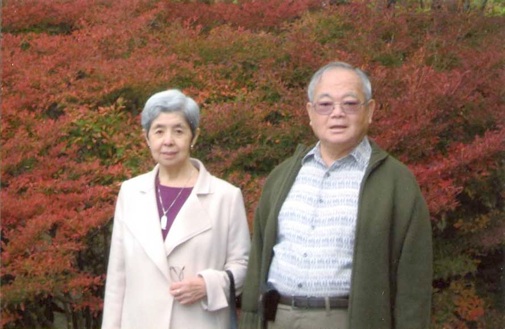
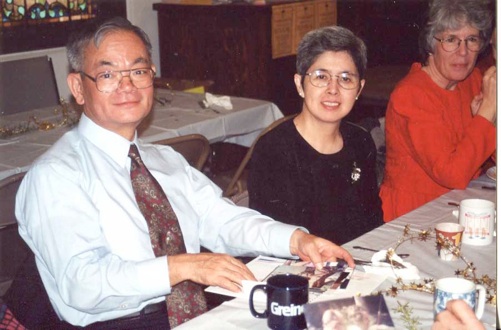
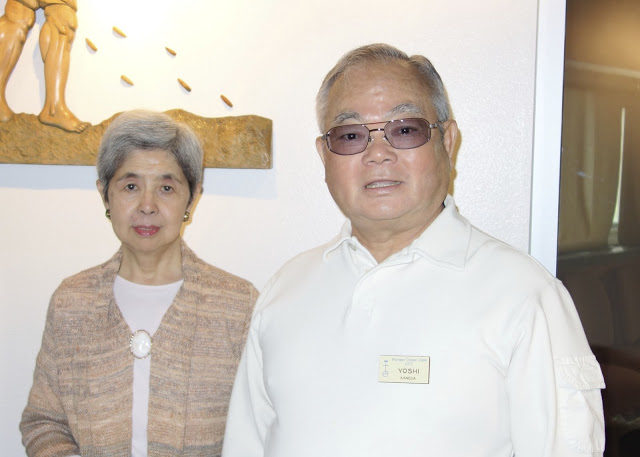
Reverend Yoshi and Setsuko Kaneda
Yoshi Kaneda
(1936-)
Served the Church, September 1989 - March 2001
Yoshi was born in 1936, in Osaka, Japan, the second son of Rev. Hiroyoshi Kaneda and Tazuko Kaneda, DDS.
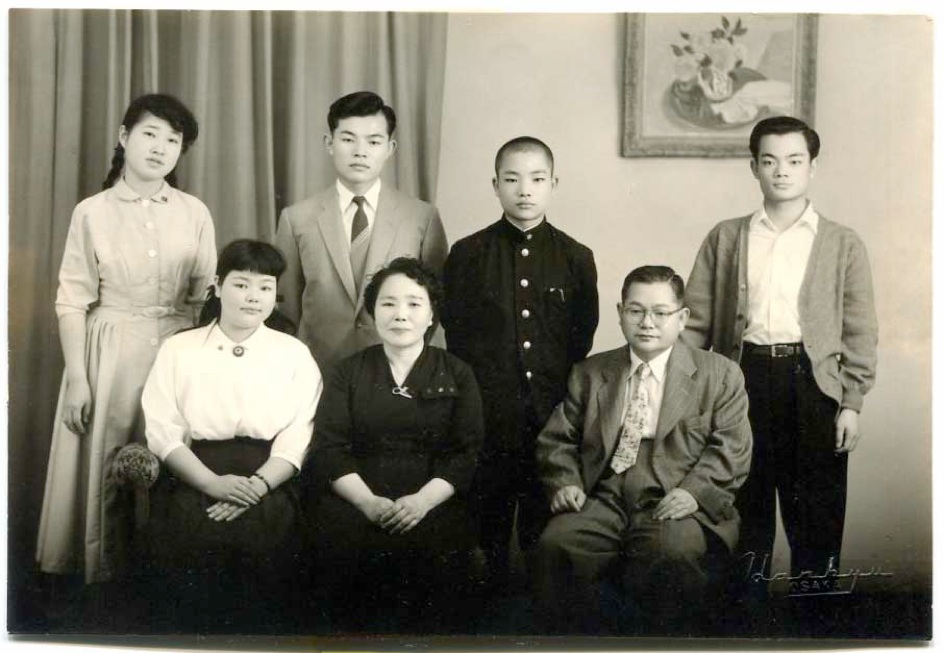
Front Row (sitting) from Left: Etsuko (sister), Tazuko (mother) and Hiroyoshi (father)
Standing from Left: Keiko (cousin), Hiromitsu (brother), Aizo (brother) and Yoshi
The family is shown in photo above. Rev. Hiroyoshi Kaneda, Yoshi’s father, was an associate of Dr. Toyohiko Kagawa, the celebrated Japanese Christian pacifist, Christian reformer and labor activist. Rev. Kaneda served a church in one of the poorest districts in Osaka City for over forty years. He held important positions in various charitable organizations dedicated to social teachings of Dr. Kagawa. Dr. Kagawa greatly influenced Yoshi to go into Christian ministry. Even though the Kaneda family suffered much during and after the World War II as a result of the bombings, forced evacuation, poverty, malnutrition and hunger, the family survived. Yoshi presented a powerful Mother’s Day sermon in Austin related to the war. His mother, faced with a severe shortage of food, had heard that food was available in another village. She took young Yoshi on the train to see if she might buy some food for the family. En route, the train was attacked by U. aircraft. The train stopped, and passengers dove for the nearby ditches. His mother placed him first on the ground and then spread her body over him to protect him from the strafing. He related that he will always remember feeling her rapid heart beat above him. Needless to say, this was a sermon few will forget. A touching wartime recollection of Yoshi’s was having several classmates smell his breath to prove that the family had eaten meat.
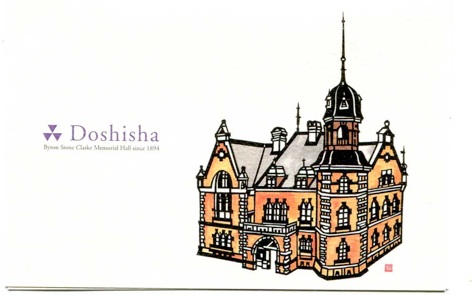
Yoshi was able to graduate in 1934 from Doshisha High School, as the awardee of the Kyoto Governor's Prize, given to the top student, and was able to continue his study at Doshisha University with the financial assistance extended to ministers' families through the Interboard Committee, an agency of the US churches working in Japan. To this loving financial and spiritual support, he remains very grateful. He graduated from the University in 1958.
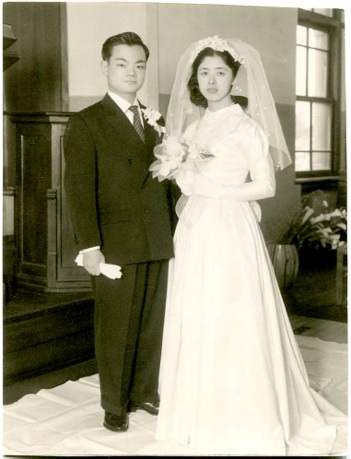 In 1960, upon graduating from the Divinity School of Doshisha, Yoshi married Setsuko Tamura, a fellow graduate of Doshisha University. Setsuko was born in Tsu City, Mie Prefecture, to Masaye and Nao Tamura. Her father, Masaye, born in 1906, was the president of the Tamura Textile Company as well as a sportsman and accomplished photographer. He was the founding vice-chairman of Yokkaichi Sports Association in 1947. He served on the national committee of the handball association. For fourteen years, he served as chairman of the Mie Prefectural Museum. His photographs were exhibited in the museum in 1983. In 1984, Mr. Tamura was awarded the Order of the Sacred Crown, 6th level by the prefectural governor. A photograph of Masaye and Nao with his award is in the gallery of photographs at the end of this article.
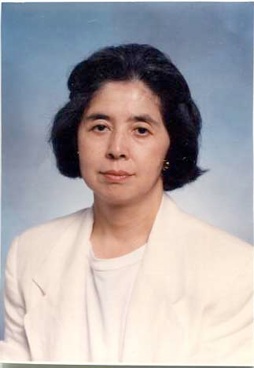
Setsuko’s maternal grandmother was one of the very first students taught by Joseph Hardy Neesima (Niijima), the founder of Doshisha University. Mr. Neesima is a name known by every Japanese. Both Masaye and Nao were graduates of Doshisha. Setsuko grew up in the coastal city, Yokkaichi City, south of Nagoya. She was educated in Doshisha Girls Junior/ Senior High Schools in Kyoto, some fifty miles west of her home.
She studied English literature at Doshisha University. Her family is shown below; she is the young girl, with the beautiful smile, fifth from the left, standing behind her grandmother.
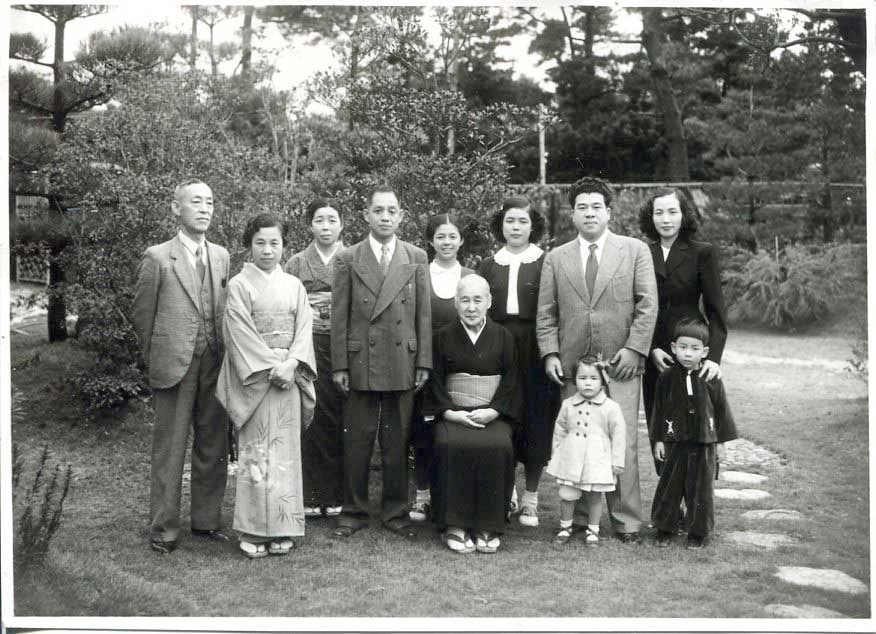
Tamura family photo on the occasion of Setsuko’s paternal grandmother’s 77th birthday
Left to Right: Yonesaburo Katayama (uncle), Mitsue Kastayama (aunt), Nao Tamura (mother), Masaye Tamura (father), Setsuko Tamura, Teruyo Tamura (grandmother), Tomiko Tamura (sister), Taijiro Tamura (uncle) with cousin Yosiko Tamura, Miyoshi Tamura (aunt) with cousin Kazuo Tamura
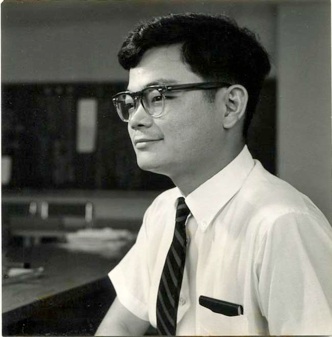 Following his graduation and marriage, Yoshi started to work as teacher at Doshisha High School and, at the same time, as an assistant at Doshisha Church in Kyoto. He was ordained by Kyoto District of The Kyodan, UCC in Japan, in 1963, passing the ordination exam ranking at the top among 135 candidates. A photo of Yoshi during his teaching time at Doshisha is at right.
He came to the US in 1964, to further his theological studies. Setsuko and daughter, Yuri, joined him a year later in Oberlin, Ohio. They lived in a student family dorm that year. In 1966, Yoshi graduated cum laude with the degree of STM from the Graduate School of Theology, Oberlin, Ohio. He had never studied so hard in his life as English was a new language. He overcame insurmountable difficulties of not only the graduate course work but of mastering a foreign language. The First Church in Oberlin gave Yuri a full tuition scholarship at its Nursery School, and she picked up the language very quickly as the young often do.
In 1966, Yoshi was fortunate to get a call from the Congregational Church in Hemingford, Nebraska, where his family was warmly welcomed. A little background on this church’s history may be helpful and of interest. The first people to take land claims in Box Butte County, Nebraska, settled in the area of present-day Hemingford. These settlers included people of a number of different religious faiths, all feeling the common need for the guidance of a church. The first move toward some formal organization came in 1885, when several people formed a Sabbath school. In a meeting, this group decided that the Congregational Church was the most democratic of the possible choices, offering means of individual expression to meet the needs of people of different faiths. Accordingly, on May 23, 1886, the Congregational Church of Hemingford was organized. This group included eleven charter members; their pastor was Rev. N. E. Gardner, himself a member of the United Brethren Church. The first permanent structure built to house the church was erected in 1889.
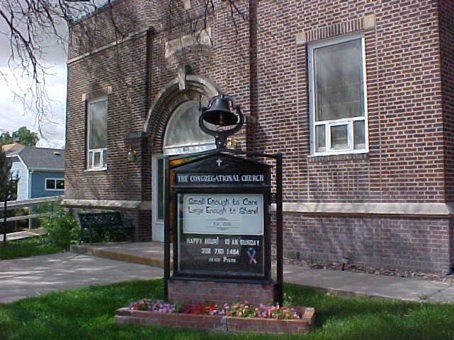 For three years the church members and the folks in that small rural community extended their warm support and loving care to Yoshi’s family. Each and every happening was new and exciting. Yoshi was often asked to officiate funerals where family members of the deceased claimed to have been Congregationalists in the past in one way or another. Yoshi told of one of his early experiences, “With my little daughter on the back seat, I ventured out to enjoy the beautiful scenery of fresh snow at the Box Butte Lake, some five miles north of Hemingford, Nebraska. That was the first winter of 1966 when I could not overcome the powerful temptation of driving my first car acquired from a church member. I had been there a few times before and knew where to park. Oh, the clean fresh snow covered all the parking area, and I got stuck in the snow. After several attempts to try and get out of there, I had to face up an inevitable outcome, that is, walking back to town all the way with my daughter. As I stepped out of my car, I saw a farmer’s pickup approaching toward me. I waved at him in desperation. Oh, he was quick to observe what happened to me, pulled up his pick-up closely and got out to help me. With a smile on his face, he took out an old blanket and laid it down under the stuck tire and also took out a strong rope and tied it to my car and his pick-up. Within a minute, he pulled my car onto the paved road safely. He didn’t even tell me his name.”
Dr. Virgil Myers, minister at Springfield, in his memoir was asked about young ministers he had known; he commented, “Now Yoshi, for instance, is an outstanding young fellow.”
The Youth Group was active and was growing. In this small town, everybody knew everyone else and what he or she was doing and why. No one locked the doors of his house day or night. It was into that relaxed and safe environments the Kaneda family welcomed their baby son, Joe. Yoshi was repeatedly invited to come back to Kyoto to become a professor at Doshisha Women's College, but he turned the offer down after some serious consideration. During that pastorate in Hemingford, Setsuko, Yuri and Yoshi were granted "Permanent Resident" status by the US government. The last Sunday there was to say "Farewell" to the loving congregation. At the door, Yoshi was overwhelmed with uncontrollable emotions of gratitude and sadness. He cried and cried out loud, giving and receiving big hugs to and from each worshipper.
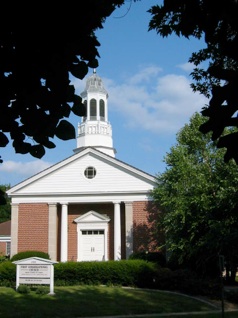 The First Congregational Church, Springfield, Illinois, extended a call to Yoshi to work as an assistant pastor. The church had its beginnings on December 11, 1866, when the original church record indicated “a meeting of a few citizens favorable to the formation of a Congregational Church in this city was held.” Records also indicate the First Congregational Church started formally with 75 members on February 6, 1867, at a business college. Services were later held for nearly a year in the old state capitol. When Yoshi arrived, there were just over 500 members who were mostly businessmen, state workers and teachers. Everyone dressed up to attend Sunday services. Yoshi was assigned to preaching once a month, visiting two hospitals weekly, conducting home visitations, supervising the church's Nursery School, leading the high school and junior high school youth groups, and administering Sunday School. These duties were quite a heavy ministerial responsibility, and yet, Yoshi thrived. Fortunately, Pilgrim Fellowship (the high school youth group) started to grow big and the nursery school also grew until the enrollment of children reached 150, the largest in the city. The number of church members also increased to 750 during Yoshi's tenure there.
For two years and three summer months, 1972-74, Yoshi enrolled as a part-time post graduate student at Eden Theological Seminary in St. Louis, 100 miles south of Springfield, to pursue the degree of Doctor of Ministry. Clinical Pastoral Education, Unit I, was a special training course required by the Seminary. Oh, he was so glad he took it! The most intensive training was carried out at the St. Louis State Hospital (mental institution) and it literally changed his whole outlook and attitude for Christian ministry. Besides the supervised in-depth peer group training, he worked as a chaplain with a psychiatrist, MD, a psychologist, PhD, nurses and social workers as a team to care for patients at the intensive care unit of the hospital. Yoshi's headstrong personality was completely changed into the heart-strong and caring personality. A mentally ill person is also an important human being who can only be understood at the very basic human level—not logic or reasoning—but with heart and soul. Yoshi understood, for the first time in his life, the utmost seriousness of psychology and pastoral counseling through this training.
While serving the church in Springfield, the need to affirm his racial identity gradually became irresistible, and Yoshi made a new commitment to serve the Ocean View United Church of Christ—a Japanese-American congregation in San Diego, California. Ocean View was the first Japanese Christian Church founded in San Diego back in 1907, with the help of the supporting First Congregational Church. At this time, the congregation came together as a branch of the First Congregational Church to celebrate their customs and heritage all while studying and learning the English language. After about one month, the congregation grew to about half of all Japanese men living in San Diego, so the grown congregation moved to a larger facility in downtown San Diego. They continued to study English and help new migrant workers.
Yoshi’s move proved to be rather a difficult re-entry experience for him and his family at first, but a happy choice in the end. Starting in 1976, he conducted two worship services in Japanese and English. He learned how to minister to several different cultural groups within one church; the first generation Japanese- speaking aka the "Issei"—pioneer people, the "Kibei"—people who were born in the US, but sent back to Japan for education and came back to the US after WWII, the International brides—Japanese women who were married to Americans, and the new immigrants "Shin Issei"—natives of Japan who came over to the US after WWII, the "Nisei, Sansei, Yonsei" and "Hapa"—US born second generation, third and fourth generations and the children of racially mixed marriages. Each group had a distinct cultural trait, although they were quick to unite in the church's common tasks.
Gradually, as the first-generation people passed away, Yoshi began conducting worship service using both English and Japanese. People learned to sing hymns in two languages at the same time with unbridled enthusiasm and gusto; it was a delightful but a cacophony of sound! The church experienced a steady growth in membership, especially among youth. Yet, the total mission giving only increased from $1,080 into $4,400 in 13 years.
The United Church of Christ, as a progressive denomination, desired more participation from the minorities and church members responded to its need. In addition to the participation in the San Diego Association, the Southern California Conference and Ecumenical Conference, the church's leadership was needed by the Pacific and Asian American Ministries in national and regional levels, the Japanese American Council of United Church of Christ (instrumental for placing the very first missionary family from Japan), and the San Diego Partnership. Yoshi served the Japan North American Commission on Cooperative Mission, 1982-1988, as a delegate of United Church Board for World Ministries and participated in consultations in Japan, Canada, USA and Korea. He was proud to serve UCBWM as corporate member, 1977-1987, and director, 1979-1987. He was elected as delegate to the 14th General Synod in 1983 and chaired the UCBWM meeting there.
Locally, the church created the "Family Center" that was used by Japanese cultural groups for classes in "haiku," cooking, flower arrangements, calligraphy, card games, and even traditional dancing. Yoshi initiated the "Sister Church Program" with Midorigaoka Church, Kanagawa, Japan, and exchanged members to nurture mutual learning and Christian faith across the Pacific Ocean. He also was the instigator in encouraging the community leaders to establish KIKU GARDENS, a 100-unit senior retirement housing, for the Japanese American community. It took over six and a half years of community efforts and energy, but the community rallied in recognizing the dire need for this kind of housing for their seniors. In the end, it was the splendid victory of community vision achieved with patience and persistence. Maureen O' Connor, the mayor of the City of San Diego, presented to Yoshi a special "Proclamation" at his farewell banquet. It reads "Now, Therefore, I do hereby proclaim June 24, 1989 to be 'REVEREND DR. YOSHIKUNI KANEDA DAY' in San Diego, for his outstanding service and contribution to the Japanese American Community."
The most challenging yet the happiest time of his ministerial life was when Yoshi started his ministry at the Congregational Church of Austin, Texas, in September 1989. Challenging? Yes, very much so. Shortly after the retirement of Rev. John Towery, worship attendance had shrunk to a minimum of one dozen of the faithful each Sunday. The church's location was a significant issue. There was very little parking available, and there was a very limited access to the church building because of the substantial encroachment by the Renaissance Market on the 23rd street where the entrance of the church sanctuary faced. The church property experienced constant abuses and vandalism by transients and the homeless. The church had weekly visitations by professional beggars and con artists. Some of them were tough and scary even threatening the church staff. There were many mornings when the church staff gently said, "Good Morning! It's time to go. . ." to the transients and homeless who slept on the porch and, at times, on the stairways. The staff was well aware that the city ordinance prohibited any camping or sleep over on private properties, but they also understood that the transients and homeless were also human beings, God's precious children.
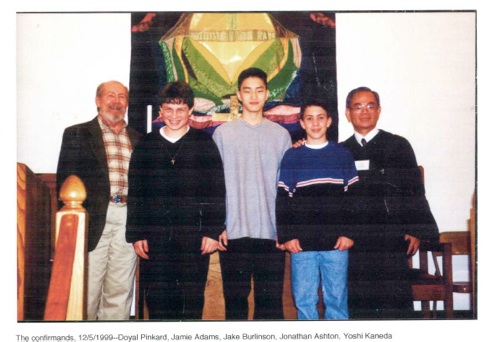
The happiest? The Congregational Church of Austin has always been a GREAT community of faith despite her size and in spite of her bad location. The members were well aware of the limitations of the facility but prospered despite it. Many dedicated and gifted members have shown their faith and love for serving God's Church with efficiency and much self-sacrifice. Yoshi has been very proud of this congregation. He was amazed to see that this little church has had no financial problems and her per capita mission giving ranked among the top group in the whole nation. He was amazed that many members willingly served at the national and regional levels of the United Church of Christ. He was thankful that many experiments like Stephen's Ministry, Okinawa Partnership, Refugee Family Sponsorship, hosting People's Clinic, UCMA, PHASE, getting funds for education specialists for outreach, have been carried out with passion and true commitment. Most of all, members were well educated, they liked each other and they trusted each other. With a huge heart and a true faith in action, the church showed her true character of "Christian Community."
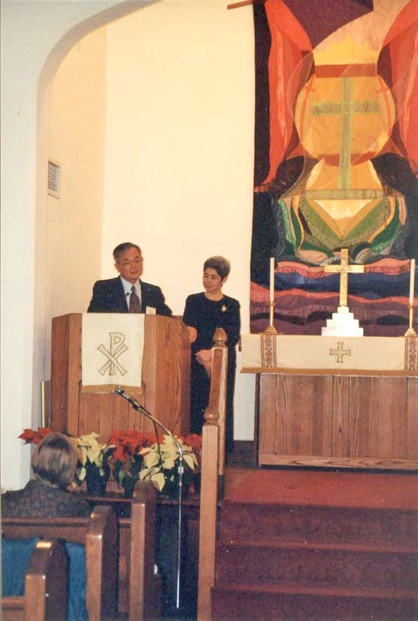
Yoshi set aside each Friday for his sermon preparation. If preaching doesn't strike the preacher himself/herself, it's not preaching at all. The church members shared his passion and gave him the reason for preaching at that level every Sunday. He was able to rejoice in the Good News of Christ and is thankful that the members felt it as much as he did! Setsuko established her career as Japanese language teacher and taught at Johnston High School, LBJ High School and Kealing Junior High School for 10 years.
In Retirement
"I don't have to go anywhere today!" Within three months of his retirement Yoshi was bored to death and wanted to be needed again. He enrolled in Interim Ministry Network and was selected to work as Interim Minister at the Community Church of Poway, UCC, from April 1, 2004, through August 31, 2005. The Pension Board of UCC recruited him to care for over 60 retired ministers and their spouses in the San Diego County as a "Pension Visitor" for three years. In 2007, Yoshi entered the Iris Chang Memorial Essay Contest submitting his essay titled "Misplaced Loyalty With Racism: The Denial and Its Cost of the Nanking Massacre." His essay was selected as the best among 270 international contestants. The following year he kept himself busy giving lectures, sermons and Bible study on this topic in Kyoto, Tokyo and Sendai.
Setsuko and Yoshi belonged to the University City United Church in San Diego upon retirement for eight years and enjoyed singing in its choir. This was to avoid any conflict with the then newly-installed minister at his former parish, the Ocean View United Church of Christ. They were asked to come back to that church a few years after the Pioneer United Church of Christ merged into the Ocean View UCC, to form the Pioneer Ocean View UCC. Quickly, Yoshi initiated Stephen Ministry and conducted Summer Seminar twice for the Japanese-speaking people and Winter Seminar for the English-speaking people. The church presented him the status of "Pastor Emeritus" on January 29, 2012.
The Southern California Nevada Conference of UCC and the Southern Association of the same celebrated Yoshi's 50th Anniversary of Ordination in 2013. He was pleasantly surprised and greatly honored by "Hosanna Chorus" on its Centennial Celebration at Doshisha High School in Kyoto on November 1, 2014. The 42 former students under his direction sang four anthems at the event, and he was presented a beautiful crystal plaque to be named a "Honorary Consultant of the Hosanna Chorus."
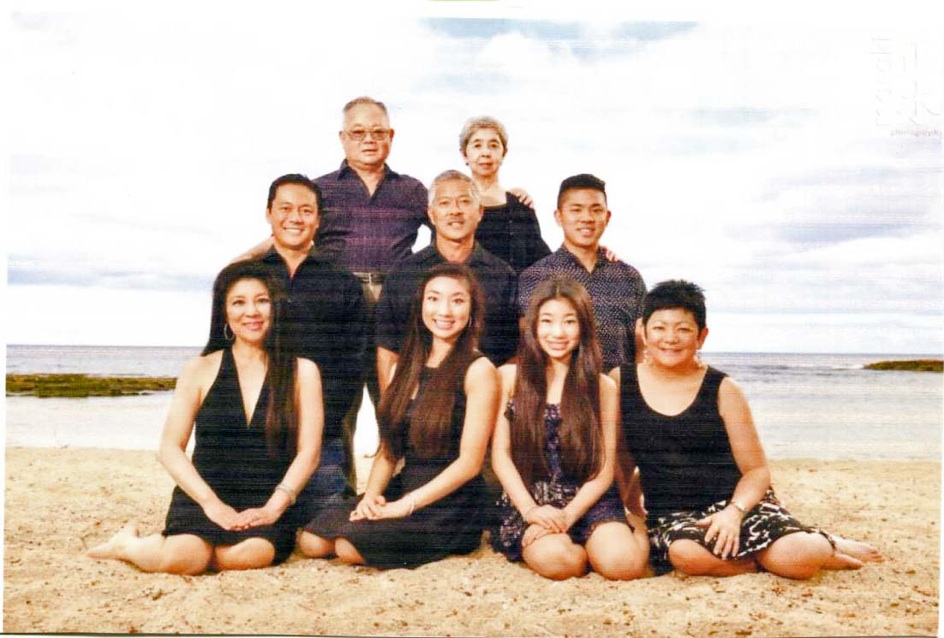
Front Row from Left: Julia (daughter-in- law), Janelle (granddaughter), Justine (granddaughter) and Yuri (daughter)
Second Row from Left: Joseph (son), David (son-in-law) and Eric (grandson)
Third Row from Left: Yoshi and Setsuko
Daughter Yuri works as dentist in Chula Vista, CA, near Bonita where Yoshi and Setsuko live. She is married to David, a high school math and science teacher. They have two sons Eric and Joe. Eric, a graduate of UC Irvine, works as a chemical engineer for the Baker Hughes Company. Joe is an attorney in Newport Beach, CA. He is married to Julia. They have two high-school-age daughters, Janelle and Justine. Janelle got an "Early Admission" from Stanford University in December of 2014.
Acknowledgements: Most of this entry came from a write-up by Yoshi Kaneda. Other information was provided by Setsuko Kaneda. Yoshi and Setsuko generously provided family pictures. Pat Oakes also provided pictures from their time in Austin. Additional information from Mel Oakes was included. Special thanks to longtime friend, Hisao Toyoda, for research in Japan.
On the occasion of Yoshi's sabbatical, Nodie Murphy, choir director at church compose the following song:
Yoshi’s Sabbatical Song
To the tune of Yankee Doodle
Refrain after each verse.
Yoshi took a long vacation;
Richard was our preacher;
Normas ‘were directing choirs
And Dennis was our teacher.
Tommie Pinkard’s sick, then well;
Astons all are growing;
Vanderpohl has moved again
And Julia’s teeth are showing,
Ned is reading in the back;
Jake is asking questions.
Vic is leading our retreat
And taking our suggestions.
Pat is finally sitting down;
Mel is breathing easier.
Ben got down his clarinet
And Clark is getting “teasier.”
Lillie’s laughing in the hall;
Jean’s never complaining.
Hildegard is bringing flowers
And Michael is explaining.
Florence plays a mean piano;
Linda’s great on cello,
And Felicia’s violin
Helps keep us feeling mellow.
Maggie has two grandkids now,
Kathryn Stoune got married,
Mathis left on several trips
And Rambie’s life is harried.
We're a singing, loving, praying,
Feasting congregation
And our generosity
Beats any in the nation.
Refrain
Knuckle down and fix it up!
We'll avoid disaster;
There is more to CCA
Than windows, walls and plaster.
By Nodie Murphy
Yoshi and Setsuko Kaneda Photo Gallery |
|
|---|---|
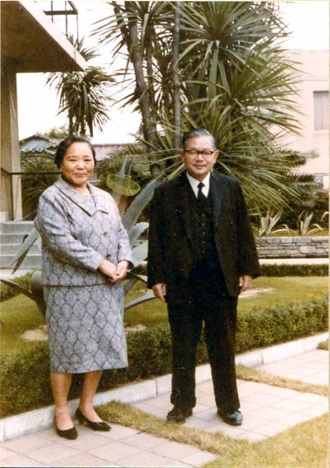
Yoshi’s parents |
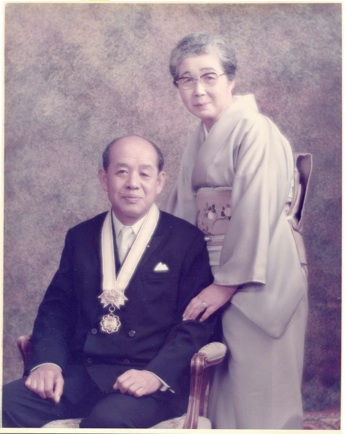
Setsuko’s parents with his Order of the Sacred Crown Medal |
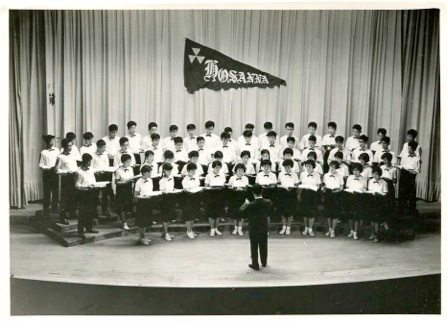
of Doshisha High School |
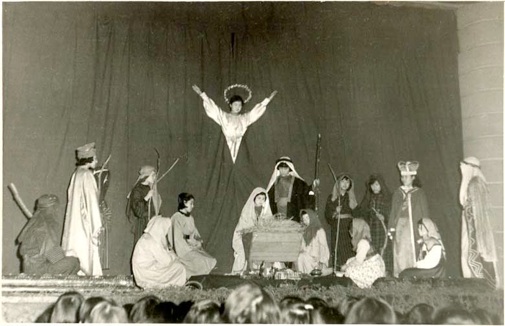
|
|
|
|
|
|
|
|
|
|
|
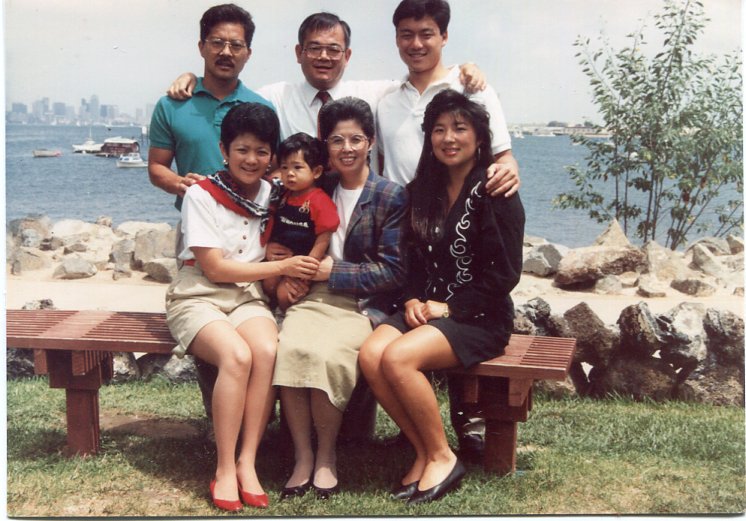
Back Row from Left: David (son-in-law), Yoshi, Joseph (son) |
|
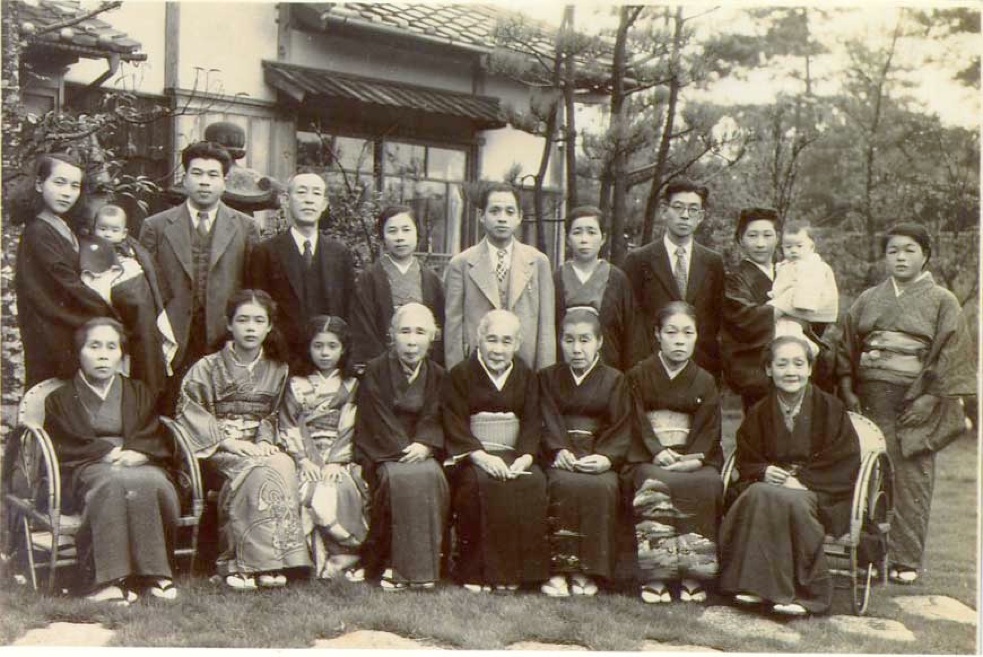
Front Row: Unknown, Tomiko Tamura (sister), Setsuko Tamura, unknown, Teruyo Tamura (grandmother), unknown, unknown, unknown. |
|