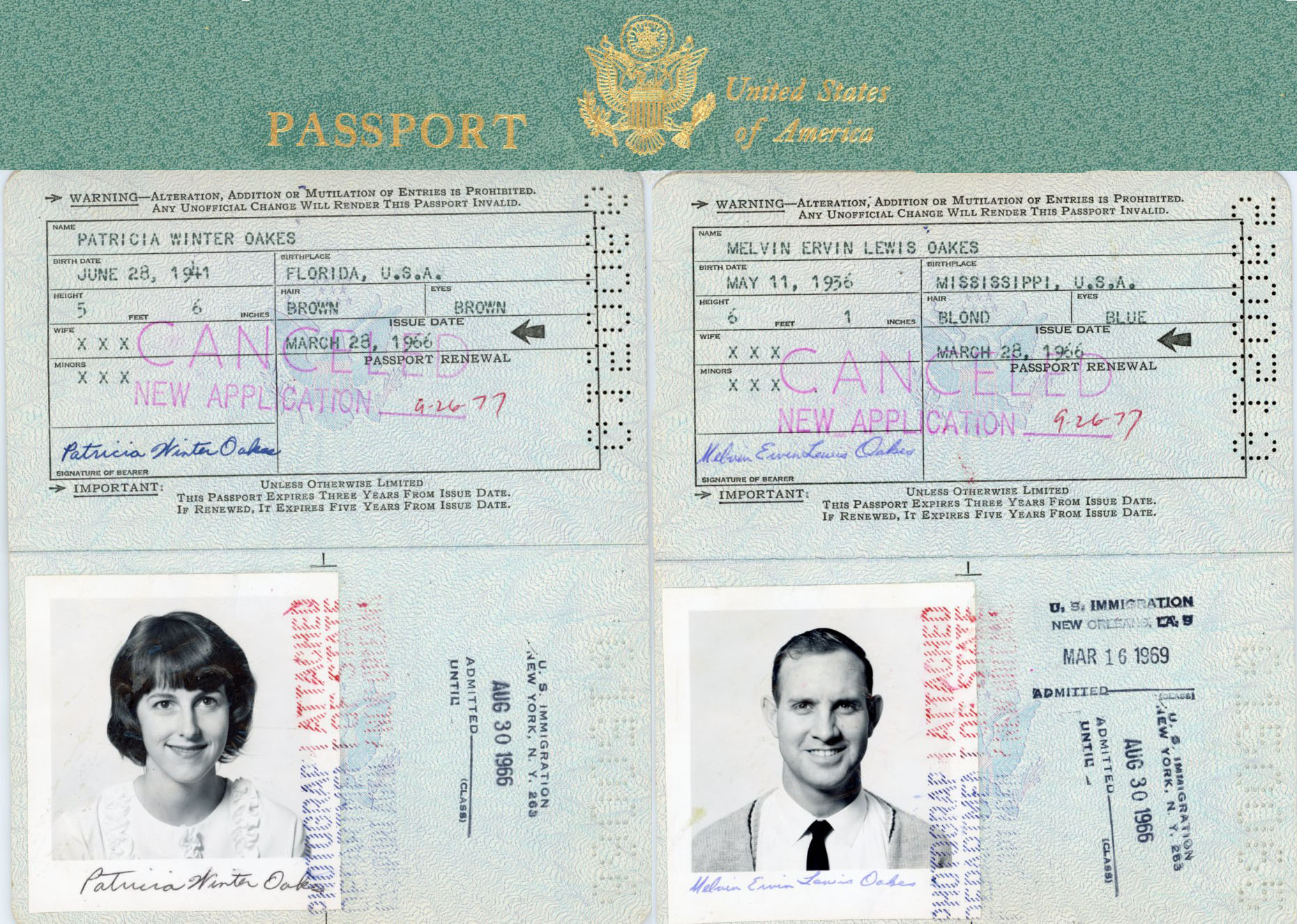
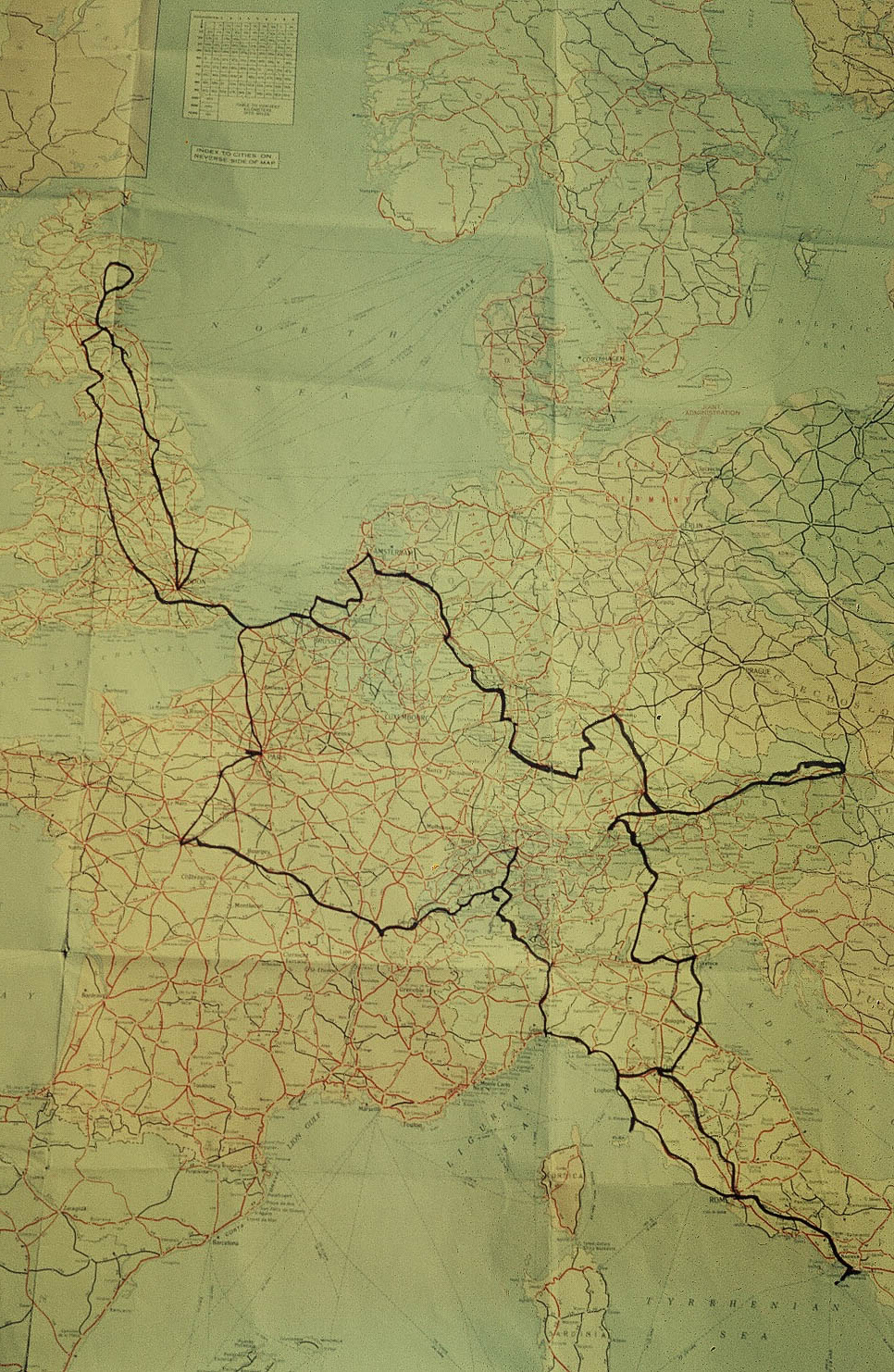
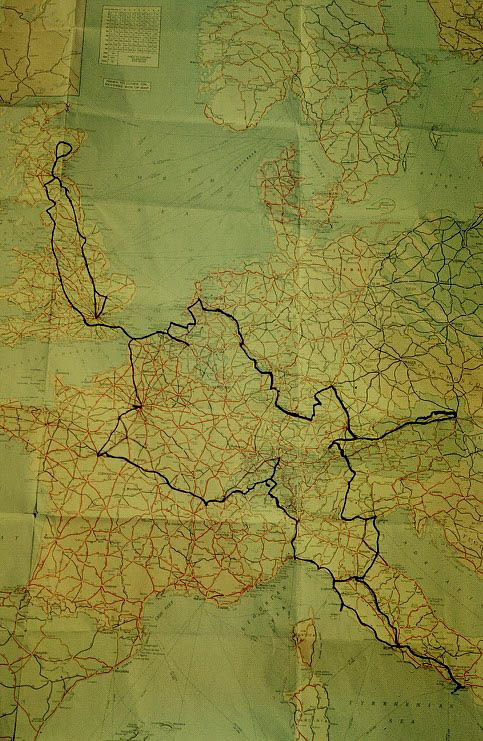
Following completion of Mel's PhD in September 1964, he and Pat moved to Austin, Texa, to take a post-doctoral position at the University of Texas. Pat substitute taught in Austin School District In 1965 Mel was offered an assistant professor appointment at UT and Pat took a full teaching job at Brykerwood Elementary School. They lived off Pat's salary and saved Mel's in anticipation of buying a car. They decited that follow completion of the 1965-66 school year they would go to Europe for the summer and purchase a VW and bring it back. The book "Europe on Five Dollars a Day" by Arthur Frommer was very popular and it was their bible for the trip. They booked no housing in advanced and got occasional mail at American Express offices. They stayed mostly in pensiones, rooms in family homes and 3rd or 4th class hotels. They never got stranded and facilities were clean, often including coffee or tea with bread and jam. The bathroom was usually own the hall and shared by other guest. They met wonderful people at breakfast. Below are slides from that 6000 mile trip. While in Europe they were visited by Bob and Lois Winter, Pat's parents. The four, with their luggage, traveled for several weeks in "the bug."
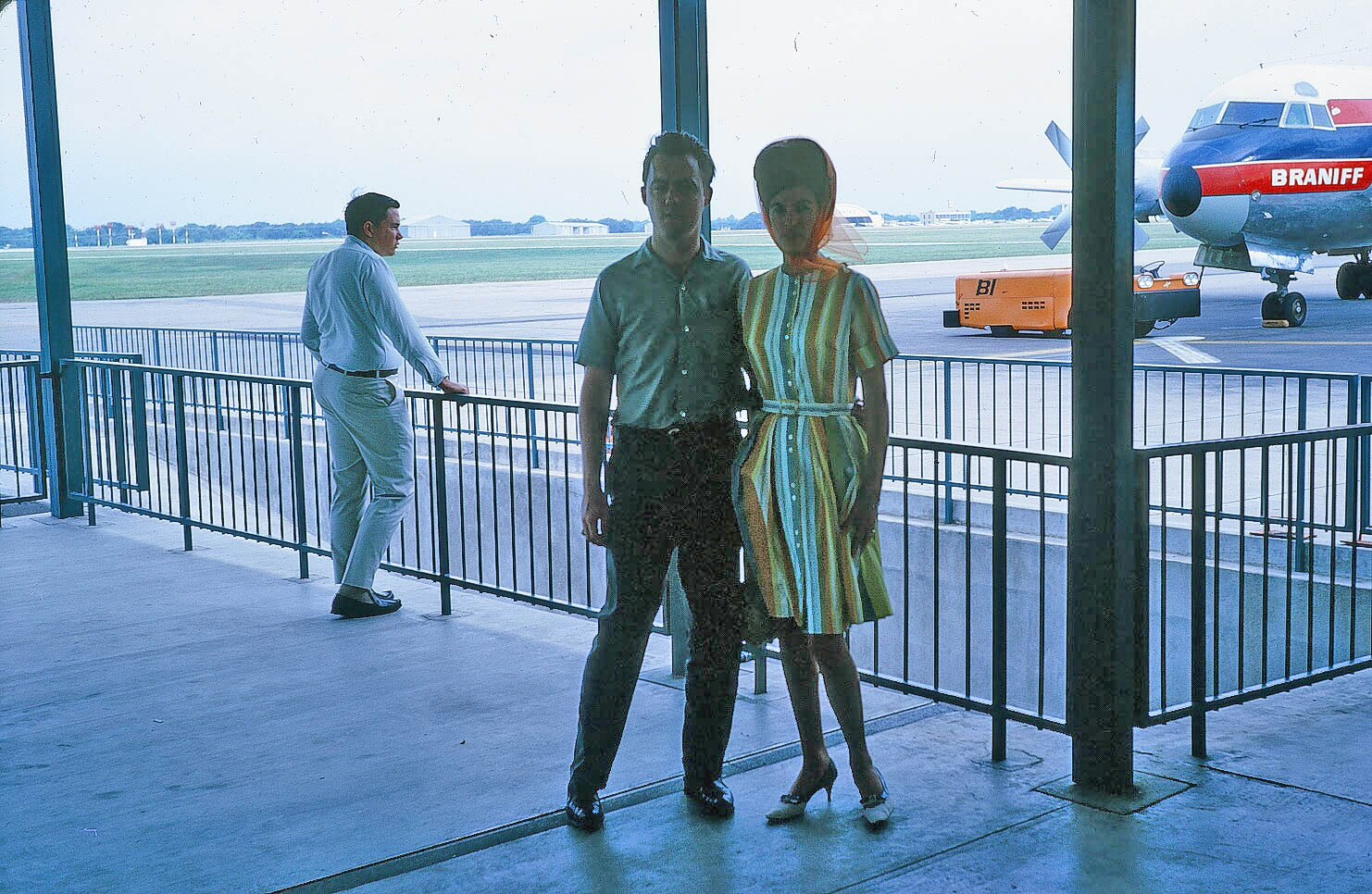
1966EuropeTrip-George Scott and Suzanne Hawkins Mills took us to Austin Mueller airport. Scott was grad student.
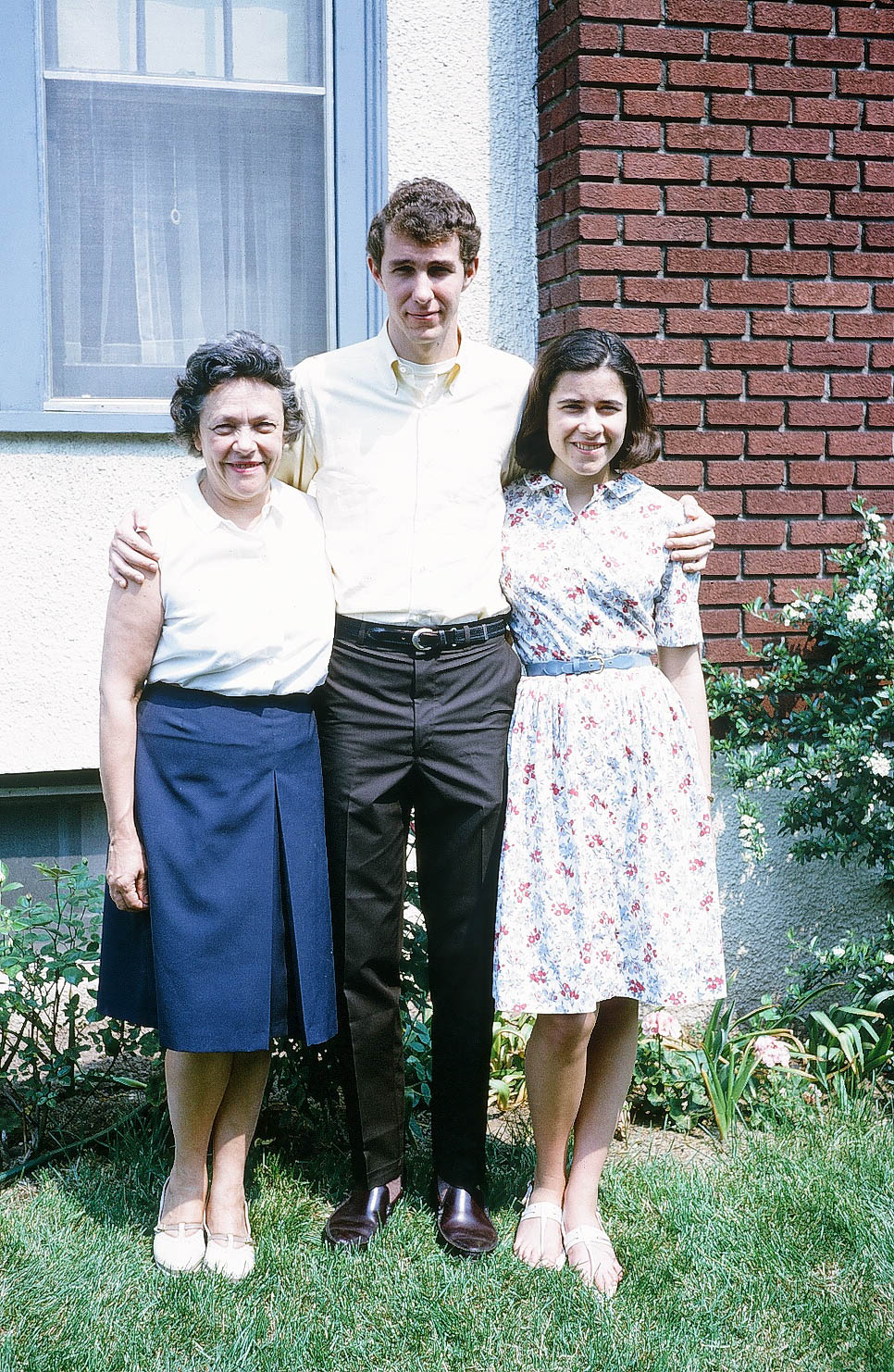
1966EuropeTrip-Arrive in New York, we were met by Pat's brother, Robert, and his girlfriend Ellen Turner. They took us to New Jersey to meet her parents. We spent the night at their place and they drove us to JFK that afternoon.
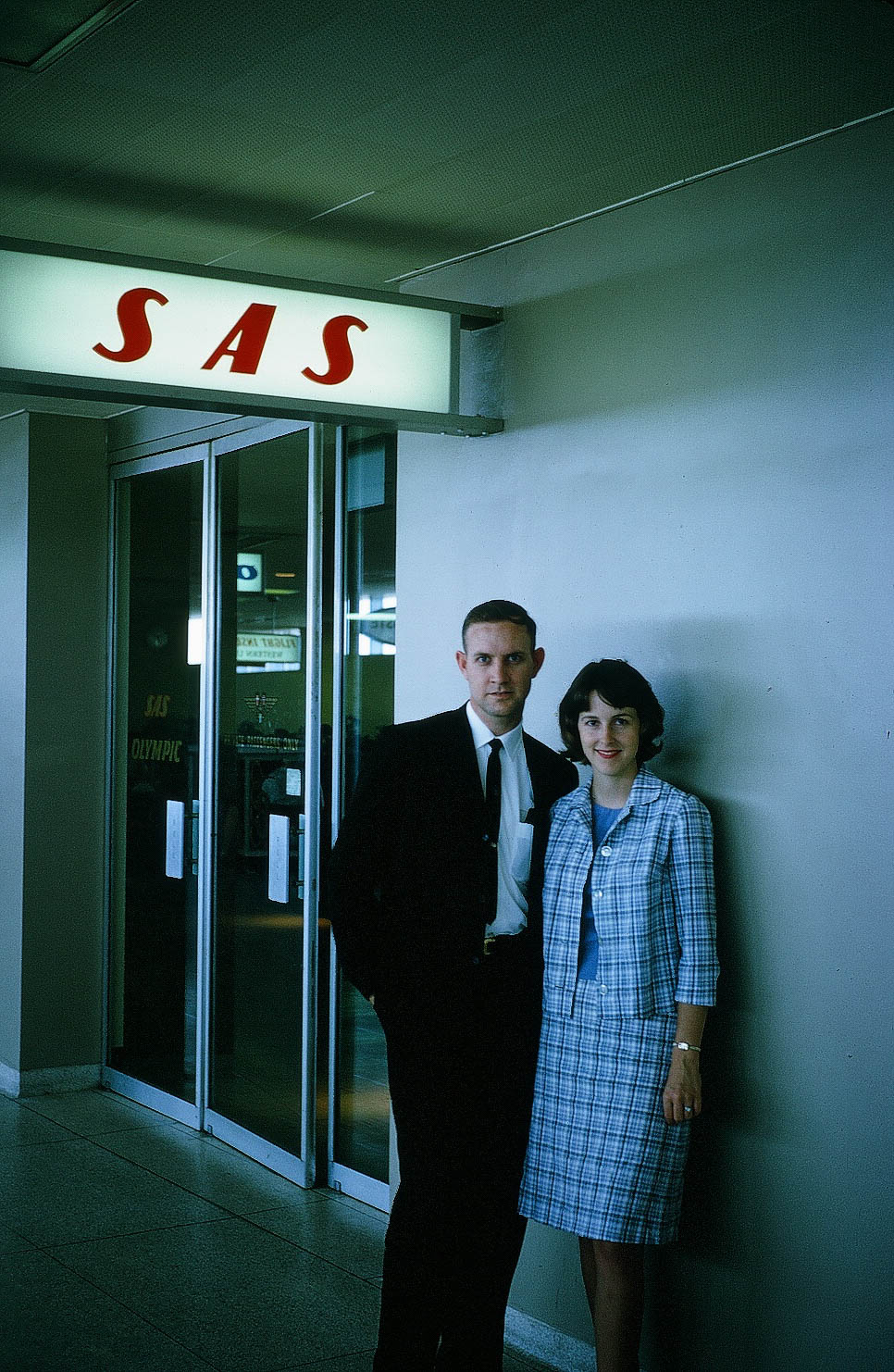
At SAS Terminal at JFK airport. We were scheduled to leave at 7 pm however a radio part was lost enroute and had to be flown in, so we were taken to a hotel for dinner and left for London at 4 am.
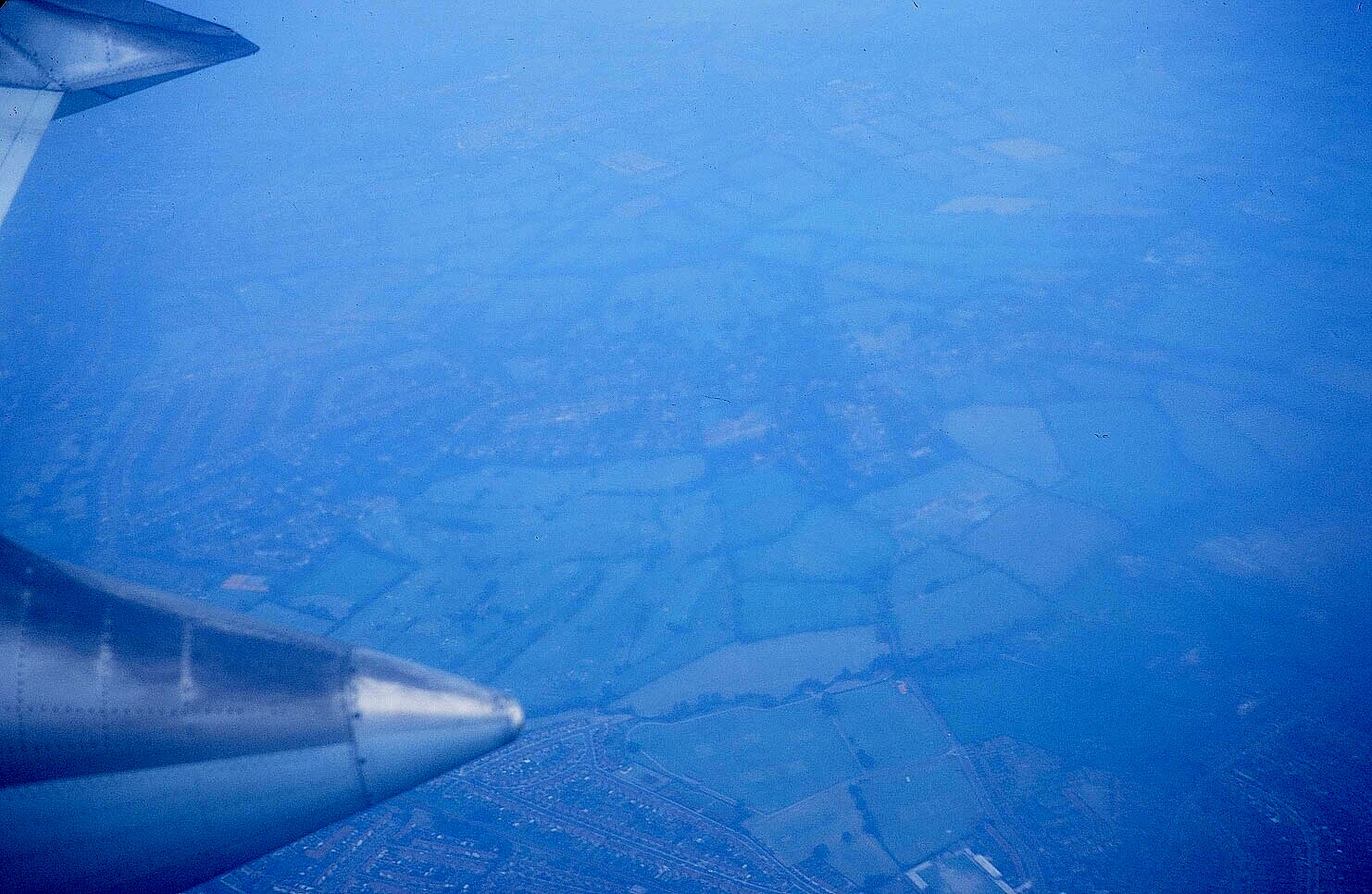
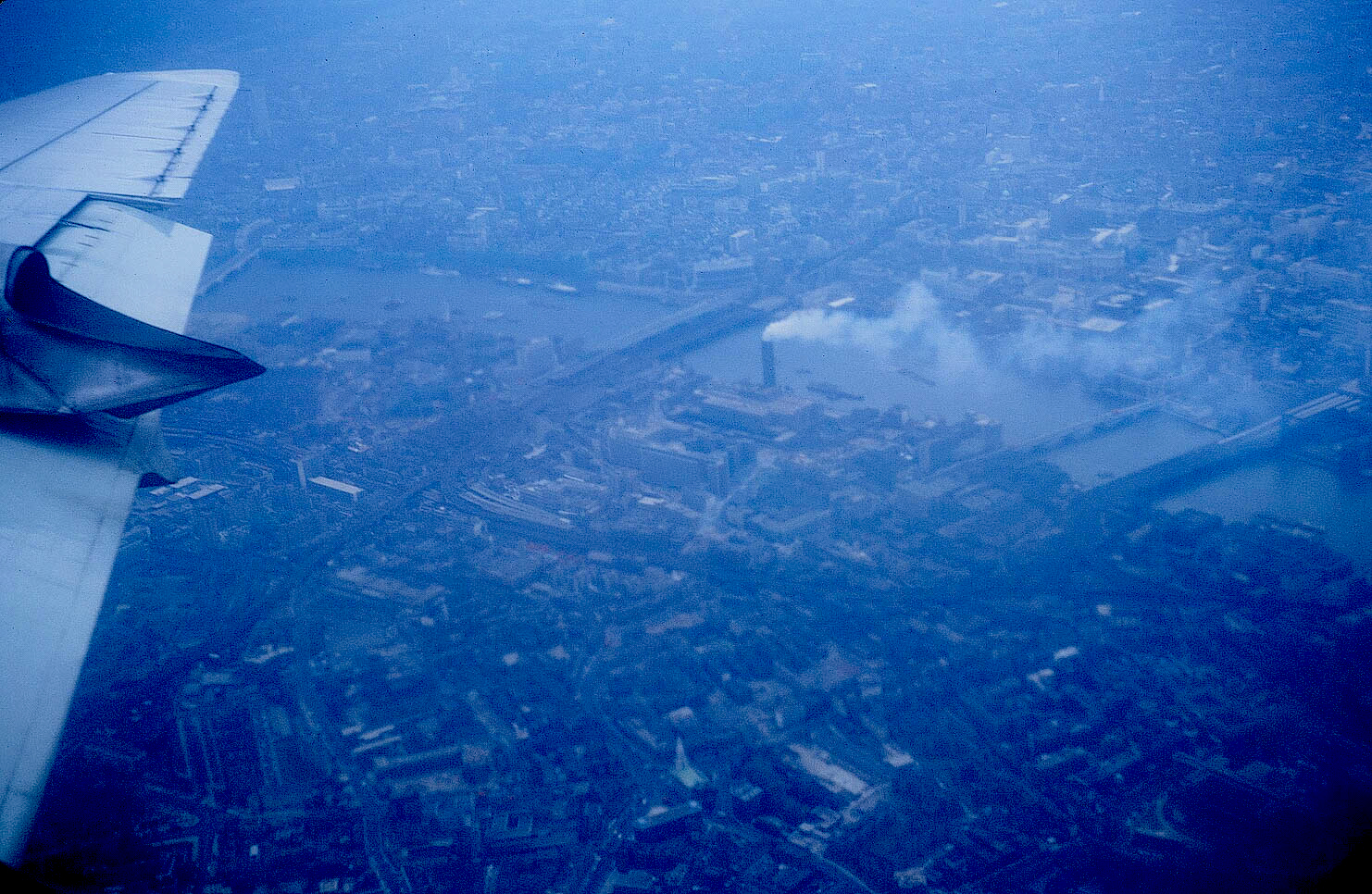
1966EuropeTrip-Univerisity of Texas charter flight to London. First sight of UK
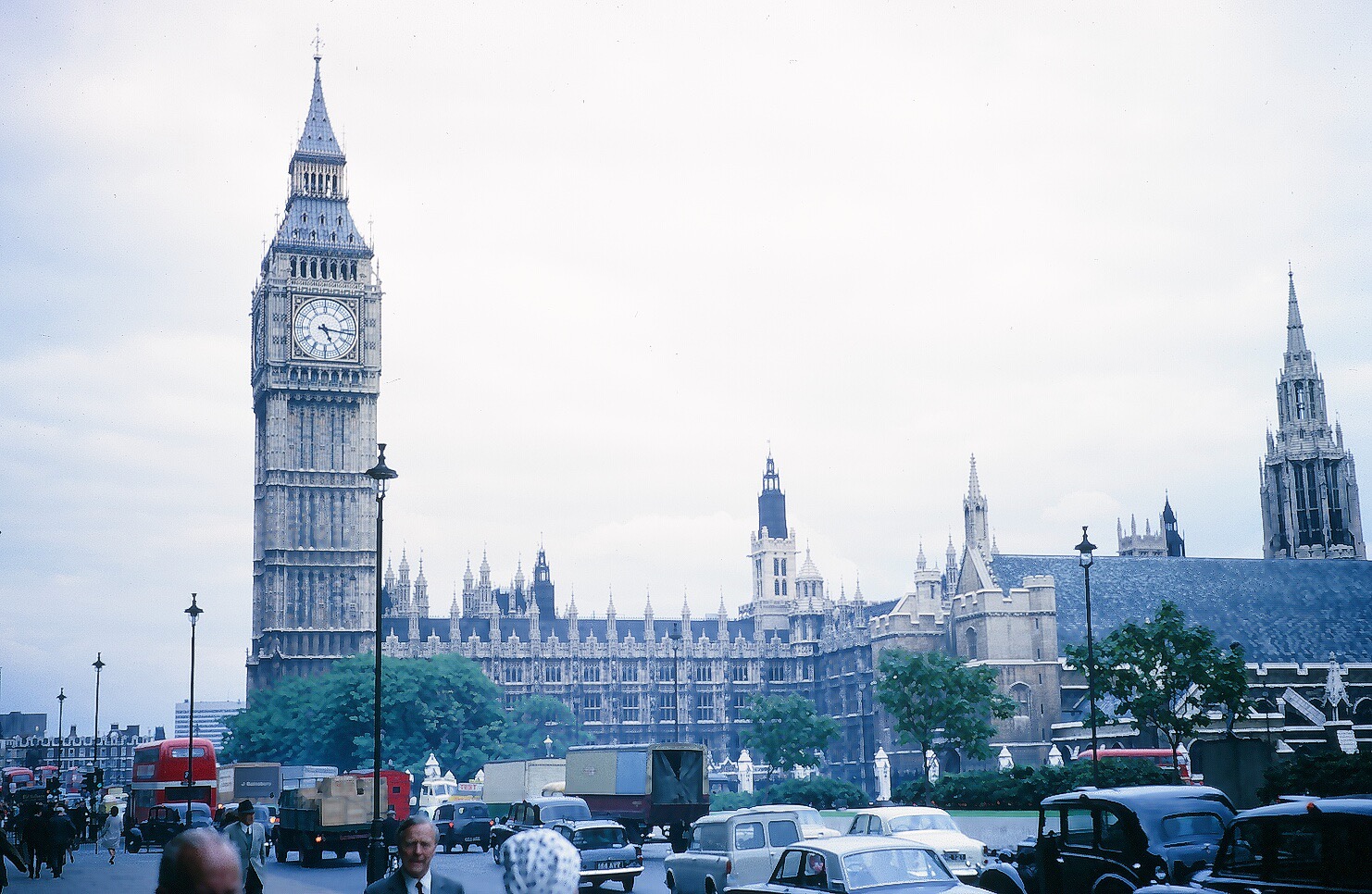
1966EuropeTrip-London
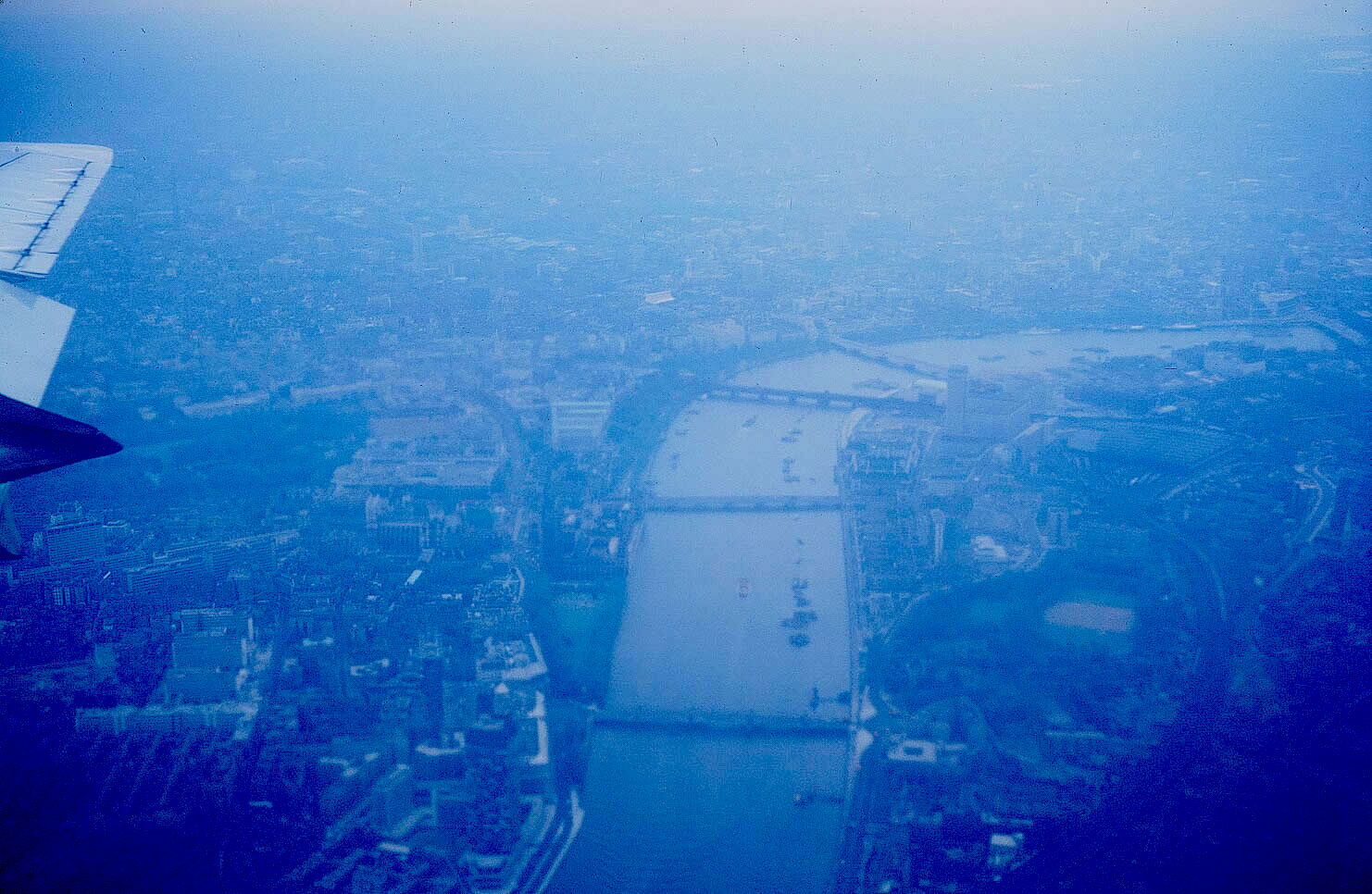
1966EuropeTrip-Thames River
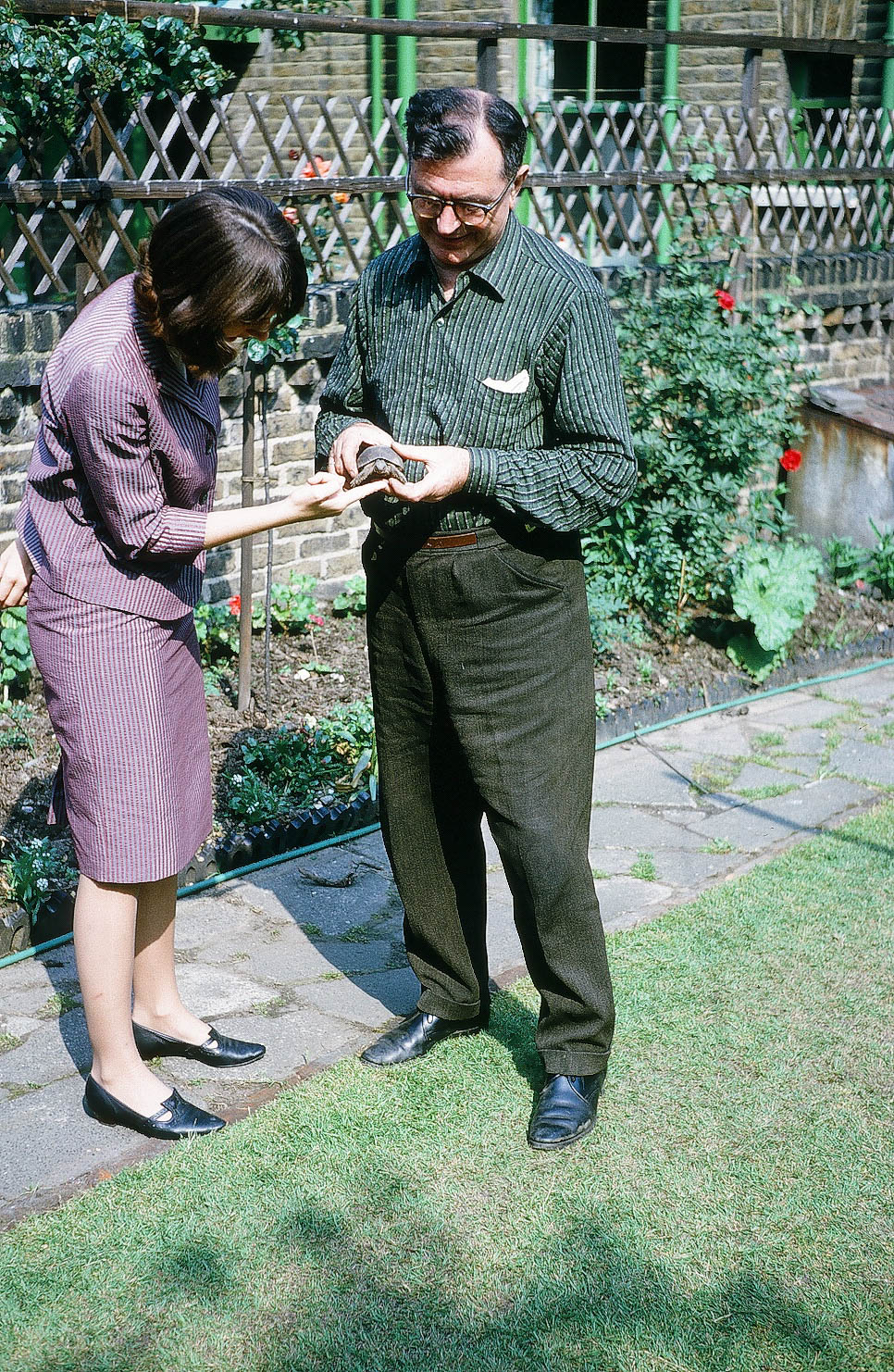
1966EuropeTrip-Pat Oakes , Rev. Conrad Stallons and William. Stallons were friend of Pat's parents.
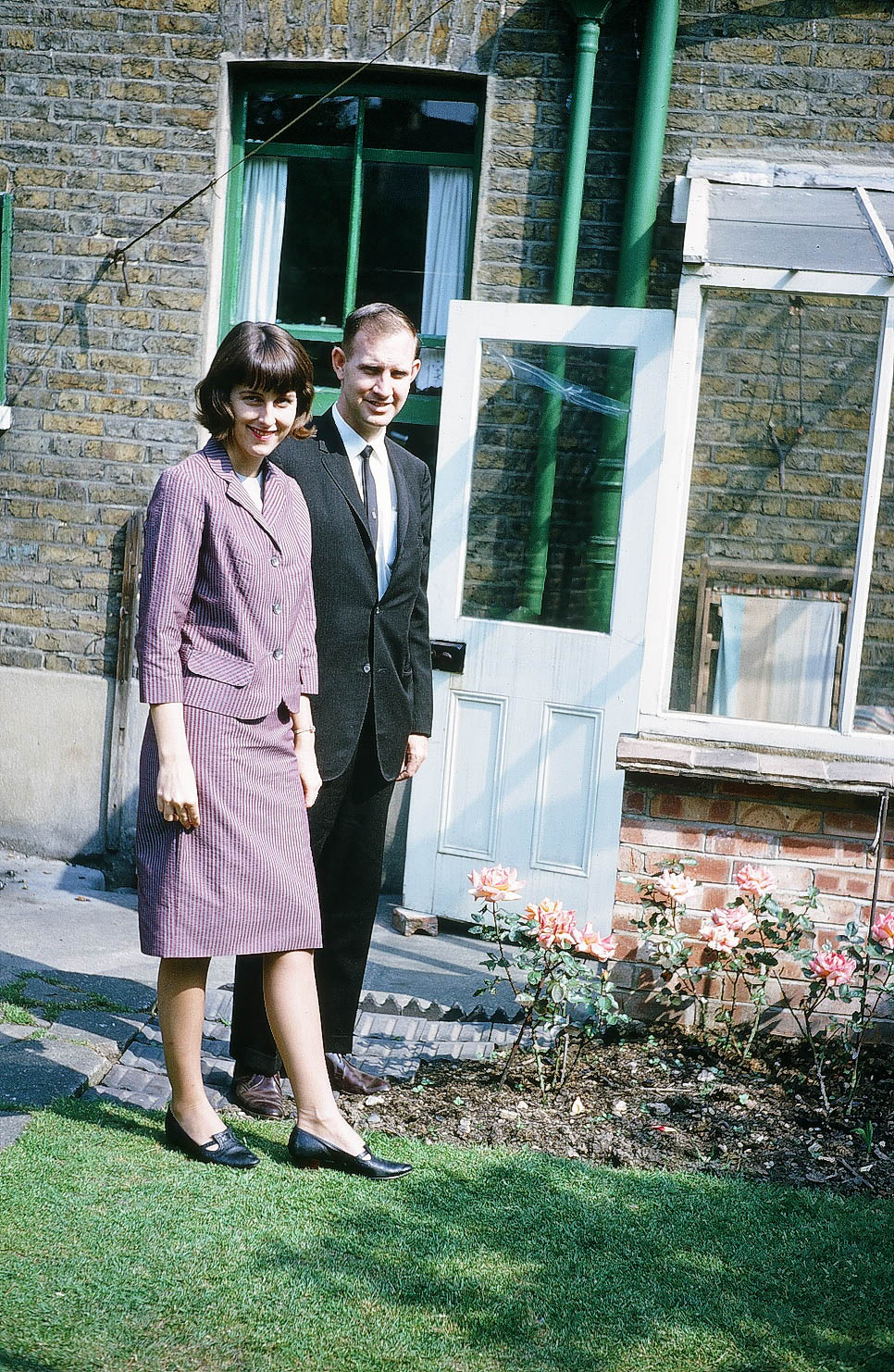
1966EuropeTrip-Pat and Mel Oakes at Stallons home in London.
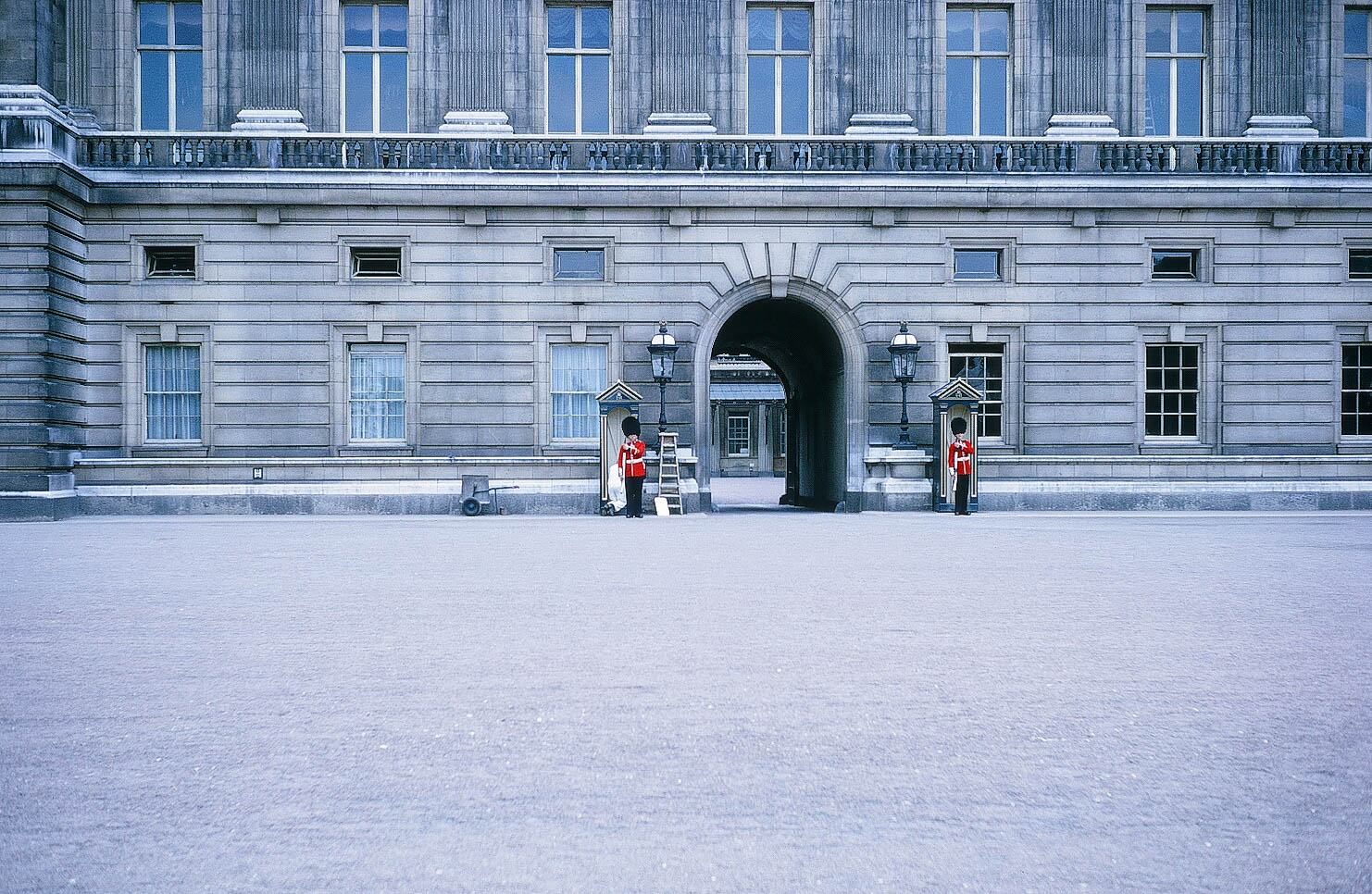
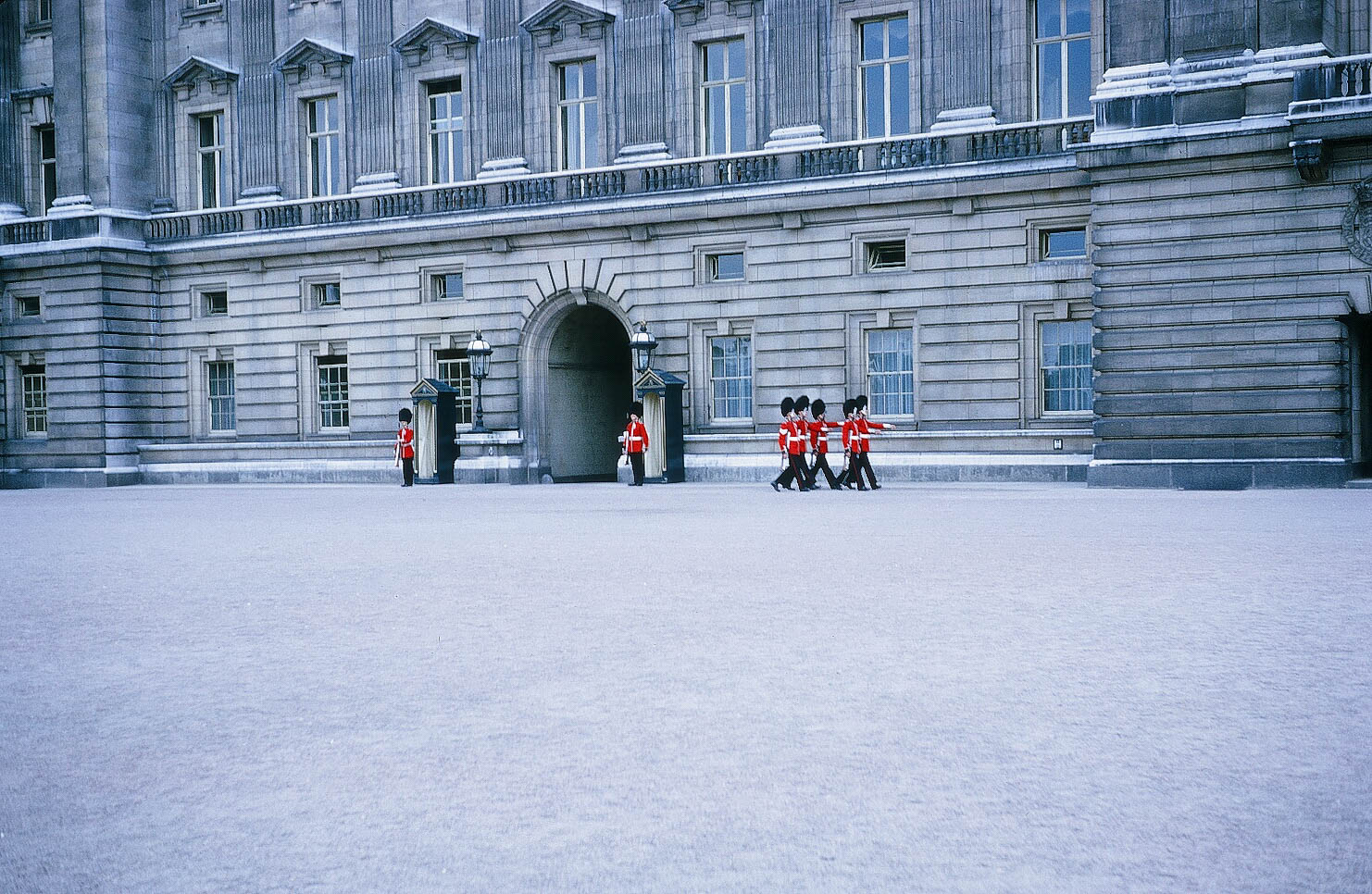
1966EuropeTrip-Guard Change at Buckingham Palace
1966EuropeTrip-14
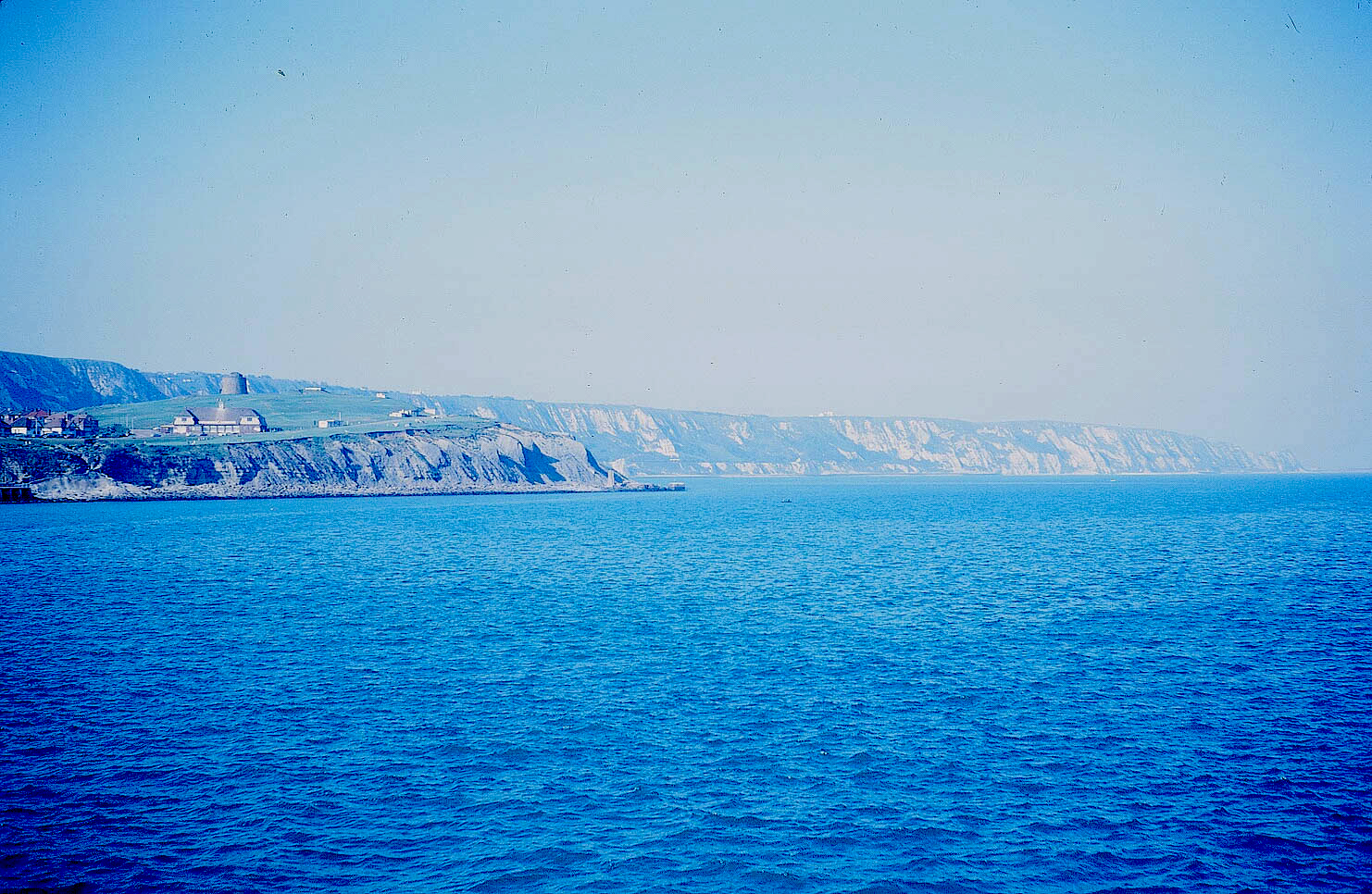
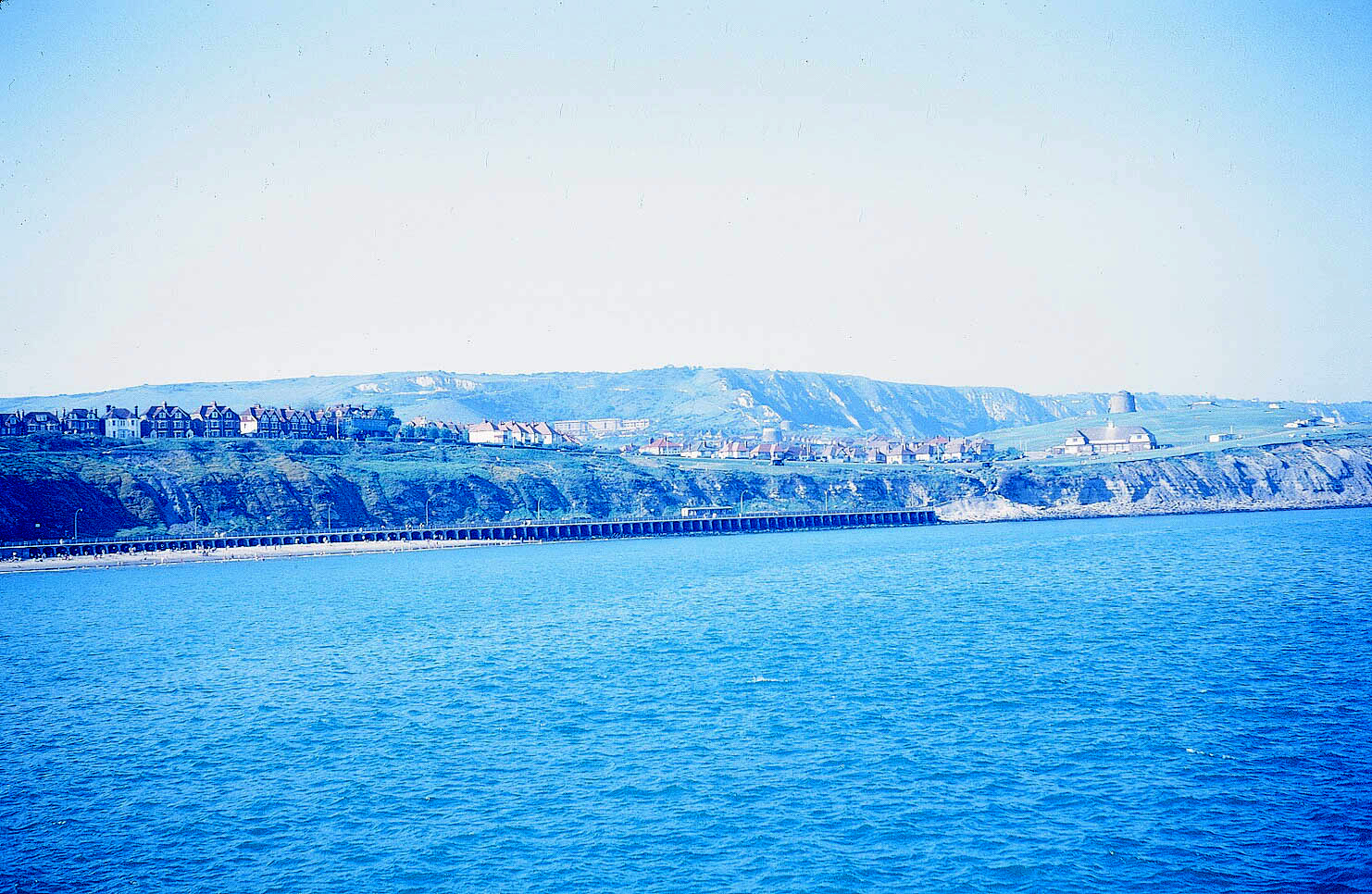
1966EuropeTrip-White Cliffs of Dover on English Channel
1966EuropeTrip-More White Cliffs
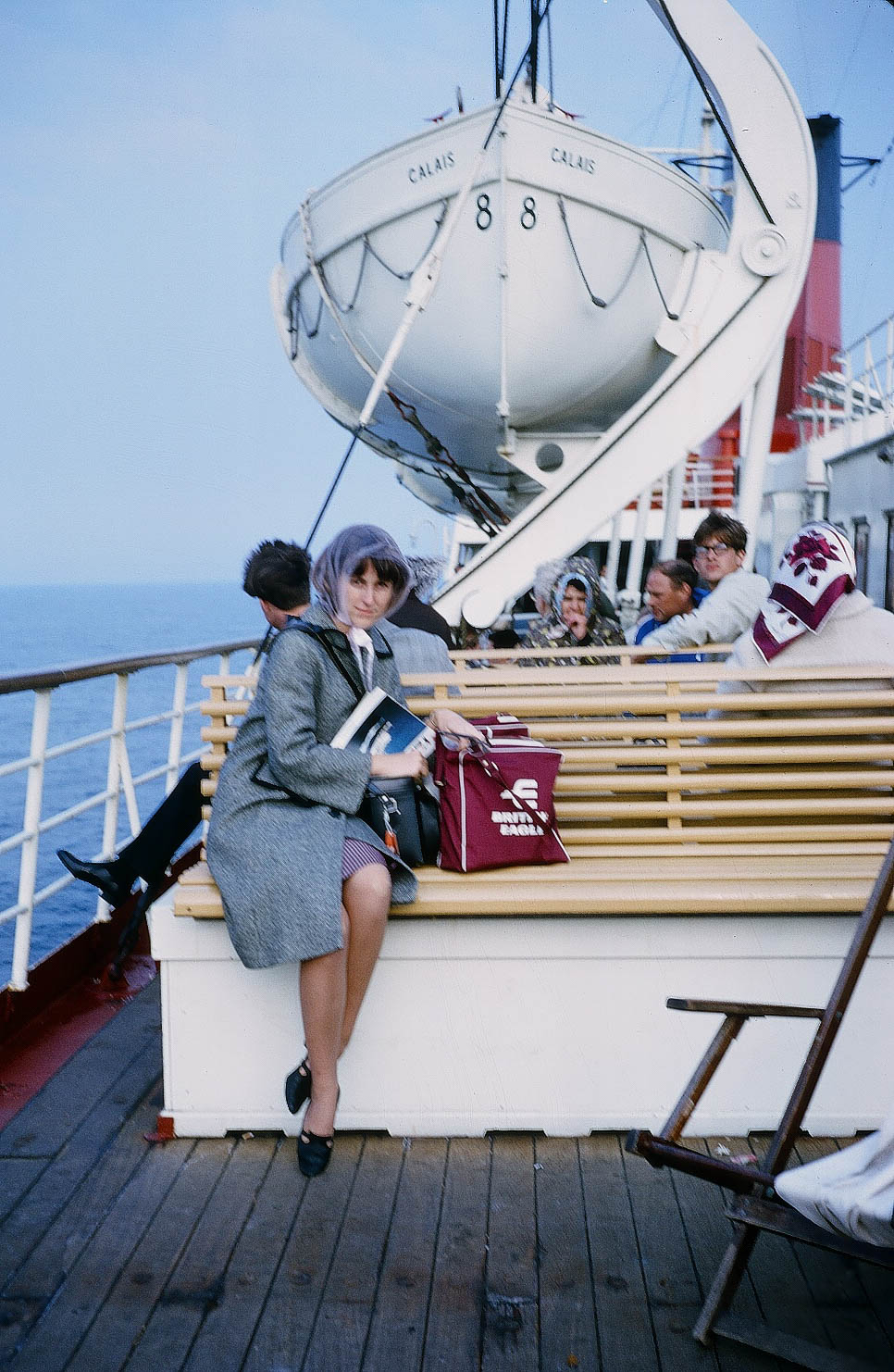
1966EuropeTrip-Pat on English Channel Ferry
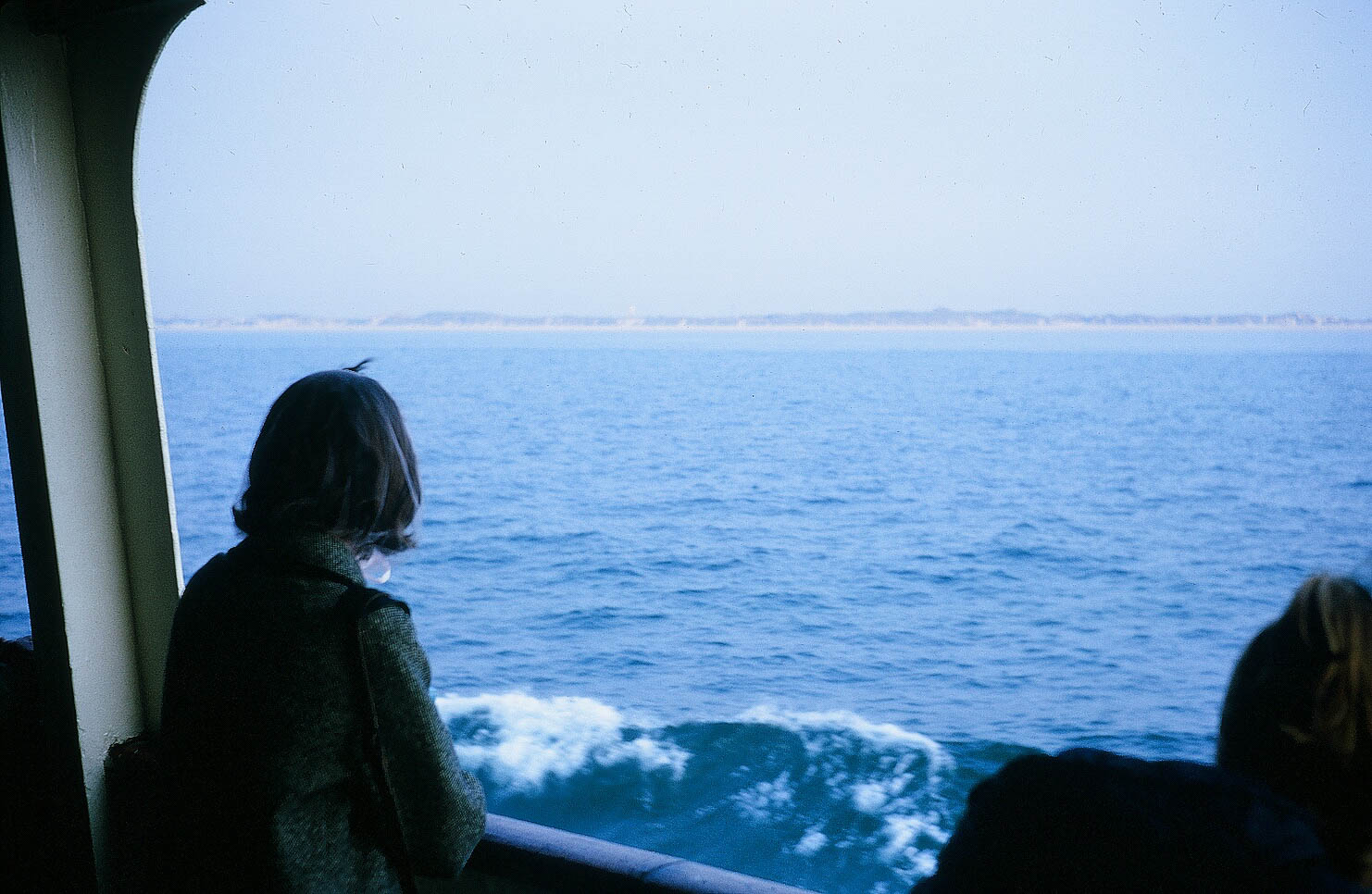
1966EuropeTrip-First view of Europe continent.
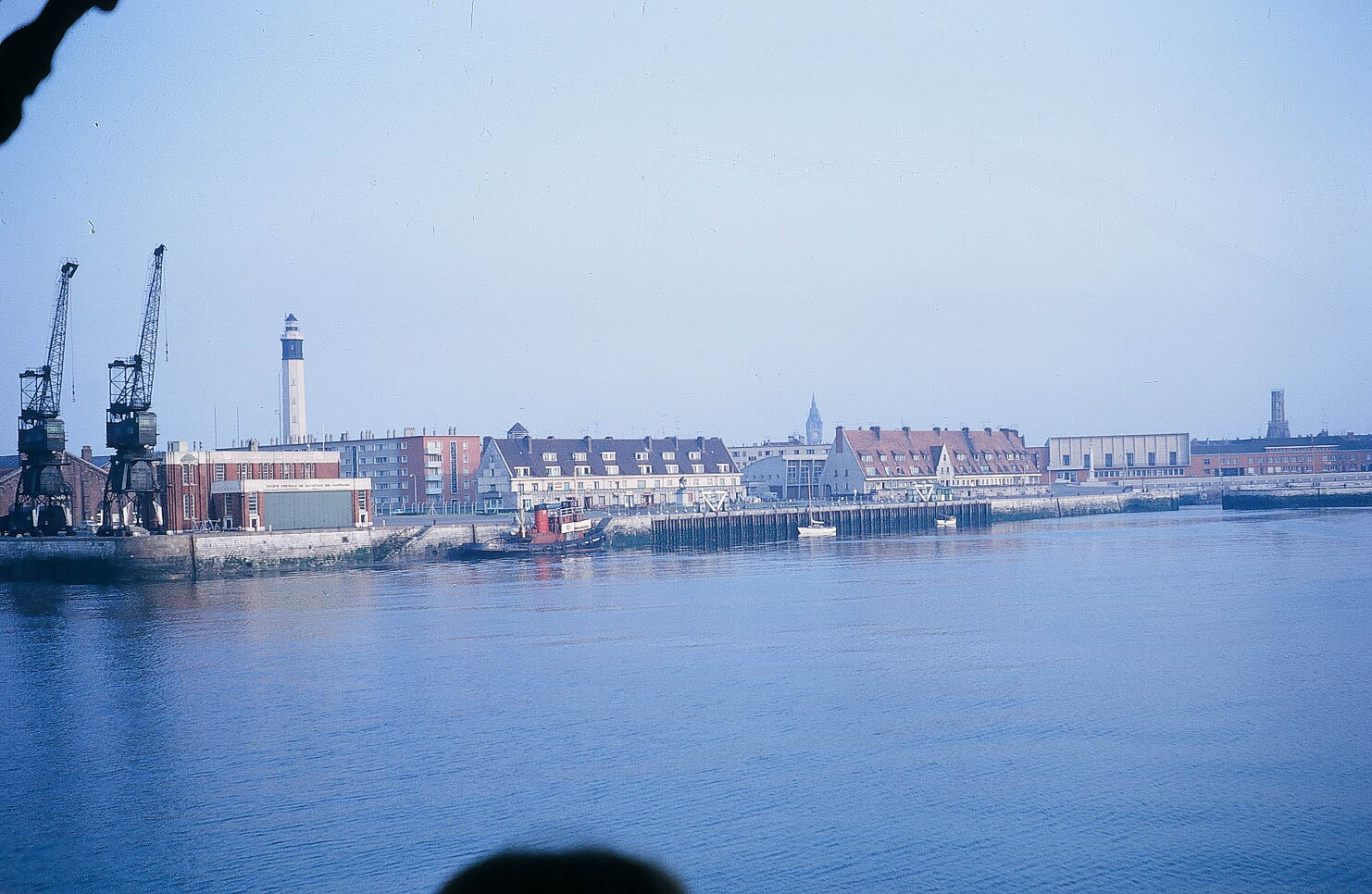
1966EuropeTrip-Calais, France
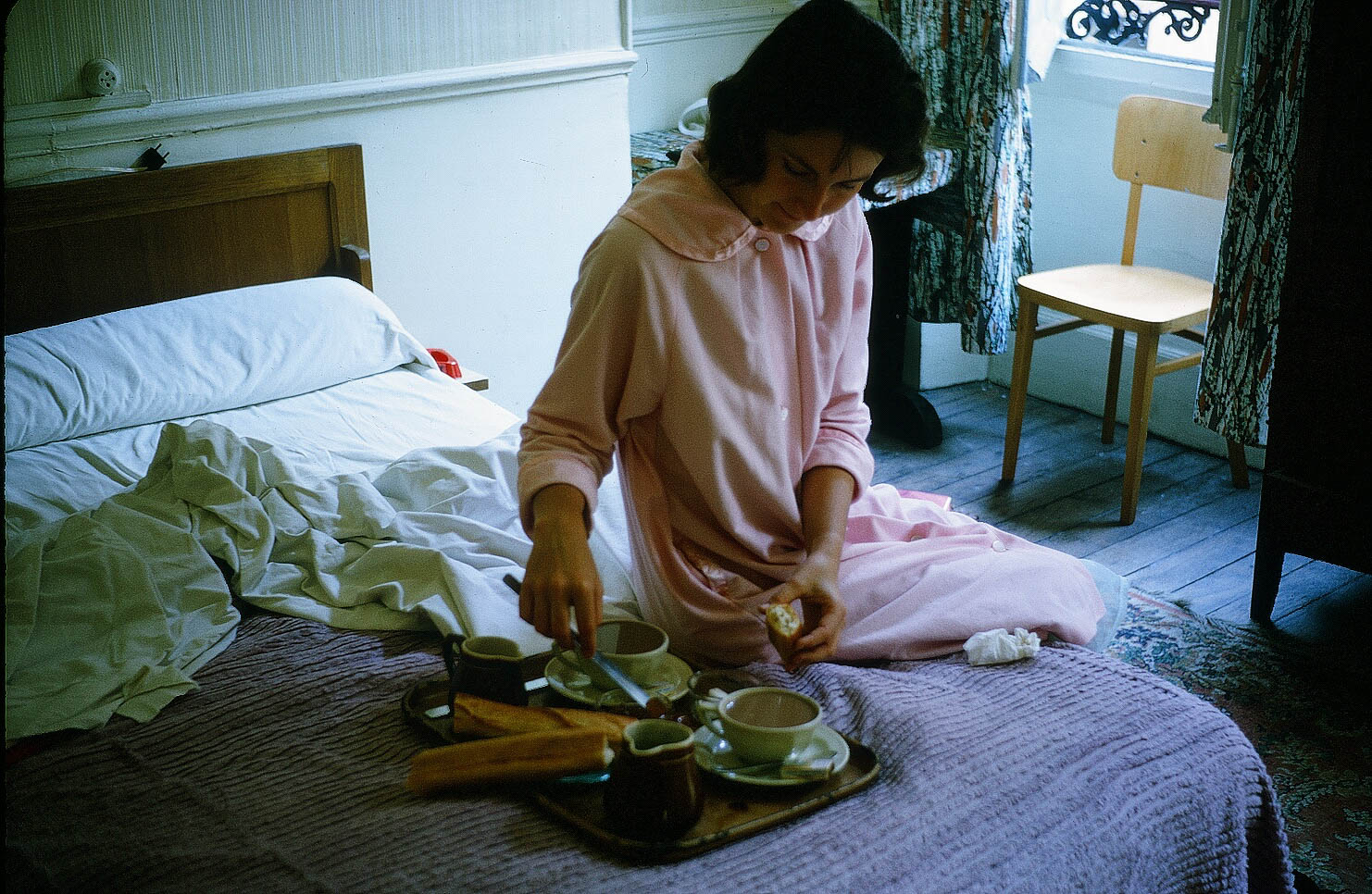
1966EuropeTrip-Triple A, AAA, did not follow our instructions for booking a hotel in Paris. They book an expensive on, we left. While on the train we met a professor from Wesleyan U. who knew Paris. He led us and others to a cheap hotel, Grand Hotel de l' Universe on Boulevard St. Germain (25 francs) and we went to bed. Here Pat is have a Continental breakfast that was delivered to our room, the first of many.
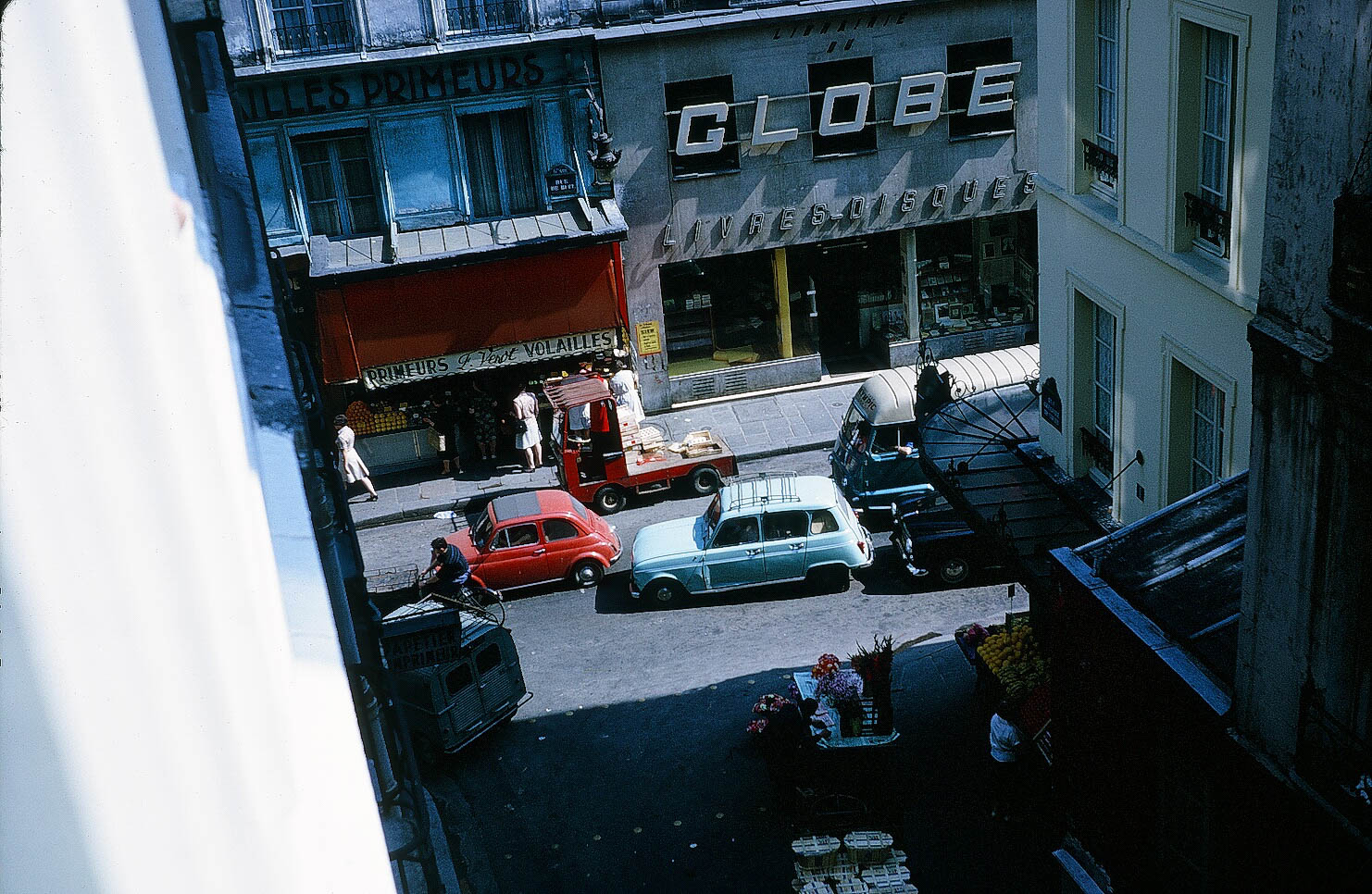
1966EuropeTrip-View from our hotel room in Paris.
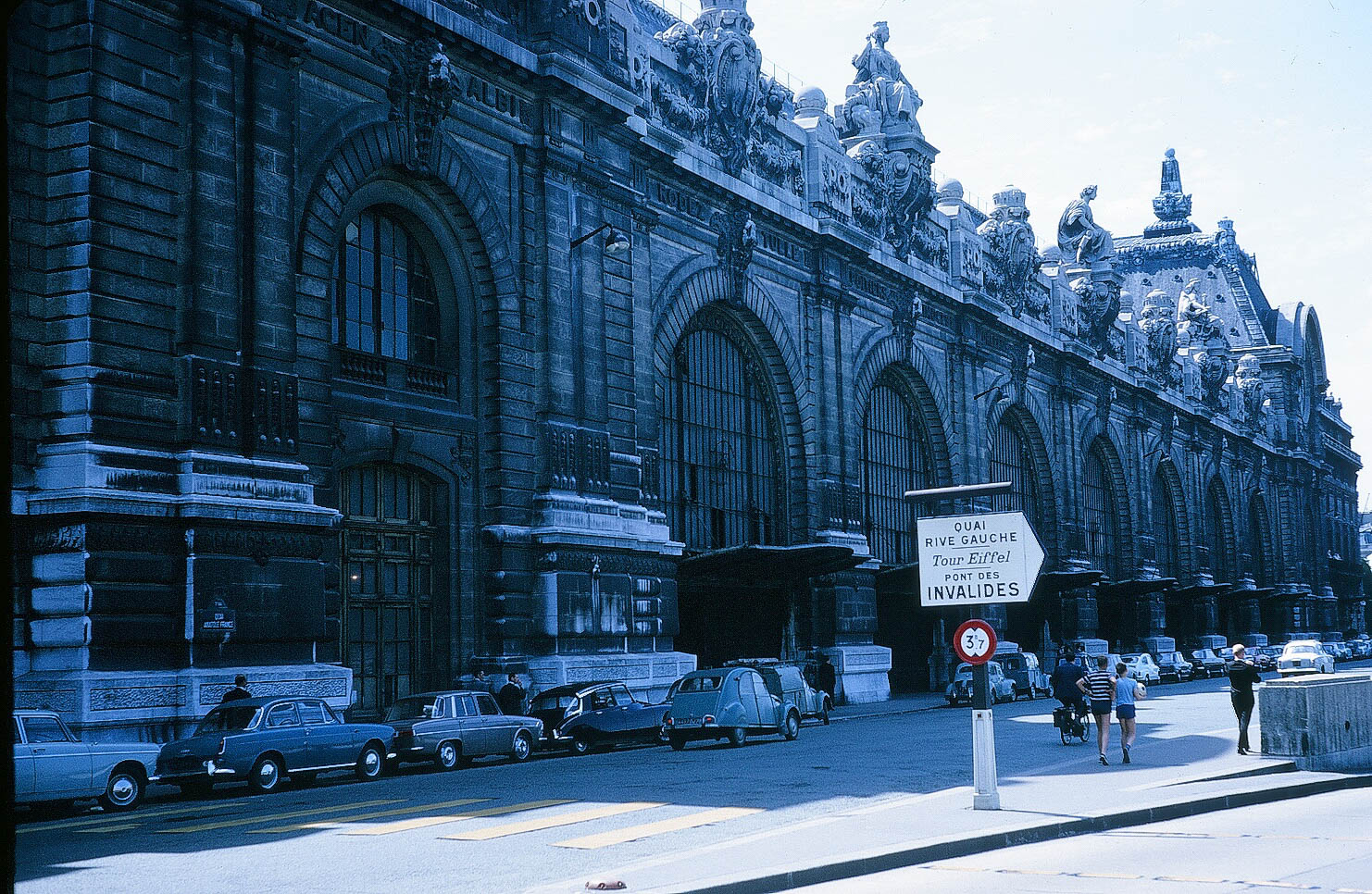
1966EuropeTrip-The Gare d'Orsay is a former Paris railway station and hotel, built in 1900. Now the Musée d'Orsay.
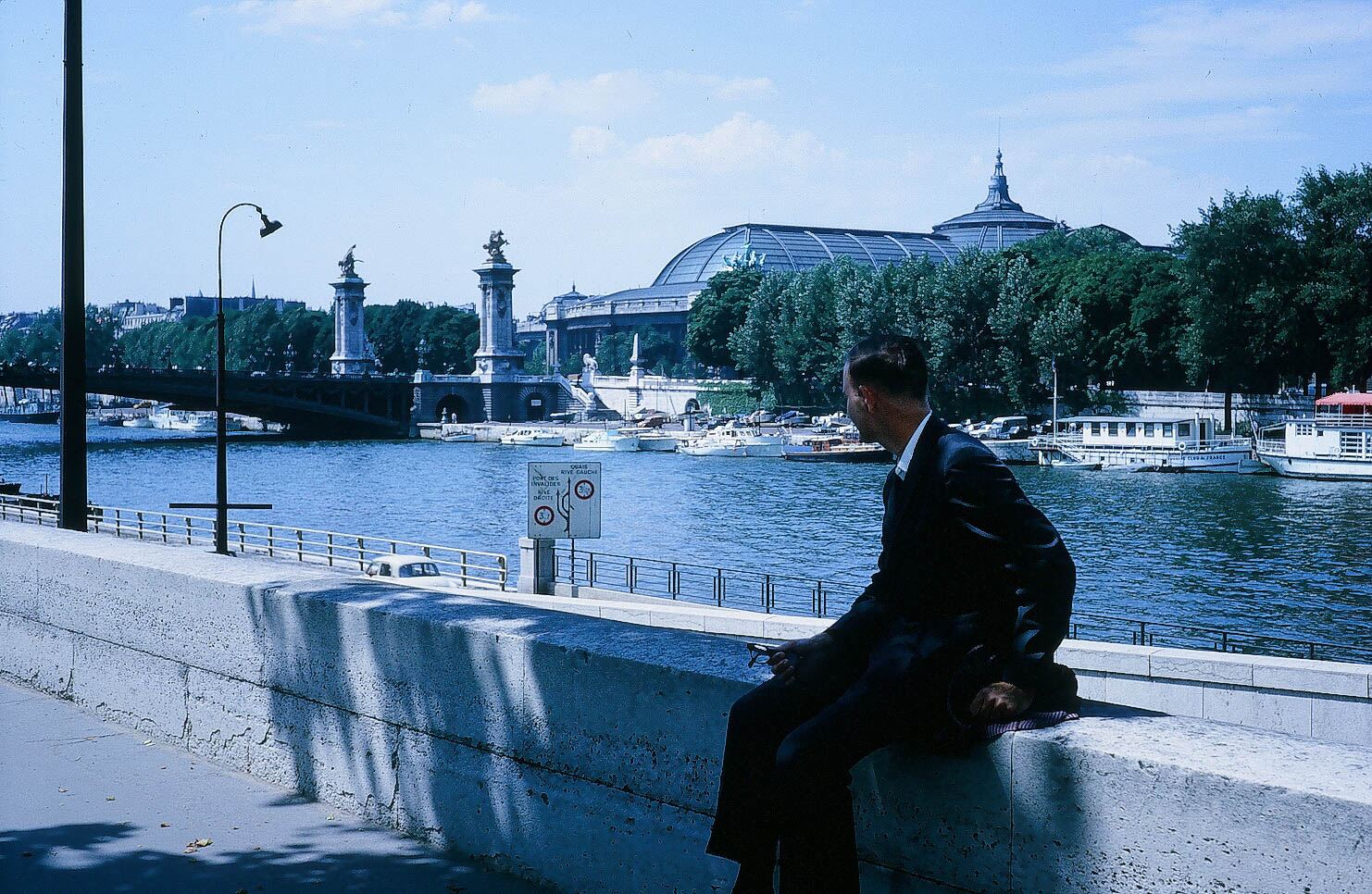
1966EuropeTrip-Grand Palais and Pont Alexandre III over river Seine
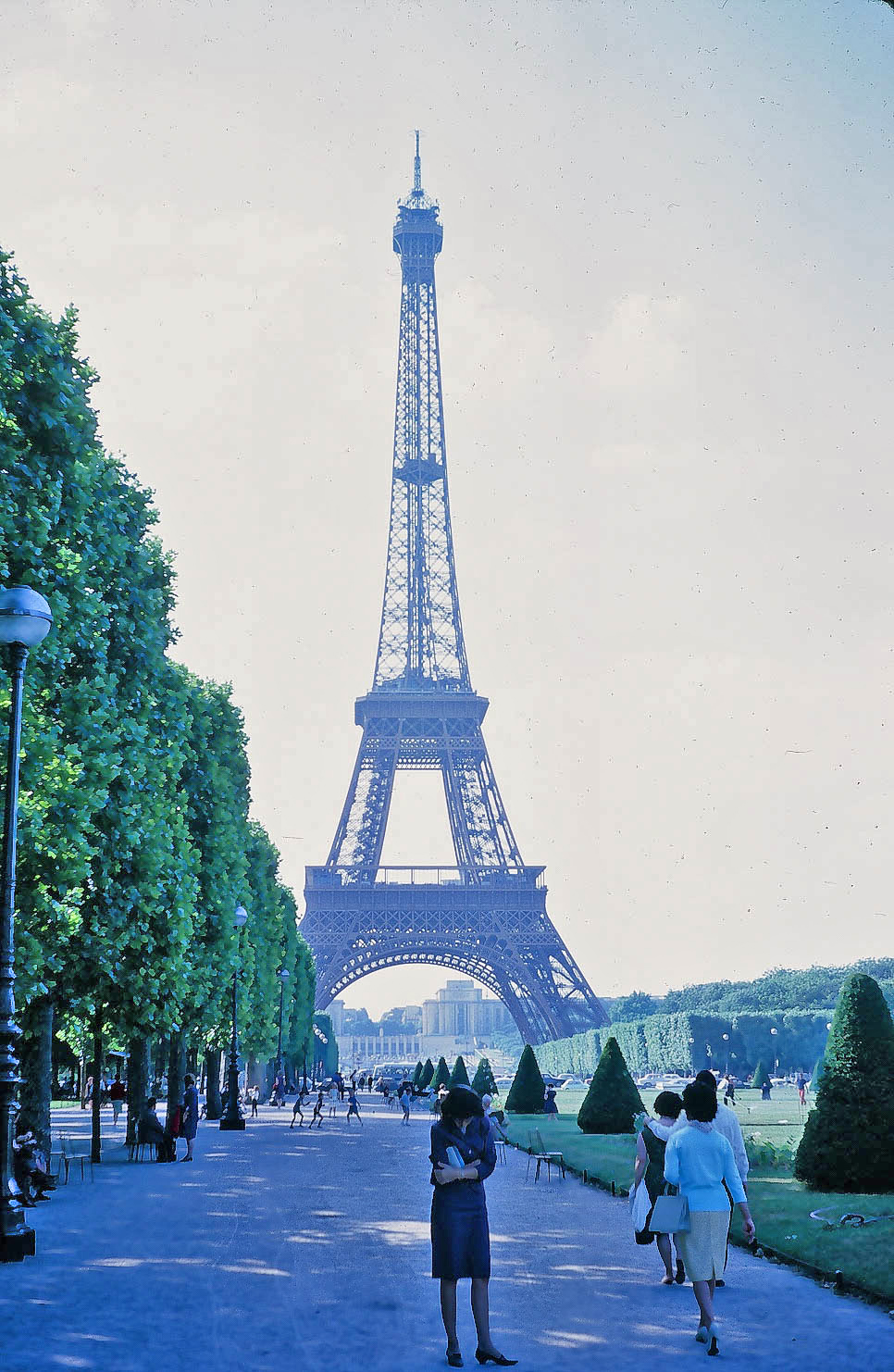
1966EuropeTrip-Eiffel Tower
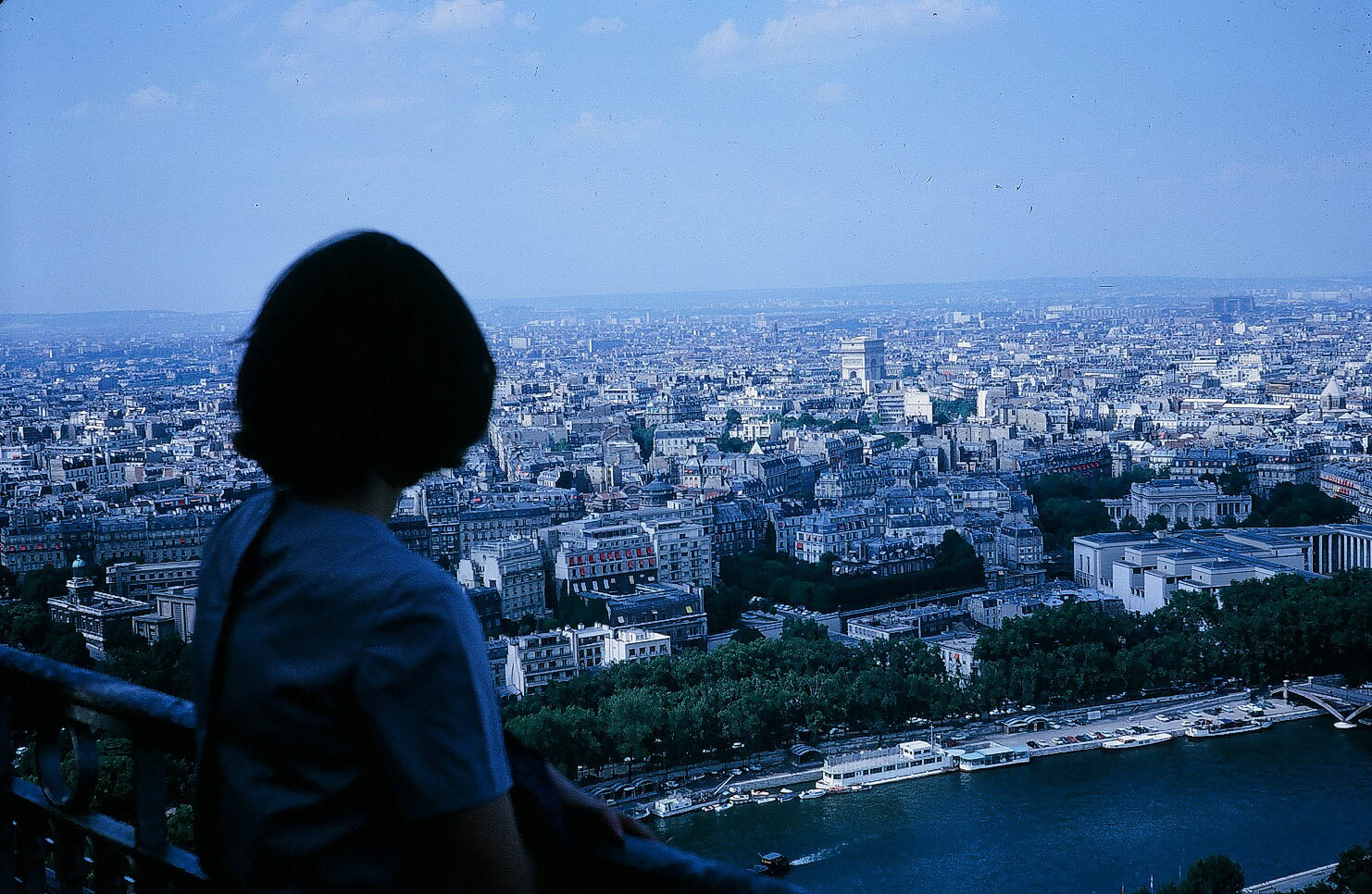
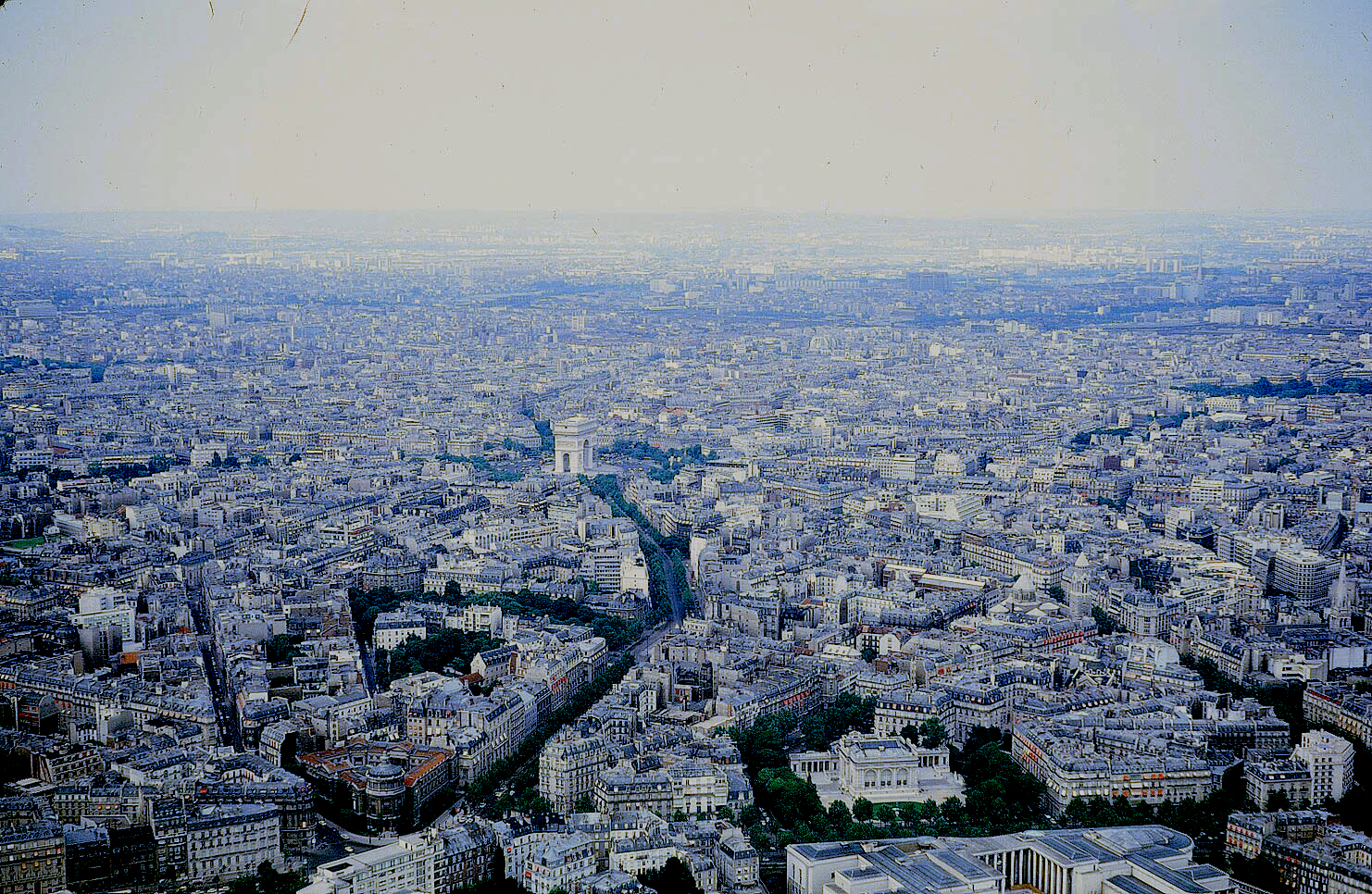
1966EuropeTrip-View of Arc de Triumph from Eiffel Tower.
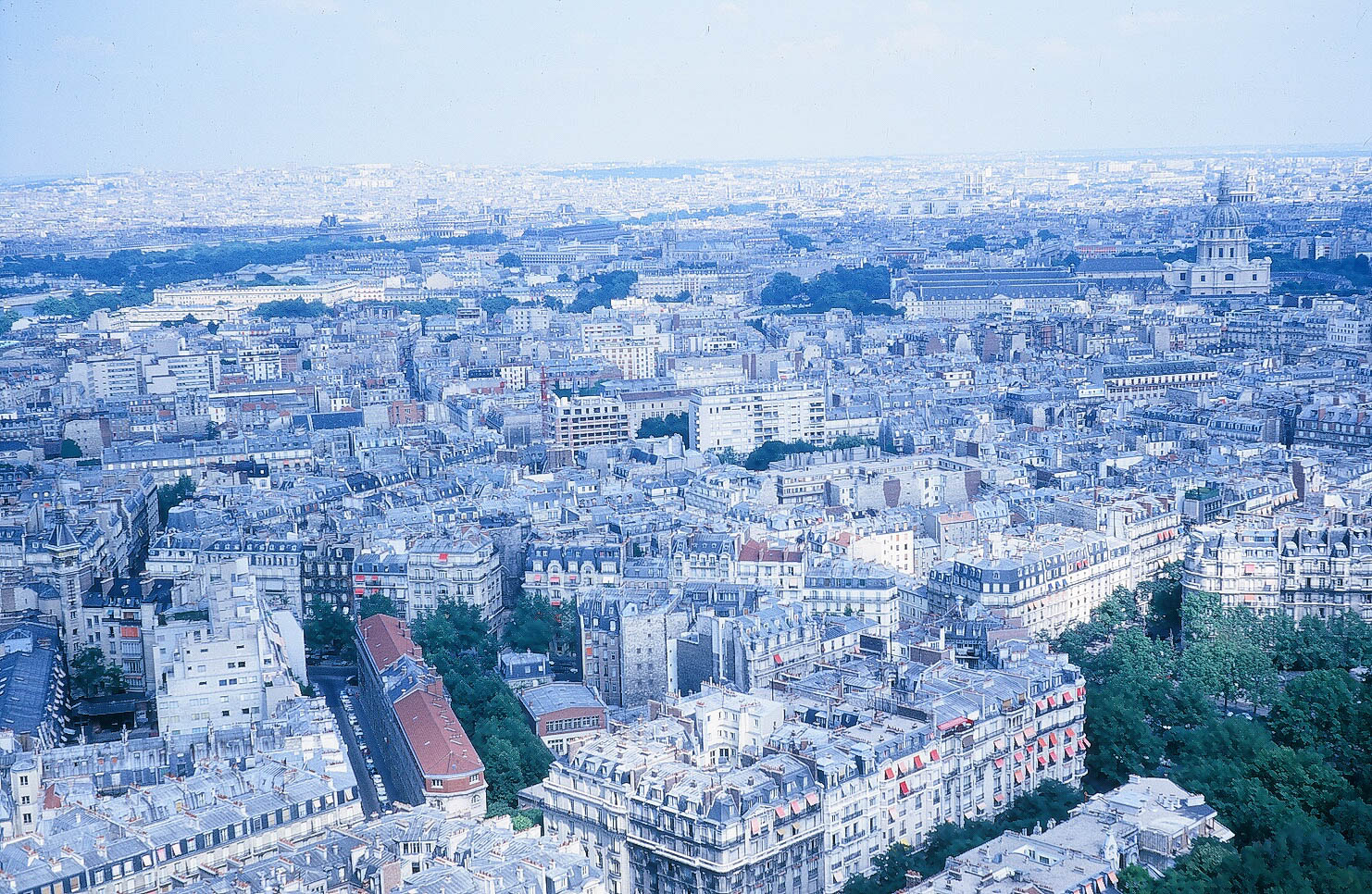
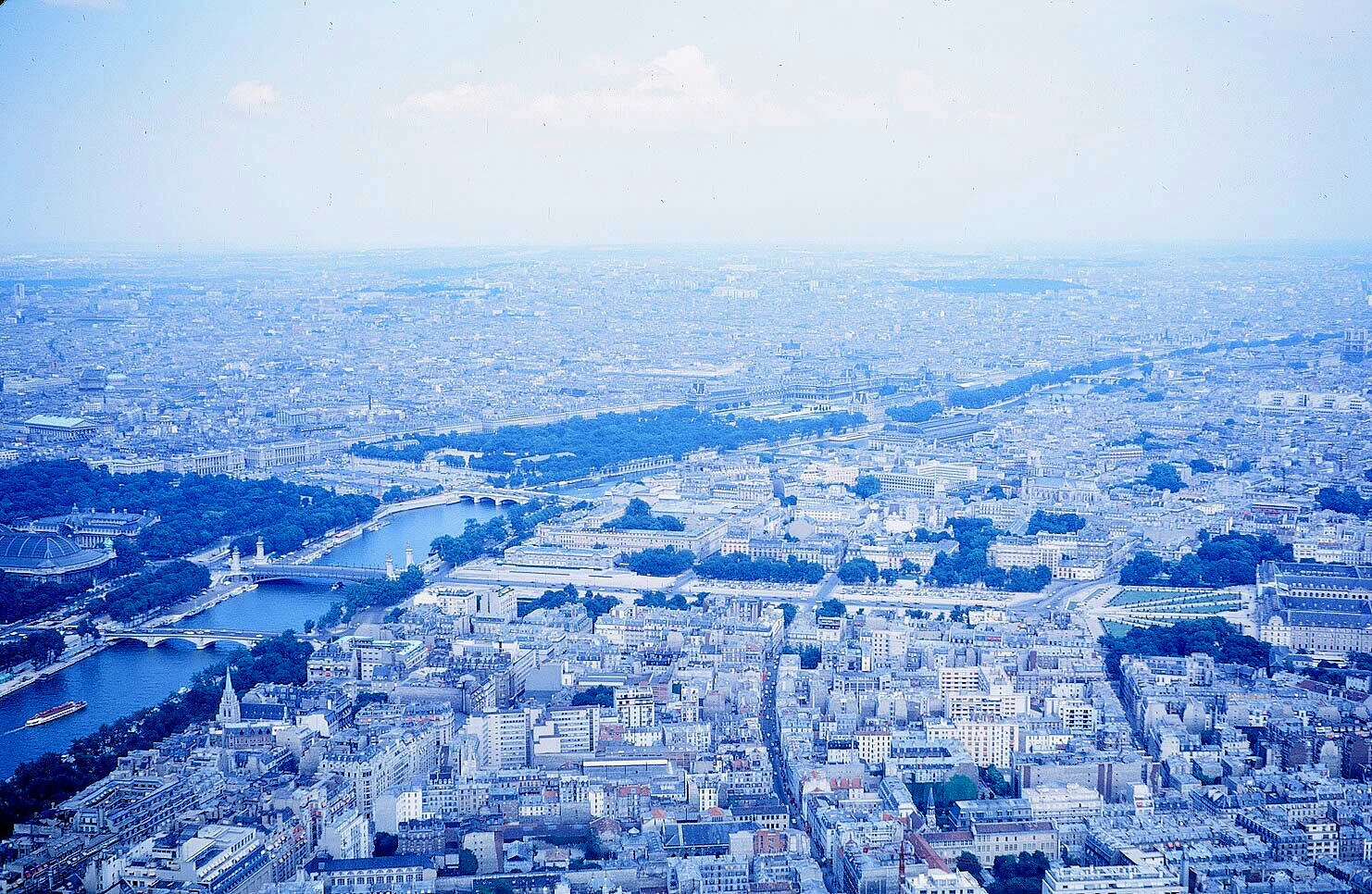
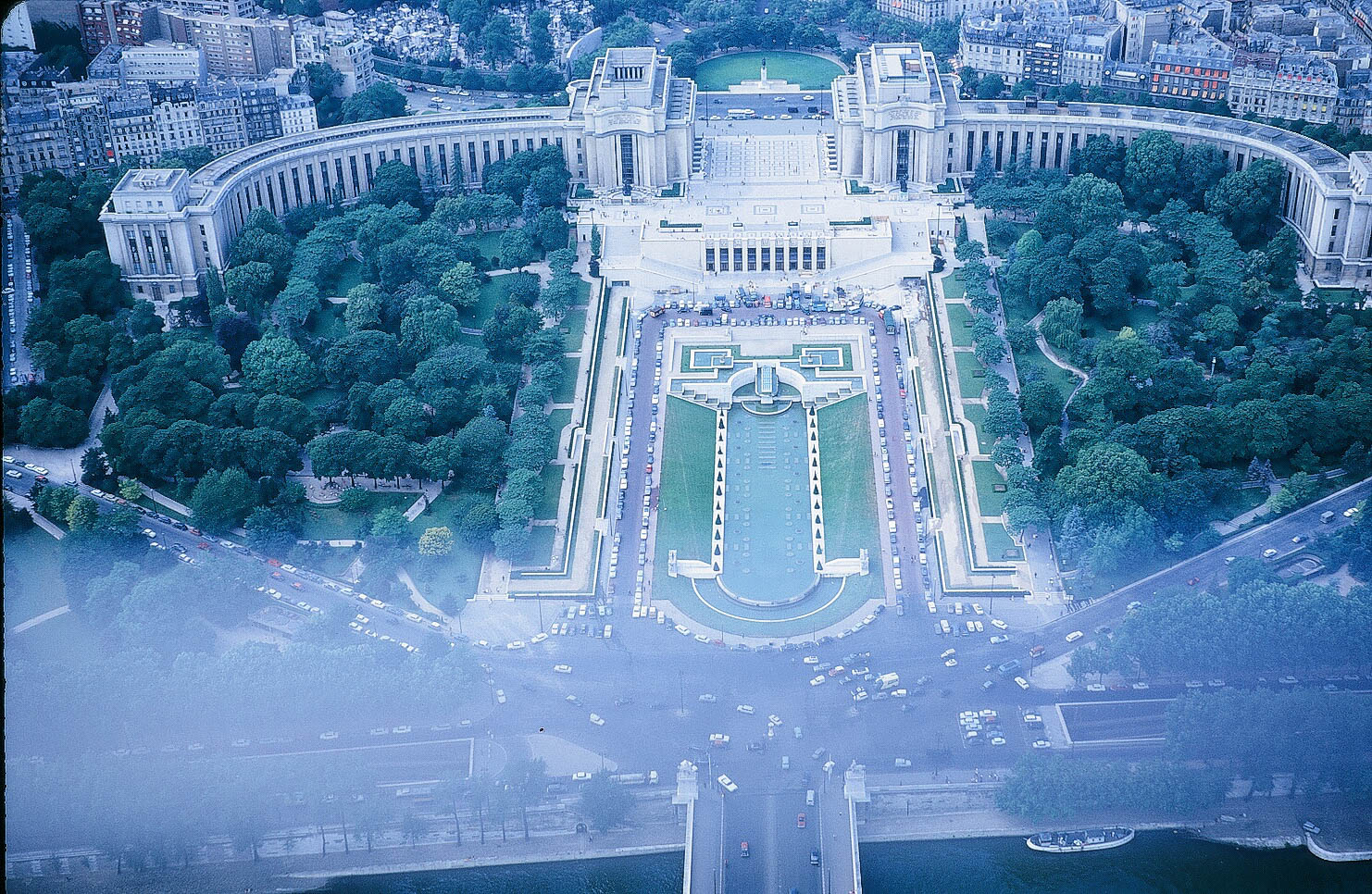
1966EuropeTrip-Paris from Eiffel Tower
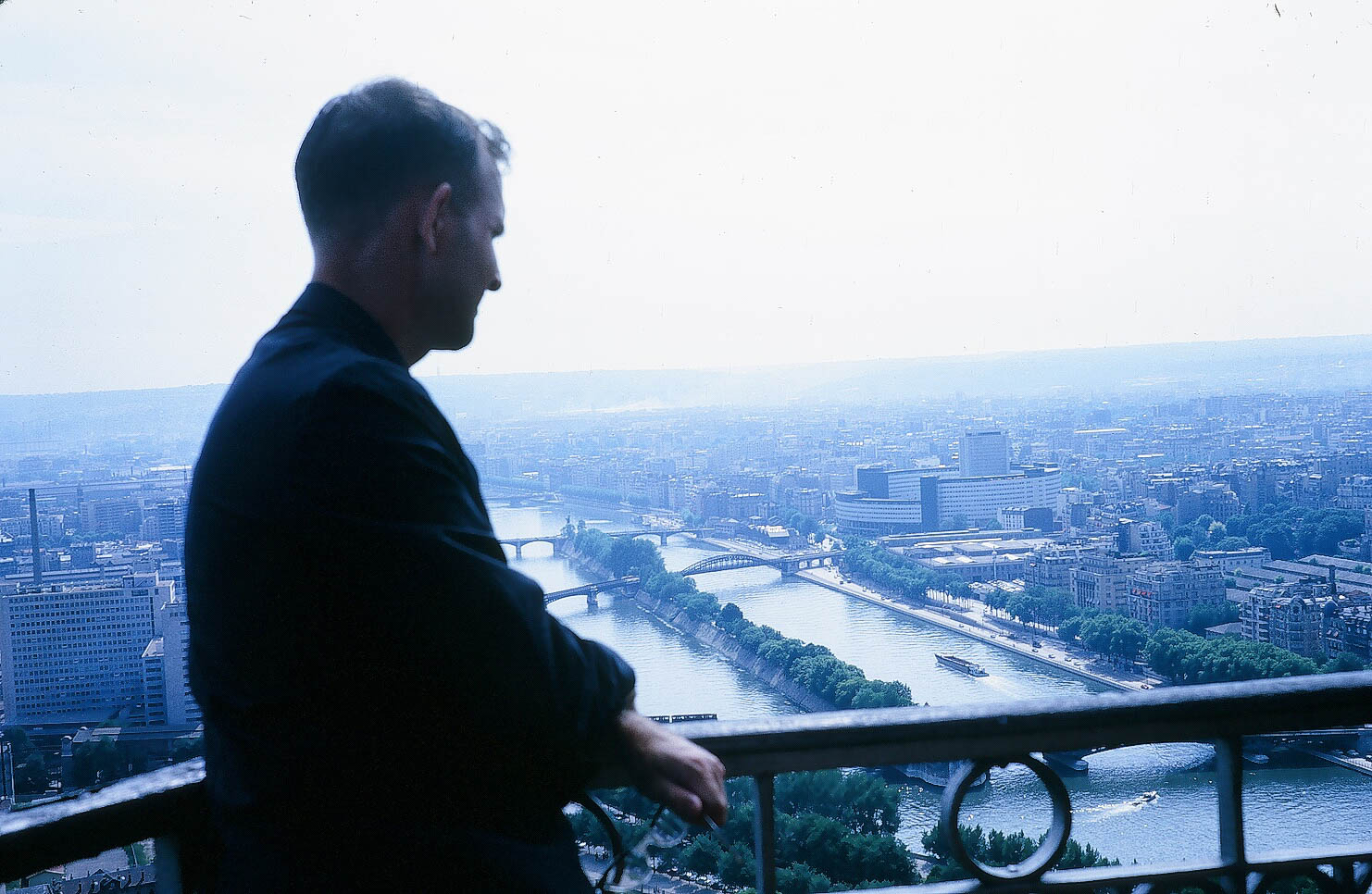
1966EuropeTrip-Mel on Eiffel Tower
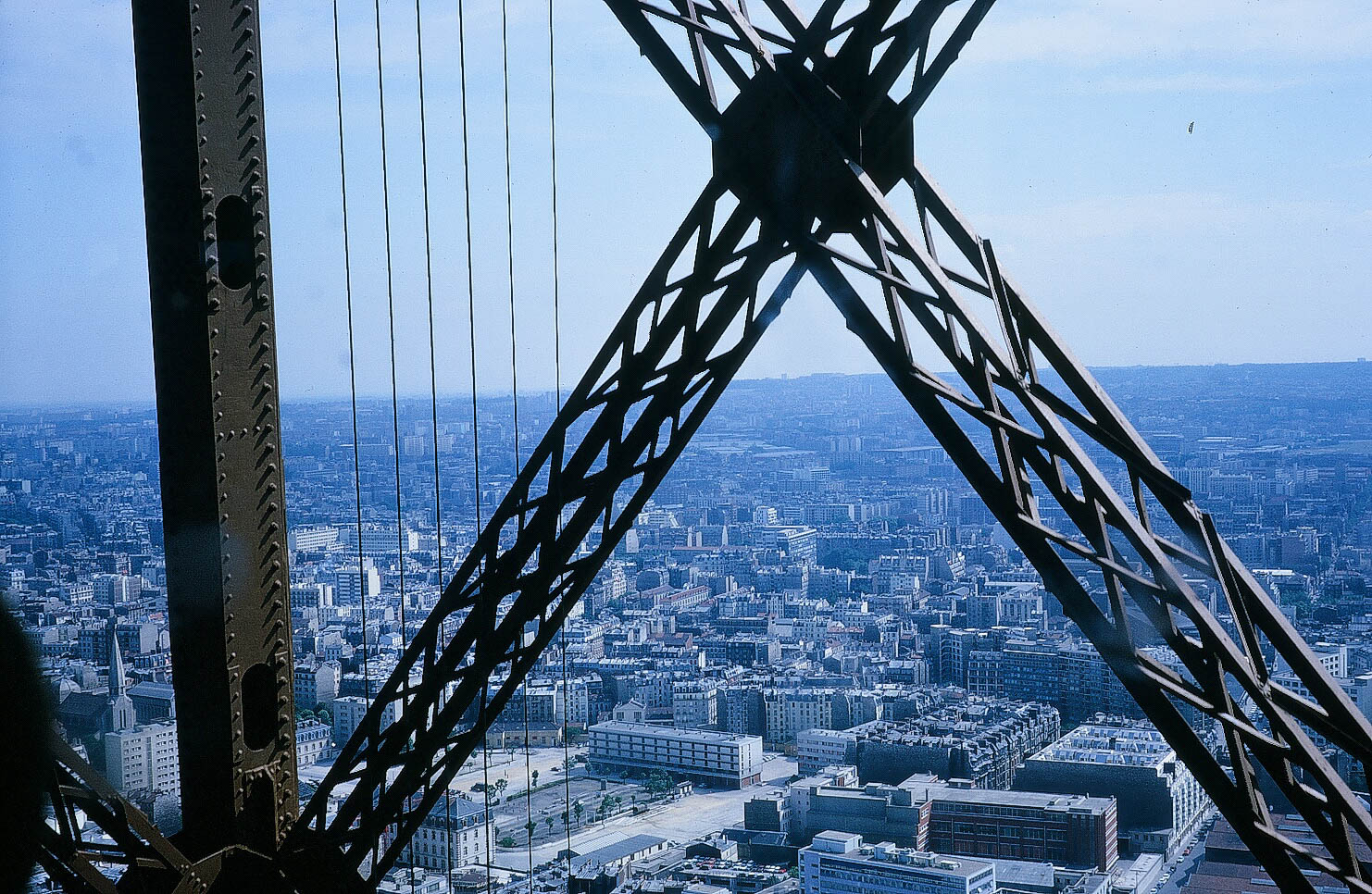
1966EuropeTrip-From Eiffel Tower Elevator
1966EuropeTrip-Paris from Eiffel Tower
1966EuropeTrip-Paris from Eiffel Tower
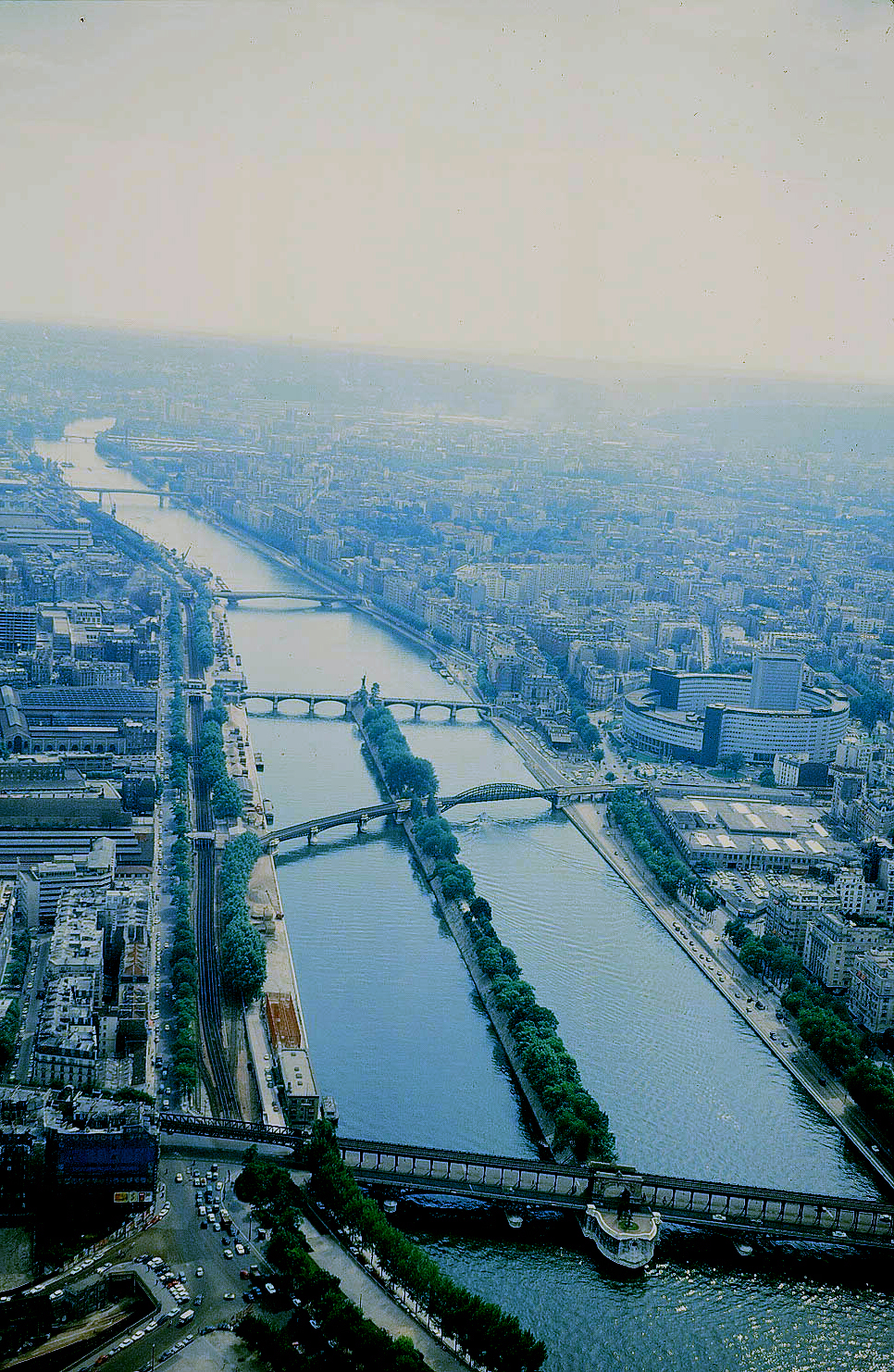
1966EuropeTrip-Seine River and Il aux Cygnes, an artificial island. Pont de Grenelle-Cadets de Saumur is bridge at upper end of the island.
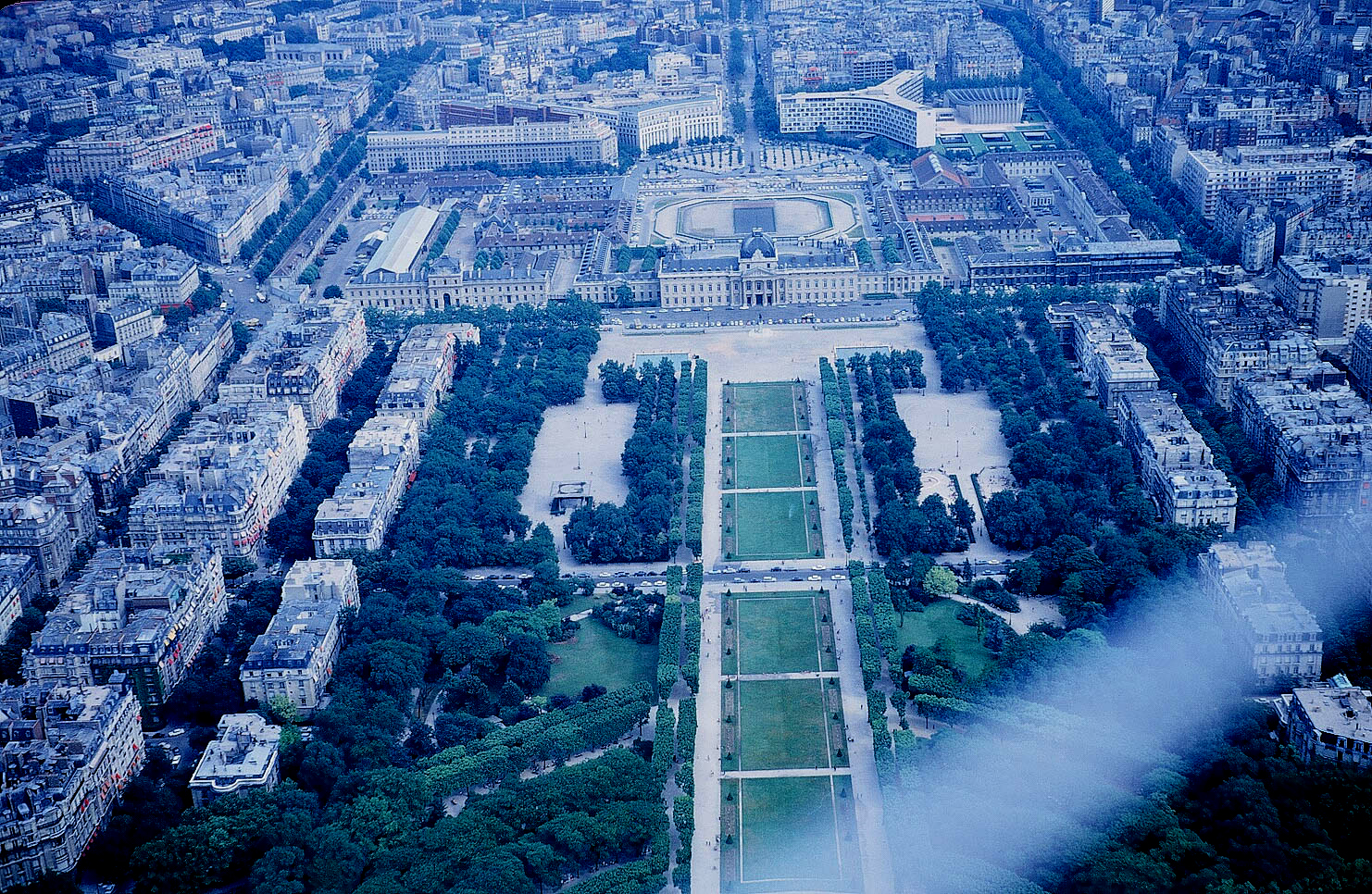
1966EuropeTrip-Champ-de-Mars is a large public greenspace in Paris, France. Ecole Militaire is building at upper end.
1966EuropeTrip-Paris from Eiffel Tower
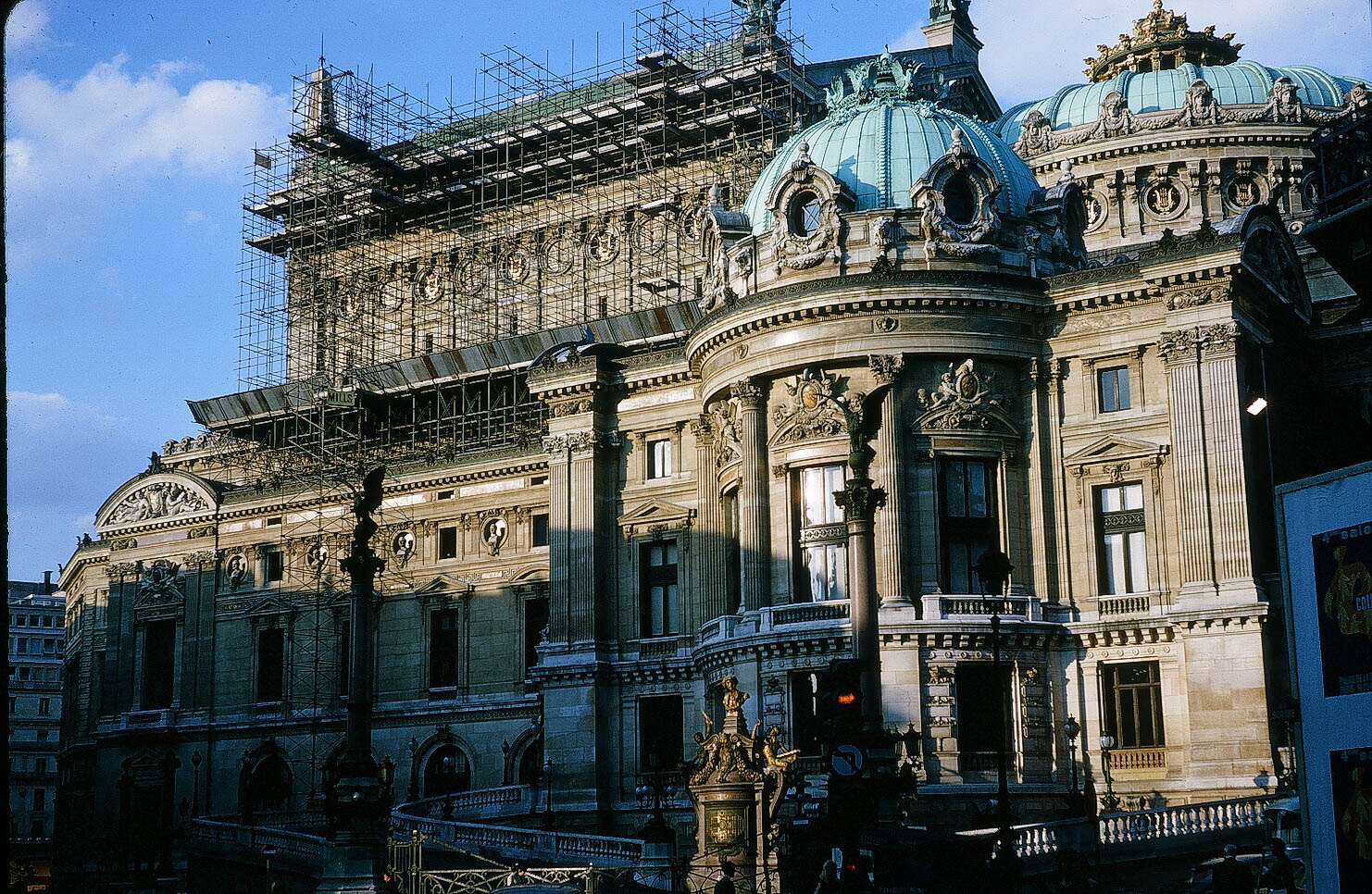
1966EuropeTrip-Paris Opera Garnier.
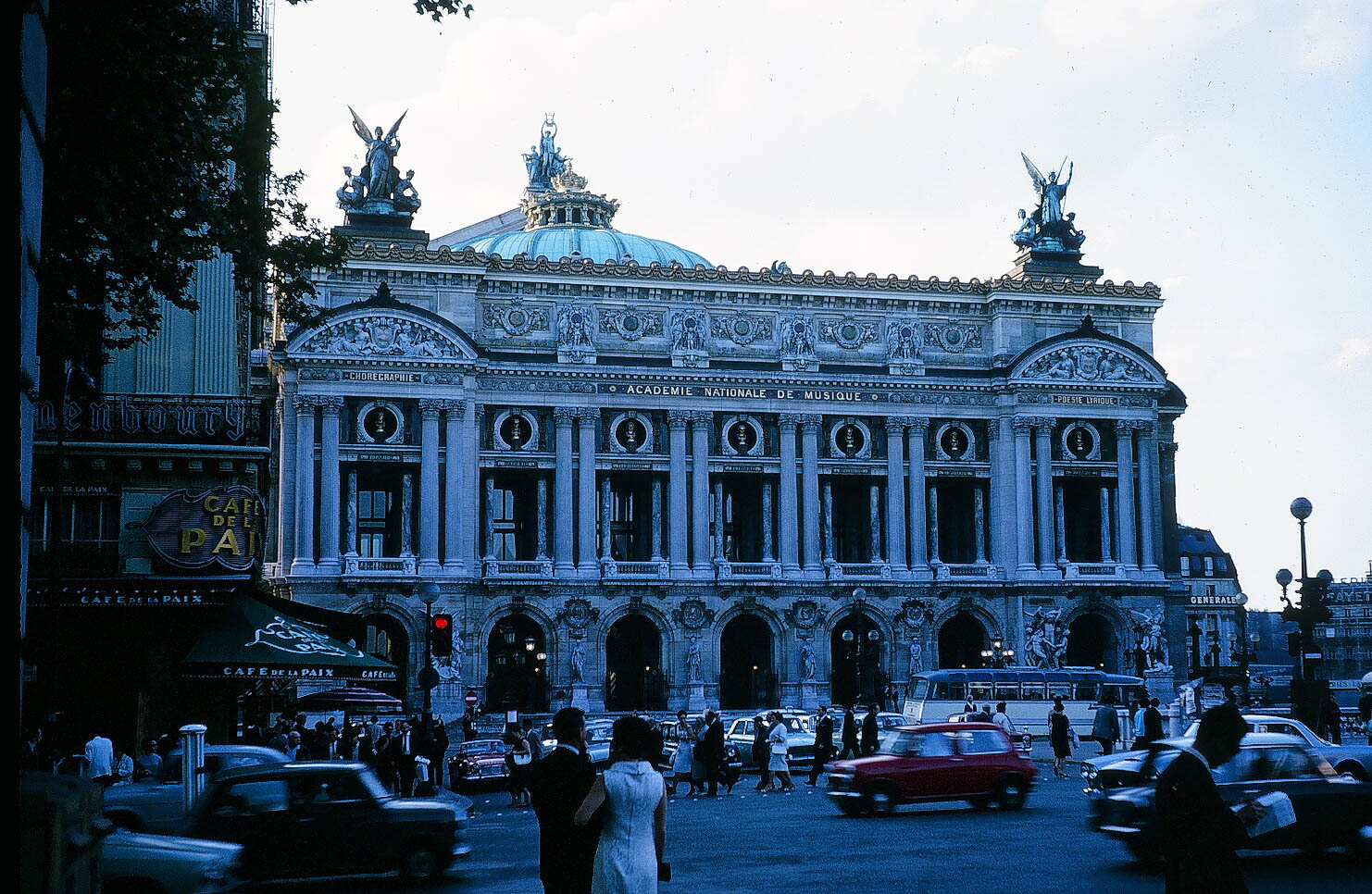
1966EuropeTrip-National Academy of Music. Paris Opera.
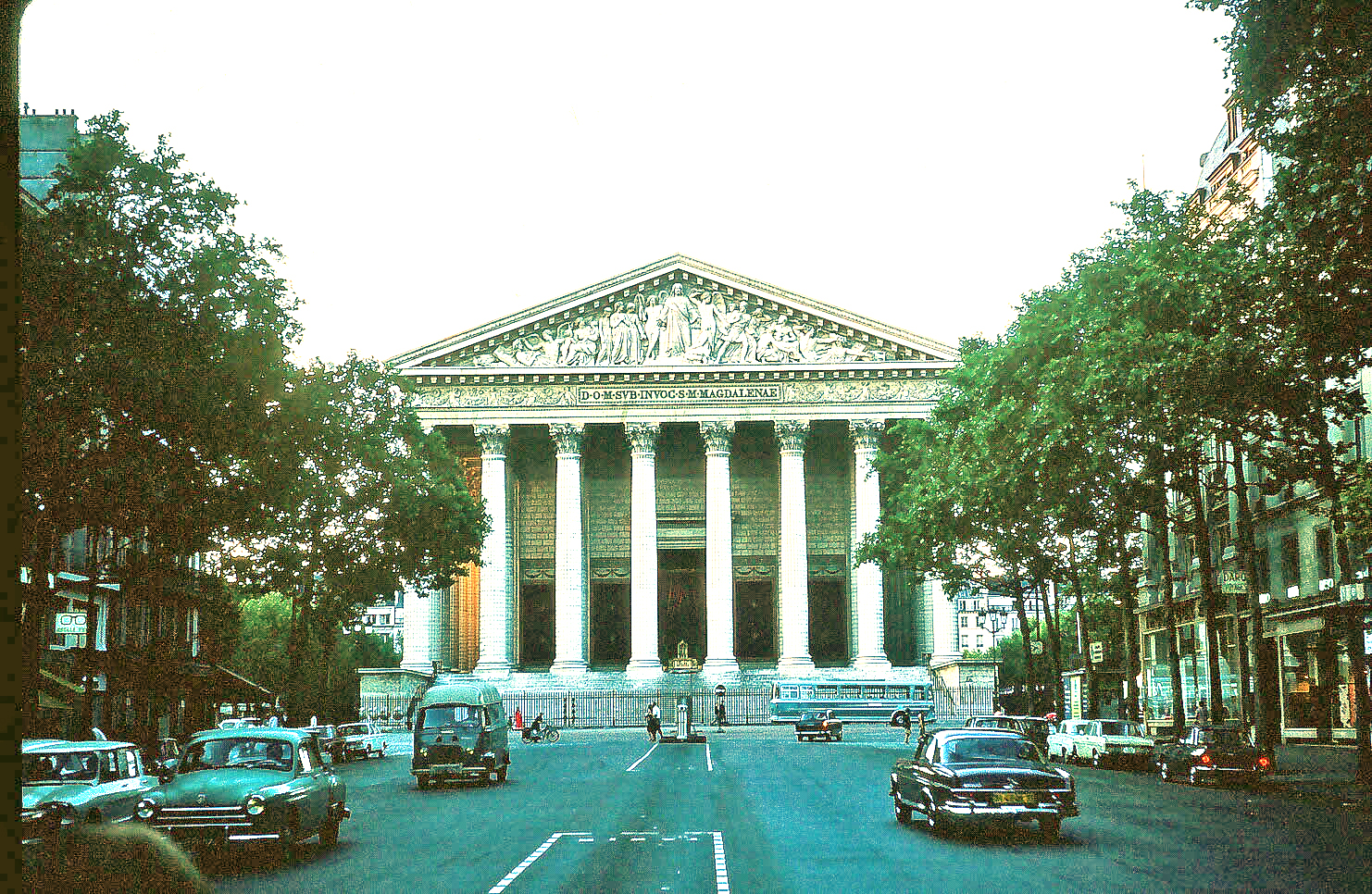
1966EuropeTrip-Church of Sainte-Marie-Madeleine (La Madeleine) Inaugurated in 1842, the Church of Sainte-Marie-Madeleine (La Madeleine) is a Roman Catholic parish church with neoclassical architecture in Paris, France.
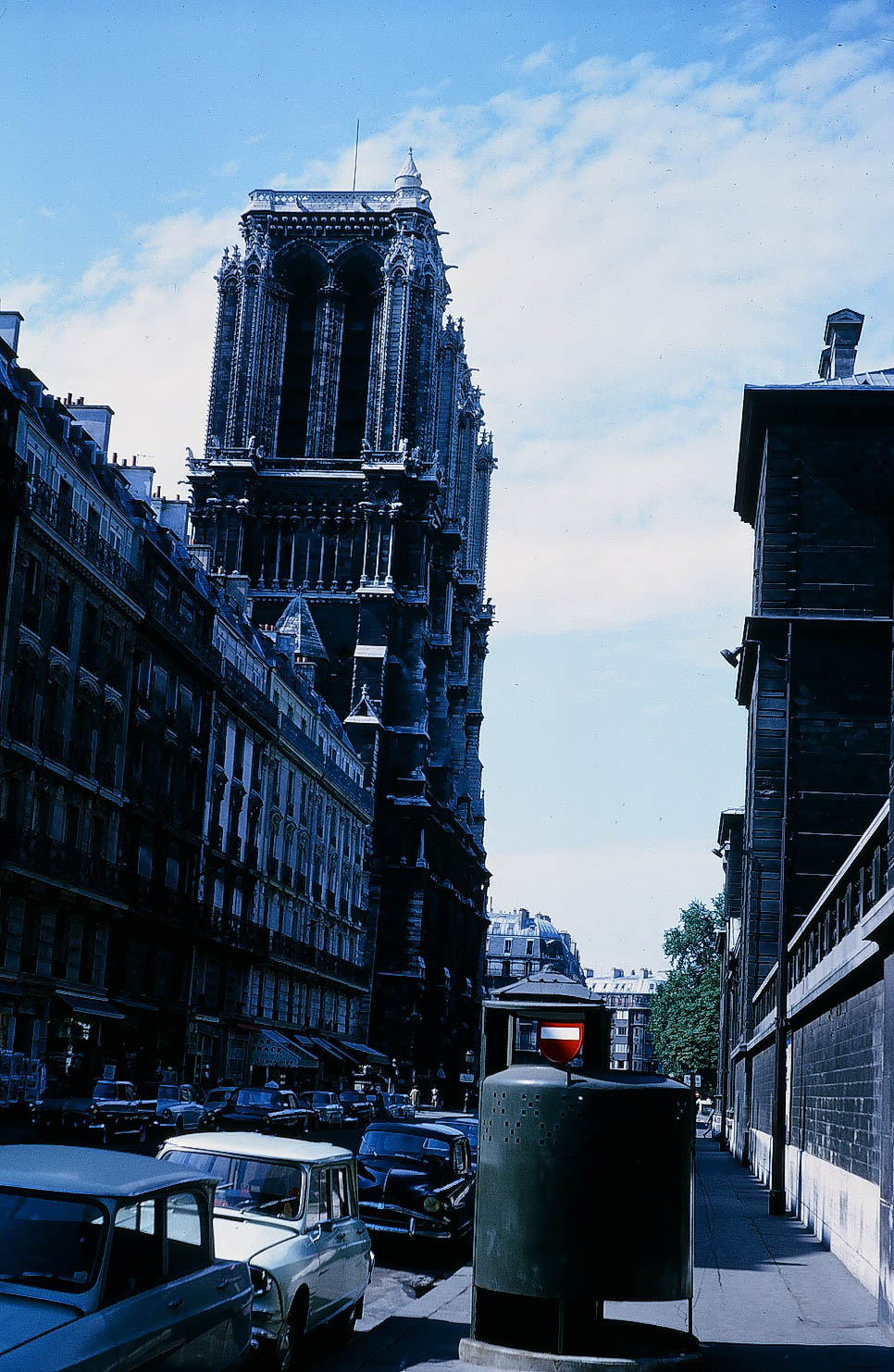
1966EuropeTrip-38 Notre Dame and public bathroom.
1966EuropeTrip-39 Arc de Triomphe
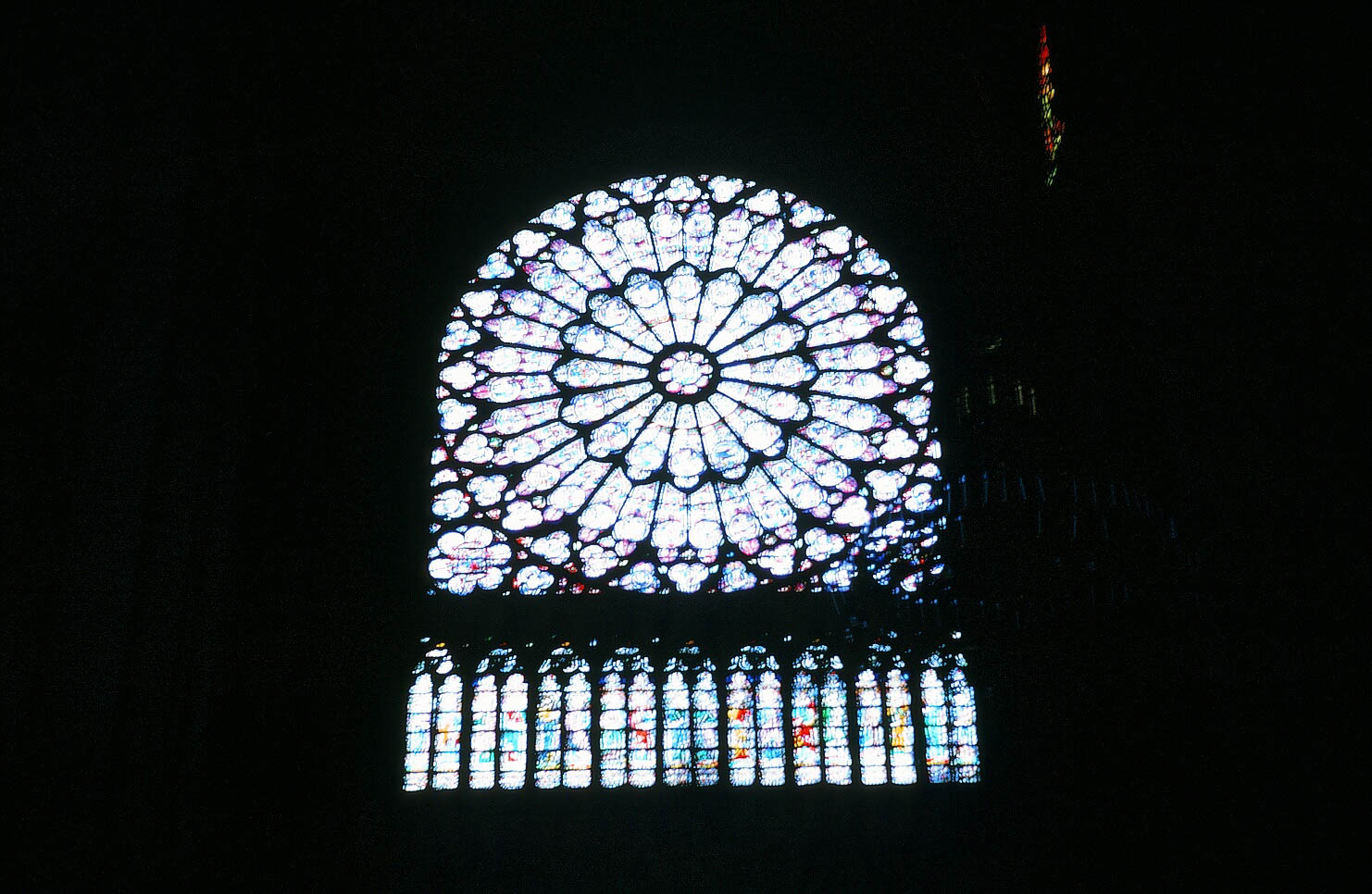
1966EuropeTrip-40 Notro Dame window.
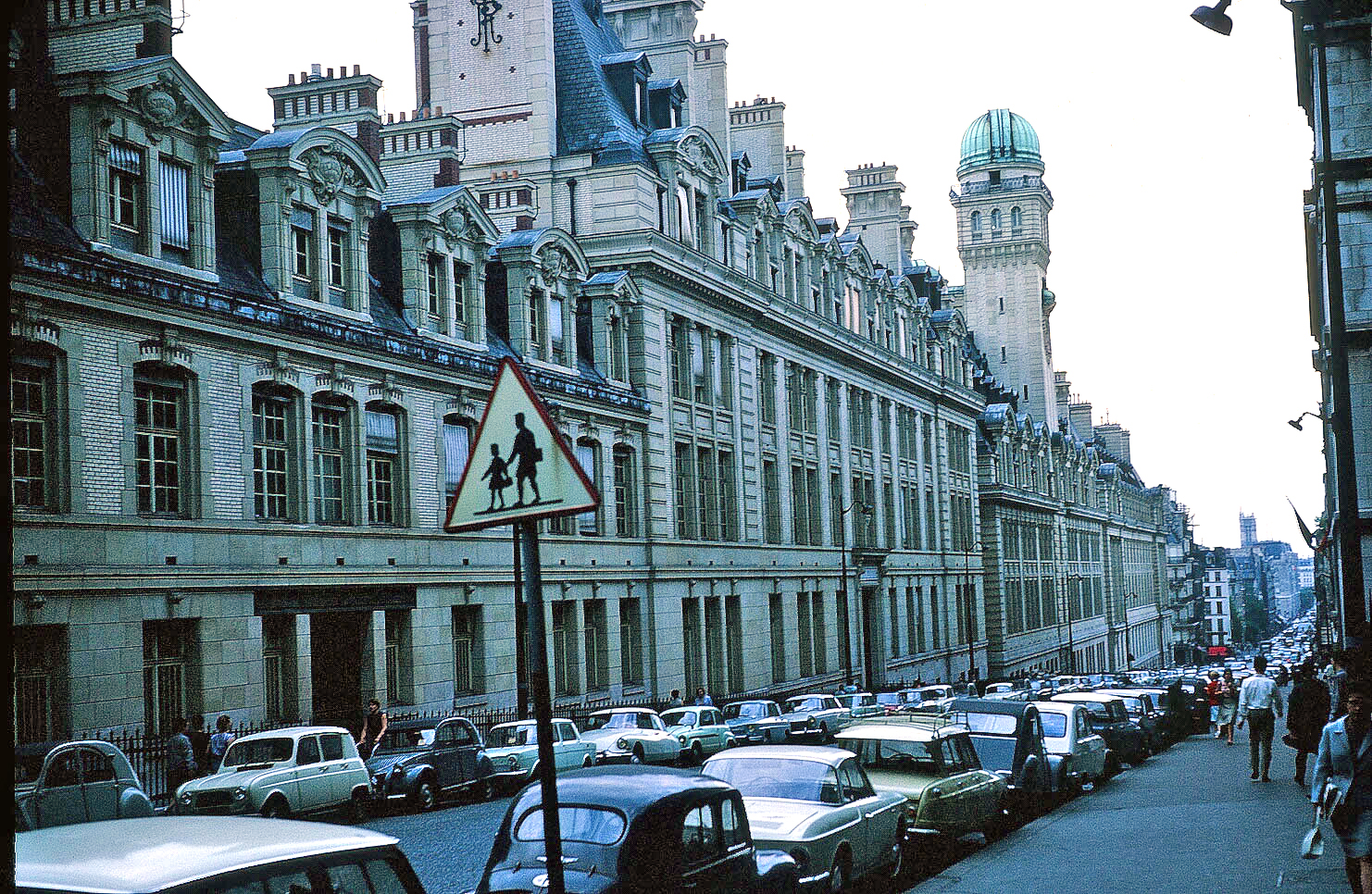
1966EuropeTrip-43 University of Paris-Sorbonne seen from Rue de Jacques.
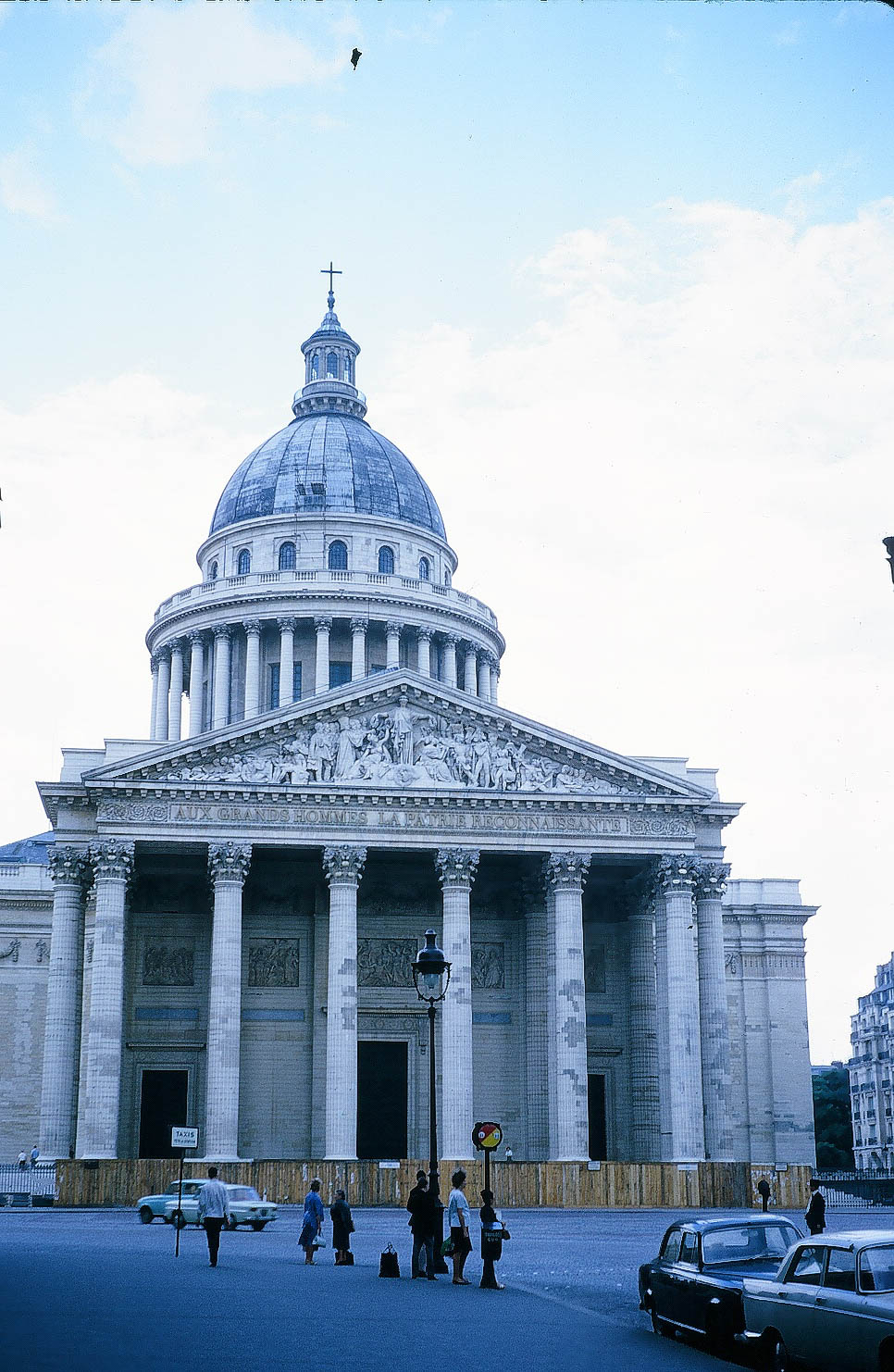
1966EuropeTrip-44 Pantheon, neoclassical church facade with dome and column. Victor Hugo, Voltaire, Piere and Marie Curie, Emile Zola, Jean Moulin, Rousseau, Alexander Dumas and Josephine Baker, as well as many other famous people are buried here.
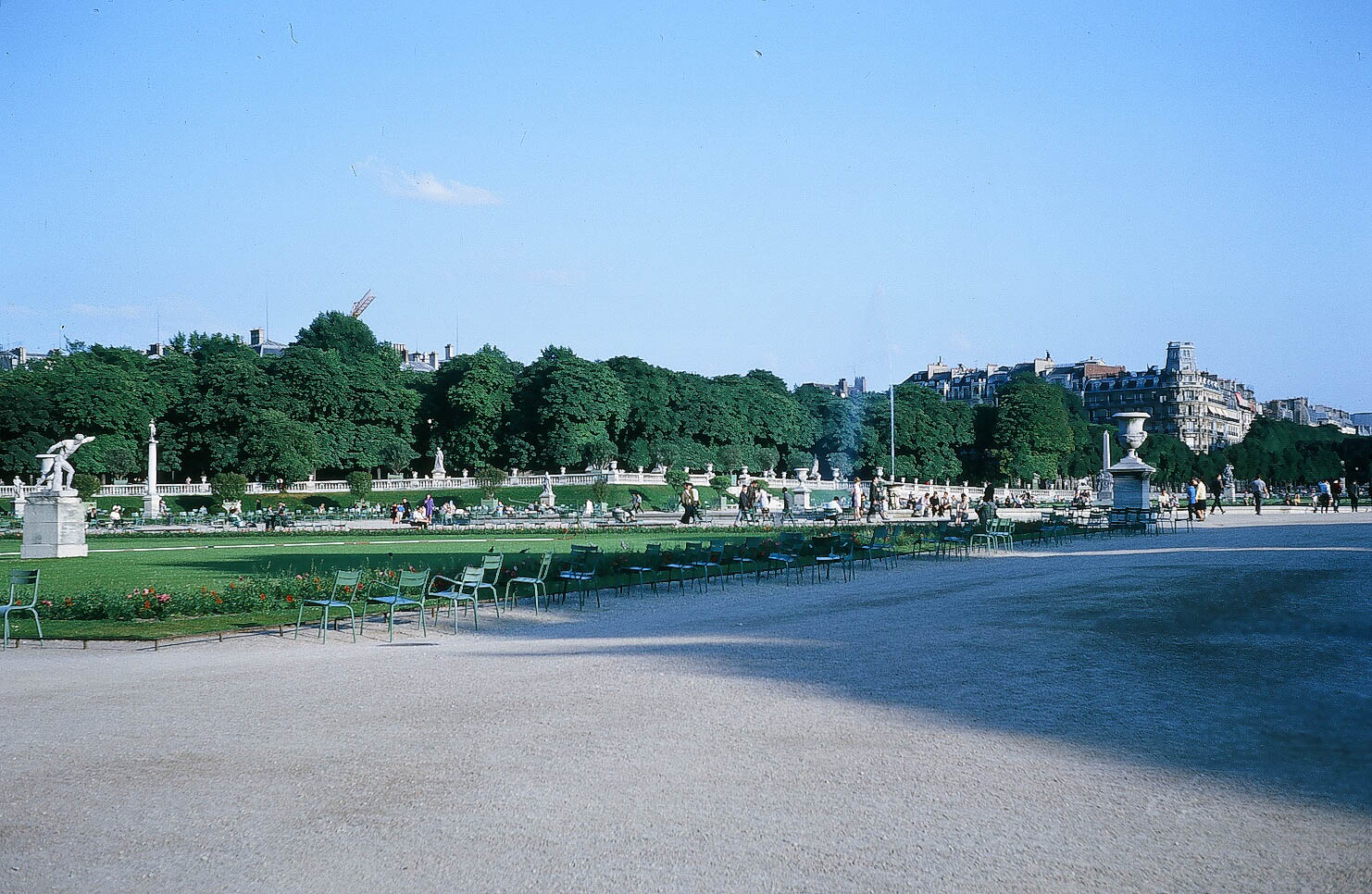
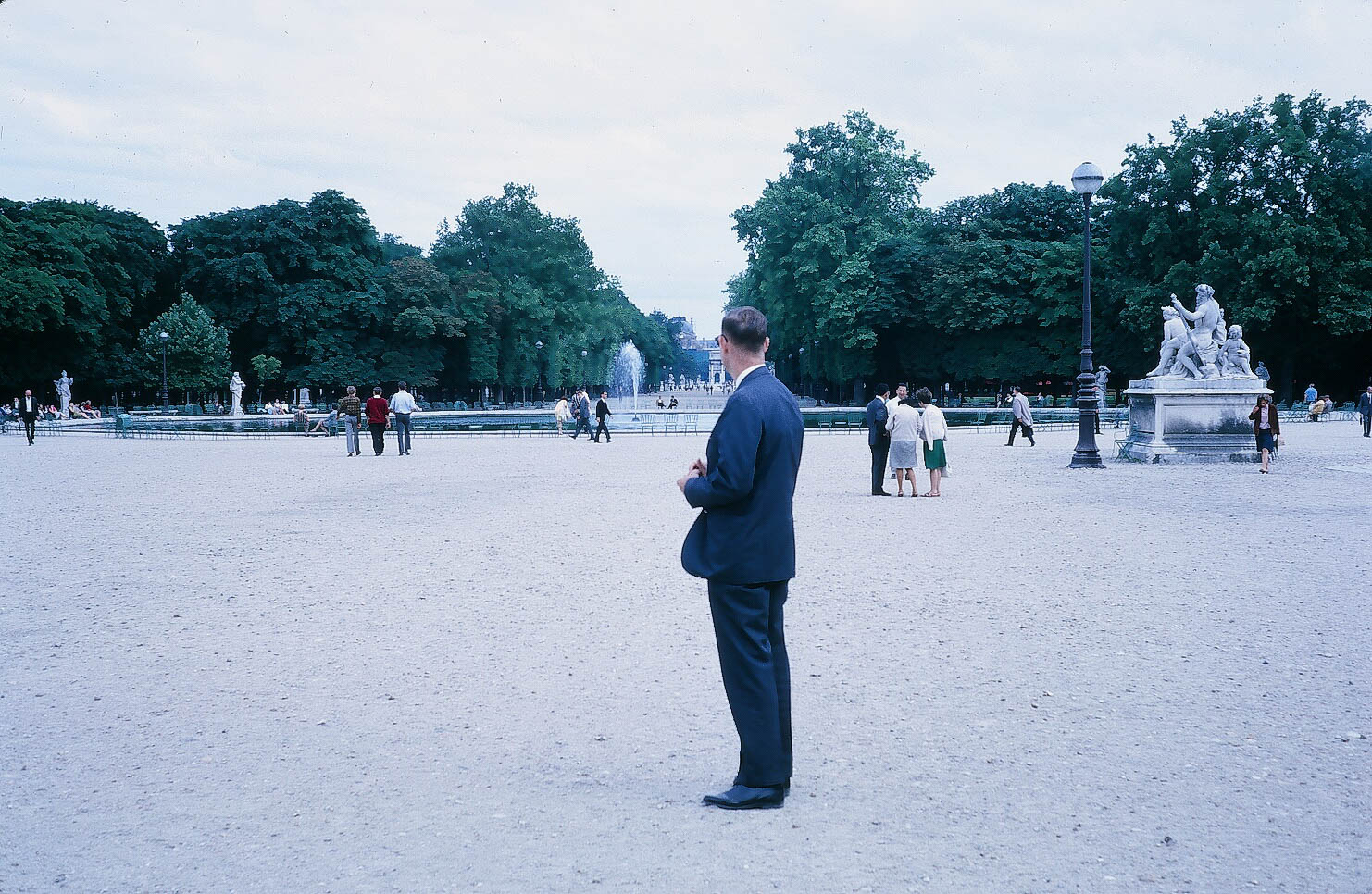
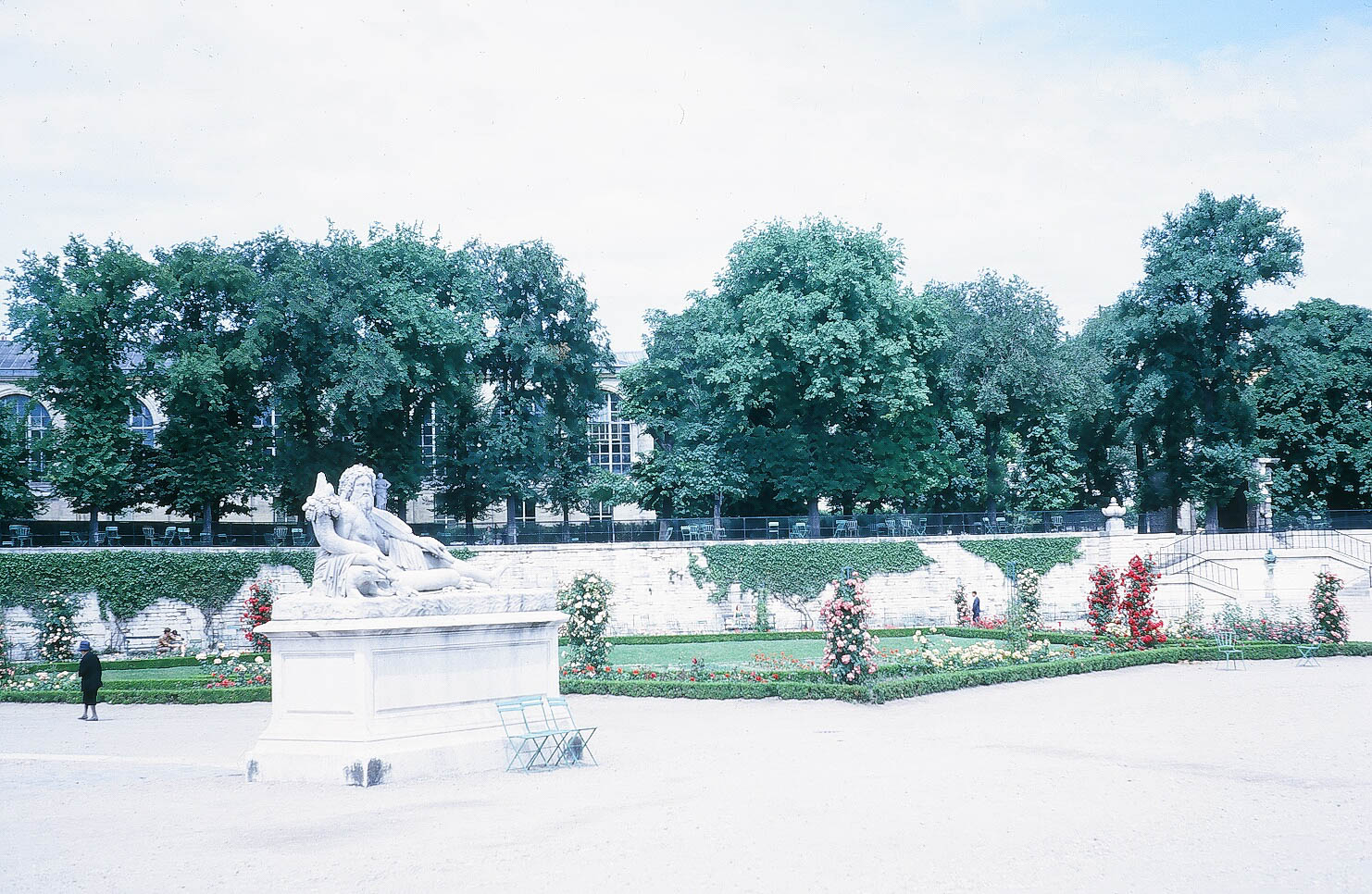
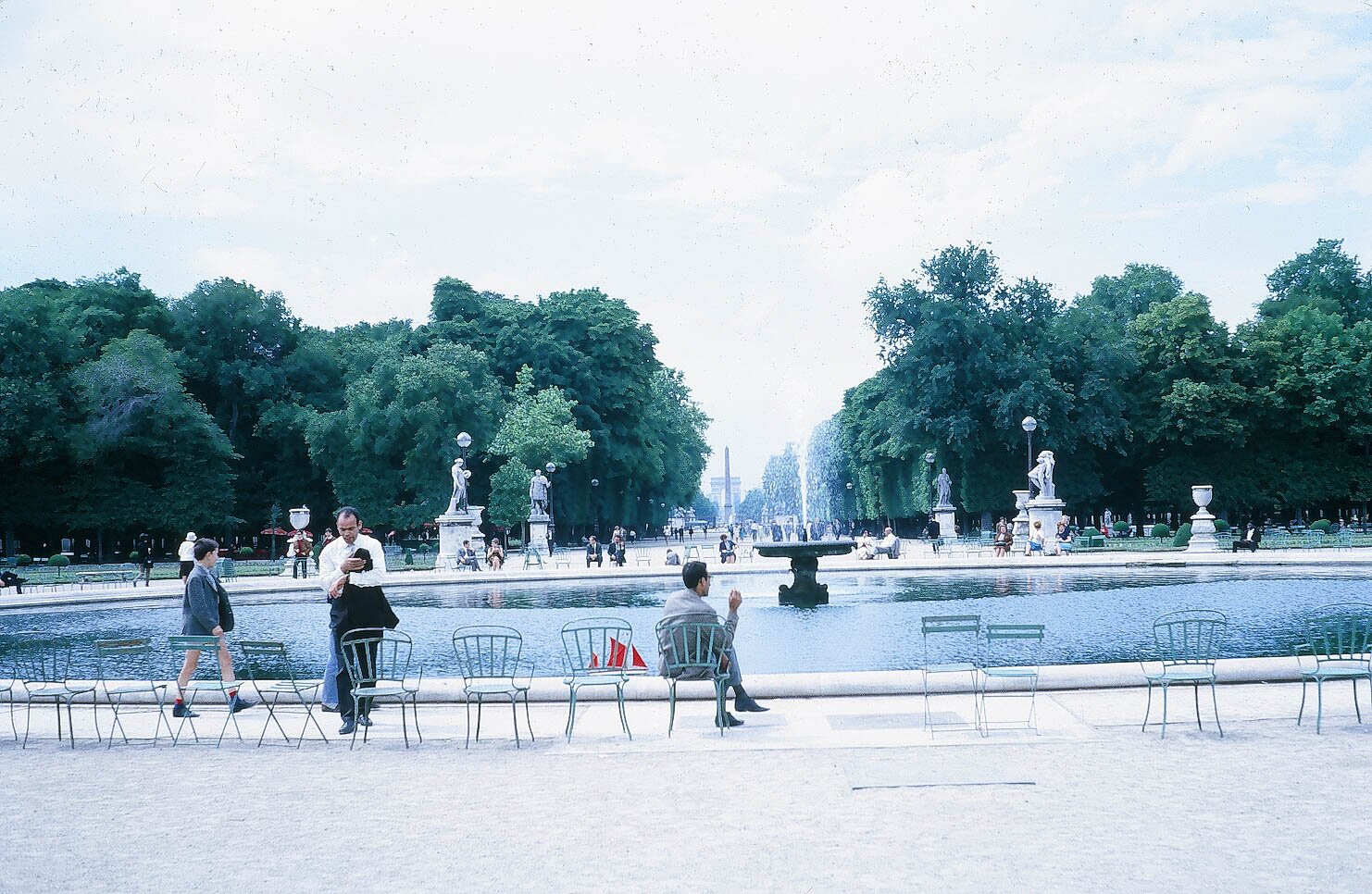
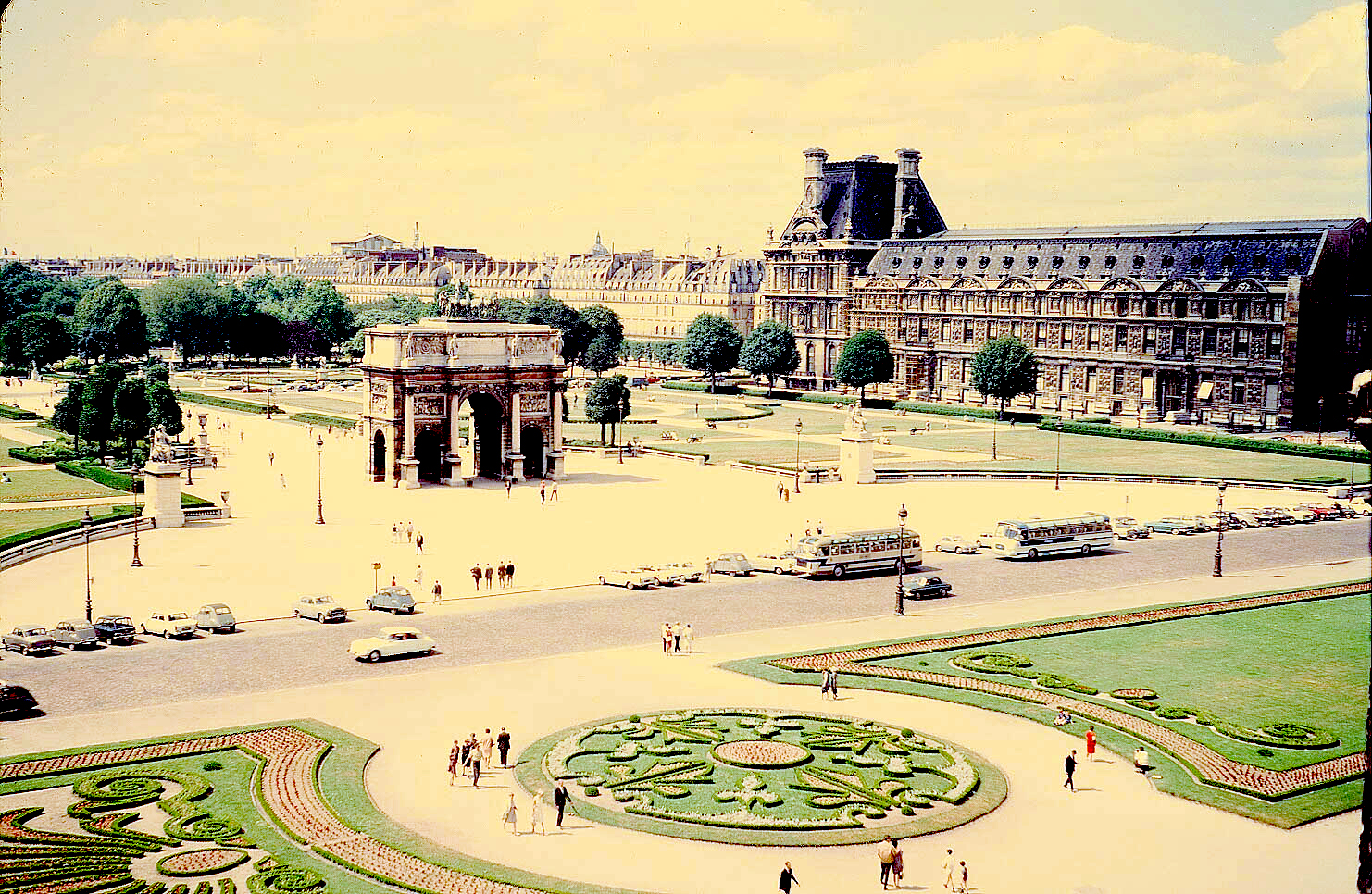
1966EuropeTrip-45 Tuileries Gardens
1966EuropeTrip-46 Tuileries Gardens
1966EuropeTrip-47 Tuileries Gardens
1966EuropeTrip-48 Tuileries Gardens
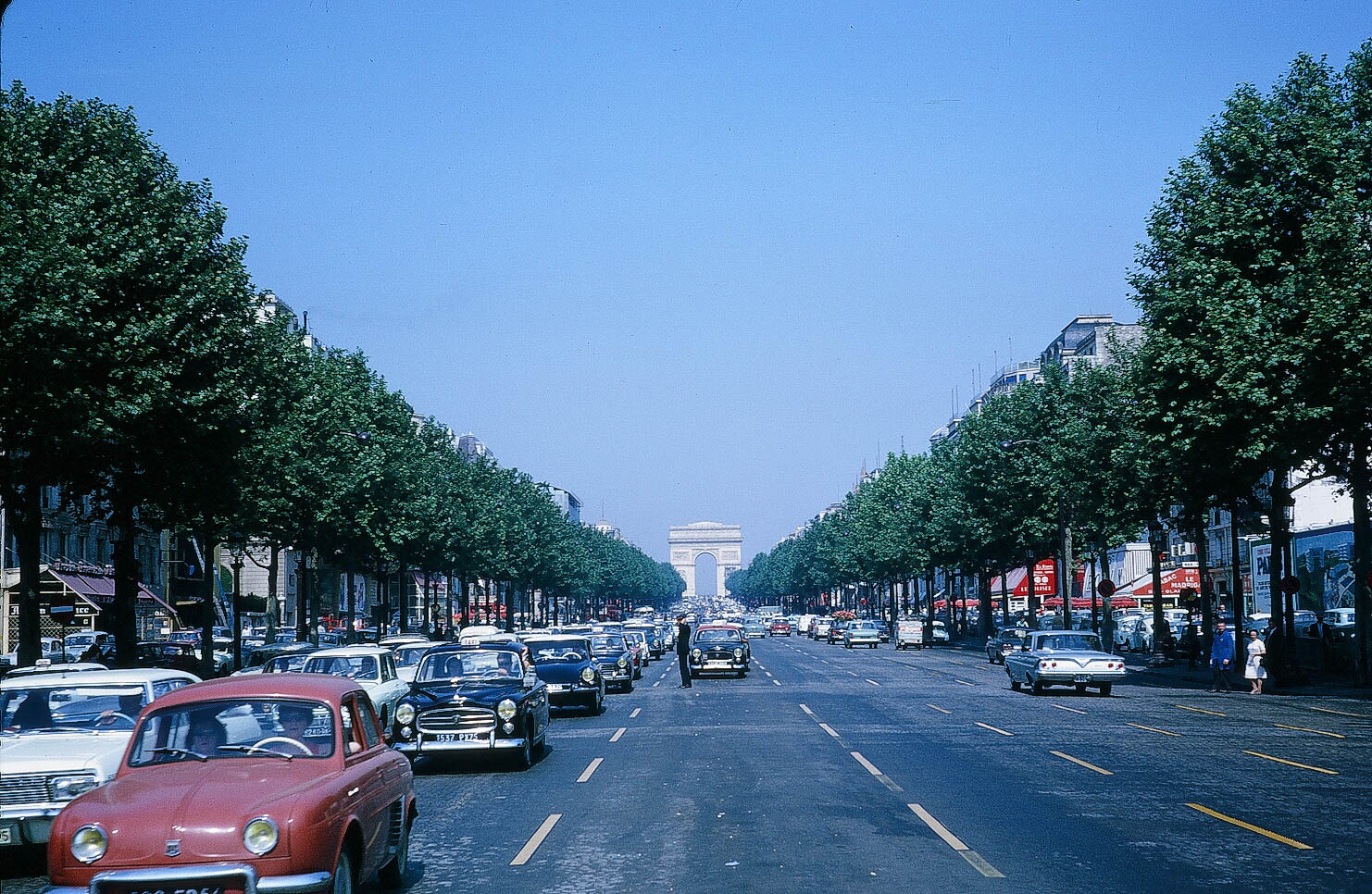
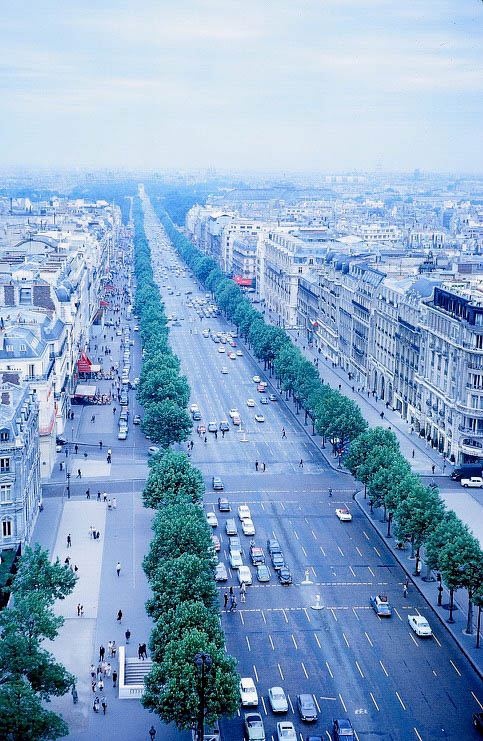
1966EuropeTrip-50 Champs-Élysées, a famous Parisian avenue known for its luxury shops, cultural landmarks, and connection between the Arc de Triomphe and Place de la Concorde.
1966EuropeTrip-51 Eiffel Tower
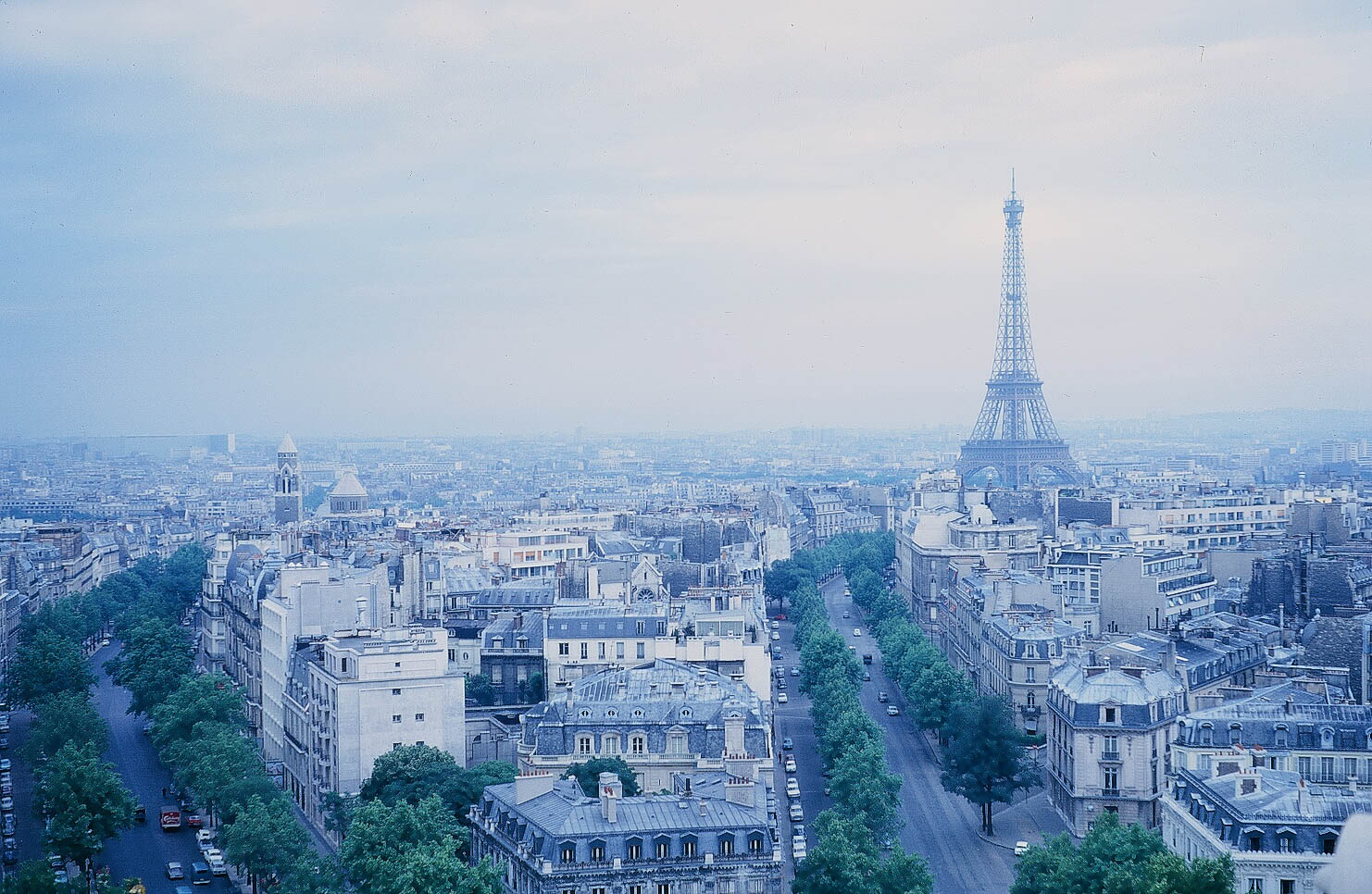
1966EuropeTrip-52 Eiffel Tower from Arc de Triomphe
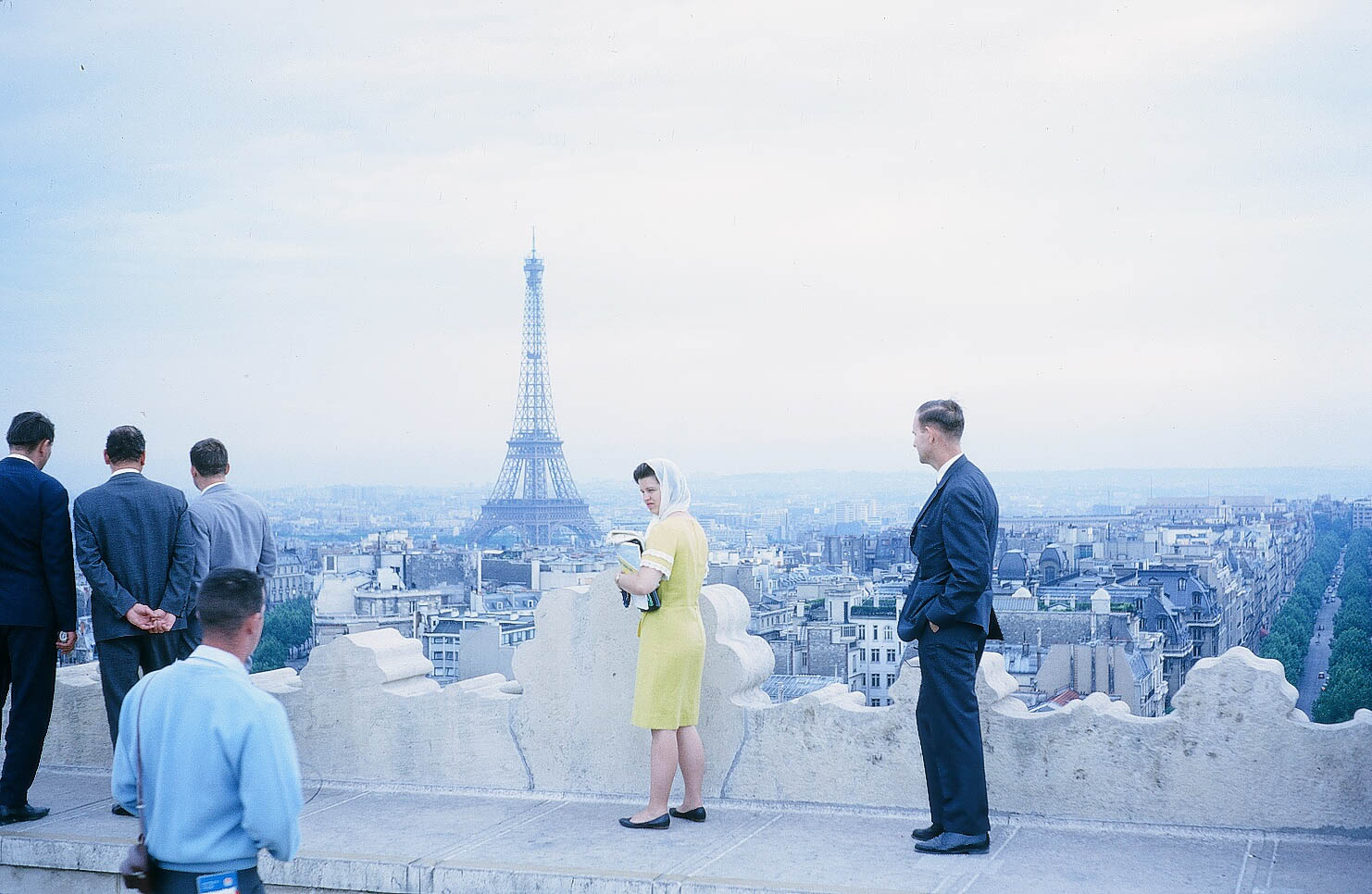
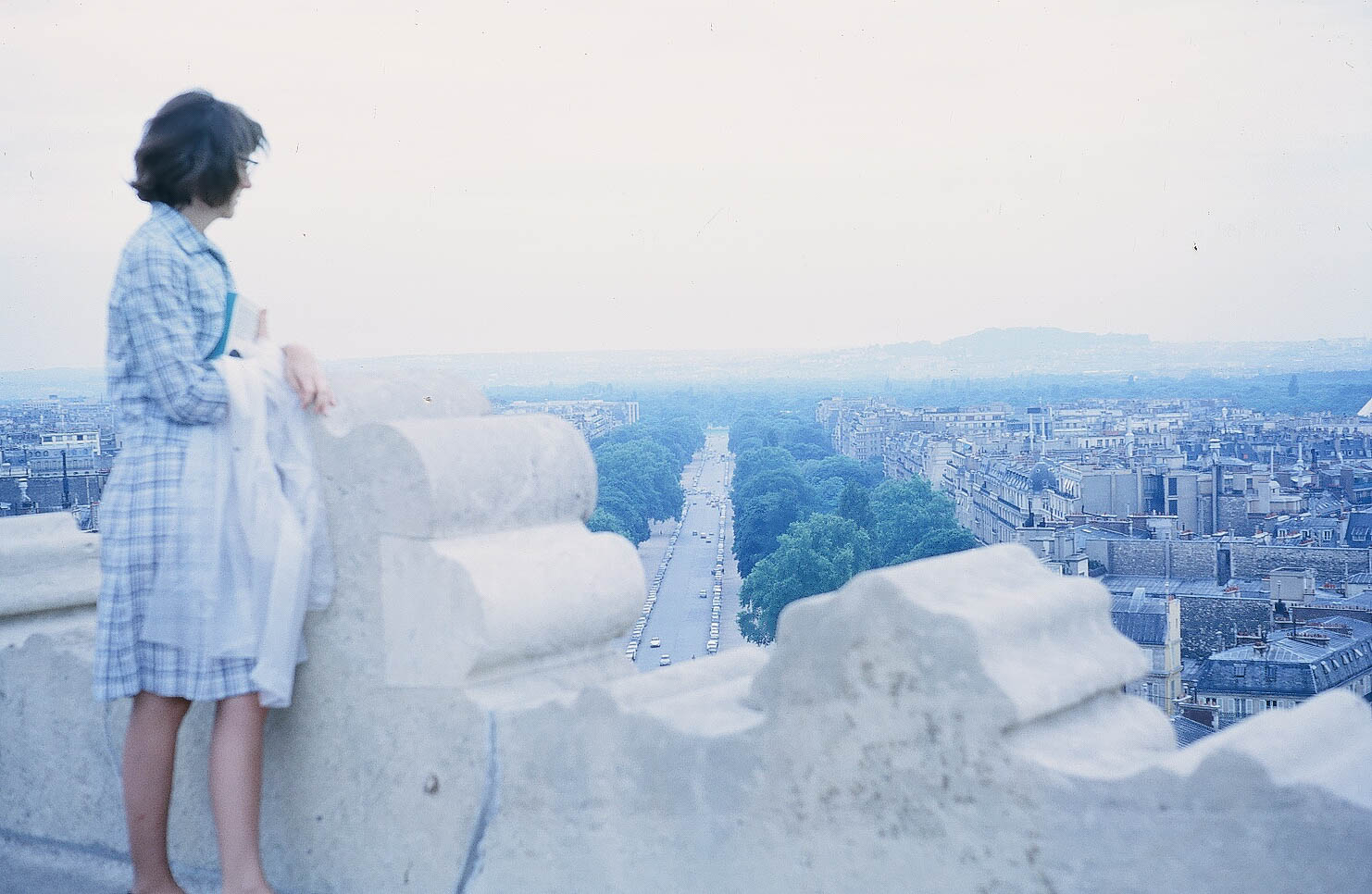
1966EuropeTrip-53 Pat on Arc de Triomphe
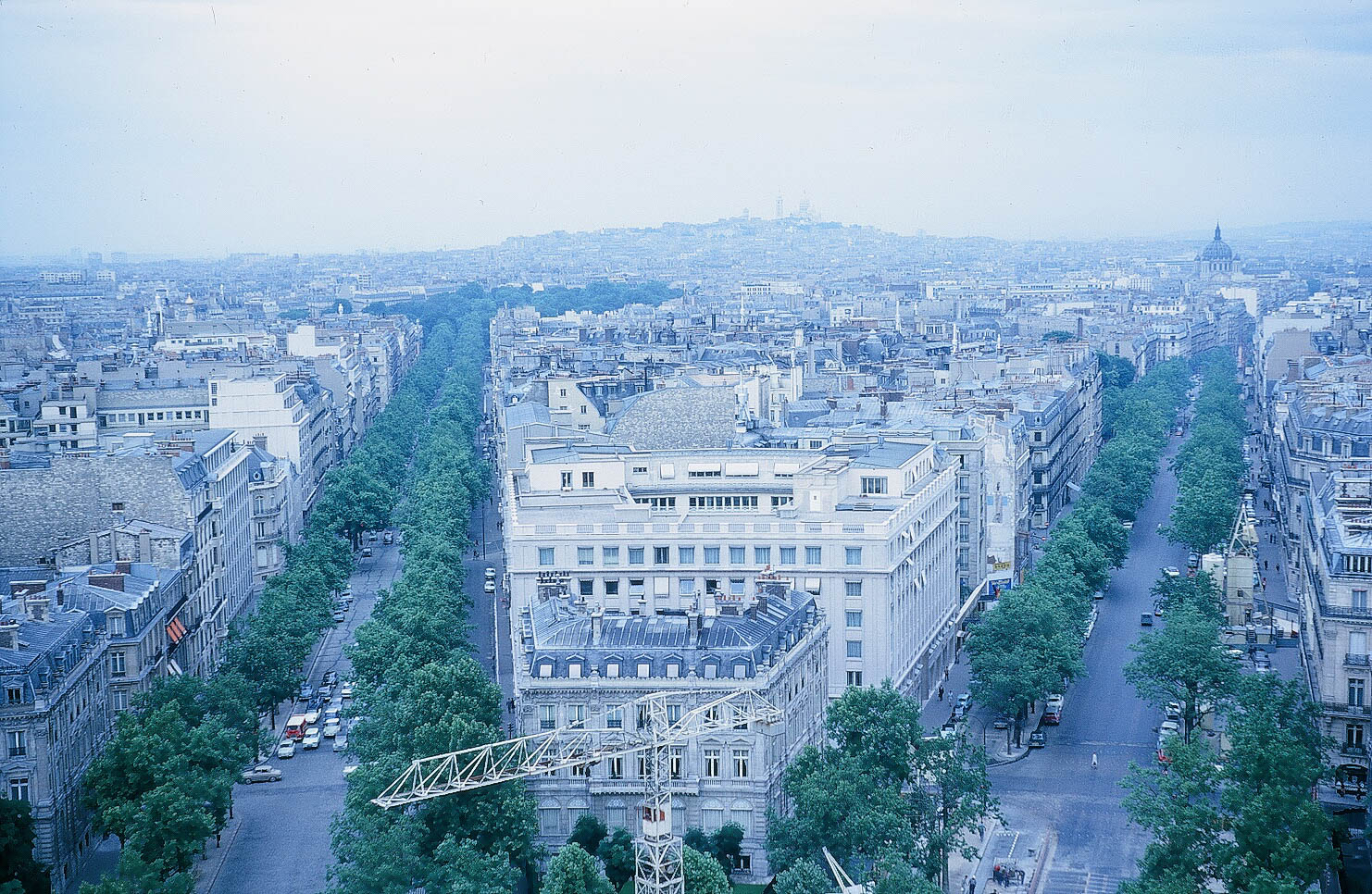
1966EuropeTrip-From Arc de Triomphe
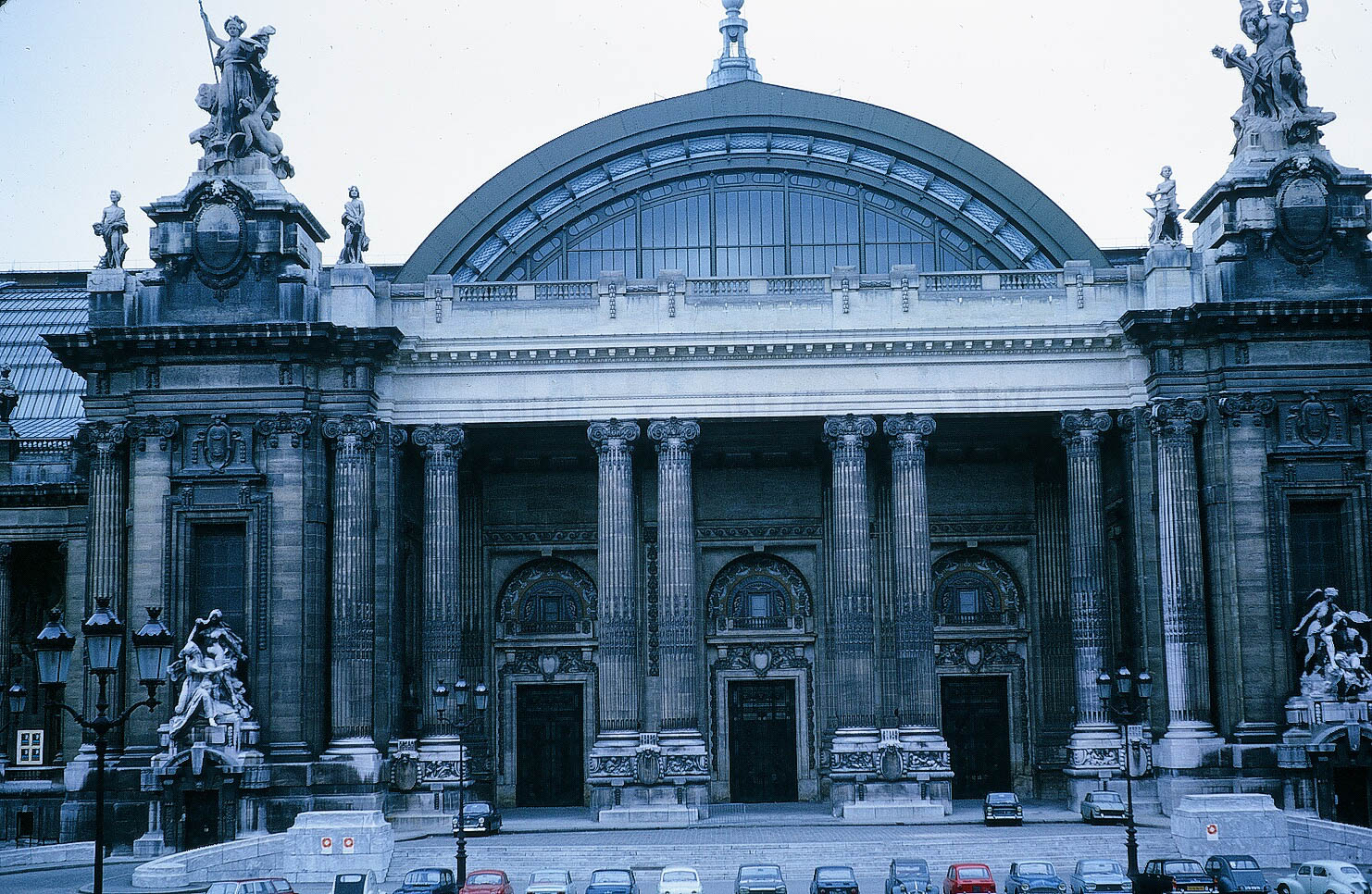
1966EuropeTrip-55 The Grand Palais des Champs-Élysées (French pronunciation: [ɡʁɑ̃ palɛ de ʃɑ̃z‿elize]; English: Great Palace of the Champs-Élysées), commonly known as the Grand Palais, is a historic site, exhibition hall and museum complex located in the 8th arrondissement of Paris between the Champs-Élysées and the Seine, France.
1966EuropeTrip-Pat
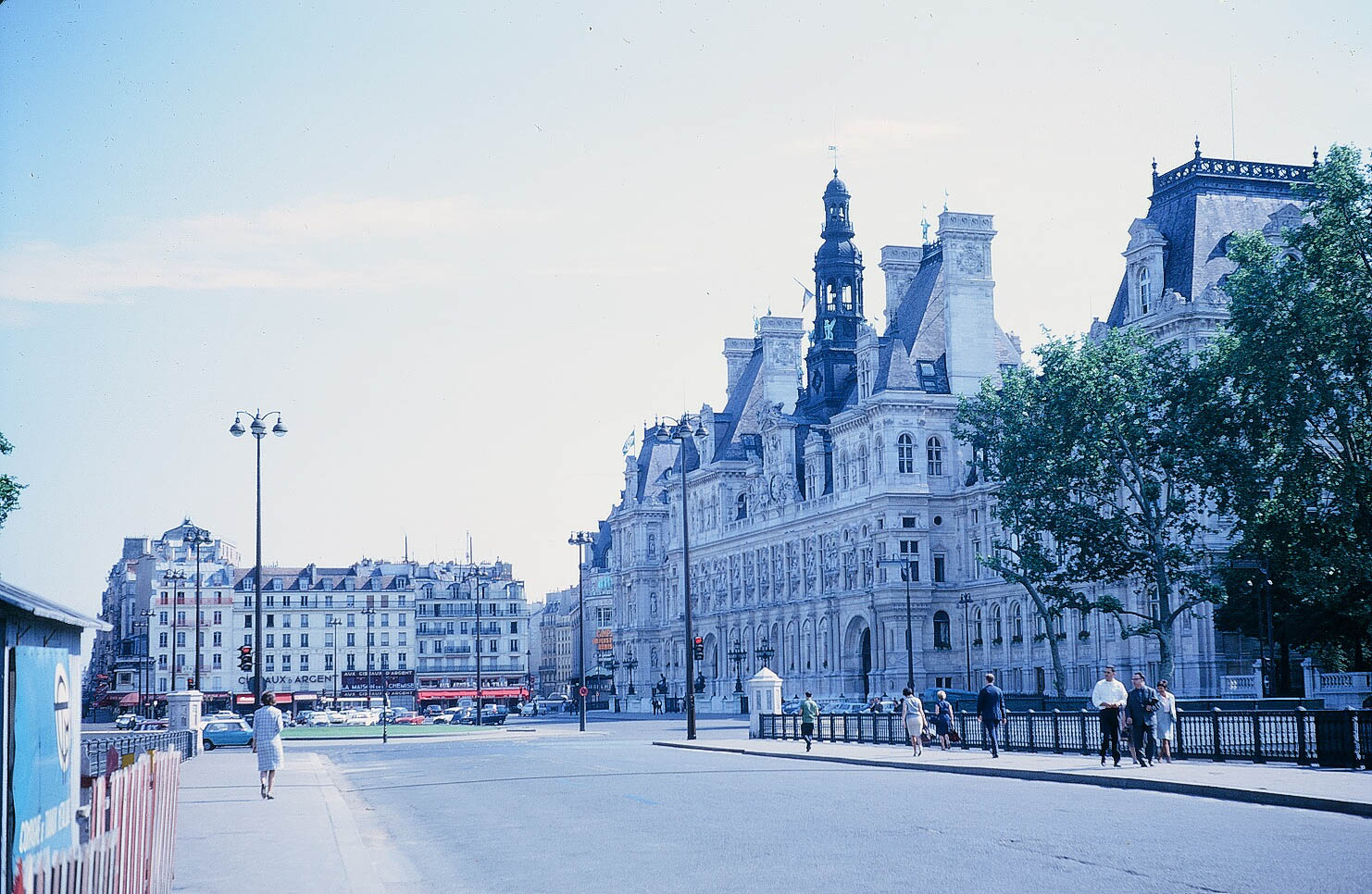
1966EuropeTrip-57 The Hôtel de Ville, at right, is the city hall of Paris, France,
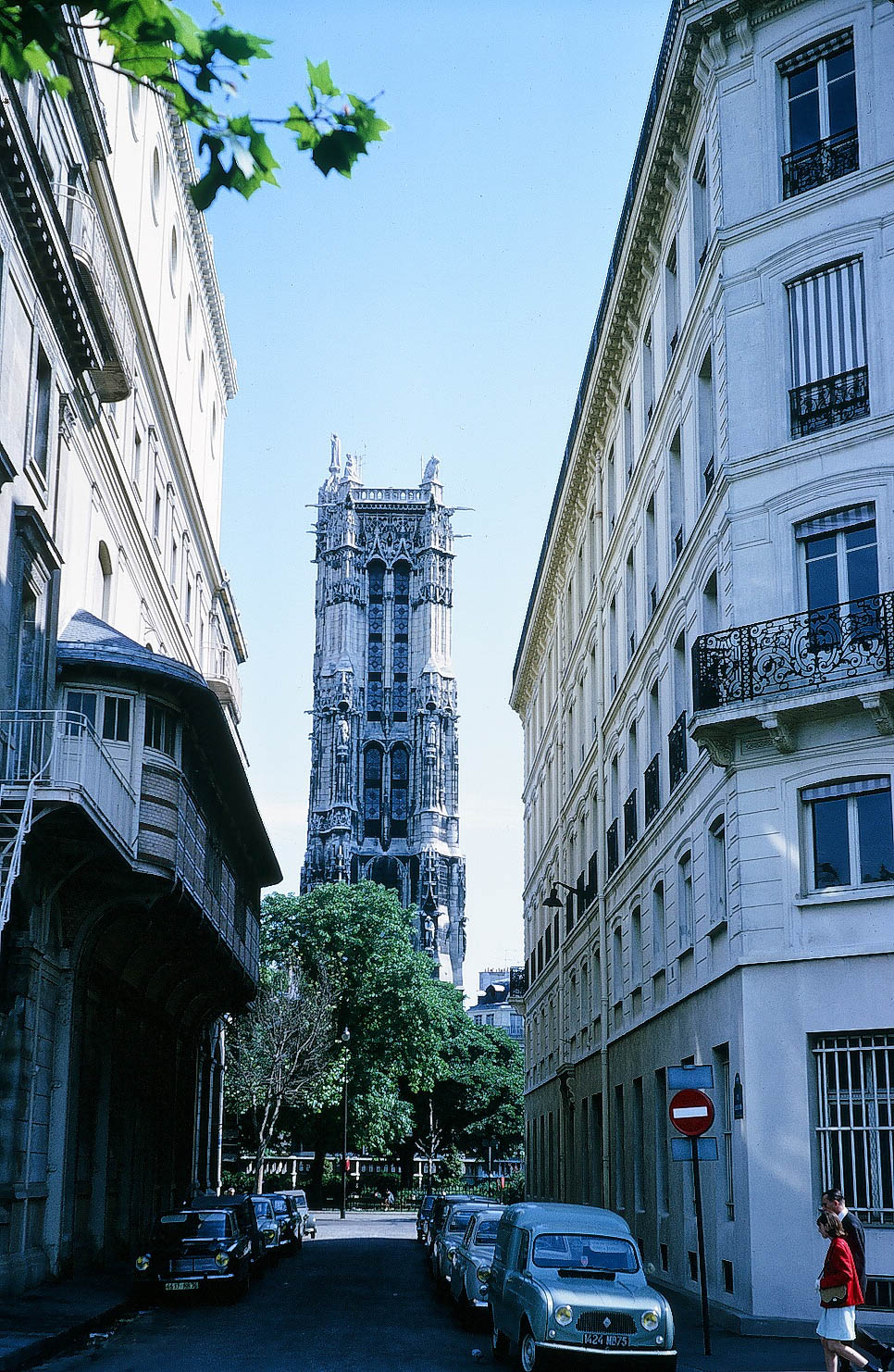
1966EuropeTrip-58 France, Paris, Tour St. Jacques, highly decorated gothic tower, remains of ancient church.
1966EuropeTrip-59 Paris Louvre Museum
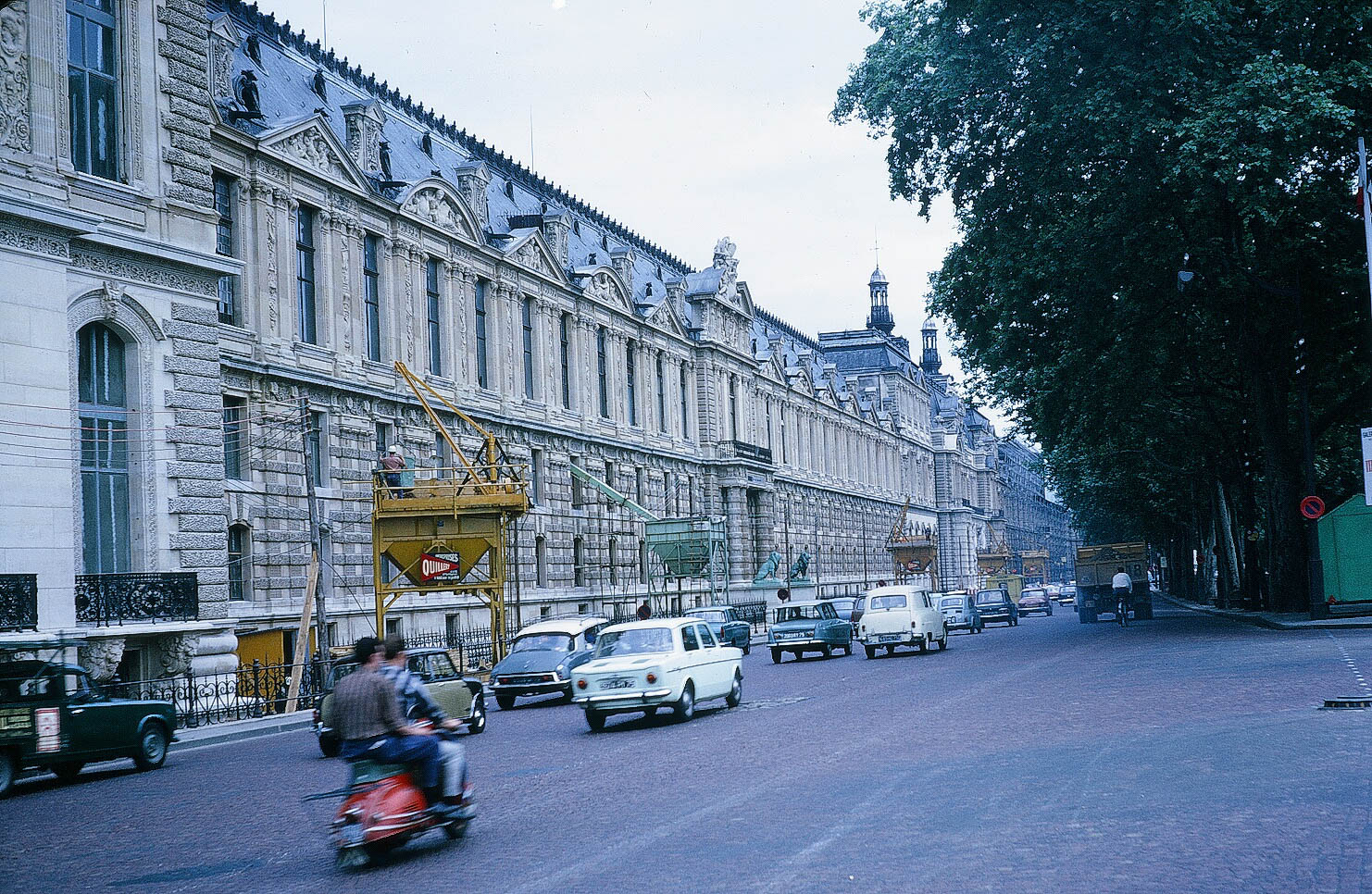
1966EuropeTrip-60 North Wing of the Louvre Museum.
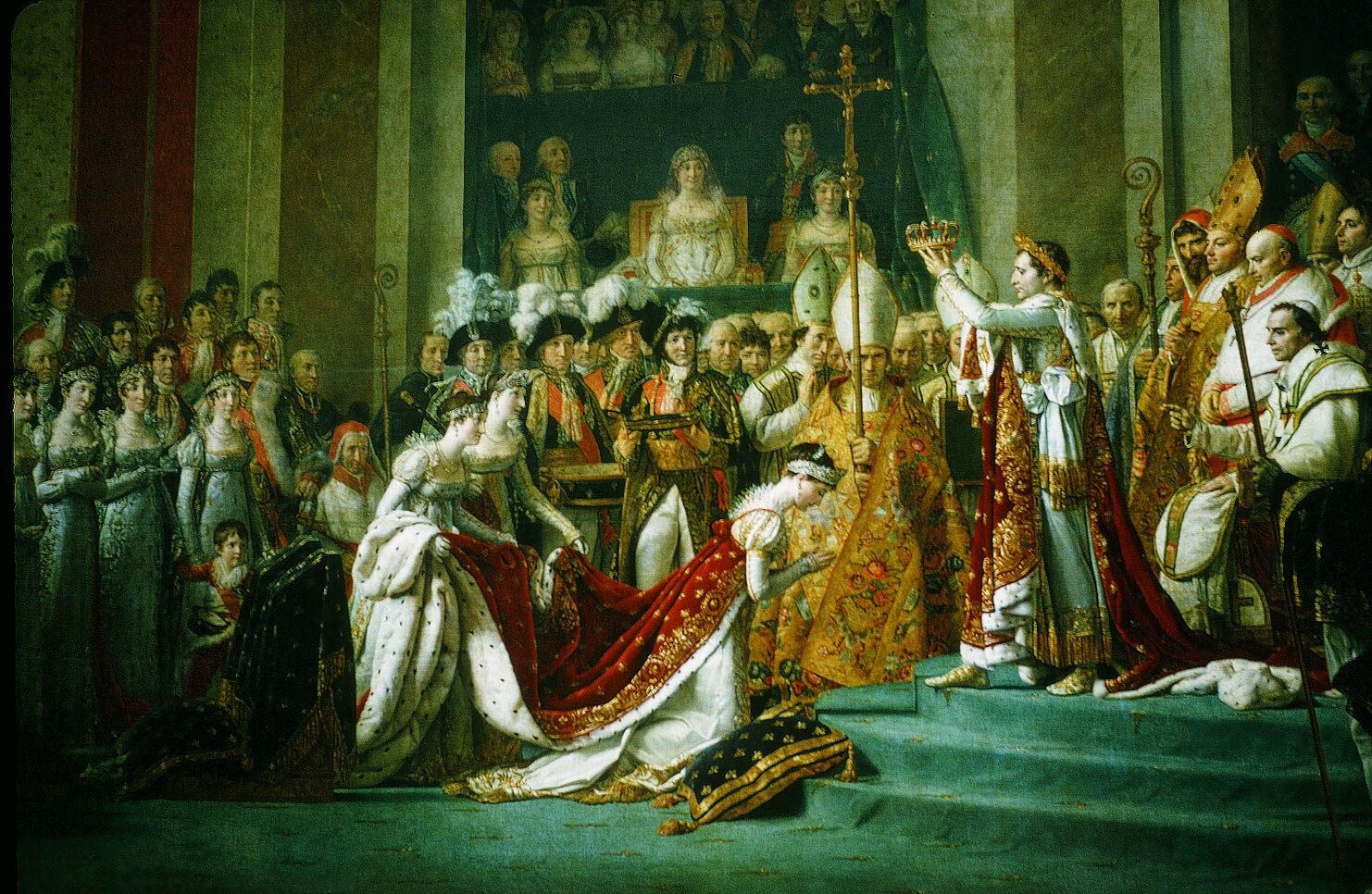
1966EuropeTrip-61 Coronation of Napoleon, a painting completed in 1807 by Jacques-Louis David, the official painter of Napoleon, depicting the coronation of Napoleon at Notre-Dame de Paris..
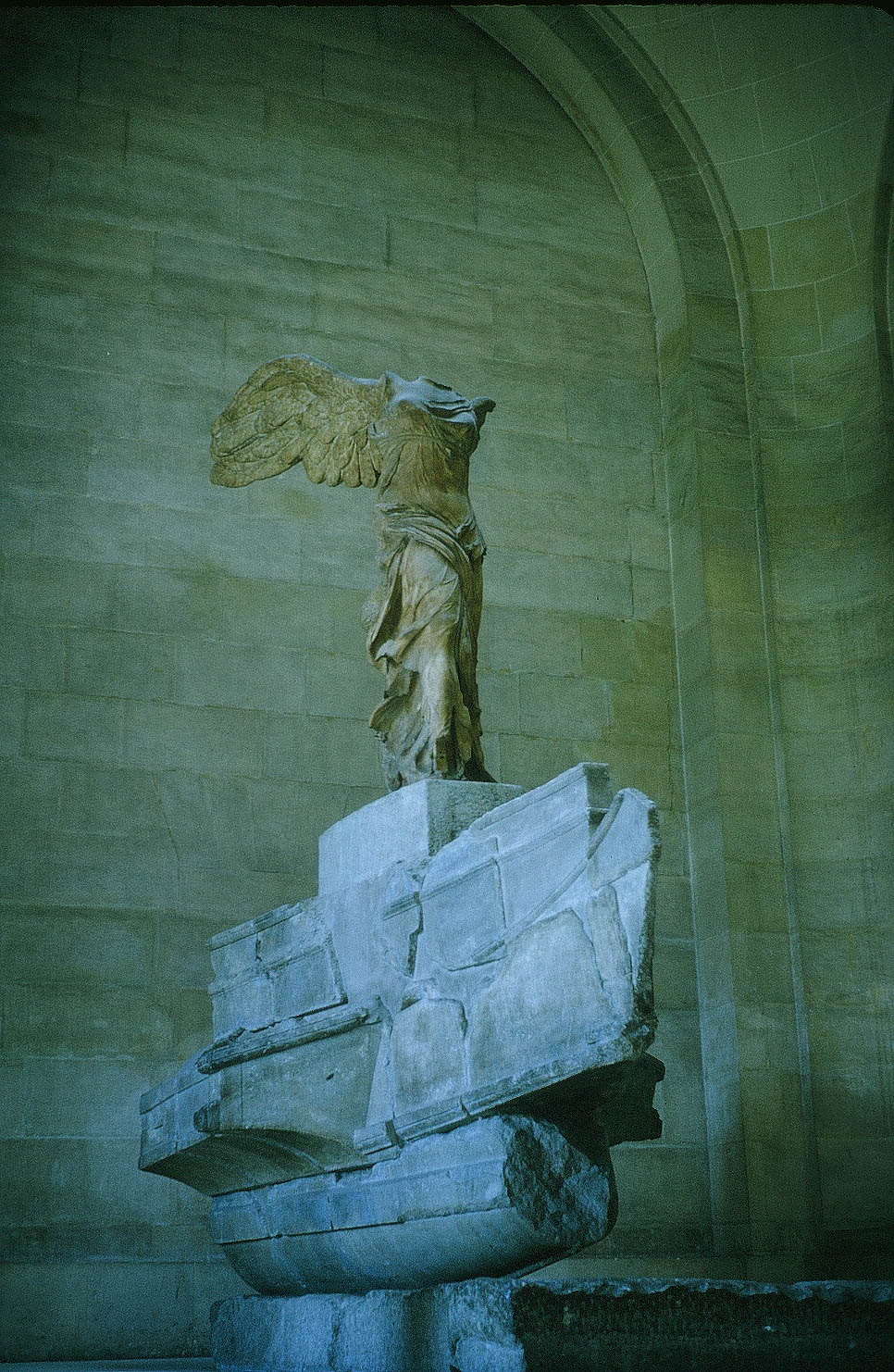
1966EuropeTrip-62 The Winged Victory of Samothrace, an 8-foot marble sculpture of the Greek goddess Nike (Victory), is a celebrated masterpiece of Hellenistic sculpture located in the Louvre Museum in Paris. Discovered on the Greek island of Samothrace, the 2nd-century BCE statue depicts Nike alighting on a warship's prow to commemorate a naval victory
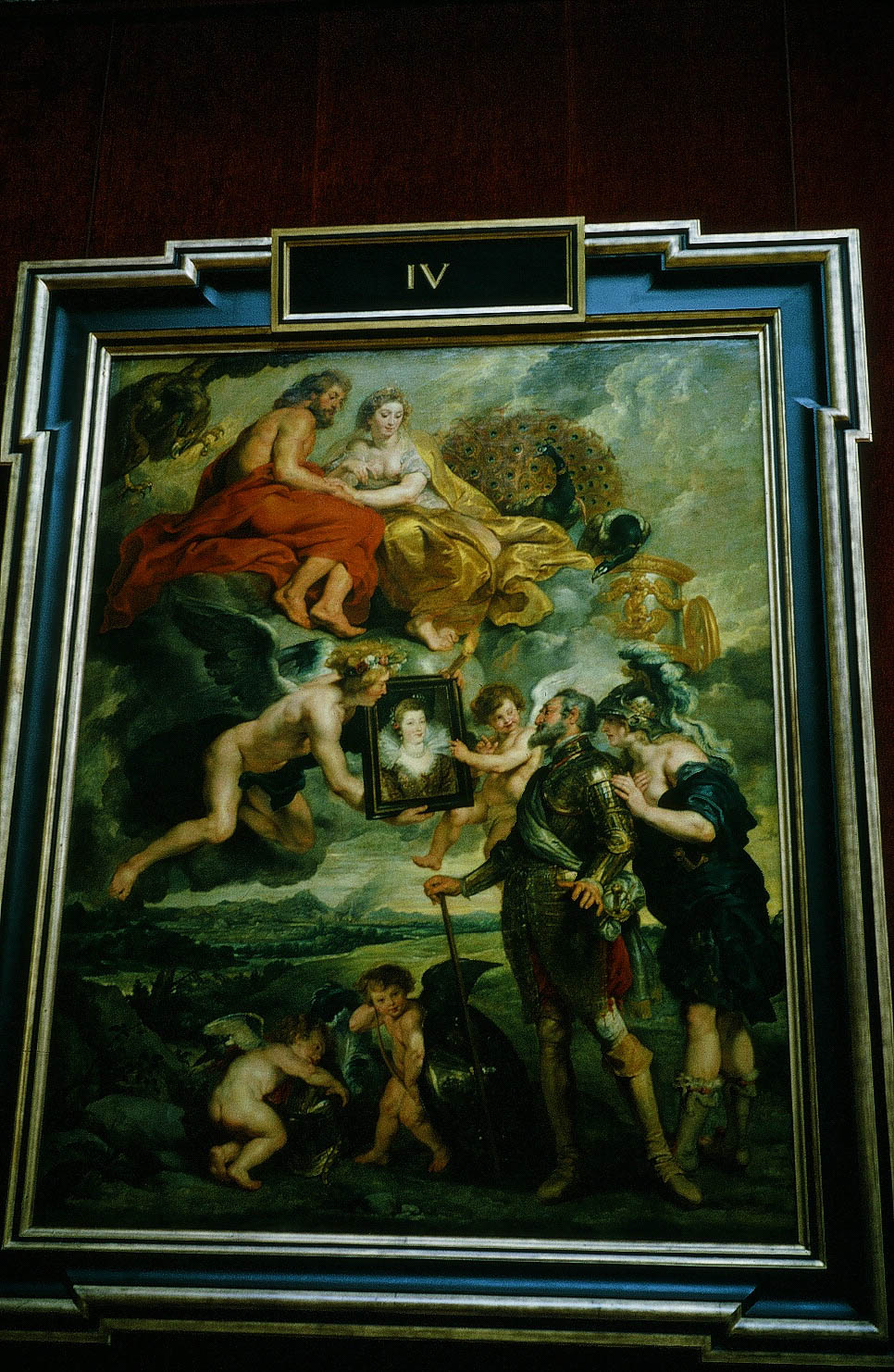
1966EuropeTrip-63 Peter Paul Rubens, The Presentation of the Portrait of Marie de’ Medici, c. 1622–25, oil on canvas, 394 x 295 cm (Musée du Louvre, Paris). The ancient gods of marriage and love—Hymen and Amor (Cupid), to the left and right, respectively—hover in midair as they present this portrait to Henry IV, the king of France. Hymen holds in his left hand a flaming torch, symbolizing the ardor of love, while Cupid extols the virtues of the Medici princess. Cupid’s arrow has hit its mark; the king is smitten. He gazes up in gratitude, his left hand extended as he expresses his delight in his bride-to-be.
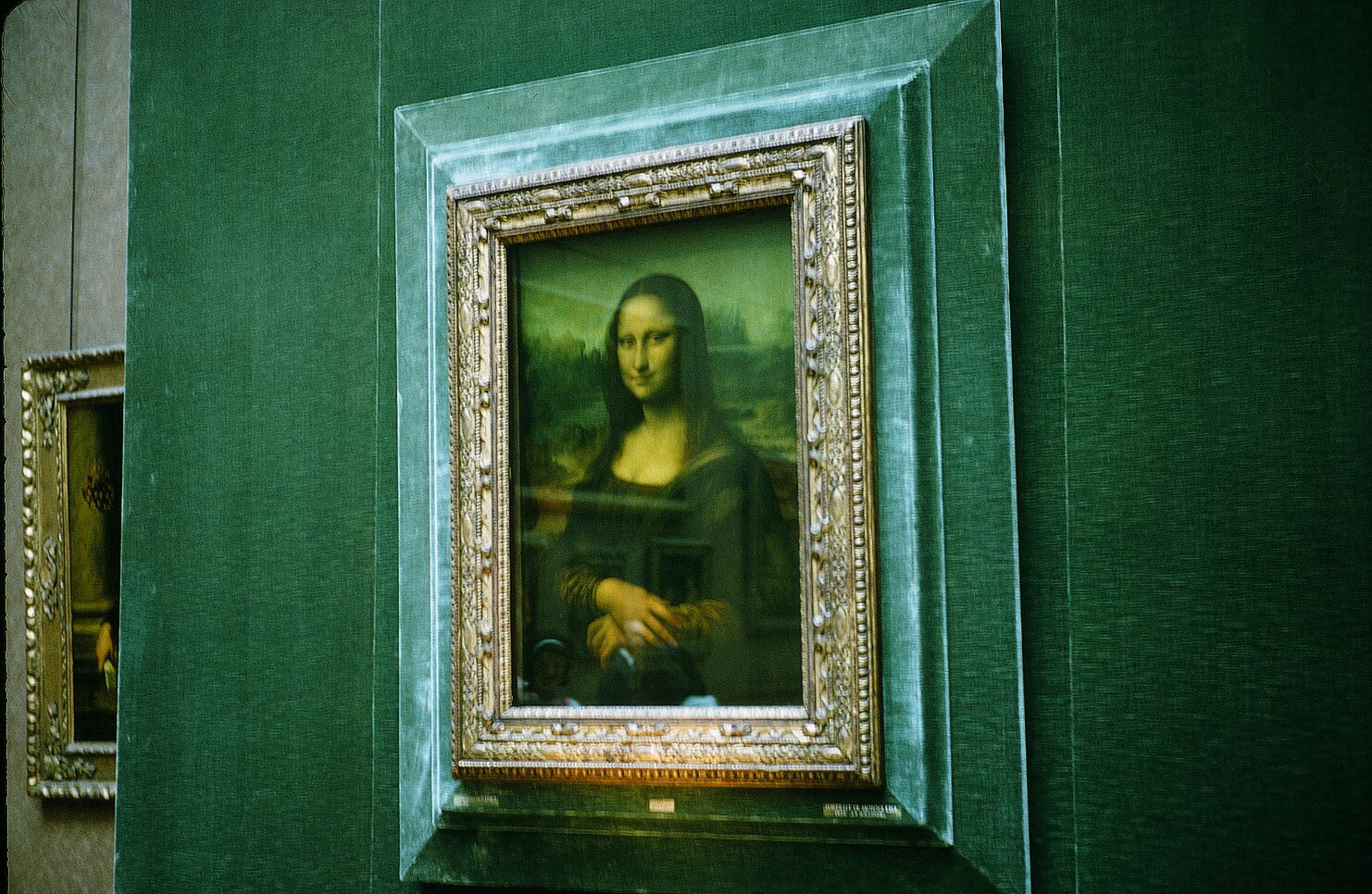
1966EuropeTrip-64 The Mona Lisa, Louvre Museum
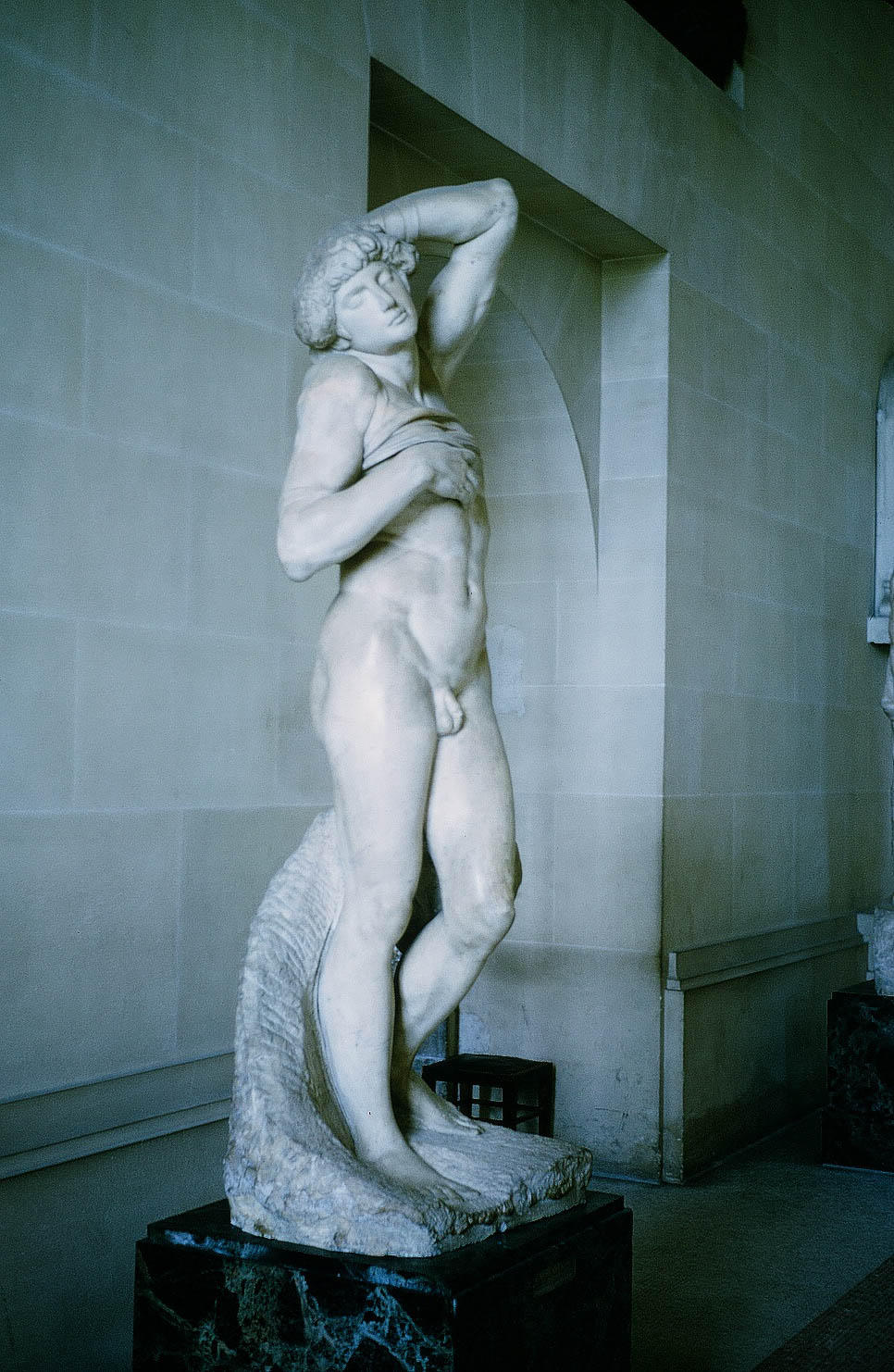
1966EuropeTrip-65 The Dying Slave (L'Esclave mourant, Lo Schiavo morente) is a sculpture by the Italian Renaissance artist Michelangelo, created between 1513 and 1516. It was intended to accompany another figure, the Rebellious Slave, as part of the design for the tomb of Pope Julius II. The marble figure is 215 centimetres (7 ft 1 in), and is housed in the Louvre Museum in Paris.
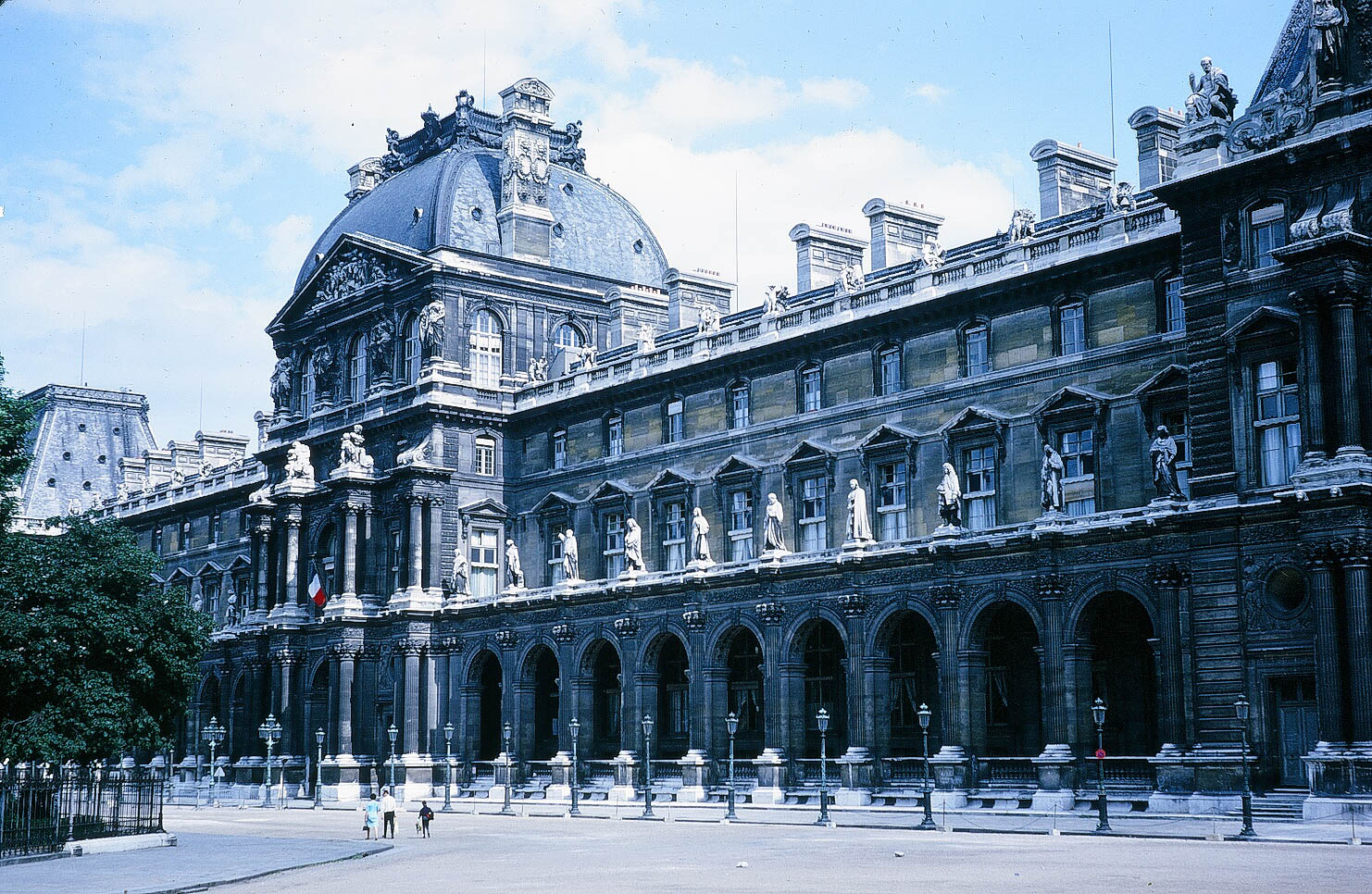
1966EuropeTrip-66 Courtyard of the Louvre Museum
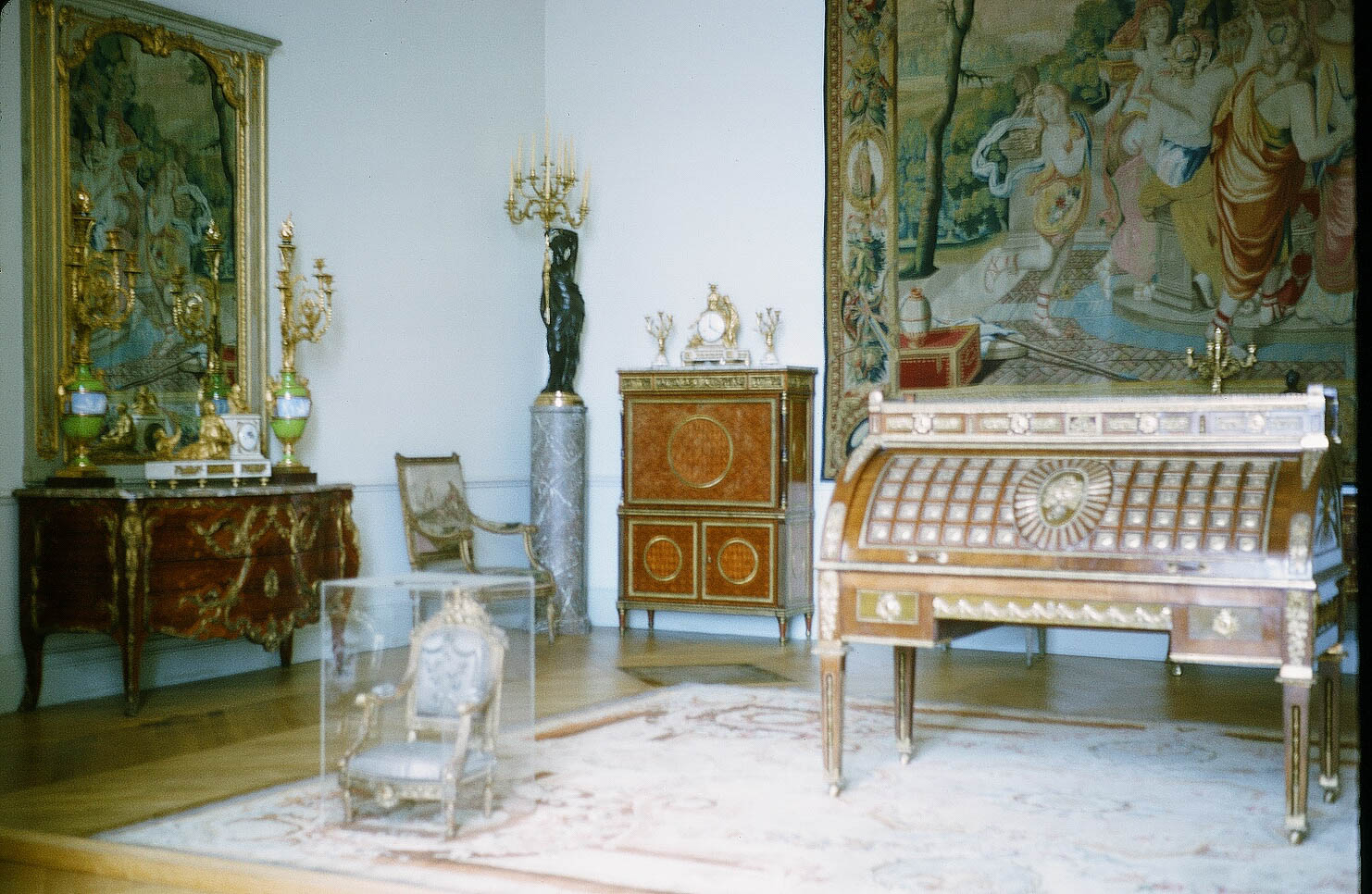
1966EuropeTrip-67 Louvre Museum, Maria Antoinette's chair.
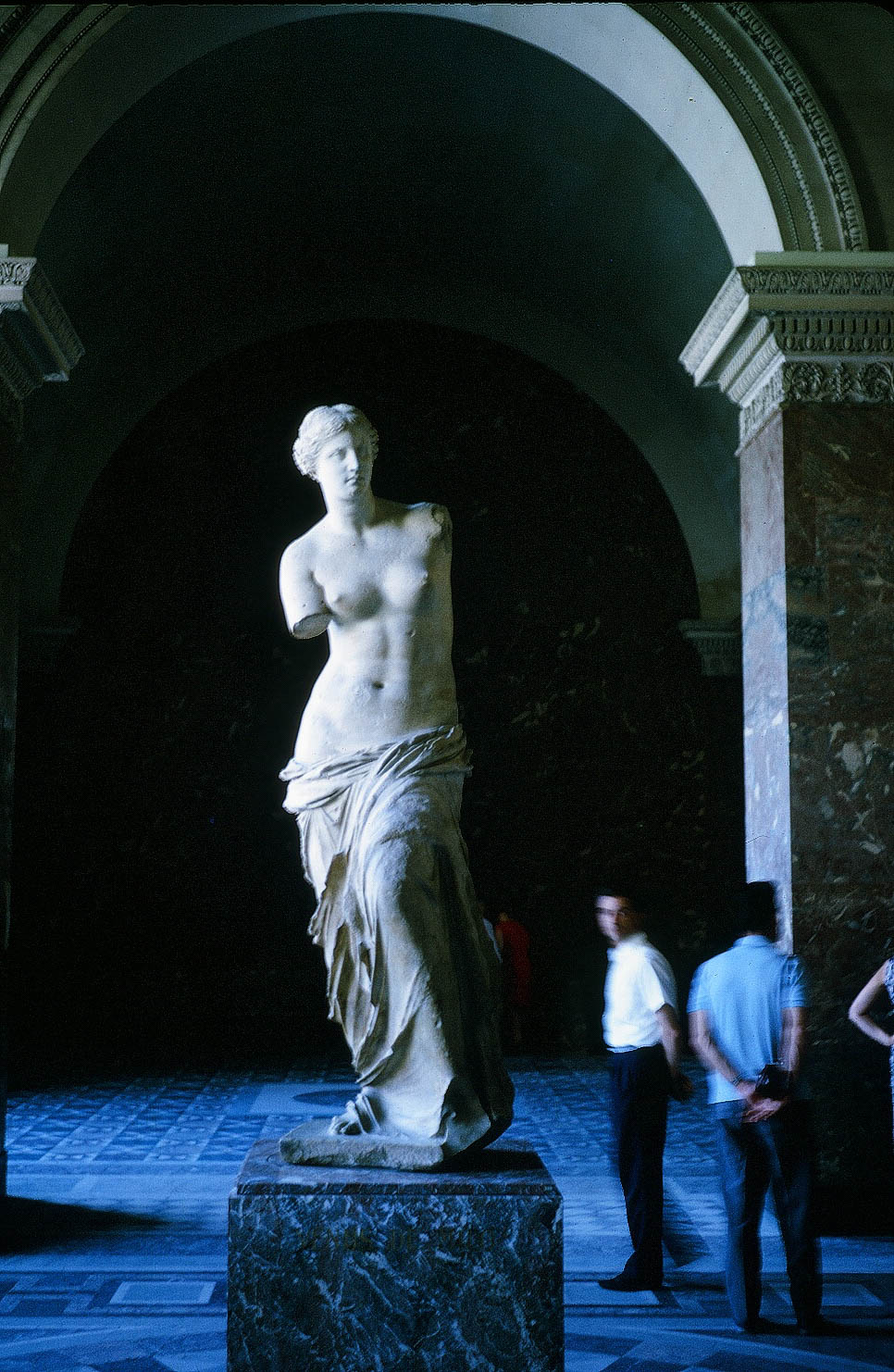
1966EuropeTrip-68 Venus de Milo, Louvre Museum
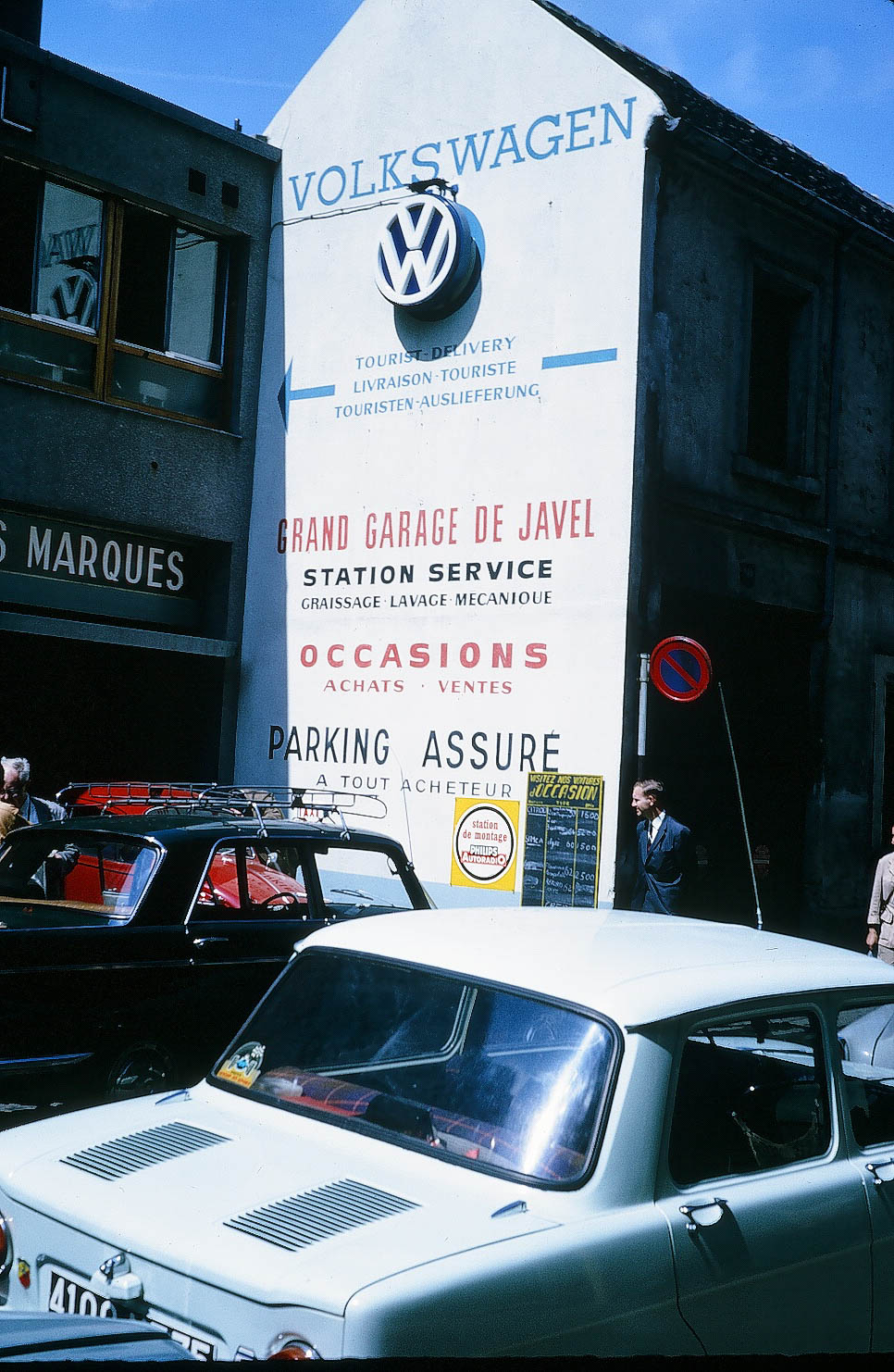
1966EuropeTrip- Picking up our new 1966 VW Beetle in Partis.
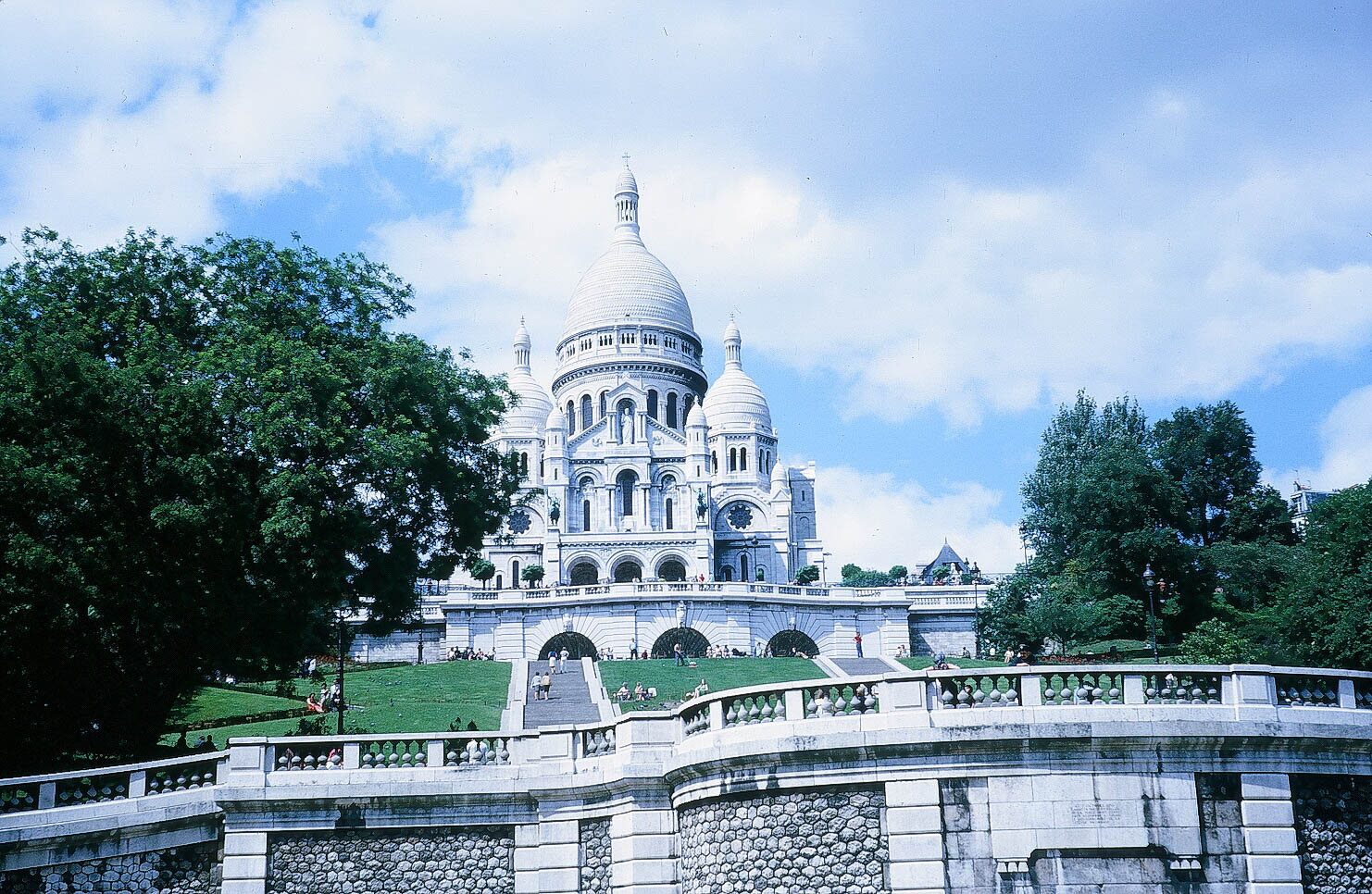
1966EuropeTrip-70 The Basilica of Sacré Cœur de Montmartre (English: Sacred Heart of Montmartre), commonly known as Sacré-Cœur Basilica and often simply Sacré-Cœur (French: Sacré-Cœur de Montmartre, pronounced [sakre kœr]), is a Catholic church and minor basilica in Paris dedicated to the Sacred Heart of Jesus. It was formally approved as a national historic monument by the National Commission of Patrimony and Architecture on December 8, 2022 Construction began in 1875 and was completed in 1914.
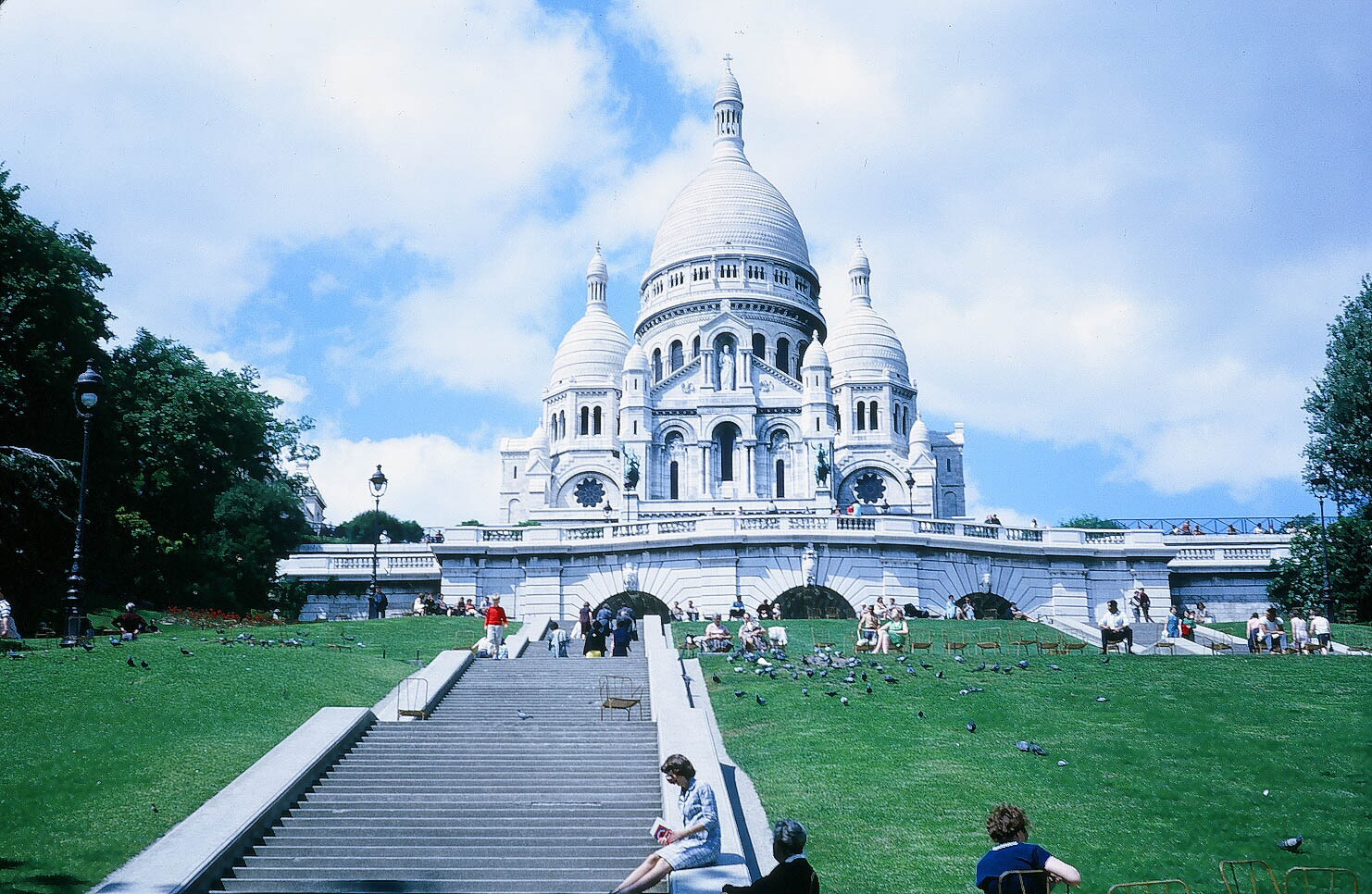
1966EuropeTrip-71 Sacre Coeur. Pat on steps.
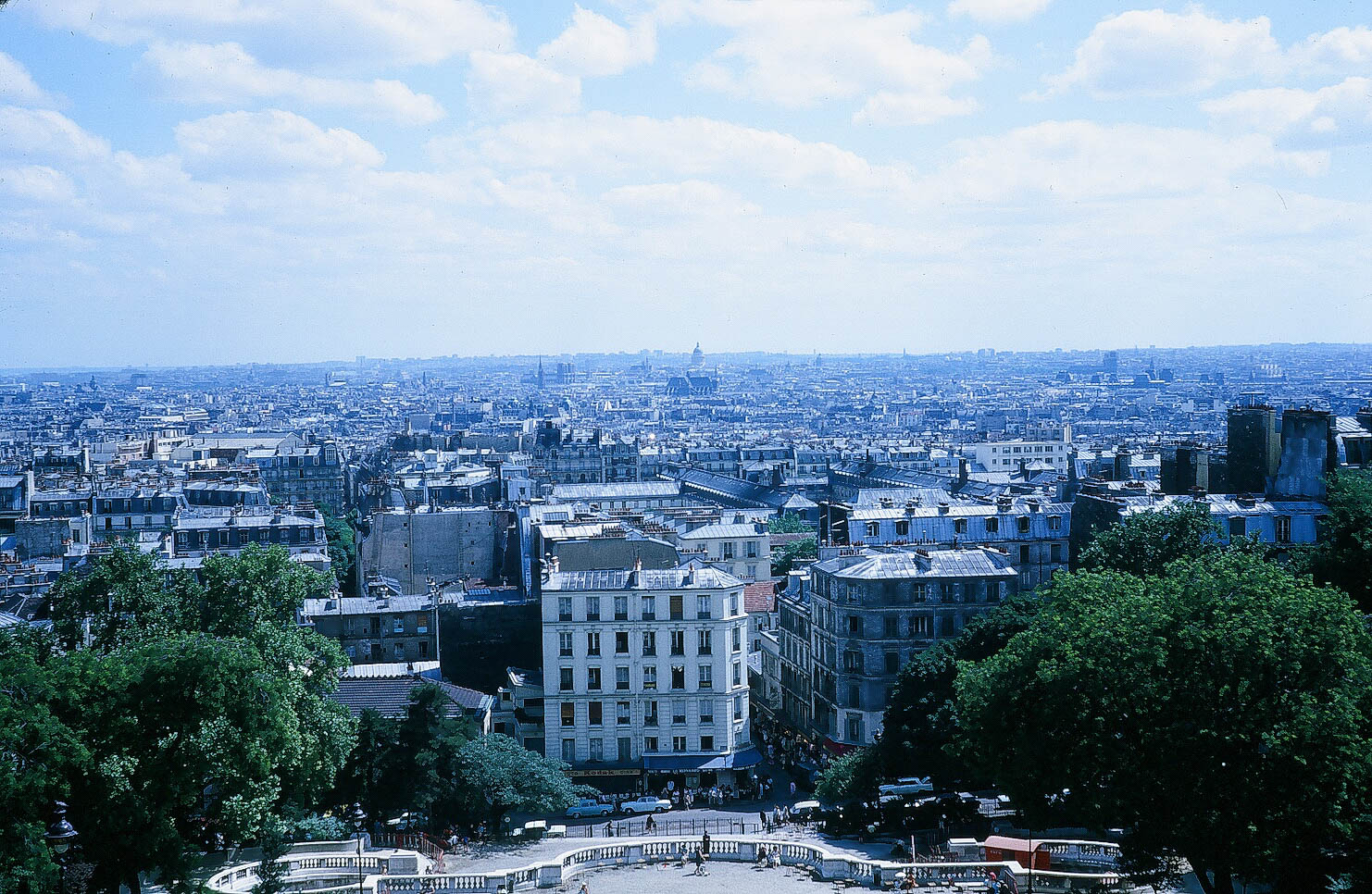
1966EuropeTrip-72 View of Paris from Sacre Coeur.
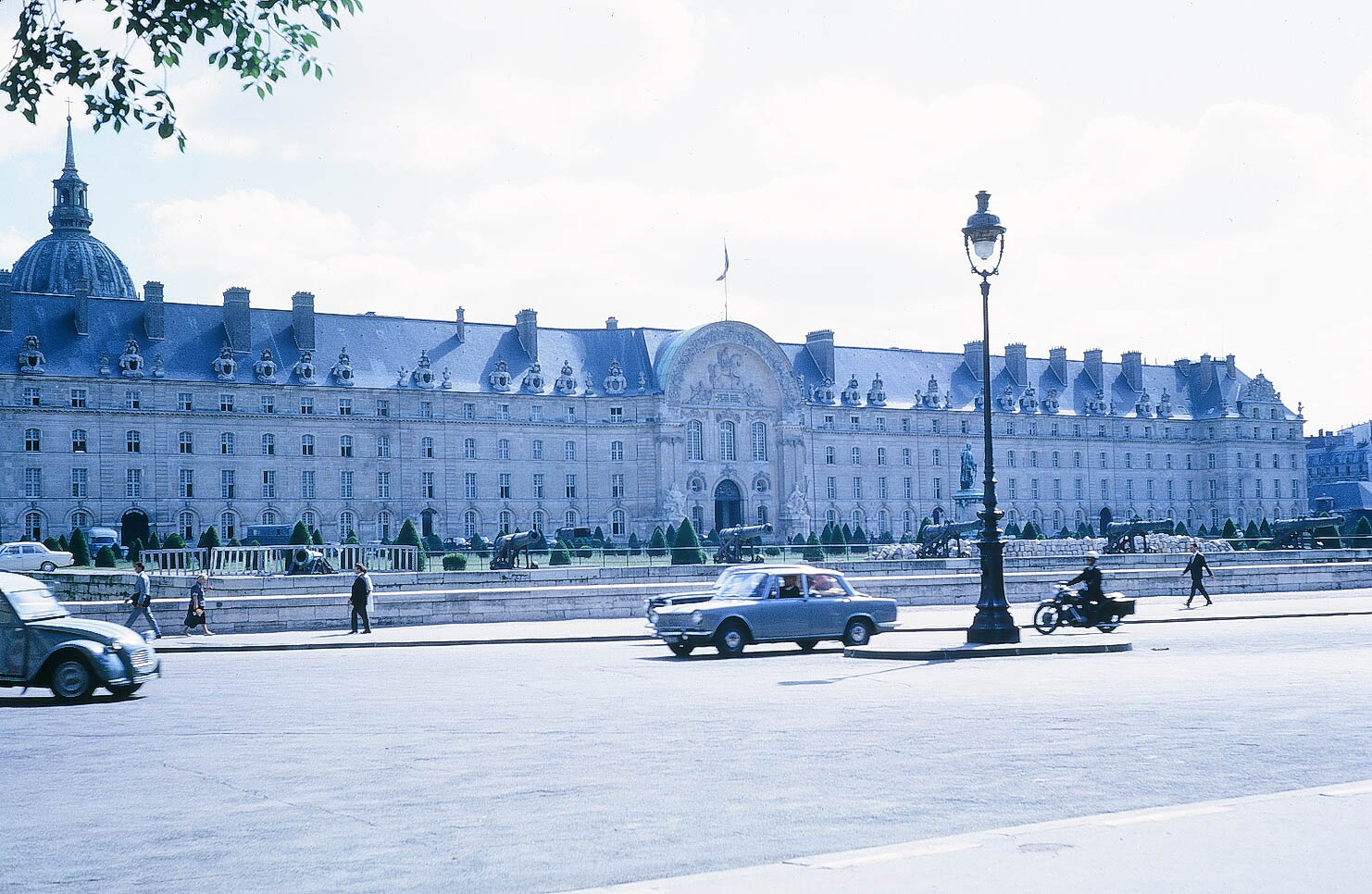
1966EuropeTrip-73 The Hôtel des Invalides. 'House of Invalids'), commonly called Les Invalides 'The Invalids'), is a complex of buildings in the 7th arrondissement of Paris, France, containing museums and monuments, all relating to the military history of France, as well as a hospital and an old soldiers' retirement home, the building's original purpose. Complete 1676.
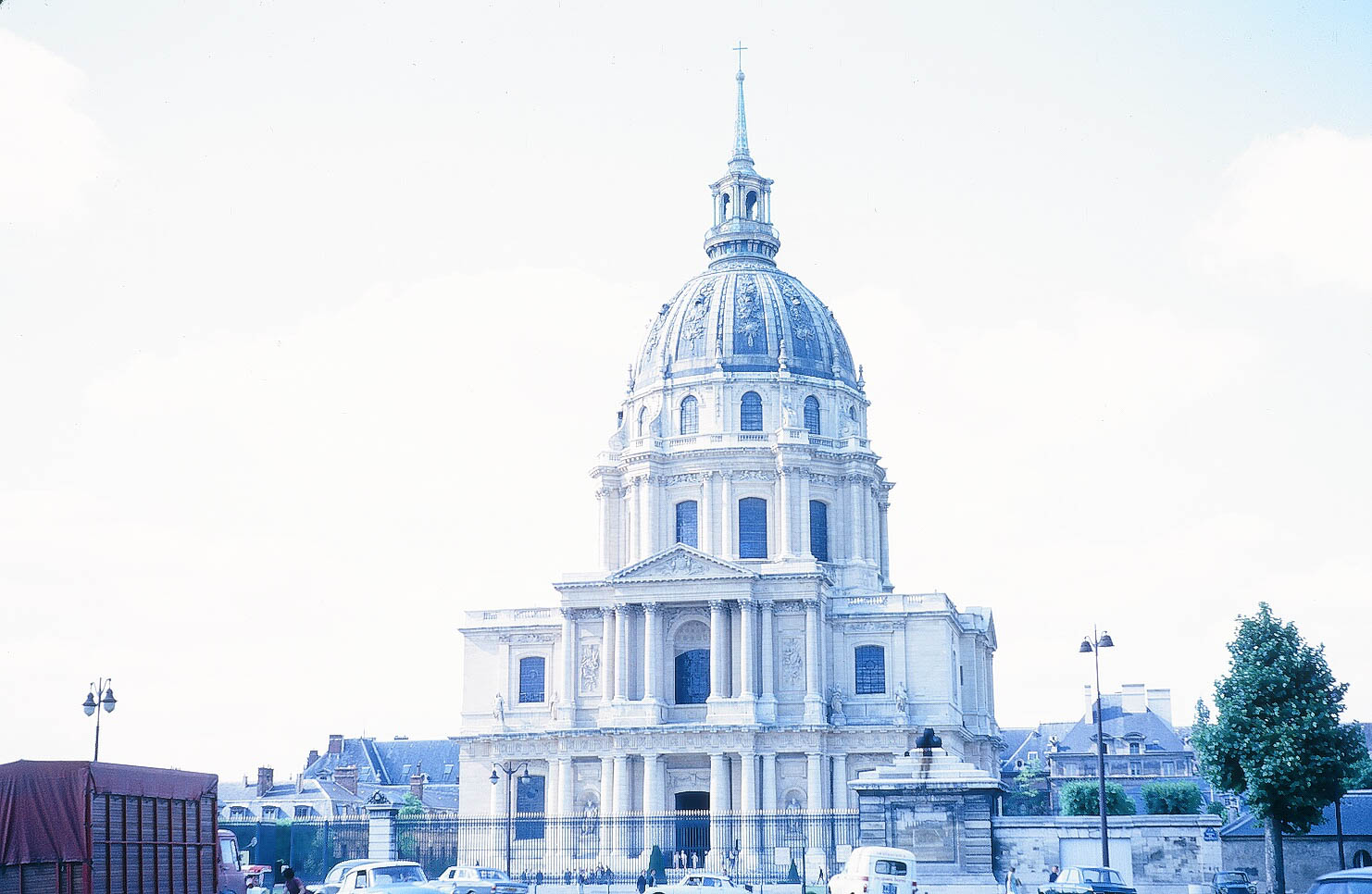
1966EuropeTrip-74 The Dôme des Invalides, which contains Napoleon I's tomb, is the emblem of the Hôtel National des Invalides
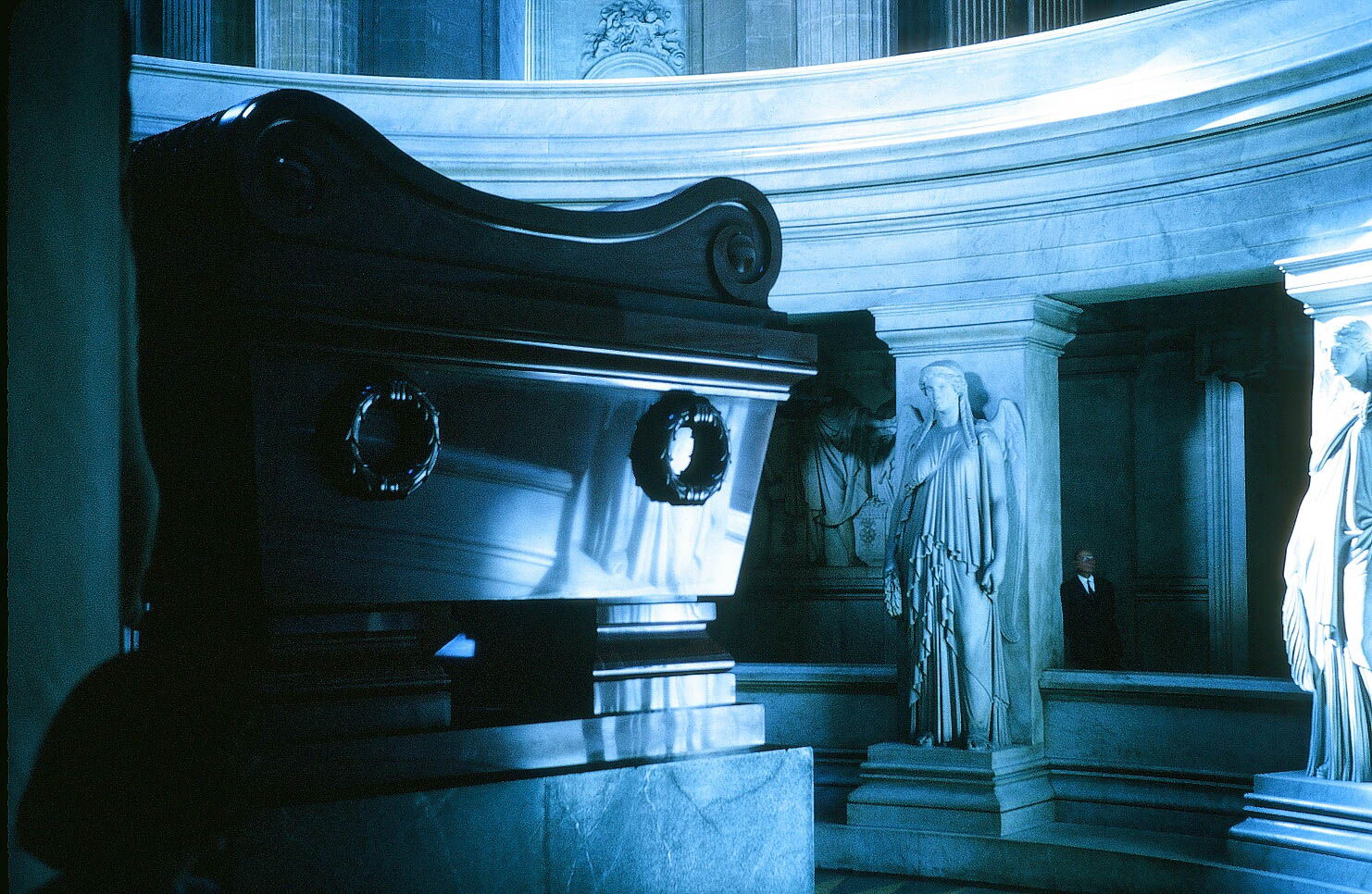
1966EuropeTrip-75 Napoleon's Tomb.
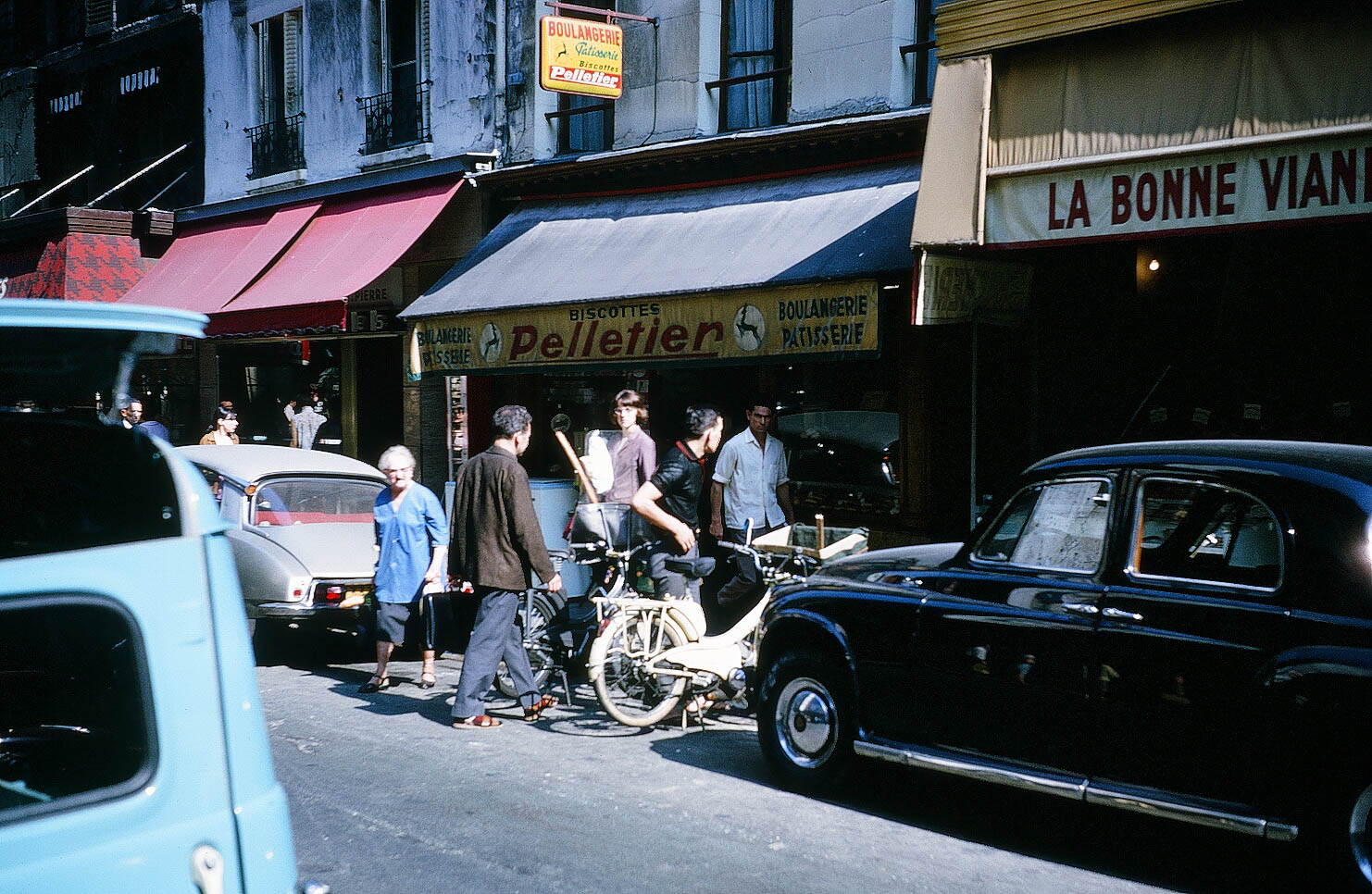
1966EuropeTrip-Pat shopping for lunch.
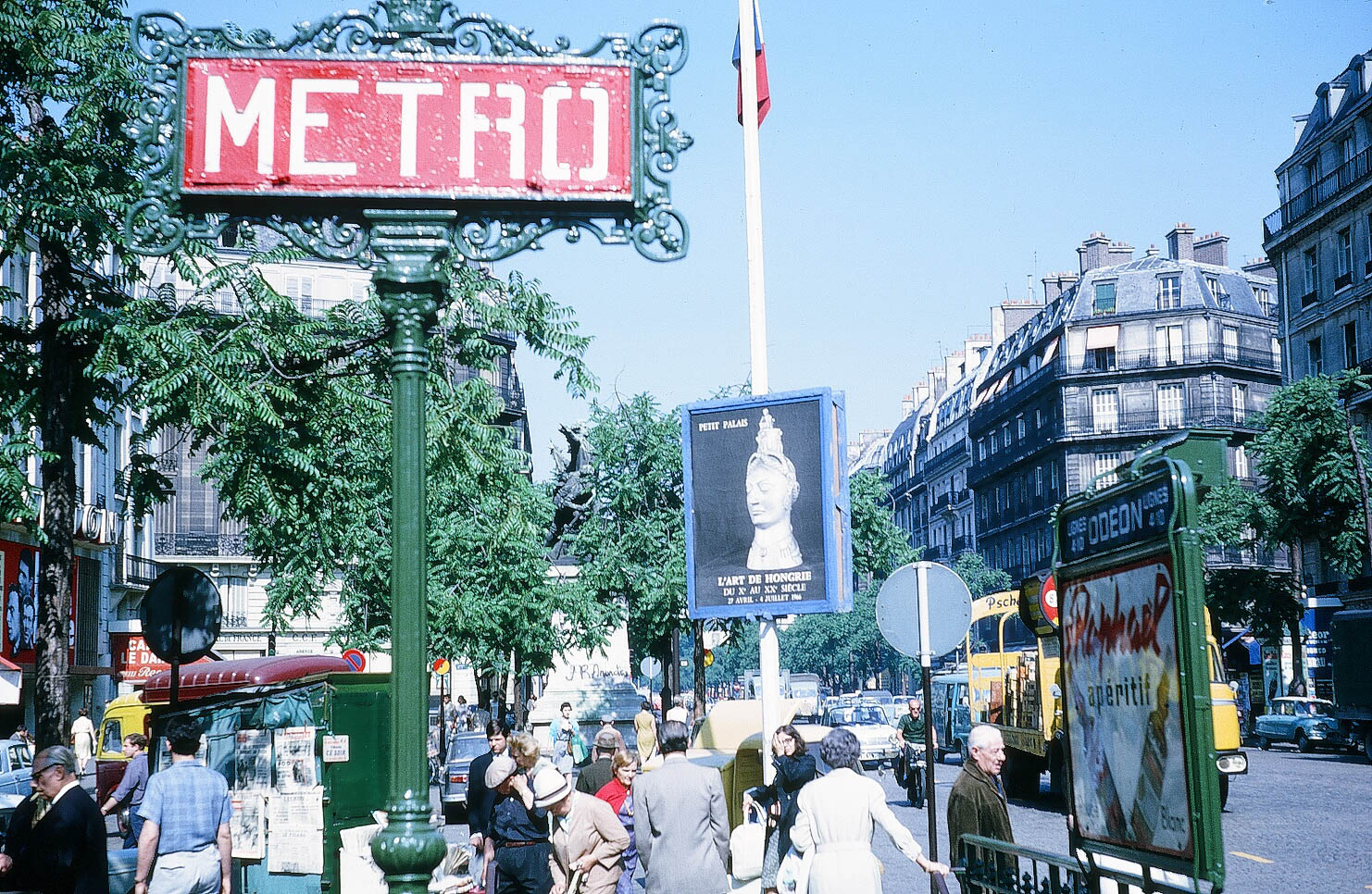
1966EuropeTrip-77 Our Metro Stop- Odeon.
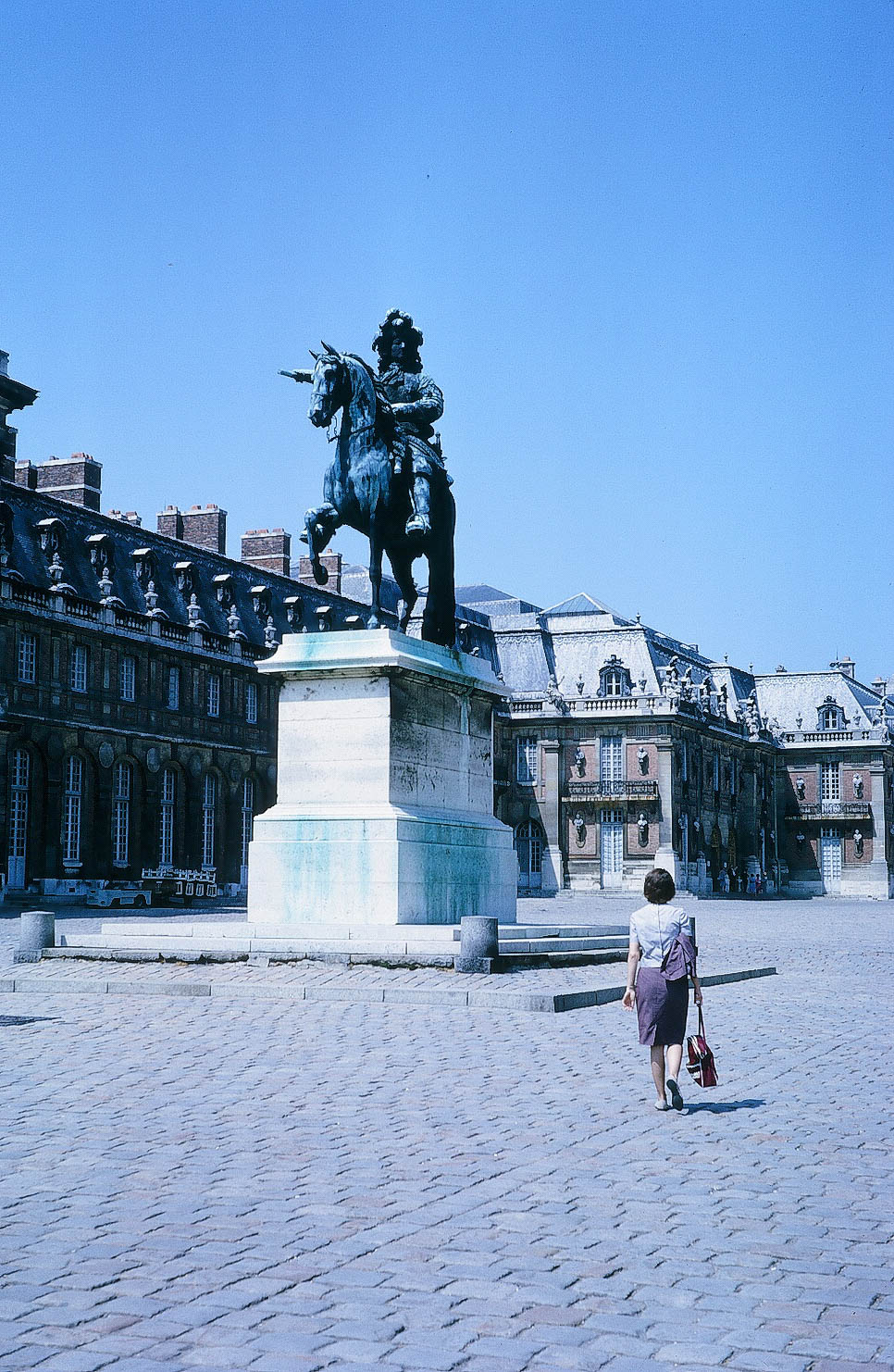
1966EuropeTrip- Statute of King Louis XIV at Versailles
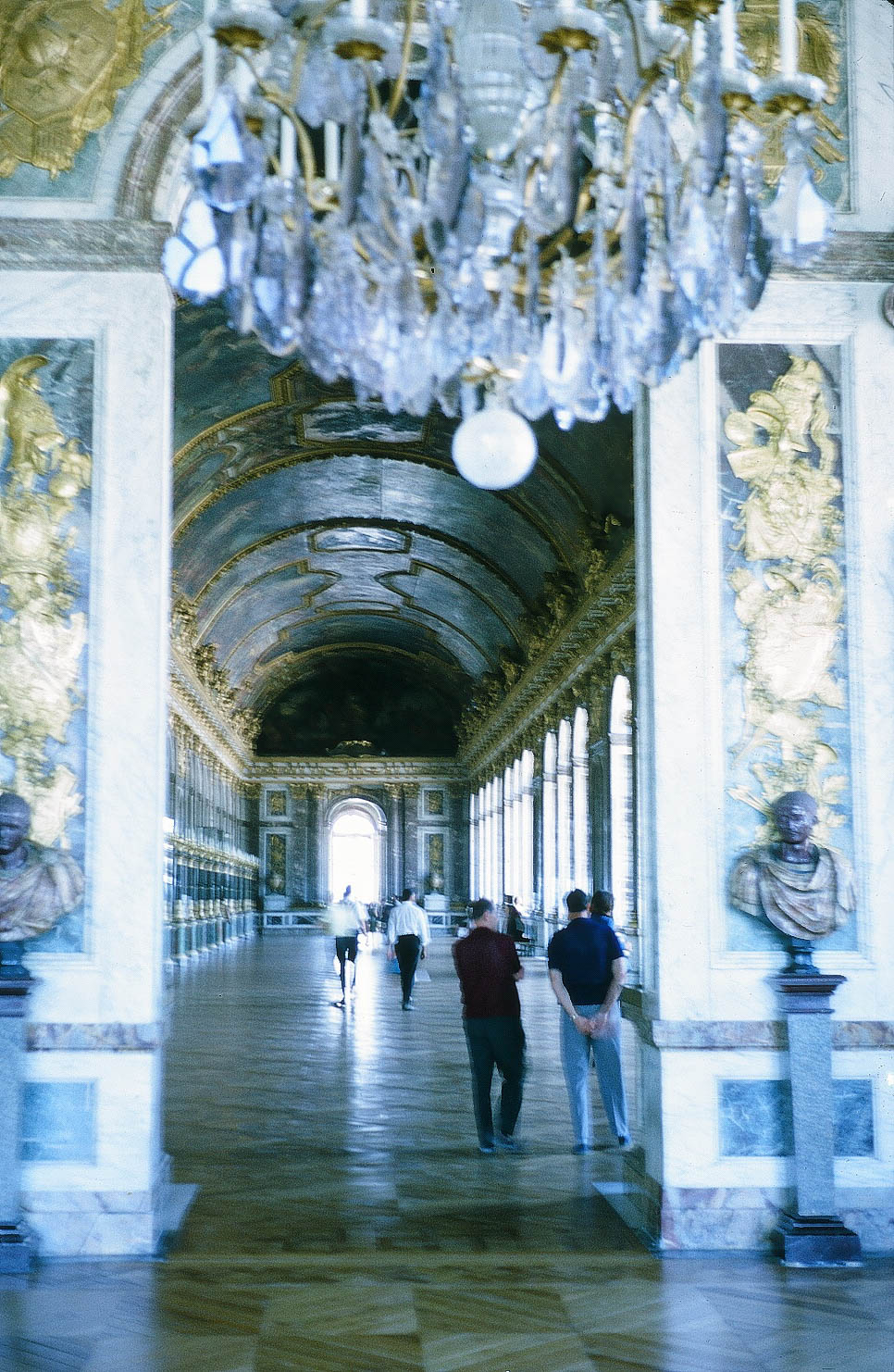
1966EuropeTrip- Hall of Mirrors, Versailles
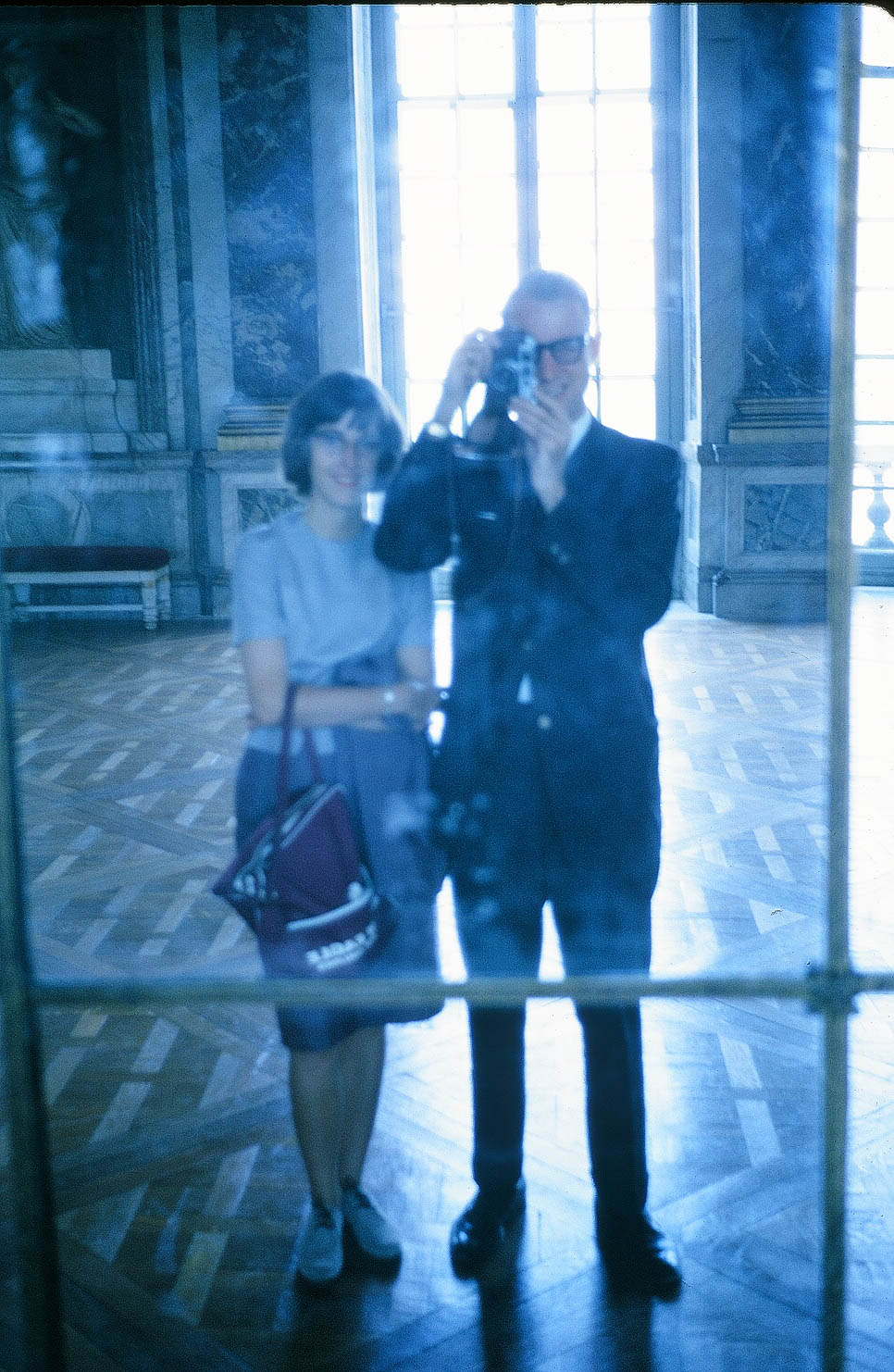
1966EuropeTrip-82 1966 Selfie at Hall of Mirrors, Versailles
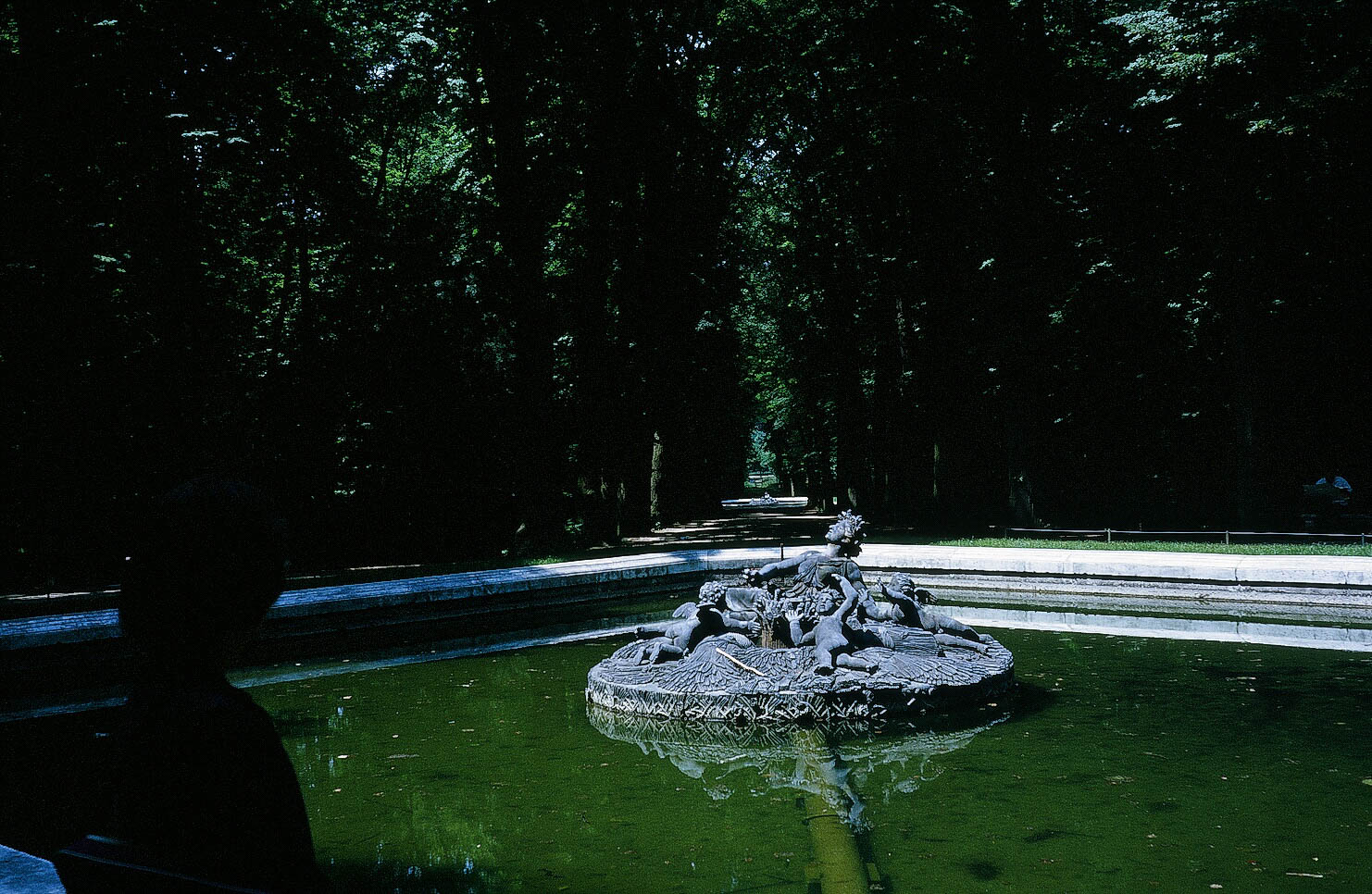
1966EuropeTrip-83 Pool at Versailles.
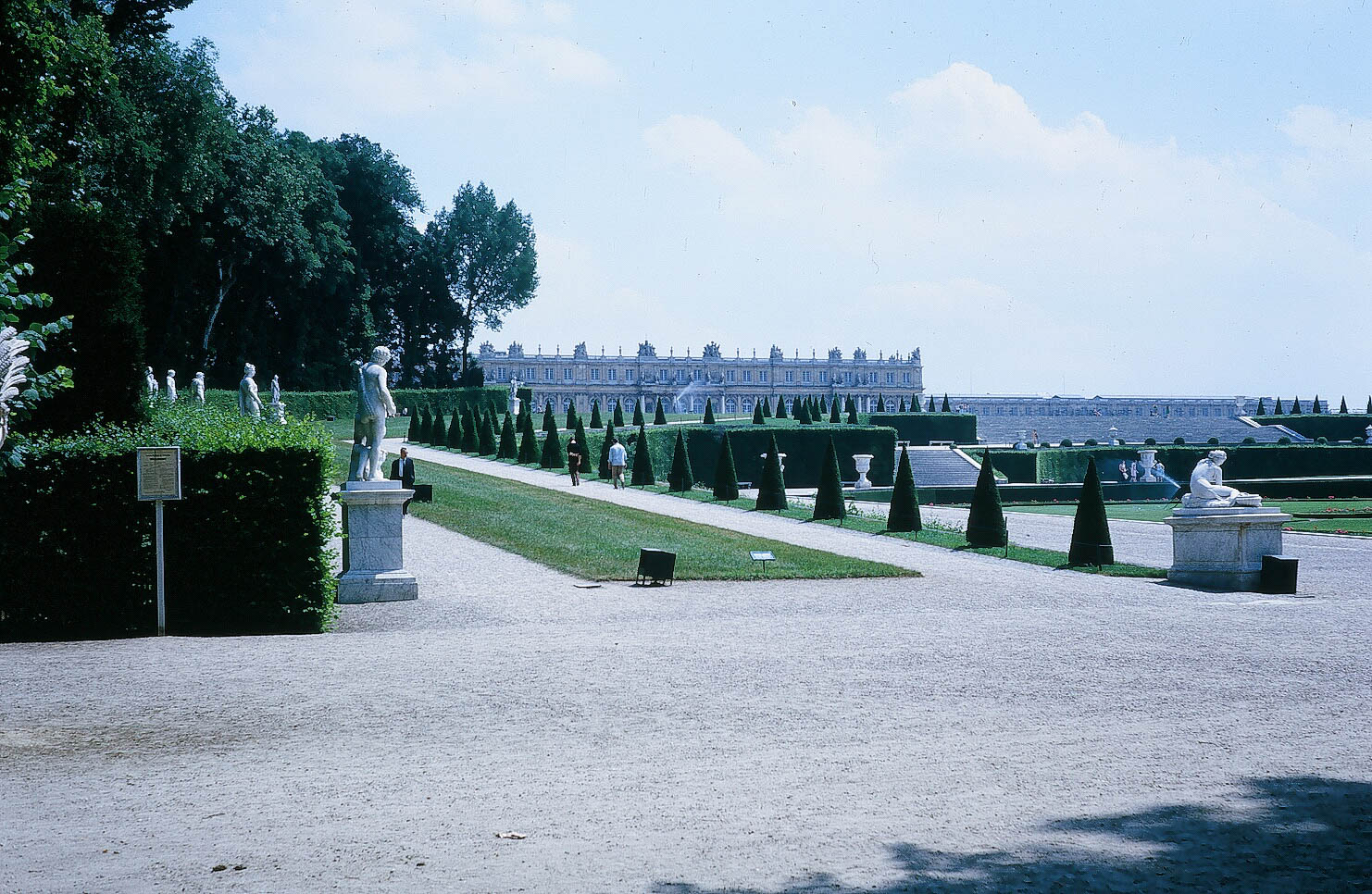
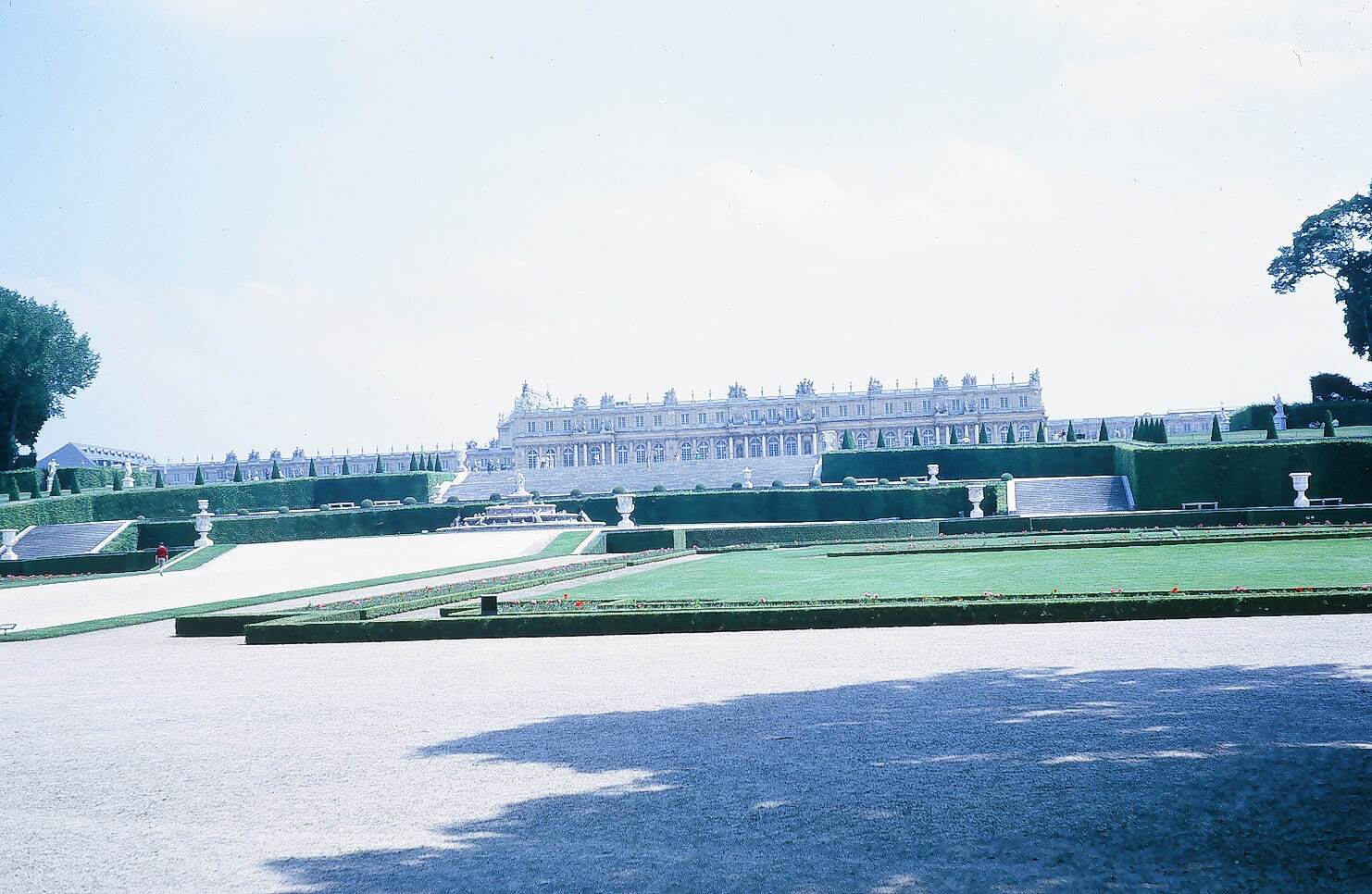
1966EuropeTrip-84 Garden at Versailles.
1966EuropeTrip-85 Versailles Garden.
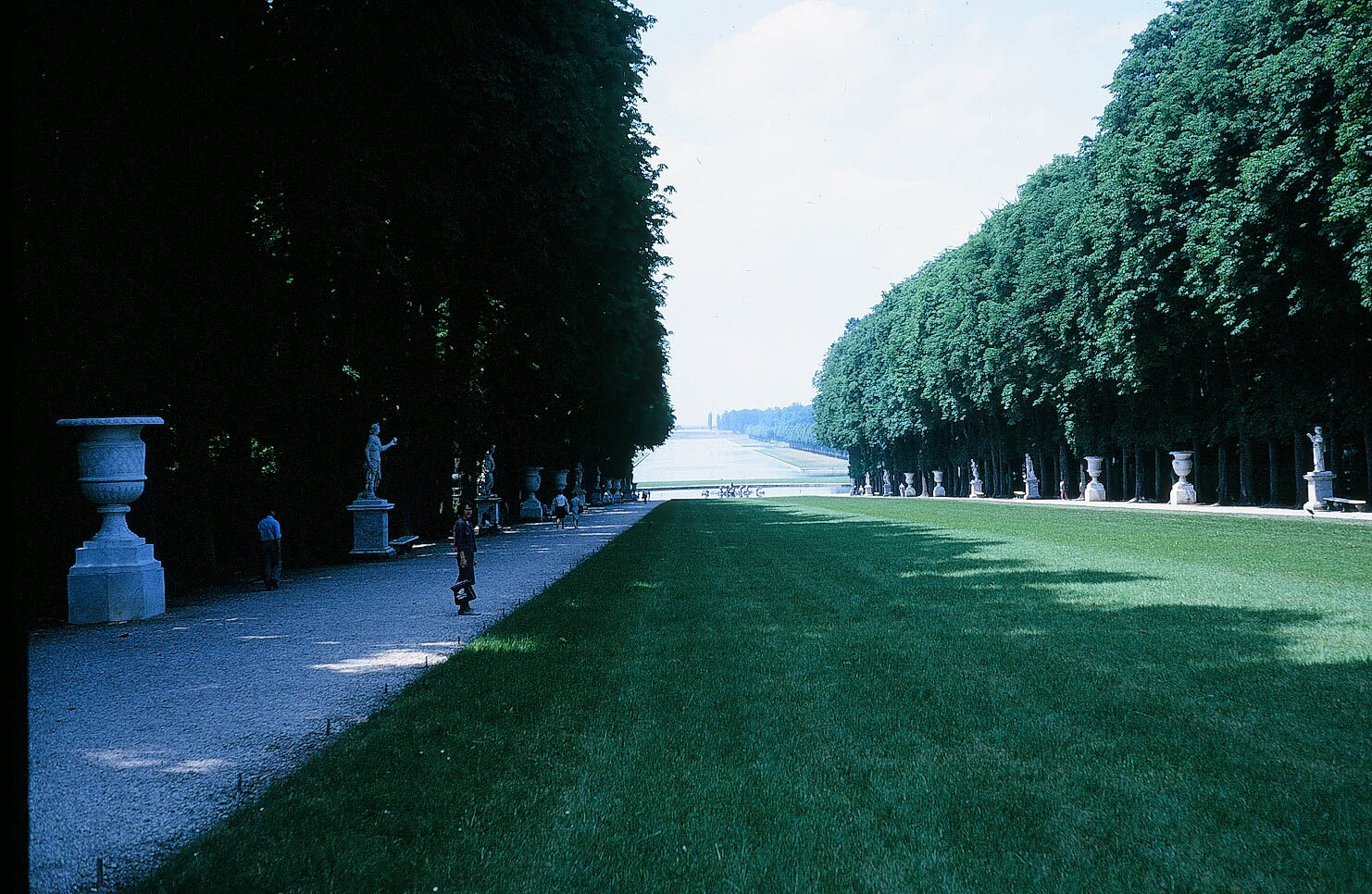
1966EuropeTrip-86 Versailles Garden, The long lake in the distance is called the Grand Canal like in Venice
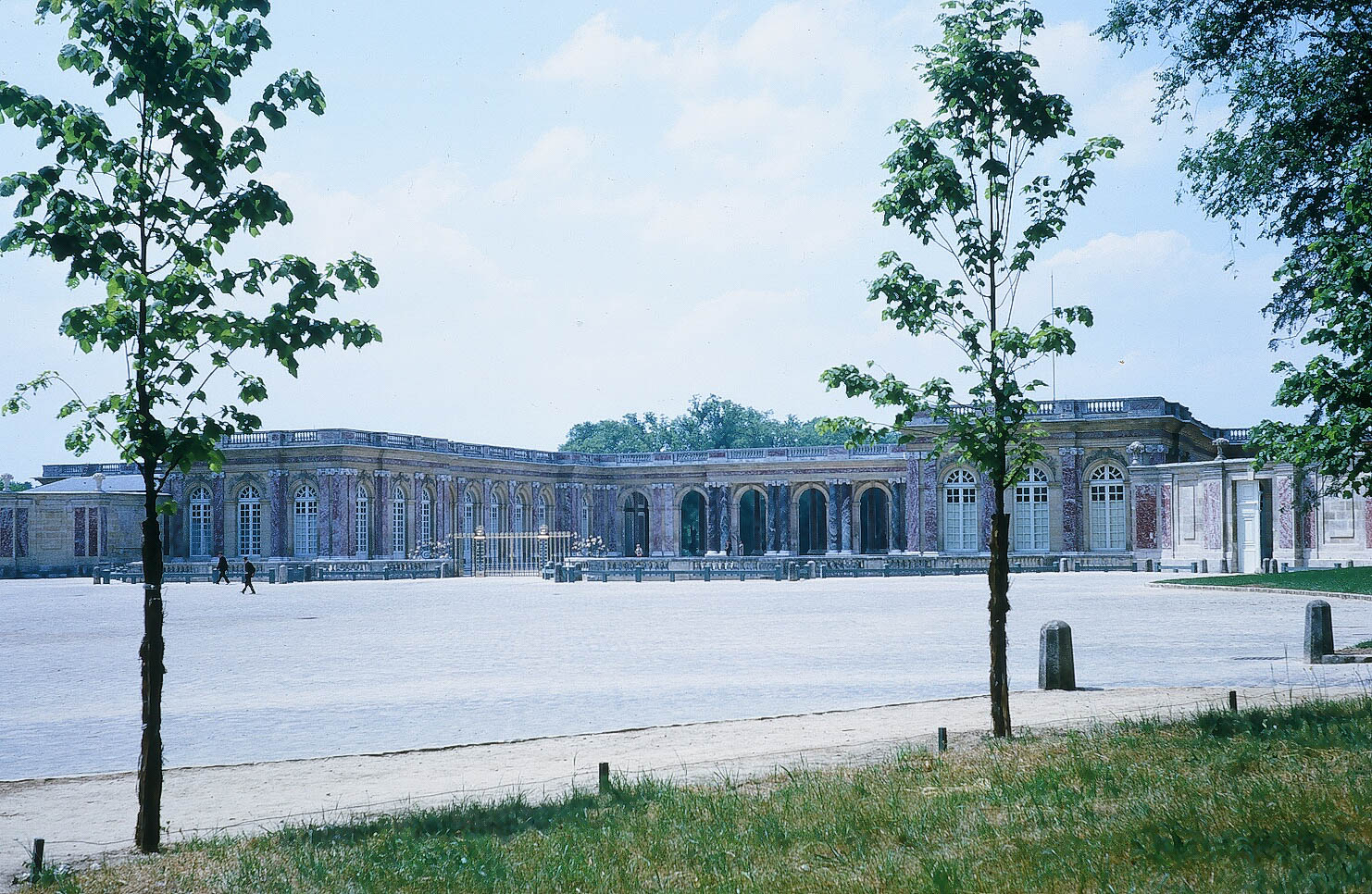
1966EuropeTrip-87 Grand Trianon. The Grand Trianon was erected by Jules Hardouin-Mansart in 1687 on the site of the former ‘Porcelain Trianon’. Commissioned by Louis XIV in 1670 to get away from the arduous pomp of life in the court and to pursue his affair with Madame de Montespan, the Grand Trianon is perhaps the most refined architectural ensemble found on the royal estate of Versailles.
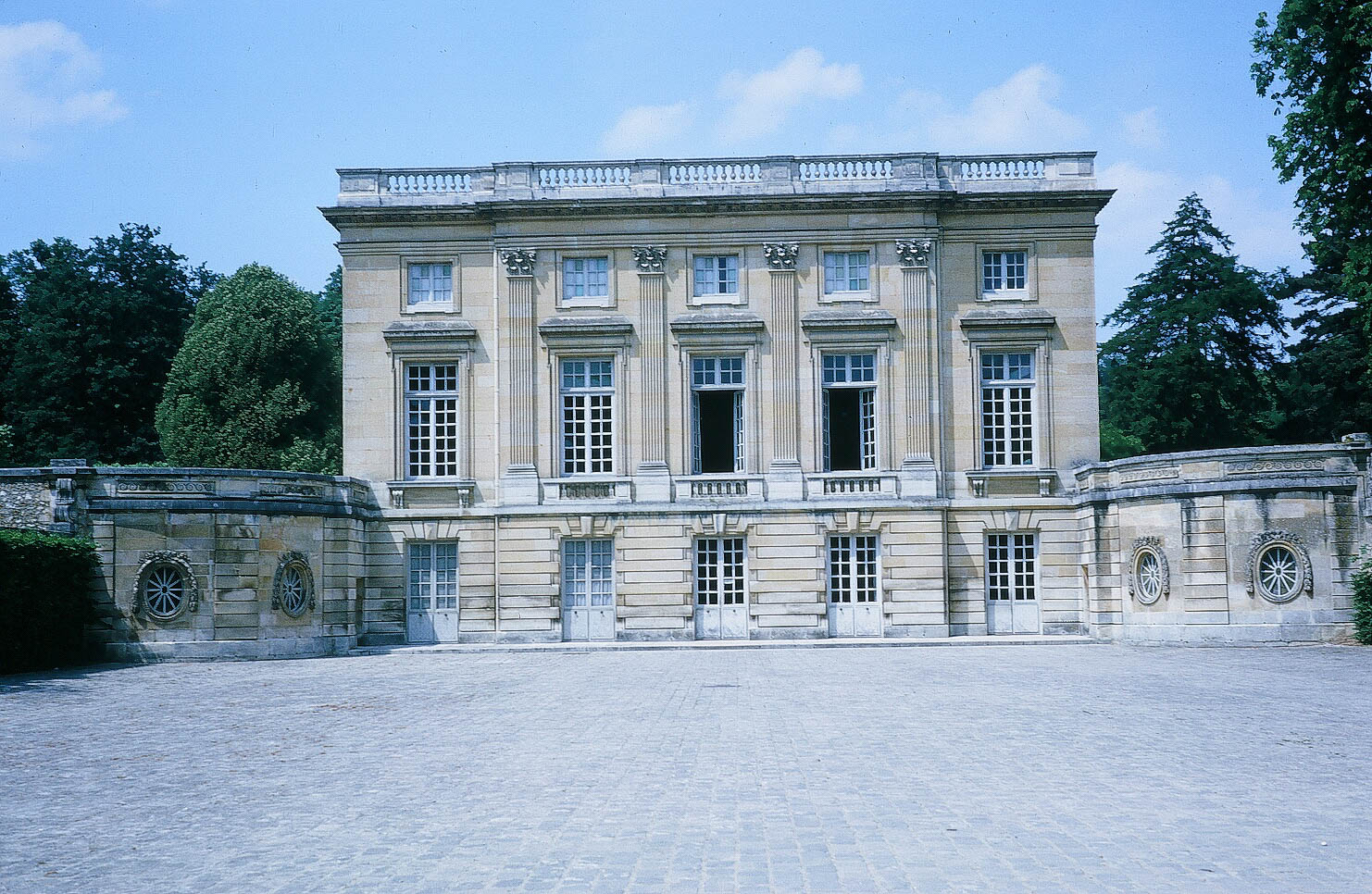
1966EuropeTrip-88 Petit Trianon. Completed by Ange-Jacques Gabriel in 1768, the new palace on the Trianon estate was named the Petit Trianon to distinguish it from the existing Marble Trianon, which then became known as the Grand Trianon. It was here, in April 1774, that Louis XV experienced the first symptoms of smallpox, which would lead to his death a few days later and usher in the reign of Louis XVI and Marie-Antoinette. The new King Louis XVI gave the Petit Trianon as a gift to his wife, who quickly made it her own and ordered an extensive redesign of the external areas. Louis XV's botanical gardens were soon replaced by an Anglo-Oriental garden, which was more in keeping with the fashion of the day and which Marie-Antoinette was constantly adding to and embellishing.
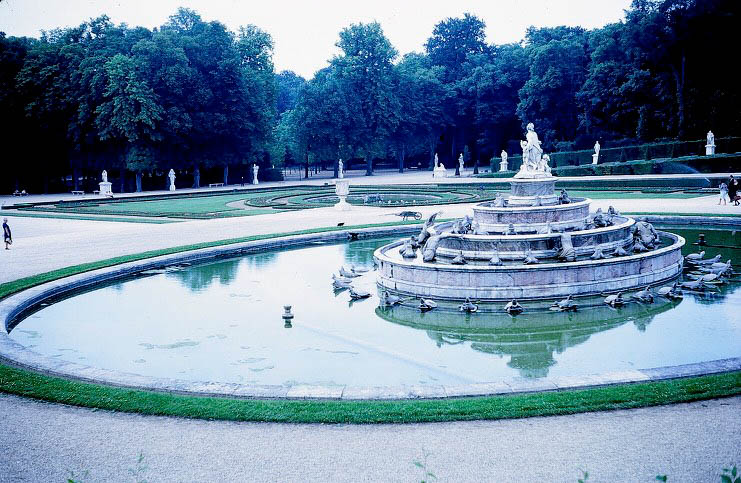
1966EuropeTrip-90 Versailles Gardens and Fountains.
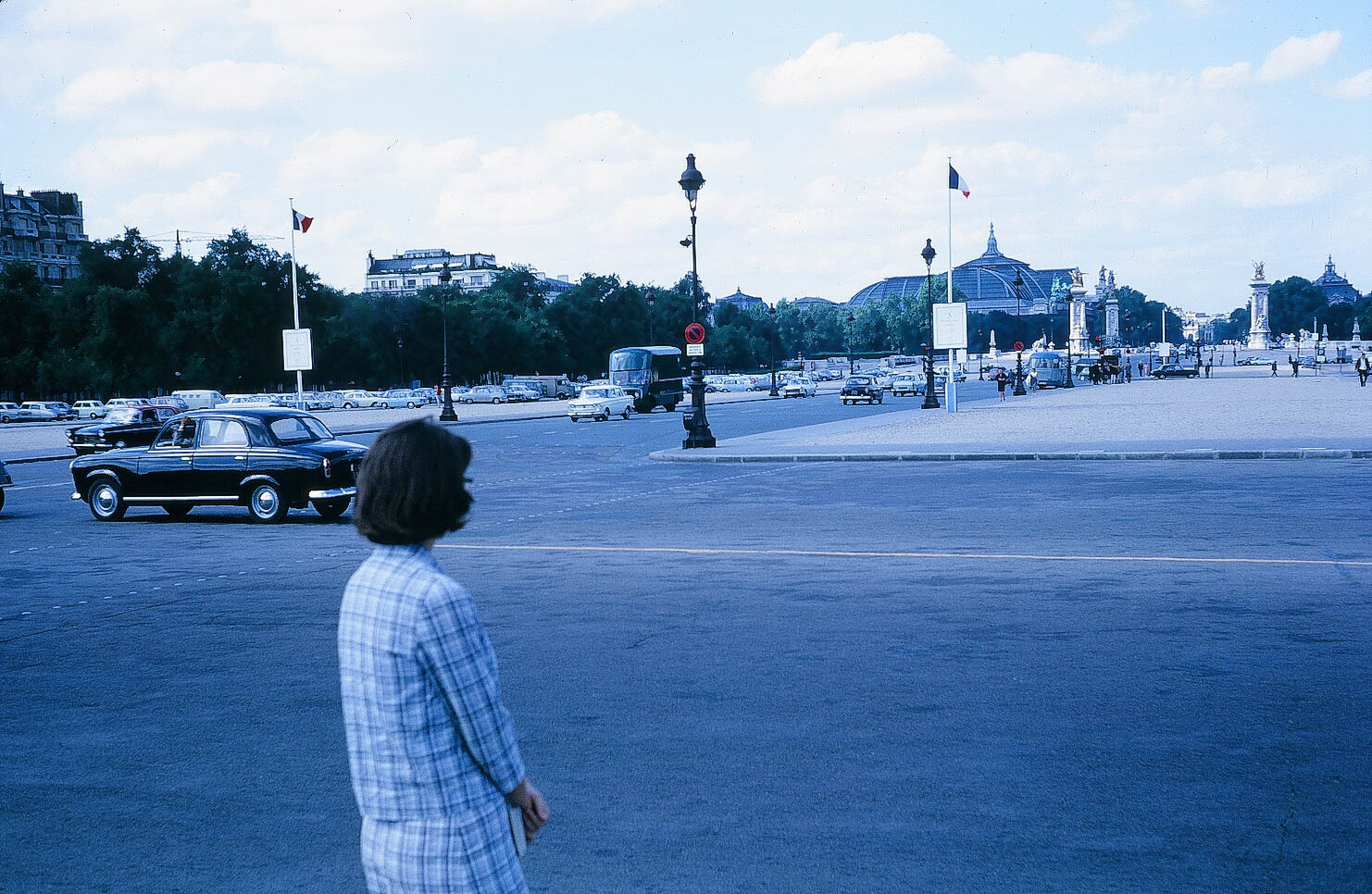
1966EuropeTrip-91 Esplanade des Invalides
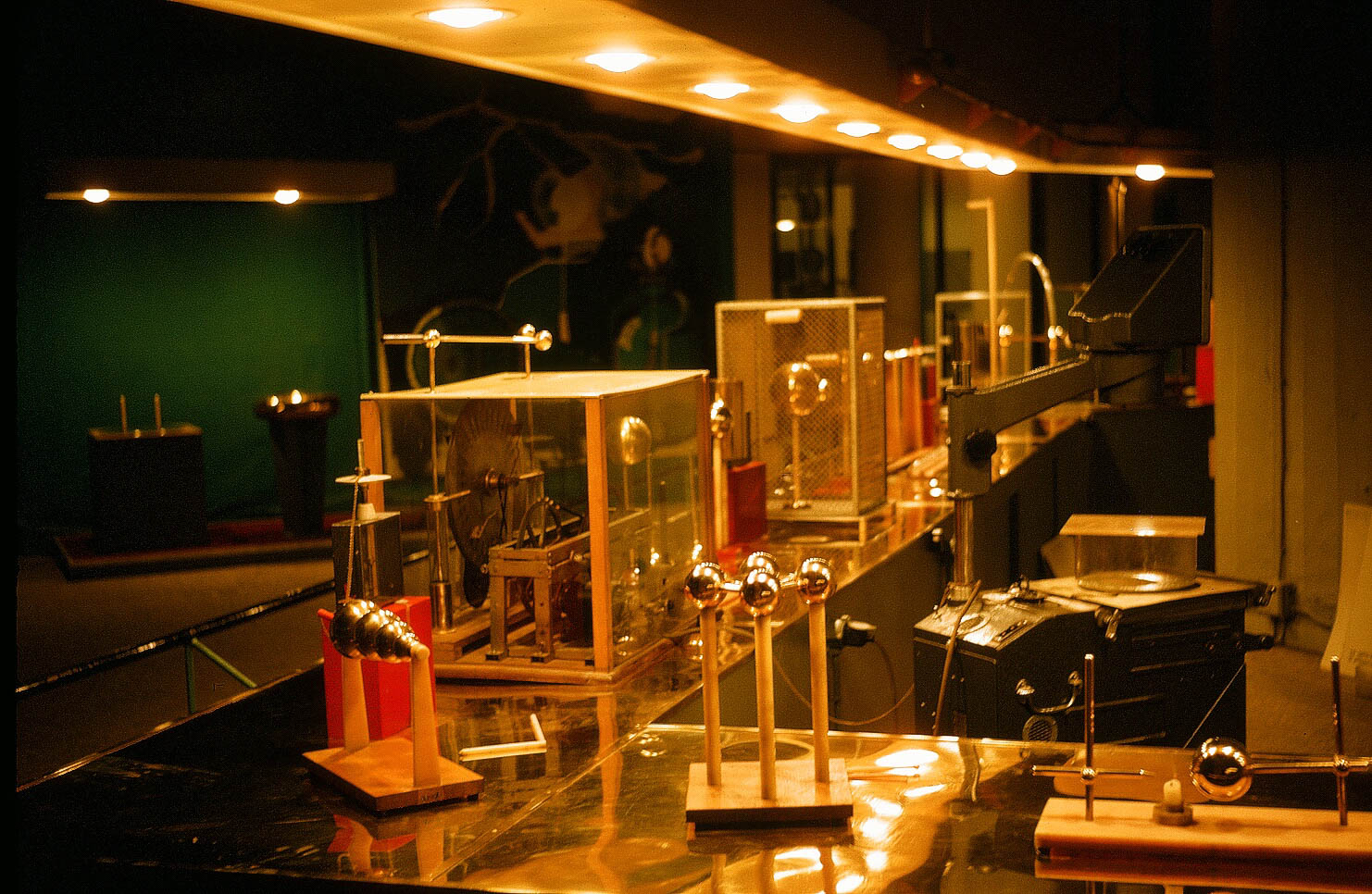
1966EuropeTrip-92 Palace of Discovery, Paris. The Palais de la Découverte is a science museum located in the Grand Palais, in the 8th arrondissement on Avenue Franklin D. Roosevelt, Paris, France. The museum was created in 1937 by Jean Baptiste Perrin (awarded the Nobel Prize in Physics, 1926) during an international exhibition on "Arts and techniques in modern life".
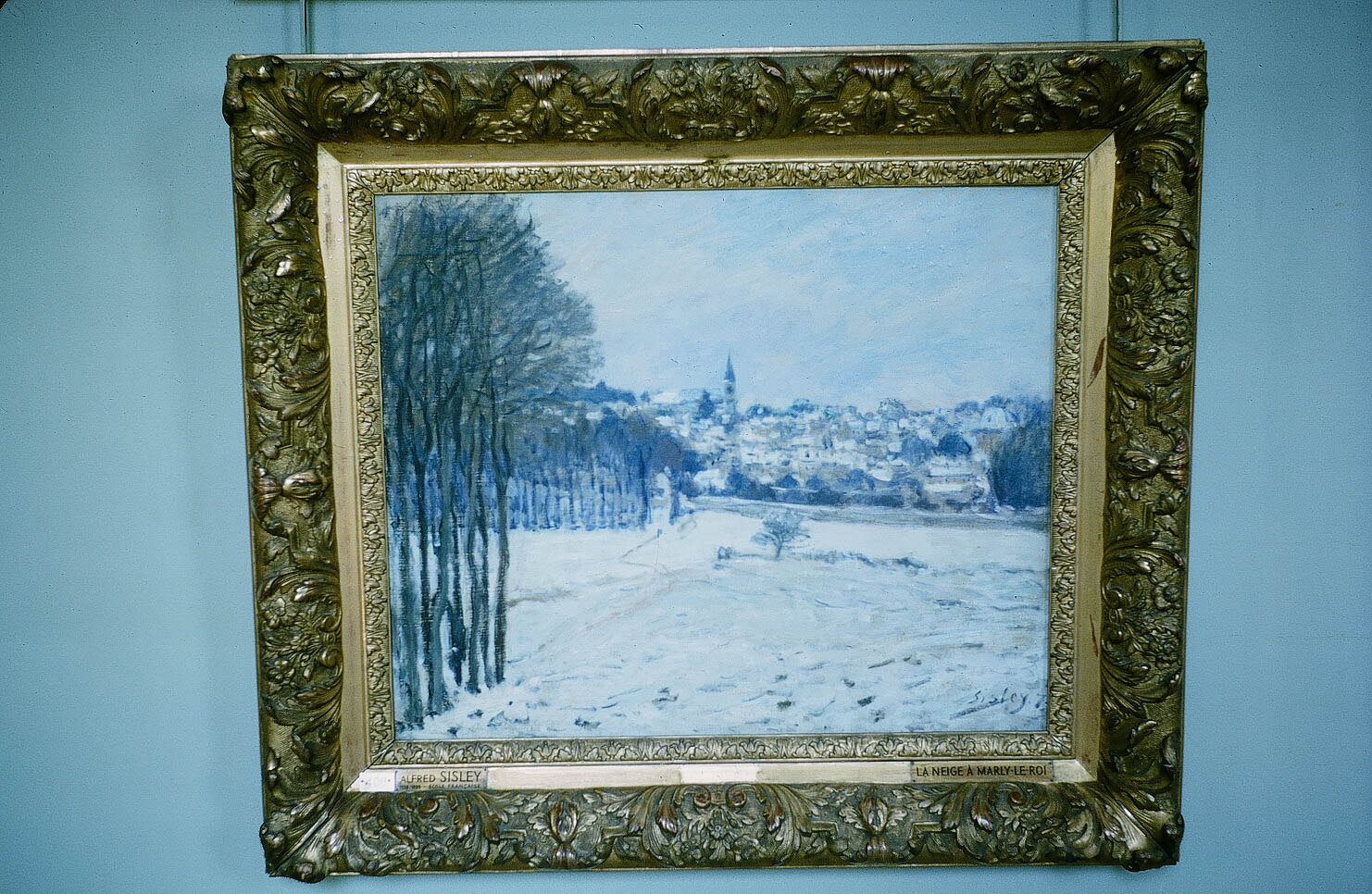
1966EuropeTrip-93 Place du Chenil in Marly, Snow Effect is an 1876 oil on canvas painting by Alfred Sisley. It is now in the Musée des beaux-arts de Rouen, to which it was given by François Depeaux in 1909.
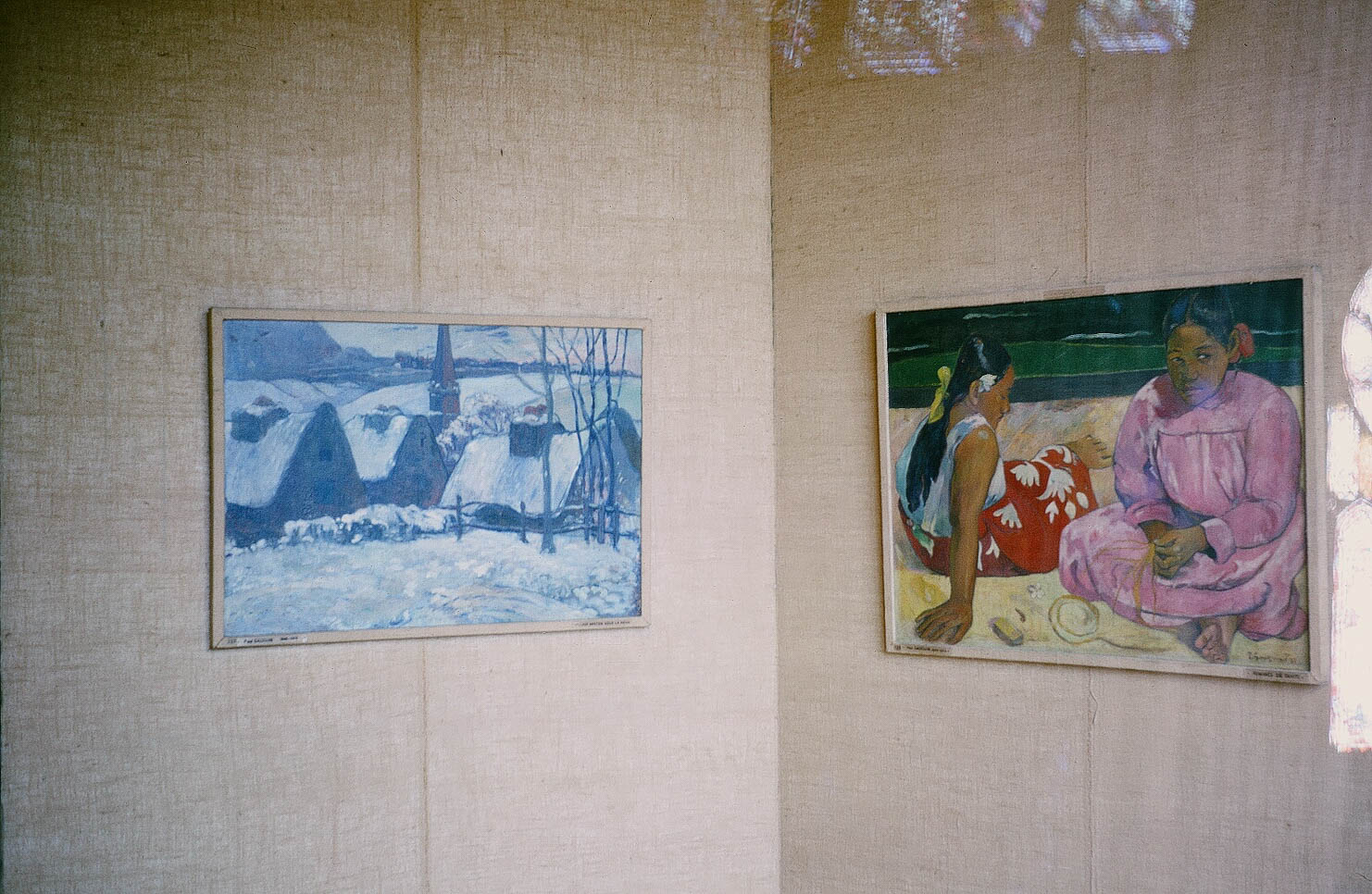
1966EuropeTrip-94 At right, Tahitian Women on the Beach (French: Femmes de Tahiti) is an oil painting by the French artist Paul Gauguin.[1] Depicting two Tahitian women, this piece is one of a series of works completed by Gauguin during his first stay on the Pacific island chain. At left: Breton village in the snow - Paul Gauguin.
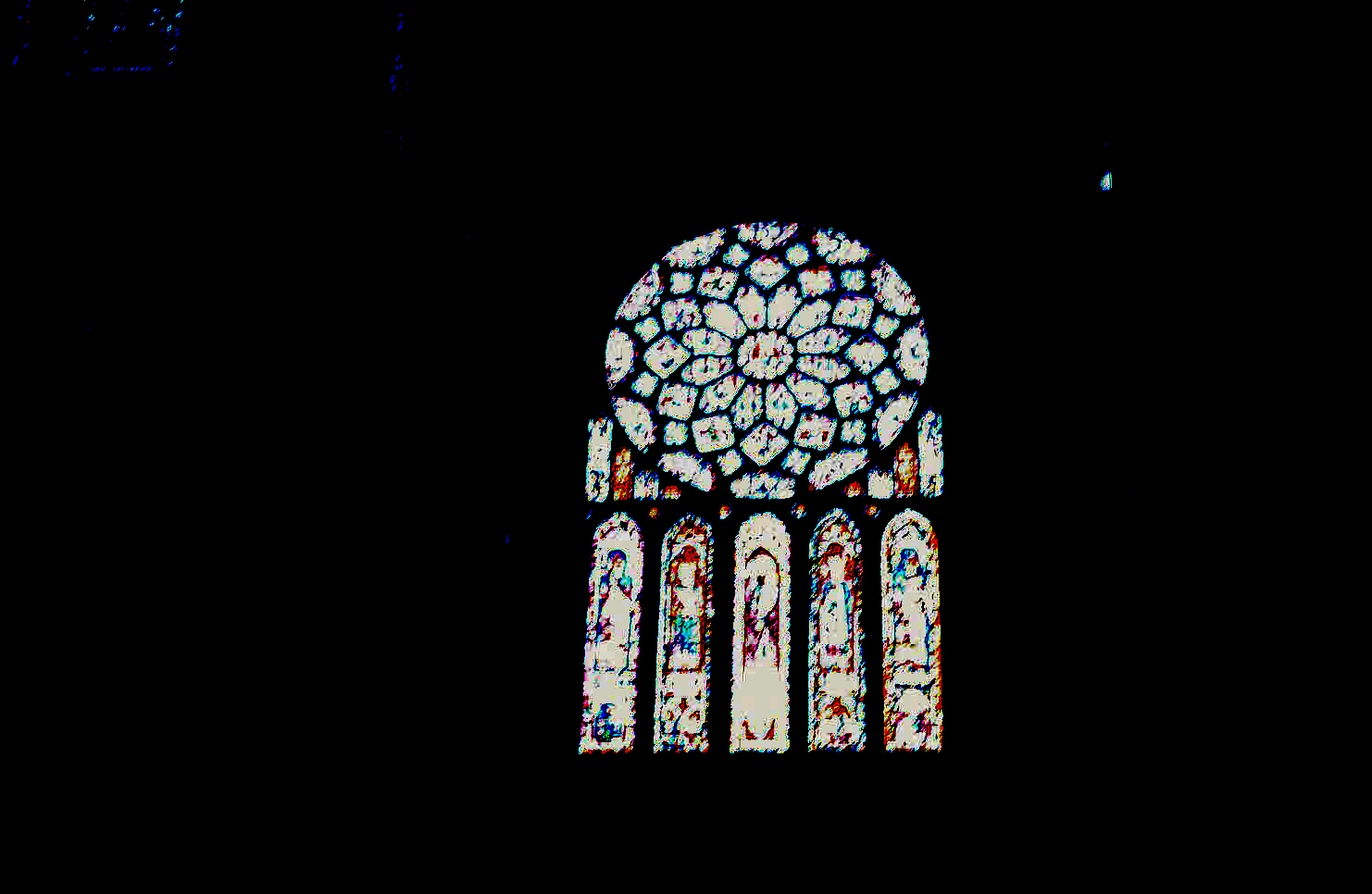
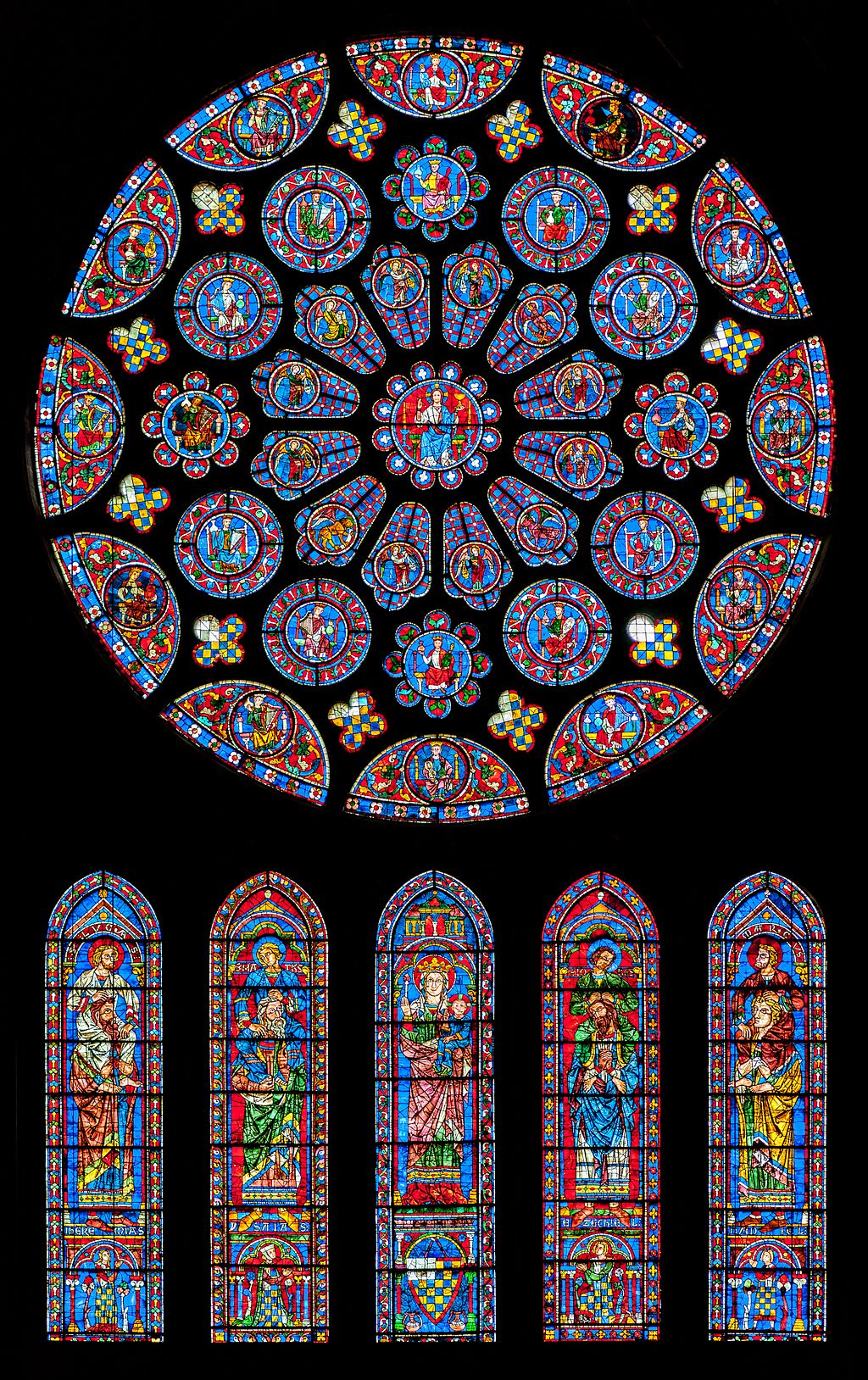
1966EuropeTrip-95 Rose Window and Lancets Stained Glass/ Cathedral of Our Lady of Chartres) is a Catholic cathedral in Chartres, France, about 80 km (50 miles) southwest of Paris, and is the seat of the Bishop of Chartres. Dedicated in honour of the Virgin Mary ('Our Lady'), it was mostly constructed between 1194 and 1220.
Modern Photo below: (PtrQs, CC BY-SA 3.0, https://commons.wikimedia.org/w/index.php?curid=54490942)
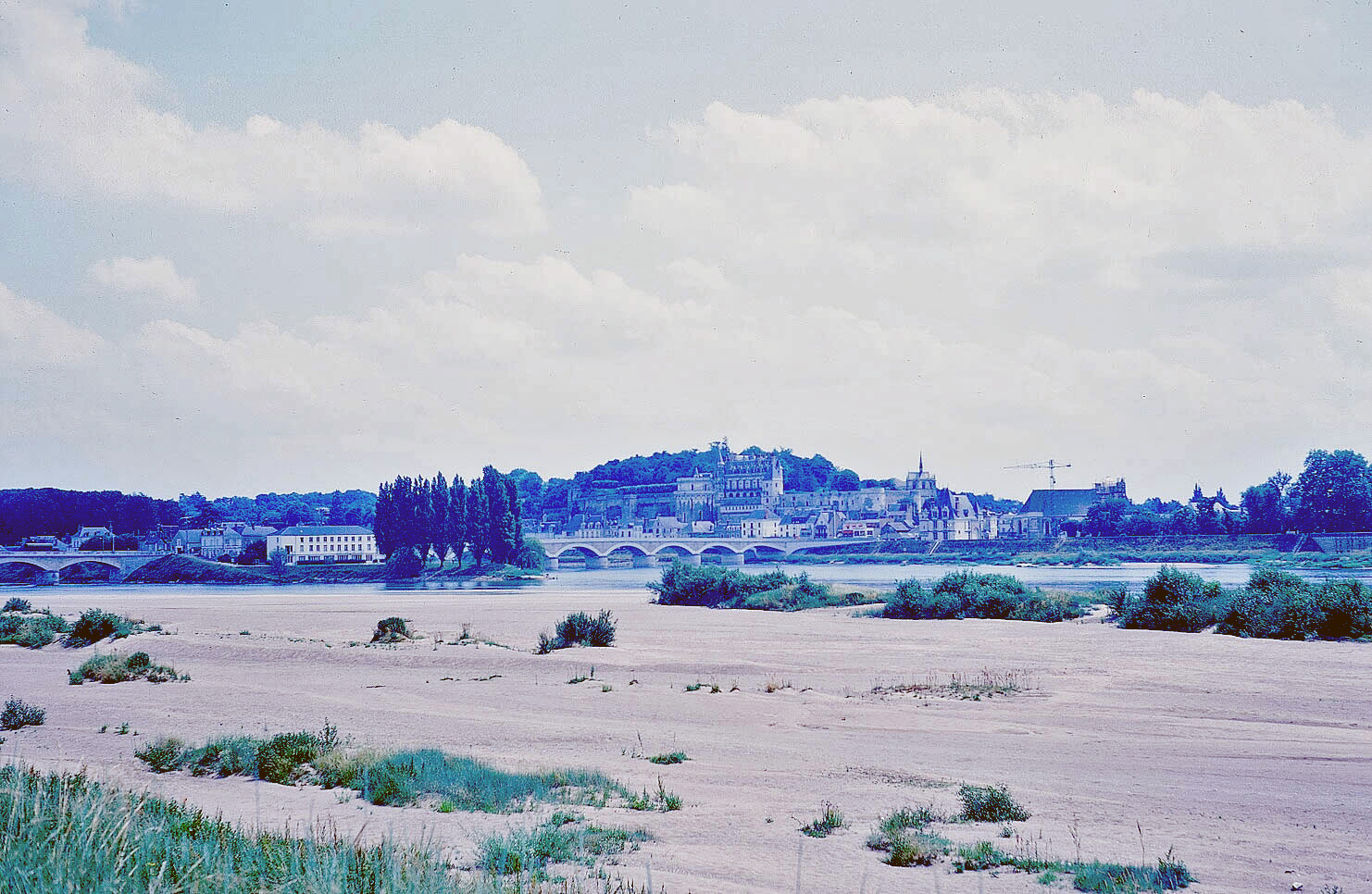
1966EuropeTrip-96 Panoramic view of Chinon - Chinon is a commune located in the Indre-et-Loire department in the Region Centre, France. The regional area is called the Touraine, which is known as the "garden of France".
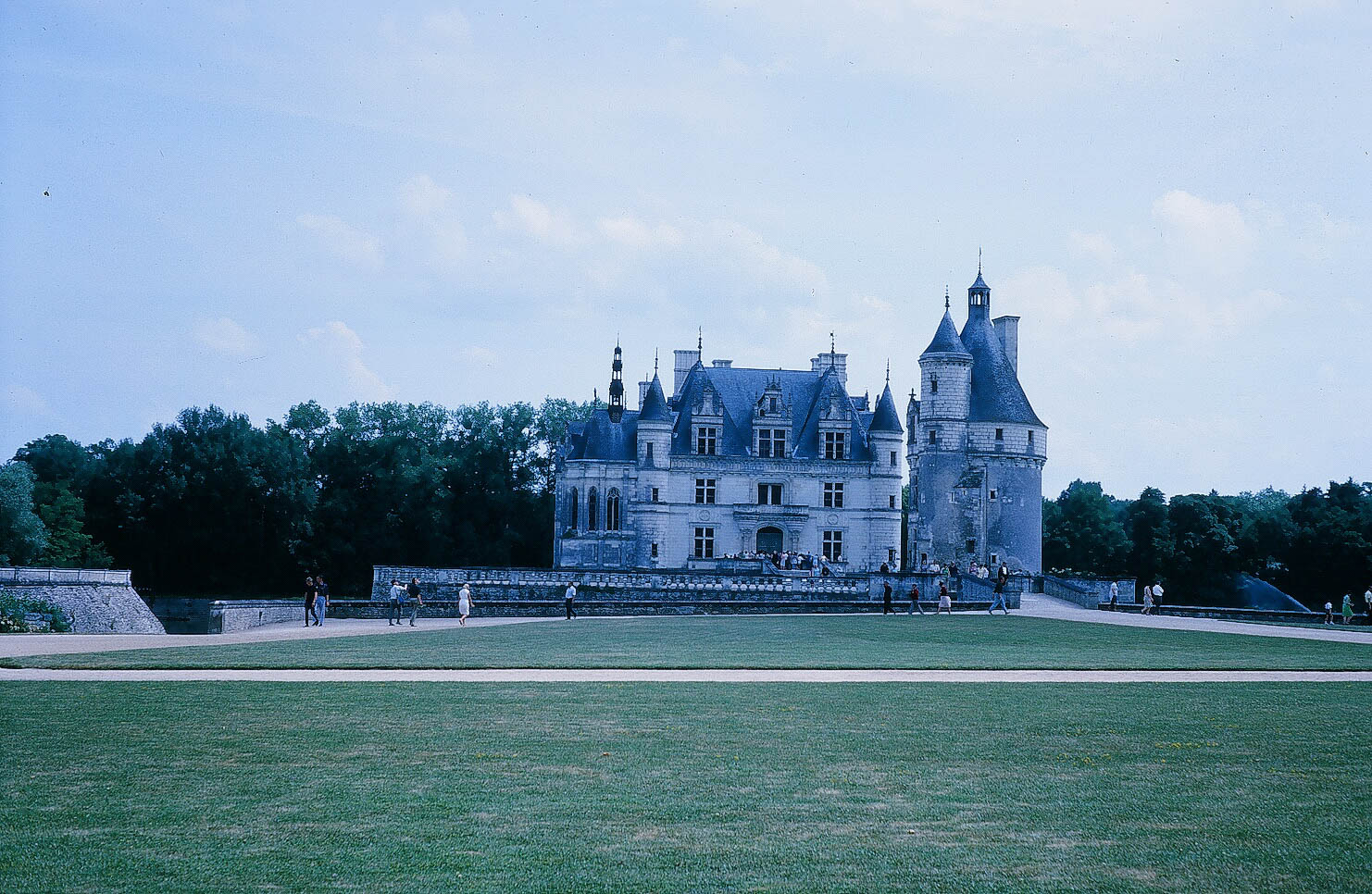
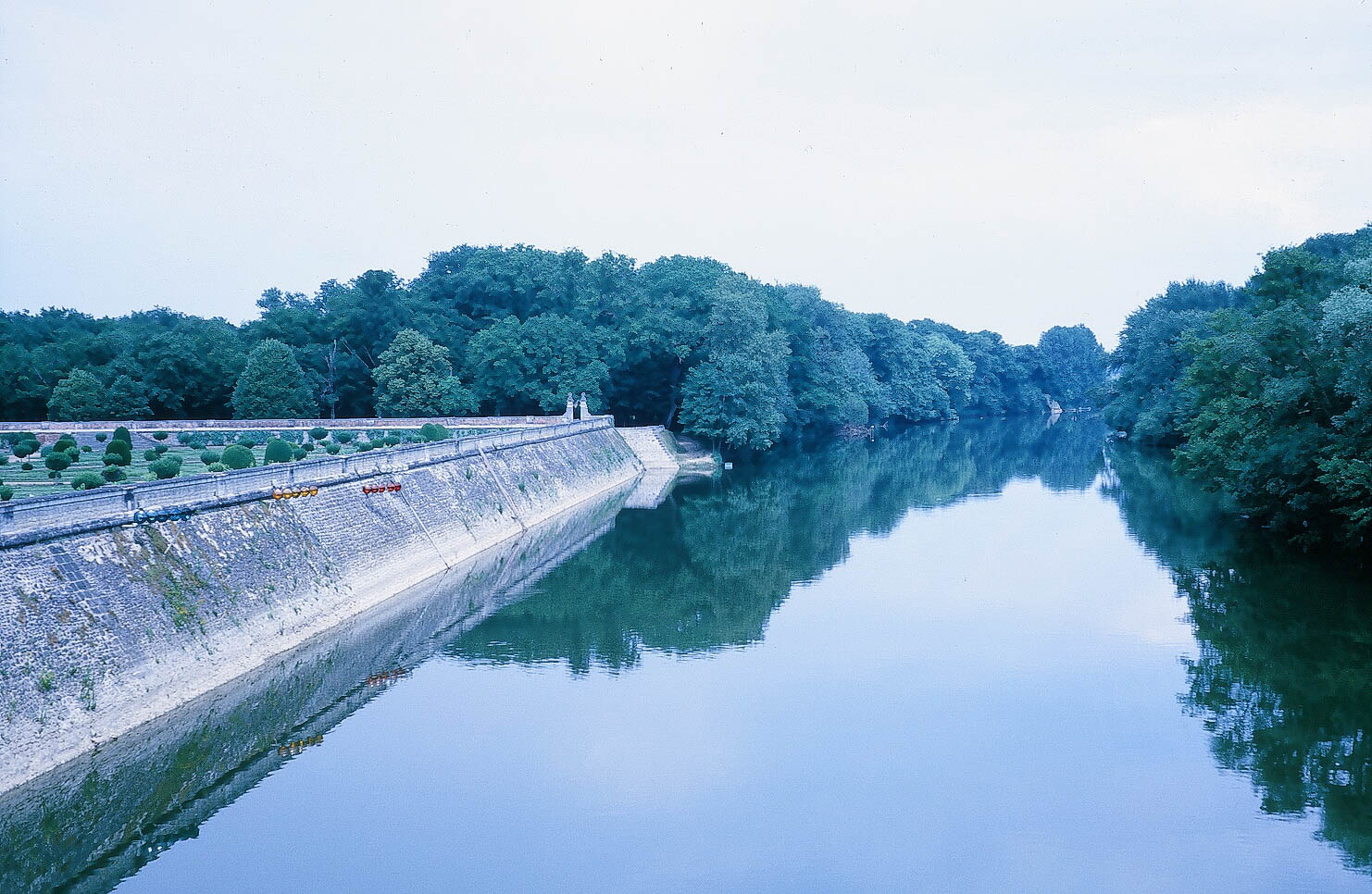
1966EuropeTrip-97 The Château de Chenonceau is a French château spanning the river Cher, near the small village of Chenonceaux, Indre-et-Loire, Centre-Val de Loire. It is one of the best-known châteaux of the Loire Valley. The estate of Chenonceau is first mentioned in writing in the 11th century. The current château was built in 1514–1522 on the foundations of an old mill and was later extended to span the river. The bridge over the river was built (1556–1559) to designs by the French Renaissance architect Philibert de l'Orme, and the gallery on the bridge, built from 1570 to 1576 to designs by Jean Bullant.
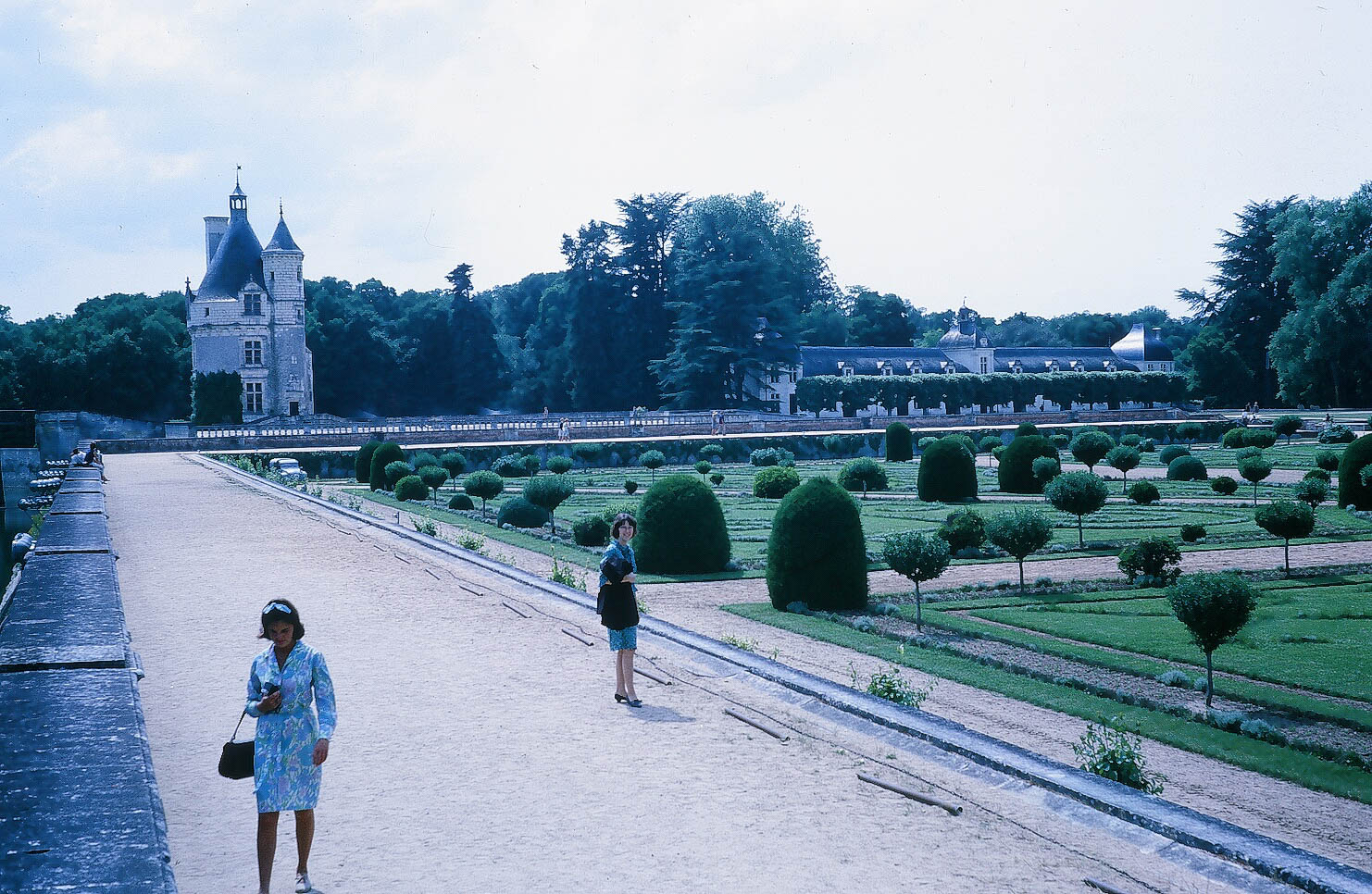
1966EuropeTrip-98 Gardens of Château de Chenonceau
1966EuropeTrip-99 Château de Chenonceau
1966EuropeTrip-100 We stopped in Bourges to have car's 300 mile inspection, took 4 hours so we stayed a second night and saw the cathedral.
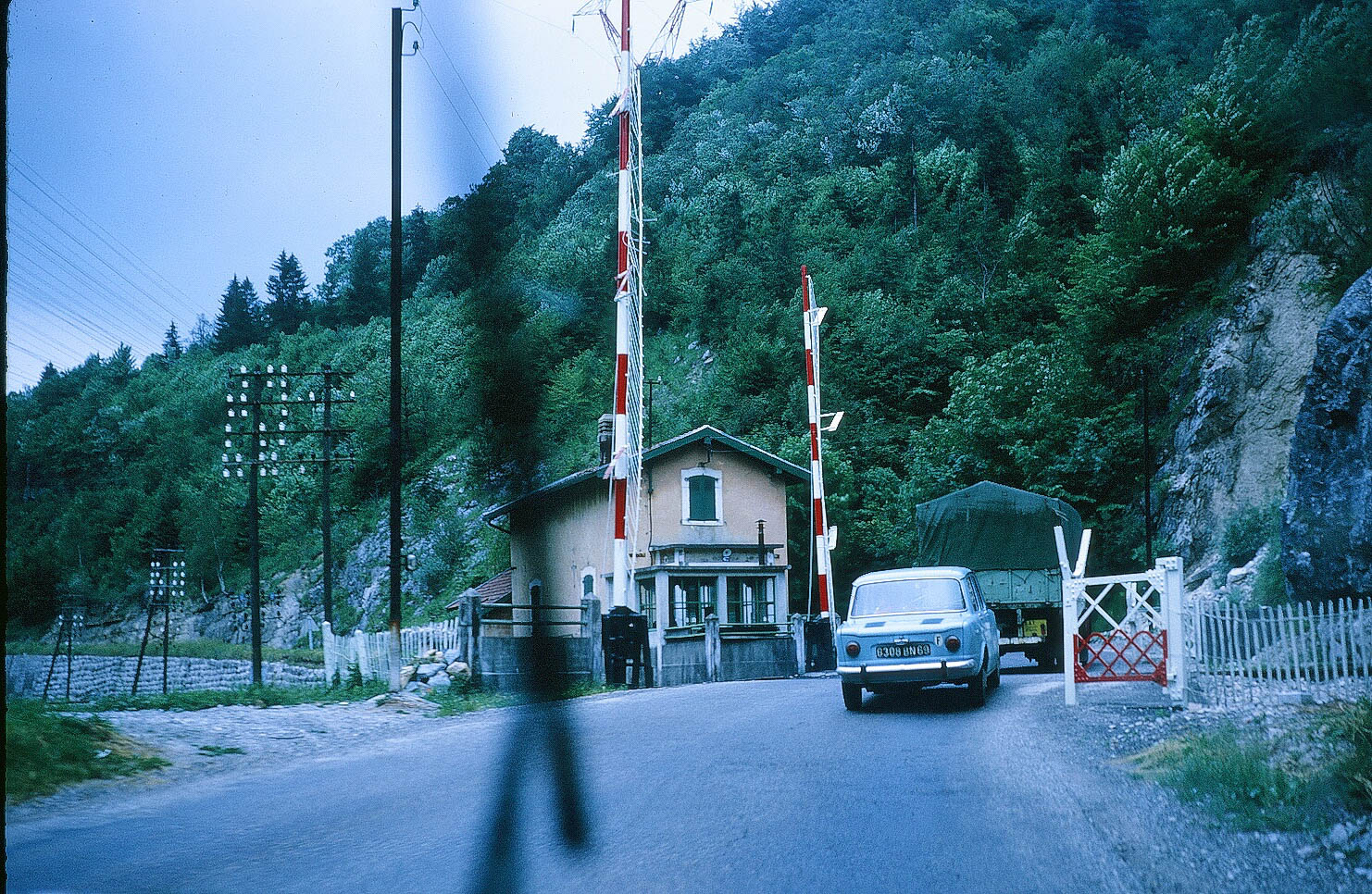
1966EuropeTrip-101 Crossing into Switzerland.
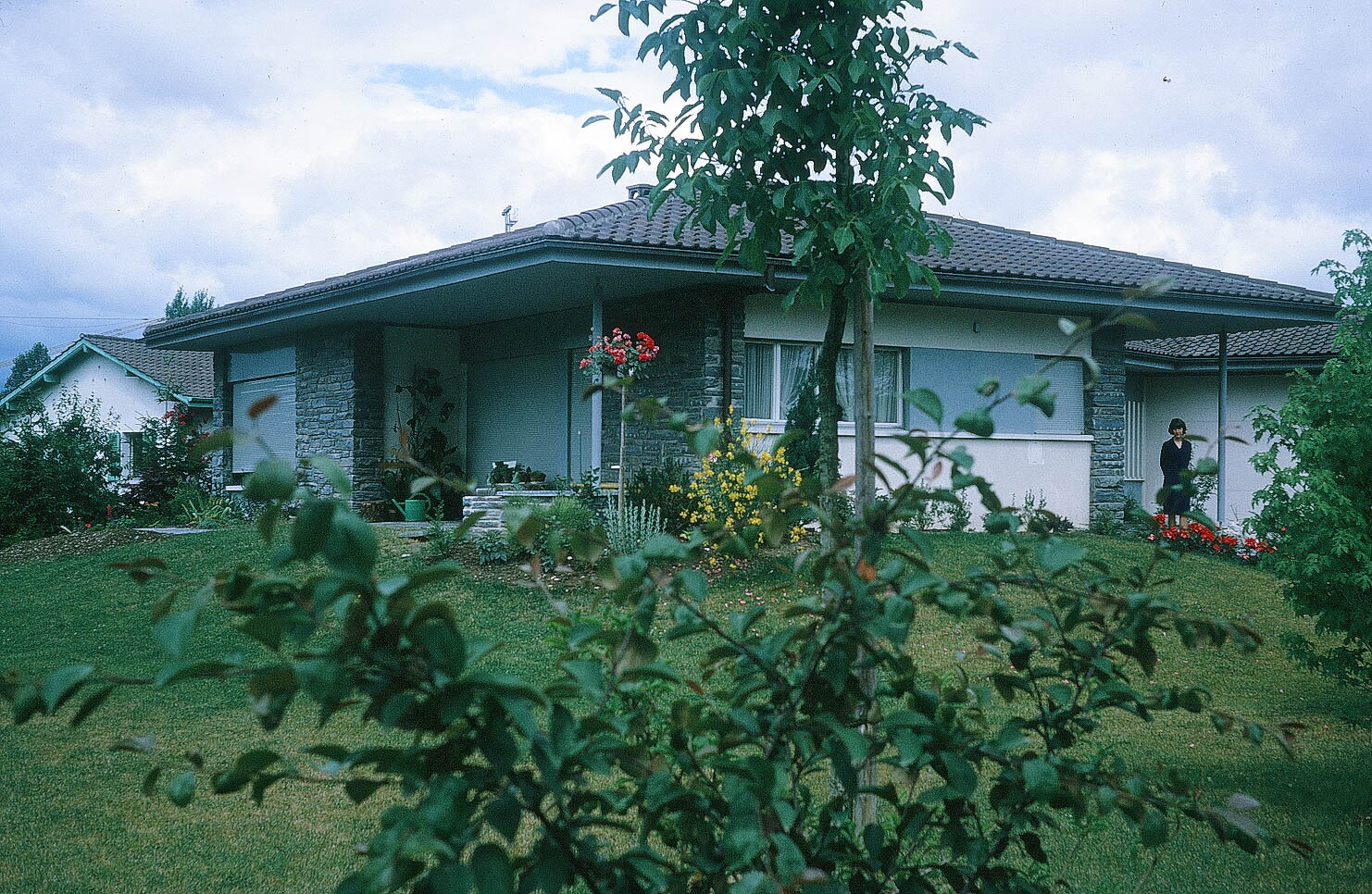
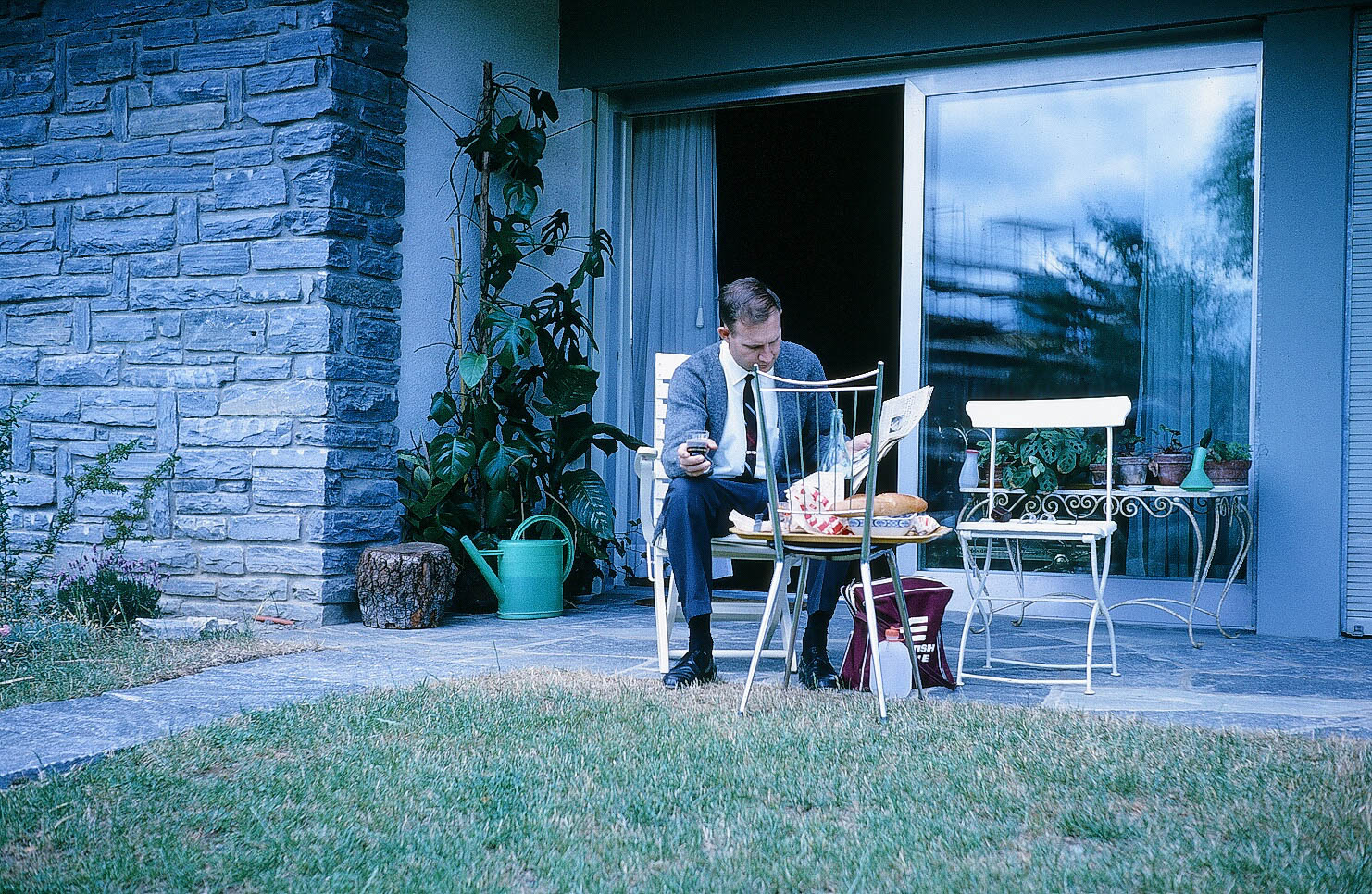
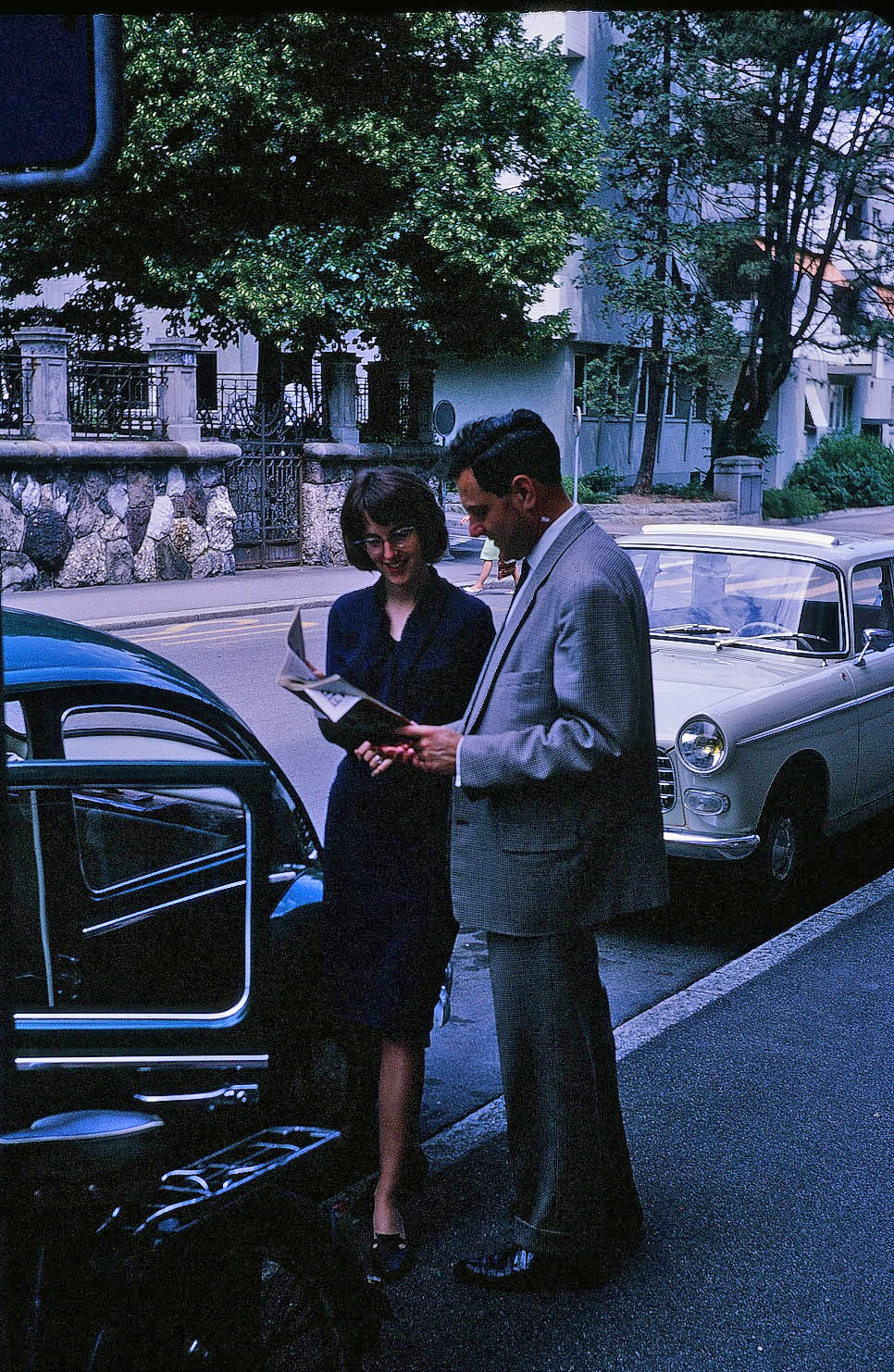
1966EuropeTrip-102 Home of Michael Baud's mother and stepfather. They were in Spain and let us stay at their beautiful home. Michael was an FSU fellow graduate student.
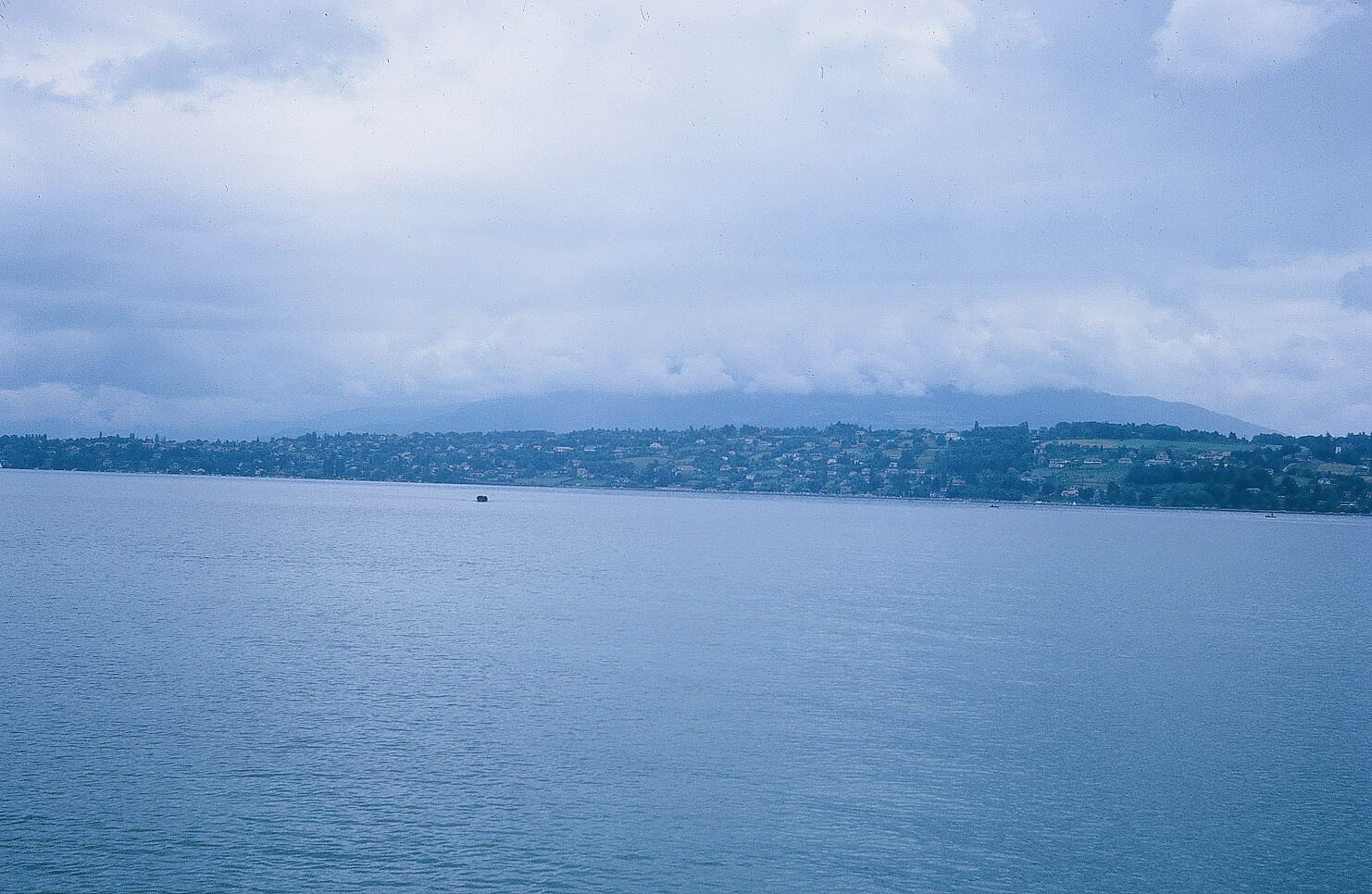
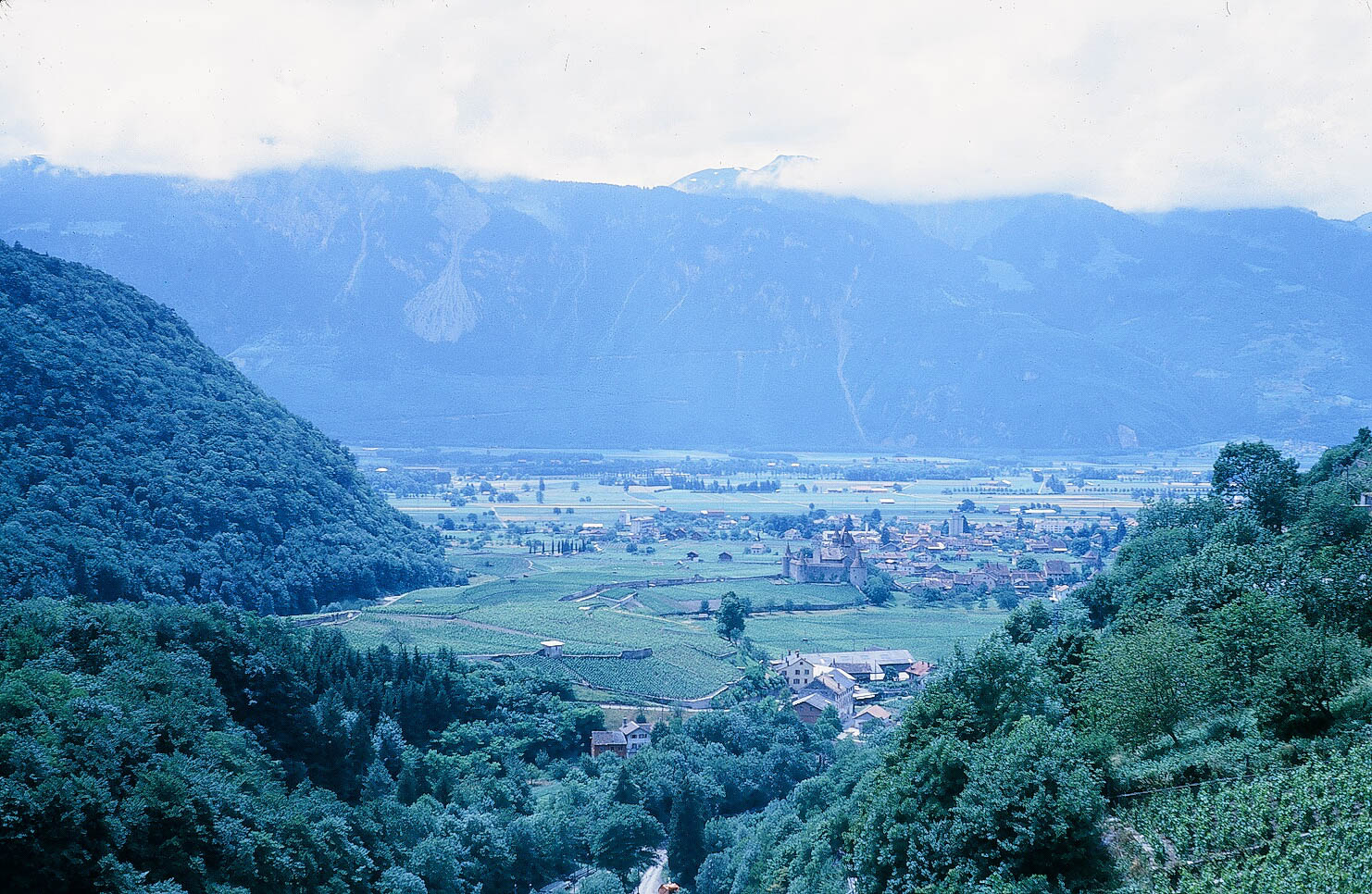
1966EuropeTrip-103 Lake Geneva
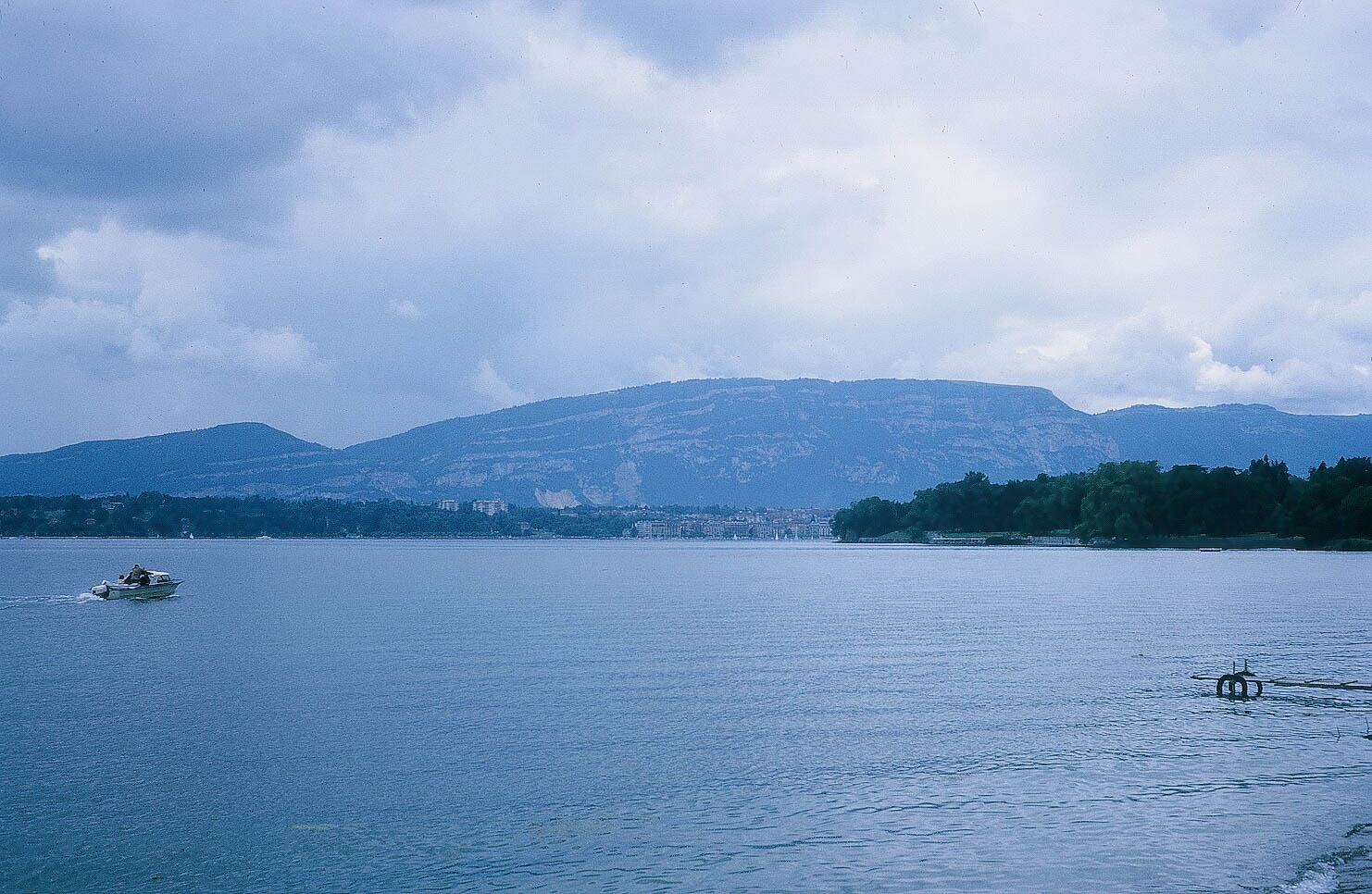
1966EuropeTrip-104 Lake Geneva
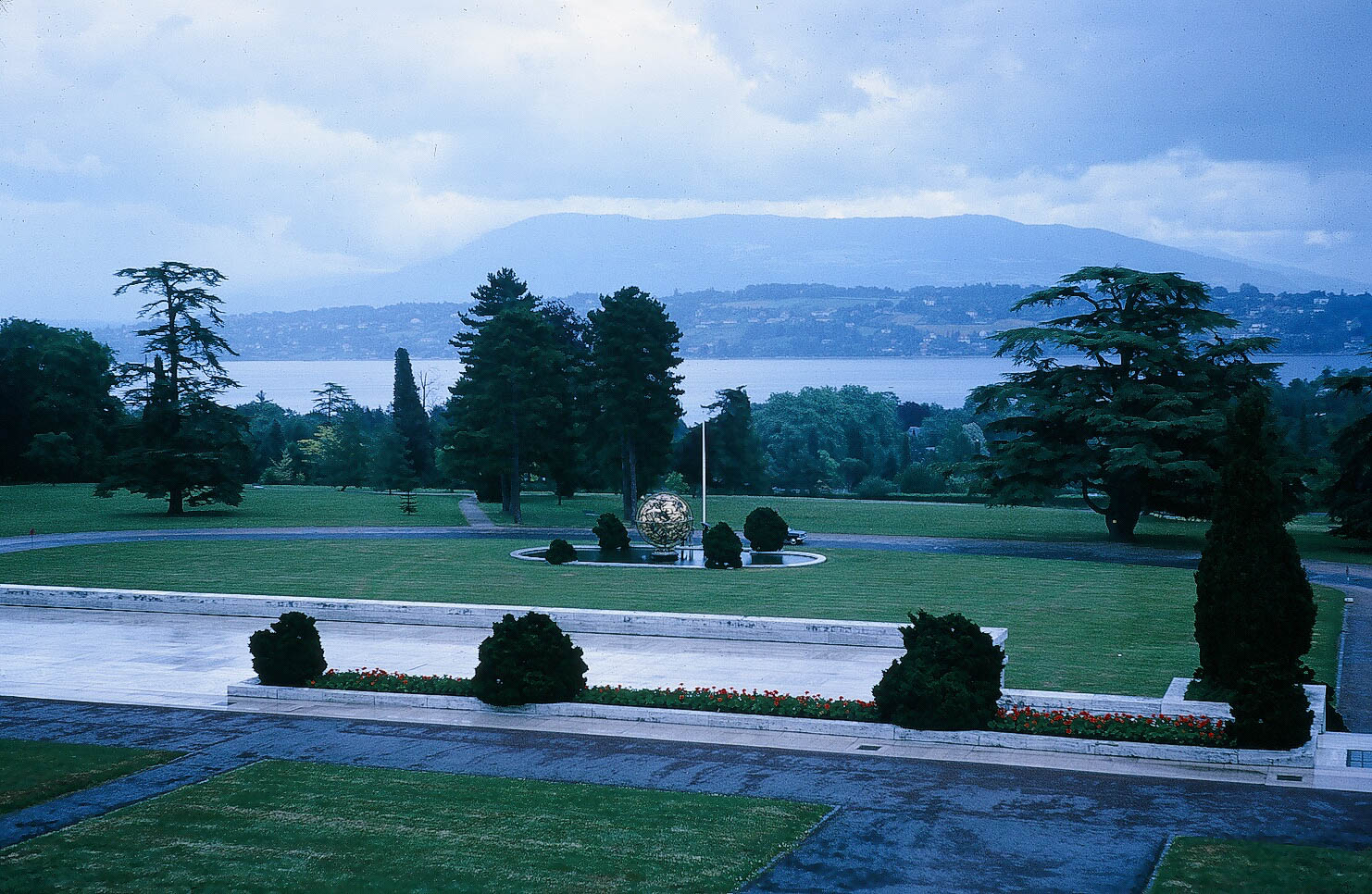
1966EuropeTrip-105 United Nations Site
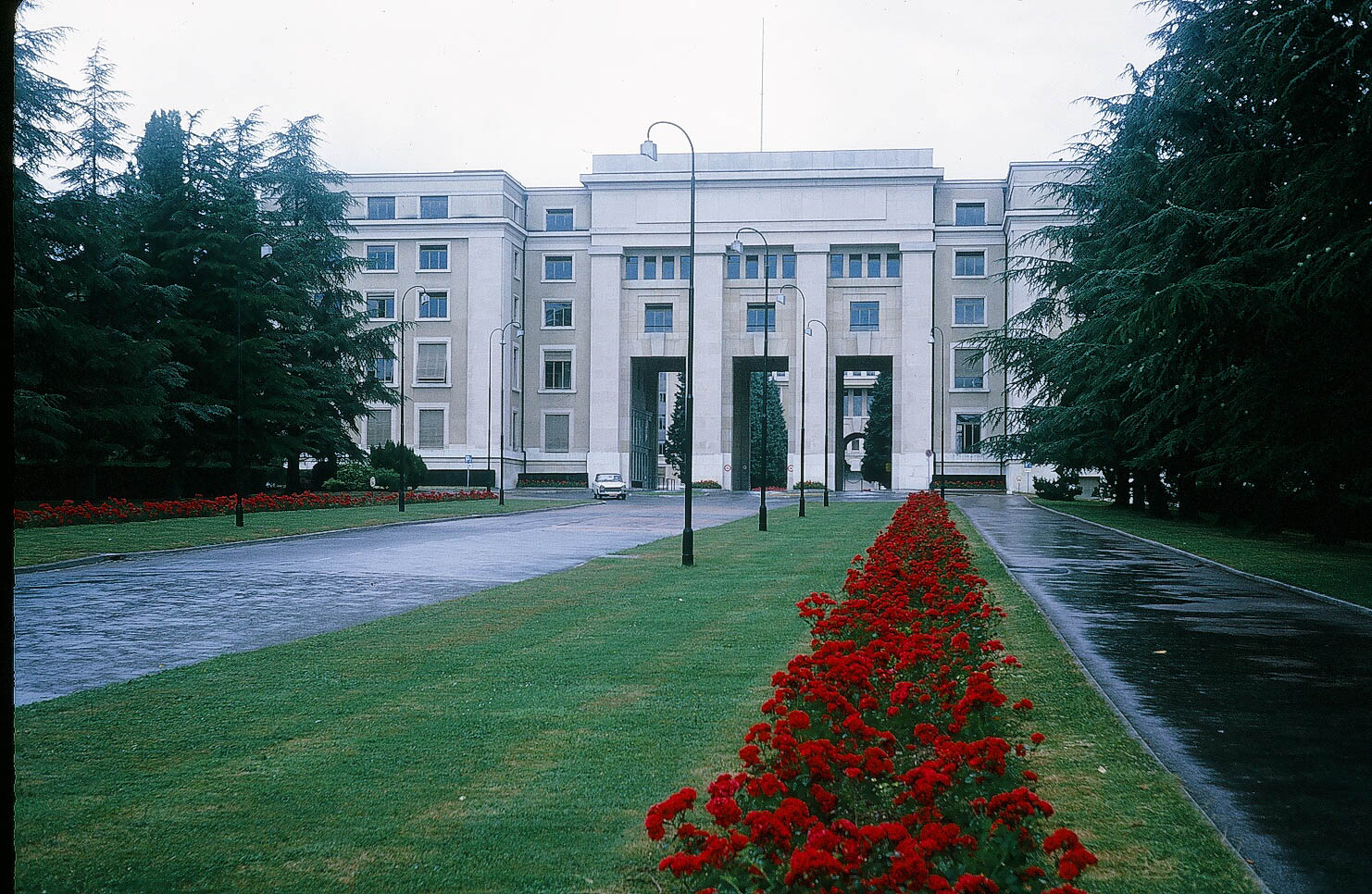
1966EuropeTrip-106 United Nations site.
1966EuropeTrip-107 Mel reading New York Herald Tribune at Baud's parents home.
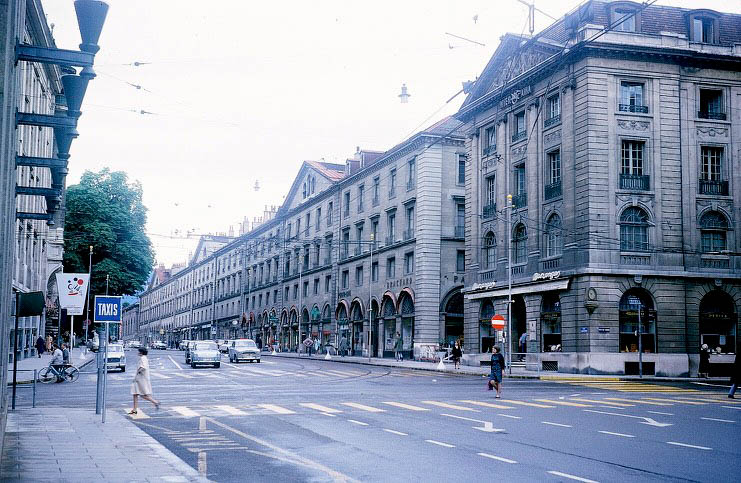
1966EuropeTrip-109 Generic architecture and street view at the Rue de la Corraterie, Geneva, Switzerland. Geneva, Switzerland
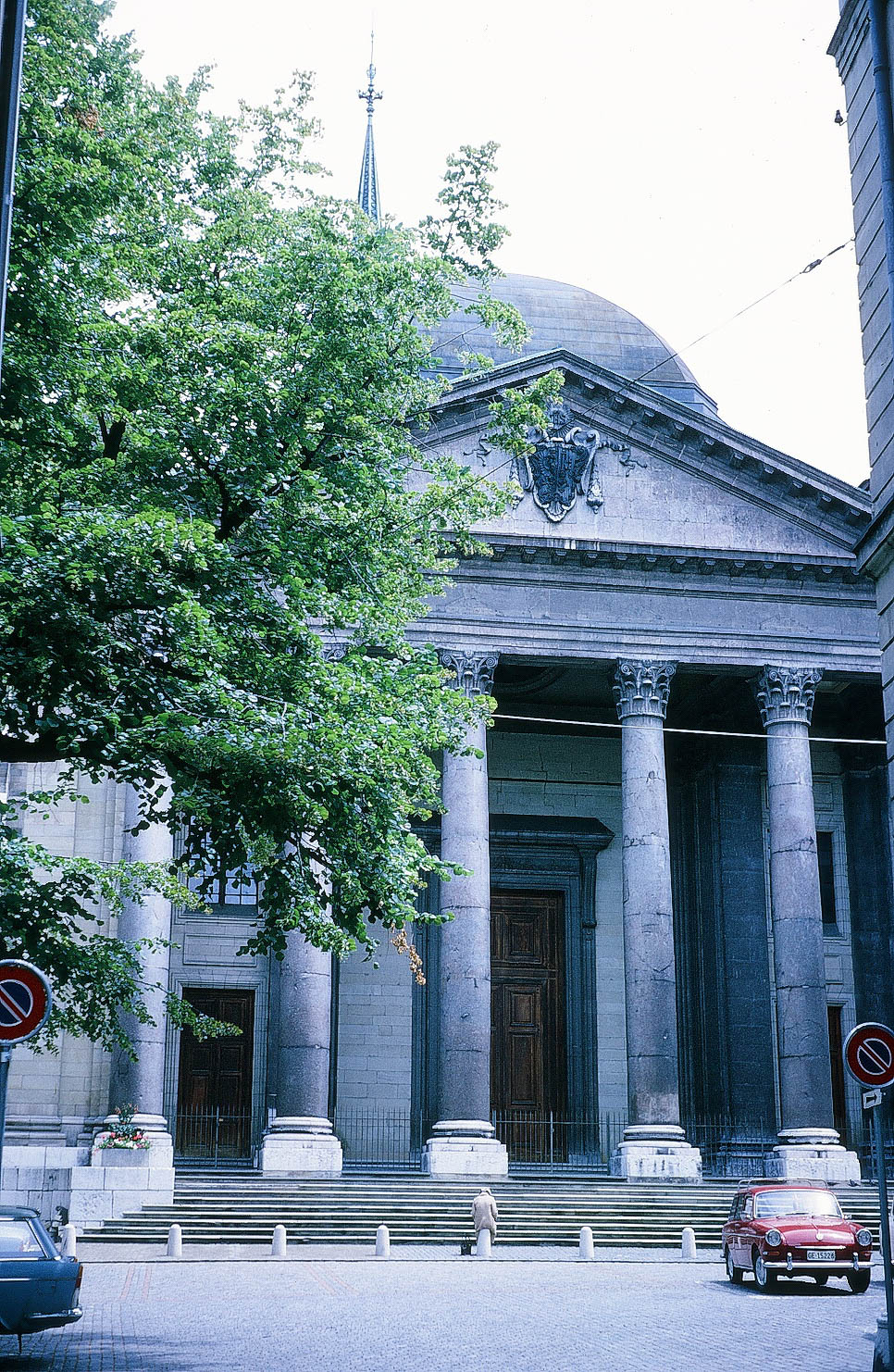
1966EuropeTrip-110 Temple de l'Auditoere, John Knox Church, Geneva, Switzerland.
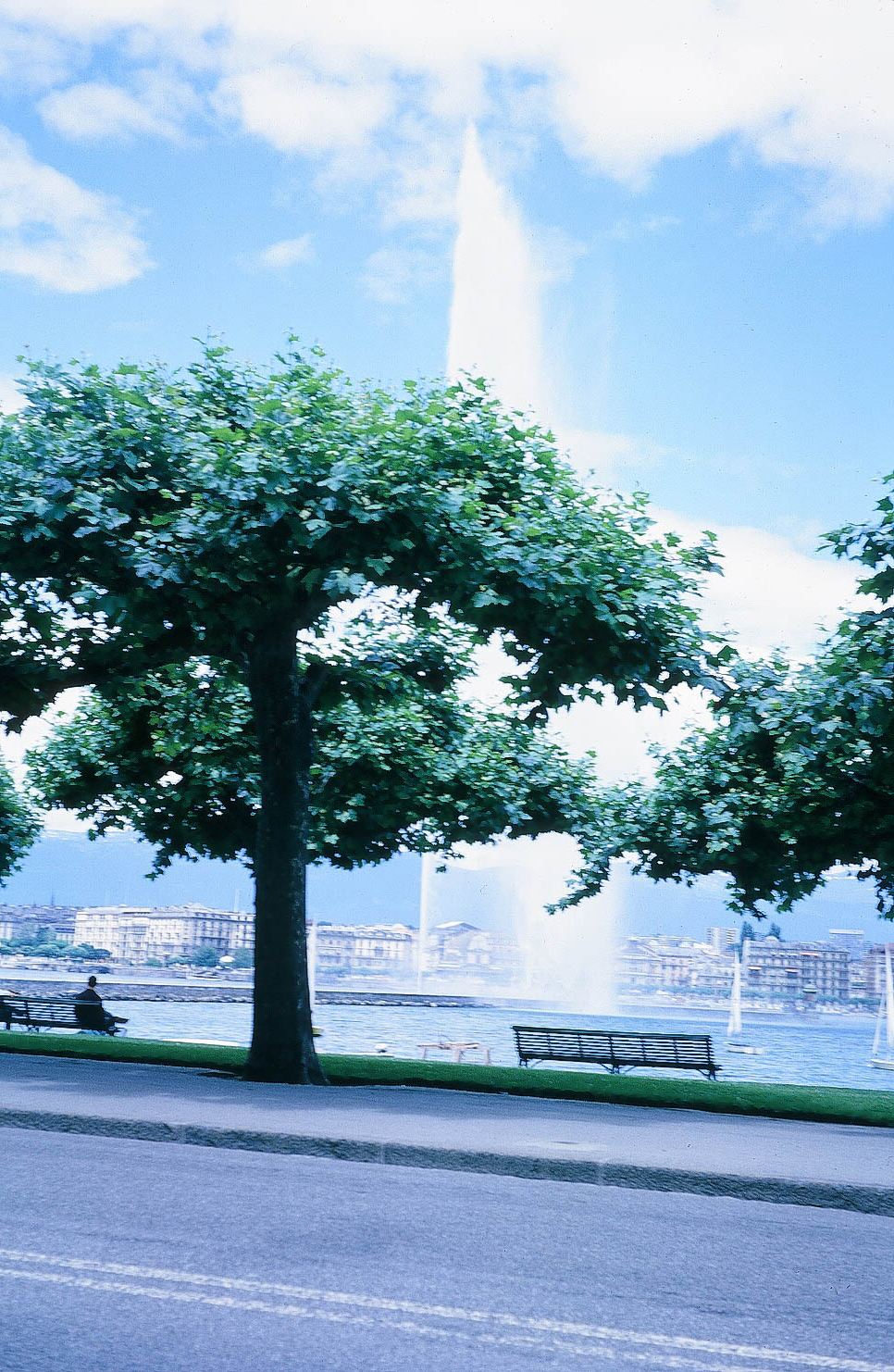
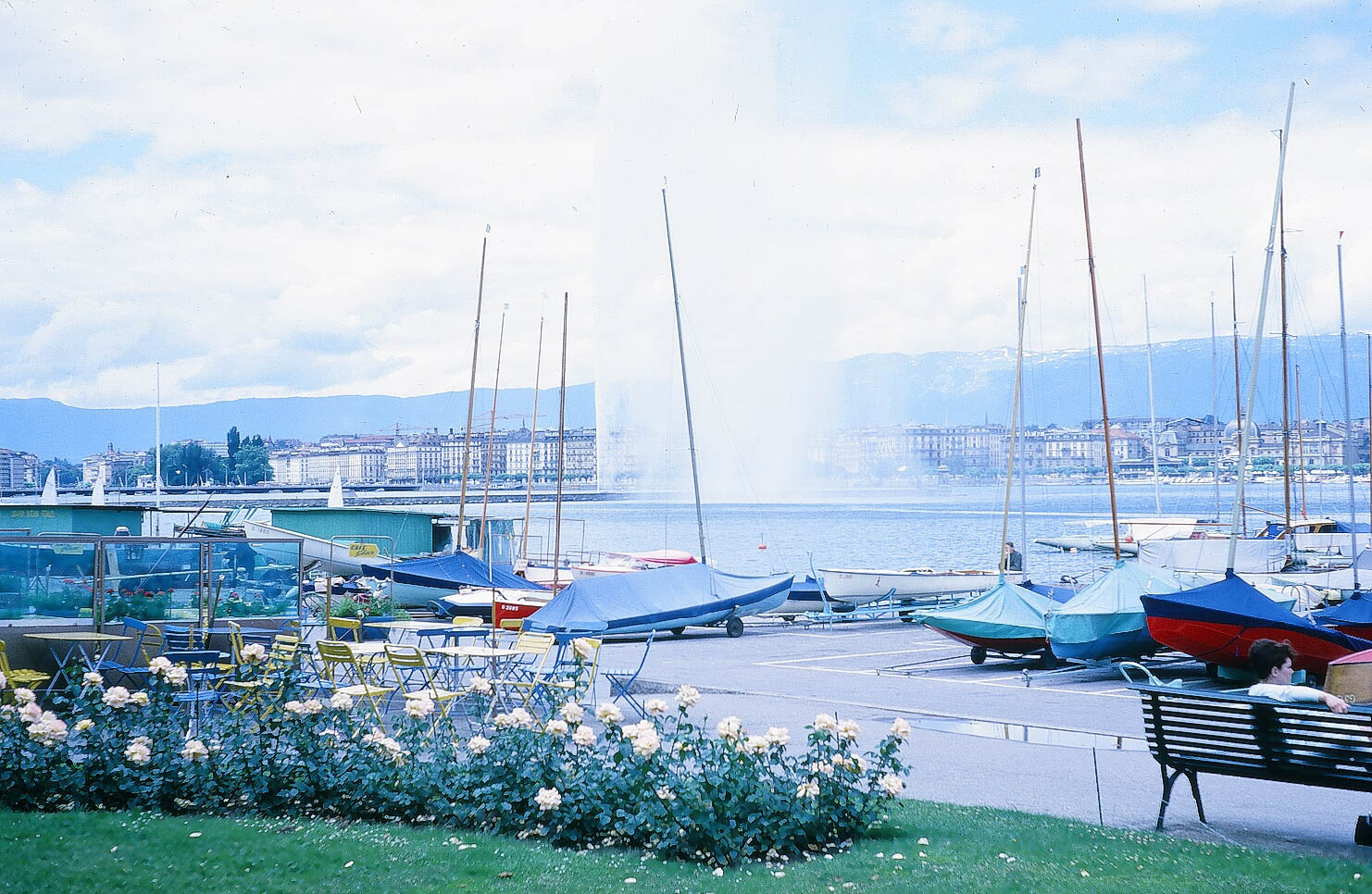
1966EuropeTrip-111 Fountain on Lake Geneva
1966EuropeTrip-112 Lake Geneva.
1966EuropeTrip-114 Pat with Paul Erdös, Hungarian physicist IBM in Zurich. Was visiting prof at FSU.
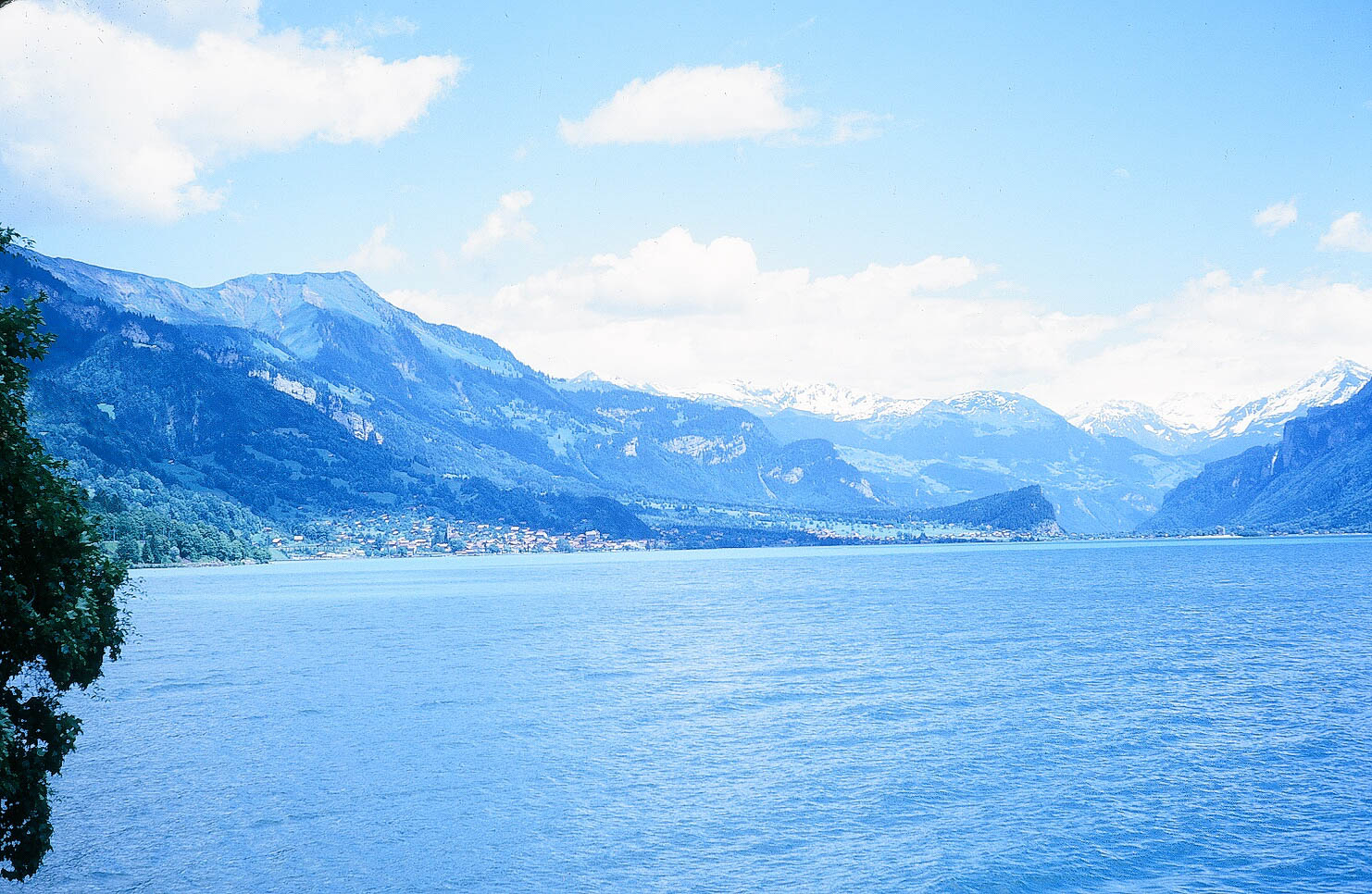
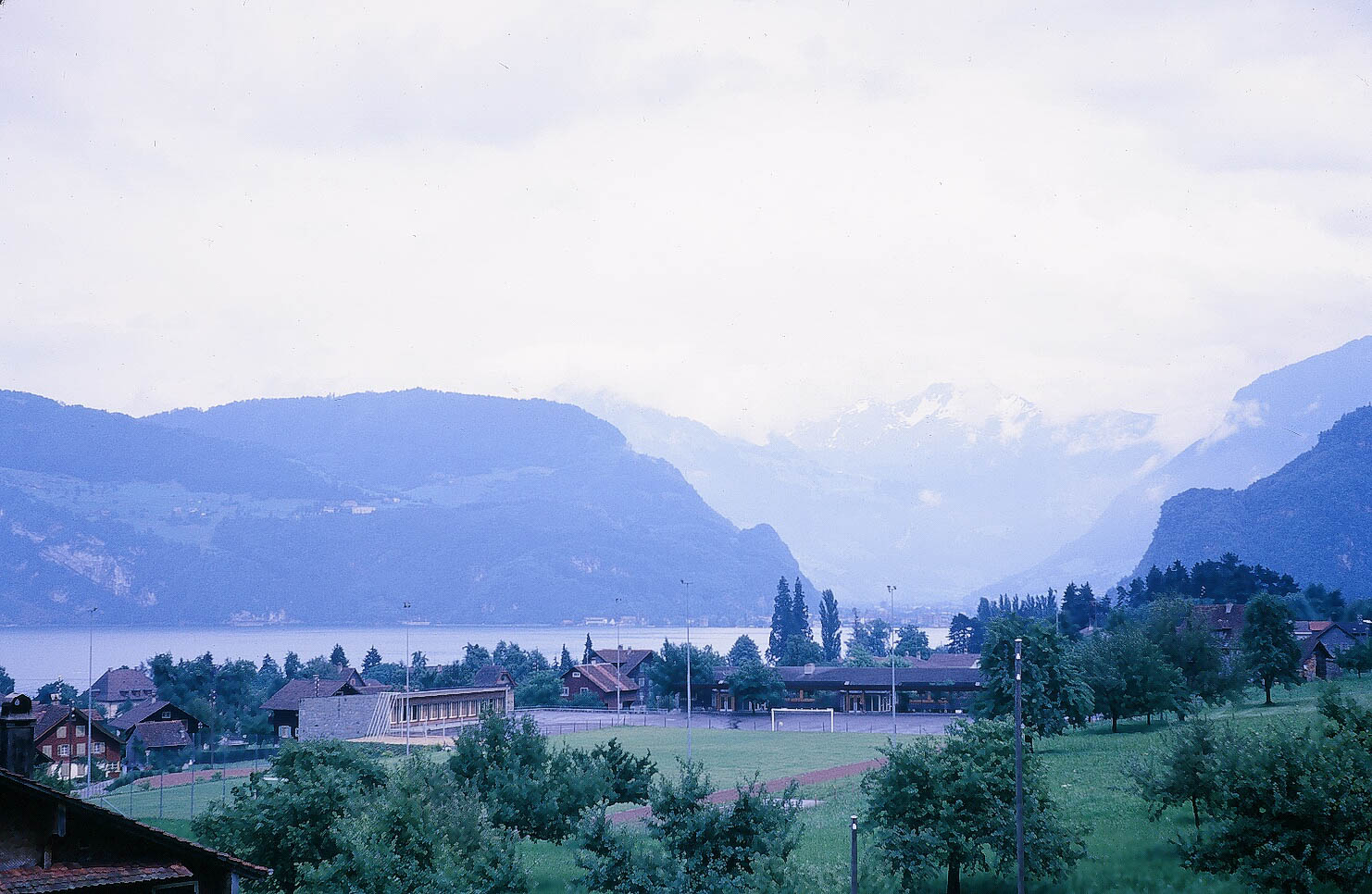
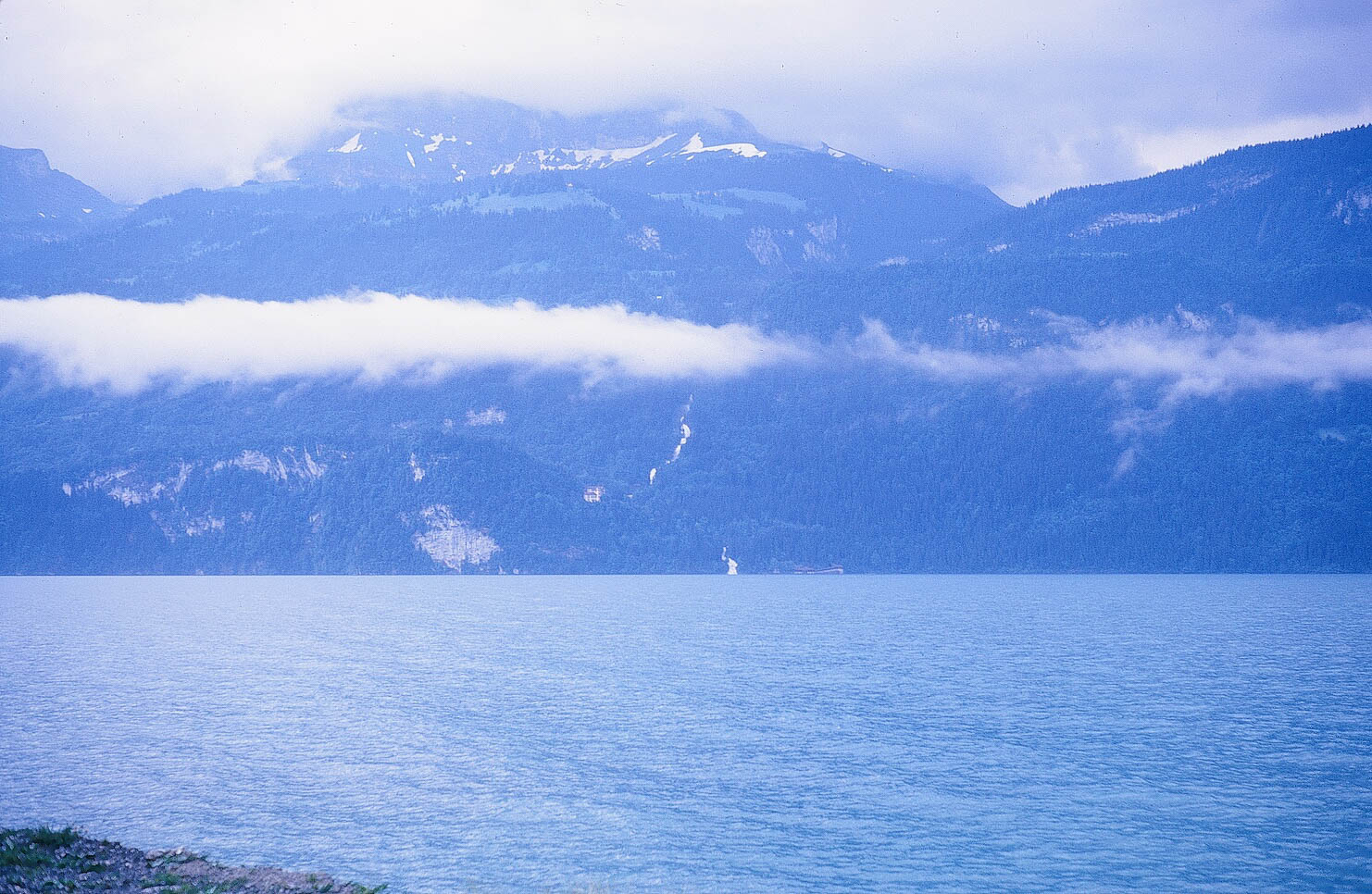
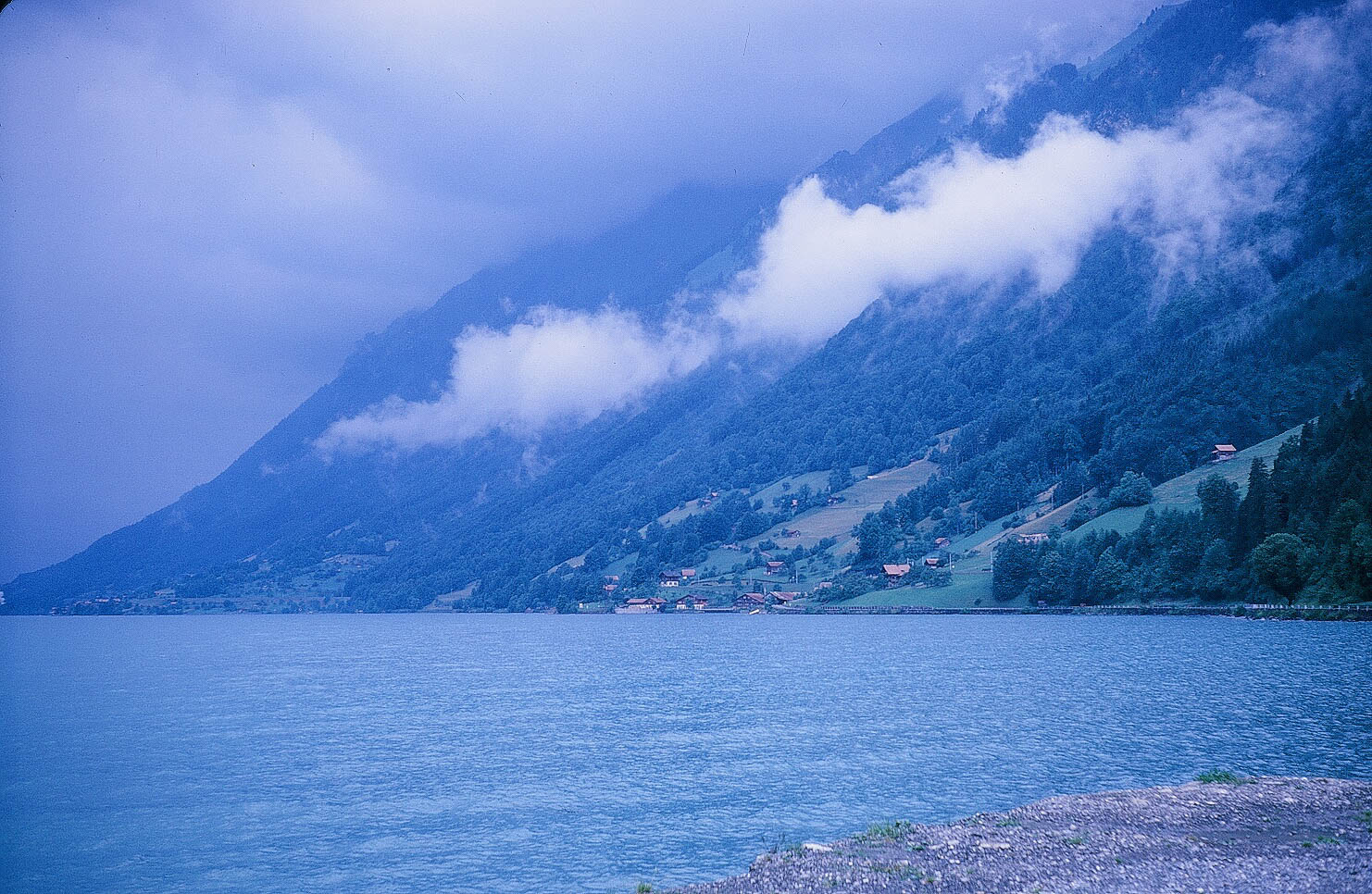
1966EuropeTrip-115 Lake Brienz is a lake in the northern Swiss Alps, in the canton of Bern in Switzerland. Its name comes from the town of Brienz located on its northern shore. Lake Brienz is the first lake fed by the Aare River along its course. At its outlet, the river joins Lake Thun, after passing through Interlaken. The two Lütschine (originating from the Grindelwald and Lauterbrunnen valleys) are also its tributaries. The lake is located in a deep depression between the villages of Brienz to the east and Bönigen to the west. It is approximately 15 kilometers long and 2,500 meters wide, with a surface area of approximately 18 km2. The lake's shores are very steep, so the lake has almost no shallow areas. The Giessbach Falls flow into its southern shore. The beautiful village of Iseltwald is also located here. There are also a few hamlets on its northern shore. Like any other mountain lake, due to the lack of sufficient flora, fishing is not an important element. Passenger boats have been plying the lake since 1839. To this day, the local railway company BLS Lötschberg Railway operates five vessels. From Wikipedia, the free encyclopedia
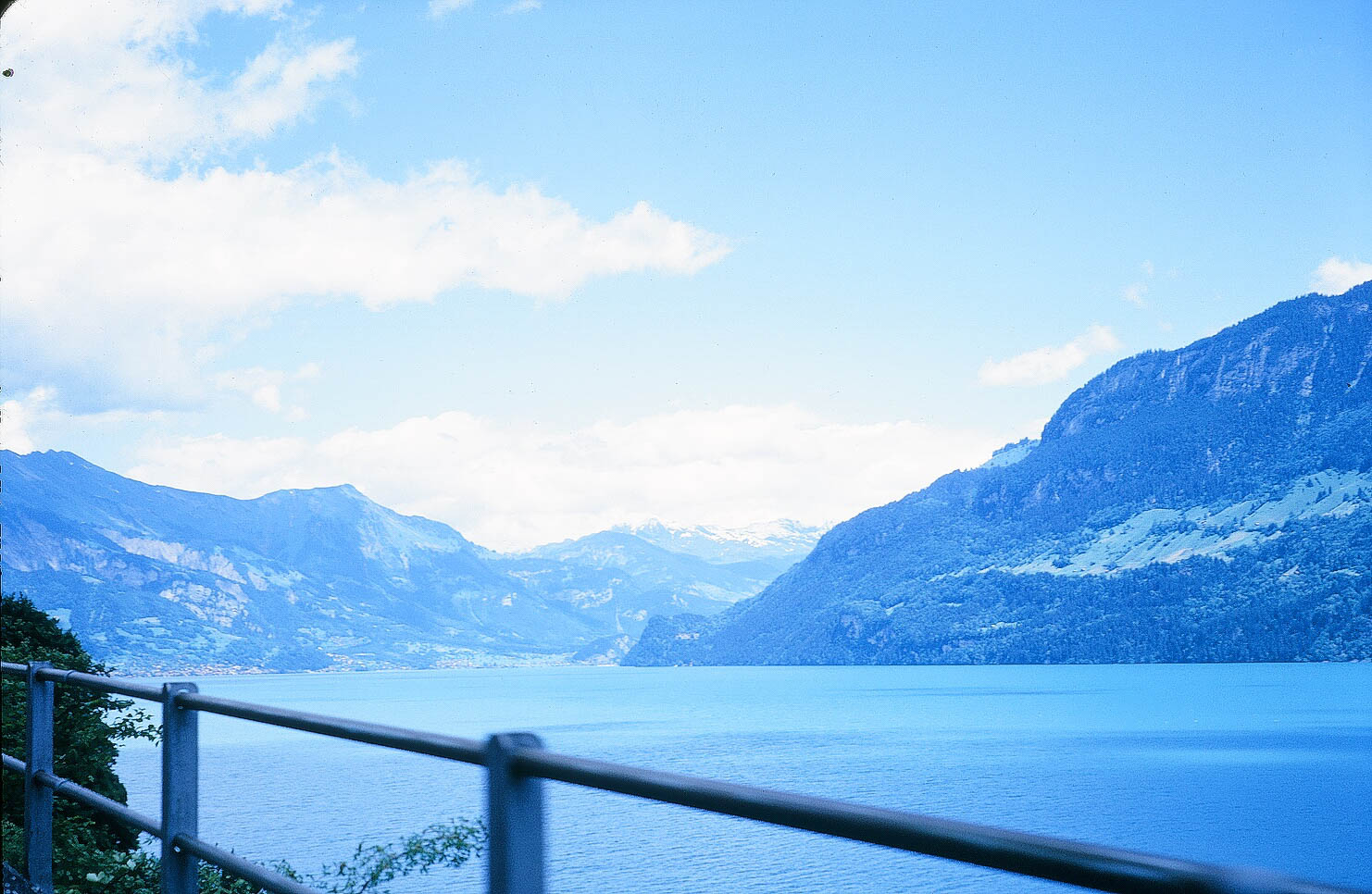
1966EuropeTrip-117 Lake Brienz
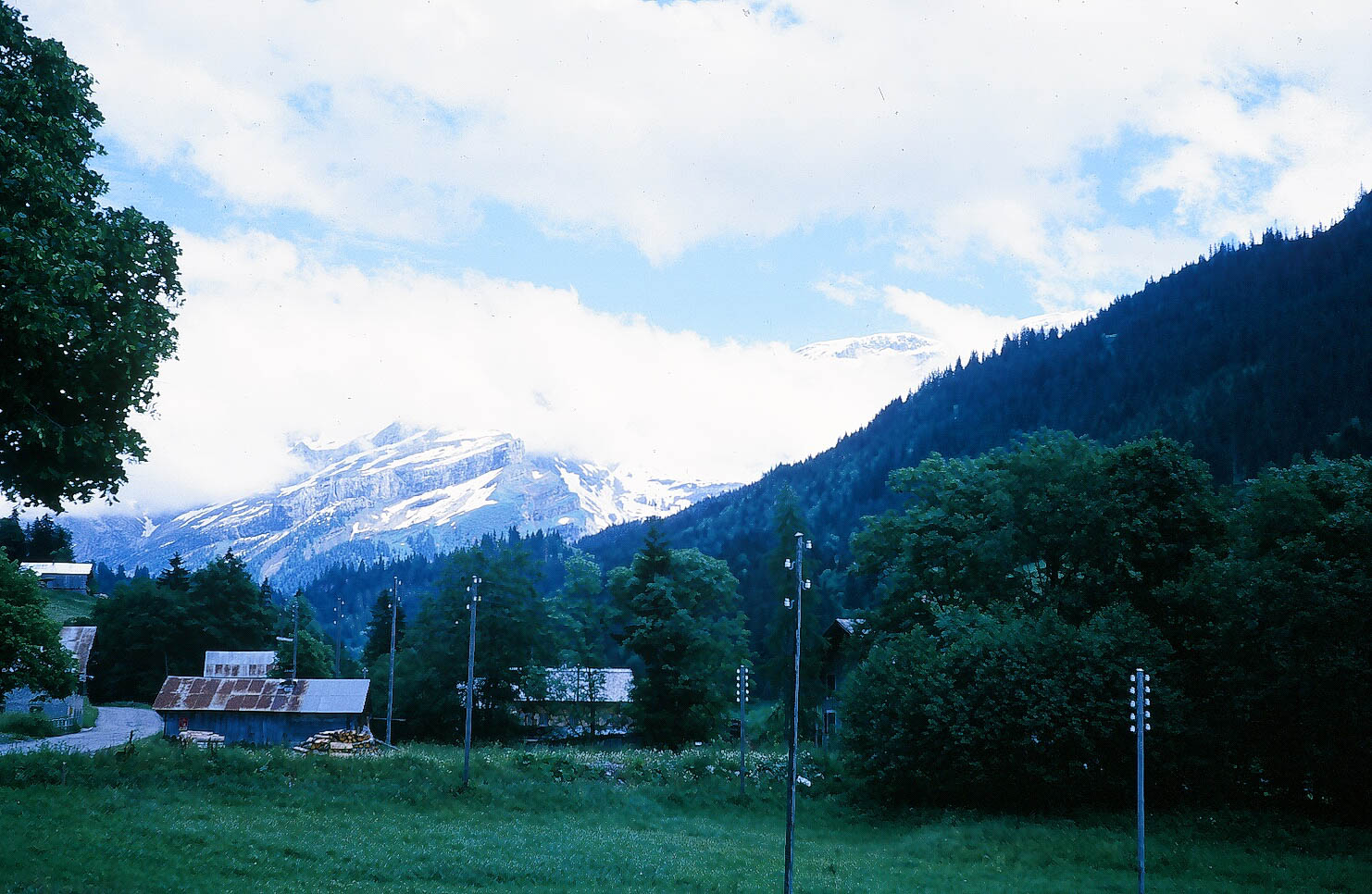
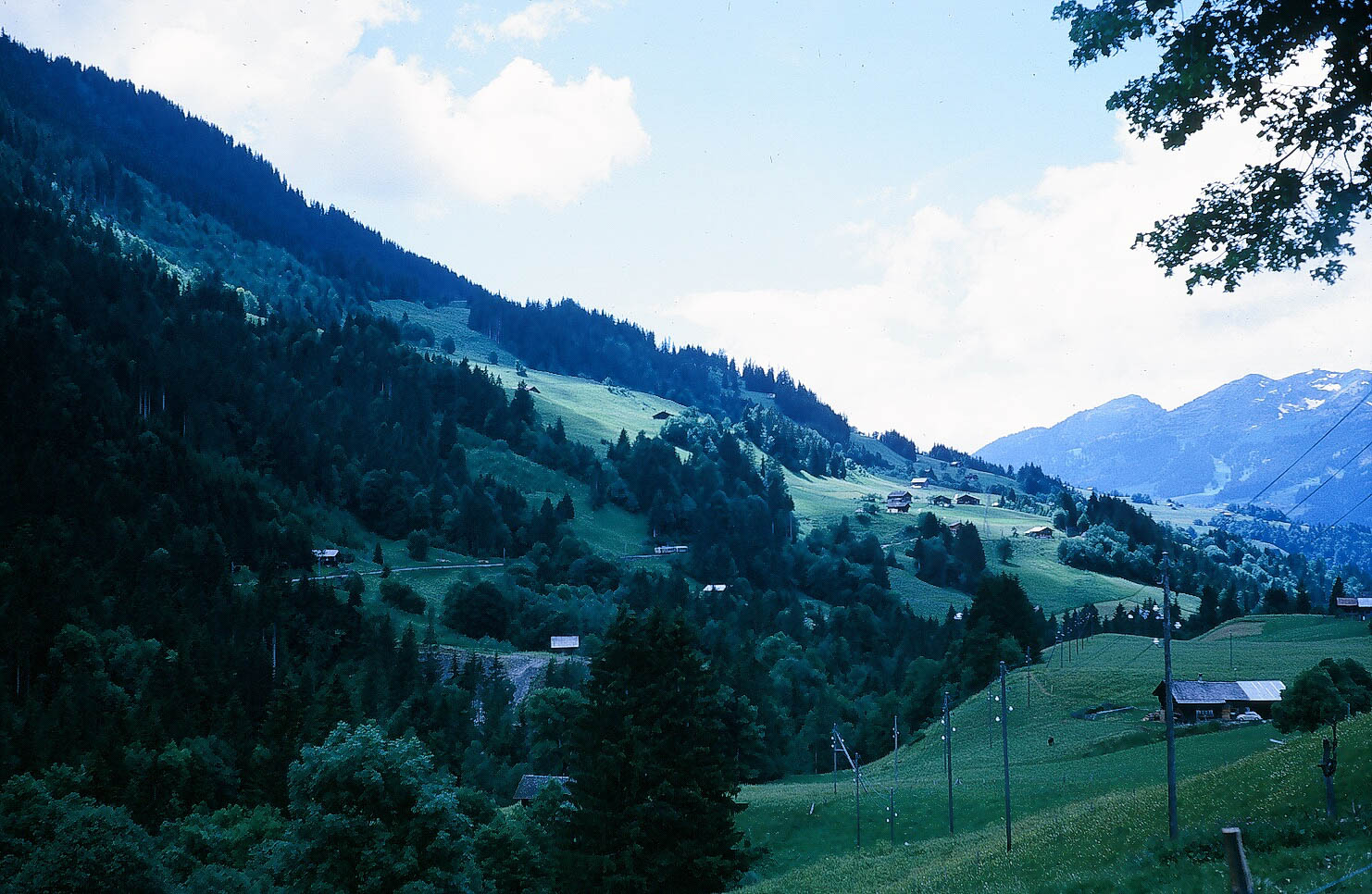
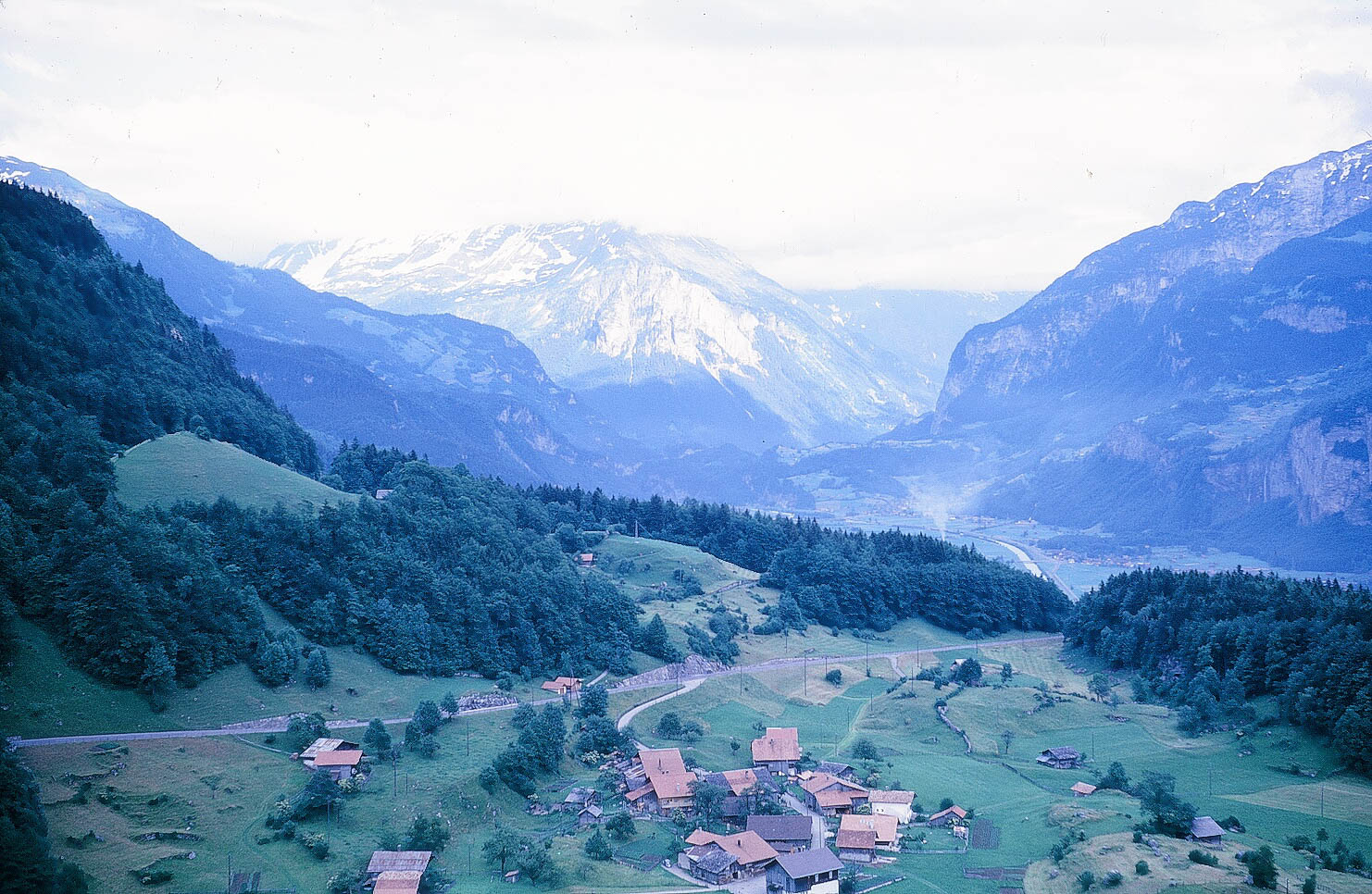
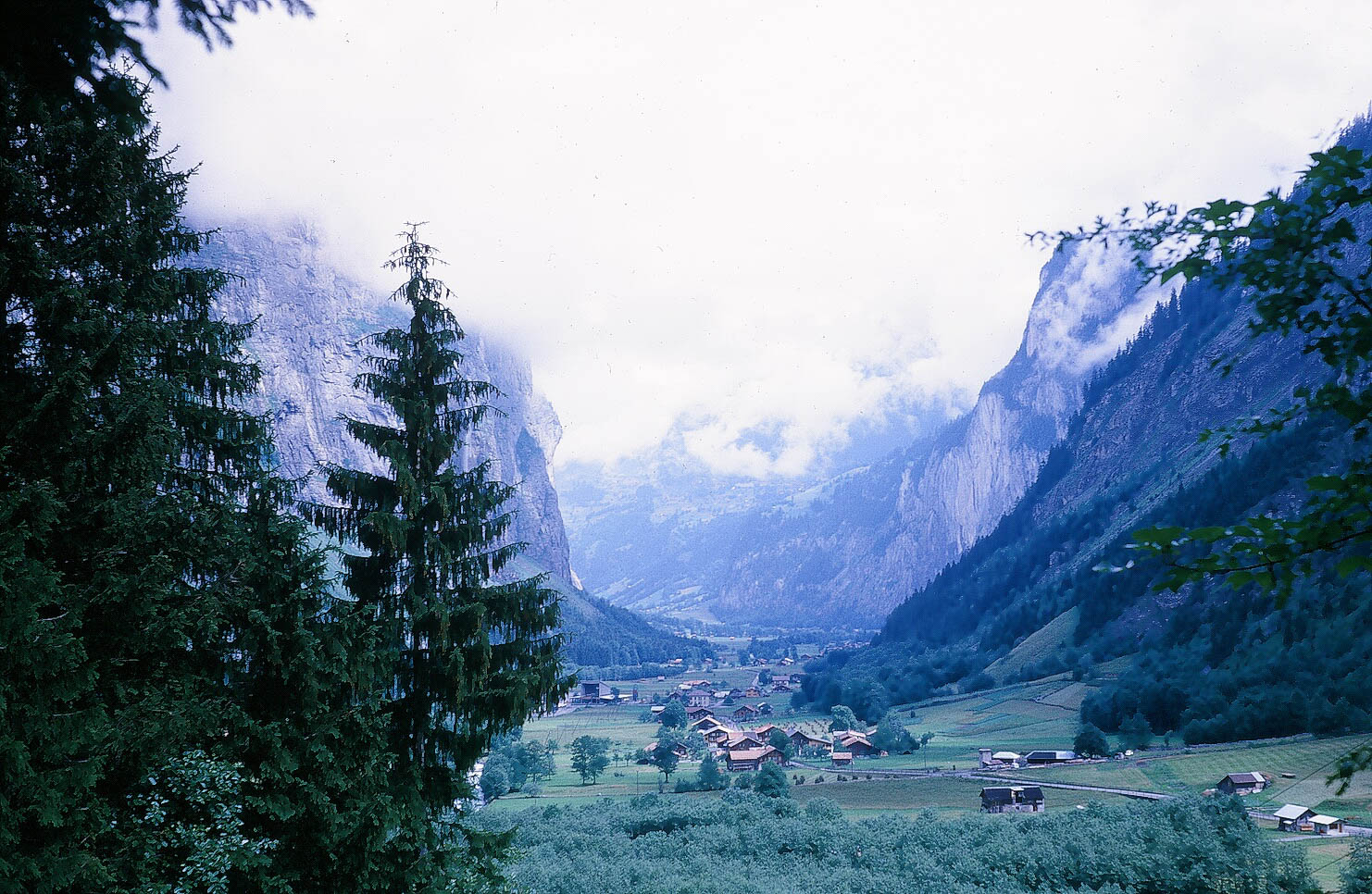
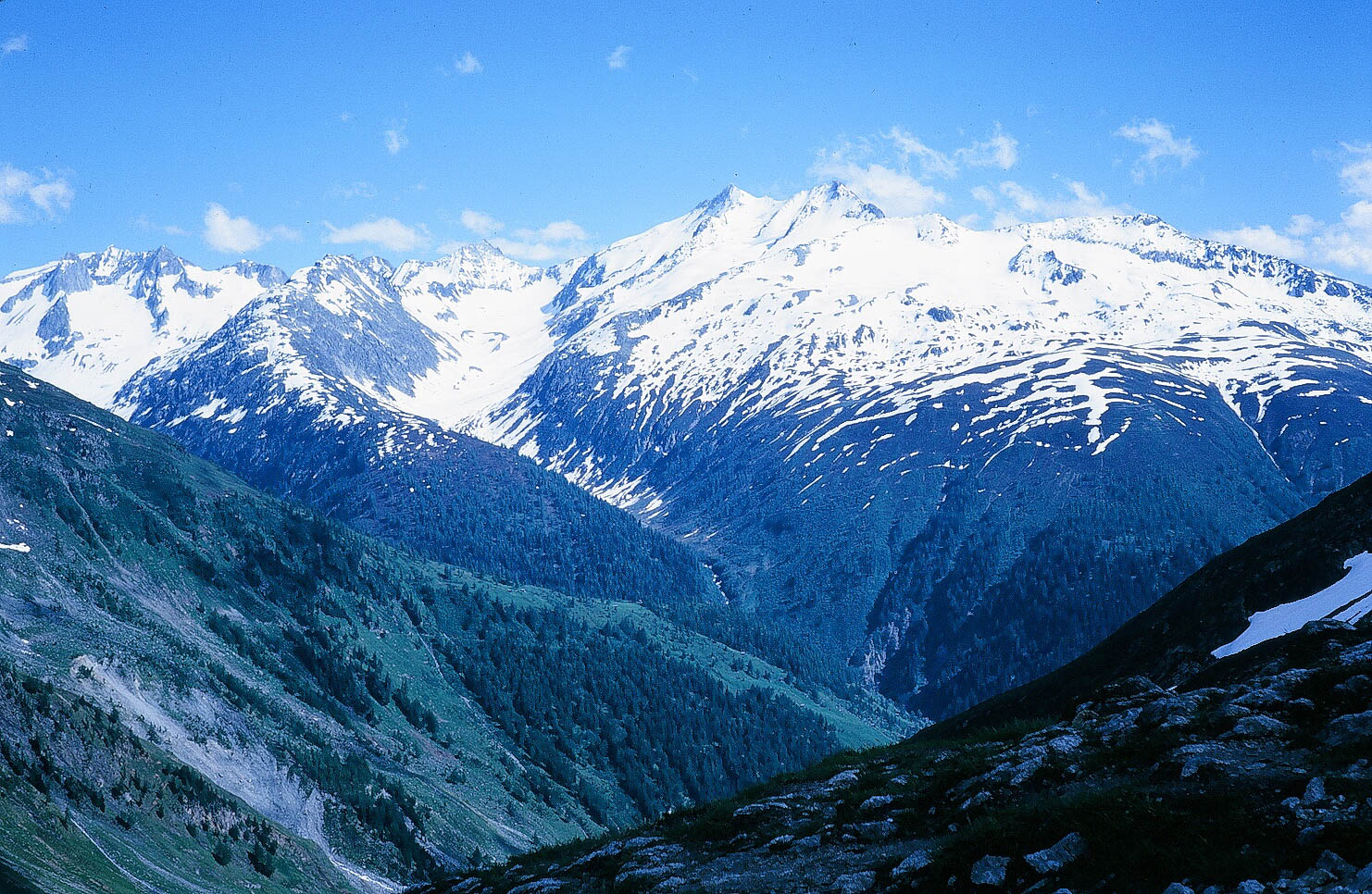
1966EuropeTrip-118 Swiss Valley
1966EuropeTrip-119 Interlochen
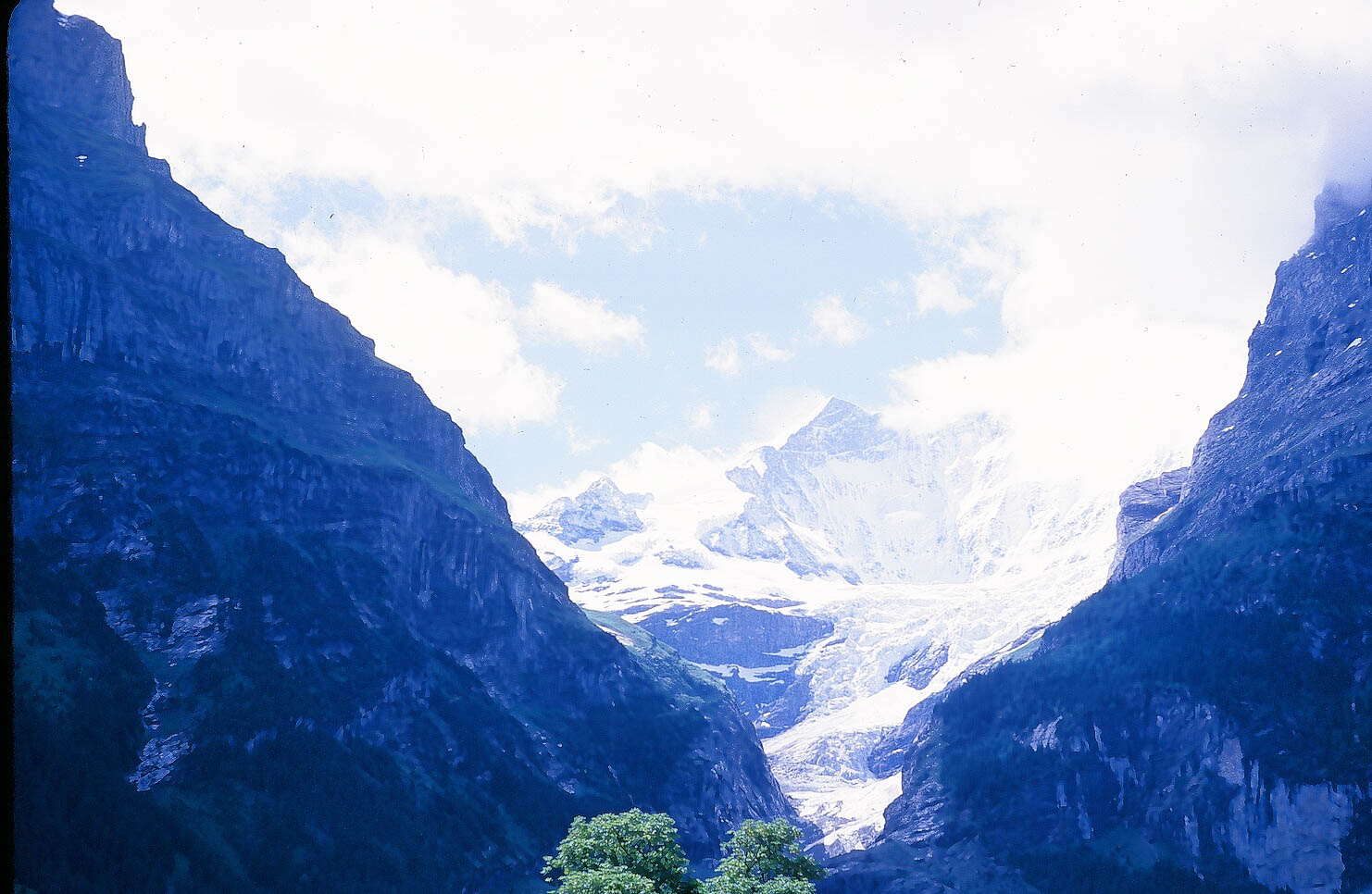
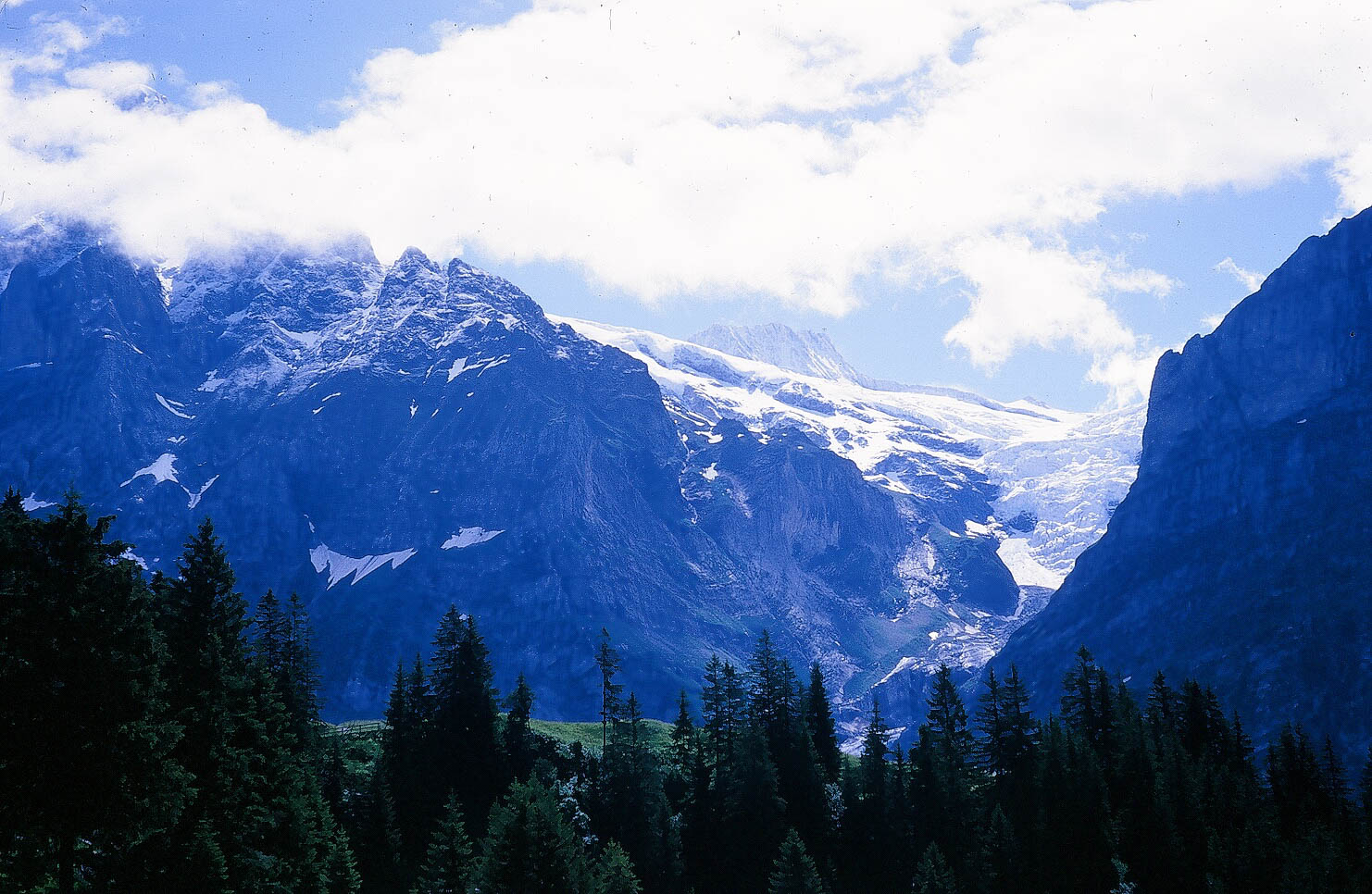
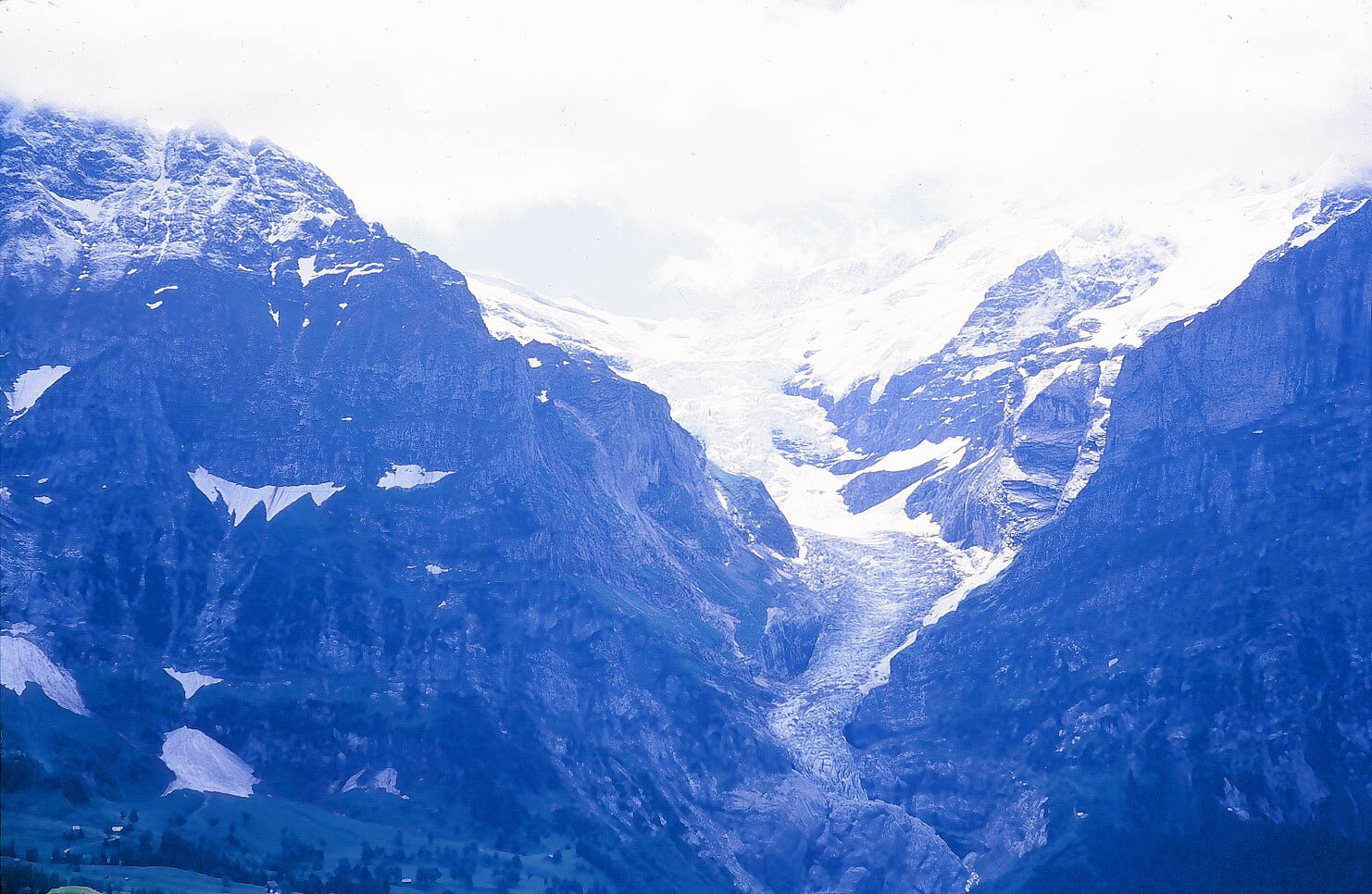
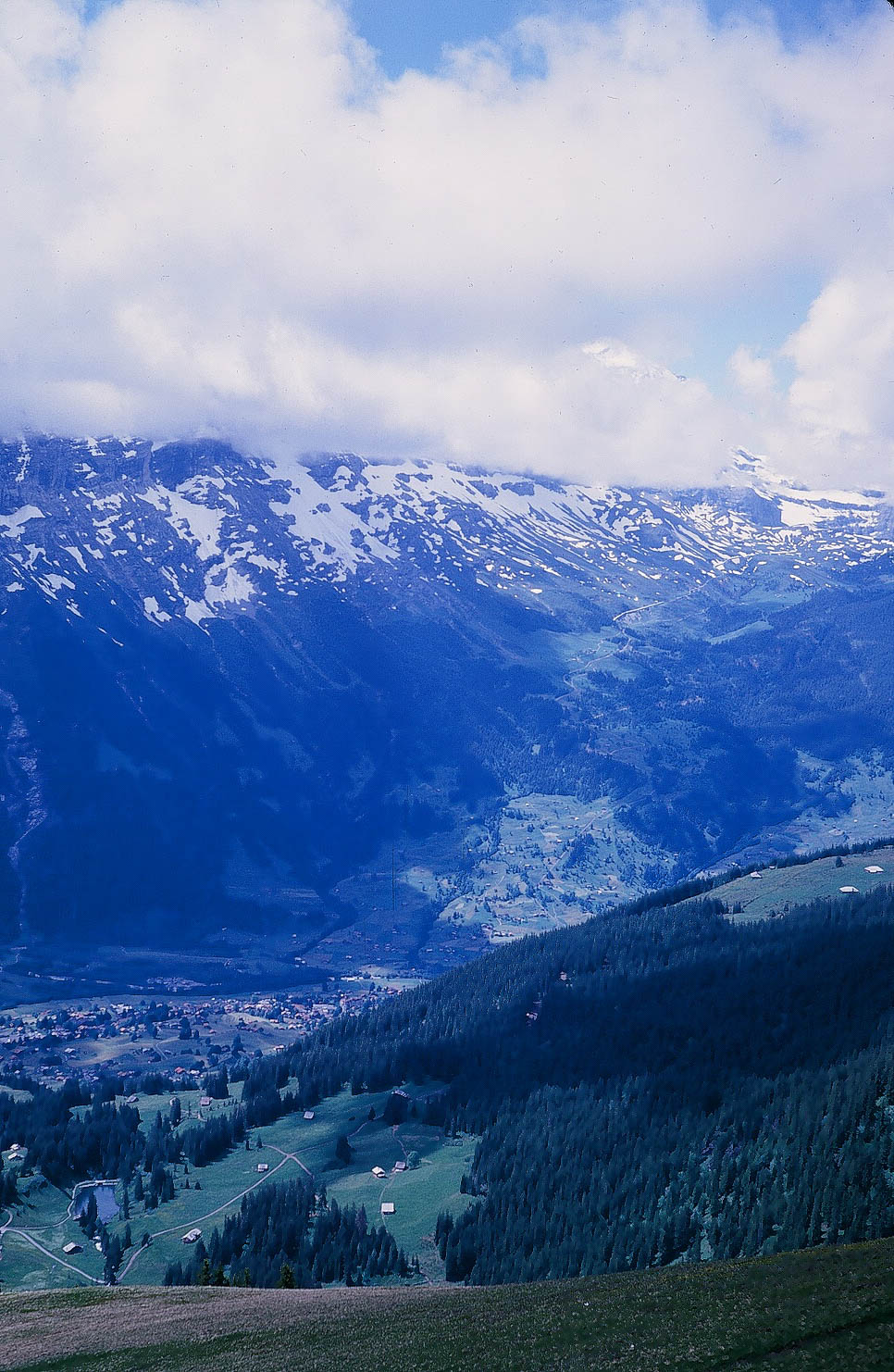
1966EuropeTrip-120 Grindelwald valley
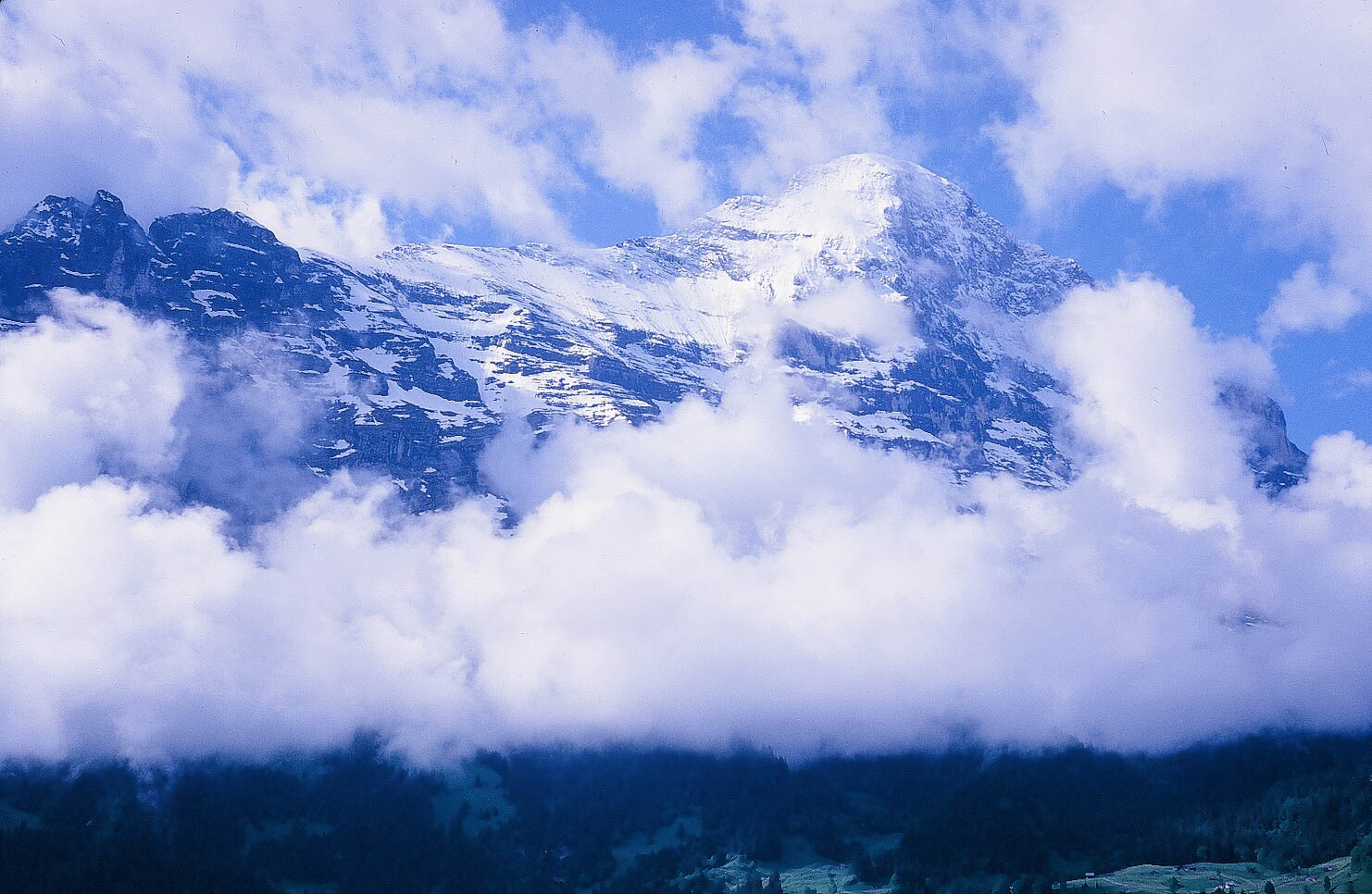
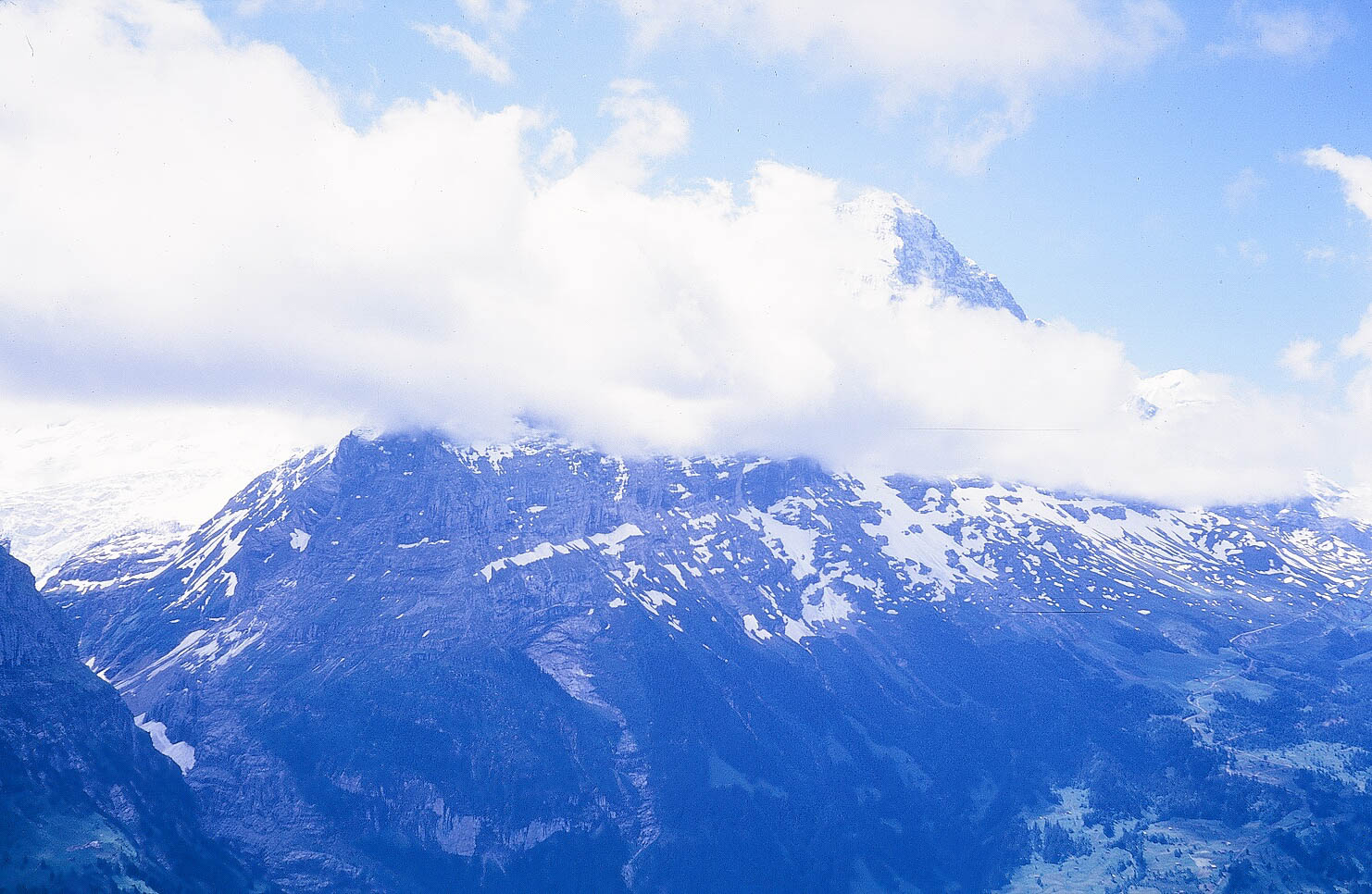
1966EuropeTrip-121 Jungfrau
1966EuropeTrip-122 Grindelwald valley
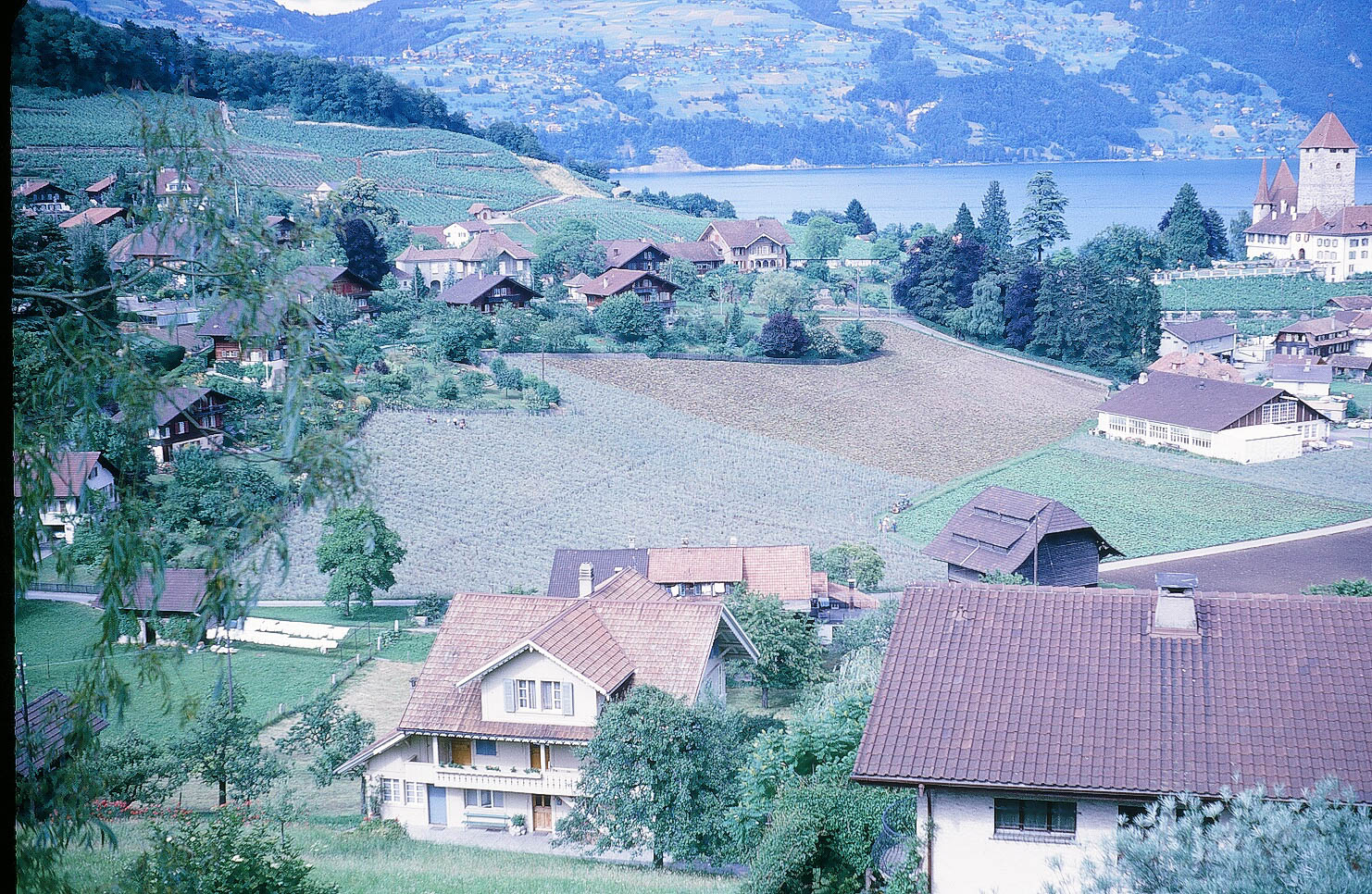
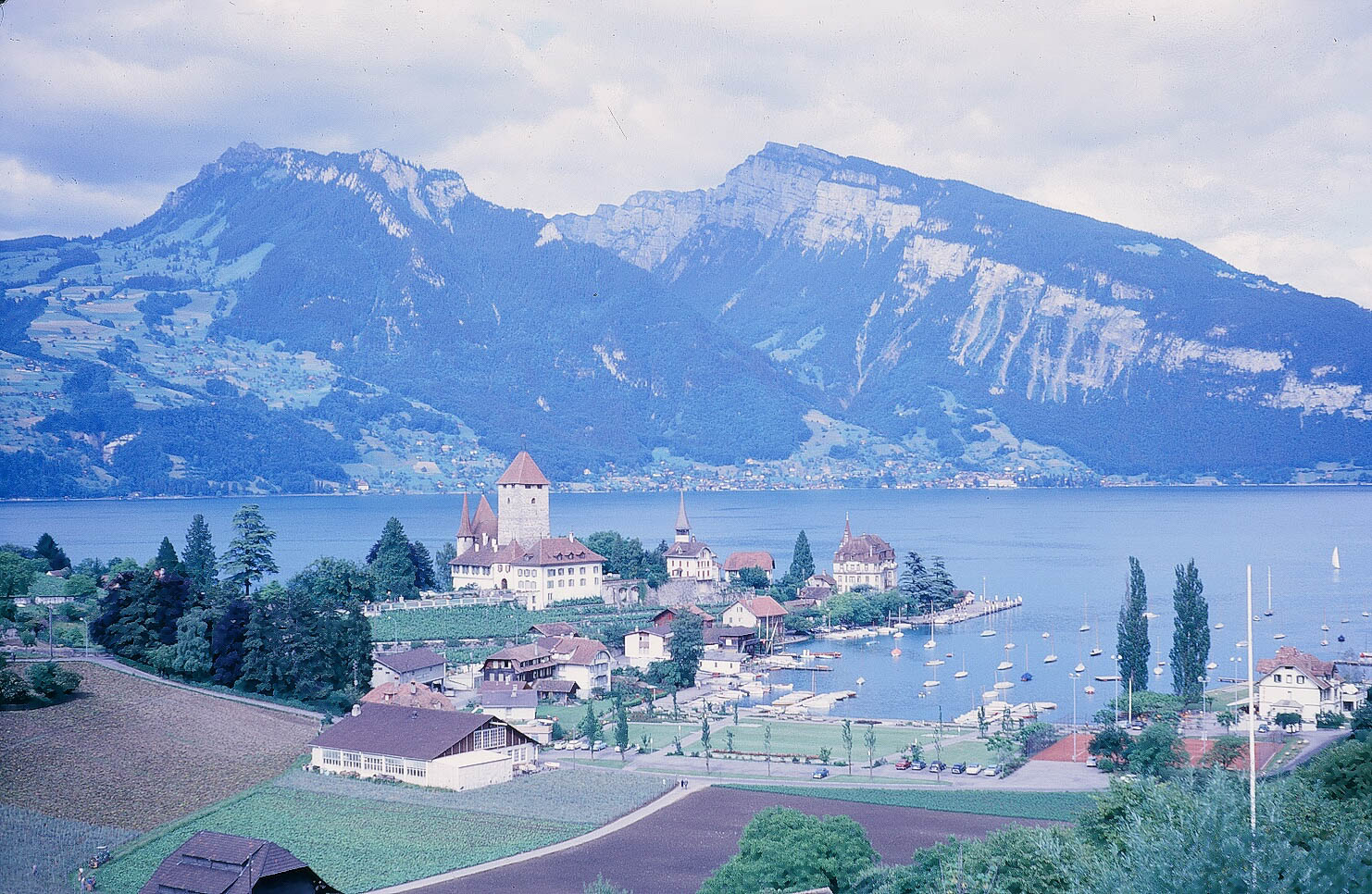
1966EuropeTrip-123 Spiez Castle at right, Spiez, Canton of Bern, Switzerland.
1966EuropeTrip-124 Spiez Castle with Niederhorn mountain in the background, Spiez, Canton of Bern, Switzerland.
1966EuropeTrip-125 Valley view from Jungfraujoch.
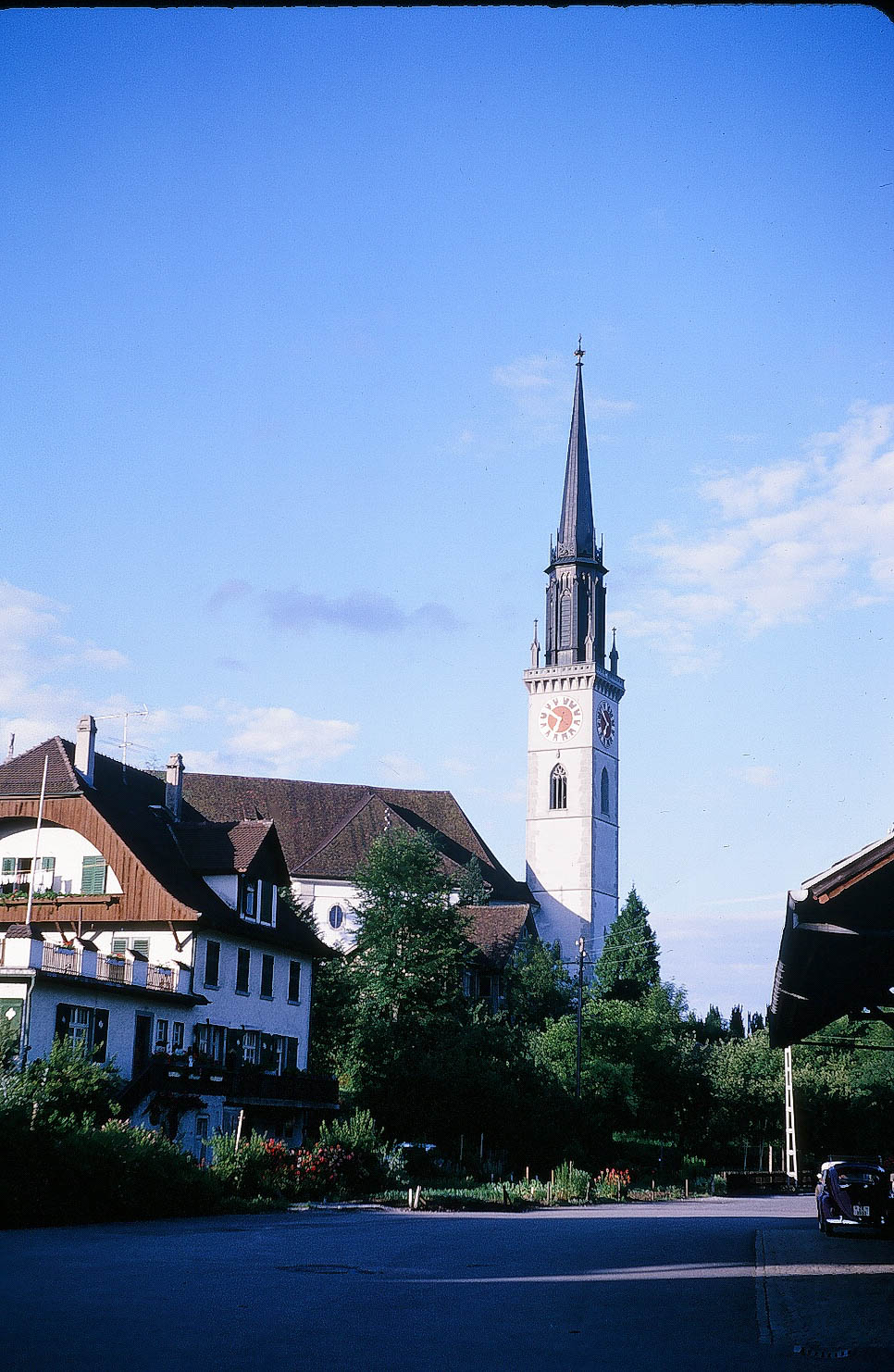
1966EuropeTrip-126 St Jakob church tower in Cham, Switzerland
1966EuropeTrip-127
1966EuropeTrip-128
1966EuropeTrip-129
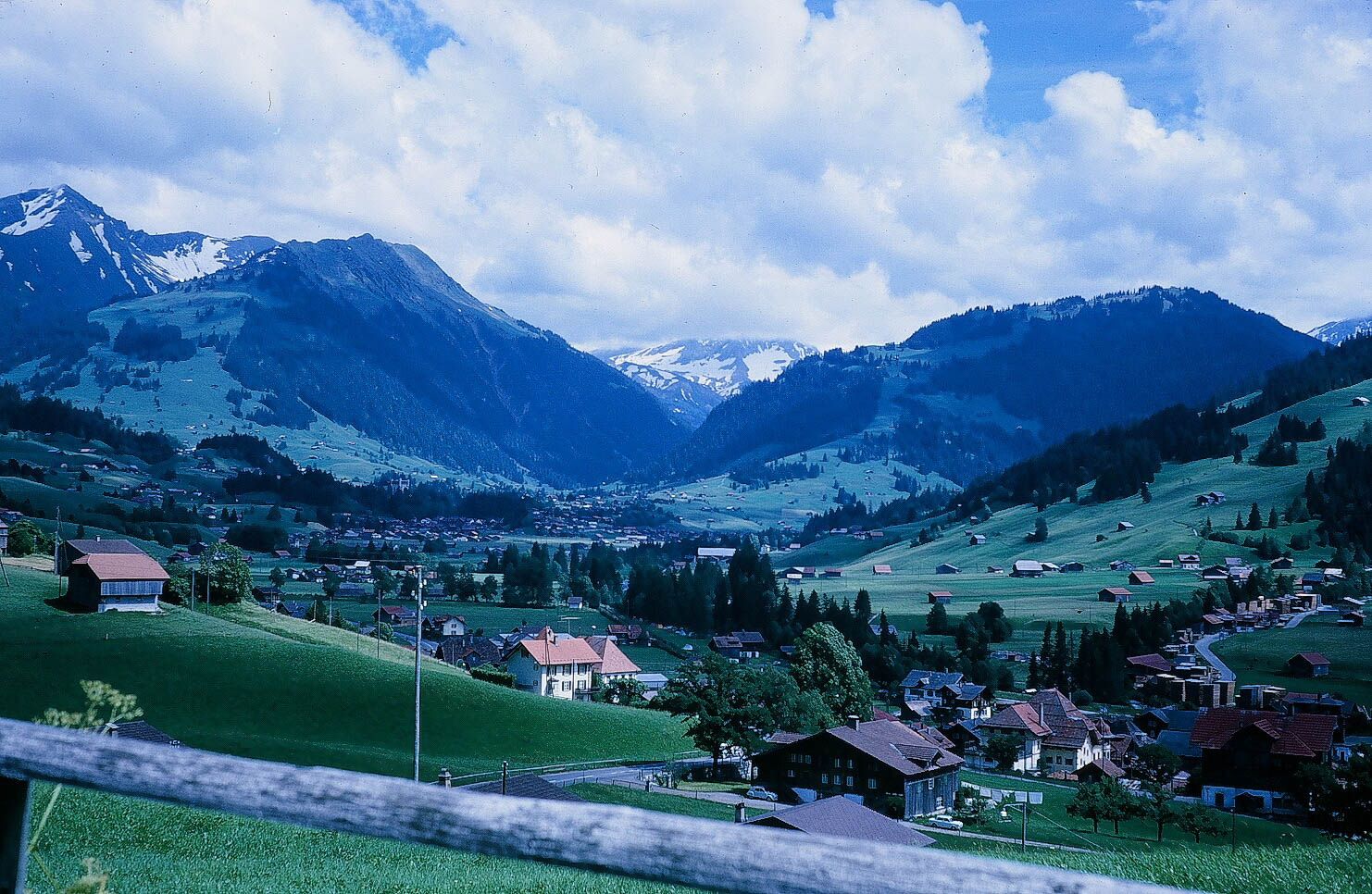
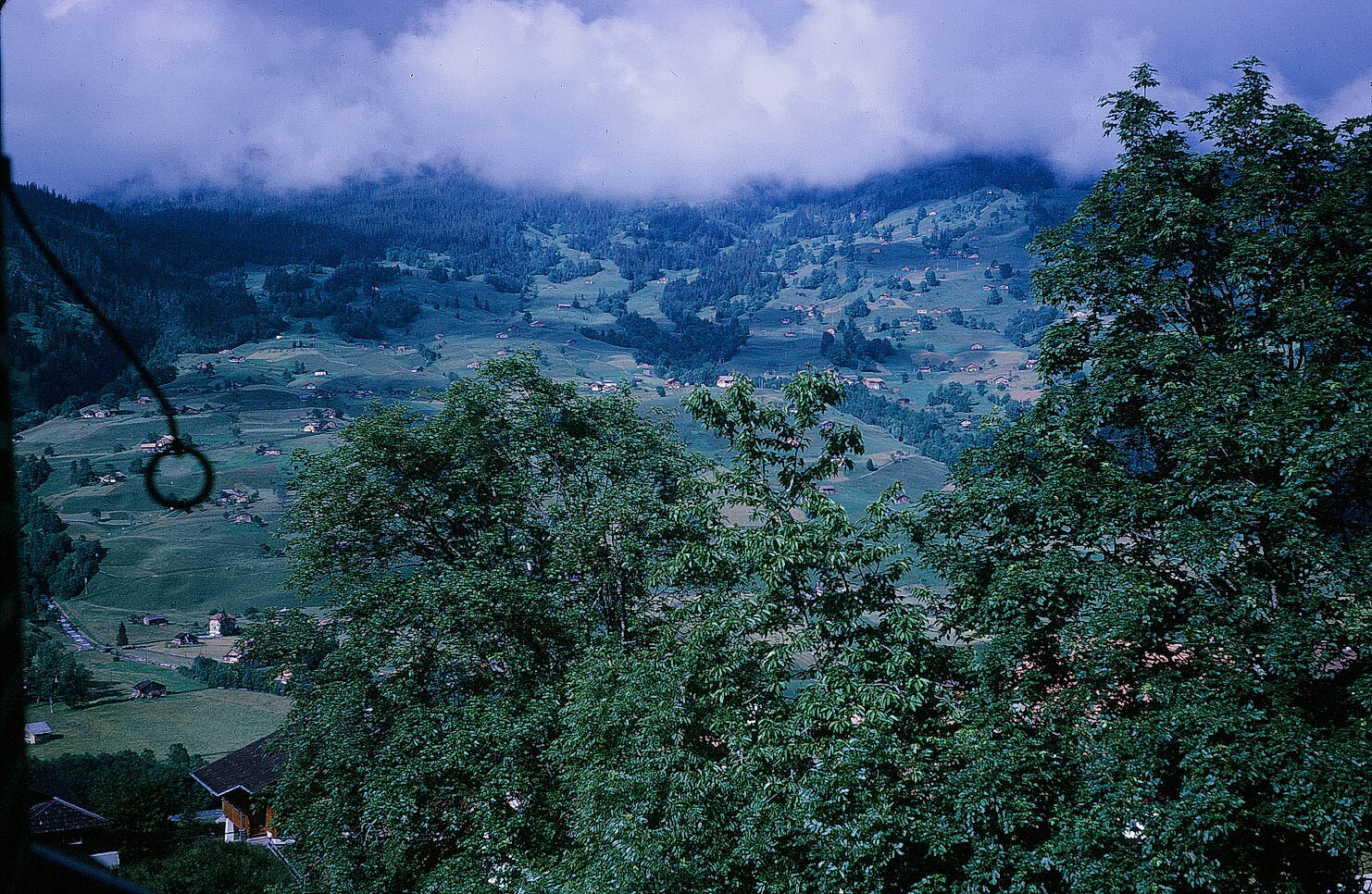
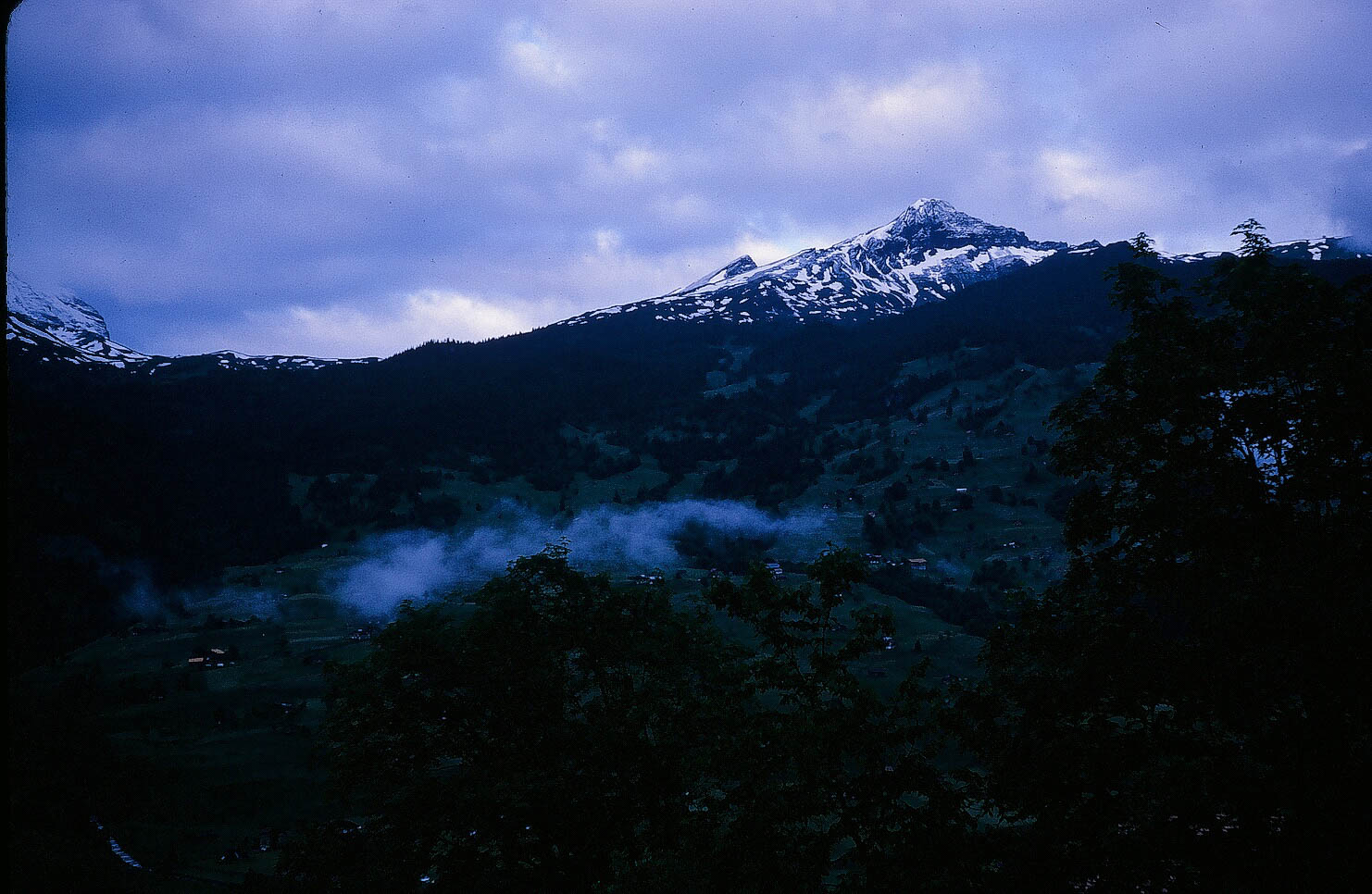
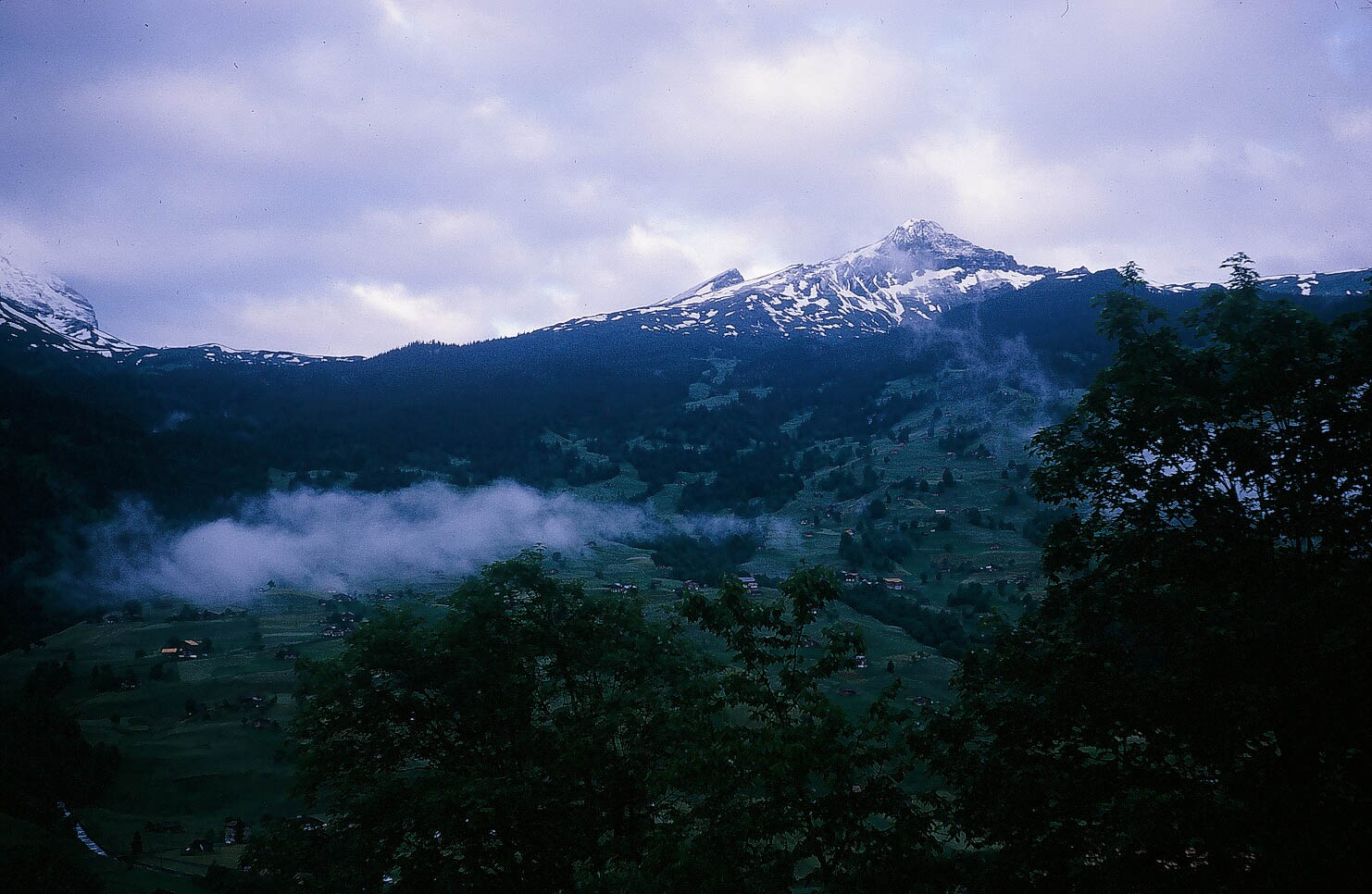
1966EuropeTrip-132 Grindelwald, Switzerland. From our hotel window.
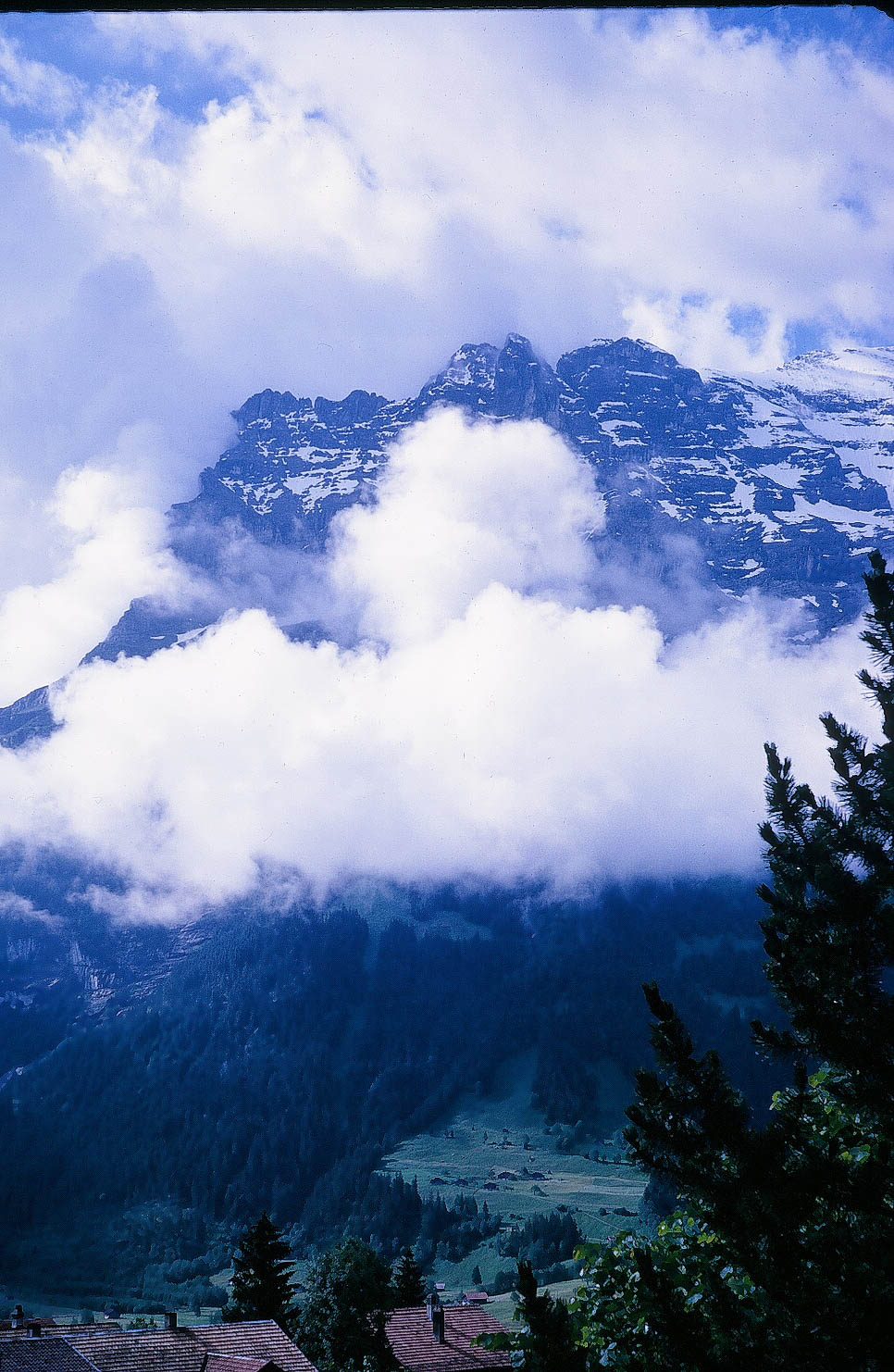
1966EuropeTrip-133 View of Jungfrau from hotel window in Grindelwald.
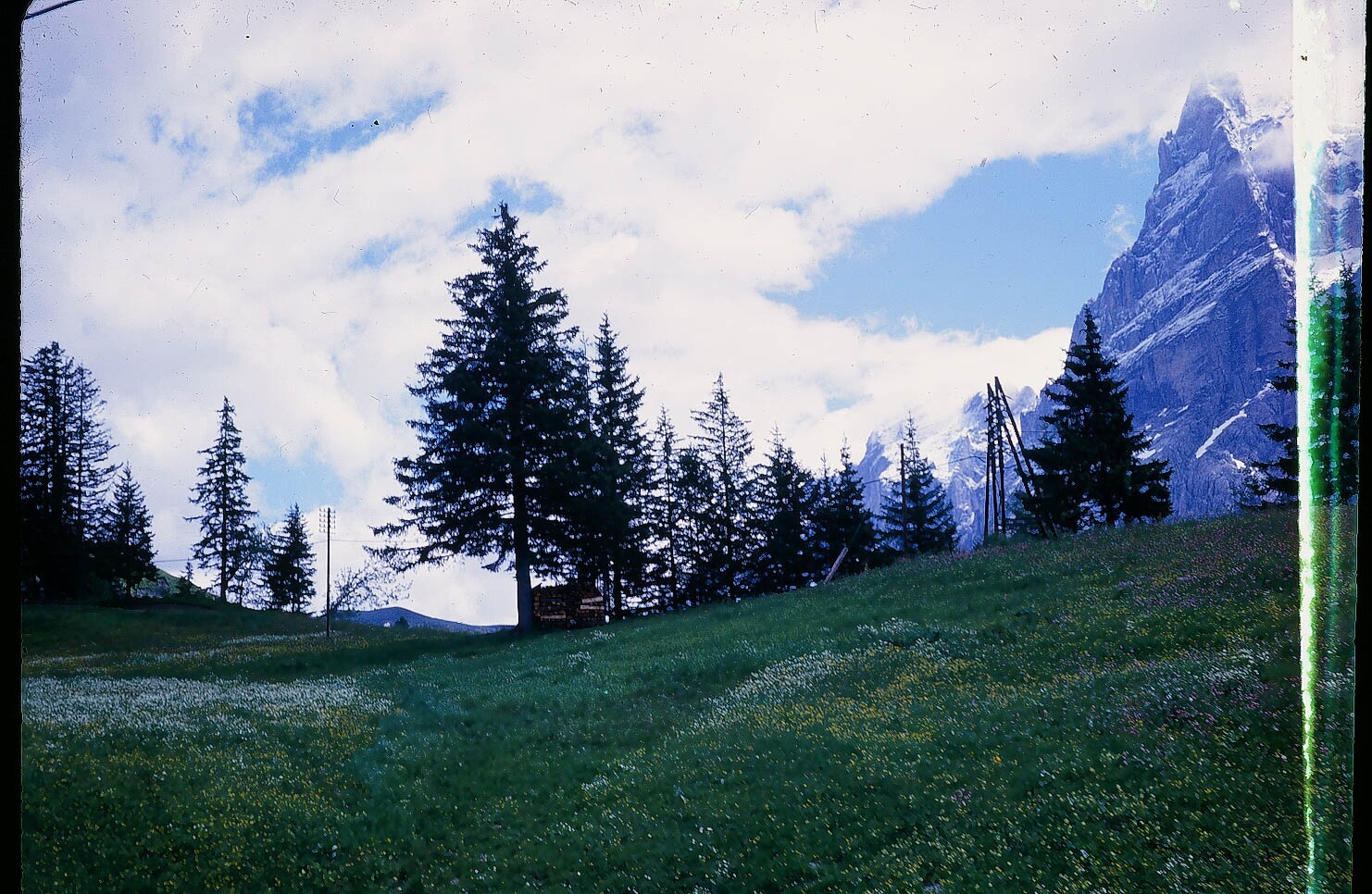
1966EuropeTrip-134 View from our window in Grindelwald
1966EuropeTrip-135 Lauterbrunen
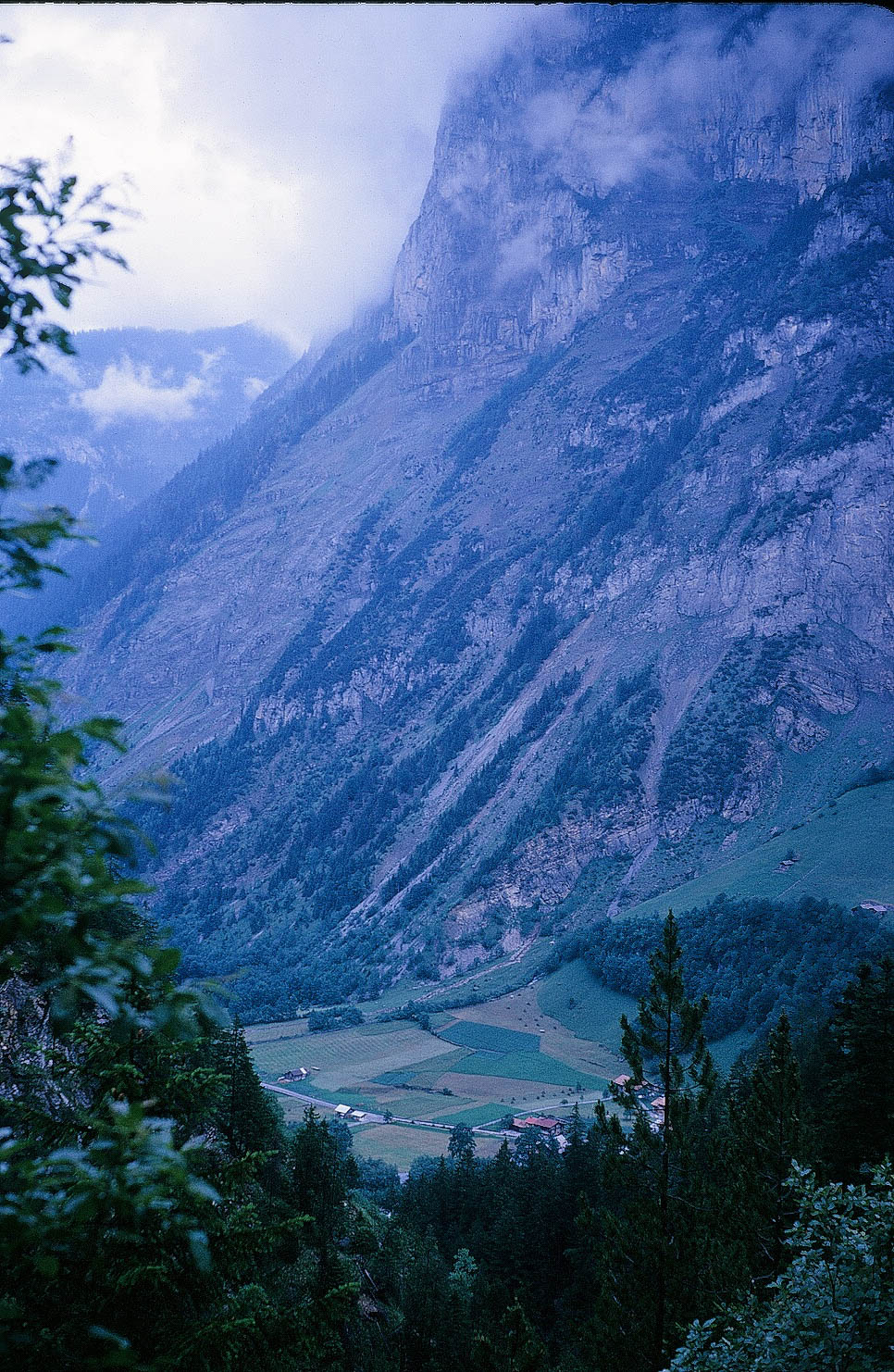
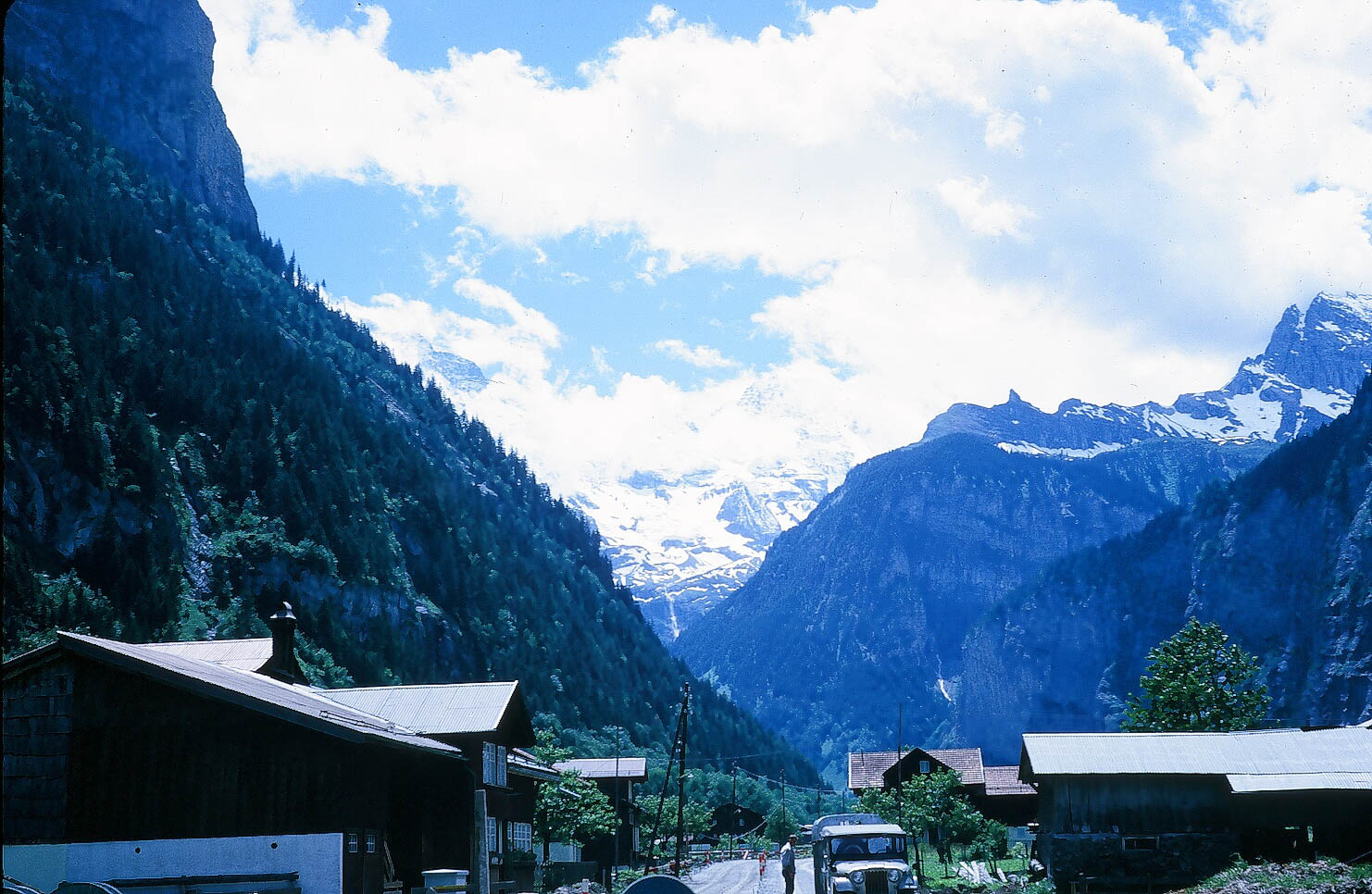
1966EuropeTrip-136 Lauterbrunen Valley.
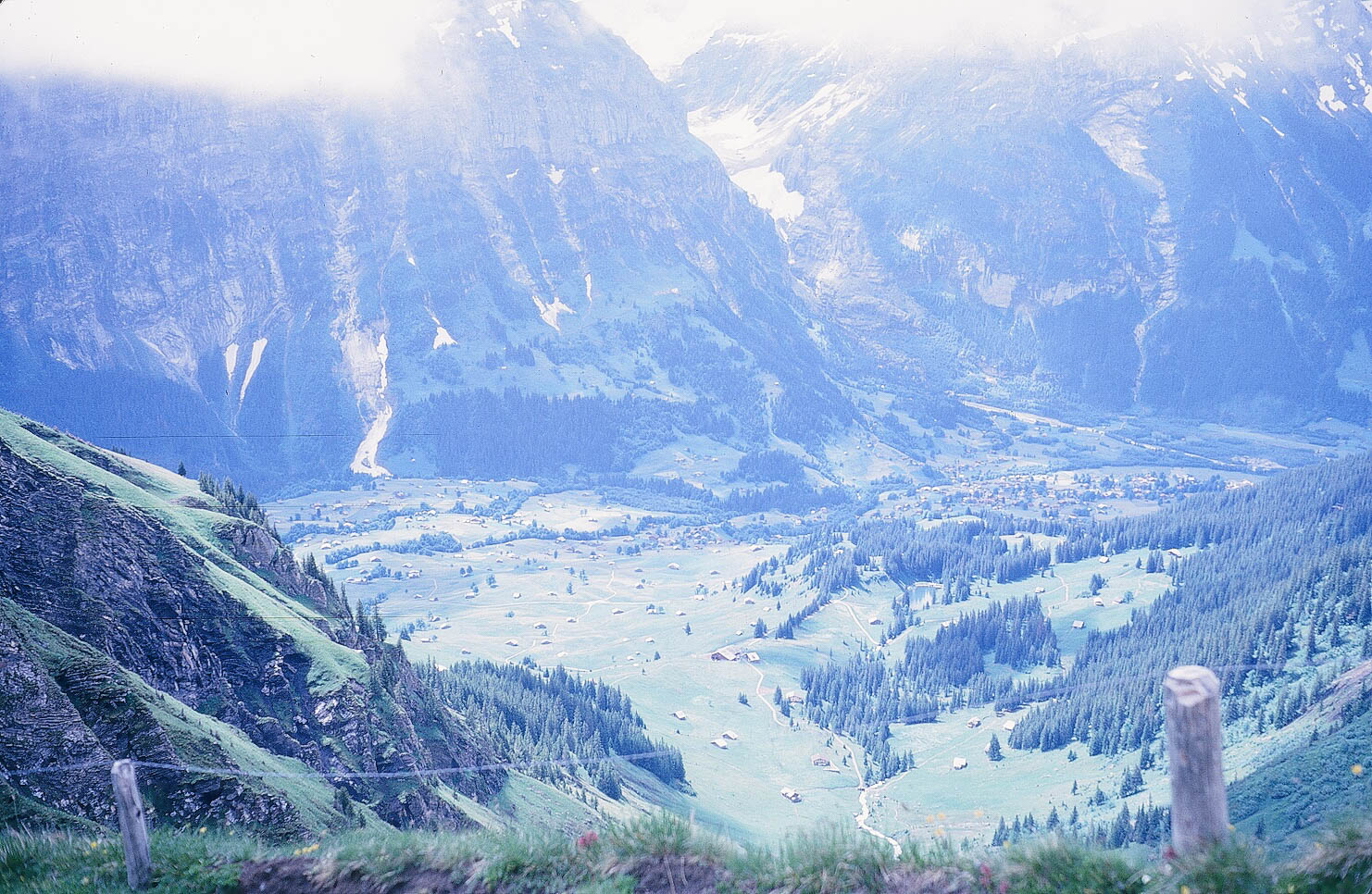
1966EuropeTrip-137 Valley from First ski site.
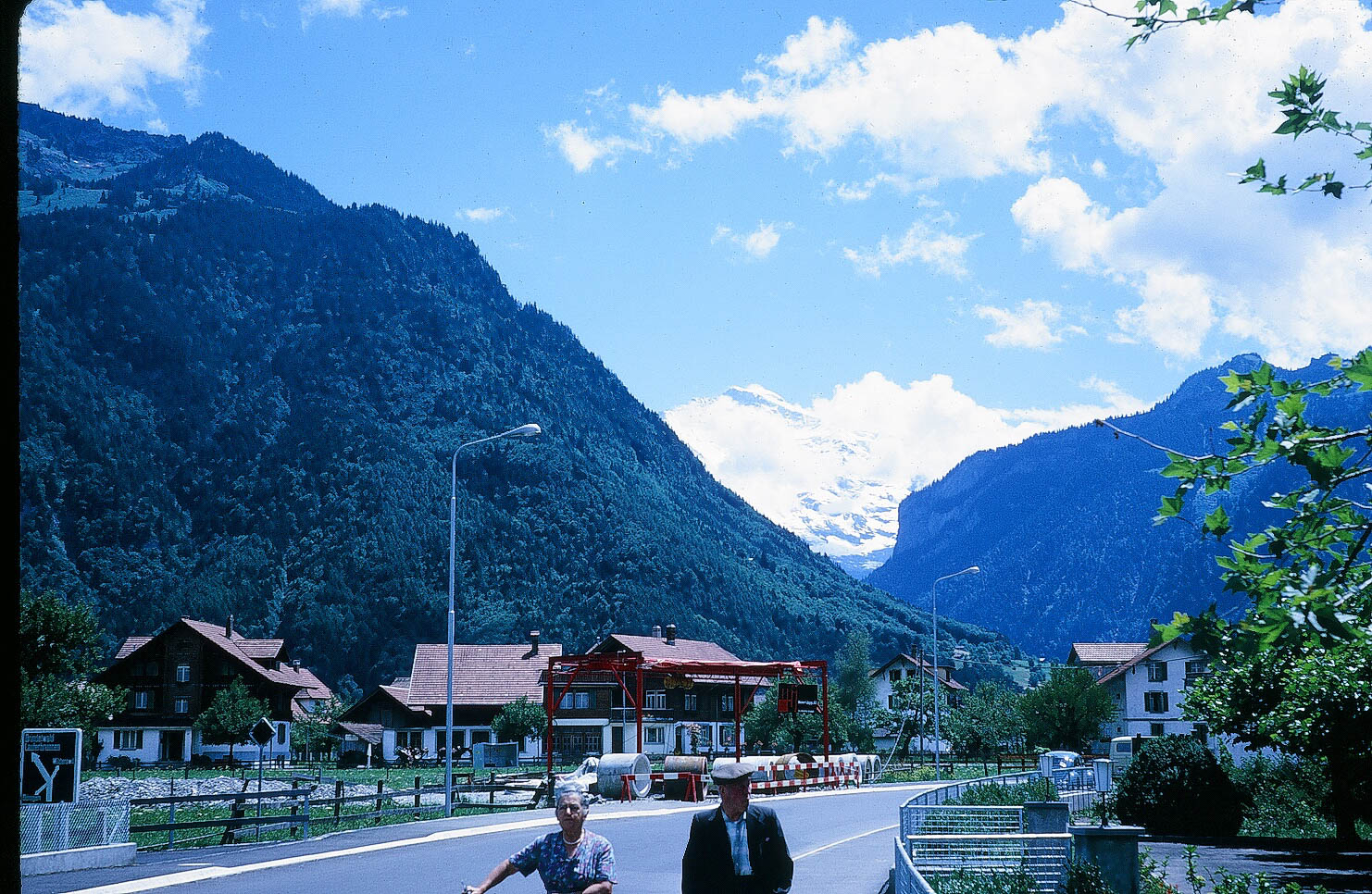
1966EuropeTrip-138 Interlaken, Switzerland
1966EuropeTrip-161
1966EuropeTrip-162 View from our window in Grindelwald.
1966EuropeTrip-163
1966EuropeTrip-164
1966EuropeTrip-165
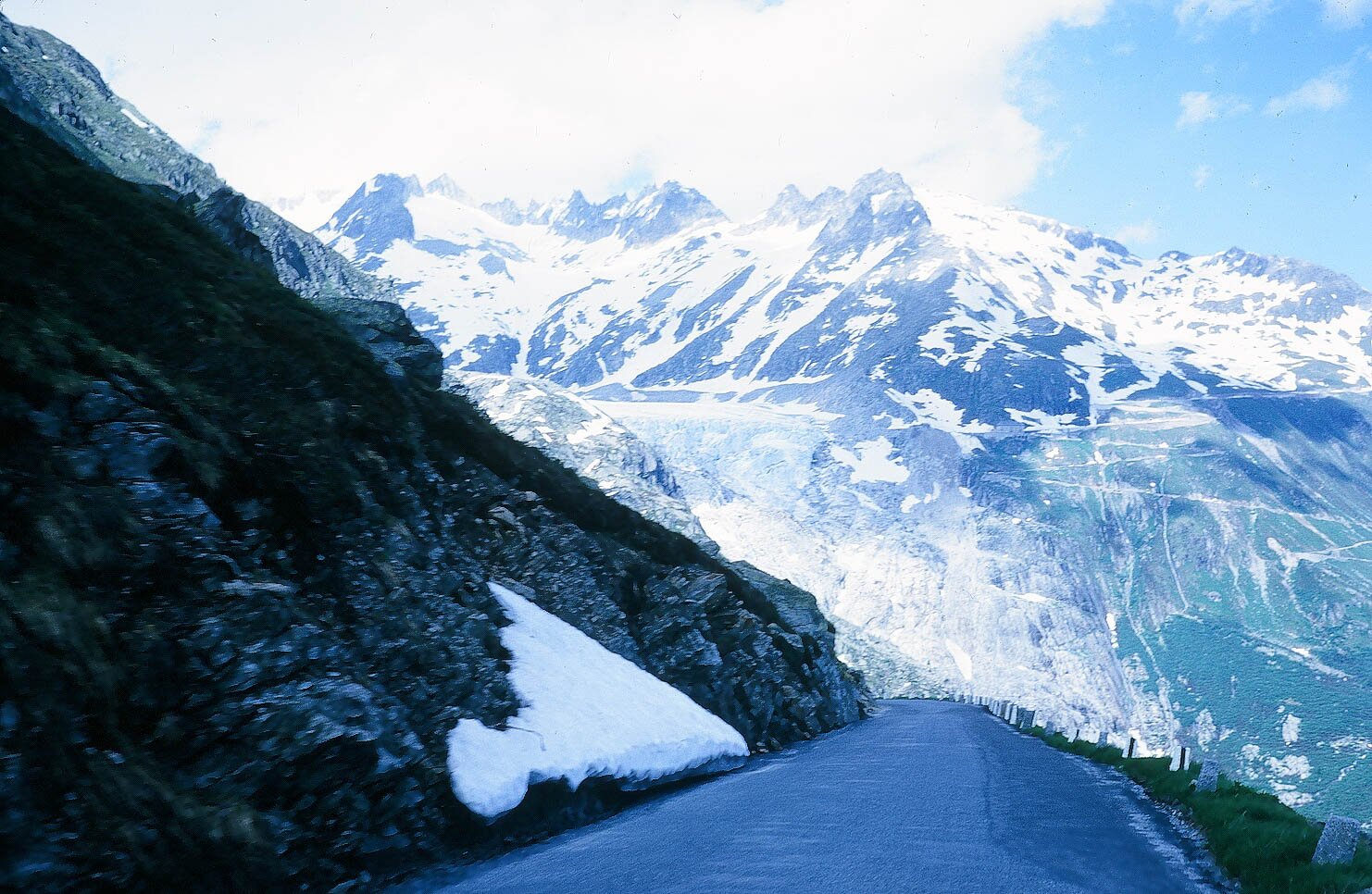
1966EuropeTrip-166 Rhone Glacier.
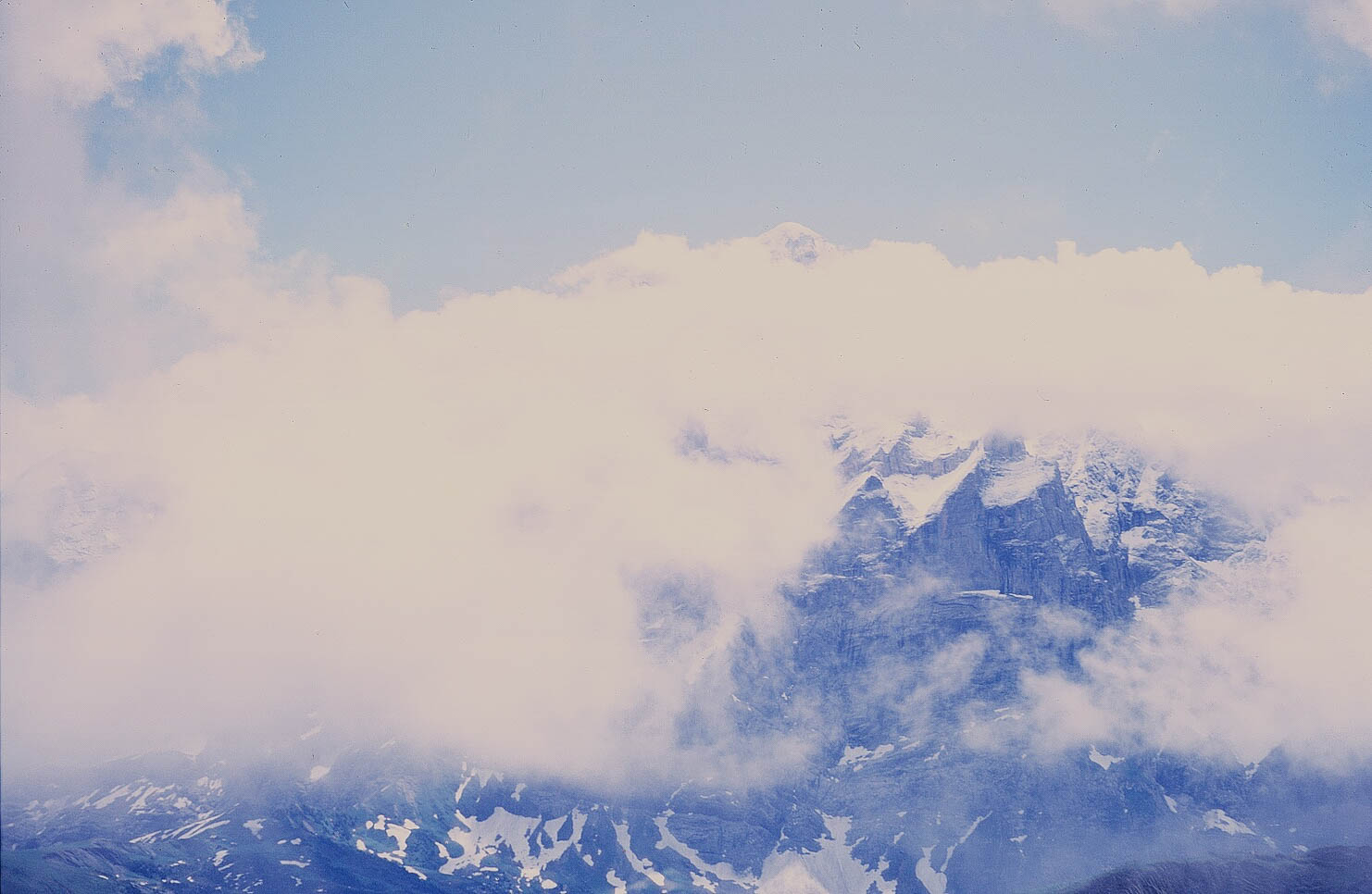
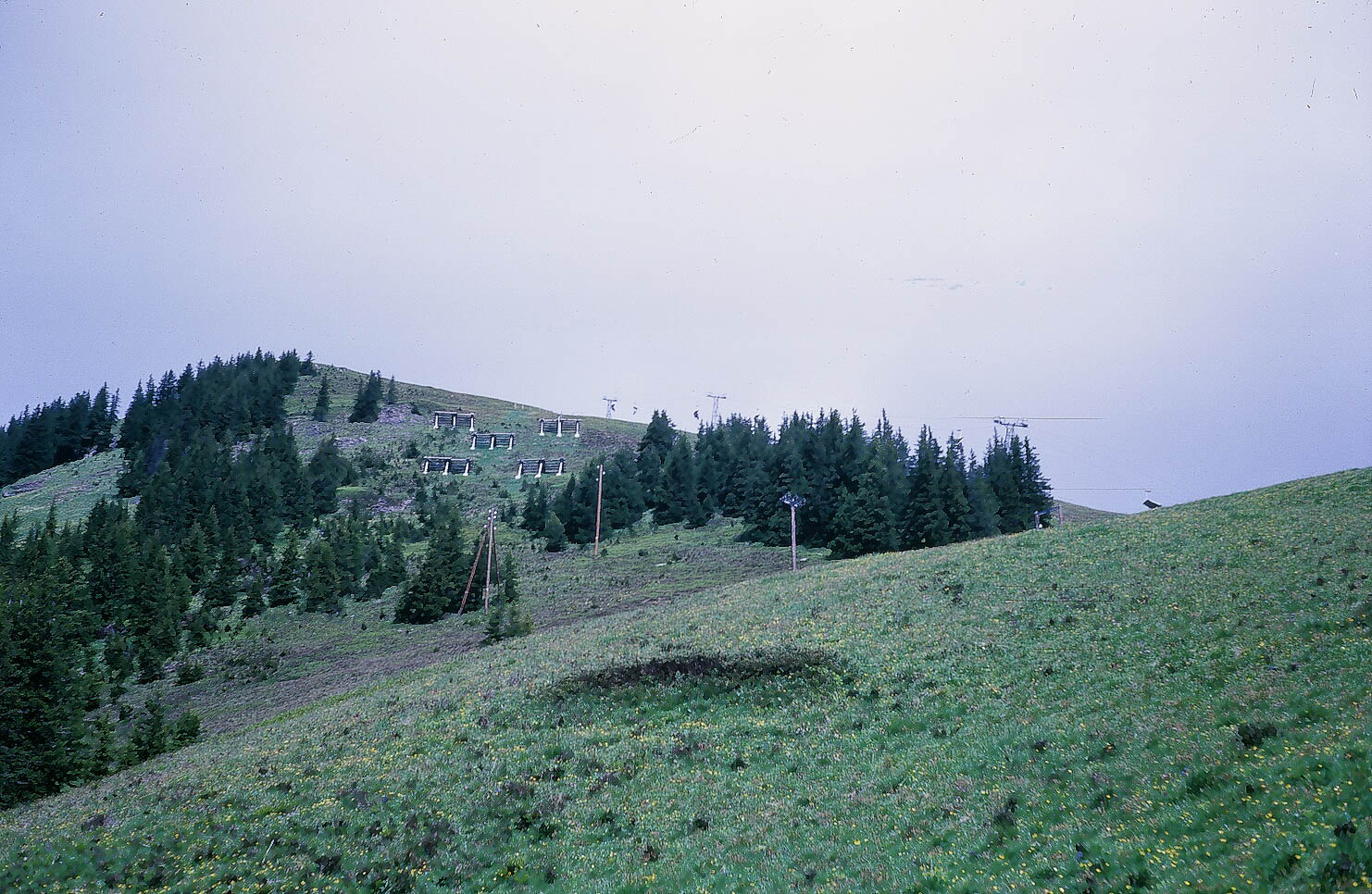
1966EuropeTrip-167 First Ski Site
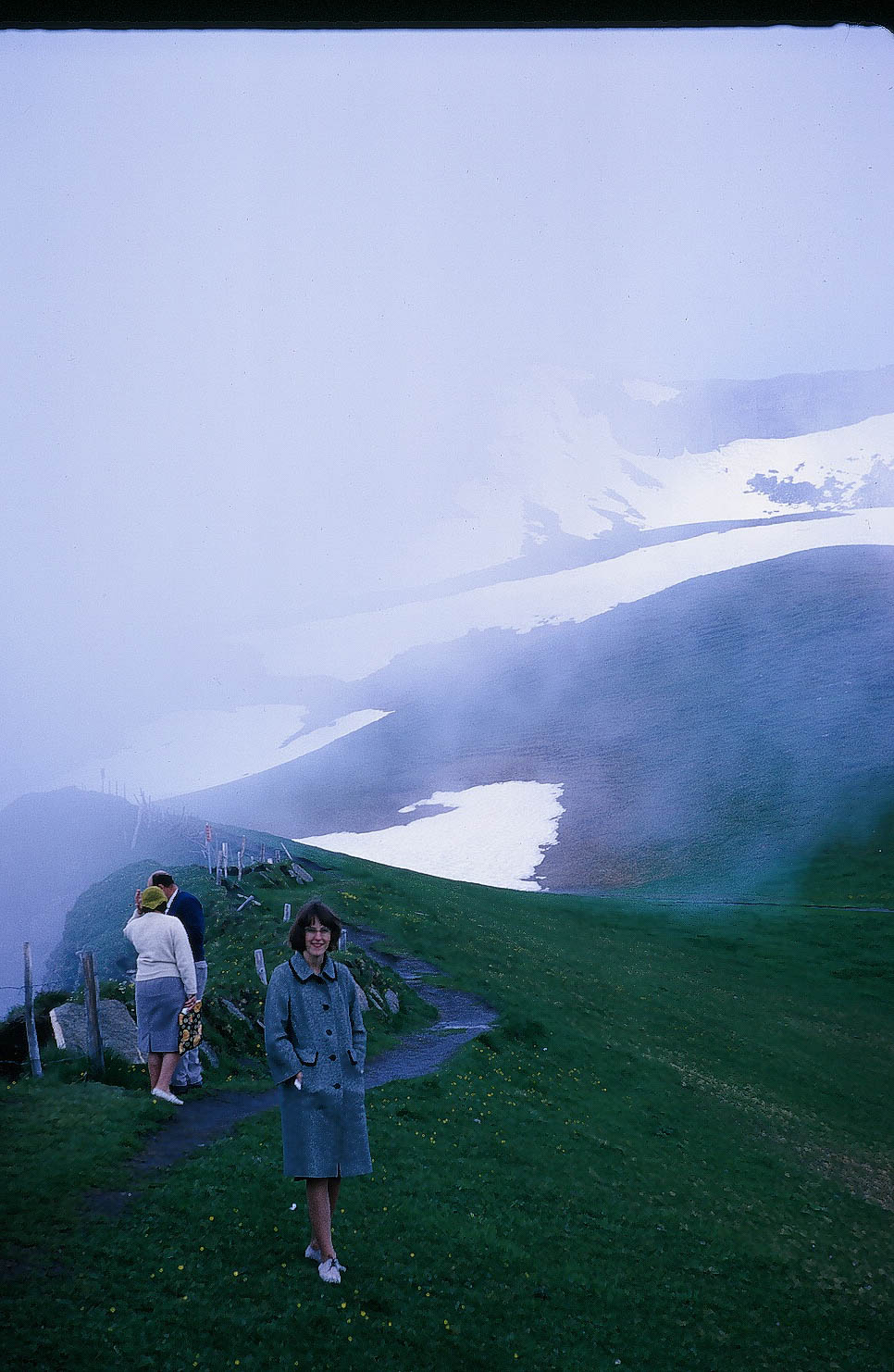
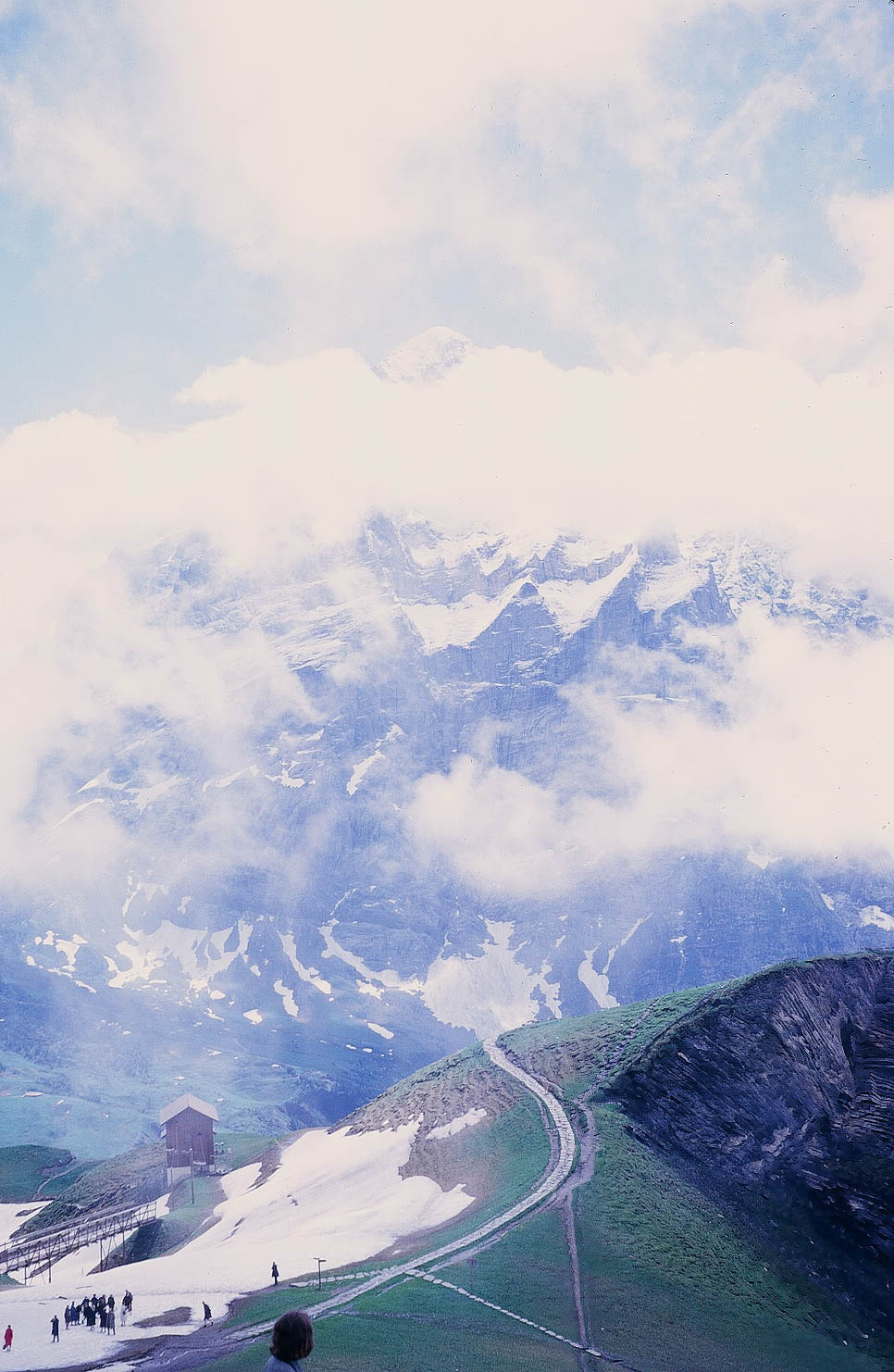
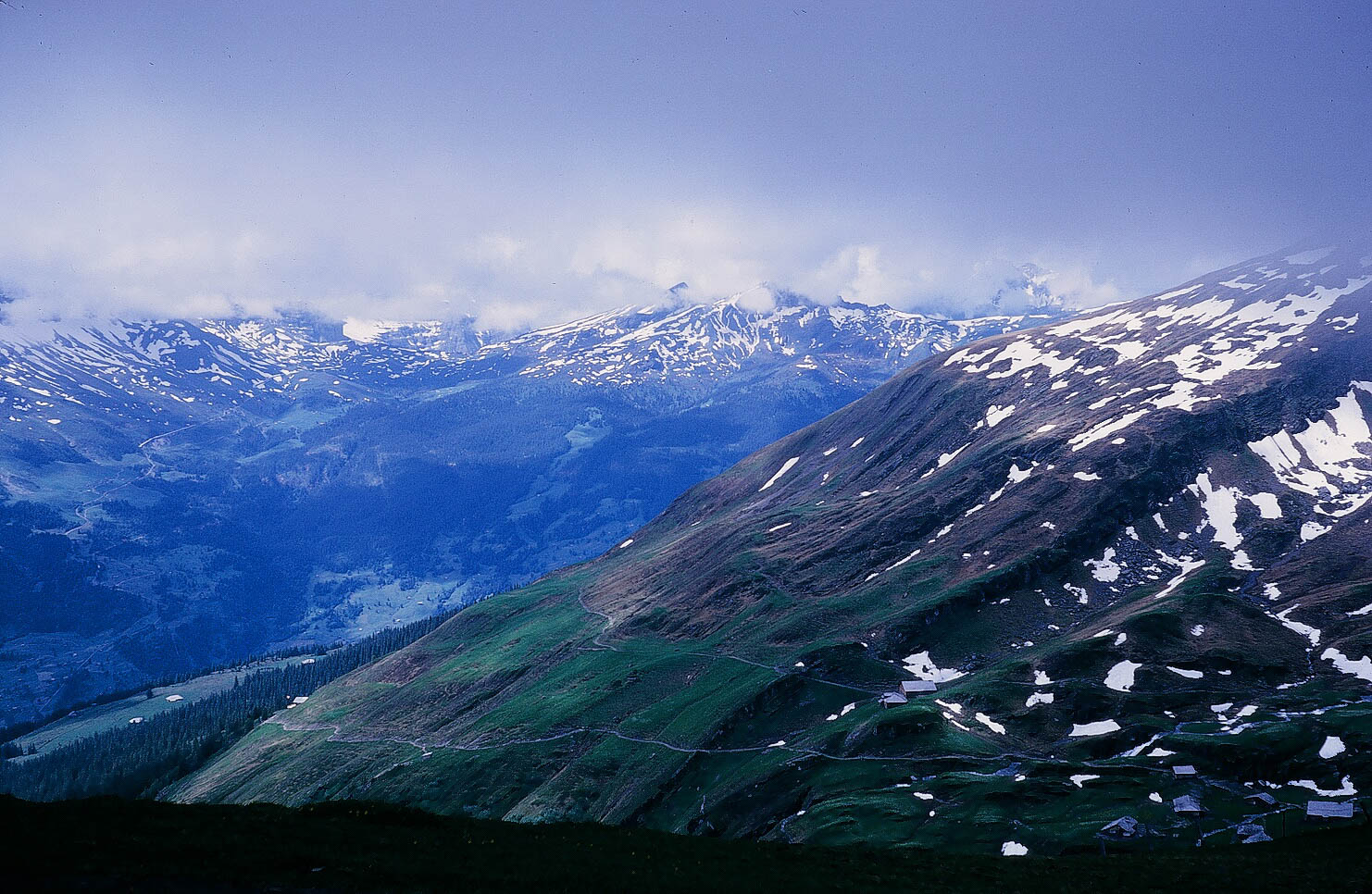
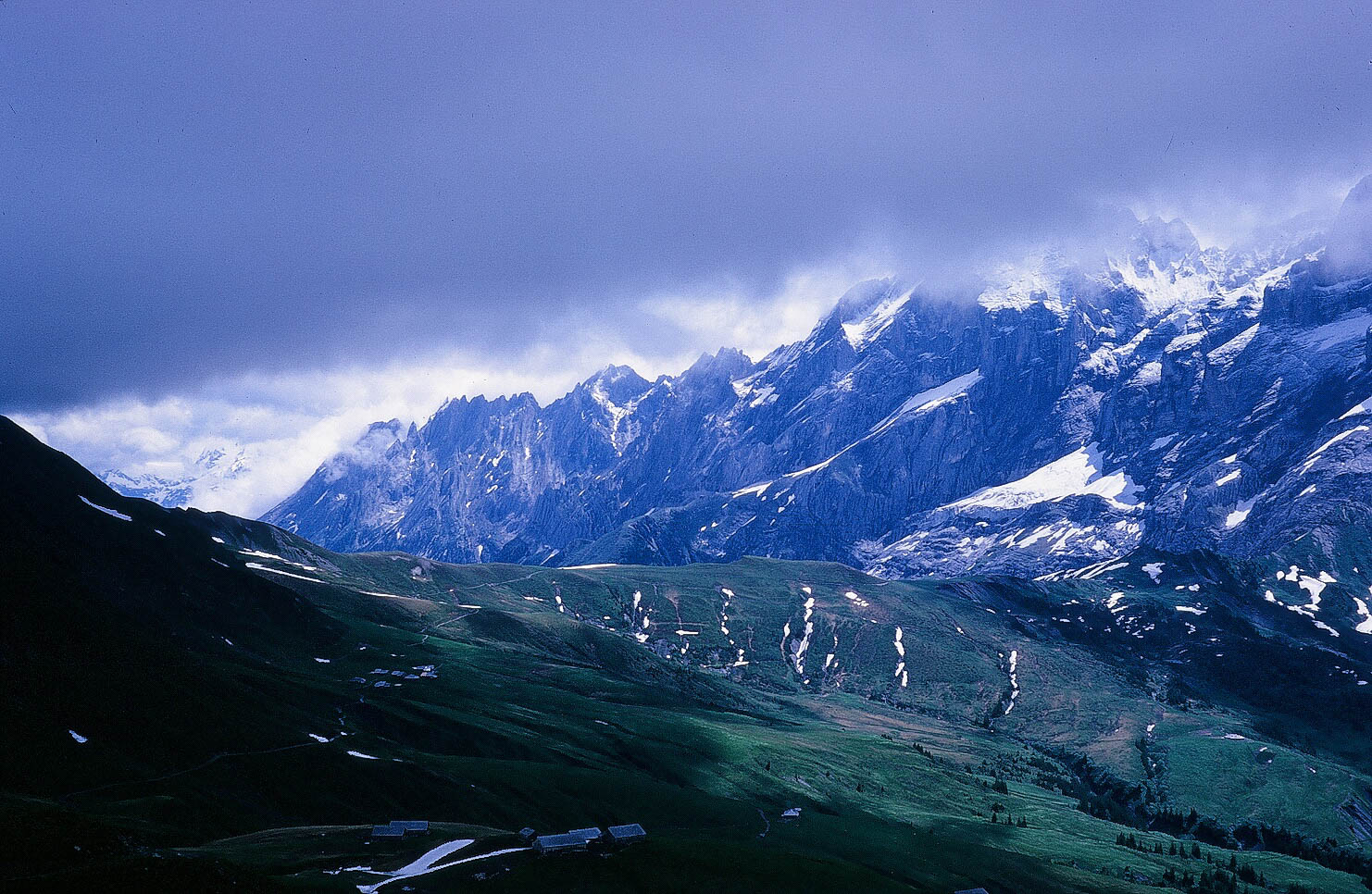
1966EuropeTrip-168 View from First Ski Site
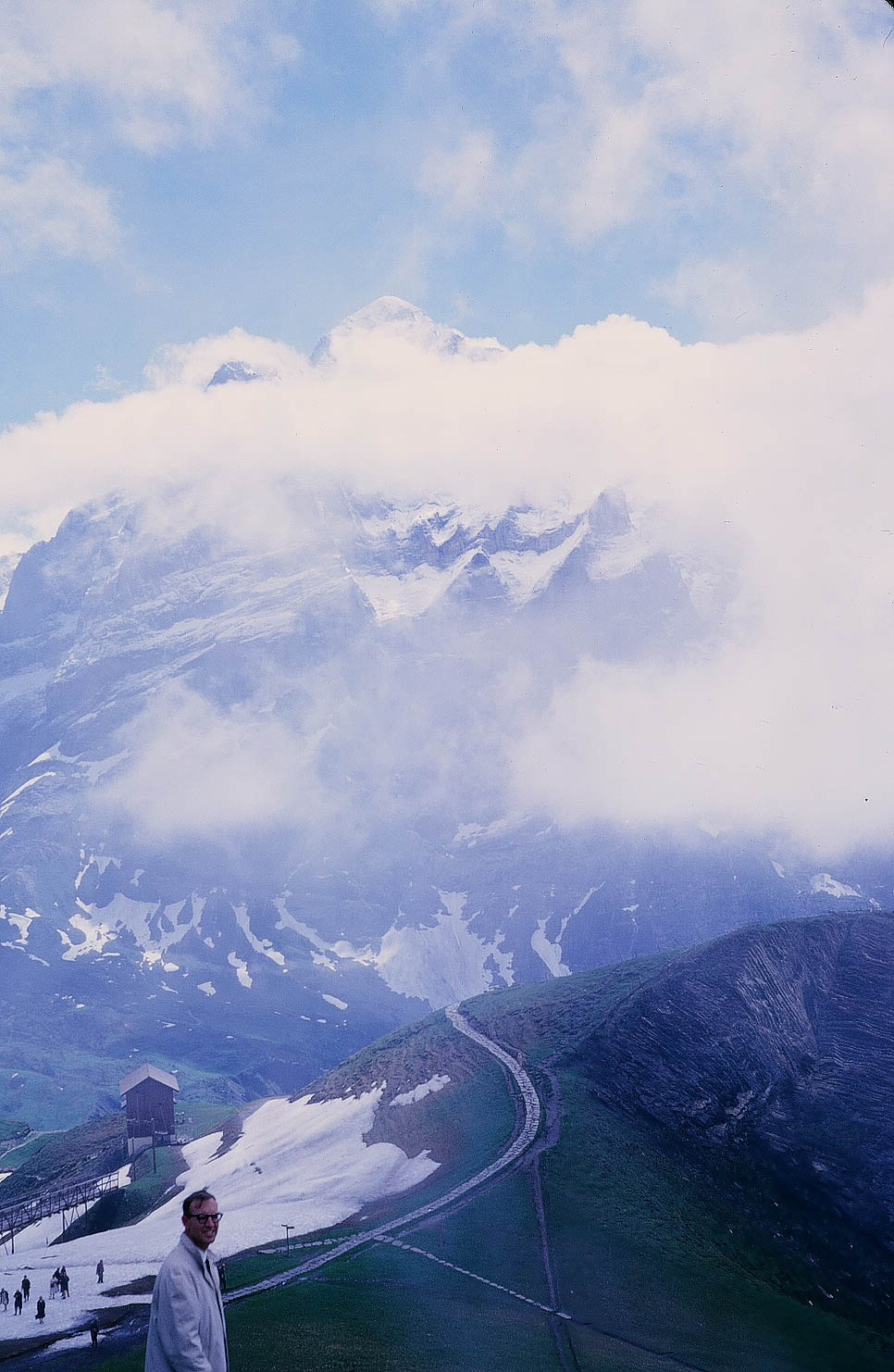
1966EuropeTrip-169 View from First Ski Site
1966EuropeTrip-170 First Ski Site View
1966EuropeTrip-171 First ski lift building.
1966EuropeTrip-172 First Ski Site
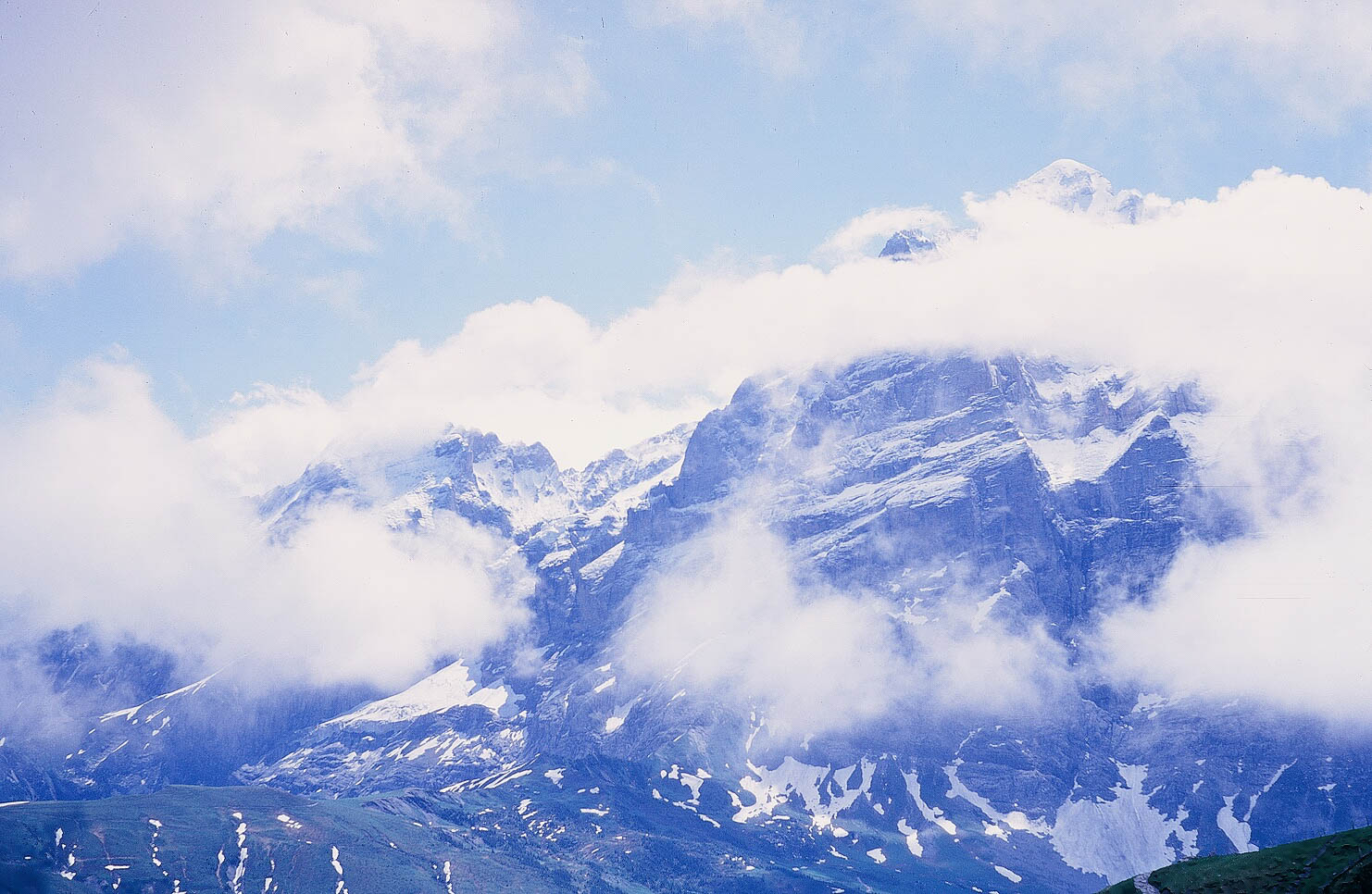
1966EuropeTrip-173 View from First Ski Site
1966EuropeTrip-174 View from First Ski Site
1966EuropeTrip-175 View from First Ski Site
1966EuropeTrip-176 View from First Ski Site
1966EuropeTrip-178 View from First Ski Site
1966EuropeTrip-179 View from First Ski Site
1966EuropeTrip-181 First Ski Lift
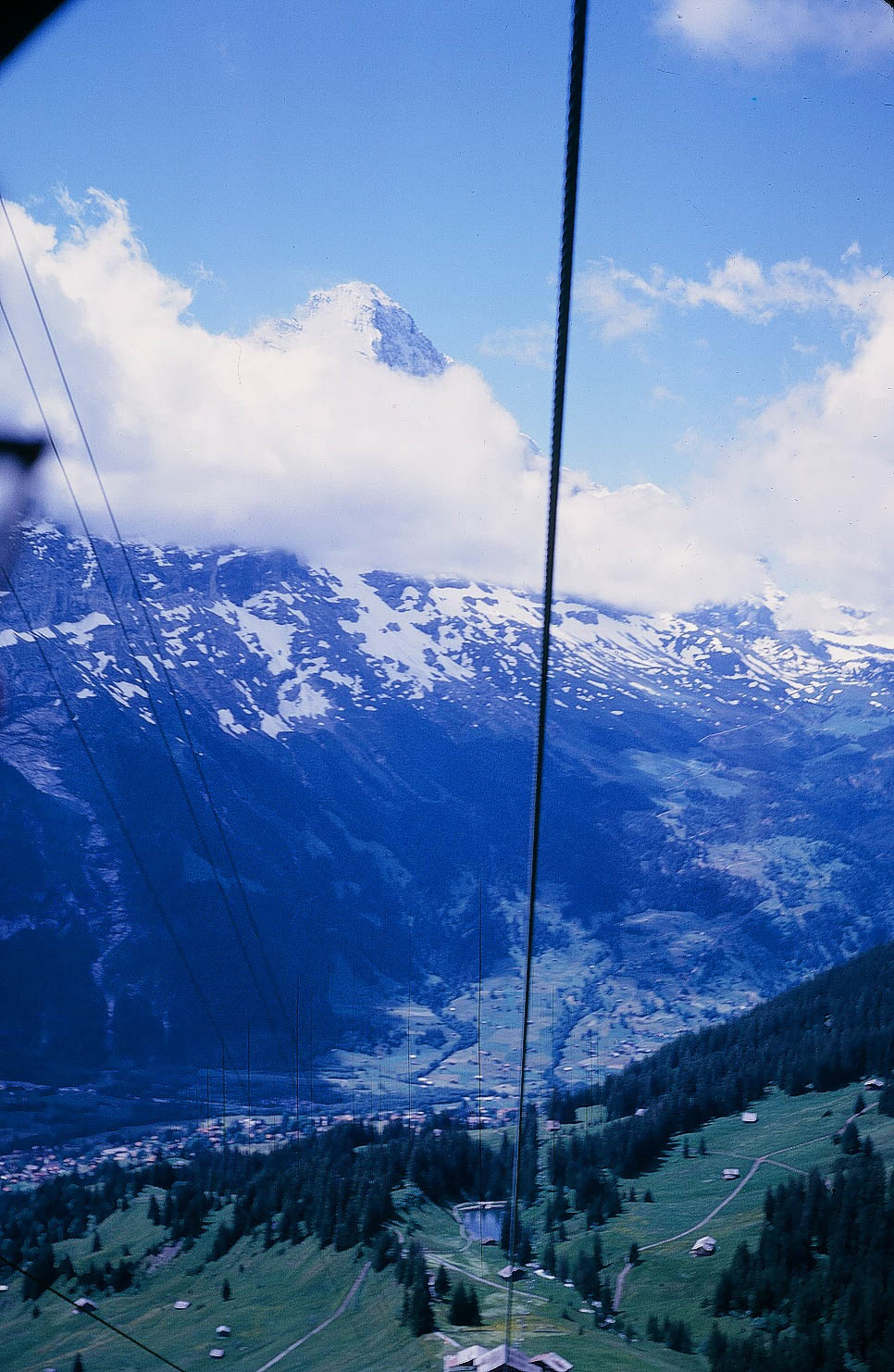
1966EuropeTrip-182 View from First Ski lift.
1966EuropeTrip-183 Interlaken
1966EuropeTrip-184 Near Interlaken
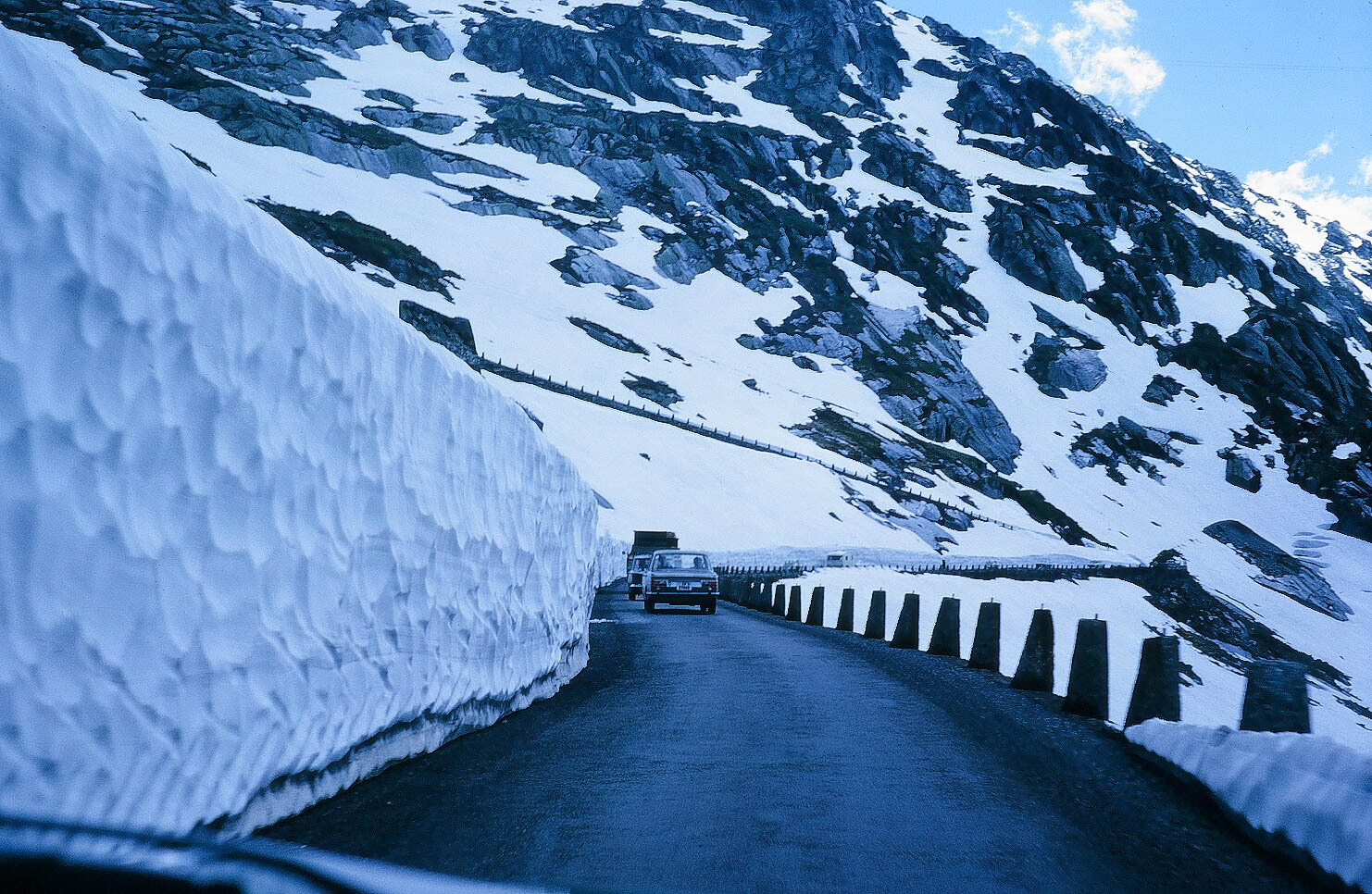
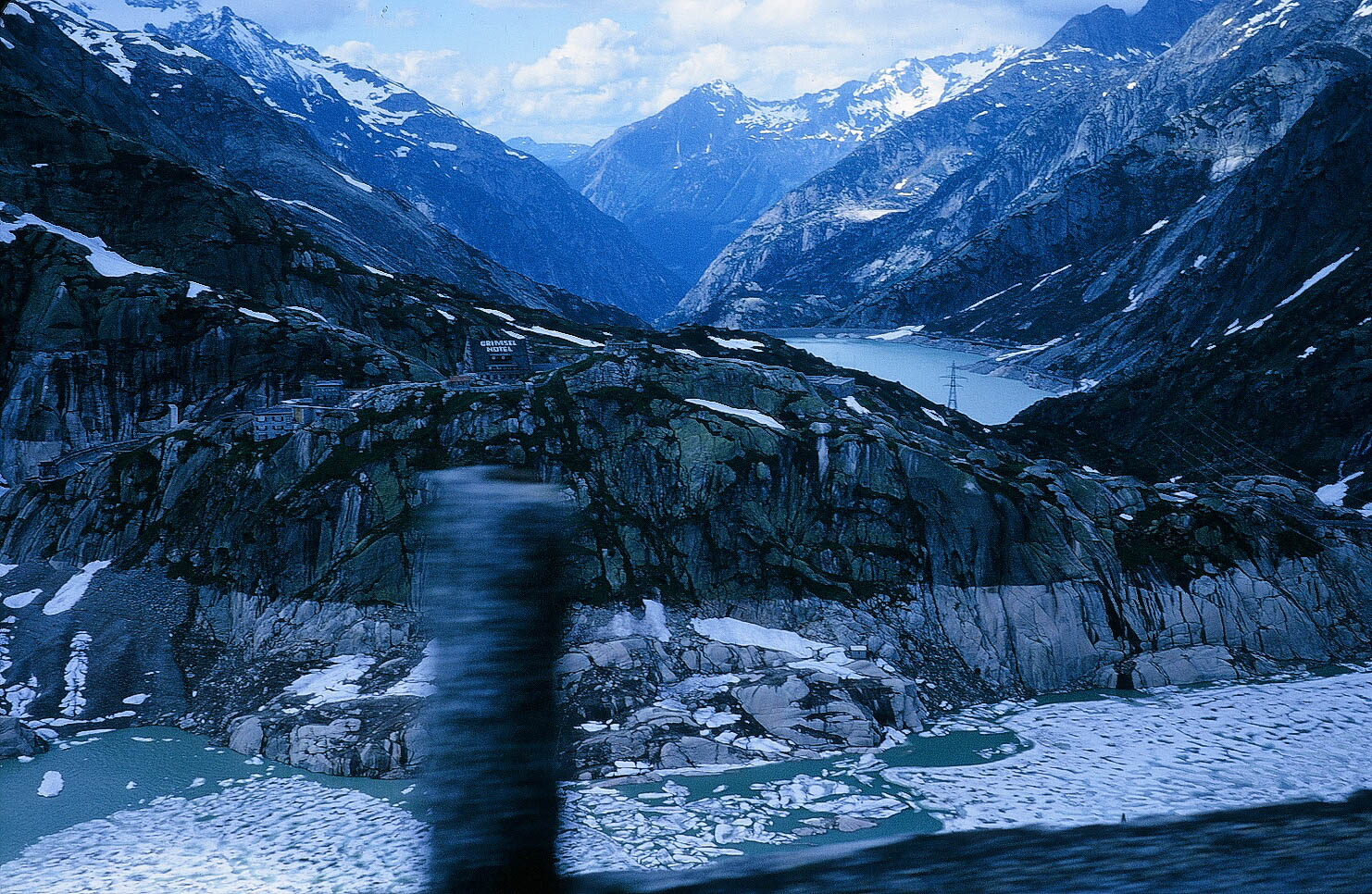
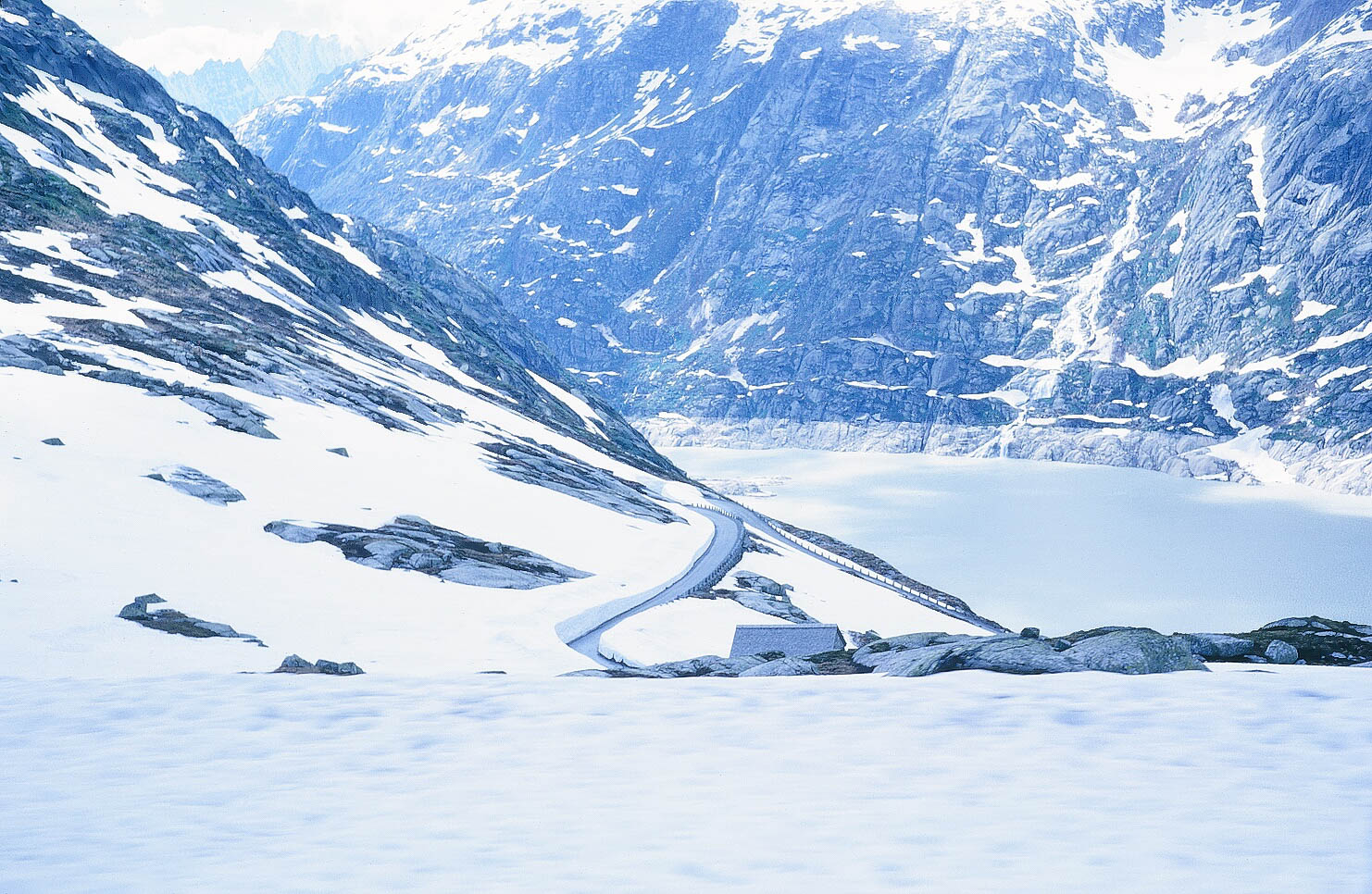
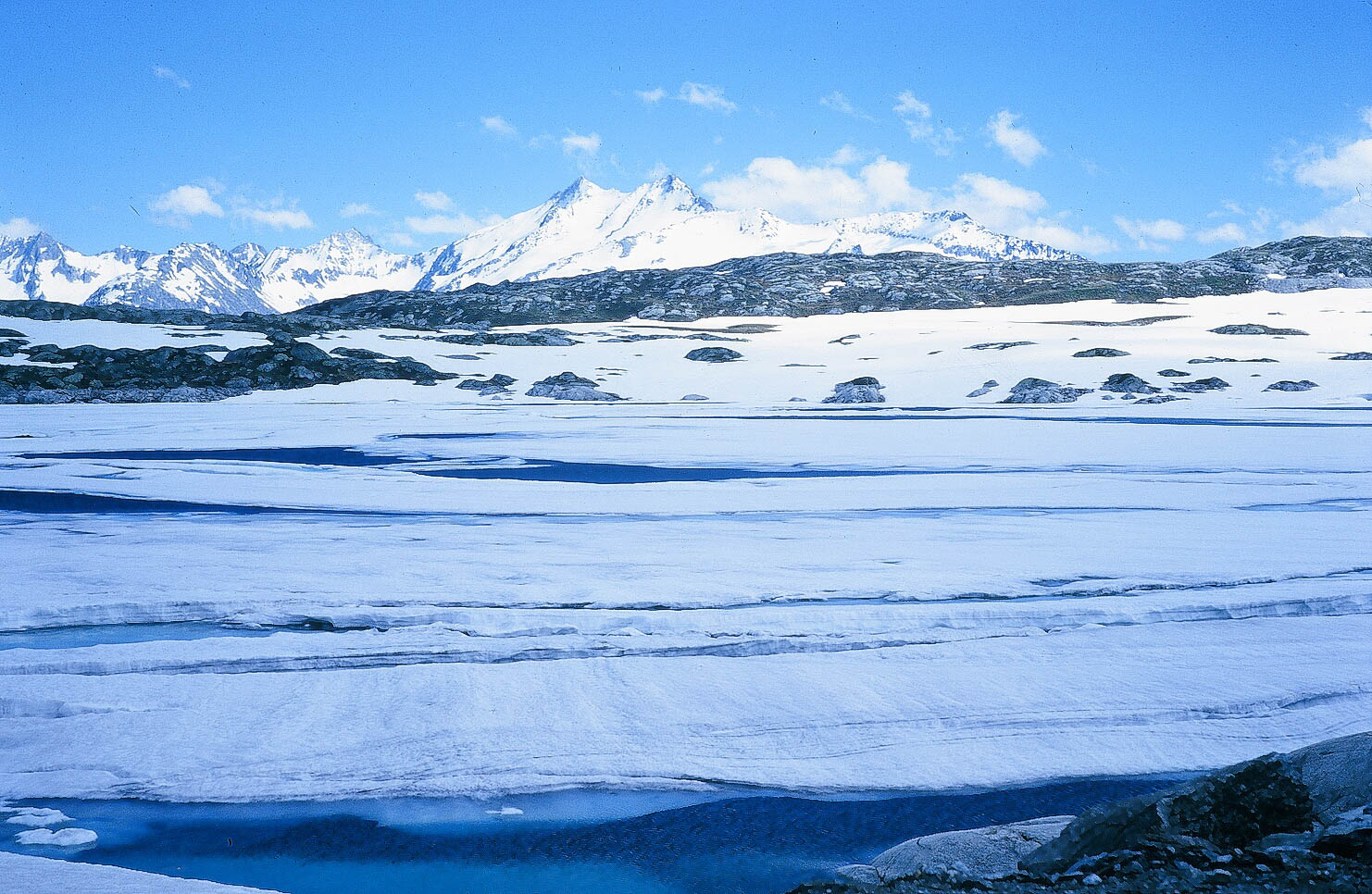
1966EuropeTrip-139 Headed for Grimsel Pass.
1966EuropeTrip-140 Headed for Grimsel Pass.
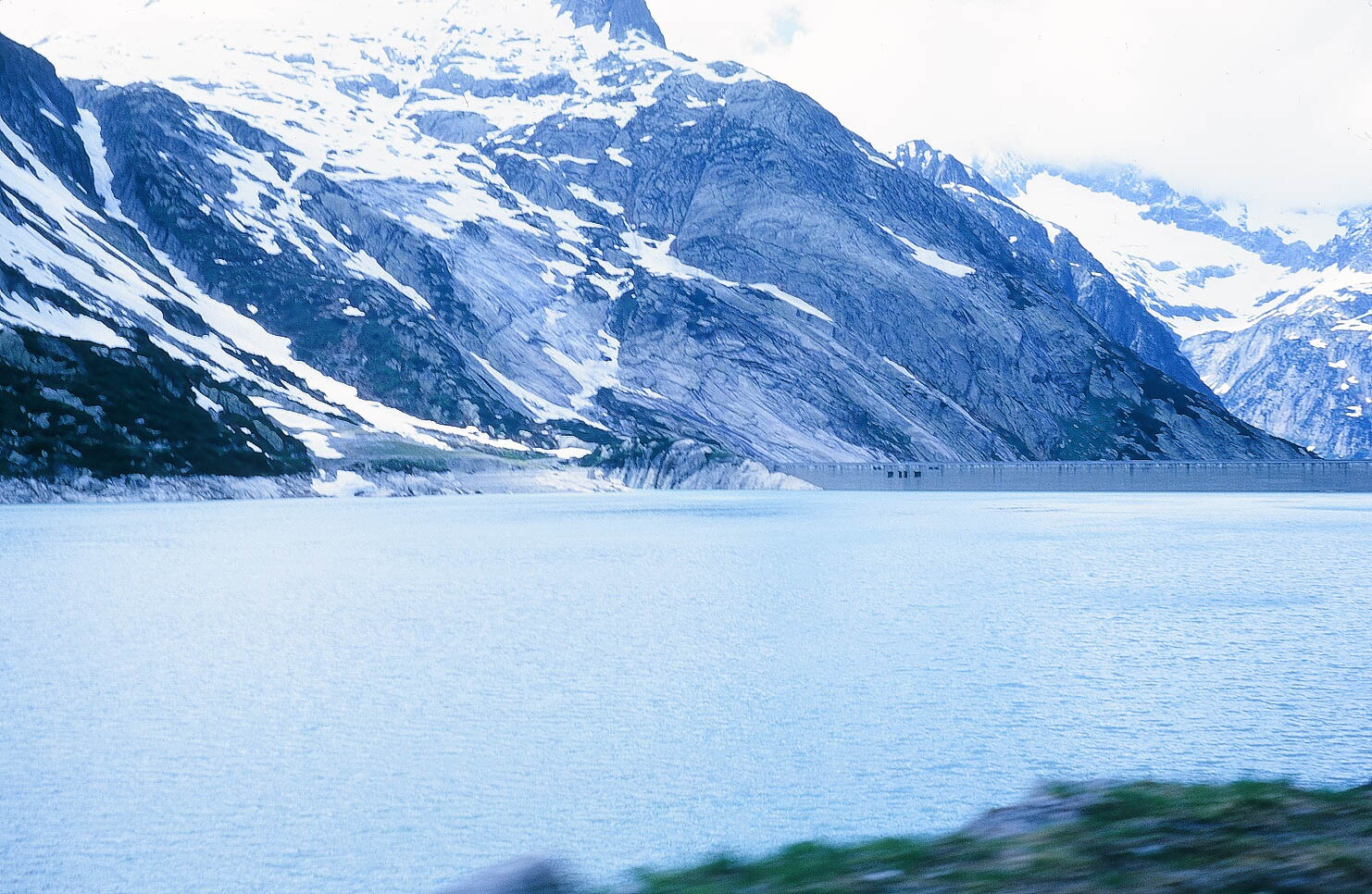
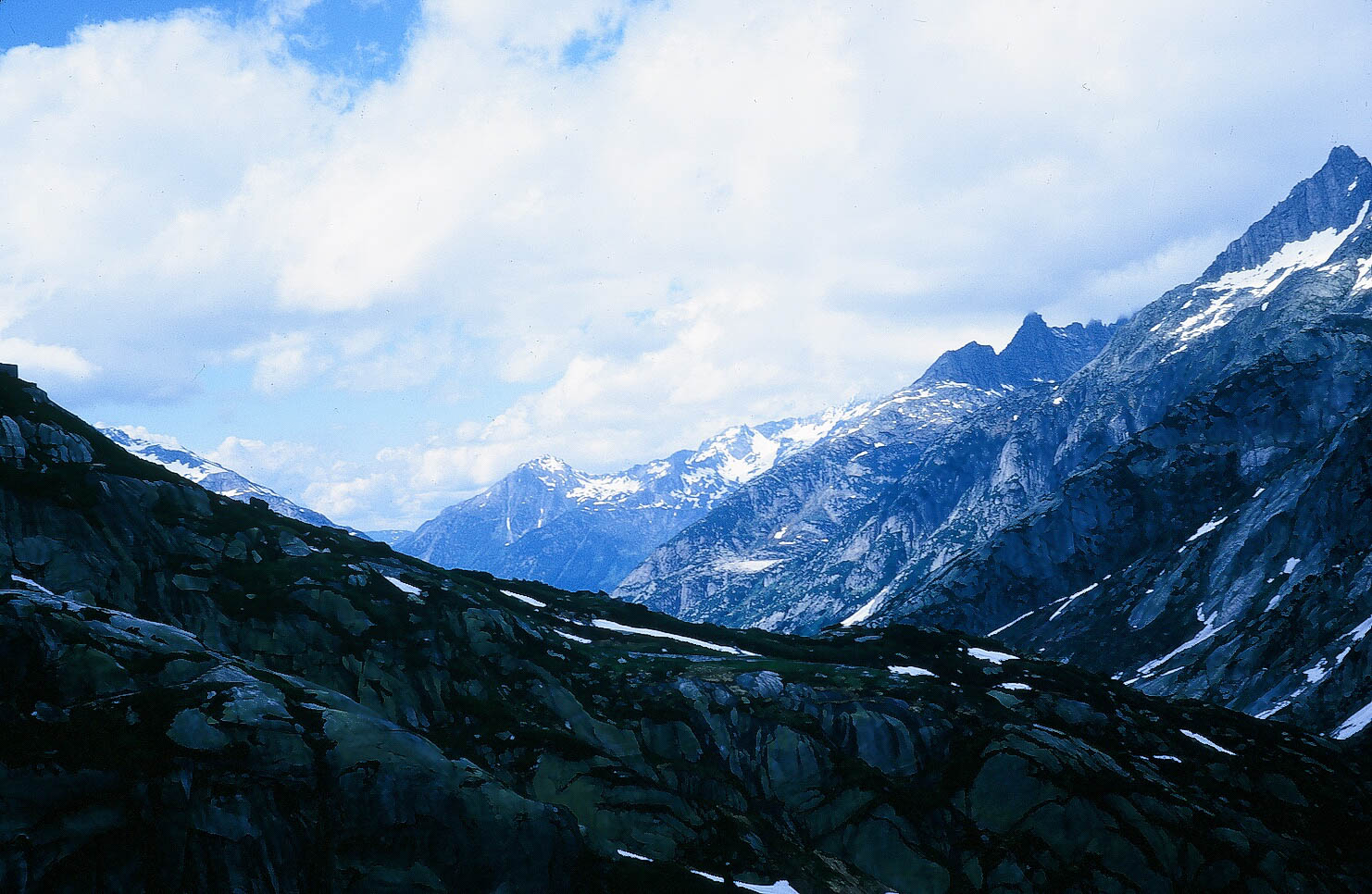
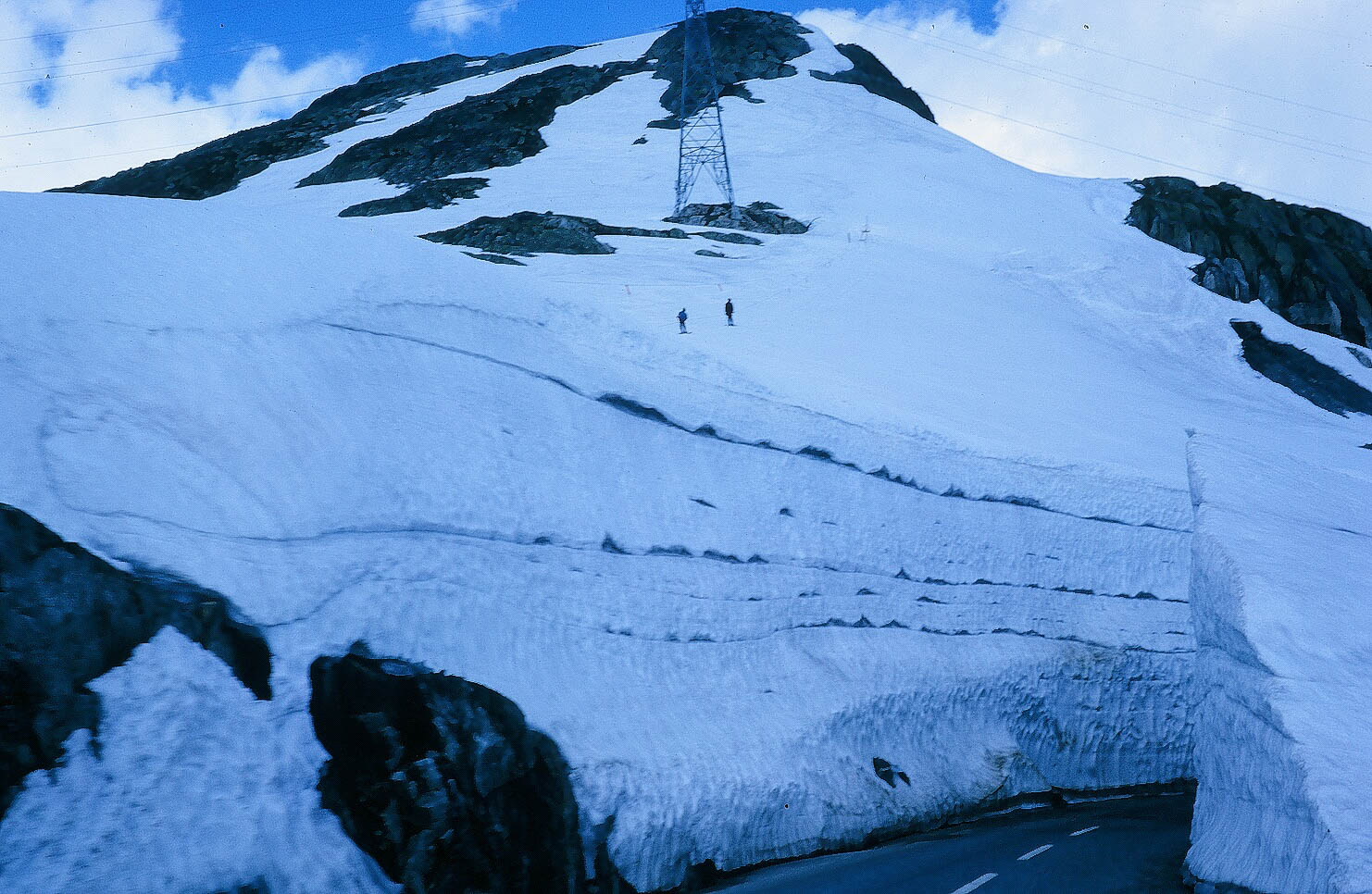
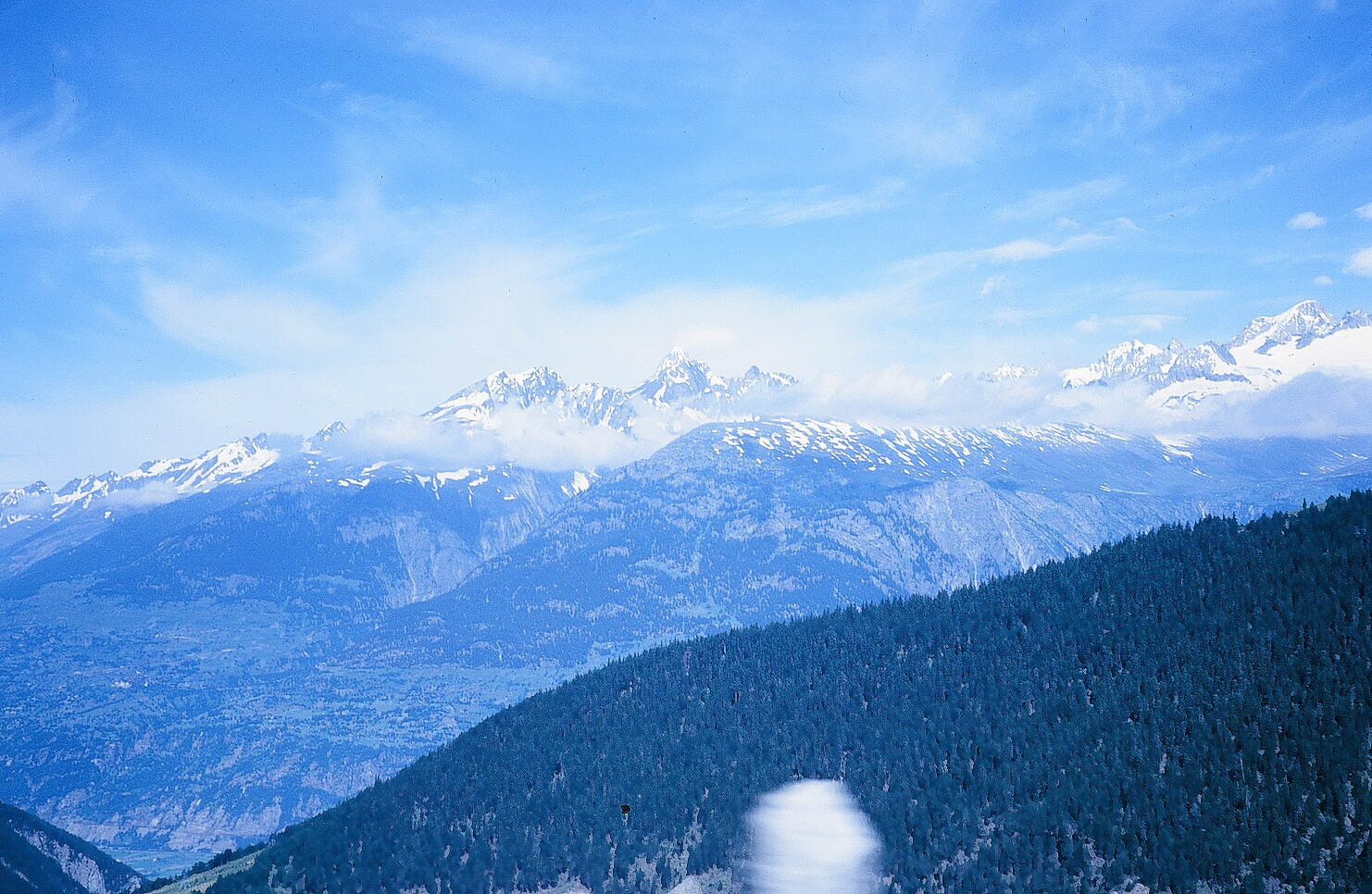
1966EuropeTrip-142 Along Grimsel Pass
1966EuropeTrip-143 Headed for Grimsel Pass.
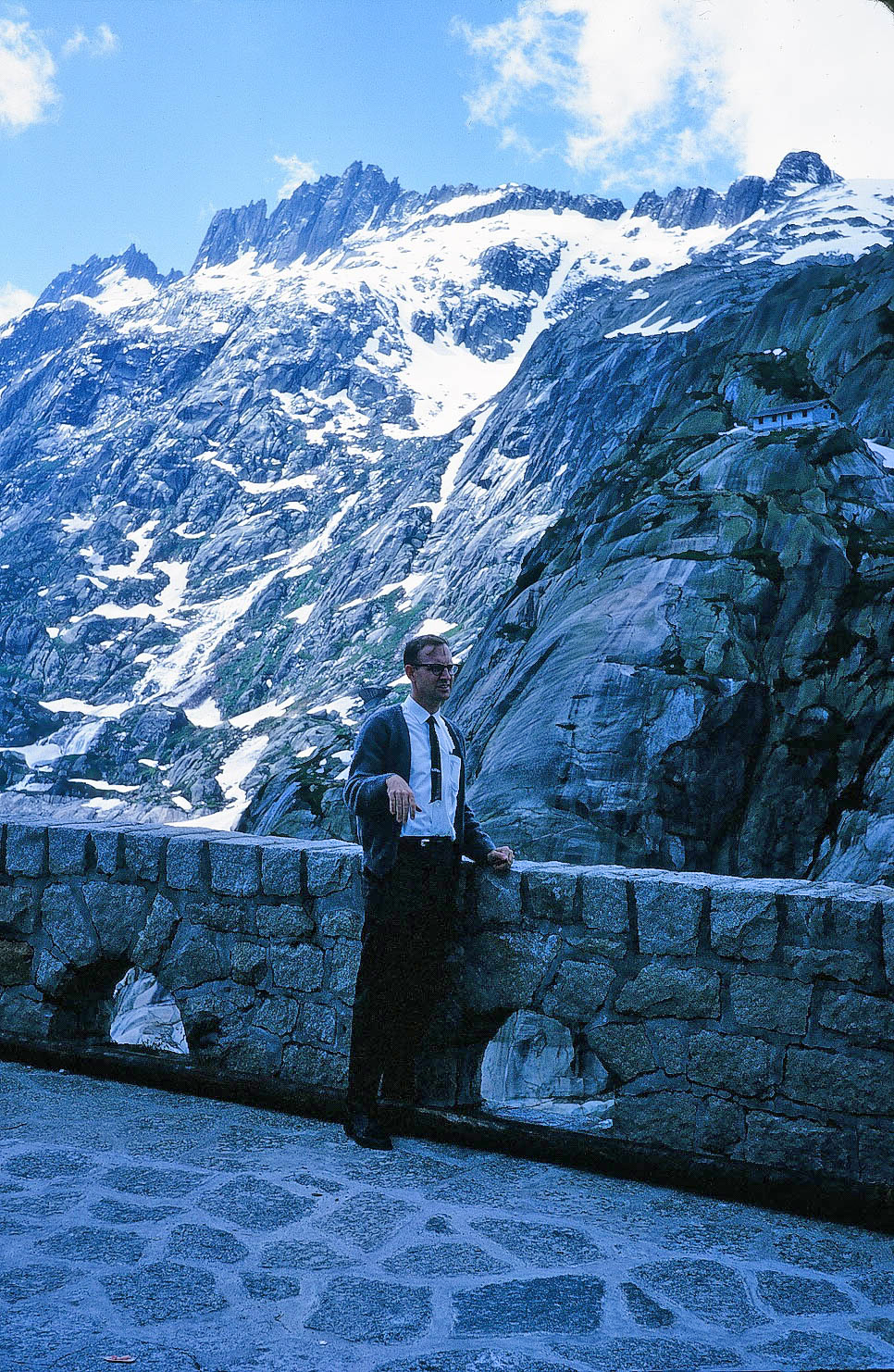
1966EuropeTrip-144 On Grimsel Pass
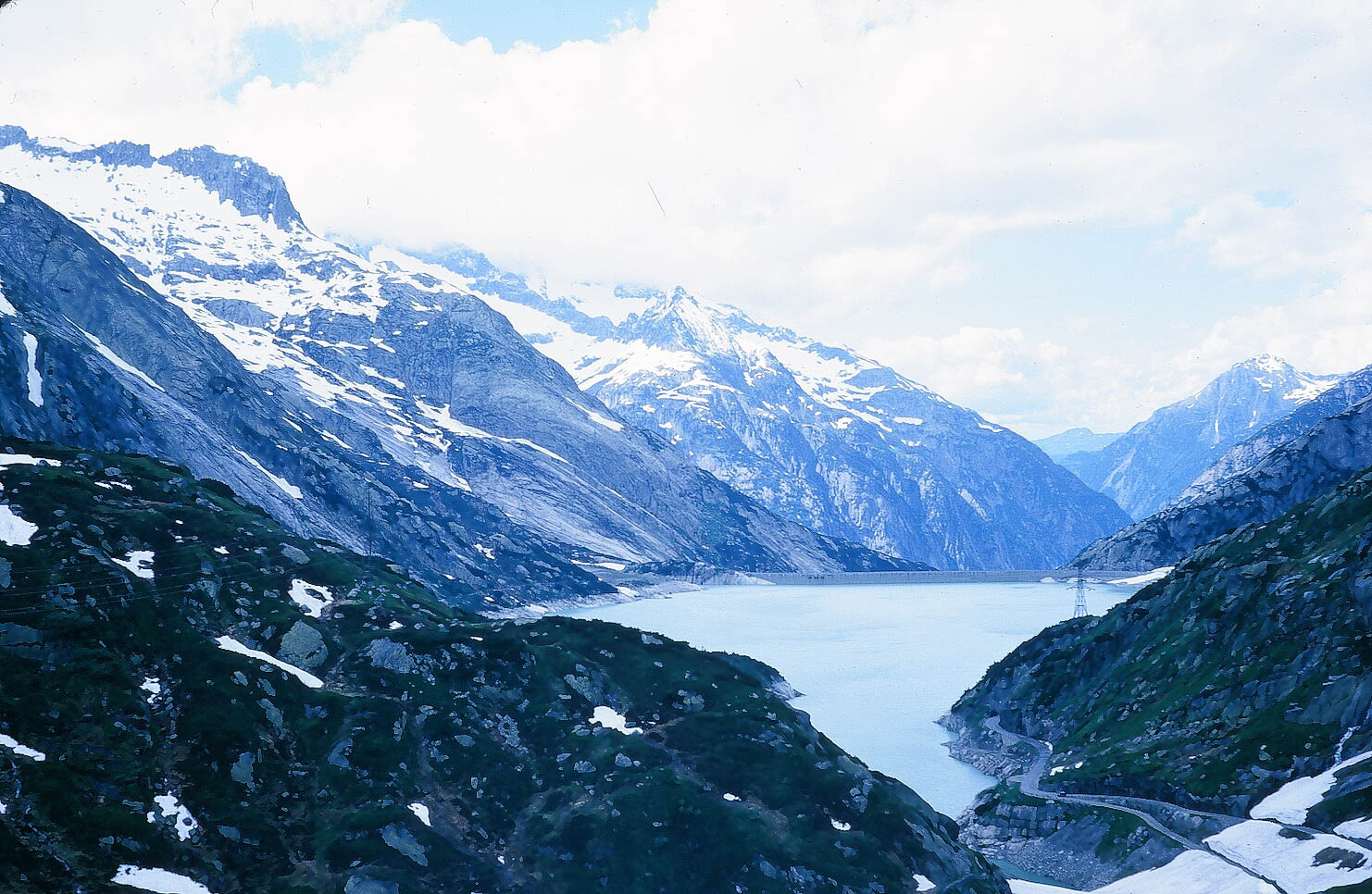
1966EuropeTrip-145 Grimsel Pass Road
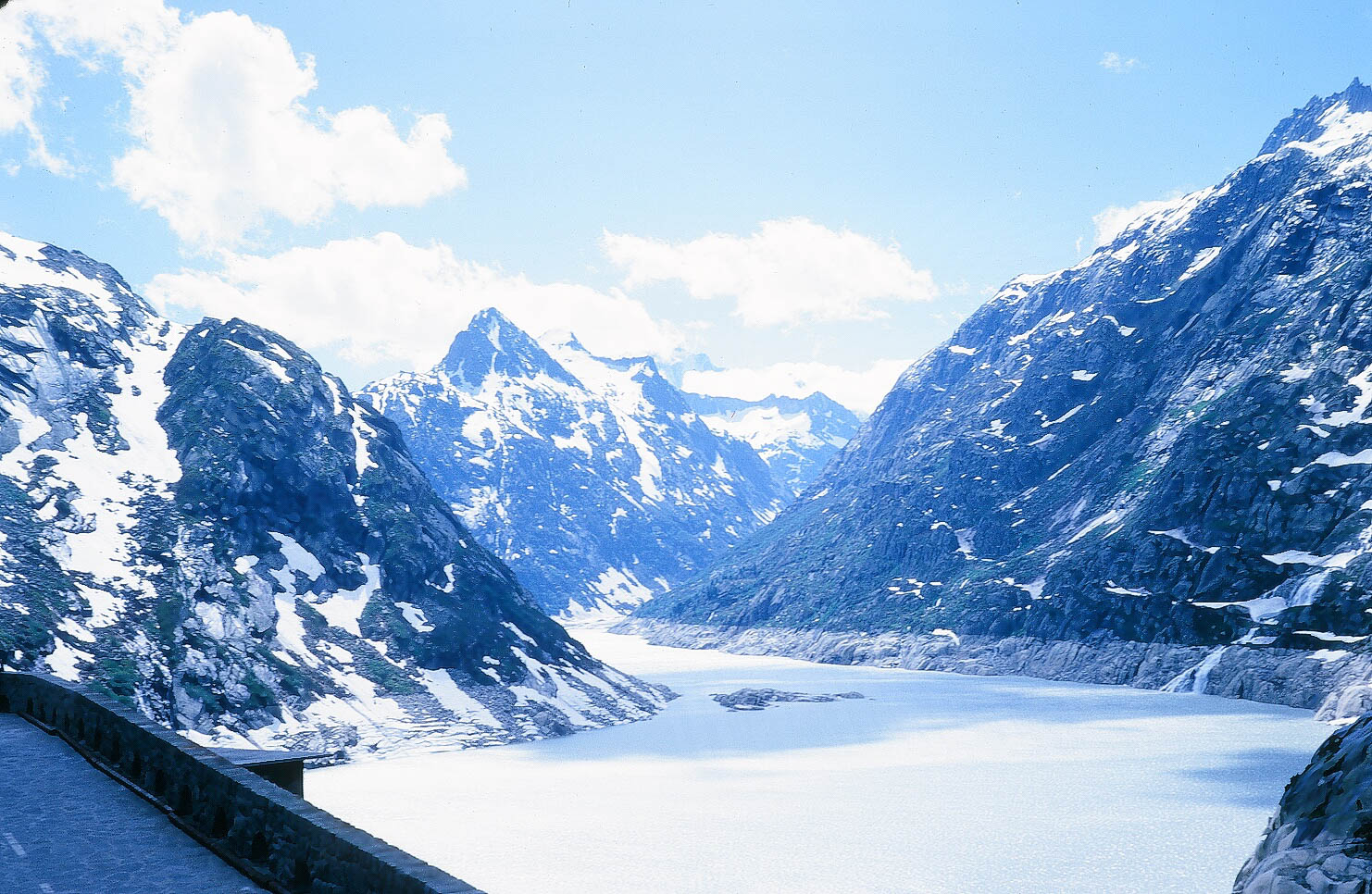
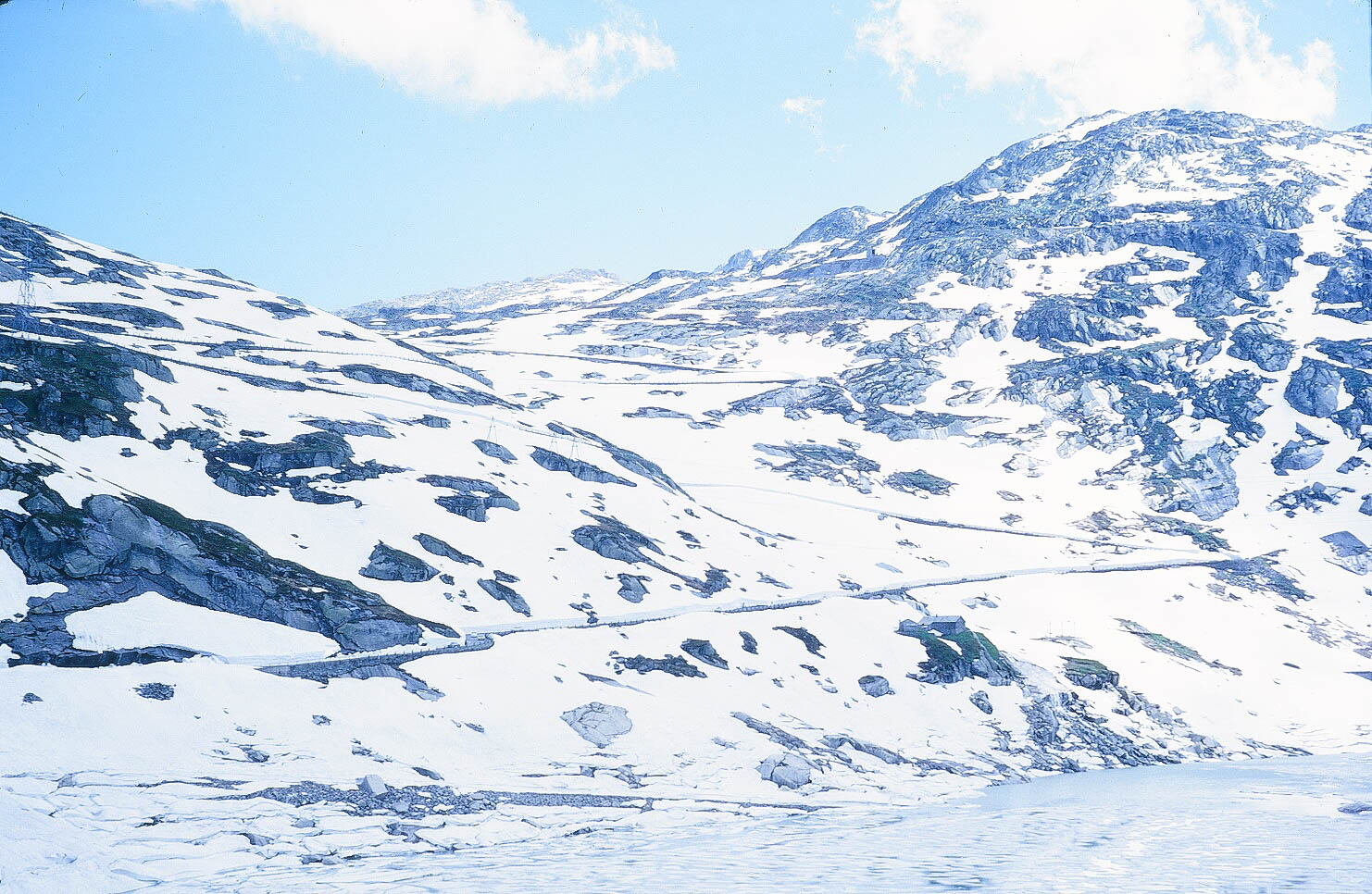
1966EuropeTrip-146 Grimsel Pass Road
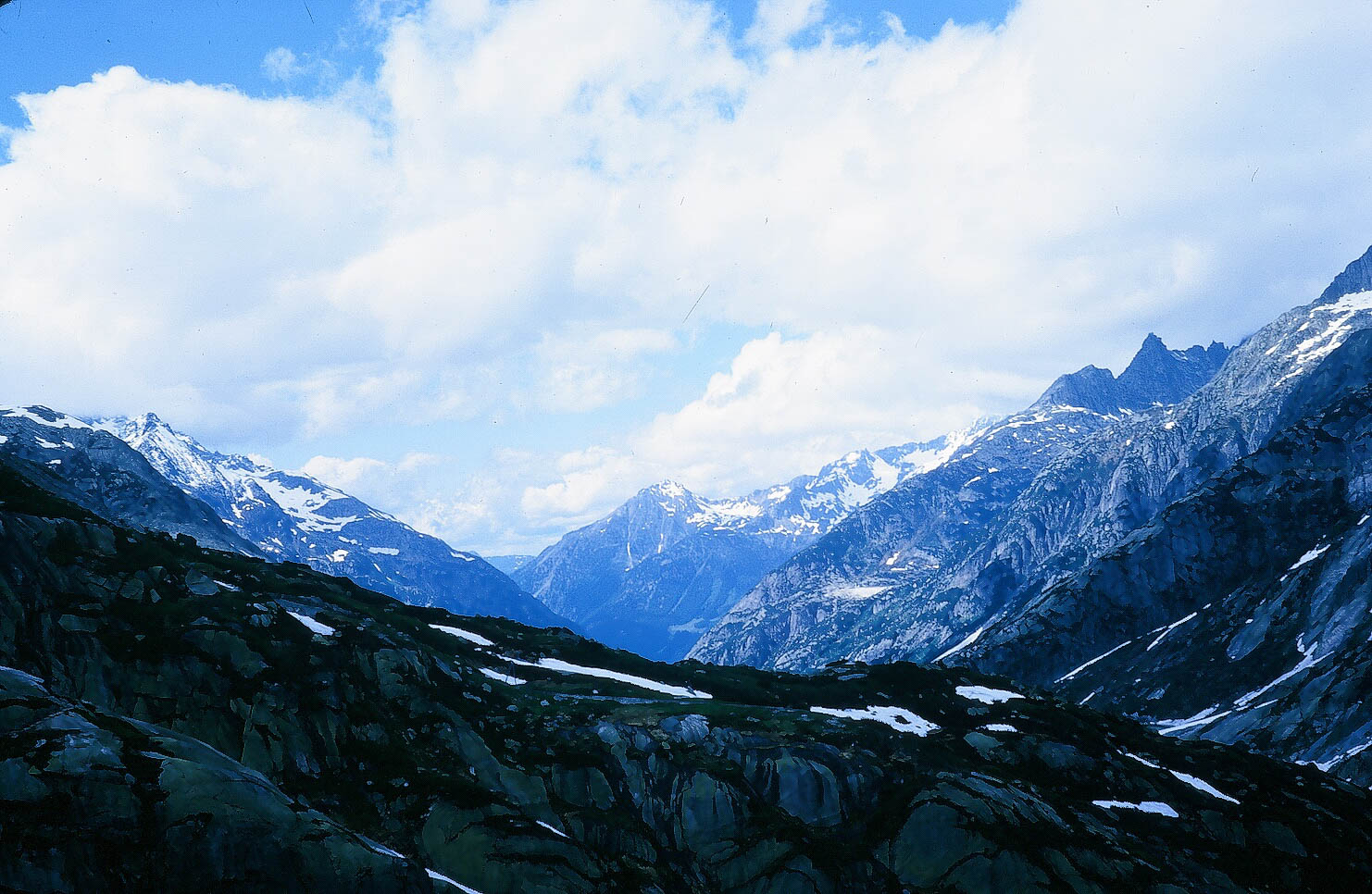
1966EuropeTrip-147 Grimsel Pass Road
1966EuropeTrip-148 Grimsel Pass Road
1966EuropeTrip-149 Grimsel Pass Road
1966EuropeTrip-150 Grimsel Pass Road
1966EuropeTrip-151 Grimsel Pass Road
1966EuropeTrip-152 Grimsel Pass Road
1966EuropeTrip-153 Grimsel Pass Road
1966EuropeTrip-154 Grimsel Pass Road
1966EuropeTrip-155 Grimsel Pass Road
1966EuropeTrip-156 Grimsel Pass Road
1966EuropeTrip-157 Grimsel Pass Road
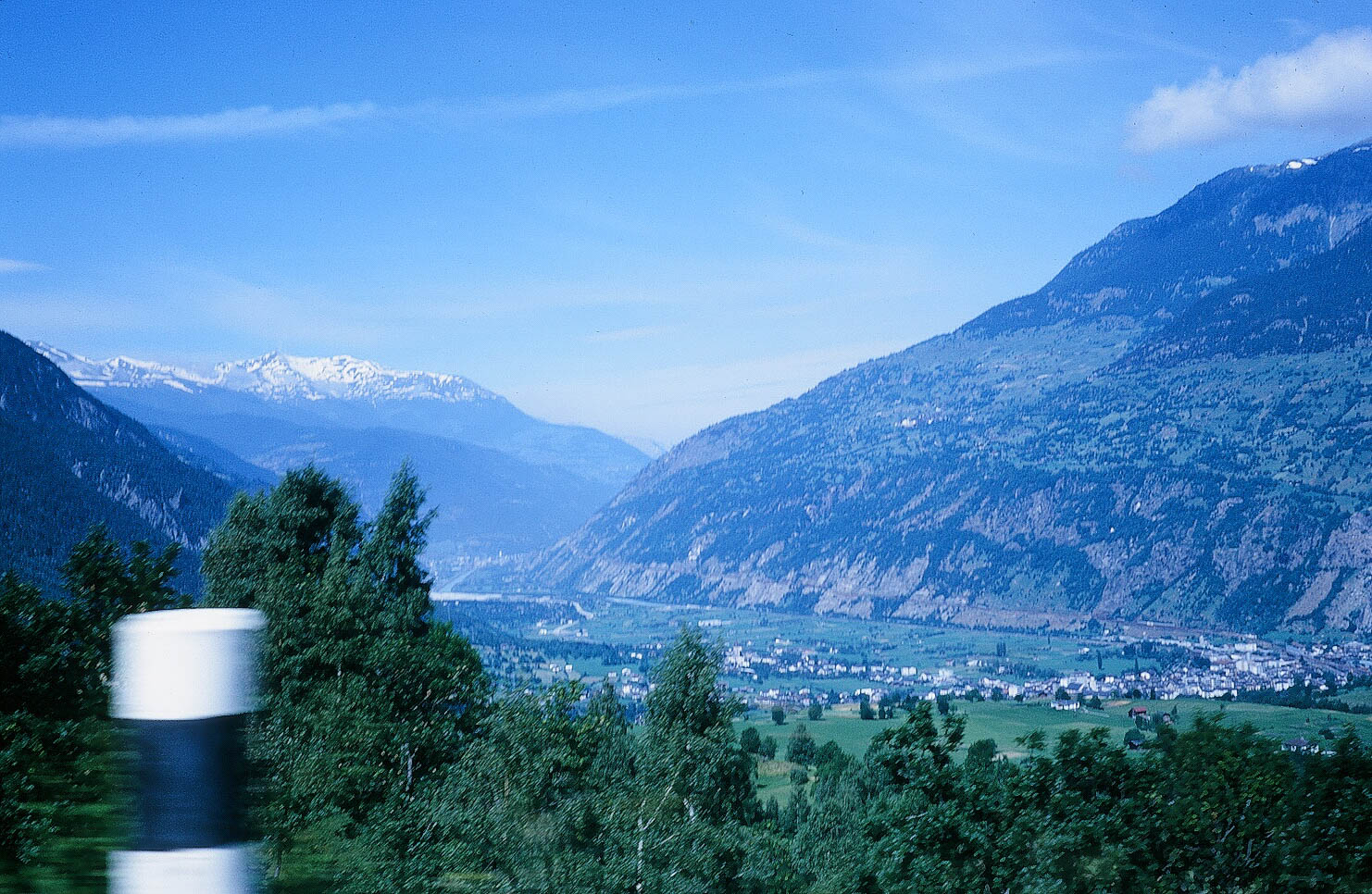
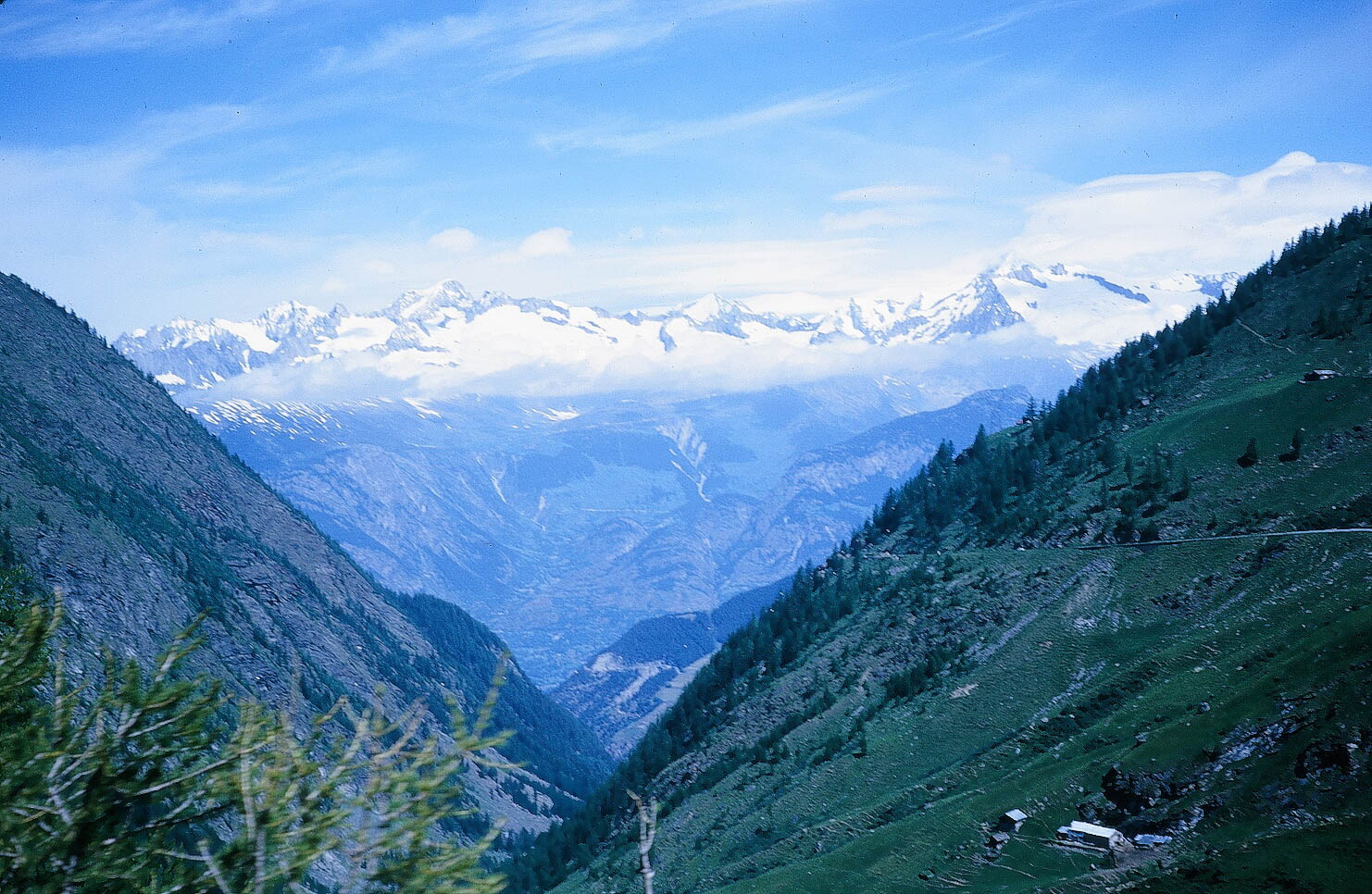
1966EuropeTrip-158 Descending into Italy on Grimsel Pass Road
1966EuropeTrip-159 Grimsel Pass Road
1966EuropeTrip-160 Grimsel Pass Road
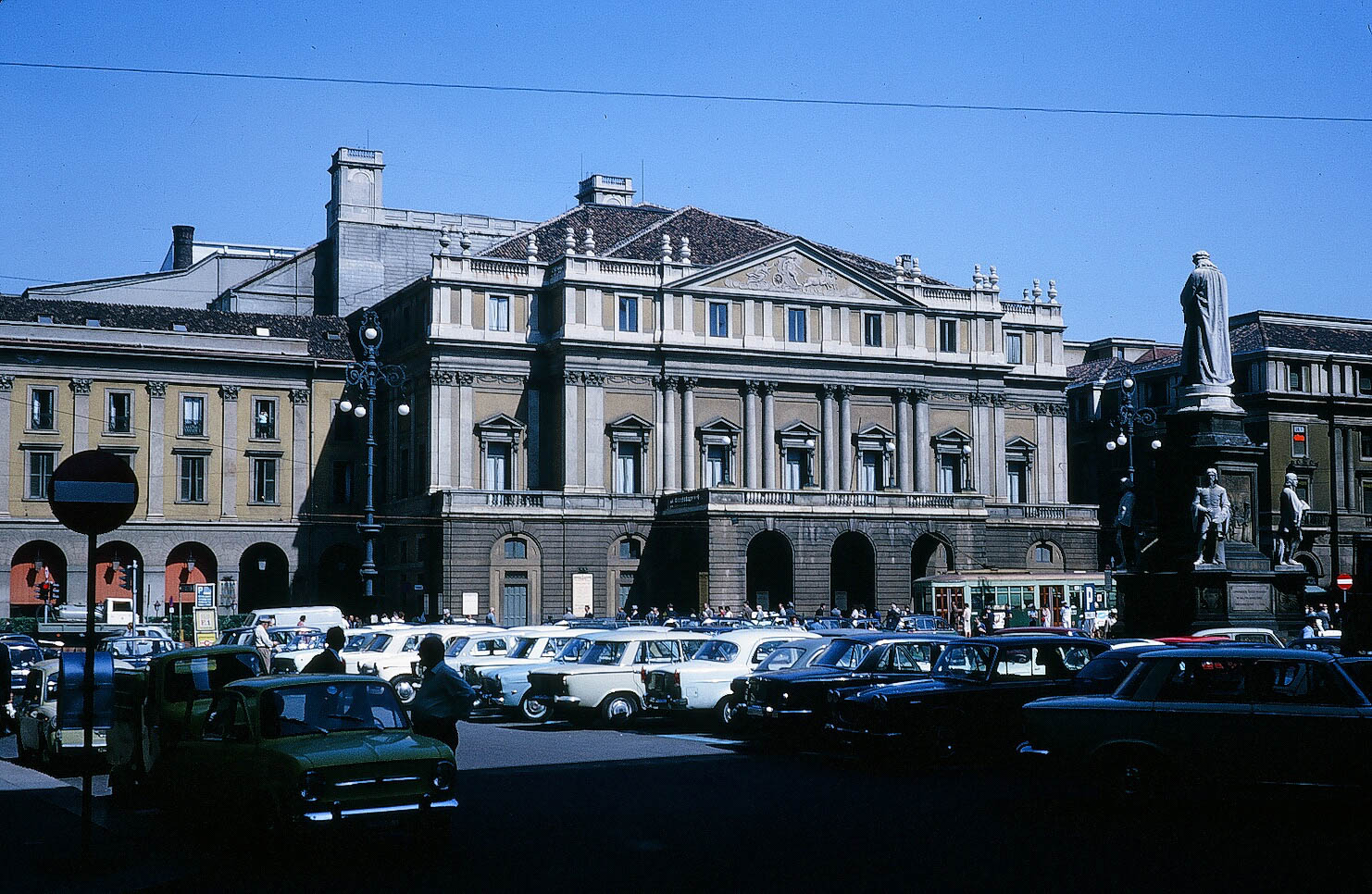
1966EuropeTrip-185 La Scala Opera House, Milan, Italy
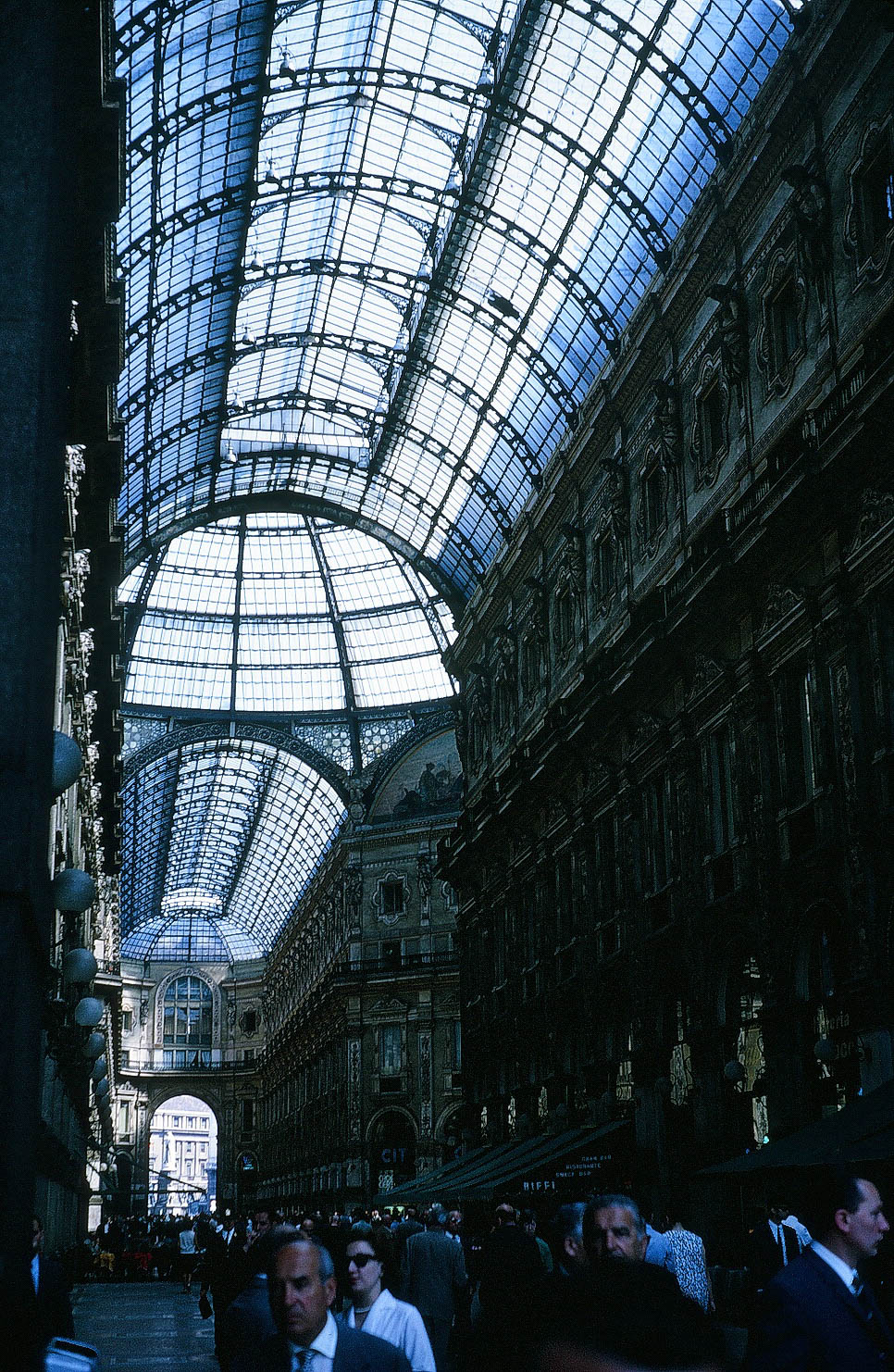
1966EuropeTrip-186 Galleria Shopping Center Milan, Italy.
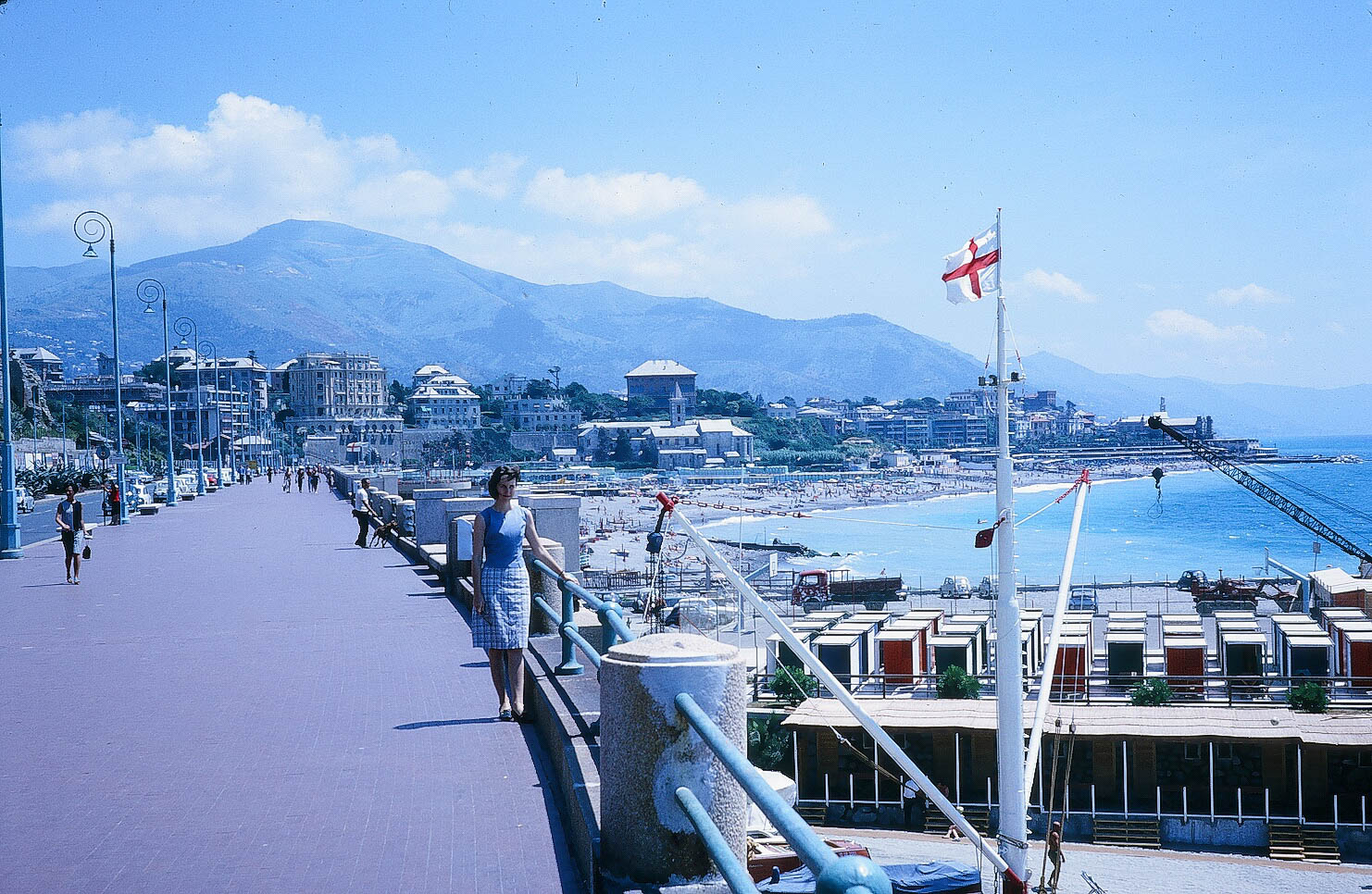
1966EuropeTrip-187 Genoa, Italy. Pat's birthday.
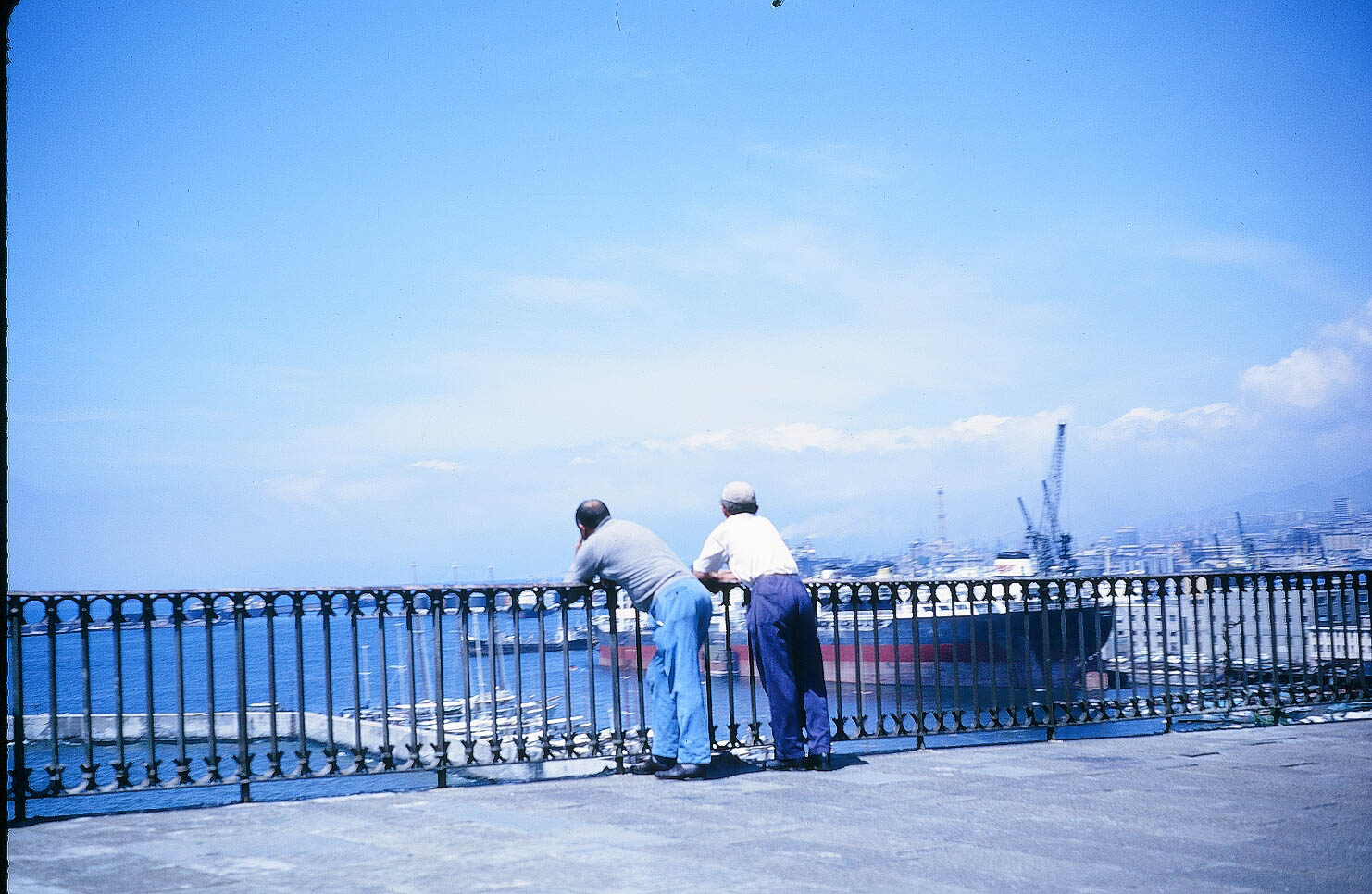
1966EuropeTrip-188 Genoa, Italy
1966EuropeTrip-189 Pat on her birthday in Genoa, Italy.
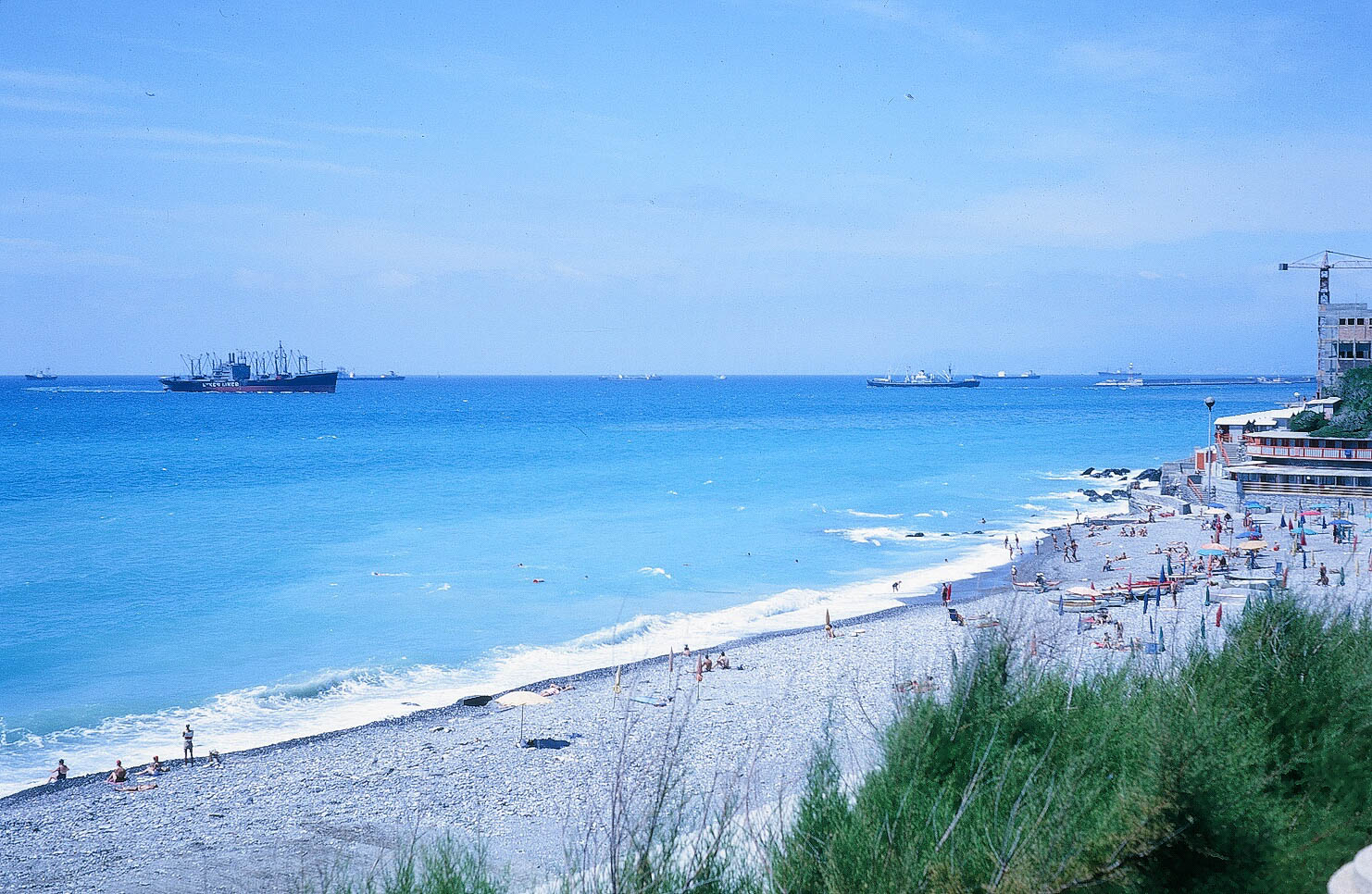
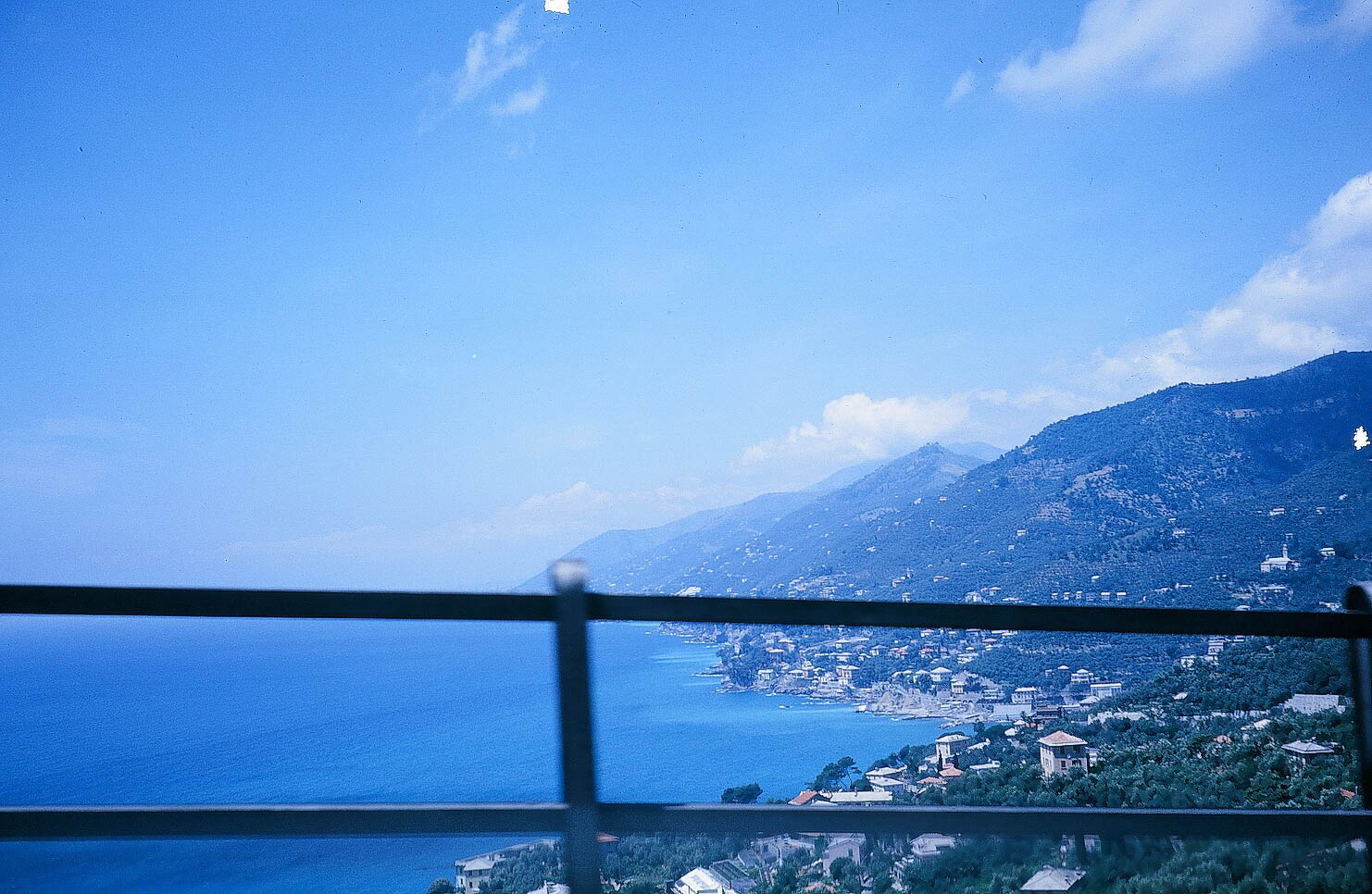
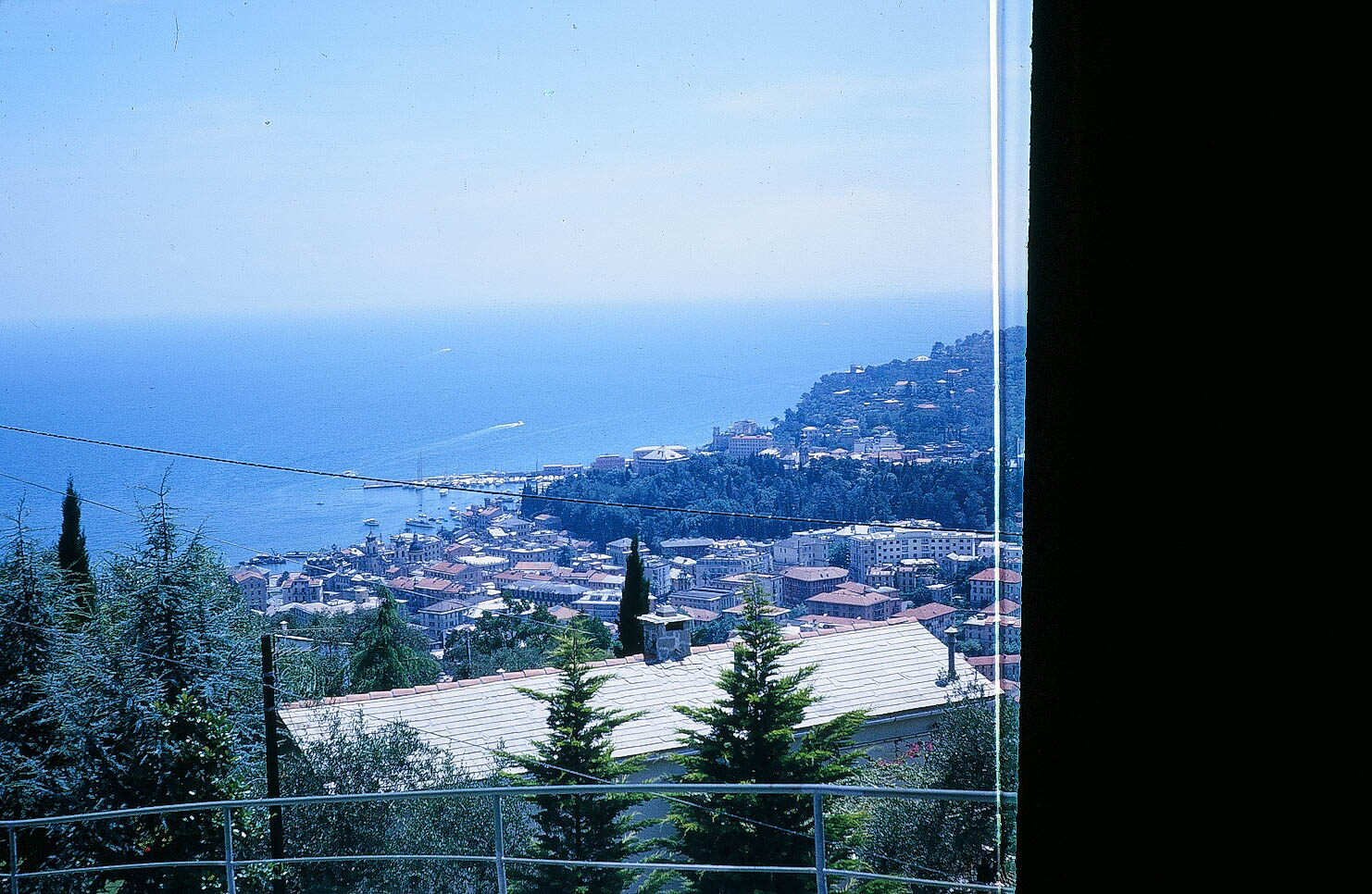
1966EuropeTrip-190 Mediteranean Sea near Genoa.
1966EuropeTrip-191 Mediteranean Sea.
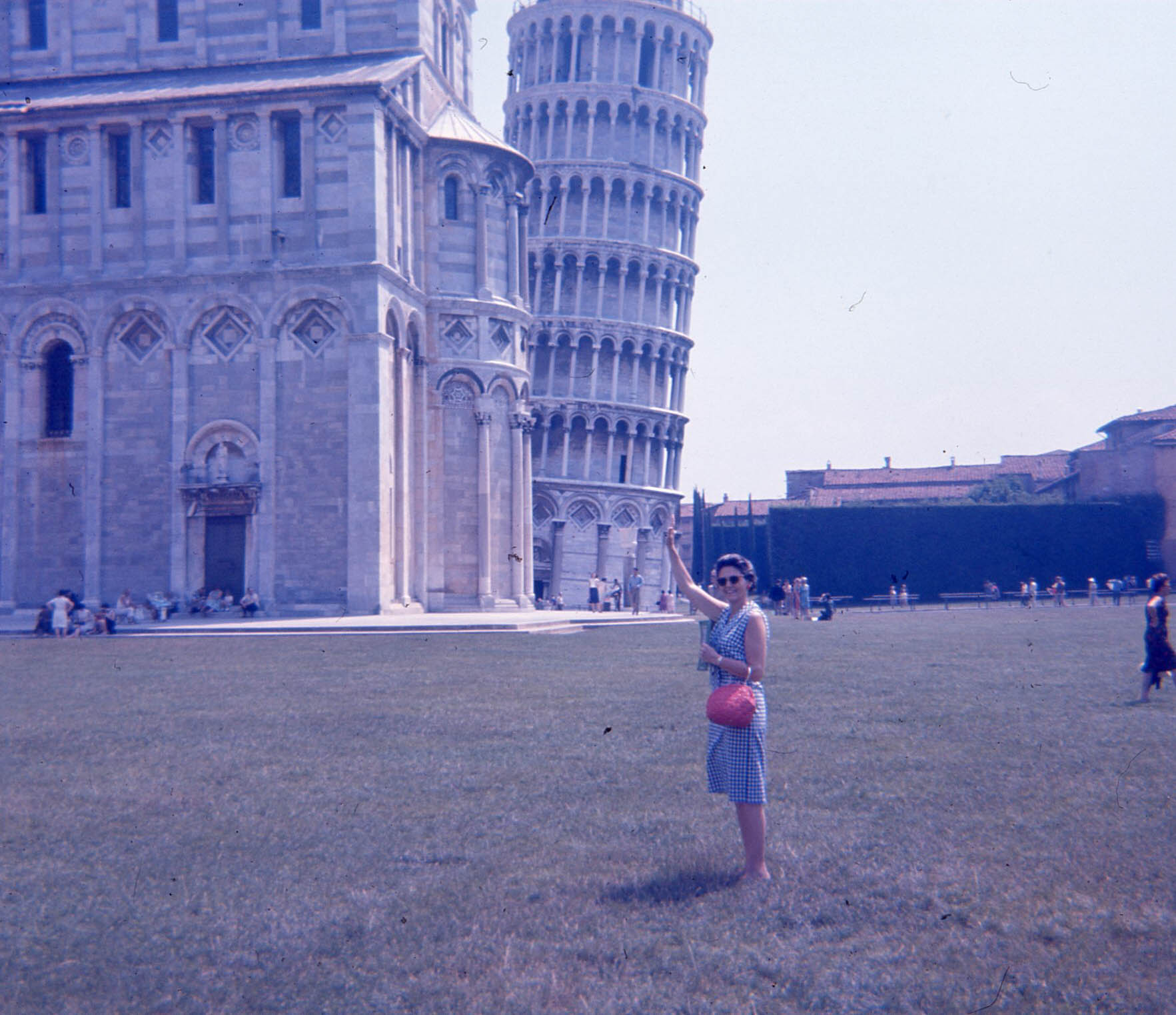
1966EuropeTrip-192 Pisa, Italy
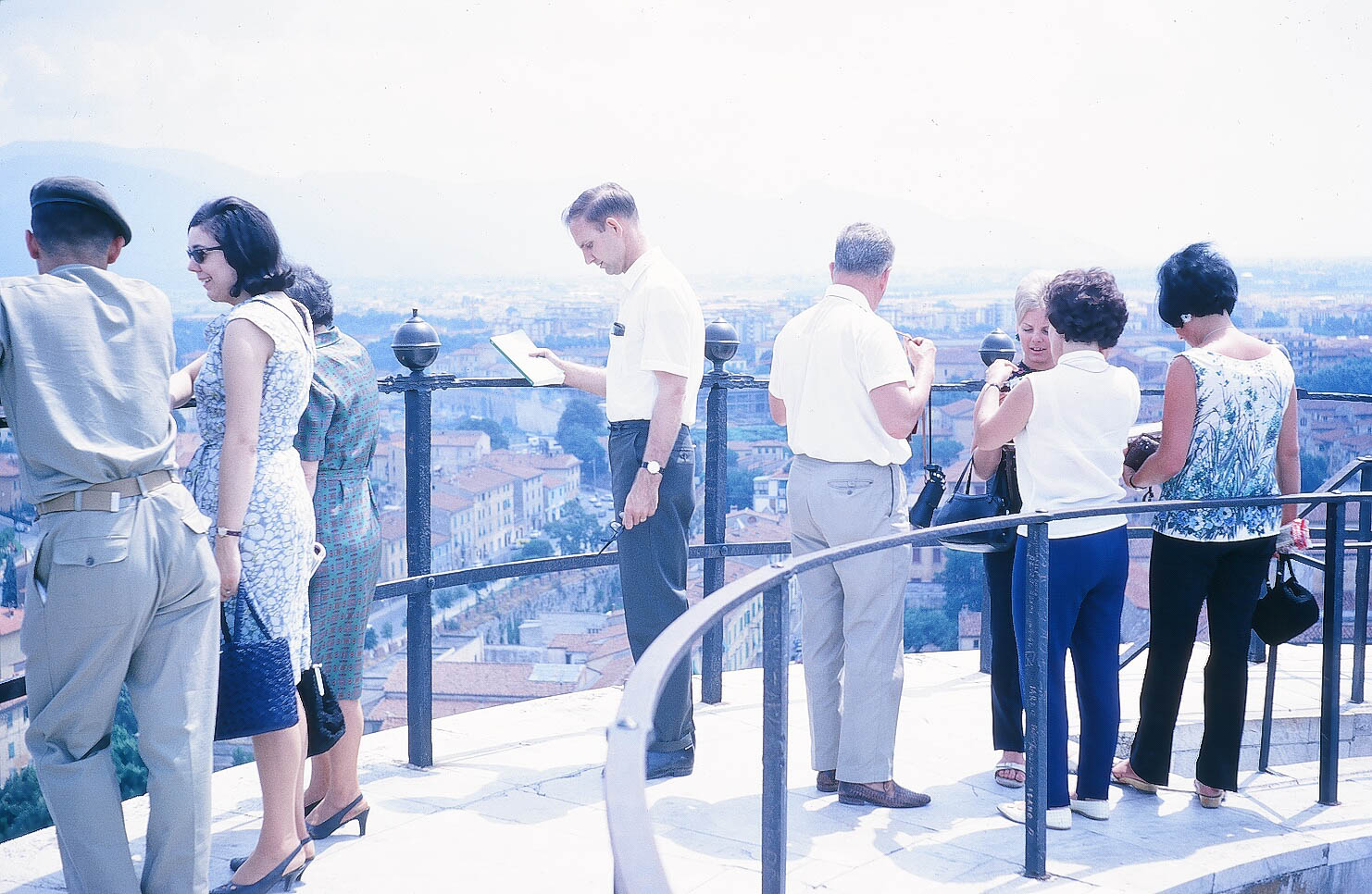
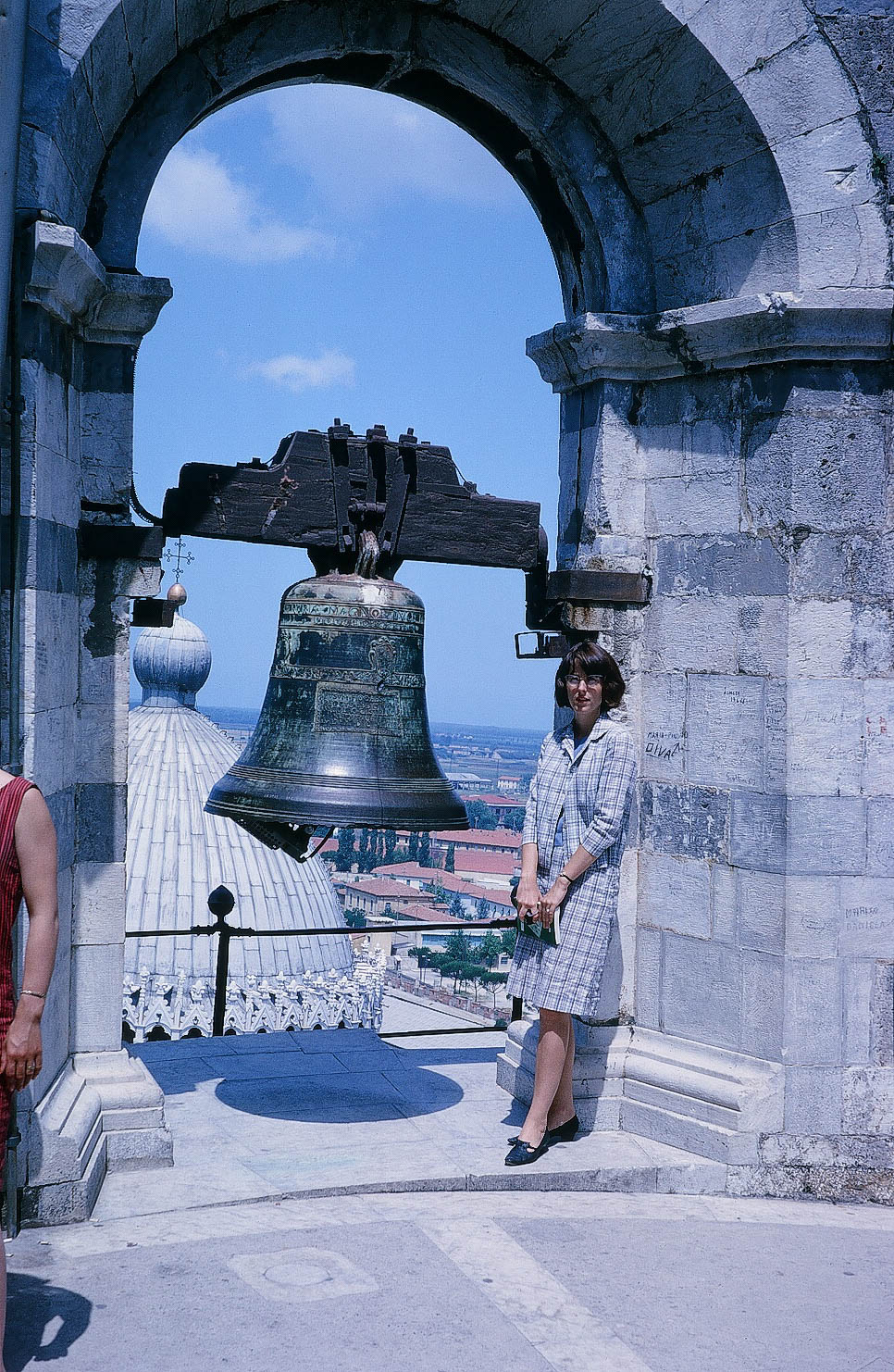
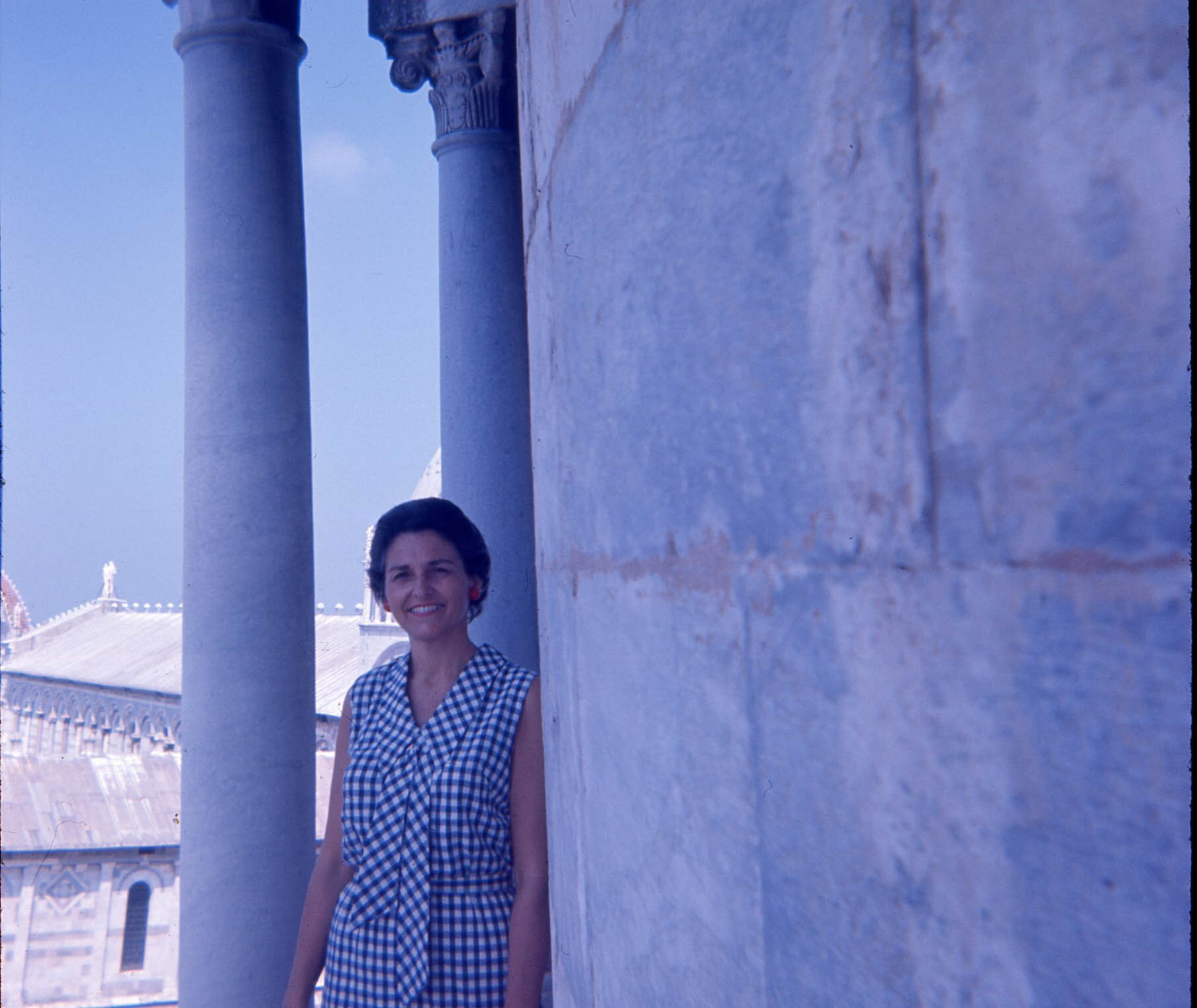
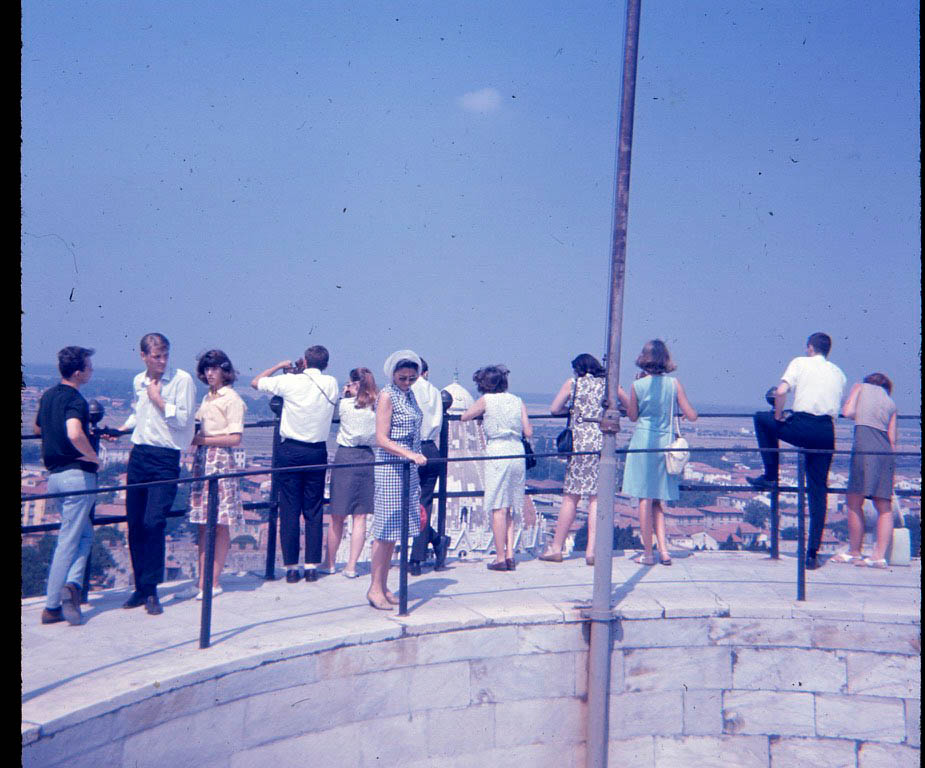
1966EuropeTrip-193 Atop the Leaning Tower of Italy.
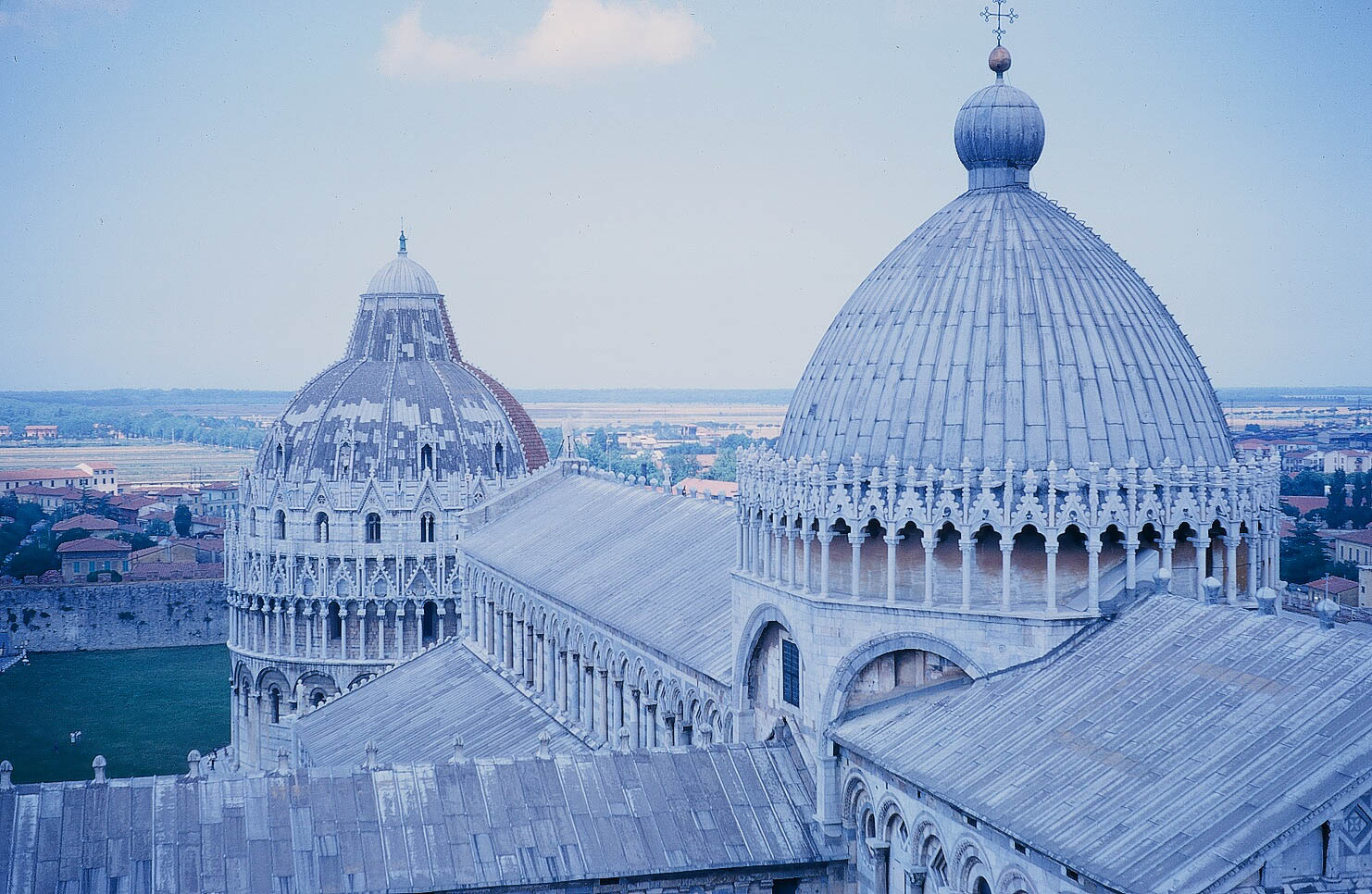
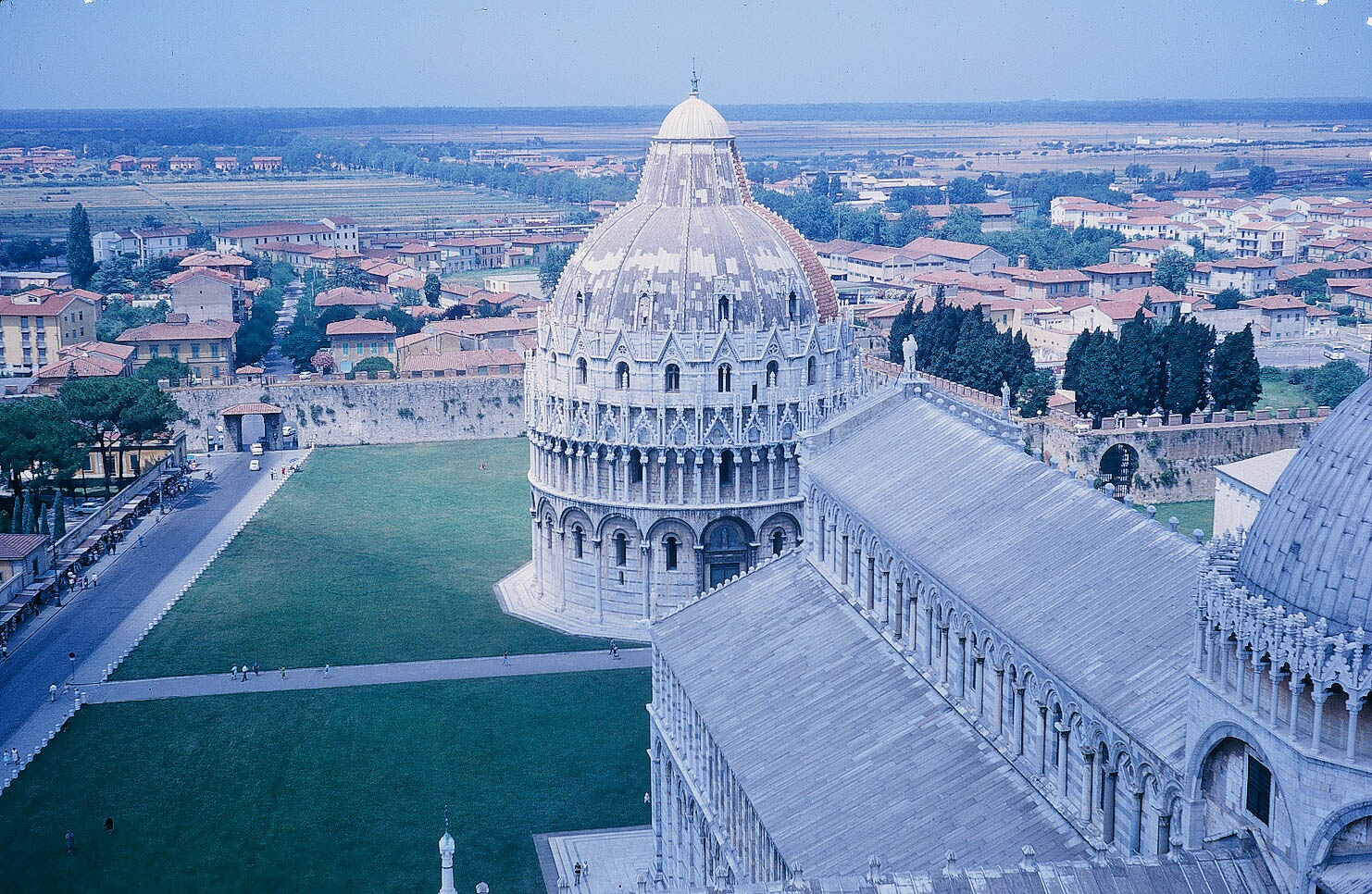
1966EuropeTrip-194 Baptistry in Pisa from the Leaning Tower.
1966EuropeTrip-195 Pat on Leaning Tower.
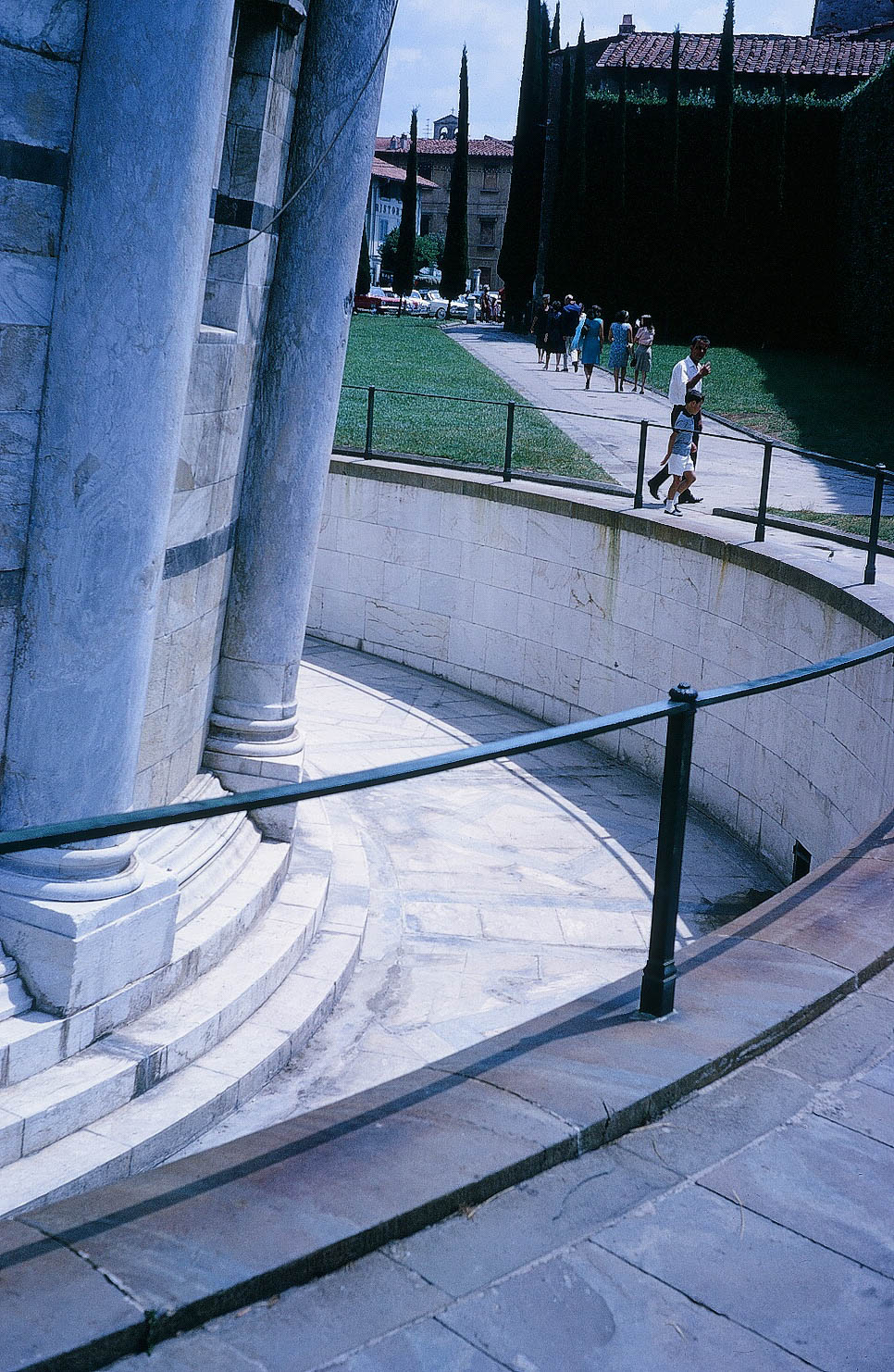
1966EuropeTrip-196 Base of Leaning Tower
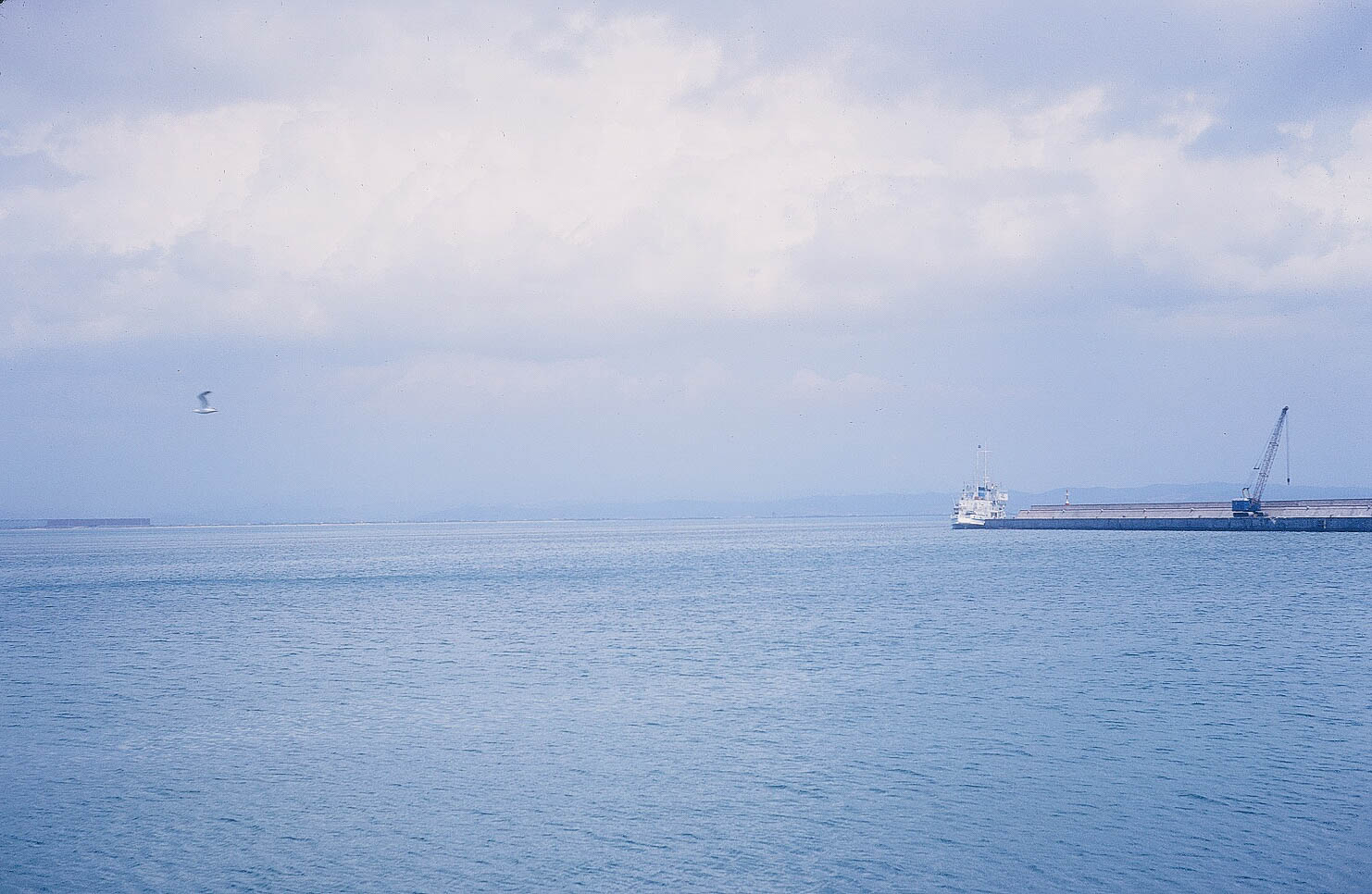
1966EuropeTrip-197 Mediteranean Sea from Pisa.
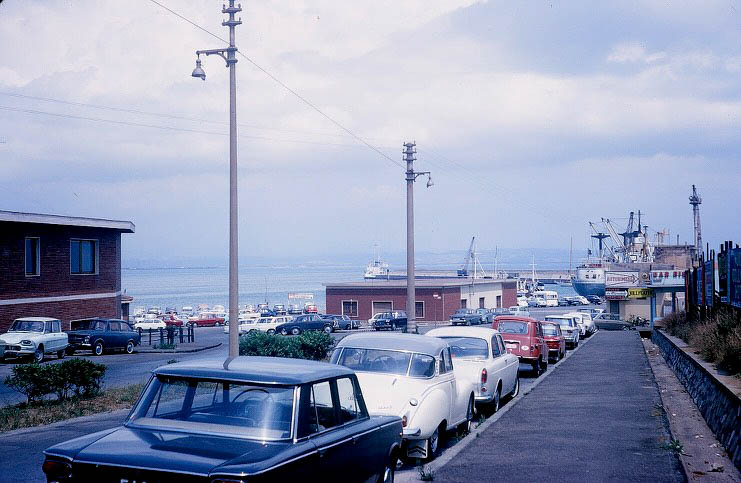
1966EuropeTrip-199 Ferry
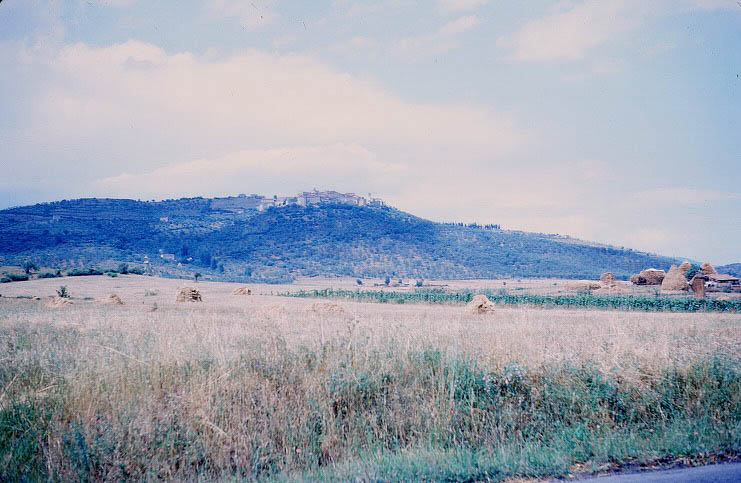
1966EuropeTrip-201 Italian Countryside. We drove to Tirrenia and had dinner with Robbie Wilson and her brother, Robert, who was visiting. Robbie was a dear family friend from Vicksburg that worked in Foriegn Service.
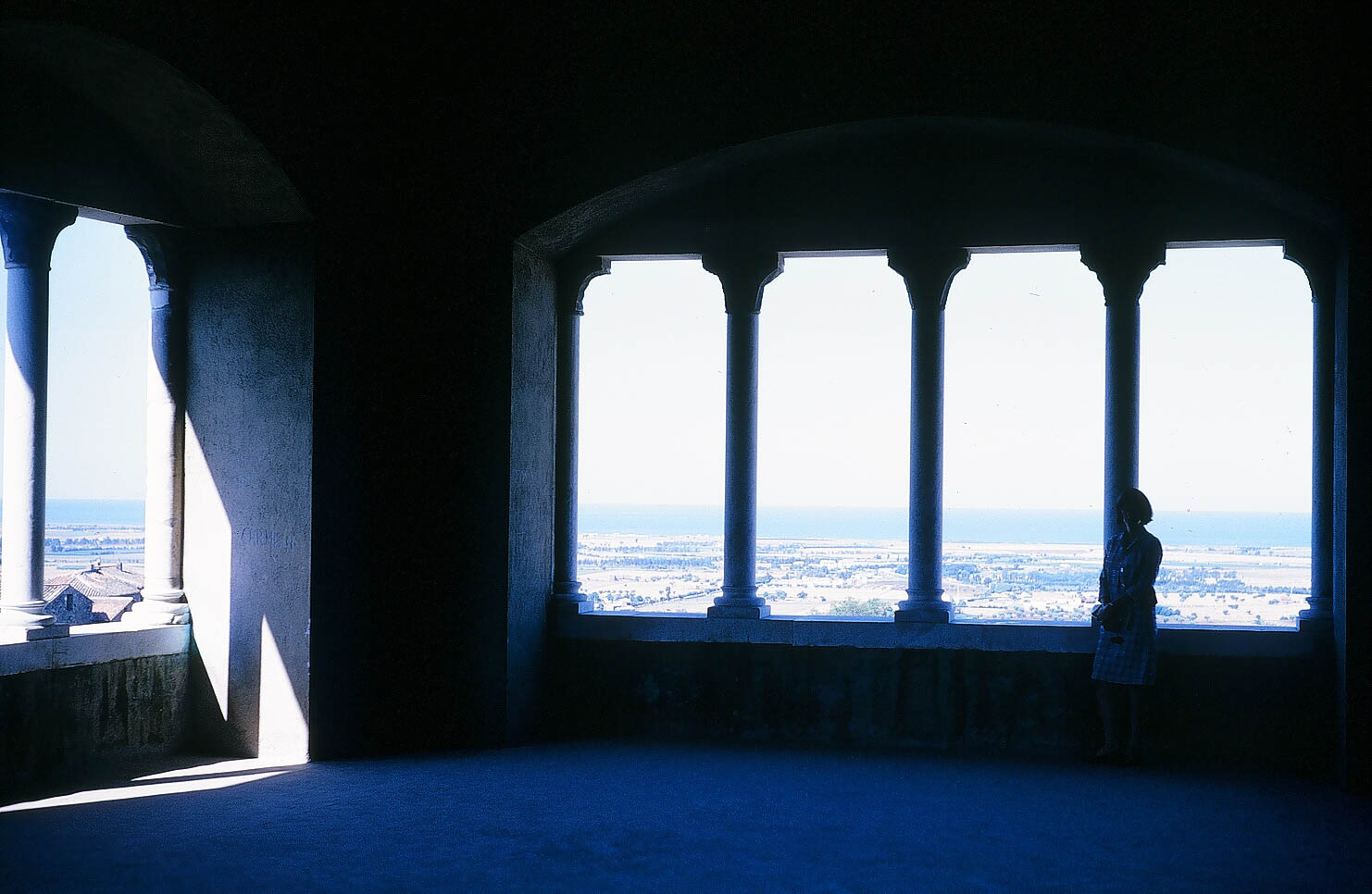
1966EuropeTrip-202 Tarquinia, Etruscan Museum.
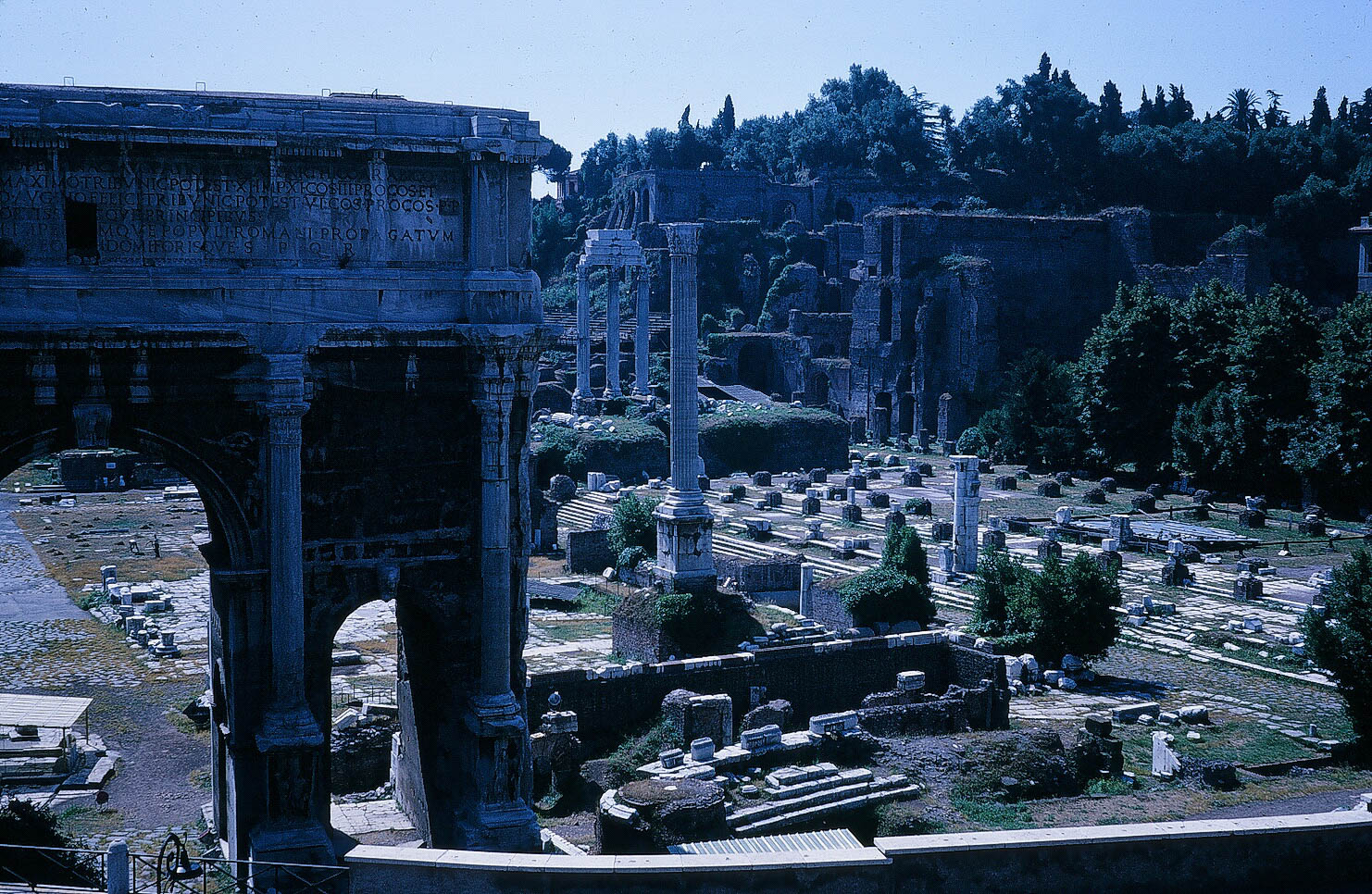
1966EuropeTrip-203 Roman Forum
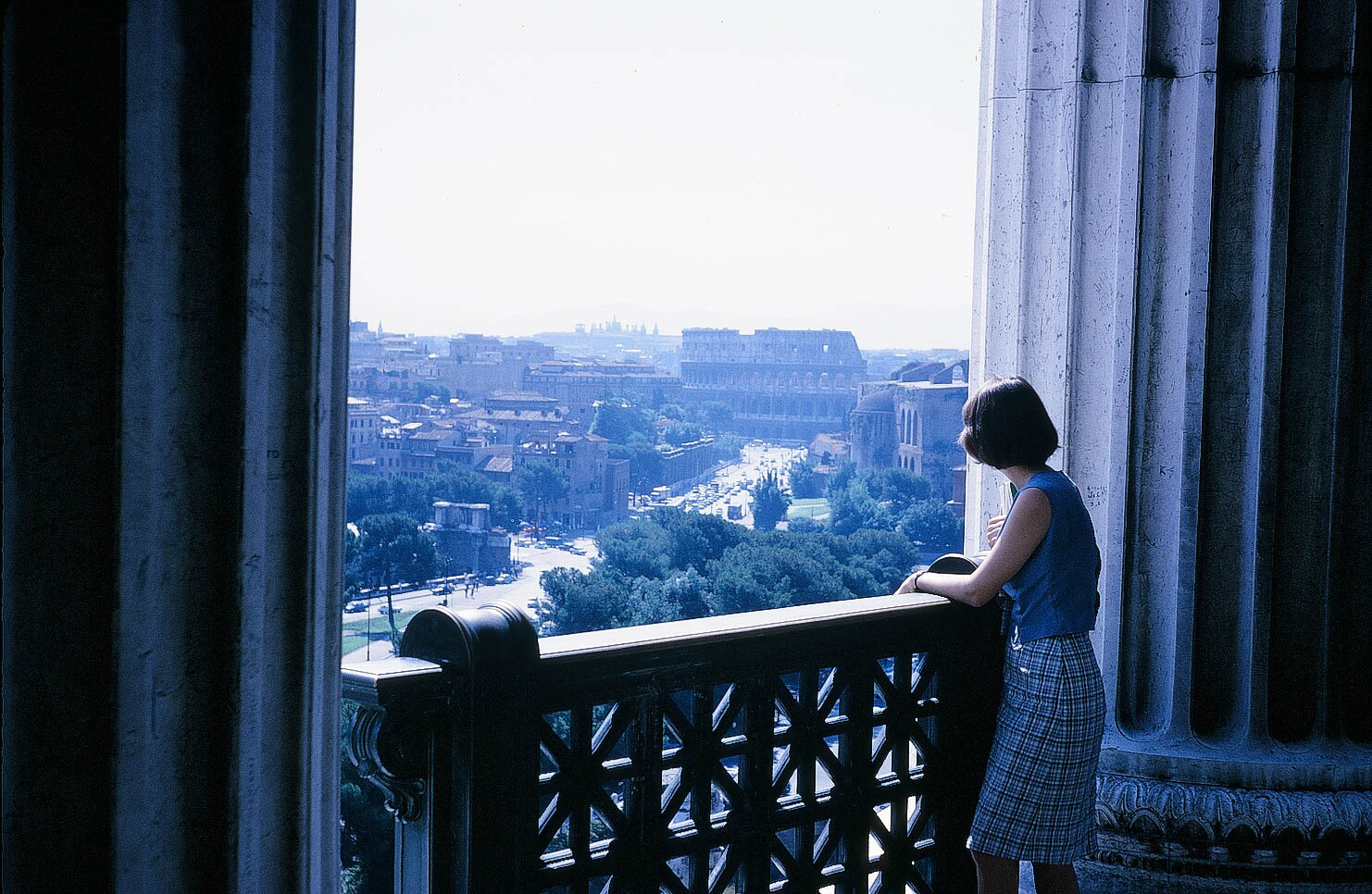
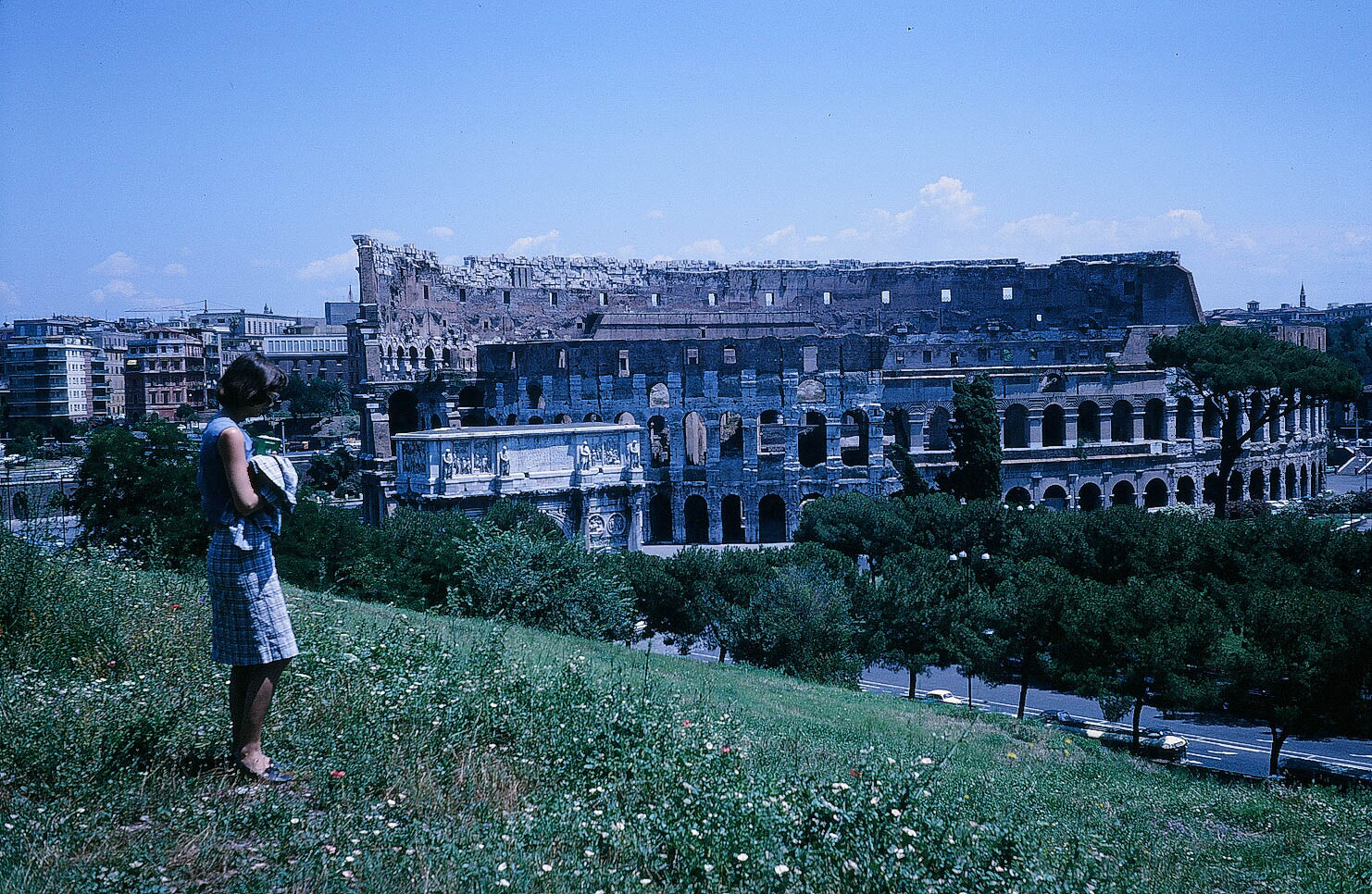
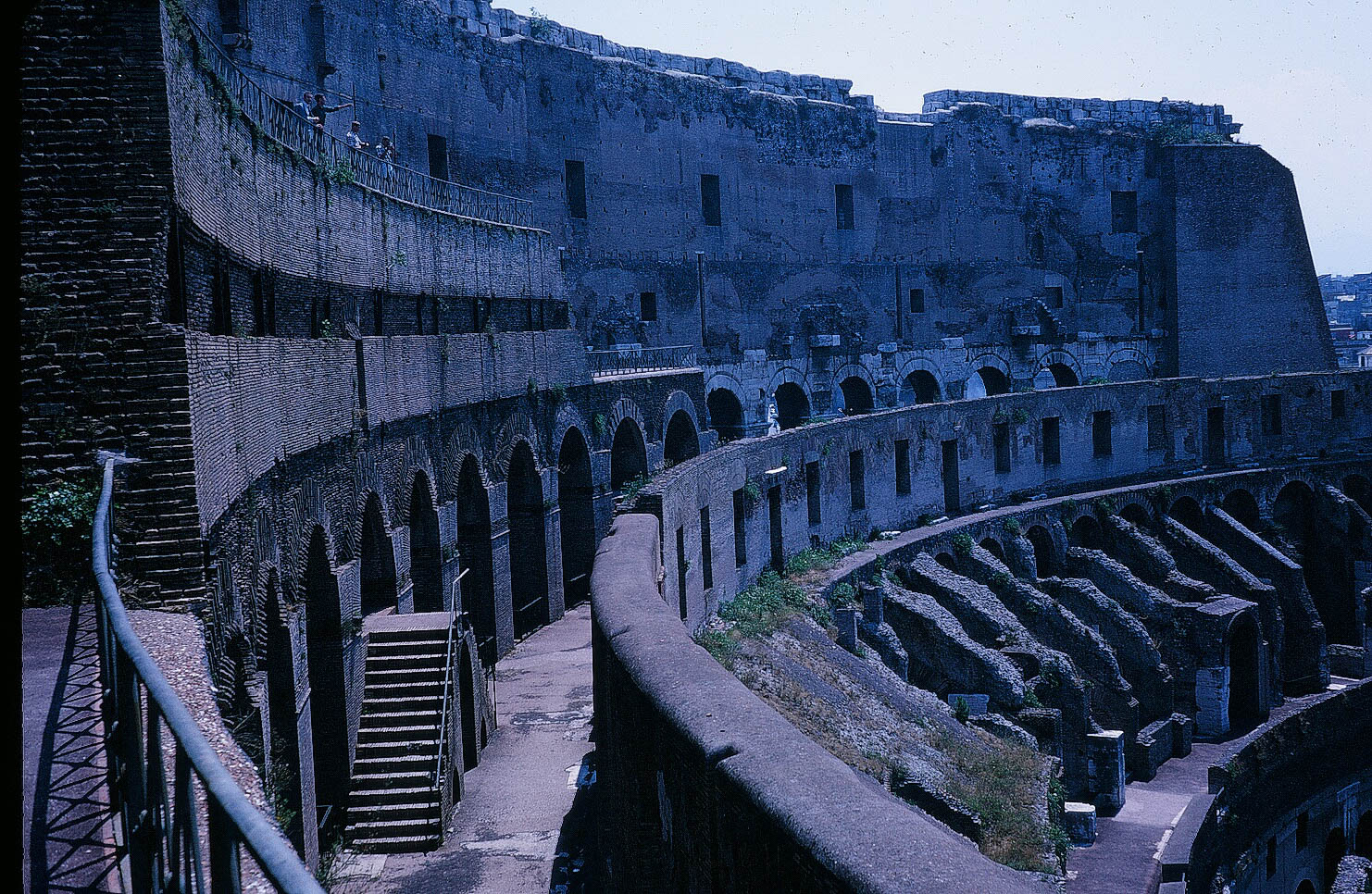
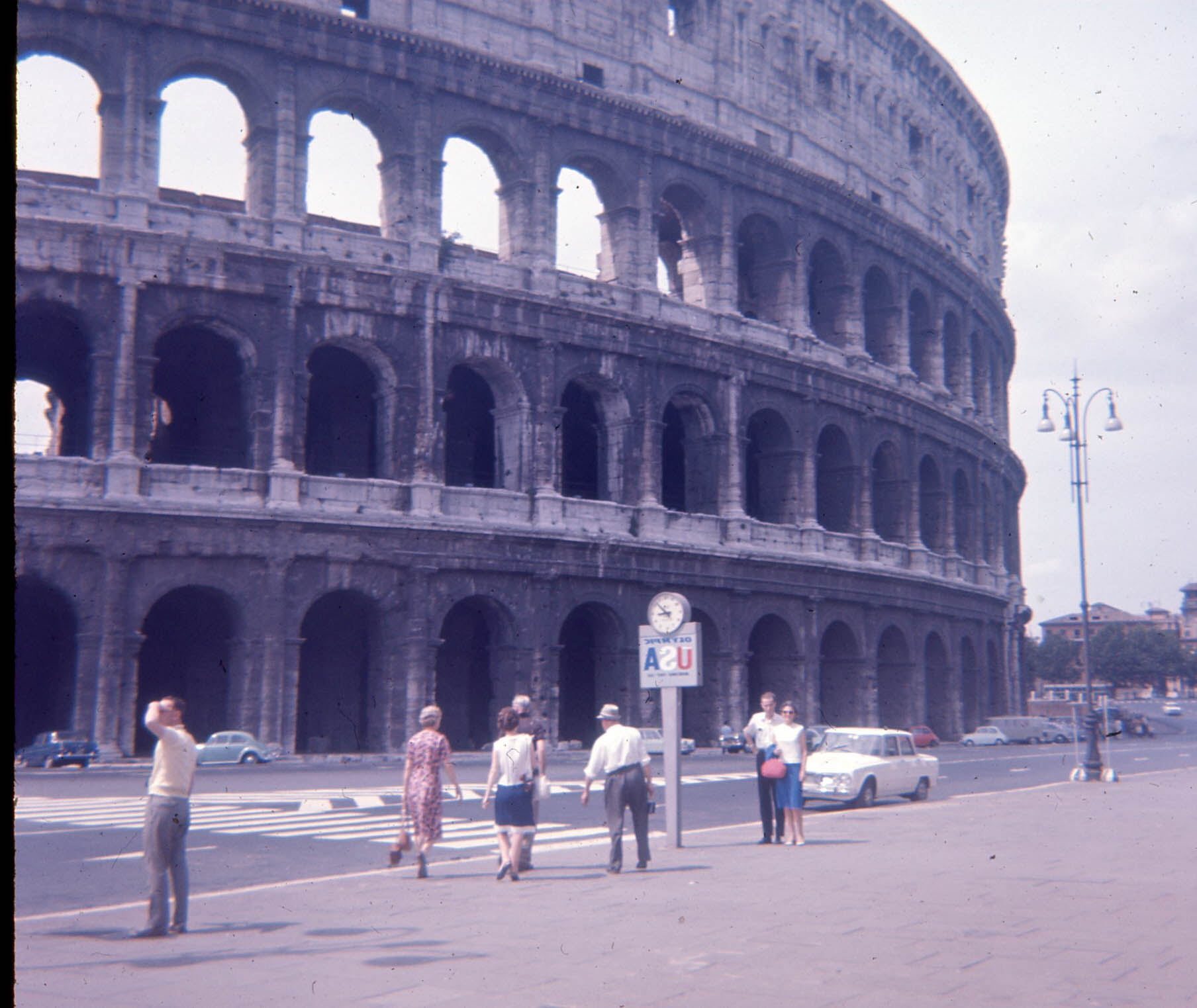
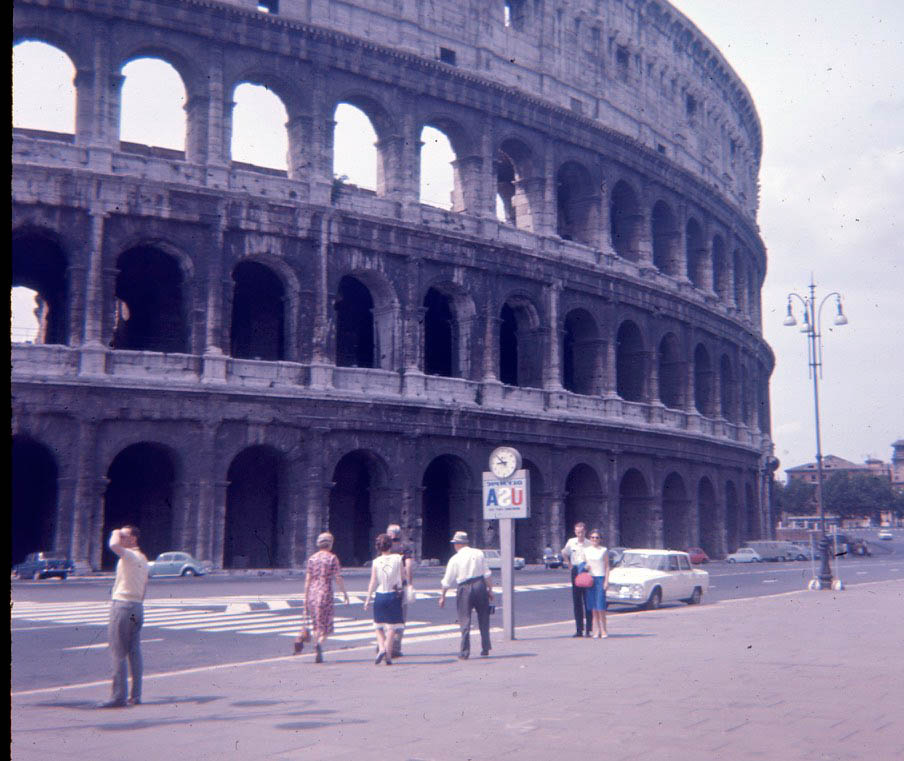
1966EuropeTrip-204 Colosseum
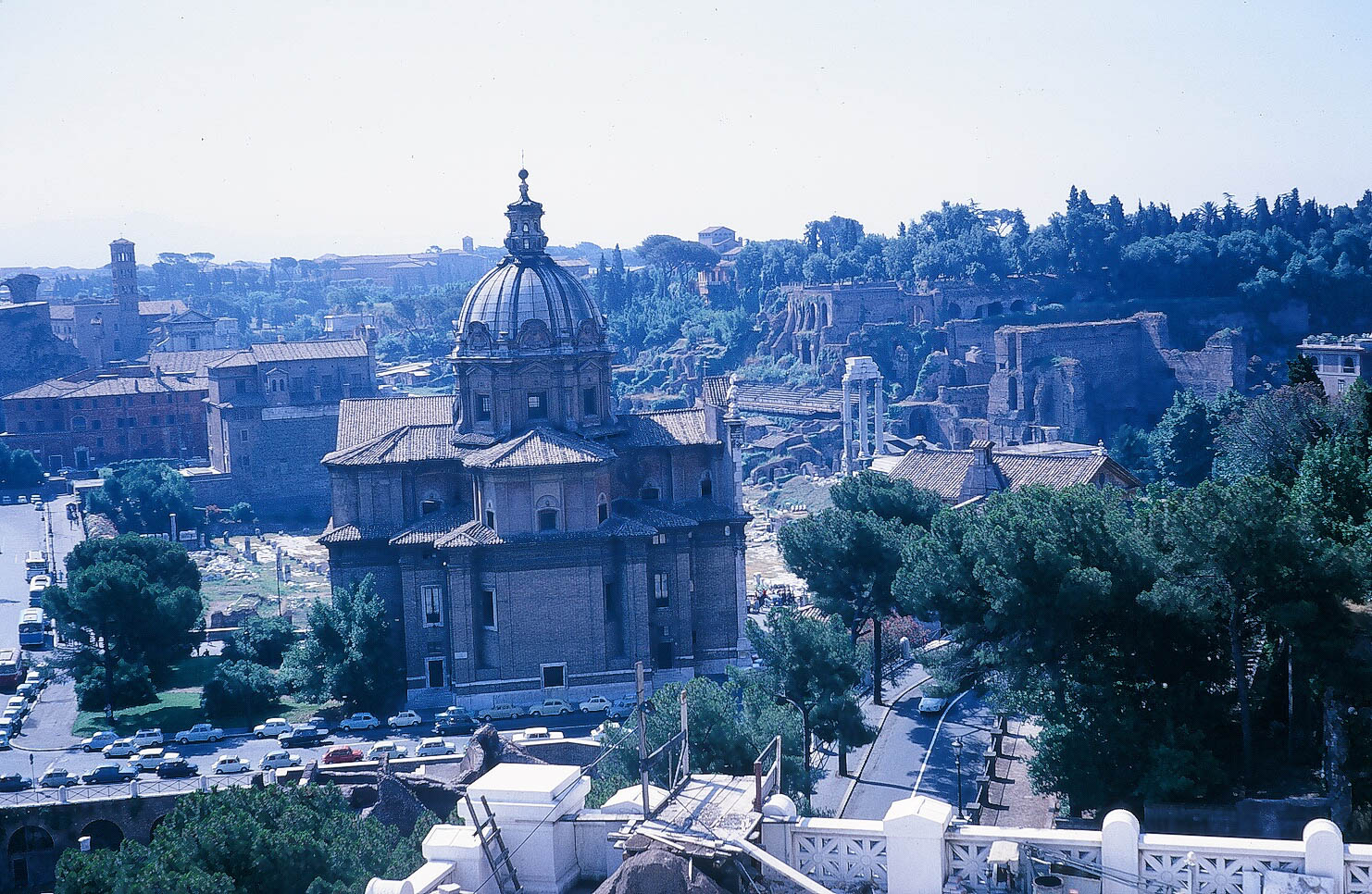
1966EuropeTrip-205 Church of Santi Luca e Martina in Rome, Italy. It is situated between the Roman Forum and the Forum of Caesar. The church was initially founded in the early 7th century and dedicated to Saint Martina.
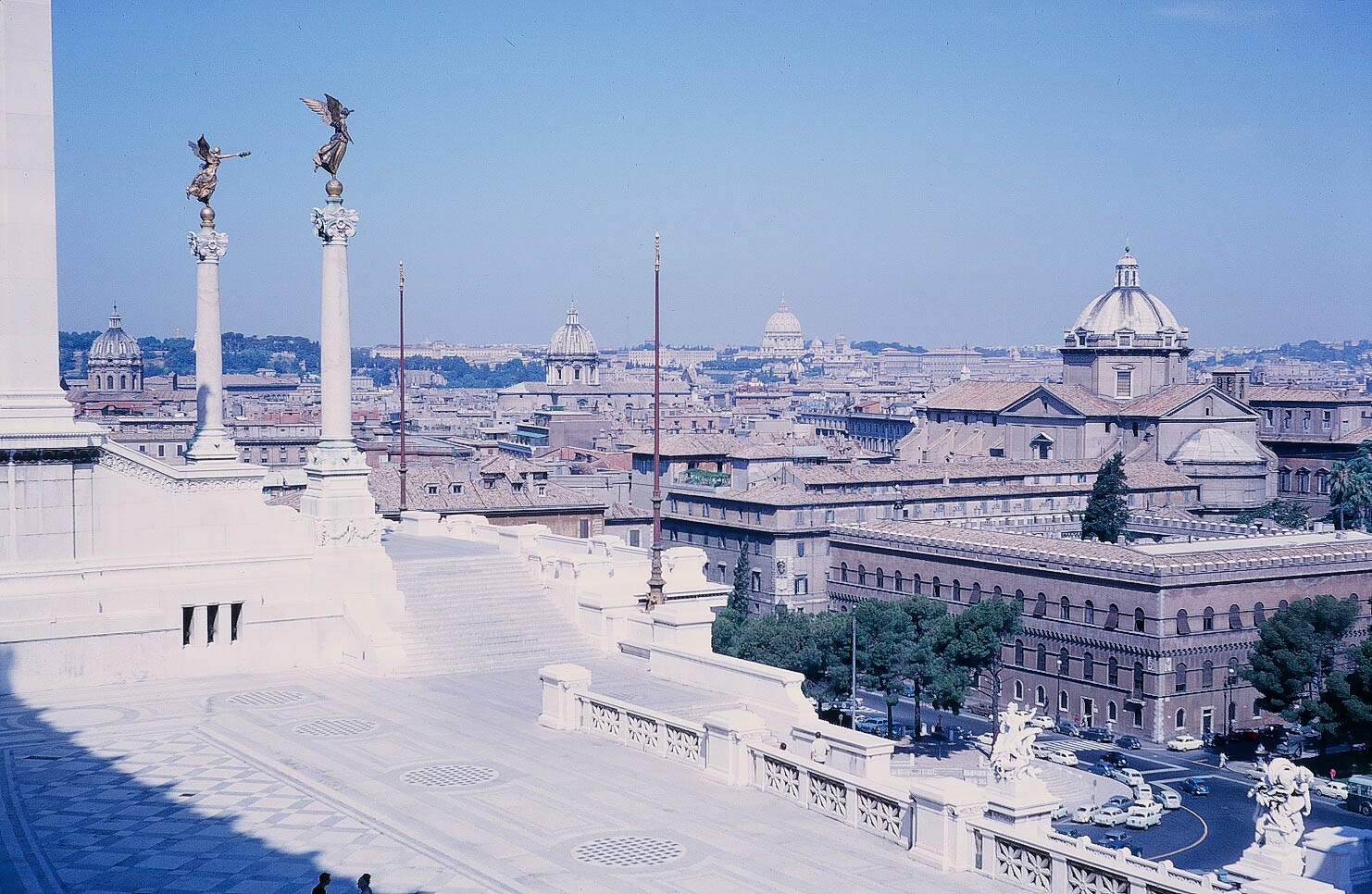
1966EuropeTrip-206 Victor Emmual Monument
1966EuropeTrip-207 Colosseum
1966EuropeTrip-208 Roman Forum
1966EuropeTrip-209 Colosseum
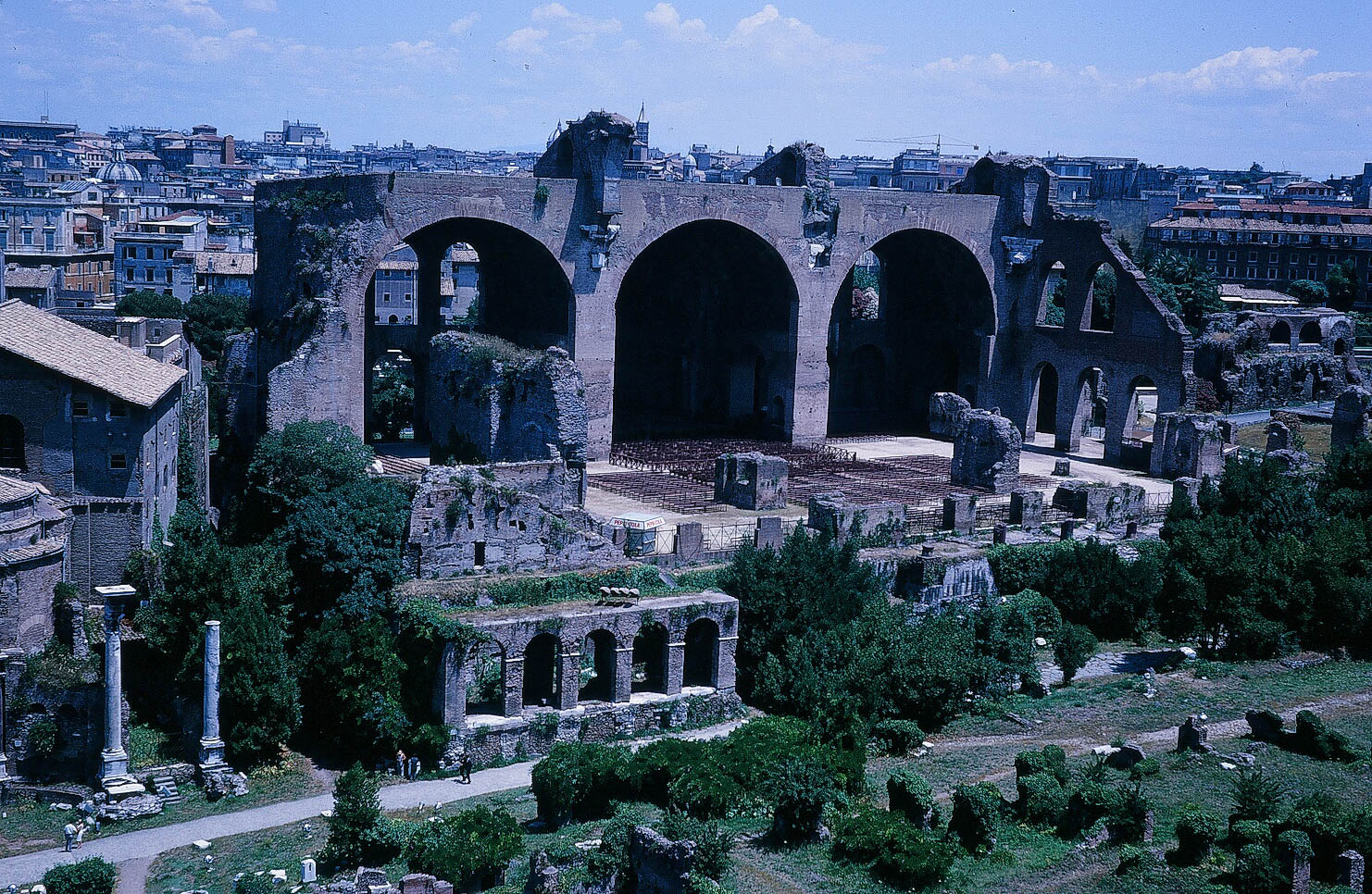
1966EuropeTrip-210 The ruins of the Basilica of Maxentius and Constantine, also known as the Basilica Nova, located in the Roman Forum in Rome. Construction began under Emperor Maxentius around 308 AD and was completed by Constantine I after his victory in 312 AD.
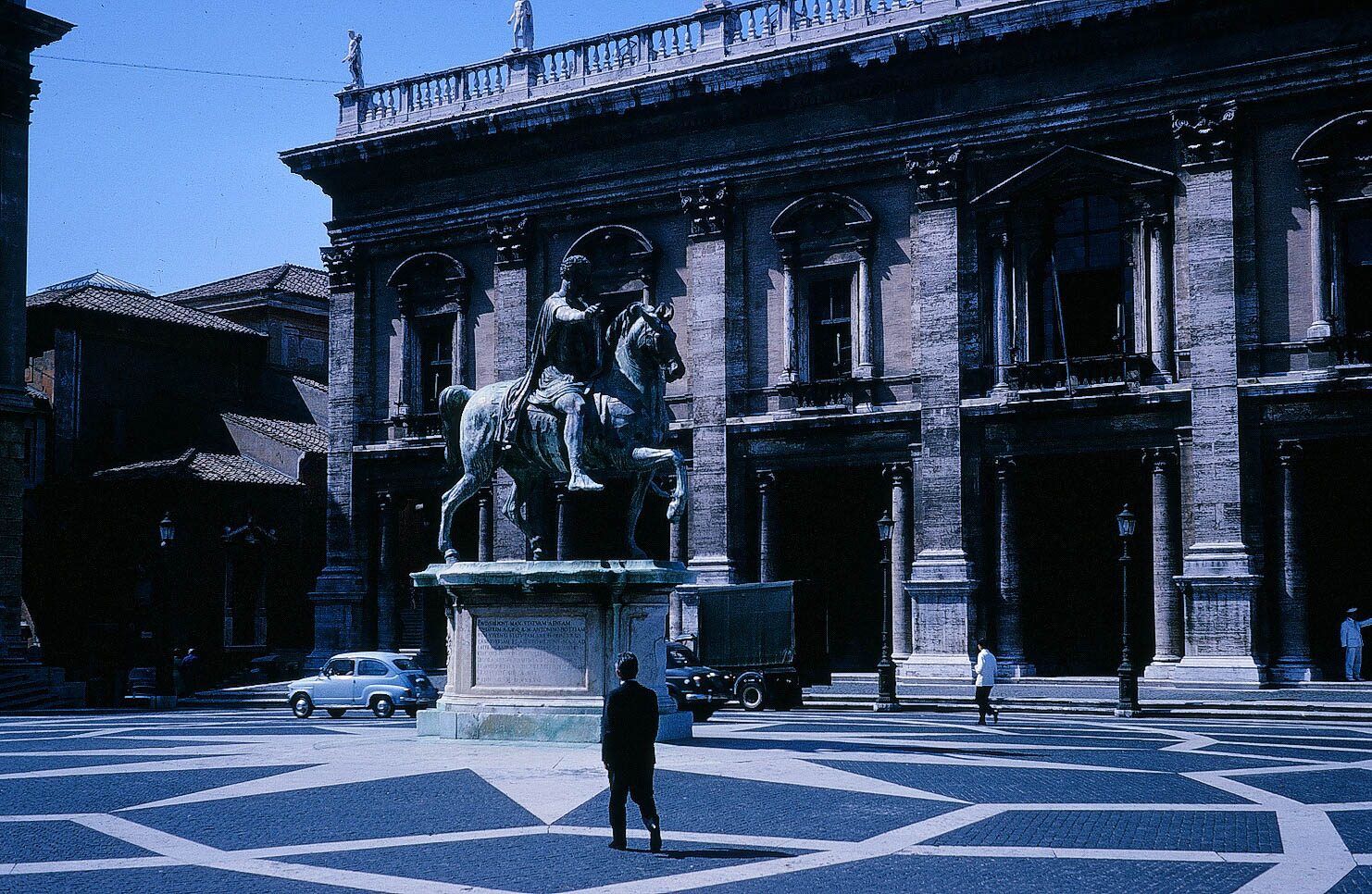
1966EuropeTrip-211 The Piazza del Campidoglio in Rome, Italy, featuring the famous equestrian statue in the center.The central sculpture is a replica of the ancient Roman bronze Equestrian Statue of Marcus Aurelius. The original statue, created between 161 and 180 AD, is the only fully surviving bronze statue of a pre-Christian Roman emperor and is now housed in the nearby Capitoline Museums for preservation. The square was designed by Michelangelo in the 16th century, who made the statue the focal point of his architectural complex.
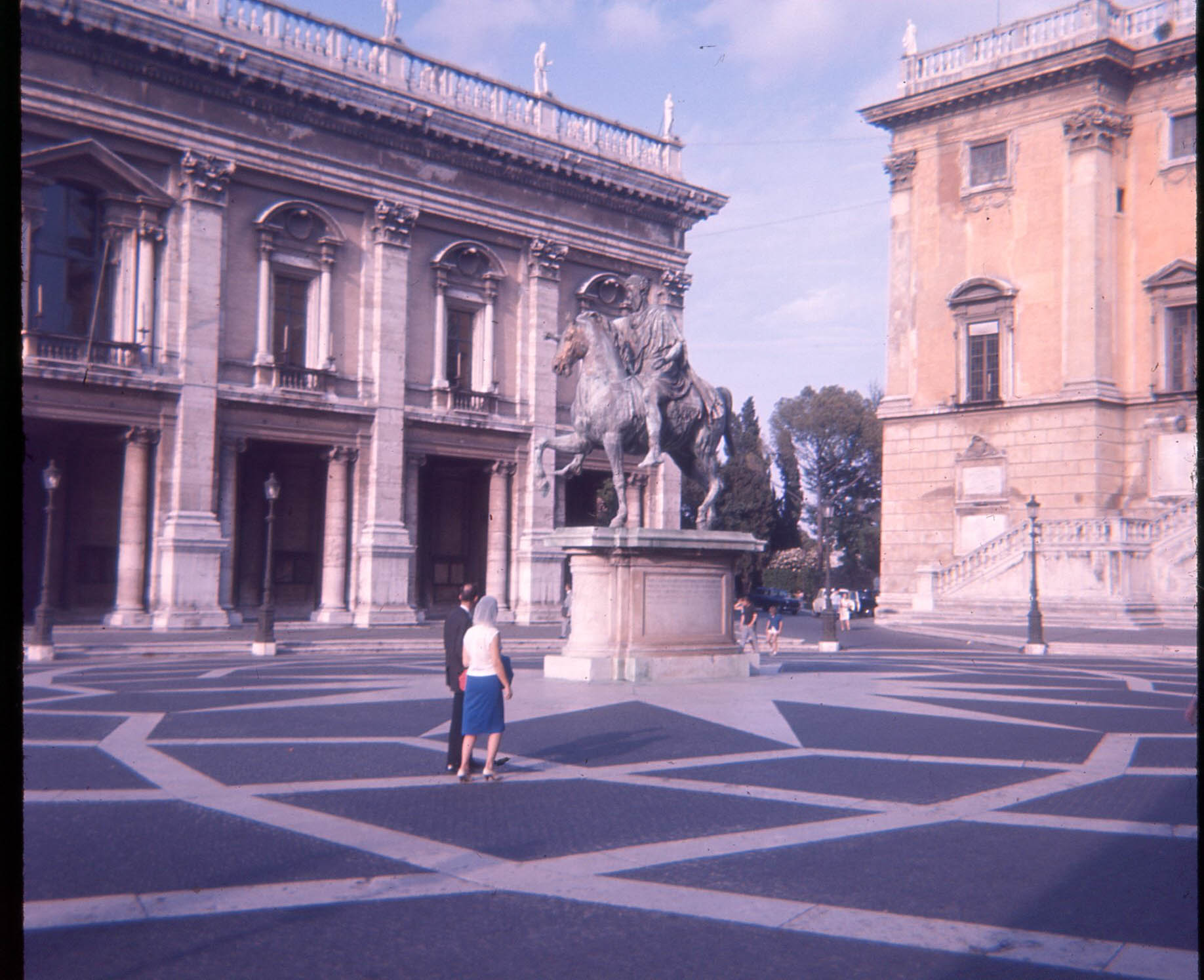
1966EuropeTrip-244 The Piazza del Campidoglio
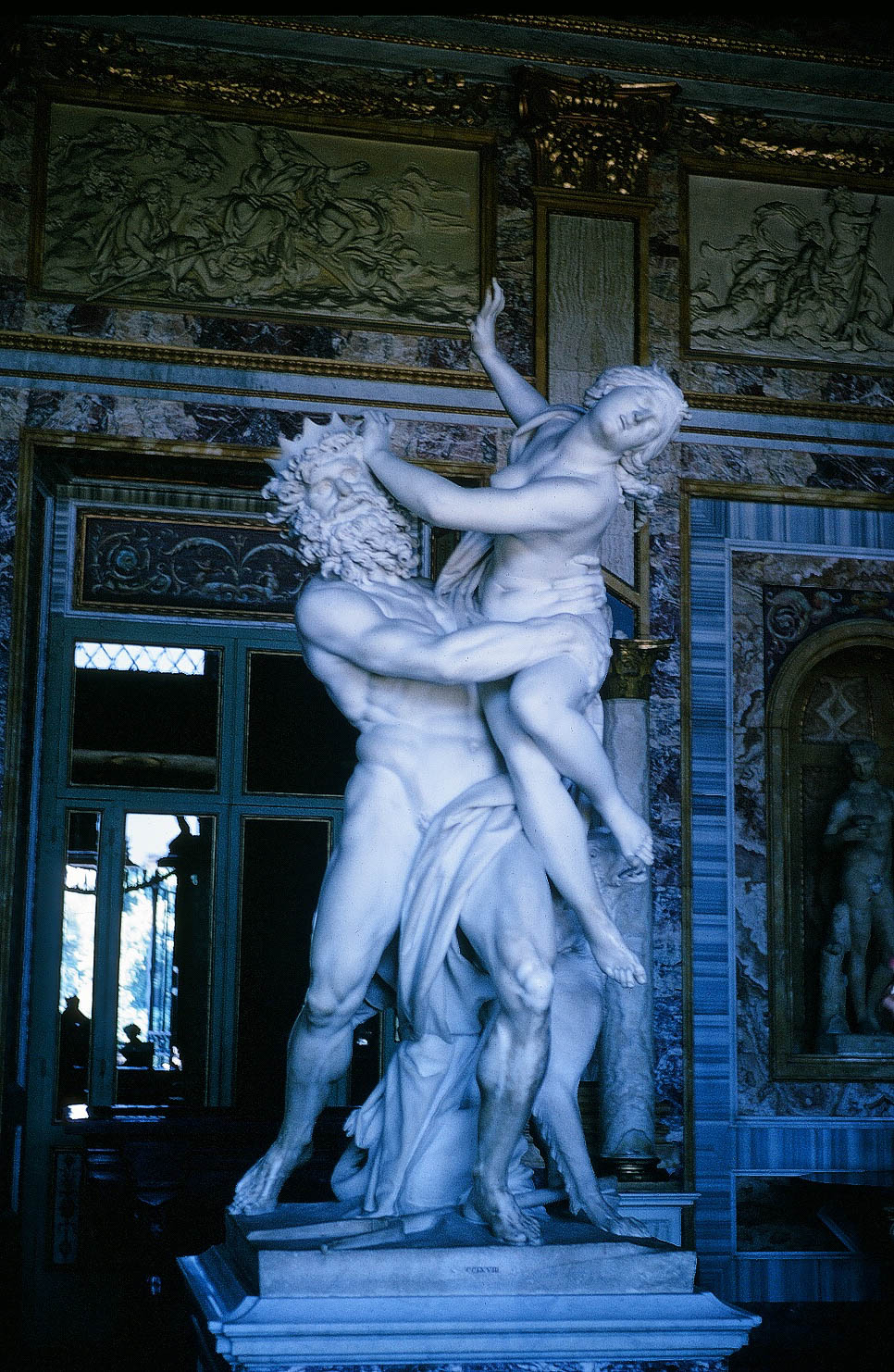
1966EuropeTrip-212 The image displays Gian Lorenzo Bernini's famous Baroque sculpture titled The Rape of Proserpina. The artwork, completed when the artist was only 23 years old, depicts the mythological abduction of Proserpina (Persephone) by Pluto (Hades), the god of the underworld.
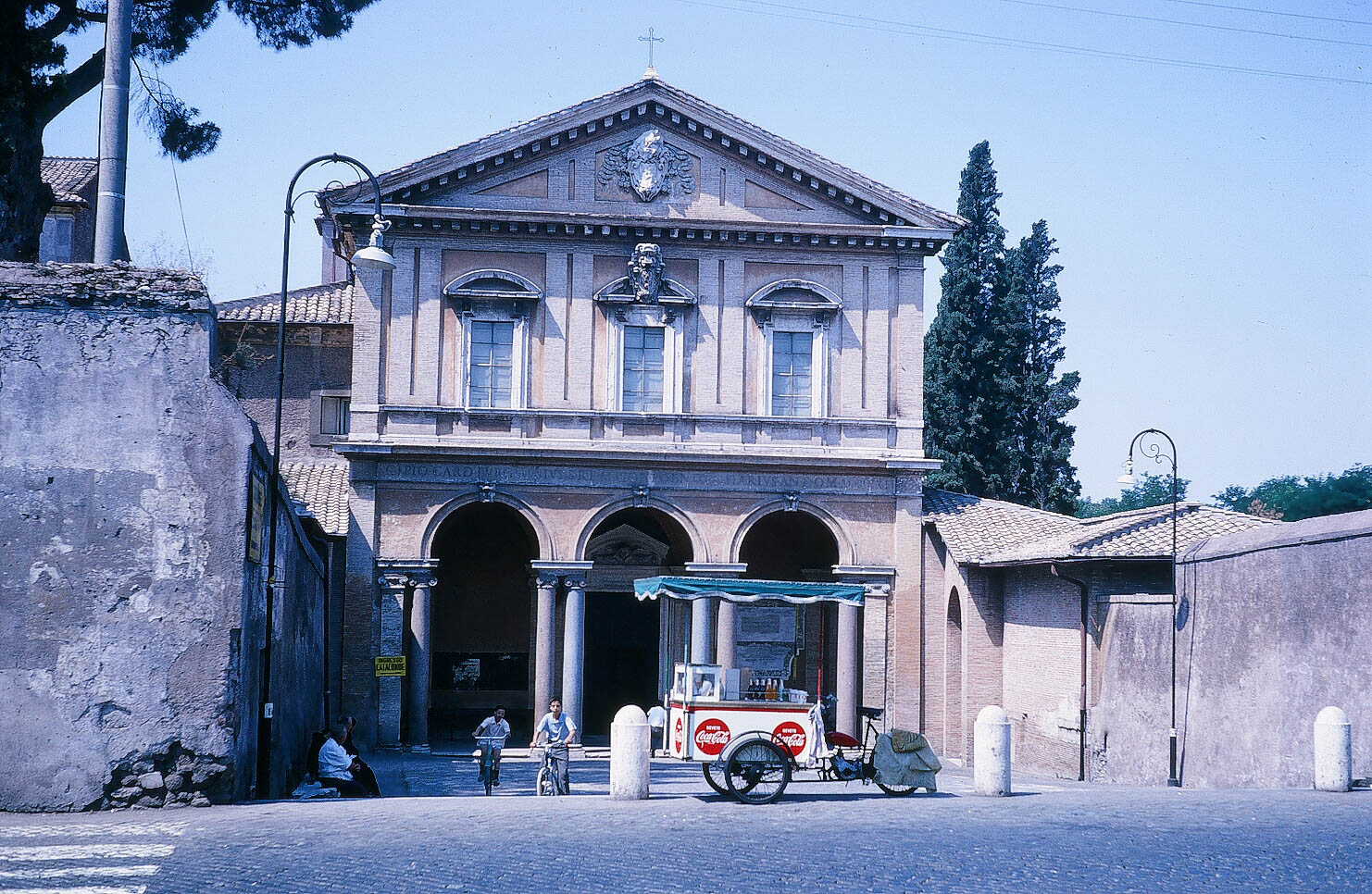
1966EuropeTrip-213 Entrance to Catacombs of St. Sebastian.
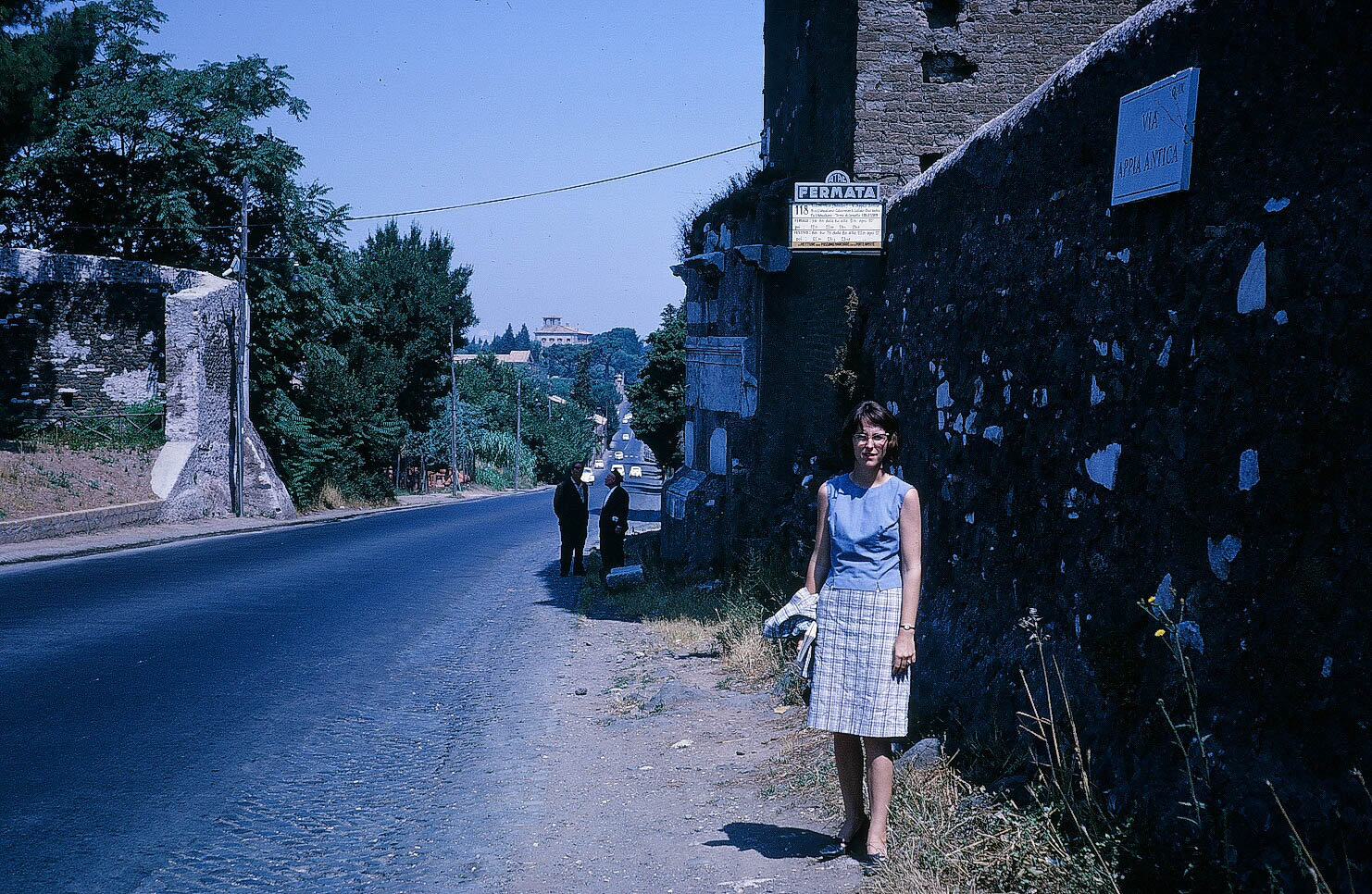
1966EuropeTrip-214 Hitchhiker on Via Appia Antica
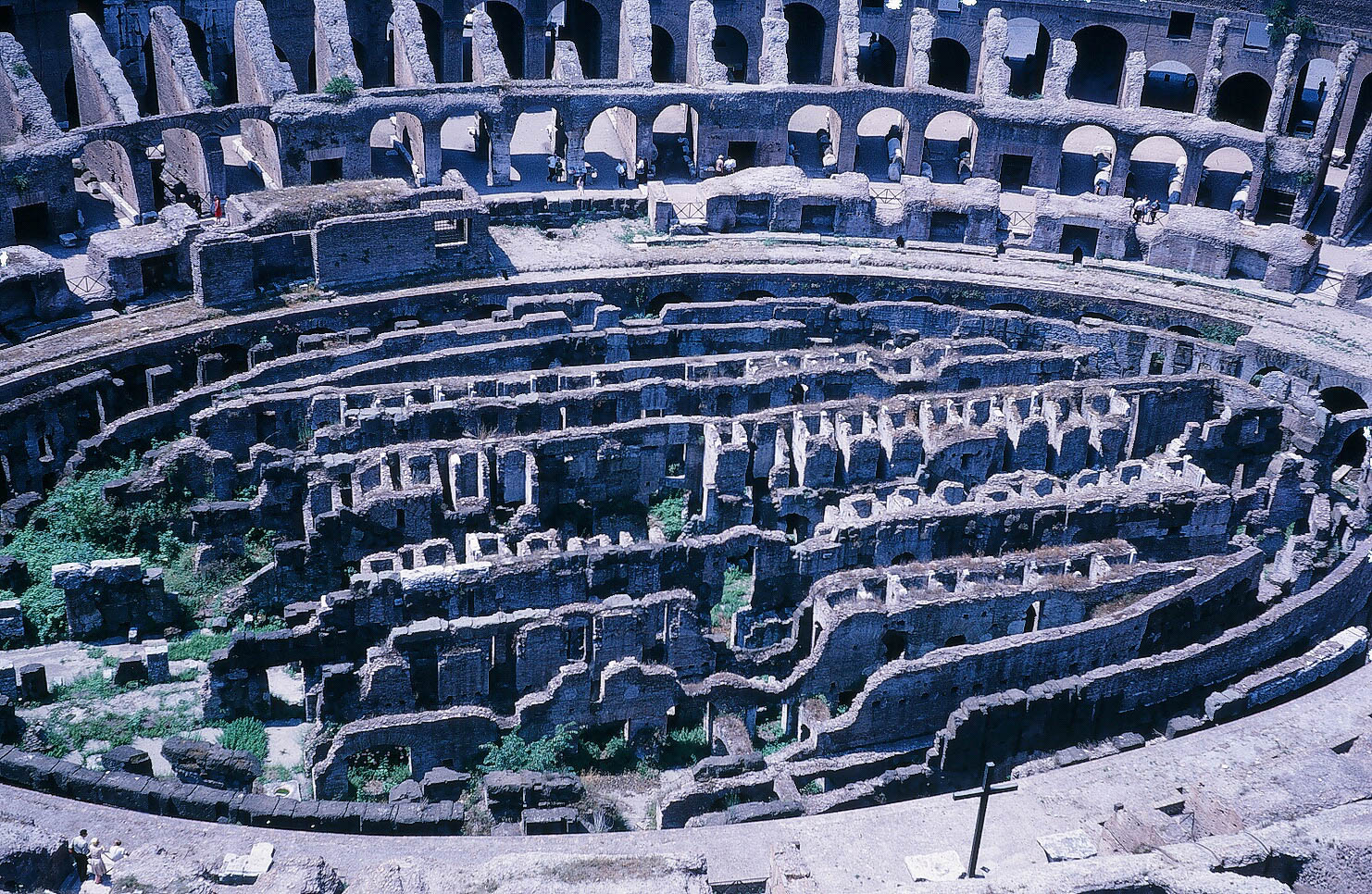
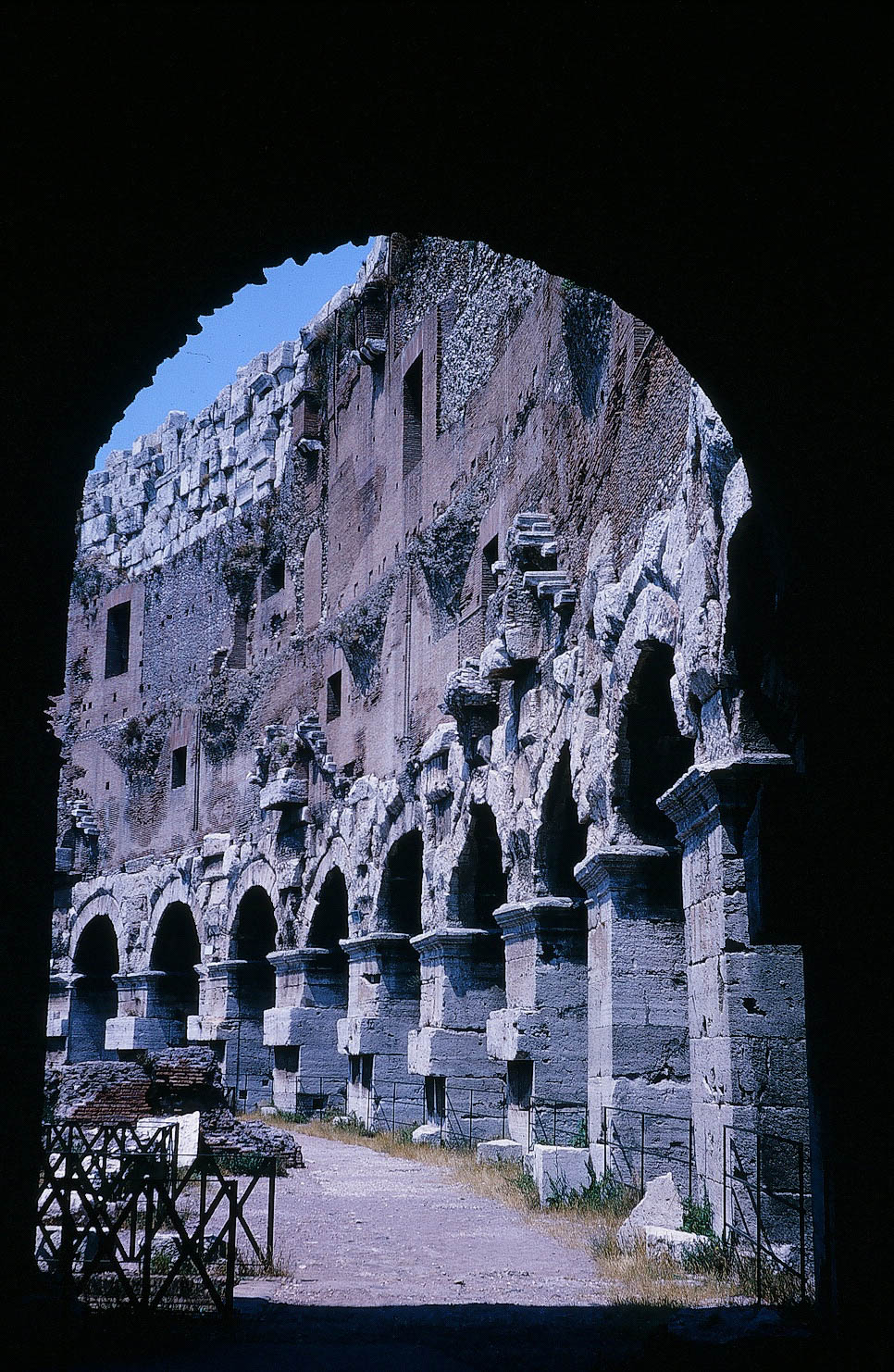
1966EuropeTrip-215 Colosseum
1966EuropeTrip-216 Colosseum
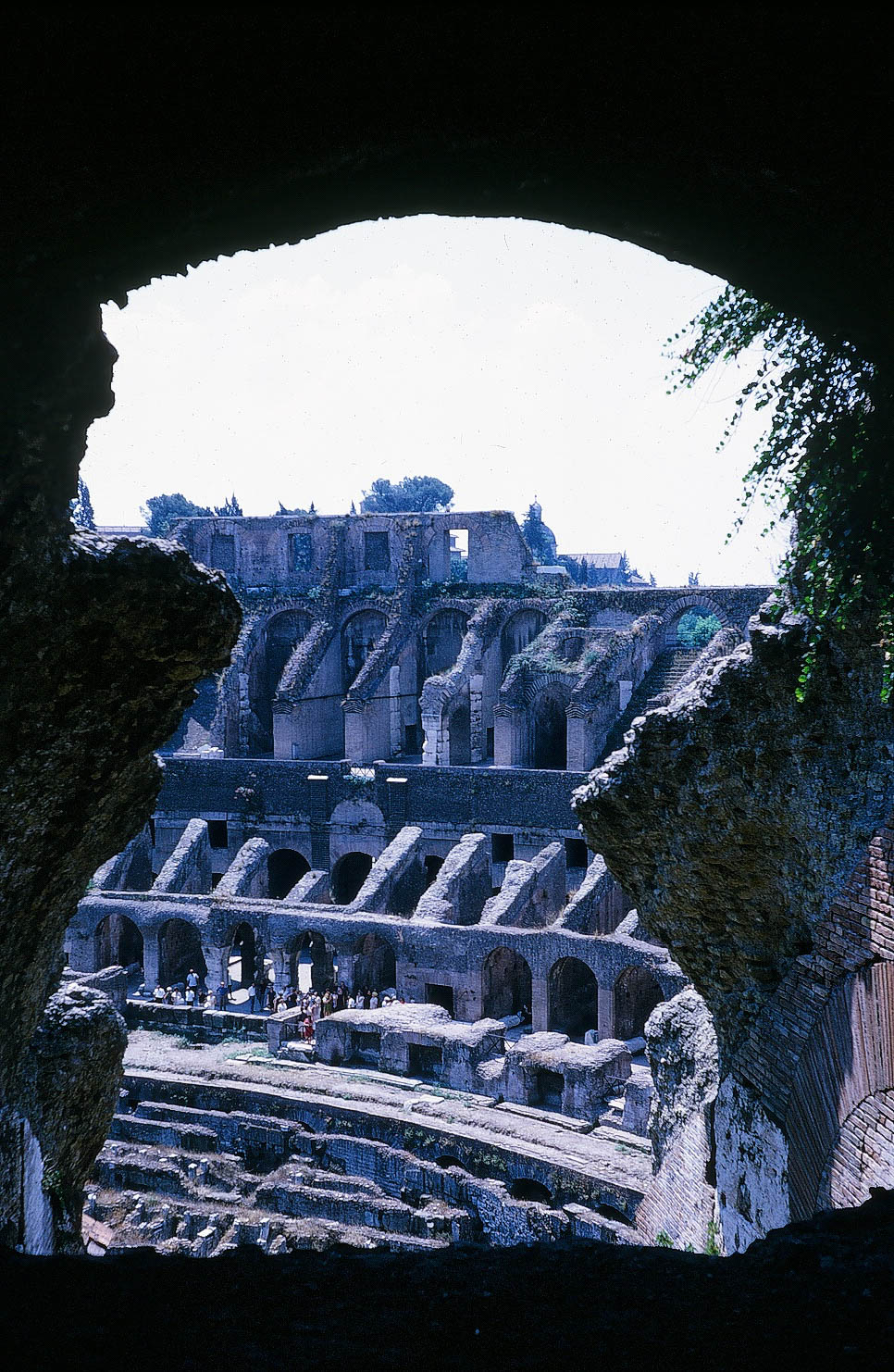
1966EuropeTrip-217 Colosseum
1966EuropeTrip-218 Colosseum
1966EuropeTrip-219 Trevi Fountain
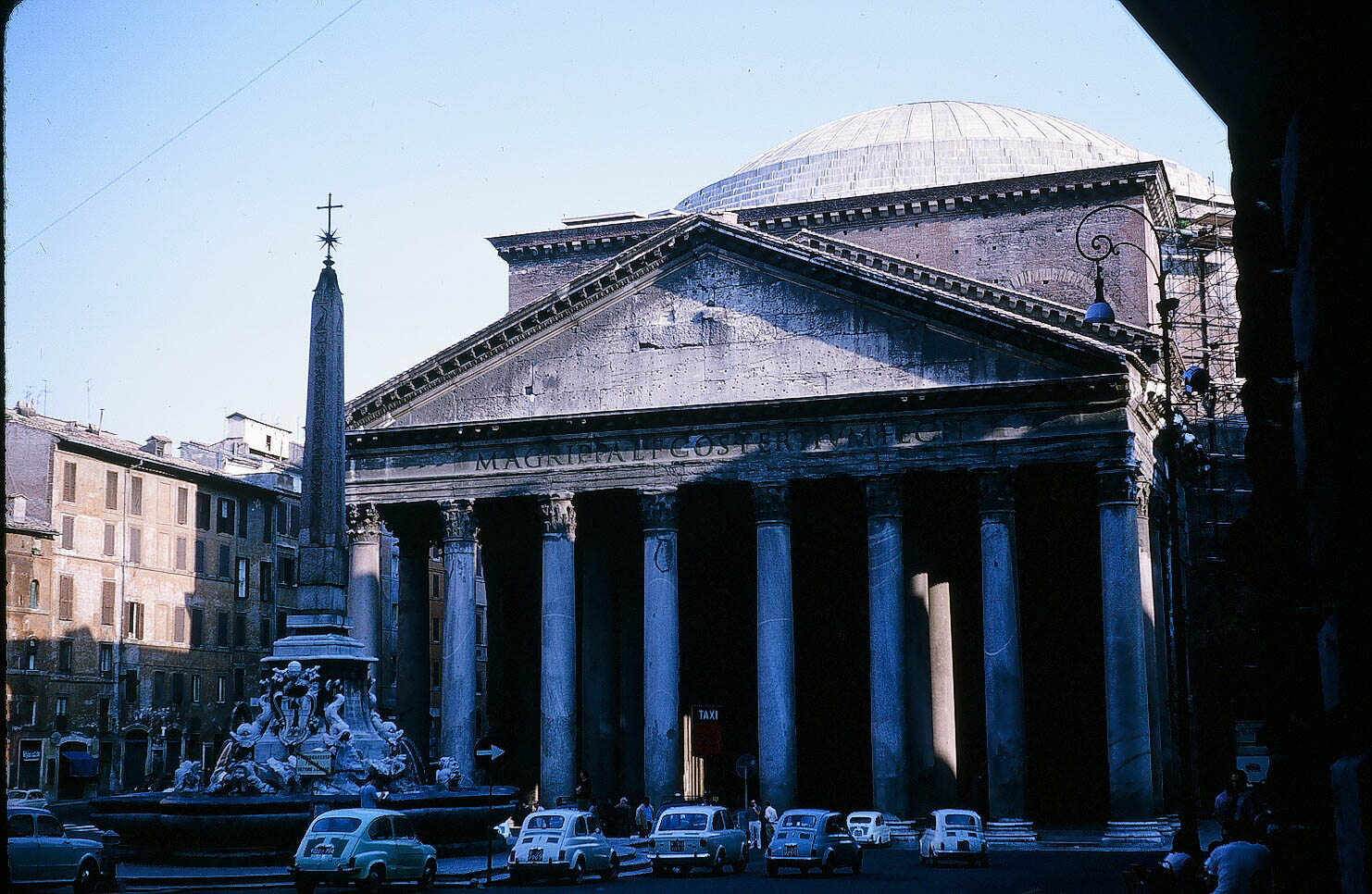
1966EuropeTrip-220 Pantheon in Rome, one of the best-preserved ancient Roman buildings. The Pantheon was originally built as a temple to all gods and was completed around 126-128 A.D. during Emperor Hadrian's reign.
It has survived for nearly 2,000 years, largely because it was converted into a Christian church in 609 A.D., protecting it from the destruction that other pagan temples faced.
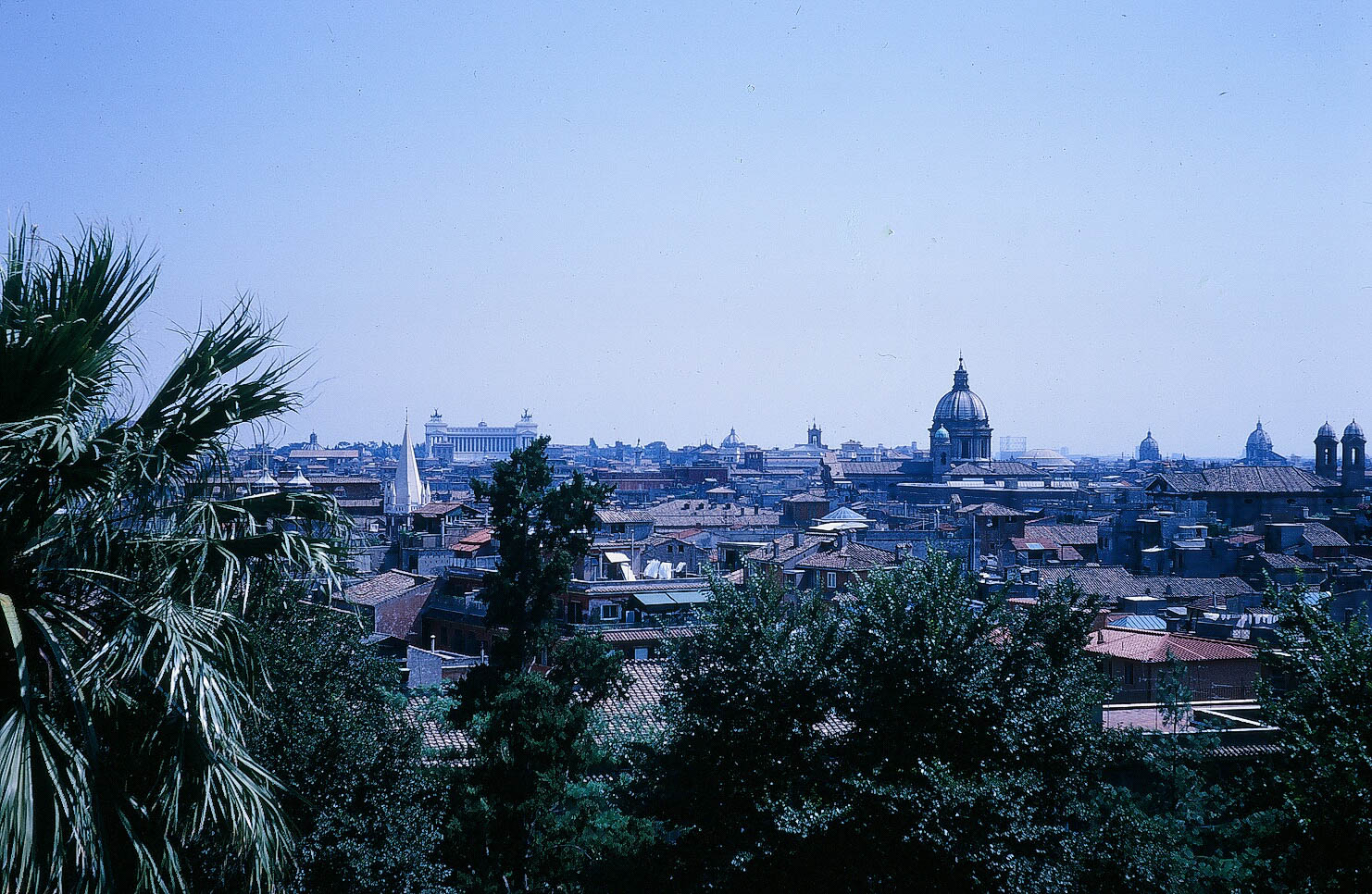
1966EuropeTrip-222
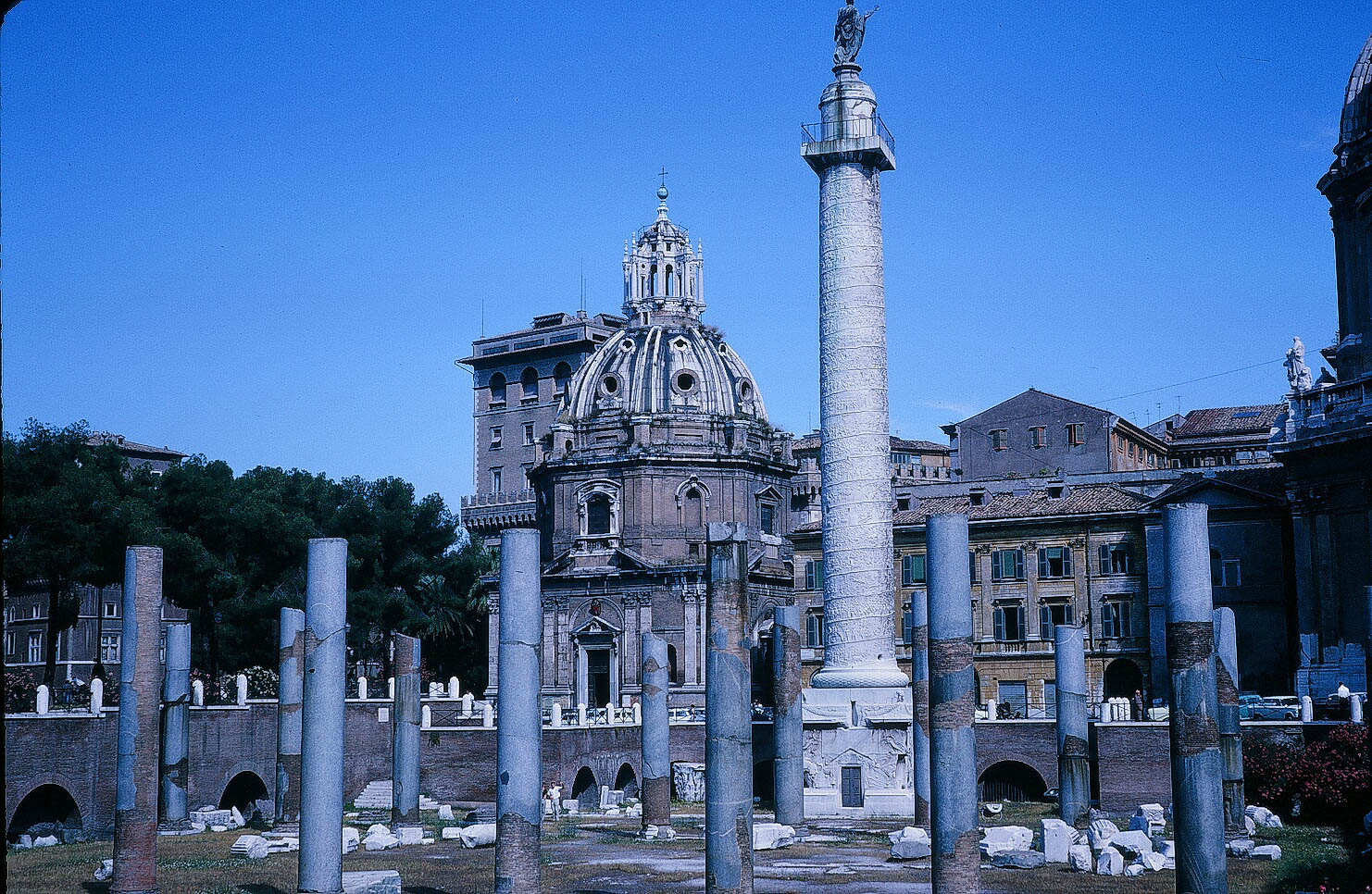
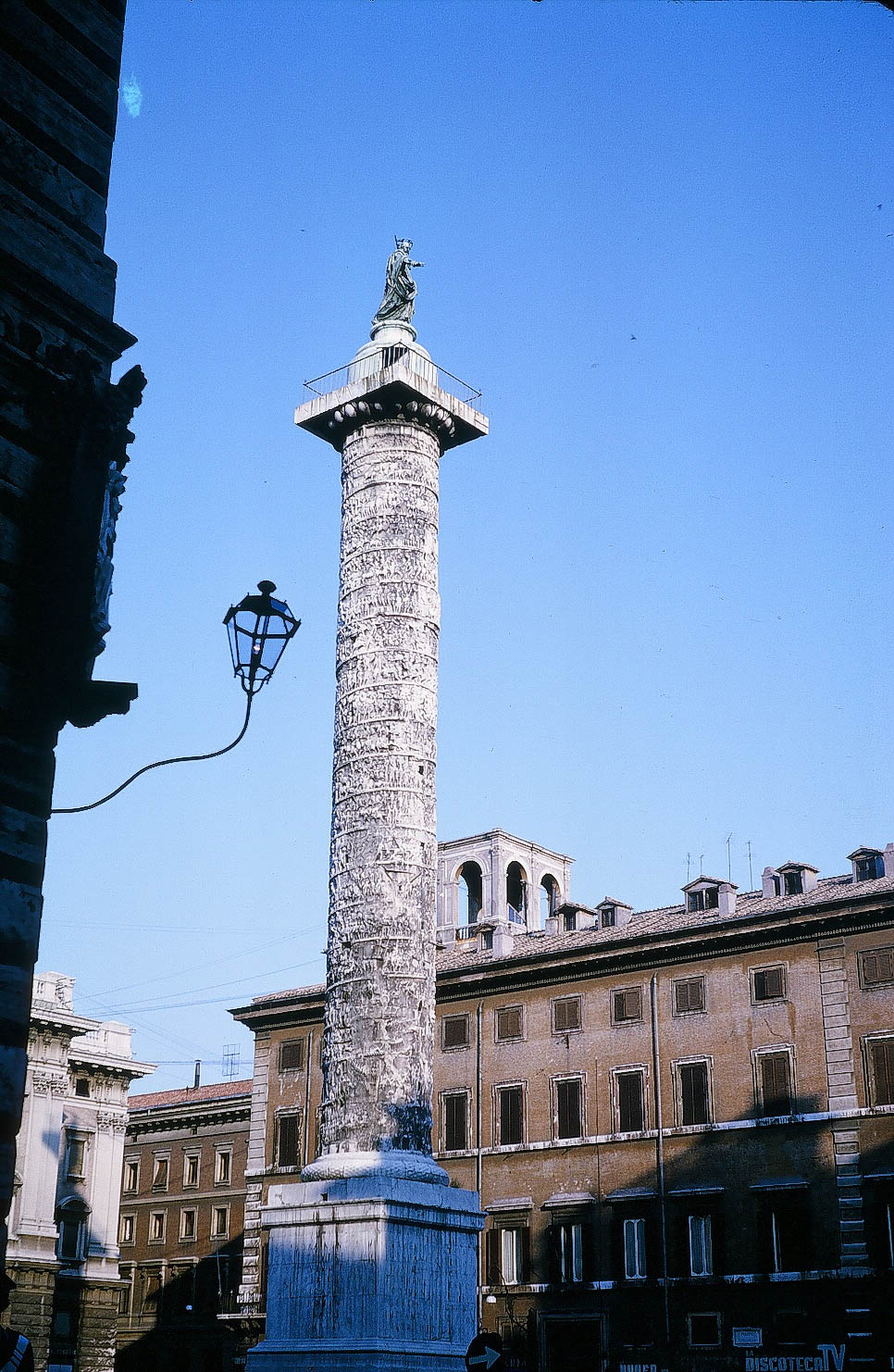
1966EuropeTrip-223 Column of Marcus Aurelius in Piazza Colonna, Rome.
The column was completed around 193 AD to commemorate Emperor Marcus Aurelius' victories in the Marcomannic Wars.
It stands approximately 30 meters (100 Roman feet) high and features a continuous spiral bas-relief depicting scenes from the military campaigns against Germanic tribes and Sarmatians.
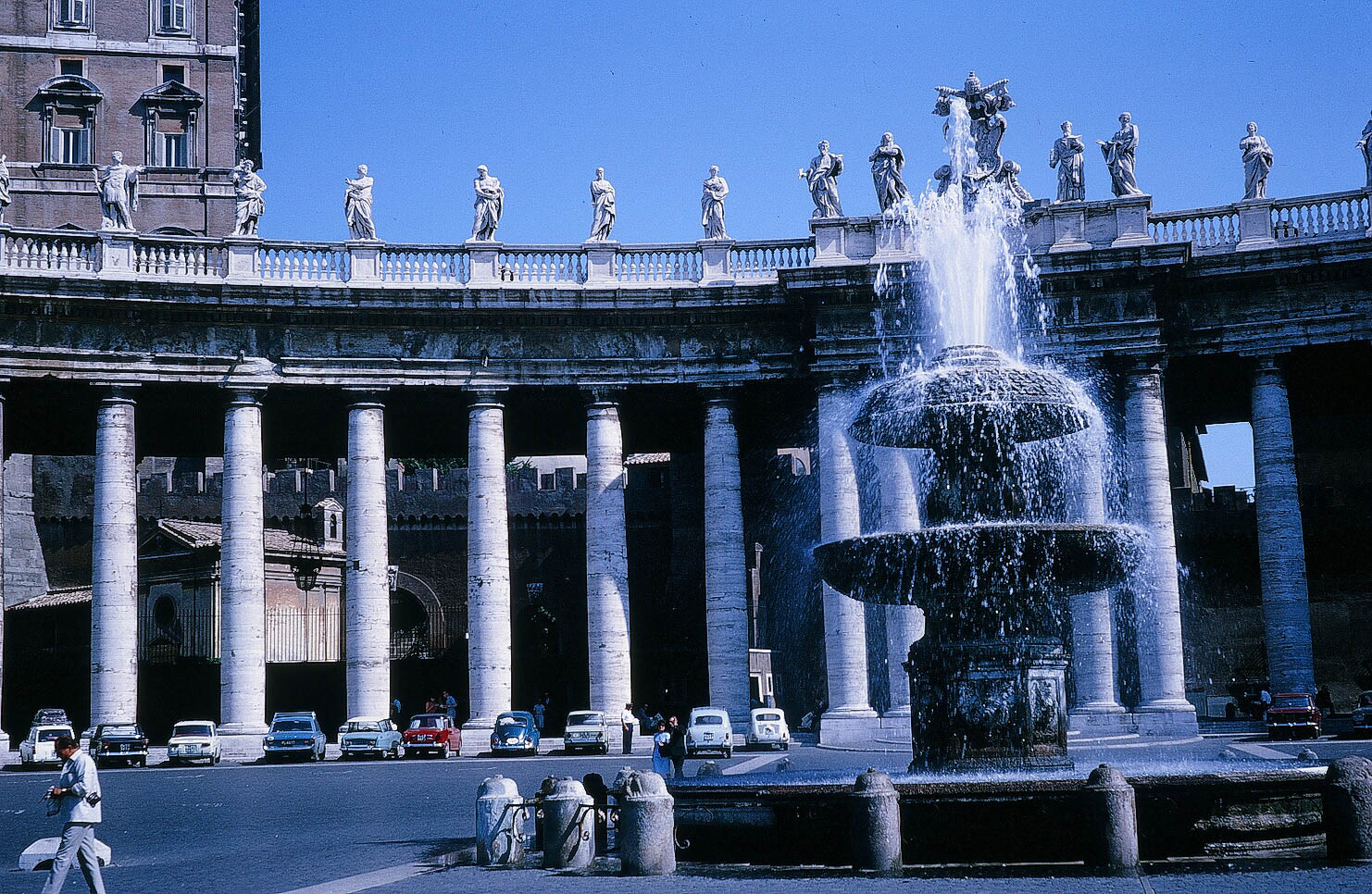
1966EuropeTrip-224 Vatican
1966EuropeTrip-225 Vatican
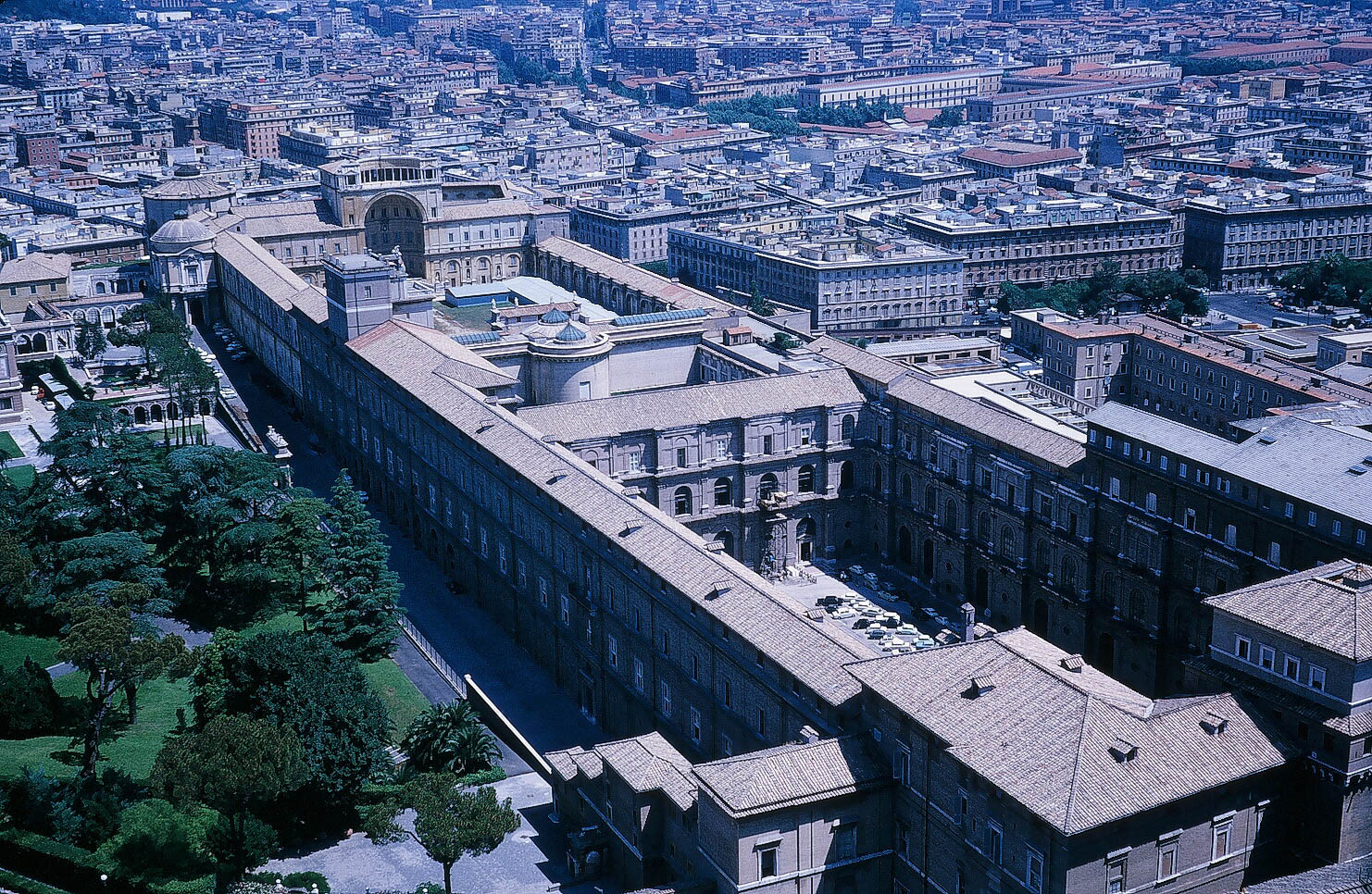
1966EuropeTrip-226 Vatican City Papal Appartments from St. Peters.
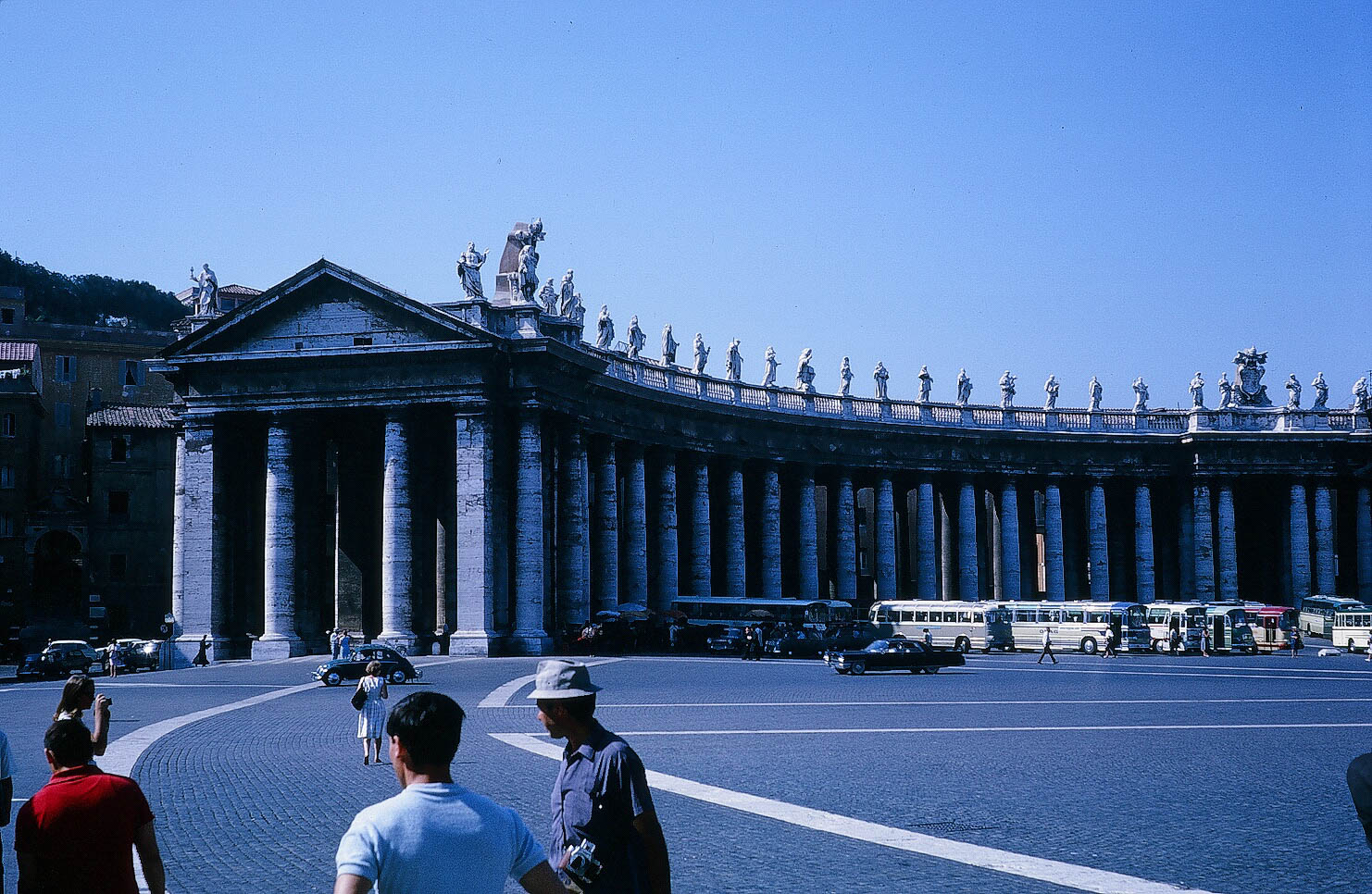
1966EuropeTrip-227 St. Peter's parking.
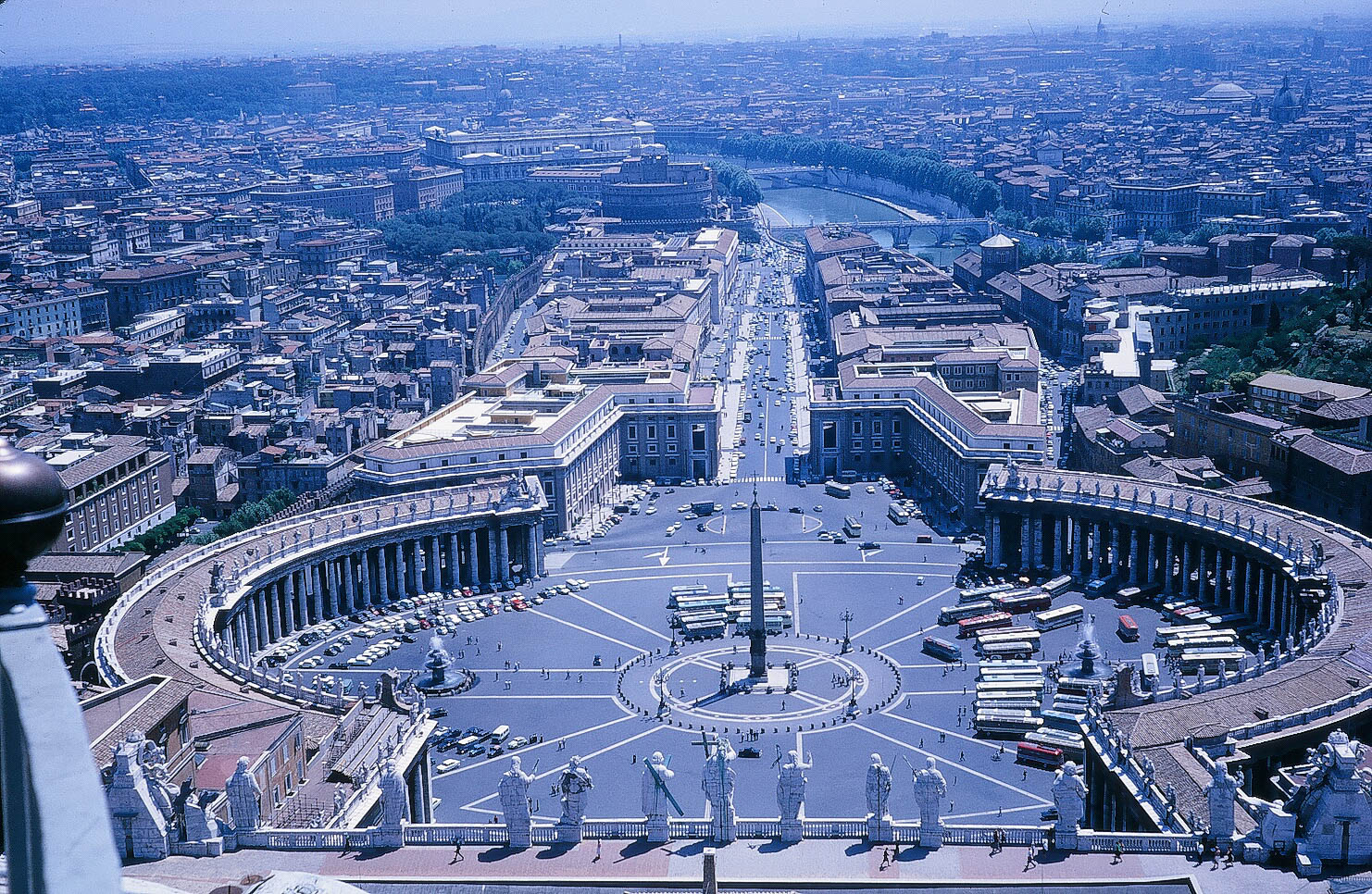
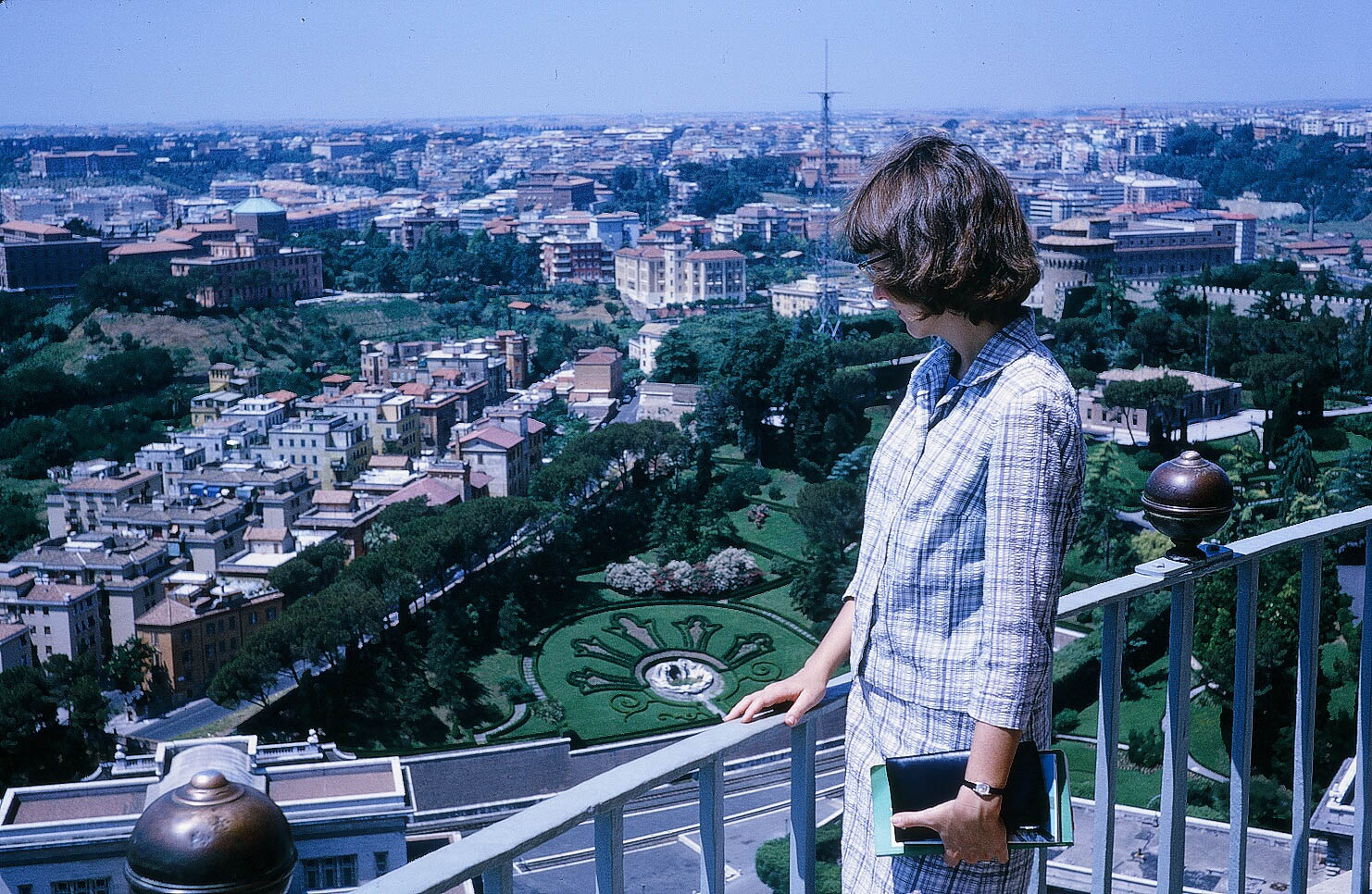
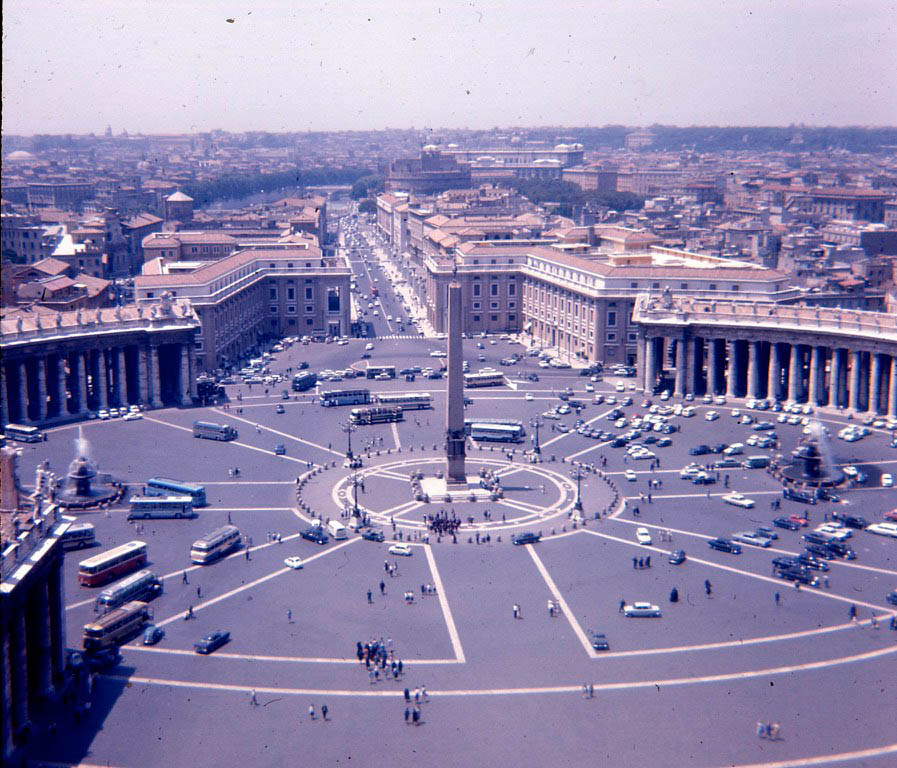
1966EuropeTrip-228 View from St. Peters
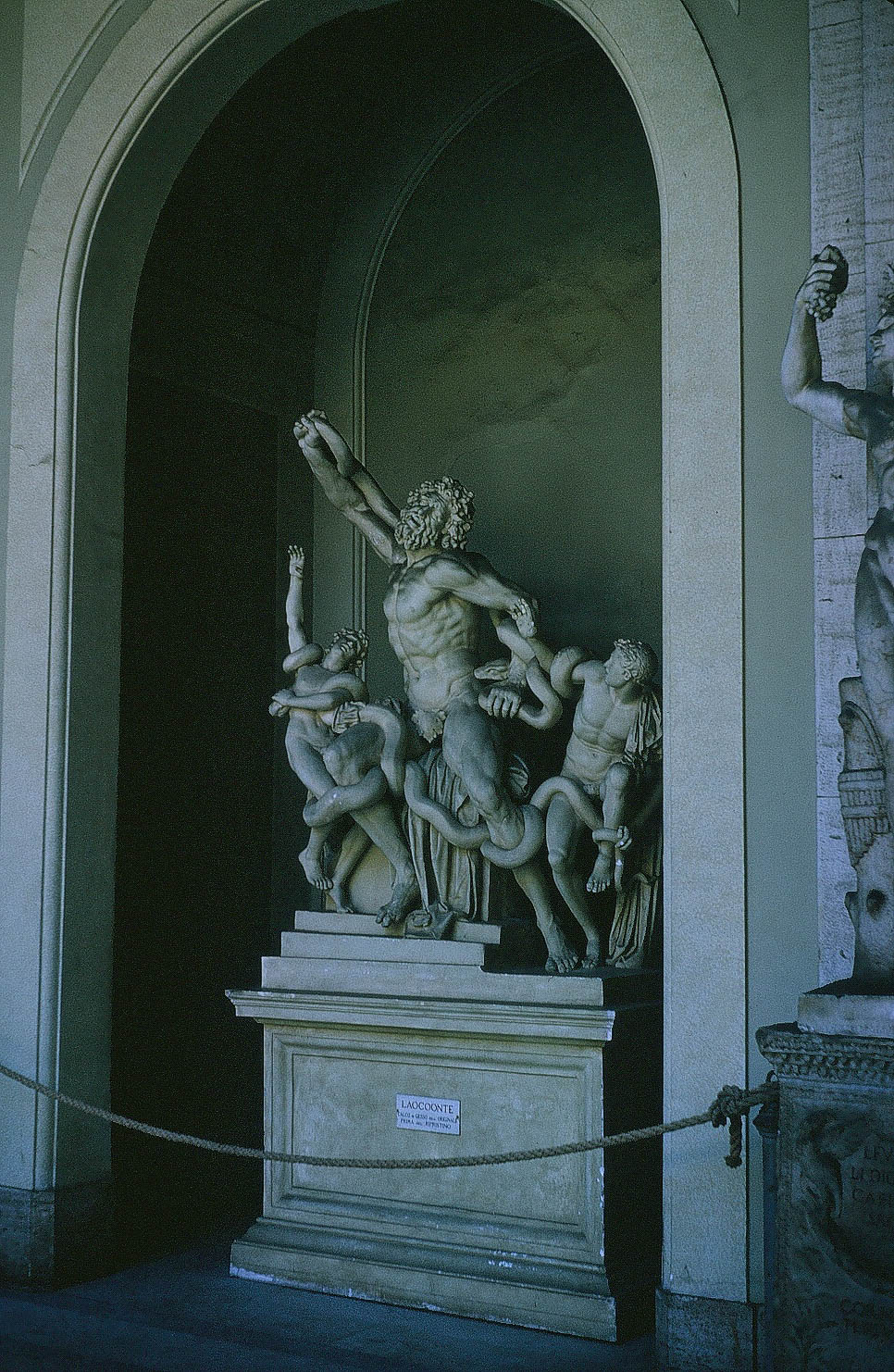
1966EuropeTrip-229 the famous Hellenistic sculpture, "Laocoön and His Sons". This marble masterpiece depicts the Trojan priest Laocoön and his two sons being strangled by sea serpents.
It was created around the first century BCE or first century CE and stands over life-sized at 6 feet 8 inches (2.03 meters) tall.
The sculpture was discovered in a vineyard in Rome in 1506 and was immediately admired by Renaissance artists like Michelangelo. It is now displayed at the Vatican Museums.
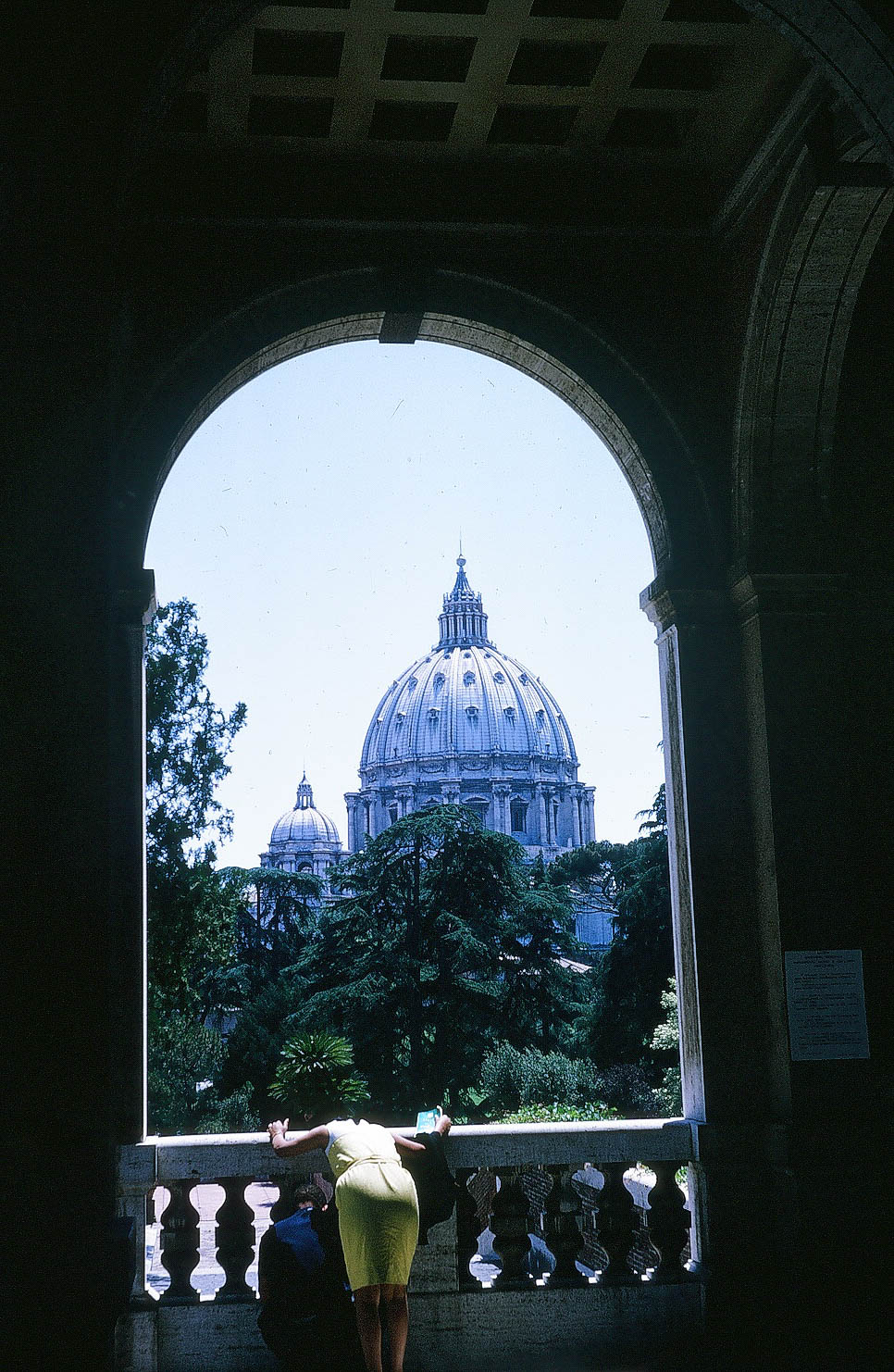
1966EuropeTrip-230 Dome of St. Peter's Basilica in Vatican City. The iconic dome, a major architectural achievement, was primarily designed by Michelangelo.
The bottom is of unknown origin.
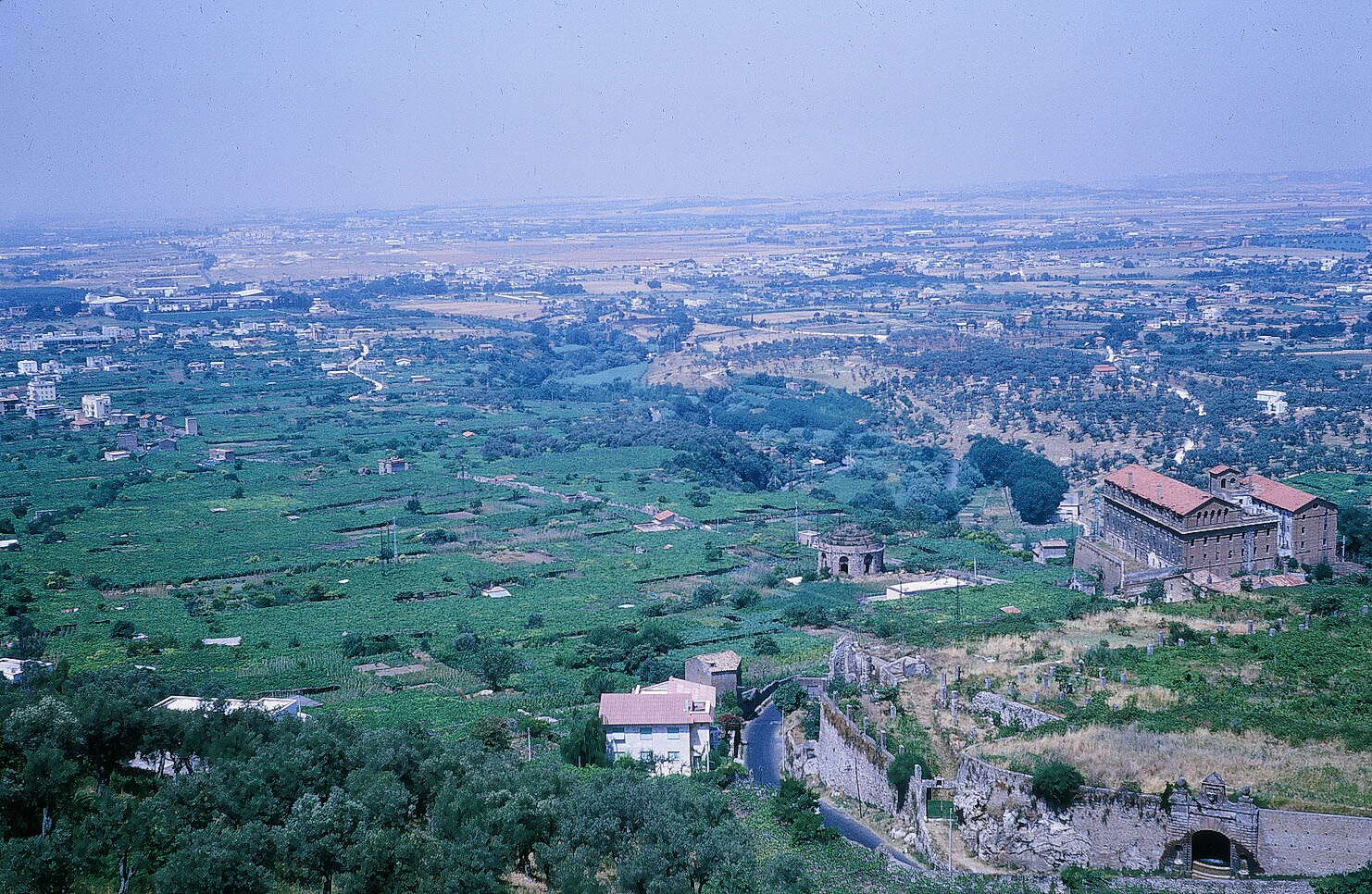
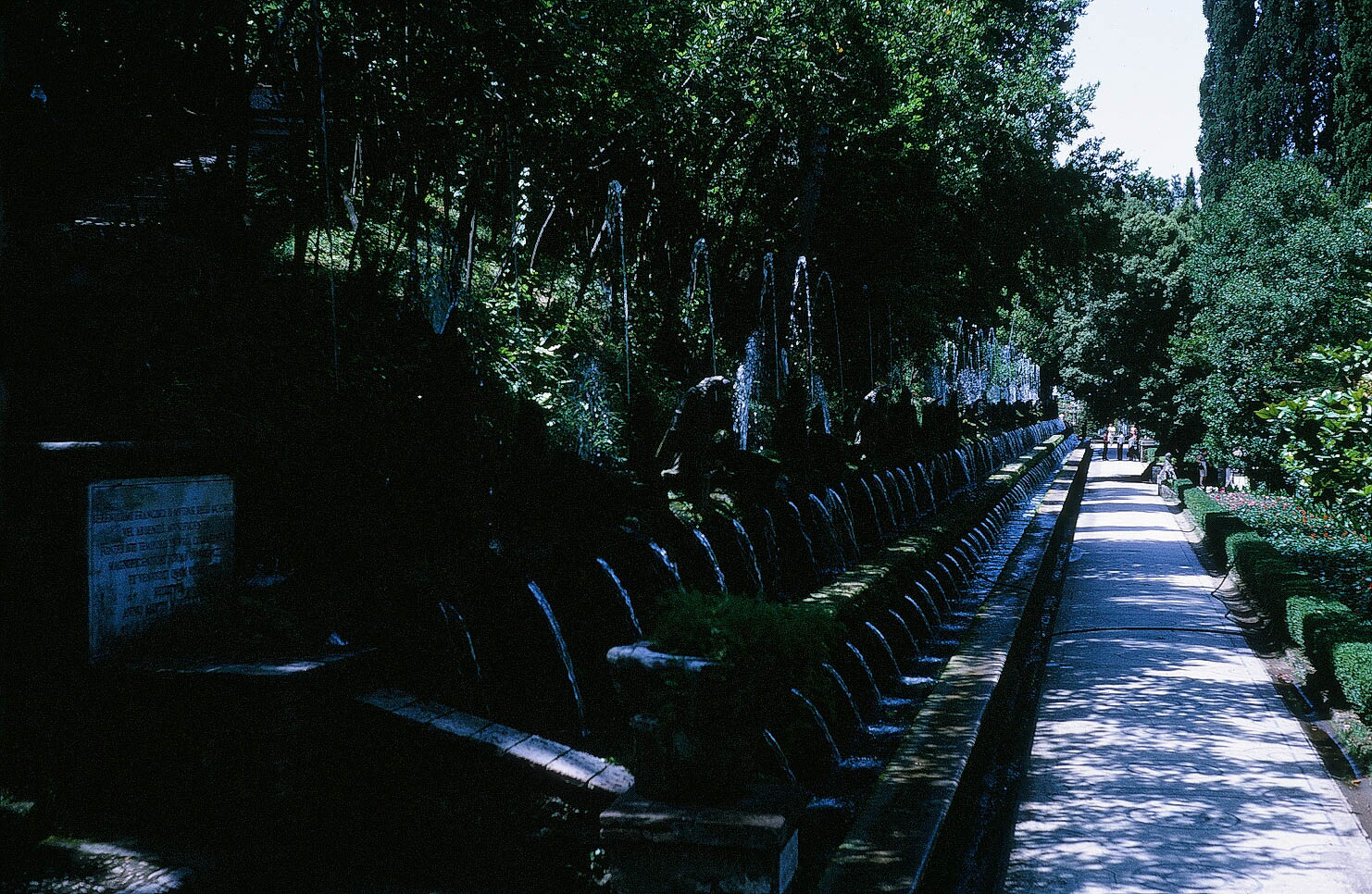
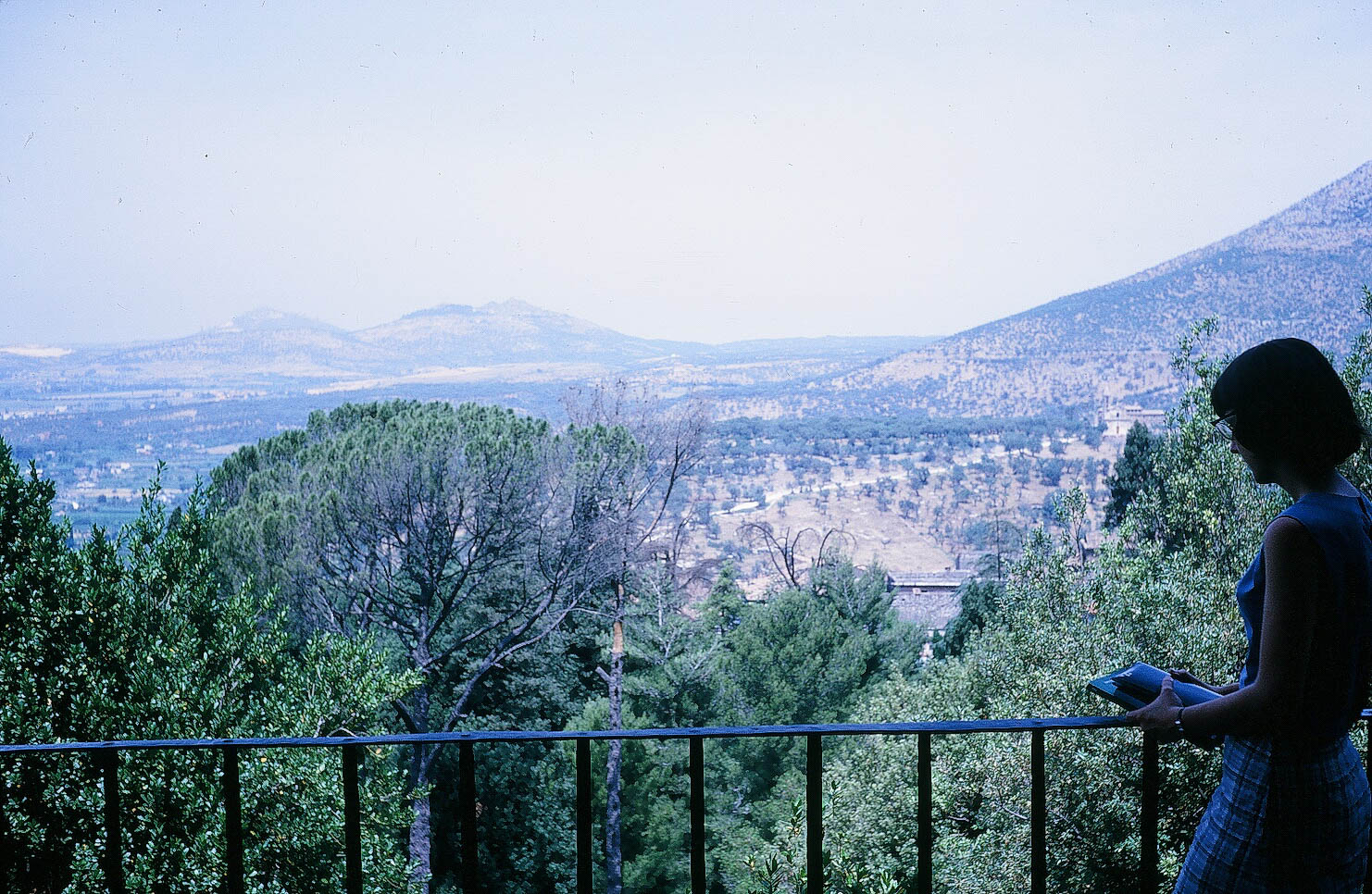
1966EuropeTrip-231 Near Tivoli Gardens
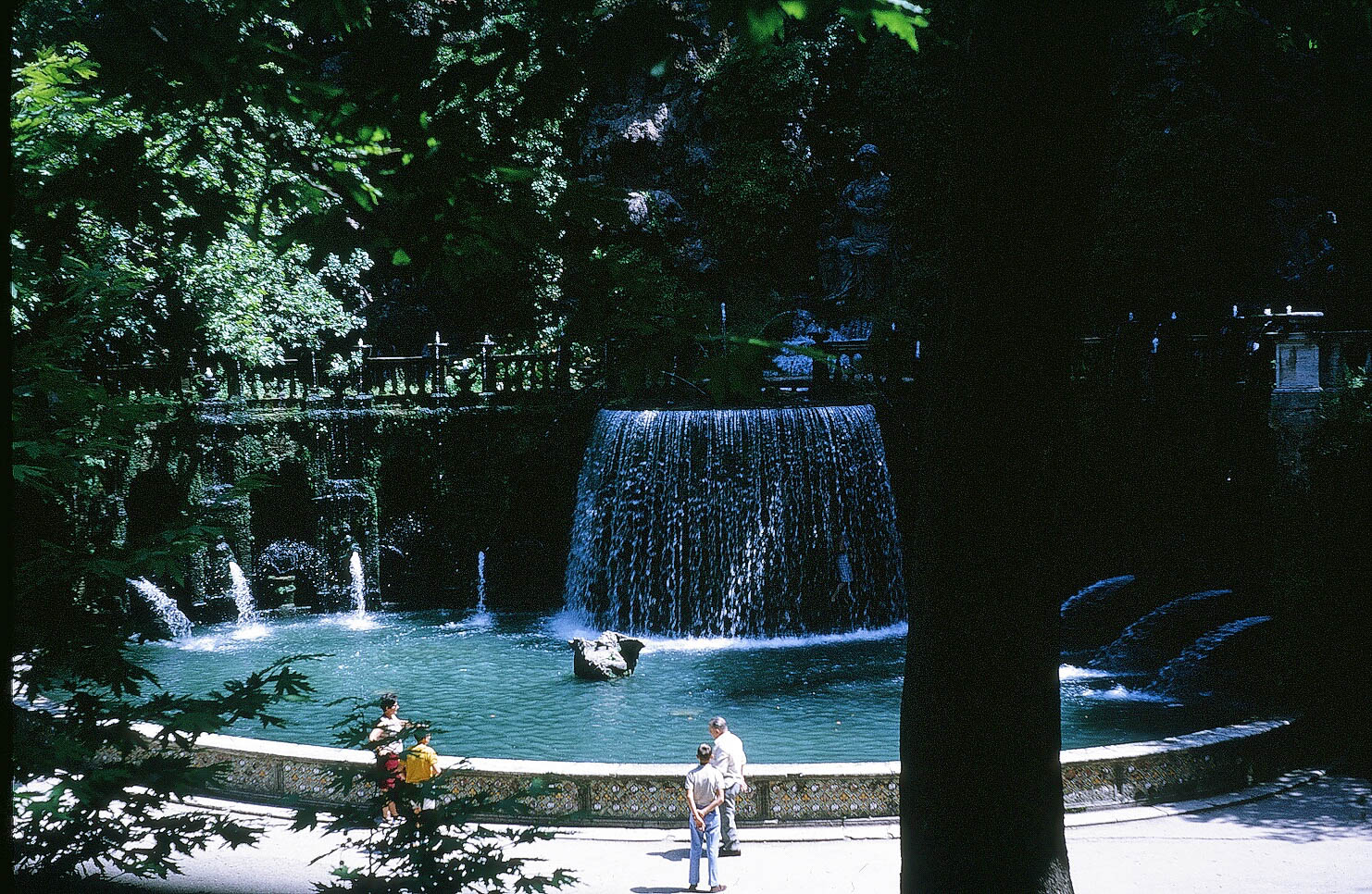
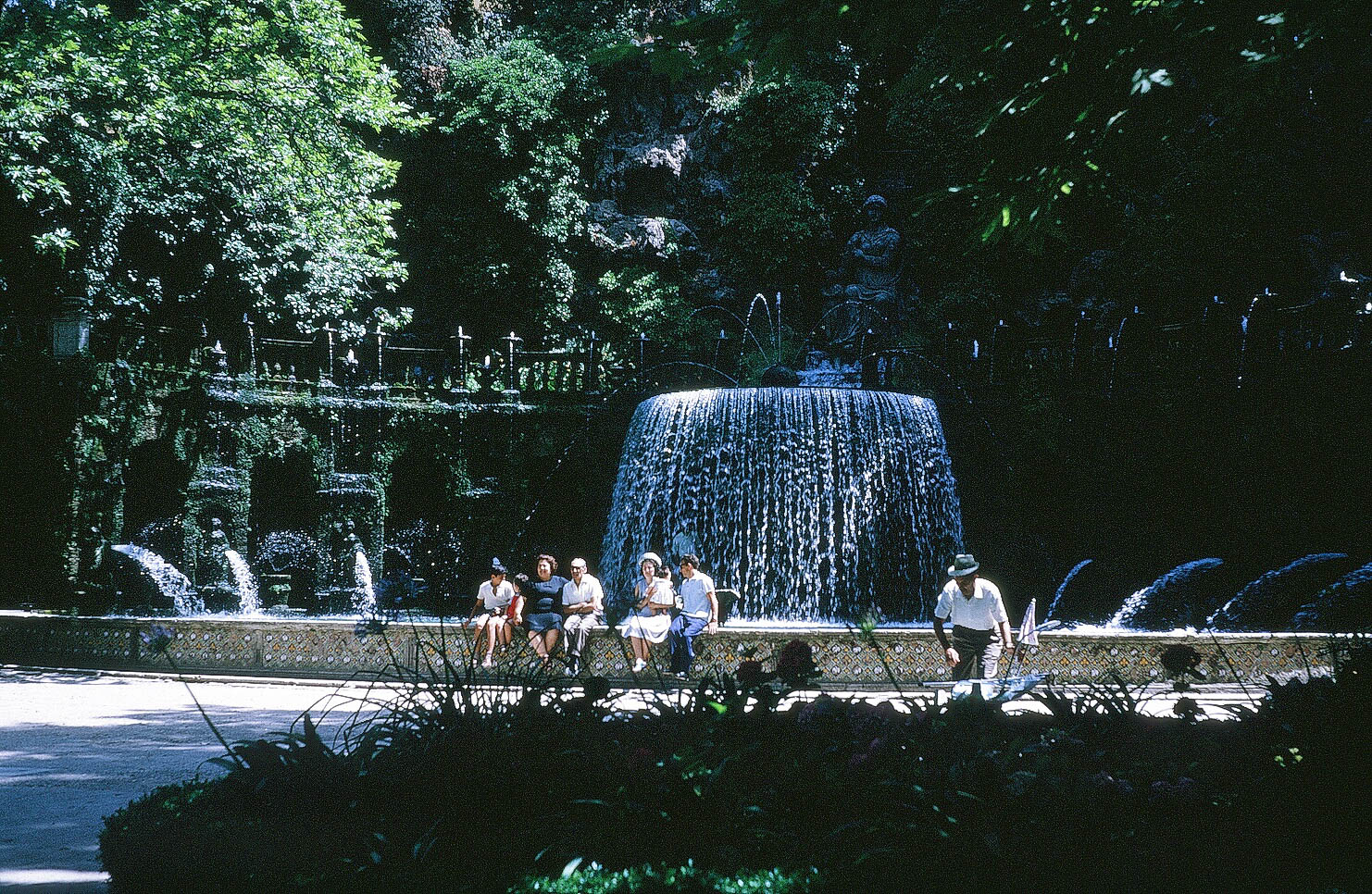
1966EuropeTrip-232 Fountain of the Oval (Fontana dell'Ovato) in the gardens of the Villa d'Este in Tivoli, Italy. This UNESCO World Heritage site is a masterpiece of Italian Renaissance garden design, famous for its innovative use of water features and hydraulic engineering.
The villa and gardens were commissioned by Cardinal Ippolito II d'Este in the mid-16th century after he was named governor of Tivoli.
The gardens contain an exceptional concentration of fountains, nymphaea, and grottoes, making it one of the first "gardens of wonders" and a model for subsequent European garden design.
The complex is renowned for its architectural and engineering ingenuity, using the nearby Aniene River to feed its extensive water systems.
1966EuropeTrip-233 Fountains at Tivoli.
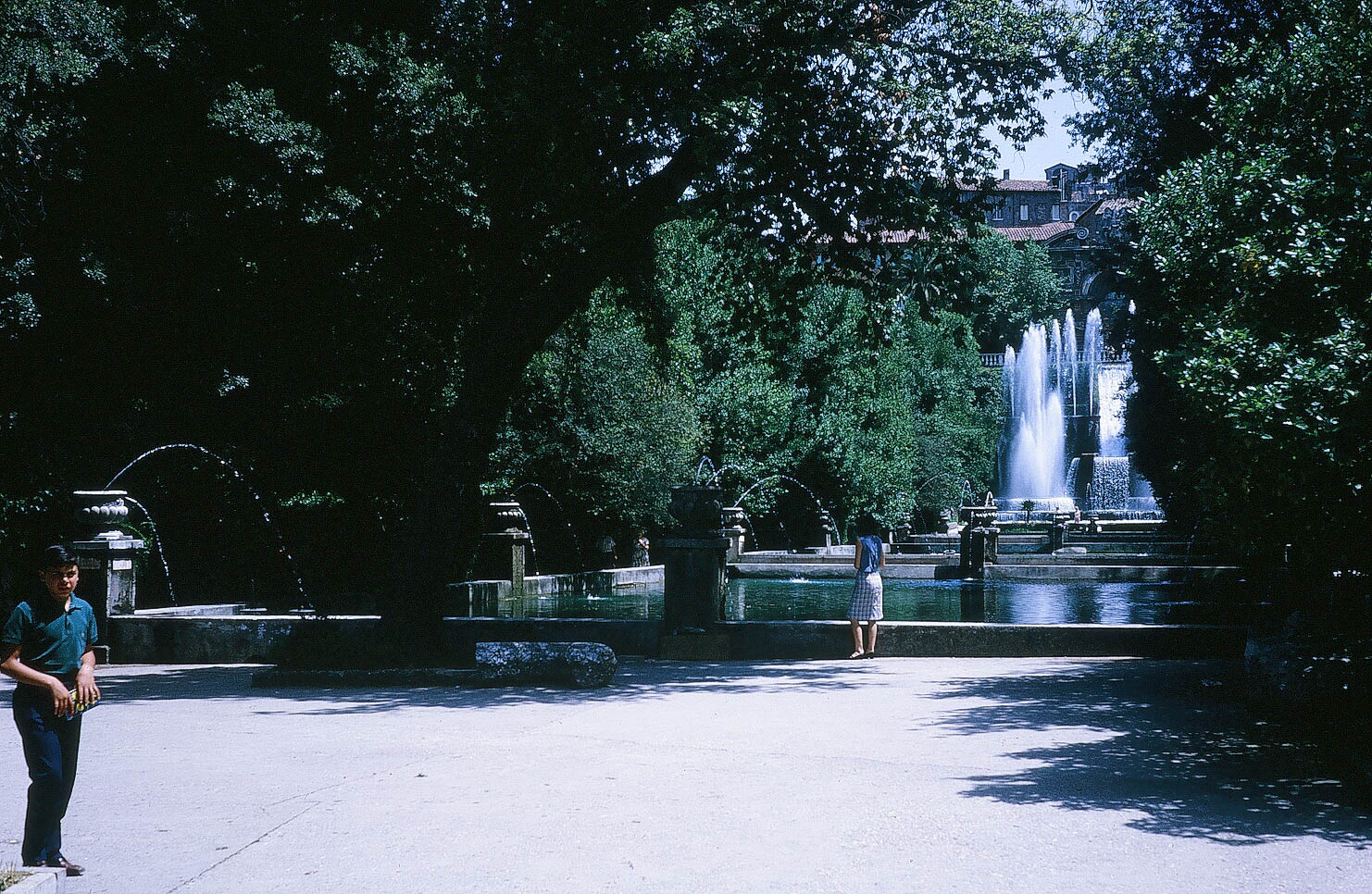
1966EuropeTrip-234 Fountain at Tivoli.
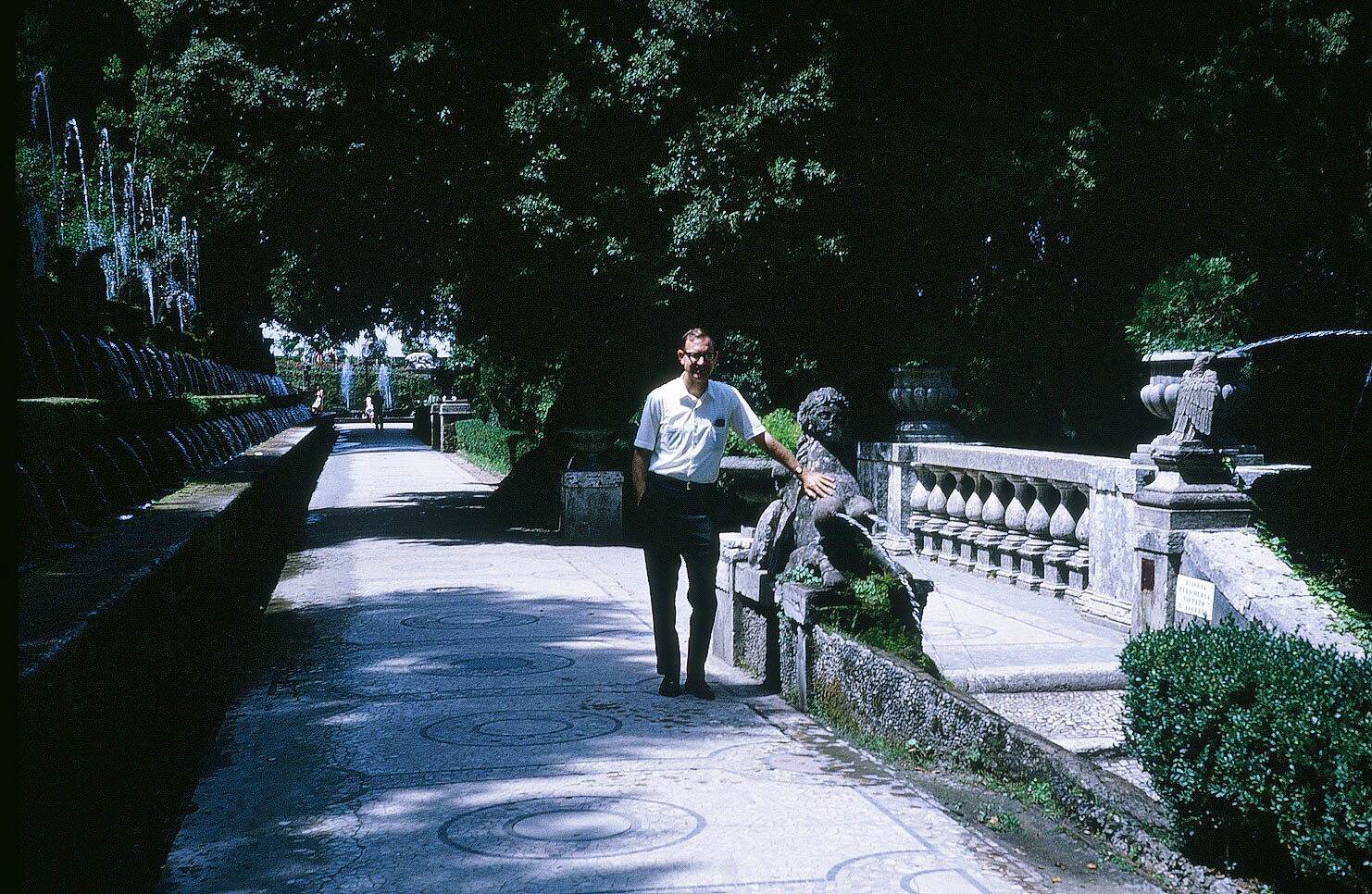
1966EuropeTrip-235 Mel with Tivoli Fountain.
1966EuropeTrip-236 Tivoli Fountain
1966EuropeTrip-237 Tivoli
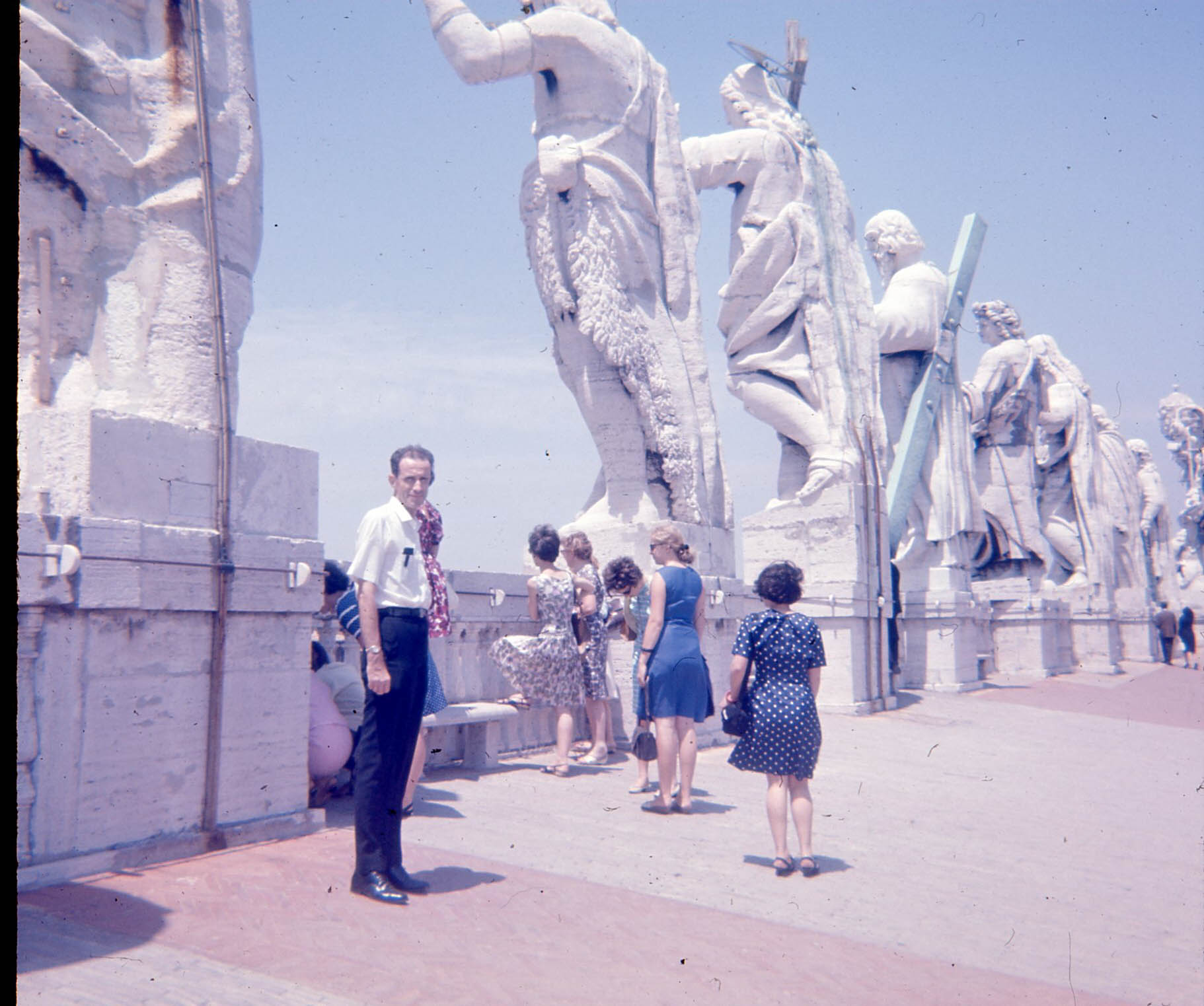
1966EuropeTrip-238 The roof of St. Peter's Basilica in the Vatican City. The facade of the basilica is topped by 13 statues, including Christ the Redeemer, St. John the Baptist, and eleven of the apostles.
1966EuropeTrip-240 St. Peter's
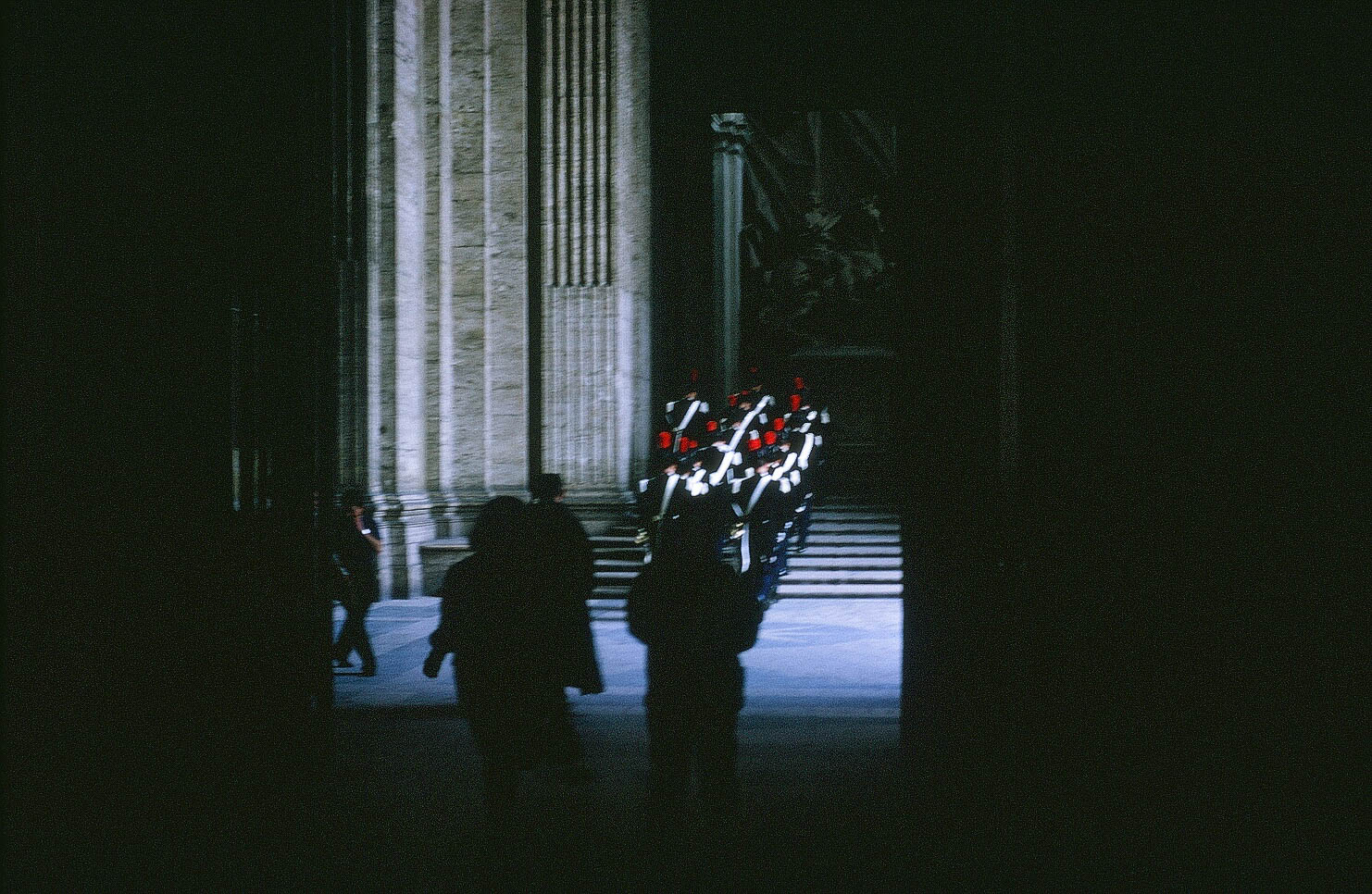
1966EuropeTrip-241 Swiss Guard at St. Peter's
1966EuropeTrip-242 Colosseum
1966EuropeTrip-243 Colosseum
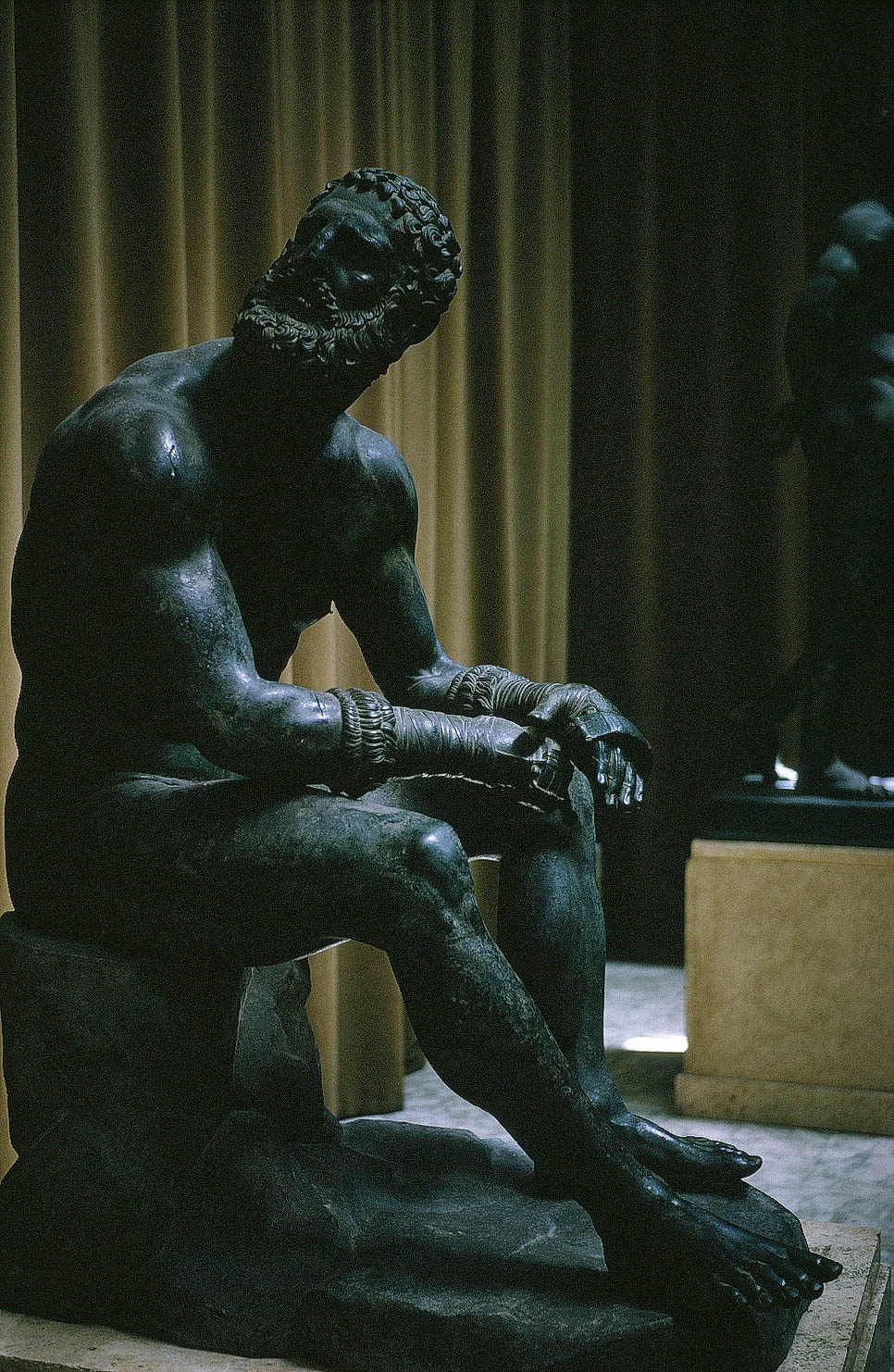
1966EuropeTrip-245 The Pugilist. The Boxer at Rest, also known as the Terme Boxer, Seated Boxer, Defeated Boxer, or Boxer of the Quirinal, is a bronze sculpture, a Hellenistic Greek original,[1] of a sitting nude boxer at rest, still wearing his himantes (Ancient Greek: ἱμάντες, romanized: himántes, plural of ἱμάς, himás, 'a leathern strap or thong'[2]), a type of leather hand-wrap. It has been given various dates within the period of about 330 to 50 BC. It was excavated in Rome in 1885, and is now in the collection of the National Museum of Rome, normally displayed in the Palazzo Massimo alle Terme
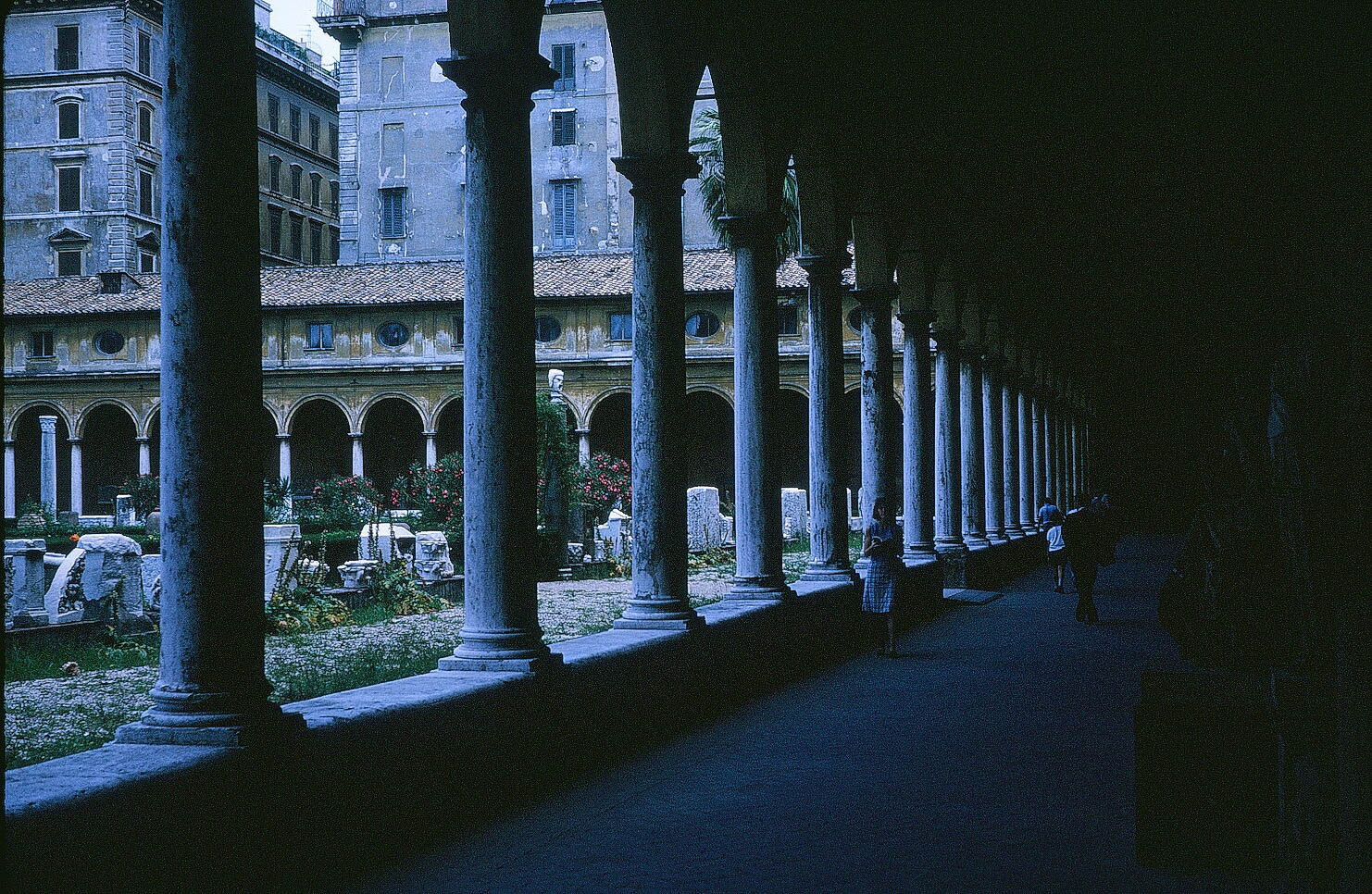
1966EuropeTrip-246 Michelangelo`s Cloister at the Baths of Diocletian, Rome
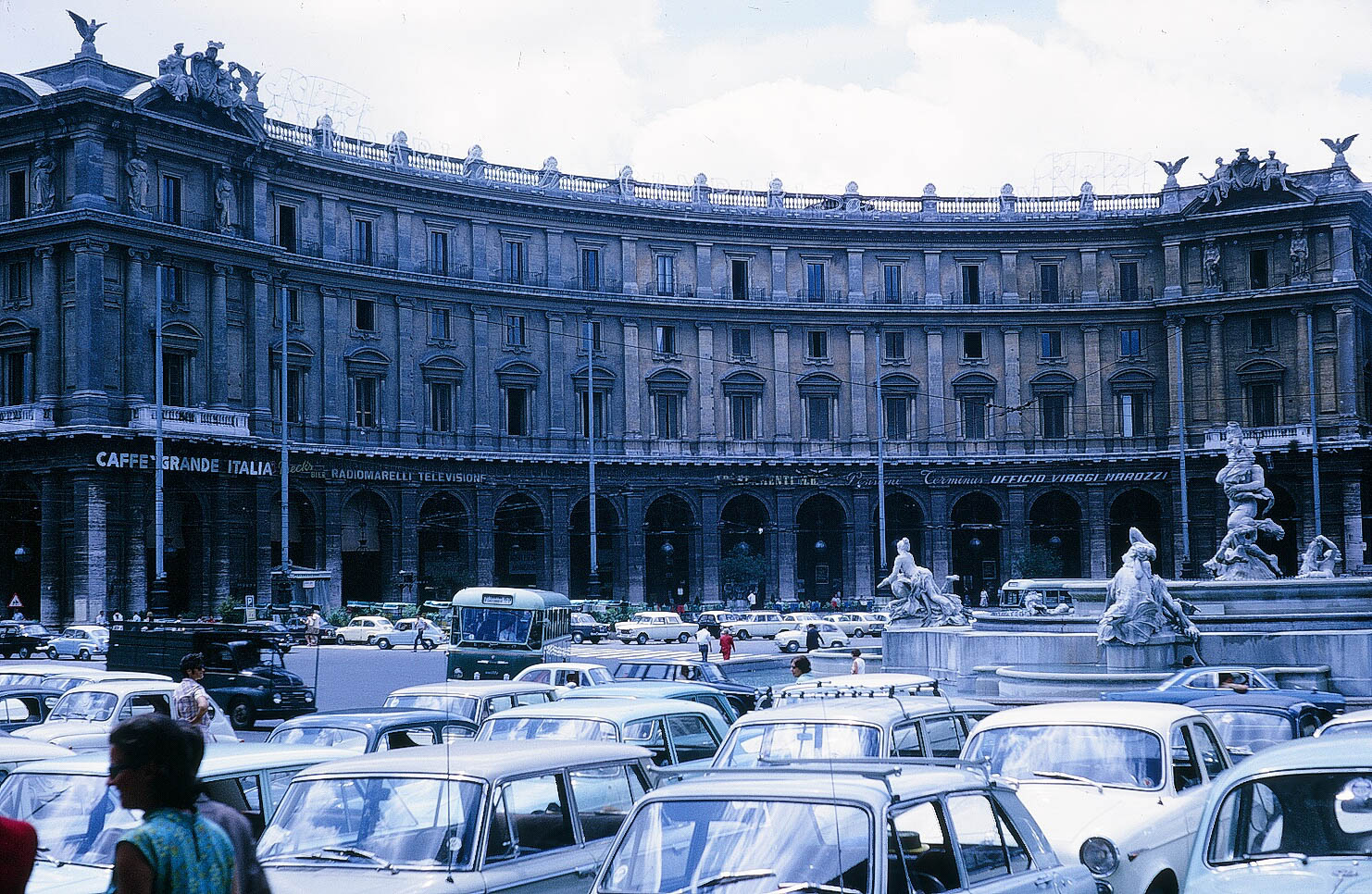
1966EuropeTrip-247 Piazza della Repubblica is a circular piazza in Rome, at the summit of the Viminal Hill, next to the Termini station. On it is to be found Santa Maria degli Angeli e dei Martiri. It is served by the Repubblica – Teatro dell'Opera Metro station. From the square starts one of the main streets of Rome, Via Nazionale.
The former name of the piazza, Piazza dell'Esedra, still very common today, originates in the large exedra of the baths of Diocletian, which gives the piazza its shape. The exedra present in the baths of Diocletian was incorporated into the gardens built by Cardinal Jean du Bellay; on his death in 1560. Our pension was here.
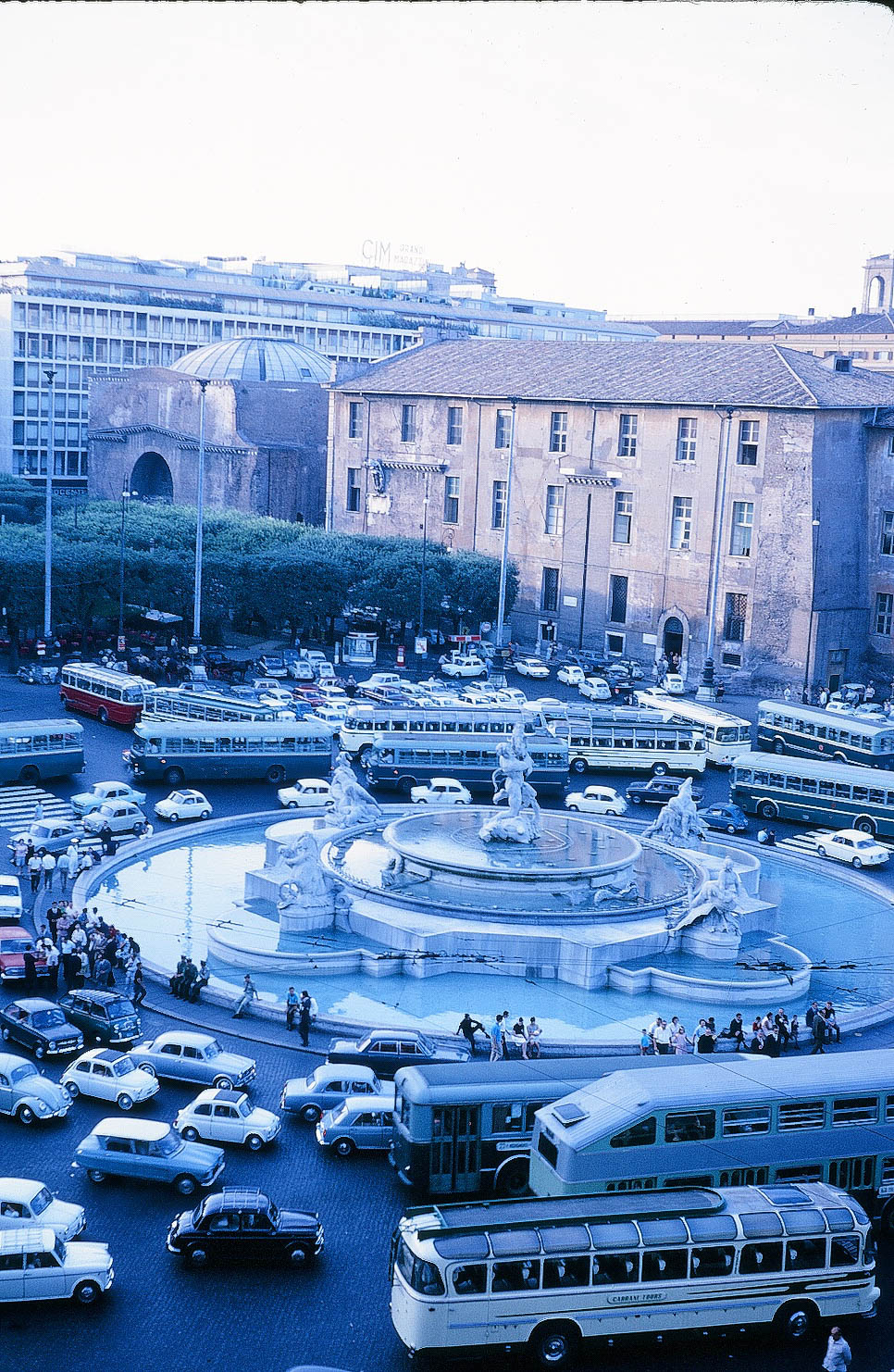
1966EuropeTrip-248 View from our pension. Piazza de Esedra.
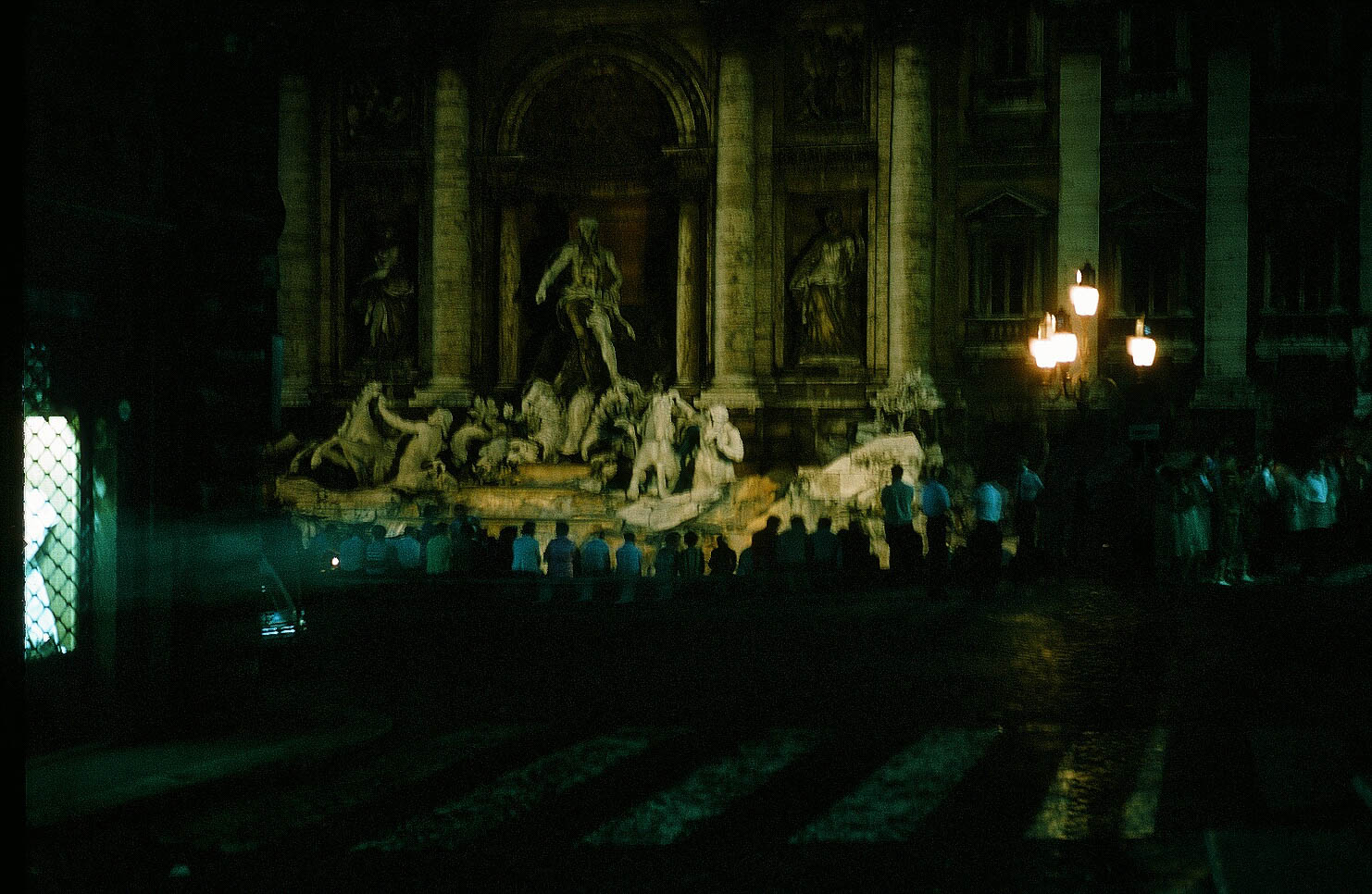
1966EuropeTrip-250 Trevi Fountain at night.
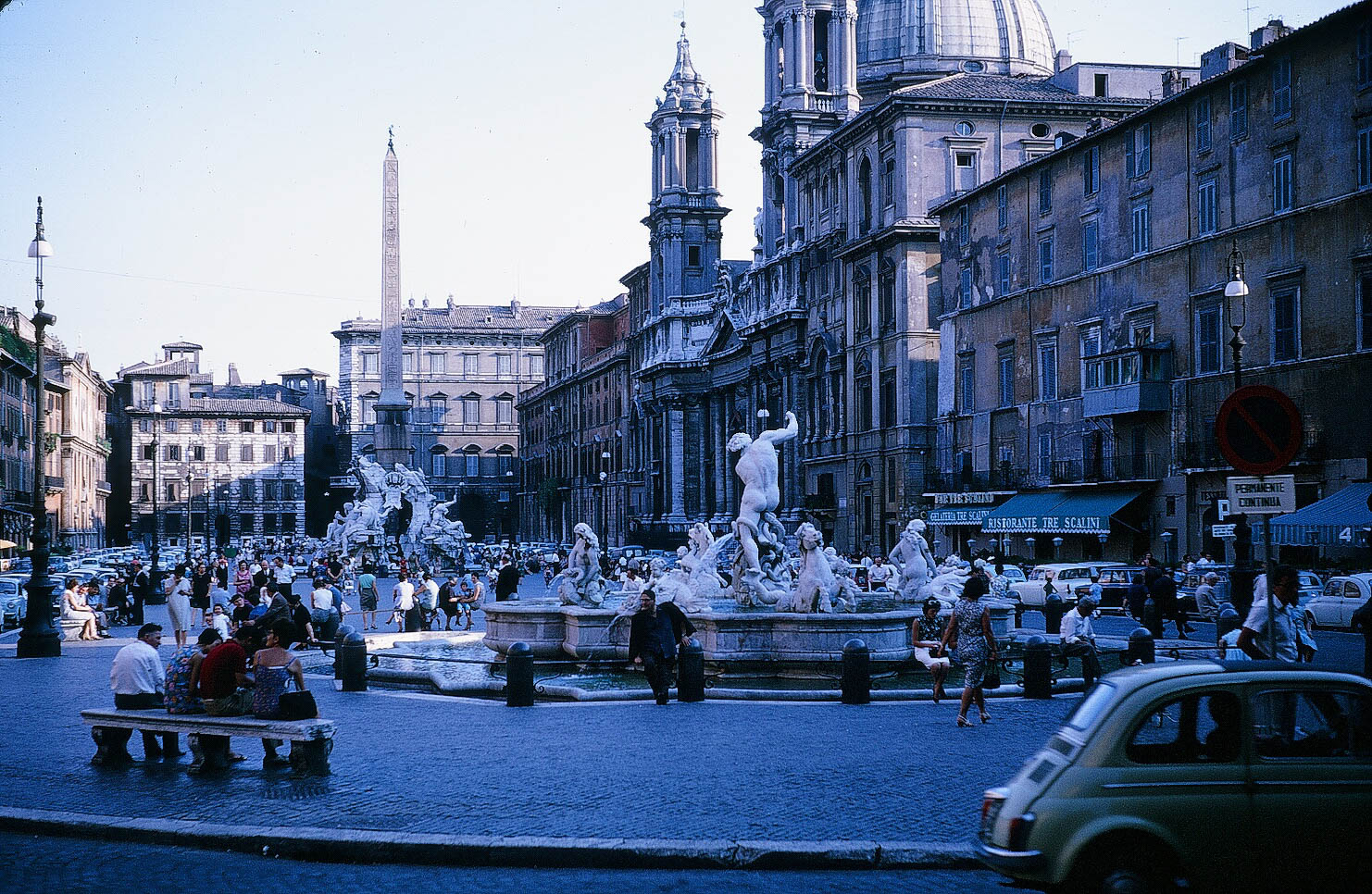
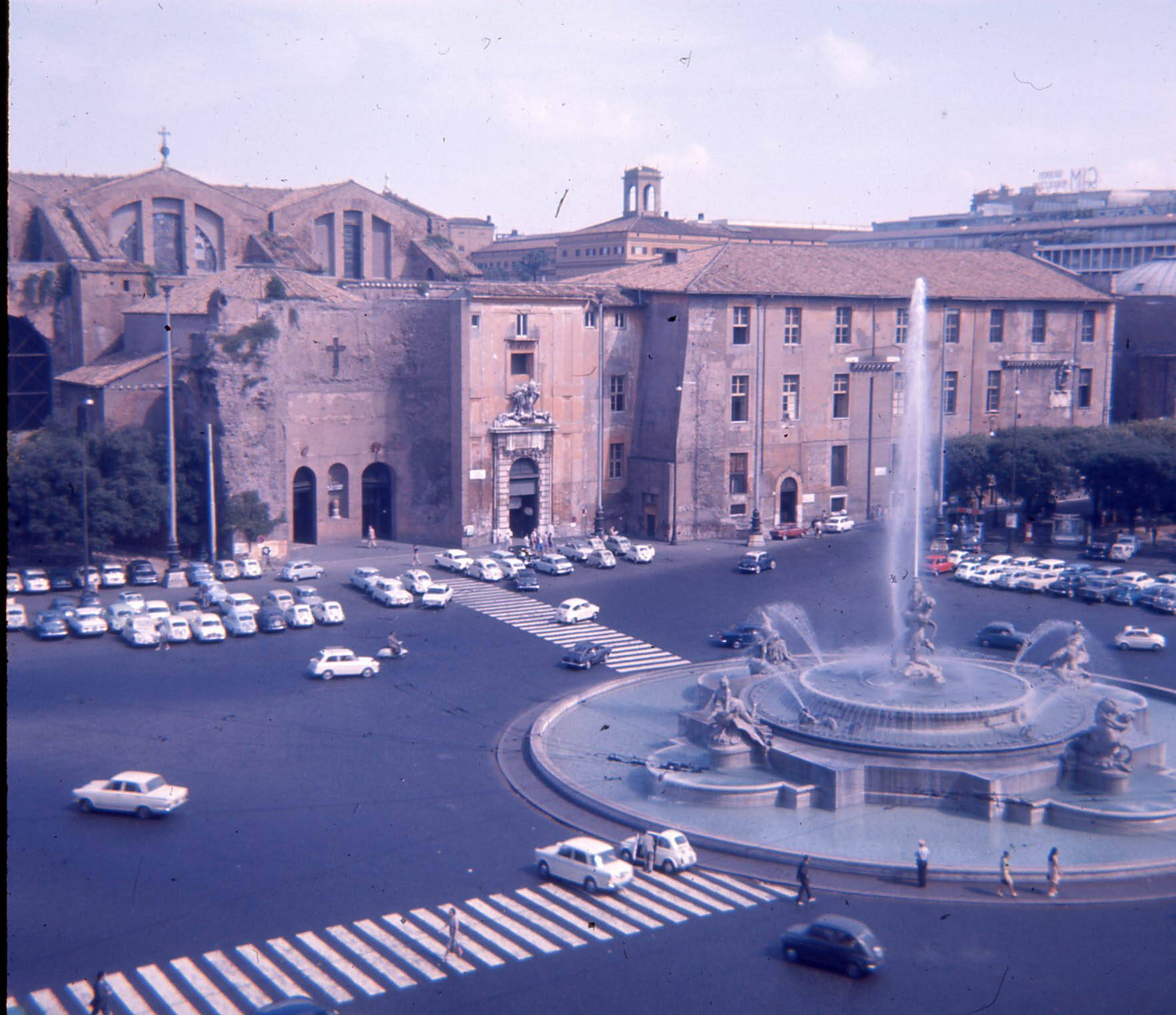
1966EuropeTrip-251 Piazza della Repubblica in Rome, Italy, featuring the Fountain of the Naiads and the Basilica di Santa Maria degli Angeli e dei Martiri.
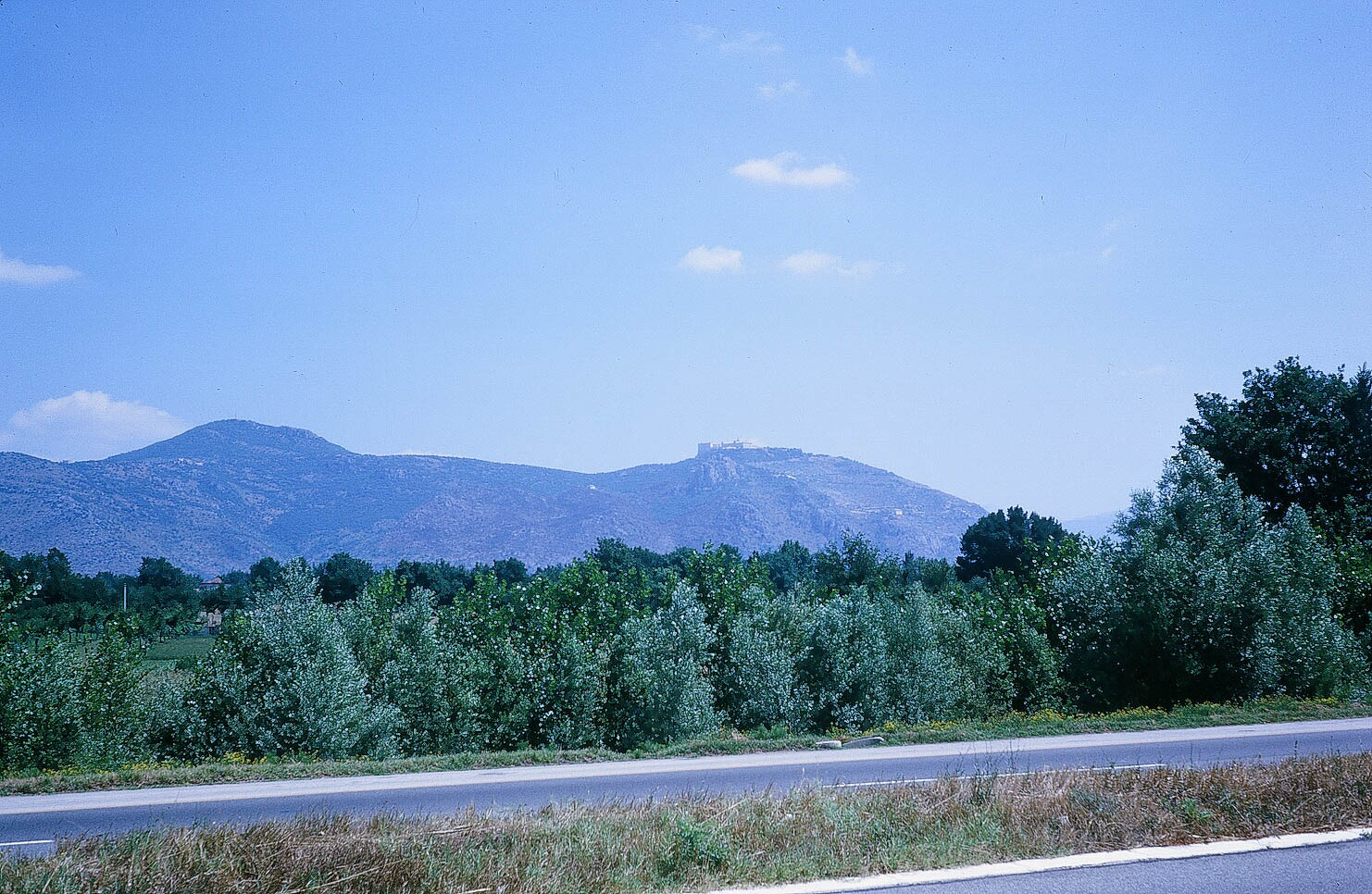
1966EuropeTrip-252 From Rome to Naples. Abbey of Montecassino in distance. the abbey was scene of famous WWII battle. The abbey was leveled by Allied bombing which was very controversial. Battle Monte Cassiono.
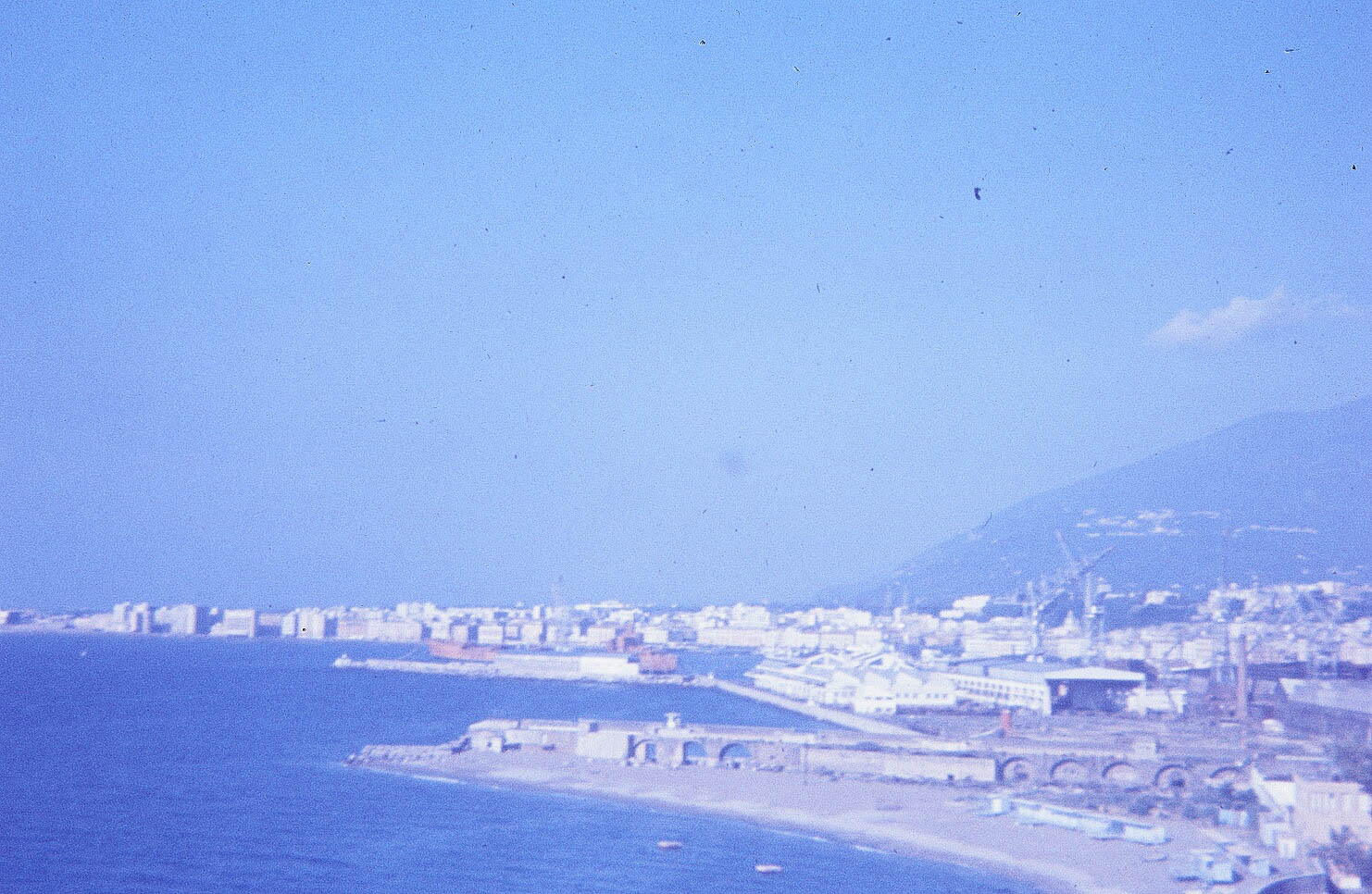
1966EuropeTrip-253 Naples
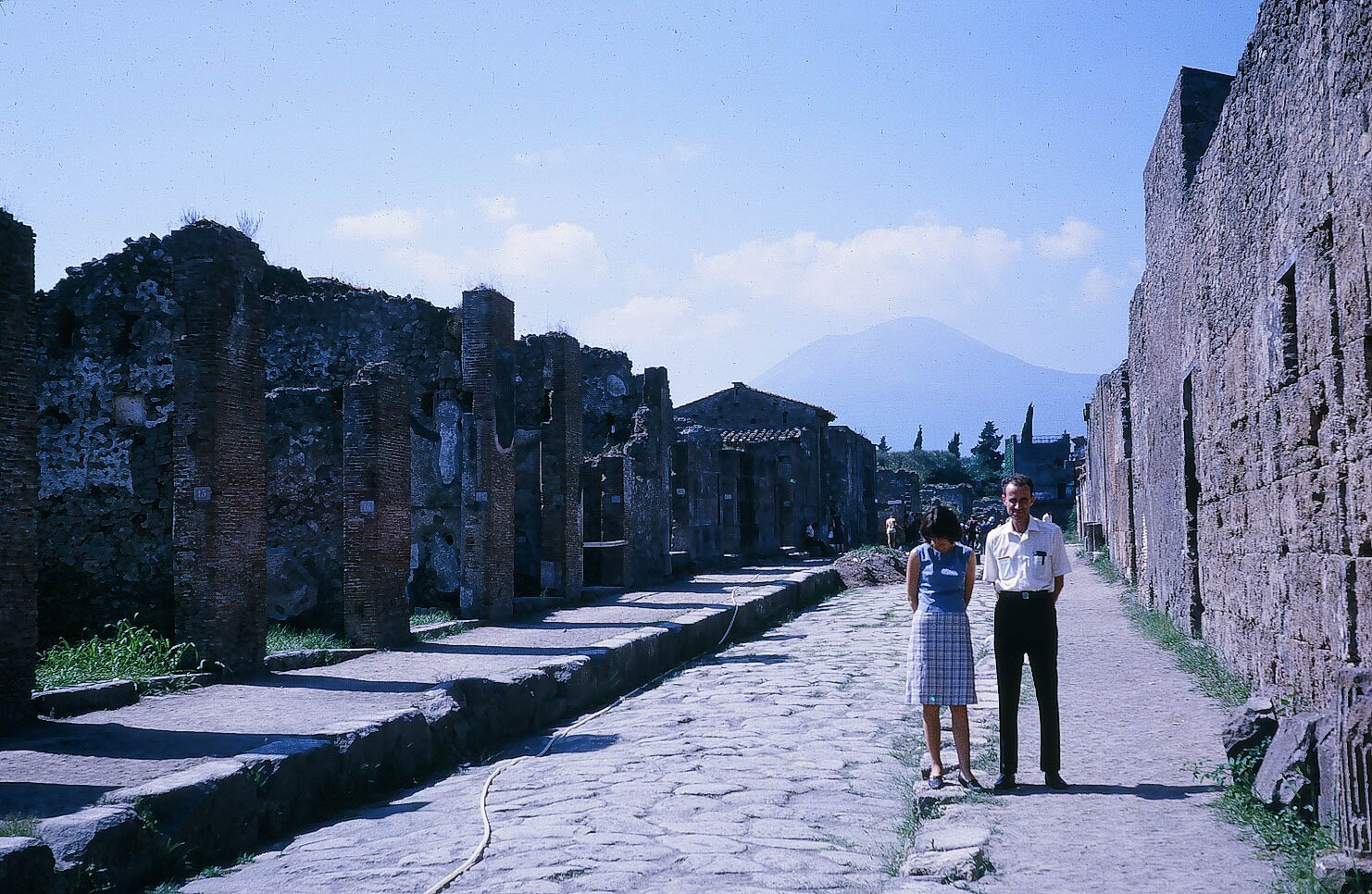
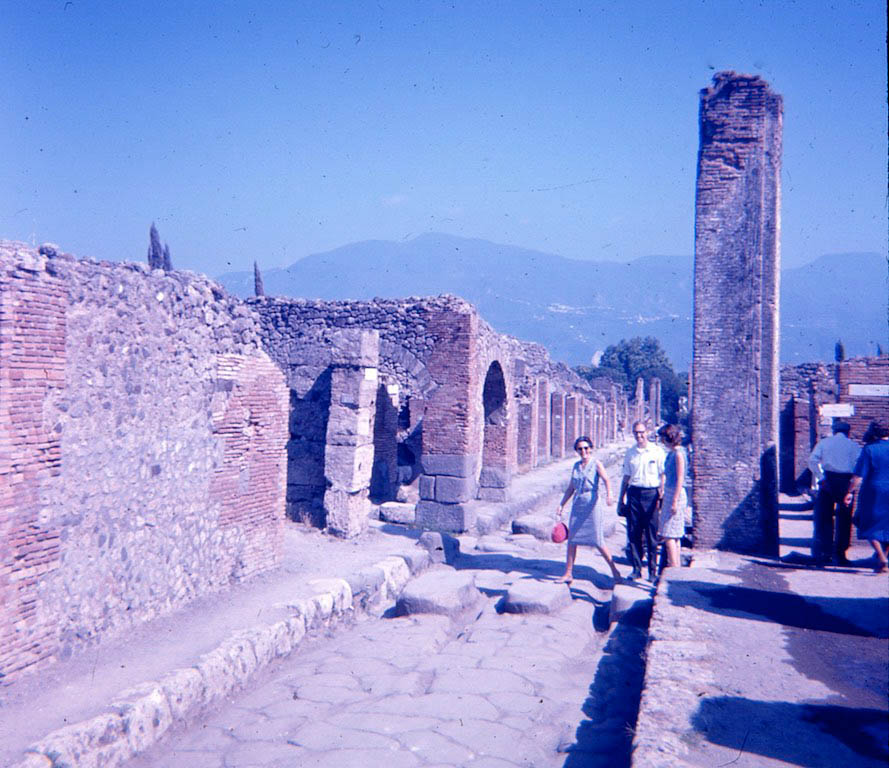
1966EuropeTrip-254 Pompei, Pat and Bob Winter, father.
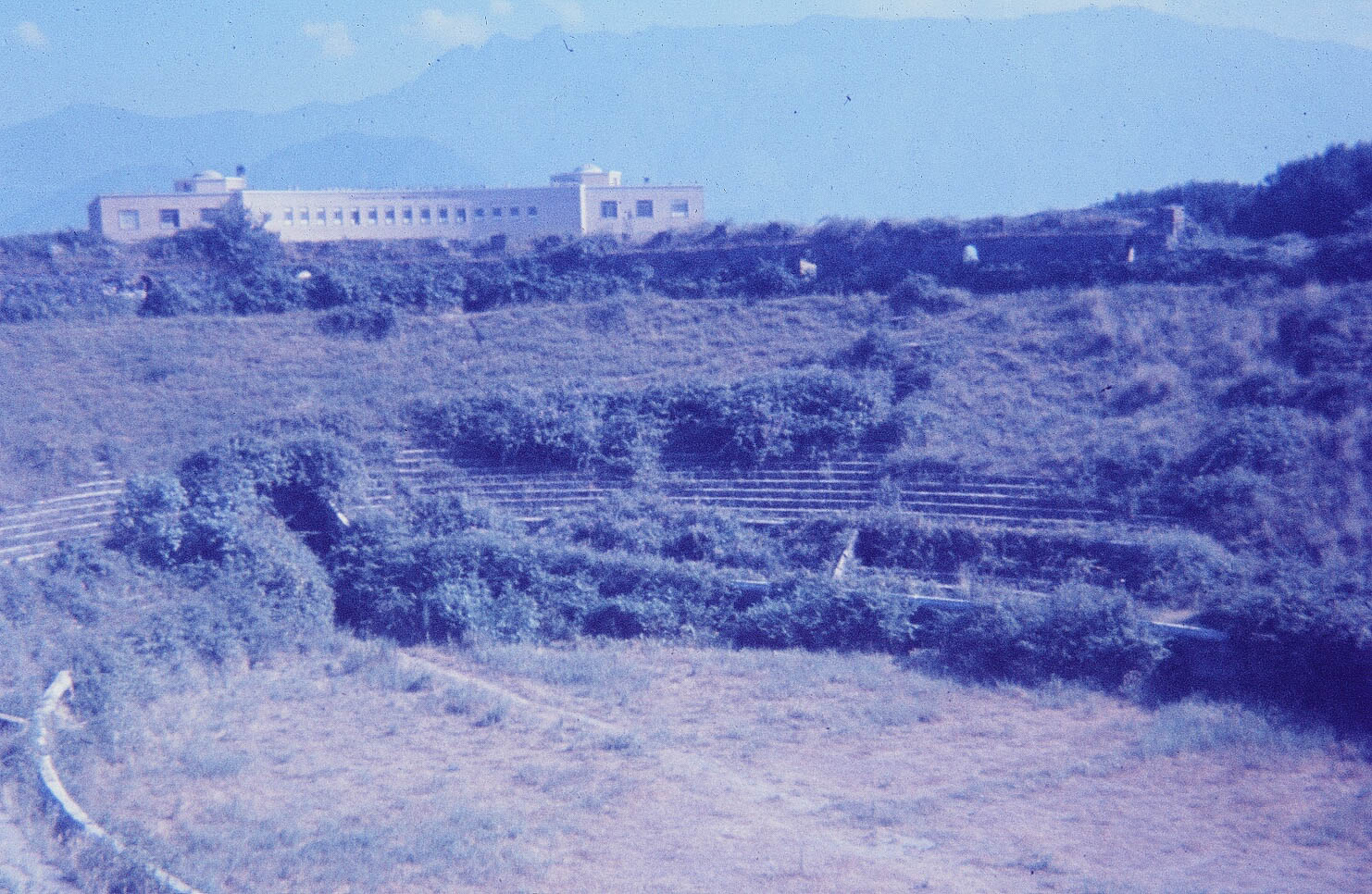
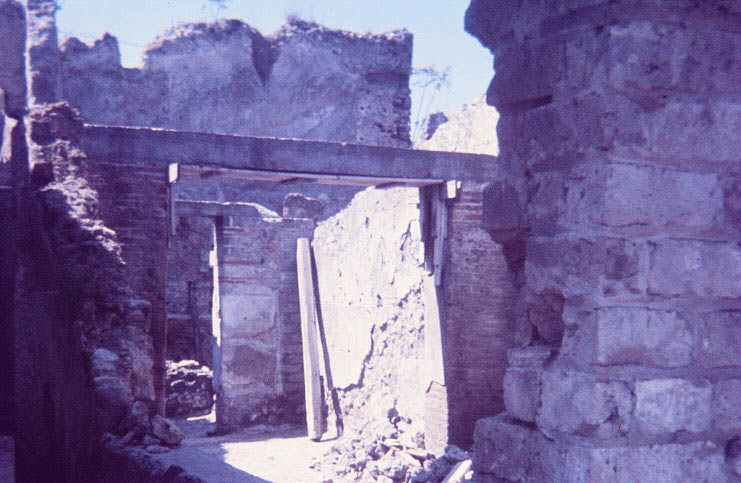
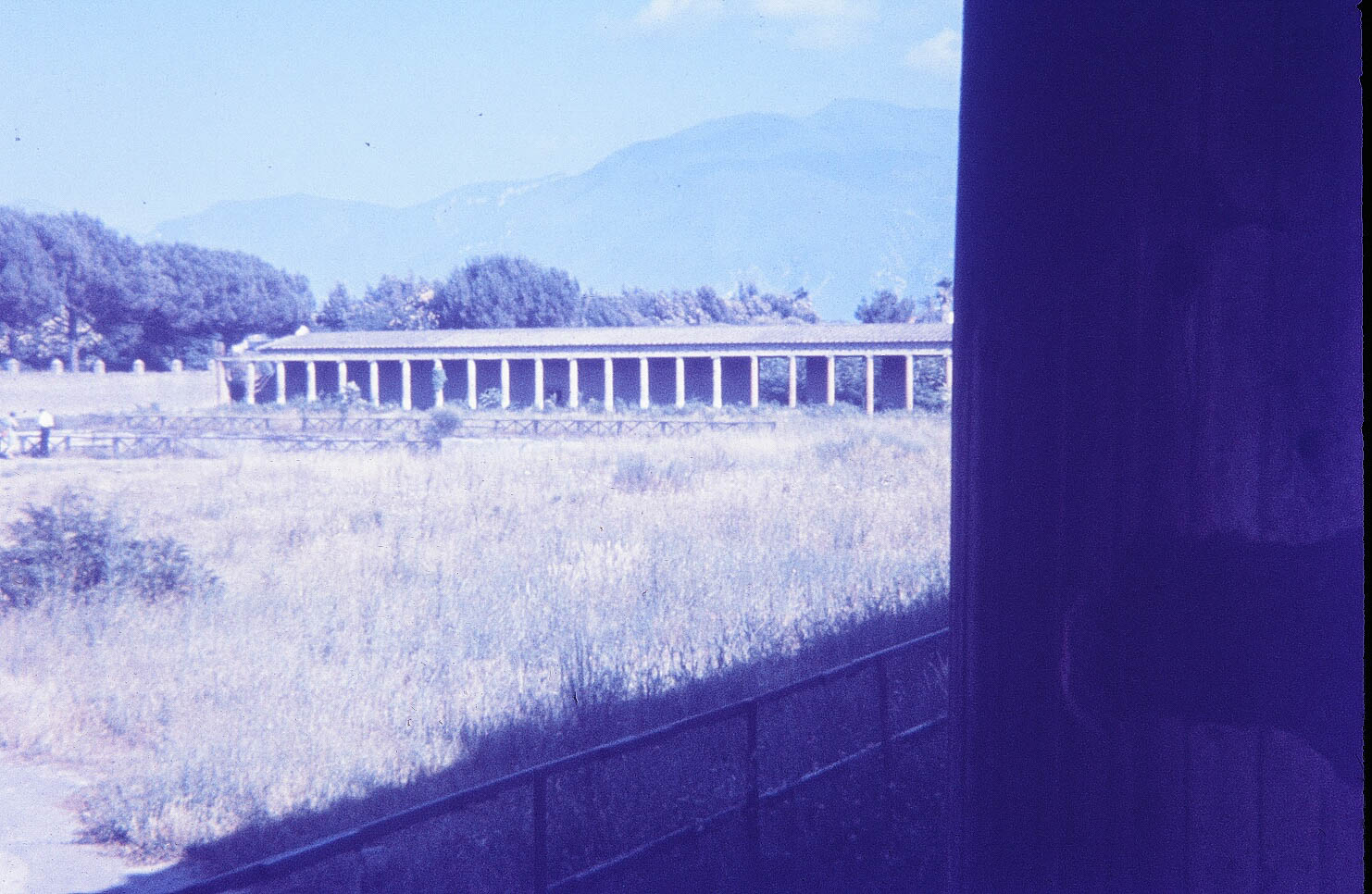
1966EuropeTrip-255 Pompei
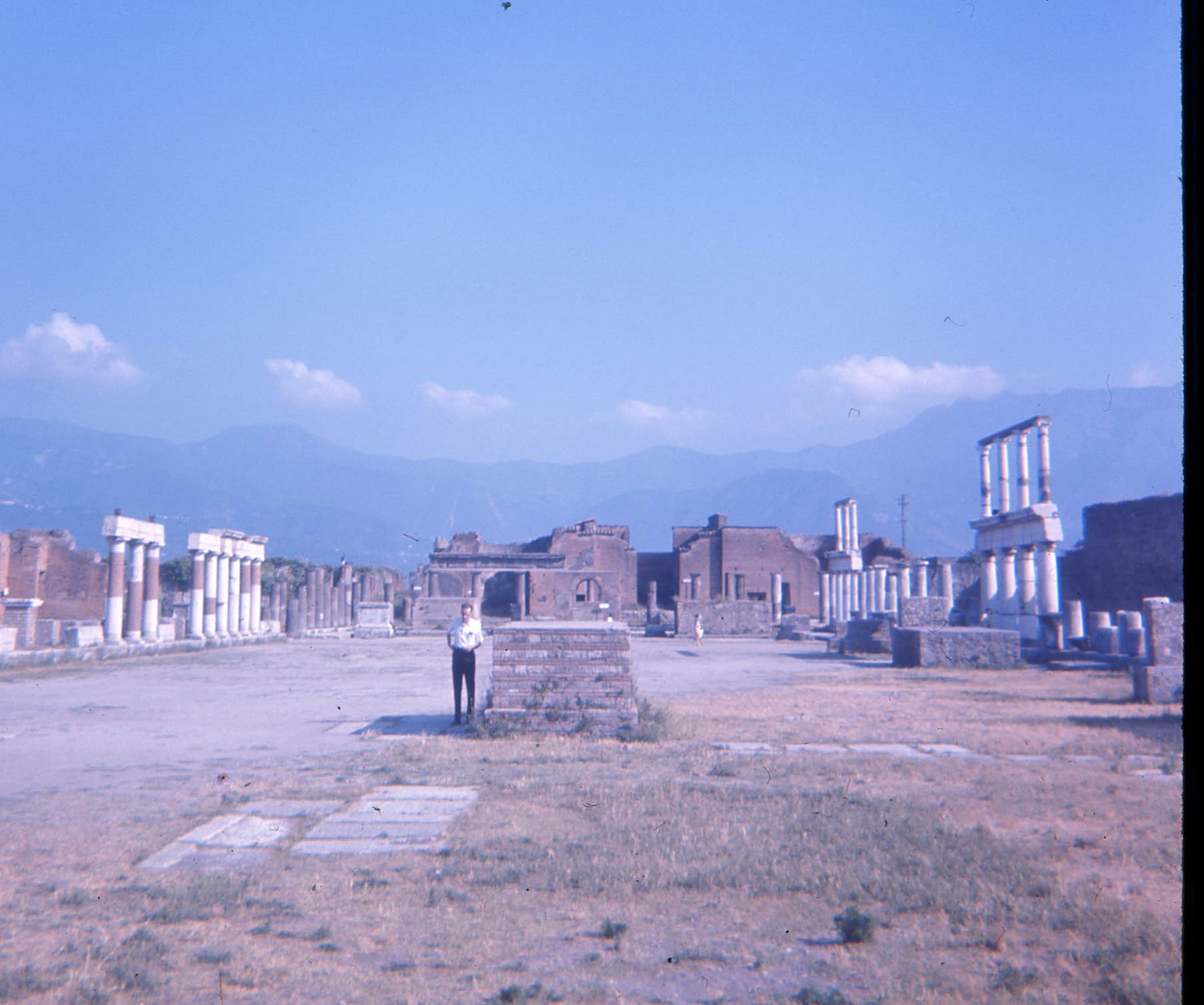
1966EuropeTrip-256 Pompei
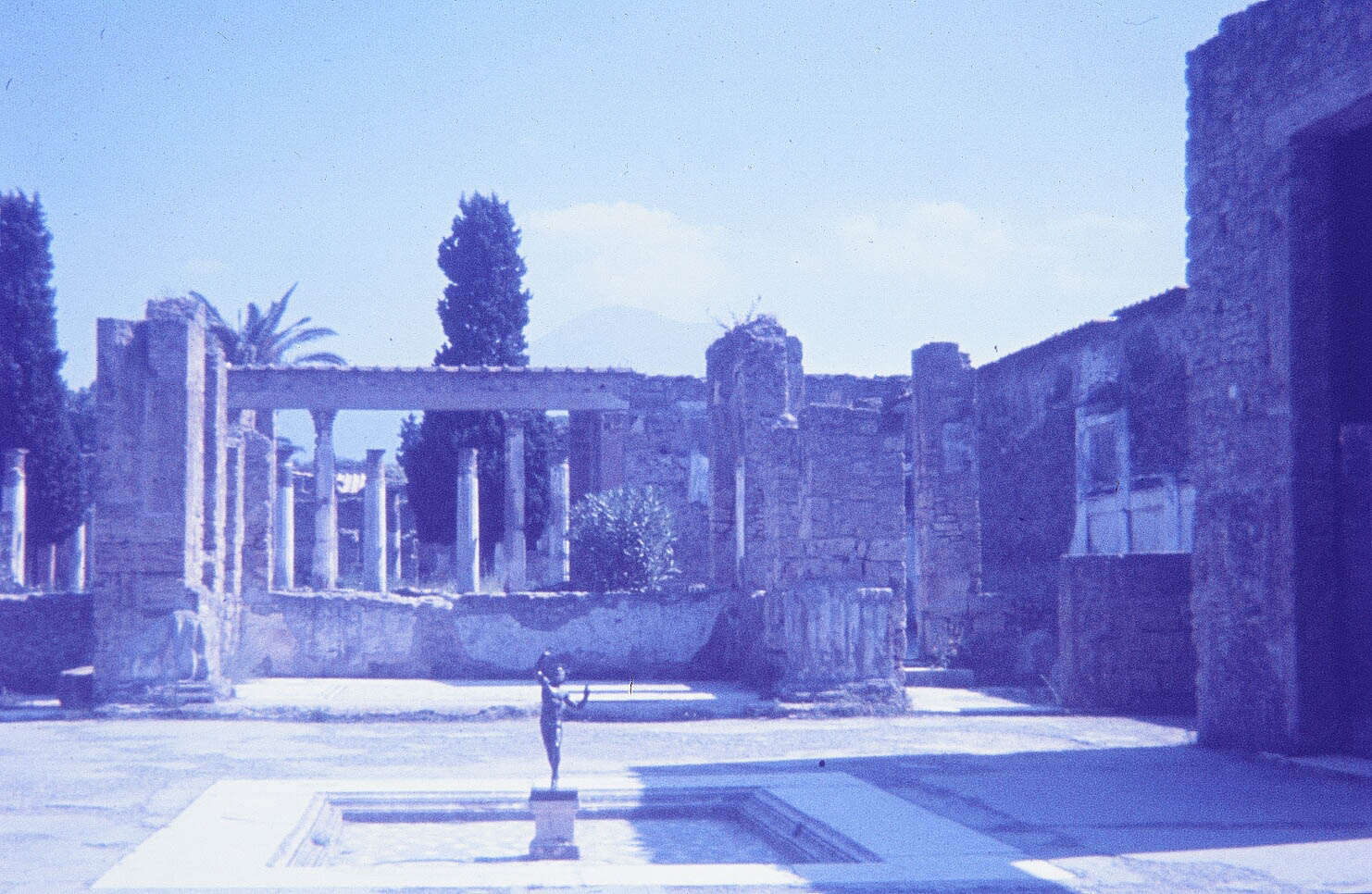
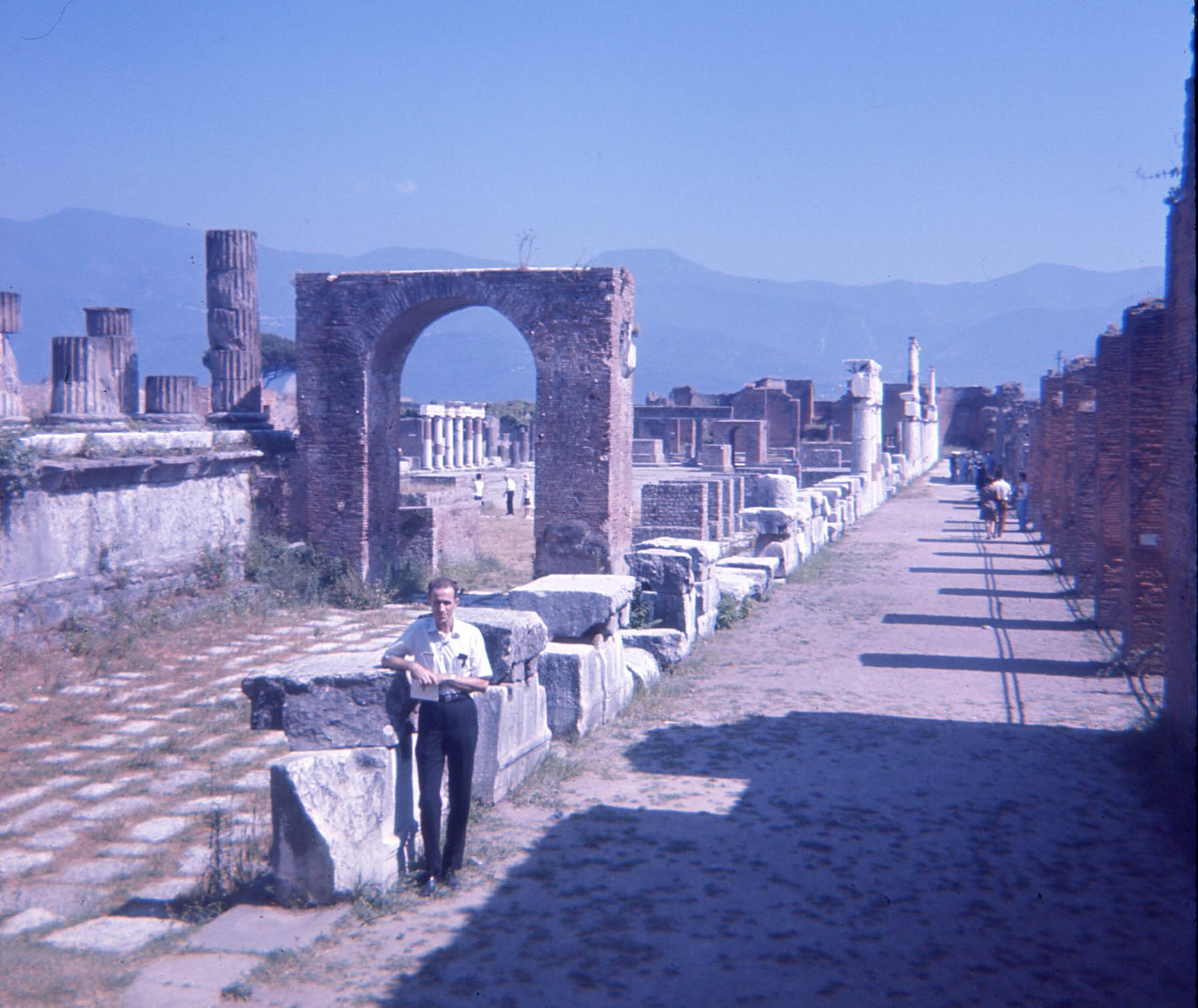
1966EuropeTrip-258 Pompei
1966EuropeTrip-259 Pompei
1966EuropeTrip-260 Pompei
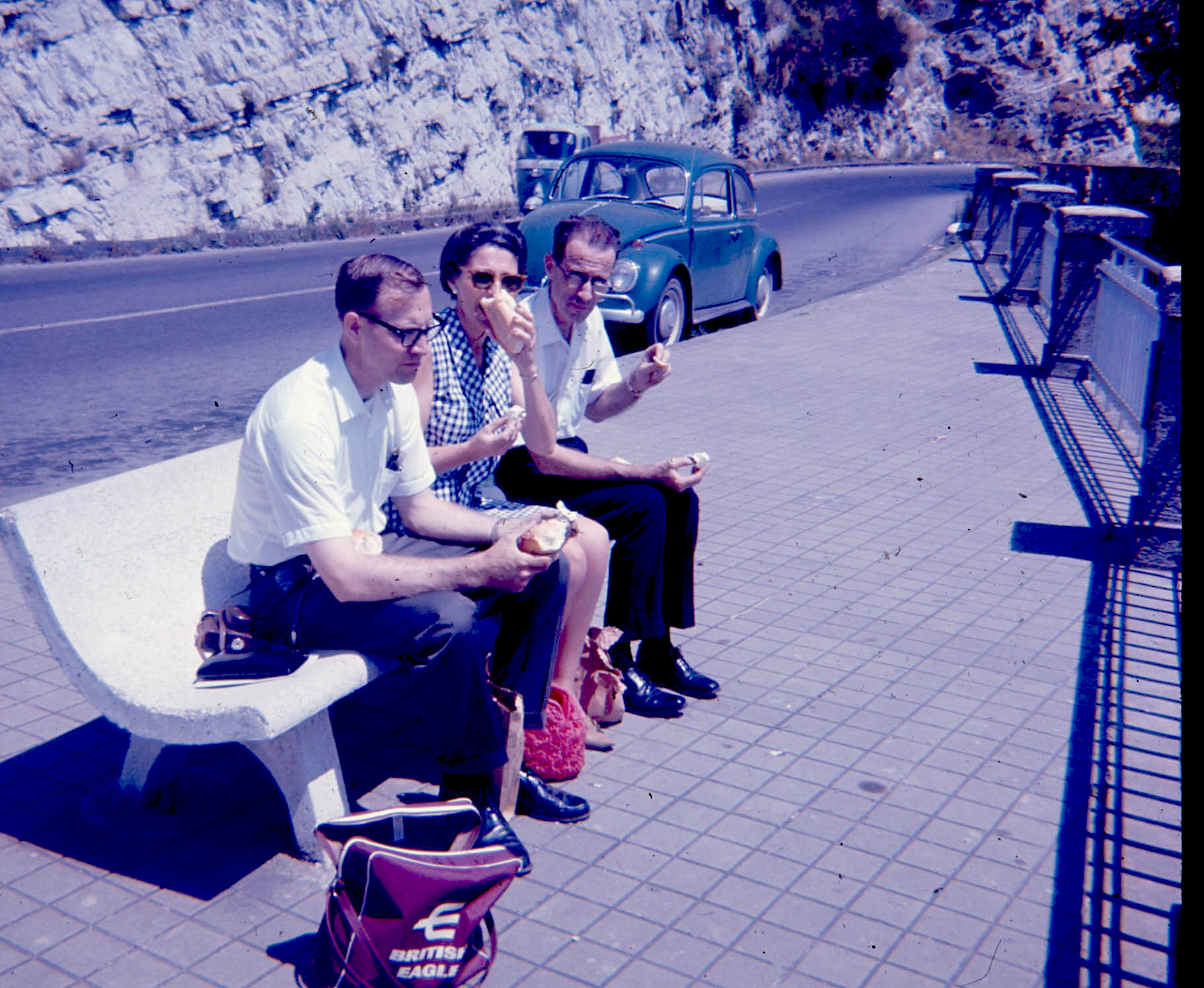
1966EuropeTrip-262 Lunch on road between Pompei and Sorrento.
1966EuropeTrip-265, Lois Winter, Mel and Pat Oakes, Pompei
1966EuropeTrip-266 Bob Winter, Pompei
1966EuropeTrip-267 Bob Winter. Pompei
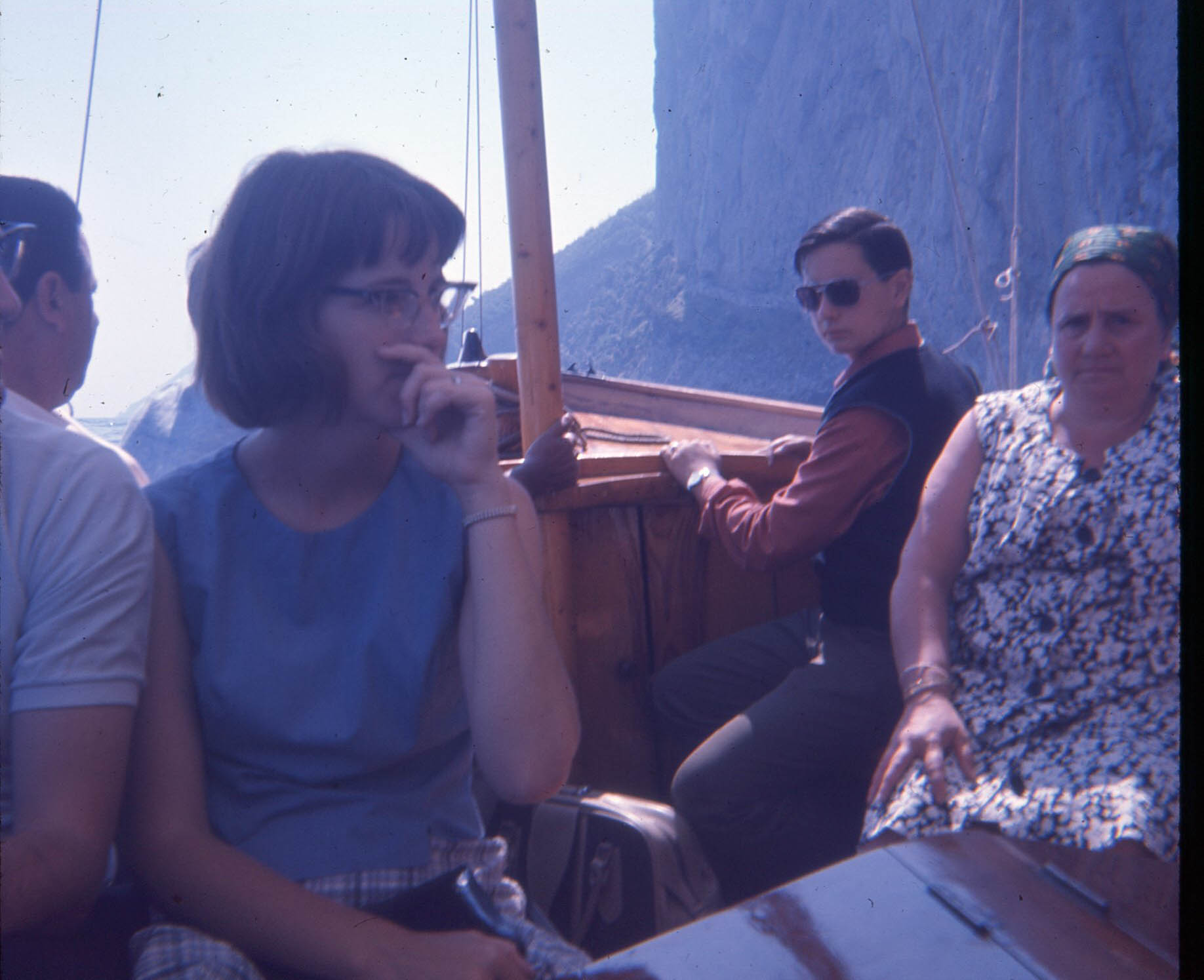
1966EuropeTrip-293 Pat Oakes, boat to Capri
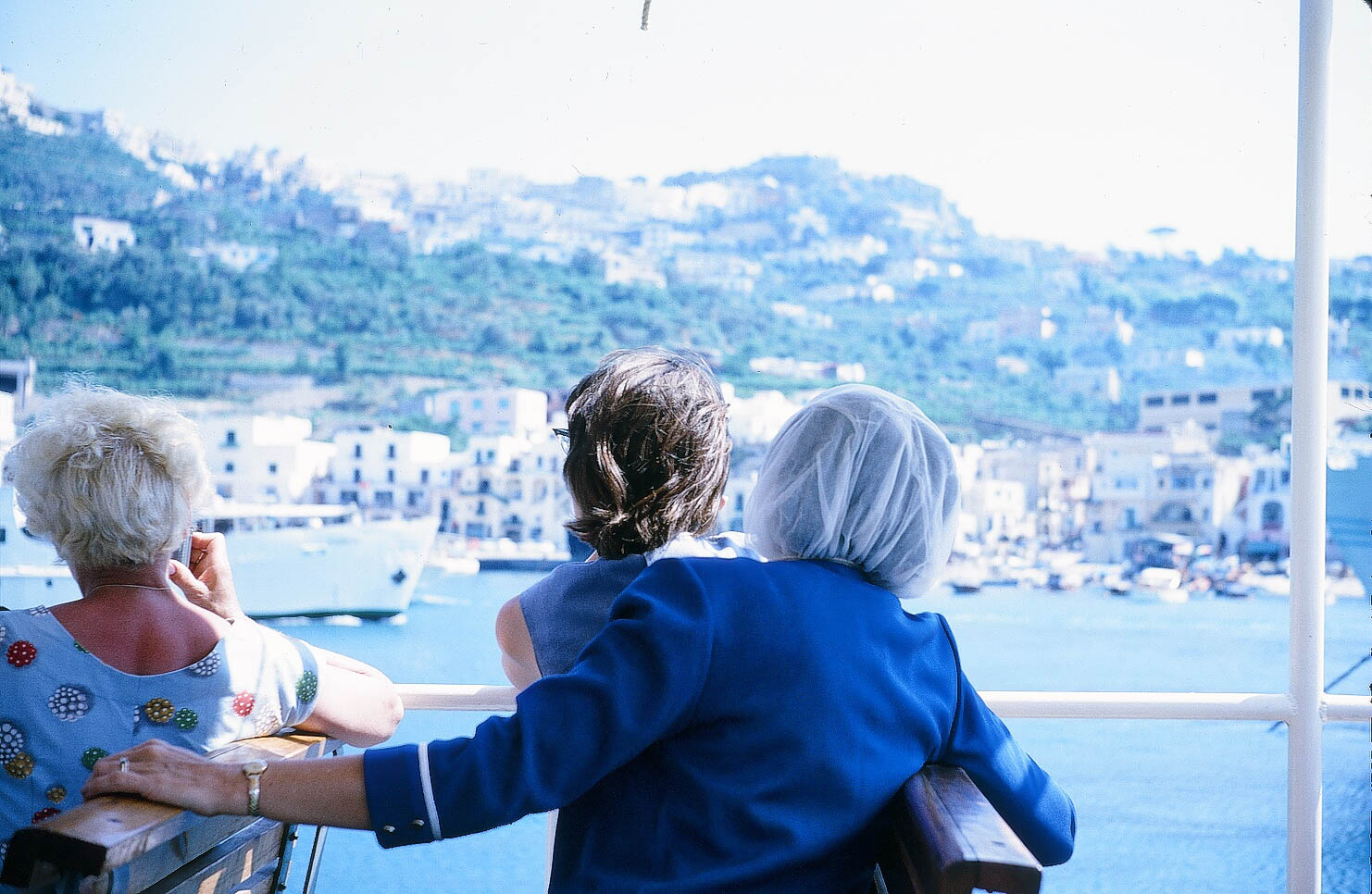
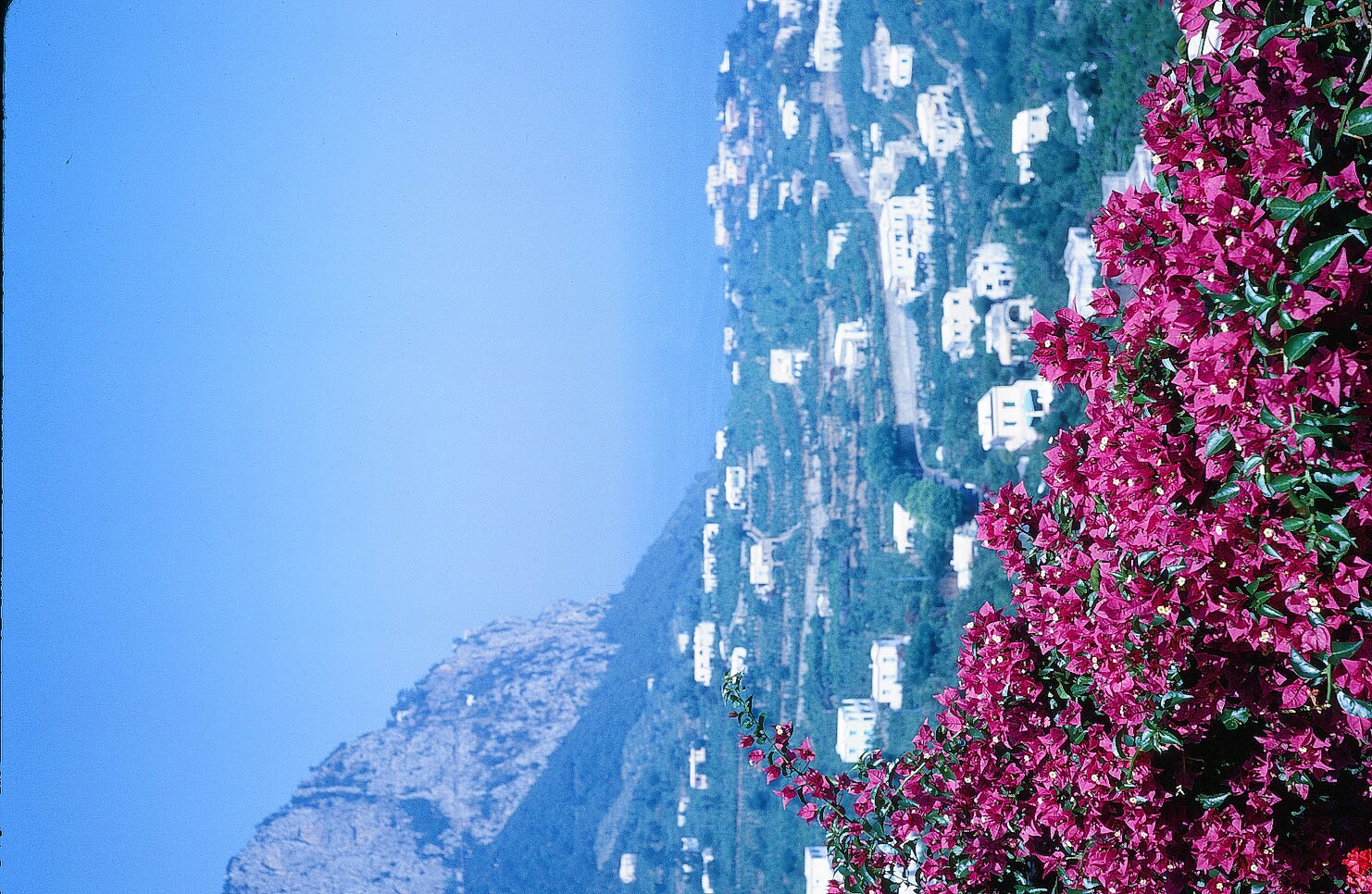
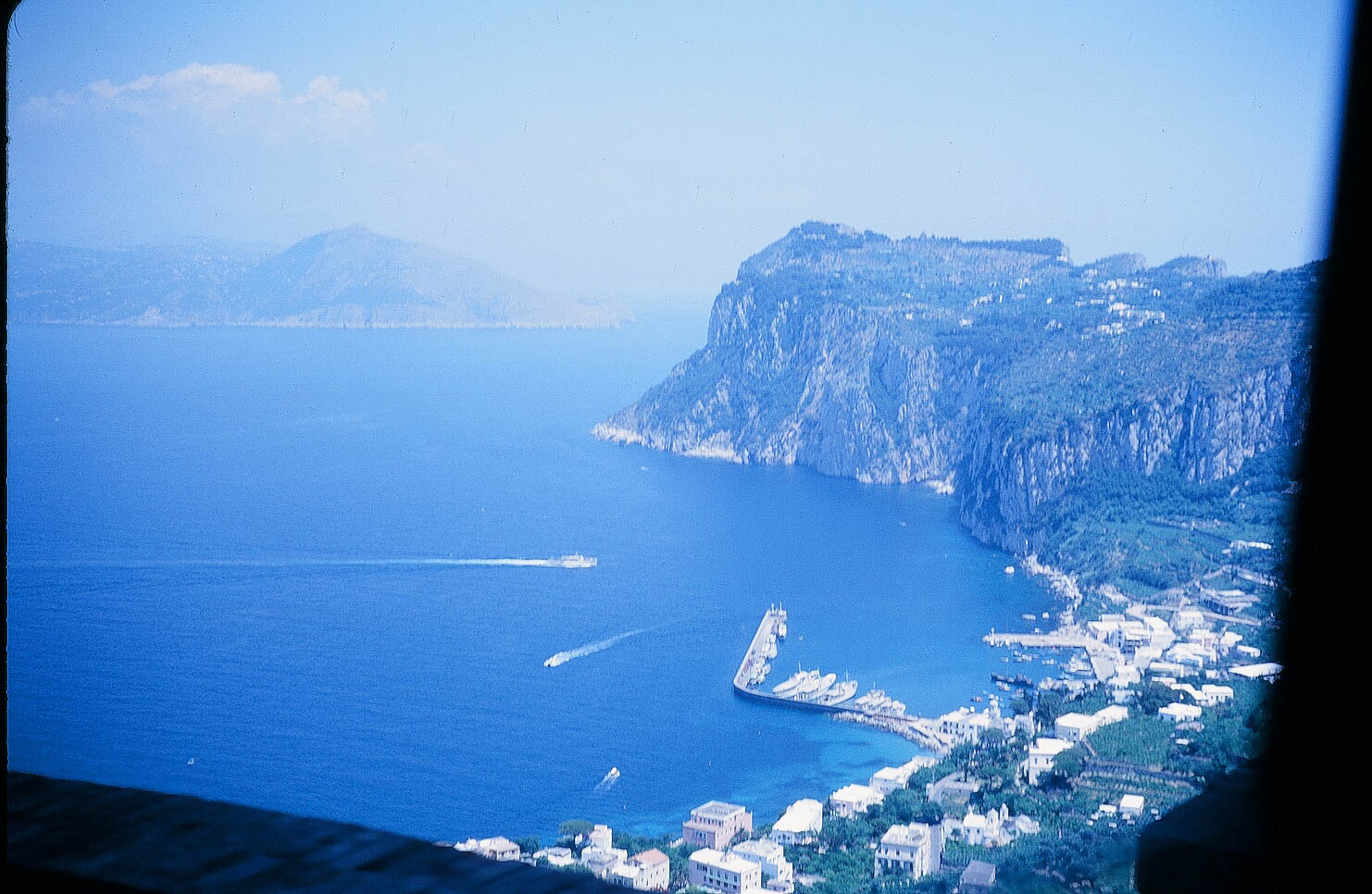
1966EuropeTrip-286 View of Capri.
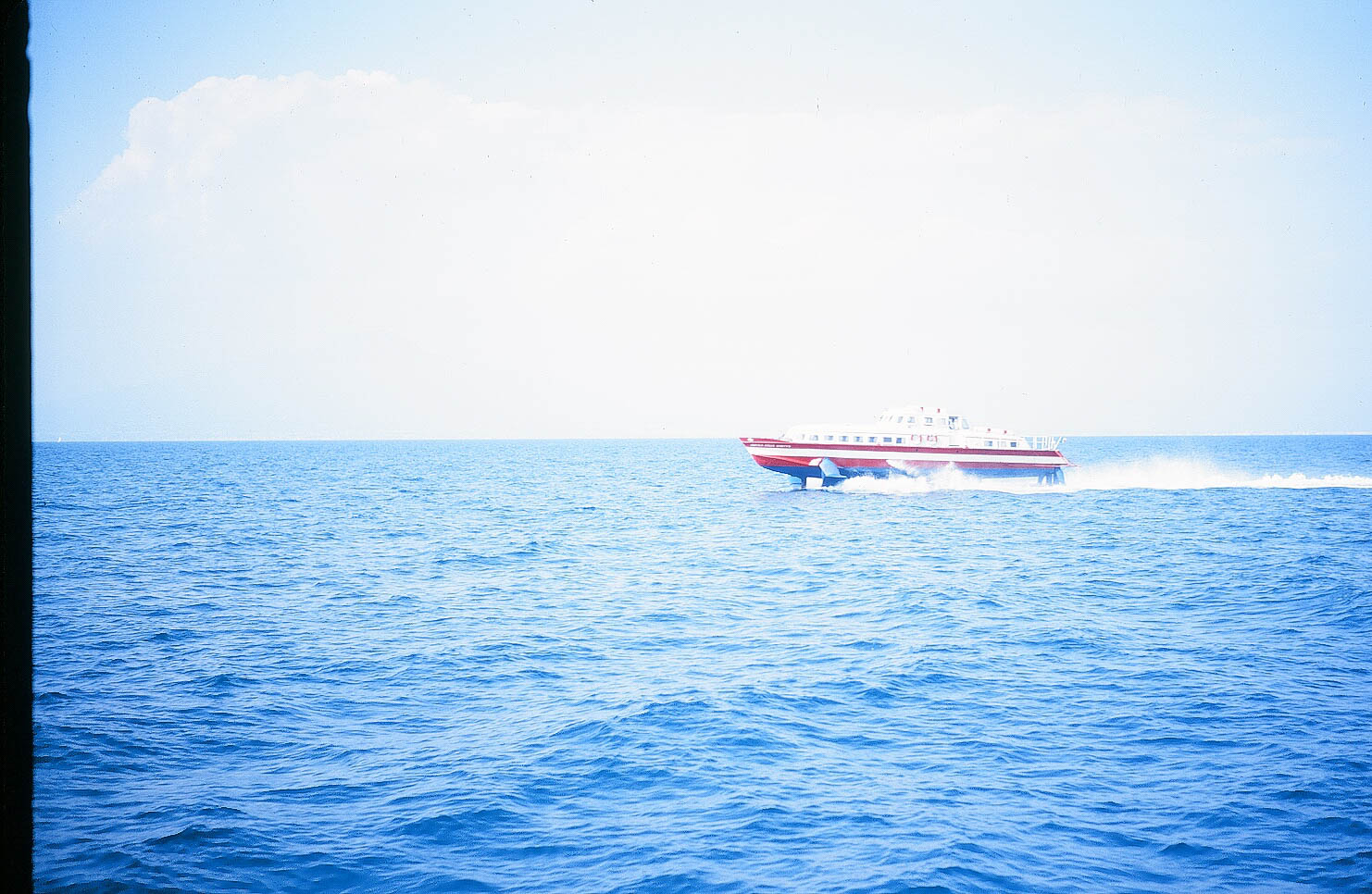
1966EuropeTrip-295 Hydrofoil to Capri.
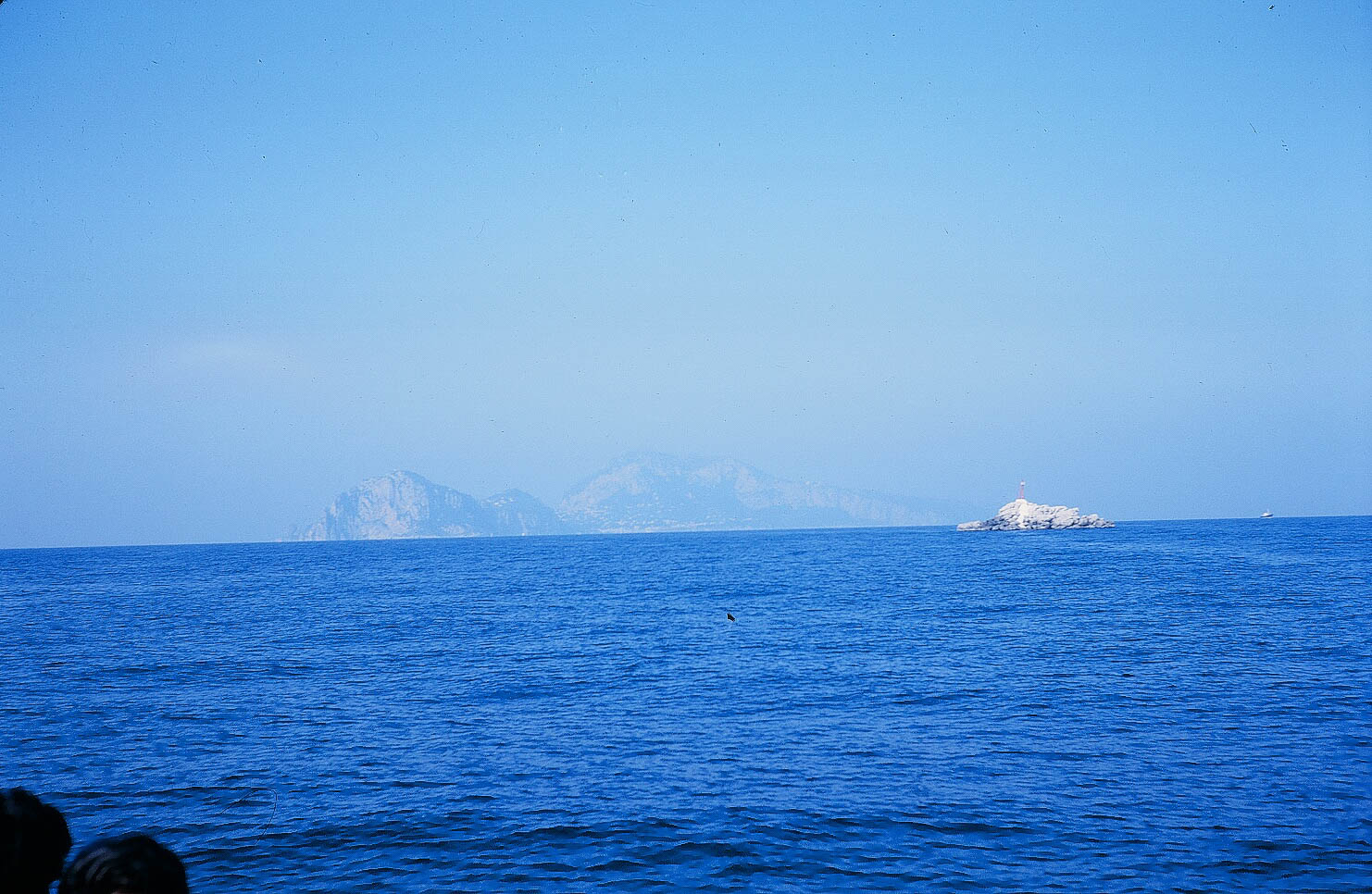
1966EuropeTrip-268 Bay of Naples
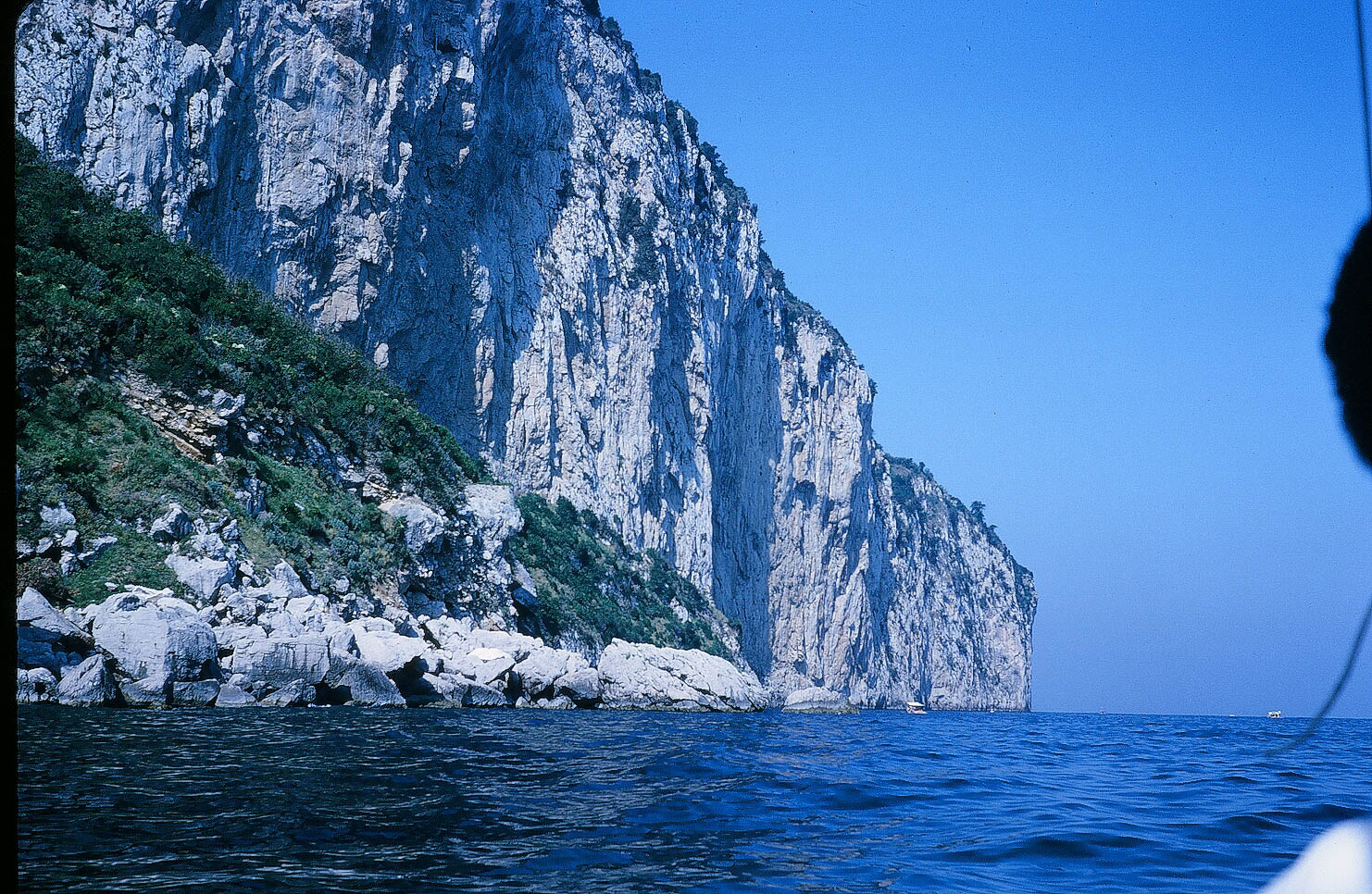
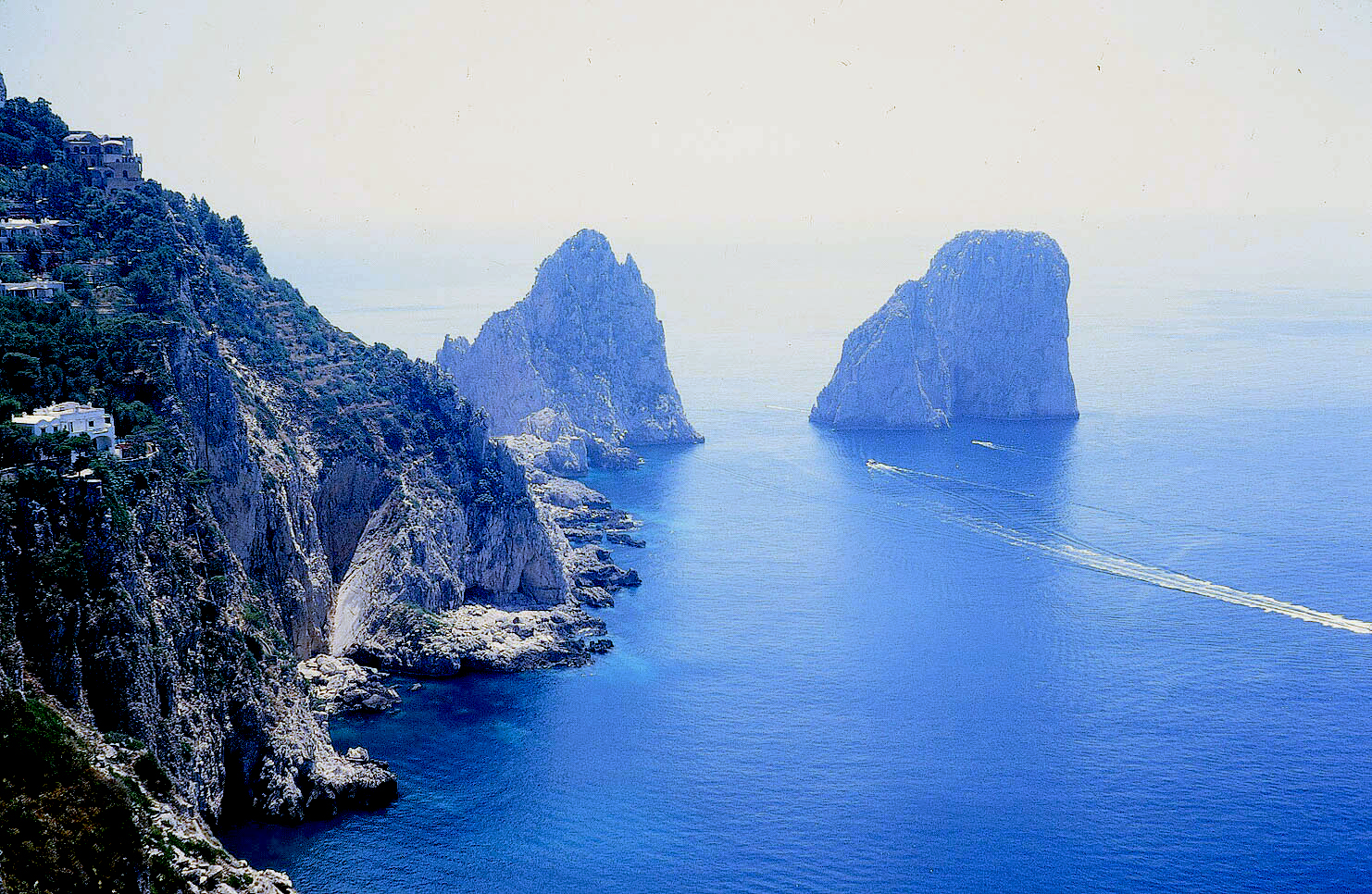
1966EuropeTrip-269 Cliffs of Capri.
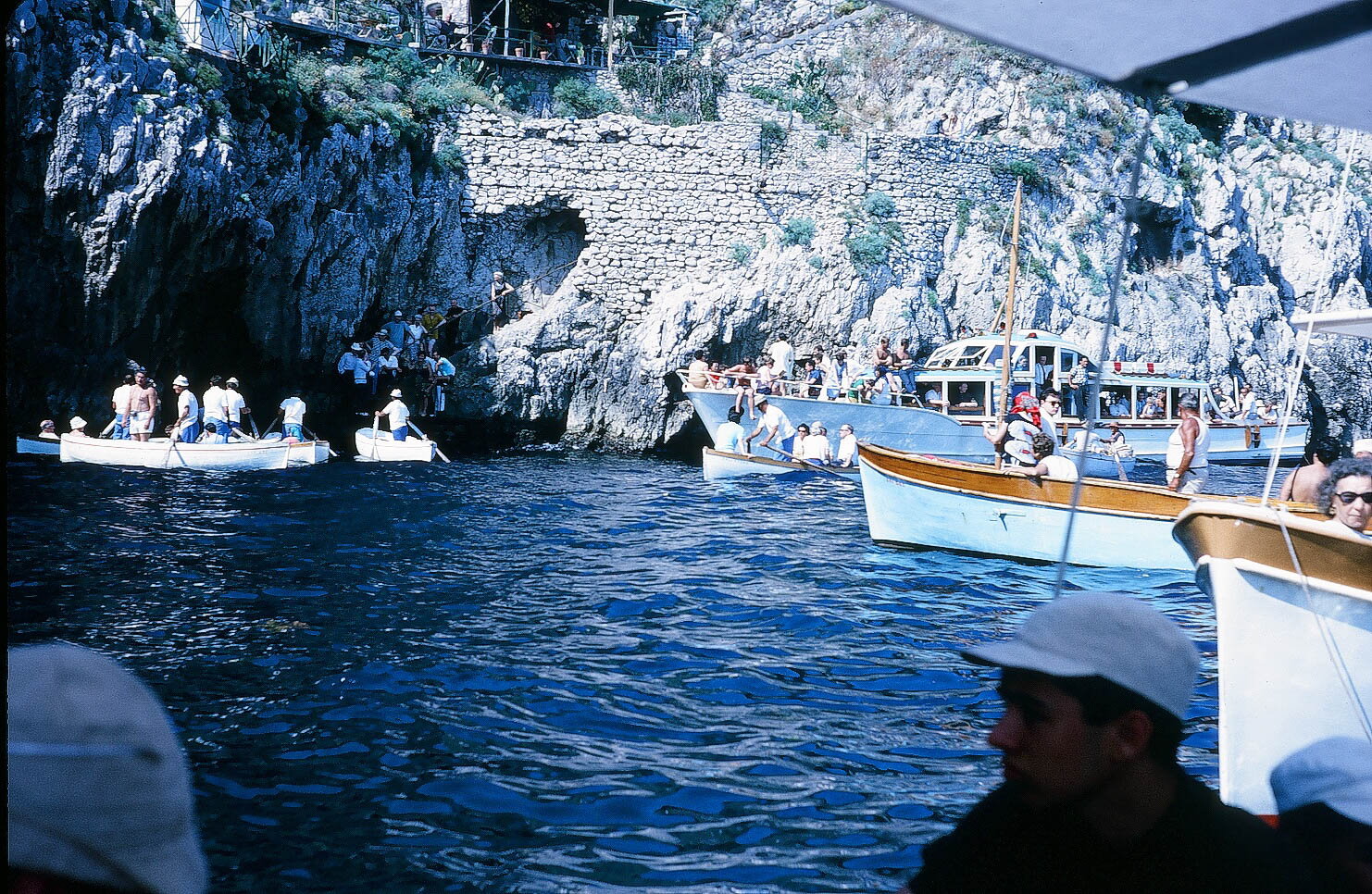
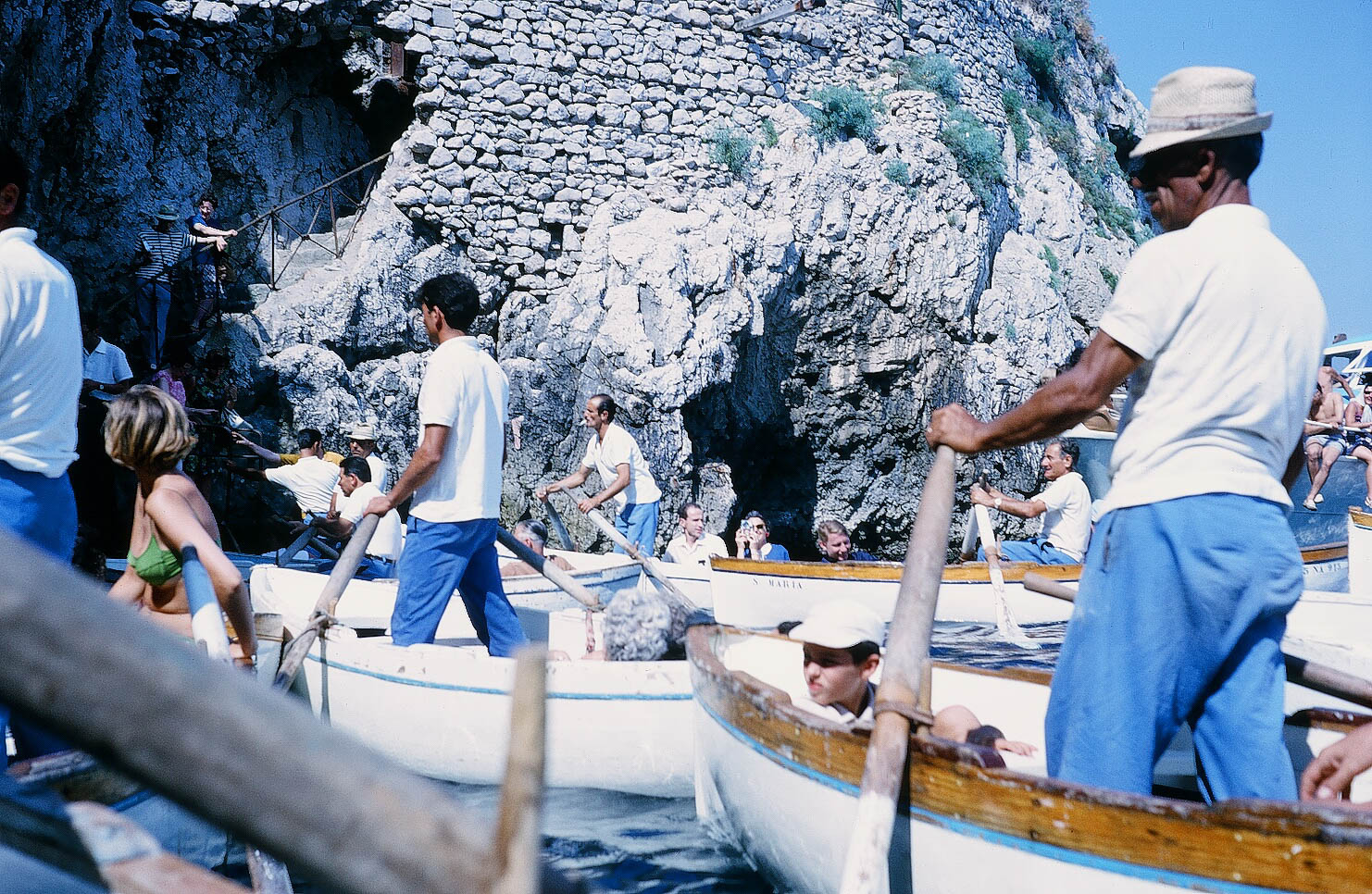
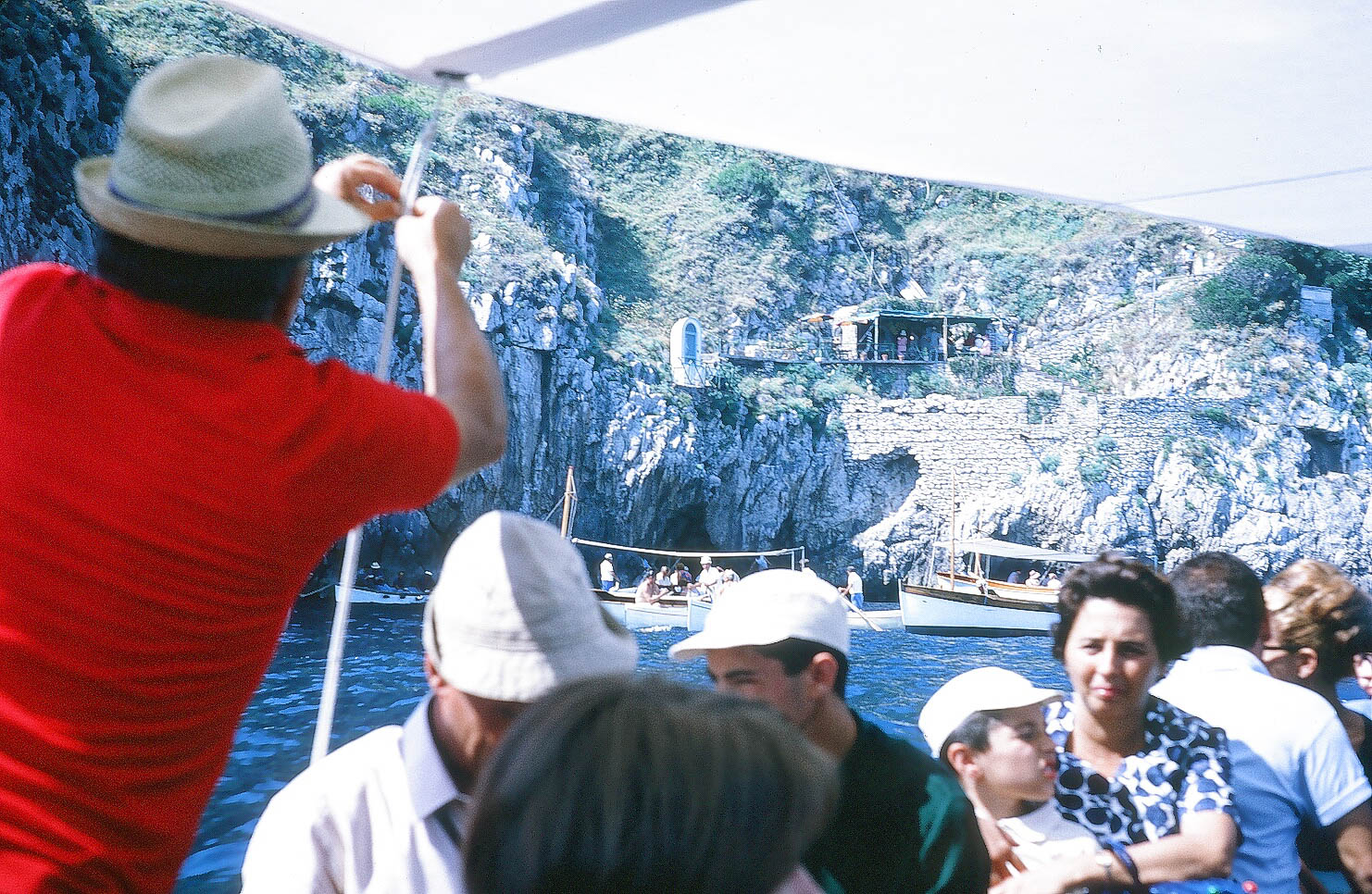
1966EuropeTrip-270 Entrance to Blue Grotto, Capri
1966EuropeTrip-271 Bob and Lois Winter, entrance to Blue Grotto, Capri.
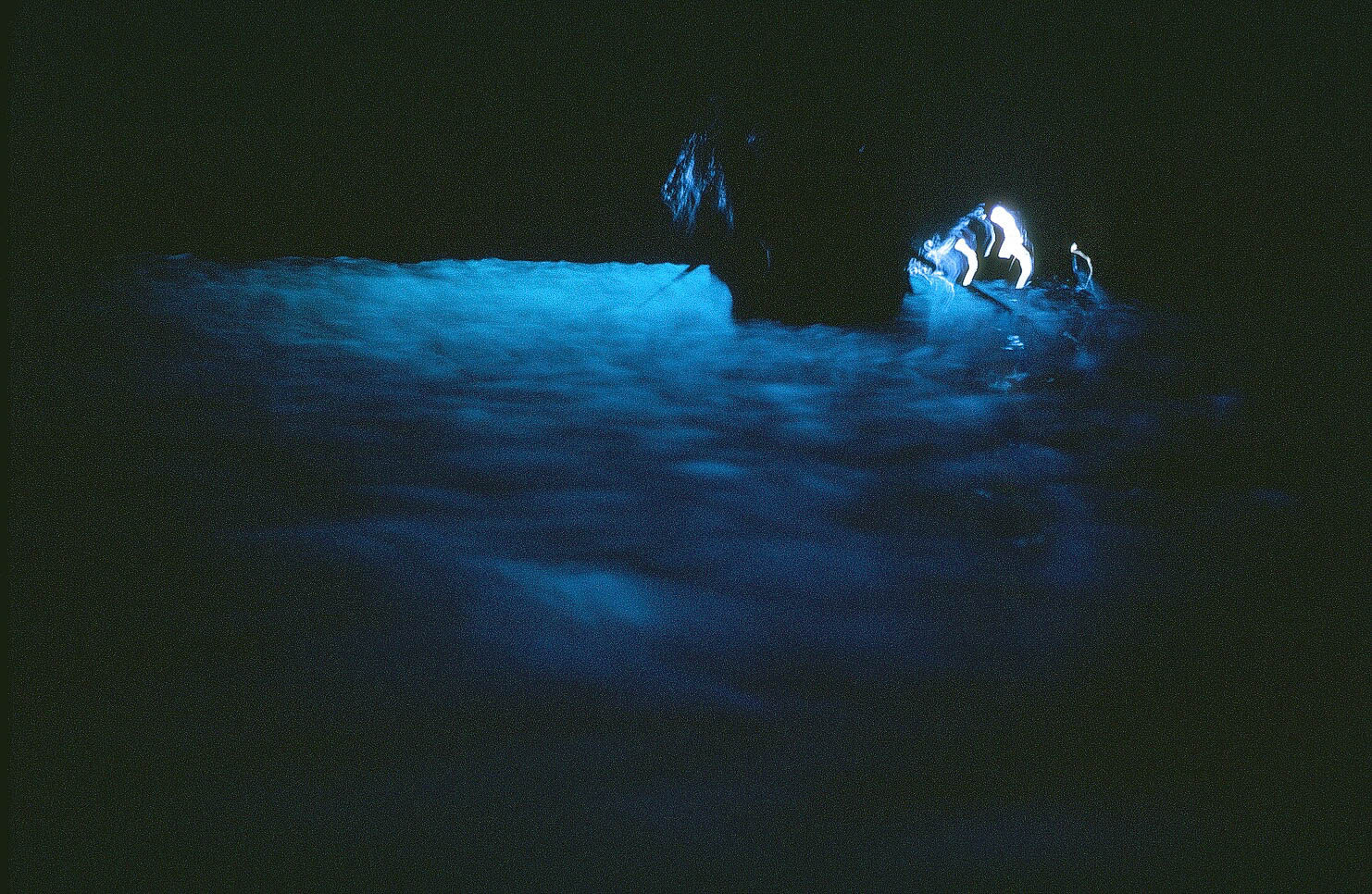
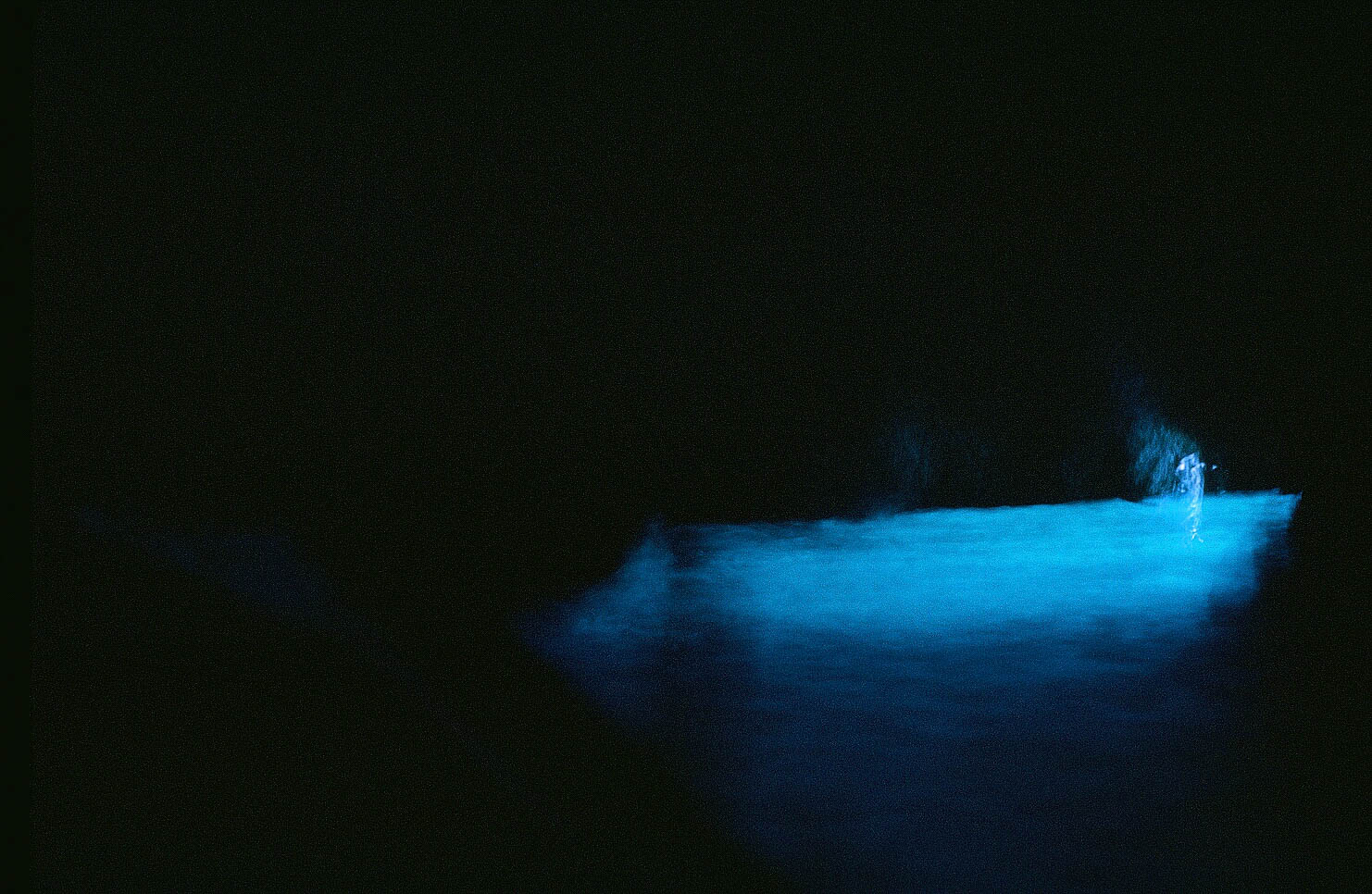
1966EuropeTrip-272 Blue Grotto
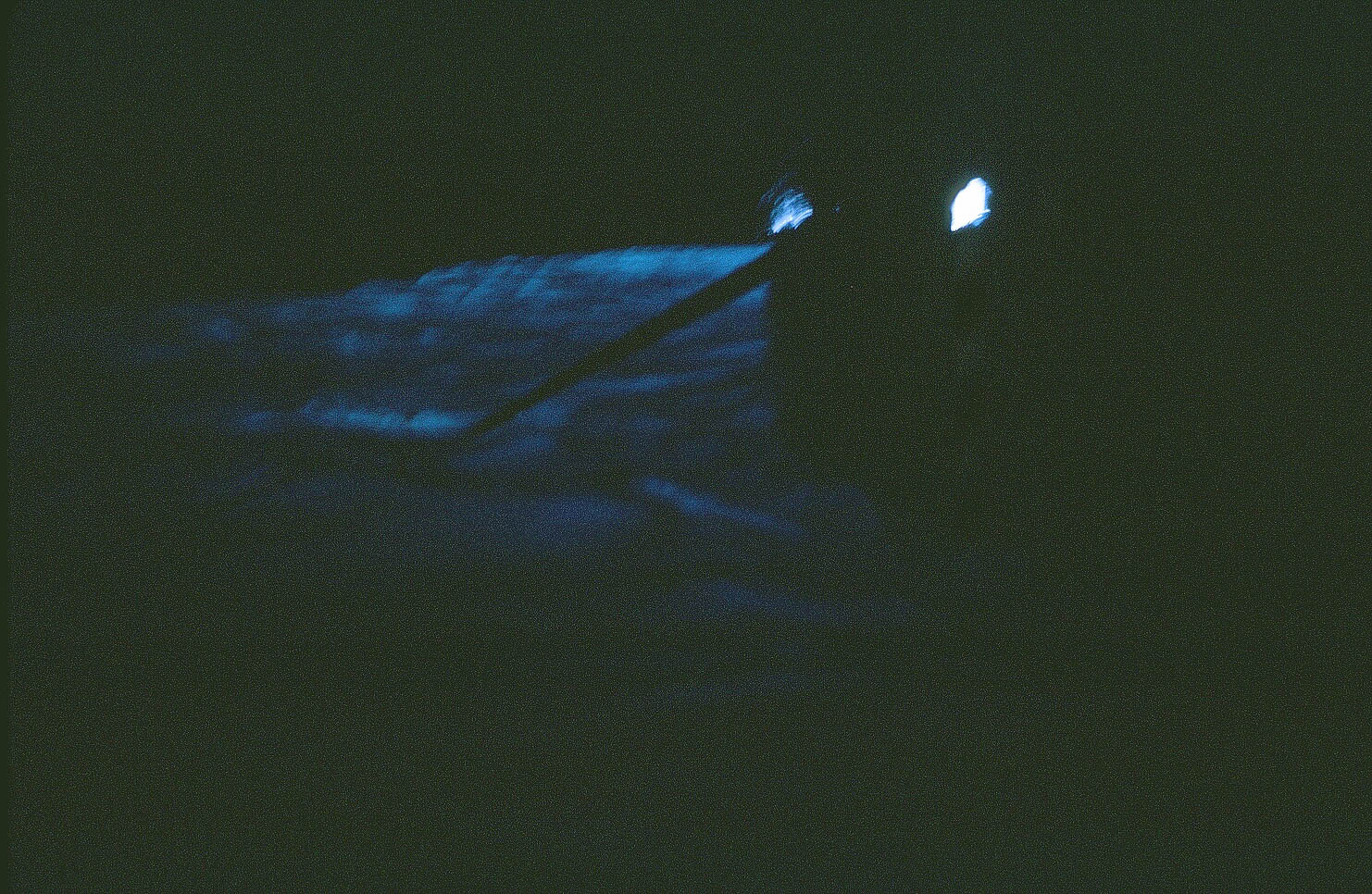
1966EuropeTrip-273 Blue Grotto
1966EuropeTrip-274 Blue Grotto
1966EuropeTrip-275 Blue Grotto
1966EuropeTrip-276 Blue Grotto
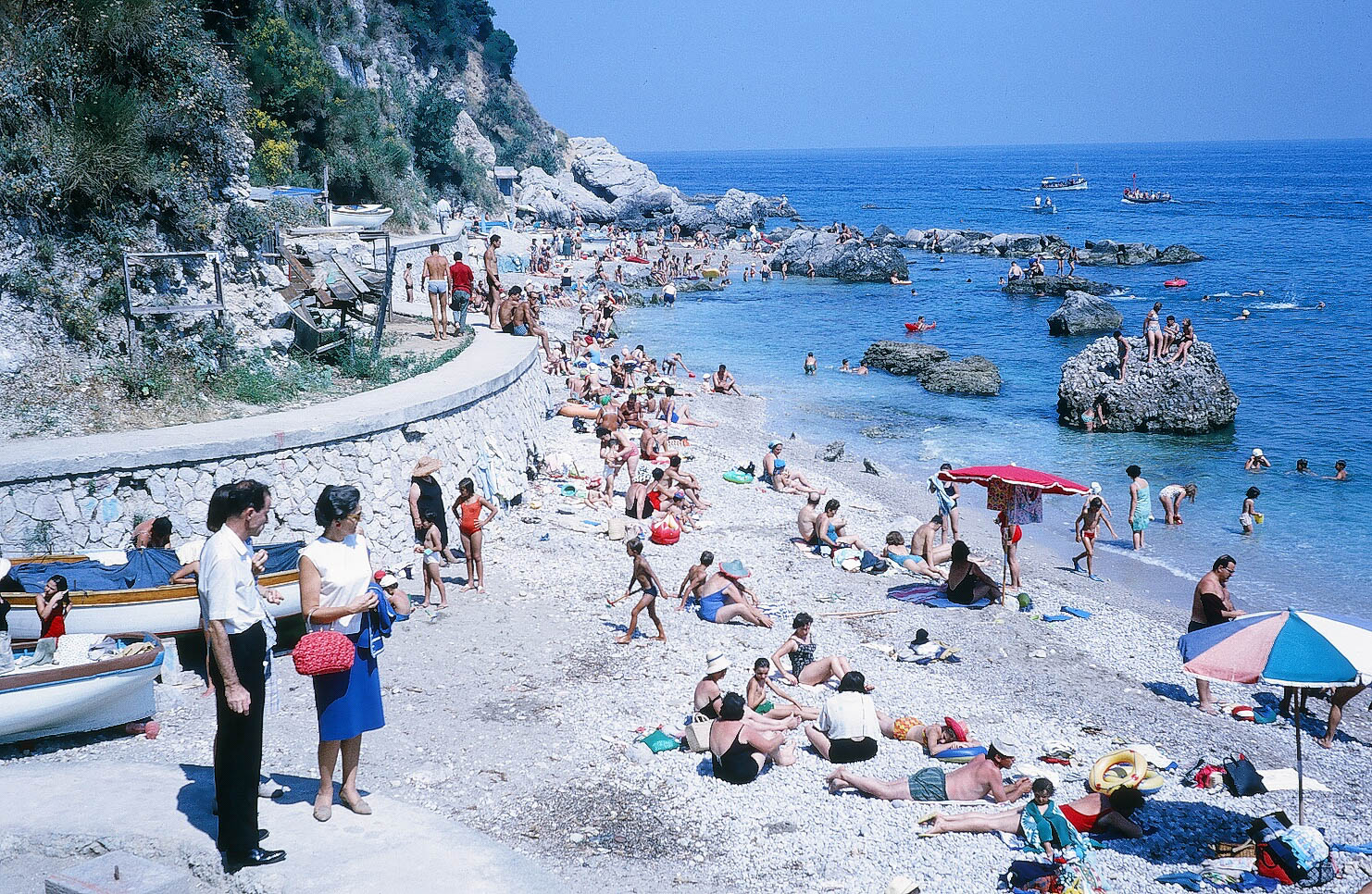
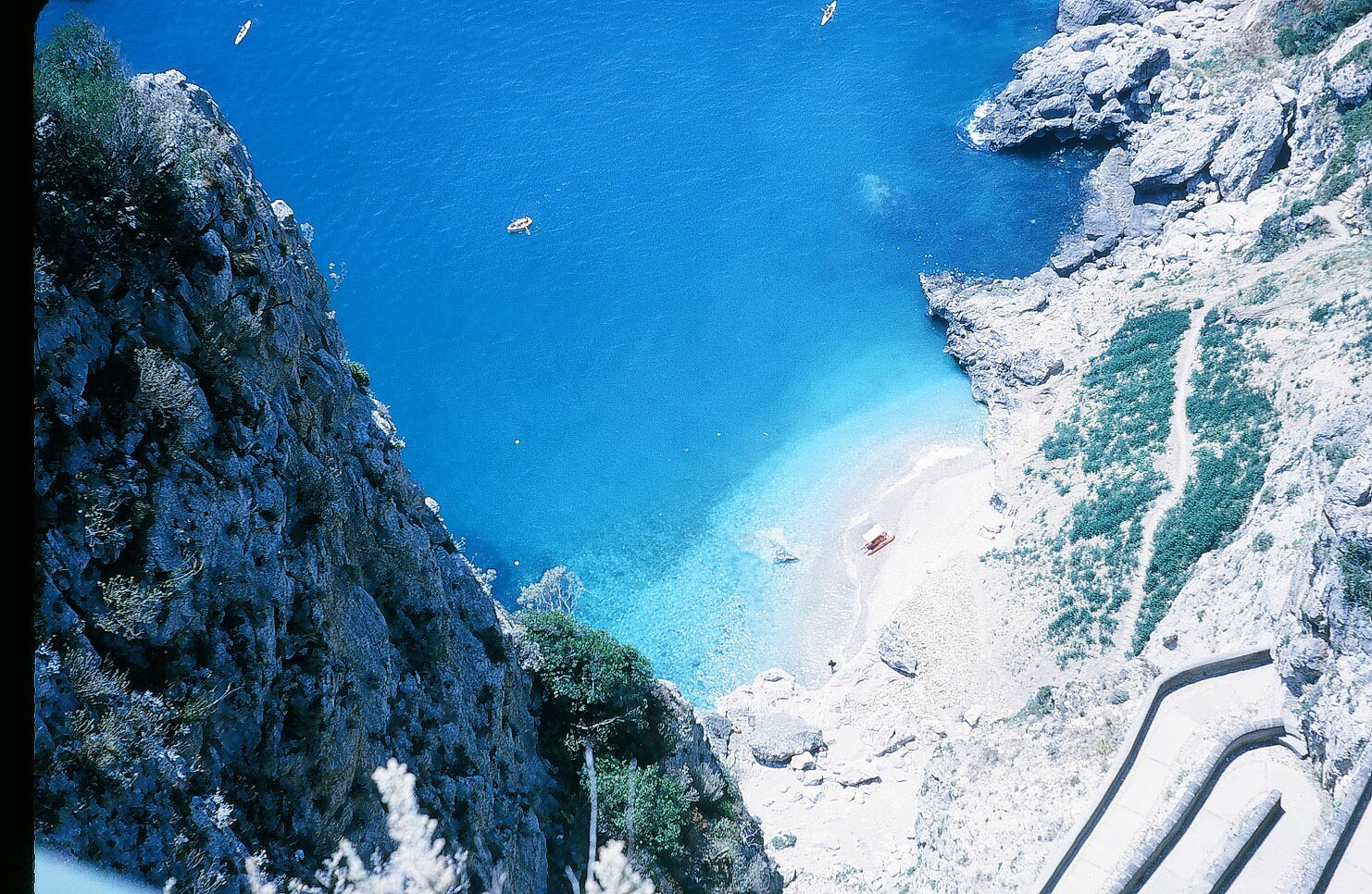
1966EuropeTrip-277 Beach at Capri. Bob and Lois Winter.
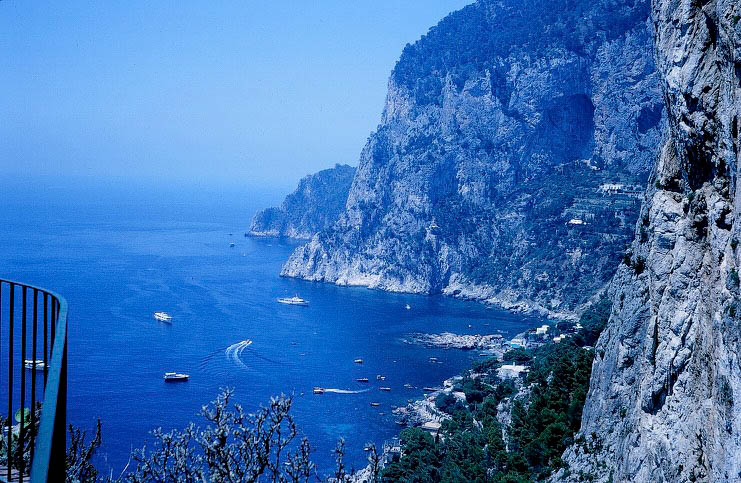
1966EuropeTrip-278 View from atop Isle of Capri.
1966EuropeTrip-279 Capri
1966EuropeTrip-281 Capri
1966EuropeTrip-282 Capri
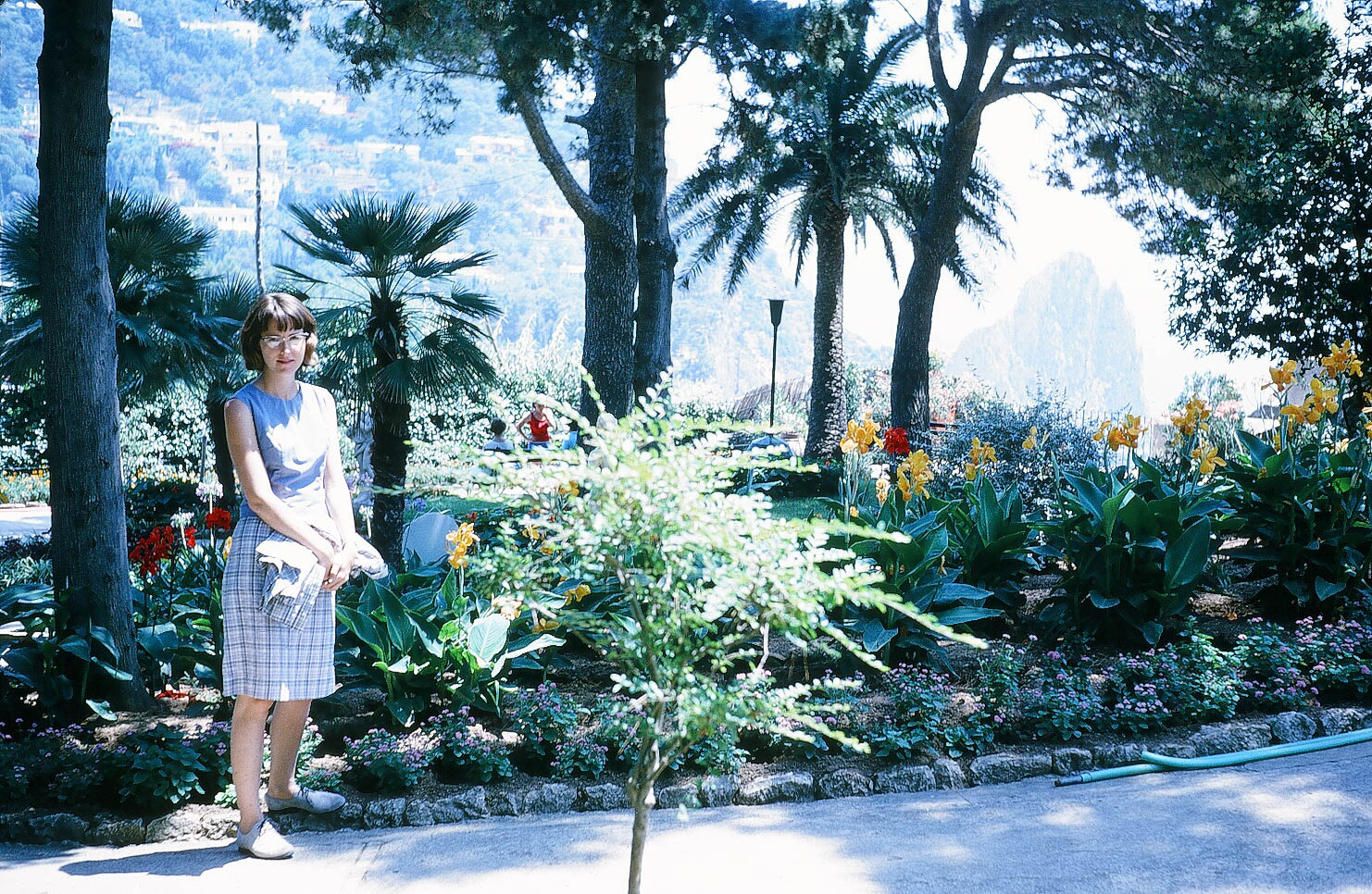
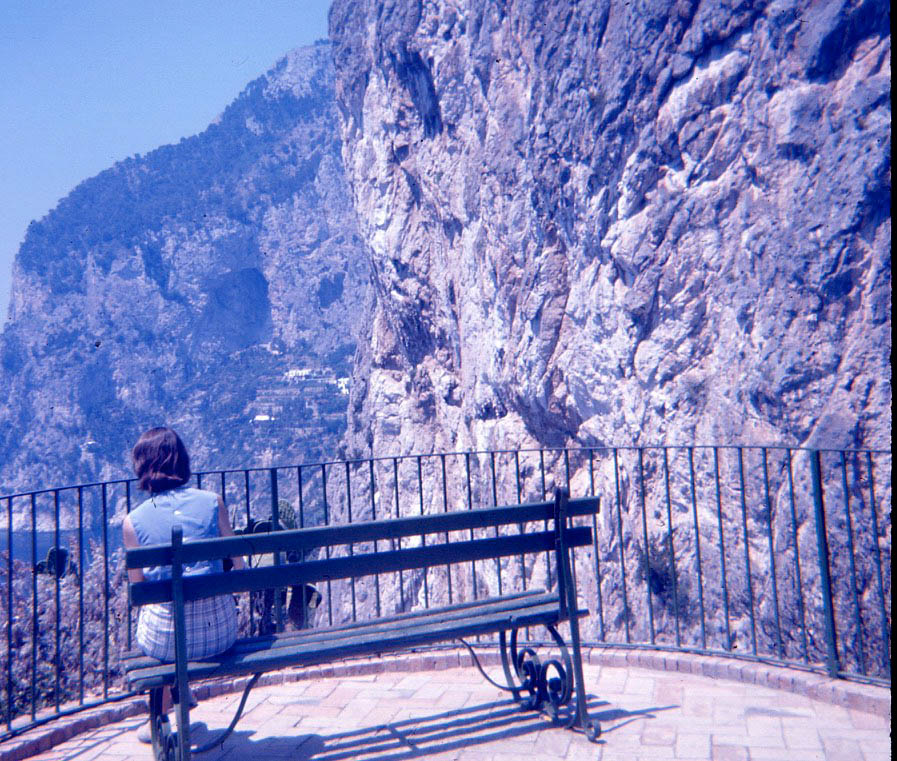
1966EuropeTrip-283 Pat on Isle of Capri
1966EuropeTrip-285
1966EuropeTrip-289 Capri
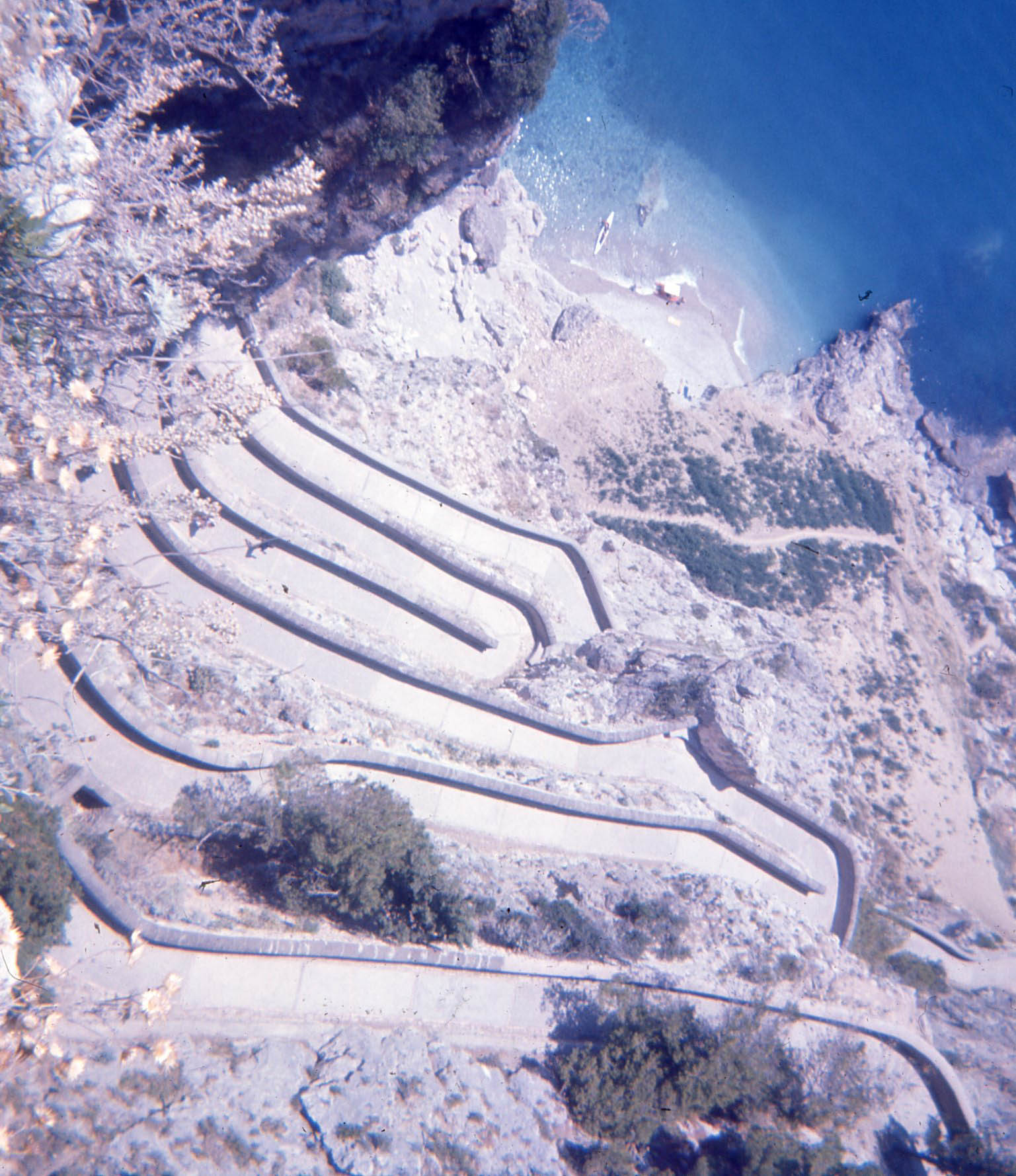
1966EuropeTrip-290 Road up to Capri.
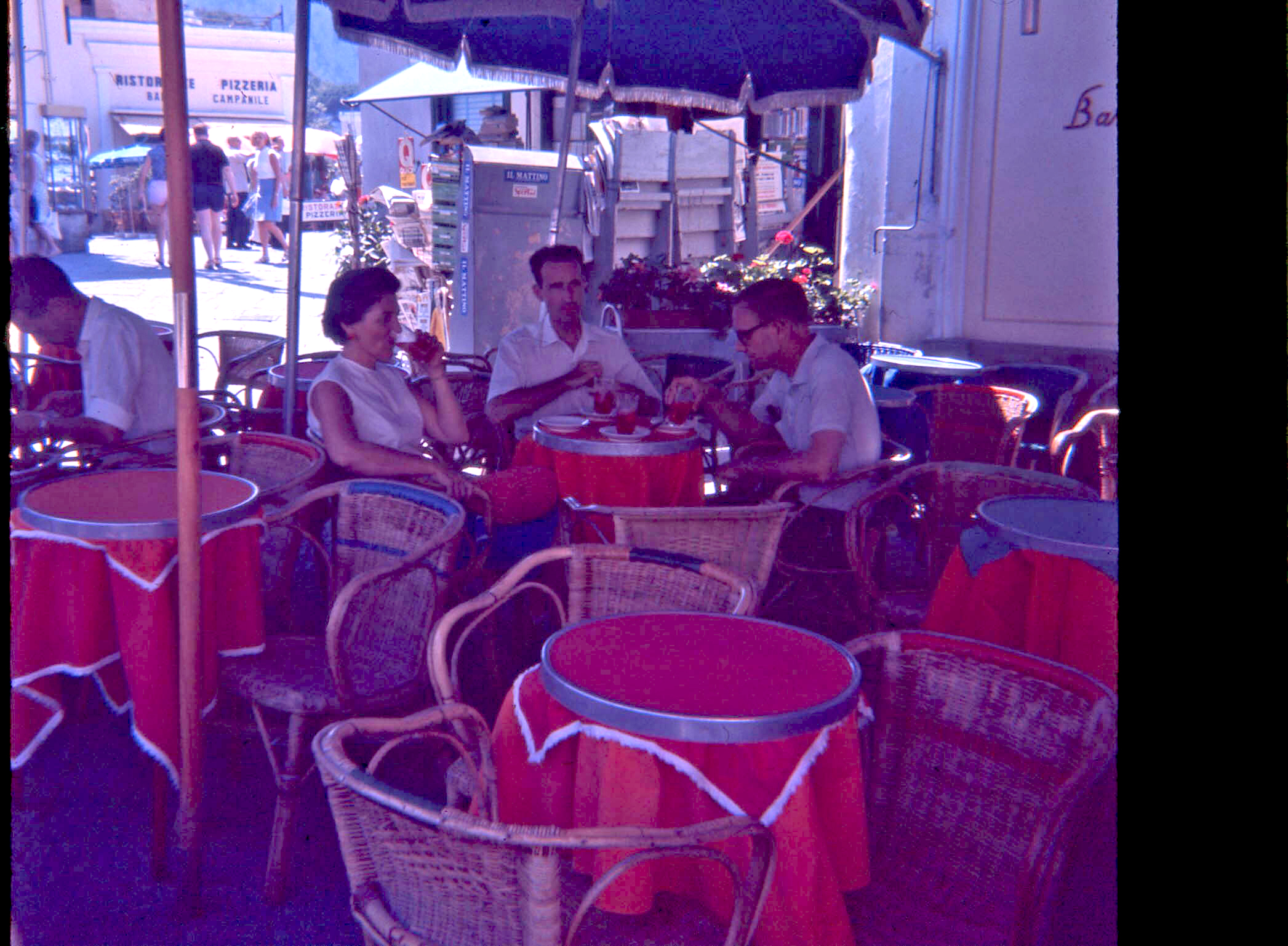
1966EuropeTrip-291 Having Cinzano in Capri. Bob, Lois and Mel.
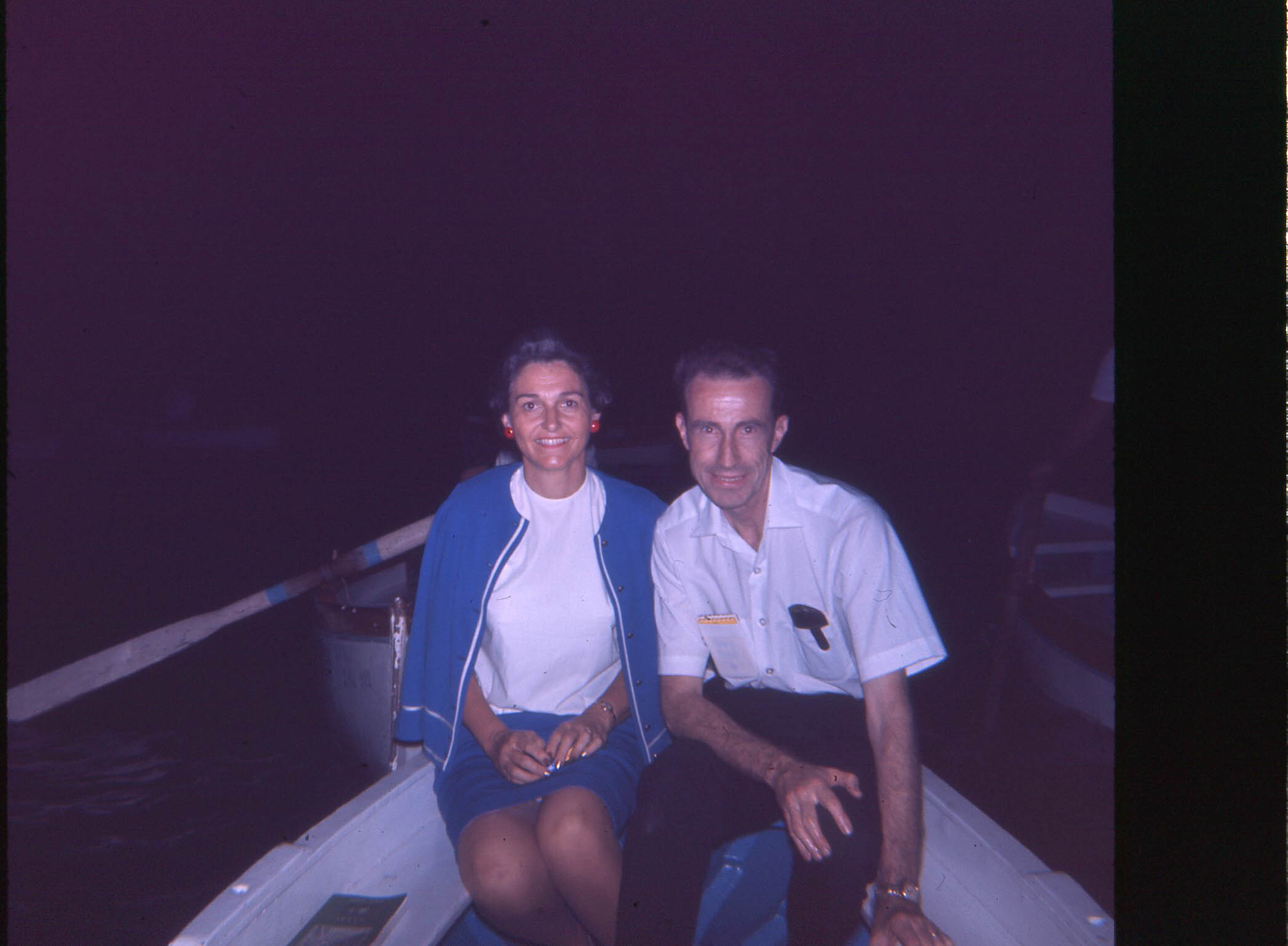
1966EuropeTrip-292 Lois and Bob Winter, Capri.
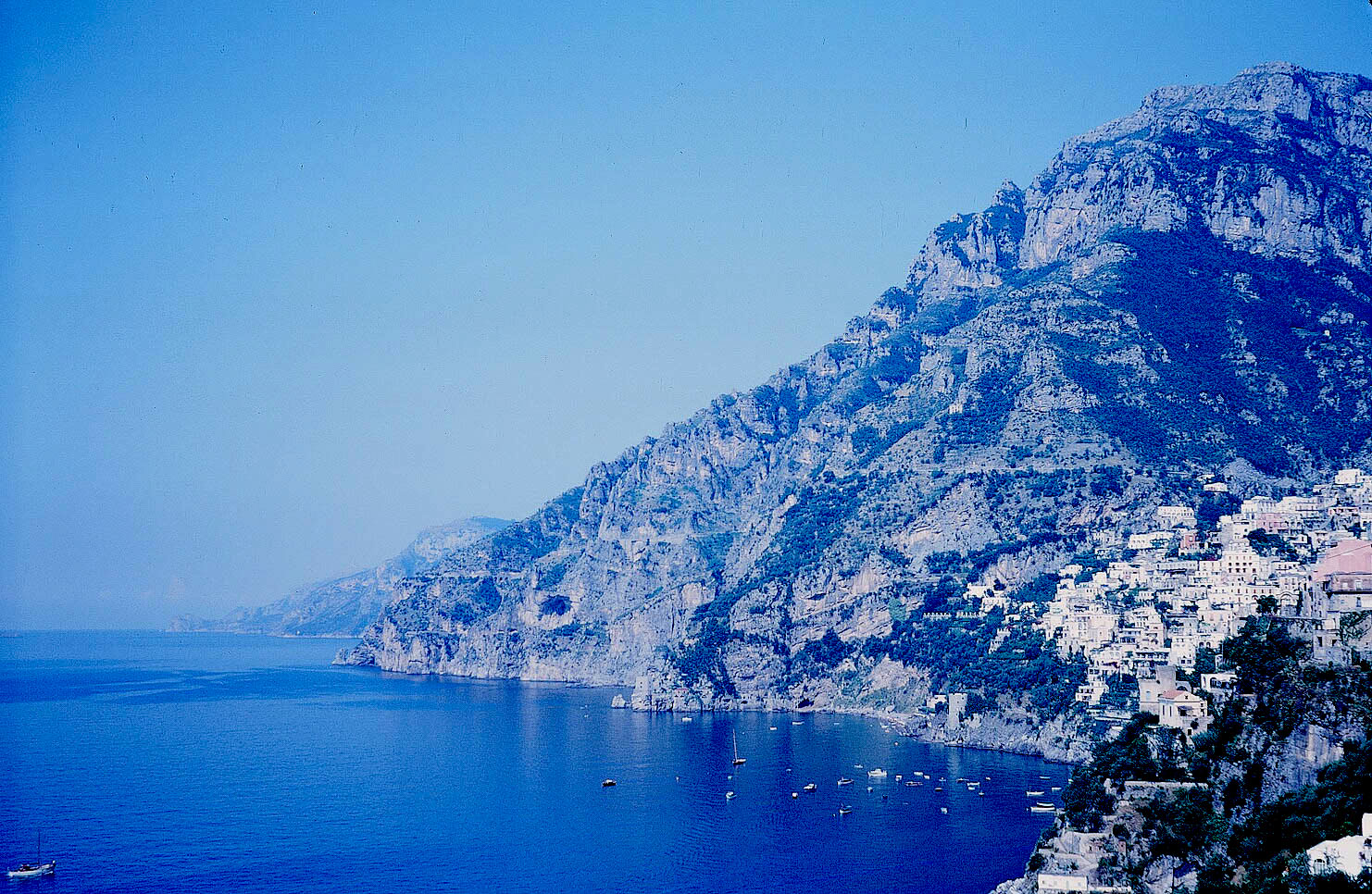
1966EuropeTrip-294 Pat and Mel on road to Amalfi.
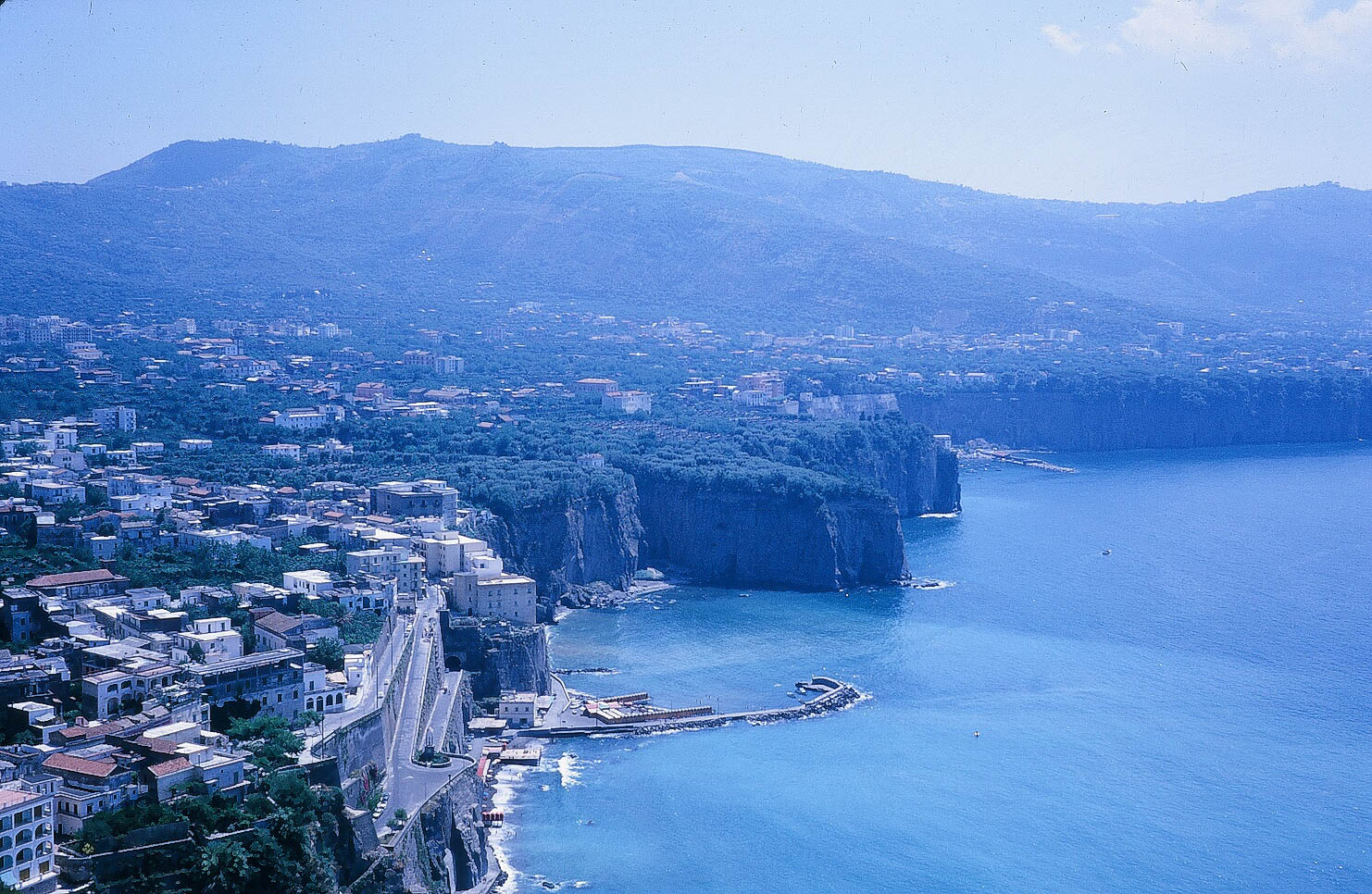
1966EuropeTrip-296 Sorrento
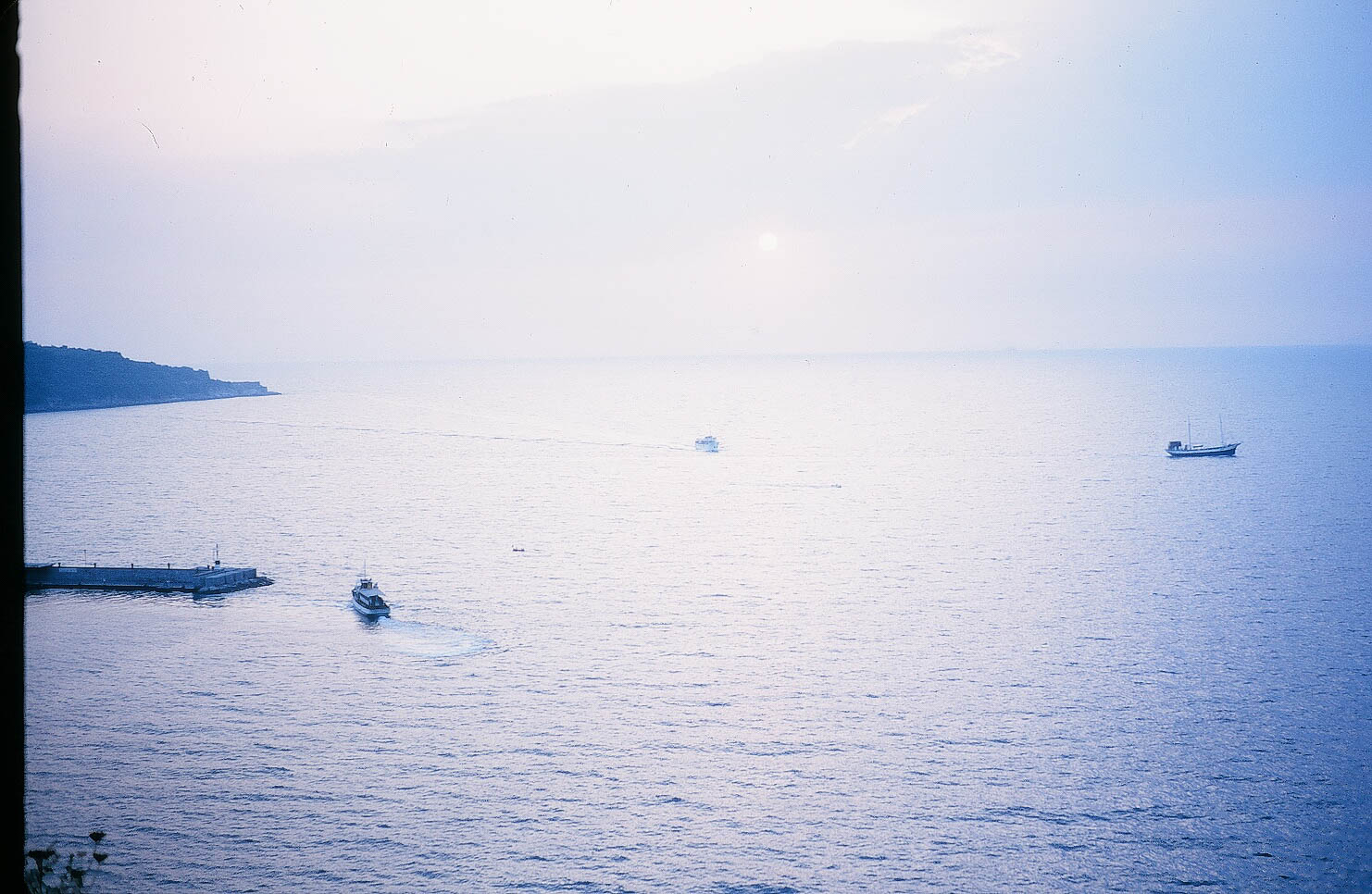
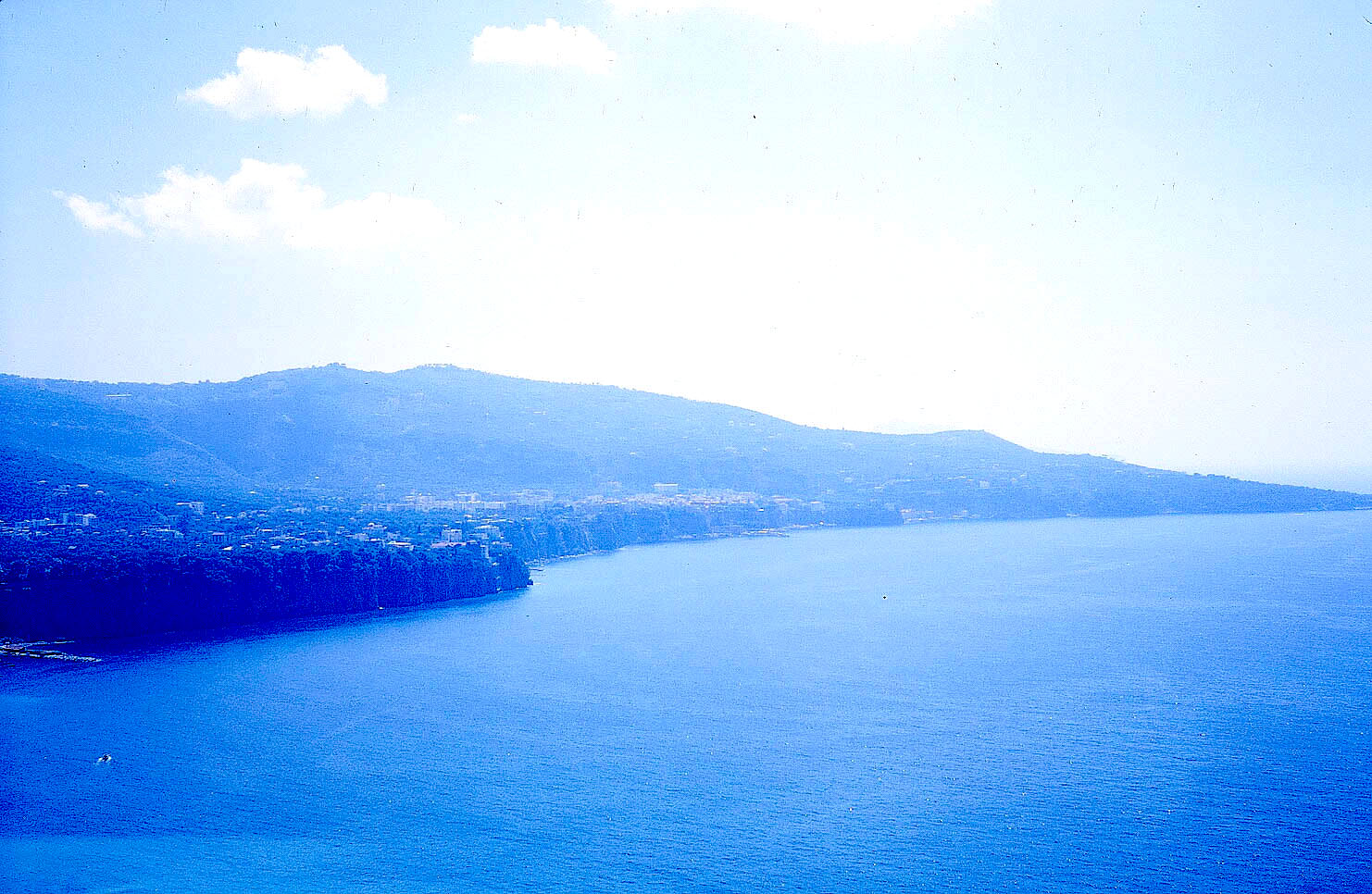
1966EuropeTrip-298 Bay of Nables
1966EuropeTrip-300 Sorrento
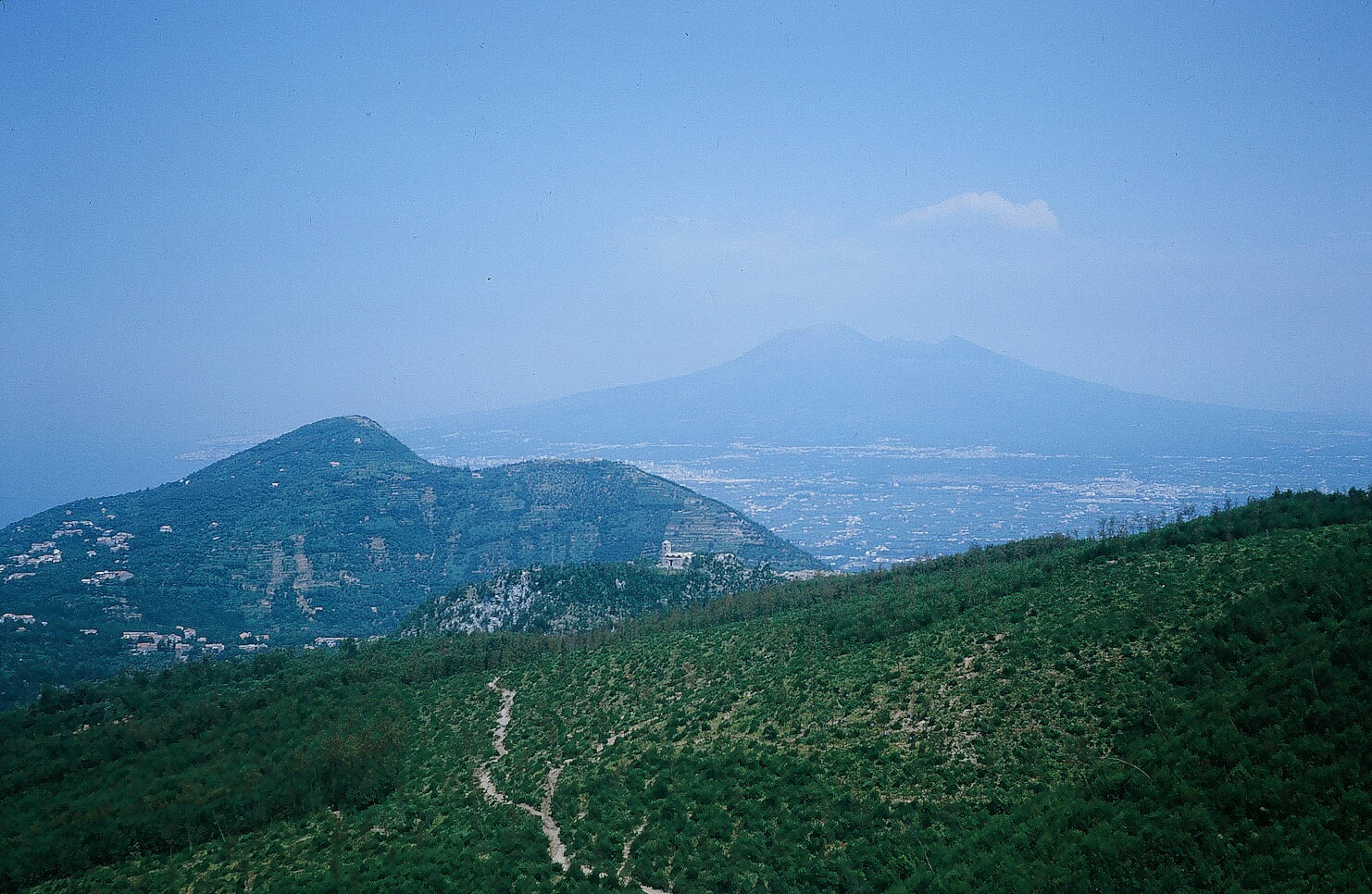
1966EuropeTrip-301 Bay of Naples
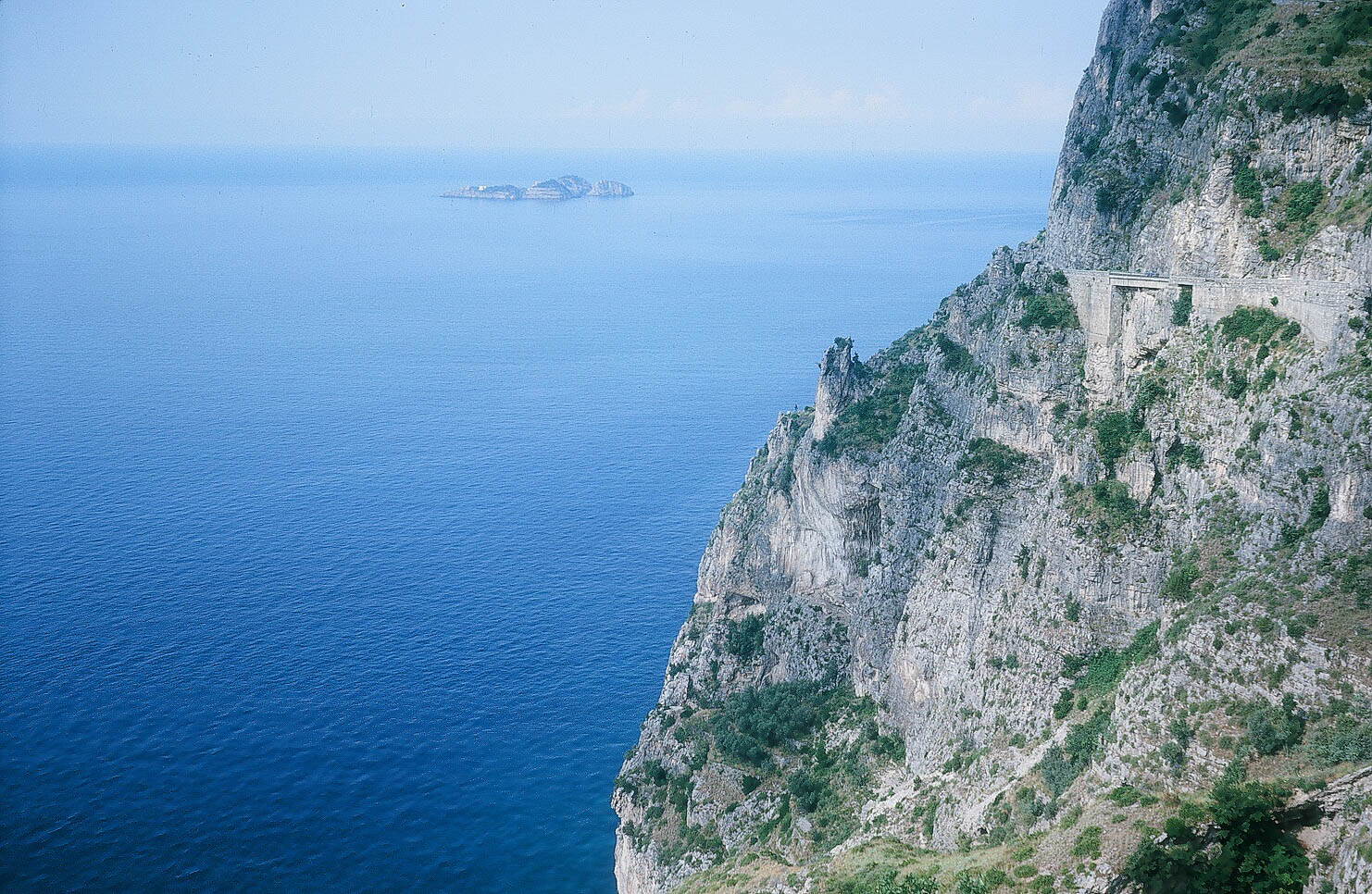
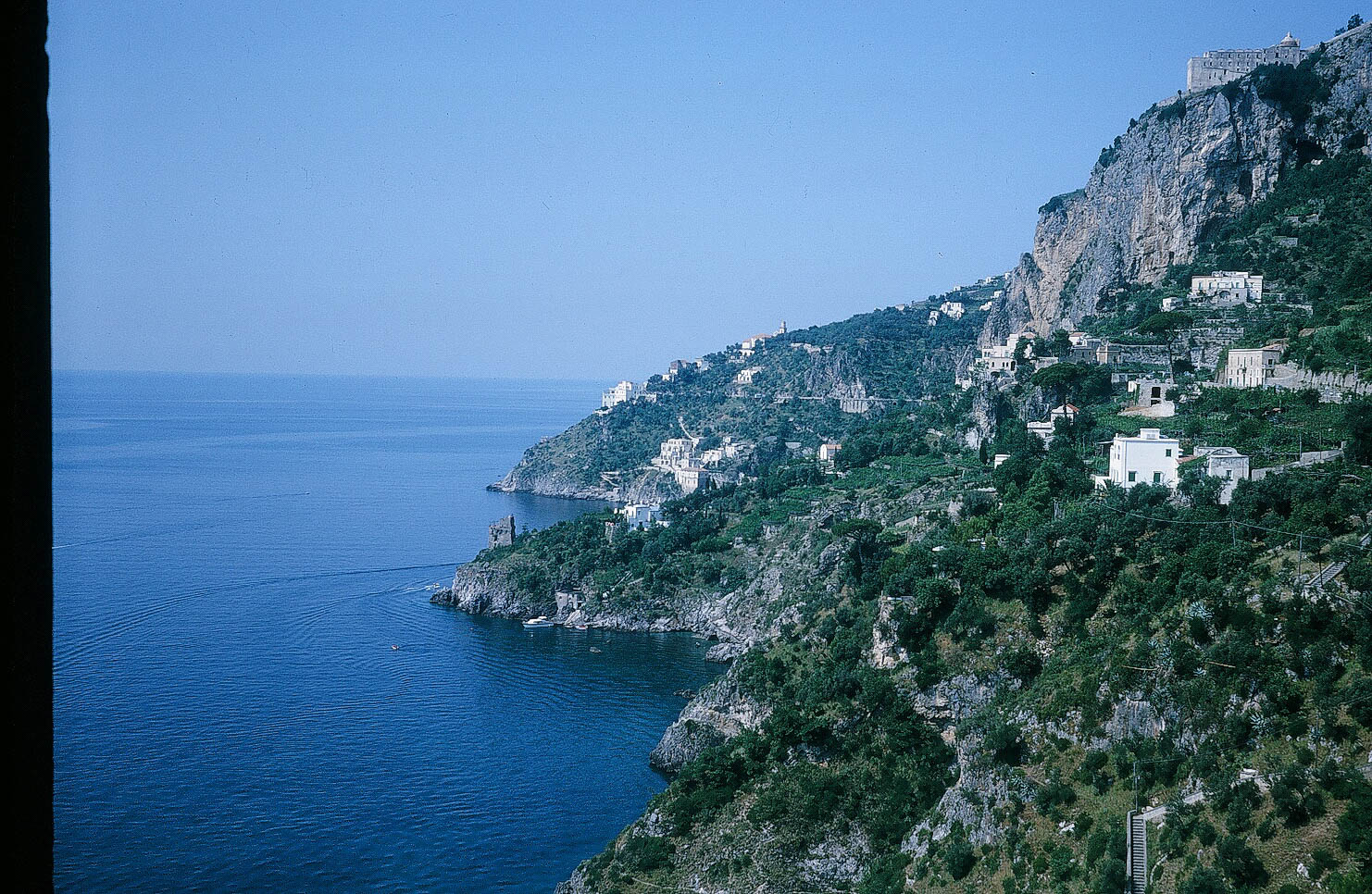
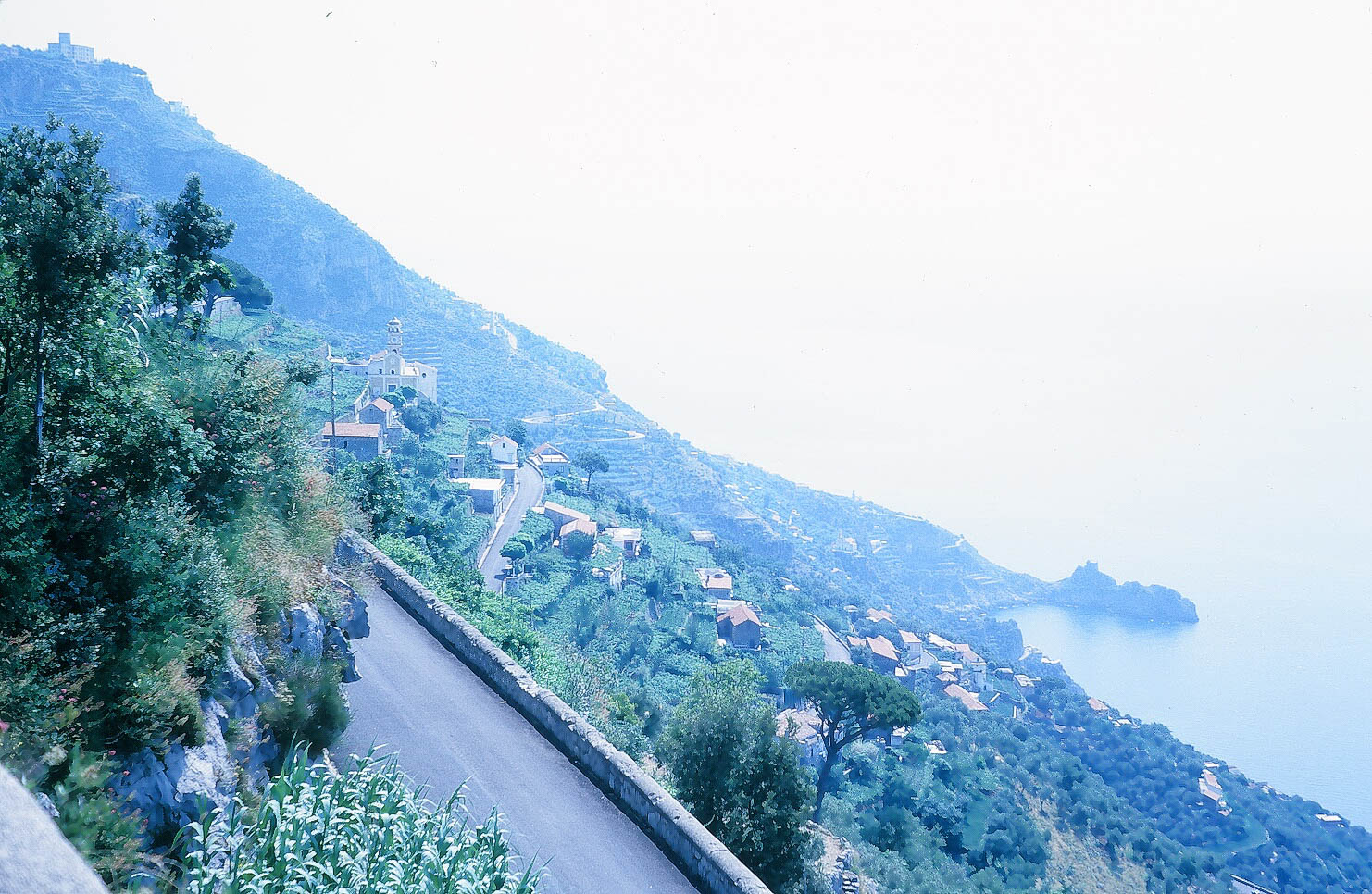
1966EuropeTrip-302 Amalfi Drive
1966EuropeTrip-303 Amalfi Drive
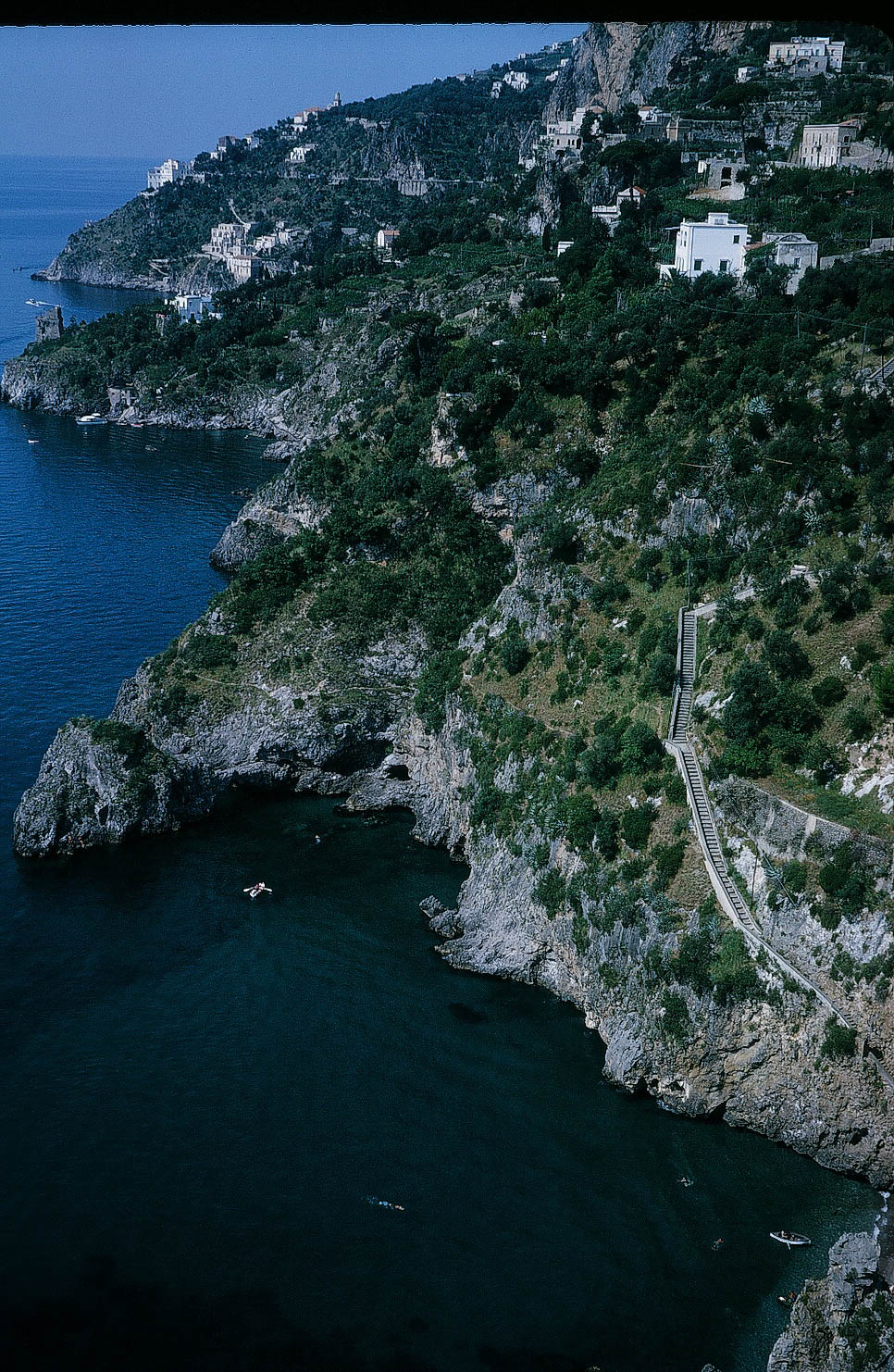
1966EuropeTrip-304 Amalfi Drive
1966EuropeTrip-305 Amalfi Drive
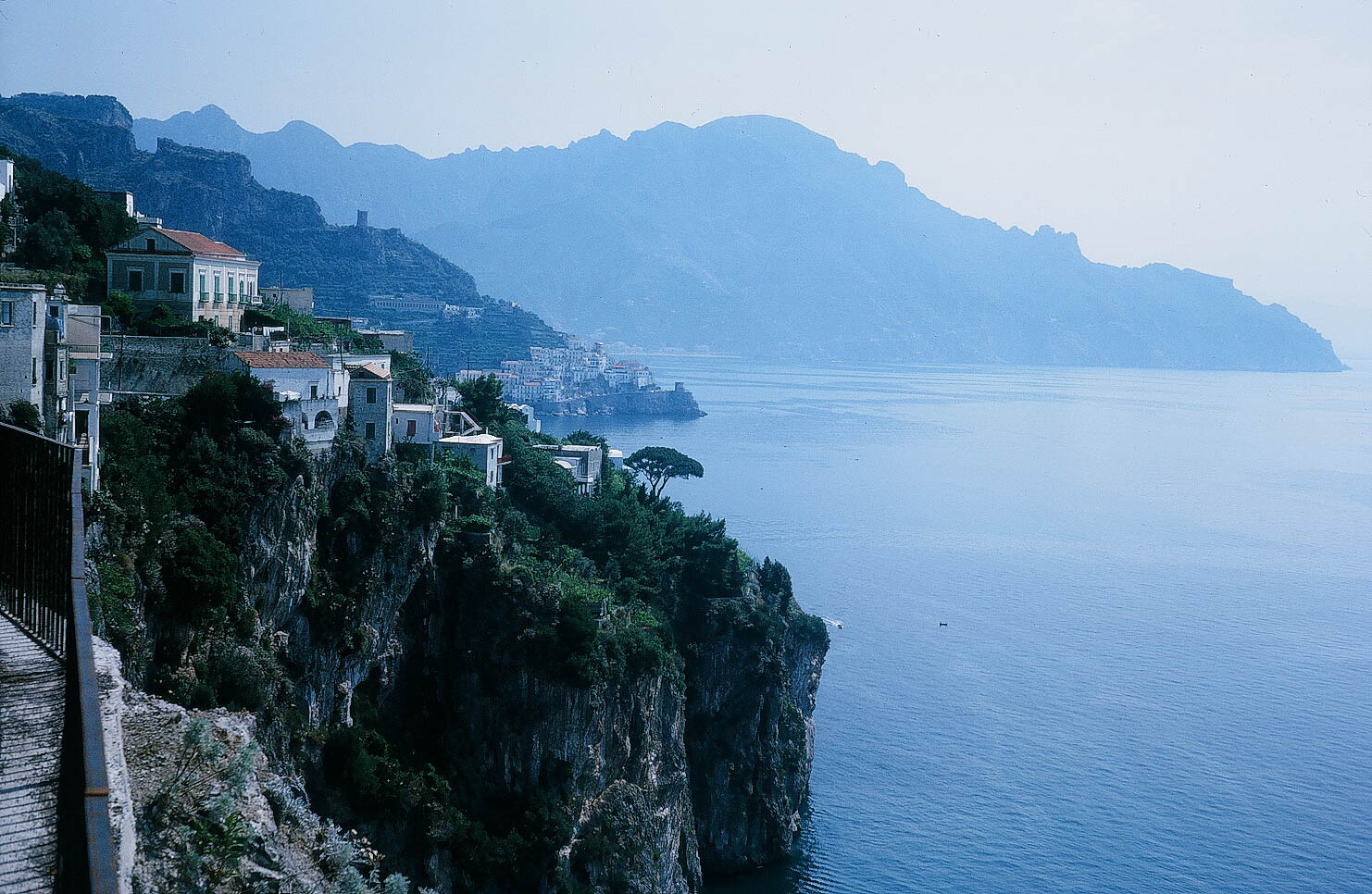
1966EuropeTrip-306 Amalfi Drive
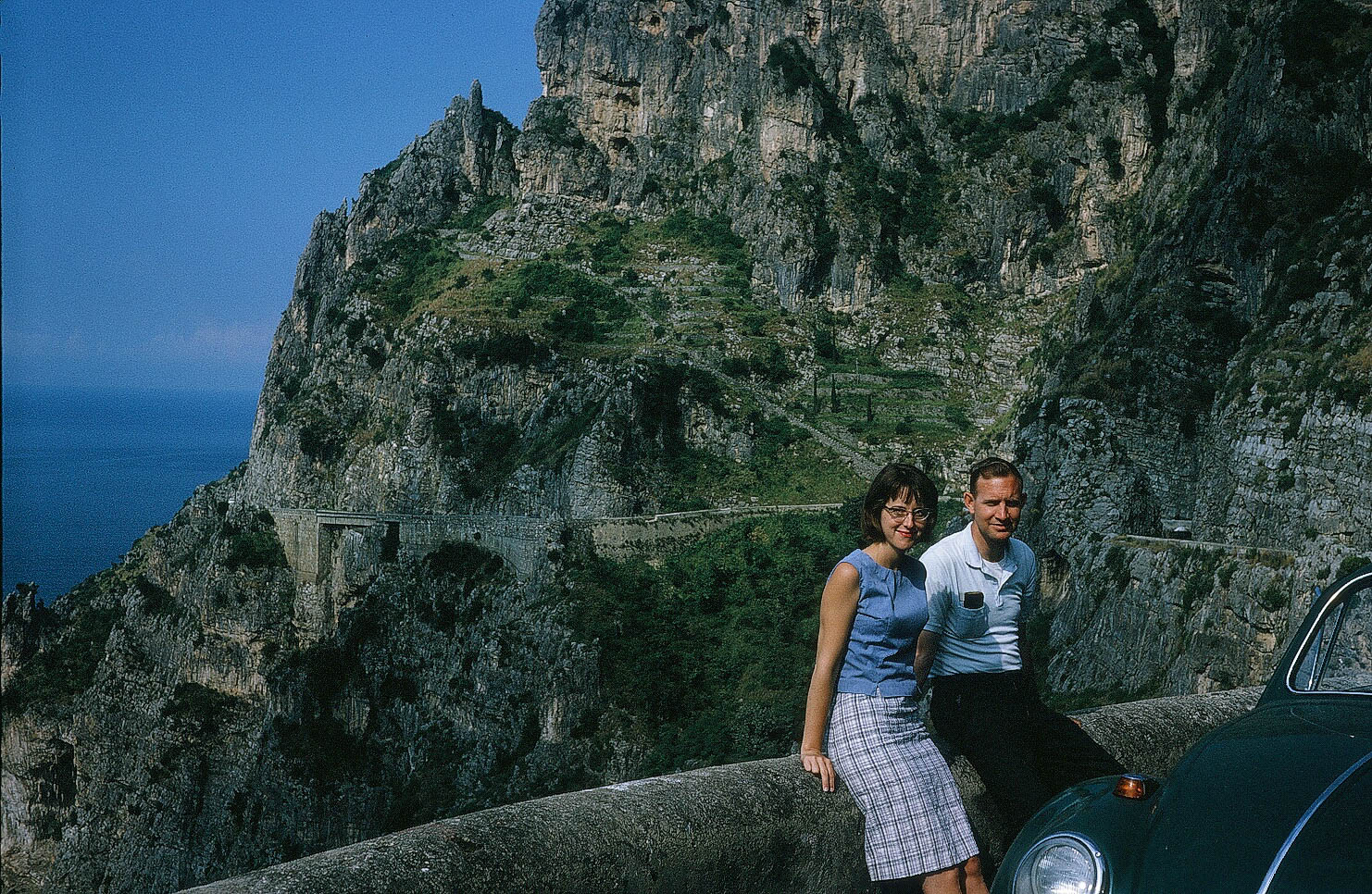
1966EuropeTrip-307 Mel and Pat, Amalfi Drive
1966EuropeTrip-308 Amalfi Drive
1966EuropeTrip-309 Amalfi Drive
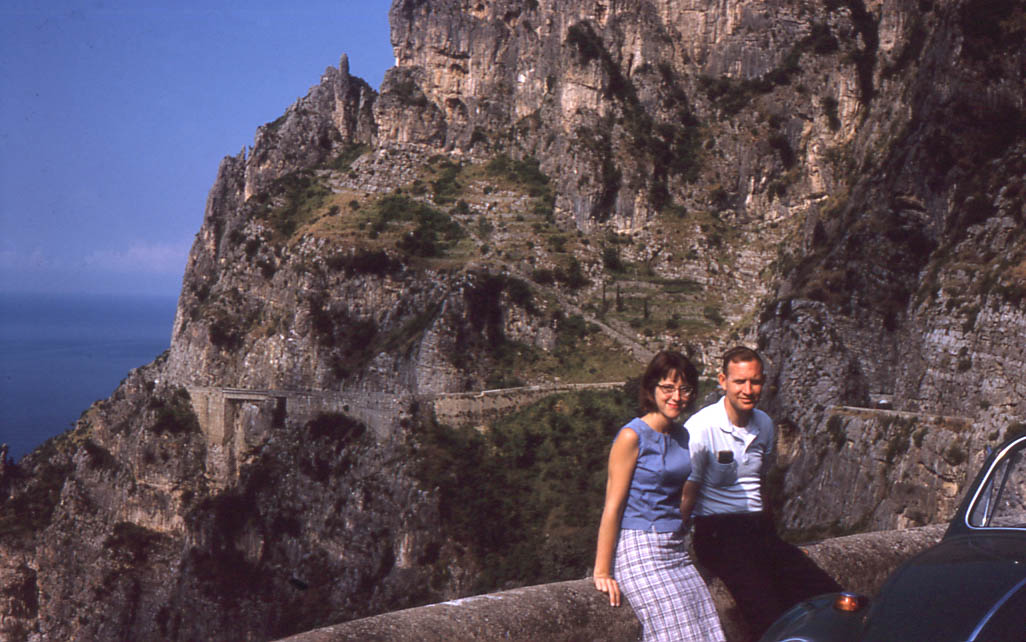
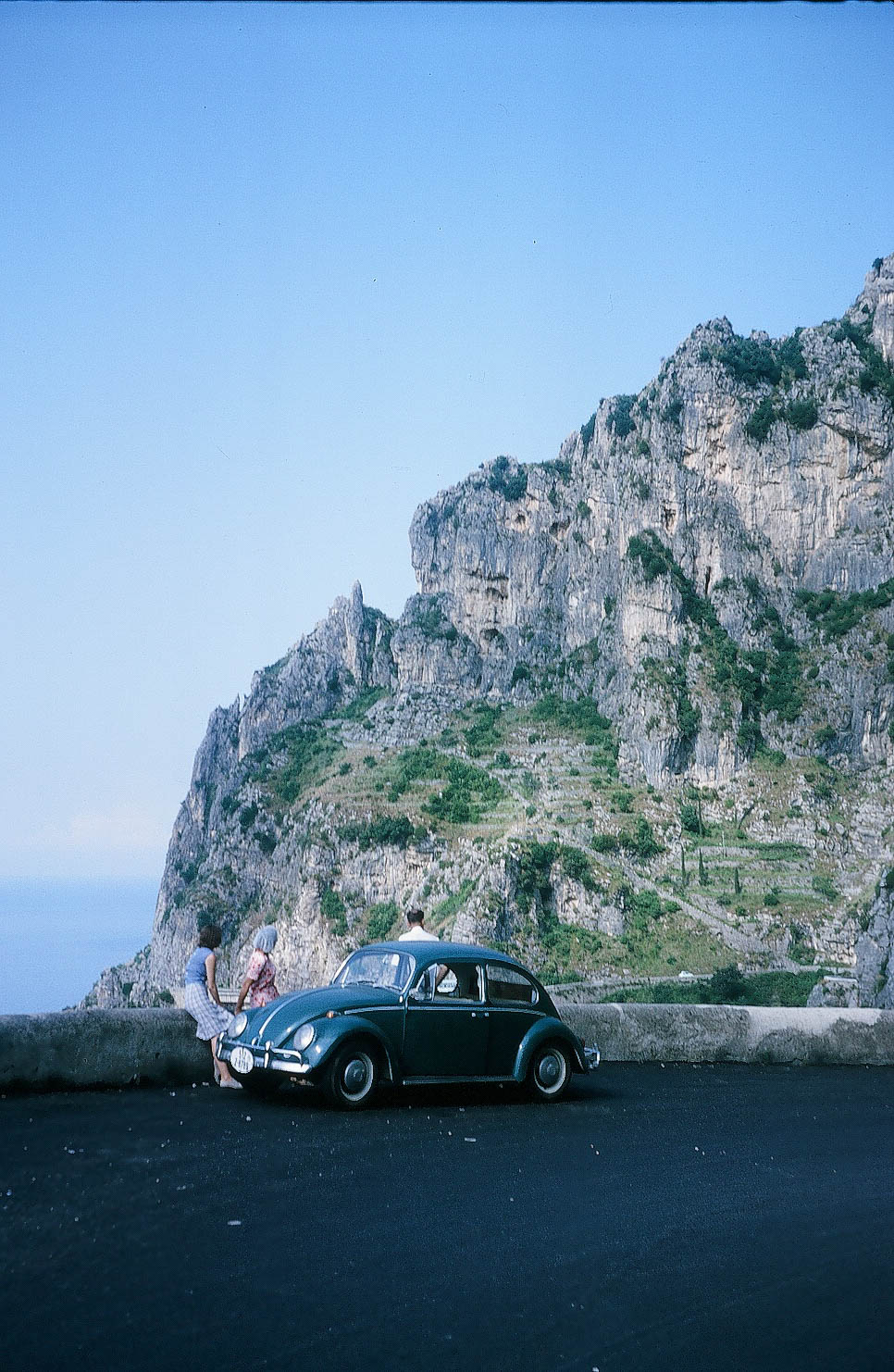
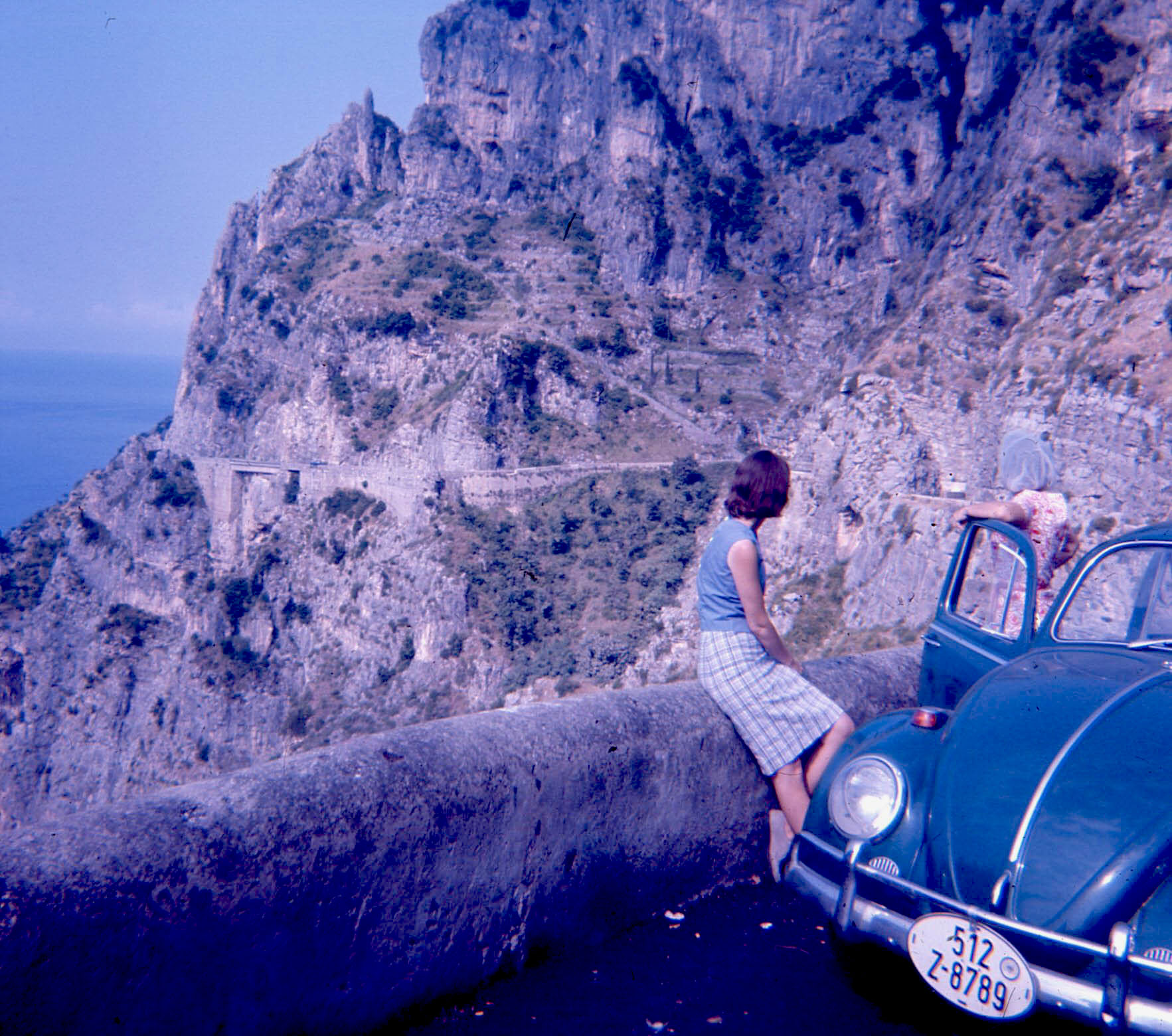
1966EuropeTrip-311 Amalfi Drive. Pat and VW.
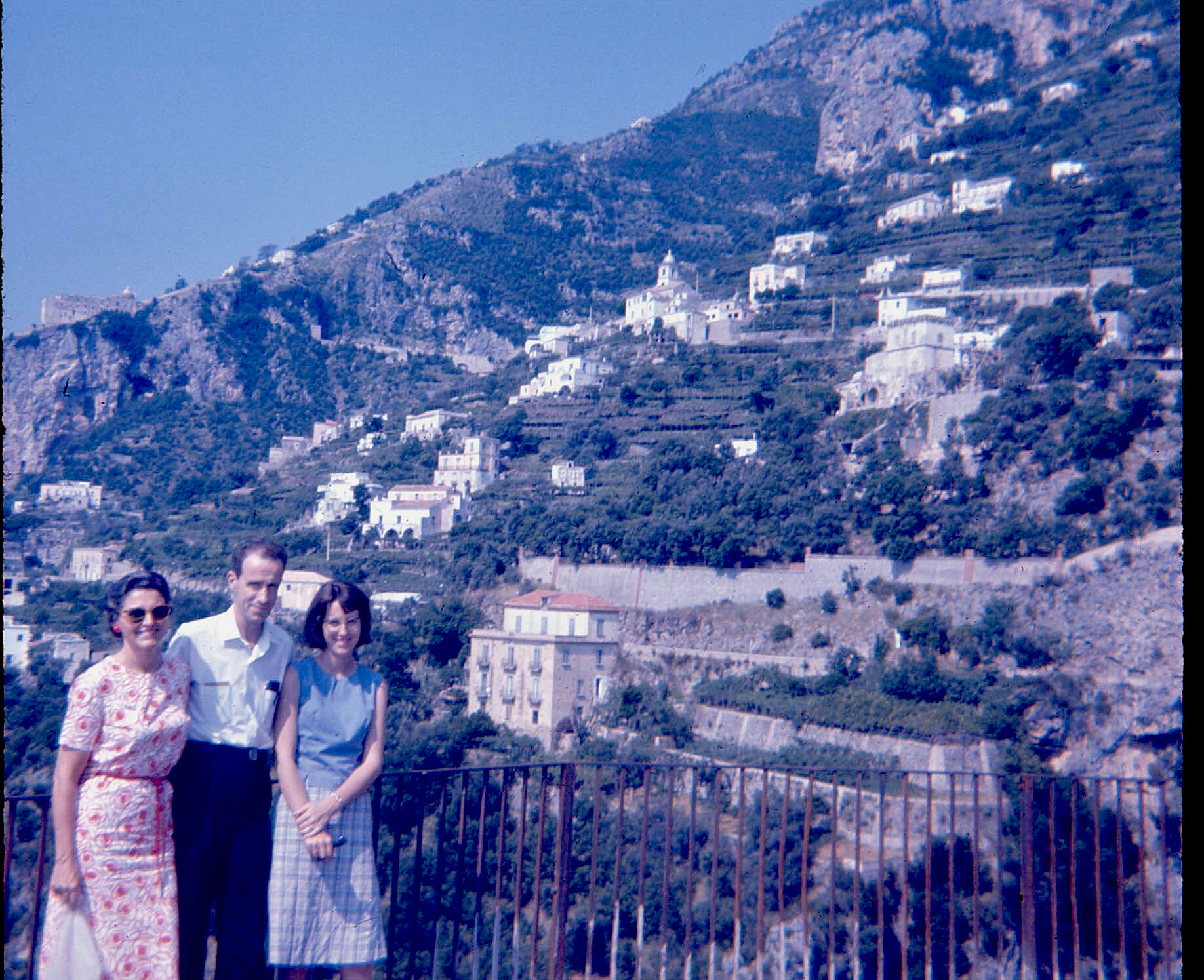
1966EuropeTrip-312 Lois, Bob and Pat.
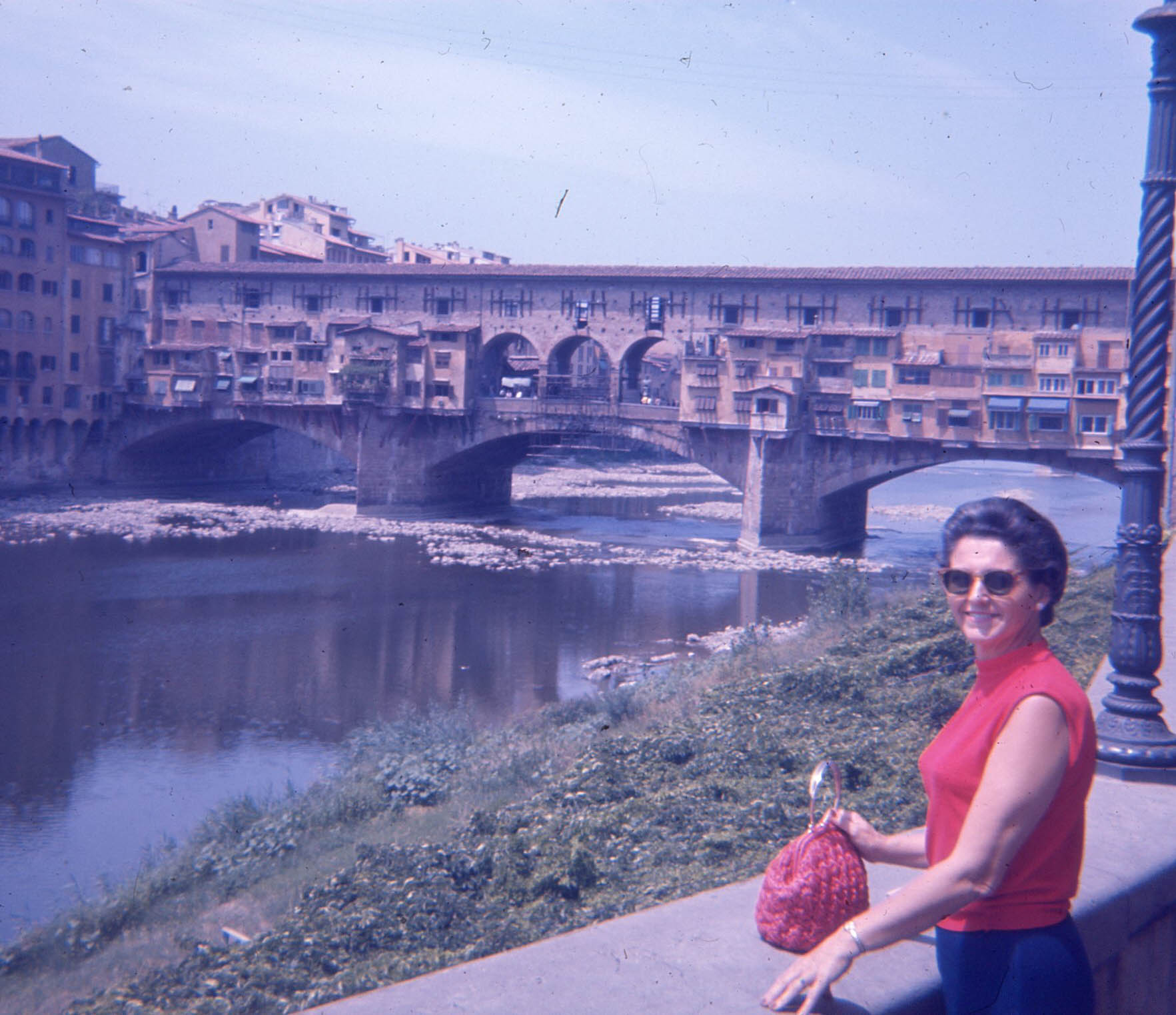
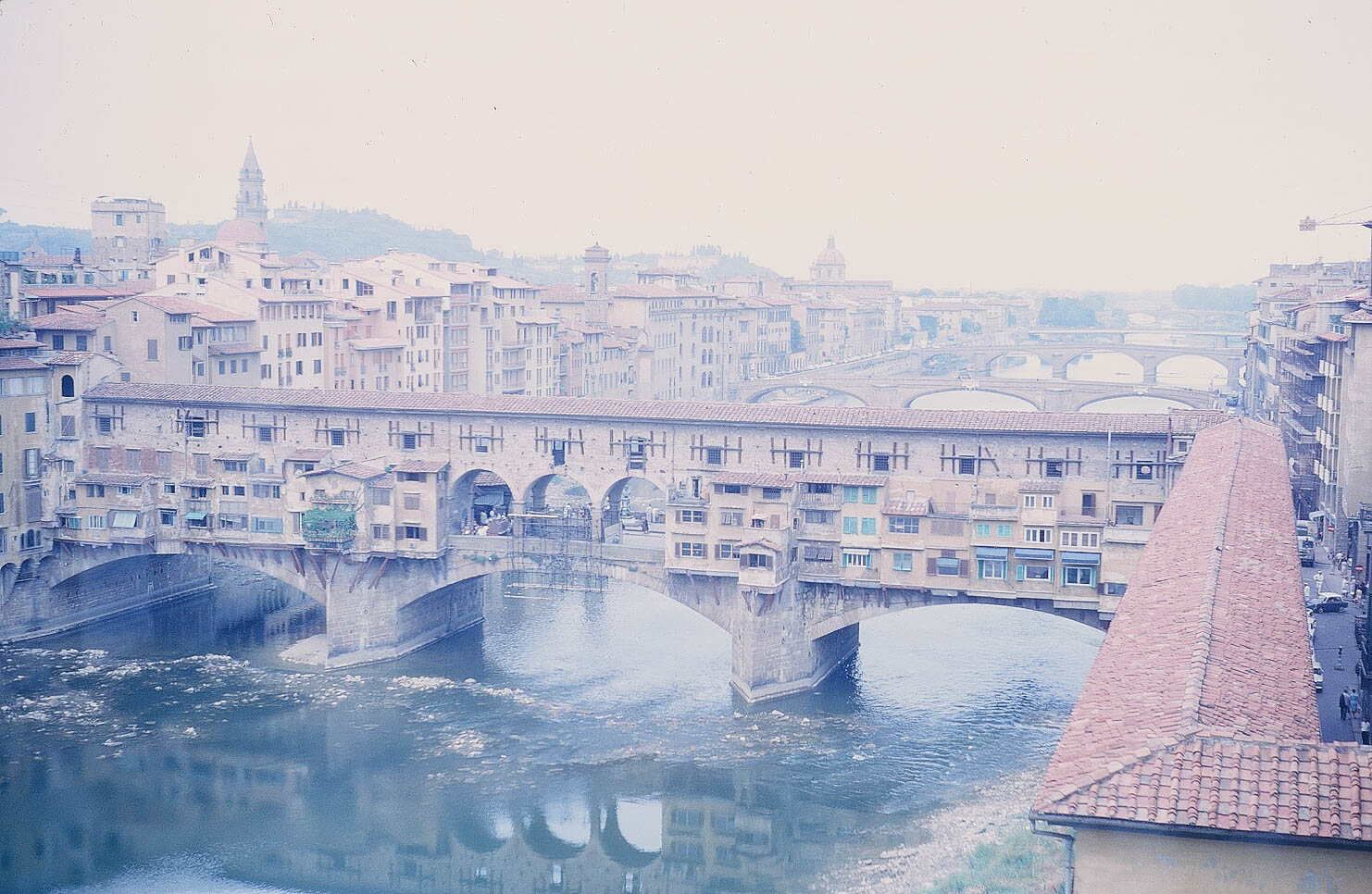
1966EuropeTrip-314 Lois Winter in Florence. Ponte Vecchio
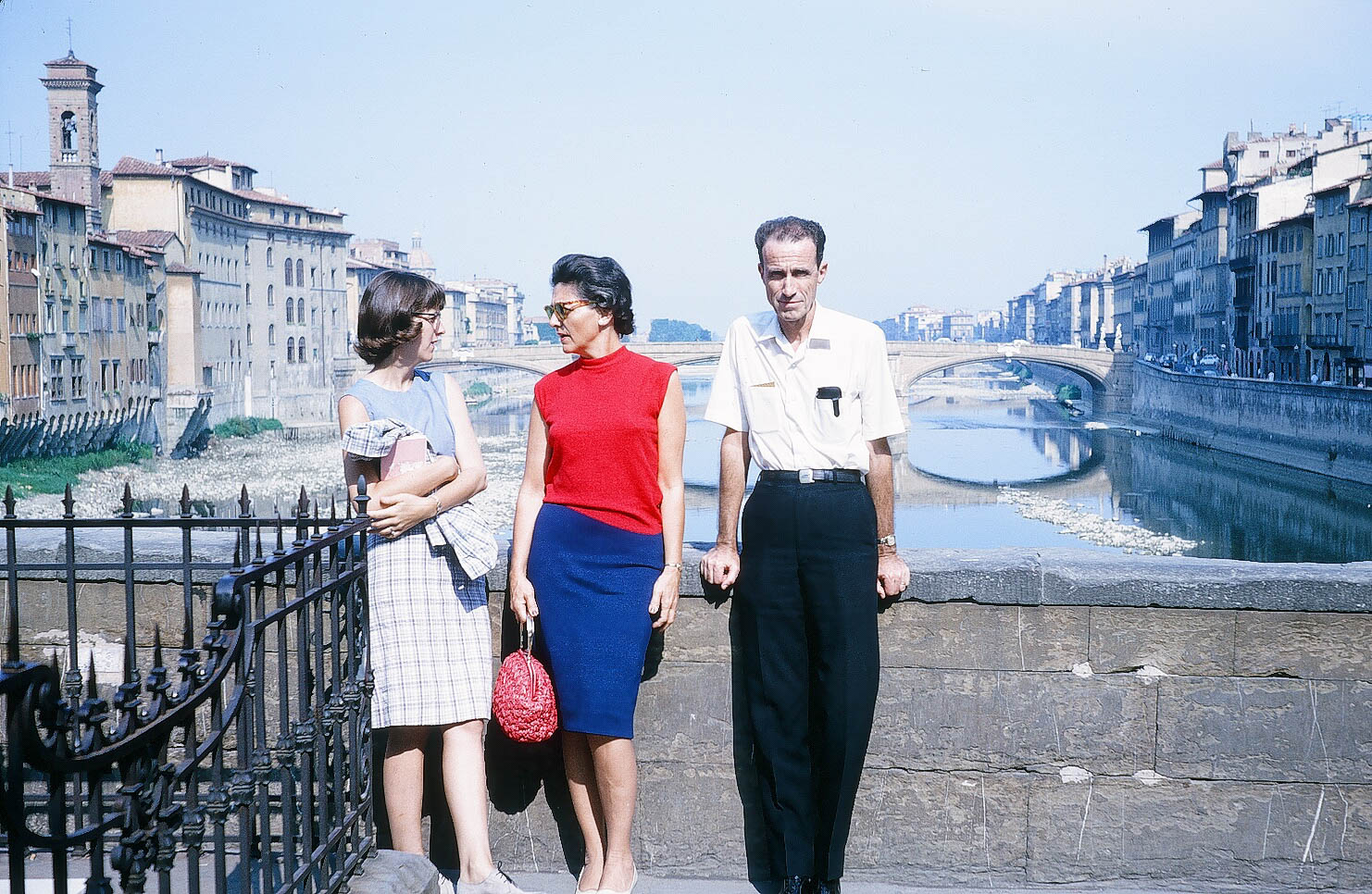
1966EuropeTrip-315 Pat, Lois and Bob on Ponte Vecchio. Florence
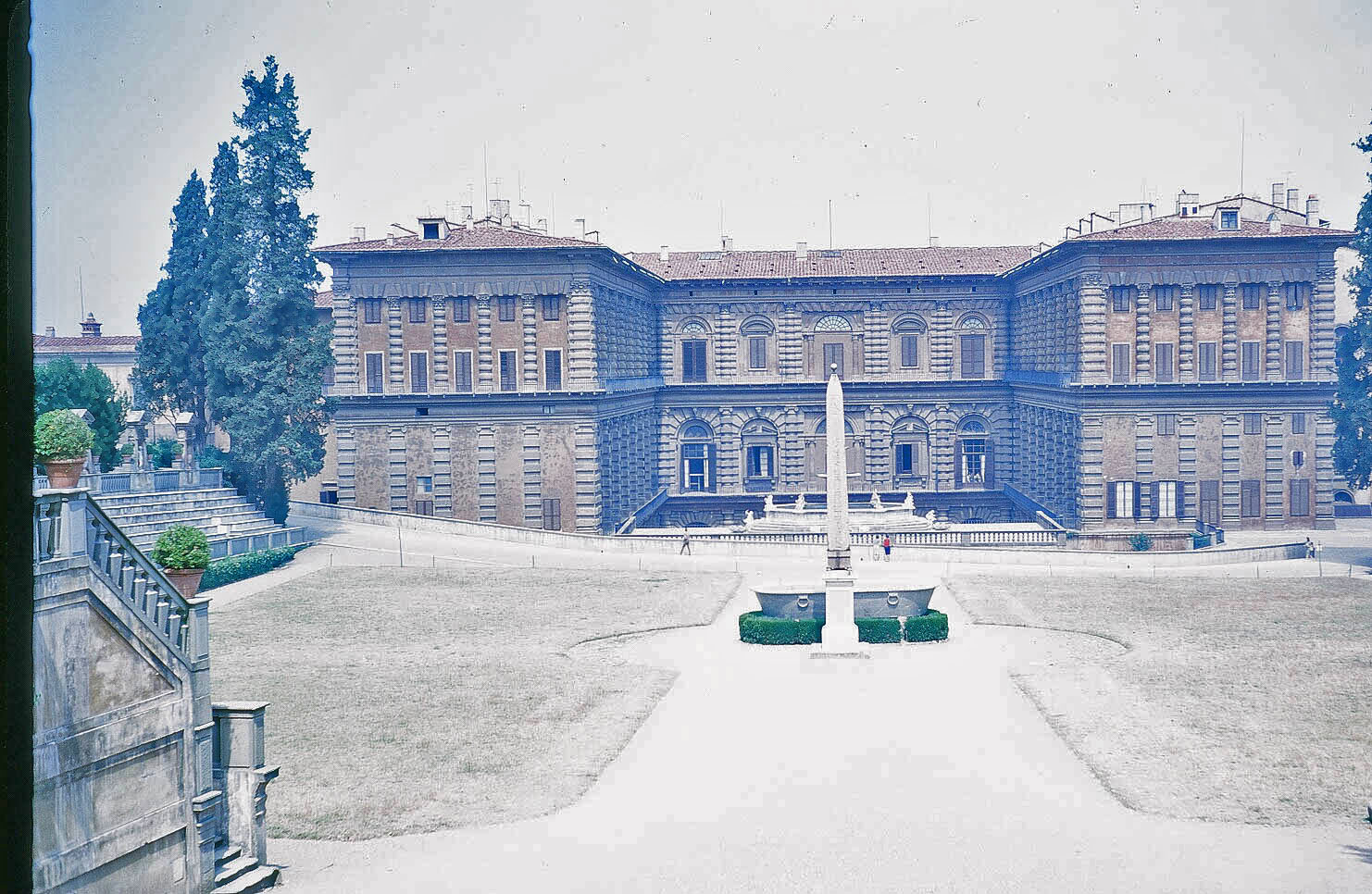
1966EuropeTrip-316 Pitti Palace, Florence.
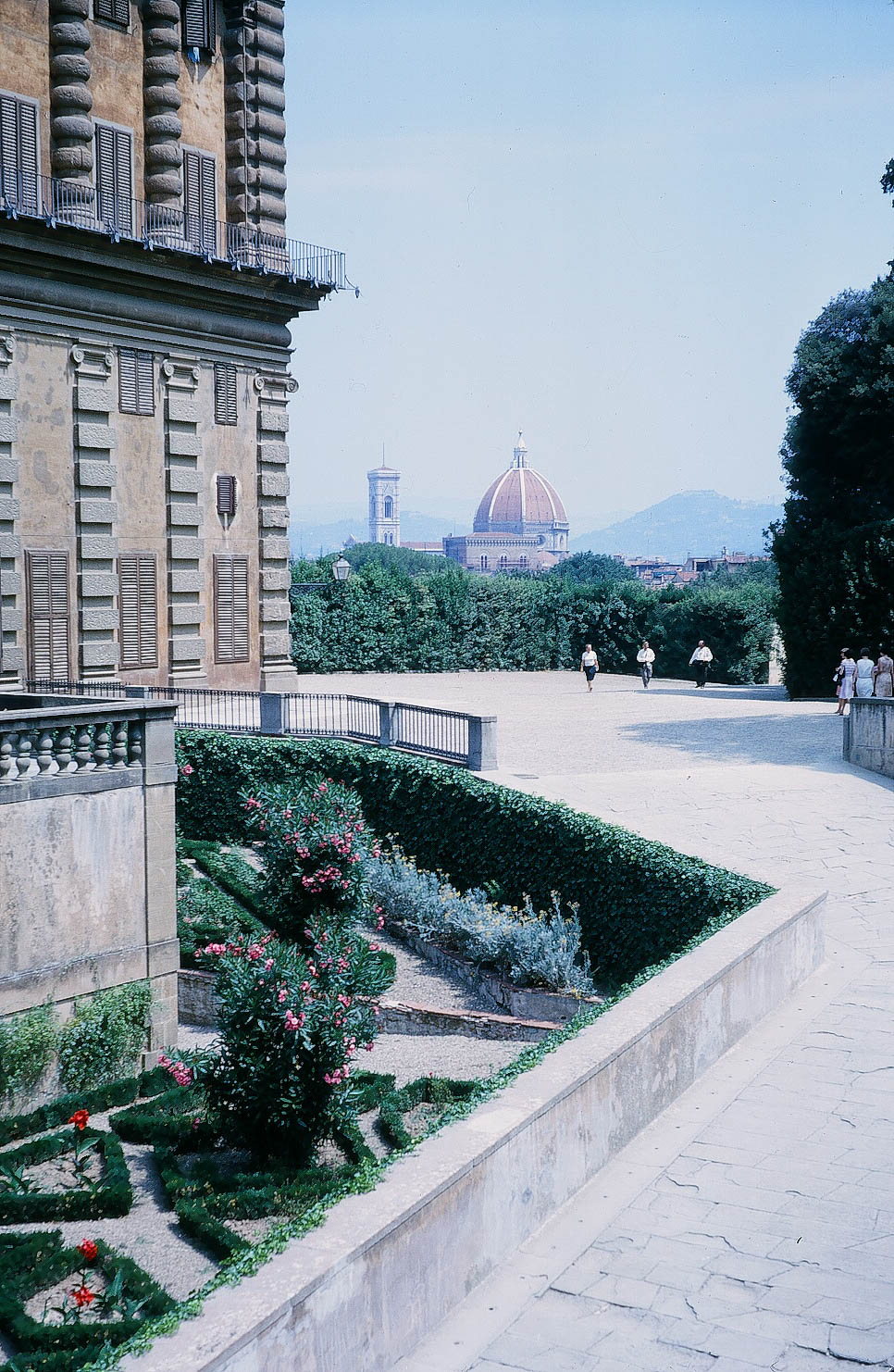
1966EuropeTrip-317 Pitti Palace, Duomo in distance.
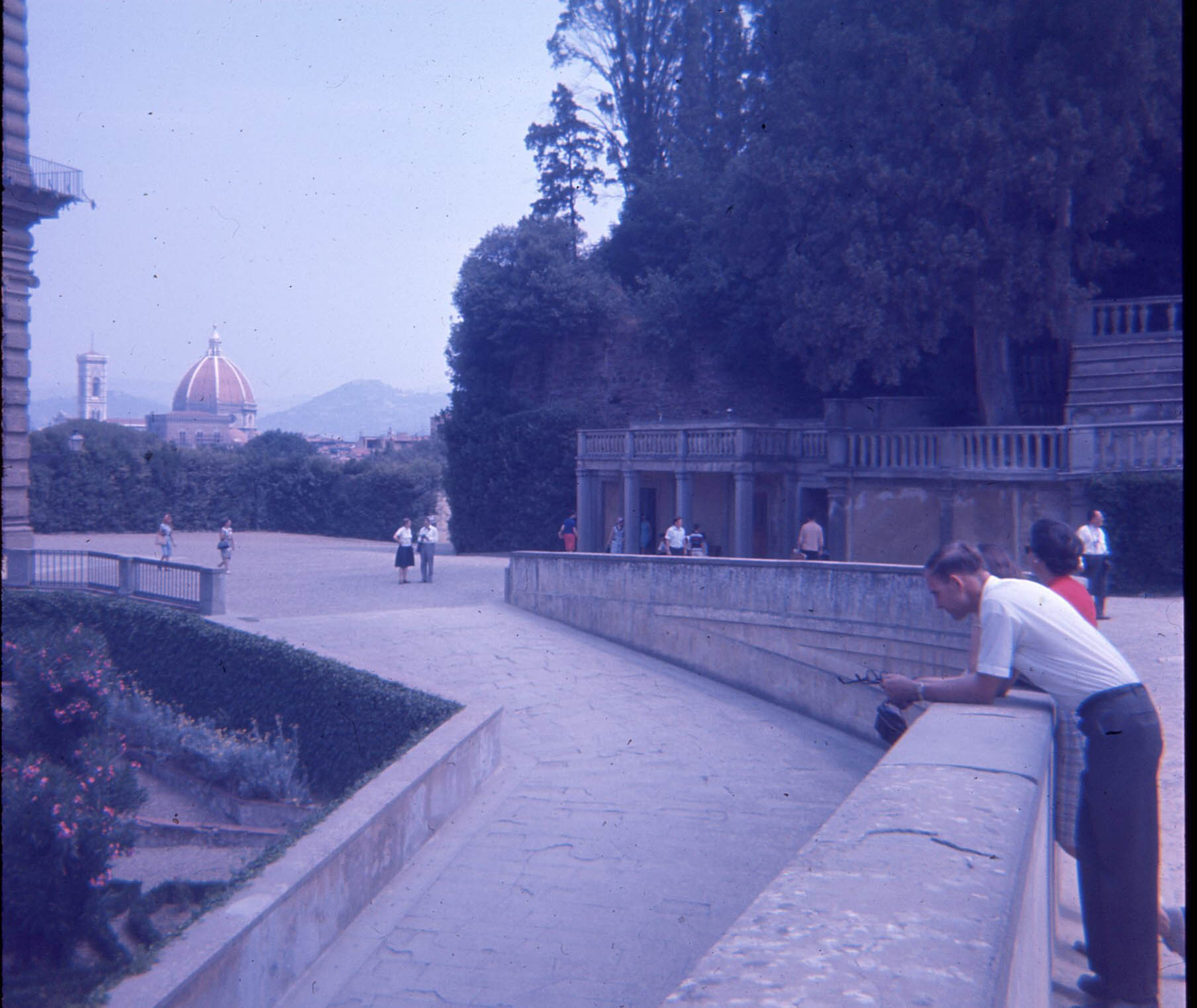
1966EuropeTrip-318 Pitti Palace, Mel
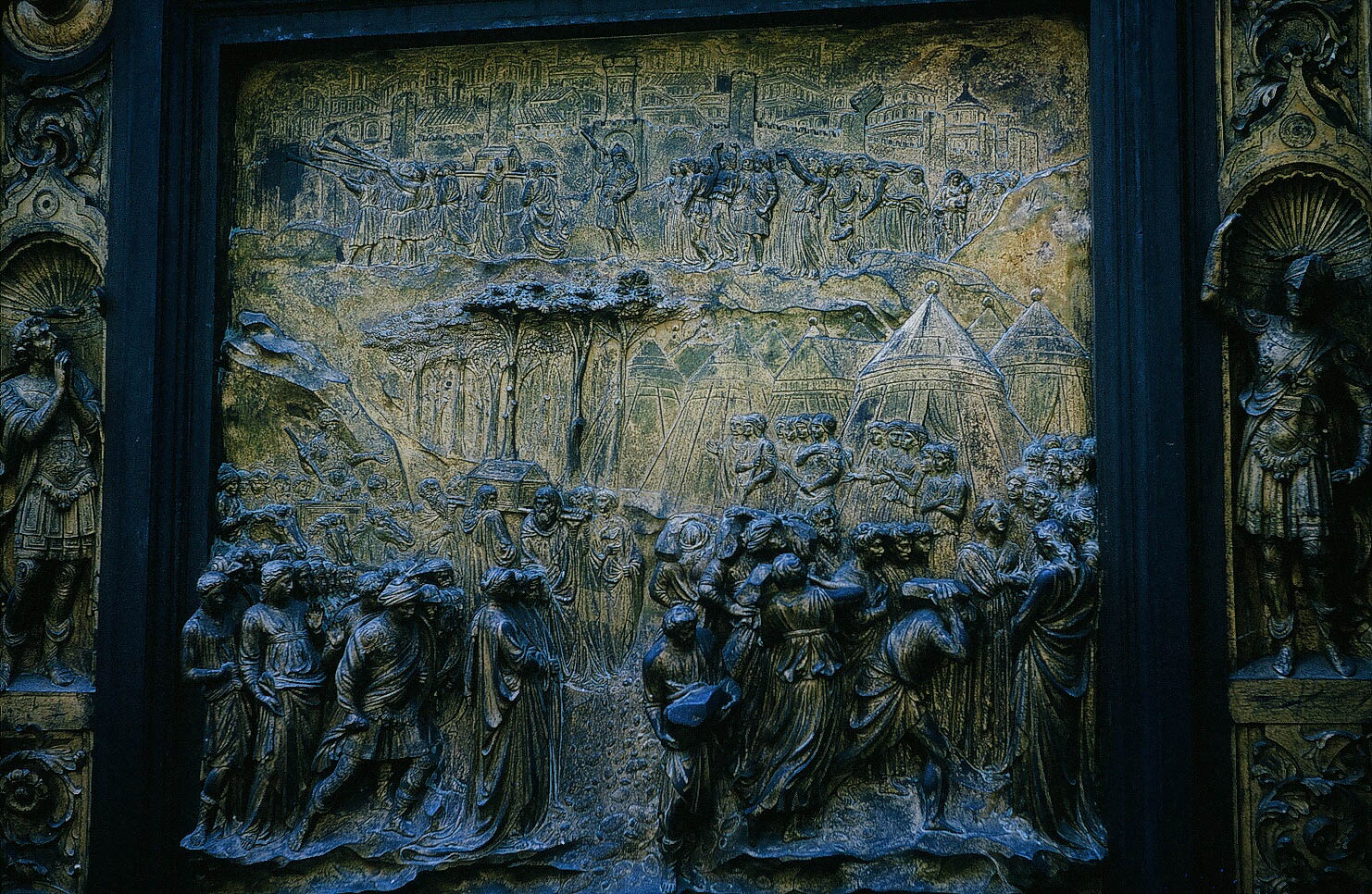
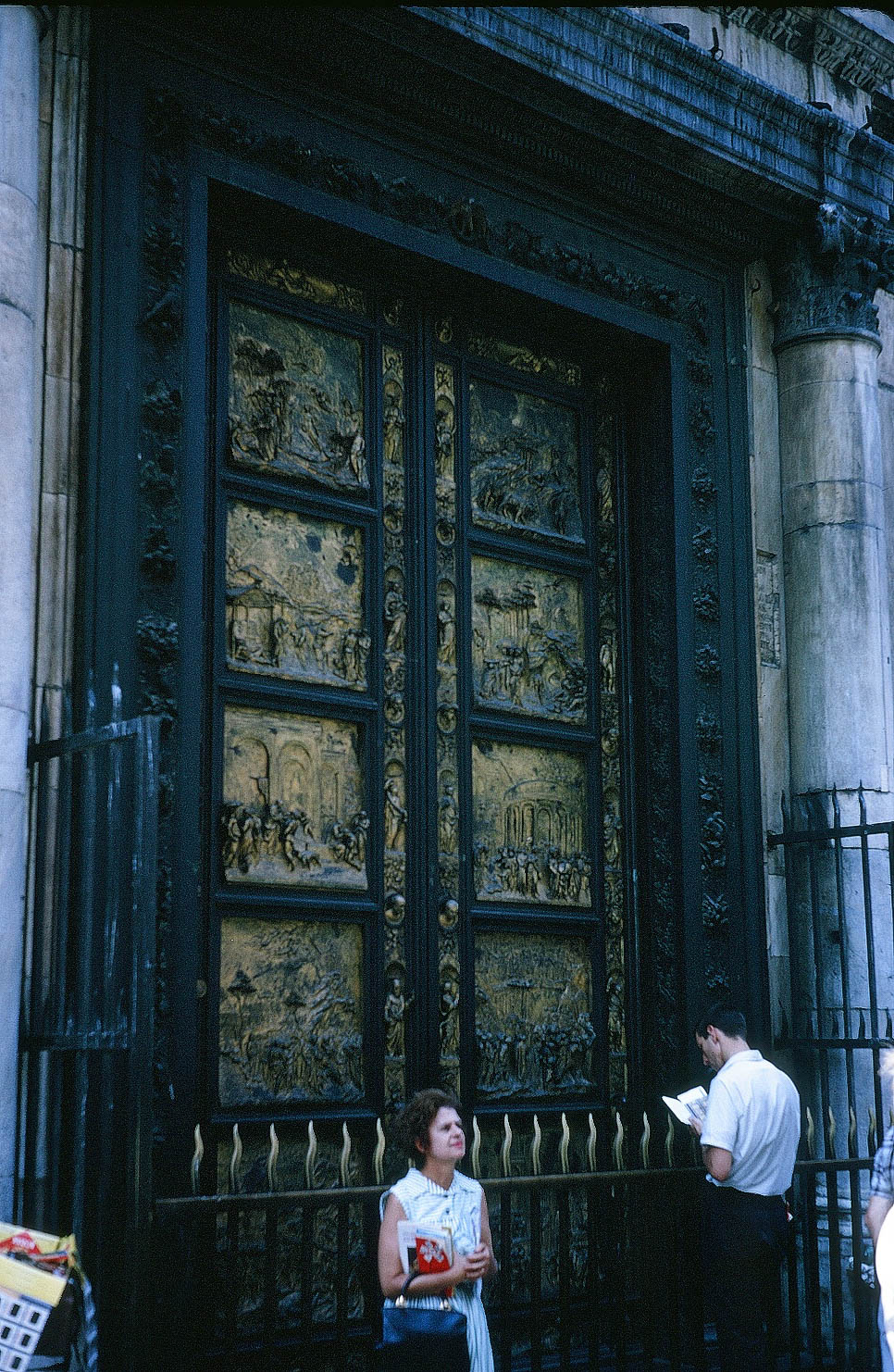
1966EuropeTrip-319 Panel on Ghiberti Doors of Duomo.
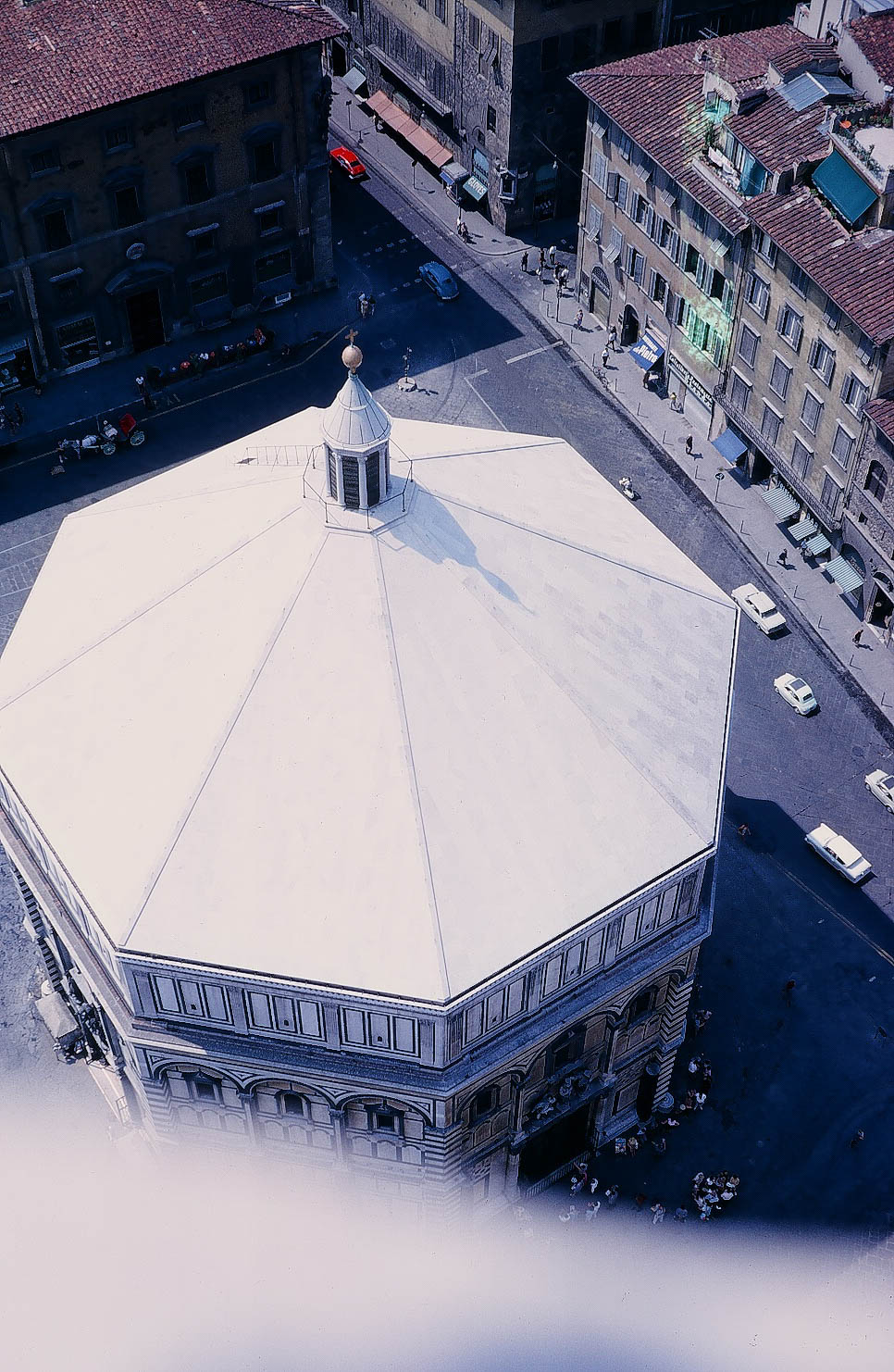
1966EuropeTrip-320 Duomo Baptistry
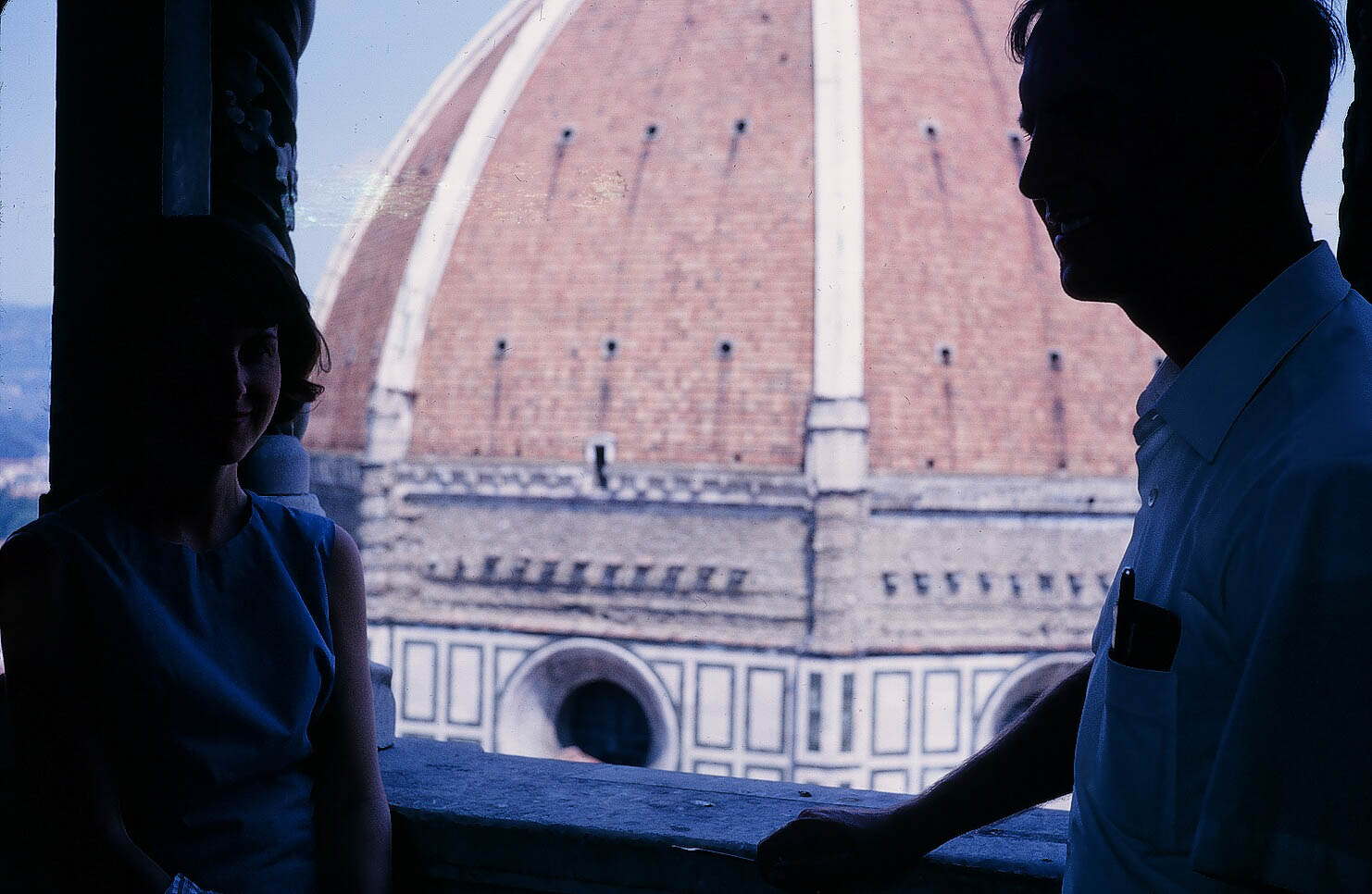
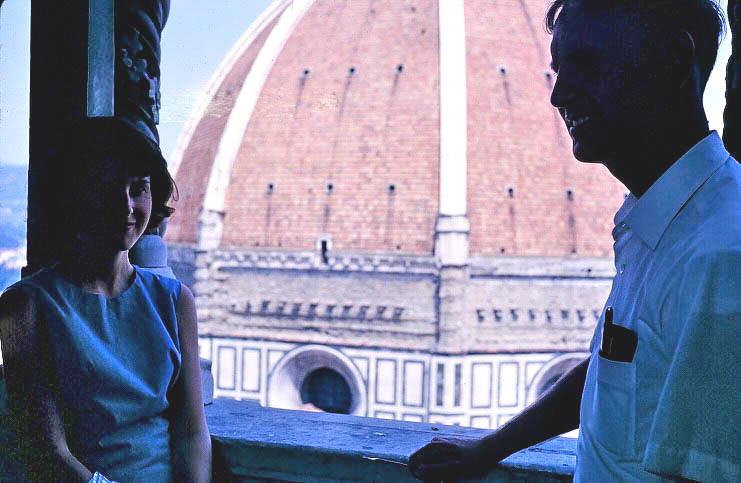
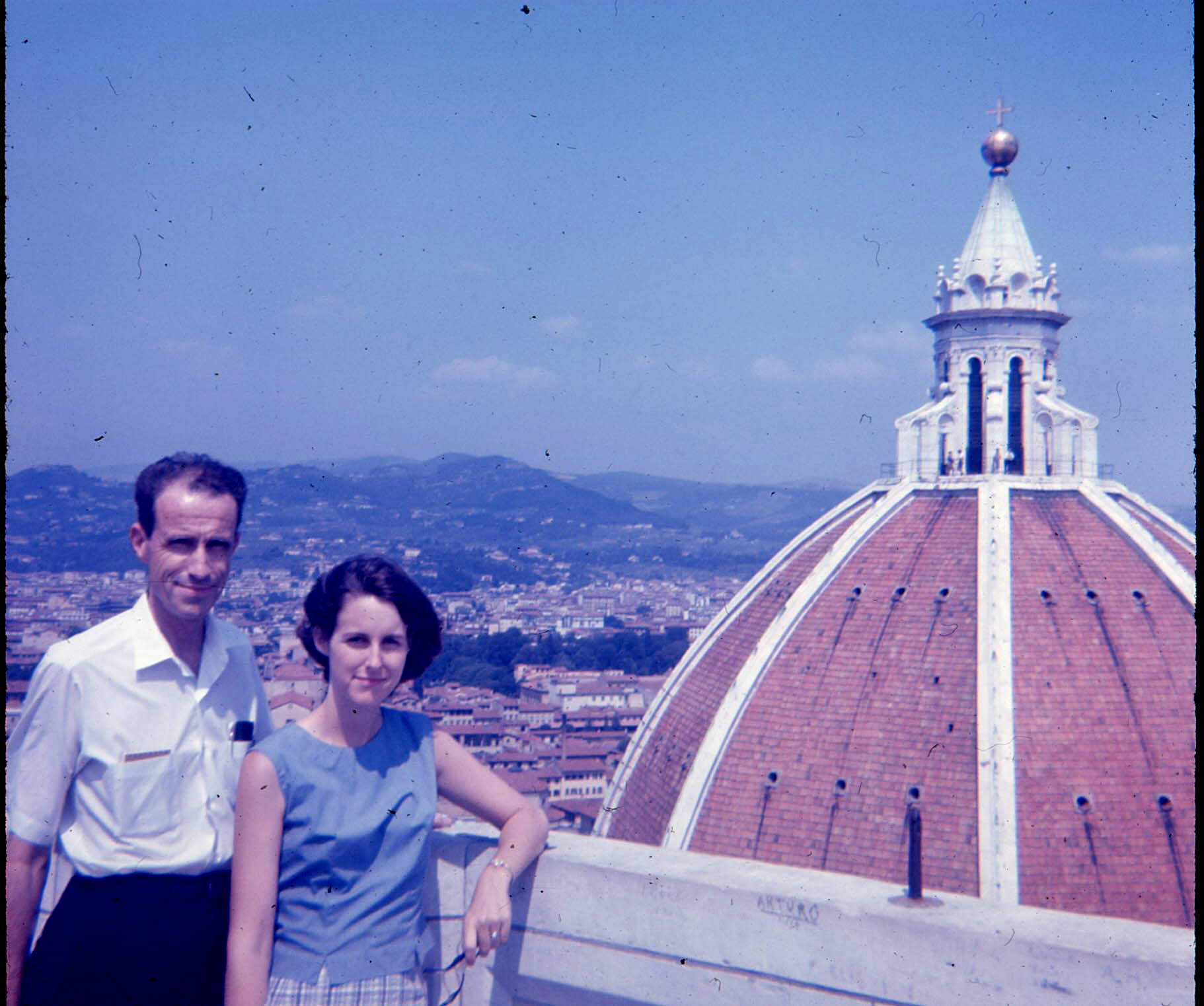
1966EuropeTrip-321 Pat and Mel.
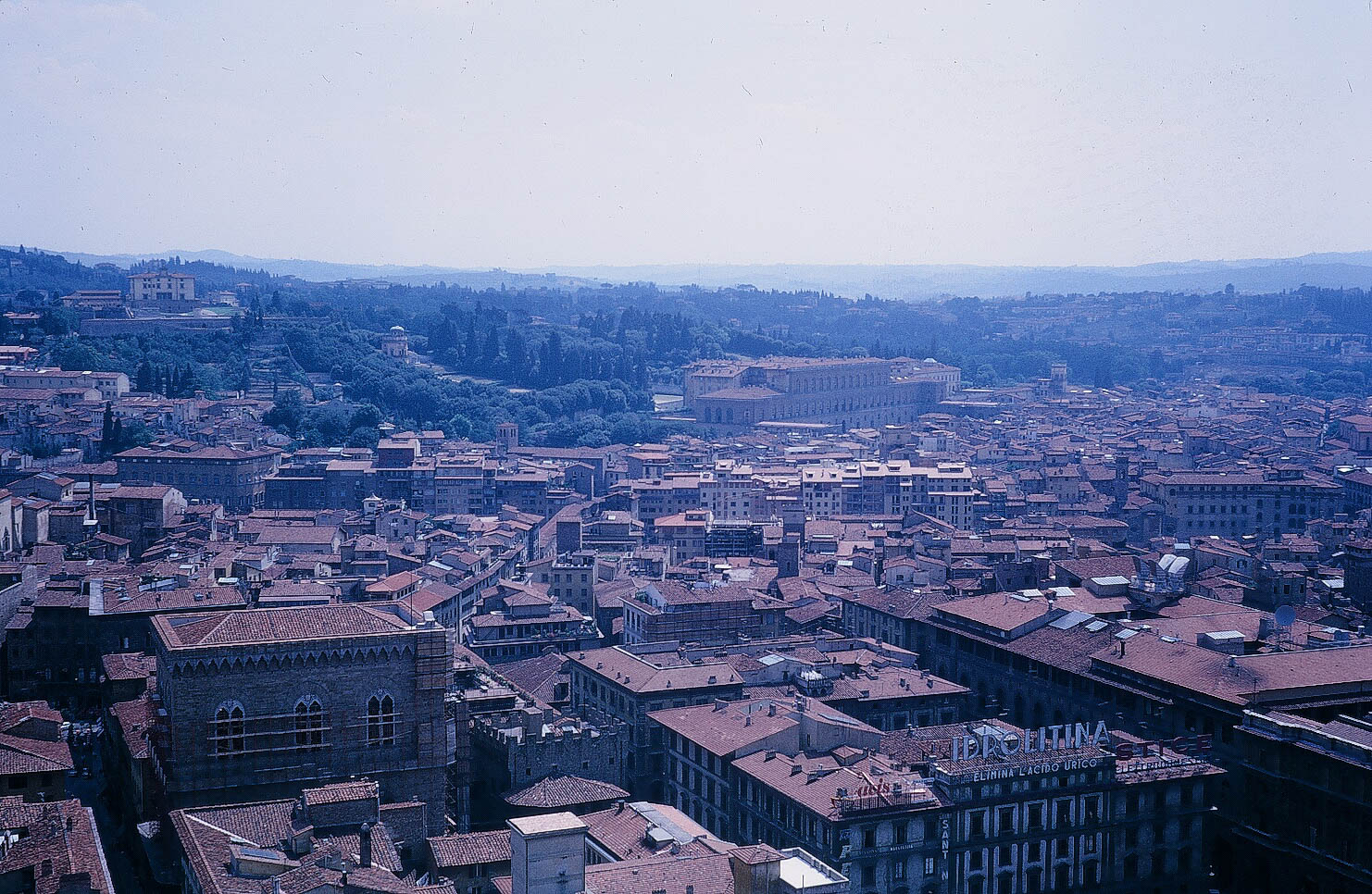
1966EuropeTrip-322 Florence from Campanile, 411 steps to top.
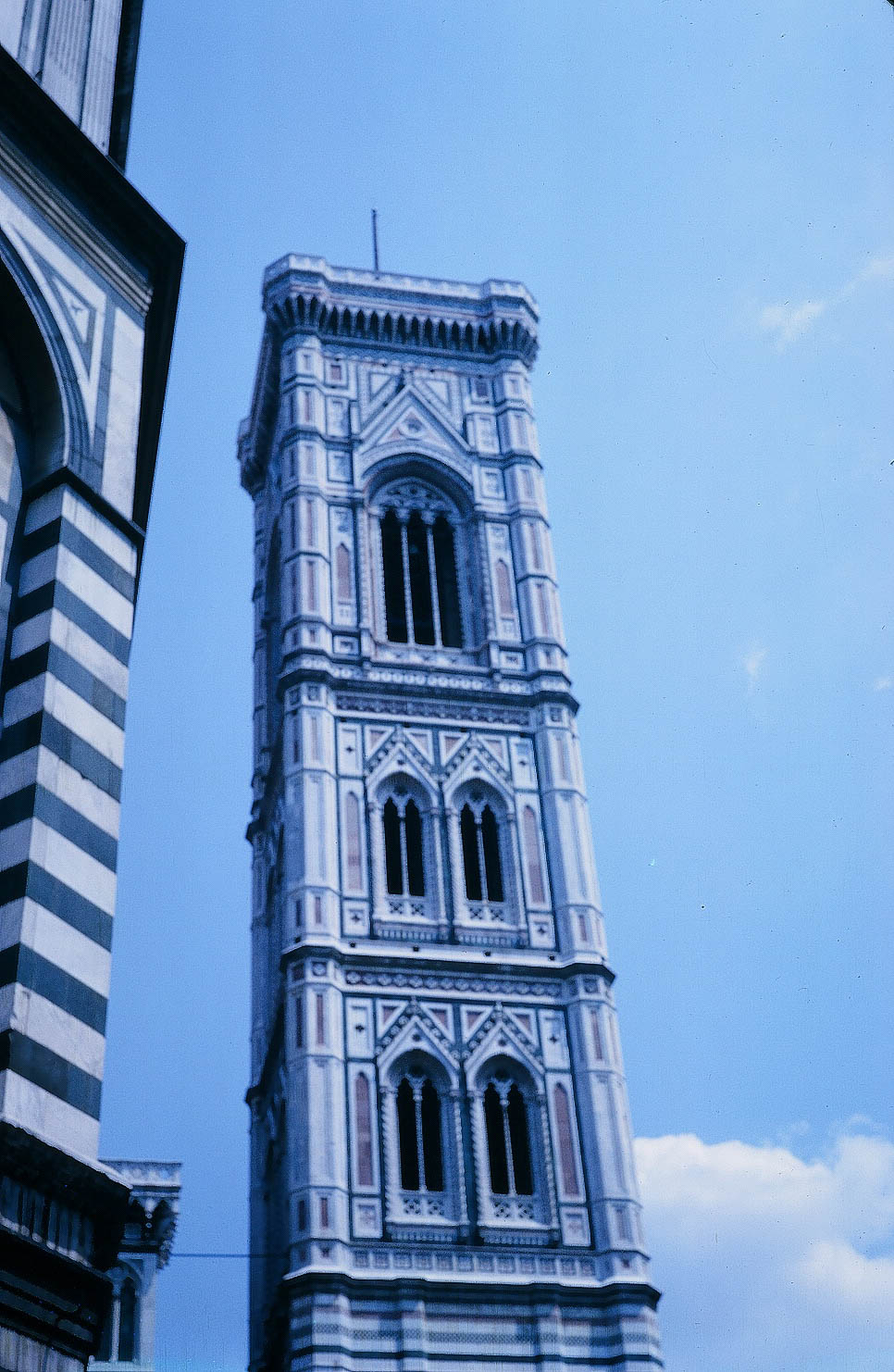
1966EuropeTrip-323 Giotto's Campanile
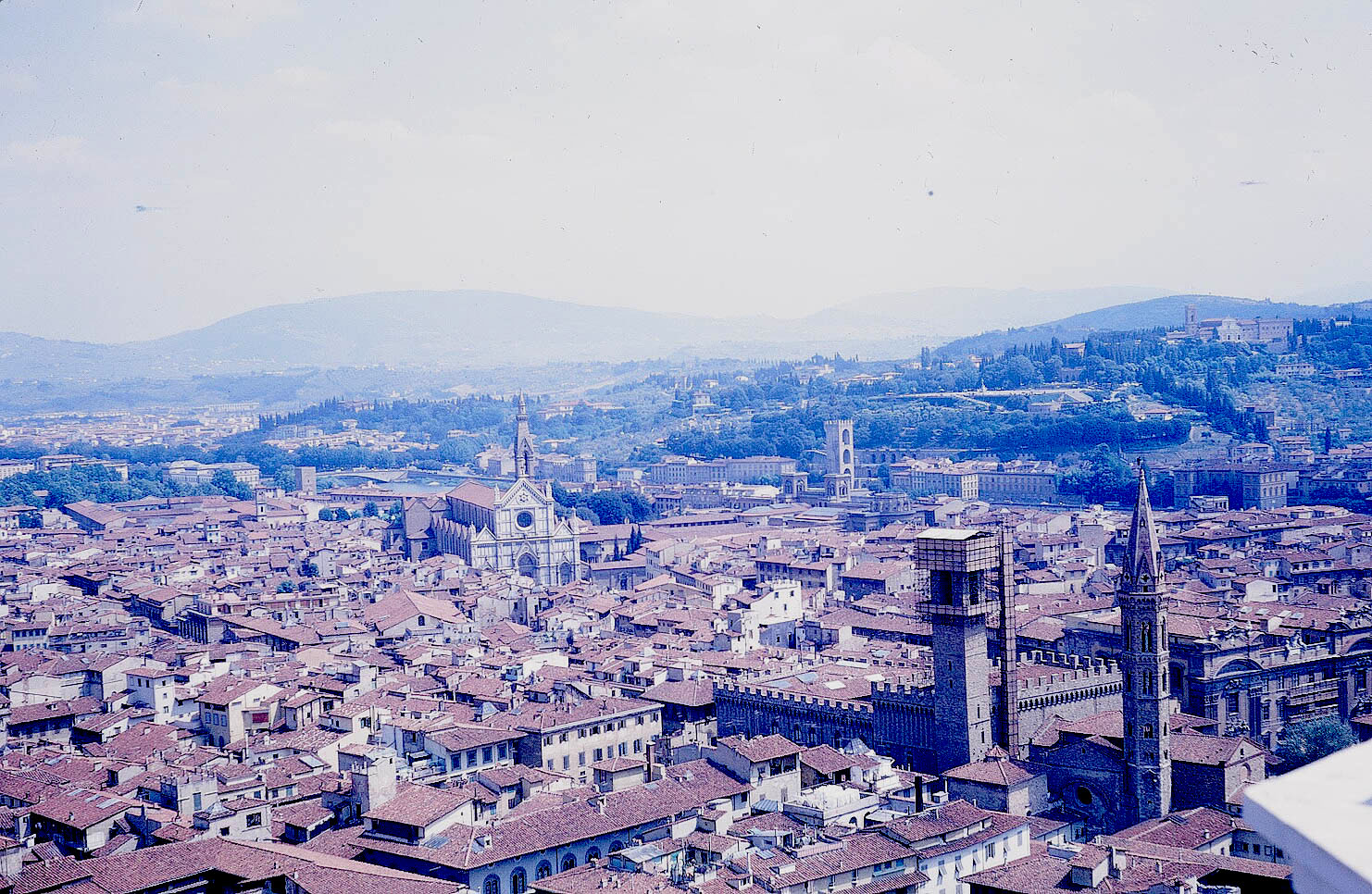
1966EuropeTrip-324 View from Giotto's Campanile
1966EuropeTrip-325 Bob and Pat, top of Giotto's Campanile
1966EuropeTrip-327 Florence
1966EuropeTrip-328 Ghiberti's Doors
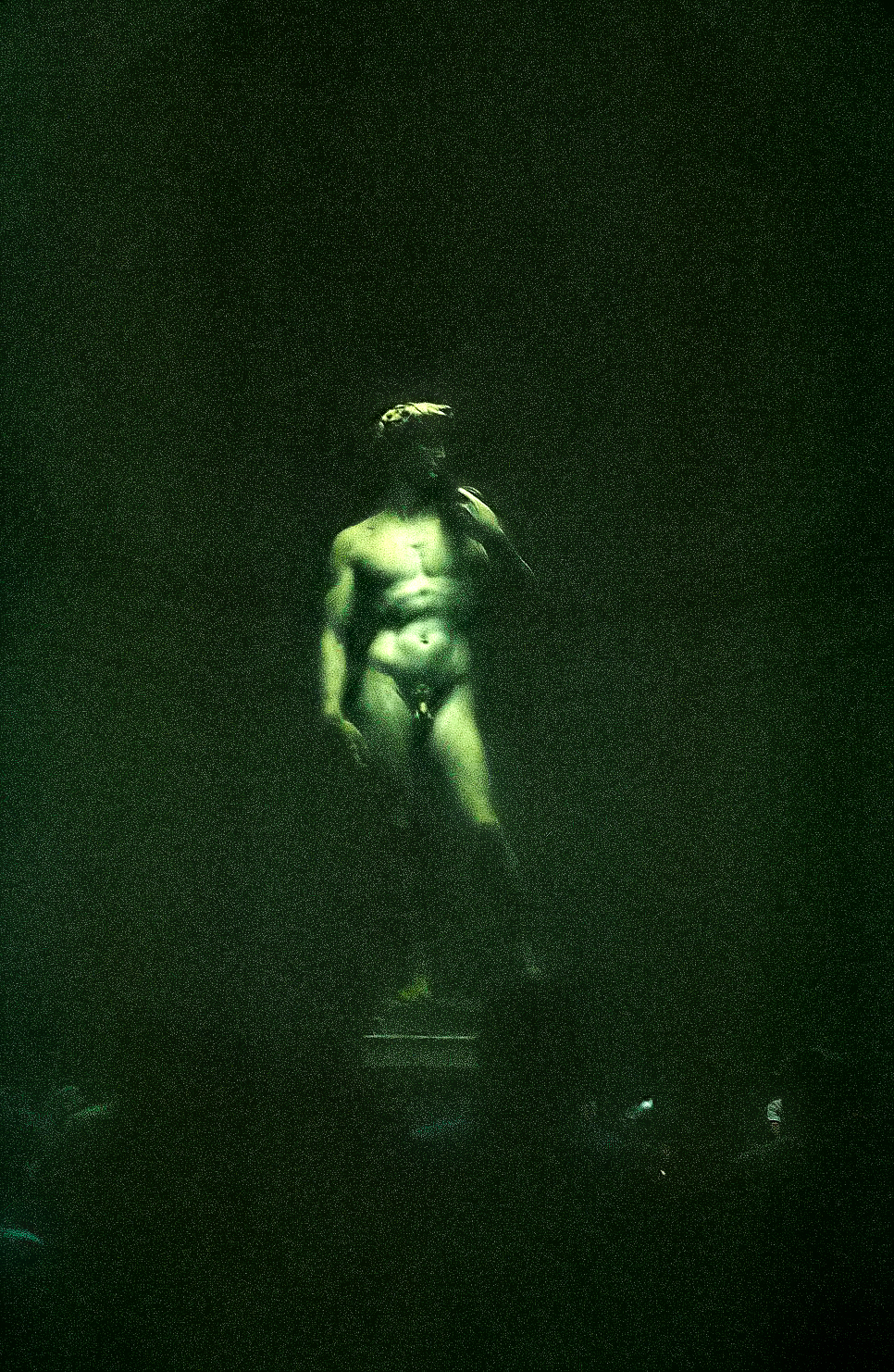
1966EuropeTrip-329 Michelangelo's David
1966EuropeTrip-330 Ponte Vecchio
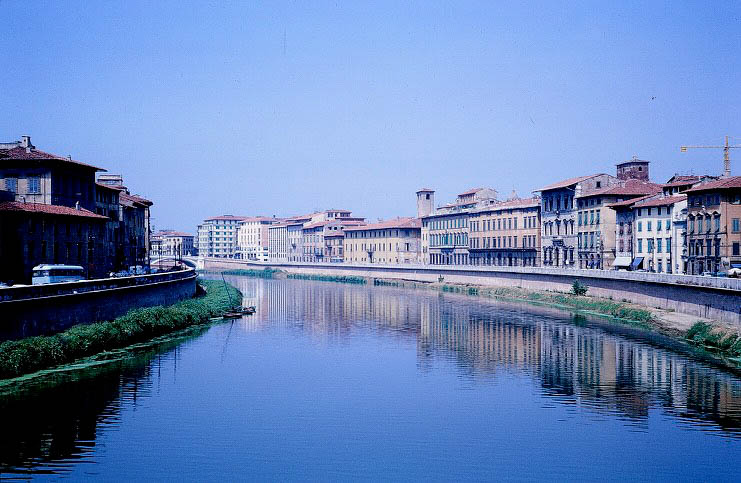
1966EuropeTrip-333 The Arno River, Florence
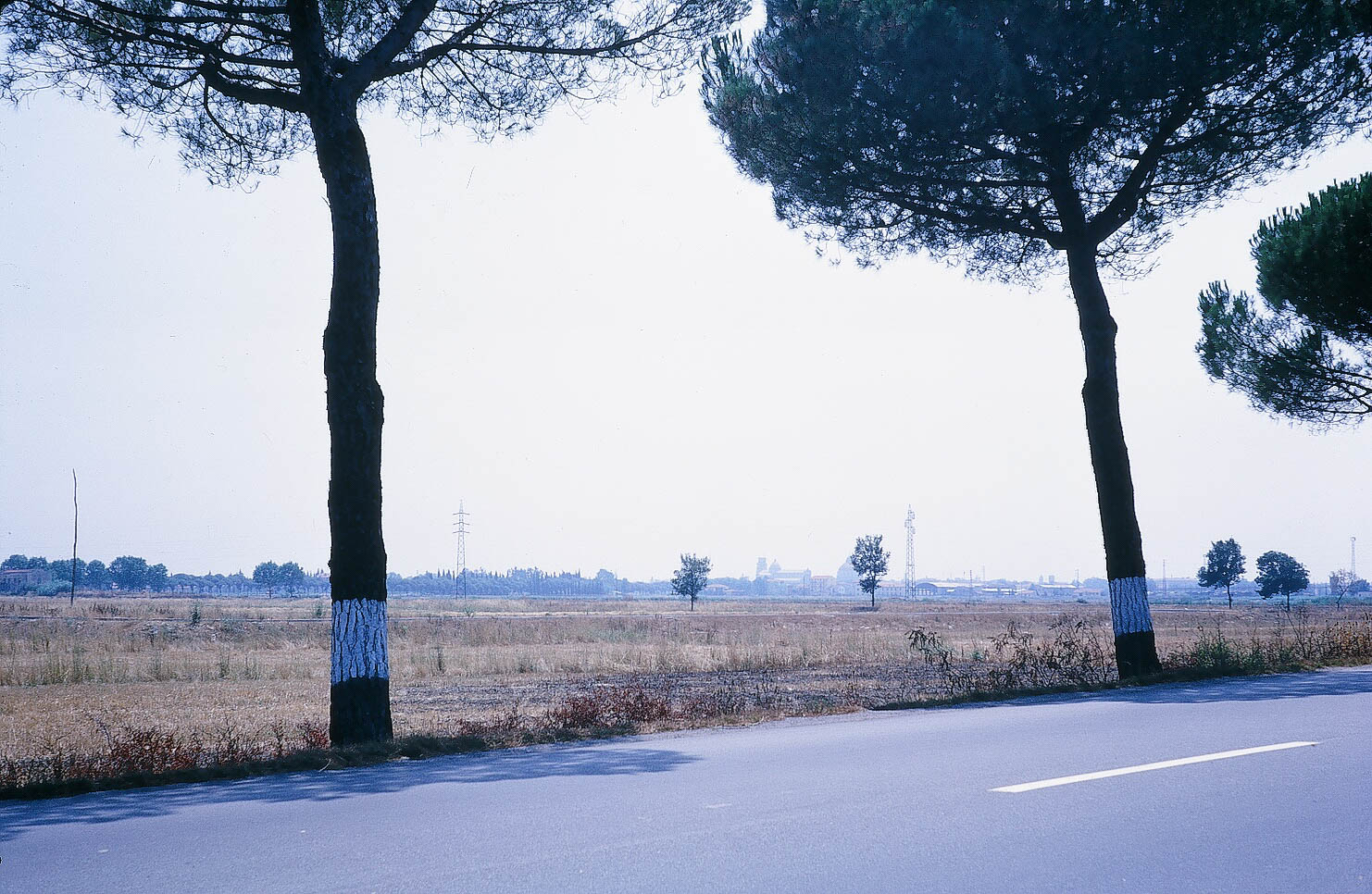
1966EuropeTrip-334 Pisa in distance. Second trip to take Bob and Lois there.
1966EuropeTrip-335 Lois Winter, Leaning Tower.
1966EuropeTrip-336 Lois Winter, Leaning Tower.
1966EuropeTrip-338 Lois Winter, Leaning Tower.
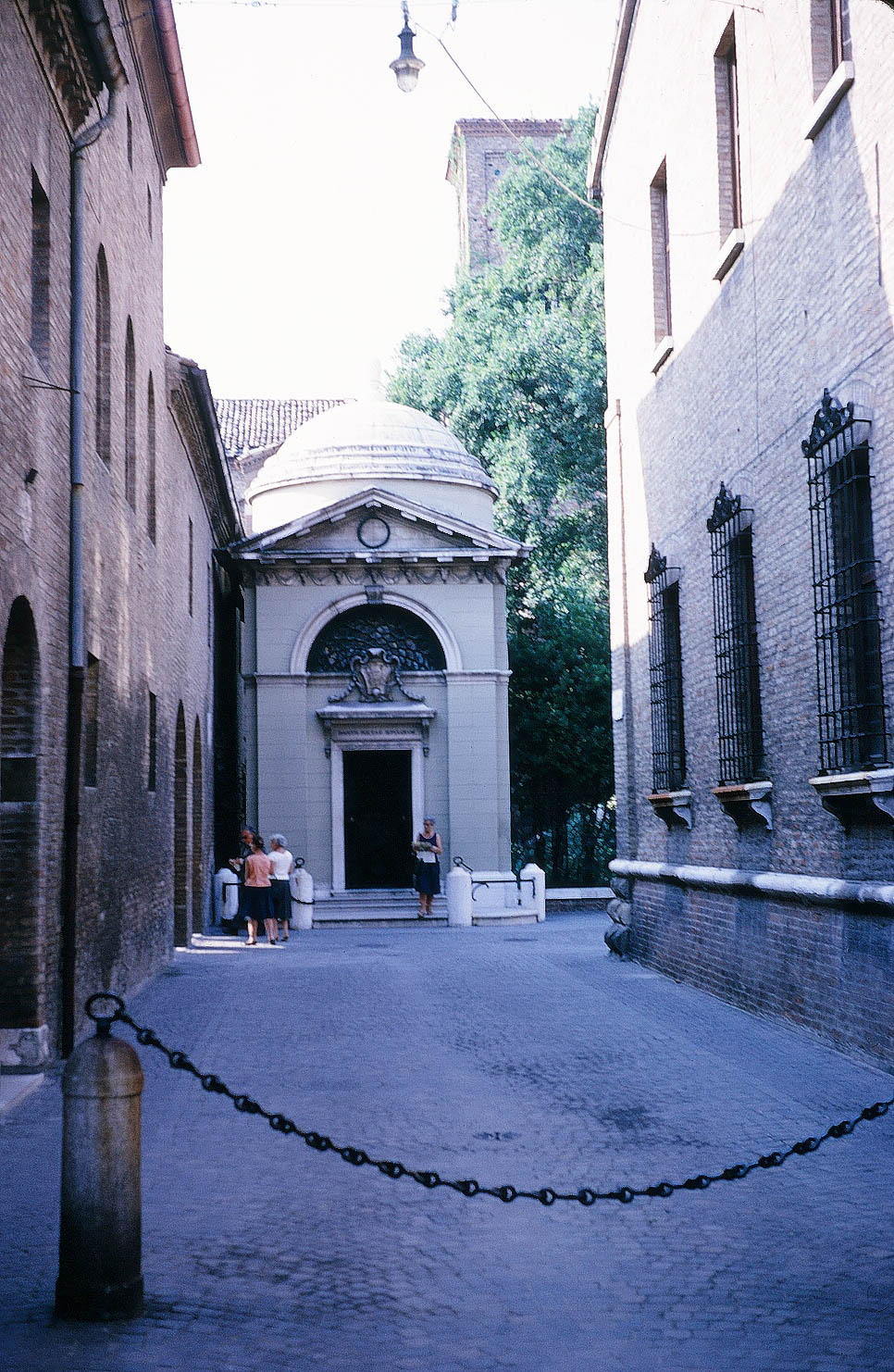
1966EuropeTrip-339 Dante's Tomb, Revenna, Italy.
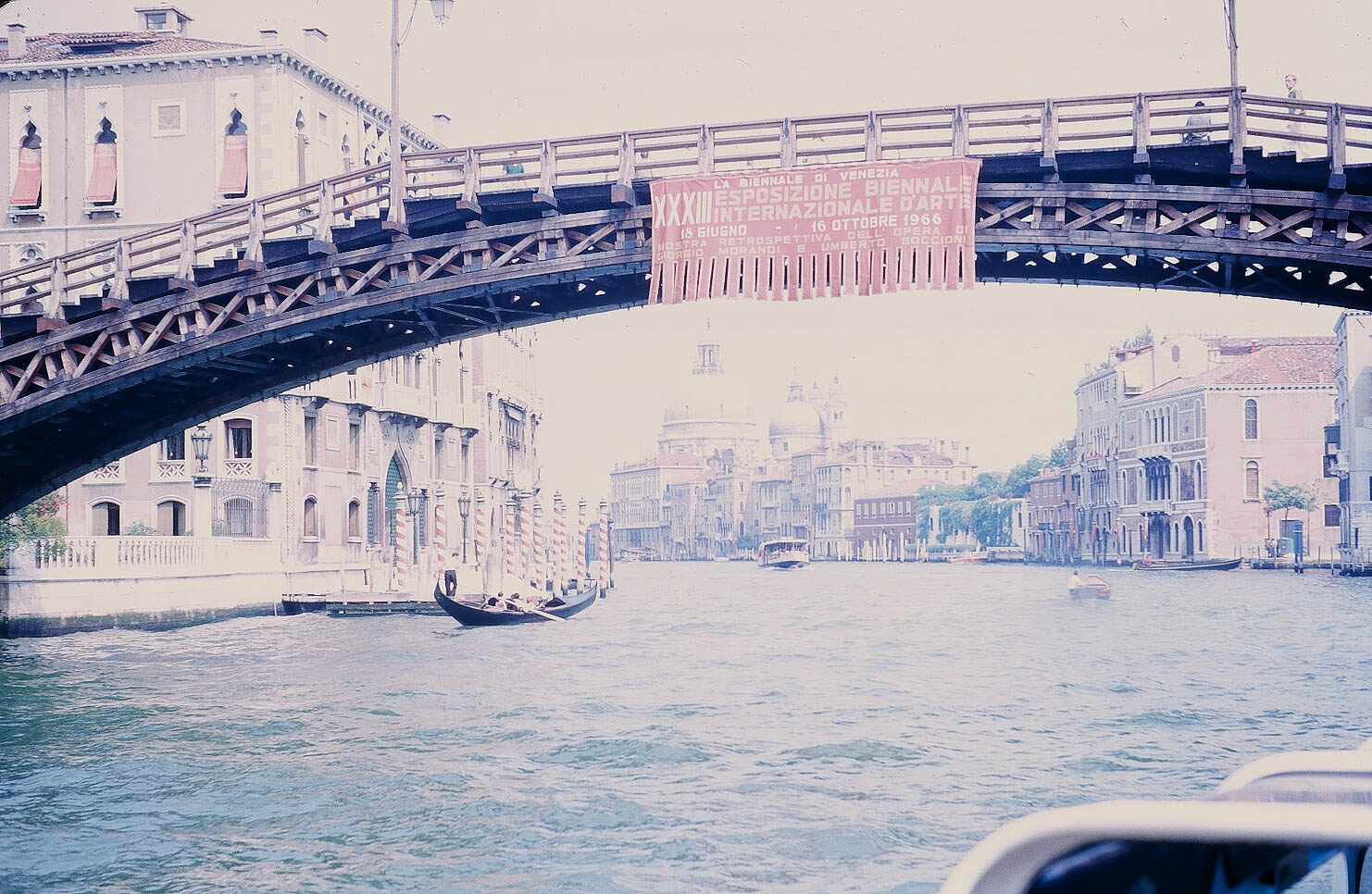
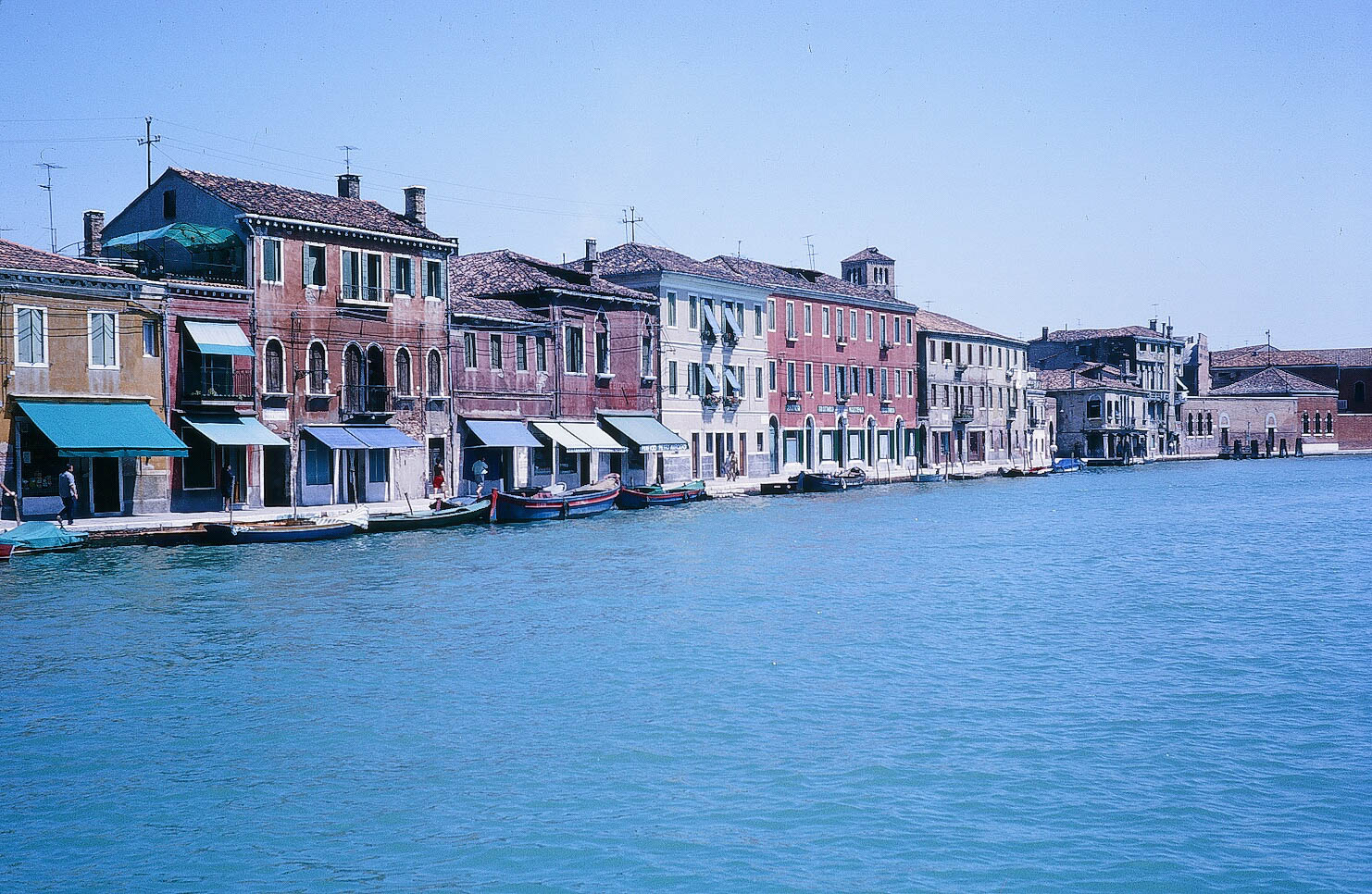
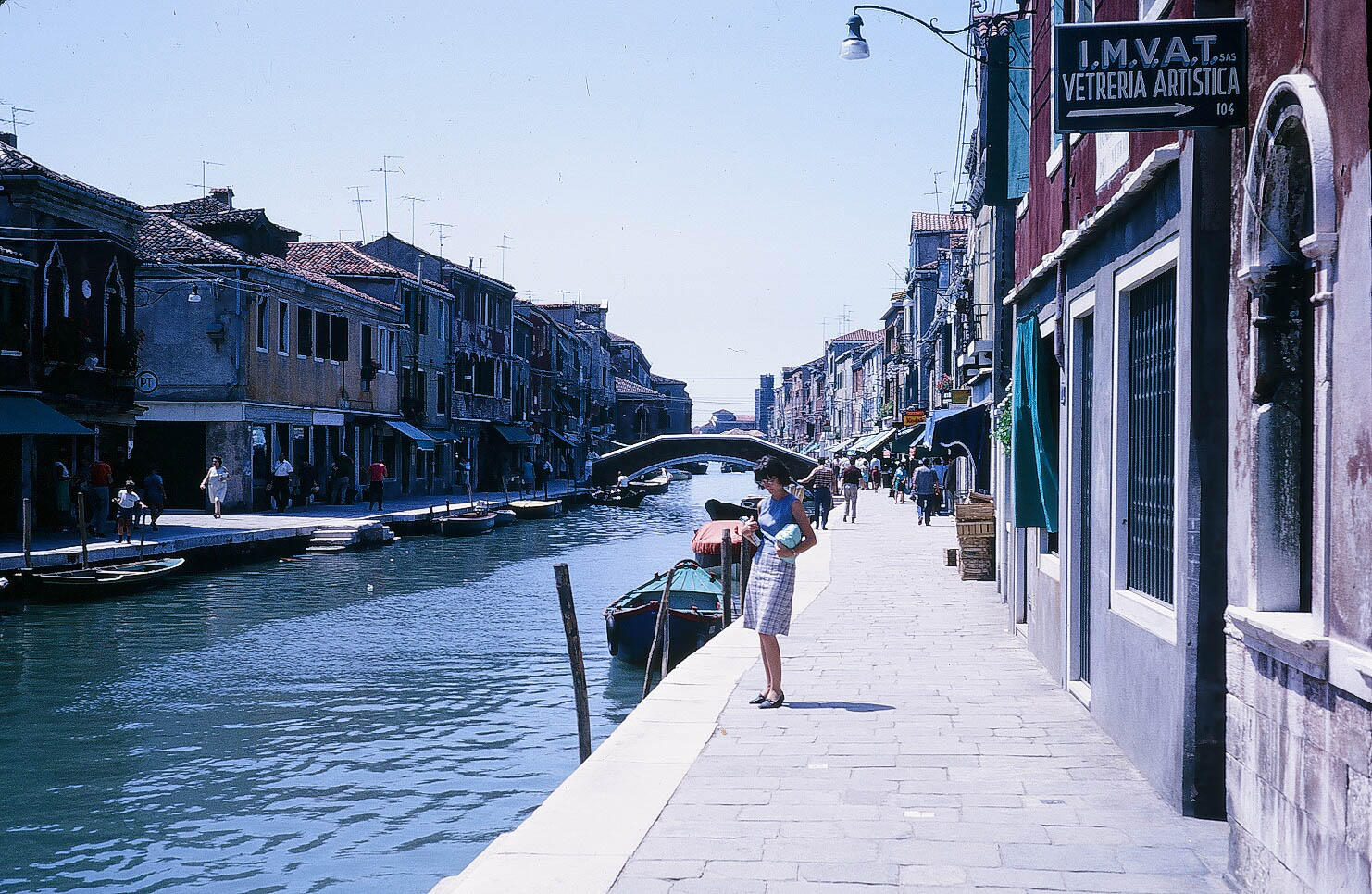
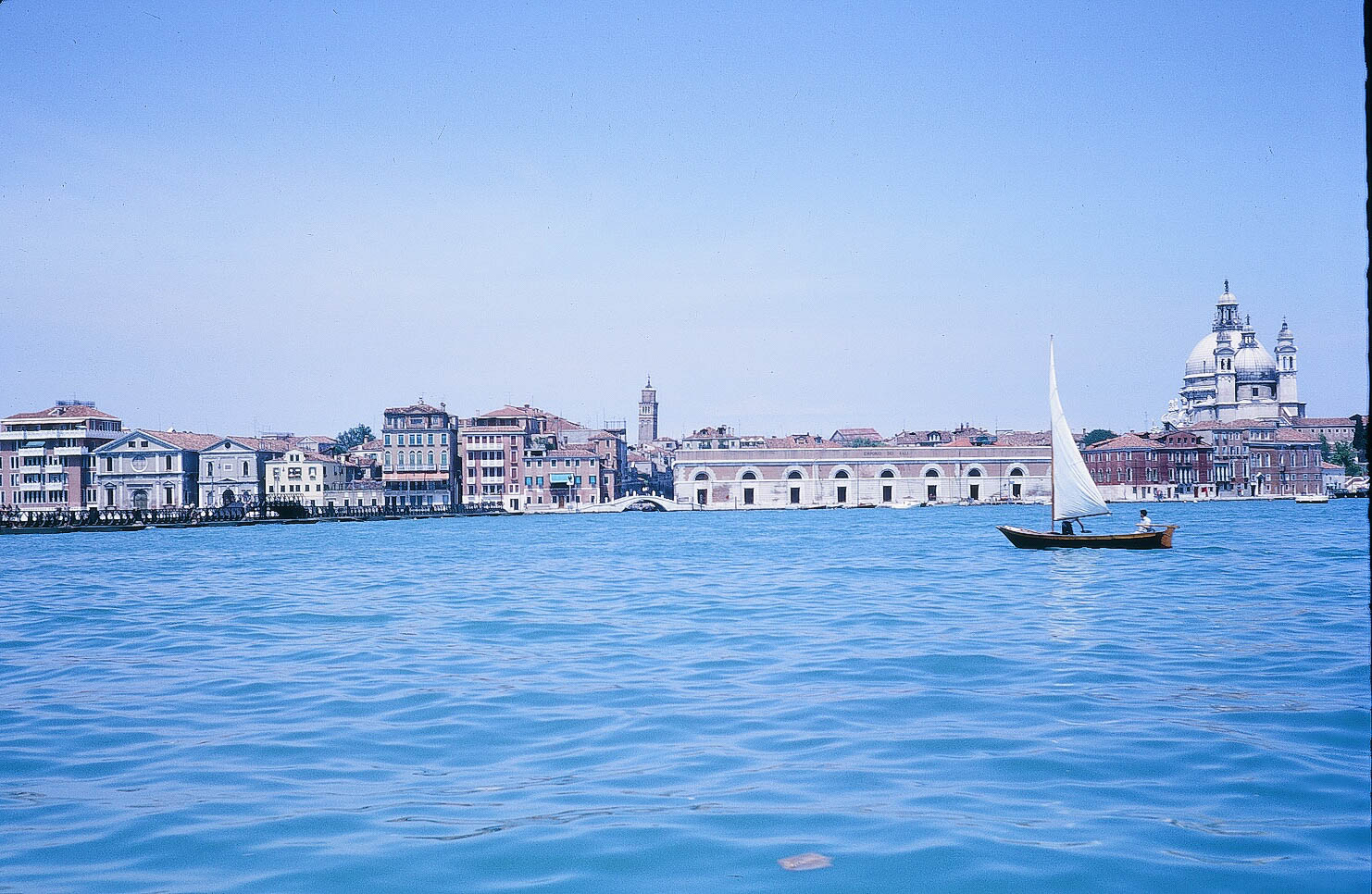
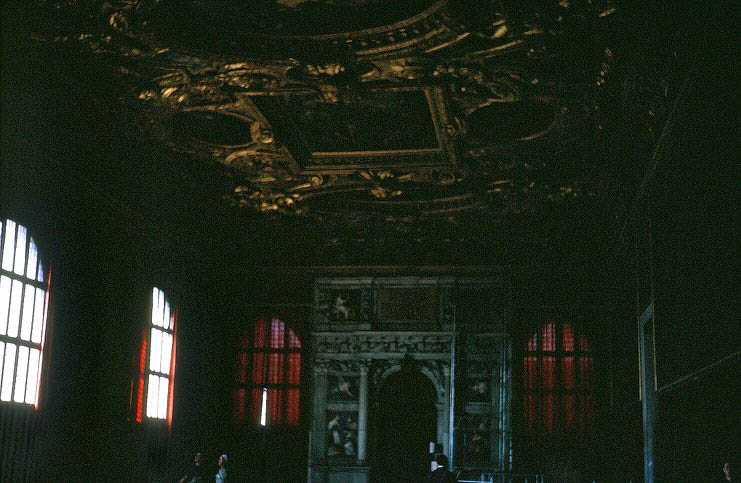
1966EuropeTrip-340 Venice, Italy
1966EuropeTrip-341
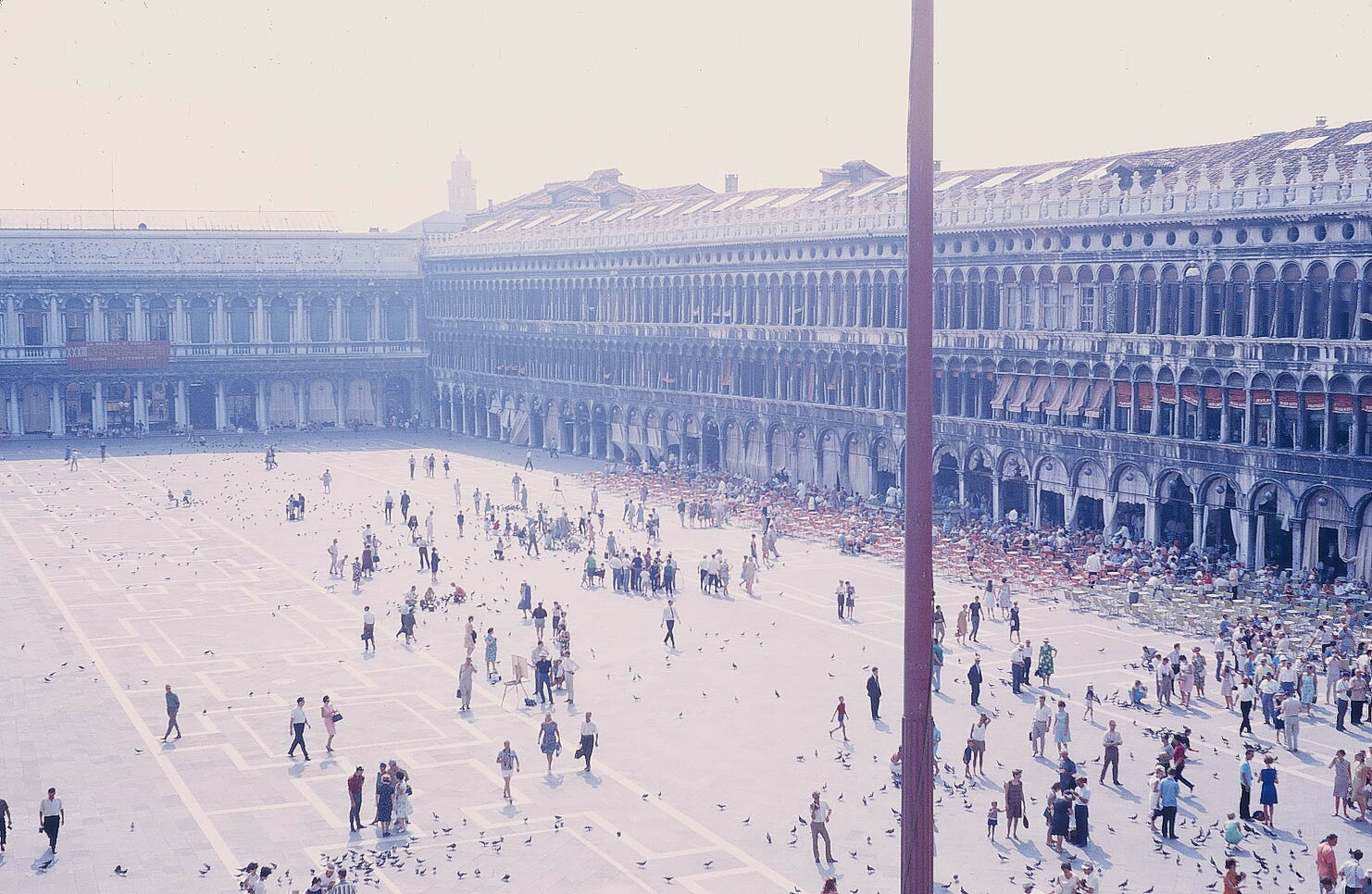
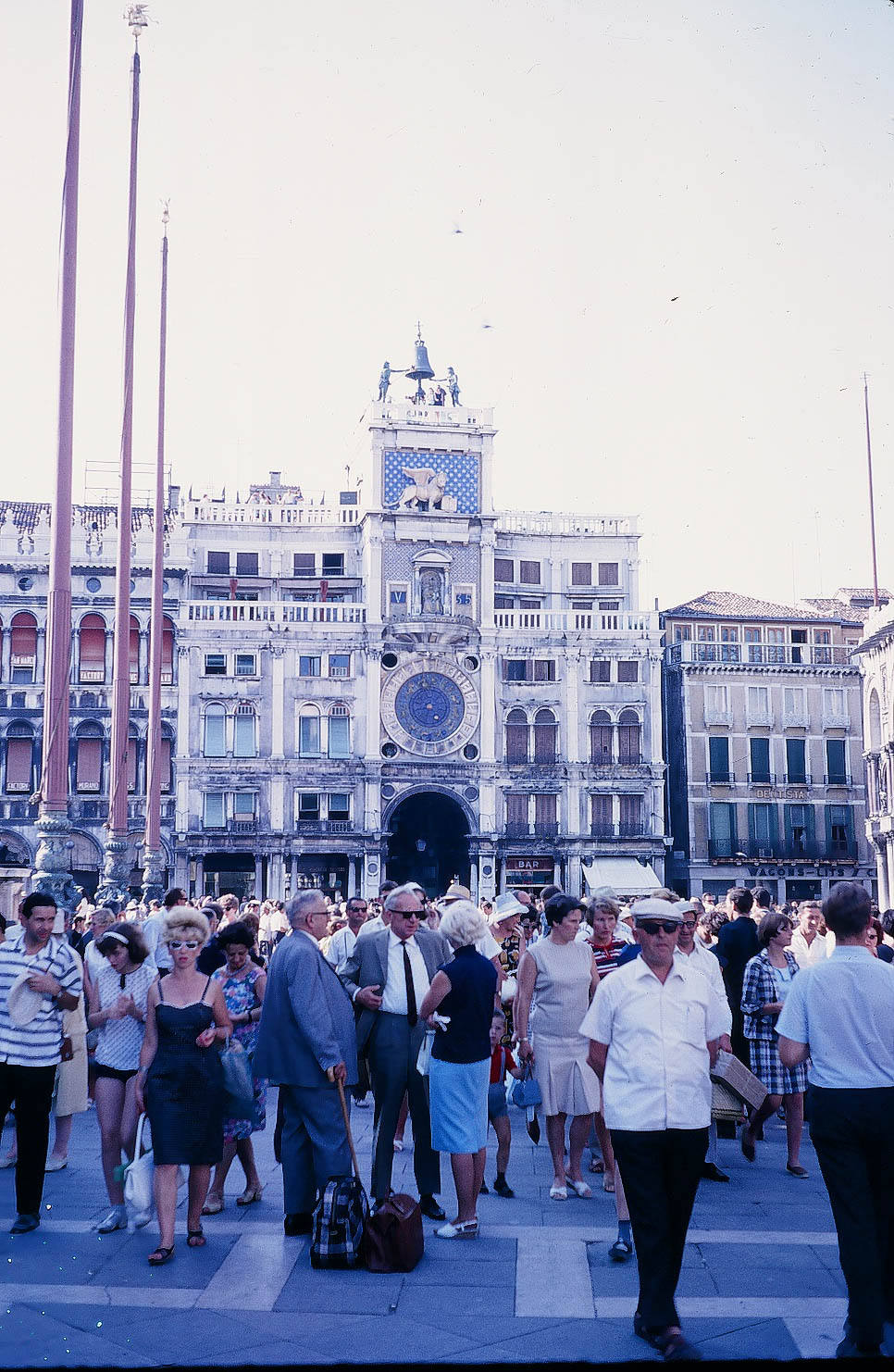
1966EuropeTrip-342 St. Marks Square, Venice, Italy
1966EuropeTrip-343 Venice.
1966EuropeTrip-344 Venice
1966EuropeTrip-345 Venice. Pat with lunch.
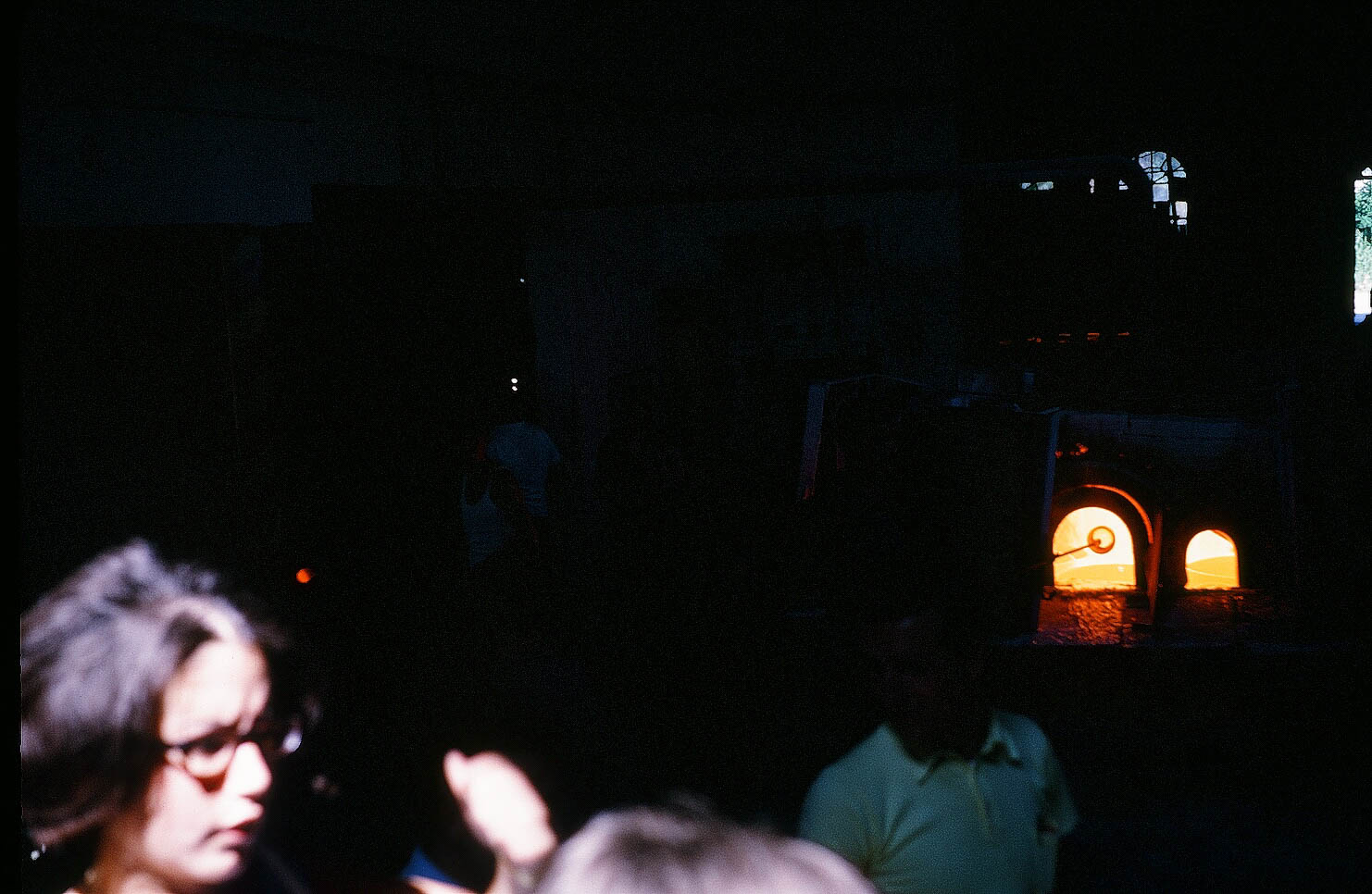
1966EuropeTrip-346 Glassblowing in Murano
1966EuropeTrip-347 Venice
1966EuropeTrip-349 Venice palace.
1966EuropeTrip-350 St. Marks Square, Venice
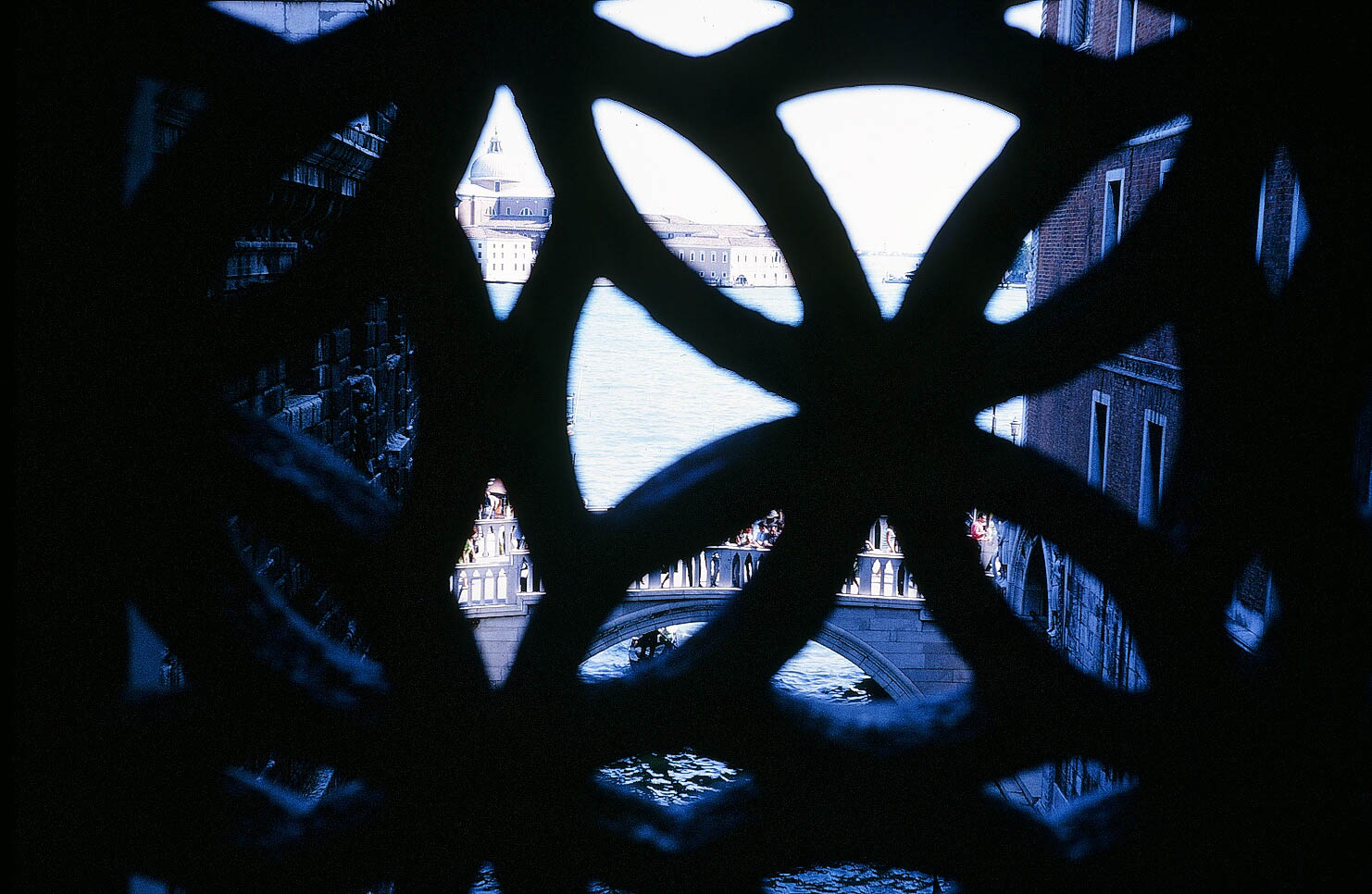
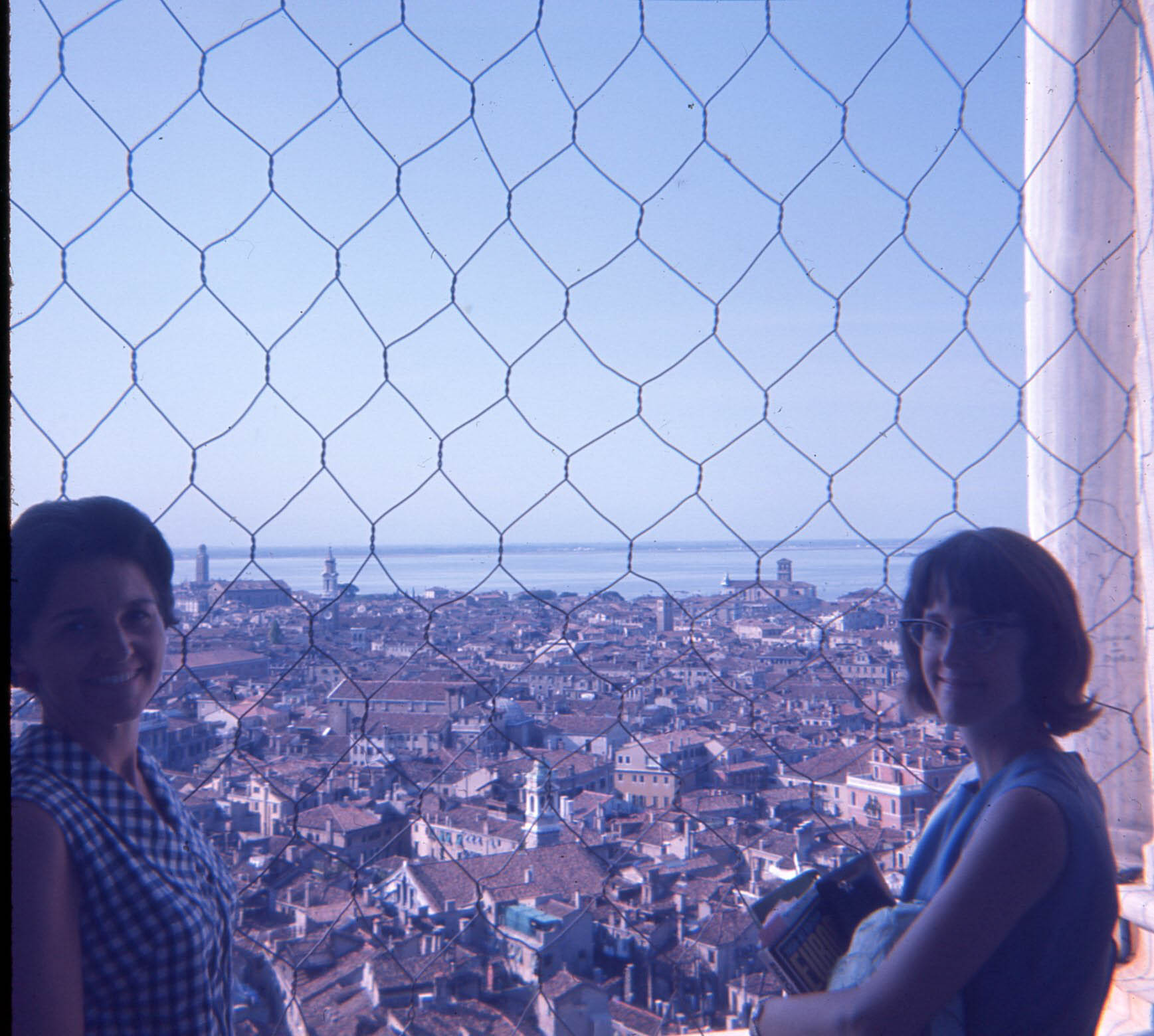
1966EuropeTrip-351 From Bridge of Sighs
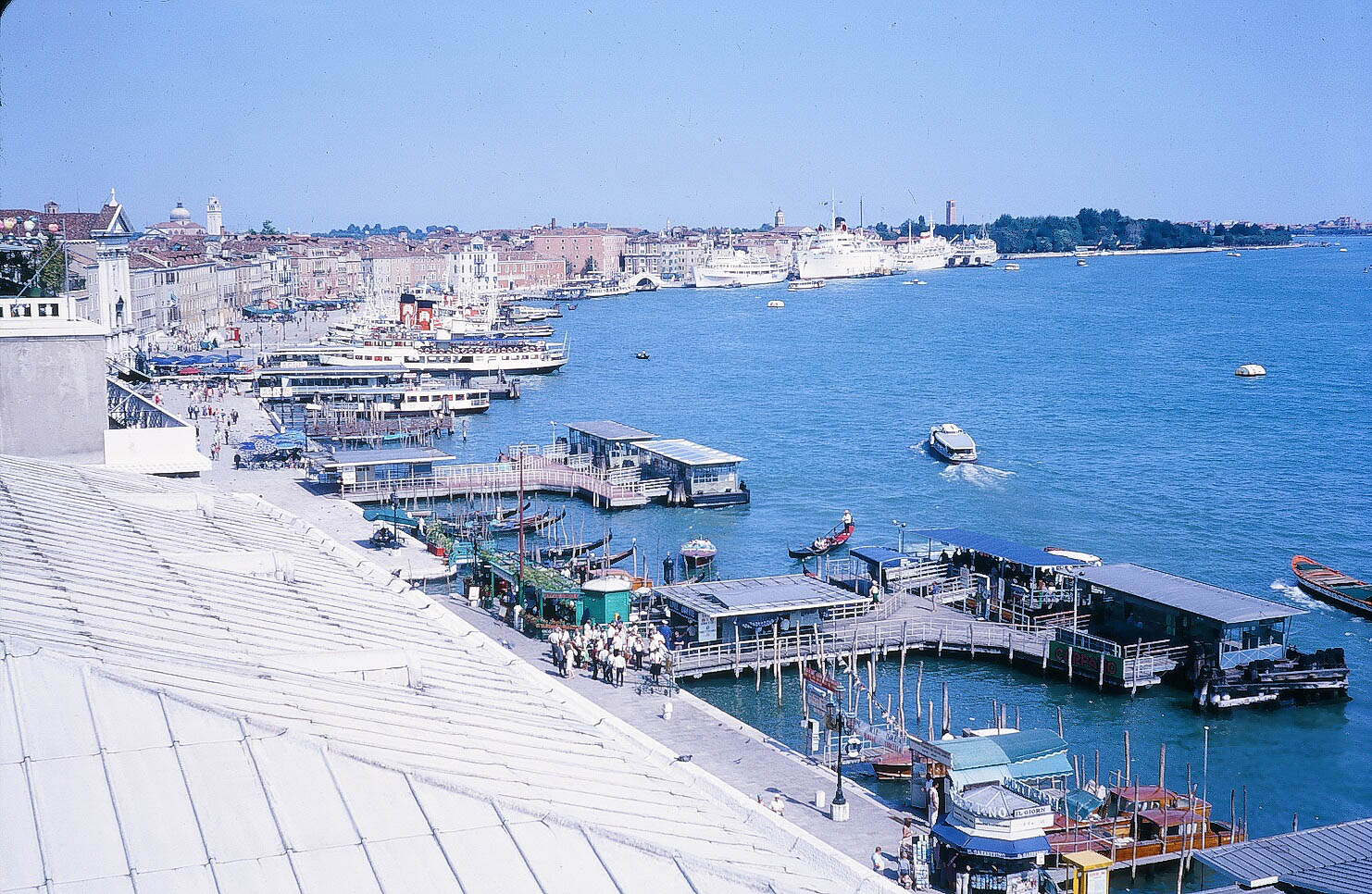
1966EuropeTrip-352 Venice
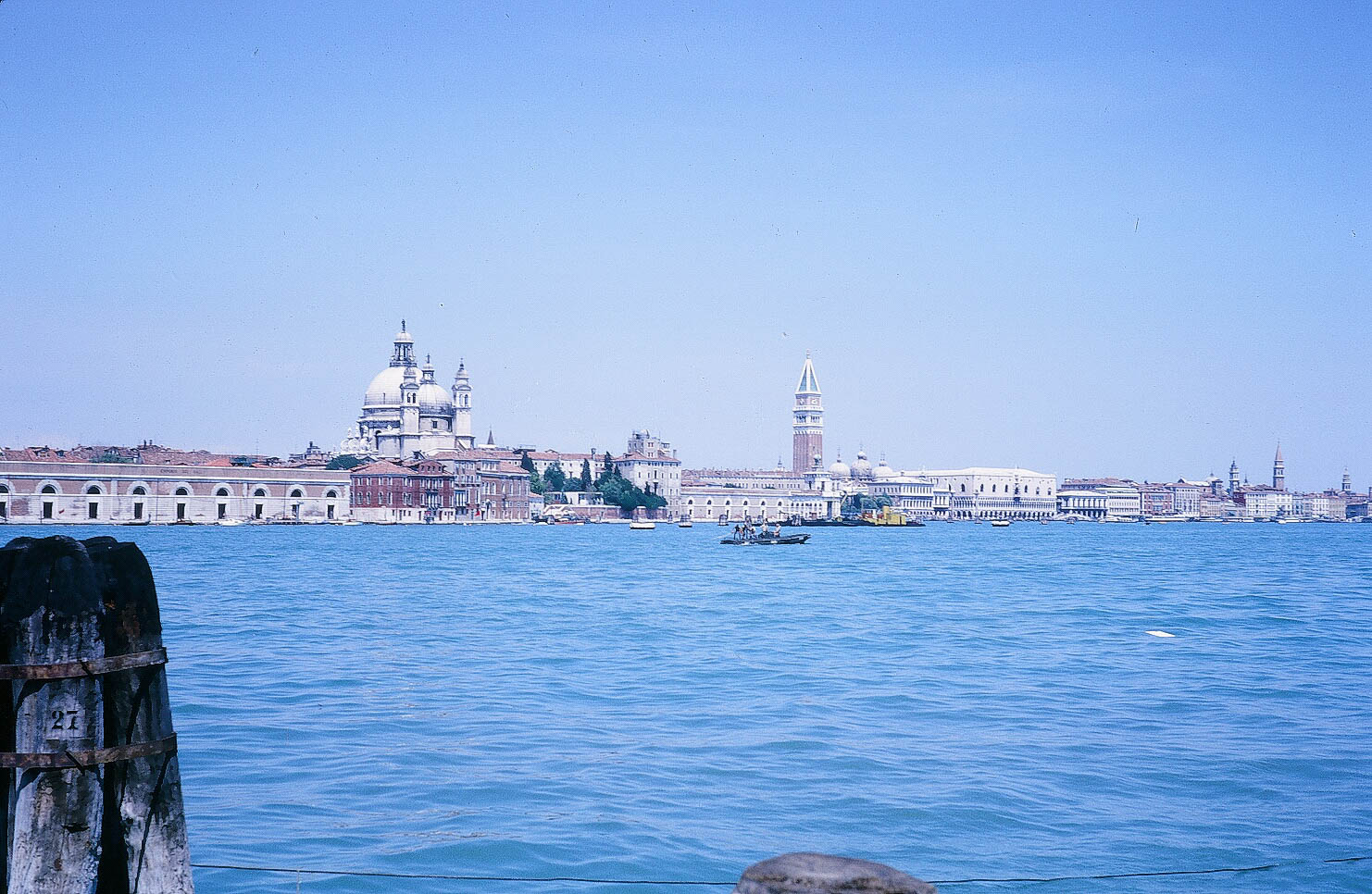
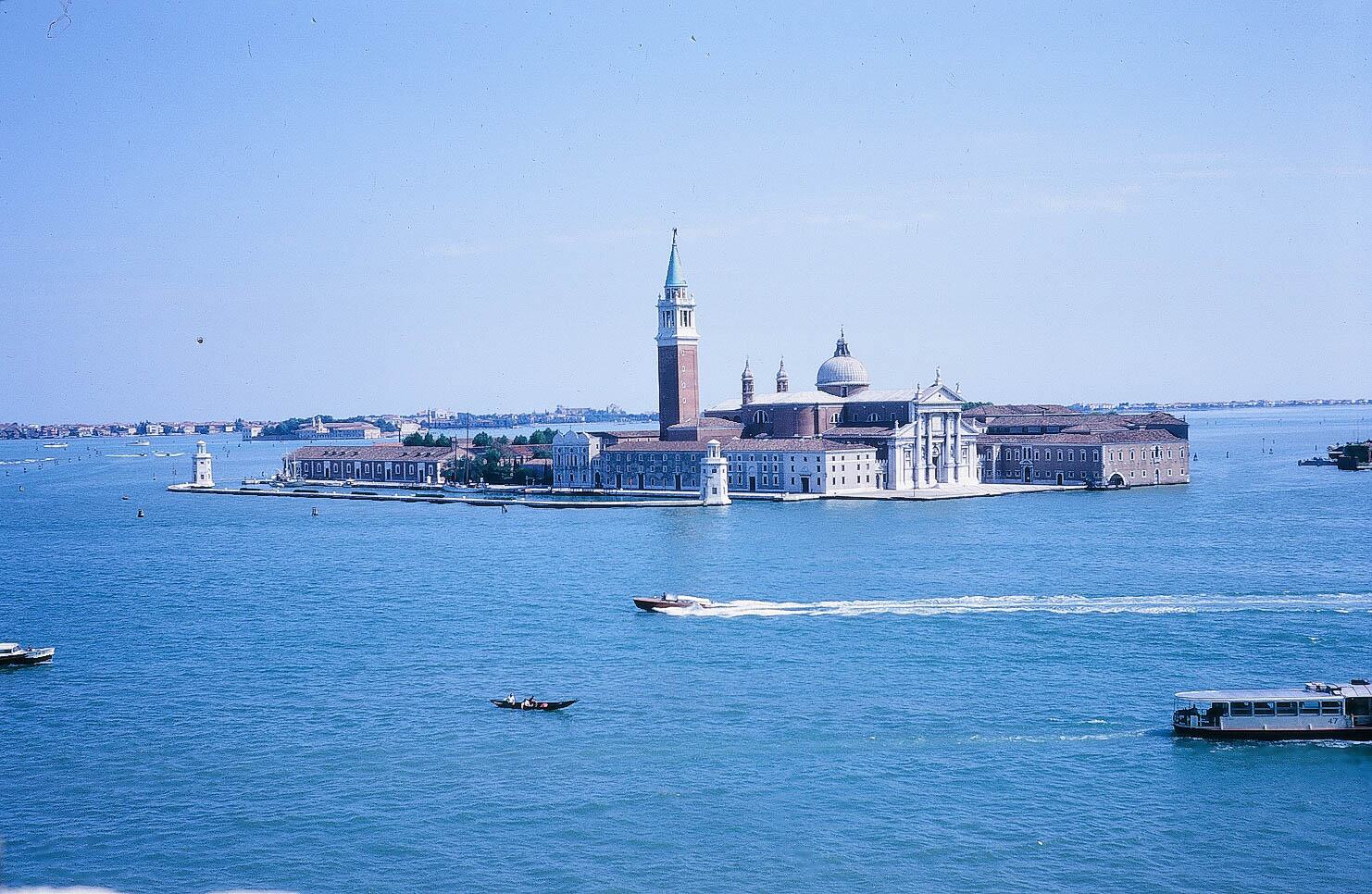
1966EuropeTrip-353 Island of San Giorgio Maggiore in the Venetian Lagoon. The 16th-century Benedictine church was designed by the renowned architect Andrea Palladio and built between 1566 and 1610.
The island is located across from St. Mark's Square and has been featured in a series of paintings by Monet.
1966EuropeTrip-355 Lois and Pat
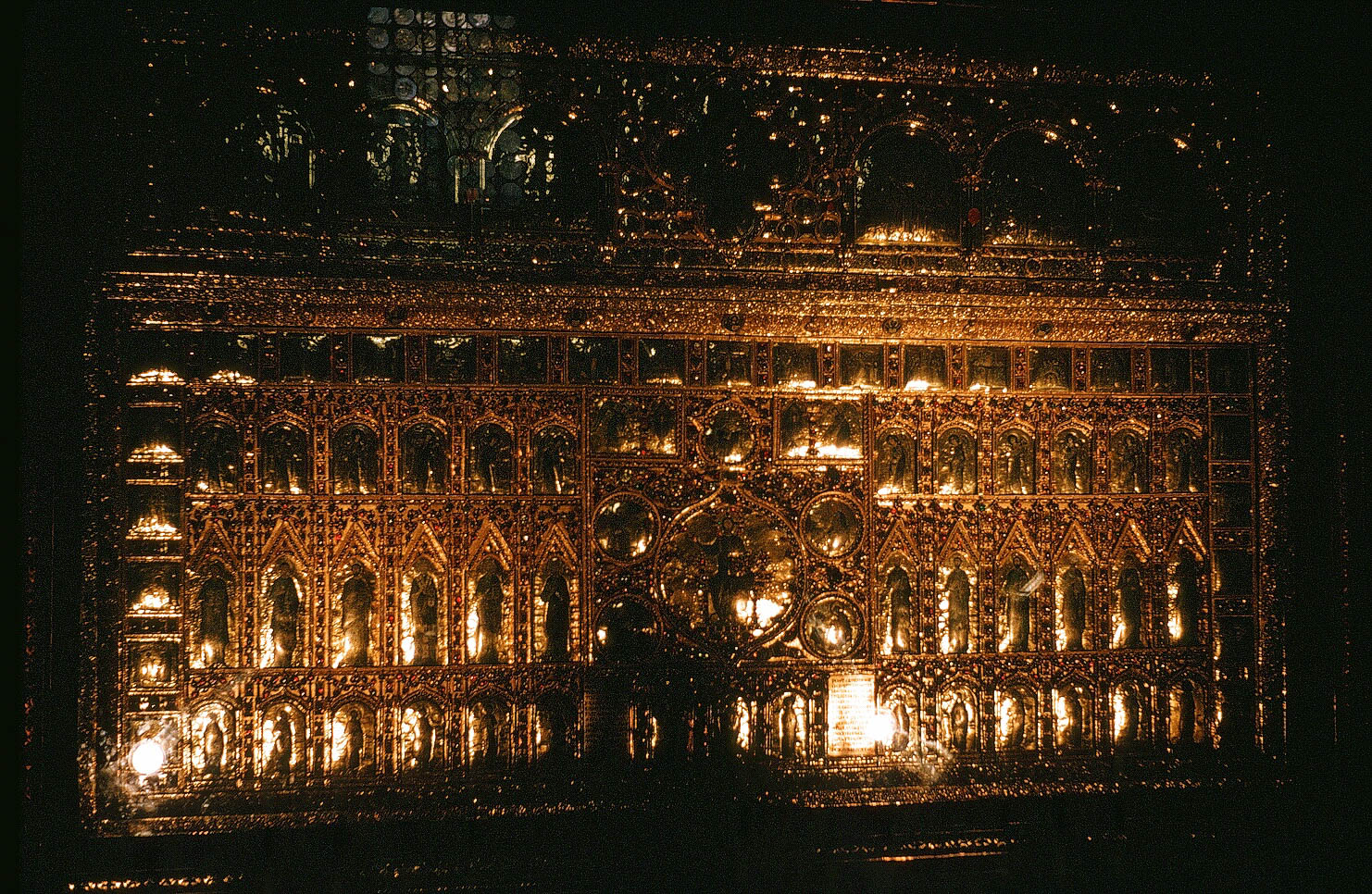
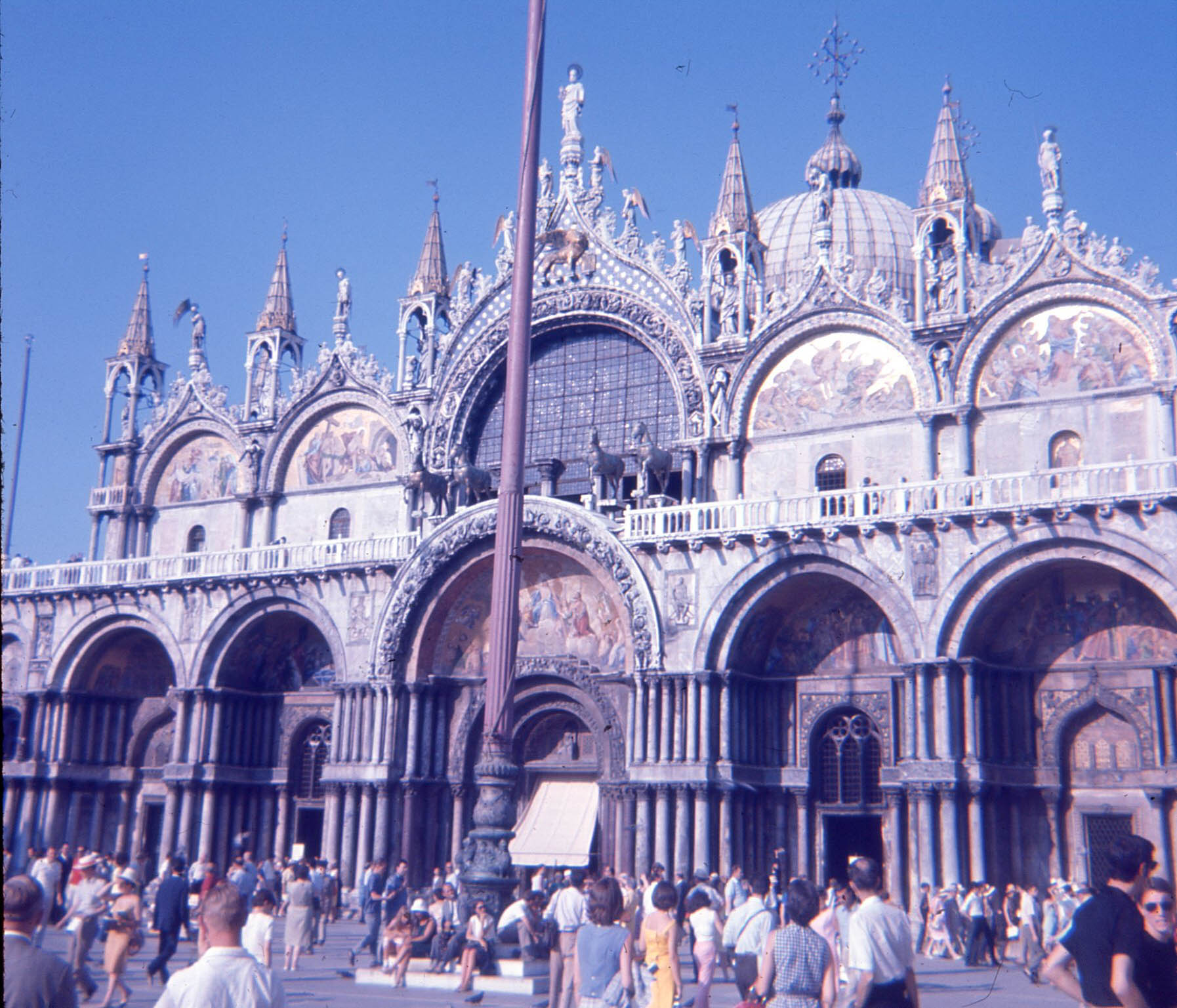
1966EuropeTrip-356 St. Mark's Basilica (Basilica di San Marco) in Venice, Italy, located in the iconic Piazza San Marco.
The basilica is renowned for its magnificent architecture, which uniquely blends Eastern and Western building styles.
1966EuropeTrip-357 Lois Winter
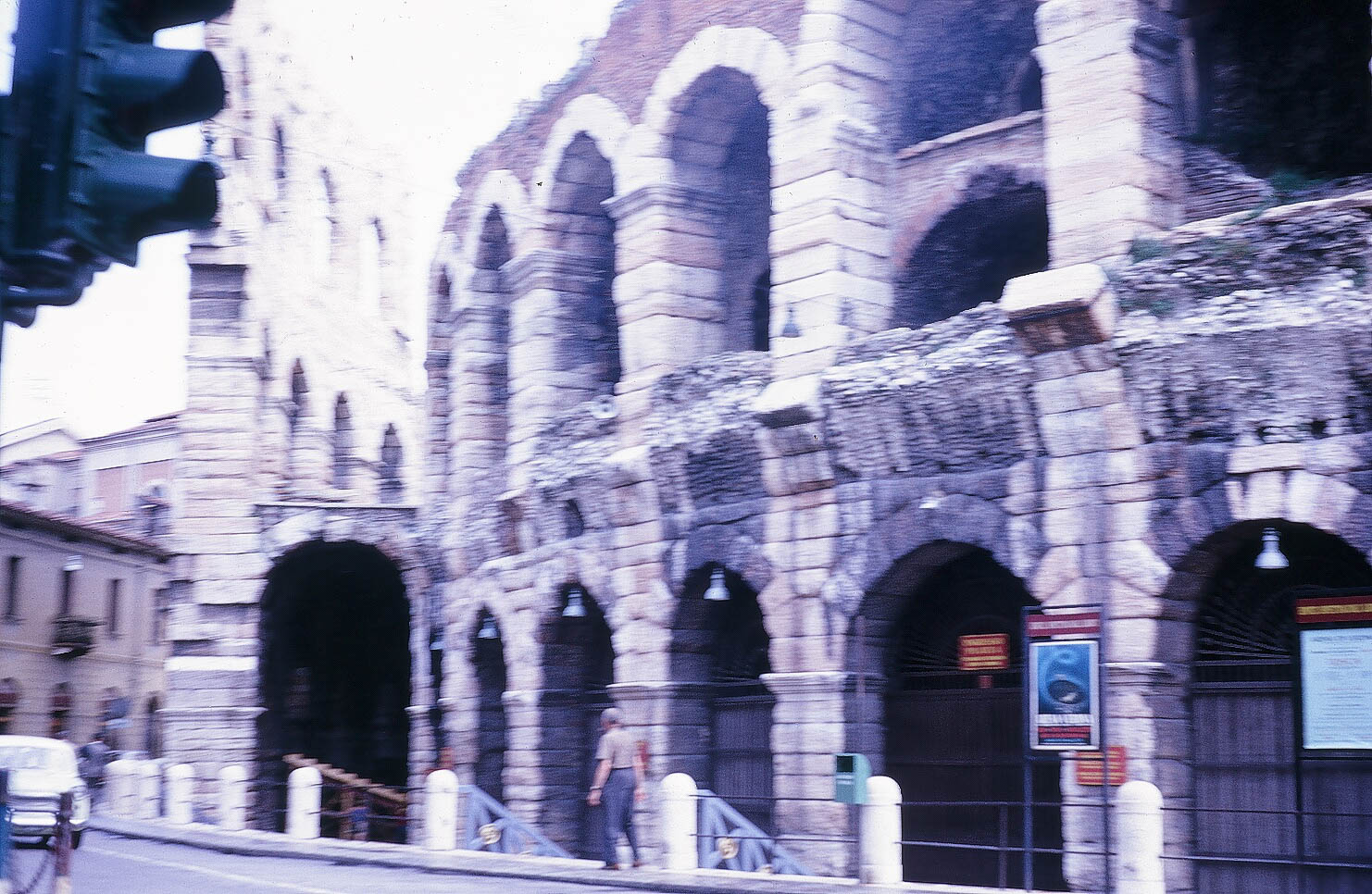
1966EuropeTrip-358 Colosseum in Verona I think.
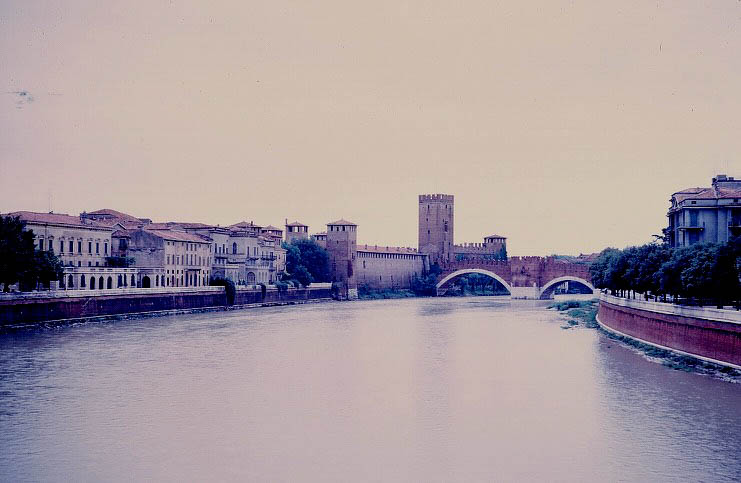
1966EuropeTrip-360 Ponte Scaligero (Scaliger Bridge) over the Adige River in Verona, Italy. Also known as the Castelvecchio Bridge, it is a fortified, asymmetrical arch bridge that was originally built in the 14th century as an escape route from the nearby Castelvecchio fortress.
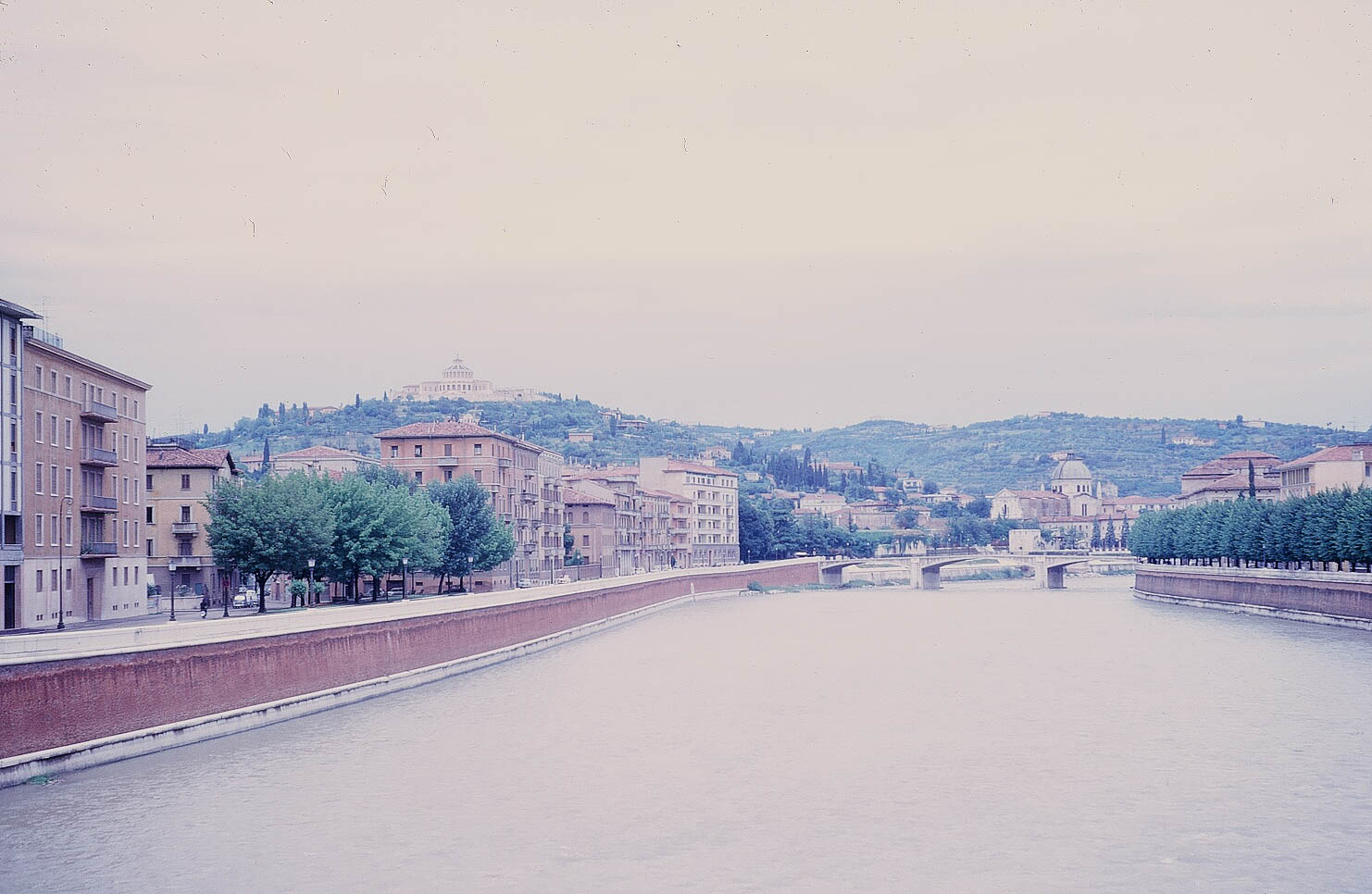
1966EuropeTrip-361 Adigo River, Verona, Italy.
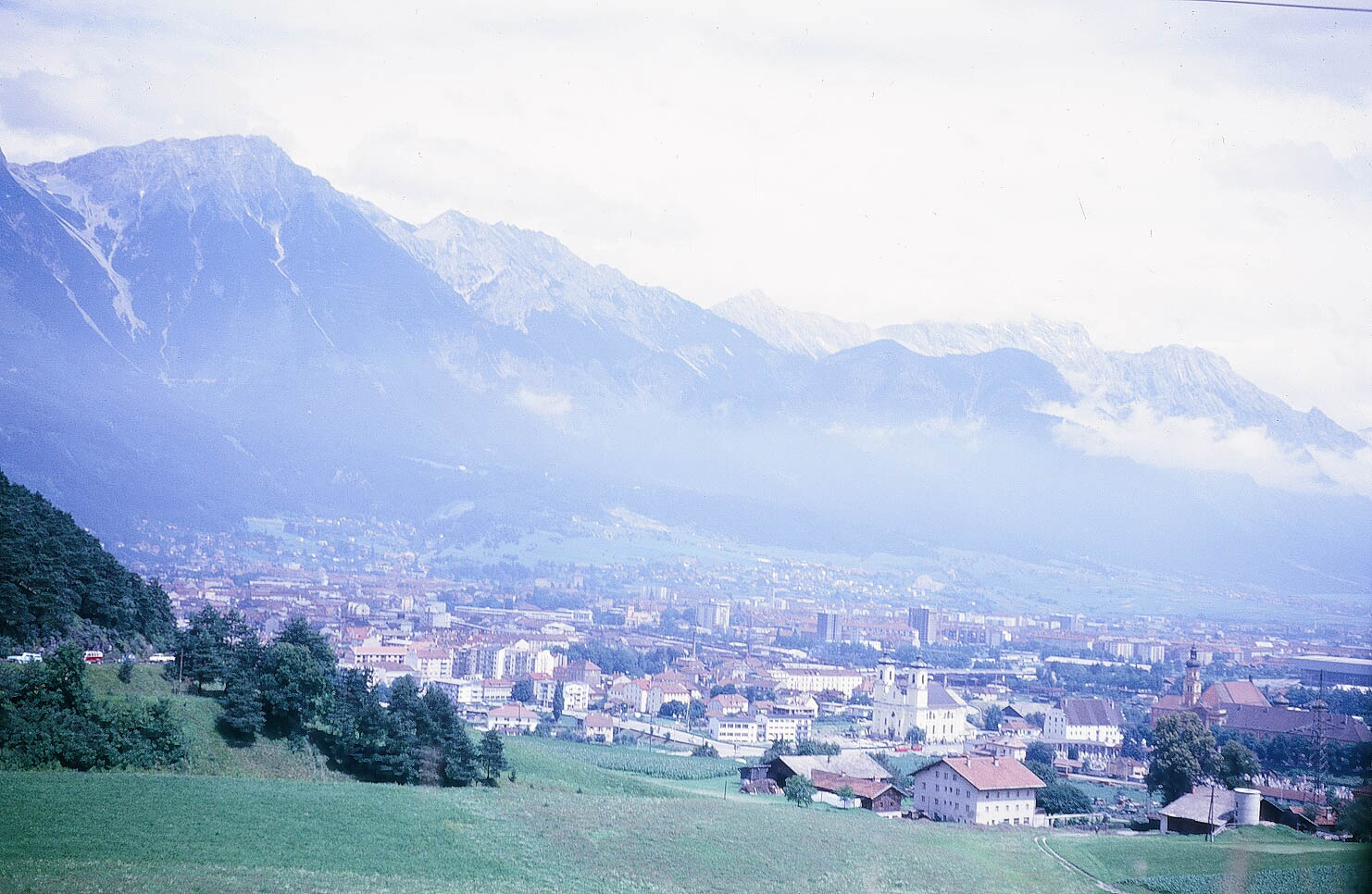
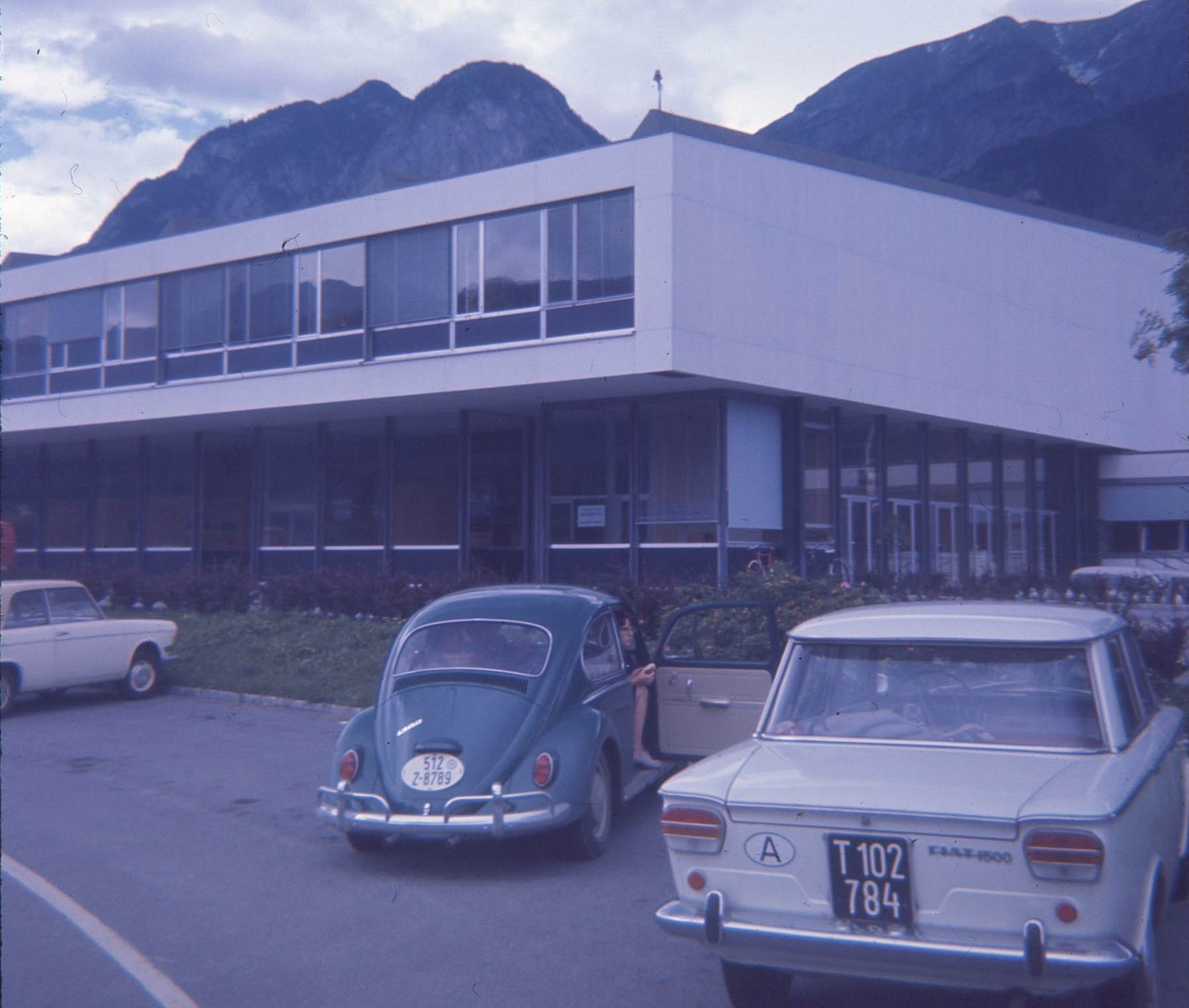
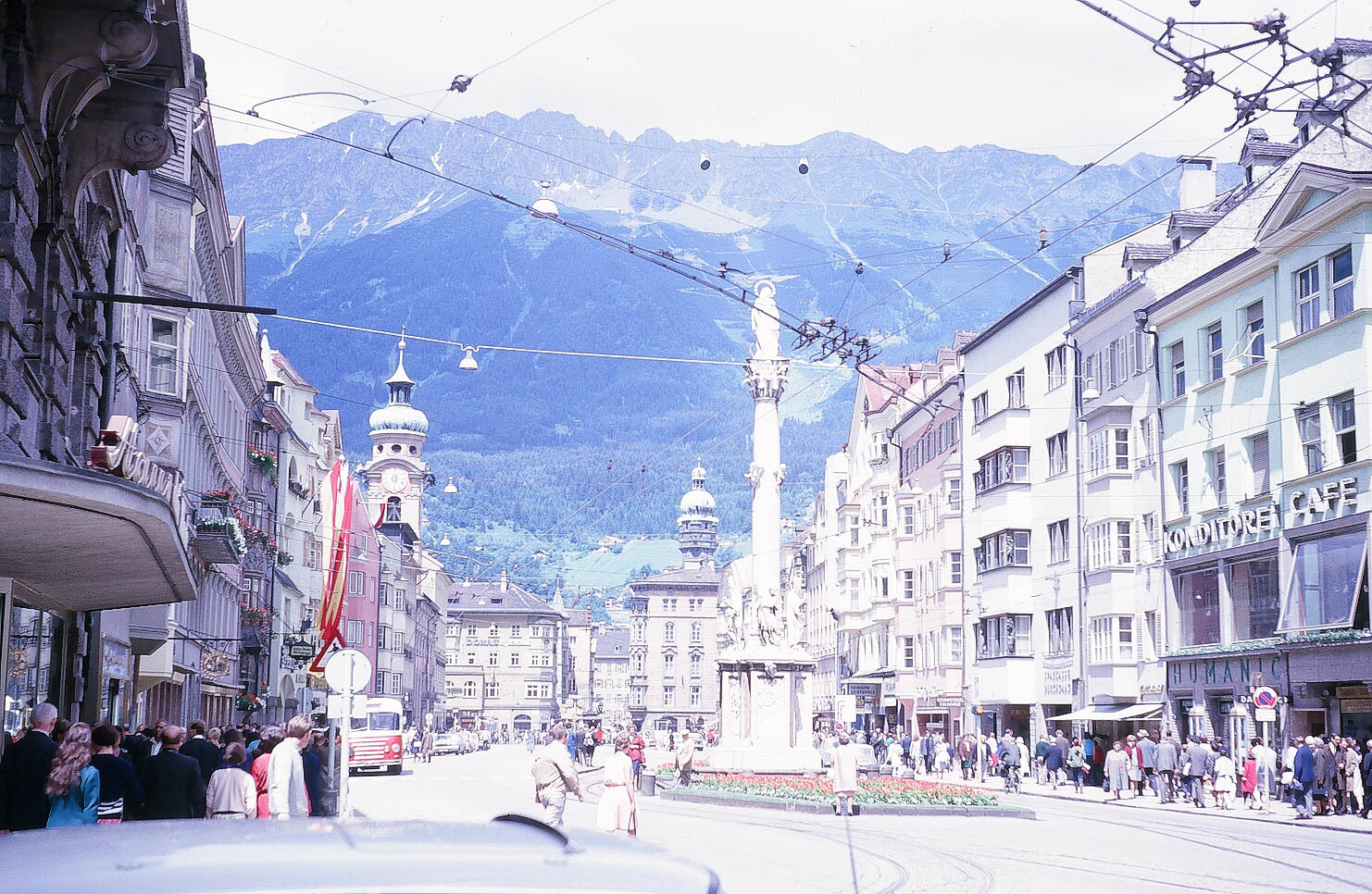
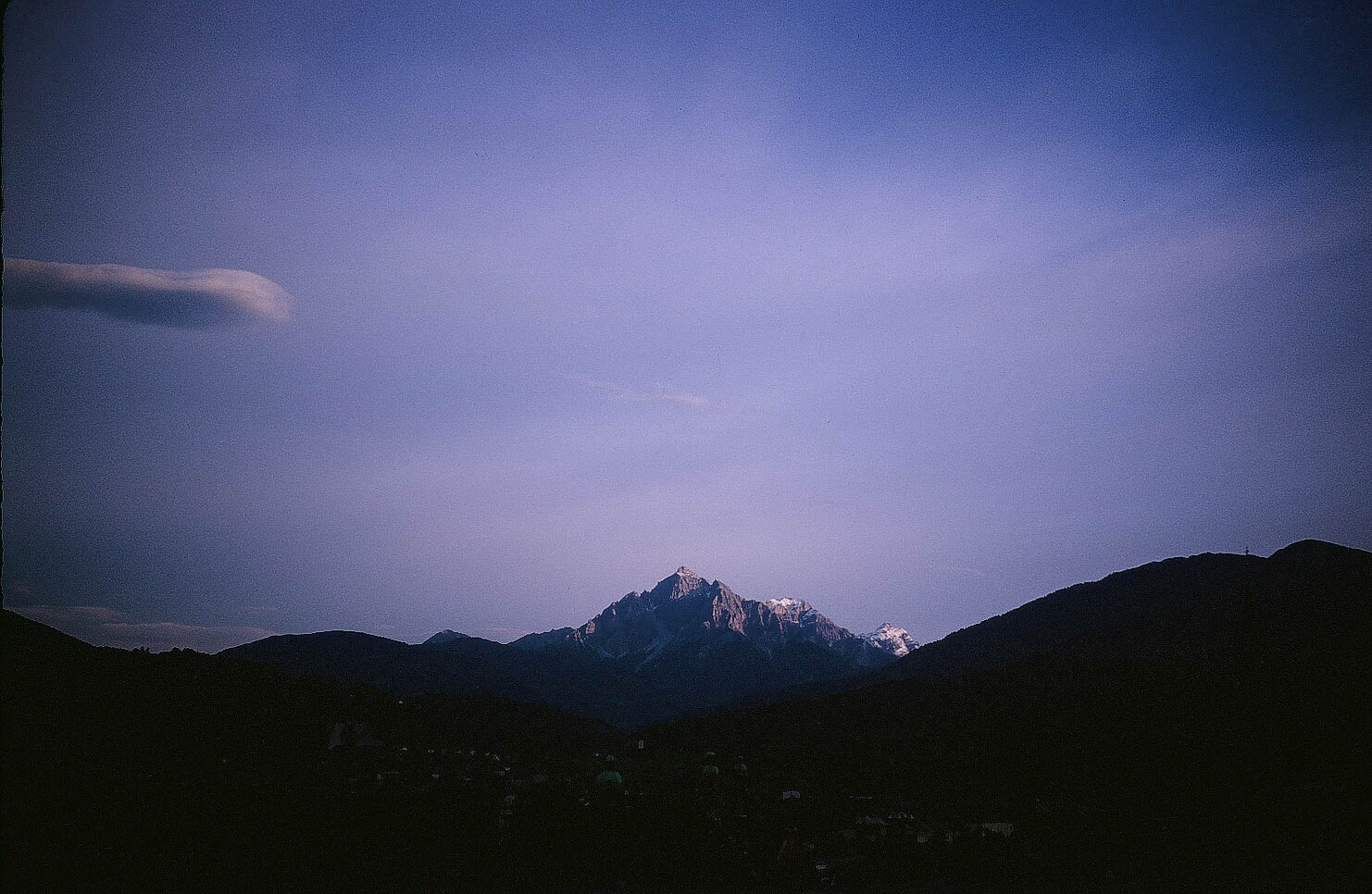
1966EuropeTrip-362 Innsbruck, Austria
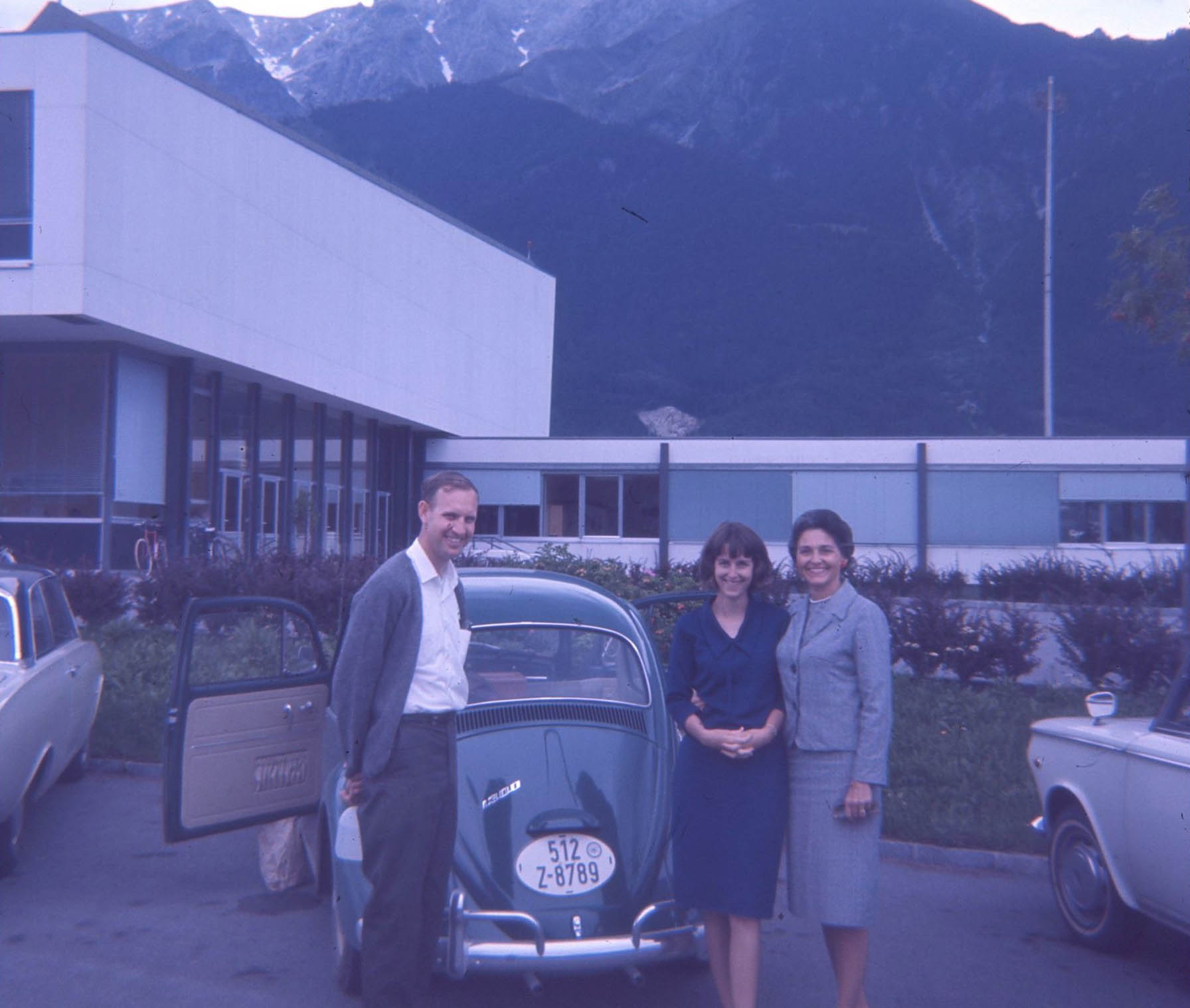
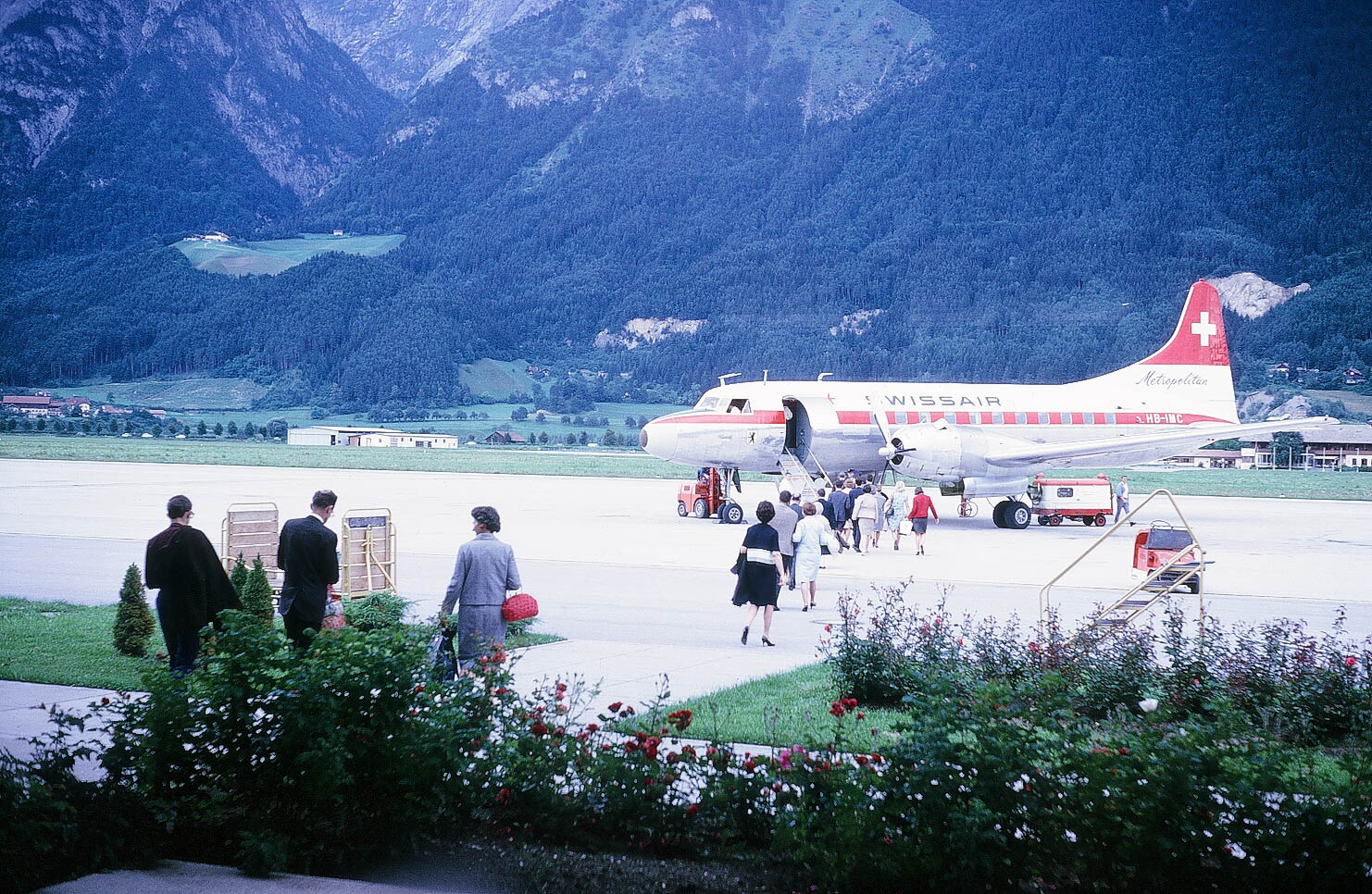
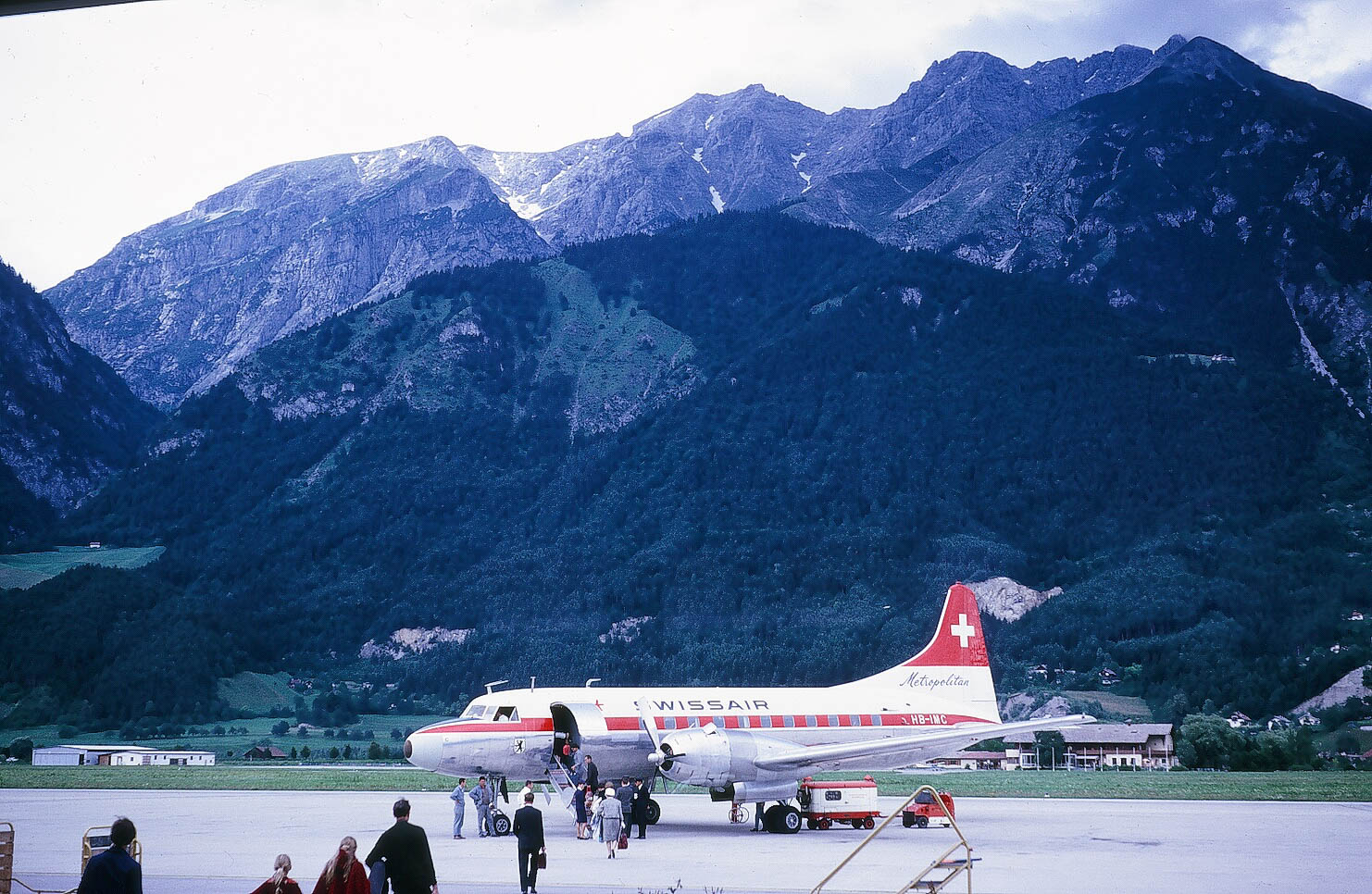
1966EuropeTrip-363 Innsbruck Airport. Saying goodbye to Lois and Bob.
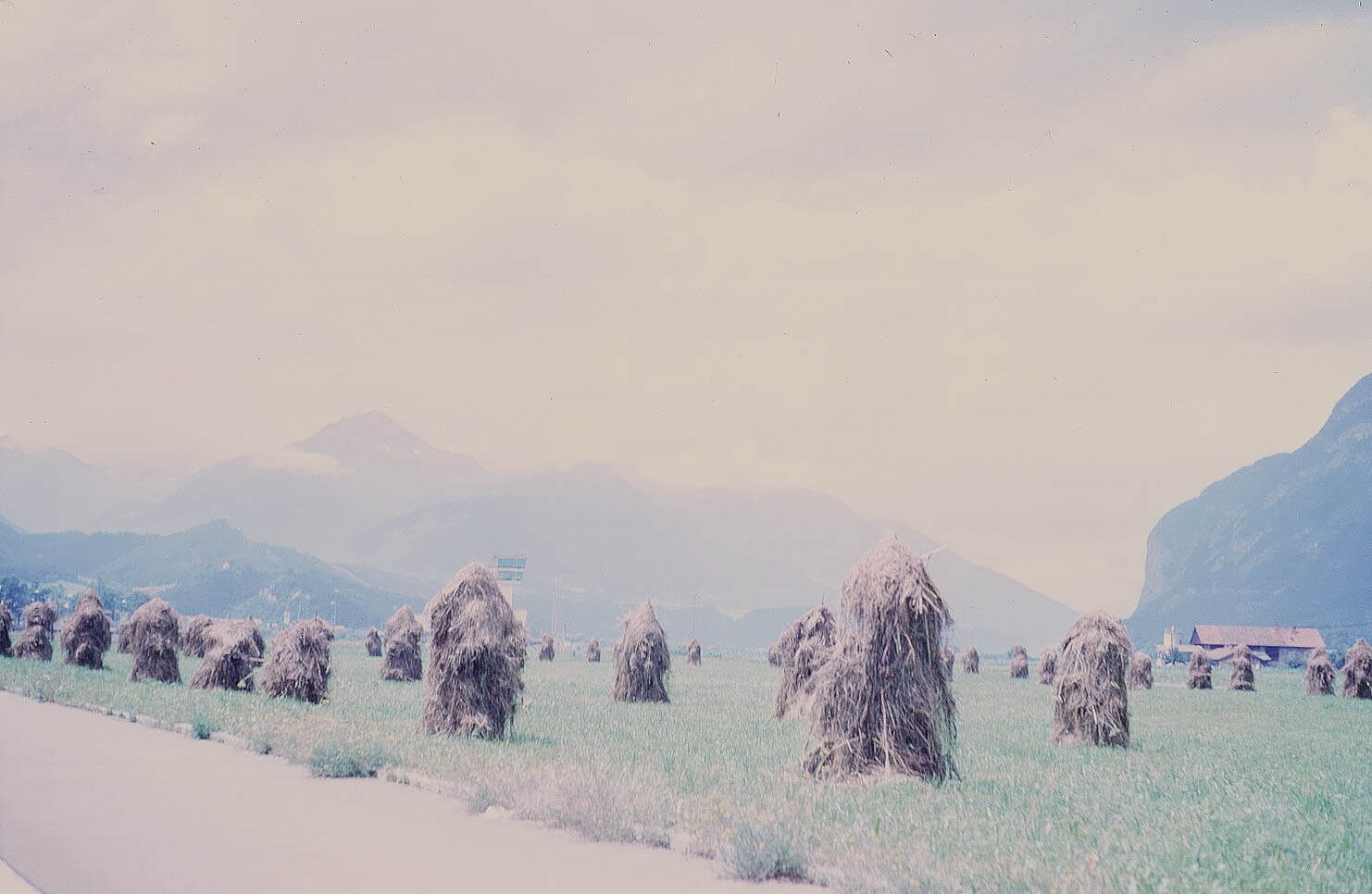
1966EuropeTrip-364 Austrian Haystacks.
1966EuropeTrip-365 Bob and Lois in foreground leaving Innsbruck.
1966EuropeTrip-366 Innsbruck Airport.
1966EuropeTrip-367 Lois and Bob on steps.
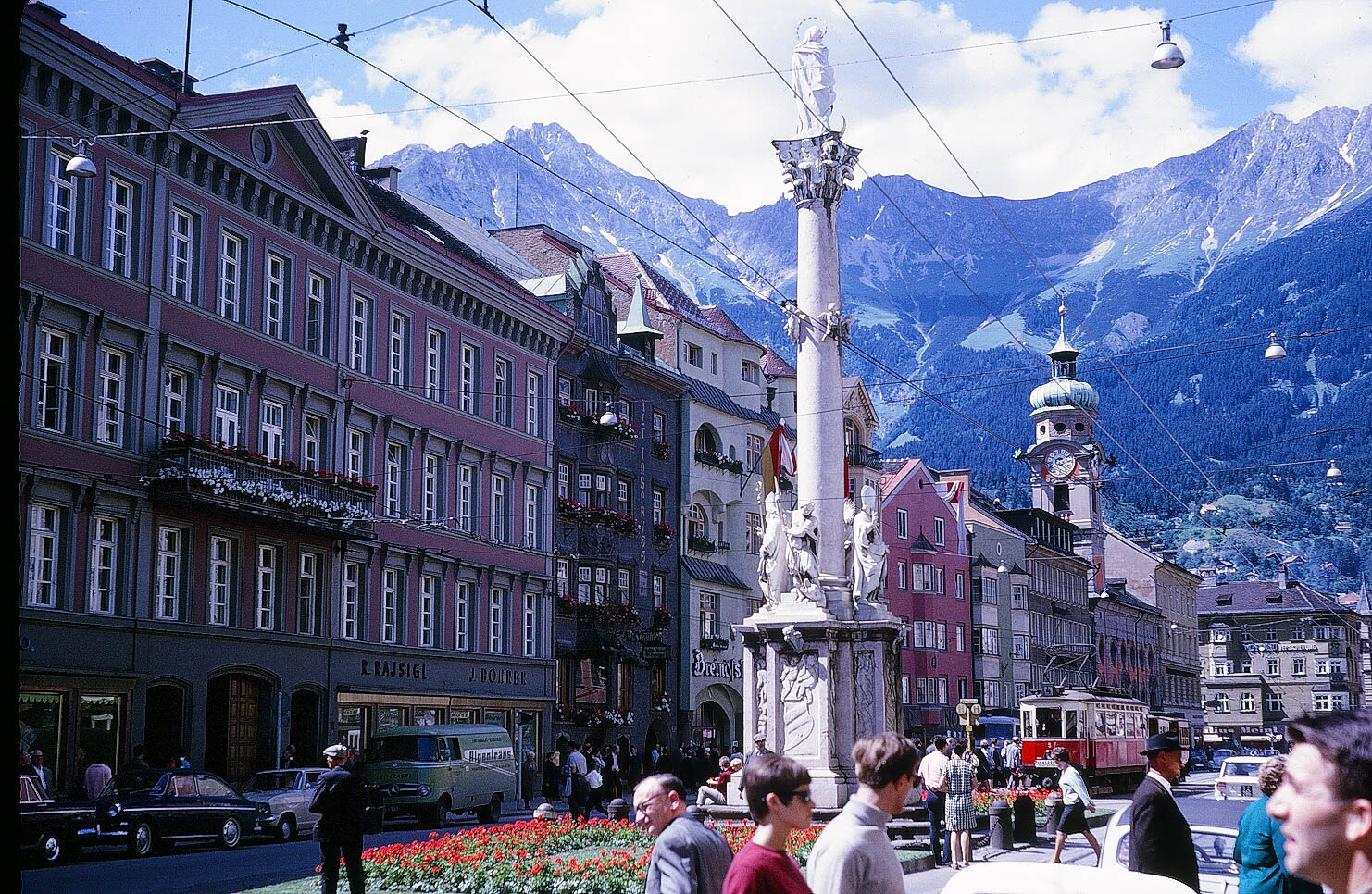
1966EuropeTrip-368 Innsbruck, Austria
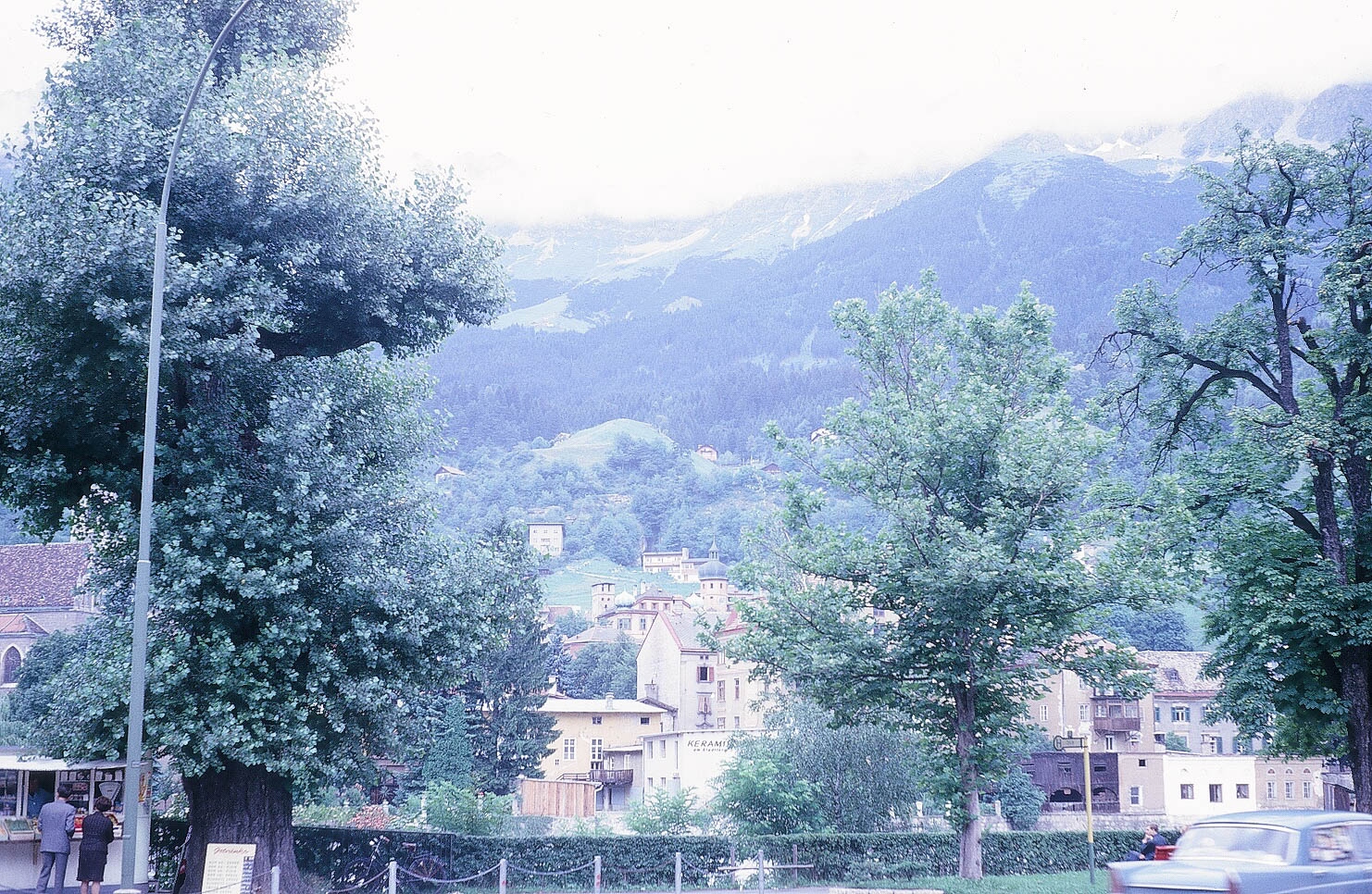
1966EuropeTrip-369 Insbruck, Austria
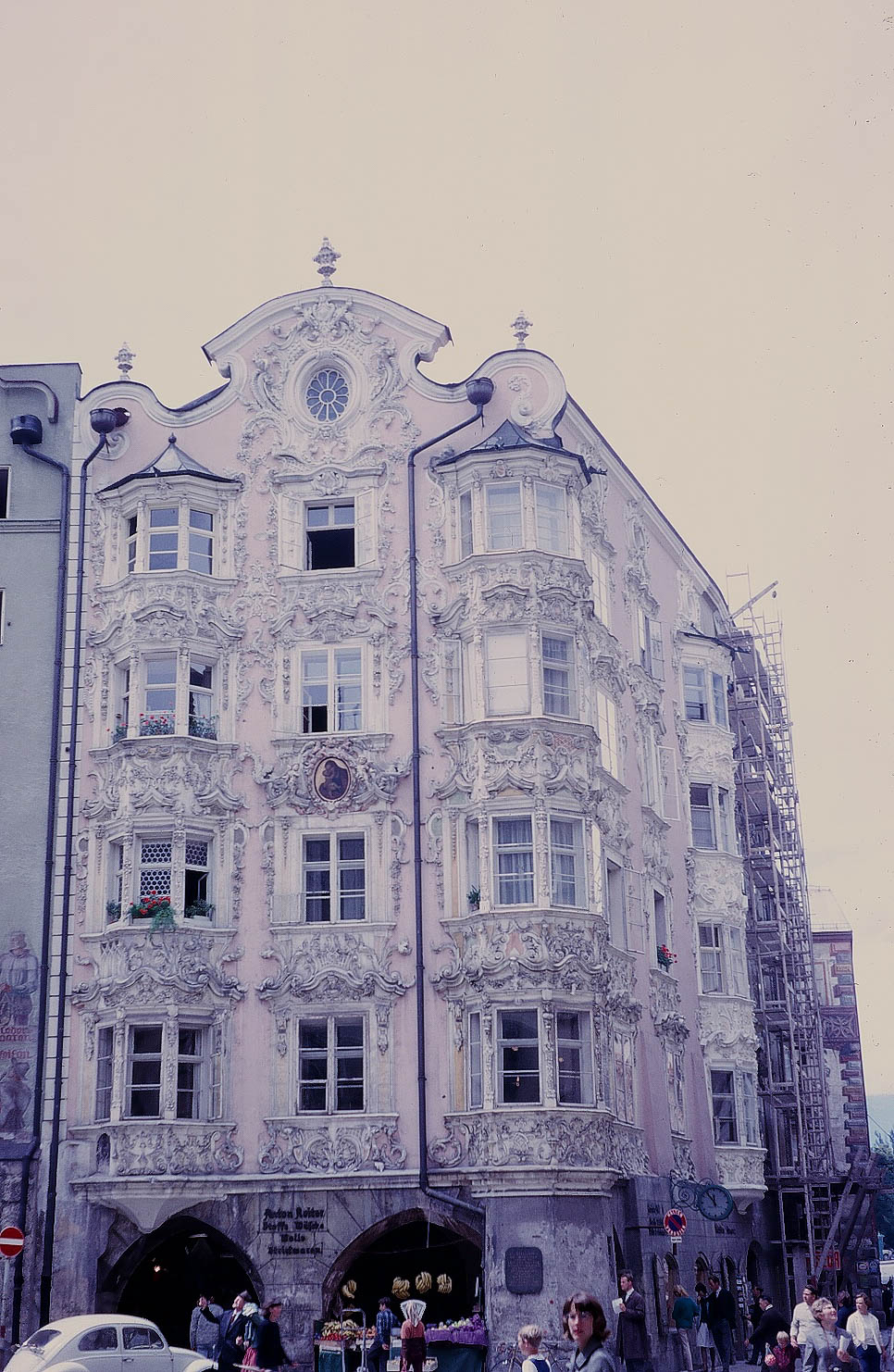
1966EuropeTrip-370 The Helbling House (Helblinghaus), a historic and architecturally significant building in the Old Town of Innsbruck, Austria.
The building is famous for its opulent Rococo stucco facade, which features ornate bows, window frames, masks, sculptures, and shells.
Originally constructed as a typical townhouse in the 15th century with Gothic architectural styles, the facade was transformed in 1732 by the stucco mason Anton Gigl.
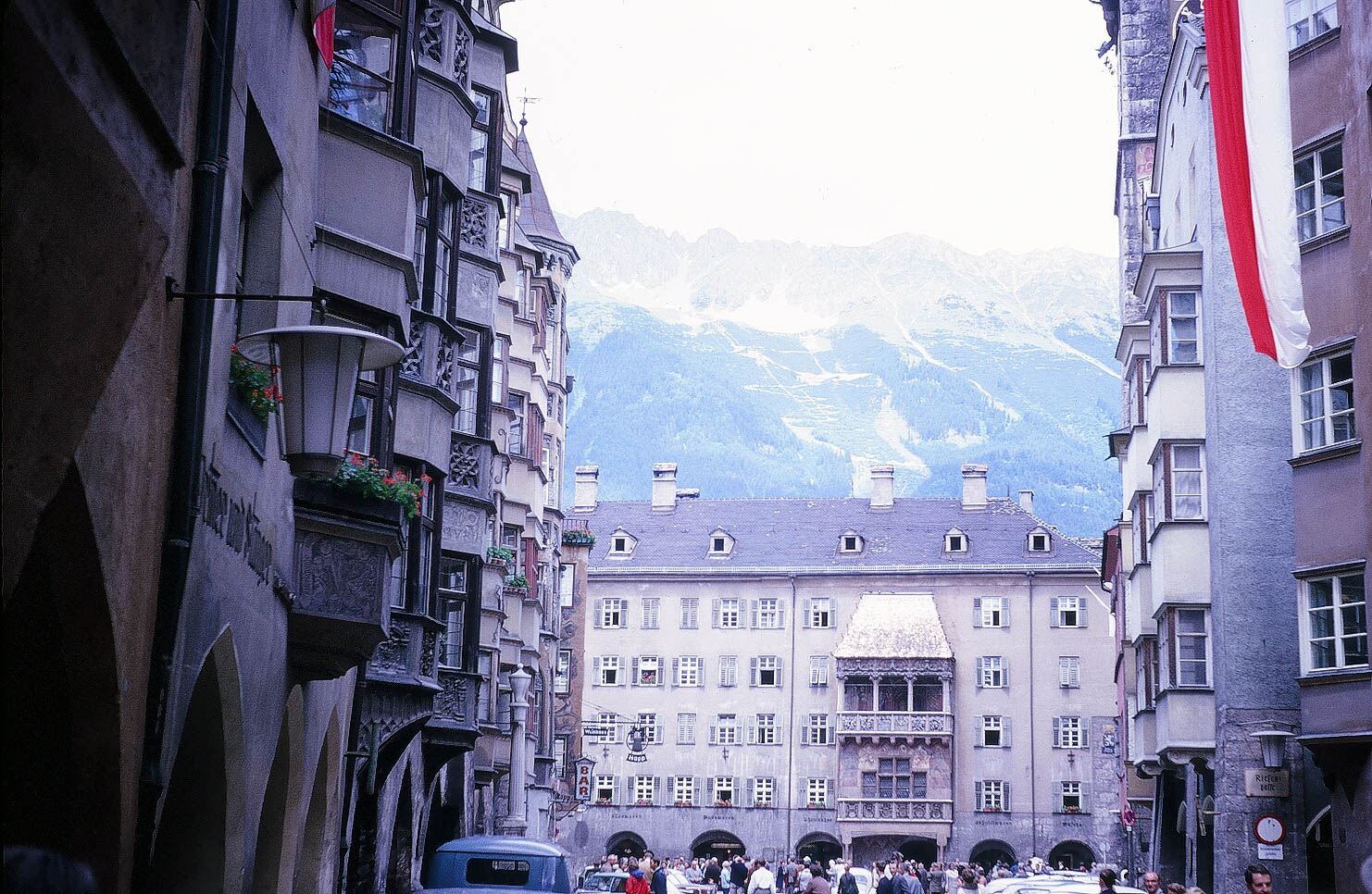
1966EuropeTrip-371 Sfamous Goldenes Dachl (Golden Roof) in the Old Town of Innsbruck, Austria, with the Alps in the background.
The landmark structure is considered the city's most famous symbol.
It features a late Gothic oriel (balcony) covered with 2,657 fire-gilded copper tiles.
The roof was commissioned by Emperor Maximilian I around 1500 to mark his wedding to Bianca Maria Sforza.
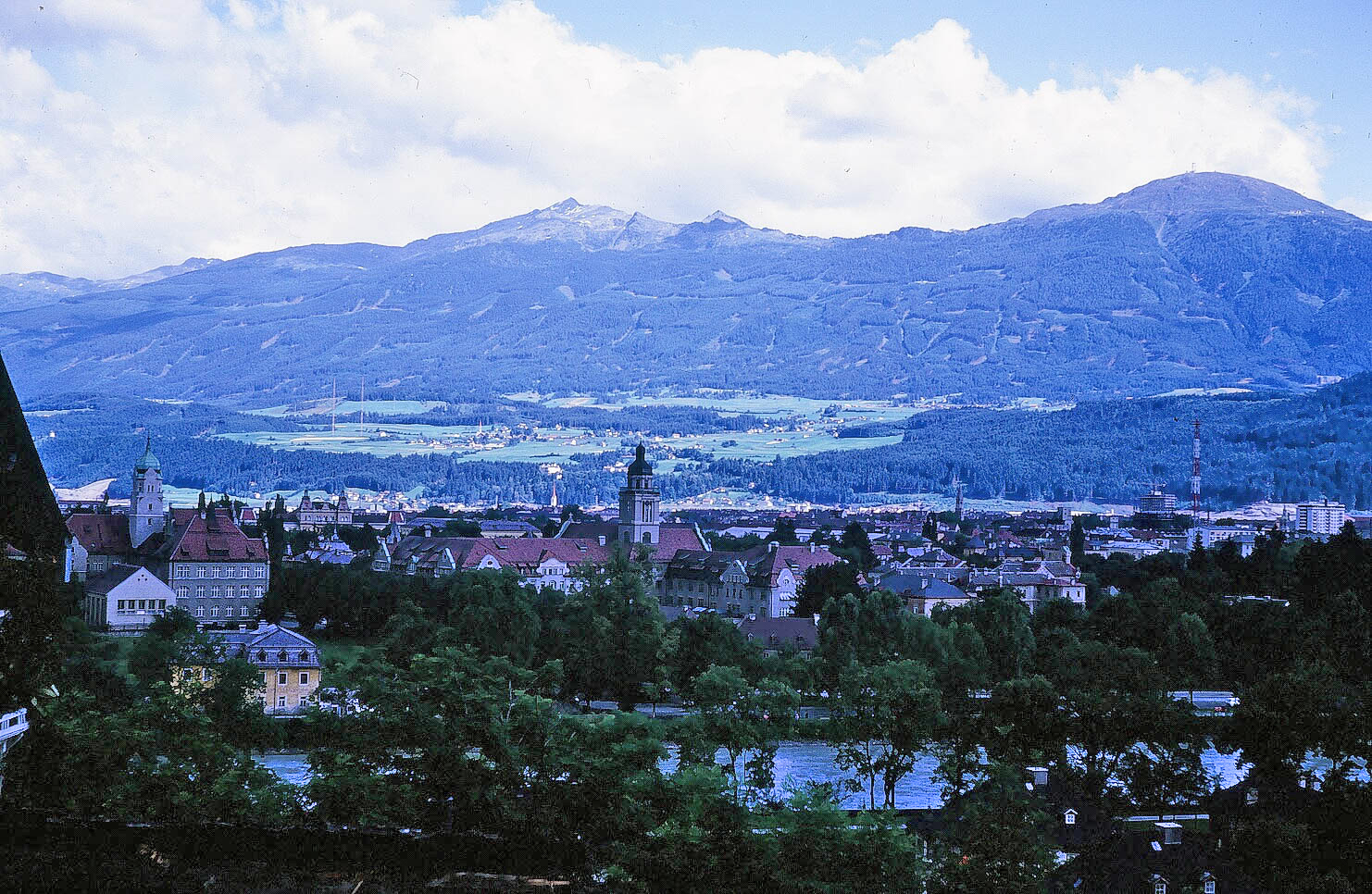
1966EuropeTrip-372 Innsbruck
1966EuropeTrip-374 Innsbruck.
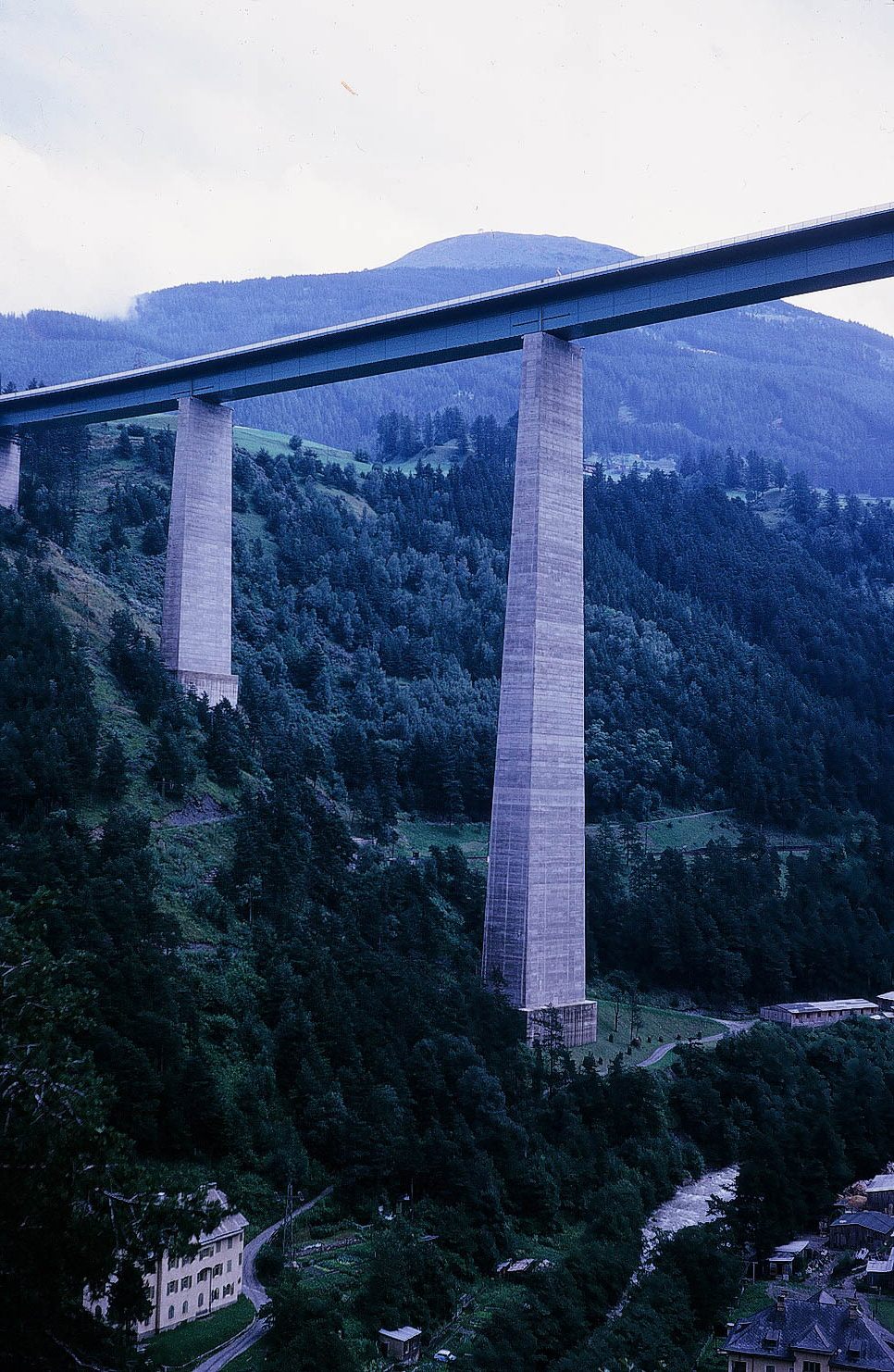
1966EuropeTrip-403 Europabrücke (Europa Bridge) located in Tyrol, Austria, near Innsbruck.
1966EuropeTrip-375 Innsbruck
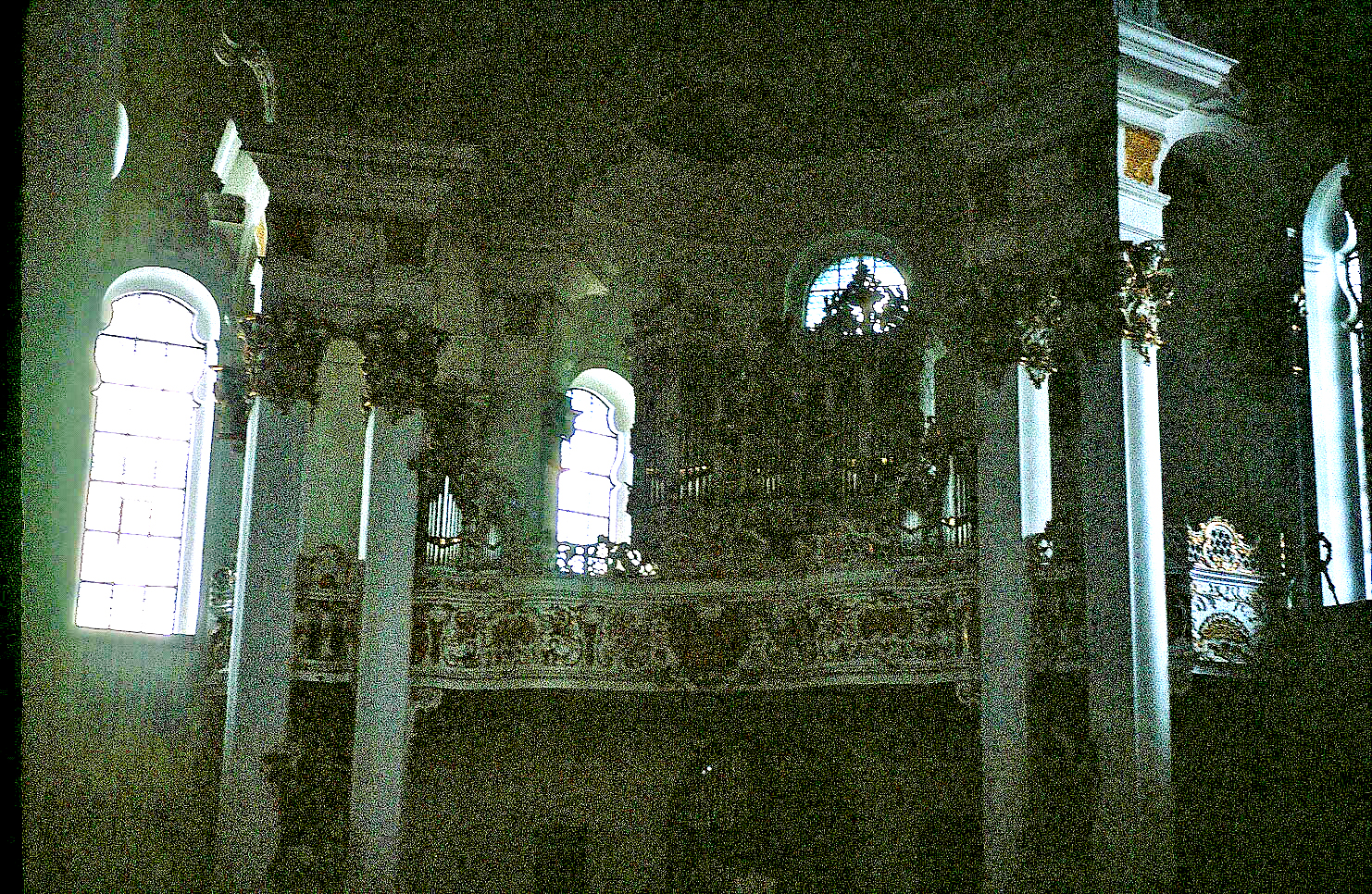
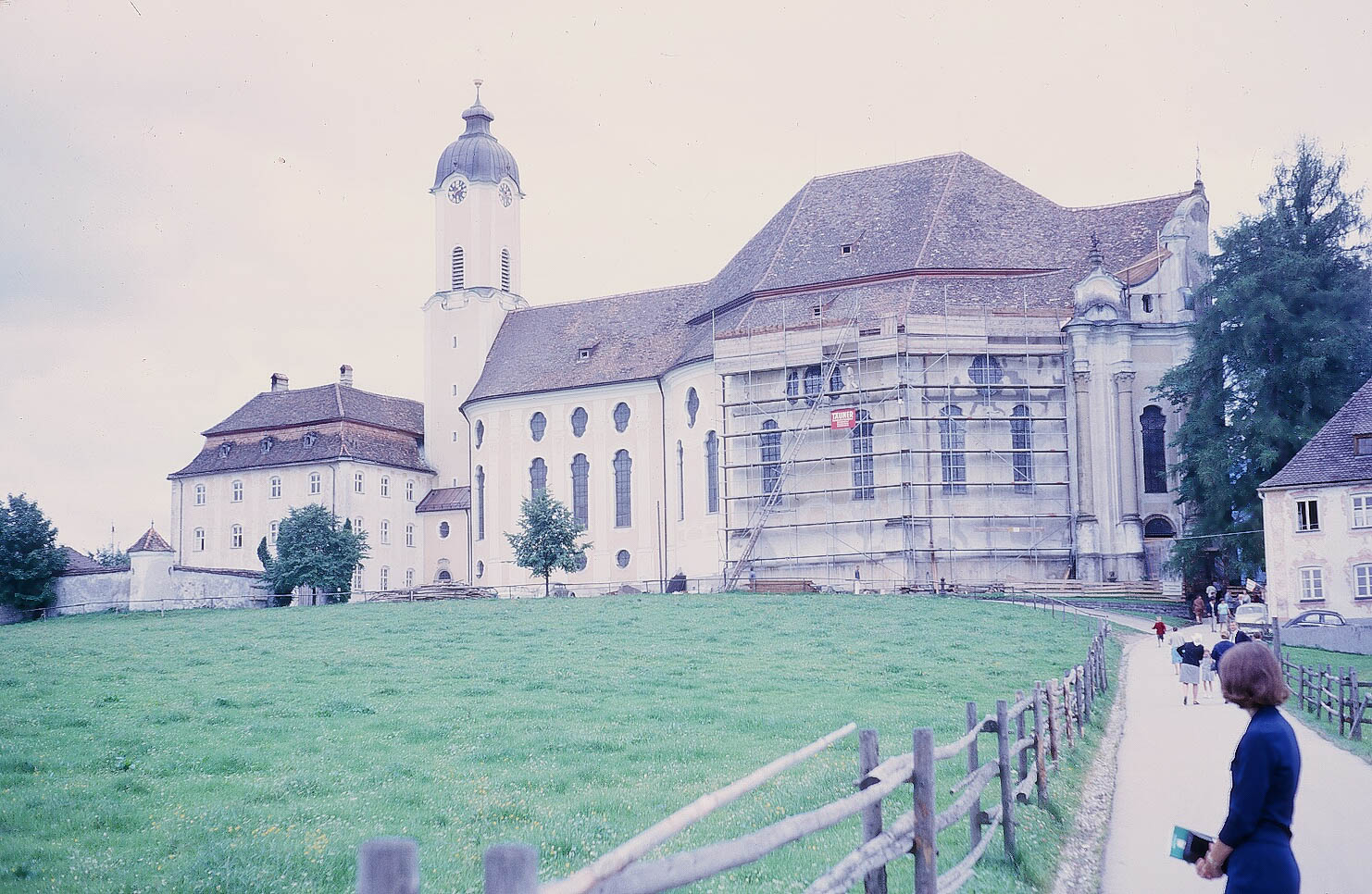
1966EuropeTrip-376 The Pilgrimage Church of Wies (Wieskirche), a famous Rococo church in Bavaria, Germany, known for its stunning white and gold interior. Germany.
1966EuropeTrip-377 the Pilgrimage Church of Wies (Wieskirche), a famous Rococo church in Bavaria, Germany, known for its stunning white and gold interior.
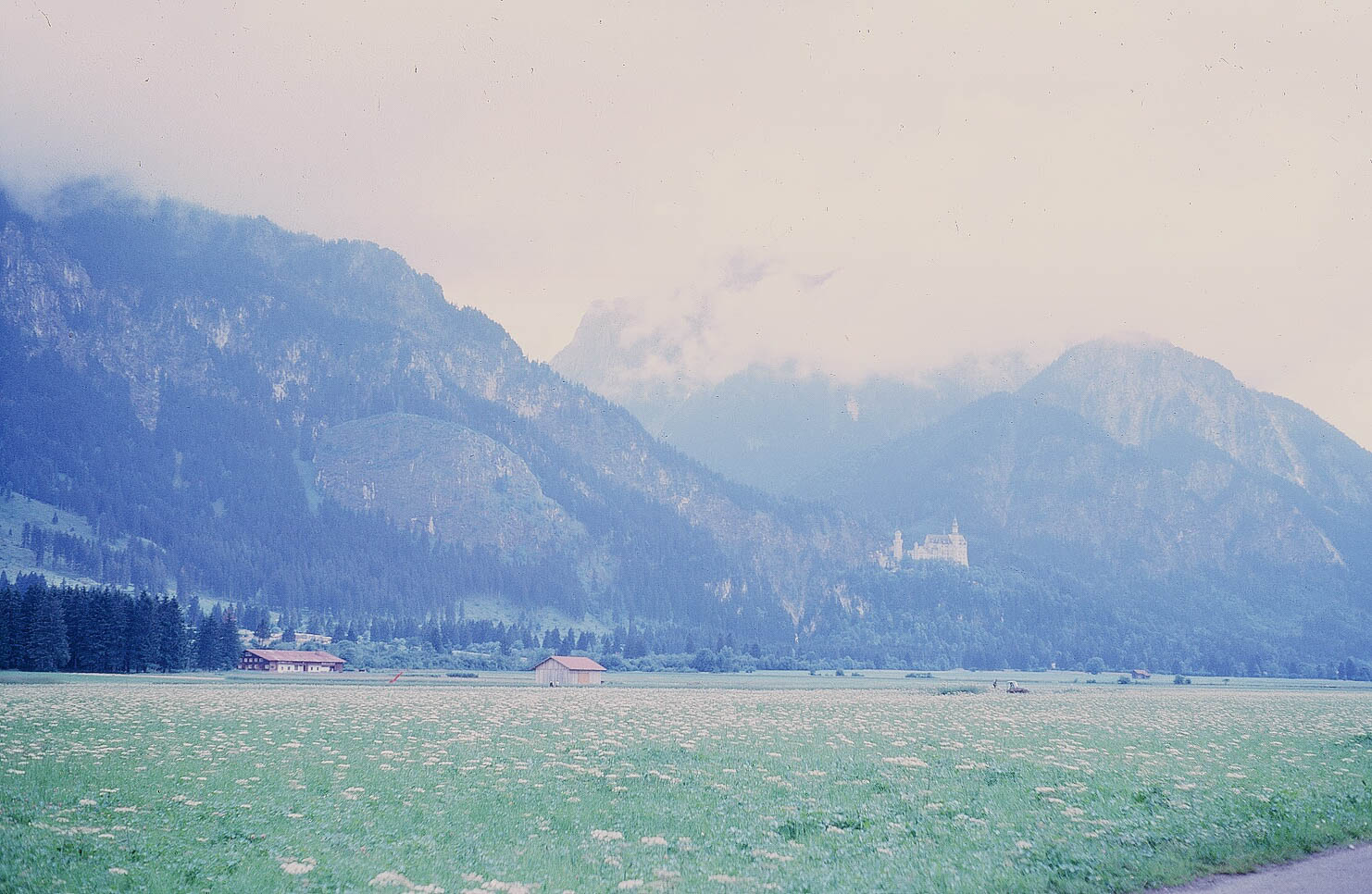
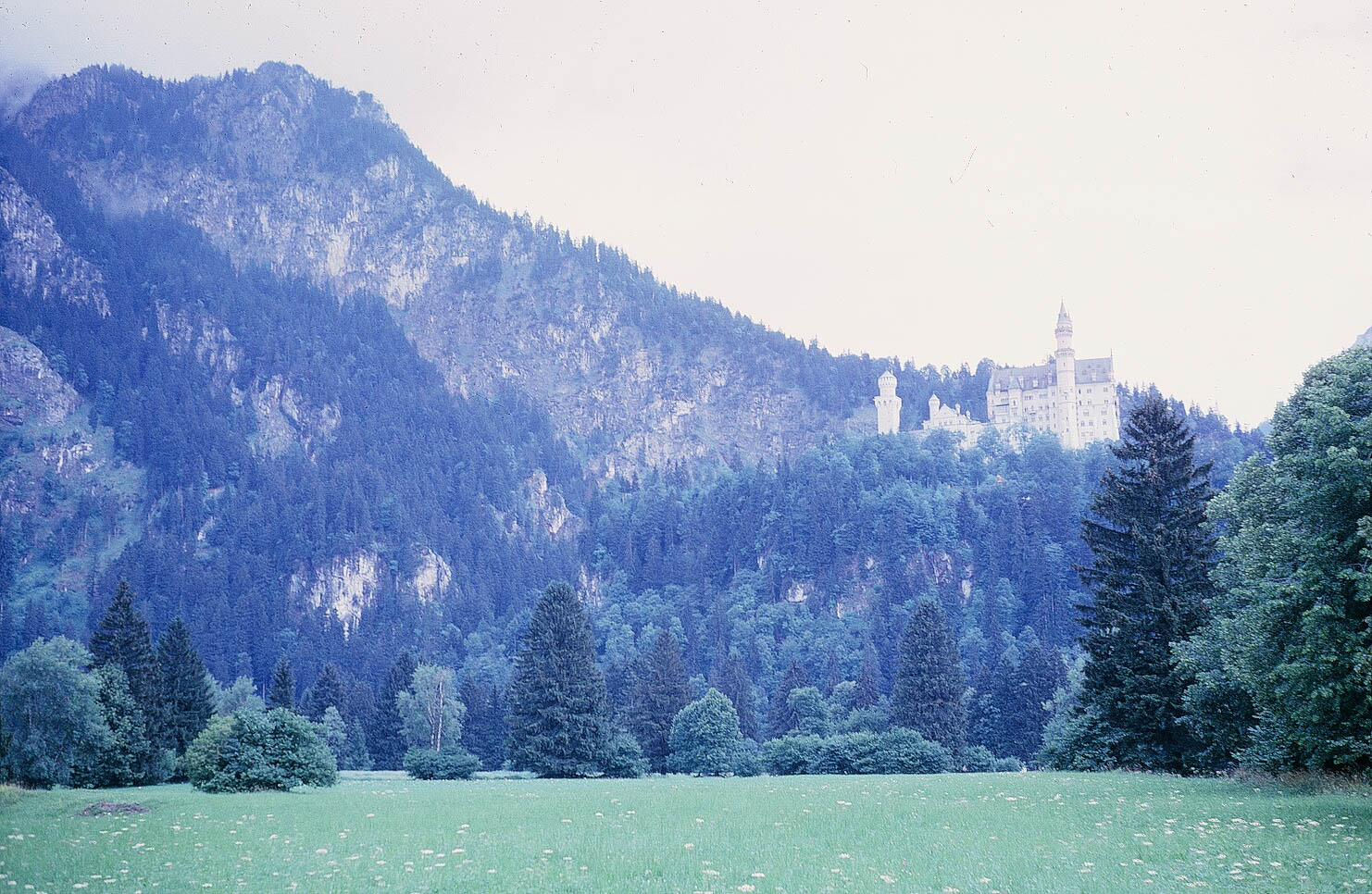
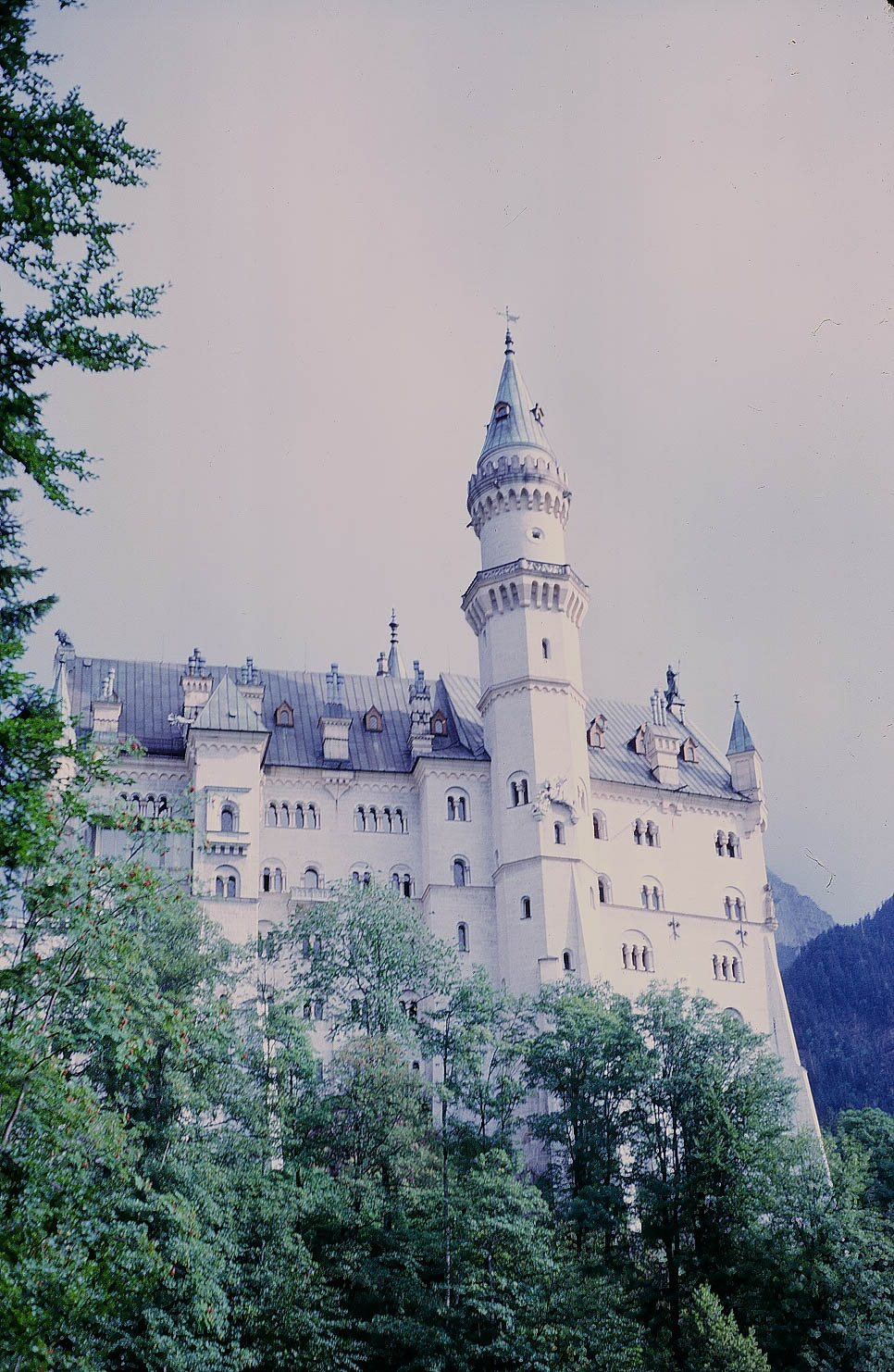
1966EuropeTrip-378 Neuschwanstein Castle
1966EuropeTrip-379 Neuschwanstein Castle
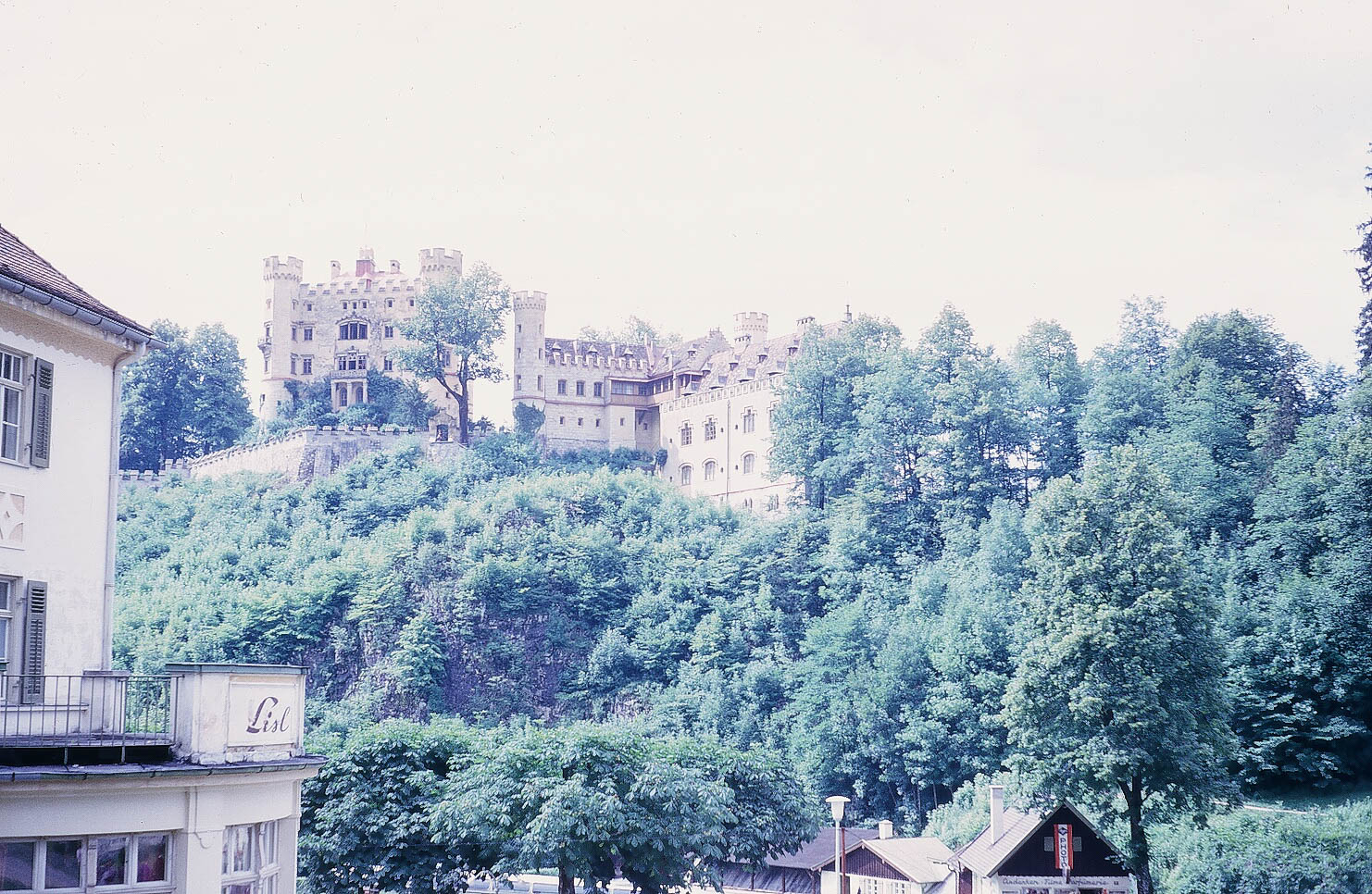
1966EuropeTrip-380 Hohenschwangau Castle, near Newschwanstein Castle
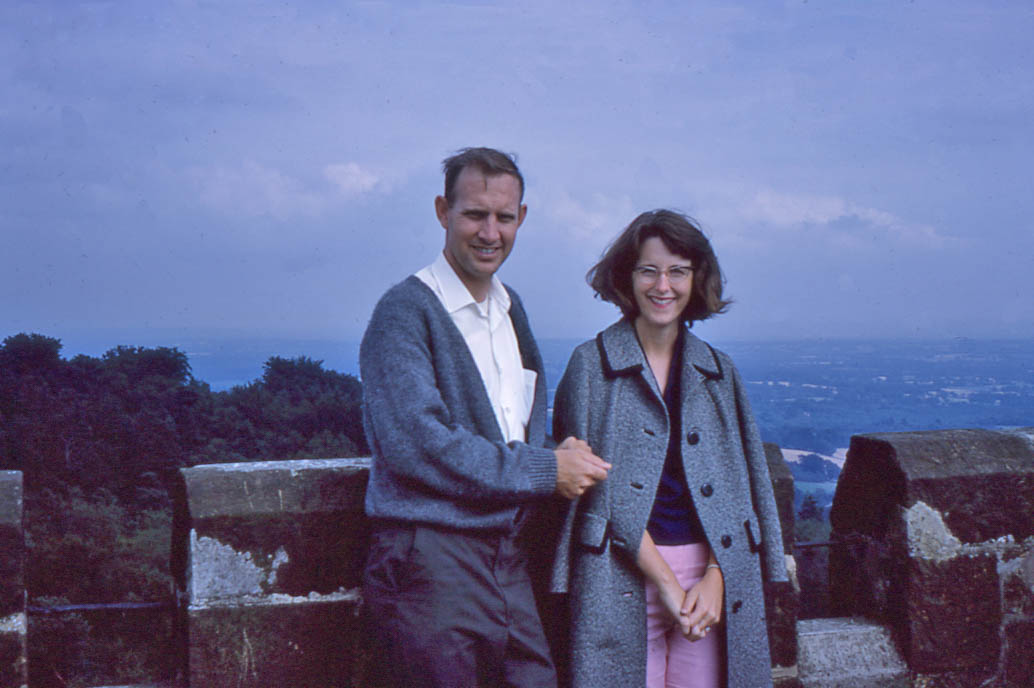
1966EuropeTrip-405 Maybe at Hohenschwangau Castle, Germany
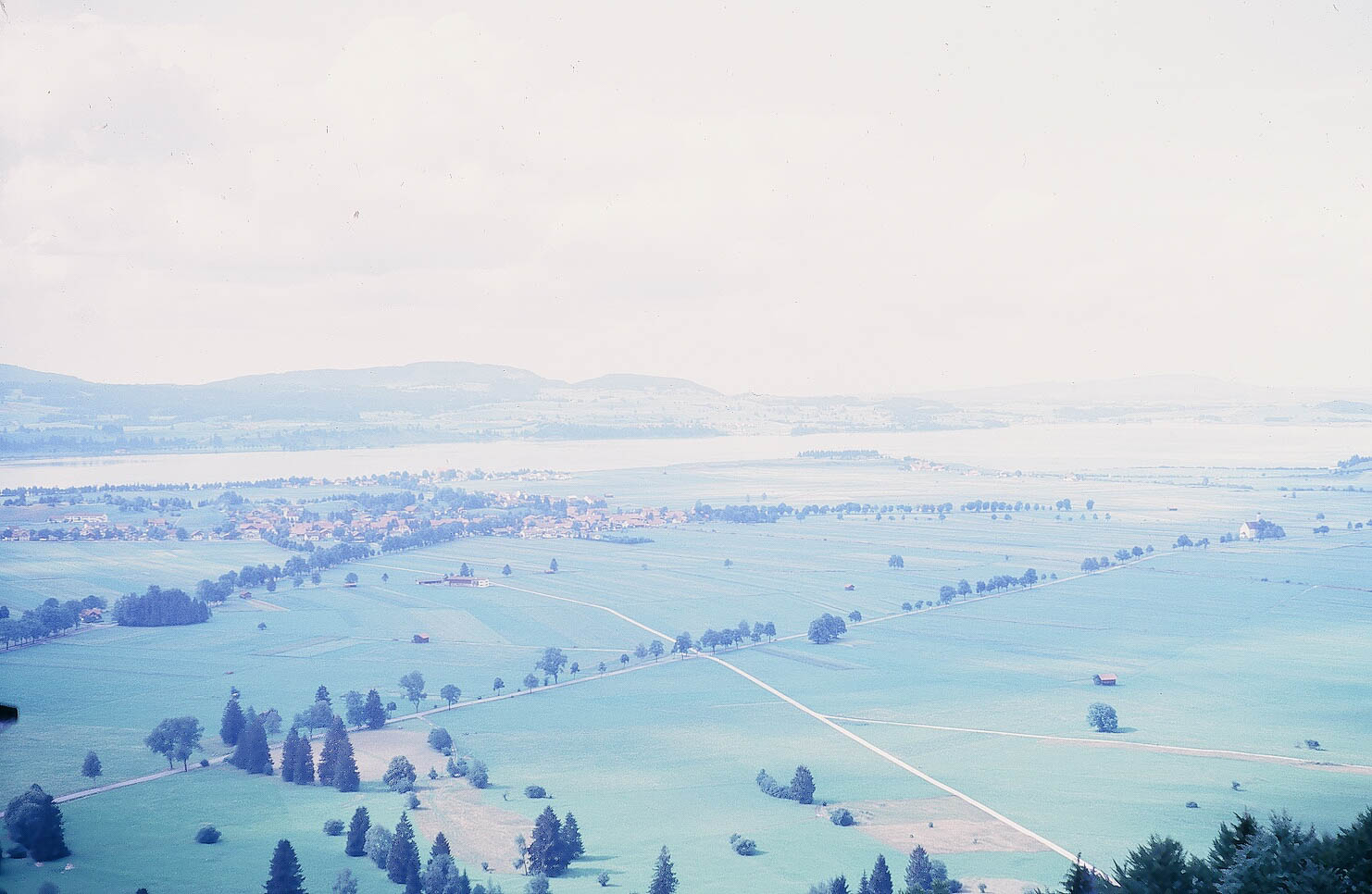
1966EuropeTrip-381
1966EuropeTrip-382 King Ludwig II of Bavaria felt the need to escape from the constraints he saw himself exposed to in Munich, and commissioned Neuschwanstein Castle on the remote northern edges of the Alps as a retreat but also in honour of composer Richard Wagner, whom he greatly admired.Construction began in 1869 but stopped after his death in 1886.
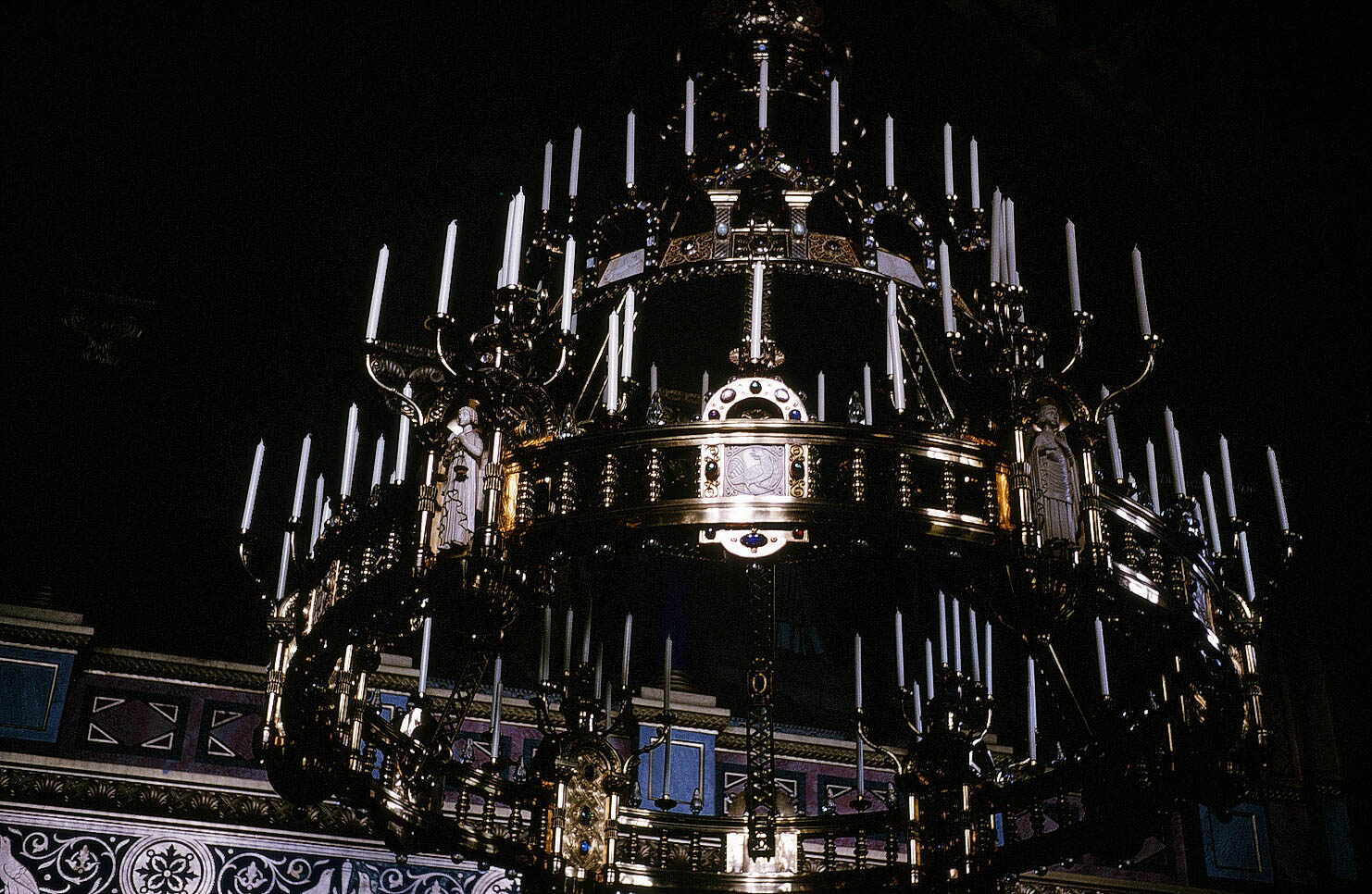
1966EuropeTrip-383 Neschwanstein chandalier.
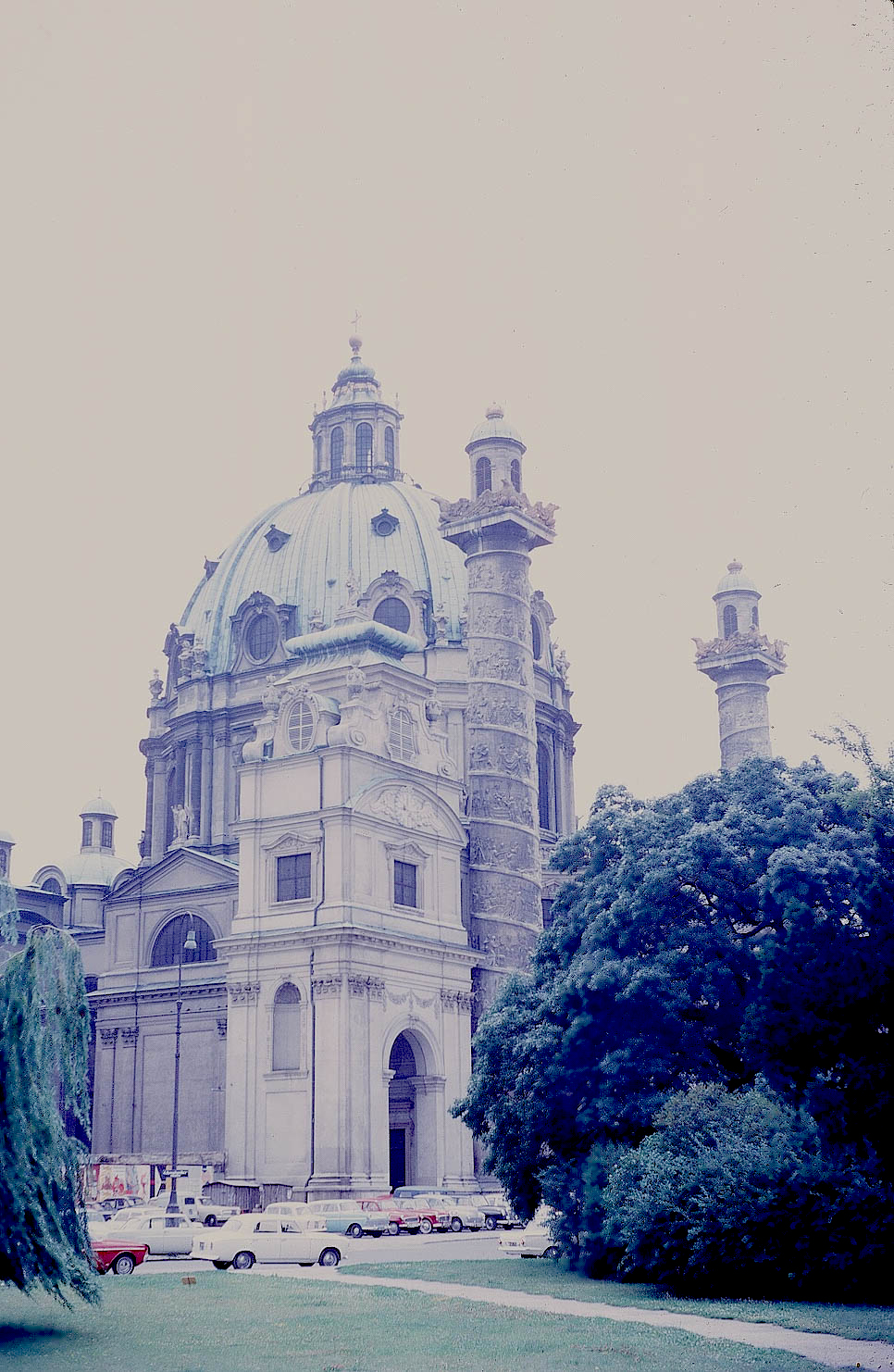
1966EuropeTrip-384 The image shows the Karlskirche, or St. Charles Church, a renowned Baroque church in Vienna, Austria.
It is considered an architectural masterpiece and a symbol of Vienna's grandeur.
The church was commissioned by Emperor Charles VI and built between 1716 and 1737 as a votive church, dedicated to St. Charles Borromeo, after a plague epidemic.
Designed by Johann Bernhard Fischer von Erlach, the architecture is a blend of Baroque, Greek, and Roman styles, notably featuring a large dome and two giant columns inspired by ancient Roman monuments.
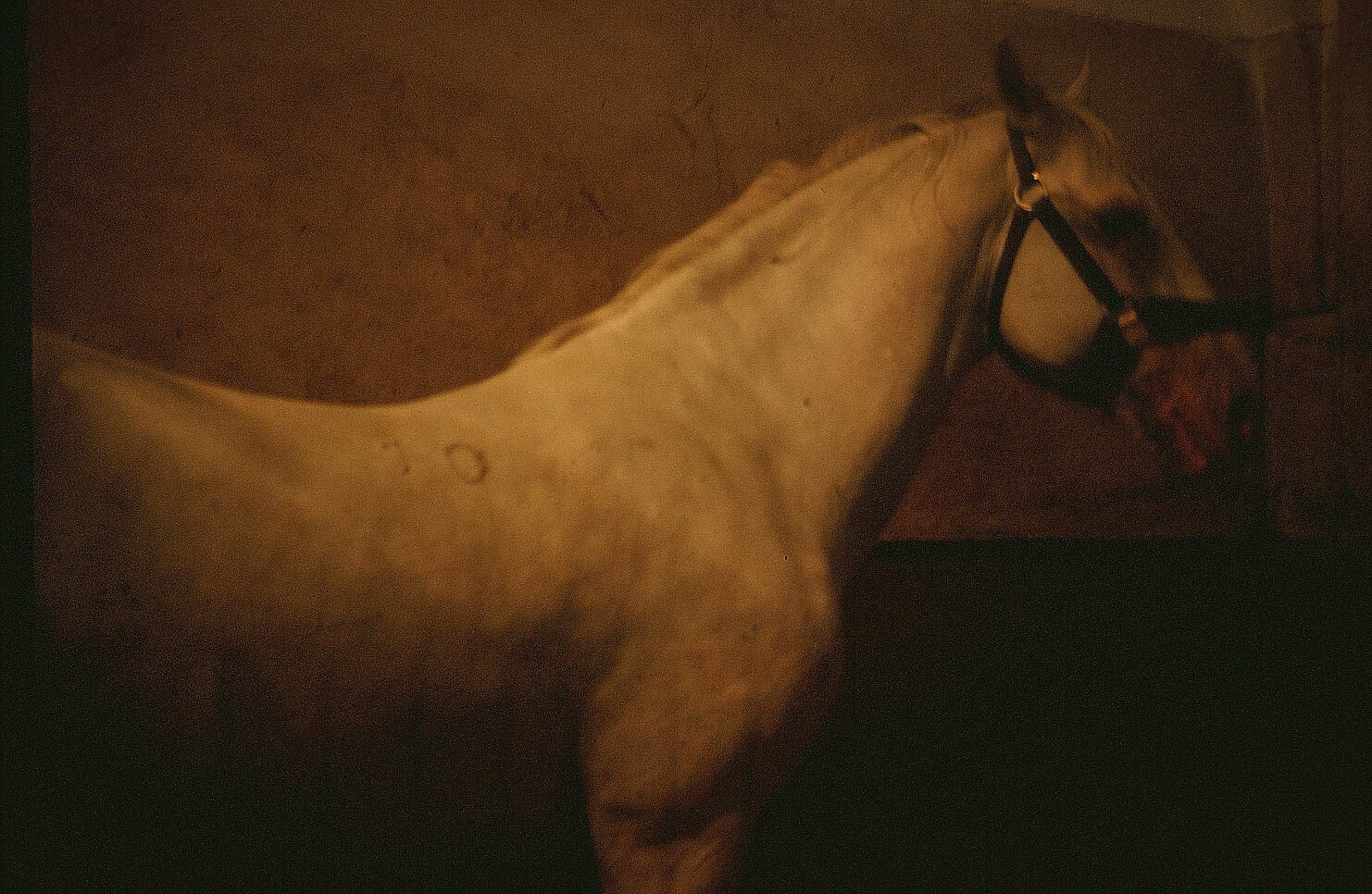
1966EuropeTrip-385 Lipizzner Horse, Vienna.
1966EuropeTrip-386 Spanish Riding School in Vienna
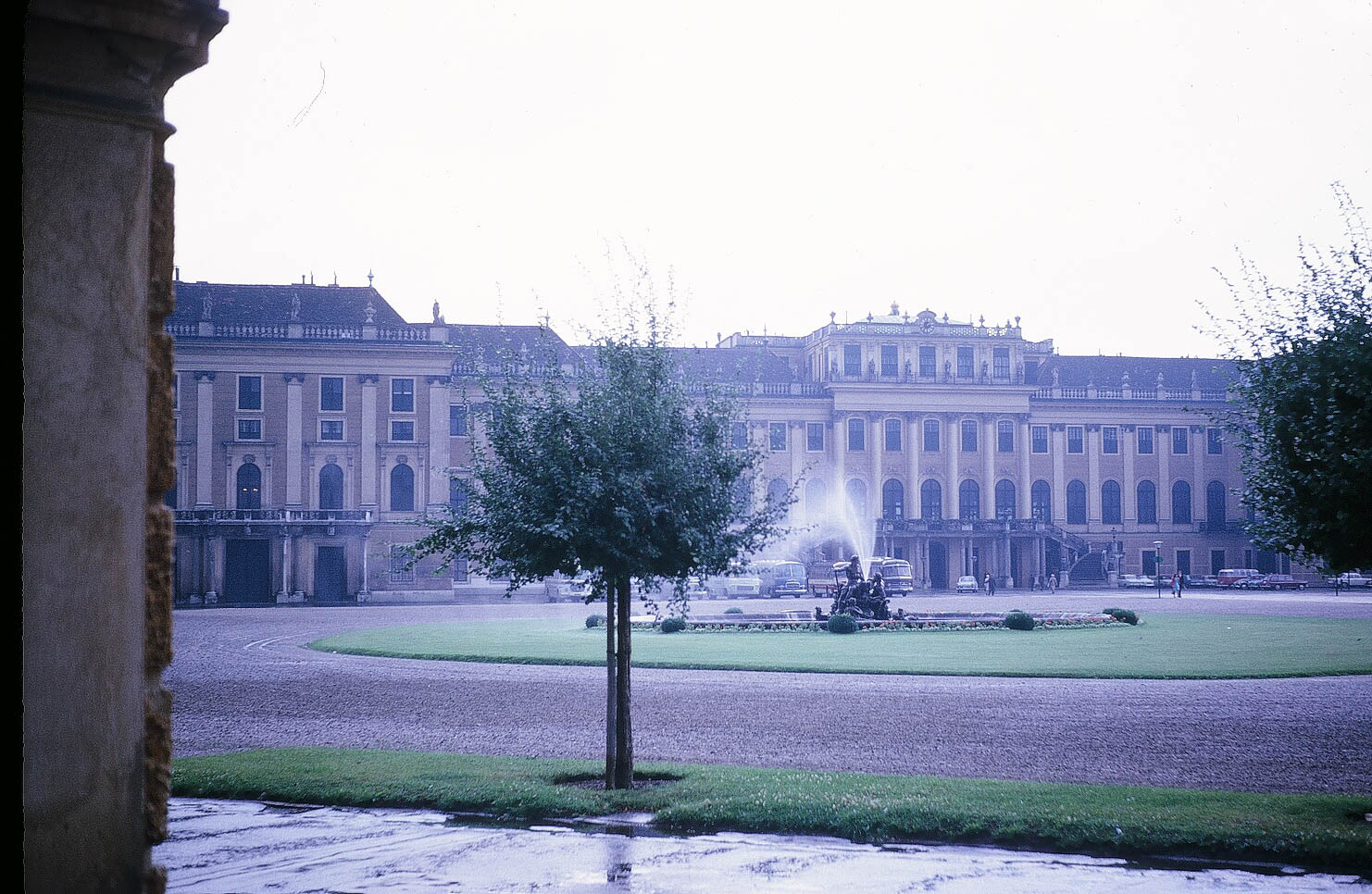
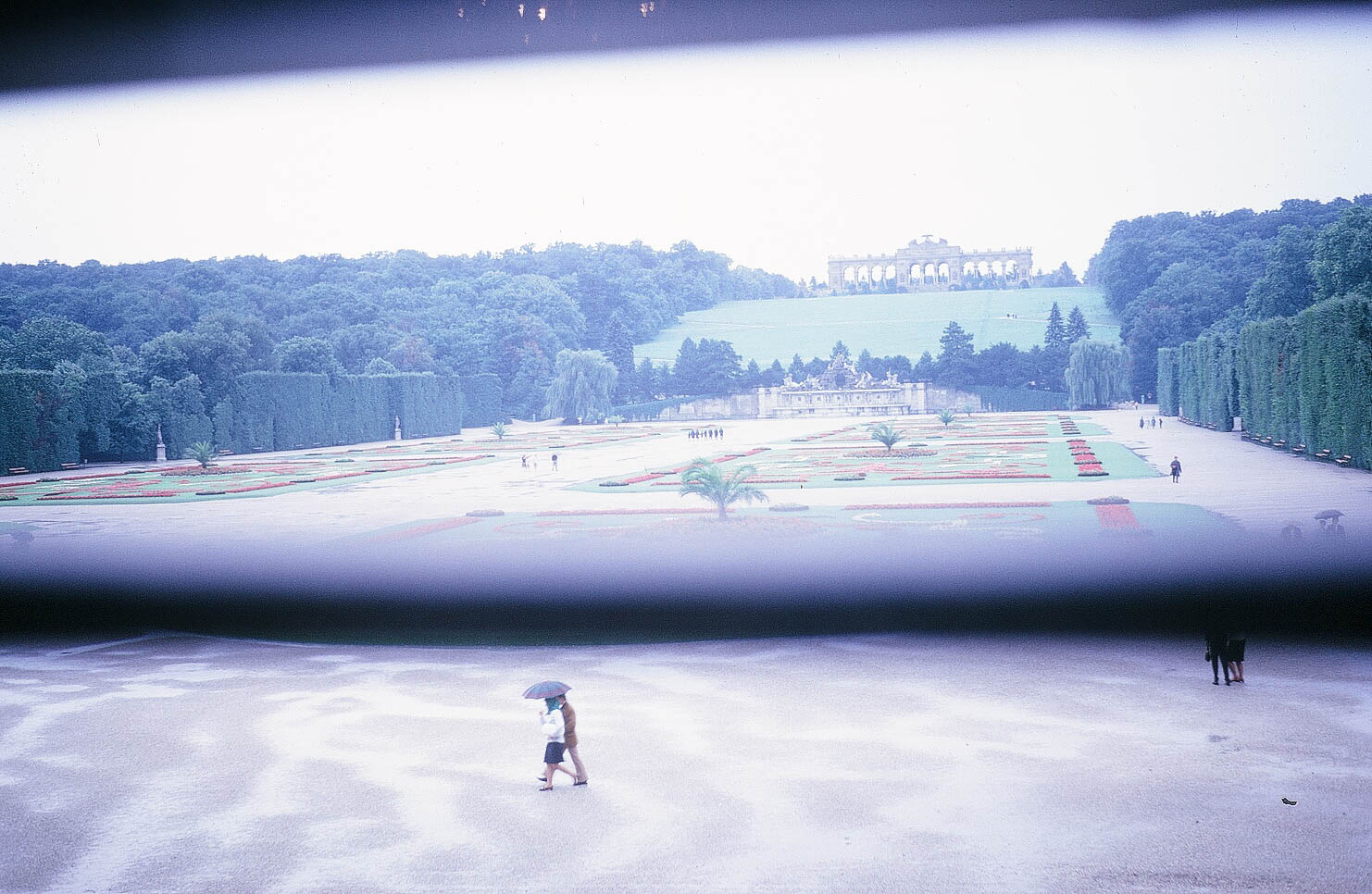
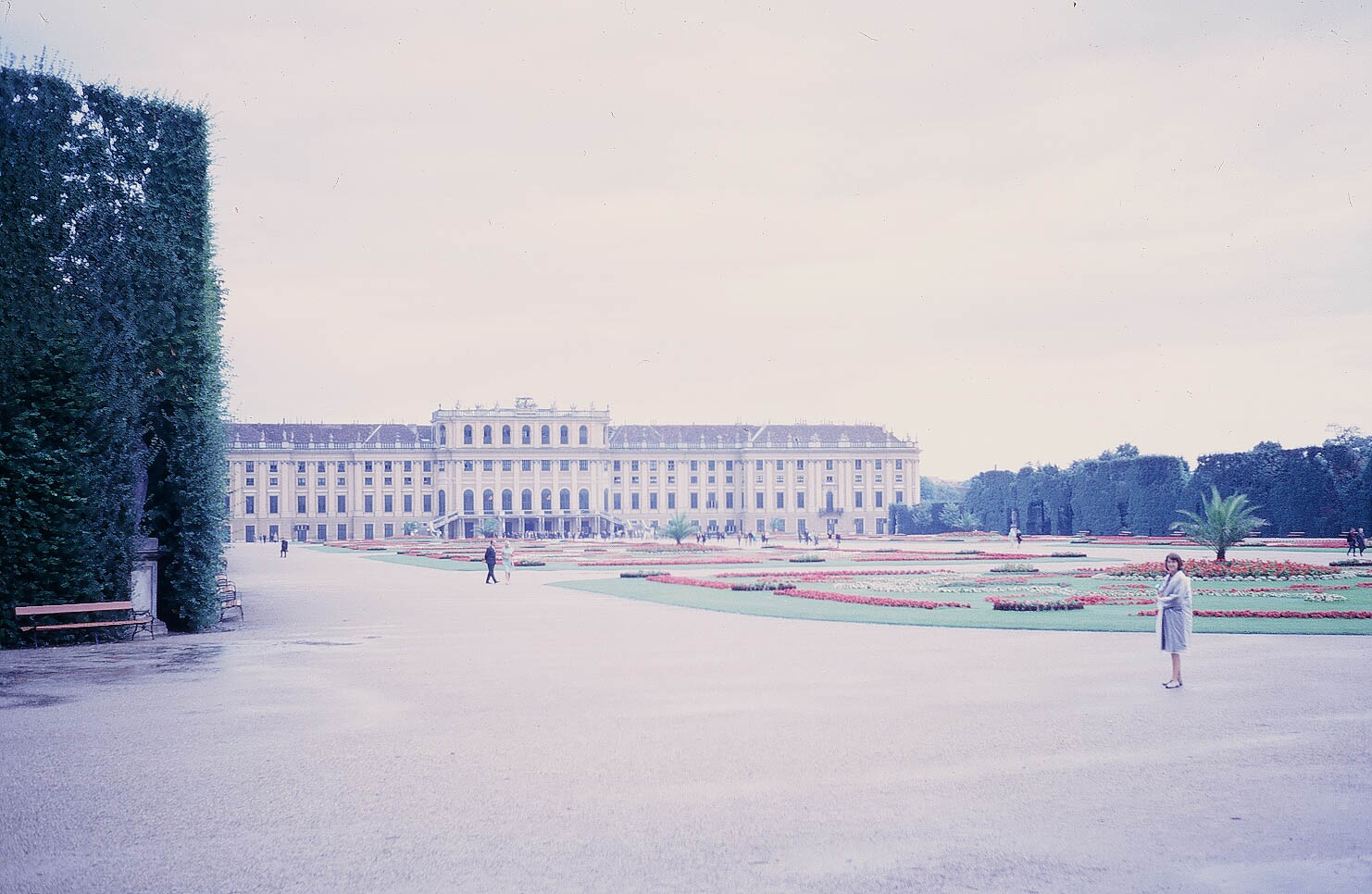
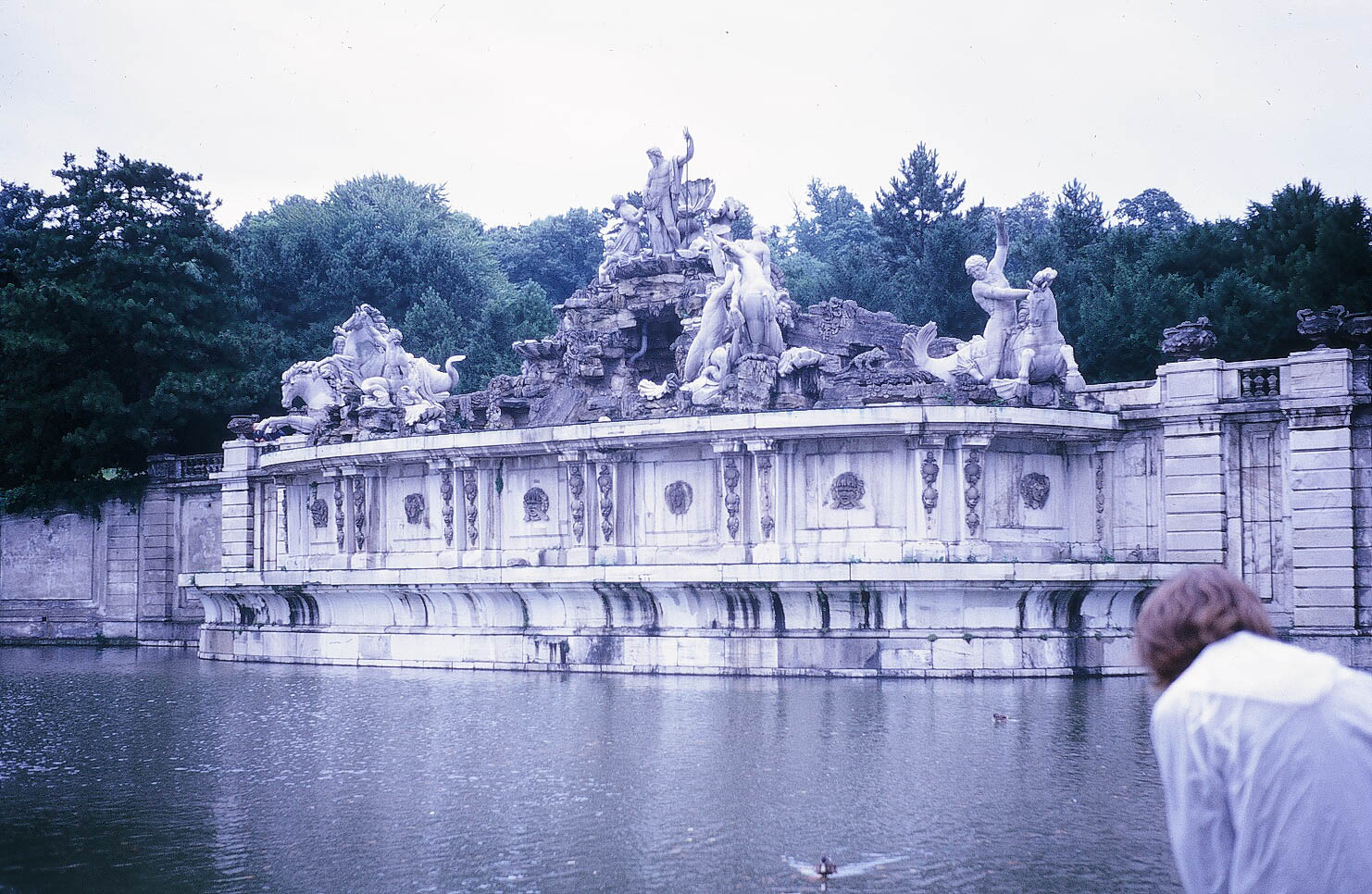
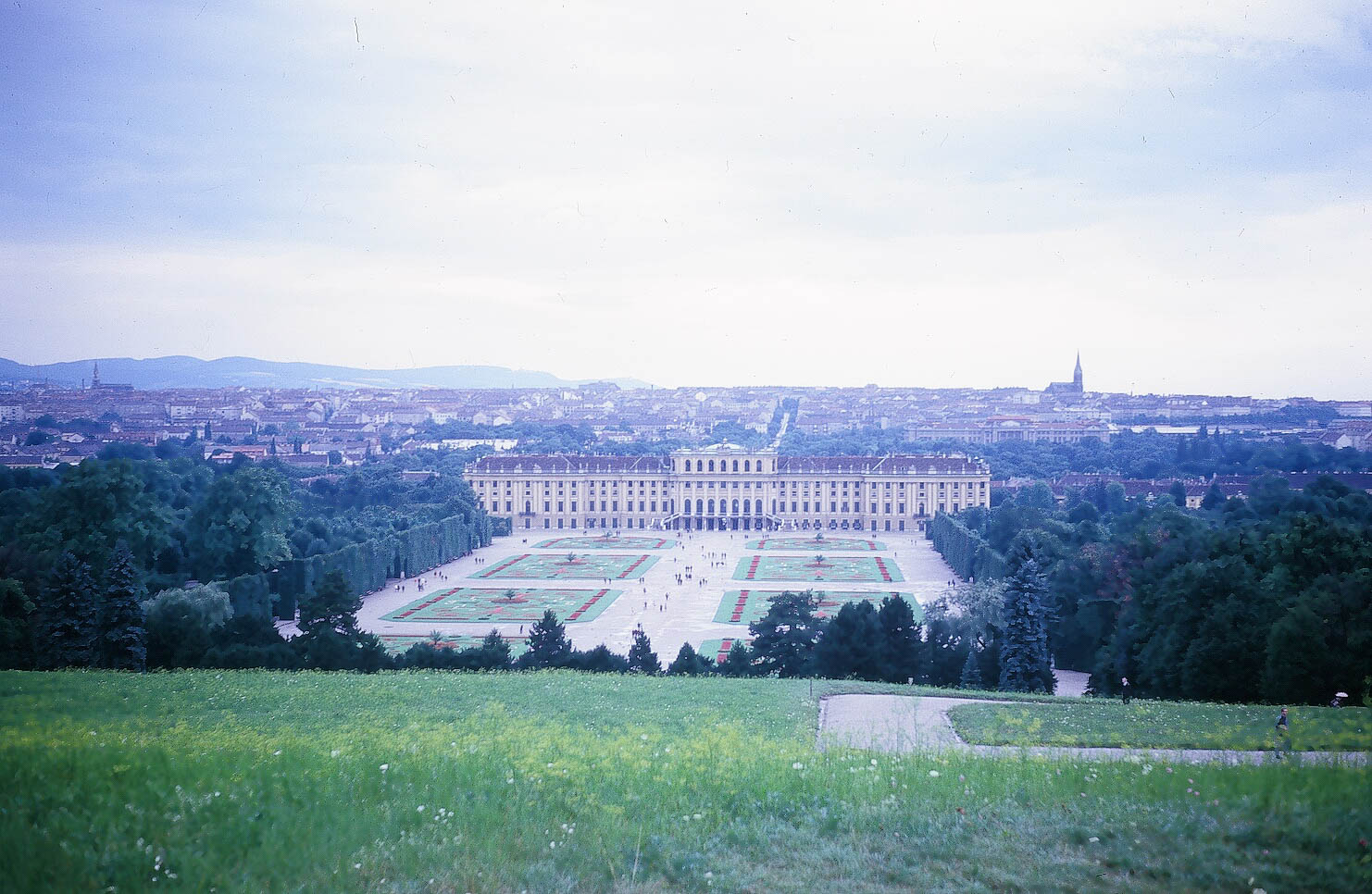
1966EuropeTrip-387 Schönbrunn Palace. Schönbrunn Palace in its present form was built and remodelled during the 1740–1750s during the reign of empress Maria Theresa who received the estate as a wedding gift.
1966EuropeTrip-389 Schönbrunn Palace
1966EuropeTrip-390 Schönbrunn Palace
1966EuropeTrip-391 Schönbrunn Palace
1966EuropeTrip-392 Schönbrunn Palace
1966EuropeTrip-393 Schönbrunn Palace
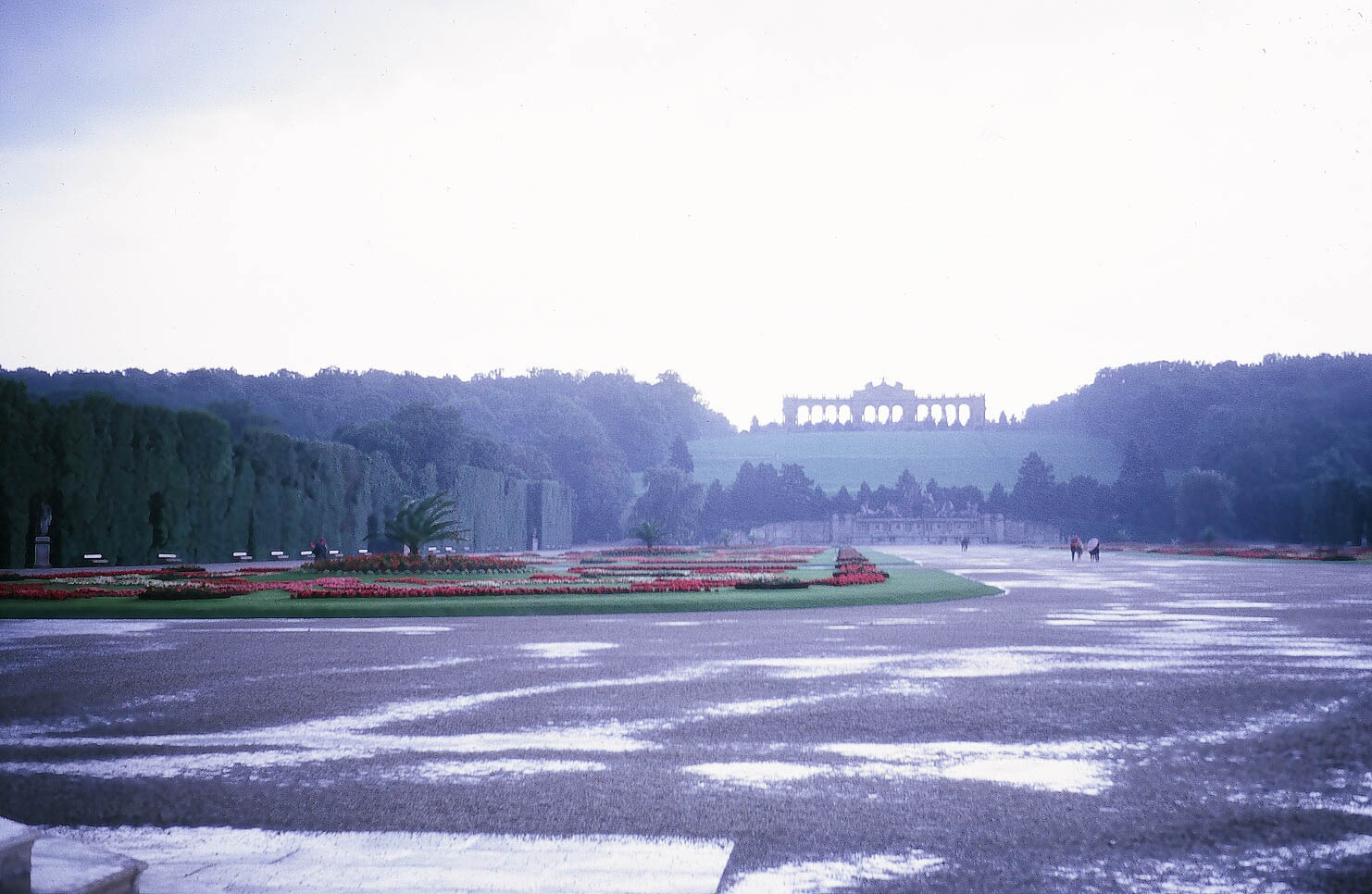
1966EuropeTrip-394 Schönbrunn Palace
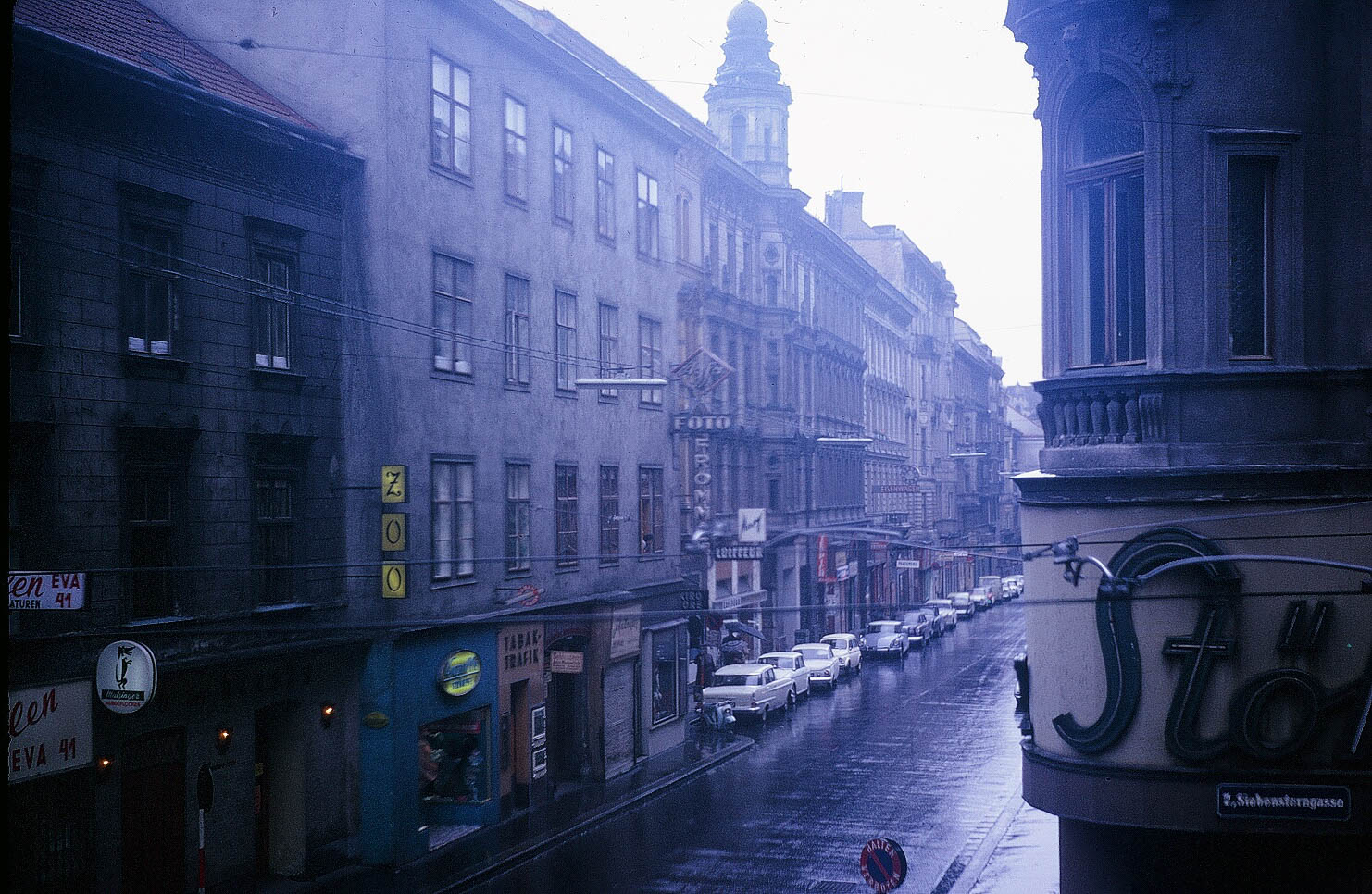
1966EuropeTrip-395 Hotel Kugel in among these buildings.
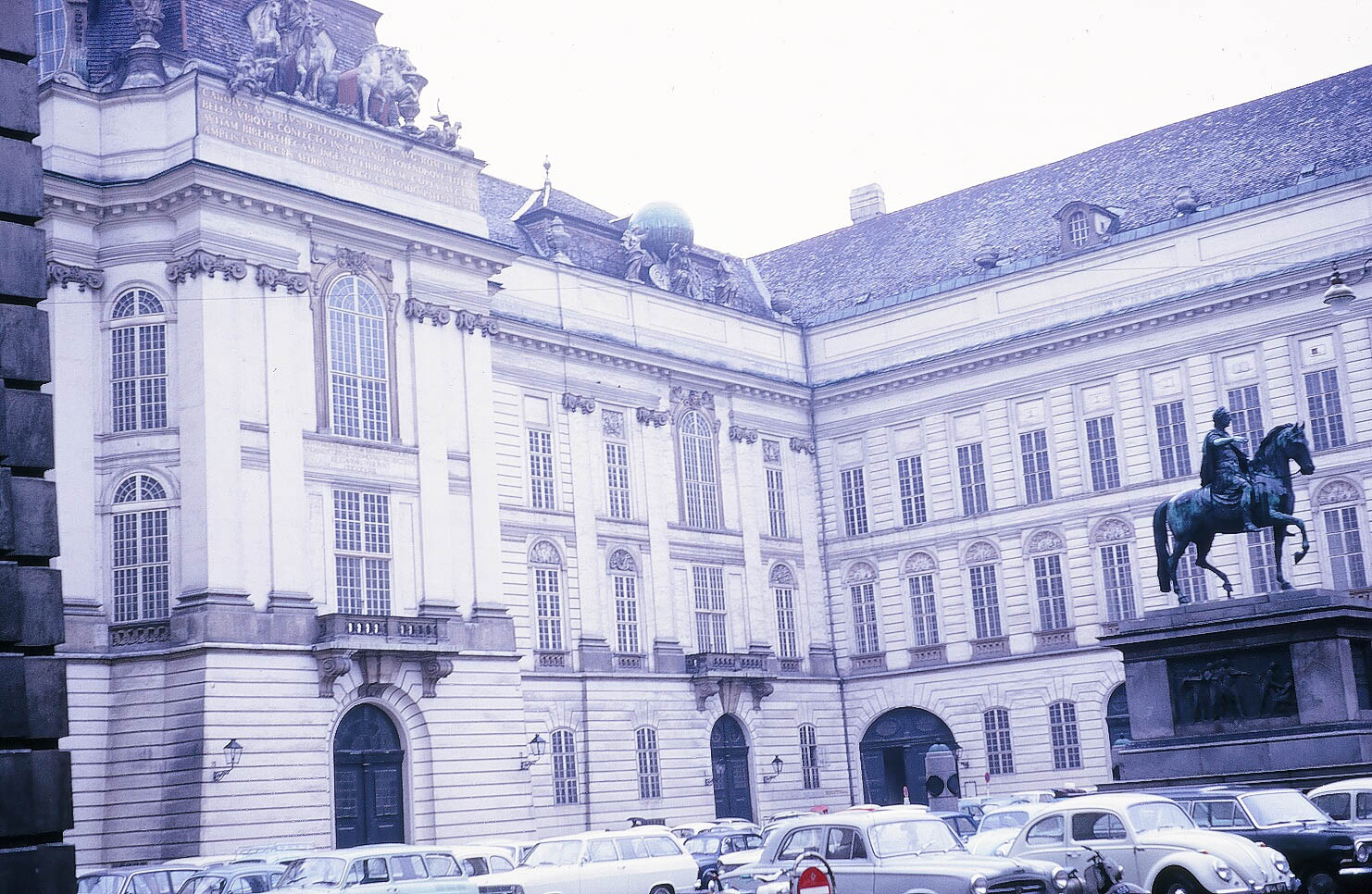
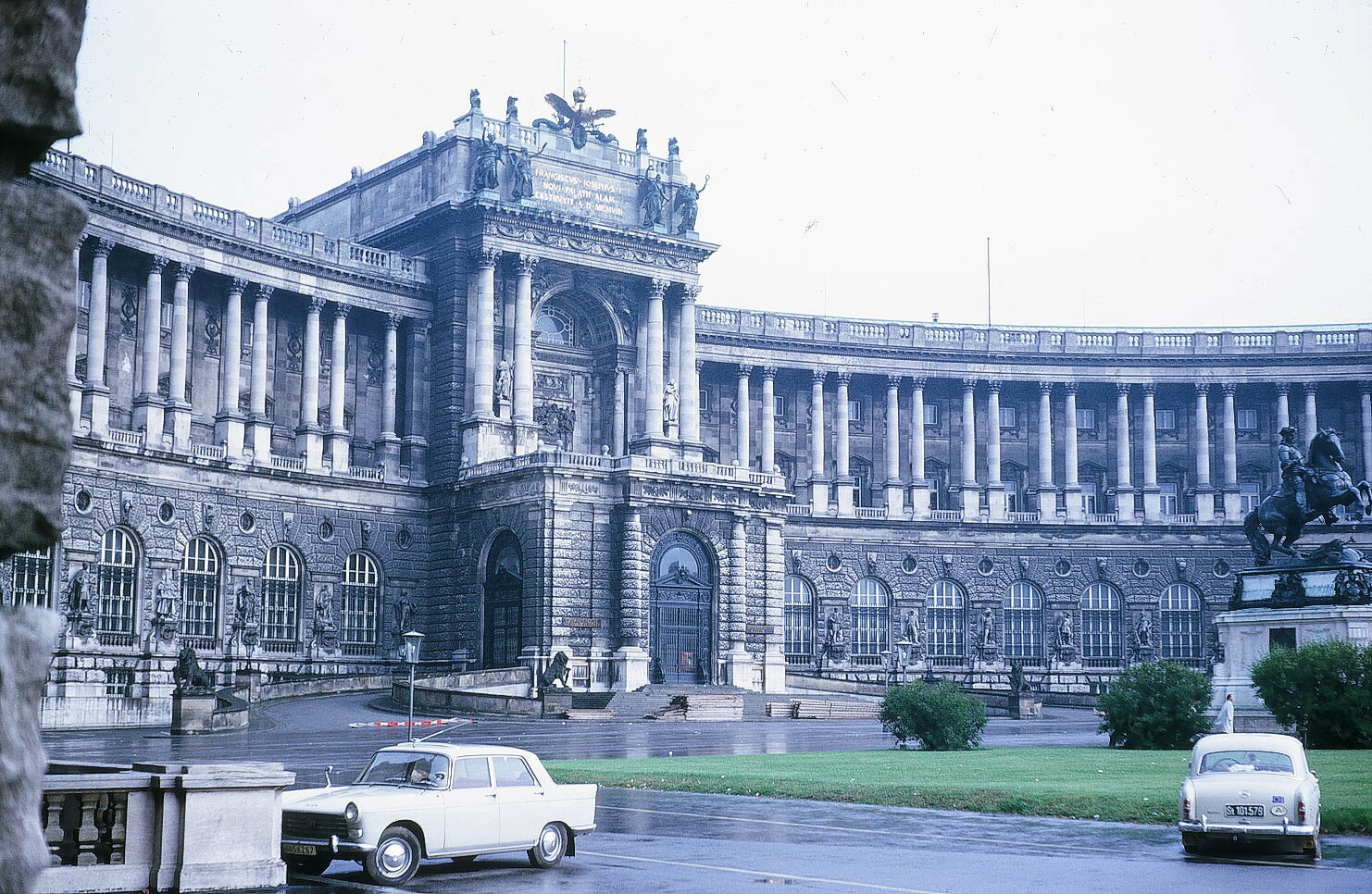
1966EuropeTrip-396 The Hofburg is the former principal imperial palace of the Habsburg dynasty in Austria. Located in the center of Vienna, it was built in the 13th century by Ottokar II of Bohemia and expanded several times afterwards. It also served as the imperial winter residence, as Schönbrunn Palace was the summer residence. Since 1946, it has been the official residence and workplace of the president of Austria.
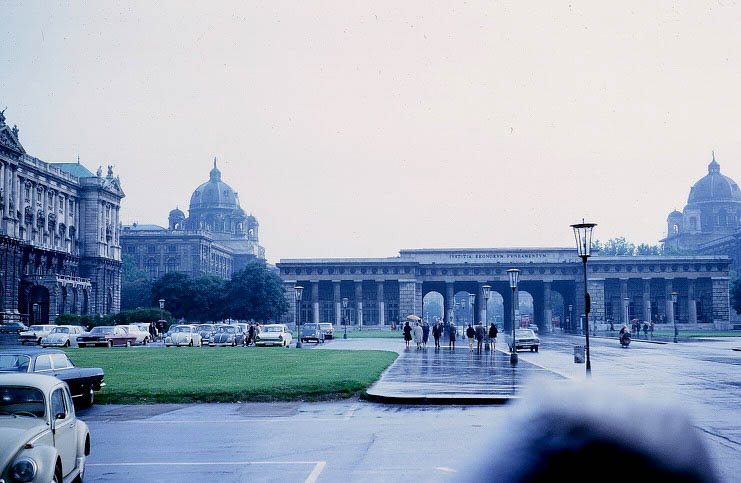
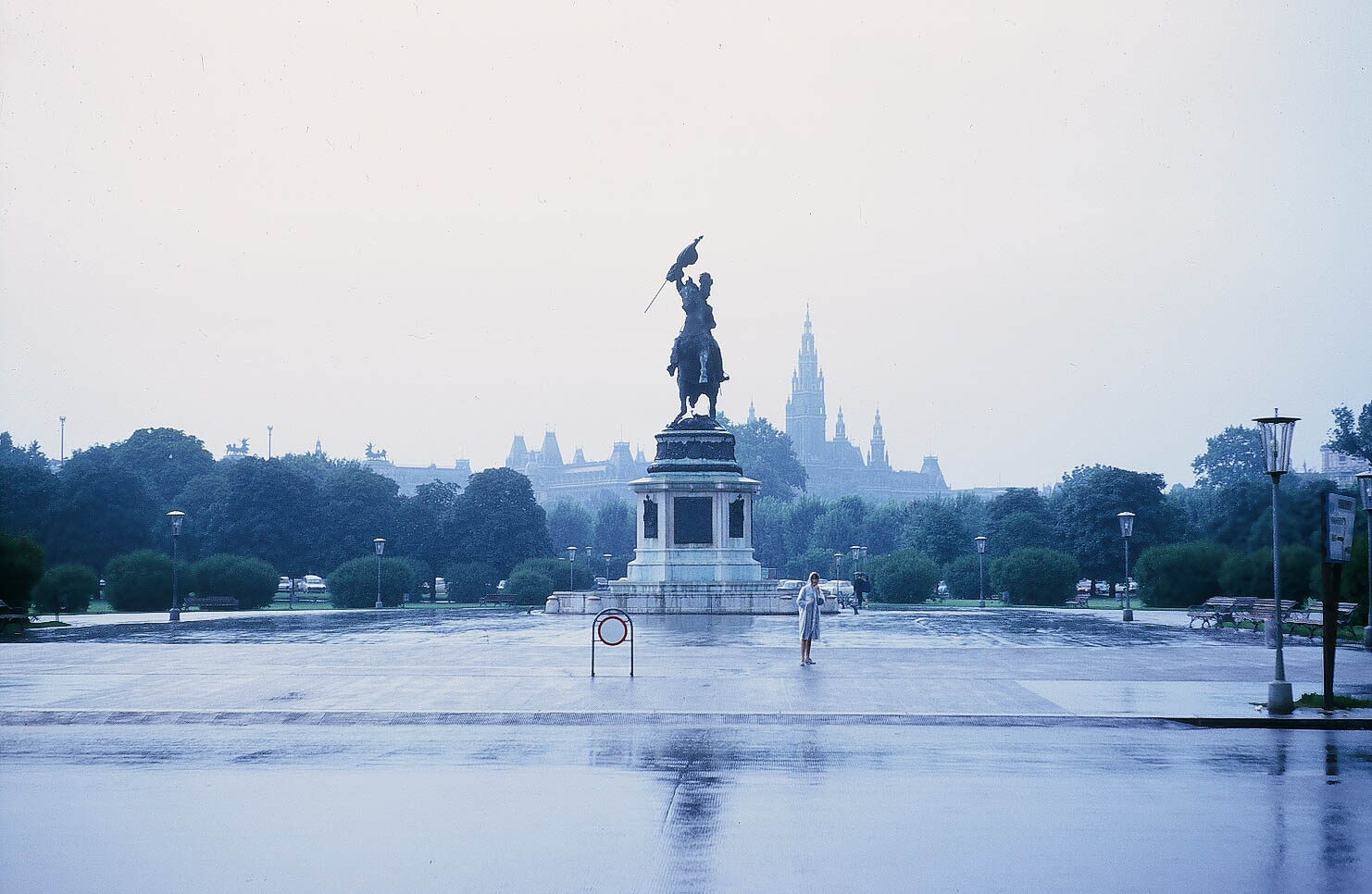
1966EuropeTrip-397 Heldenplatz ( Heroes' Square) is a public space in front of the Hofburg Palace
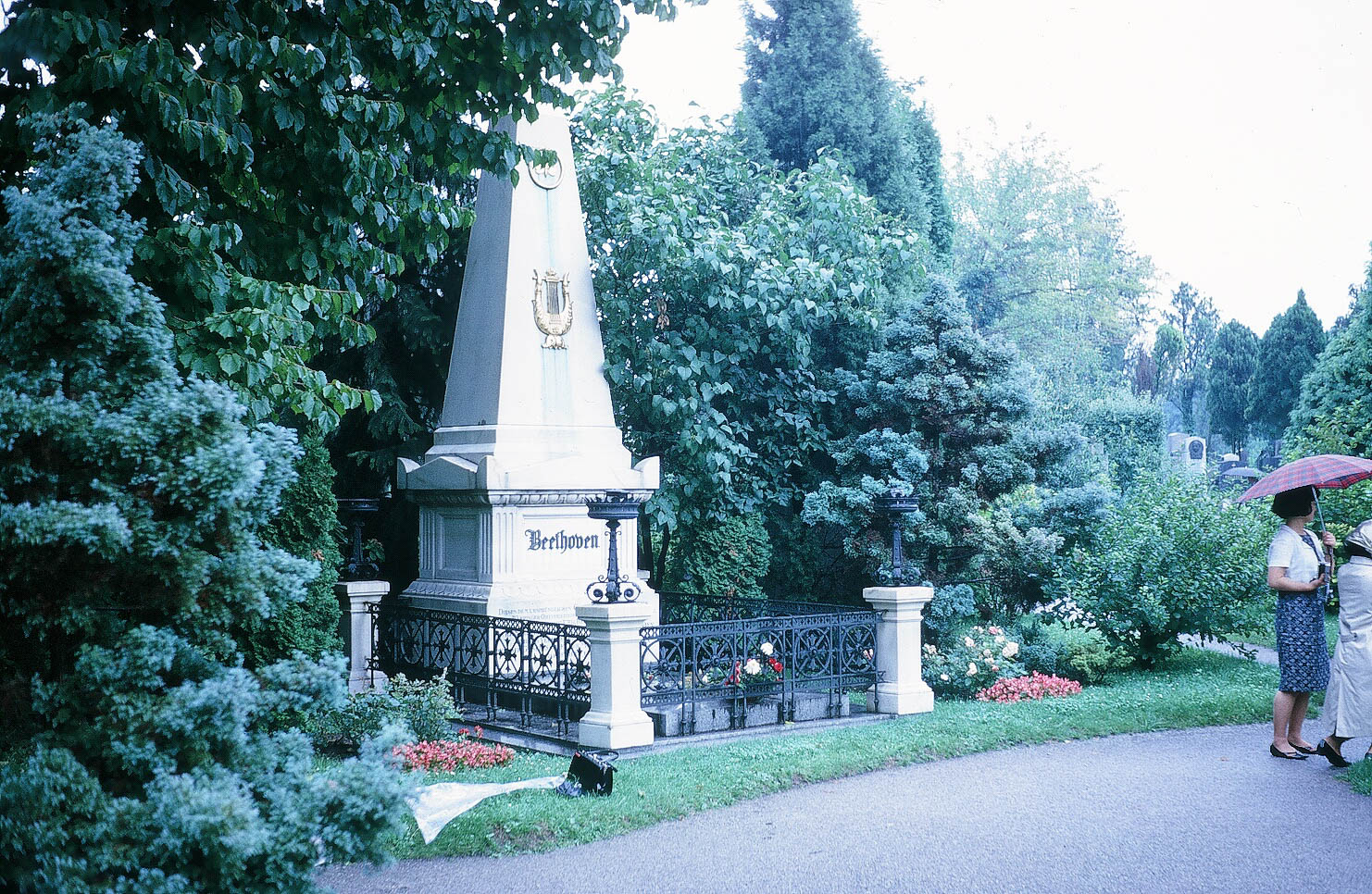
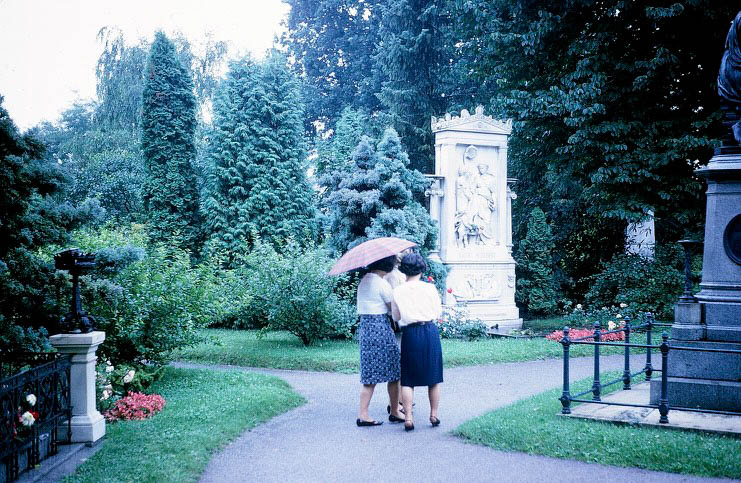
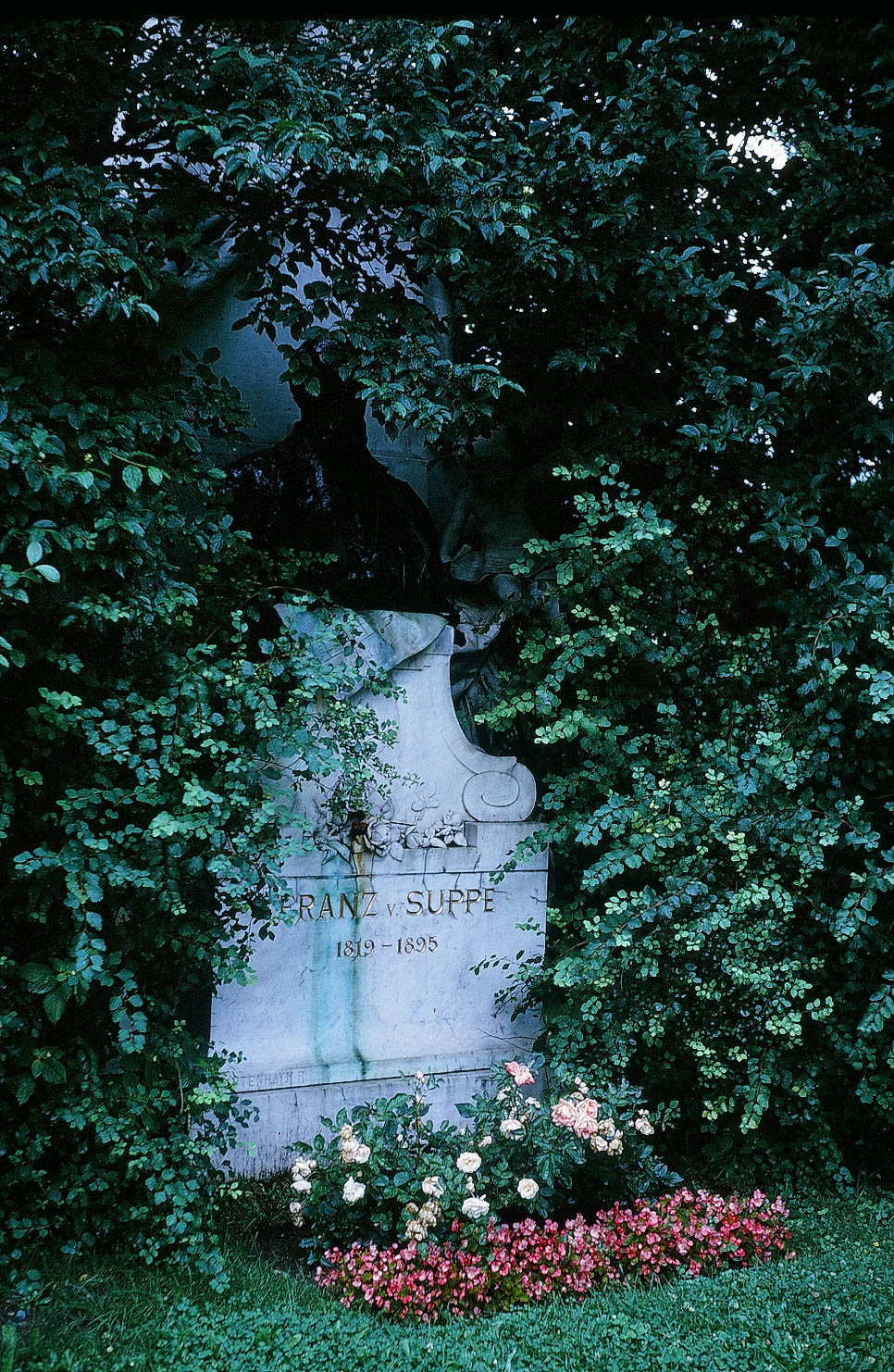
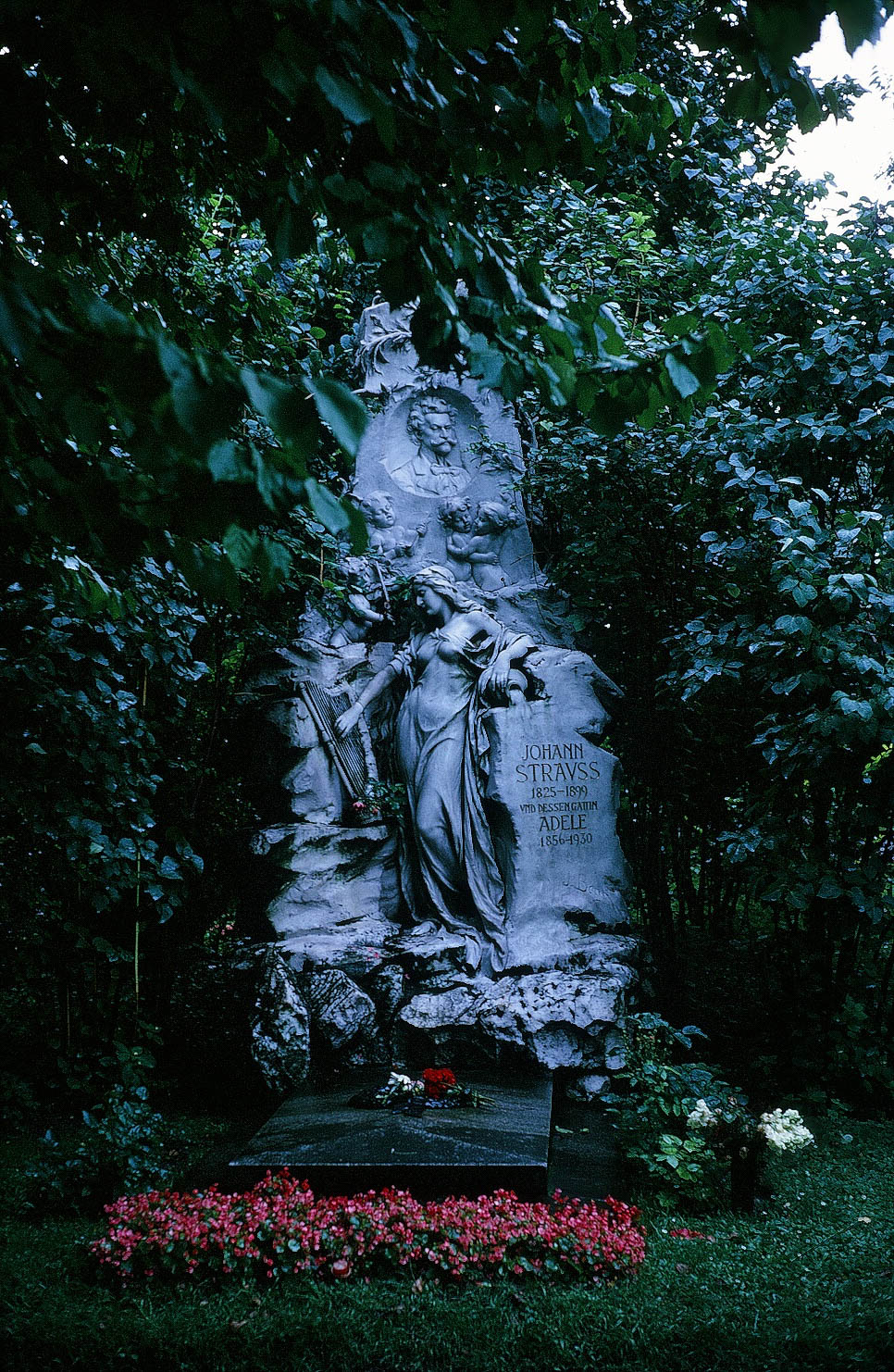
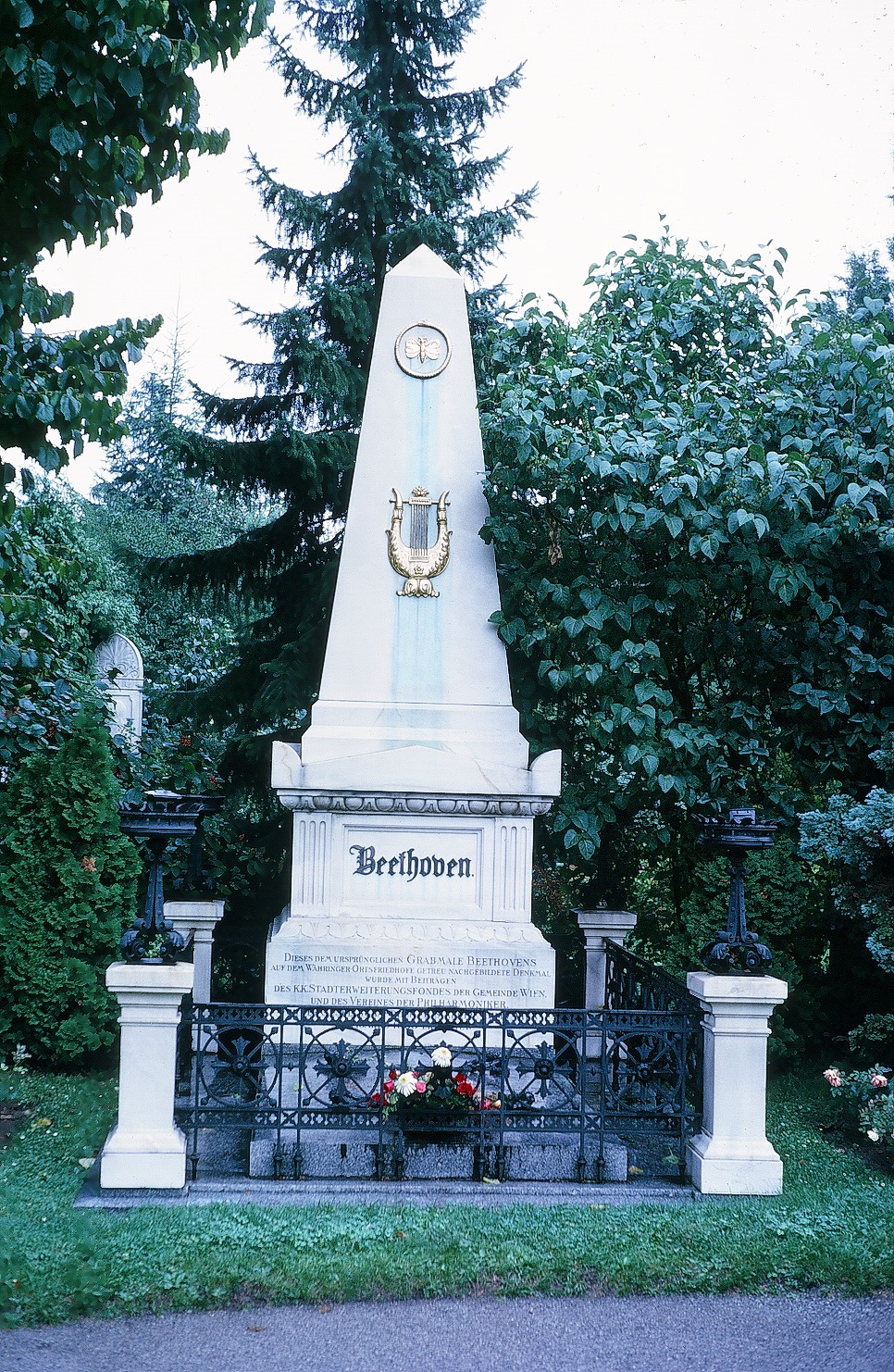
1966EuropeTrip-398 Schwartzburg Platz Zentral Friedhof. Beethoven's grave. Vienna
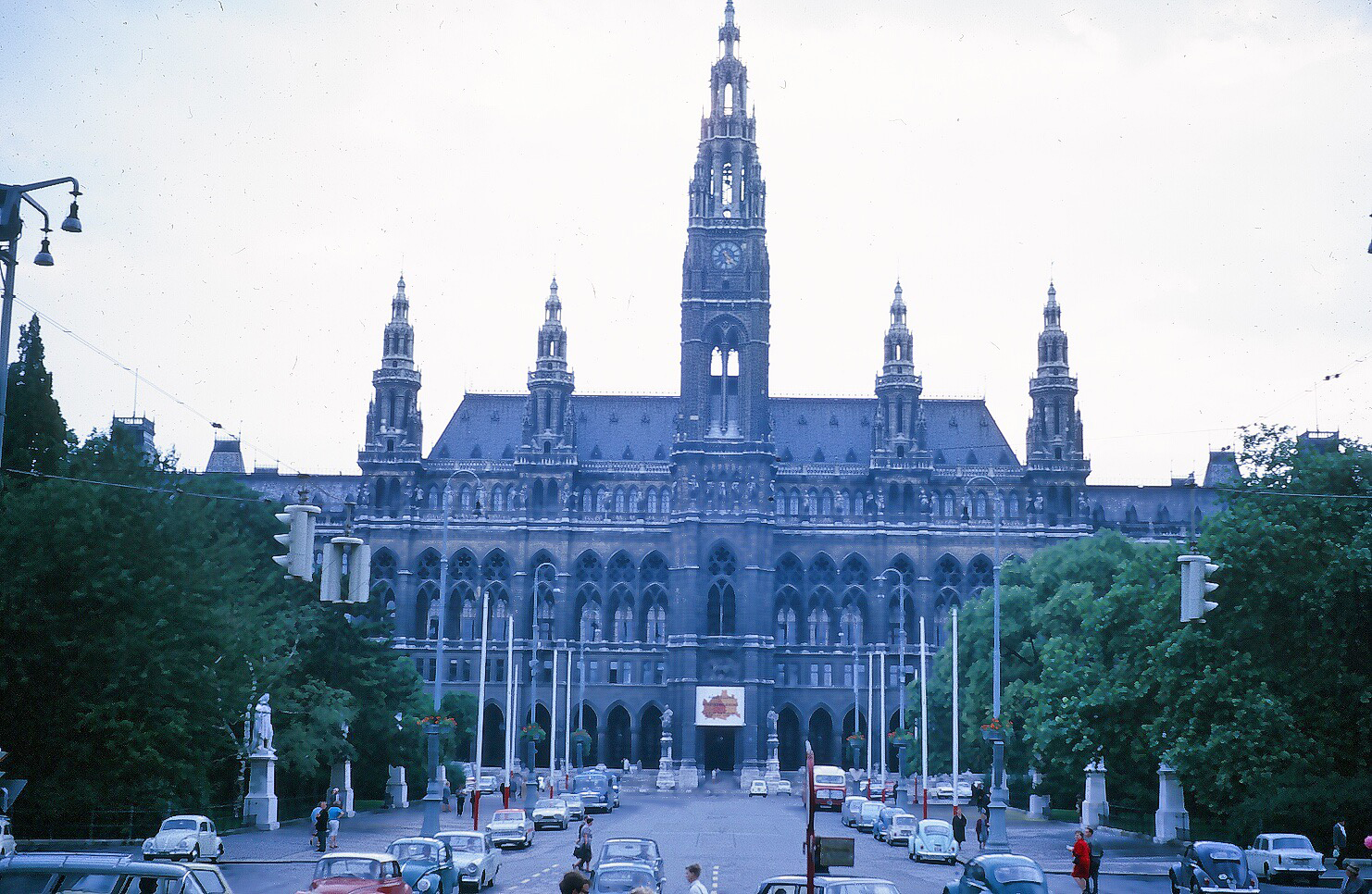
OAKES_S_0051.JPG The Wienbibliothek im Rathaus (English: Vienna Library in City Hall), formerly known as the Wiener Stadt- und Landesbibliothek (English: Vienna City and State Library), is a library and archive containing important documents related to the history of Vienna, Austria. Founded in 1856, the library, which also contains a large collection of local memorabilia, is located in the Rathaus (City Hall) in the Innere Stadt first district of the city, and is the official library of the city and state of Vienna.
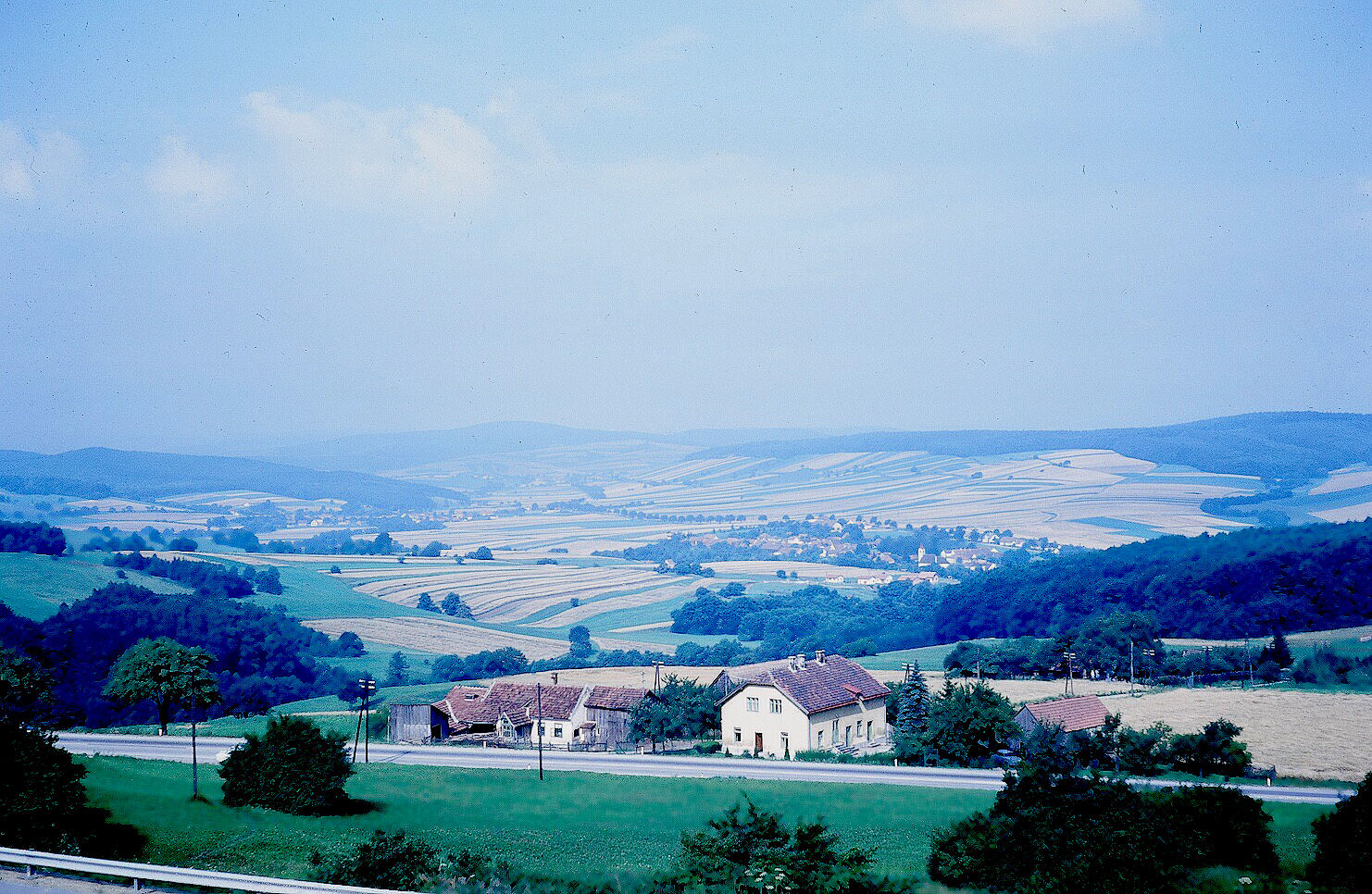
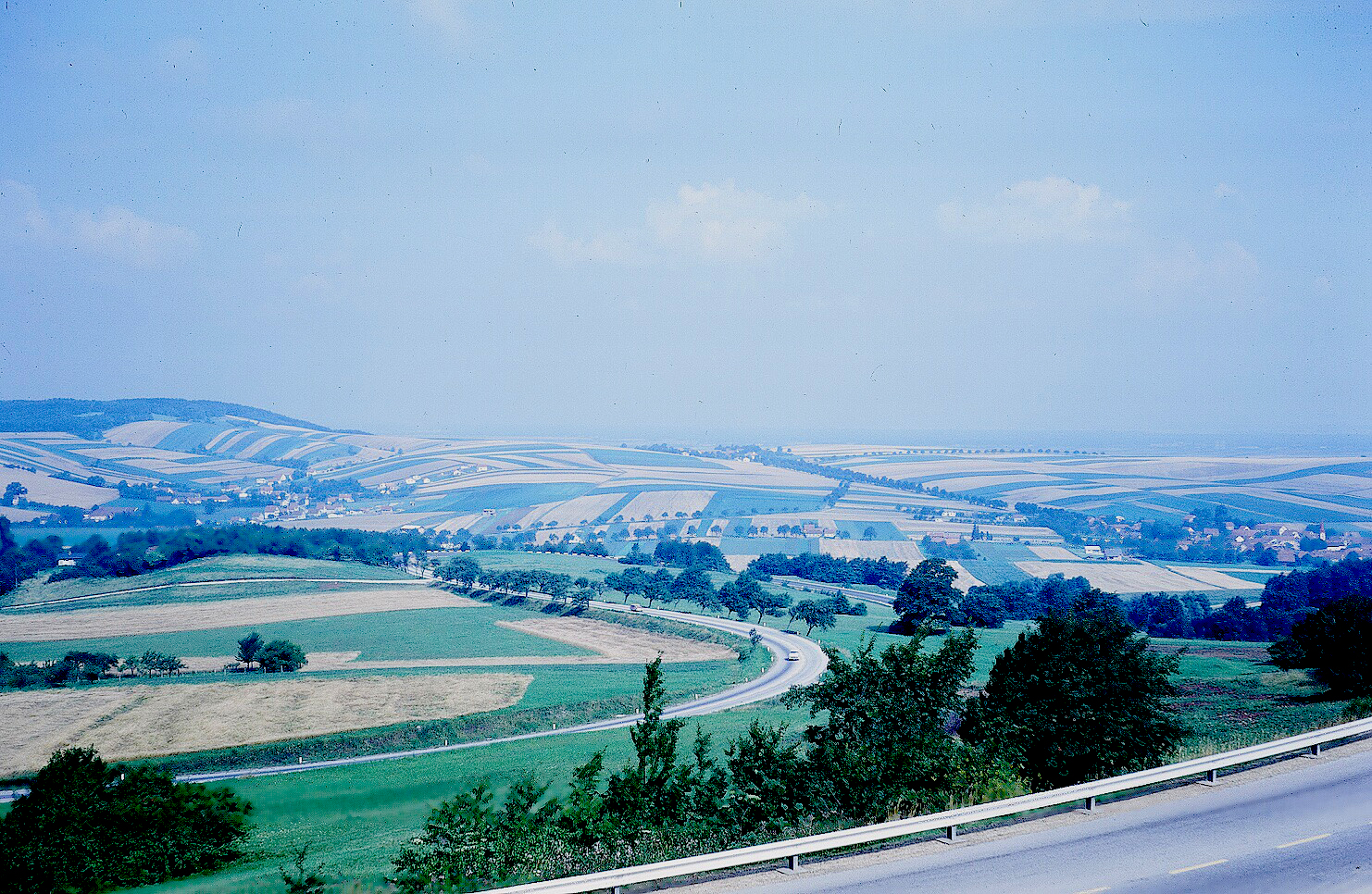
OAKES_S_0052.JPG Austrian Countryside
OAKES_S_0053.JPG Austrian Countryside
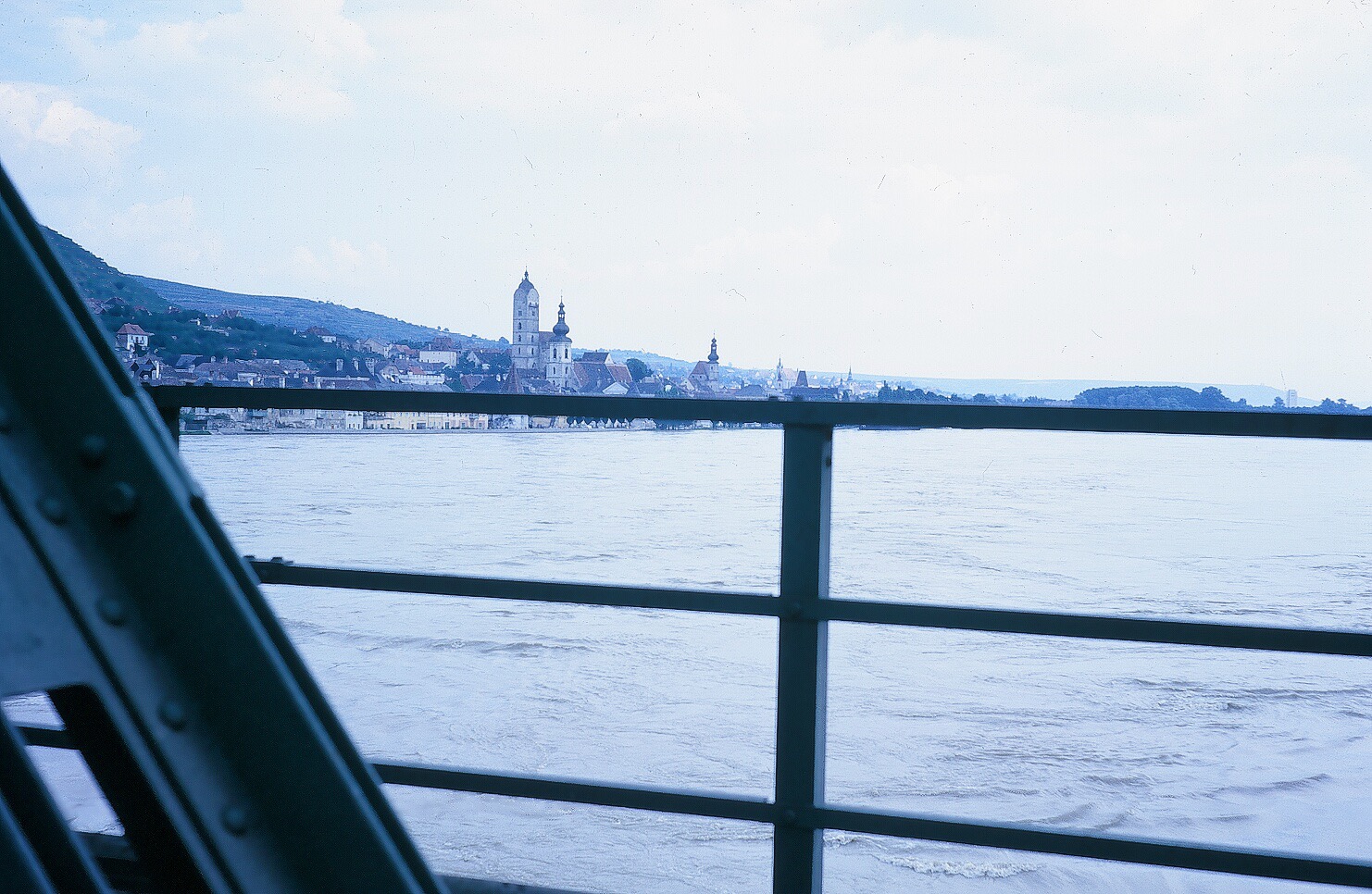
OAKES_S_0054.JPG Danube River.
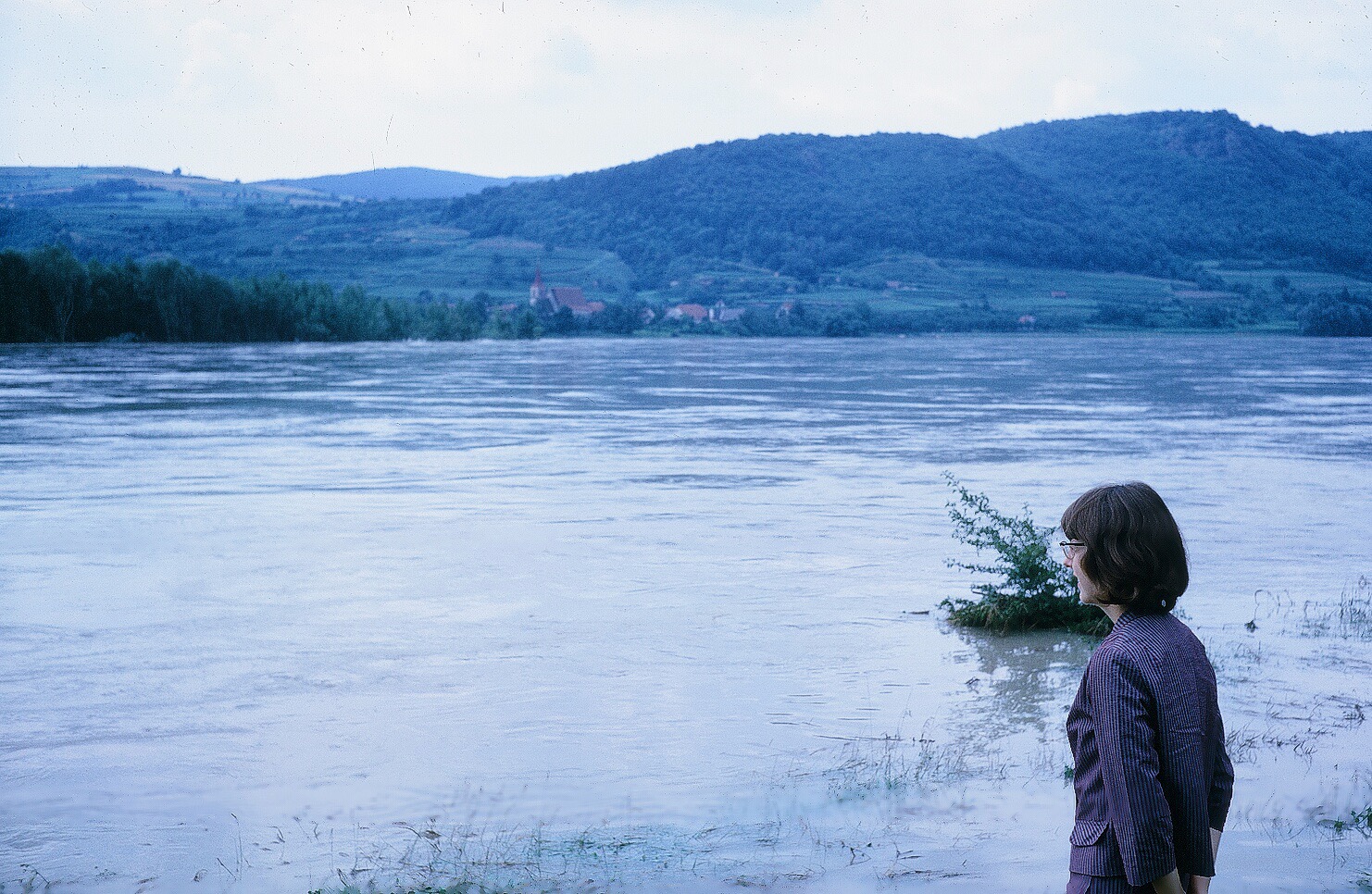
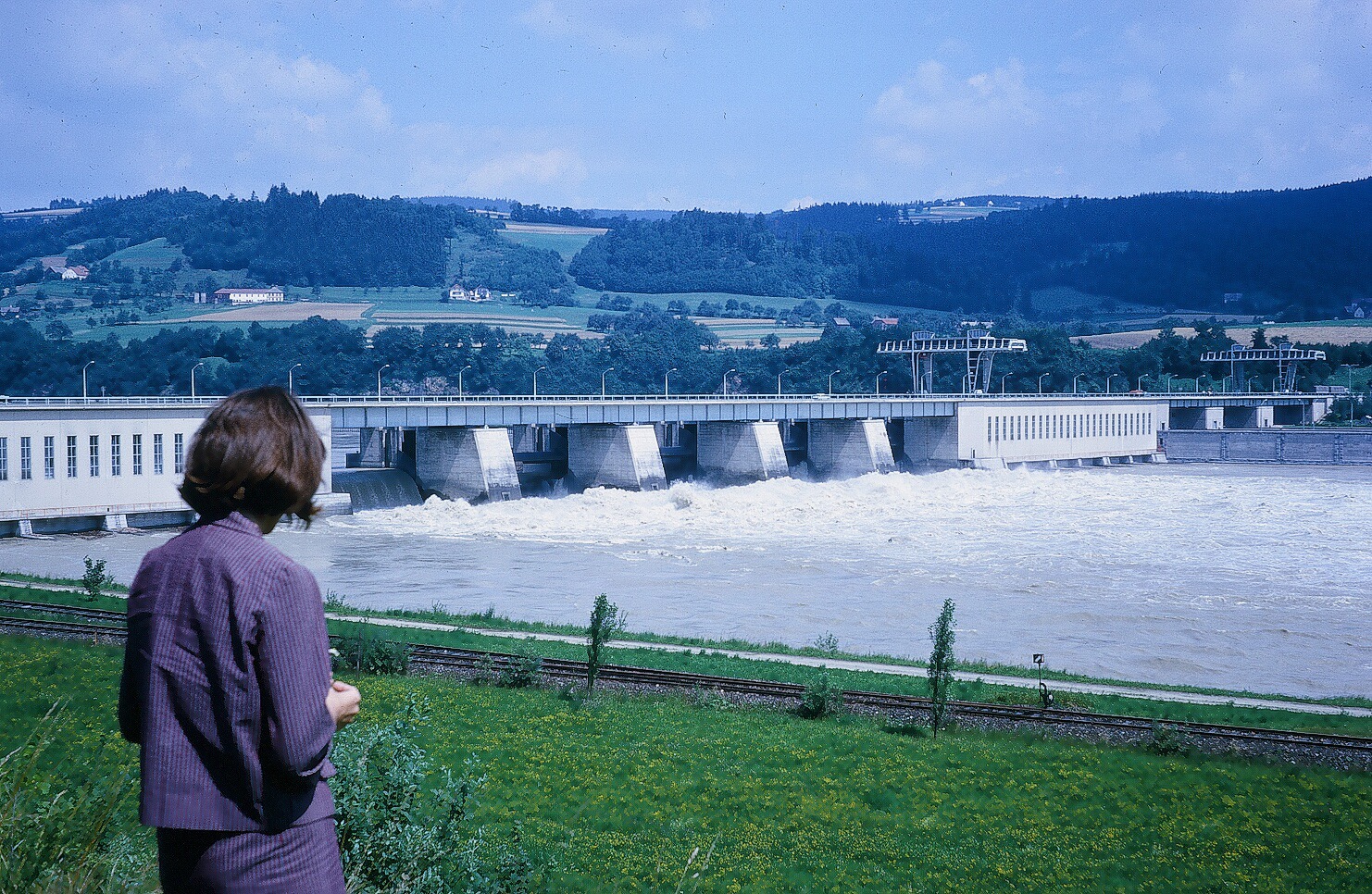
OAKES_S_0055.JPG Flooding Danube
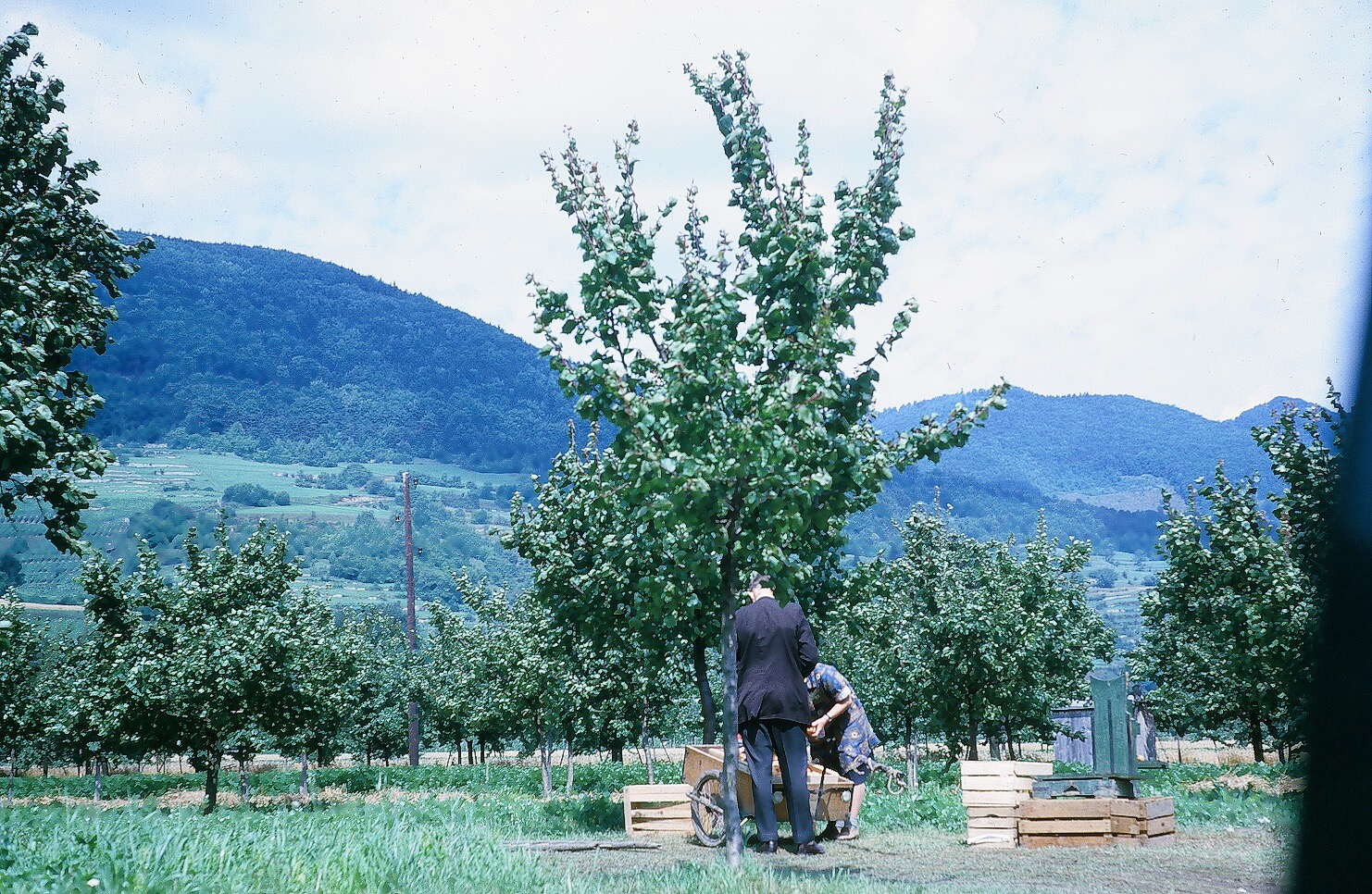
OAKES_S_0056.JPG Mel buying apricots.
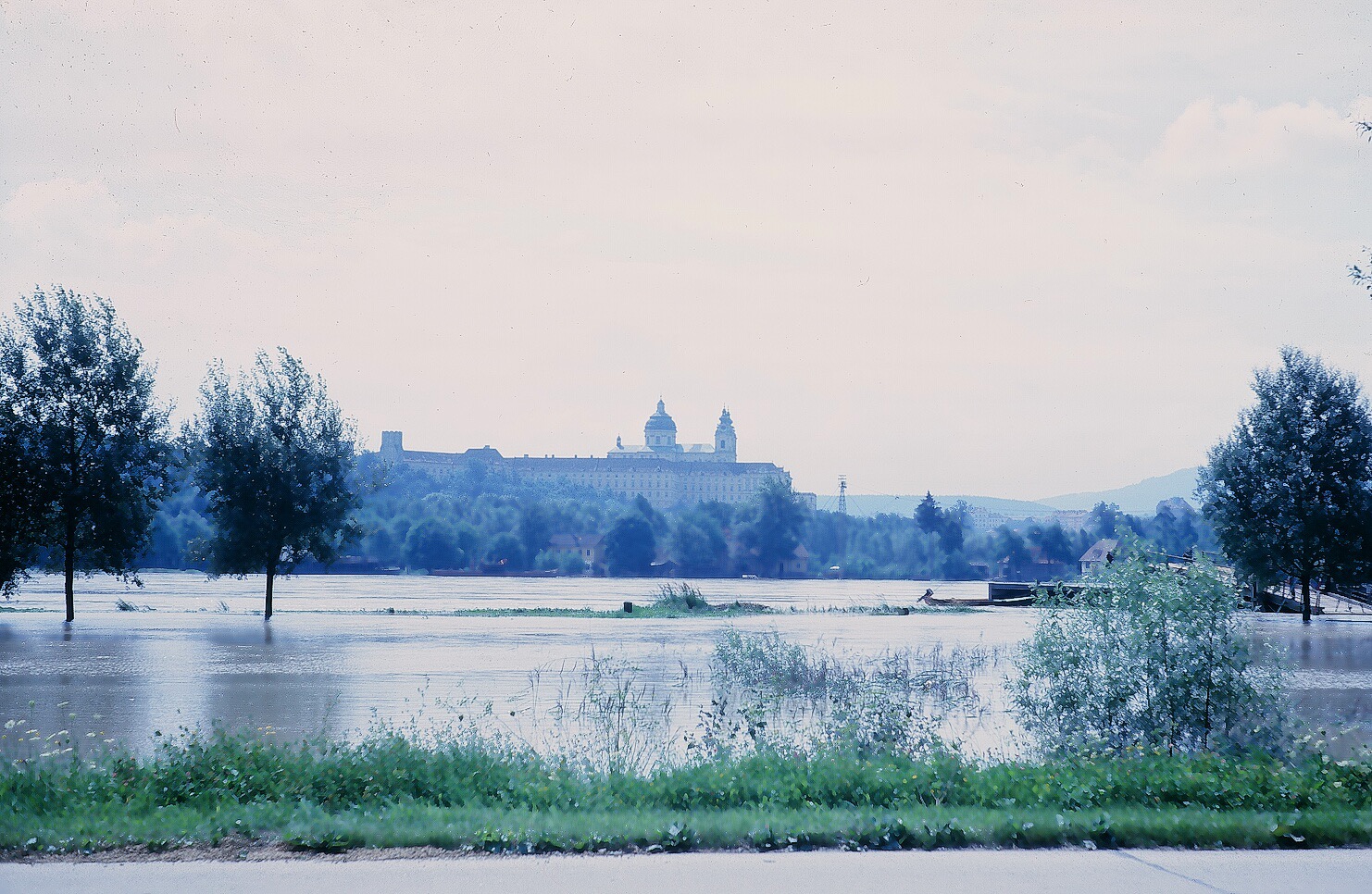
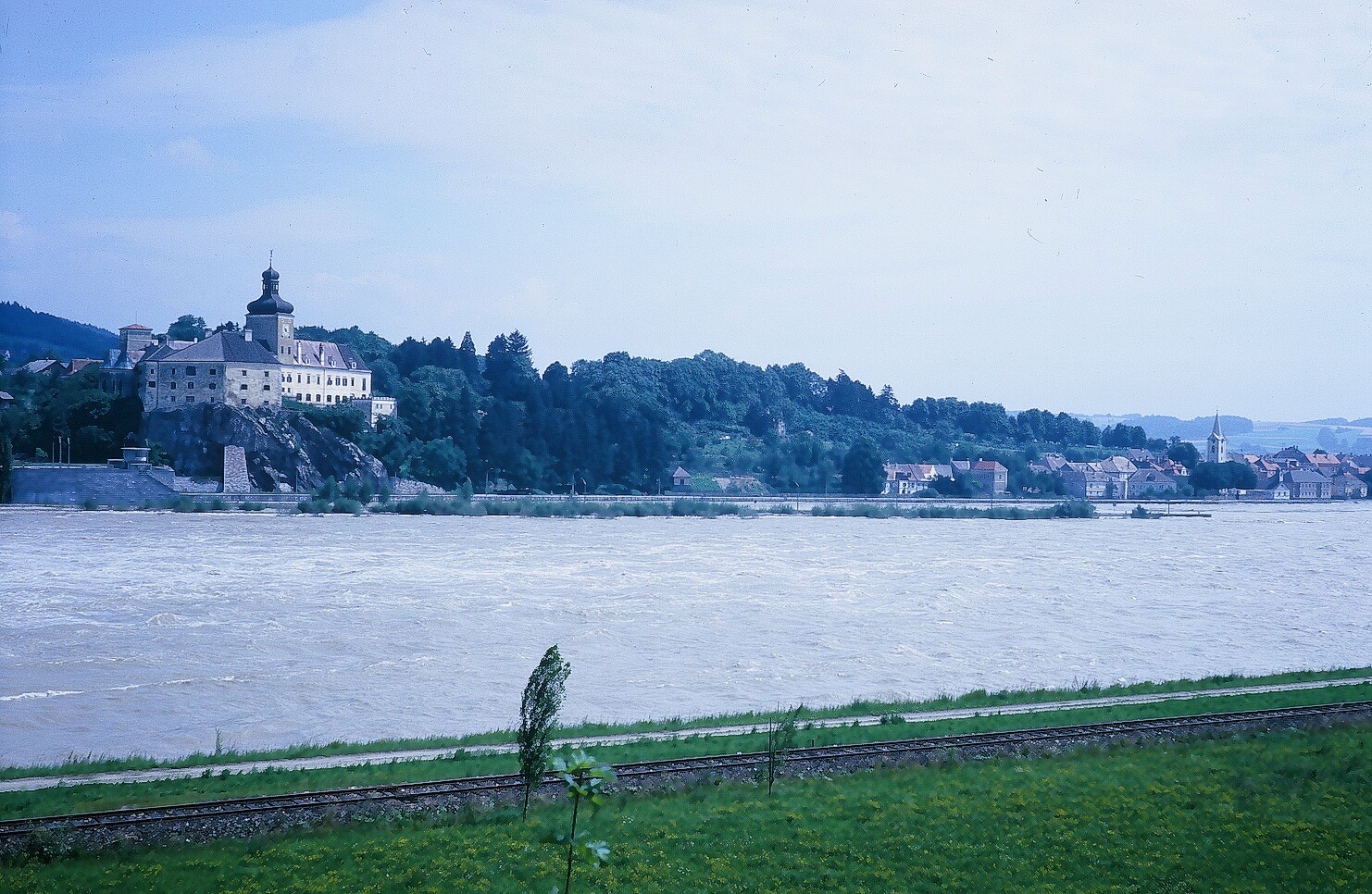
OAKES_S_0057.JPG Danube and Melk Abbey.
OAKES_S_0058.JPG Danube
OAKES_S_0059.JPG Danube
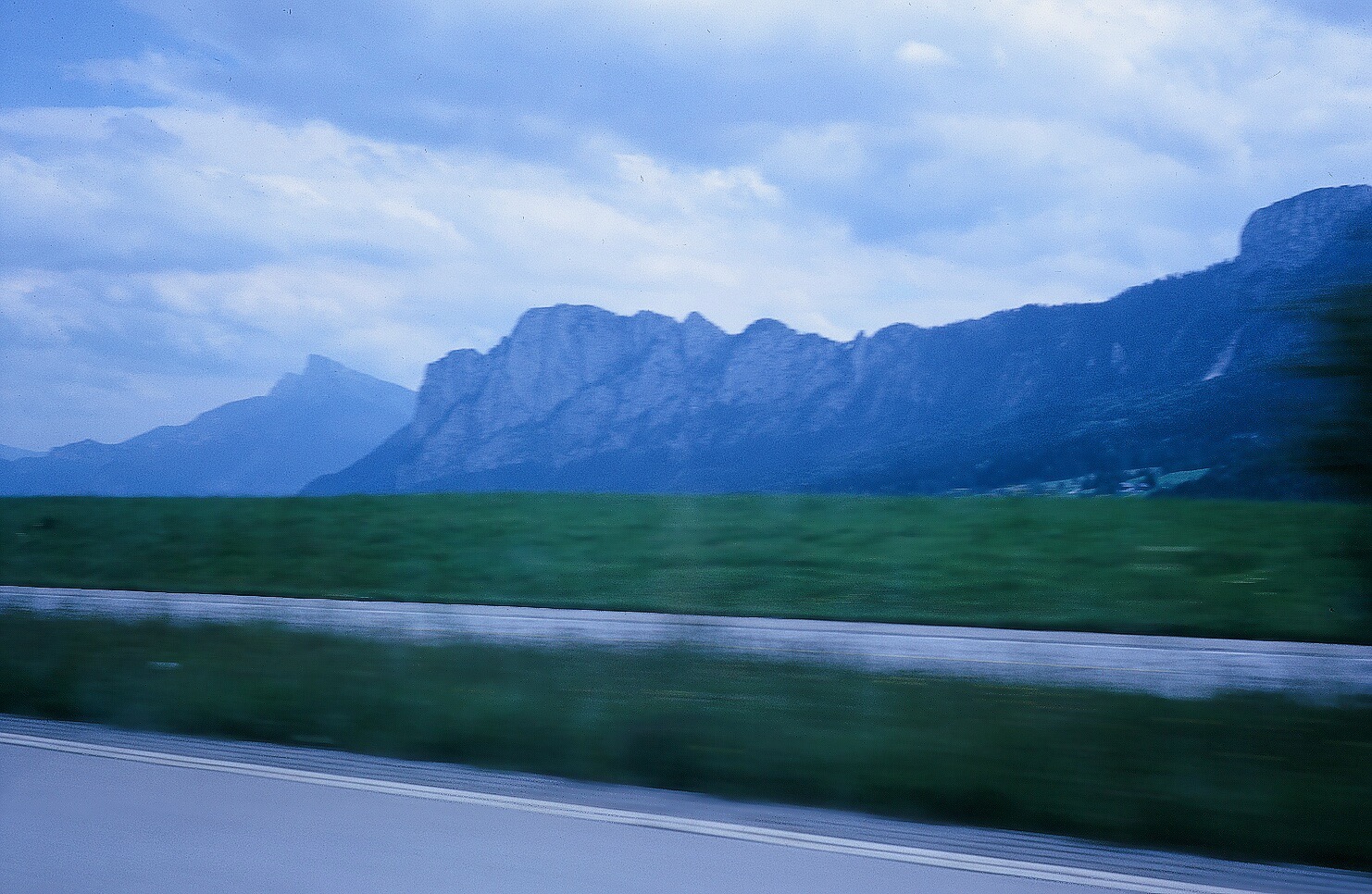
OAKES_S_0060.JPG Austrian mountains.
Summer 1966 Wonderful haystacks in Austria
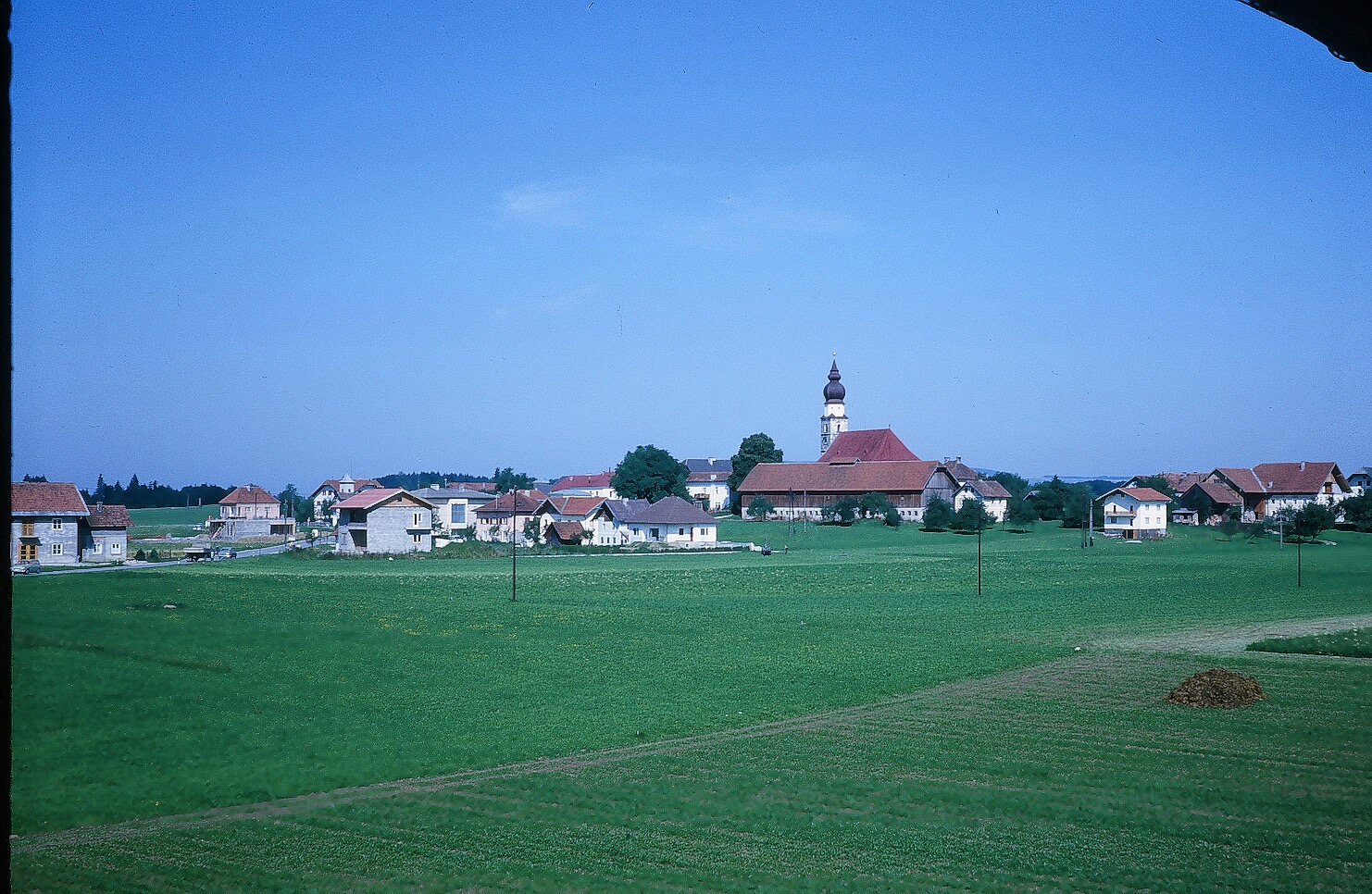
OAKES_S_0062.JPG Austrian Village
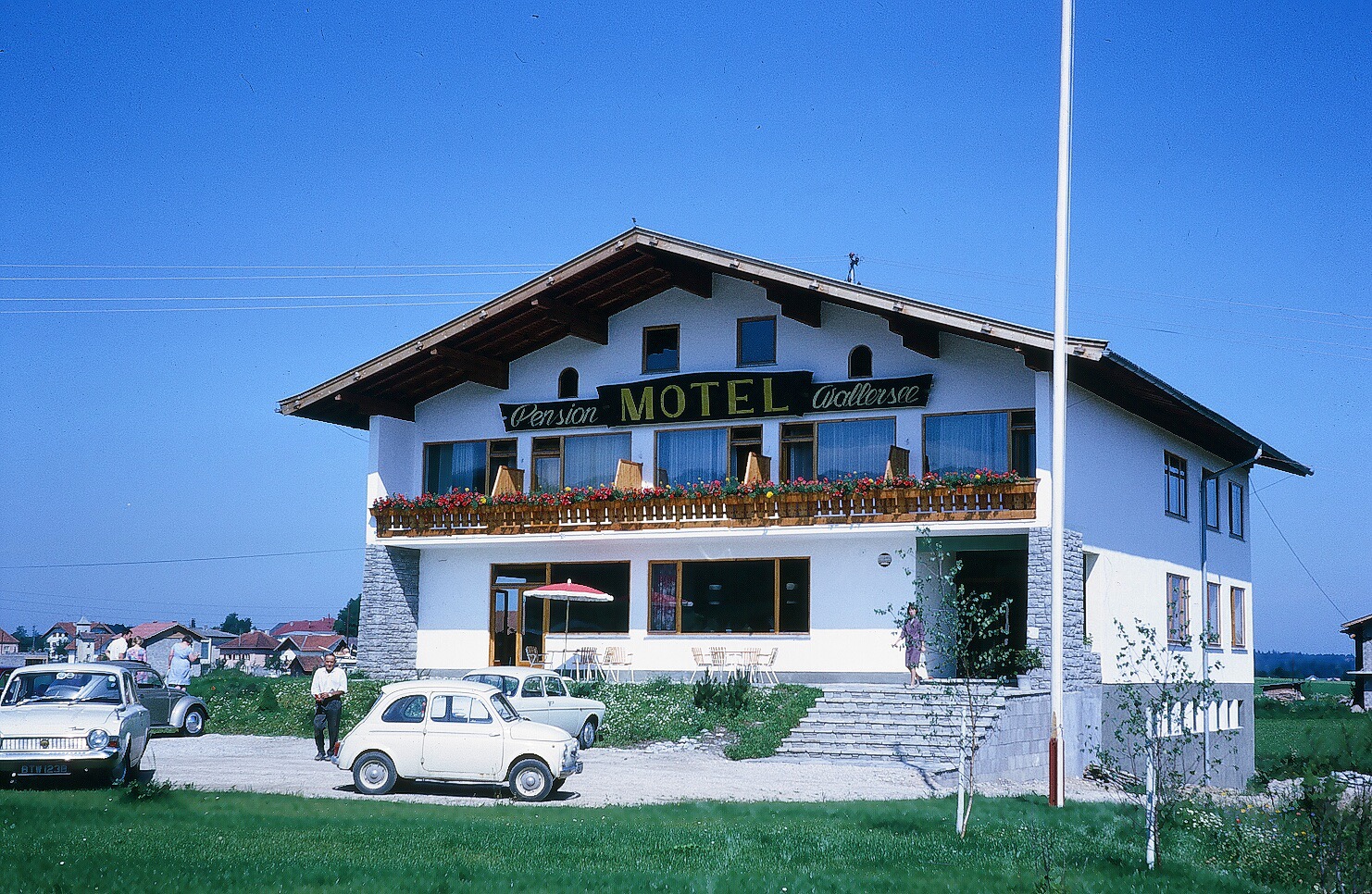
OAKES_S_0063.JPG Pension Wallersee outside Salzburg, Austria. $4.00/day with bath.
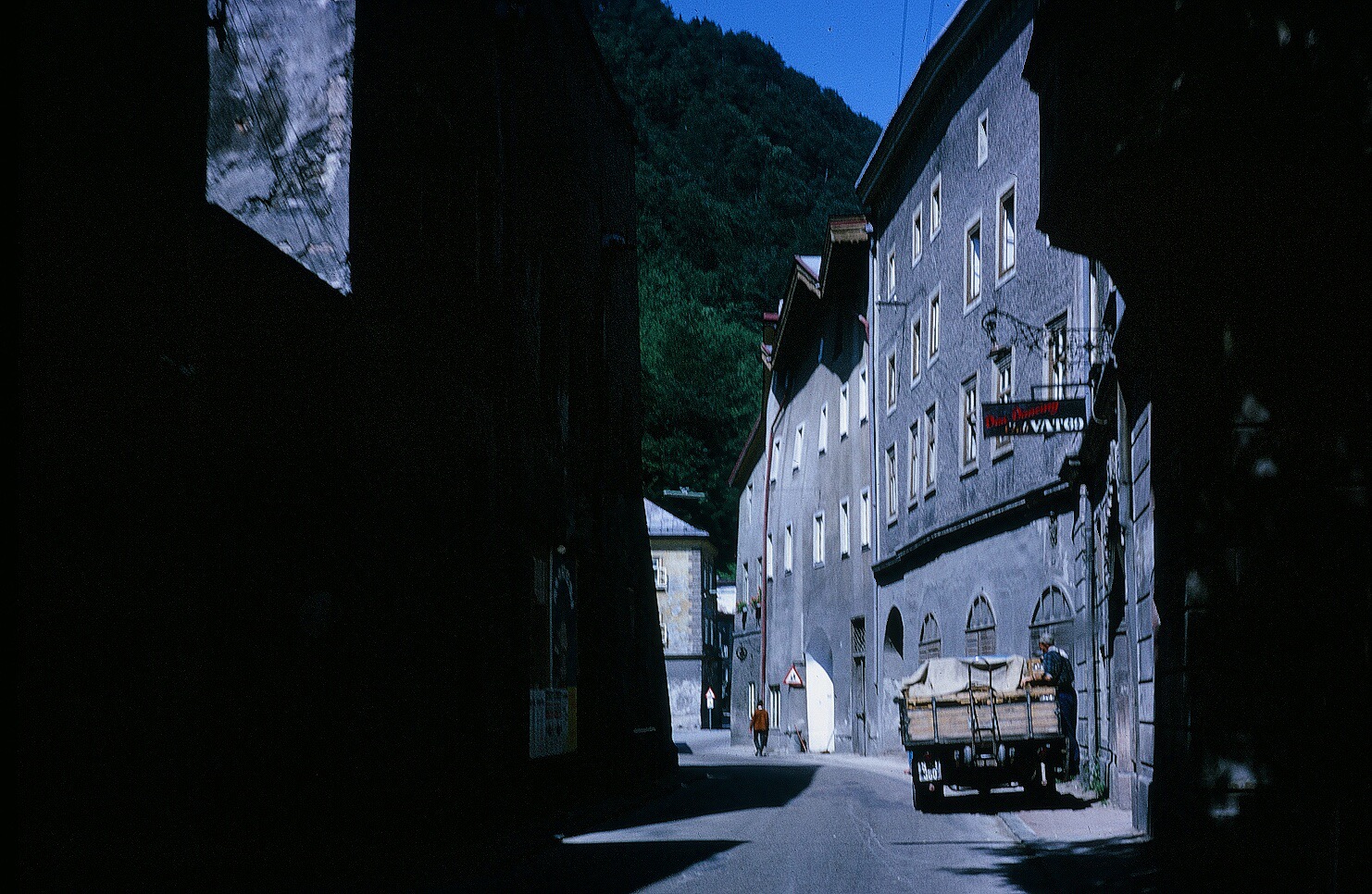
OAKES_S_0065.JPG Salzburg street.
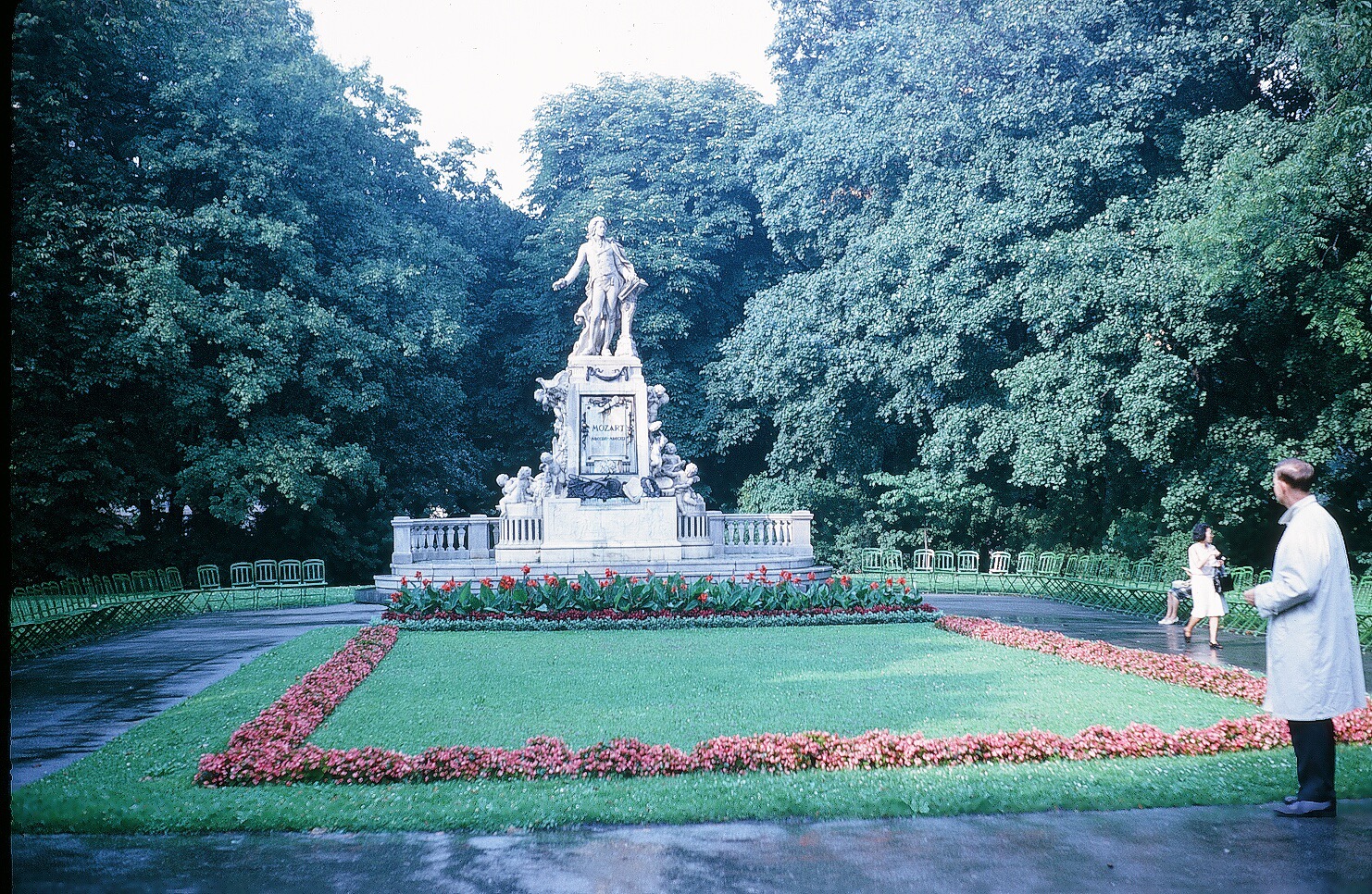
Summer 1966 Mozart's birthplace in Salzburg, Austria
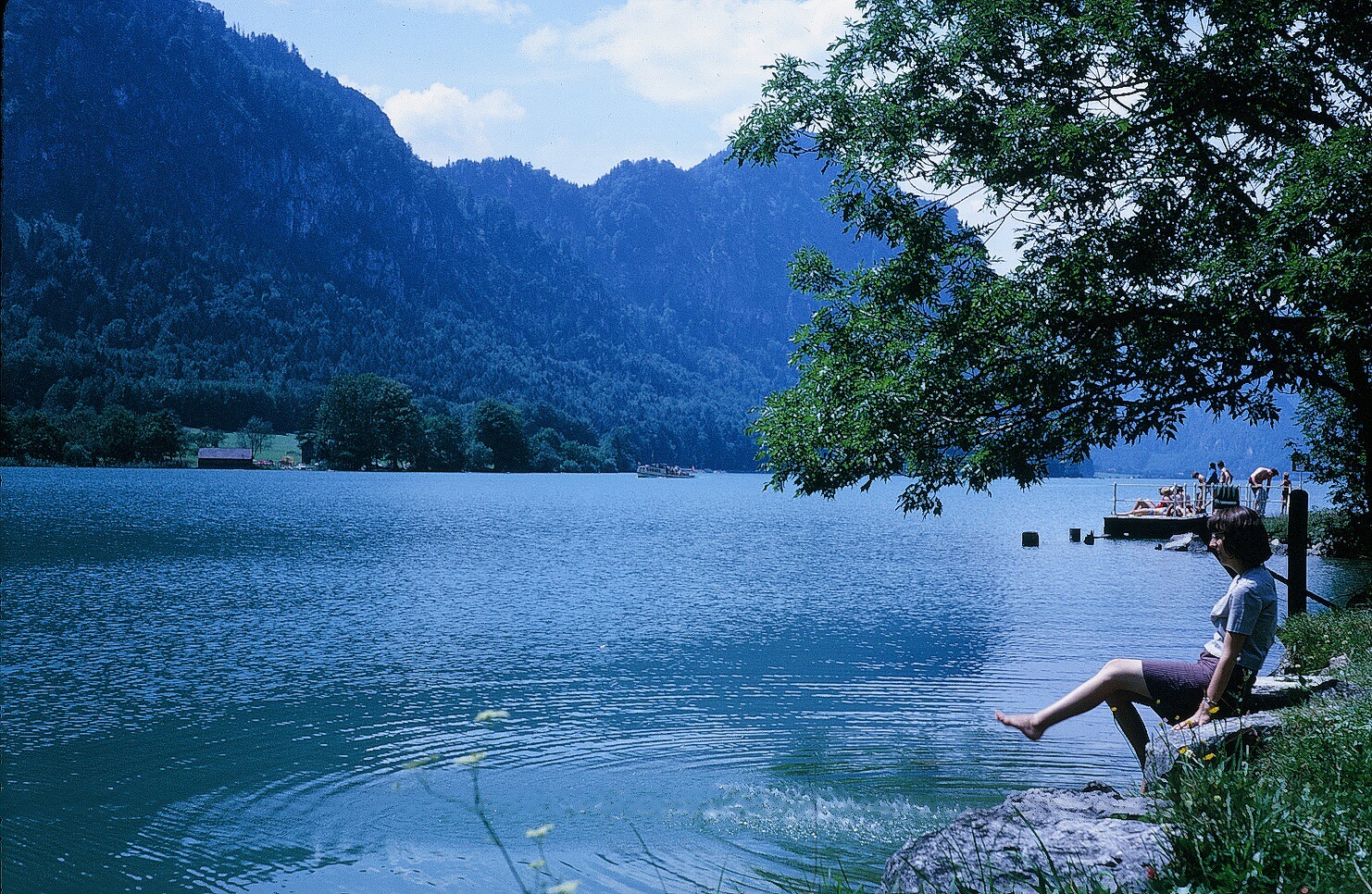
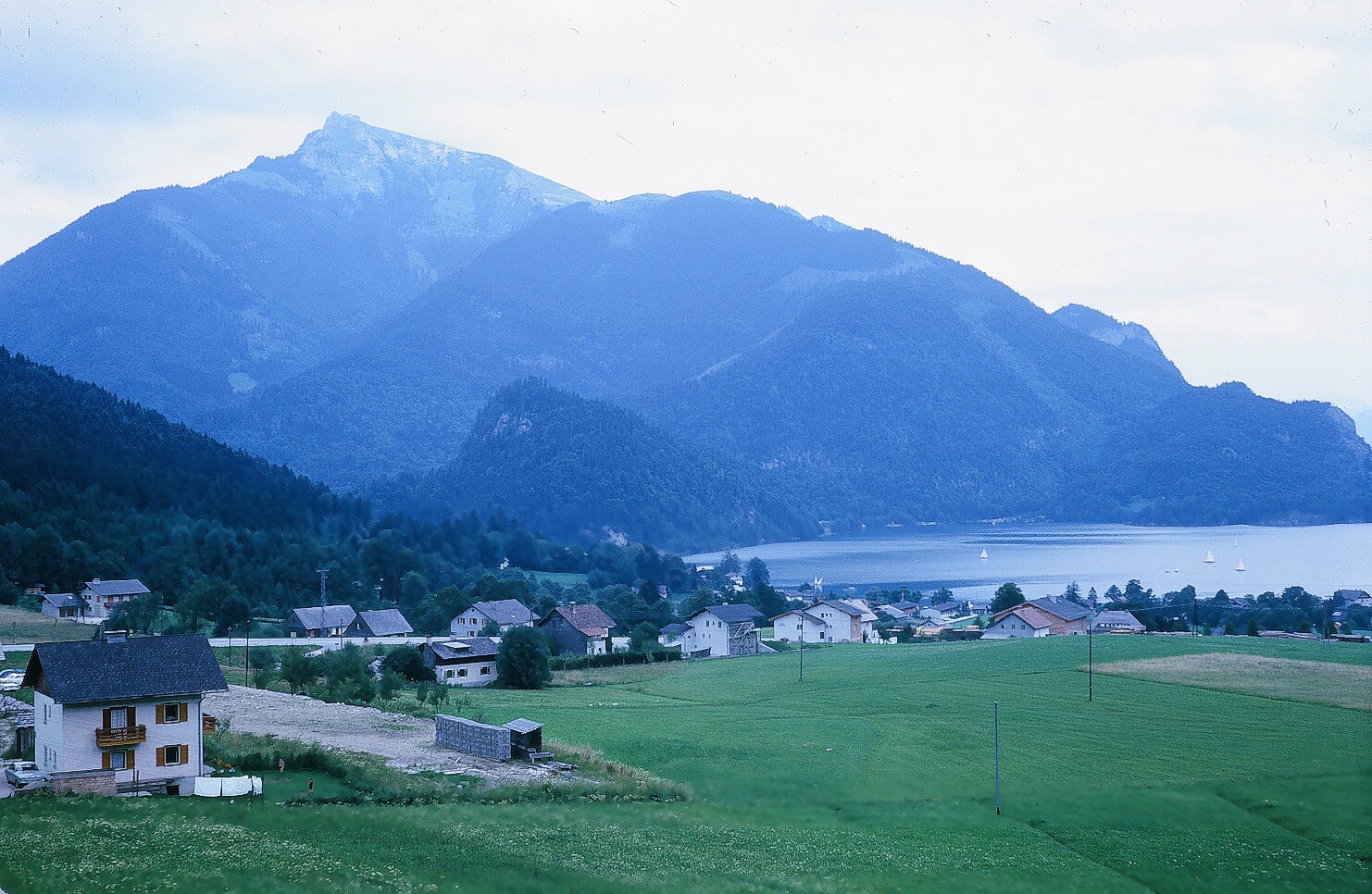
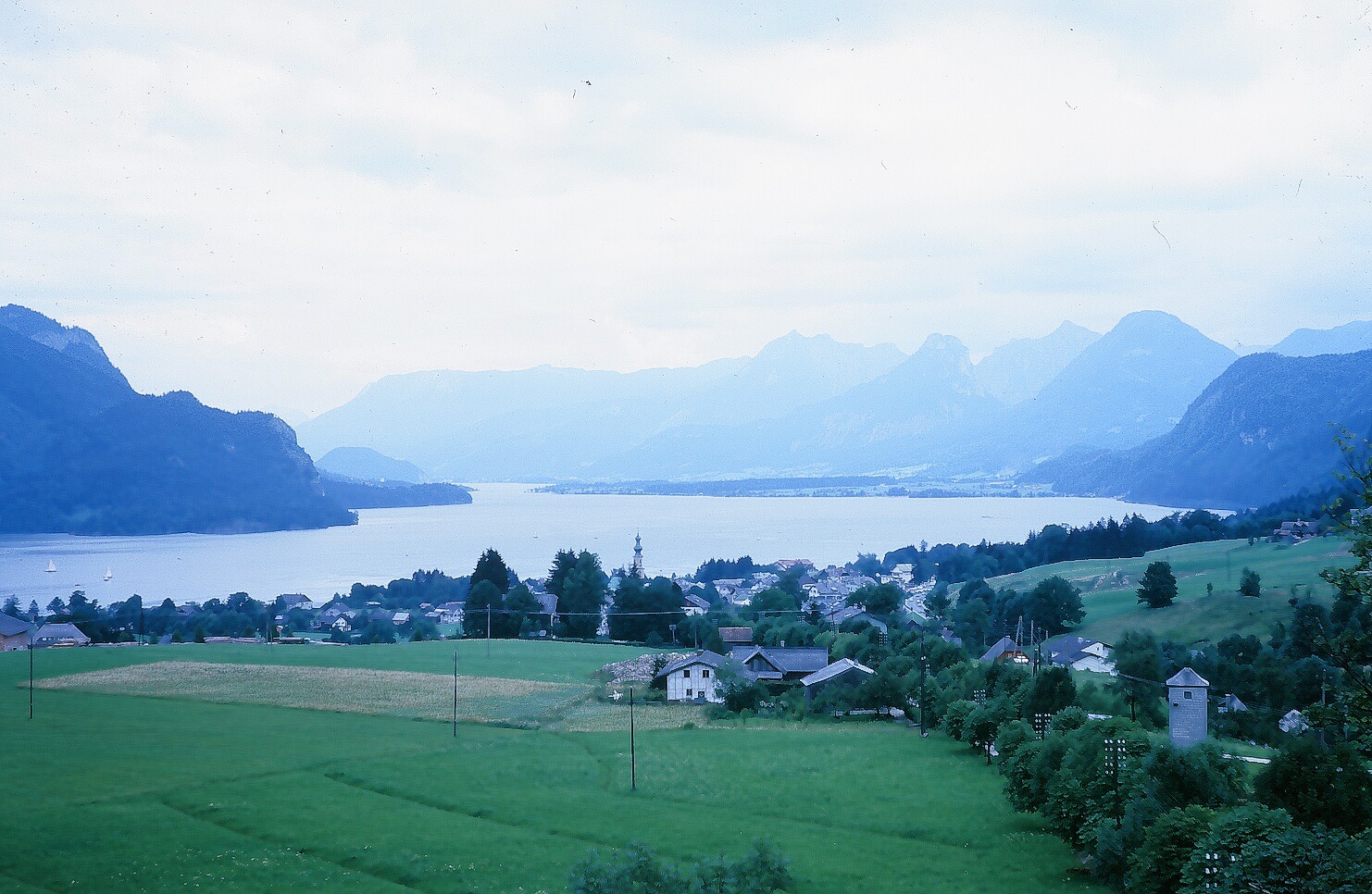
OAKES_S_0066.JPG Mondsee, Bad Ischl and St. Gilgen lake area outside of Salzburg. Pat enjoying water.
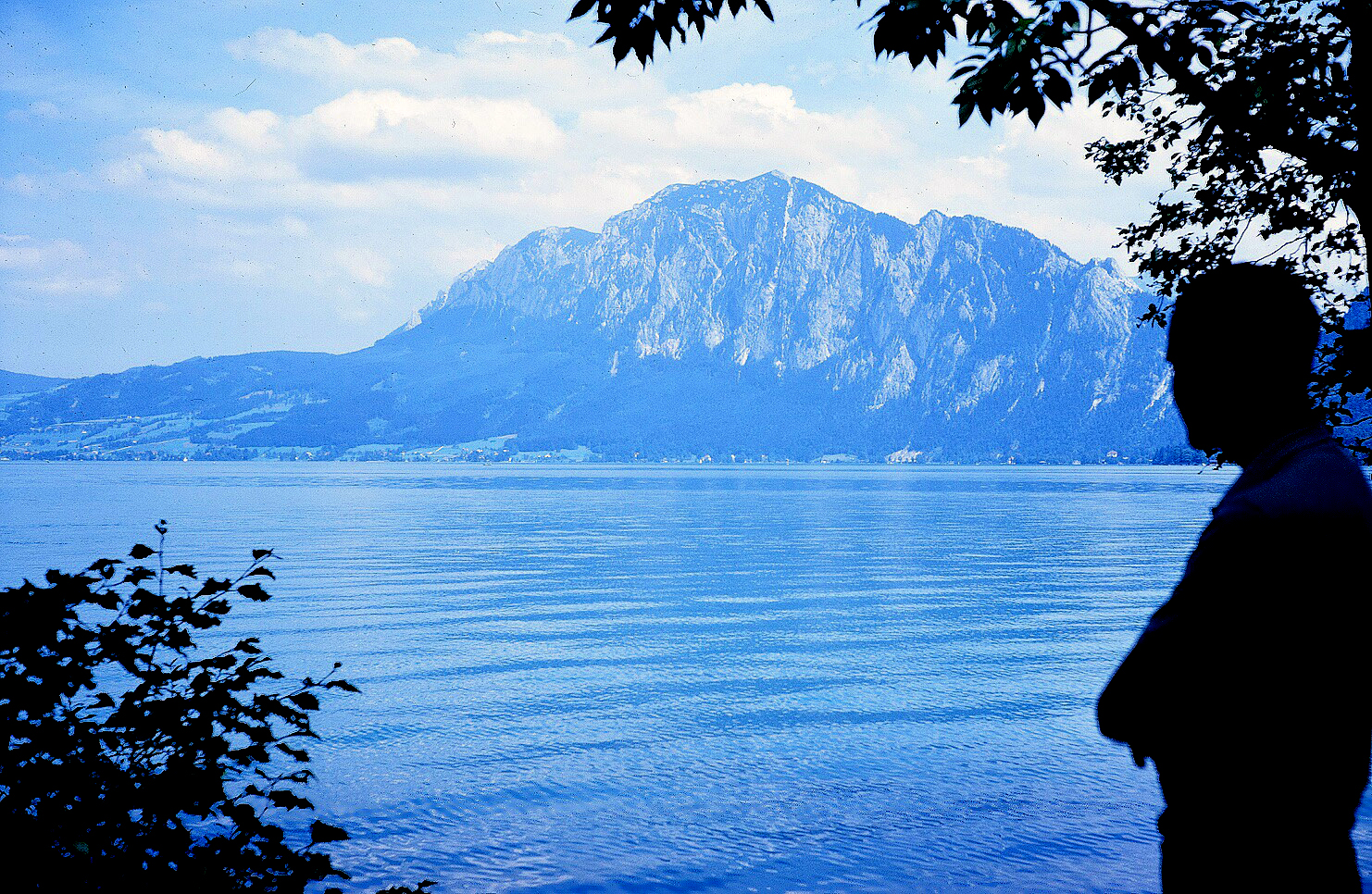
OAKES_S_0067.JPG Mel and lake outside of Salzburg. Mondsee and St. Gilgen.
OAKES_S_0068.JPG Outside Salzburg, Mondsee and St. Gilgen
OAKES_S_0069.JPG Outside Salzburg, Mondsee and St. Gilgen
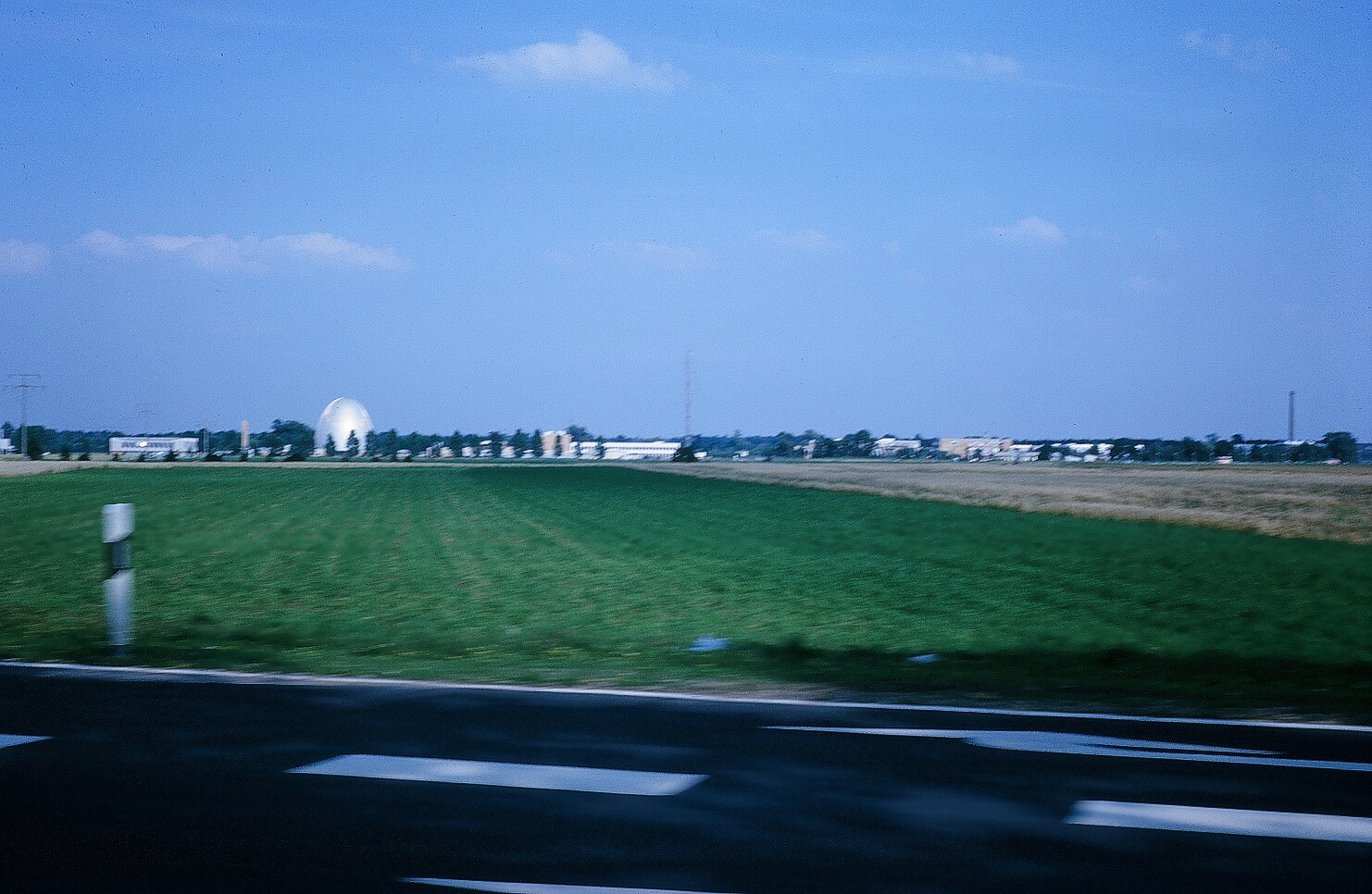
OAKES_S_0070.JPG Max Planck Institute, Garching, Germany
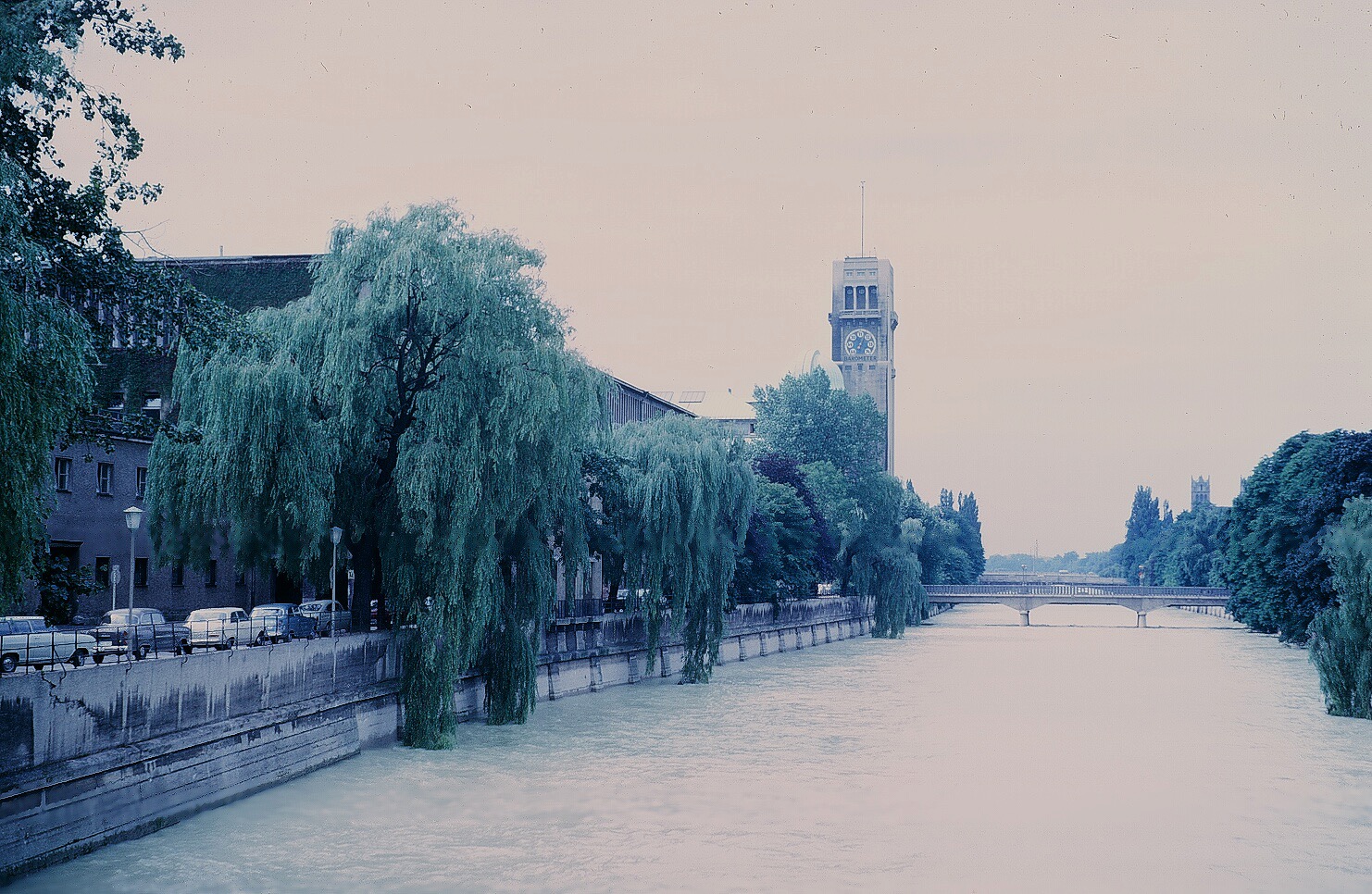
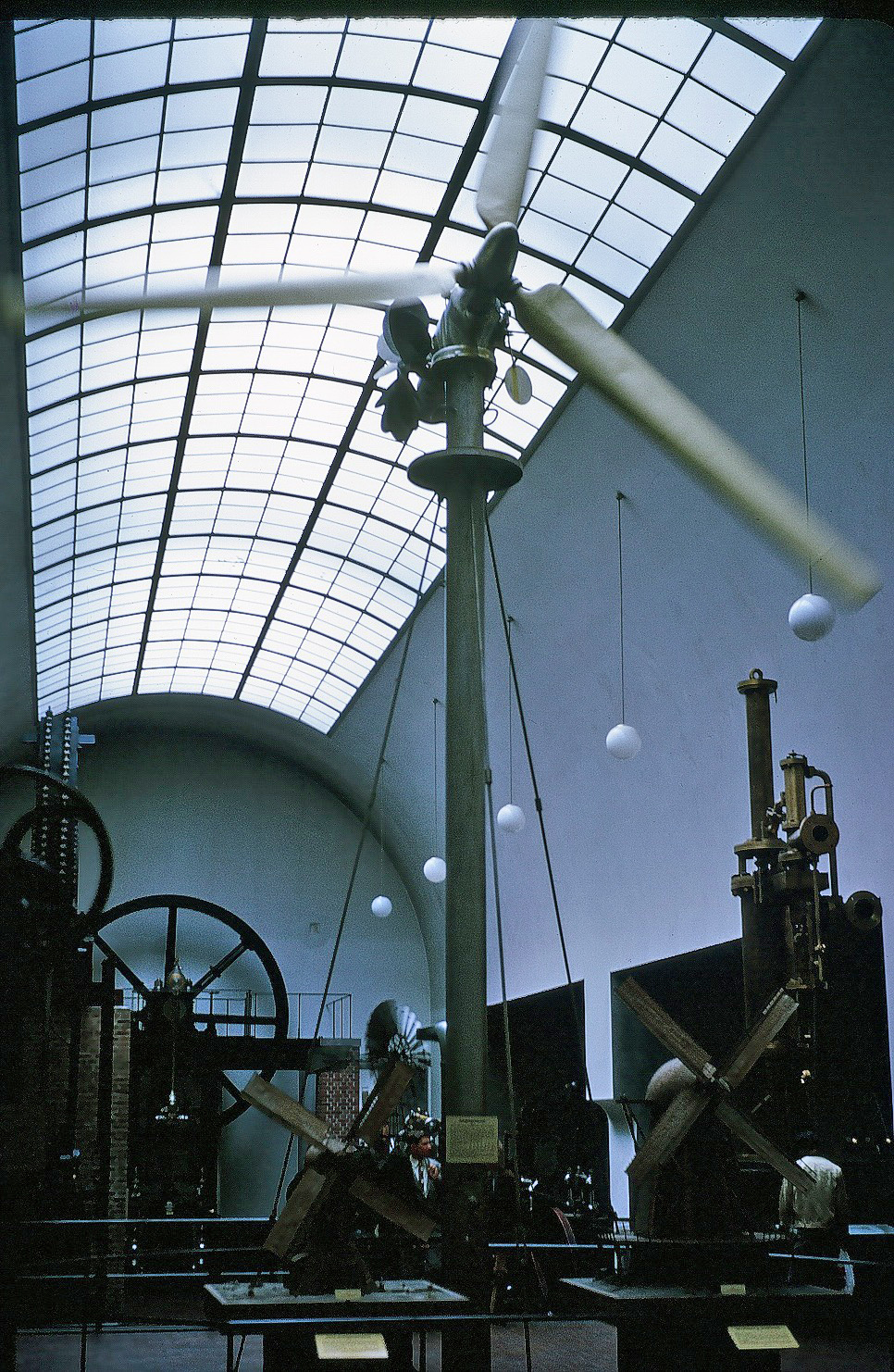
Summer 1966 Crankshaft at the Deutches Museum in Munich
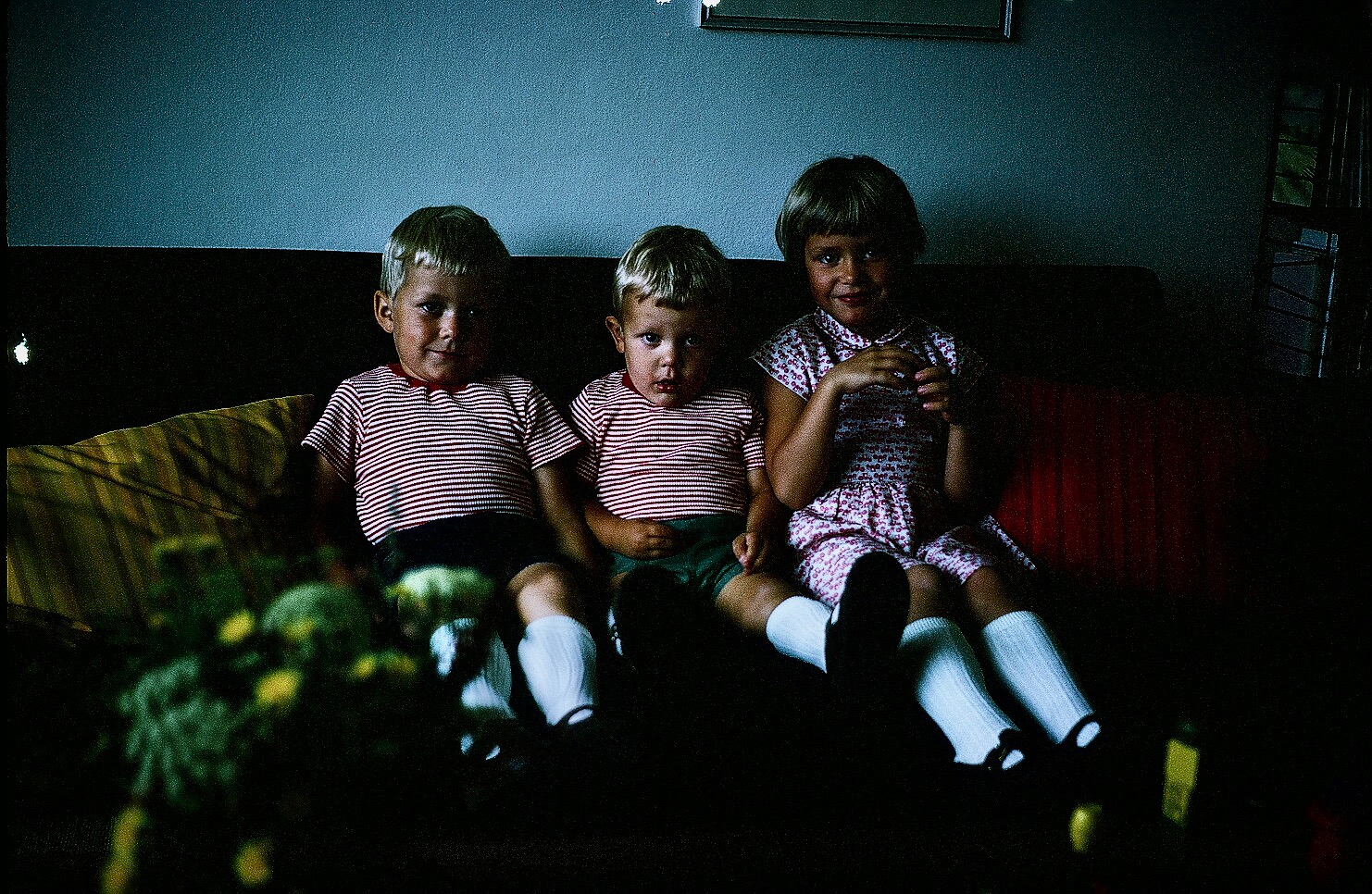
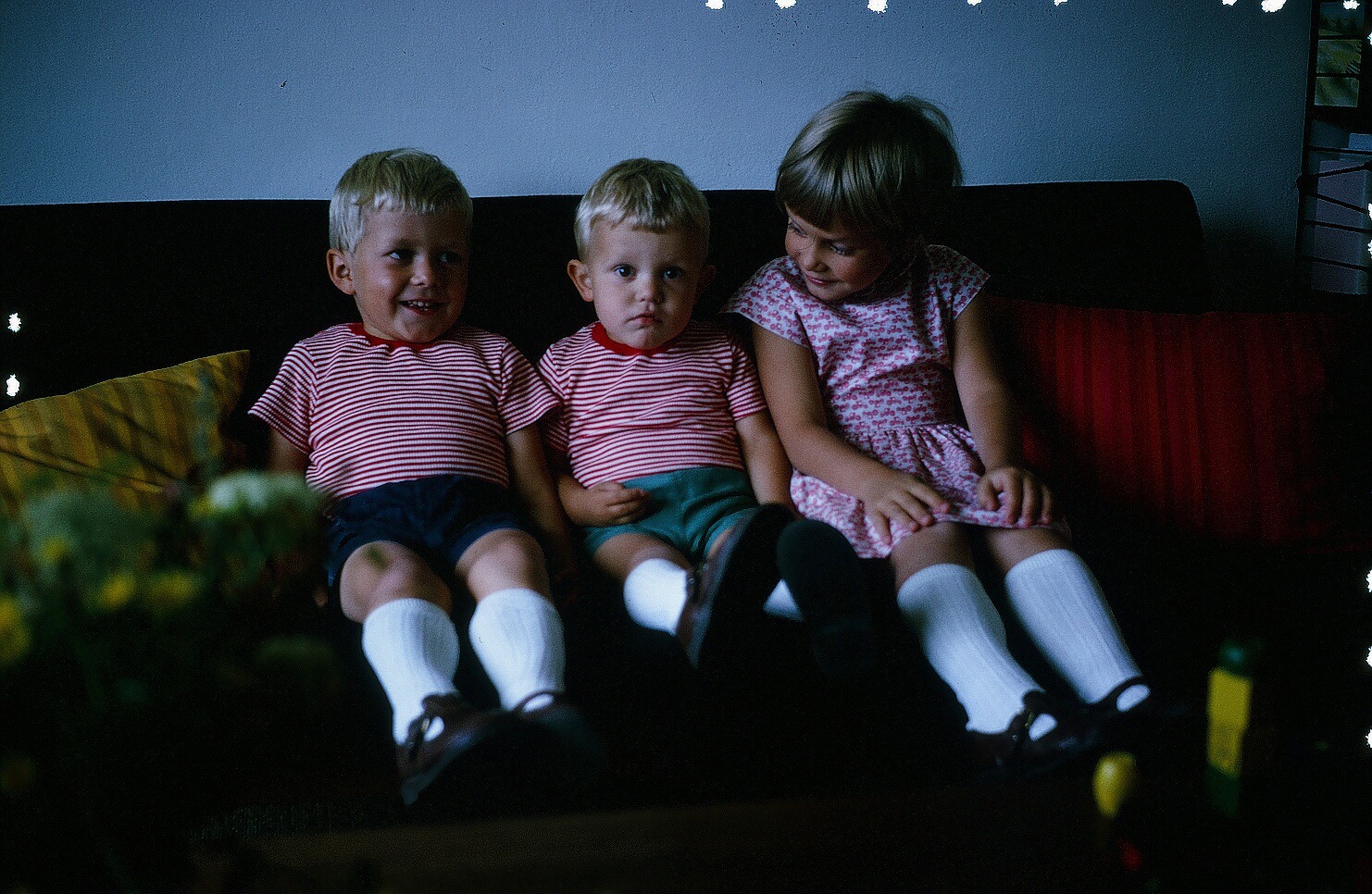
OAKES_S_0078.JPG Mayer children, Sebastian, Johannes and Susanne Mayer.
OAKES_S_0079.JPG Sebastian, Johannes and Susanne Mayer
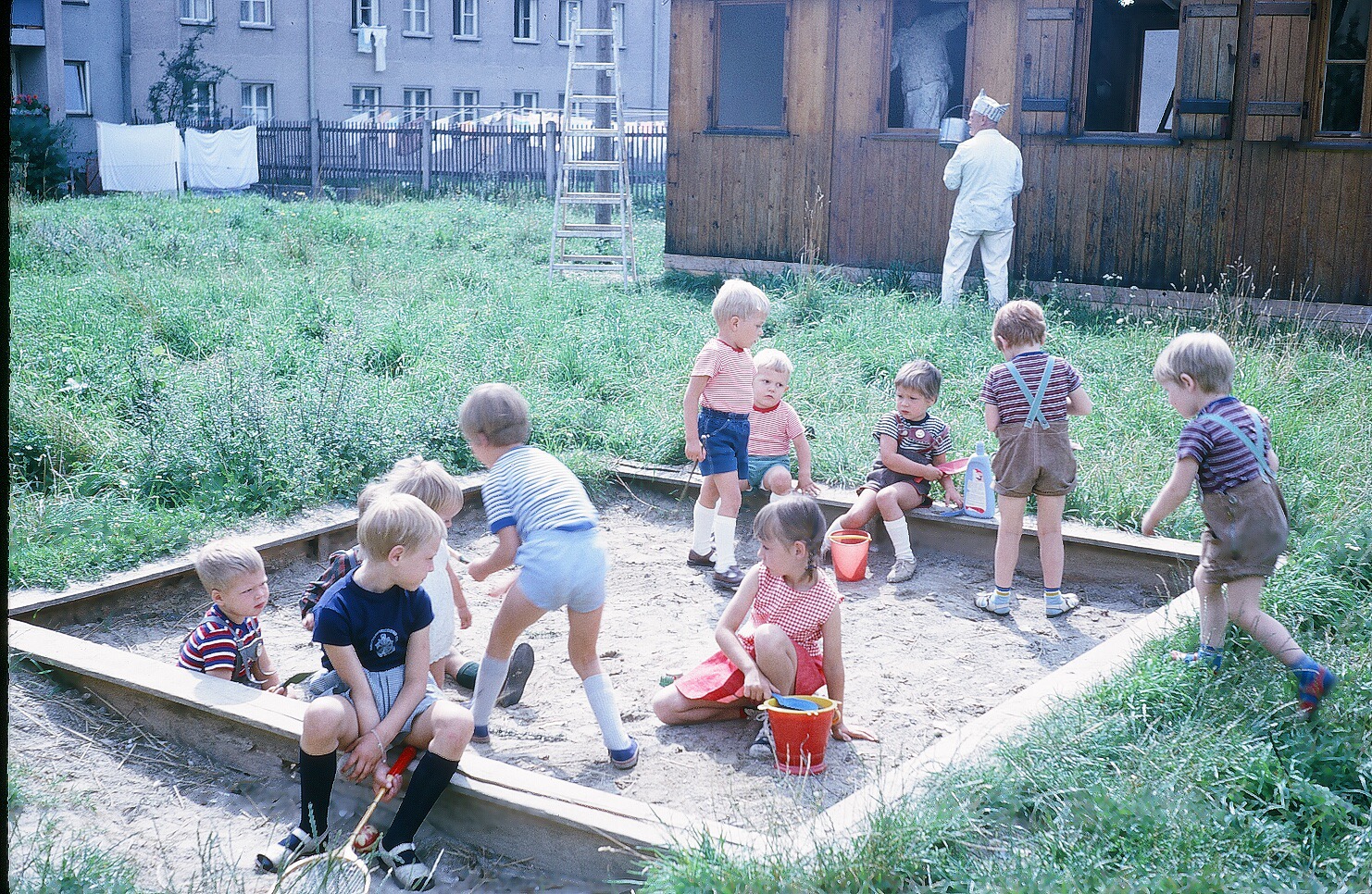
OAKES_S_0080.JPG Sebastian, Johannes and Susanne Mayer children playing.
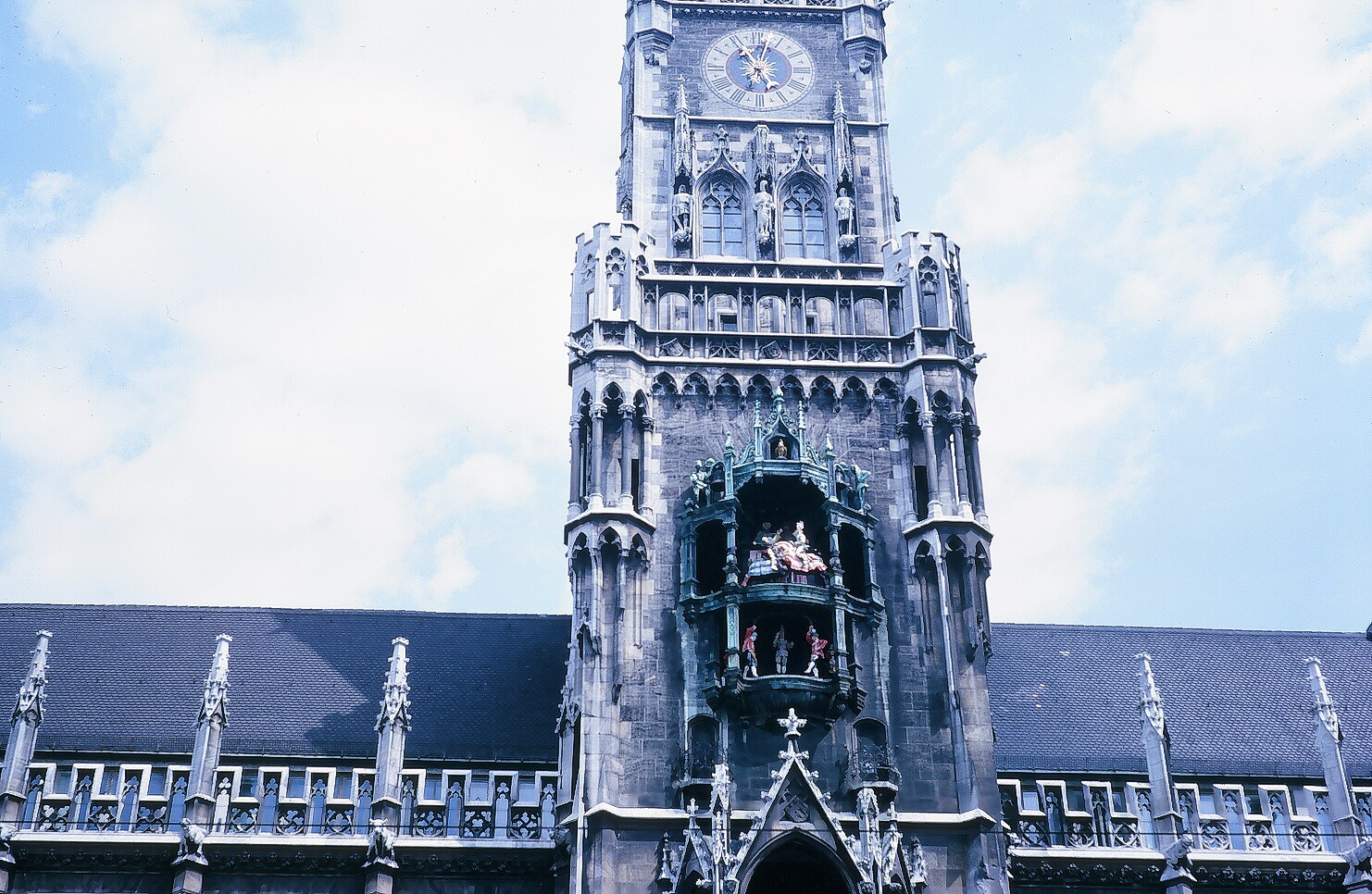
OAKES_S_0082.JPG Munich Rathaus Glockenspiel.
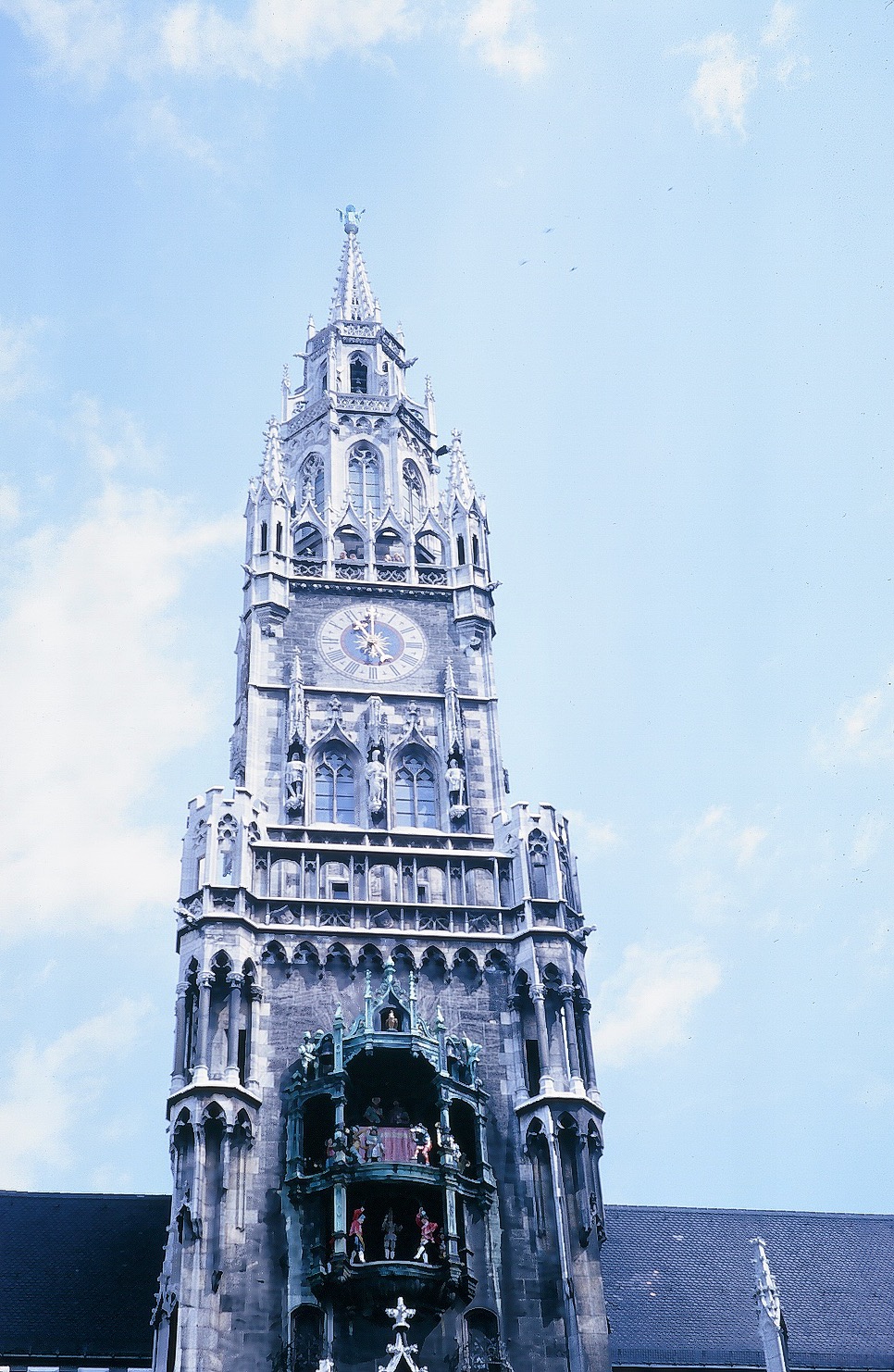
Summer 1966 Glockenspiel
OAKES_S_0083.JPG Munich Countryside
OAKES_S_0084.JPG Roger and Virginia Wendt . We thought Virginia and Chuck were in Nurenburg but had moved to Goppingen about 100 miles away.
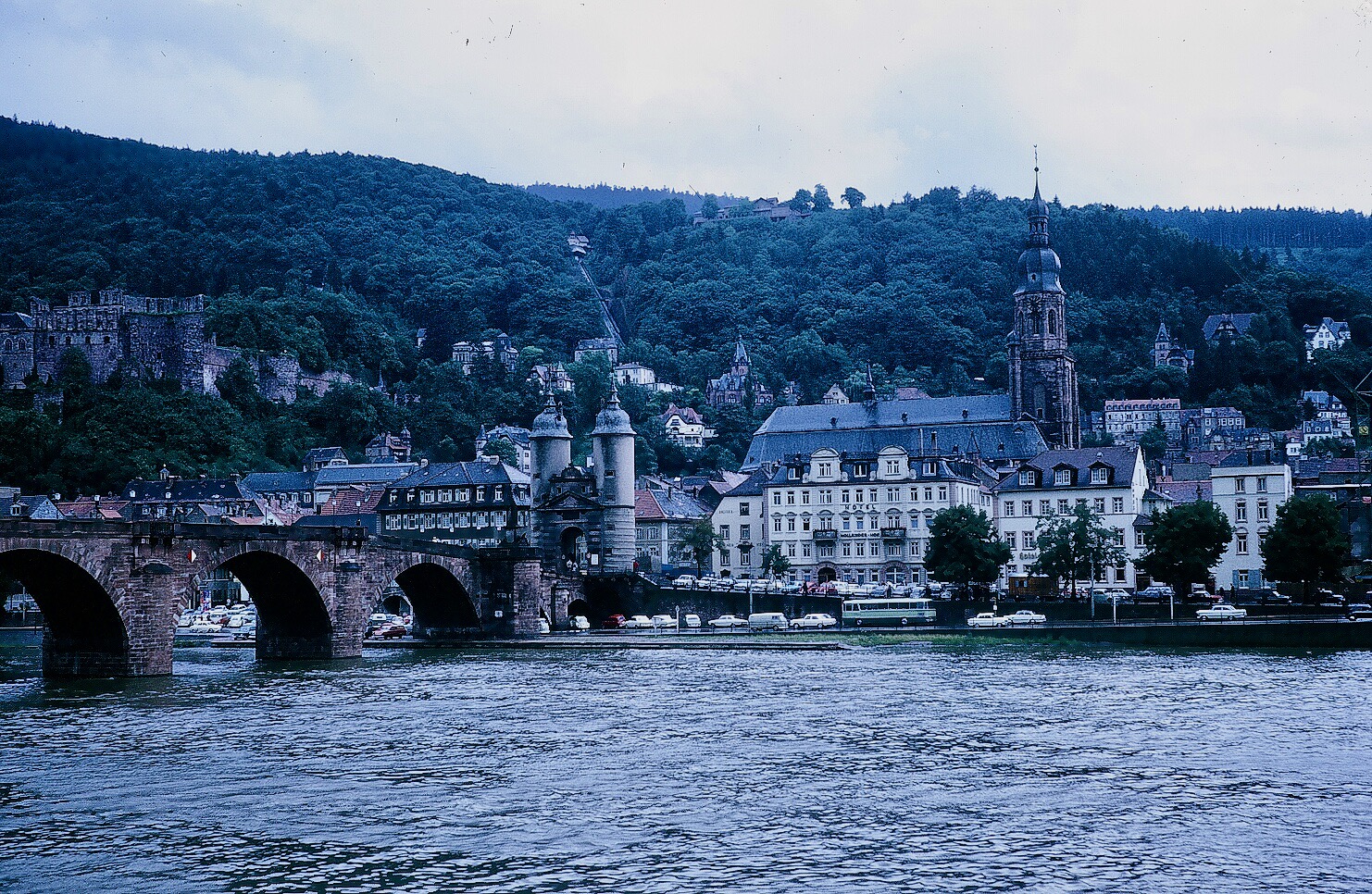
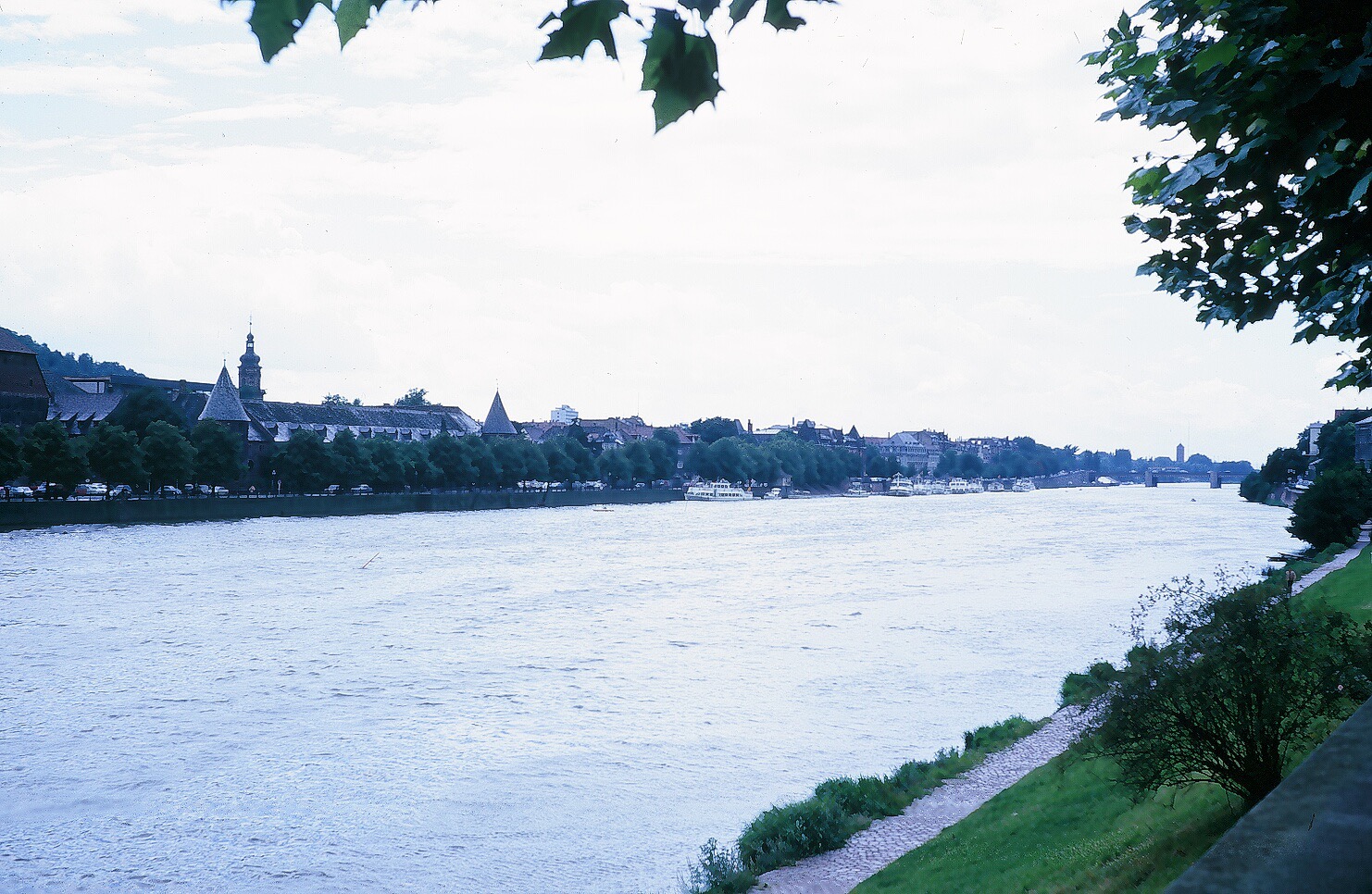
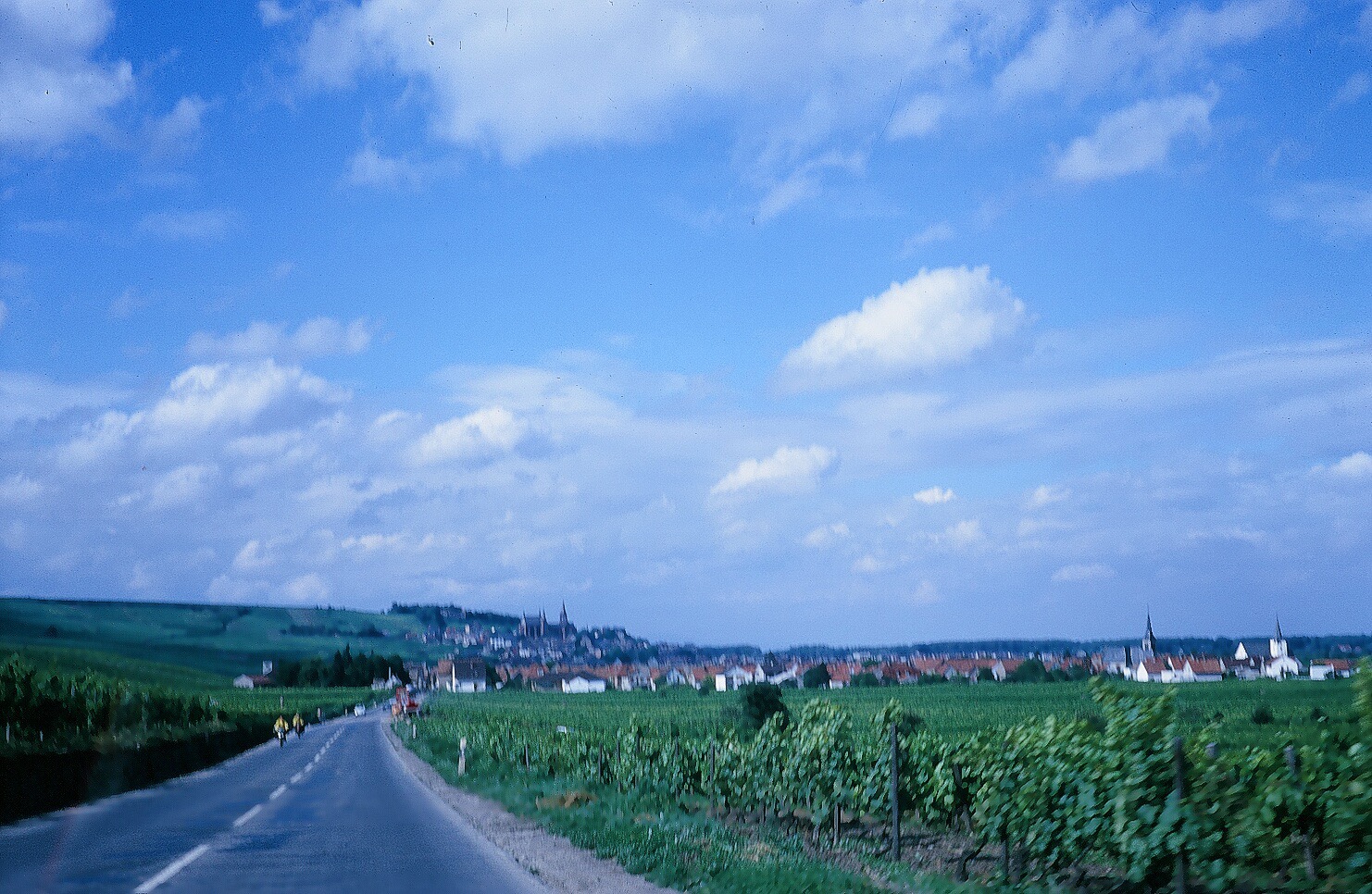
OAKES_S_0085.JPG Views along the Rhine
OAKES_S_0086 the Rhine.
OAKES_S_0088.JPG Germany
OAKES_S_0089.JPG Germany along the Rhine.
OAKES_S_0090.JPG Germany
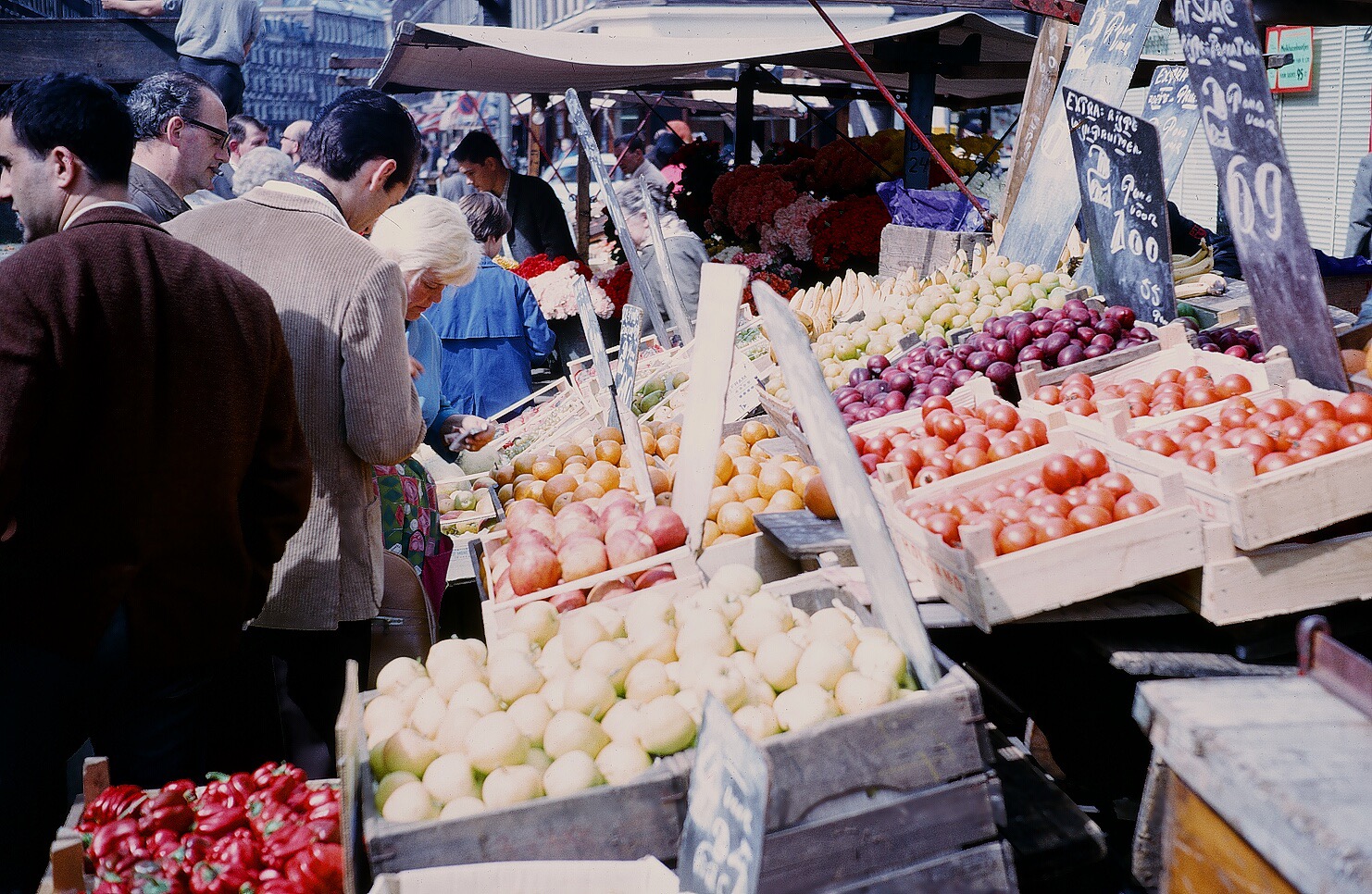
OAKES_S_0097.JPG Market along the Rhine
1966 an Esso gas station
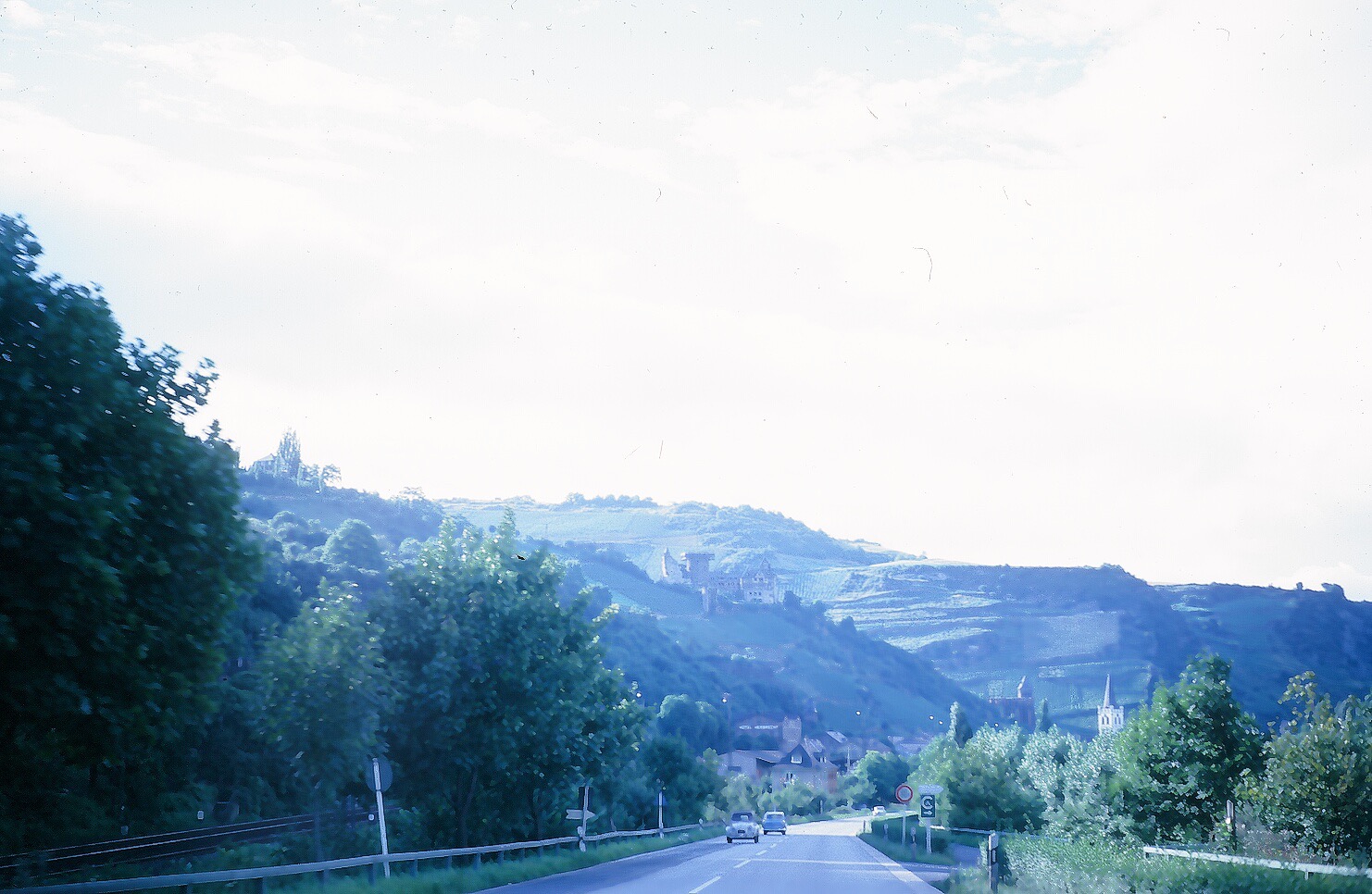
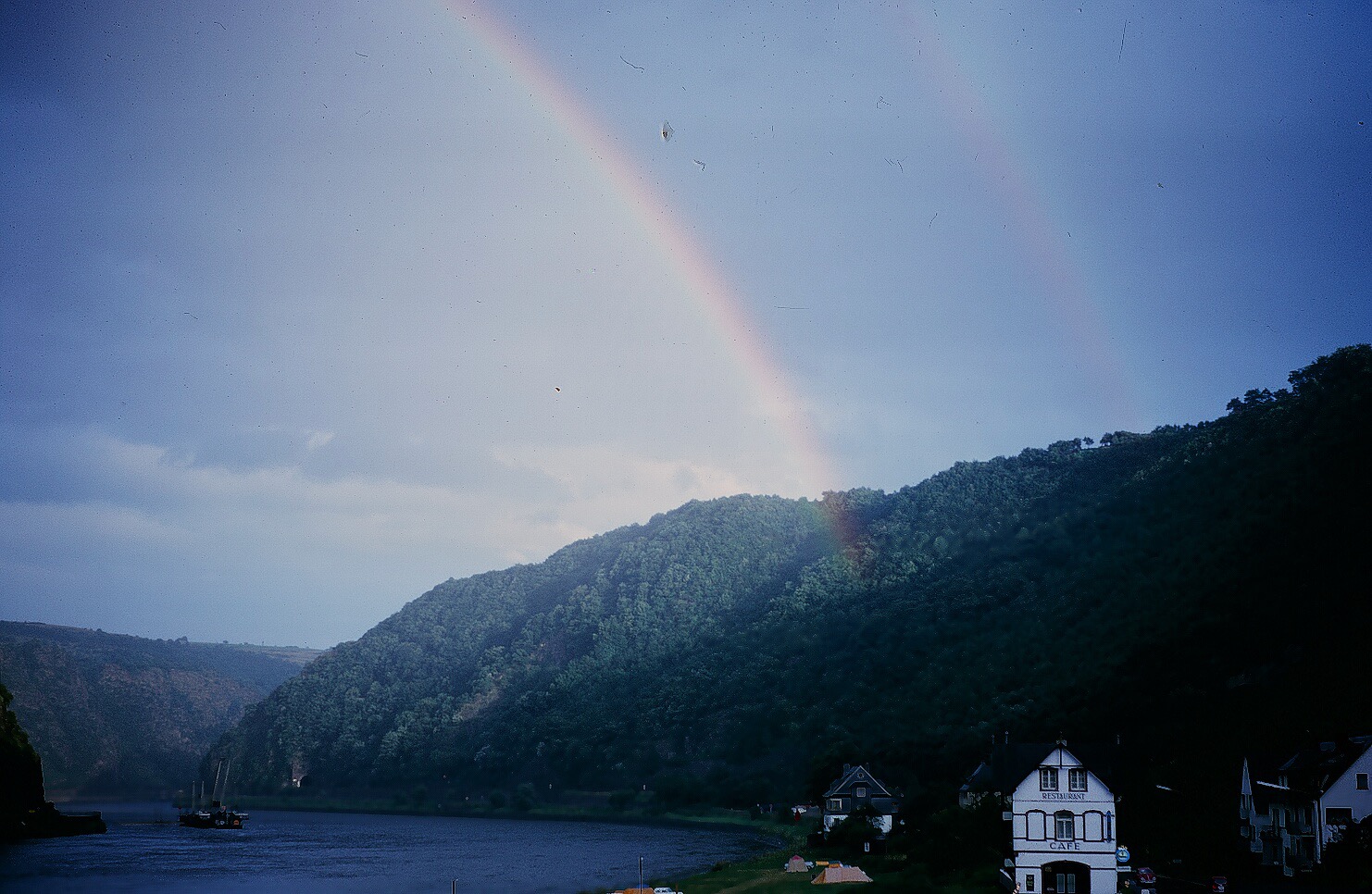
1966 The Rhine RIver Die Lorelei along the Rhine.
1966 Beauatiful rainbow on the Rhine River at Lorelei.
Double rainbow on the Rhine at Lorelei
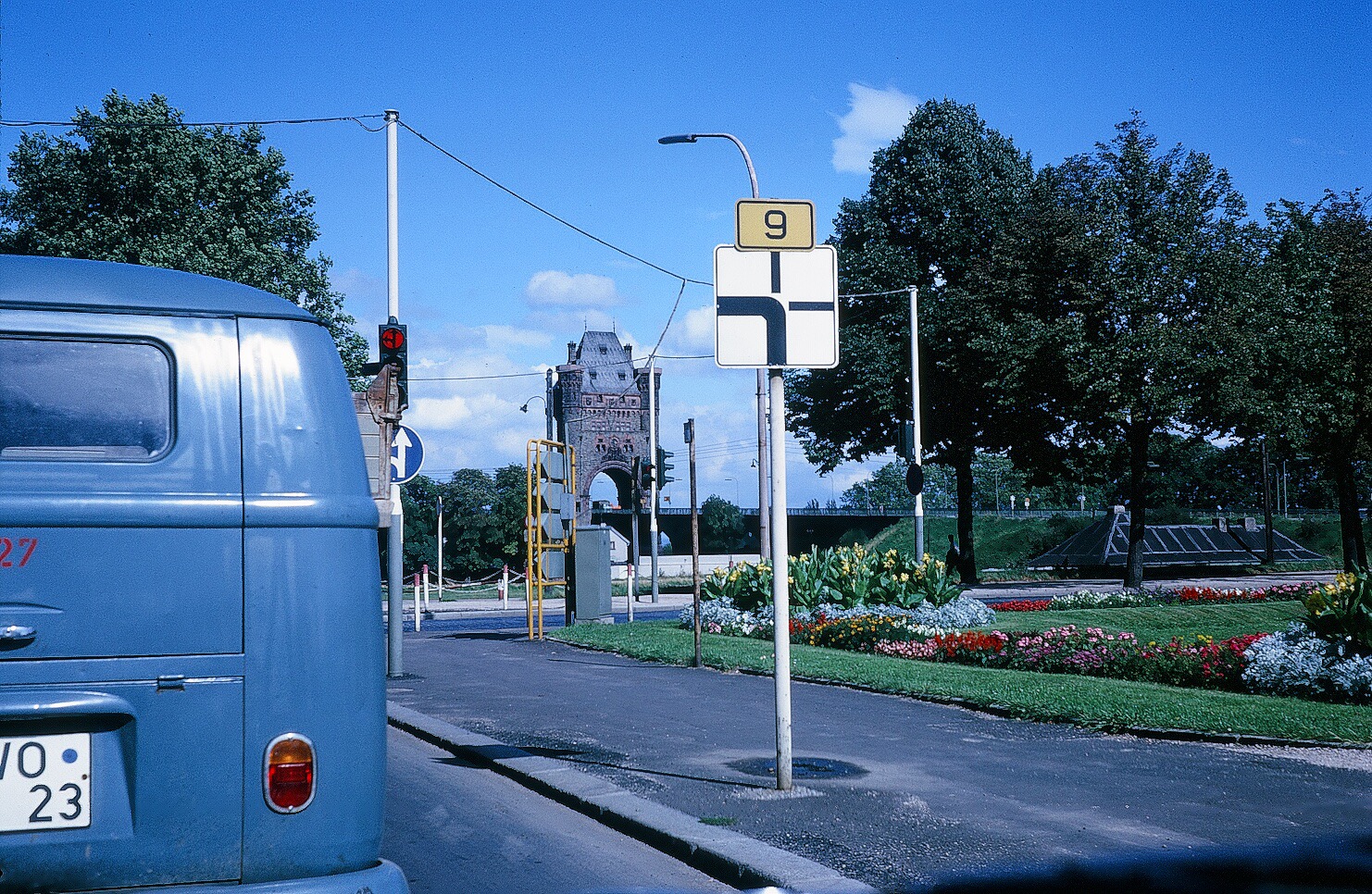
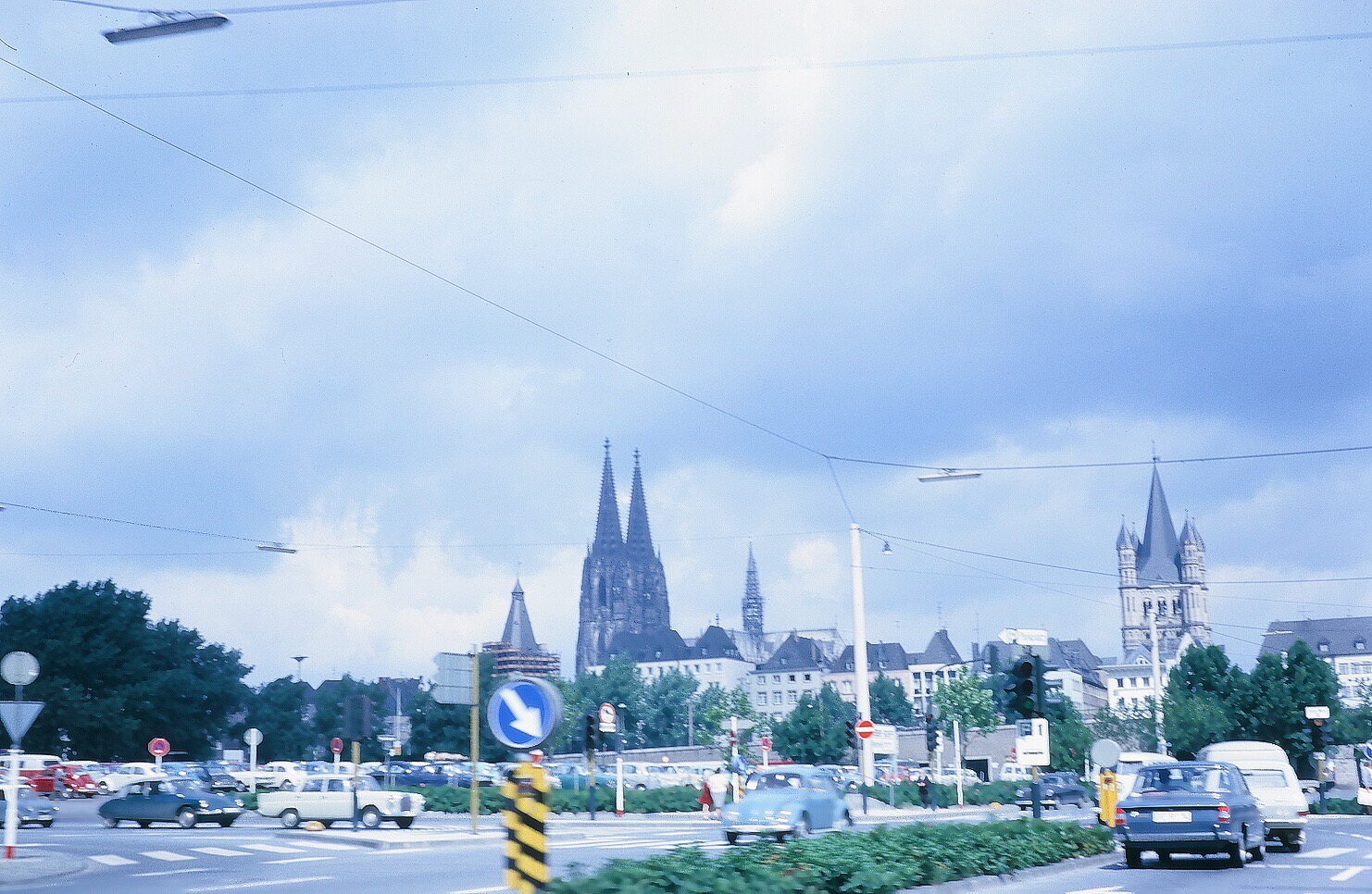
Cologne, Germany.
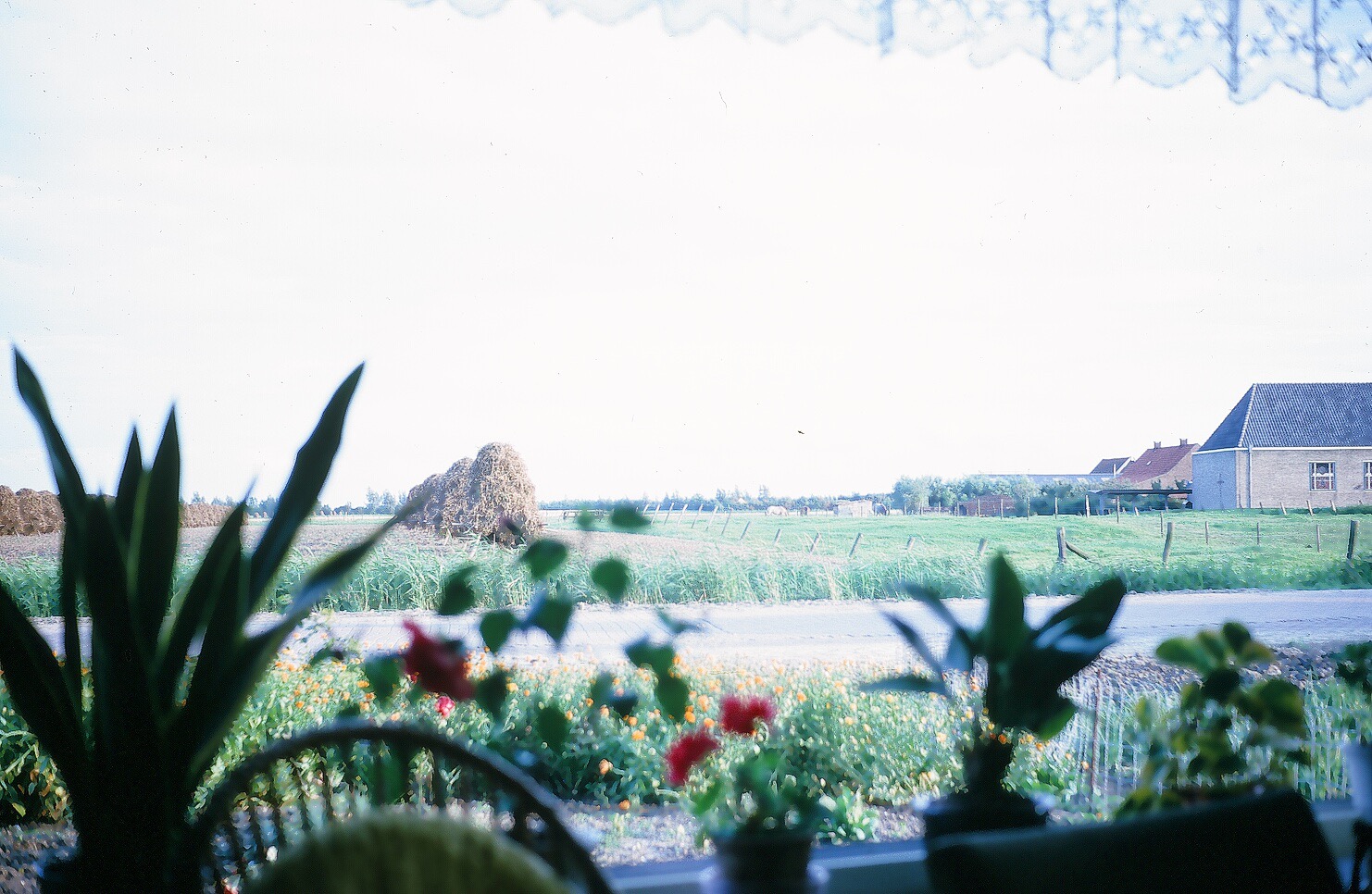
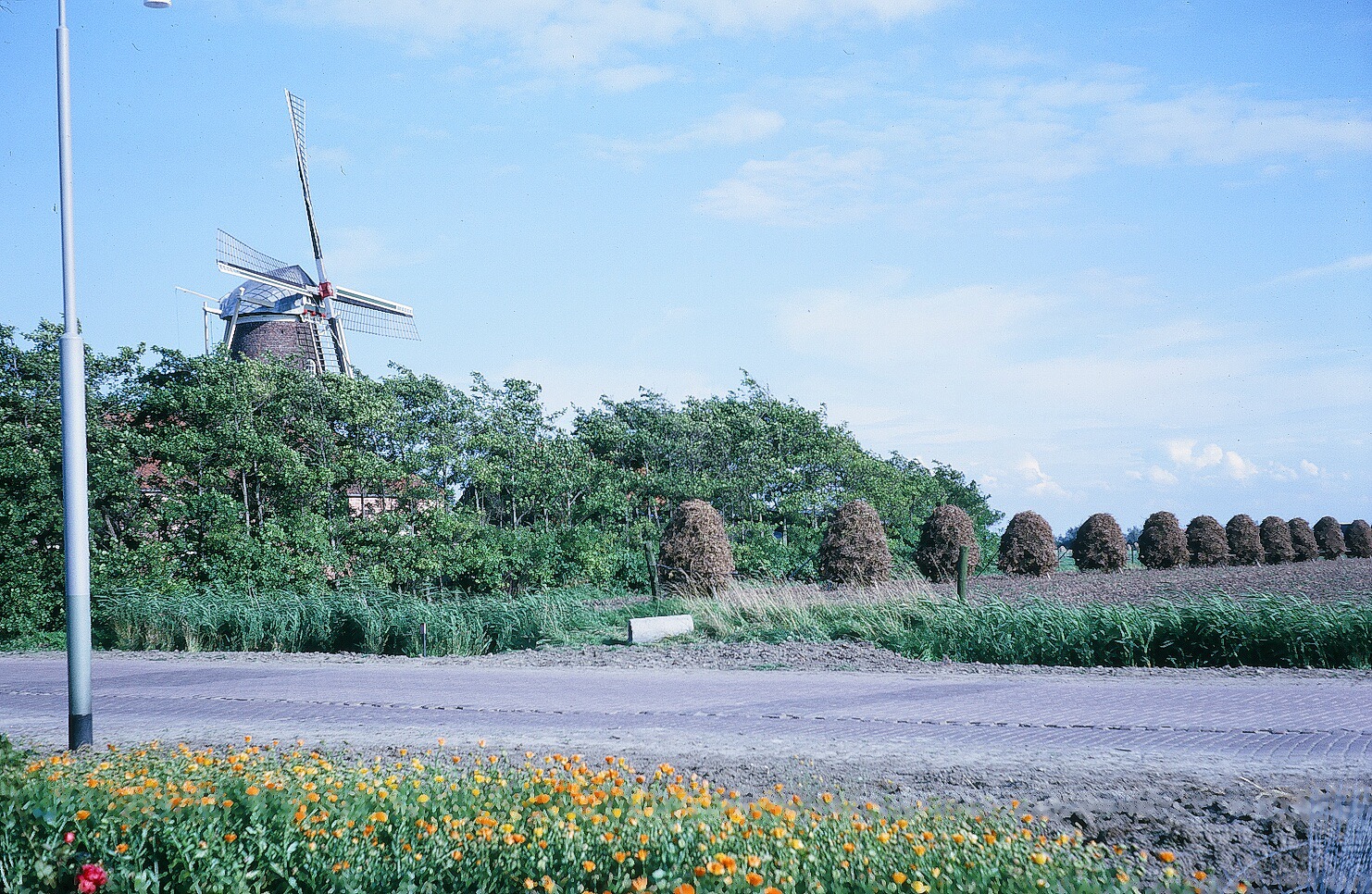
1966 Haystacks in The Netherlands
1966 Windmill in The Netherlands
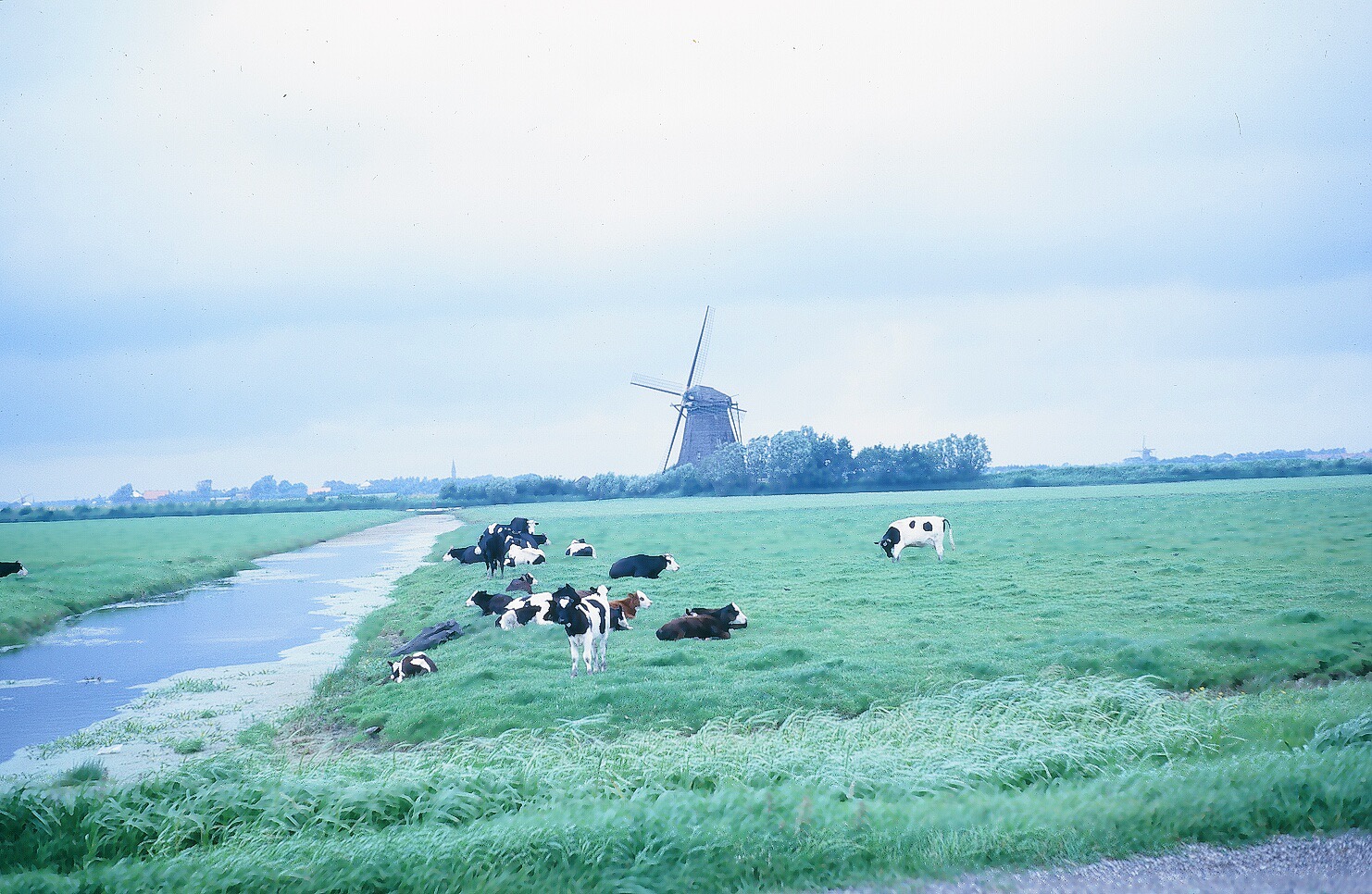
1966 Windmill and cows in The Netherlands
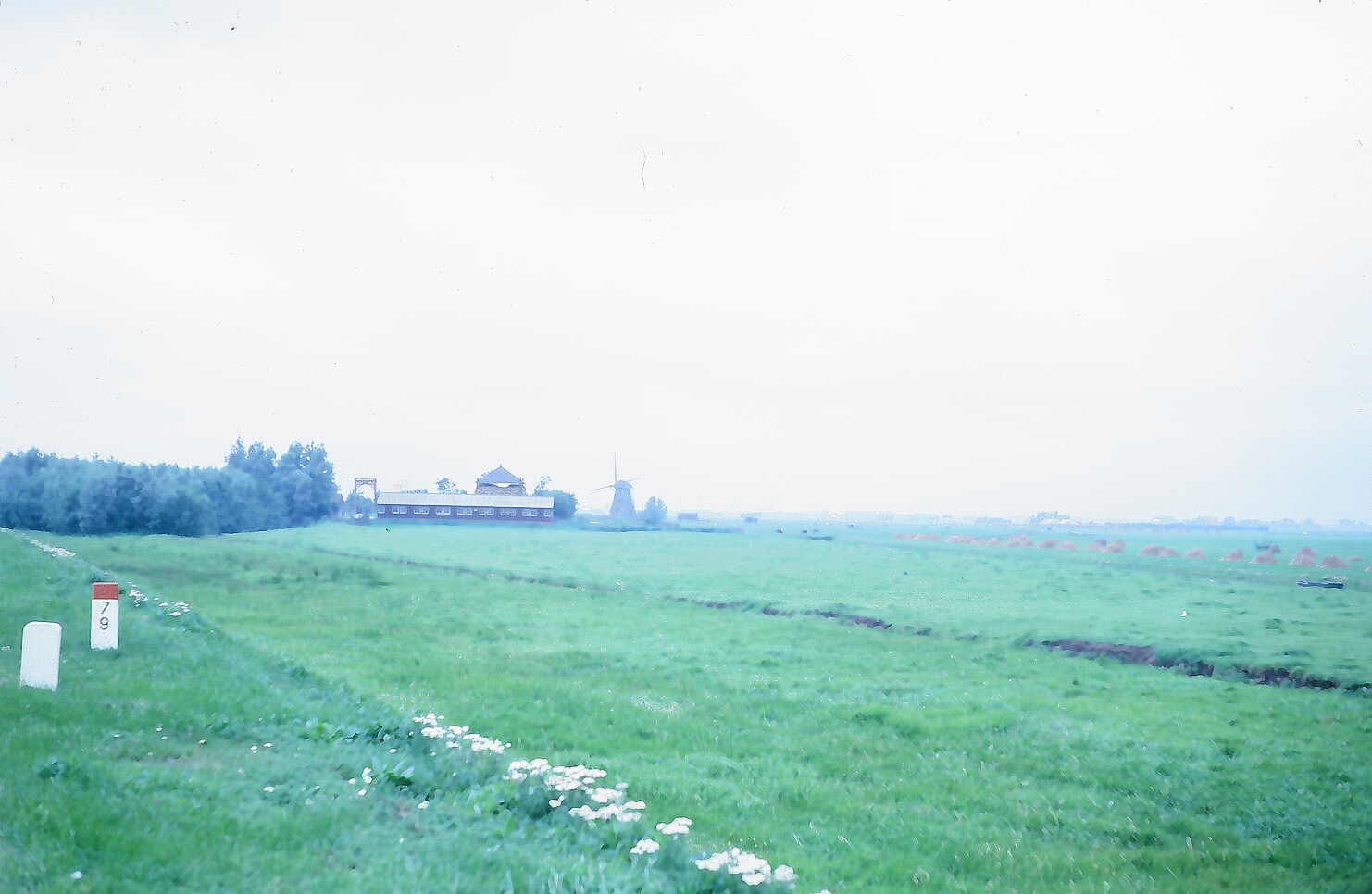
1966 Rural scene in The Netherlands
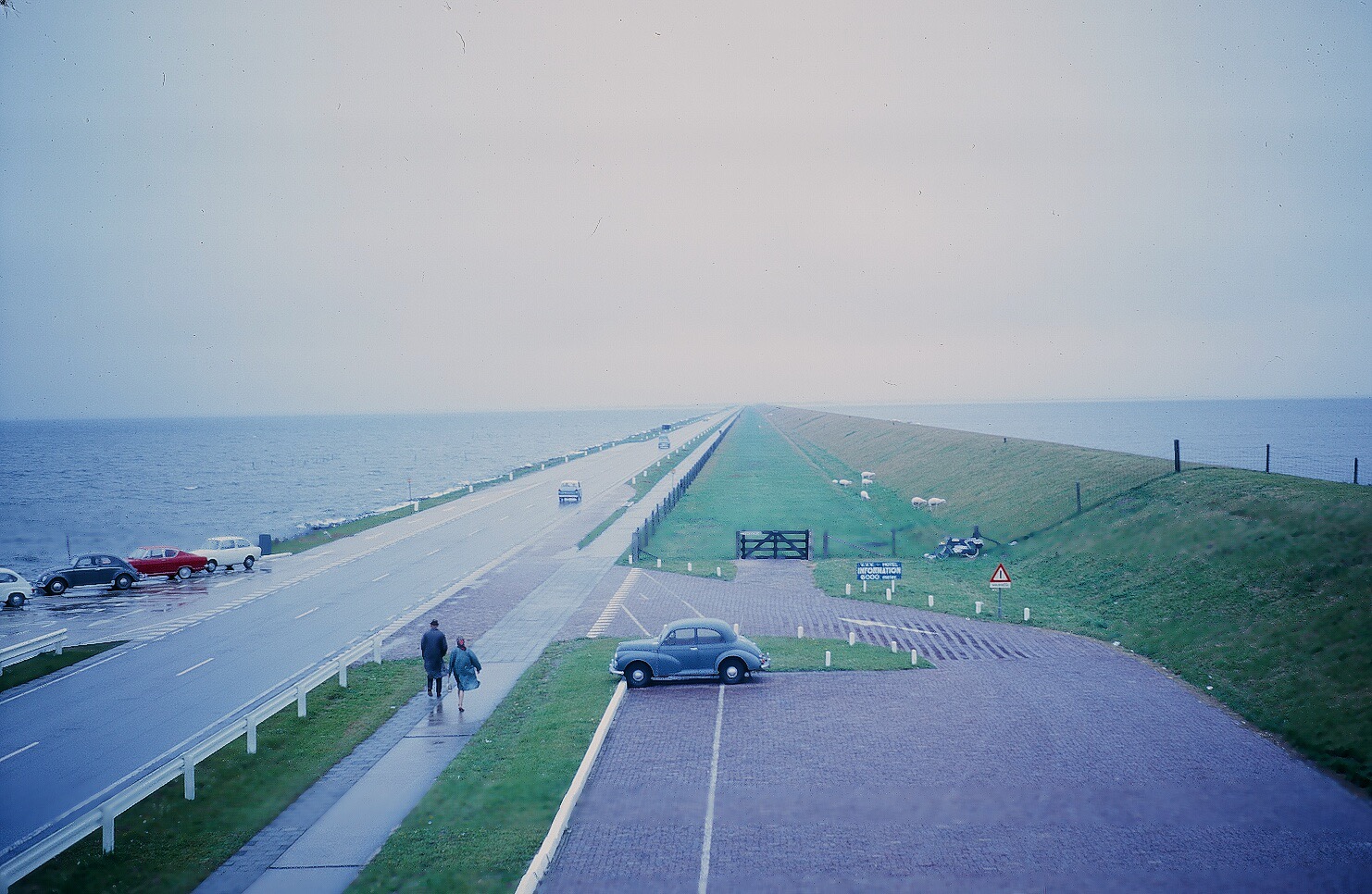
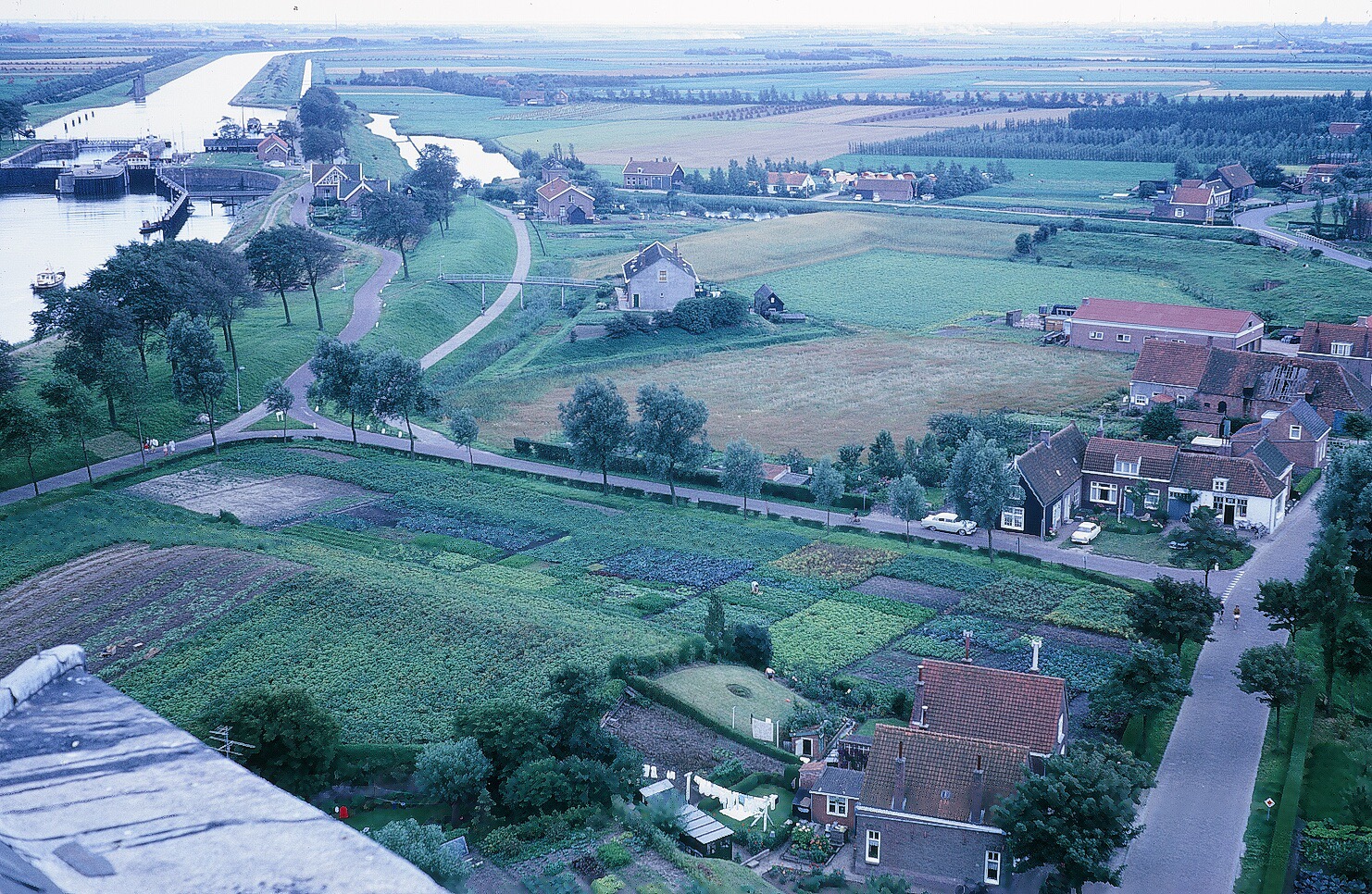
1966 Dike in The Netherlands
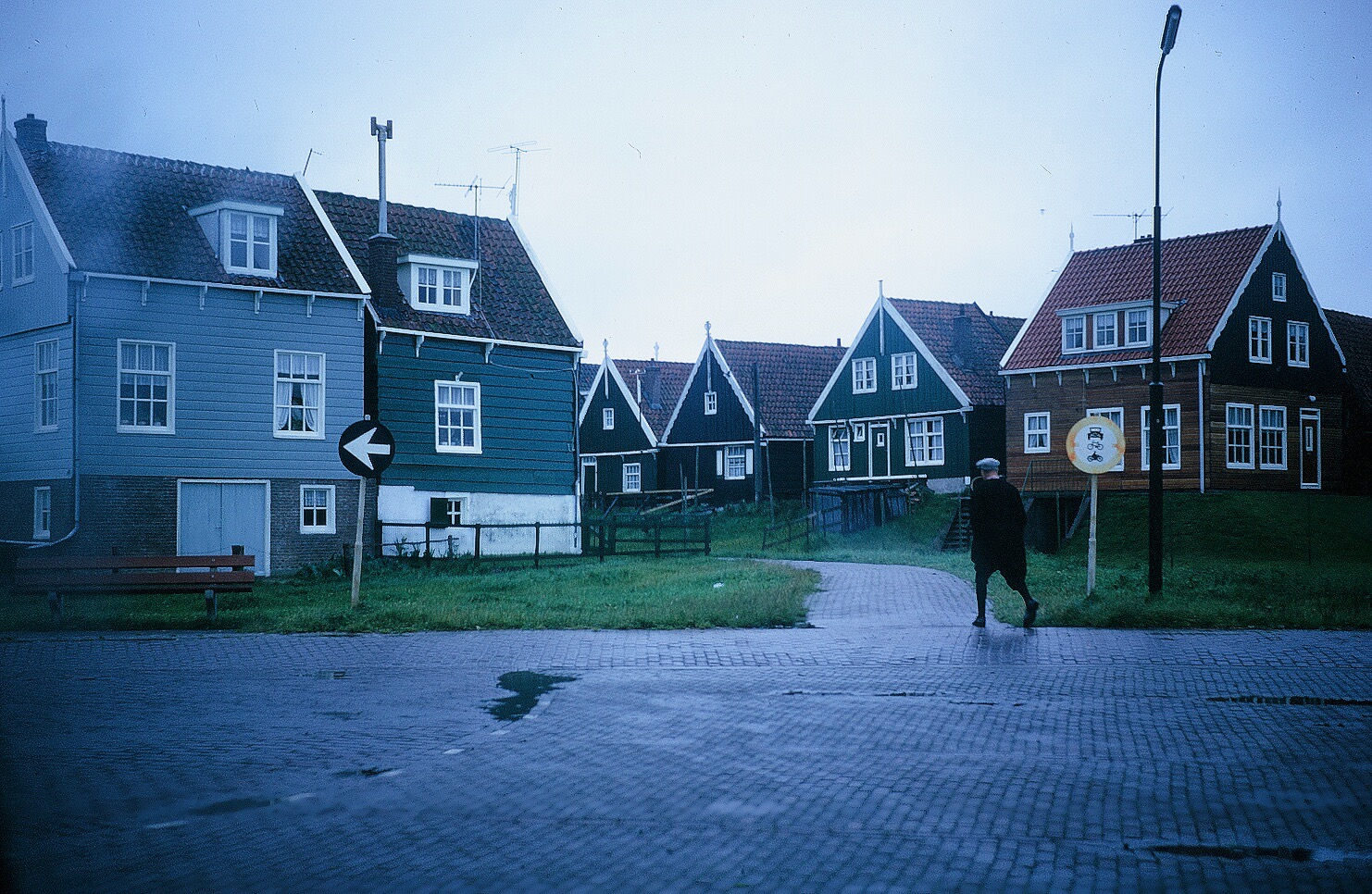
1966 The Netherlands
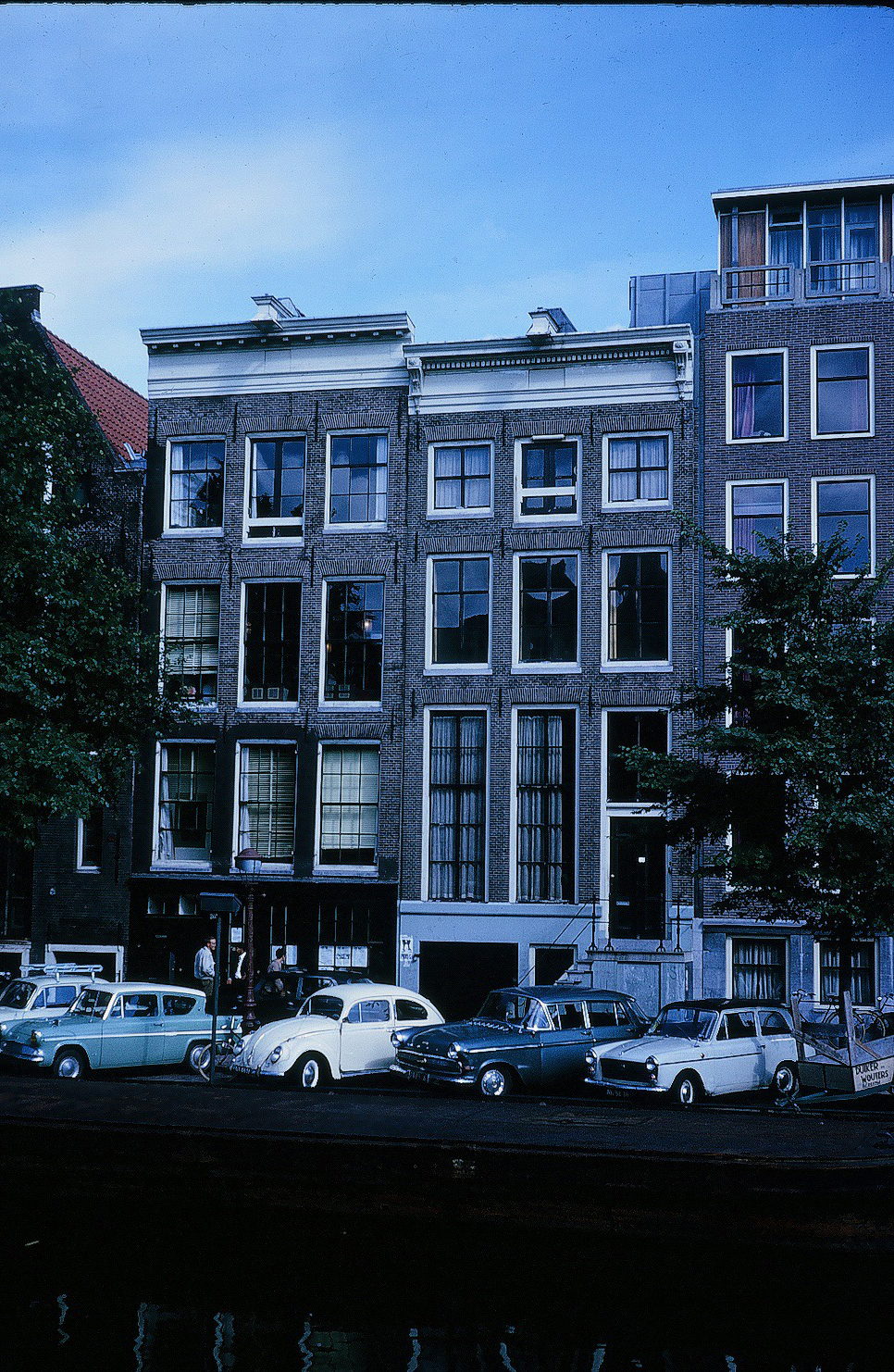
1966 Anne Frank House, Amsterdam.
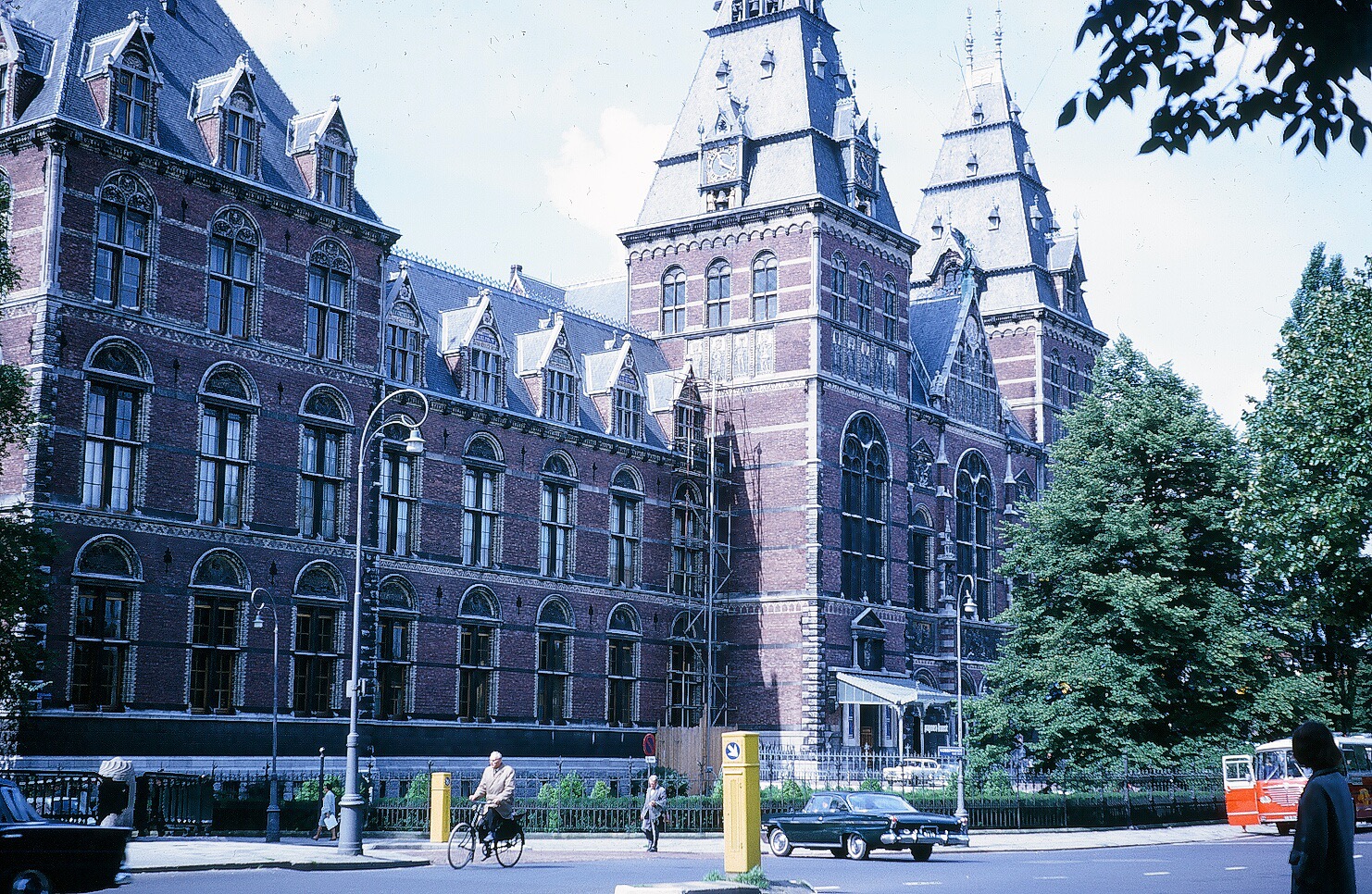
1966 Rijksmuseum, Amsterdam.
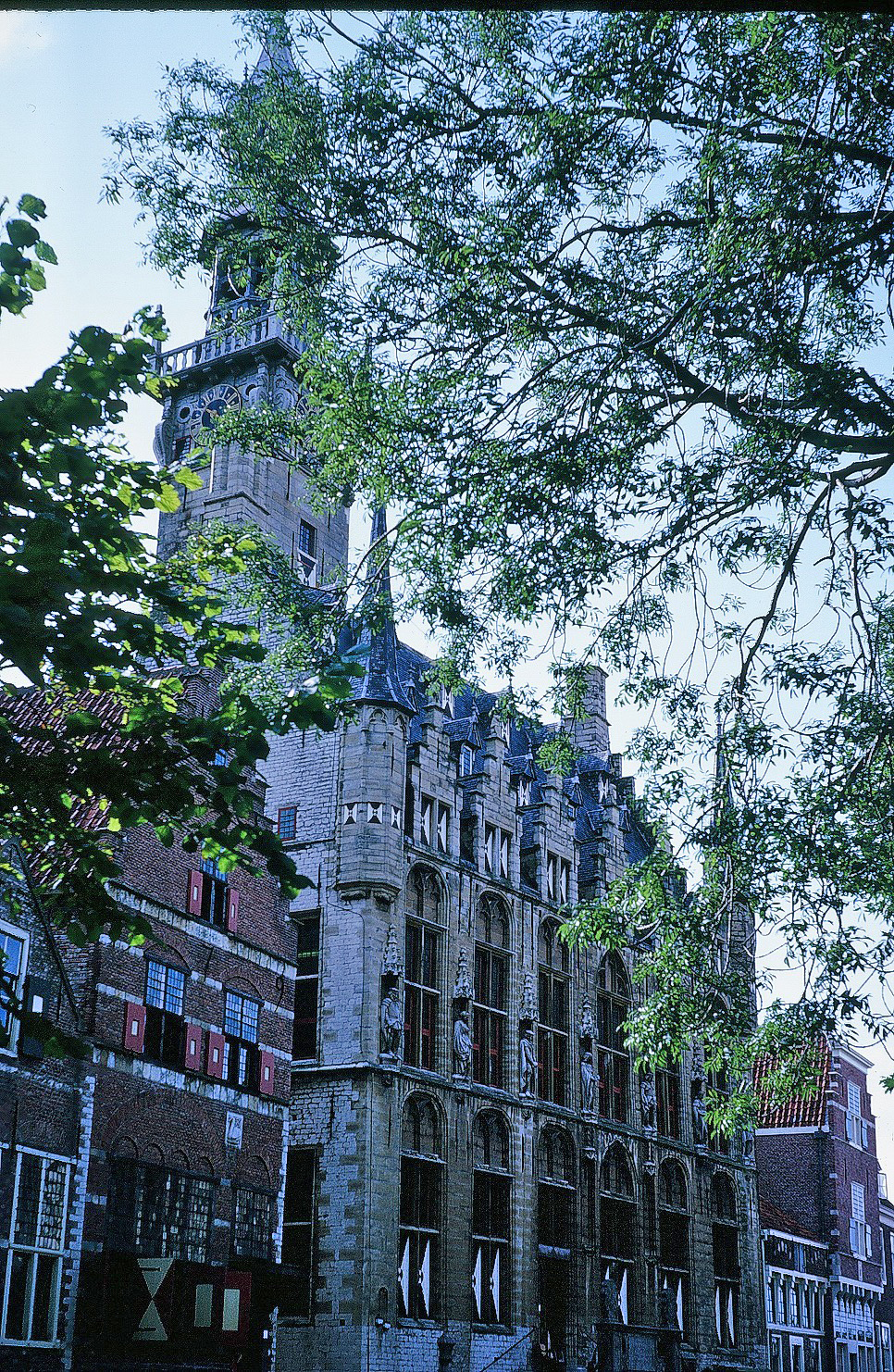
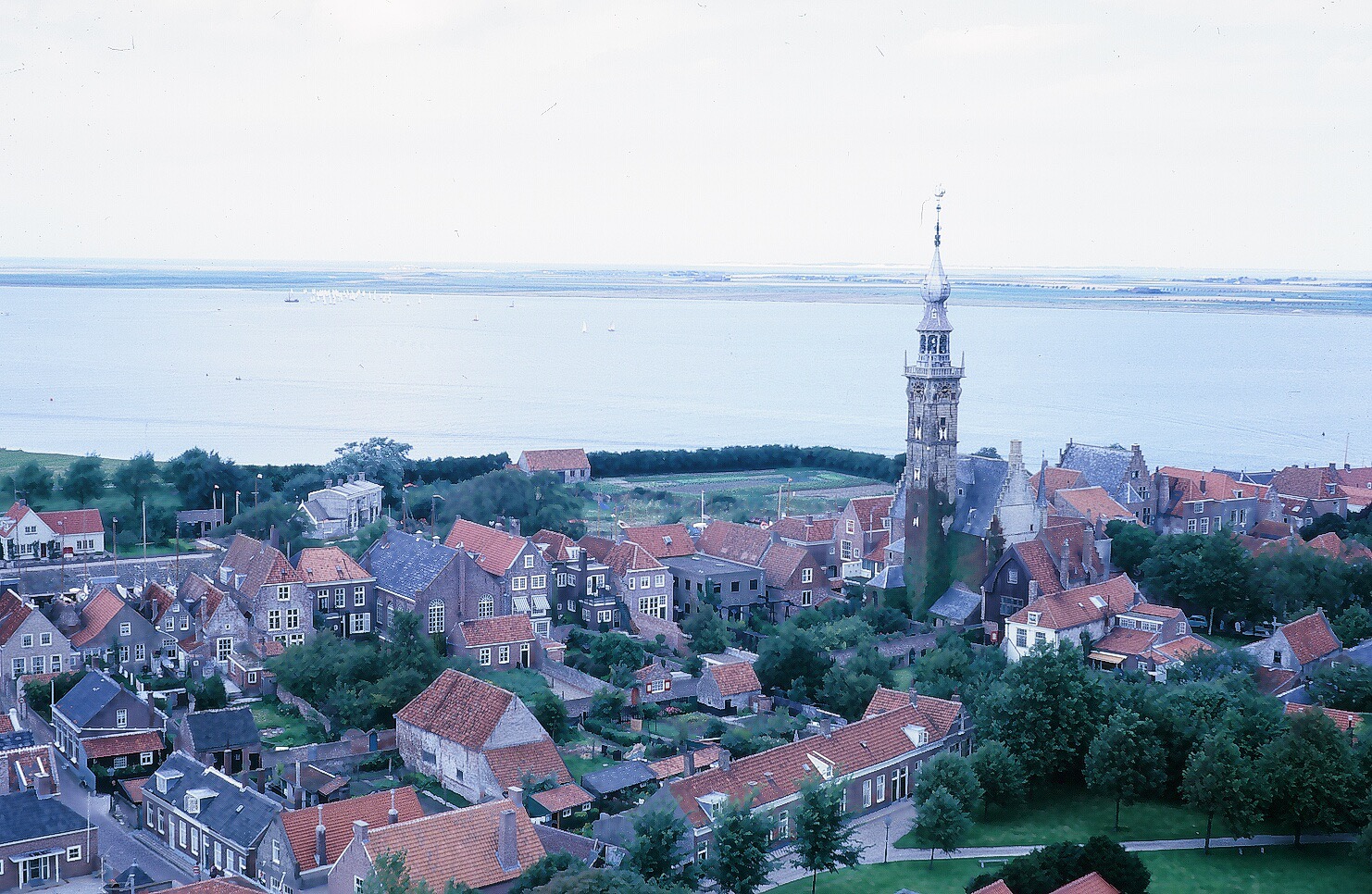
1966 Veere Town Hall (Stadhuis van Veere) in the Netherlands.
The building is a notable example of Gothic architecture, dating back to the 15th century.
It is located in the picturesque town of Veere, which was a prosperous trading port, particularly known as the staple port for Scottish wool between 1541 and 1799.
The town hall now houses Museum Veere, which features a permanent exhibition of art and historical artifacts, including the silver cup of Maximilian of Burgundy.
1966 The Netherlands
1966 The historic town of Veere, located on the Veerse Meer lagoon in the Netherlands.
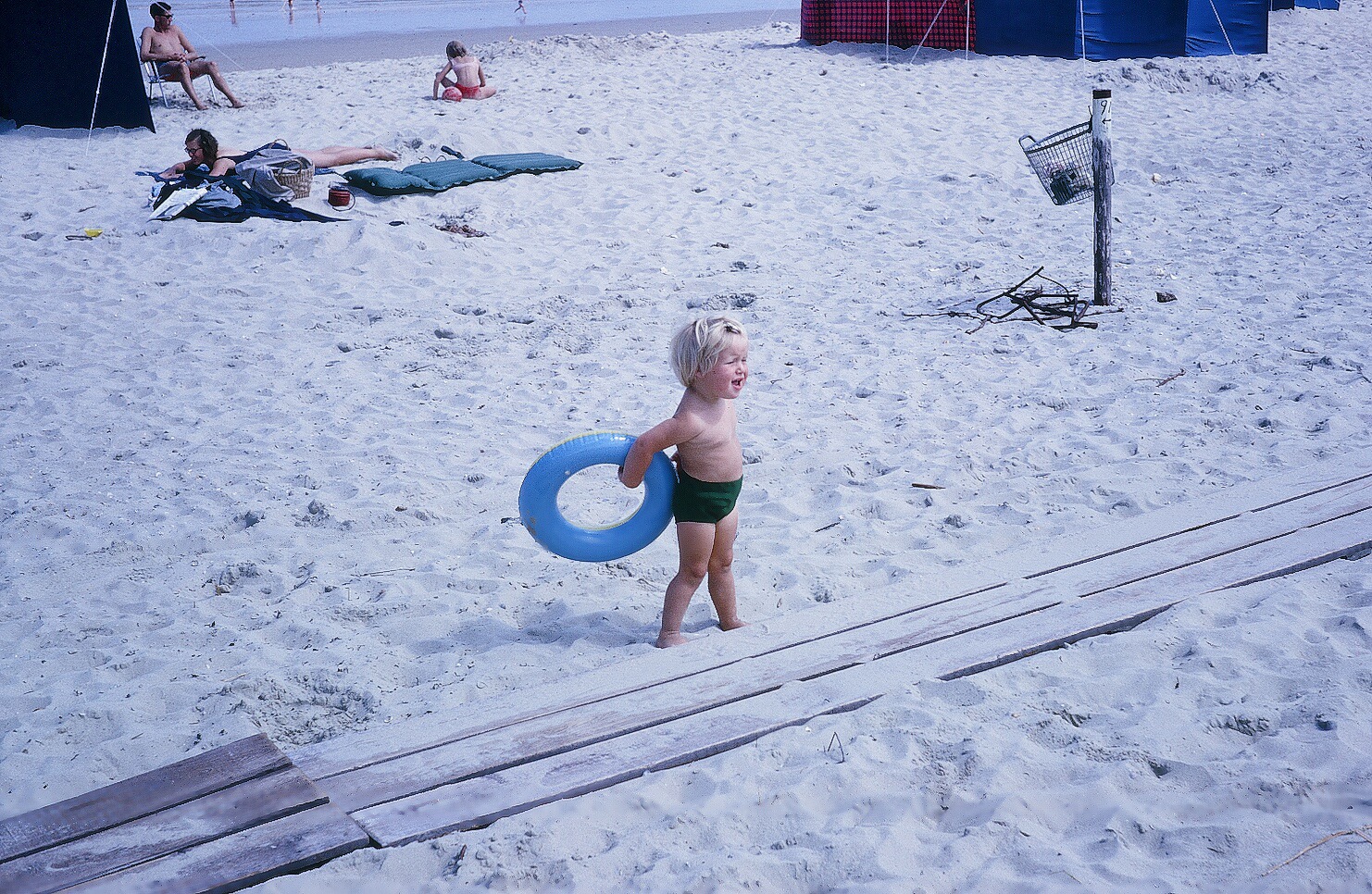
1966 Beach with Joke Van de Bosse and her sister and nieces.
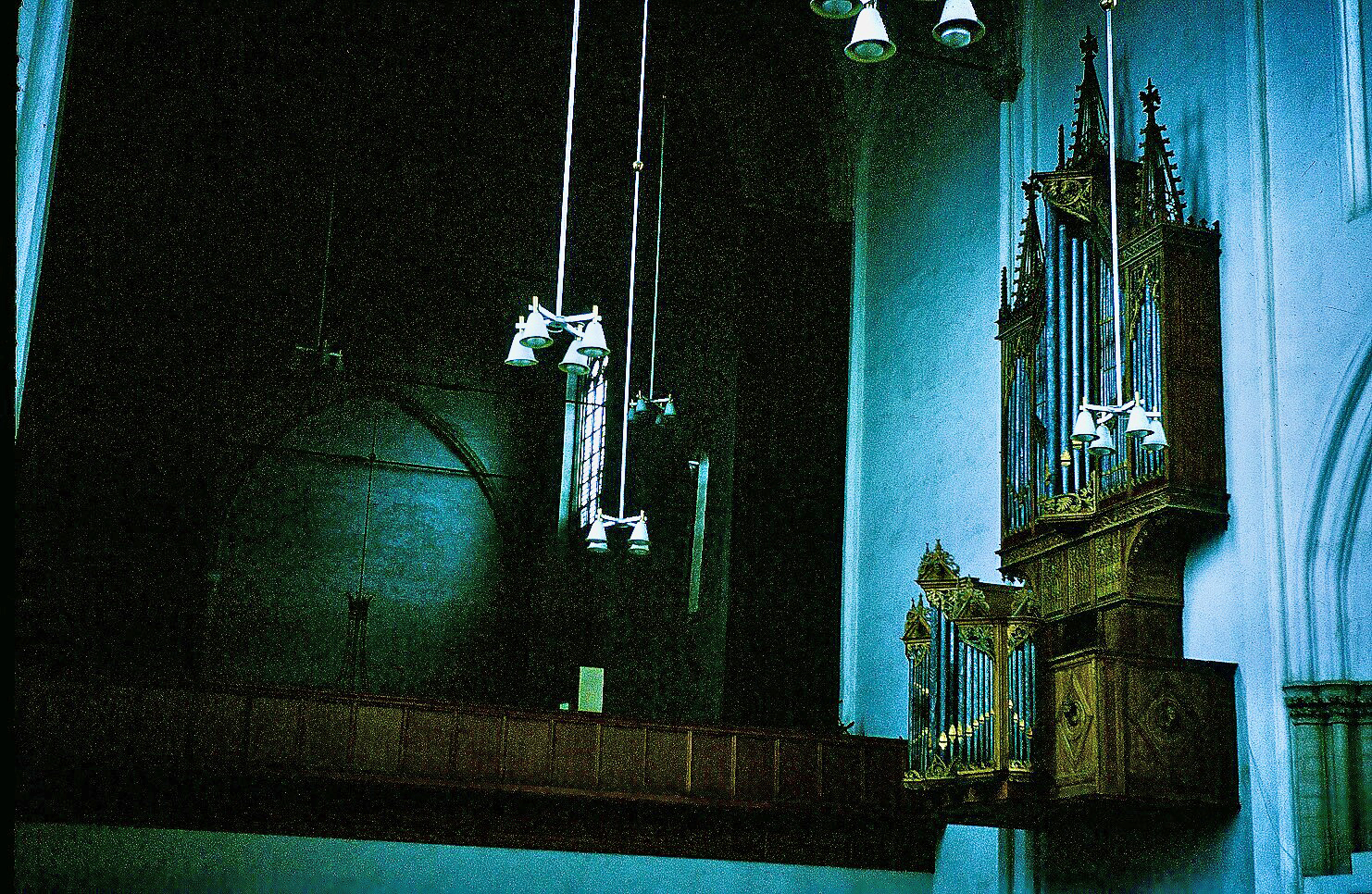
1966 Peter Gerritsz built the organ in 1479 and then was repaired several times as in 1574 by Cornelis Gerritsz. According to experts, the organ is unique for its age and the fact that virtually all original materials are still existing. According to Fons Asselbergs of the Peter Gerritsz foundation the organ is "a testimony, not only of the Dutch organ building, but also of the history of Dutch organ music”.
In 1885 the organ was moved to Amsterdam and was stored in the attic of the Rijksmuseum. In 1952 the organ case was transferred (on loan) to the Koorkerk in Middelburg, Netherlands
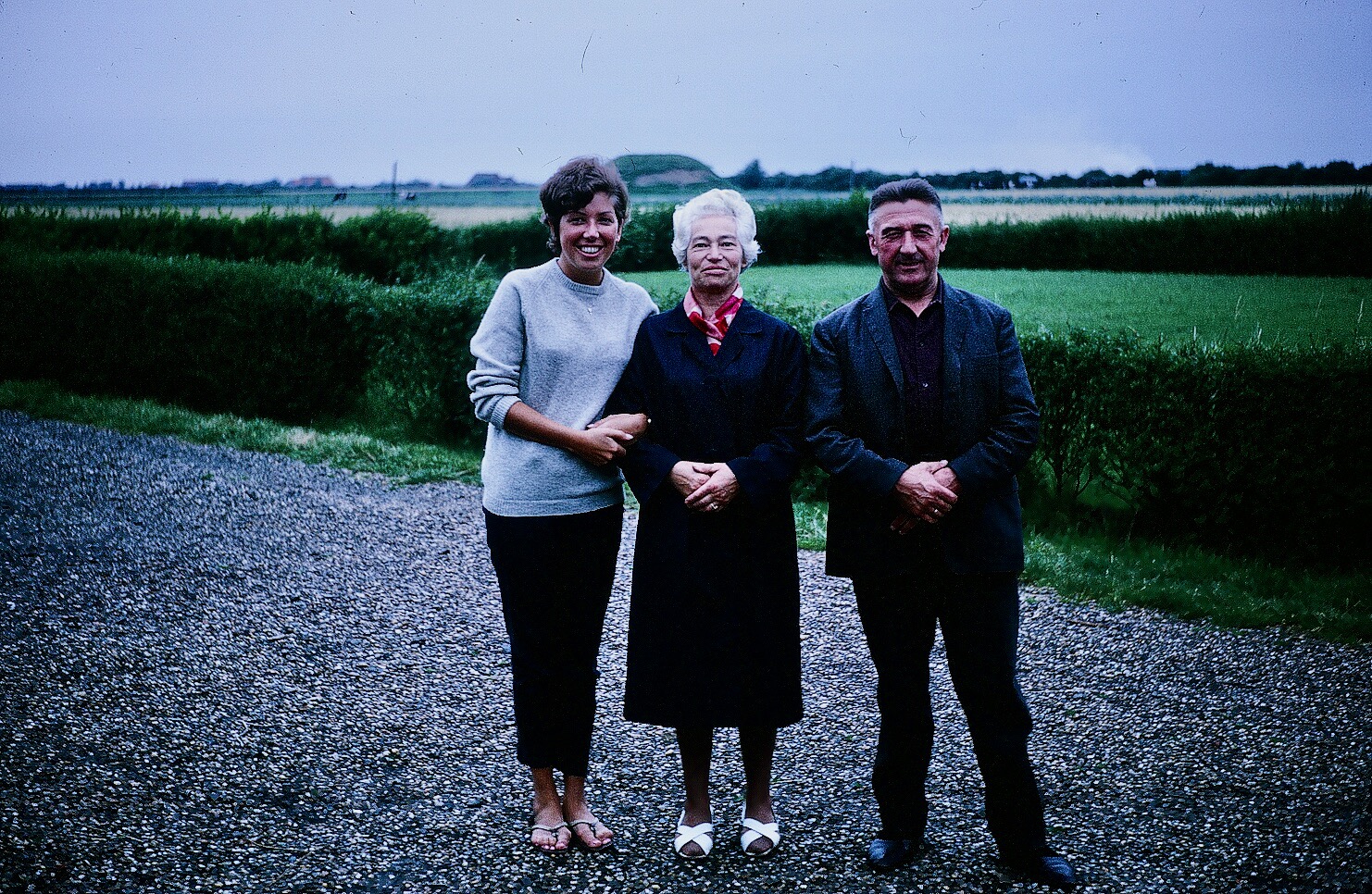
1966 Joke Van de Bosse with her parents in The Netherlands
1966 Summer A mobile music box in the Netherlands
1966 Summer A mobile music box in the Netherlands
Summer 1966 An outing with Joke Van deBosse to the North Sea to swim--COLD! Pat and Joke middle front
Summer 1966 Joke VanderBosse in Middelberg, the Netherlands
Summer 1966 Pat Oakes with Joke VanderBosse in the Netherlands
Summer 1966 THe windmill across the street from Joke's home
Summer 1966 WWII Memorial on the North Sea with Joke's parents
Summer 1966 Grand-Place, Brussells
1966 Brussells--le mannequin pis
1966 Brussells--le mannequin pis
Summer 1966 Crossing the English Channel
1966EuropeTrip-406 Mel, Pat and Paul Kimber.
1966 The Thames and Big Ben in the fog
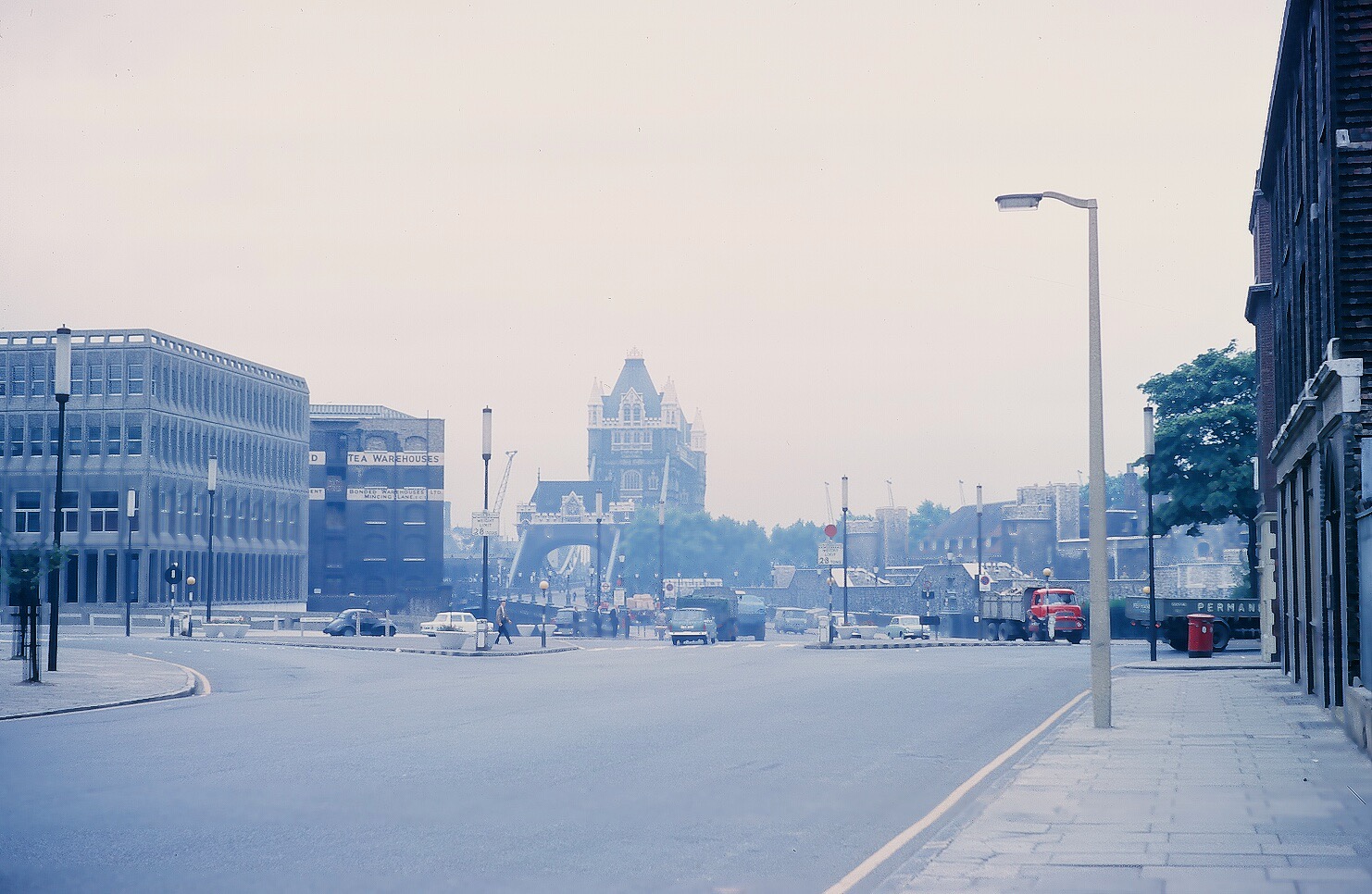
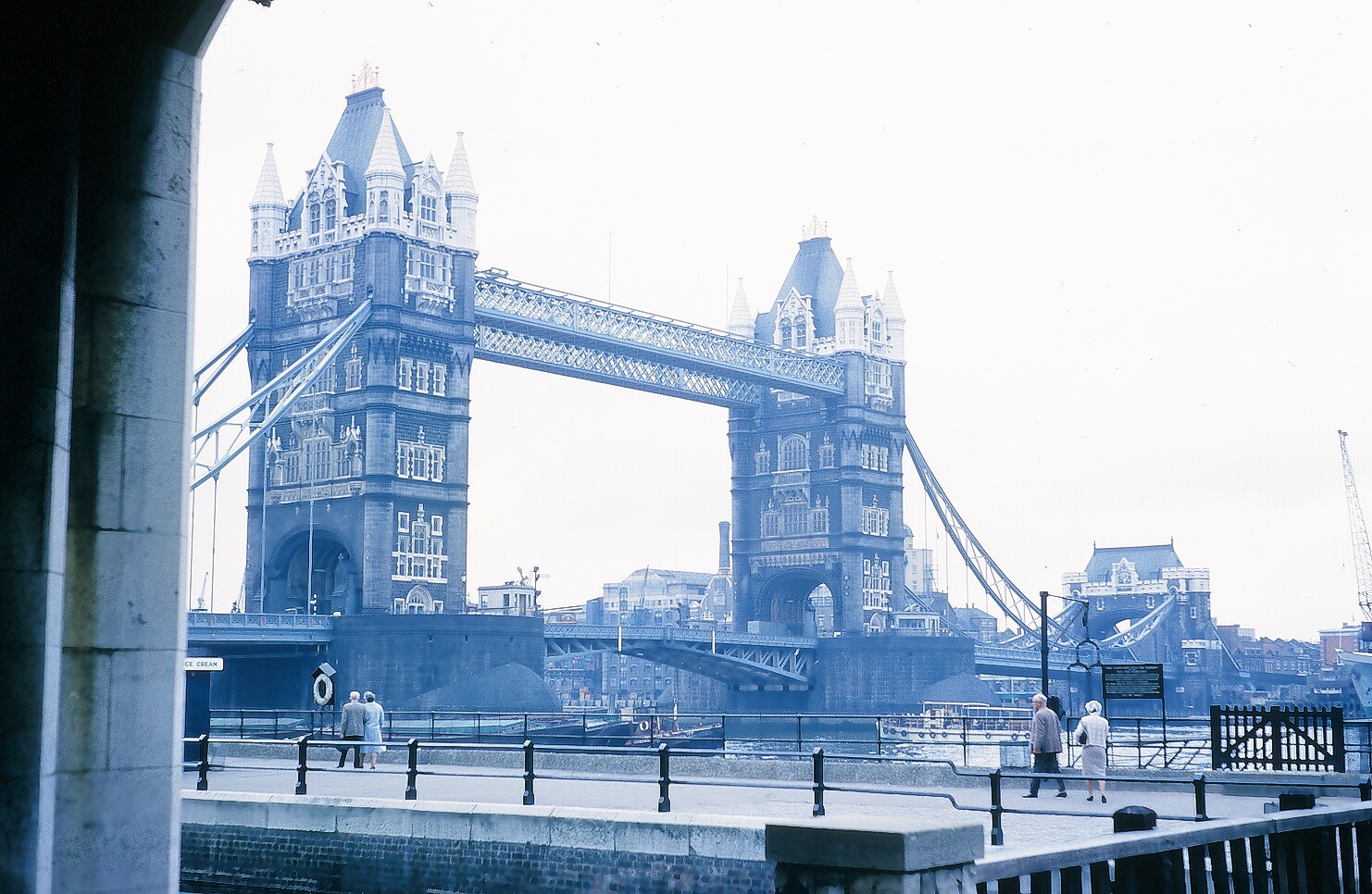
1966 A foggy view of Tower Bridge
1966 Ann Kimber with horse
1966 Big Ben across the Thames in the fog
1966 Chanding of the guard at Buckingham Palace
1966 Changing of the guard at Buckingham Palace
1966 Changing of the guard at Buckingham Palace
1966 Changing of the guard at Buckingham Palace
1966 Changing of the guard at Buckingham Palace
1966 Changing of the guard at Buckingham Palace
1966 Edinburgh
1966 Edinburgh
1966 Edinburgh
1966 Edinburgh
1966 Edinburgh Practice for the Tattoo
1966 Edinburgh Practice for the Tattoo
1966 Edinburgh Tatoo
1966 Edinburgh Tatoo
1966 Edinburgh Train Station Roof
1966 Mardie and Pat at Scone Palace where my great-great-grandfather worked as a gardener
Summer 1966 Mel with Big Mardie in Scotland
Summer 1966 Pat with Highland sheep in Scotland
Summer 1966 River in Scotland near Perth
Summer 1966 Scots countryside
Summer 1966 Scots highlands
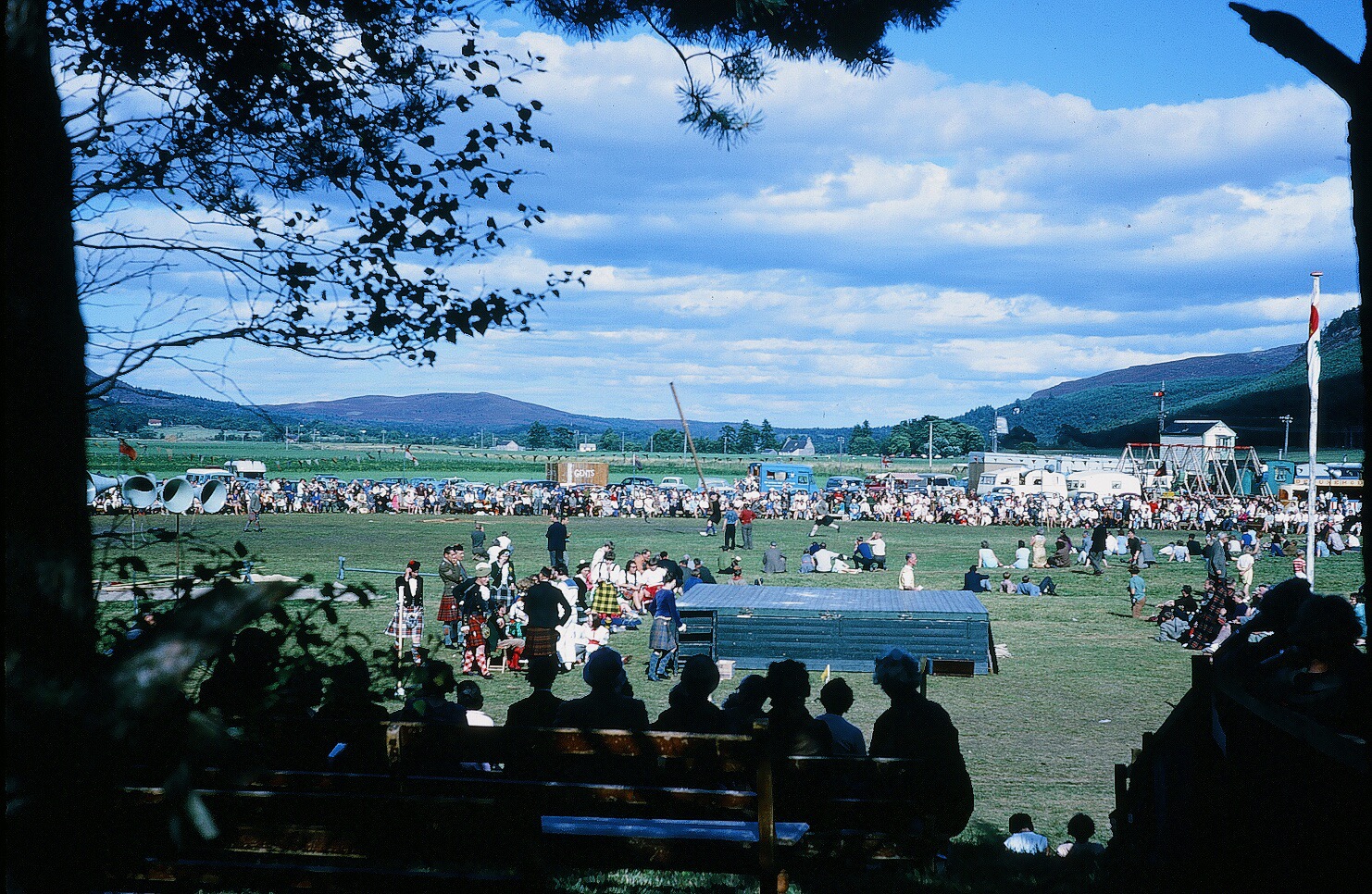
Summer 1966 Tug of war at the Ballater games in Scotland
Summer 1966--Ballater Games--caber toss
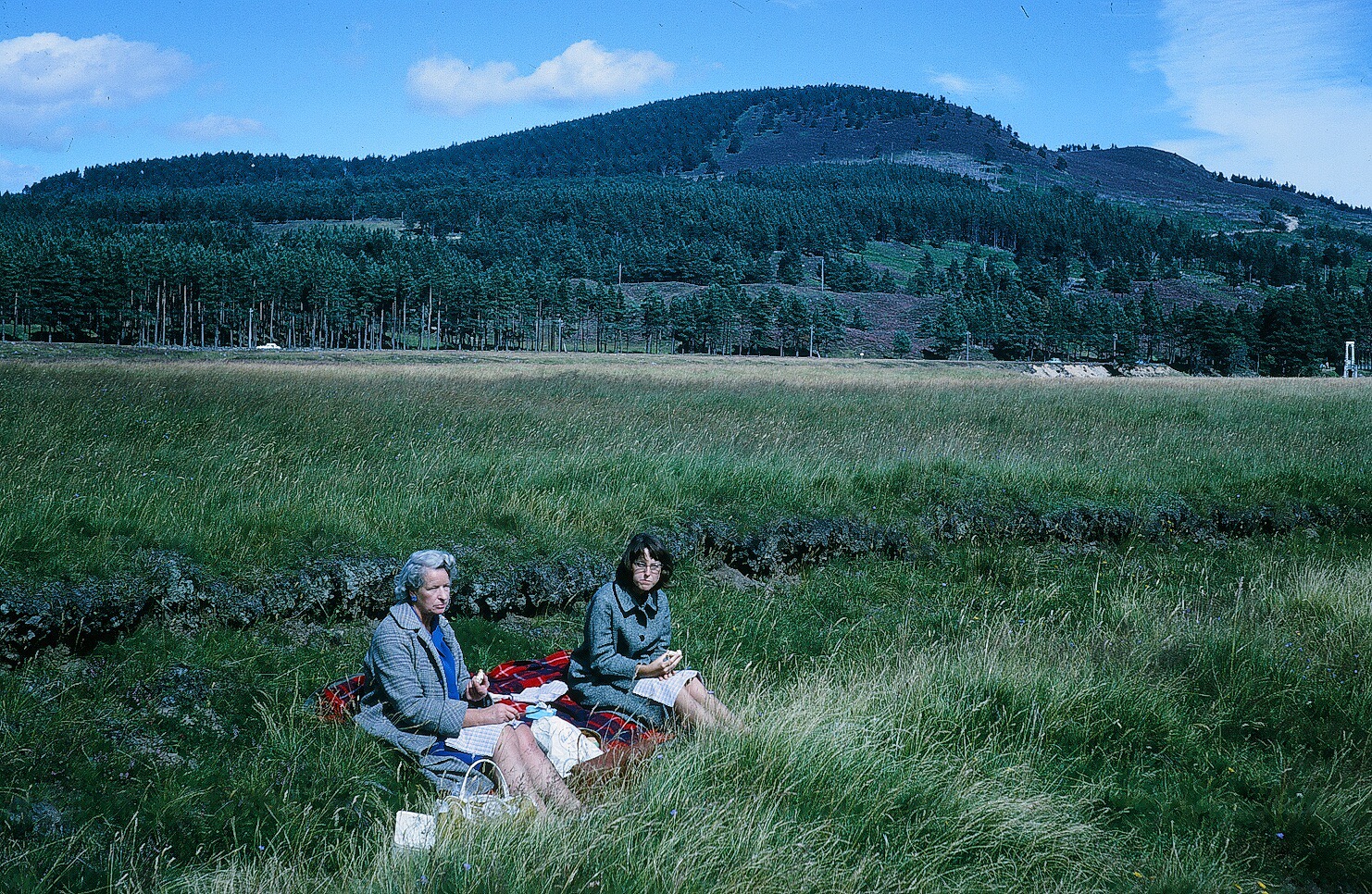
Summer 1966--Mardie with Pat enjoying a picnic in the Scots sountryside
Summer 1966--Scotland--Ballater Games
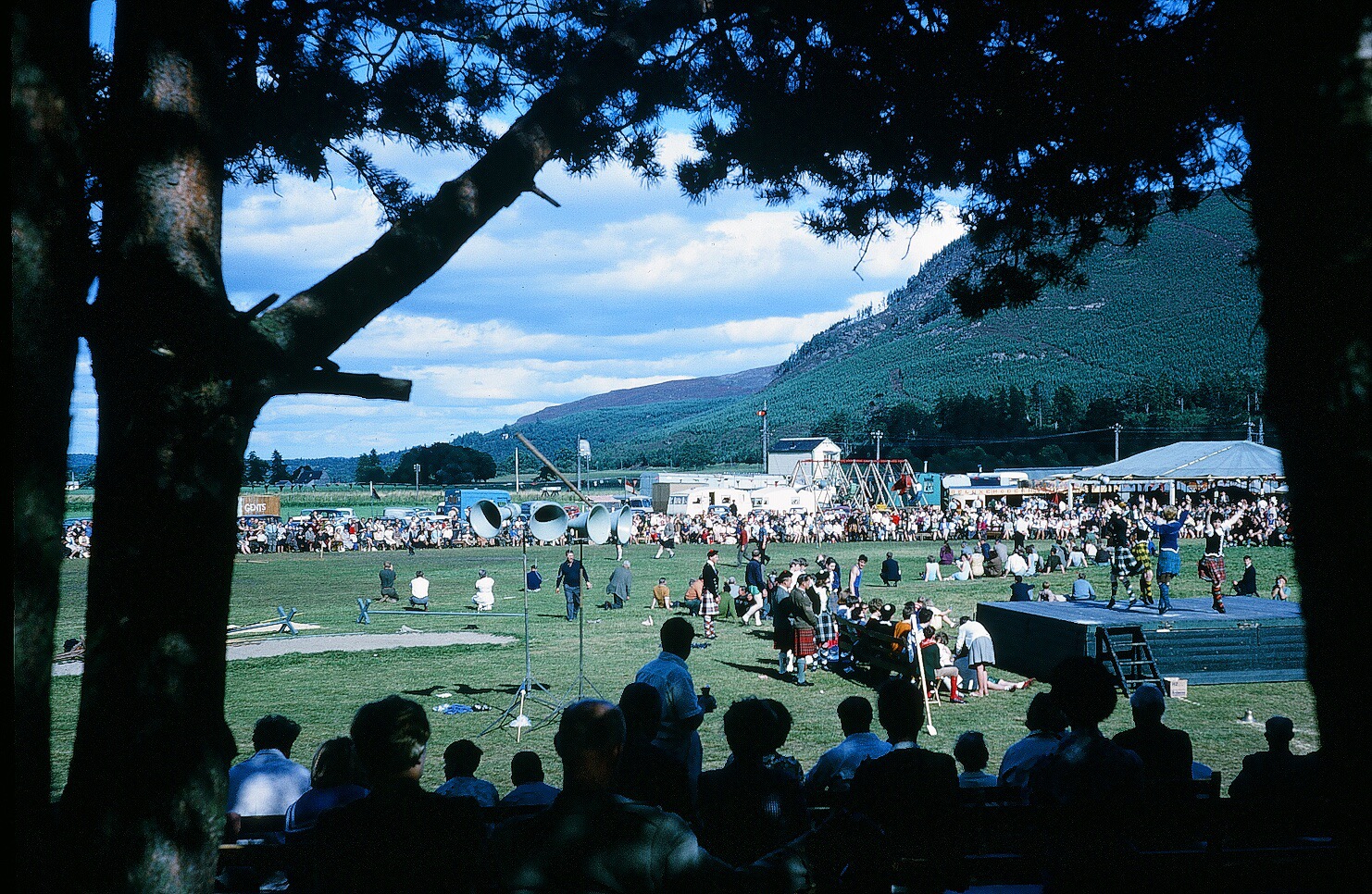
Summer 1966--Scotland--Ballater Games
Summer 1966--Scotland--Ballater Games
Summer 1966--Scotland--Ballater Games
Summer 1966--Scotland--Ballater Games
Summer 1966--Scotland--Ballater Games
1966 Winston Churchill's burial site
Summer 1966 Memorial to John F. Kennedy from the people of Britain
Summer 1966 Monument at Runnymede celebrating the signing of the Magna Carta in 1215
1966 Stratford on Avon
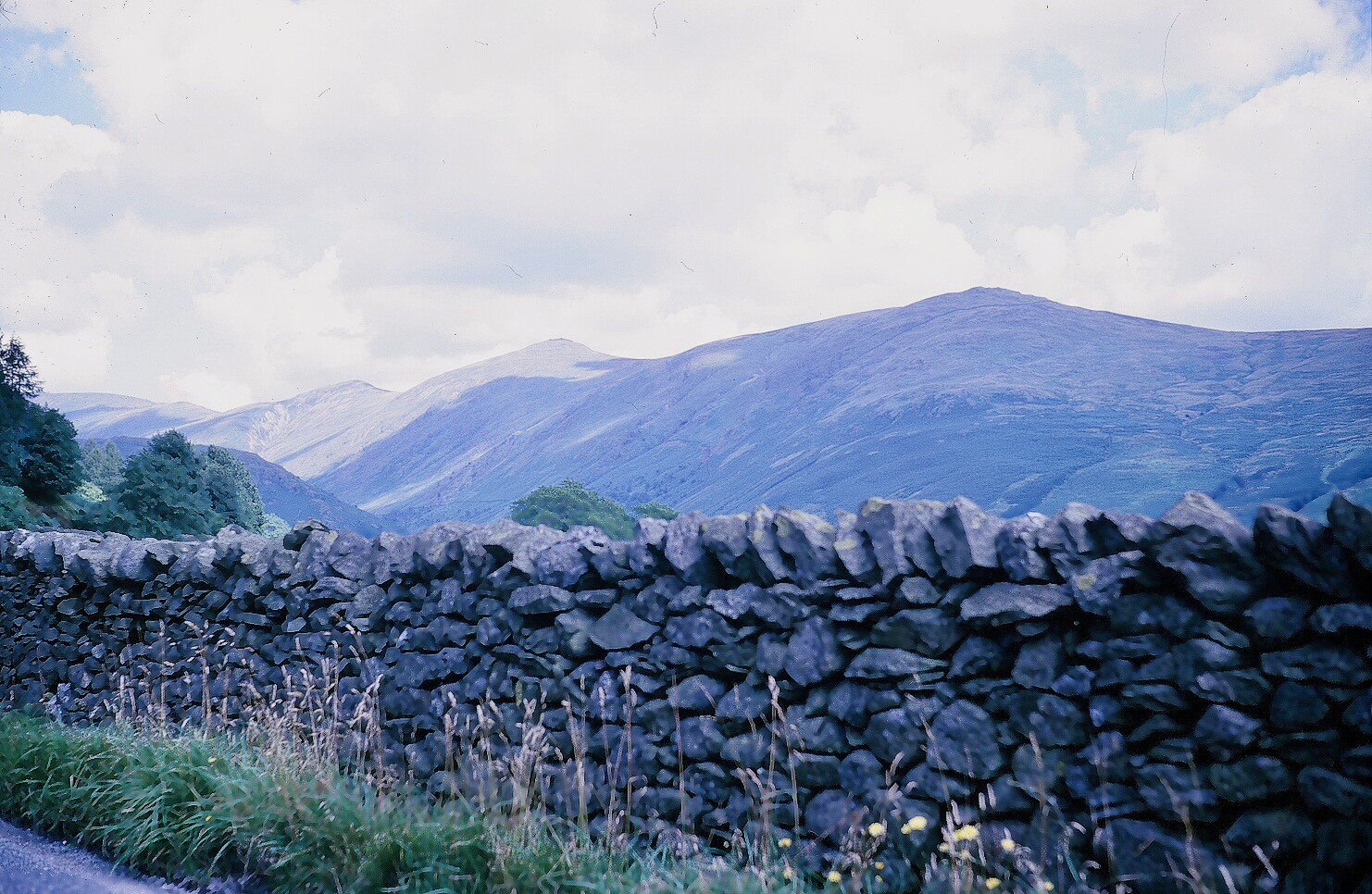
1966 English morterless wall.
6/1966 English countryside
7/1966 English countryside
Summer 1966 Gate House, King's College, Cambridge University
Summer 1966 King's College, Cambridge University
9/1966 English Countryside
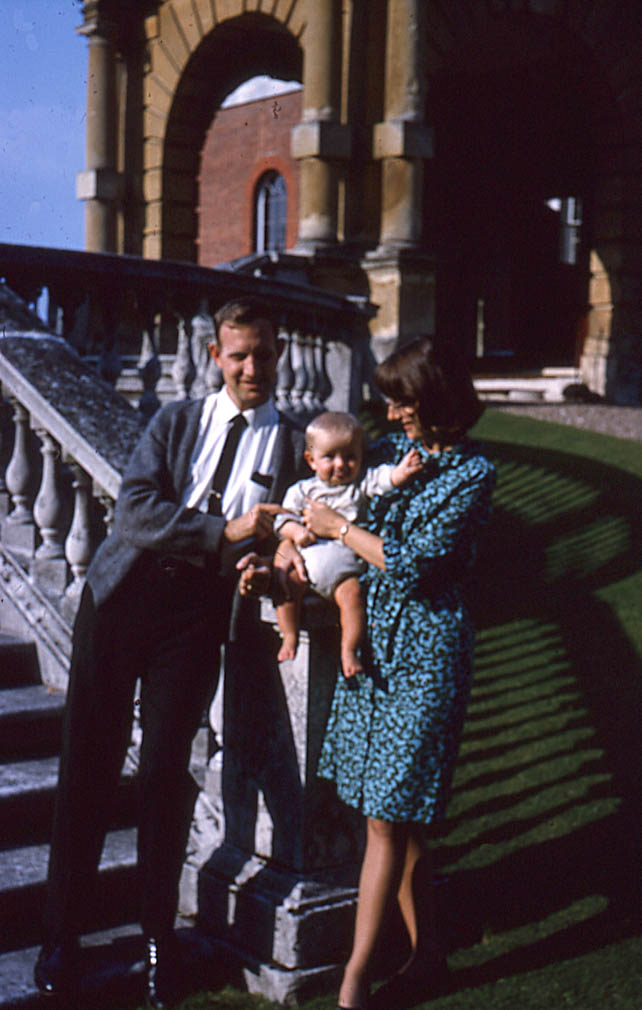
1966 Don and Ann Kimber with adorable Paul!
1966 Paul Kimber
1966 Paul Kimber
1966 The British Museum
1966 Hampton Court
1966 London in the fog--St. Paul's with scaffolding in the distance
1966 London in the fog
1966 Pat at St. James Park near Buckingham Palace
1966 The Thames and Big Ben in the fog
1966 The Thames and Big Ben in the fog
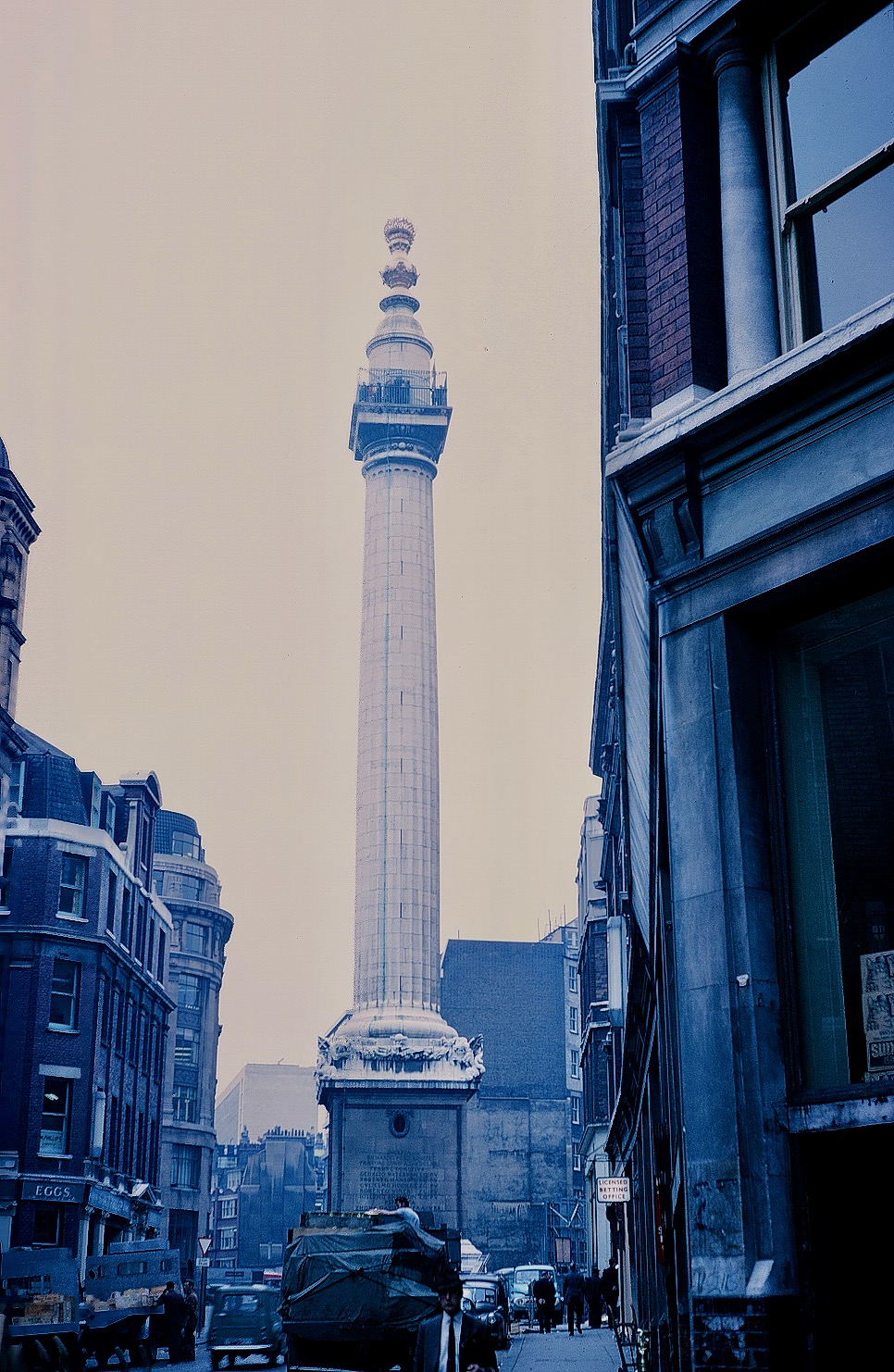
1966 Memorial to the Great Fire of London--1677
June 1966 Ann and Don Kimber with Pat in England near Bristol
O1966 Tower Bridge and the Thames in the fog
OAKES_S_0001.JPG Windsor Castle
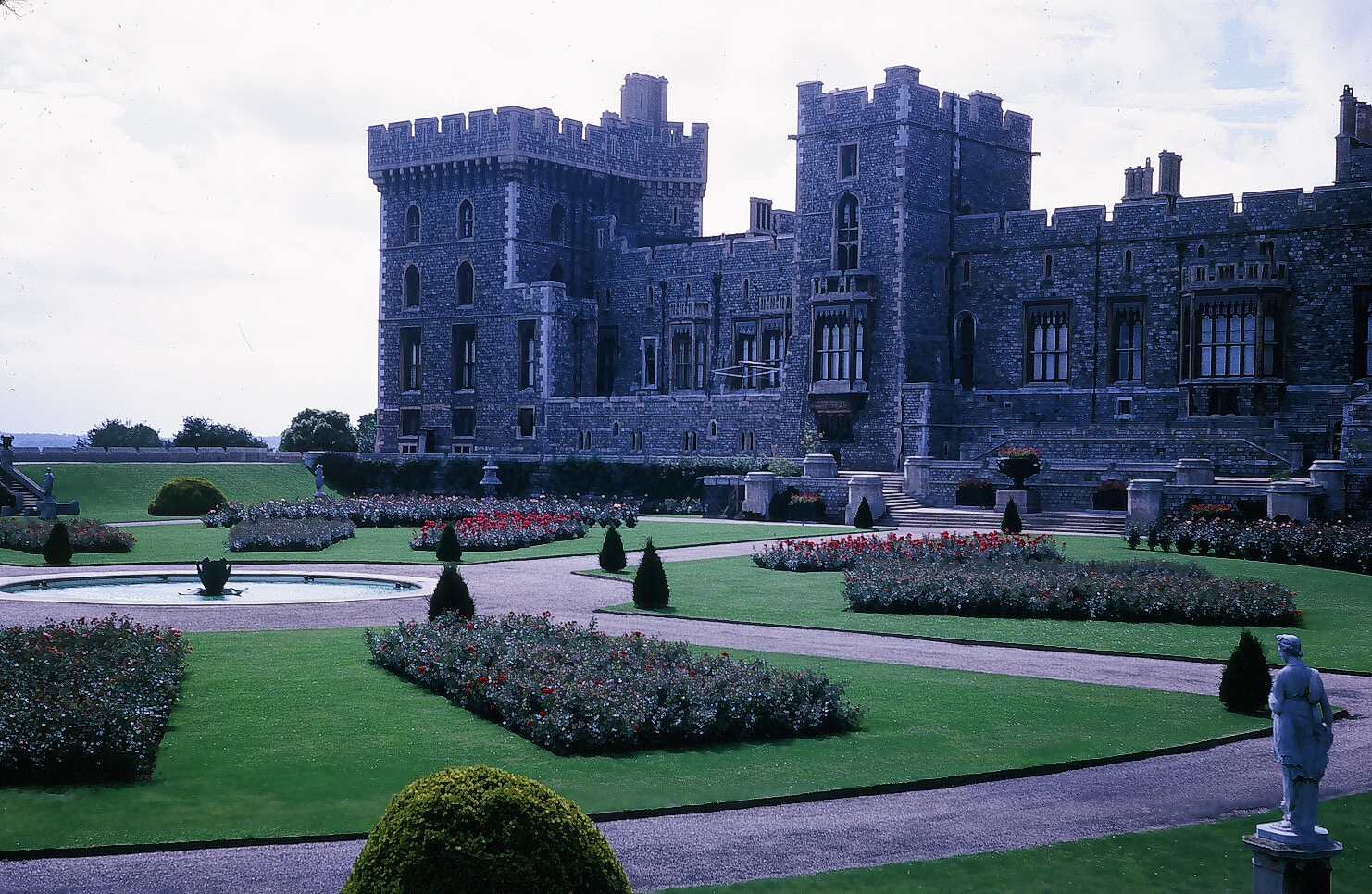
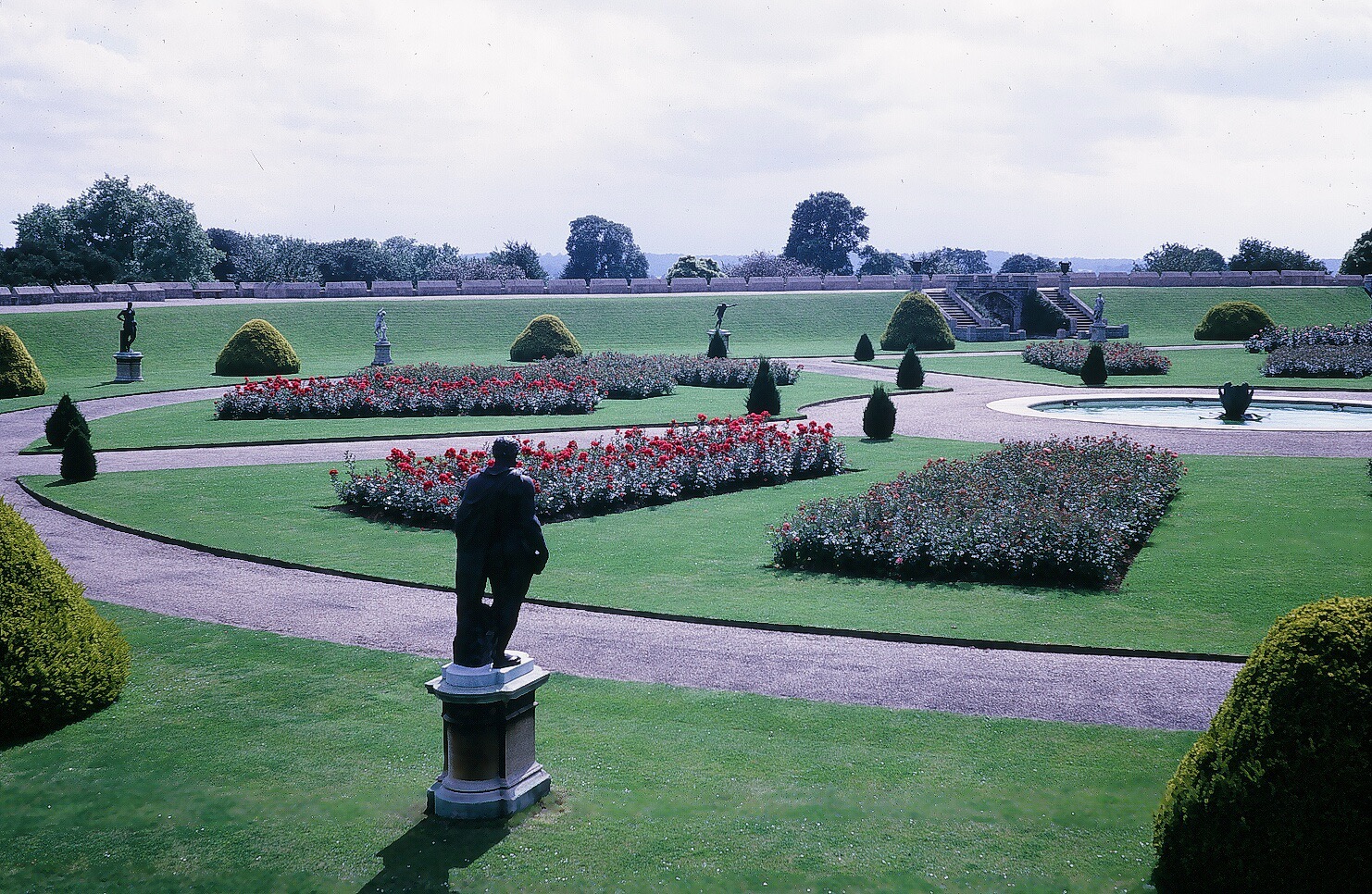
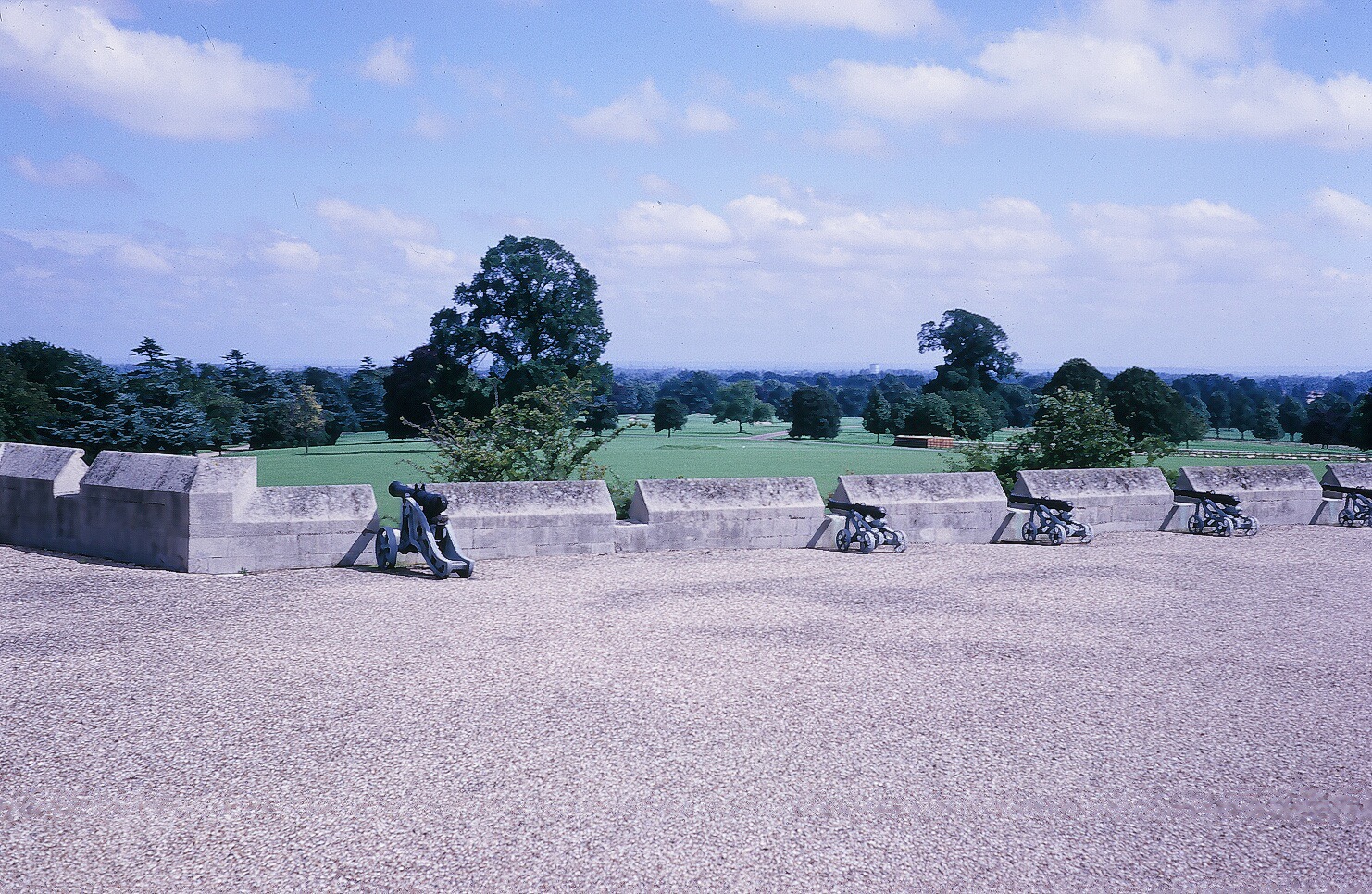
OAKES_S_0002.JPG Windsor Castle Gardens
OAKES_S_0003.JPG Windsor Castle
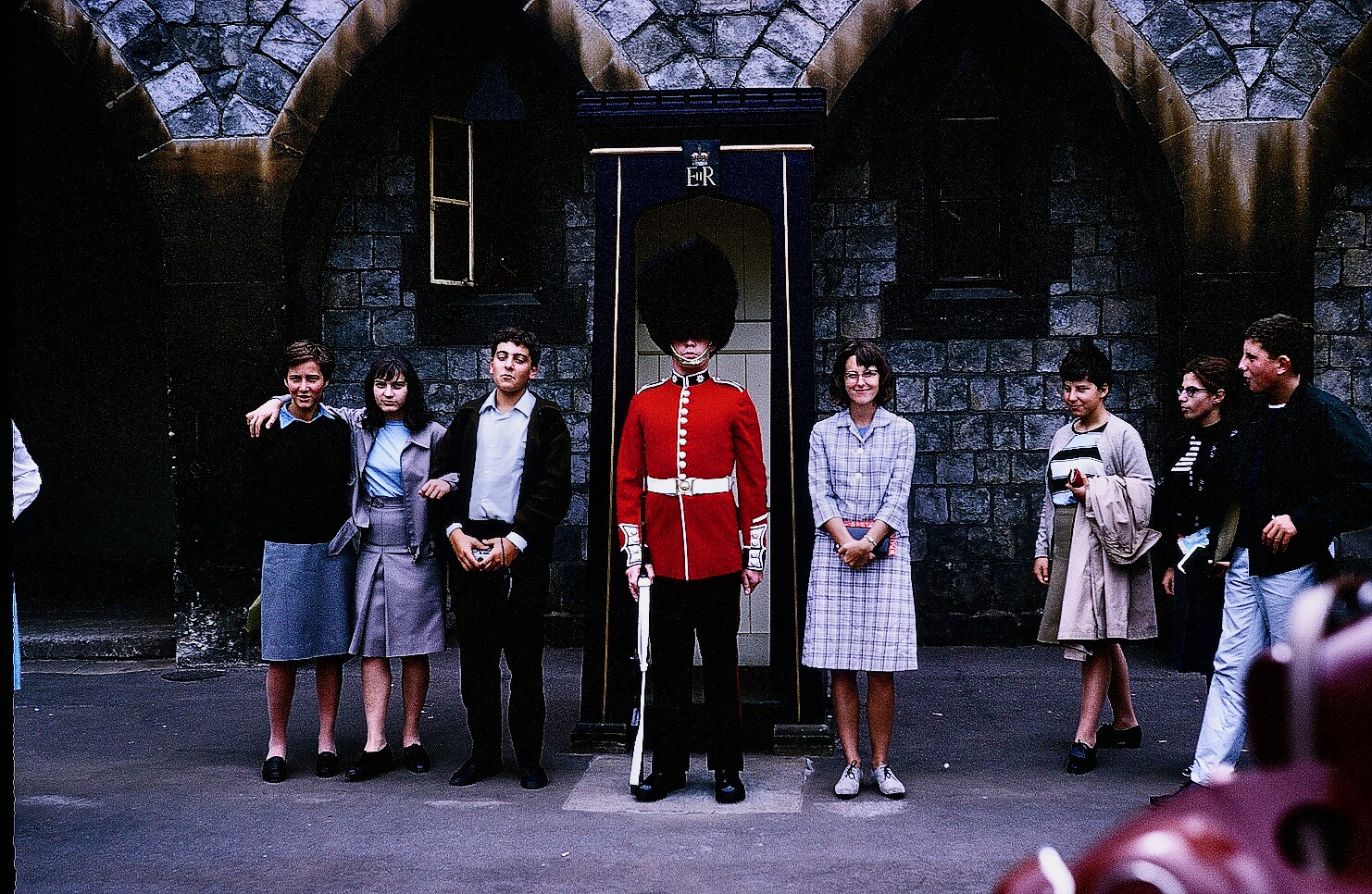
OAKES_S_0004.JPG Guard at Windsor Castle and Pat.
OAKES_S_0005.JPG Hampton Court maybe
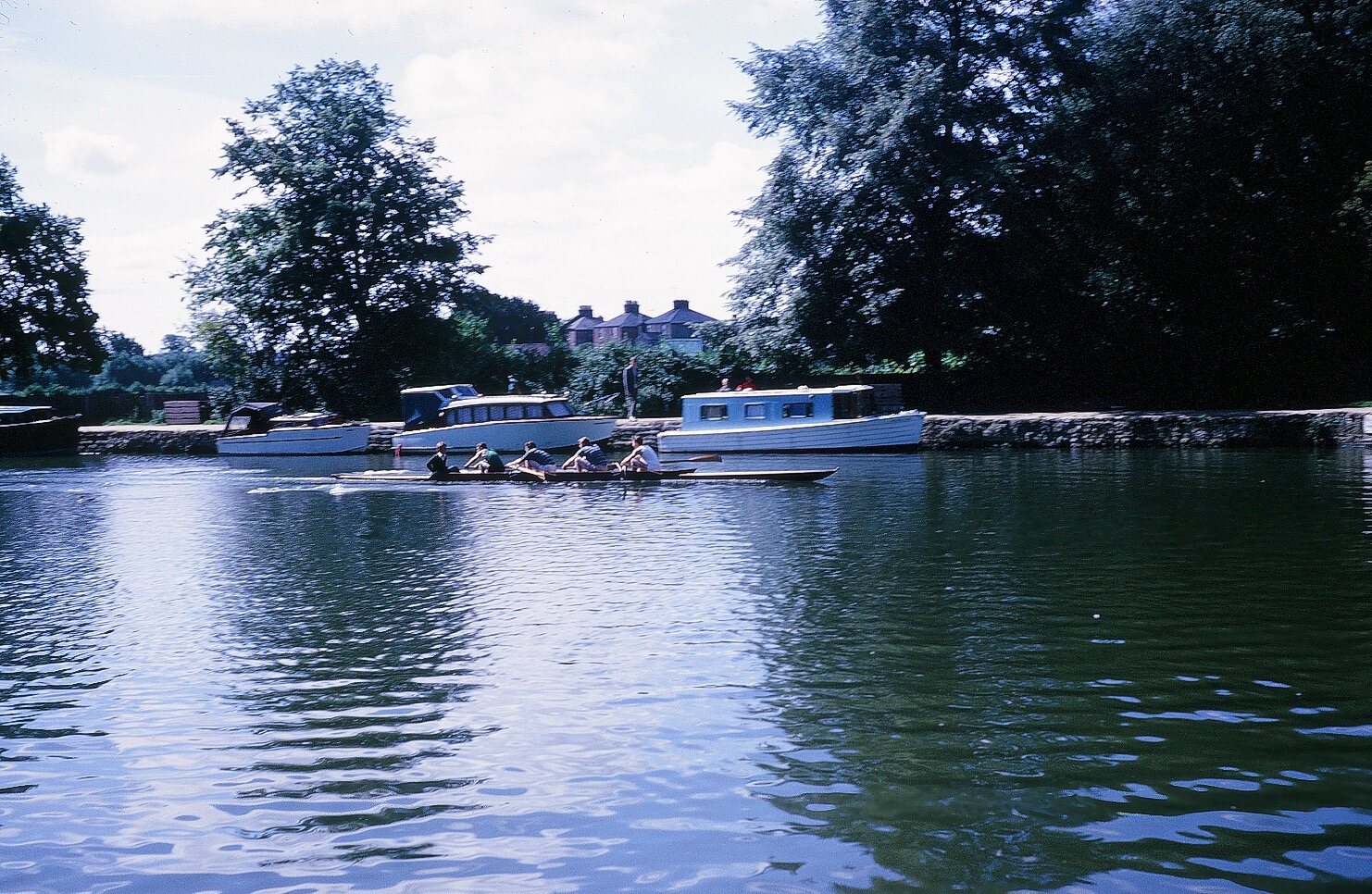
OAKES_S_0006.JPG Boating on Thames
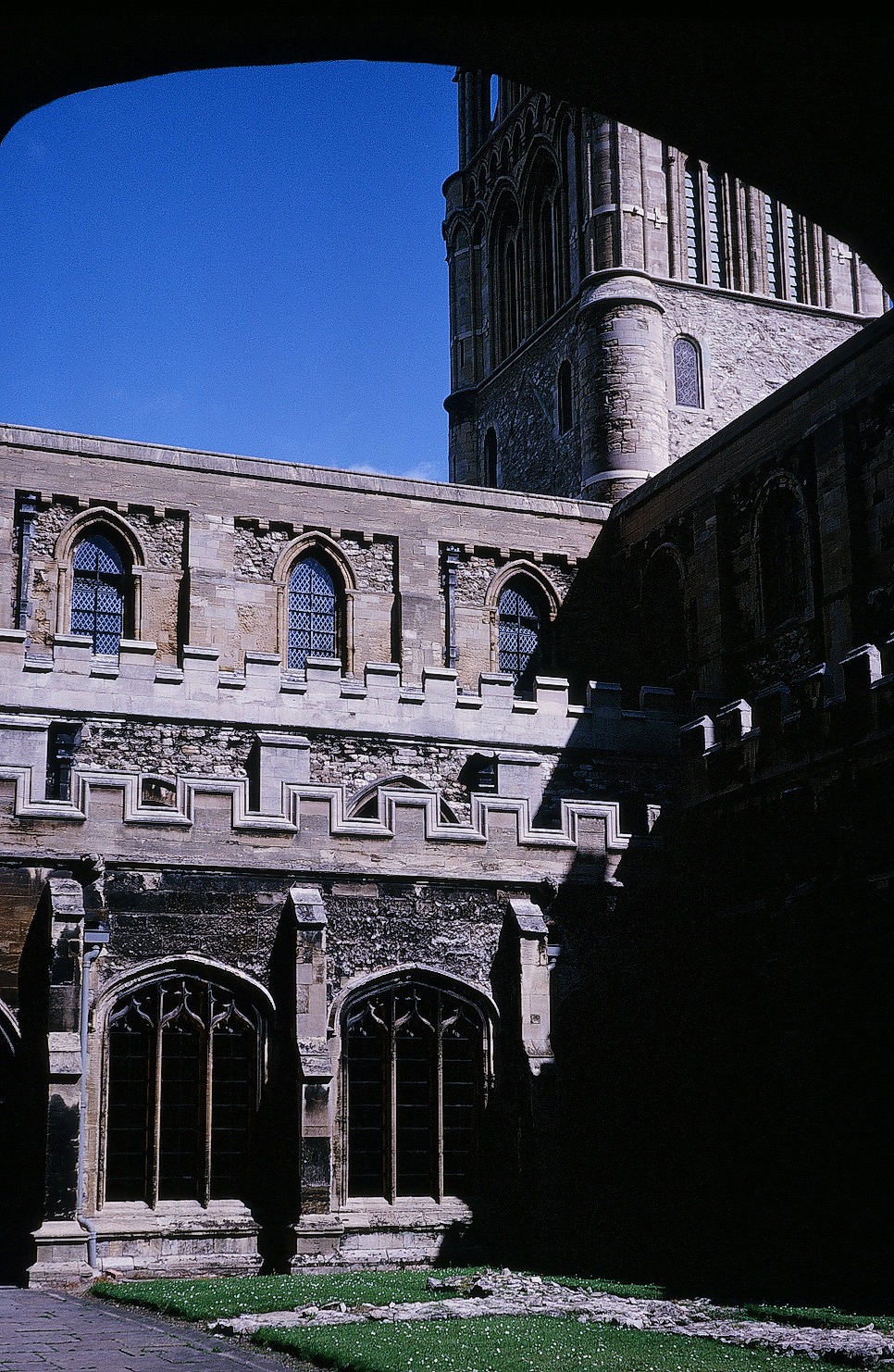
OAKES_S_0007.JPG Oxford
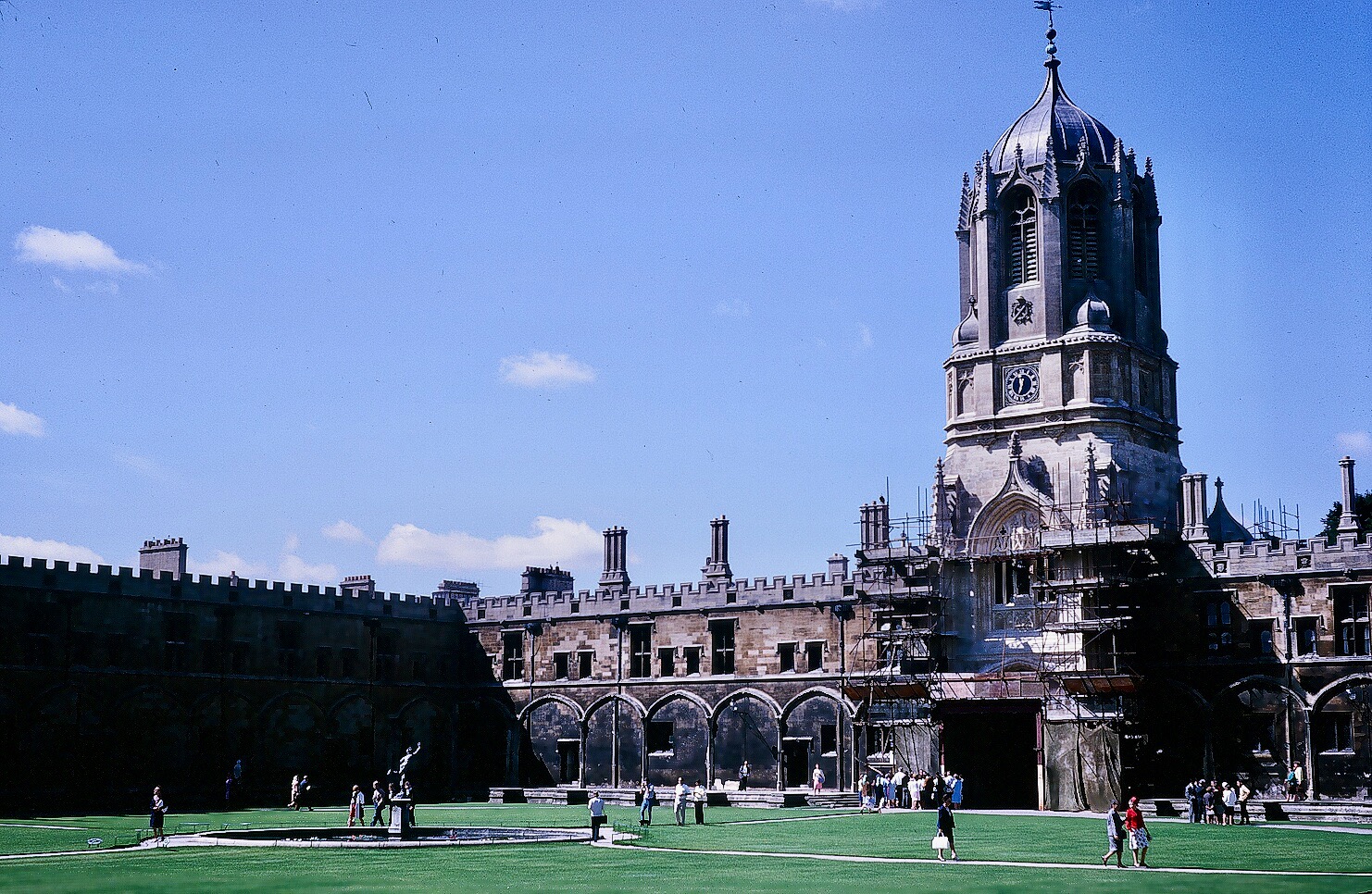
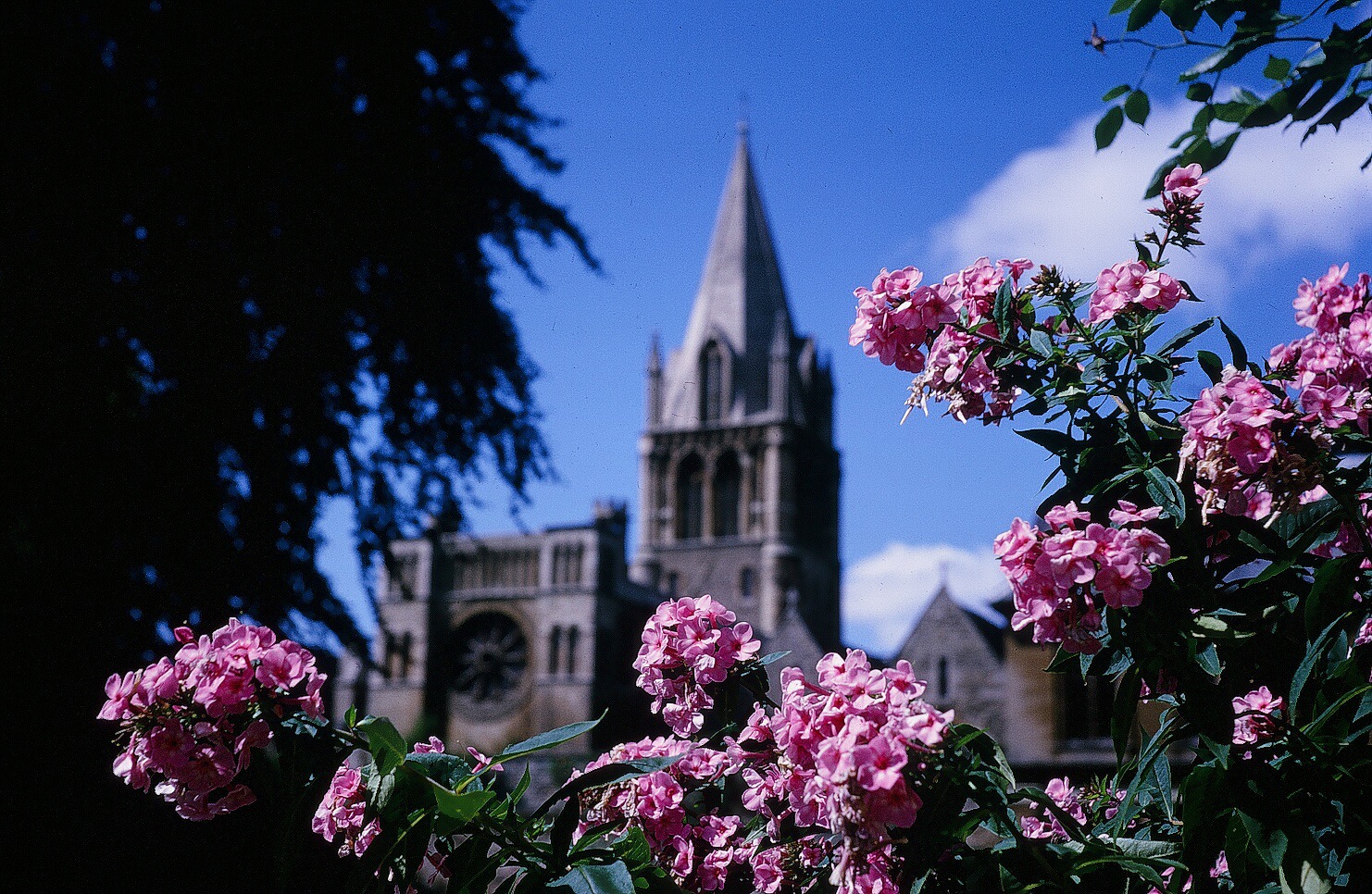
OAKES_S_0008.JPG Tom Quad and Tom Tower at Christ Church, University of Oxford.
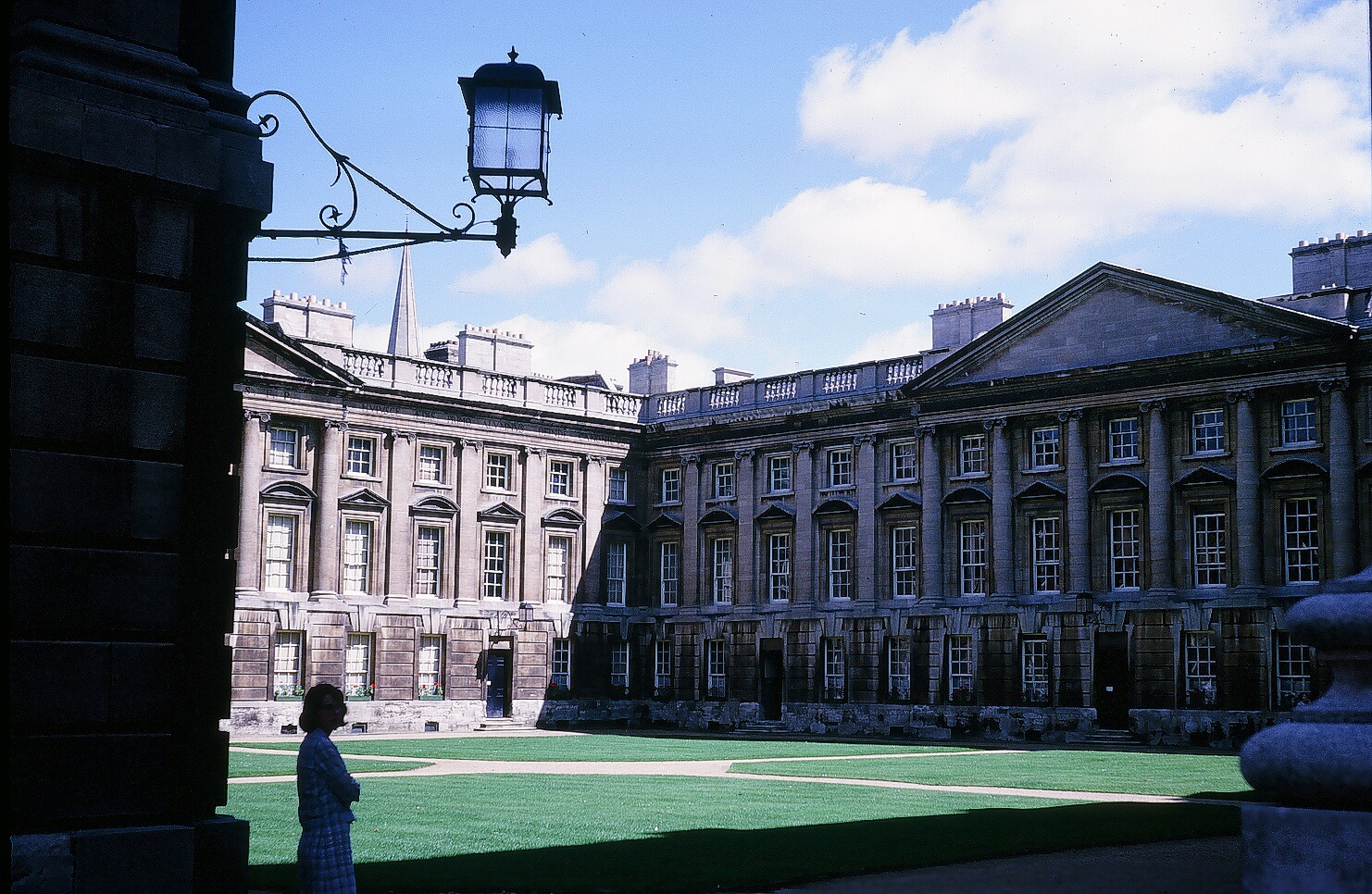
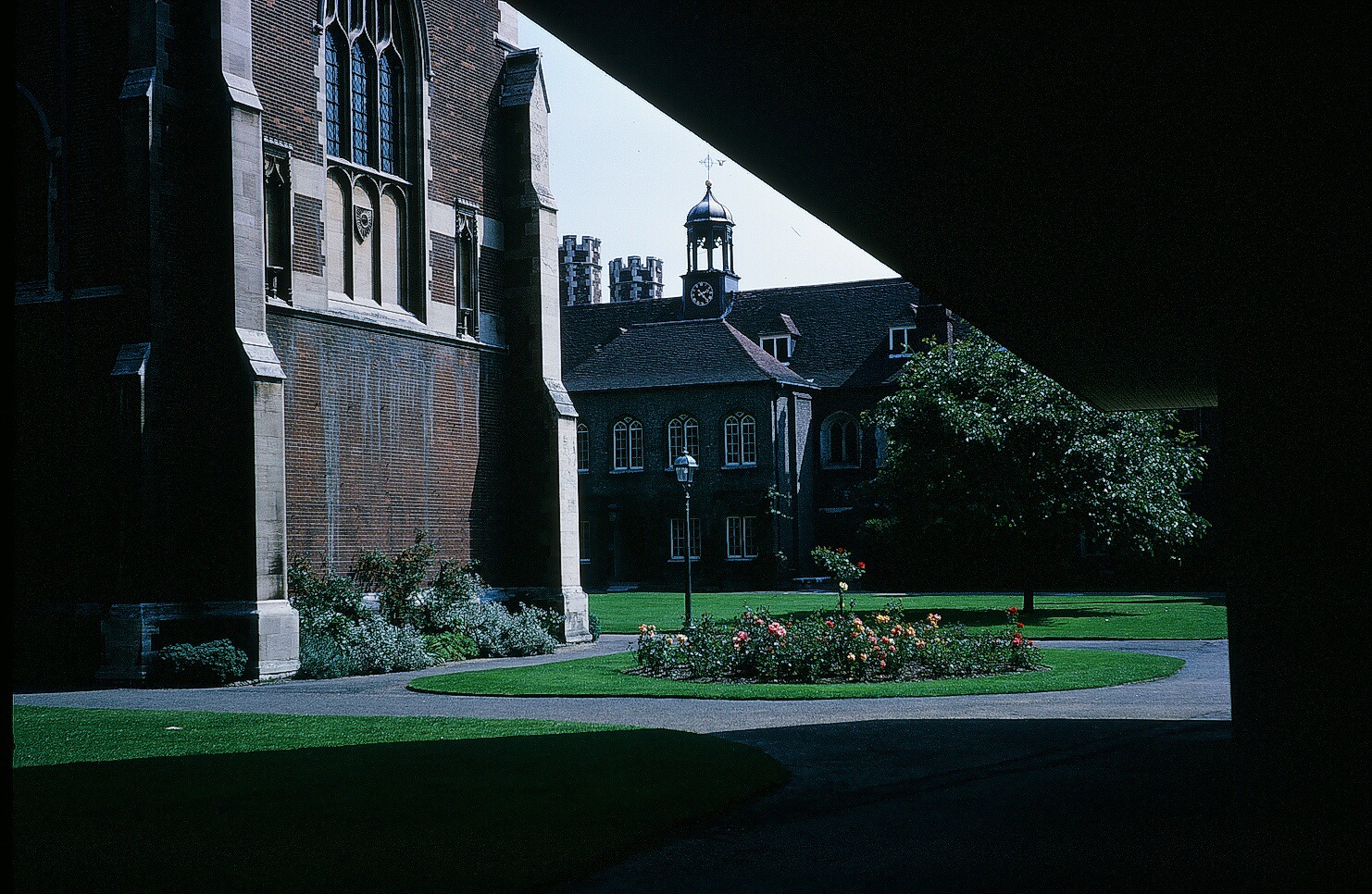
OAKES_S_0009.JPG Peckwater Quadrangle at Christ Church, a college of the University of Oxford in England
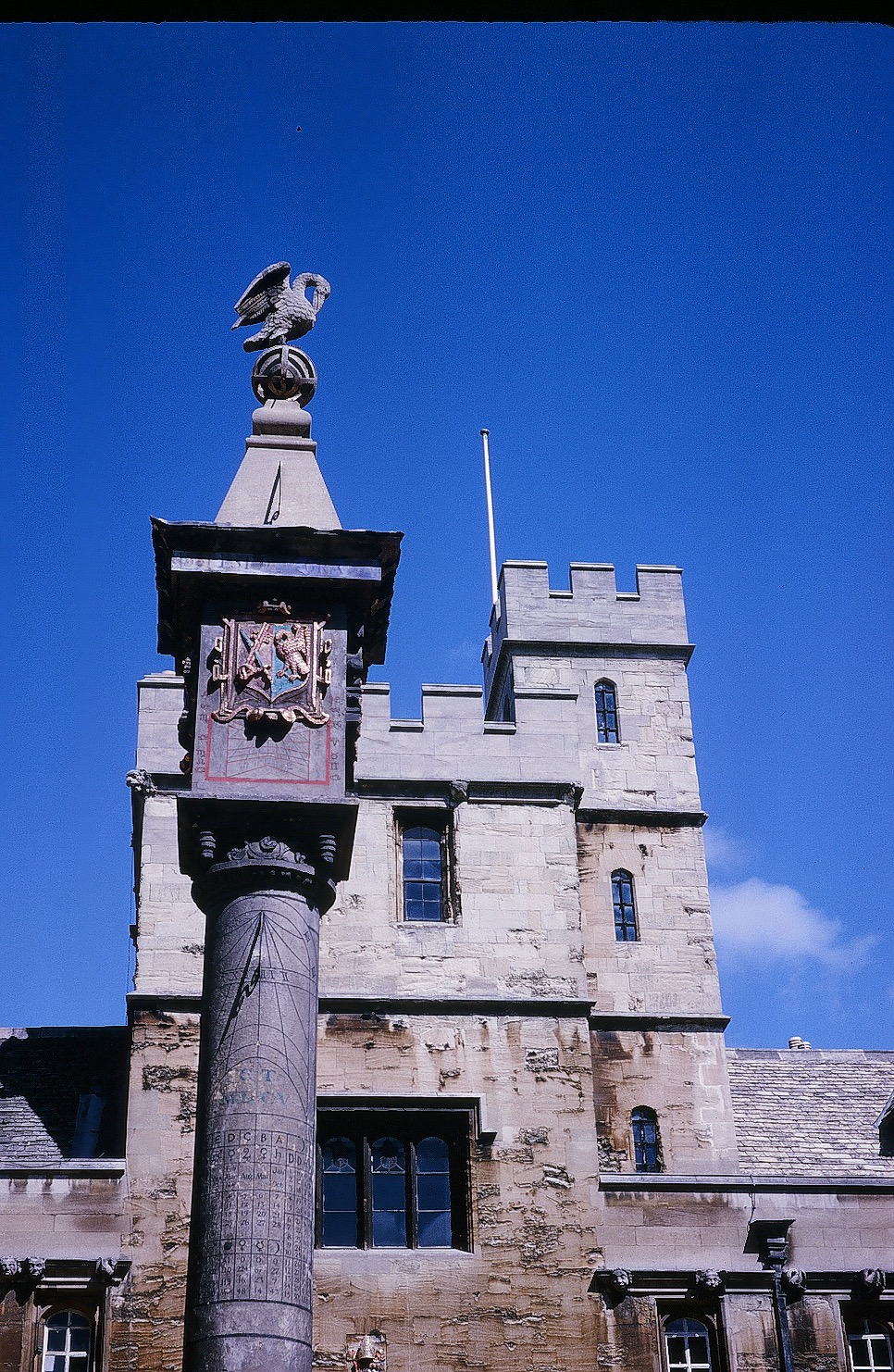
OAKES_S_0010.JPG Pelican Sundial, also known as the Turnbull Sundial, located at Corpus Christi College, Oxford.
The ornate pillar sundial was built in 1581 by Charles Turnbull.
It is a complex "pillar dial" featuring multiple dials of various types.
The device is topped by a gilded bronze pelican, the symbol of the college.
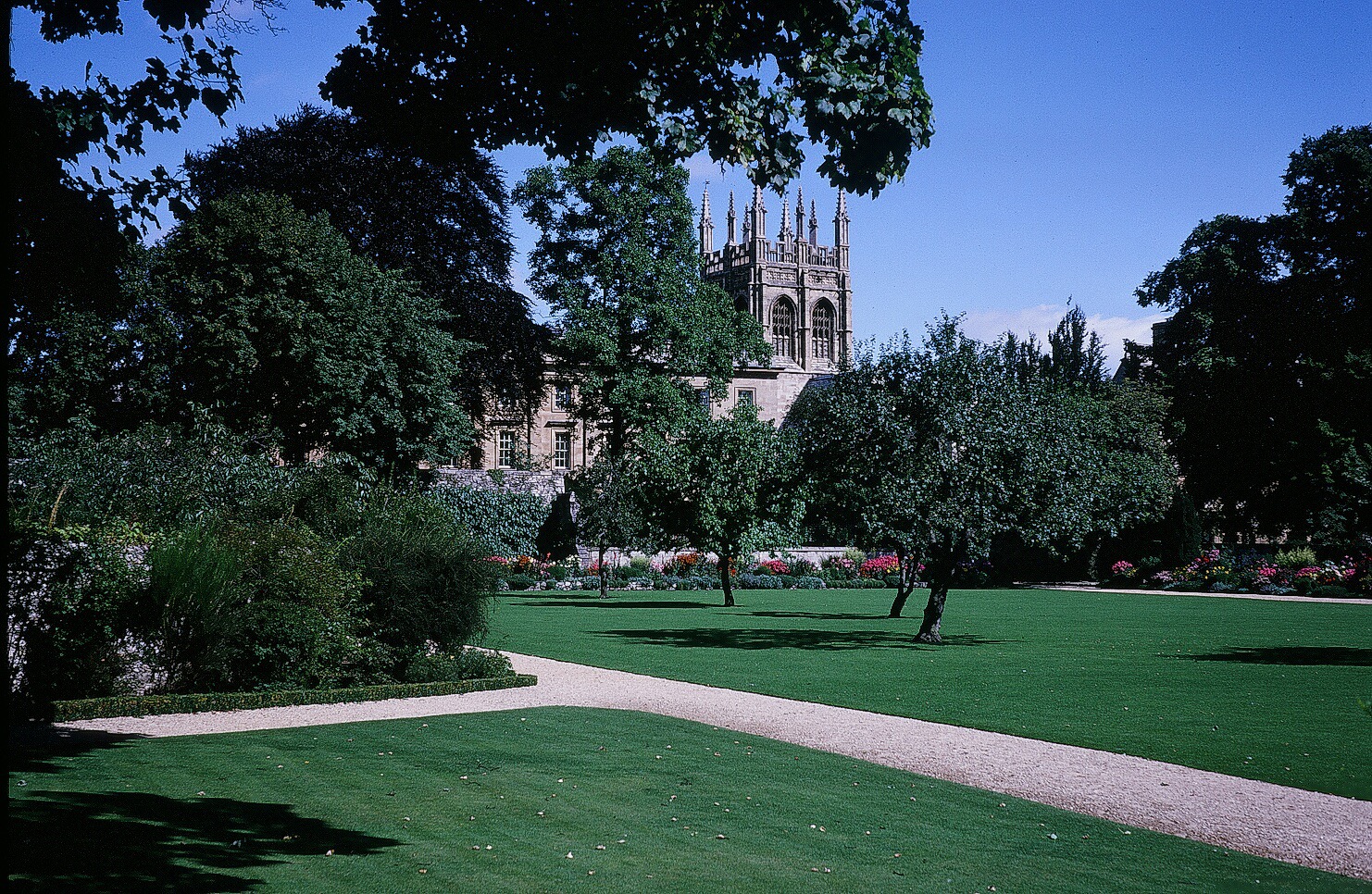
OAKES_S_0011.JPG Oxford University
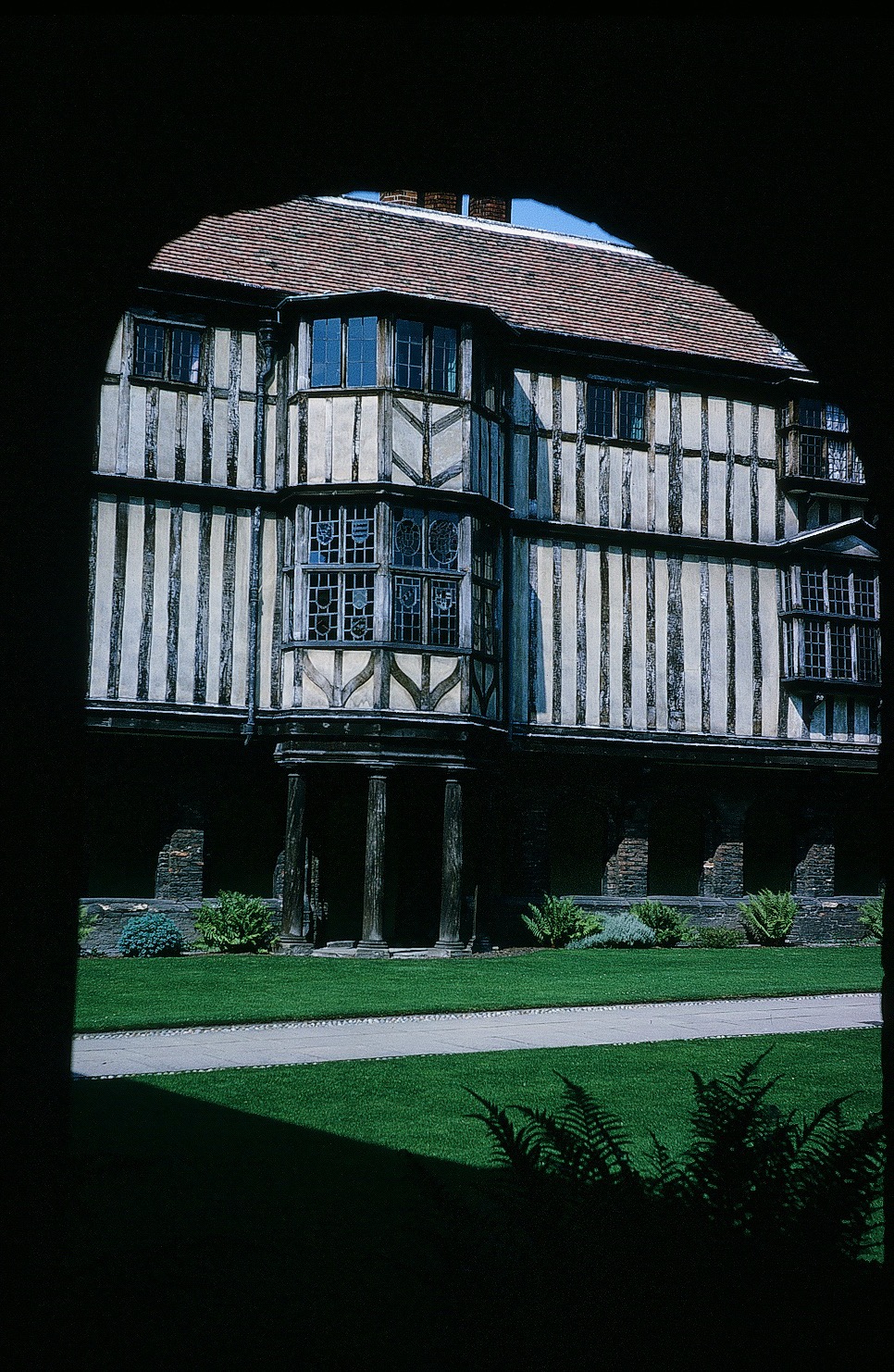
OAKES_S_0023.JPG Elizabethan Timber Building maybe near Stratford.
OAKES_S_0024.JPG
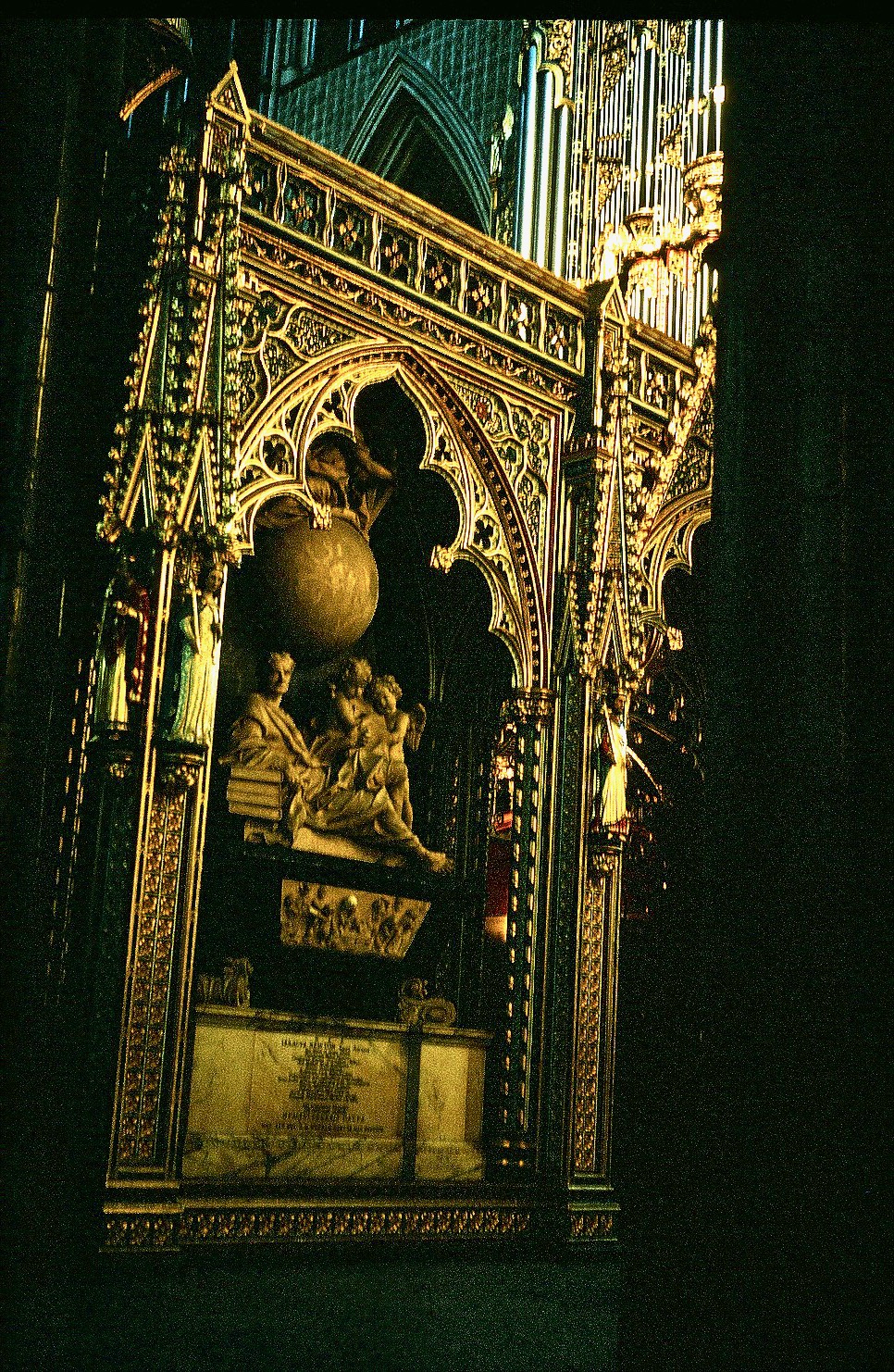
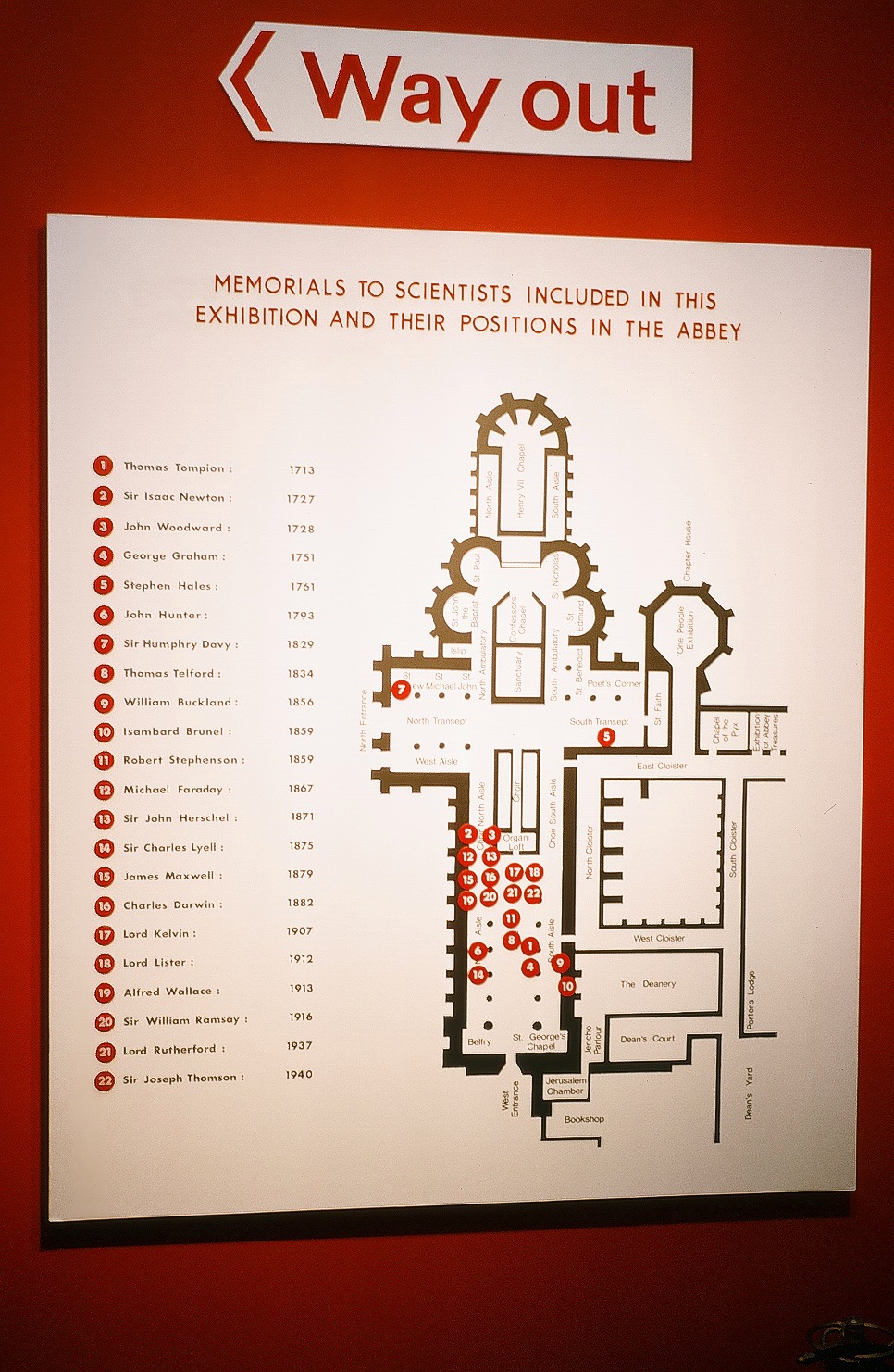
OAKES_S_0030.JPG Newton Memorial at Westminster Abbey.
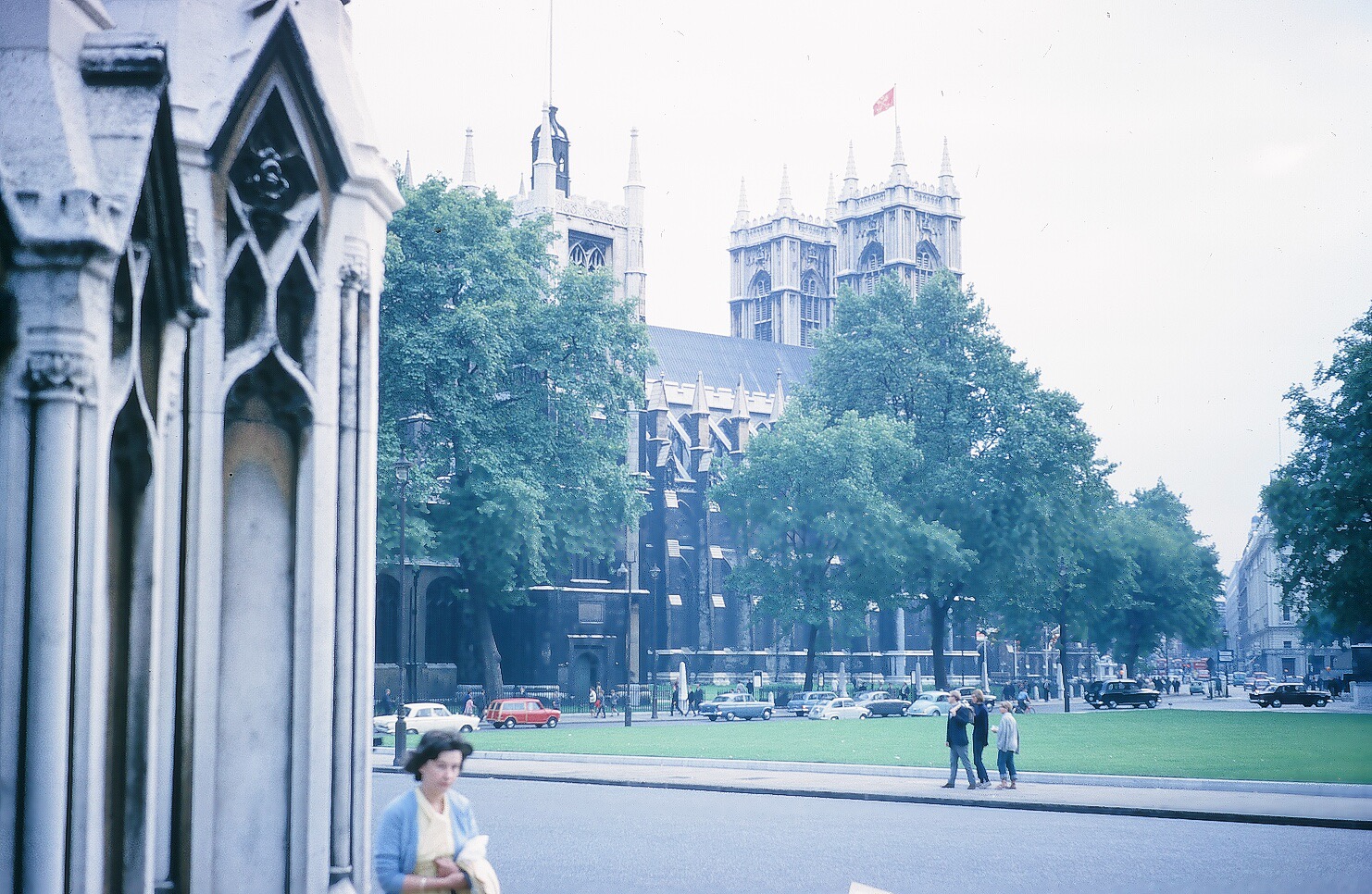
OAKES_S_0031.JPG Westminster Abbey
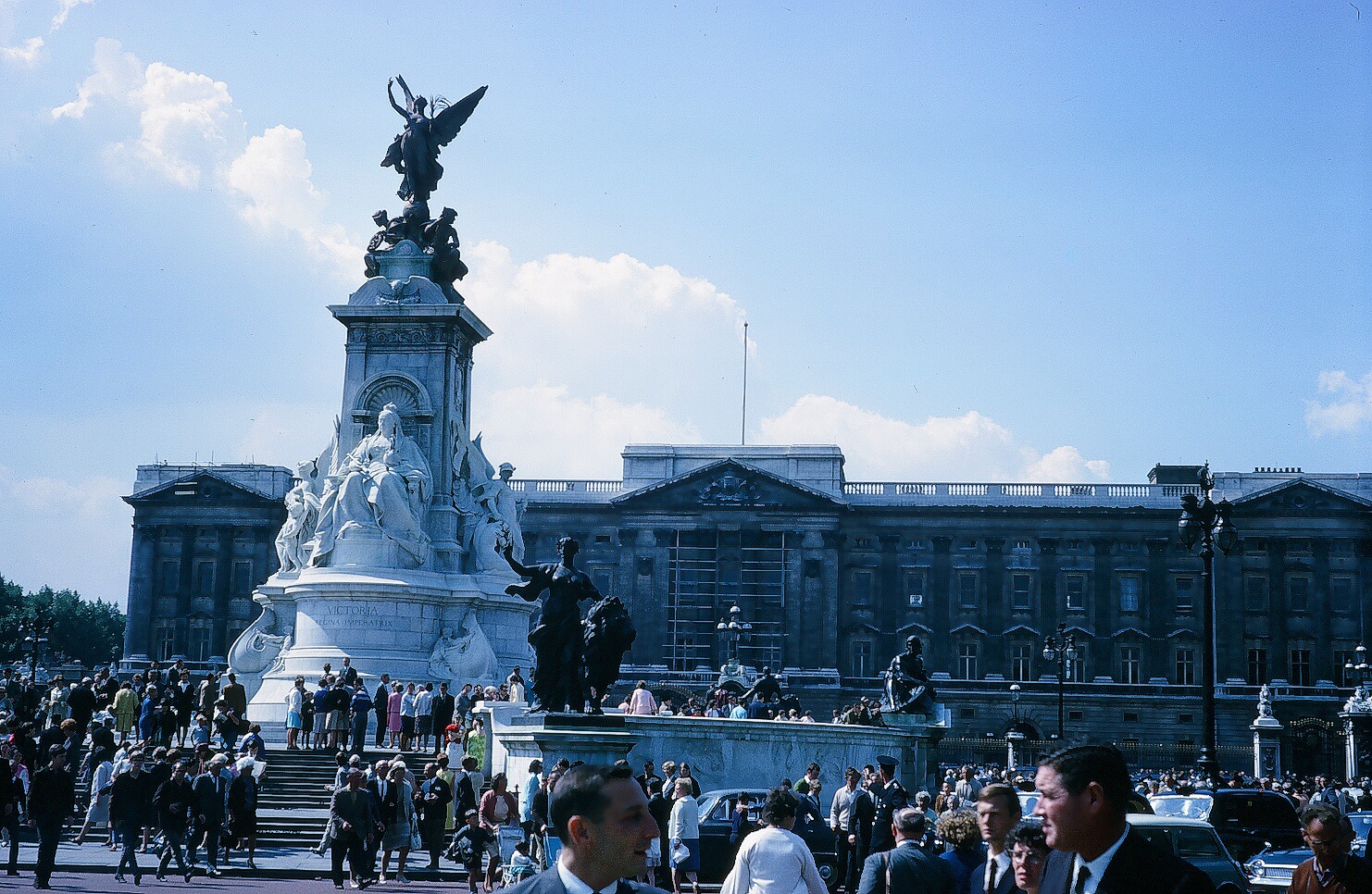
OAKES_S_0040.JPG Victoria Memorial in the foreground and Buckingham Palace in the background
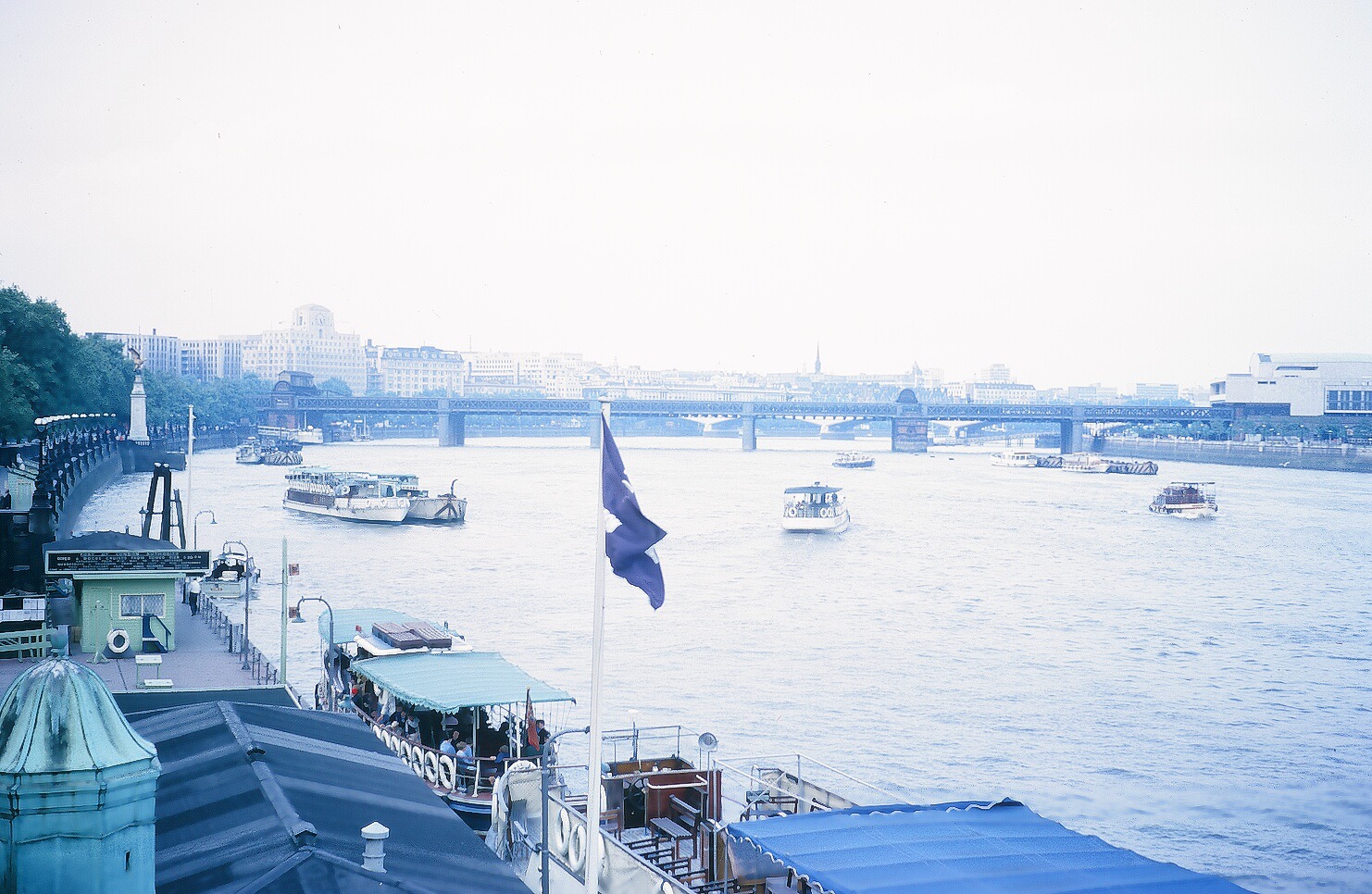
OAKES_S_0041.JPG Thames River London
OAKES_S_0042.JPG Westminster Abbey.
OAKES_S_0043.JPG Westminster Abbey
OAKES_S_0044.JPG London
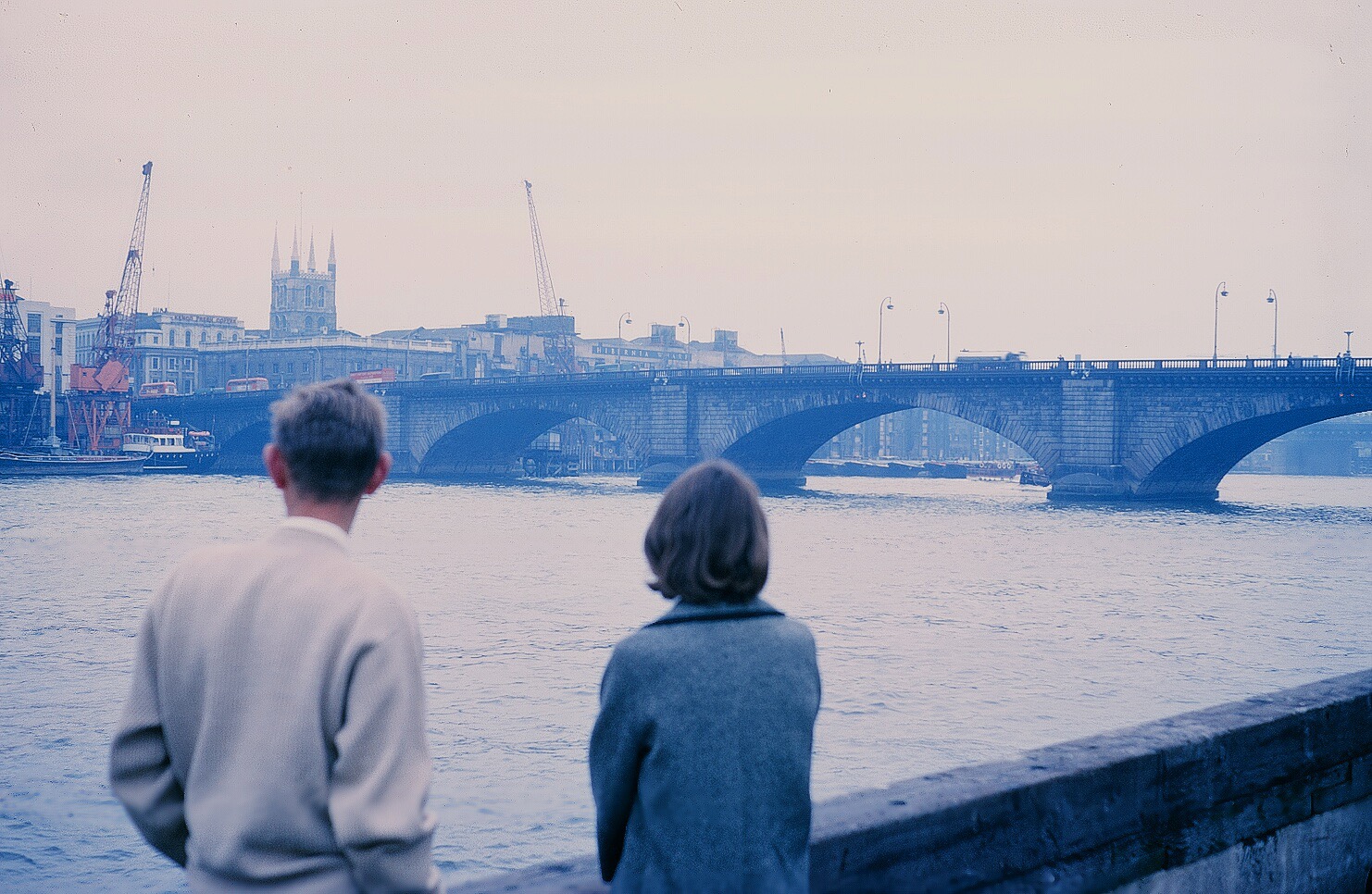
OAKES_S_0045.JPG London Bridge
OAKES_S_0046.JPG London
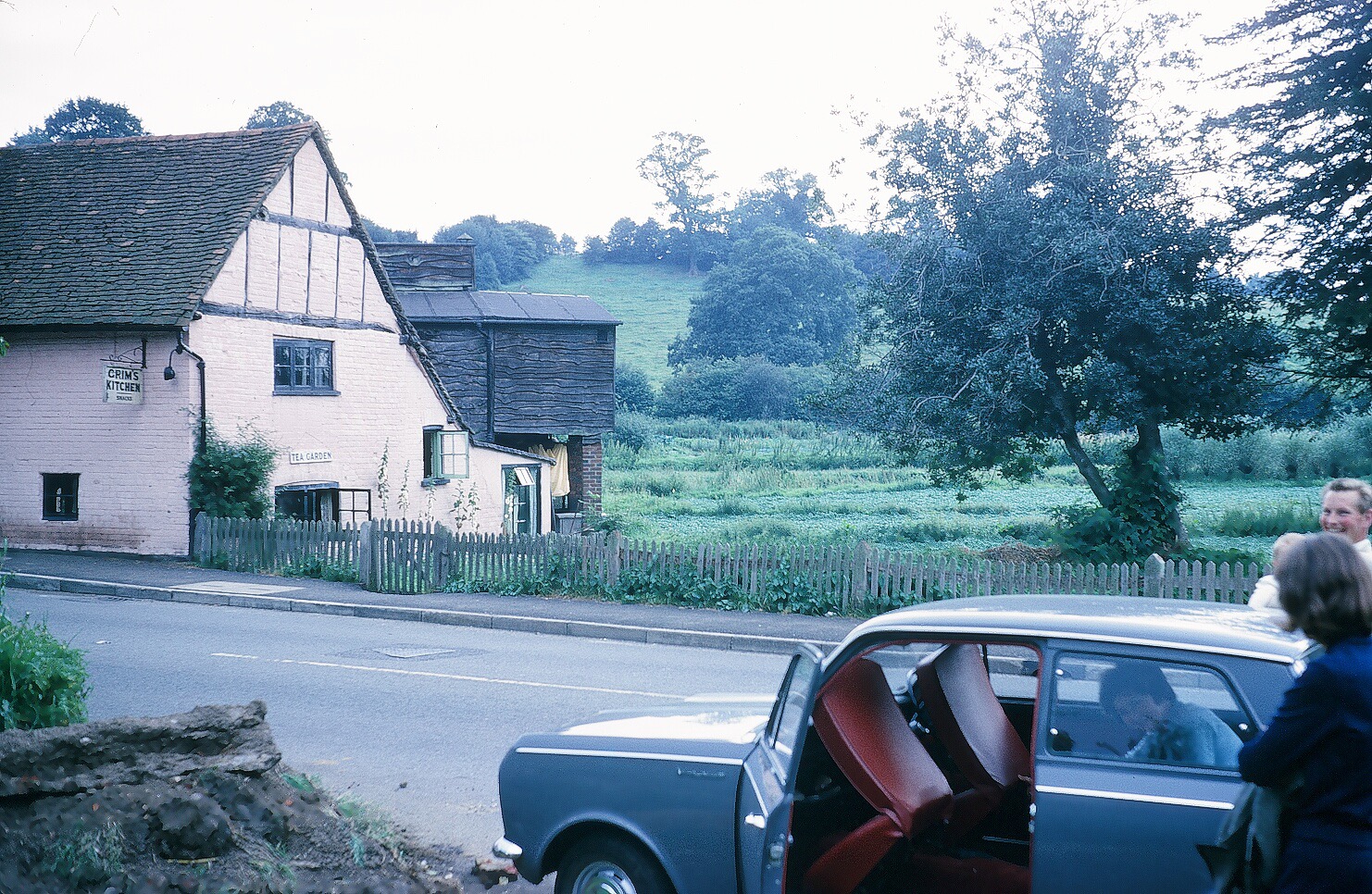
OAKES_S_0047.JPG Dorking for lunch with Don and Ann Kimber
OAKES_S_0048.JPG Dorking
OAKES_S_0071.JPG Thames
OAKES_S_0074.JPG Royal Institution London
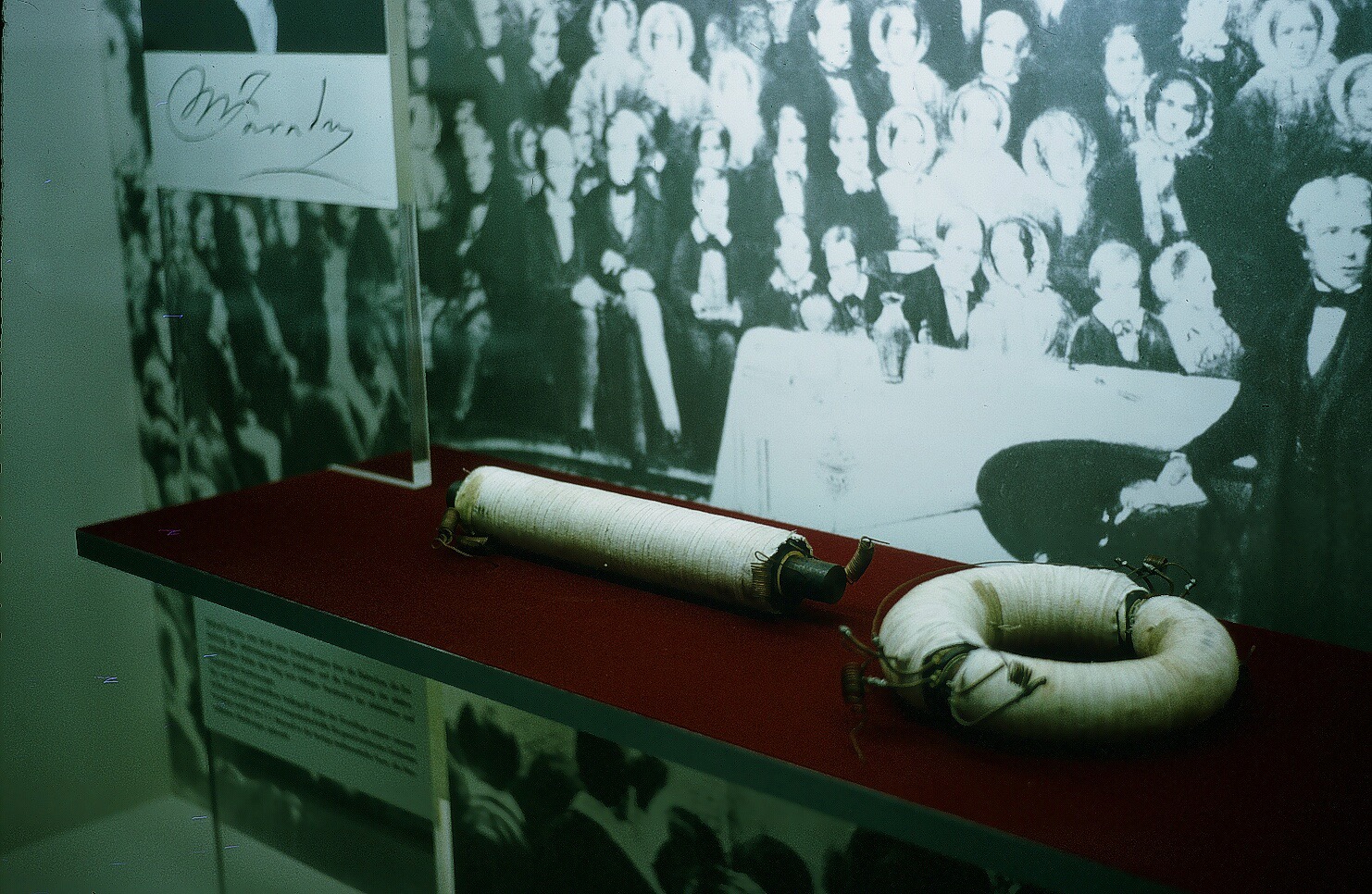
OAKES_S_0075.JPG Michael Faraday's solenoid and coil. Faraday Museum at the Royal Institution in London
OAKES_S_0110.JPG Don Kimber and Pat along the Thames.
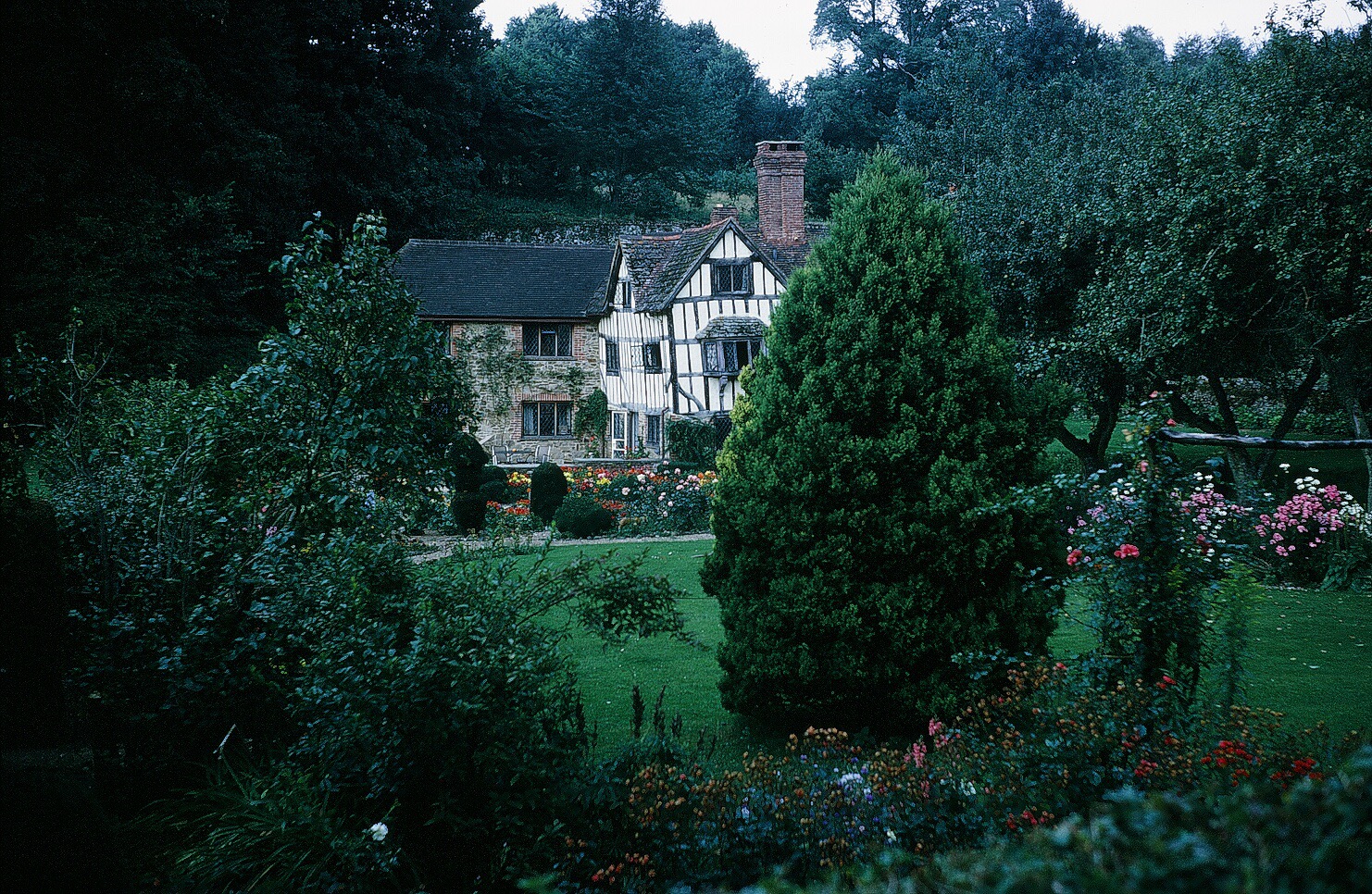
OAKES_S_0111.JPG Kimber Home
Summer 1966 English countryside
Summer 1966 London near Big Ben
Summer 1966 Pat at No. 10 Downing Street.
Summer 1966 Maori structure in an English garden
Summer 1966 Not sure where we were with Don and Ann
Summer 1966 Pat looking at the entrance to Windsor Castle
Summer 1966 View of Windsor Castle
Summer 1966 We drove by a cricket match in Dorking or Leatherhead.
Summer 1966 Windsor Castle
Summer 1966 Windsor Castle--entrance from a viewpoint in the castle
Summer 1966 Windsor Castle--looking at the entrsance into Windsor
 i San Marco) in Venice, Italy, located in the iconic Piazza San Marco.
The basilica is renowned for its magnificent architecture, which uniquely blends Eastern and Western building styles.
i San Marco) in Venice, Italy, located in the iconic Piazza San Marco.
The basilica is renowned for its magnificent architecture, which uniquely blends Eastern and Western building styles. 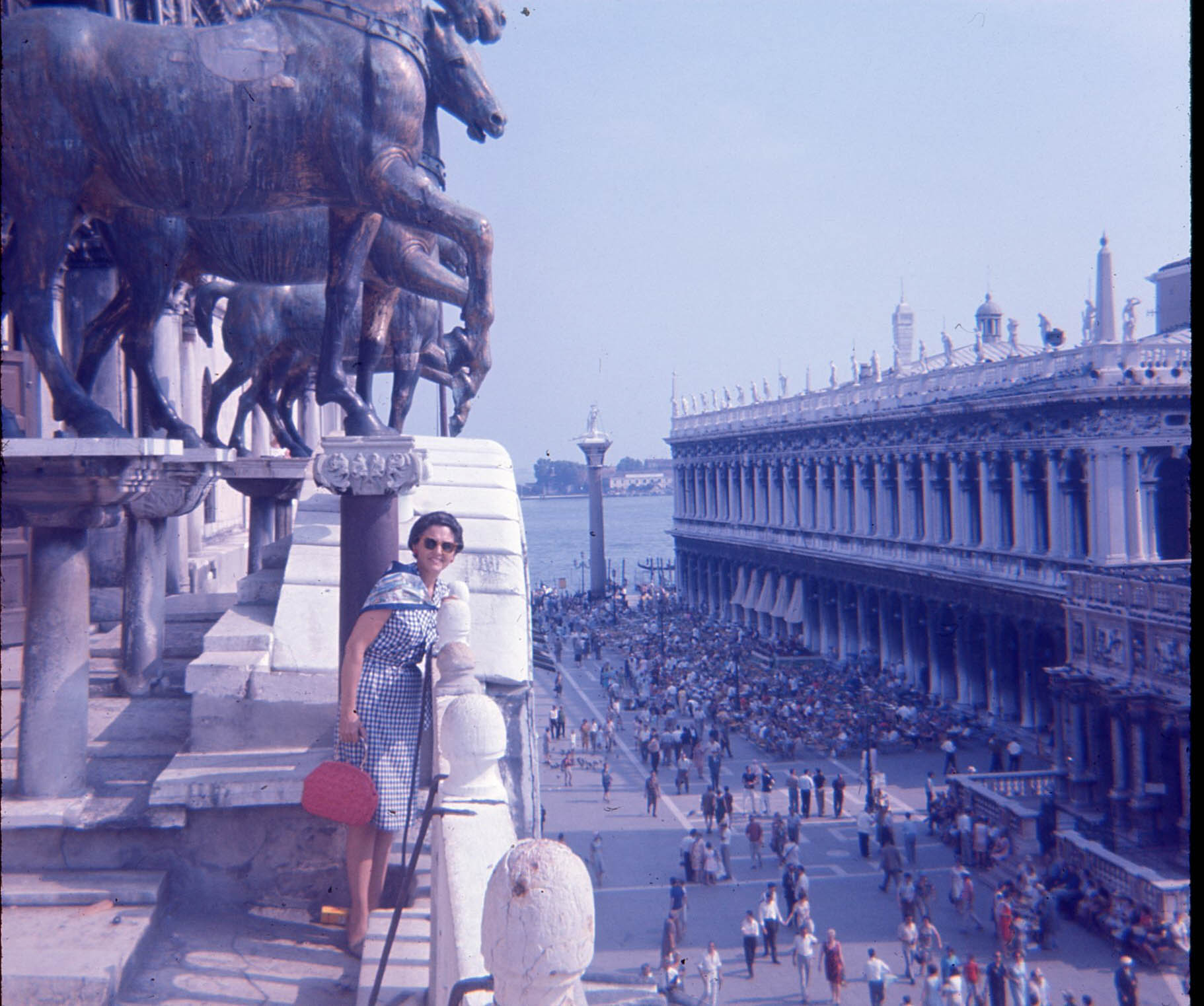






.jpeg)


.jpeg)




.jpeg)
.jpeg)
.jpeg)
.jpeg)

.jpeg)
.jpeg)
.jpeg)
.jpeg)
.jpeg)

.jpeg)
.jpeg)


.jpeg)
.jpeg)
.jpeg)
.jpeg)
.jpeg)




.jpeg)


.jpeg)


.jpeg)





.jpeg)